My Wife Said: “I’m Going Clubbing With My Ex. If You Don’t Approve, We Can Call It Quits…
My Wife Said, “I’m Going Clubbing With My Ex.
If You Don’t Approve, We Can Call It Quits…” I Said “Okay”—But She Never Expected What Waited at Home
PART 1 — The Night She Mistook His Silence for Weakness
“I’m going clubbing with my ex-boyfriend on Friday.”
“And if you have a problem with that, we can just call it quits.”
Her husband looked at her for a long, painful moment, then answered with one word that would change their marriage forever.
“Okay.”
The kitchen fell silent except for the ticking of the wall clock above the refrigerator.
Natalie Bennett stood beside the counter, her arms folded tightly across her chest, while her husband, Ethan, sat at the dining table with a newspaper he hadn’t turned in nearly ten minutes.
His coffee had gone cold, and the gray October sunlight spilling through their Columbus, Ohio, kitchen windows made everything look strangely ordinary.
Natalie had imagined this conversation at least six different ways.
In every version, Ethan became jealous, demanded explanations, or begged her to reconsider.
She had even prepared responses for the inevitable argument, rehearsing them while driving home from work and again while brushing her teeth that morning.
She had not prepared for a single, quiet word.
“Okay?” she repeated, genuinely stunned. “That’s all you’re going to say?”
Ethan folded the newspaper carefully, smoothing its edges against the table.
At thirty-five, he had the kind of calm presence people relied on during emergencies, a quality Natalie had once considered irresistible.
Three years into their marriage, that same steadiness sometimes made her feel as though she were shouting into a room lined with pillows.
“You said Jason is coming to town,” Ethan replied. “You want to meet him and your old college friends at a nightclub.
I heard you.”
“Jason isn’t just some random guy, Ethan.
He’s my ex-boyfriend.”
“I remember who Jason is.”
“And you’re seriously fine with me spending Friday night dancing and drinking while he’s there?”
Ethan leaned back in his chair. “Natalie, you’re thirty-three years old.
You’re my wife, not someone I own.
I’m not going to tell you where you can go or who you’re allowed to see.”
His answer should have reassured her.
Instead, it irritated her in a way she couldn’t quite explain.
She had been married to him long enough to know that he hated pointless arguments, but a part of her wanted him to abandon that principle just once.
She wanted proof that the thought of another man paying attention to her could still make his heart race.
“Most husbands would have a problem with this,” she said.
“Maybe they would.” He stood and carried his cup to the sink. “But you didn’t come in here asking whether I’d feel comfortable.
You came in announcing that you were going clubbing with your ex, and now you’re disappointed I’m not upset.”
Natalie felt heat rising beneath her collar.
“Don’t turn this around on me.”
“I’m not turning anything around.” Ethan rinsed the cup, then set it in the drying rack. “If you miss your friends, go see them.
If there’s something about Jason I should know, tell me.
But if you’re trying to make me jealous so I’ll prove something to you, I’m not participating.”
She stared at his back, furious that he had recognized something she had barely admitted to herself.
The truth was that Jason had sent the invitation two days earlier, along with a photograph from their college graduation.
In it, Natalie stood beside him in a white sundress, laughing so hard her eyes were closed.
Beneath the photograph, he had written, Remember when we actually knew how to have fun?
She had smiled at the message longer than she wanted to admit.
It wasn’t because she wanted Jason back.
Not exactly.
It was because the photograph reminded her of being twenty-two, spontaneous and desired, with an entire future waiting to happen.
Lately, her life had felt painfully predictable.
Ethan worked from home several days a week as a civil engineer, she managed communications for a regional nonprofit, and their evenings revolved around dinner, laundry, grocery lists, and deciding whether they were too tired to watch another episode of television.
Nothing was terribly wrong.
That was what frightened her most.
She sometimes wondered whether love was supposed to feel more exciting than this.
Her friends posted photographs of anniversary getaways and extravagant surprises, while Ethan showed his affection by remembering she needed new windshield wipers or leaving dinner in the oven when she worked late.
She knew he was good to her, but somewhere along the way, she had begun confusing reliability with a lack of passion.
“So you’re saying you wouldn’t care if Jason flirted with me?” she challenged.
Ethan’s shoulders stiffened, almost imperceptibly.
“I’d care about what you chose to do with it.”
His answer landed harder than she expected.
For a second, she saw something behind his composure, something tired and wounded.
Rather than acknowledge it, she reached for the sharpest sentence she could find.
“Fine.
I’m going.
And if you don’t approve, we can just end this whole thing.”
Ethan went still.
He turned slowly, the dish towel hanging loosely from his hand.
His eyes searched her face as if he were giving her one final opportunity to explain that she didn’t mean what she had just said.
“Is that really what you’re offering me?” he asked.
Natalie swallowed. “I’m saying I won’t stay in a marriage where somebody tries to control me.”
“I’ve never tried to control you.”
“Then we shouldn’t have a problem.”
For a moment, Ethan looked as though he might finally argue.
Instead, he folded the dish towel, placed it beside the sink, and nodded.
“Okay.”
He walked into his home office and closed the door gently.
Natalie remained in the kitchen, suddenly aware of how loud the refrigerator sounded.
She told herself she’d won.
But nothing about it felt like winning.
The days that followed unsettled her even more.
Ethan continued making breakfast, asking about her work, and taking out the trash on Thursday evenings.
When Natalie mentioned that her car was making a strange noise, he offered to look at it over the weekend.
He even remembered that she’d wanted fresh basil for the pasta she planned to make.
He did everything a thoughtful husband was supposed to do.
Except ask her not to go.
On Thursday night, while they watched television, Natalie finally brought it up again.
“So, tomorrow night…”
“You’re meeting your friends,” Ethan finished. “I remember.”
“I’ll probably be out late.”
“What time do you think you’ll be home?”
“Midnight, maybe one.”
He nodded. “I’ll leave the porch light on.”
Natalie looked at him, waiting for another question.
None came.
By Friday evening, she had tried on three dresses and rejected all of them.
The black one looked too formal.
The red one seemed too deliberate, as though she were dressing to impress someone.
The blue dress was elegant without appearing to demand attention, but she still stood in front of the mirror for several minutes, wondering why she cared so much.
“That one looks beautiful.”
Ethan stood in the bedroom doorway wearing jeans and a charcoal sweater.
He had changed out of his work clothes, and his hair was slightly damp from the shower.
He looked comfortable, peaceful, almost unbearably familiar.
“Thanks,” she murmured. “What are you doing tonight?”
“Probably reading.
Maybe finishing that documentary.”
“You could come with me.”
The invitation escaped before she could stop it.
Ethan studied her reflection in the mirror. “Is that what you actually want?”
Natalie opened her mouth, then hesitated.
She wanted him to want to come.
She wanted him to be jealous enough to refuse to let her go alone.
But she had spent the entire week insisting that this evening was about her freedom, and admitting otherwise would mean exposing the childish contradiction at the center of it.
“I was just asking,” she said.
He nodded once. “Then thank you.
But I think I’ll stay home.”
At nine o’clock, Natalie came downstairs wearing the blue dress, silver earrings, and the perfume Ethan had given her on their second anniversary.
He looked up from his book, and something crossed his face so quickly she almost missed it.
“You look stunning,” he said.
“Are you sure you’re okay with this?”
He closed the book.
“Natalie, I’m not going to ask you to stay because you’re hoping I’ll be jealous.
I love you.
I want you to be safe.
Beyond that, your decisions belong to you.”
The words should have been enough.
Instead, she asked, “That’s really all?”
He stood and kissed her forehead, his lips lingering just long enough for her to feel the warmth.
“Drink some water between cocktails,” he said softly. “And call me if you need a ride.”
For one brief second, she considered putting down her purse.
Then her phone vibrated with another message from Jason.
We’re waiting for you, beautiful.
She slipped the phone into her clutch.
“See you later,” she said.
Ethan nodded. “Goodnight, Natalie.”
She didn’t notice that he hadn’t said when you get home.
Azure was packed by the time she arrived.
Music rattled through the walls, colored lights swept across the crowded dance floor, and the entrance smelled of expensive cologne and rain-soaked pavement.
Jason was waiting beside the security attendant, wearing a tailored black shirt and an expensive watch.
“There she is!” he exclaimed, pulling her into a hug.
He held her a little longer than necessary.
“You look incredible,” he said. “Married life definitely agrees with you.”
Natalie laughed, feeling an old, familiar spark of confidence.
For the first hour, everything seemed perfect.
Her former classmates greeted her enthusiastically, champagne arrived in silver buckets, and Jason kept finding reasons to stand beside her.
He complimented her hair, remembered an embarrassing college story, and leaned close enough that she could smell his cologne whenever the music grew louder.
For a little while, Natalie felt twenty-two again.
Then, just after eleven, Jason began checking his phone.
“Everything okay?” she asked.
“Yeah.
Work situation.” He slipped the phone into his pocket. “Actually, I need to get out of here.
Early flight tomorrow.”
“I thought you were staying all weekend.”
“Change of plans.”
He smiled apologetically, settled his share of the bill, and hugged her goodbye.
Fifteen minutes later, he was gone, taking several of their old friends with him.
Natalie stared after him, unexpectedly embarrassed.
The reunion had been the highlight of her entire week.
For Jason, it had apparently been something to squeeze in between appointments.
A man she barely remembered from college approached with two drinks.
His eyes lingered on her dress, and he smiled in a way that made her uncomfortable.
She declined the drink, called an Uber, and stepped outside into the cold October air.
As the car carried her through the nearly empty streets of Columbus, the evening replayed itself in fragments.
Jason’s compliments.
Her friends’ laughter.
The champagne.
Her husband’s quiet voice saying, I love you.
I want you to be safe.
For the first time all week, she wondered whether she had mistaken his refusal to fight for proof that he didn’t care.
The Uber turned onto their street a little after midnight.
Natalie straightened in her seat.
The porch light was off.
Ethan’s silver SUV was missing from the driveway.
And every window in the house was dark.
She paid the driver and hurried toward the front door.
Inside, she reached for the light switch, her pulse suddenly thudding against her ribs.
The kitchen looked perfectly clean.
The dishes were washed.
The counters were wiped.
Her favorite mug sat upside down on the drying rack.
Then she saw the dining table.
There, beneath the warm overhead light, lay Ethan’s wedding ring, his house keys, and a folded sheet of paper.
Her name was written across the front.
Natalie picked it up with trembling fingers.
And before she even unfolded the letter, she understood that her husband had finally taken her ultimatum seriously.
PART 2 — The Wedding Ring He Left Behind
The ring was still warm from the light above the table, or perhaps Natalie only imagined it was.
She lifted it carefully between her fingers.
It was a simple platinum band, scratched along one edge from the afternoon Ethan had helped his brother repair a motorcycle.
She remembered teasing him about ruining an expensive wedding ring, and remembered him saying that a marriage was supposed to survive a few scratches.
Now the ring felt unbearably small.
For a moment, Natalie tried to convince herself this was another kind of test.
Perhaps Ethan had finally decided to teach her a lesson by pretending to leave, just as she had tried to provoke him into jealousy.
If she called, maybe he would come home and admit that he had only wanted her to understand how much she’d hurt him.
Then she opened the paper.
Natalie,
You told me that if I had a problem with you going out with Jason, we could end our marriage.
I want you to understand something.
My problem was never that you wanted to spend time with old friends.
My problem is that you turned our marriage into a test I was never allowed to pass.
If I became jealous, you could accuse me of controlling you.
If I trusted you, you could accuse me of not caring.
Whatever I did, I would be wrong, because what you wanted wasn’t an honest conversation.
You wanted a reaction.
I have spent three years trying to make you happy, and somehow I keep making you feel less loved simply by refusing to fight in the way you expect.
I remember when you told me that you fell in love with me because I made you feel safe.
Lately, safety seems to be the one thing you resent most.
Natalie stopped reading.
Her hand flew to her mouth, and a strange sound escaped her throat.
She remembered telling him that.
It had been during a thunderstorm five years earlier, when they were still dating.
Her car had broken down on the highway outside Dayton, and Ethan had driven nearly an hour to pick her up without complaining.
She had fallen asleep in the passenger seat wearing his dry sweatshirt, knowing with an unfamiliar certainty that this man would never deliberately make her afraid.
She forced herself to continue.
I’m not leaving because you went to a nightclub.
I’m leaving because I don’t recognize the way we speak to each other anymore.
I can’t keep proving my love by surviving threats to our marriage.
I said okay because I understood your words, even if you didn’t.
I’ll be staying with Daniel for now.
I’ve arranged to speak with an attorney next week.
I don’t want a fight over the house, the furniture, or anything else we own.
We can handle those decisions fairly when we’re both ready.
I hope you find whatever you’ve been searching for.
I wish I could have helped you find it without losing myself.
I’m sorry I wasn’t enough.
There was no signature.
Natalie stared at the last sentence until the words blurred.
He wasn’t enough?
The man who had learned how to cook her mother’s chicken soup when she was sick.
The man who kept an emergency umbrella in her car because she constantly forgot hers.
The man who sat through her father’s funeral with his arm around her shoulders, even though she had barely spoken for three days afterward.
How could he possibly believe he wasn’t enough?
Then she remembered how often she had compared him to other men.
Her friend’s husband had surprised her with tickets to Paris.
Jason had once driven overnight to watch Natalie perform in a college production.
Someone at work received flowers every Friday, and Natalie had mentioned it over dinner while Ethan was cutting vegetables for the meal he’d prepared.
She had called those things observations.
Perhaps he had heard them as measurements.
She reached for her phone and pressed his name.
It rang three times.
Voicemail.
“Ethan, it’s me,” she whispered after the beep. “I’m home.
I found your letter.
Please call me.
I don’t want this.”
Her voice broke.
“I didn’t mean for you to leave.”
She hung up, then immediately called again.
Voicemail.
Her next message was longer, frantic, full of promises she hadn’t considered until she was standing in an empty kitchen.
She told him she loved him.
She told him Jason meant nothing.
She promised that nothing inappropriate had happened.
Then she caught herself.
She was still talking as though the entire problem had been what she’d done at Azure.
She tried texting instead.
Please come home.
We need to talk.
I never wanted a divorce.
I’m sorry.
I was stupid.
Please answer me.
The messages showed as delivered.
None were read.
At 12:43 a.m., she called Daniel Bennett.
Ethan’s older brother answered on the fourth ring, his voice rough with sleep.
“Natalie?”
“Is Ethan there?”
Daniel was silent for several seconds.
“Please,” she continued. “I just need five minutes with him.”
“He asked me not to put him on the phone tonight.”
“Daniel, this is my husband.”
“I know who he is.”
The quiet firmness of his response frightened her more than anger would have.
“He’s upset,” Natalie insisted. “We had a stupid argument.
He misunderstood something I said, and now he’s talking about lawyers.”
“He didn’t misunderstand you.”
Her stomach tightened.
“What did he tell you?”
Daniel sighed. “I’m not going to repeat everything my brother said.
But he came to my place a little after ten carrying a suitcase, and I haven’t seen him look that exhausted in years.”
Ten o’clock.
Natalie glanced at the time on her phone.
Ethan had left their house while she was still laughing with Jason in the VIP section.
He hadn’t waited to see whether she came home early.
He hadn’t needed photographs or rumors.
He had made his decision before the night was even over.
“He took his ring off?” she whispered.
“Yeah.”
“Was he angry?”
Daniel didn’t answer immediately.
“When I opened the door, he asked if he could stay a few nights.
I said of course.
Then he sat on my couch and stared at his hands for a long time before he said anything else.”
Natalie pressed her knuckles against her lips.
“He never cries,” she said.
“Not in front of many people.”
The meaning was unmistakable.
“Please let me come over.”
“No, Natalie.
He needs space, and I’m going to respect that.”
“But this is our marriage.”
“Then you should understand why he doesn’t want another argument at one in the morning.”
She closed her eyes.
Daniel’s voice softened.
“I’m not saying you two can’t talk.
I’m saying tonight isn’t the time.
He finally fell asleep, and I’m not waking him up.”
The call ended a minute later.
Natalie sat motionless until the clock struck two.
She opened the couple’s photo album on her phone, scrolling past their wedding, their honeymoon in Asheville, and an ordinary Sunday afternoon when Ethan had fallen asleep on the sofa with their neighbor’s golden retriever sprawled across his chest.
In almost every photograph, he was smiling at her.
She zoomed in on one taken at a restaurant the previous Christmas.
Ethan was looking directly at her, his expression warm and unguarded.
Natalie was looking at her phone.
She remembered that evening.
Jason had commented on an old photograph she’d posted, and she had spent most of dinner exchanging messages with friends about their college reunion.
Ethan had said nothing.
At four in the morning, she finally went upstairs.
His side of the closet was half empty.
His shaving kit was gone, along with the navy sweater she loved and the battered leather overnight bag she’d bought him for his birthday.
But the sight that finally broke her was much smaller.
On his nightstand sat a paperback novel with a bookmark tucked between its pages.
Beside it was a folded shopping receipt from the previous weekend.
On the back, in Ethan’s familiar handwriting, were six words:
Ask Natalie about taking a trip.
She sat on the edge of the bed, still wearing the blue dress.
He had been thinking about taking her somewhere.
While she was making plans to test whether he cared enough to stop her.
Natalie placed his wedding ring beside hers on the nightstand.
Then she curled into the empty space where he usually slept and cried until the morning sunlight touched the curtains.
She had wanted her husband to prove that losing her would hurt.
Now she knew.
And the terrible part was that he had decided to survive the hurt without her.
PART 3 — The Photographs She Could No Longer Look At
Saturday morning arrived with a headache and the sickening realization that the nightmare had followed Natalie into daylight.
She woke at ten, reached instinctively toward Ethan’s side of the bed, and touched a cold pillow.
For three years, he had been the first person she saw every morning, usually half asleep and reaching for his glasses.
Sometimes he would complain about the weather or ask whether she wanted coffee, and she would answer without looking away from her phone.
That morning, she would have given anything to hear him complain about the weather.
Her own phone lay on the nightstand.
No messages from Ethan.
Three from Jason.
Great seeing you last night.
Sorry I had to leave early.
Next time I’m in Columbus, let’s do dinner.
Just the two of us.
Like old times.
Natalie stared at the last message, feeling her stomach twist.
Yesterday, those words might have thrilled her.
She might have imagined that Jason still considered her special, that some part of the woman she’d been in college remained unforgettable.
Now she could almost hear Ethan asking the question he had asked in their kitchen.
What are you choosing to do with that attention?
She typed a response.
I’m married, Jason.
Last night should have been about reconnecting with our friends.
I’m not interested in anything else.
She read it twice before sending it.
Jason responded almost immediately.
Whoa.
Relax.
I wasn’t suggesting anything.
Natalie looked at the message for a long time.
She could have argued about what he meant.
Instead, she put the phone down, because she suddenly understood that Jason’s intentions were no longer the important part of the story.
Hers were.
Downstairs, the kitchen seemed unchanged, except for the ring and letter she had moved to the bedroom.
Ethan had cleaned the coffee maker before leaving, filled the water pitcher, and emptied the trash.
There was even a container of leftover soup in the refrigerator, labeled in his handwriting with the date it had been made.
She stood there holding the container.
He had been preparing to leave her while still thinking about whether she’d have something to eat.
The realization made her chest ache.
At noon, photographs from Azure began appearing in the group chat.
There was Jason laughing with two former classmates.
There was Tessa Monroe, one of Natalie’s closest college friends, holding a champagne glass and making a ridiculous face.
And there was Natalie herself, standing beside Jason with her head tilted back in laughter while his hand rested against her lower back.
In the photograph, they looked like a couple.
She remembered that moment clearly.
Jason had leaned close to tell a joke about their former economics professor.
She had felt his hand settle against her dress, recognized the familiarity of the gesture, and allowed it because the attention had made her feel attractive.
Nothing physical had happened beyond that.
But the photograph reminded her that she had been perfectly willing to let a stranger mistake Jason for her husband.
Her phone rang.
Tessa.
“Please tell me you’re not still hungover,” her friend said.
Natalie tried to answer normally, but her voice broke.
Tessa went quiet.
“What happened?”
“Ethan left me.”
There was a long silence on the other end.
“What do you mean, left you?”
Natalie told her about the kitchen argument, the ultimatum, the nightclub, and the letter.
She explained how Ethan had refused to get jealous, how she had kept pushing until she’d threatened to end their marriage.
By the time she finished, tears were sliding down her face again.
Tessa listened without interrupting.
Finally, she asked, “Why did you tell him you’d leave if he didn’t approve?”
“I don’t know.”
“Natalie.”
“I wanted him to fight for me.”
Tessa exhaled slowly.
“Did you actually want to go out with Jason?”
“I wanted to see everybody.
And I thought Ethan would care more.”
“Did you ever tell Ethan you were feeling unwanted?”
Natalie looked toward the refrigerator.
“He knew I was bored.”
“Being bored isn’t the same as feeling unloved.”
The words stung.
Tessa continued more gently.
“I remember Ethan coming to your birthday dinner last year after working a fourteen-hour day.
He was exhausted, and he still made sure your cake was there before anyone arrived.”
“That isn’t the same thing.”
“As what?”
Natalie had no answer.
“Listen,” Tessa said. “I’m not saying your marriage was perfect.
I wasn’t living in your house.
But you can’t threaten to leave someone and then be furious when they believe you.”
Natalie sank into a kitchen chair.
“I love him.”
“Then stop trying to make him prove things he has already spent years showing you.”
After they hung up, Natalie opened a blank message to Ethan.
She wanted to tell him that Tessa agreed she had been wrong, that Jason was irrelevant, and that she had already rejected his dinner invitation.
She typed three paragraphs.
Then she deleted them.
Some part of her recognized the familiar impulse beneath the words.
She was collecting evidence that she deserved another chance, assembling a case that Ethan should hear immediately.
She wasn’t yet asking whether he wanted to hear it.
Sunday passed without a response.
Natalie cleaned the house, washed the sheets, and reorganized the kitchen cabinets.
She stopped halfway through folding Ethan’s old sweatshirts because she couldn’t bear the smell of his detergent.
By evening, she had called his phone twice more, then forced herself to stop when she remembered Daniel’s request.
On Monday morning, she called in sick to work.
At , an unfamiliar email address appeared in her inbox.
Subject: Bennett Marriage — Initial Separation Matters
Her hands trembled as she opened it.
The message came from Rebecca Collins, a family-law attorney representing Ethan.
It explained that he wanted to explore an uncontested dissolution and hoped to resolve their finances without unnecessary conflict.
The email also invited Natalie to obtain independent legal advice before discussing any agreement.
There were no accusations.
No threats.
No angry demands about the nightclub.
Just a professional explanation that her husband was preparing to separate their lives.
Natalie read the message four times.
She had imagined Ethan leaving in anger, perhaps returning after a few hours to demand an apology.
She had imagined a terrible argument followed by a tearful reconciliation.
She had never imagined he would quietly make an appointment with a lawyer.
That afternoon, she contacted an attorney of her own.
The woman explained the practical aspects of separation in Ohio, including their house, accounts, and the distinction between discussing divorce and completing one.
Nothing had been legally finalized, and nothing needed to be decided that day.
Natalie listened, taking notes she could barely read.
Then the attorney asked, “Before we discuss anything further, do you believe your husband is making this decision impulsively?”
Natalie looked down at Ethan’s carefully written letter.
She remembered the way he had folded his newspaper.
The calm voice.
The long pause after her ultimatum.
“No,” she whispered. “I don’t think he is.”
When she ended the call, she remained at the table for nearly an hour.
For the first time, she understood that Ethan had not walked away from one foolish night.
He had walked away from something that had been hurting him for a long time.
And she had never asked how badly.
PART 4 — The Three Years She Had Forgotten to See
The first memory came while Natalie was making coffee.
She reached automatically for the blue ceramic mug Ethan used every morning.
It was chipped near the handle, and she had offered to replace it several times.
He always refused because it had been a gift from her during their first Christmas together, back when she still left little notes in his jacket pockets.
She put the mug down and opened a drawer beneath the counter.
Inside were rubber bands, takeout menus, instruction manuals, and a small envelope filled with photographs from their early dates.
She sat on the kitchen floor and spread them across her lap, studying the expressions of two people who once seemed delighted merely to occupy the same room.
The woman in those pictures looked carefree.
But Natalie could remember what she had been afraid of, even then.
Her parents had argued constantly when she was a teenager.
Her father was quiet, reserved, and likely to retreat into the garage whenever the tension became unbearable.
Her mother would follow him, demanding to know why he wouldn’t fight for their relationship.
When he finally left after nineteen years of marriage, Natalie’s mother spent months repeating the same sentence.
“If a man can stand there and watch you walk away, sweetheart, he stopped loving you a long time ago.”
Natalie had carried that belief into adulthood without examining it.
She had mistaken arguments for passion and jealousy for proof of devotion.
With Jason, their college relationship had been exciting precisely because it was unpredictable.
They broke up twice, reunited three times, and once argued so fiercely outside a restaurant that strangers stopped to stare.
Afterward, Jason would arrive with flowers, apologize dramatically, and tell her nobody would ever love her the way he did.
At twenty-two, she had believed him.
At twenty-eight, when she met Ethan at a friend’s backyard barbecue, she found his quiet confidence refreshing.
He didn’t play games, disappear for days, or pretend indifference to seem attractive.
If he promised to call, he called; if she was upset, he asked what was wrong and waited for an answer.
Their first serious disagreement had happened six months into dating.
Natalie had canceled dinner because she was furious that he hadn’t seemed bothered when another man asked for her number at a party.
She expected him to appear at her apartment demanding reassurance.
Instead, he called and calmly told her he would never punish her for someone else’s behavior.
“You’re the person I’m dating,” he’d said. “I trust you to know what that means.”
She had cried after hanging up.
Not because he hurt her.
Because she had never experienced that kind of trust before.
For years, she told people it was one of the reasons she married him.
Now, sitting on the kitchen floor, she wondered when she had started treating his best quality as his greatest failure.
The changes had been gradual.
Eight months earlier, Natalie had been passed over for a promotion she desperately wanted.
Her supervisor had praised her work but chosen someone with more leadership experience.
Natalie came home humiliated, convinced that she was becoming invisible in every area of her life.
Ethan listened while she vented.
He ordered dinner, helped her prepare questions for her next performance review, and spent the weekend updating her résumé with her.
He believed she deserved more recognition and wanted her to have every opportunity to receive it.
But Natalie didn’t want practical support that weekend.
She wanted someone to tell her the world had made a terrible mistake.
When Ethan suggested that the rejection didn’t define her career, she snapped that he couldn’t understand what it felt like to be overlooked.
He stopped speaking.
She remembered hating that silence.
Two months later, at a friend’s anniversary party, Natalie had watched another husband surprise his wife with a necklace.
On the way home, she mentioned that Ethan hadn’t done anything extravagant for her in months.
He reminded her that they had spent a weekend at a lakeside cabin for her birthday.
“That was different,” she had replied.
“How?”
“You planned it because I asked you to.”
Ethan had driven the rest of the way home without speaking.
Natalie remembered feeling victorious because she’d made her point.
Now she wished she could remember what her point had been.
There had been other moments.
She had accused him of not listening when he failed to guess what was bothering her.
She had suggested that perhaps they had settled down too quickly, then dismissed his concern when he asked whether she regretted marrying him.
Once, after he arranged a dinner reservation to celebrate her successful work presentation, she complained that he should have surprised her instead of asking what evening she was available.
Each incident seemed small when considered alone.
Together, they formed something ugly.
She could see that now.
But there was another truth she couldn’t ignore.
Ethan had changed, too.
The man who once talked openly about his dreams had become increasingly guarded.
He still asked about her day but rarely described his own.
When she pressed him about work, he gave short answers, and when she asked whether something was wrong, he almost always said he was tired.
Natalie had interpreted his withdrawal as a lack of interest.
Perhaps he had been protecting himself from another conversation that would leave him feeling inadequate.
Still, he had made his own mistake by letting resentment grow without telling her how serious it had become.
She couldn’t repair the marriage alone, and no apology would erase the fact that both of them had stopped communicating honestly.
The difference was that she had been threatening to leave.
He had been quietly considering whether he needed to.
That evening, Natalie called her mother.
She didn’t explain everything immediately.
She asked a question instead.
“Mom, when Dad used to walk away during arguments, did you ever ask him why?”
Her mother sounded surprised.
“He hated confrontation.”
“Did he tell you that?”
A long pause followed.
“I suppose he did.”
“Then why did you keep following him?”
Her mother didn’t respond for several seconds.
“Because I was scared,” she finally admitted. “When he went quiet, I thought he was leaving me.
So I’d push until he reacted.
Sometimes he’d shout back, and for a little while I’d feel better.”
Natalie closed her eyes.
“Did it work?”
“No, sweetheart.” Her mother’s voice lowered. “It made us both miserable.”
The admission was so unexpected that Natalie gripped the phone harder.
“I thought if he loved me, he’d fight,” her mother continued. “I didn’t understand that he was tired of fighting.
I wish I’d figured that out before we stopped knowing how to talk.”
Natalie stared at the empty chair across the kitchen table.
“I think I’ve done the same thing to Ethan.”
Her mother remained quiet while Natalie began to cry.
Later that night, Natalie remembered a conversation from the previous spring.
Ethan had suggested marriage counseling after an argument about their anniversary.
She had laughed bitterly and asked whether things were really so terrible that they needed a stranger to fix them.
He had replied, “I’d rather get help before we reach that point.”
Natalie had told him he was being dramatic.
The subject never came up again.
Now she sat at her desk and opened a blank document, intending to write an apology.
Her first sentence was simple.
Ethan, I’m sorry I made you feel unwanted, but I never meant to hurt you.
She stared at the word but.
Then she deleted the entire sentence.
For years, she had attached explanations to every apology, as though good intentions could erase the consequences of her choices.
Ethan had spent those years trying to tell her what he needed, often in ways she had refused to hear.
This time, she couldn’t afford to hide behind another explanation.
So Natalie took out a sheet of stationery, uncapped a pen, and began again.
PART 5 — The Apology That Could Not Bring Him Home
By Tuesday afternoon, Natalie had filled eleven sheets of paper and thrown away ten.
Every version began with an apology.
Most drifted into explanations before the second paragraph, describing how insecure she’d felt after losing the promotion, how much she missed their early relationship, and how frightened she had become of seeming ordinary.
All those feelings were real, but she couldn’t shake the suspicion that she was still trying to persuade Ethan to see her as the victim of her own mistakes.
The eleventh letter was different.
She wrote slowly, stopping whenever her hand began to shake.
Ethan,
I don’t expect you to forgive me because I’m frightened of losing you.
And I don’t want to tell you that I didn’t mean what I said, because part of me did mean it.
I wanted to make you jealous.
I wanted you to feel afraid that another man could take me away.
I wanted to feel important enough that you would abandon your principles just to keep me.
I didn’t understand how cruel that was until you refused to play along.
Natalie set down her pen.
She could picture Ethan reading those sentences with the same exhausted expression he’d worn in their kitchen.
The thought nearly made her destroy the letter, but she forced herself to continue.
If she wanted him to hear the truth, she had to be willing to let him see the parts of herself she was ashamed of.
You said you’ve spent three years trying to be enough for me.
I need you to know that you were never inadequate.
I was the one who kept moving the finish line.
You loved me in ways that made my life better every day.
I turned those things into expectations, then complained because you weren’t proving yourself through dramatic gestures.
I mistook peace for boredom.
I mistook trust for indifference.
And worst of all, I treated the possibility of losing our marriage like a tool I could use to make you afraid.
I’m sorry.
She paused before writing the next paragraph.
I know you have things to say about the ways our marriage changed.
I want to hear them, including the things that will hurt.
I wish I had listened when you suggested counseling.
I’m going to get help understanding why I keep testing the people I love.
I should have done that before asking you to carry the consequences.
I love you, Ethan.
But I understand now that loving you doesn’t give me the right to demand another chance.
If you ever decide you’re willing to talk, I’ll listen.
And if you decide you can’t come back, I won’t make your choice another test of your love.
You deserved better from me.
Love, Natalie.
She read the letter aloud once.
Then she folded it carefully and placed it in an envelope.
On Wednesday morning, she drove to the post office and mailed it to Daniel’s address.
She considered texting Ethan to tell him something important was coming, but stopped herself.
He had asked for space, and she was finally beginning to understand that respecting a boundary mattered even when it made her uncomfortable.
She walked back to her car feeling strangely empty.
The letter hadn’t fixed anything.
It had only told the truth.
Across town, Ethan Bennett sat in his brother’s spare bedroom staring at a laptop screen.
He had taken two days off work, telling his supervisor he was dealing with a family emergency.
That explanation was technically accurate, although it failed to capture what it felt like to wake in an unfamiliar bed and realize the woman he loved was still sleeping in the house they had chosen together.
Daniel had offered the room without asking questions.
He had also left a clean towel, an extra blanket, and a spare key on the dresser, the kind of quiet gestures Ethan recognized because they were exactly what he would have done.
“You eaten anything?” Daniel asked from the doorway.
“I’m fine.”
“That wasn’t the question.”
Ethan glanced toward him and managed a tired smile.
Daniel came inside and sat in the desk chair.
“You know,” he said, “you don’t have to convince me you’ve made the right decision.”
“I’m not trying to.”
“Then stop looking like you’re waiting for me to tell you to go home.”
Ethan closed the laptop.
“I still love her.”
“I know.”
“That’s what makes this so awful.”
Daniel nodded but didn’t interrupt.
Ethan rubbed both hands across his face. “I spent years thinking if I could just explain myself better, we’d stop having these arguments.
Then I started thinking maybe I was the problem.
Maybe I wasn’t romantic enough, or spontaneous enough, or whatever else she needed.”
“Did you tell her that?”
“Some of it.”
“Did you tell her you were thinking about leaving?”
Ethan shook his head.
“No.”
Daniel watched him carefully.
“Then there’s something you need to own, too.”
Ethan looked up.
“You’re allowed to leave a marriage that’s hurting you,” Daniel continued. “But if she didn’t know how close you were to leaving, you can’t expect her to have understood every warning sign.”
Ethan stared at the floor.
He wanted to argue that Natalie should have known.
He wanted to point to every conversation she’d dismissed, every comparison he’d endured, every moment he’d tried to explain that he needed a partner rather than another test.
But Daniel was right about one thing.
Ethan had not told her how close he’d come to giving up.
He had stopped trying long before Friday.
At first, that withdrawal had felt like self-protection.
He avoided sensitive topics because he was tired of hearing that his feelings were overreactions.
Gradually, their conversations had become polite exchanges about errands, bills, and weekend plans.
He had mistaken the absence of arguments for peace.
Perhaps Natalie had done the same.
That Friday afternoon, Daniel brought the letter upstairs.
Ethan recognized his wife’s handwriting immediately.
He stood holding the envelope for several minutes before opening it.
The first sentence nearly undid him.
By the time he reached the last paragraph, he was sitting on the edge of the bed, his eyes burning.
He had imagined Natalie apologizing for going out with Jason.
He had imagined her insisting nothing happened or accusing him of overreacting.
He hadn’t expected her to admit that she had been trying to hurt him just enough to make him prove his love.
For the first time since leaving, Ethan felt that she might actually understand what had broken.
But understanding wasn’t the same as changing.
And when he picked up his phone and found her number, he realized something that frightened him.
A part of him wanted to go home so badly that he no longer trusted himself to know whether going home would be right.
He put the phone down without calling.
PART 6 — Fourteen Days Without His Voice
The most painful thing Natalie discovered about separation was how ordinary the world remained.
The mail still arrived.
Her coworkers still complained about meetings.
People laughed in grocery-store aisles, couples argued over brands of cereal, and traffic lights changed from red to green whether her husband was coming home or not.
She went back to work that Thursday because staying in the house had become unbearable.
At her desk, she could manage familiar tasks for an hour or two before reaching for her phone and remembering that there would be no message from Ethan asking whether she wanted anything from the store.
On Friday, she made her first appointment with a therapist.
The woman, Dr.
Miller, listened as Natalie described the nightclub, the ultimatum, and the letter.
She didn’t immediately reassure her that everything would work out.
Instead, she asked what Natalie had felt when Ethan refused to become jealous.
“Rejected,” Natalie answered.
“Even though he told you he loved you?”
Natalie nodded.
“Why wasn’t that enough?”
It was the first question Natalie couldn’t answer by pointing to something Ethan had done.
She talked about her parents, Jason, and the way arguments in her childhood home sometimes ended with apologies, gifts, and temporary affection.
She admitted that she understood dramatic reconciliation better than quiet stability.
Dr.
Miller gave her something to consider before their next appointment.
“Think about the difference between wanting to feel chosen and trying to make someone afraid to lose you.”
Natalie wrote the sentence in a notebook.
For the first time, she wasn’t trying to repair her image in Ethan’s eyes.
She was trying to understand why she’d needed him to doubt her love in order to feel certain of his.
The second weekend passed without a call.
On Sunday evening, Jason sent another message.
Hey, I hope things aren’t weird after the other night.
I’ll be back in Columbus next month.
Dinner?
Natalie stood in the kitchen with her phone in her hand.
For a moment, she imagined showing Ethan the message, proving that Jason still wanted her attention and that she had chosen to reject it.
The old Natalie would have used the exchange as evidence, perhaps even as leverage to demand an apology for being left alone.
Instead, she replied:
I won’t be meeting you.
I’m working on my marriage and on myself.
I need you to respect that.
Jason answered with a short acknowledgment.
She muted the conversation.
Then she continued making dinner.
There was no dramatic feeling of triumph, no swell of music, no audience to witness her making a better decision.
Just a small, private choice.
It was perhaps the first one she’d made without wondering how it might influence Ethan.
Meanwhile, Ethan returned to work.
He attended meetings, answered emails, and spent evenings helping Daniel repair an old wooden deck behind his house.
The physical work offered relief from the constant temptation to reopen Natalie’s letter.
One evening, Daniel found him reading it again.
“You’ve practically memorized that thing,” he observed.
“Probably.”
“You thinking about calling her?”
“All the time.”
Daniel leaned against the doorway.
“Then maybe you should.”
Ethan folded the letter.
“What if nothing changes?”
“Then you’ll know you gave the conversation a chance.”
“What if I go back because I miss her, and six months from now we’re doing the same thing?”
“Then you shouldn’t go back just because you miss her.”
Ethan looked toward the window.
The advice was irritatingly sensible.
He had always believed love meant staying and working through difficulties.
But he was beginning to understand that staying without honesty could become another way of avoiding the problem.
He missed Natalie terribly.
He also missed the version of himself who hadn’t spent every evening wondering whether he was disappointing her.
On Monday, his attorney called to discuss the next stage of the separation.
Ethan had not made a final legal decision, but he had enough information to understand what a dissolution would involve.
Rebecca reminded him that he didn’t need to move forward immediately, nor did he need to abandon the process simply because Natalie had apologized.
“Take the time you need,” she advised. “Just make sure the decision is yours.”
That night, Ethan drove past their street.
He hadn’t intended to.
He was heading home from a hardware store when he found himself turning onto the familiar road, slowing near the intersection where he used to stop for coffee on Saturday mornings.
Their porch light was on.
Through the front window, he could see Natalie sitting at the kitchen table.
She was reading something, her hair pulled back, an untouched cup of tea beside her.
He could have pulled into the driveway.
He could have walked through the door and ended the terrible distance between them.
Instead, he continued driving.
Not because he wanted to punish her.
Because he was finally beginning to believe that missing someone wasn’t a reason to ignore what had gone wrong.
Two weeks after the nightclub, Natalie was sorting laundry when her phone rang.
She glanced at the screen.
Ethan.
For several seconds, she couldn’t move.
Then she answered.
“Hello?”
“Hi, Natalie.”
His voice sounded different, quieter and more tired than she remembered.
She pressed the phone against her ear.
“Ethan.”
“I got your letter.”
“I know.”
“I’ve read it a few times.”
Her eyes filled.
“Thank you for reading it.”
A long pause followed.
“I think we should talk,” he said.
Natalie sat down on the edge of the bed.
“Yes.
Please.”
“There’s a coffee shop on Main Street.
Thursday at two.
Would that work?”
“I’ll be there.”
He was silent for a moment.
“Natalie, I need you to understand something before we meet.”
Her fingers tightened around the phone.
“This doesn’t mean I’m moving back.
It doesn’t mean I’ve decided not to proceed with the divorce.”
“I understand.”
“And I can’t promise the conversation will give you the answer you’re hoping for.”
She wiped her cheek.
“I know.”
Ethan exhaled slowly.
“Okay.
Thursday, then.”
The call ended.
Natalie remained sitting on the bed, listening to the silence left behind.
For two weeks, she had imagined hearing him say he missed her.
Instead, he had offered something much more difficult.
A chance to hear what he had never felt safe enough to tell her.
And for the first time, she knew that loving him meant listening even if the truth led him away from her.
PART 7 — The Conversation Neither of Them Could Escape
Natalie arrived at the coffee shop forty minutes early.
She chose a table near the window, ordered tea she barely touched, and watched pedestrians hurry along Main Street beneath a cloudy October sky.
Every time the door opened, her stomach tightened.
She had rehearsed dozens of things she wanted to say, but now that the moment was approaching, almost all of them sounded inadequate.
At exactly two o’clock, Ethan walked in.
He wore dark jeans and the navy sweater she’d given him for Christmas.
His hair was slightly longer, and there were shadows beneath his eyes that hadn’t been there two weeks earlier.
He looked around the room, spotted her, and walked toward the table with an expression she couldn’t read.
“Hi,” he said.
“Hi.”
He sat opposite her.
For a moment, neither spoke.
Natalie noticed that he no longer wore his wedding ring.
She had known that, of course, but seeing his bare finger hurt more than finding the ring on their dining table.
There was something brutally ordinary about it, as though the world had already begun accepting that they were no longer a couple.
“You look tired,” she said.
“So do you.”
A faint smile crossed his face.
It disappeared quickly.
Ethan ordered coffee.
When the server left, he folded his hands together and looked directly at Natalie.
“I don’t want us to spend the next hour arguing about whether Jason was inappropriate,” he began. “I don’t think that’s the point.”
Natalie nodded.
“I agree.”
“Good.”
He glanced toward the window.
“I read your letter.
A lot of it was what I’d been hoping to hear for a long time.”
Her chest tightened.
“But?” she whispered.
Ethan looked back at her.
“But I don’t know whether I can trust those words yet.”
She lowered her eyes.
“I understand.”
“No, Natalie.
I need you to really understand.” His voice remained quiet, but there was a firmness beneath it she hadn’t heard before. “I’ve spent years believing things were getting better because we’d have one good conversation after an argument.
Then, three weeks later, we’d be back in the same place.”
He paused, choosing his next words carefully.
“I don’t want another conversation that makes us feel better for a few days.
I want to know whether we can actually live differently.”
Natalie held his gaze.
“That’s what I want, too.”
“Then tell me why you did it.”
She inhaled.
She could have talked about the promotion, her parents, or the fear that their marriage had lost its excitement.
Those things were relevant, but she knew Ethan wasn’t asking for the history of her insecurity.
He was asking why she had chosen to hurt him.
“Because I wanted power,” she admitted.
He looked surprised.
“Power?”
“I wanted to know that I could make you afraid of losing me.
I thought that if you got jealous, it would mean I still mattered to you the way I did when we first fell in love.”
Ethan looked down at his coffee.
Natalie continued.
“When you didn’t react, I felt embarrassed.
Like I’d put myself out there and you hadn’t noticed.
So I pushed harder.”
“You threatened to end our marriage.”
“I know.”
“Did you mean it?”
She forced herself not to look away.
“In that moment, part of me did.
Not because I wanted to leave you, but because I wanted you to believe I could.”
Ethan leaned back.
For several seconds, he said nothing.
Then he rubbed his forehead.
“Do you understand how exhausting that is?”
Natalie’s eyes filled.
“Yes.”
“Because I never knew when the next test was coming.” His voice tightened. “If I surprised you, it wasn’t spontaneous enough.
If I asked what you wanted, I should have known.
If I trusted you, I didn’t care.
And if I said something hurt me, somehow we ended up talking about how my reaction made you feel.”
He looked away.
“I started dreading conversations with the person I was supposed to feel safest with.”
Natalie pressed her lips together.
She wanted to defend herself, to remind him of the happy moments and all the times she’d supported him.
But for once, she recognized that hearing his pain didn’t require denying everything good that had existed between them.
“I’m sorry,” she whispered.
Ethan nodded.
“I believe you.”
She looked up hopefully.
“But believing you’re sorry isn’t the same as believing things won’t go back to how they were.”
“I know.”
Silence settled between them.
The coffee shop hummed with conversation, dishes clinking behind the counter and an espresso machine hissing in the background.
A young couple at a nearby table shared a muffin, laughing when one of them dropped crumbs onto the other’s sweater.
Natalie remembered doing that with Ethan.
She remembered a hundred ordinary moments she’d never thought might become painful to recall.
“There’s something I need to tell you, too,” Ethan said.
She straightened.
“I wasn’t honest about how unhappy I’d become.”
Natalie blinked.
“You tried to tell me.”
“Sometimes.
But not enough.” He traced the edge of his coffee cup. “I let myself withdraw because I was tired of arguing.
I stopped telling you when something bothered me, and eventually I stopped telling you much of anything.”
His expression hardened with regret.
“I thought I was keeping the peace.”
Natalie swallowed.
“I thought you just didn’t want to talk to me anymore.”
“I know.”
He paused.
“And I knew you thought that.
But I was so tired of explaining myself that I let you believe it.”
The admission changed something between them.
Until that moment, Natalie had seen Ethan as the wounded husband she needed to convince to return.
Now she could see that their marriage had become a place where both of them were afraid to be vulnerable, although they had responded to that fear in very different ways.
She had tried to force a reaction.
He had stopped reacting at all.
“Why didn’t you tell me you were thinking about leaving?” she asked.
Ethan looked down.
“Because I didn’t want it to be true.”
She waited.
“And because I thought that if I said it out loud, we’d either have a terrible fight or you’d promise everything would change.
Then I’d want to believe you, and I’d stay without knowing whether anything was different.”
His eyes met hers.
“Friday made me realize I’d been waiting for you to decide whether our marriage mattered.
But I needed to decide what I was willing to live with.”
Natalie wiped her cheek.
“Did you want to leave when you wrote the note?”
“Yes.”
The answer hurt, even though she had expected it.
“Do you still?”
Ethan looked at her for a long time.
“I don’t know.”
She nodded slowly.
Two weeks earlier, those words would have terrified her enough to beg, bargain, and promise anything.
Now she made herself remain still.
“I don’t want to lose you,” she said. “But I understand why you can’t promise me anything.”
Ethan’s expression softened.
“I miss you, Natalie.”
Her breath caught.
“I miss you so much.”
He looked toward the window.
“I miss cooking dinner with you.
I miss the stupid conversations we used to have in the grocery store.
I miss hearing you laugh in the other room when you’re watching something funny.”
A tear slid down her cheek.
“But I don’t miss feeling like I have to earn the right to be loved every day,” he continued.
Natalie nodded.
“I don’t want you to feel that way again.”
“Neither do I.”
She hesitated.
“Would you consider counseling?
Together?
Not because I’m asking you to come home.
Just because I think there are things we never learned how to say to each other.”
Ethan watched her carefully.
Then he reached into his jacket and placed a small card on the table.
It was from a marriage and family therapist.
“I made a call yesterday,” he said. “There’s an appointment available next Tuesday.
I haven’t confirmed it.”
Natalie looked at the card.
Her hands began to tremble.
“You were thinking about trying?”
“I was thinking about finding out whether trying would be healthy for both of us.”
She nodded.
“That’s enough for me.”
Ethan picked up the card and turned it between his fingers.
“One condition,” he said.
“Anything.”
His expression changed.
“Don’t say anything.”
Natalie froze.
He leaned forward.
“That’s exactly what scares me.
I don’t want promises made because you’re terrified I’ll leave.
I want us to be able to disagree, to disappoint each other sometimes, and still know we’re not going to use the marriage as a bargaining chip.”
Natalie looked at the card again.
Then she said the hardest truthful thing she had ever said to him.
“I can’t promise I’ll never feel insecure again.
But I can promise I’ll stop making that your punishment.”
Ethan closed his eyes for a moment.
When he opened them, there were tears in them.
“That’s the first answer you’ve given me in a long time that I believe completely.”
He confirmed the appointment before they left.
But when Natalie reached toward his hand outside the coffee shop, Ethan gently stepped back.
“Not yet,” he whispered.
She lowered her hand.
And for the first time in their marriage, she accepted his answer without trying to change it.
PART 8 — The Second Time He Said “Okay”
The first counseling session was worse than Natalie expected.
She had imagined a calm professional helping them rediscover their love.
Instead, she sat across from Ethan while he described a marriage in which he had gradually become afraid to express disappointment.
Hearing him repeat things she’d said during arguments made her cringe, especially when she realized that she could remember saying almost every one of them.
The therapist, Dr.
Andrea Foster, didn’t allow either of them to turn the conversation into a trial.
When Natalie tried to explain that she’d been frightened of losing excitement in their relationship, Dr.
Foster asked whether Ethan had been given a chance to understand that fear before she used it against him.
When Ethan described his decision to leave, she asked whether he recognized how his growing silence had contributed to their emotional distance.
Neither found the questions comfortable.
That was part of why they continued.
Over the next several weeks, they met every Tuesday.
Sometimes Natalie left feeling hopeful.
Other evenings, she sat in her car afterward with tears running down her face, wondering whether they were simply learning to describe a marriage that was already over.
They continued living apart.
Ethan stayed with Daniel, though he began visiting the house occasionally to collect belongings or discuss practical matters.
They agreed not to use those visits to pressure each other into making a decision.
For Natalie, this required more effort than she expected.
Whenever Ethan arrived, she wanted to cook his favorite meal, wear the perfume he loved, or remind him of happy memories.
She wanted to make their home so inviting that he would forget why he’d left.
Instead, she tried to behave like the partner she wanted to become.
She asked how he was.
She listened to his answers.
And when he needed to leave, she let him.
One evening in November, Ethan came by to collect some winter clothes.
Natalie had been preparing dinner and offered him a plate.
He hesitated, then agreed, and they sat across from each other at the same table where he’d left his wedding ring.
For twenty minutes, the conversation felt almost normal.
They talked about work, Daniel’s deck, and the early snow forecast.
Ethan laughed when Natalie told him how she’d accidentally sent a grocery list to her supervisor instead of a project update.
It was an easy, familiar laugh, one she had missed so desperately that it almost hurt.
Then his phone vibrated.
He glanced at it and smiled.
Natalie’s stomach tightened before she could stop herself.
“Who was that?” she asked.
Ethan looked up.
“A colleague.
We’re trying to schedule a site visit.”
She nodded.
But she could feel an old suspicion stirring.
What if he was talking to another woman?
What if he had already begun imagining a future without her?
What if she was the only one still desperately trying to save their marriage?
Ethan recognized the change in her expression.
“Natalie?”
She stared down at her plate.
“I’m feeling insecure,” she admitted.
He waited.
“I know you don’t owe me explanations about every message you get.
I just realized how frightened I am that you’ll meet someone else while we’re separated.”
The room grew quiet.
Ethan put down his fork.
“Thank you for telling me.”
She looked up.
“Are you angry?”
“No.”
“Would you have been angry if I accused you of something?”
“Probably,” he admitted. “But you didn’t.”
Natalie let out a shaky breath.
Ethan reached across the table and rested his hand over hers.
It was the first time he’d touched her voluntarily since leaving.
Neither moved for several seconds.
Then he said, “I’m not dating anyone.
I’m trying to figure out whether we can make this work.”
She nodded.
“I am, too.”
It wasn’t a grand declaration.
But it was the first difficult conversation they’d managed without threats, accusations, or retreating into silence.
The following week, they argued in counseling.
Natalie said Ethan’s emotional distance still made her feel unwanted.
Ethan replied that he couldn’t rebuild trust while feeling pressured to provide constant reassurance.
For several minutes, their voices grew tense, and Natalie felt the familiar temptation to say something sharp enough to make him react.
Dr.
Foster stopped them.
“What is each of you afraid will happen if you say what you actually need?”
Natalie stared at her hands.
“I’m afraid he’ll decide I’m too much trouble.”
Ethan looked away.
“I’m afraid she’ll decide I’m not enough again.”
The room fell silent.
Natalie began to cry.
Not loudly.
She simply sat with her hands clenched in her lap while tears slid down her face.
“I never wanted you to feel that way,” she whispered.
“I know,” Ethan replied. “But I did.”
She nodded.
“And I need to live differently so you won’t have to keep feeling it.”
Dr.
Foster turned toward Ethan.
“What do you need to do differently?”
He was quiet for a long moment.
“I need to stop pretending everything is fine when it isn’t.”
He looked at Natalie.
“I also need to trust that telling her I’m unhappy doesn’t mean the conversation will turn into a disaster.”
They left that session exhausted.
But something had shifted.
Instead of promising never to hurt each other again, they began working on what to do when hurt inevitably happened.
By December, Natalie had stopped counting the days since Ethan left.
She still missed him every morning, but her life was no longer organized entirely around waiting for him to return.
She continued individual therapy, reconnected with friends without seeking their validation, and learned to recognize the moments when insecurity made her want to test someone’s affection.
At work, she applied for a new leadership position.
She didn’t get it.
For the first time in months, she called Ethan simply to tell him she was disappointed, without asking him to fix the feeling.
He listened.
Then he said, “That really sucks.”
Natalie laughed through tears.
“It does.”
“Do you want advice or just somebody to listen?”
She smiled.
“Just listen.”
“Okay.”
The word no longer frightened her.
It sounded like a husband making room for her feelings.
Two days before Christmas, Natalie received another email from Rebecca Collins.
Ethan had asked his attorney to pause work on the proposed dissolution while they continued counseling.
The email made clear that neither spouse had abandoned the option of divorce, but that no further steps would be taken for the time being.
Natalie read it slowly.
For a moment, she wanted to celebrate.
Then she realized the most important part wasn’t that Ethan had delayed a legal decision.
It was that he had made a choice freely.
She called him that evening.
“I heard about the paperwork.”
“Yeah.”
“Thank you for telling Rebecca.”
Ethan was quiet.
“I didn’t do it as a reward for good behavior, Natalie.”
“I know.”
“I did it because I’m starting to believe we might have something worth rebuilding.”
She closed her eyes.
“I think so, too.”
A week later, Ethan came to the house on a cold Sunday afternoon.
Snow had gathered along the porch railing, and the kitchen smelled of cinnamon because Natalie had been baking.
She opened the door expecting him to collect the books he’d mentioned wanting from his office.
Instead, he stood on the porch holding a small overnight bag.
“Can we talk?” he asked.
Her heart began to race.
“Of course.”
They sat at the dining table.
Ethan placed the bag beside his chair and looked around the kitchen.
His eyes lingered on the coffee maker, the family photographs, and the old blue mug sitting beside the sink.
“I’ve been thinking about what you said at our last session,” he began.
Natalie waited.
“You said you don’t want to go back to our old marriage.”
“I don’t.”
“Neither do I.”
He rubbed his hands together.
“I can’t promise everything is going to be easy.
I’m still hurt.
And sometimes I think about that Friday night, and it brings back feelings I don’t know what to do with yet.”
Natalie nodded.
“I know.”
“But when I imagine my future, I still imagine talking to you at the end of the day.” He swallowed. “And lately, for the first time in a long time, I can imagine doing that without feeling like I’m going to disappoint you.”
Her eyes filled.
“I want that, too.”
Ethan glanced at the overnight bag.
“I was wondering whether we could try spending more time together here.
Maybe start with a few nights each week, keep going to counseling, and see how we feel.”
Natalie covered her mouth.
He leaned forward.
“But I need you to tell me if something isn’t working.
Even if it’s uncomfortable.
And I need to do the same.”
She nodded.
“I will.”
Ethan watched her for a moment.
“There’s one other thing.”
He looked at her left hand.
She still wore her wedding ring.
His remained in the small wooden box on their bedroom dresser, where she had placed it after that terrible Friday night.
“I noticed you never put yours away,” he said.
Natalie looked down.
“I couldn’t.”
“Why?”
She considered her answer carefully.
“Because I’m still married to you.
Even when I didn’t know whether you wanted to be married to me.”
Ethan lowered his eyes.
“I never stopped loving you.”
“I know that now.”
He gave a faint, sad smile.
“That’s part of what made leaving so hard.”
Natalie reached for his hand, then hesitated.
“Can I?”
He nodded.
She took his hand in hers.
For several minutes, they sat quietly together.
There were no speeches, no sweeping promises, and no declarations that everything had been forgiven.
They had learned enough over the past two months to know that love didn’t erase damage simply because both people wanted it to.
Finally, Ethan looked toward the stairs.
“Is my ring still here?”
Natalie’s breath caught.
“Yes.”
“Would you mind getting it?”
She climbed the stairs slowly, her pulse thundering.
In their bedroom, she opened the wooden box and found the platinum band lying against the velvet lining.
She held it for a moment, remembering the night she’d discovered it on the dining table, when she had believed a single apology could somehow make everything right.
Then she carried it downstairs.
Ethan stood when she entered.
She held out the ring.
He took it, turning it between his fingers.
For a long moment, he studied the tiny scratch along its edge.
Then he looked at Natalie.
“I don’t want to put this on because we’re afraid of losing each other.”
She nodded.
“Neither do I.”
“I want to put it on because we’re choosing to learn how to stay.”
Natalie felt tears sliding down her cheeks.
“Then that’s what we’ll do.”
Ethan slipped the ring onto his finger.
It fit exactly as it always had.
Natalie laughed softly through her tears.
“I thought you’d never wear it again.”
“So did I.”
He reached for her.
This time, when she stepped into his arms, there was no hesitation.
She buried her face against his sweater and felt him hold her tightly, not because she had threatened to leave, not because she had manufactured a reason for jealousy, but because he wanted to.
They stood there for a long time.
Outside, snow continued falling across the quiet street.
Eventually, Ethan stepped back.
“I’m still keeping my room at Daniel’s for a little while,” he said. “I think we should take this slowly.”
Natalie smiled through her tears.
“Okay.”
He studied her face, almost amused.
“That’s all you’re going to say?”
She laughed.
The question was so familiar that it brought them both back to the kitchen on that Monday morning, when she’d mistaken his calm for indifference and pushed until their marriage nearly broke.
This time, Natalie understood.
She took his hand.
“Actually,” she said softly, “there is something else.”
Ethan waited.
“I don’t need you to fight me to prove you love me anymore.”
His expression softened.
“Good.”
“I just need us to keep telling each other the truth.
Even when it’s hard.”
He nodded.
“I can do that.”
She smiled.
“So can I.”
That evening, they cooked dinner together.
Ethan chopped vegetables while Natalie stirred sauce at the stove, and they talked about work, Daniel’s endless home-improvement projects, and whether they should visit her mother the following weekend.
Halfway through dinner, they disagreed about something unimportant, and both stopped when they felt the old tension begin to rise.
Then Ethan said, “Can I tell you what I actually meant?”
Natalie set down her fork.
“Please.”
They talked.
They listened.
And the disagreement ended without either of them threatening to walk away.
Later, as Ethan prepared to leave for Daniel’s house, Natalie accompanied him to the front door.
“Drive carefully,” she said.
“I will.”
He kissed her forehead.
“I’ll call you tomorrow.”
She smiled.
“I’d like that.”
Then he stepped outside, turning back once before walking toward his car.
Natalie stood in the doorway until his taillights disappeared around the corner.
For a moment, the familiar fear returned.
He was leaving.
But this time, she didn’t reach for her phone to demand reassurance.
She didn’t imagine another woman waiting for him or wonder whether she should make him jealous enough to turn around.
He had told her where he was going.
He had told her when he would call.
And she chose to believe him.
Before going upstairs, Natalie checked the front porch.
The light was still on.
She remembered that terrible Friday, when she had gone clubbing with Jason and returned to find the house dark, her husband’s car gone, and his wedding ring waiting on the table.
Back then, she had believed that being loved meant having the power to make someone afraid of losing her.
Now she knew something different.
Love was the freedom to tell the truth without fearing that every disagreement would become a goodbye.
It was the courage to apologize without demanding forgiveness.
It was learning that someone could love you deeply and still have boundaries you weren’t entitled to cross.
And sometimes, the greatest proof of love wasn’t a man chasing his wife into the night.
It was two imperfect people finding the courage to face what they had broken, accepting that neither could erase the past, and choosing—one ordinary day at a time—to build something better.
Natalie turned off the kitchen light.
Then she left the porch light burning.
Not because she was afraid Ethan wouldn’t come back.
But because, for the first time in a long time, they both knew what it meant to come home.
THE END
Recommended Stories

I walked into my brother’s engagement party. The bride whispered with a sneer: “The stinky country boy is here!” She didn’t know I owned the hotel — or that the bride’s family was about to learn it the bloody way.
I walked into my brother’s engagement party. The bride whispered with a sneer: “The stinky country boy is here!” She...

After A Vacation With Her Friend, My Wife Brought Back Something Unexpected. So I Kicked Her Out…
She Came Home From a “Girls’ Trip” With a Gift for Me—Then I Found the Video She Thought I’d Never...
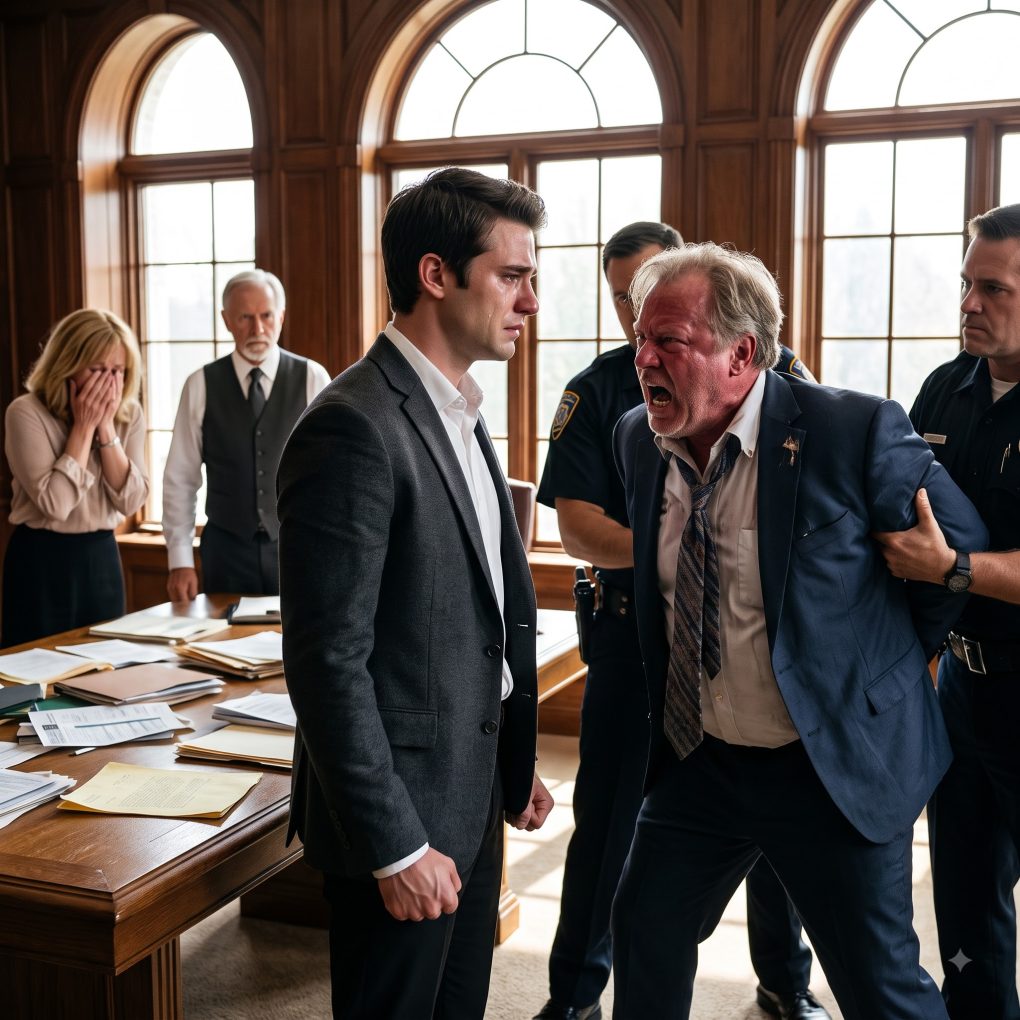
My uncle lied to our family for 15 years, claiming my dad died broke and I was a charity case — until the attorney revealed the $400,000 life insurance payout my father had left me, signed over to my uncle.
“Your late father’s estate balance is zero, standard probate,” the attorney declared, sliding the blue folder toward my uncle, Harold....