“The admiral had spent weeks trying to prove Lieutenant Commander Arwin Blackwood didn’t belong among elite special warfare operators.
“The admiral had spent weeks trying to prove Lieutenant Commander Arwin Blackwood didn’t belong among elite special warfare operators.
At the graduation ceremony, he saved her for last, smiled in front of a room full of officers, and asked for the call sign he knew nobody had assigned her.
Arwin lifted the ceremonial cup and answered with two quiet words: ‘Iron Widow.’ The admiral went pale—because seven years earlier, someone with that name had saved his life…”
Lieutenant Commander Arwin Blackwood had learned long ago that being underestimated could be useful.
That did not make it pleasant.
For weeks, she had been the only woman in an advanced special warfare leadership program filled with experienced operators who already knew one another’s reputations.
Some treated her professionally.
A few were curious.
Others, especially Lieutenant Orion Thade, seemed determined to remind her she was an outsider.
But no one made his opinion clearer than Admiral Victor Hargrove.
At sixty-two, Hargrove had spent most of his adult life in Naval Special Warfare.
His career was legendary enough that younger officers lowered their voices when discussing him.
He also believed the new integration program was a mistake.
And Arwin had become the person he intended to use as proof.
During morning inspection, he stopped directly in front of her.
“Lieutenant Commander Blackwood.”
“Sir.”
“Your cover is out of alignment.”
It wasn’t.
Arwin knew it.
Commander Zephr Colrin, the training officer, knew it.
Several operators nearby knew it.
Still, Arwin replied:
“Yes, sir.”
Hargrove moved on.
Thade smirked.
Later, while preparing for a demanding maritime exercise, Arwin discovered her equipment had been altered enough to create an unnecessary disadvantage.
She corrected it quietly.
No accusations.
No public complaint.
Captain Vesper Reeve, a naval intelligence officer who appeared at the training center far more often than seemed normal, noticed.
.
Their eyes met.
Nothing was said.
That was how most communication between them worked.
Because Arwin was not at the training center merely to graduate.
Her real assignment had begun seven years earlier.
And Admiral Hargrove had no idea he was standing inside it.
During the first major exercise, Arwin’s team completed its objective using an unconventional approach that left even experienced operators confused.
Thade confronted her afterward.
“Where did you learn that?”
“Experience.”
“What experience?”
“Not everything in my service record is available at your clearance level.”
He laughed.
“Convenient.”
Hargrove was less amused.
.
“You used methods outside normal doctrine.”
“With respect, Admiral, we remained within the mission parameters.”
“Real operators do not improvise around rules whenever they feel like it.”
Something almost resembling irony moved across Arwin’s face.
“Yes, sir.”
The admiral interpreted her restraint as arrogance.
What he did not know was that Arwin had spent years working in environments where a badly chosen sentence could end more than a career.
Then came another training exercise.
A systems malfunction created an actual emergency inside the facility.
Smoke spread.
Doors locked unexpectedly.
Several operators, including Thade, became trapped.
Arwin helped get people out.
She also used knowledge of the facility’s security architecture that no ordinary participant should have possessed.
Afterward, Hargrove summoned her.
“How did you know those systems?”
“Previous assignments.”
“I’ve reviewed your assignments.”
“Not all of them, sir.”
“I have one of the highest clearances in this command.”
Arwin looked directly at him.
“Yes, sir.”
The answer bothered him more than defiance would have.
Because if Victor Hargrove could not see portions of her record, then Arwin Blackwood had served somewhere outside the world he believed he understood completely.
He began investigating her.
That was exactly what Captain Reeve expected.
Three days later came the graduation ceremony.
Senior officers filled the hall.
Foreign observers sat near the rear.
Operators wore formal uniforms.
The atmosphere was built around tradition, pride, and earned recognition.
One by one, graduates received their ceremonial call signs.
Thade received his.
Kelwin received his.
Every seat in Arwin’s row emptied.
Except hers.
Hargrove had saved her for last.
Finally, he called:
“Lieutenant Commander Arwin Blackwood.”
She walked toward the stage.
Hargrove smiled.
Not warmly.
“Before we assign anything, perhaps you would like to tell our guests about your greatest operational achievement.”
The room shifted.
No other graduate had been asked to justify being there.
Arwin replied:
“My relevant deployments remain classified, Admiral.”
“Of course.”
A few people exchanged glances.
Then Hargrove extended the ceremonial cup.
“Call signs are earned.
They represent proven ability, sacrifice, and service under pressure.”
He paused.
“Tell us, Lieutenant Commander—what call sign have you earned?”
He expected silence.
Arwin accepted the cup.
Then answered:
“Iron Widow, sir.”
The entire hall went still.
Hargrove’s face changed instantly.
The cup slipped from his hand.
It struck the stage and shattered.
He whispered:
“That’s not possible.”
Arwin did not move.
Seven years had led to that moment.
And Hargrove had just revealed, in front of everyone, that he knew exactly what those two words meant.
Part 2…..
IF FACEBOOK BROUGHT YOU HERE, HERE’S THE CONTINUATION YOU’VE BEEN WAITING FOR.
ENJOY!
For several seconds, nobody spoke.
Then Admiral Hargrove gripped the edge of the podium.
“Iron Widow is a classified designation.”
Arwin remained calm.
“Yes, sir.”
“How do you know that name?”
Captain Reeve stood from her seat.
Arwin glanced toward her.
Reeve gave a slight nod.
Permission.
Arwin faced the room.
“Seven years ago, six American special warfare personnel were trapped during a compromised intelligence operation in denied territory.”
The room seemed to shrink around her voice.
“The mission became politically sensitive.
Conventional rescue options were considered too dangerous.”
Hargrove’s face had gone almost completely colorless.
Arwin continued.
“A specialized recovery asset was sent instead.”
Thade was staring at her now.
Not mockingly.
Almost frightened.
“The asset recovered all six.”
A man in the audience slowly stood.
Then another.
Hargrove whispered:
“No.”
Arwin looked directly at him.
“You were one of those six, Admiral.”
Someone inhaled sharply.
Thade stepped forward from the row of operators.
His face had changed.
“I was there too.”
Arwin looked at him.
He stared at her as though trying to rebuild a memory.
“They told us the person who got us out was a local asset.”
Arwin said nothing.
“I never saw your face.”
“No.”
“You were injured.”
“Yes.”
Thade swallowed.
“You kept telling us to keep moving.”
A strange silence settled over the room.
Then Captain Reeve walked toward the stage.
She removed the insignia that had allowed most people in the program to assume she was simply another intelligence liaison.
Her actual authority was considerably higher.
Murmurs spread.
Reeve addressed the room.
“Lieutenant Commander Blackwood’s operational identity has been compartmented for seven years.”
She looked toward Hargrove.
“And this training assignment was not solely about integration.”
Hargrove found his voice.
“What exactly are you implying?”
“Nothing.”
Reeve’s tone was controlled.
“We are stating facts.”
Seven years earlier, the operation that trapped Hargrove and five others had been compromised before the team reached its objective.
Someone had exposed information that should have existed inside an extremely narrow chain of access.
Investigators never proved whether the breach had been deliberate, negligent, or the result of someone else using improperly protected credentials.
But one set of credentials appeared repeatedly in the investigation.
Victor Hargrove’s.
That fact had never been enough on its own.
Hargrove insisted his access had been misused.
No conclusive evidence had established otherwise.
The case stalled.
Arwin never forgot.
She had promised the people she recovered that she would help determine how their mission had been exposed.
So seven years later, she entered a program overseen by one of the men connected to the unresolved security breach.
Not to trick him into confessing.
Not to manufacture evidence.
To observe.
To allow a fresh review of behavior, records, access history, and old inconsistencies while independent investigators reopened what had been left unfinished.
Hargrove stared at Reeve.
“This is outrageous.”
Reeve replied:
“You were never accused merely because your credentials appeared in the old investigation.”
“Then why is she here?”
“Because unresolved questions remained.”
Arwin spoke next.
“And because somebody connected to the old access pathway became active again.”
Hargrove’s confidence slipped.
The recent security malfunction at the training center had not been treated as an ordinary equipment failure after all.
Investigators had found indicators that an old authorization pathway had been used improperly.
Again, that did not automatically prove Hargrove had done it.
But it meant the seven-year-old problem had returned.
And Hargrove’s increasingly aggressive attempts to remove Arwin from the program had become relevant.
He shook his head.
“You’re turning professional disagreements into evidence.”
“No,” Reeve said.
“We’re examining evidence independently of those disagreements.”
That distinction mattered.
Arwin had no interest in condemning a man merely because he had humiliated her.
Bias was ugly.
It was not the same as betrayal.
His treatment of her could expose character.
It could not substitute for proof.
So no one arrested him on the stage.
No one publicly declared him a traitor.
Instead, Reeve announced that Hargrove would step aside while an independent security review continued.
That response was less dramatic than the room expected.
It was also more credible.
Hargrove looked toward Arwin.
“You planned this.”
“I completed an assignment.”
“You let me humiliate you.”
Arwin’s voice remained even.
“You made those choices yourself.”
That landed harder than anything else she could have said.
Because it was true.
Nobody had forced Hargrove to single her out during inspection.
Nobody had forced him to undermine her evaluations.
Nobody had forced him to turn the ceremony into a public test designed to embarrass the only woman in the cohort.
Those actions belonged to him.
Just as whatever investigators found in the security review would belong to the facts.
Thade stepped toward Arwin after the formal proceedings ended.
For once, he did not know what to say.
Finally:
“I owe you an apology.”
“Yes.”
He seemed surprised by the directness.
“I thought you didn’t belong here.”
“I know.”
“I thought standards were being changed for you.”
“They weren’t.”
He looked down.
Then back at her.
“You saved my life.”
“That doesn’t make you wrong because you didn’t recognize me.”
“No.”
He shook his head.
“It makes me wrong because I decided what you were capable of before I knew anything about you.”
That was better.
Arwin nodded.
“Then learn from it.”
Weeks passed.
The investigation into the old breach continued.
Evidence ultimately showed that Hargrove had, at minimum, failed to properly secure sensitive access years earlier and had never fully disclosed how long his credentials had been vulnerable.
Whether every compromise could be traced directly to him remained more complicated.
The official process handled those questions.
His command authority ended.
The mythology surrounding his career changed.
But Arwin refused to describe that as victory.
Six people had almost died seven years earlier.
A family of operators had spent years wondering who had betrayed them.
Nothing about that was worth celebrating.
The part that mattered to Arwin was that the unanswered question was finally being handled honestly.
Her own record was gradually restored where security rules allowed.
Some details remained sealed.
That was fine.
She had never needed applause.
But she did accept one thing she had spent years avoiding.
Recognition.
Not worship.
Not legend.
Recognition.
Commander Colrin asked her to remain with the program as an instructor and adviser while its leadership structure was reworked.
Arwin agreed on one condition.
“Keep the standards.”
Colrin smiled slightly.
“I expected you to say that.”
“I don’t want anyone accepted because they’re male.”
“Fair.”
“And I don’t want anyone accepted because they’re female.”
“Also fair.”
“Evaluate the person doing the job.”
“That is generally the idea.”
“Then make sure it stays the idea.”
A month later, a new cohort formed on the same training ground.
Twenty operators stood in formation.
This time, two of them were women.
Arwin walked along the line.
No one laughed.
Not because they feared her.
Because they knew exactly what she expected.
Competence.
Discipline.
Teamwork.
No mythology.
No entitlement.
No shortcuts.
Thade remained involved with the program too.
Different man.
Not transformed overnight.
People rarely are.
But quieter.
More careful about the assumptions he turned into conclusions.
One afternoon he stopped Arwin near the training building.
“I keep remembering that night.”
“Which one?”
“The recovery seven years ago.”
She waited.
“I remember your voice.”
Arwin looked toward him.
“I thought you were going to die if you stopped moving.”
He smiled faintly.
“So you lied.”
“I motivated you.”
“I had a broken leg.”
“You were still complaining.
I took that as a positive sign.”
He laughed.
For once, Arwin did too.
Then his expression became serious.
“Why didn’t you ever tell anyone?”
“Because the mission wasn’t about me.”
“But now everyone knows.”
“Some people know enough.”
“And Iron Widow?”
Arwin touched the small widow symbol now authorized on her uniform.
“That name belonged to a job.”
“Does it still?”
She thought for a moment.
“Maybe part of it does.”
Seven years earlier, Iron Widow had been a name spoken only inside sealed rooms.
A recovery operator whose face some of the people she saved never even saw.
At the ceremony, Hargrove tried to use a call sign to prove Arwin had no history worth respecting.
Instead, the question exposed how much history everyone else had failed to see.
That became the lesson Arwin carried into every class she taught afterward.
The loudest person in a room is not automatically the most capable.
The person with the longest résumé is not immune to failure.
Tradition can preserve excellence.
It can also preserve assumptions.
And sometimes the person everyone believes has the least to prove has already survived things they will never be allowed to describe.
Months later, Lieutenant Kelwin asked her one question after training.
“The recovery mission.”
“Yes?”
“How did you know you could get six people out?”
Arwin looked across the field.
For once, she answered without classification language.
“I didn’t.”
Kelwin waited.
“I knew they were there.”
“And?”
“And leaving them there wasn’t acceptable.”
That was all.
No legend.
No heroic speech.
Just a decision made years earlier by someone who understood that courage rarely arrives with certainty.
Sometimes you act because success is guaranteed.
Sometimes you act because nobody else can.
And sometimes, seven years later, an admiral asks your call sign expecting to humiliate you—
only to discover he has been standing in front of the person who once refused to leave him behind.
THE END.
I’ve shared the complete story, and I truly hope it touched your heart.
If this story moved you, please , like, and share the post.
Thank you for reading! ❤️
Recommended Stories

A Lonely Architect Paid a Struggling Waitress $1,000 to Spend His Birthday With Him—But One Question at Dinner Made Their Arrangement Impossible to Keep Simple – Life Story
Selena Brooks agreed to spend a stranger’s birthday with him for exactly one reason: she needed the money. He promised...
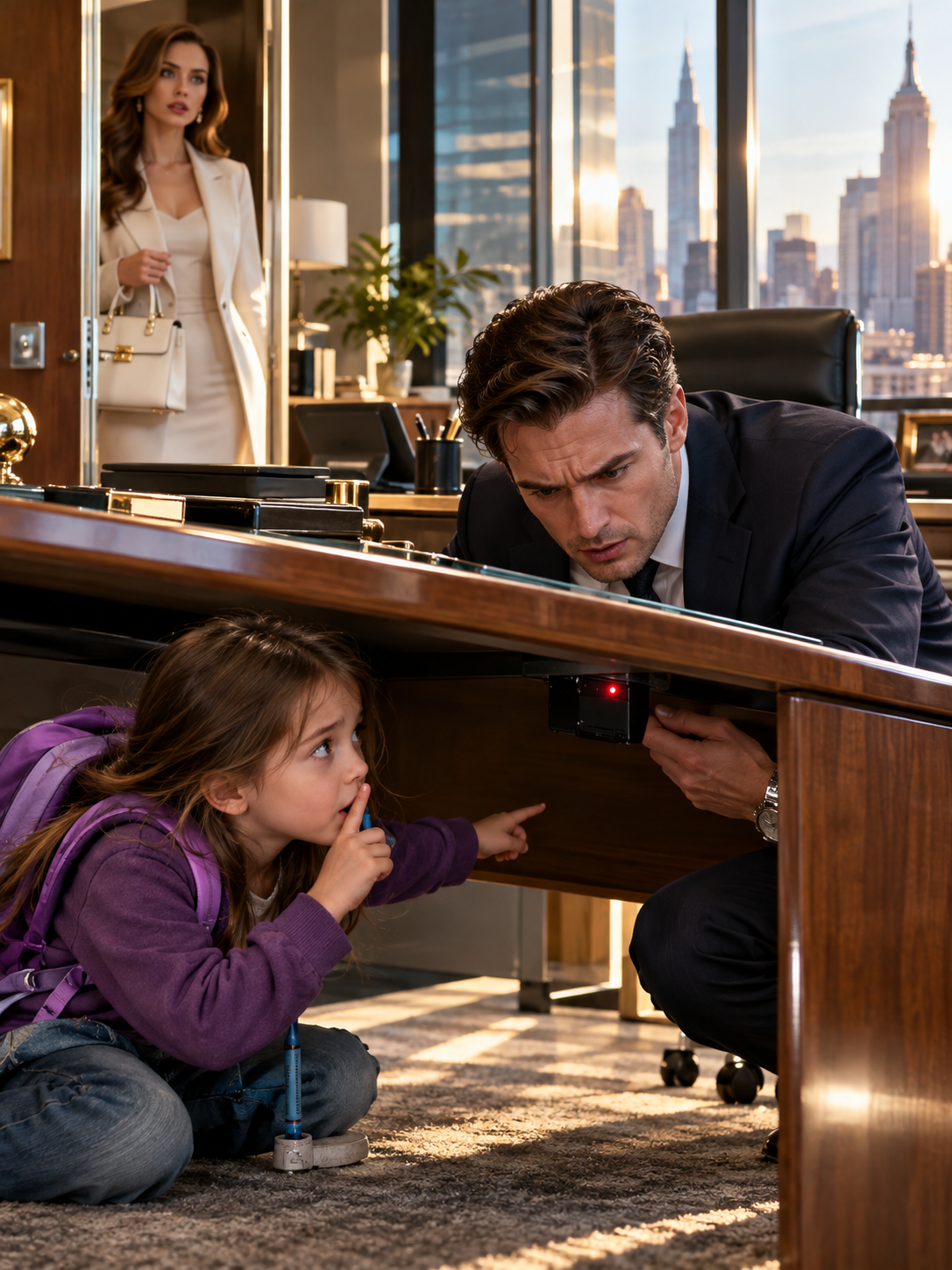
THE JANITOR’S LITTLE GIRL WHISPERED, “THERE’S A RECORDER UNDER YOUR DESK”—THEN THE BILLIONAIRE SAW WHAT HIS FIANCÉE HAD DONE BEFORE THEIR WEDDING AND REALIZED SOMEONE HAD BEEN PLANNING HIS FUTURE FOR HIM – Life Story
A six-year-old girl pointed under William Carter’s desk and told him to stop speaking. The recorder she found had captured...
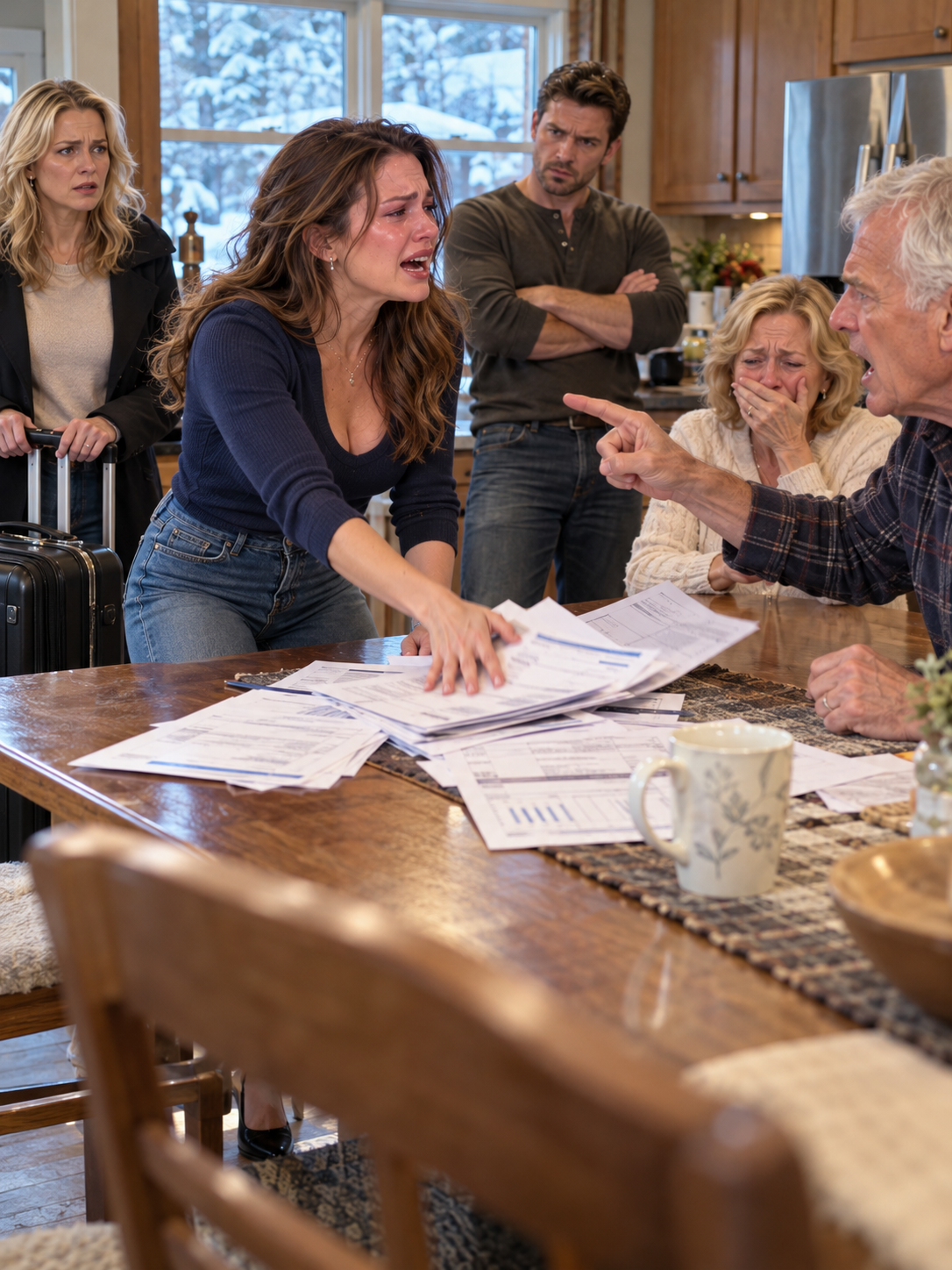
My parents made my nine-year-old daughter walk three miles to school in freezing snow
My parents made my nine-year-old daughter walk three miles to school in freezing snow while my brother’s two boys rode...