The Widowed Millionaire Found His Nanny Asleep With His Twins in His Dead Wife’s Bed—Then His Rival Turned That Moment Into a Weapon – Life Story
Tom Conway had forbidden everyone from sleeping in the bedroom where his wife died.
Then he came home from Chicago and found his new nanny asleep in the center of that bed, one of his six-year-old daughters curled against each side of her.
He should have fired Janet Foster before she woke up—until Kirsty whispered in her sleep, “Mama Janet keeps the monsters away.”
Tom stood in the doorway with one hand still wrapped around the handle of his overnight bag.
For several seconds, he forgot he had been gone for three days.
Forgot the delayed flight.
Forgot the two hundred emails waiting on his phone.
Forgot the negotiations in Chicago that had consumed almost every waking hour since Monday morning.
All he could see was the bed.
Eleanor’s bed.
The ivory silk sheets had been changed over the years, but almost nothing else in the room had.
The pale blue curtains Eleanor had chosen still framed the tall windows.
Her silver-backed hairbrush remained on the vanity.
A photograph from their tenth anniversary stood beside the lamp.
Her favorite jasmine perfume was still in the top drawer, though Tom had not opened it in nearly two years.
Eleanor had died in that bed after eleven months of cancer treatments, false hope, real hope, and the slow dismantling of every future Tom had believed was guaranteed.
Afterward, he closed the room.
Not literally.
The door was never locked.
It simply became understood.
The twins did not play there.
Staff cleaned around it carefully.
Tom entered only when he needed documents from the adjoining study or when grief became so sharp that he needed to stand beside something she had touched.
Nobody slept there.
Until Janet.
Janet Foster lay on top of the comforter wearing the soft gray cardigan she used on cool mornings.
Her natural hair had come loose from the twist she usually wore while working and spread across Eleanor’s pillow.
Kirsty was tucked against Janet’s left side, thumb near her mouth.
Betty was curled on the right, clutching the worn stuffed elephant that still carried the faint lavender scent of Eleanor’s old laundry soap because Betty refused to let anyone wash it.
Janet had one arm around each child.
All three were sleeping.
Peacefully.
That detail was what kept Tom from speaking.
His daughters had not slept peacefully in almost two years.
He had heard the nightmares.
He had been called into their rooms.
He had sat on beds, replaced water glasses, turned on hallway lights, checked closets for monsters, and repeated the same promise until the words lost meaning.
Daddy is here.
Daddy isn’t going anywhere.
But he did go somewhere.
Constantly.
New York.
Chicago.
London.
Atlanta.
Wherever Conway Property Group had a problem large enough to justify his absence.
Tom called it protecting their future.
Some colder, more honest part of him knew work was simply the one place Eleanor had not died.
Kirsty moved against Janet.
Her lips parted.
“Mama Janet keeps the monsters away.”
Tom’s grip tightened on the doorframe.
Janet’s eyes opened.
She did not jerk awake.
That impressed him, though he did not want it to.
She became aware in stages.
First the ceiling.
Then the children.
Then Tom.
Her expression changed.
Not into panic.
Not guilt.
Something closer to guarded understanding.
She carefully eased herself out from beneath Kirsty’s arm.
Tom expected an apology.
Instead she whispered, “They had a bad afternoon.”
His voice came out lower than intended.
“You brought them in here.”
“Yes.”
“My bedroom.”
“Yes.”
“My wife’s bedroom.”
Janet glanced at the sleeping girls.
“I know.”
That answer irritated him more than an excuse would have.
“If you knew, why did you do it?”
Betty stirred.
Janet immediately lowered her voice further.
“Because they asked me where their mother felt closest.”
Tom stared at her.
Janet continued.
“Kirsty thought you weren’t coming home.”
“My flight was delayed.”
“I know.”
“I called.”
“You did.”
He hated how calm she was.
“They know I travel for work.”
“They understand that with their heads.”
Janet looked down at Kirsty.
“The rest of them is six years old.”
Tom felt something defensive rise.
“I provide for my children.”
“I didn’t say you didn’t.”
“You implied—”
“I’m explaining why we’re here.”
Her voice remained gentle.
That made it difficult to fight with.
“They were both crying.
Betty wanted something that smelled like her mother.
Kirsty said this room was where her mother had loved them last.”
Tom looked at the twins.
He remembered Eleanor in the final months, thin arms still strong enough to pull two little girls into bed every morning.
Pancake crumbs.
Storybooks.
The ridiculous stuffed elephant.
He had preserved the room because it hurt too much to change.
His daughters had remembered it as somewhere they were loved.
Janet seemed to read that realization without commenting on it.
“I would not have brought them here for ordinary play,” she said. “But they needed somewhere that didn’t feel like another room adults might leave.”
Tom’s chest tightened.
“How long have the nightmares been this bad?”
Janet paused.
“Since before I got here.”
“That wasn’t my question.”
“Every night since I arrived.”
He stared at her.
“That’s three weeks.”
“Yes.”
“Why wasn’t I told?”
“I thought you knew.”
“I didn’t.”
Janet nodded once, absorbing the information without judgment.
Then Tom noticed something.
“You said every night.”
“Yes.”
“What do you do when they wake up?”
“I stay with them.”
“For how long?”
“As long as they need.”
“Meaning?”
Janet looked mildly uncomfortable for the first time.
“I’ve been sleeping in the chair between their rooms.”
Tom frowned.
“There is a bedroom in the east wing assigned to you.”
“I know.”
“You haven’t used it?”
“I’ve changed clothes there.”
“That isn’t what I asked.”
Janet sighed softly.
“No.
I haven’t slept there much.”
Three weeks.
Tom had congratulated himself for finally hiring a nanny who lasted longer than anyone else.
Seventeen caregivers had come and gone since Eleanor died.
Some quit because the girls tested them relentlessly.
One left after Kirsty locked her outside in February.
Another resigned after Betty called 911 and told the dispatcher her nanny had “kidnapped bedtime.”
A few were perfectly competent but could not get past the twins’ refusal to trust anyone who might disappear.
Janet had not magically escaped the difficulty.
She had simply been sitting awake with it every night while Tom worked late enough not to notice.
Betty opened her eyes.
“Daddy?”
Tom’s irritation vanished.
He crossed the room.
“Hey, princess.”
“You came back.”
The relief in her voice was immediate.
Tom sat on the edge of the bed.
“I said I would.”
Betty pushed herself upright and wrapped both arms around his neck.
“I knew.”
The words said one thing.
Her grip said another.
Tom held her.
Over Betty’s shoulder, his eyes met Janet’s.
No triumph.
No accusation.
Just fatigue.
Kirsty woke next.
Within minutes both girls were talking at once, explaining that they had been waiting for him and then became scared and then Janet let them tell Mama good night from the bedroom and then everyone got sleepy.
Tom listened.
Really listened.
Maybe for the first time in months.
When Janet began gathering the girls to return them to their rooms, Tom said, “Leave them.”
She stopped.
“They can finish sleeping here.”
Kirsty looked at him.
“Really?”
Tom nodded.
“Really.”
Betty immediately collapsed backward onto the pillow.
Janet smiled.
Small.
Warm.
Dangerous.
Not because there was anything seductive in it.
Because the expression transformed a room Tom had spent two years associating only with death.
For one second, it looked inhabited again.
He hated how much he wanted to keep looking.
“Thank you,” he said.
Janet tilted her head.
“For what?”
Tom looked at his daughters.
“Staying.”
Ten days later, Tom found himself standing in his study pretending to read a development report while watching Janet make flower crowns with Kirsty and Betty in the garden.
“You’re doing it again.”
Tom did not turn.
Ephraim Whitmore entered carrying three folders.
Tom had known Ephraim since graduate school.
Ephraim had stood beside him at his wedding.
At Eleanor’s funeral.
At every major acquisition.
He was the only employee on the estate who treated Tom’s worst moods as weather rather than authority.
“Doing what?”
“Watching the nanny.”
“I’m watching my children.”
“Of course.”
Tom turned from the window.
Ephraim sat without being invited.
“She’s good with them.”
“She’s exceptional.”
“That’s a dramatic word.”
“Betty asked me yesterday whether children can have two mothers.
One in heaven and one who makes pancakes.”
Tom looked back toward the garden.
Kirsty was trying to place a crooked crown on Janet’s head.
Janet bowed solemnly to receive it.
Something shifted painfully beneath Tom’s ribs.
Ephraim watched him.
“Careful.”
Tom’s expression hardened.
“With what?”
“Pretending this is only about the girls.”
Before Tom could answer, someone knocked.
His secretary opened the study door.
“Mr.
Aldridge is here.”
Tom’s mood changed instantly.
“Casemir?”
“Yes.
He says it’s urgent.”
Casemir Aldridge did not make social calls.
He had competed with Tom for commercial properties, investors, political connections, and prestige for fifteen years.
They were not enemies in the theatrical sense.
No shouting matches.
No public feuds.
Their hostility was colder.
Casemir never forgot losing.
Tom never forgot who kept score.
“Send him in.”
Casemir entered with a man Tom did not recognize.
“Conway.”
“Aldridge.”
Casemir smiled.
“This is Marcus Thorne.
Advisory work.”
“On what?”
“Opportunities.”
“That means nothing.”
“It will.”
Tom stayed standing.
Casemir glanced around the study.
His attention shifted when Janet entered with a tray.
She had asked earlier whether Tom wanted coffee during his afternoon meeting.
He had said yes without knowing who the guest would be.
Janet placed cups on the low table.
Casemir looked at her too long.
“Miss Foster,” Tom said, more sharply than necessary, “thank you.”
Her eyes flicked toward him.
She understood the dismissal.
Casemir smiled.
“So this is the famous nanny.”
Tom’s voice cooled.
“I don’t believe she’s famous.”
“You’d be surprised what people discuss.”
Janet’s shoulders stiffened.
She finished placing the sugar bowl.
Casemir added, “Domestic arrangements can become fascinating when a man has as much to lose as you.”
Tom stepped around his desk.
“Janet.”
She met his eyes.
“It’s fine.”
“No.
It isn’t.”
For half a second, something passed across her face.
Gratitude, perhaps.
Then she nodded.
“I’ll be with the girls.”
When she left, Tom closed the door himself.
“Say what you came to say.”
Casemir sat.
“Your company is overextended.”
“It isn’t.”
“Several investors disagree.”
“They can read audited statements.”
“They also read headlines.”
“There are no headlines.”
“Yet.”
Tom went still.
Thorne opened a folder.
A proposed acquisition.
Casemir wanted a controlling interest in several of Conway’s most valuable estate-development holdings.
The offer was deliberately low.
Tom read two pages.
Closed it.
“No.”
Casemir smiled.
“You should think.”
“I just did.”
“You’re distracted.”
“According to whom?”
“People notice changes.”
Casemir gestured toward the window.
Outside, Janet and the twins ran through the grass.
“You’ve become sentimental.”
Tom said nothing.
“Sentiment creates uncertainty.”
“My investors care about returns.”
“Investors care about leadership.”
“I’m still leading.”
“Are you?”
Casemir’s smile thinned.
“Your wife died.
You disappeared into work.
Now a very attractive employee moves into the household, your schedule changes, meetings get delegated, travel decreases—”
Tom stood.
The conversation was over.
Casemir remained seated.
“I’m telling you how it looks.”
“I didn’t ask.”
“Perception matters.”
“To weak men.”
“Perception moves money, Tom.”
“And now you can move yourself out of my house.”
Casemir rose.
“Think carefully.
Some arrangements cost more than they’re worth.”
Tom stepped close enough that Casemir stopped smiling.
“You came into my house and insulted a woman who takes care of my children.”
“I described risk.”
“You threatened one.”
Casemir’s pale eyes stayed fixed on his.
“Those may become the same thing.”
After they left, Tom stood at the window.
Ephraim had remained silent through the business discussion.
Now he said, “That was not subtle.”
“No.”
“He wants your assets.”
“Yes.”
“And he intends to use Janet.”
Tom’s hand tightened around the proposal.
Ephraim studied him.
“So decide something now.”
“What?”
“Whether you are going to protect your business by pushing her away before anyone makes you.”
Tom looked toward the garden.
Janet had one flower crown on her head and another crooked around her wrist.
Betty was chasing Kirsty.
All three were laughing.
The house had not sounded like that in two years.
“No,” Tom said.
Ephraim nodded.
“Good.”
“What exactly are you approving?”
“Nothing.
I’m merely glad you answered quickly.”
That evening Tom found Janet in the library shelving the twins’ schoolbooks.
She had been formal since Casemir left.
Not cold.
Careful.
“Janet.”
She turned.
“The girls are asleep.”
“I didn’t come about them.”
Her hands slowed.
“Then?”
Tom leaned against the reading table.
“I’m sorry.”
“For Mr.
Aldridge?”
“For allowing him into a room where he thought he could speak about you that way.”
“You didn’t know.”
“I know him.”
“That isn’t the same.”
Tom studied her.
“You make excuses for people when they disappoint you?”
“No.”
“Then why are you doing it for me?”
Janet put a book on the shelf.
“Because you didn’t disappoint me.”
The words affected him more than they should have.
She continued.
“You stopped him.”
“After he started.”
“That matters too.”
Tom moved closer.
“He was trying to make you sound like a liability.”
“I noticed.”
“You aren’t.”
Janet smiled sadly.
“I’m your employee, Tom.”
The use of his first name did something uncomfortable to his heartbeat.
“You live here.
You take care of my children.
You’re allowed to exist in my life without being reduced to a risk calculation.”
“Businessmen reduce everything to risk.”
“I’m trying not to.”
Her eyes lifted.
“Why?”
Tom had no answer he was ready to say.
So he asked a different question.
“What do you need?”
Janet blinked.
“Excuse me?”
“You know what the girls need.
You know what the staff needs.
Somehow you know when I haven’t eaten lunch.”
“That is because you become unpleasant.”
“I’m always unpleasant.”
“Worse.”
He almost smiled.
“What do you need?”
The humor left her face.
“I need to know I can do this job without becoming part of a war between rich men.”
“You can.”
“That sounded like a promise you can’t make.”
She was right.
Tom hated that.
Janet gathered several books.
“The girls need stability.”
“I know.”
“They need people who don’t disappear.”
“I know.”
“So whatever is happening between you and Mr.
Aldridge, don’t let it turn this house into somewhere they feel unsafe again.”
Tom watched her leave.
Later that night he stood alone in Eleanor’s bedroom.
He had begun going there more often.
Not because grief was worse.
Because it was changing.
The room no longer belonged entirely to death.
There were faint impressions in the comforter where the girls had slept.
A small flower petal lay on the carpet from something Betty had carried upstairs.
Life had trespassed.
And somehow Eleanor’s memory had survived it.
Five weeks after Janet’s arrival, a thunderstorm rolled over the estate after midnight.
Tom woke in his study to screaming.
He reached the hallway at the same moment Janet emerged from the east wing.
Barefoot.
Cotton nightgown beneath a robe.
Hair loose.
Kirsty was crying in one bedroom.
Betty in the other.
Janet went to Kirsty.
Tom went to Betty.
His daughter threw herself at him.
“I dreamed you died.”
“I’m here.”
“You went away and didn’t come back.”
“I’m here.”
Lightning flashed.
Betty buried her face against him.
Across the hallway Janet began singing softly to Kirsty.
Tom recognized the melody.
Eleanor used to hum something similar.
His throat tightened.
For the next three hours they moved between the rooms.
Water.
Blankets.
Stories.
Reassurance.
No quick fix.
No efficient return to schedule.
At four-thirty, both girls finally slept.
Tom found Janet sitting on the hallway floor between their doors.
Her head rested against the wall.
Her eyes were closed.
“Janet.”
She opened them immediately.
“They okay?”
“Yes.”
“You?”
“Fine.”
“You’re asleep sitting upright.”
“I’ve had practice.”
Tom held out a hand.
“Come on.”
“Where?”
“Coffee.”
The kitchen at dawn felt unfamiliar.
No staff.
No polished service.
Just two exhausted adults standing beneath warm pendant lights while rain tapped against the windows.
Tom handed Janet a mug.
“How long have their nightmares been this severe?”
She looked into the coffee.
“Probably since Eleanor died.”
He flinched.
Janet noticed.
“I’m sorry.”
“No.
Say her name.”
Janet looked up.
“It’s her name.”
“I know.”
But nobody outside Ephraim used it with him.
Everyone had adopted careful phrases.
Your late wife.
Their mother.
After your loss.
Eleanor’s name itself had become a room people thought they were forbidden to enter.
Tom sat.
“I thought they were adjusting.”
“They are.”
“This is adjusting?”
“Healing isn’t the absence of pain.”
He looked at her.
“Professional opinion?”
“Personal.”
Tom waited.
Janet wrapped both hands around her mug.
“My fiancé died three years ago.”
Tom had not known.
“Car accident.”
“I’m sorry.”
“Thank you.”
“Were you engaged long?”
“Eight months.”
“What was his name?”
“David.”
Tom nodded.
Janet’s expression softened slightly, as though grateful he had asked rather than avoided it.
“For almost a year I worked constantly,” she said. “Children’s programs.
Temporary placements.
Overnight care.
I told myself helping other families was productive grief.”
“Was it?”
“No.”
He almost smiled.
“What changed?”
“I got tired.”
“That’s profound.”
“It was less profound at three in the morning on somebody else’s sofa.”
Tom laughed quietly.
The sound surprised both of them.
Janet looked toward the rain-washed garden.
“You can’t work hard enough to outrun grief.”
Tom did not respond.
“You can make yourself unavailable to it,” she continued. “But children notice what that costs.”
He stared into his coffee.
“I thought money meant they’d never be afraid.”
“They aren’t afraid of poverty.”
“I know.”
“They’re afraid of losing you.”
The truth was simple enough to hurt.
Tom had built an empire around preventing uncertainty.
Insurance.
Diversification.
Legal protections.
Trusts.
Real estate.
Capital reserves.
Yet he had failed to understand the one risk his daughters actually measured every night.
Whether their father came home.
“I’m not a very good father.”
Janet’s answer came quickly.
“That isn’t true.”
“You don’t need to protect me.”
“I’m not.”
“Then what would you call it?”
“A grieving father mistaking provision for presence.”
“That sounds nicer.”
“It isn’t supposed to.”
He looked at her.
She smiled.
Tom covered her hand with his before he had consciously decided to.
Janet froze.
So did he.
Her hand was warm beneath his.
Neither moved.
Then small feet slapped against tile.
Kirsty appeared in the doorway.
“Are we having pancakes?”
Janet pulled her hand back.
Tom missed it instantly.
“Apparently.”
Kirsty climbed onto a stool.
“Chocolate chips?”
“No,” Tom said.
“Yes,” Janet said.
They looked at each other.
Kirsty grinned.
“Janet wins.”
Over the next several weeks, Tom changed his schedule.
Not dramatically.
Enough.
He attended dinner.
Drove the twins to school twice a week.
Stopped traveling for meetings that could happen by video.
He learned that Betty hated peas but would eat green beans.
Kirsty had decided she wanted to become a marine biologist despite never having seen an ocean outside vacation photos.
He learned that Janet sang while sorting laundry.
That she preferred tea at night.
That she became silent when angry rather than loud.
That she carried David’s old key ring even though none of the keys opened anything she still owned.
Tom also learned the dangerous fact that his house felt wrong on Janet’s days off.
One evening he found her and the twins chasing fireflies.
“Daddy!”
Betty ran toward him.
“Janet says if we catch seven, we get a wish.”
“Janet lies to children.”
Janet put a hand to her chest.
“I create wonder.”
“You invent policy.”
Kirsty shoved a glass jar toward him.
“We have four.”
Tom took off his jacket.
Ephraim, watching from the terrace, nearly choked on his drink.
Tom ignored him.
They caught no more fireflies.
Betty announced the wish would have worked anyway.
“What did you wish for?” Tom asked.
She looked straight at him.
“For you to be happy.”
He stopped.
Kirsty added, “You smile when Janet’s here.”
Janet looked toward the grass.
Tom looked at Janet.
The twins ran after another flash of light.
“Children have no discretion,” Janet said.
“No.”
“Terrible quality.”
“Runs in the family.”
Their eyes met.
For one long second, Tom nearly kissed her.
Janet stepped back.
“The girls need baths.”
“Janet.”
“You have a call with Tokyo.”
“How do you know my schedule?”
“You leave it on the breakfast table.”
She gathered the twins.
Tom watched her walk toward the house.
He could negotiate billion-dollar transactions without exposing a thought.
One woman retreating from him left him completely transparent.
That night he walked to the old garden pavilion.
Eleanor had designed it.
Stone columns.
Climbing roses.
A view across the lower pasture.
Tom had proposed to her there.
He had avoided it since the funeral.
Now he sat beneath the moonlight and said aloud, “I don’t know if this is betrayal.”
The garden offered no answer.
So he gave himself one.
“I loved you.”
His voice broke.
“I still do.”
Footsteps sounded on gravel.
Janet appeared in a cream shawl.
“I can leave.”
“No.”
She stopped.
“Couldn’t sleep?”
“No.”
“Me neither.”
He gestured toward the bench.
She sat with a careful foot of space between them.
“Elena designed this,” Janet said.
“Eleanor.”
Her face flushed.
“Sorry.”
“It’s okay.”
He smiled faintly.
“She would have laughed at me correcting you.”
“What was she like?”
Tom looked toward the roses.
“Loud when she was happy.
Impatient with slow walkers.
Terrible at keeping surprises.
Believed expensive wine was mostly an elaborate practical joke.”
Janet smiled.
“She sounds wonderful.”
“She was.”
Silence settled.
Not awkward.
Tom looked at Janet.
“David?”
“Kind.”
“That sounds like an obituary.”
She laughed softly.
“He was messy.
Always late.
Bought books and never finished them.
He could make anyone feel included in a room.”
“You still love him.”
“Yes.”
The honesty did not hurt.
It helped.
Janet studied him.
“Do you still love Eleanor?”
“Yes.”
“Then maybe loving someone who died doesn’t prevent anything.”
Tom’s chest tightened.
“What are we talking about?”
She looked at him.
“I don’t know.”
He reached toward her.
Stopped.
“Can I?”
Janet’s gaze moved to his hand.
Then his face.
“Yes.”
He touched her cheek.
She leaned into his palm.
Tom had forgotten how terrifying tenderness could be.
He moved closer.
Janet did too.
His phone vibrated.
Both of them froze.
Tom almost ignored it.
Then the estate security alert flashed.
Motion near the east gate.
By the time security confirmed it was an animal, Janet had rebuilt the distance.
“I should go.”
“Janet.”
“It’s late.”
He let her.
The next morning Casemir filed a civil motion connected to several estate partnerships and began quietly feeding concerns to investors about Tom’s judgment.
Larkin Montague, Tom’s attorney, brought the paperwork to breakfast.
“This is pressure, not substance.”
Tom scanned it.
“What does he want?”
“The same holdings.”
“He isn’t getting them.”
“He may not need them if he can make your partners afraid enough.”
Tom looked across the kitchen.
Janet was helping Betty pour orange juice.
His daughters laughed when half of it missed the glass.
Larkin followed his gaze.
“Your personal life may become part of the narrative.”
“There is no personal relationship.”
Larkin raised an eyebrow.
“Legally, that helps.”
Tom disliked the relief he should have felt.
That afternoon he found Janet in the library with paint in her hair and both girls’ handprints covering a canvas.
He closed the door after the twins left to wash up.
“Janet.”
“You look like someone died.”
“No.”
She put down a paintbrush.
“What happened?”
“Casemir is escalating.”
“Because of me?”
“No.”
“That wasn’t convincing.”
Tom walked closer.
“He intends to use whatever he can.”
“So I am part of it.”
“You aren’t the cause.”
“But I’m useful.”
He could not lie.
“Yes.”
Janet looked away.
Tom felt the old instinct rise.
Control.
Fix.
Remove risk.
He could transfer her.
Pay a severance package.
Hire a different caregiver.
Make the problem disappear before it became public.
The thought made him physically ill.
“Do you want me to leave?” she asked.
“No.”
The answer was immediate.
Her eyes lifted.
“Tom.”
“No.”
He crossed the remaining distance.
“I have spent two years choosing the safest available version of everything because I thought safety meant nothing else could be taken from me.”
Janet said nothing.
“I’m tired of making decisions based on what I might lose.”
Her lips parted.
Tom’s pulse pounded.
“I’m falling in love with you.”
The words sounded both impossible and overdue.
Janet stared.
He continued before fear could stop him.
“I know you work for me.
I know that makes this complicated.
I know the girls are attached to you, which makes it more complicated.
I know Casemir will use it, which makes it professionally idiotic.”
A tear slid down Janet’s cheek.
Tom almost lost his nerve.
Then she stepped closer.
“What if I’m falling in love with you too?”
For one moment neither moved.
Then Tom exhaled as though he had been underwater for two years.
He did not kiss her.
Not yet.
Instead he said, “Then we change your employment arrangement before we do anything else.”
Janet blinked.
“What?”
“I’m serious.”
Despite her tears, she laughed.
“Of course you are.”
“I will not become the wealthy employer who tells himself power doesn’t matter because his feelings are sincere.”
Her expression changed.
Something like respect.
“I’ll ask Ephraim to arrange independent childcare coverage.
You decide whether you remain as household manager, leave employment entirely, or something in between.
Separate contract.
Separate residence available if you want one.
No financial dependence on me.”
“Tom.”
“I’m not negotiating romance with your paycheck.”
She touched his hand.
“Thank you.”
Three days later, Janet moved from nanny to family-support coordinator during a transition period while a licensed childcare team took over formal responsibility for the twins.
It sounded absurdly corporate.
It was also the only way Tom could look at himself in the mirror.
Janet kept her own cottage on the estate.
Her salary remained independent through the management company.
And only after she signed the new agreement did Tom kiss her under the garden pavilion.
Slowly.
Carefully.
Nothing in his life had ever felt less like a transaction.
Nine weeks after Janet arrived, Betty woke with severe abdominal pain.
By the time Tom reached the hospital, she was being prepared for emergency surgery.
Appendicitis.
Caught early.
Good prognosis.
None of that stopped his hands from shaking.
Betty cried when she saw him.
“Daddy.”
He gathered her carefully.
“I’m here.”
“Where’s Janet?”
The question hurt before he could stop it from hurting.
Then he heard footsteps.
Janet appeared wearing a coat over pajamas.
Betty reached for her immediately.
“Janet.”
“I’m here, sweetheart.”
Betty took one of Tom’s hands and one of Janet’s.
“Both.”
Tom swallowed.
“Both.”
Before the nurse wheeled her away, Betty looked at Janet.
“You promise you’ll be here after?”
“I promise.”
Then at Tom.
“You too.”
“I promise.”
The doors closed.
Tom stood in the corridor.
Janet’s shoulders began trembling.
He realized she had held herself together entirely for Betty.
He took her hand.
“She’ll be okay.”
“I know.”
“You don’t sound like you know.”
“I know medically.”
She looked at him.
“My body didn’t get the memo.”
They sat in the waiting room for two hours.
At some point Janet said, “I love them.”
Tom looked at her.
She stared at the floor.
“I tried not to.”
“Why?”
“Because they aren’t mine.”
“That has never stopped love from hurting.”
She wiped her face.
“I love them.”
Tom moved closer.
“I love you.”
Janet closed her eyes.
He had told her before.
Not like this.
Not while fear stripped away performance.
“I love you too.”
Dr.
Beauchamp appeared twenty minutes later.
“Everything went beautifully.”
Tom’s knees nearly failed.
When Betty woke in recovery, she saw their joined hands.
A sleepy smile appeared.
“Are you getting married?”
Janet laughed through tears.
“Betty.”
“What?”
Kirsty, brought in later by Ephraim, apparently had already formed a committee.
Within a month, Tom proposed.
Not because the twins asked.
Because he had spent years believing control could protect him from grief and finally understood that control had mostly protected him from being alive.
He proposed in Eleanor’s garden pavilion.
Janet said yes.
Then Tom showed her a letter.
He had found it weeks earlier among Eleanor’s estate documents.
Written during the final month of her illness.
Addressed to him.
He had been unable to read past the first paragraph until recently.
In it, Eleanor wrote that she did not want the girls raised inside a museum to her absence.
She did not want Tom confusing loyalty with loneliness.
If someone kind ever entered their lives, she hoped he would have the courage not to punish himself for surviving.
Janet read the letter twice.
Then pressed it against her chest.
“She knew you.”
“Unfortunately.”
“She loved you.”
“Yes.”
“She wasn’t giving permission.”
Tom looked at her.
“No.”
“She was telling you not to confuse suffering with devotion.”
Tom nodded.
“That sounds like something she would say.”
The wedding was set for early fall.
For several weeks, life became almost embarrassingly normal.
Cake samples.
School mornings.
Investor meetings.
Kirsty insisting that she and Betty needed separate flower baskets because “symmetry is boring.”
Janet pretending not to cry while choosing a dress with her friend Roxalana Ashbourne.
Tom privately commissioning a small painting of Janet reading to the twins in the library.
He planned to give it to her after the wedding.
Then, ten days before the ceremony, everything broke.
Tom woke at a.m. to seventeen missed calls.
A financial news site had published allegations that money had been moved improperly from Kirsty and Betty’s trusts.
The article suggested possible mismanagement.
By seven, larger outlets had repeated it.
By eight, the story had added a second layer.
Sources questioned whether Tom’s rapid engagement to Janet represented compromised judgment.
One article referred to her as “the former nanny positioned to benefit from the Conway estate.”
Tom read the sentence three times.
Then set his coffee cup down with such precision that Ephraim, entering the room, immediately knew something was wrong.
“Larkin is on the way,” Ephraim said.
“How?”
“I saw it.”
“Where are the girls?”
“Breakfast.”
“Keep them away from phones.”
Ephraim nodded.
Janet appeared in the doorway.
Her face told him she had already seen everything.
“It isn’t true,” Tom said.
“I know.”
“The trusts are intact.”
“I know.”
“Janet—”
“I believe you.”
That should have helped.
Instead he heard the fear beneath her certainty.
By noon Larkin had assembled a forensic accountant, the trust administrator, and Tom’s internal counsel.
Three transfer requests existed in digital systems.
None completed.
Each had been created to look as if Tom had attempted to move money from the girls’ protected accounts into a Conway-affiliated investment entity.
The bank had blocked the transactions automatically.
Yet screenshots had reached reporters.
“It’s fabricated,” Tom said.
“Yes,” Larkin replied.
“Then prove it.”
“We will.”
“How long?”
“Days if we’re lucky.
Weeks if whoever did this covered themselves.”
Tom’s jaw tightened.
“Casemir.”
“Likely.”
“Likely isn’t evidence.”
Larkin met his eyes.
“No.”
Tom hated competent people when they refused to tell him what he wanted.
There was worse.
A complaint had been filed with child welfare authorities alleging potential financial exploitation and inappropriate household influence.
Nobody was coming to remove the twins that afternoon.
Larkin made that clear.
But an investigation would occur.
Interviews.
Review of the trusts.
Questions about the rapid change in Tom’s domestic life.
The engagement.
Janet.
Outside the estate gates, photographers appeared.
By evening the twins knew something was wrong.
“Why are people outside?” Kirsty asked.
Tom crouched beside her.
“Because someone told a story about our family that isn’t true.”
“Are we in trouble?”
“No.”
Betty looked toward Janet.
“Is Janet still marrying you?”
Tom’s throat tightened.
“Yes.”
Janet did not answer.
He noticed.
That night he found her packing books into a box in the library.
His stomach dropped.
“No.”
Janet kept packing.
“Don’t.”
She put another book into the box.
“Janet.”
“I’m staying with Roxalana.”
“No.”
“Tom.”
“You said people leaving is what the girls fear most.”
Her hands stopped.
The words hurt her.
He regretted them instantly.
“That was cruel.”
“Yes.”
“I’m sorry.”
Janet turned.
Tears stood in her eyes.
“I’m not leaving them.
I’m stepping out of the house until the investigation is over.”
“They’ll experience that as leaving.”
“Then help them understand.”
“Help me understand.”
She wiped one cheek.
“As long as I’m here, the story is easier.”
“What story?”
“That you’re compromised because of me.
That I’m influencing you.
That I’m trying to access the girls’ money.
That you fired professional caregivers and installed your girlfriend.”
“You know none of that is true.”
“This isn’t about what I know.”
“It should be.”
“Tom, if my presence creates even a small risk that a judge or investigator thinks the girls are less safe—”
“No.”
“Listen.”
“I am listening.”
“No, you’re preparing to win.”
The sentence stopped him.
Janet stepped closer.
“I love you.”
He closed his eyes.
“I love them.”
“Then stay.”
“Sometimes loving someone means refusing to become the easiest weapon against them.”
“You are not a weapon.”
“Casemir thinks I am.”
Tom looked at her.
She had said the name he had not.
“You believe it’s him.”
“Yes.”
“So do I.”
“Then let me remove what he’s using.”
Tom shook his head.
“You’re giving him what he wants.”
“No.
I’m giving you room to prove what he did without every headline turning into a photograph of me.”
“What about the wedding?”
Janet’s face broke.
“Postpone it.”
The word landed harder than cancelled would have.
Cancelled was death.
Postponed was a life suspended.
“Until when?”
“Until the girls are safe.”
“They are safe.”
“Until nobody can plausibly argue otherwise.”
Tom stared at her.
He had enough money to buy newspapers.
Law firms.
Security teams.
Investigators.
He had no authority that could make Janet stay without proving exactly what the headlines accused him of believing—that love entitled him to control.
So he stepped back.
“When do you leave?”
“Tonight.”
“Will you say goodbye to them?”
“Yes.”
The twins cried.
Kirsty became angry.
Betty refused to release Janet for several minutes.
Janet promised she would call every day.
Promised she had not stopped loving them.
Promised leaving the house did not mean leaving the family.
Tom stood near the staircase while the woman he planned to marry walked out carrying two suitcases.
He did not stop her.
It was the hardest respectful thing he had ever done.
Afterward, Betty found him in Eleanor’s bedroom.
“You made her go?”
“No.”
“She went.”
“Yes.”
“Because of you?”
Tom sat on the bed.
“Because grown-ups are scared sometimes.”
Betty climbed beside him.
“Are you scared?”
“Yes.”
“Me too.”
He put an arm around her.
For once, he did not promise he could fix everything.
He said, “I’m still here.”
The next five days changed the way Tom fought.
Old Tom would have attacked publicly.
Called Casemir.
Threatened litigation.
Destroyed partnerships.
New Tom sat at a table with Larkin, Ephraim, and forensic accountant Maya Chen and followed evidence.
The trust-transfer requests came through a vendor-level authentication path used by an outside financial reporting consultant.
The consultant had been added eighteen months earlier during a partnership audit.
The company that employed him had recently been acquired.
Through two holding entities, the beneficial owner traced back to an Aldridge-controlled investment vehicle.
That was the first piece.
Not enough.
The second was access timing.
One fraudulent request was created twelve minutes after Thorne had logged into a shared investor data room containing trust-structure summaries provided during an old financing review.
Thorne.
The man Casemir brought into Tom’s study.
Larkin looked at the logs.
“That gives us a path.”
“Not intent.”
“No.”
Maya added, “There’s more.”
A metadata comparison showed screenshots sent to reporters were generated before the transactions appeared in Conway’s own internal review queue.
Whoever leaked the accusation appeared to know the fake evidence existed before Tom’s staff did.
Tom leaned back.
“Can we prove source?”
“Not yet.”
“Keep going.”
They did.
Tom slept three hours a night.
Not at the office.
At home.
That mattered.
He made breakfast badly.
Took the girls to school through a side entrance.
Spoke honestly with the child welfare investigator.
Provided full trust records without delay.
Allowed independent review.
Did not use his influence to shorten the process.
The investigator, a woman named Dana Mercer, asked him why Janet had moved out.
Tom answered, “Because she feared her presence would be mischaracterized and harm the girls.”
“Did you ask her to?”
“No.”
“Do you want her back?”
“Yes.”
“Does she remain financially dependent on you?”
“No.”
He provided the employment restructuring documents dated before the romantic relationship began.
Dana looked at them carefully.
“That was prudent.”
“It was necessary.”
“Why?”
“Because I was her employer.”
Dana nodded.
“And because loving someone doesn’t erase a power imbalance.”
Tom thought of Janet.
“No.”
The child welfare inquiry remained open, but the emergency concern diminished quickly once investigators confirmed the trusts were intact and the children were safe, stable, and deeply attached to both Tom and Janet.
Still, the public story continued.
Tom’s board requested a special meeting.
Two investors paused negotiations.
Casemir’s acquisition group raised its offer.
This time, slightly.
Tom almost admired the confidence.
Ephraim threw the letter onto the desk.
“He really thinks this worked.”
“Maybe it did.”
Ephraim stared at him.
“You aren’t selling.”
“No.”
“You said maybe.”
Tom looked toward the photograph of Eleanor and the girls.
“I meant maybe he succeeded in making me understand something.”
“Which is?”
“I’ve treated the company like the part of my life I can’t lose.”
“And?”
“It isn’t.”
Ephraim smiled faintly.
“There you are.”
Tom held a press conference on the courthouse steps five days before the scheduled wedding.
Not to declare war.
Larkin talked him out of that phrase.
Instead Tom stated three facts.
The girls’ trusts were intact.
Independent investigators were reviewing attempted fraudulent transfer instructions.
He would cooperate fully with every agency involved.
Then he said something his public-relations team had advised against.
“The insinuations about Janet Foster are false.”
Cameras clicked.
“She worked for my family.
We changed that employment relationship before beginning a personal one because she deserved the freedom to choose without her livelihood depending on me.”
More cameras.
“She has protected my daughters in ways no balance sheet can measure.
Anyone attempting to turn that into evidence of exploitation is lying.”
Across the crowd, Tom saw Janet.
Roxalana beside her.
Janet had not told him she would come.
Their eyes met.
Tom almost lost the rest of his prepared statement.
Afterward, reporters surrounded him.
Larkin pulled him toward the building.
Then Tom saw Janet heading toward the parking structure.
And a familiar man following.
Casemir.
Tom’s entire body tightened.
“Larkin.”
His attorney followed his gaze.
“Oh, hell.”
They moved.
Not running.
Casemir reached Janet first.
Tom could not hear the opening words.
By the time he came close enough, Janet was standing beside her car with her back straight and her face pale.
Casemir smiled.
“You’re making this harder than it needs to be.”
Janet saw Tom approaching behind him.
Her eyes changed slightly.
She did not call out.
Tom slowed.
Larkin pulled out his phone.
Casemir continued.
“You leave permanently.
He sells the holdings.
The complaints disappear.”
Janet’s face remained composed.
“And if I don’t?”
Casemir shrugged.
“The evidence becomes uglier.”
“What evidence?”
“Whatever investigators find.”
“You mean whatever someone creates?”
His smile thinned.
“Careful.”
Janet folded her arms.
“And the girls?”
“If Conway insists on being stubborn, custody gets complicated.”
Tom felt something violent move through him.
He stayed still.
Larkin’s phone continued recording.
Janet asked, “You would risk putting two six-year-old girls into temporary care for a business deal?”
Casemir leaned closer.
“I would prefer their father become reasonable.”
“That wasn’t my question.”
Casemir’s irritation surfaced.
“Conway took things from me for years.”
“Business deals?”
“Respect.
Partners.
Opportunities.”
“So this is revenge.”
“This is correction.”
Janet’s voice dropped.
“You’re threatening children because a man beat you at business.”
Casemir’s mouth hardened.
“I’m offering you a chance to limit damage.”
Tom stepped forward.
“That’s enough.”
Casemir turned.
For the first time, surprise cracked his composure.
“Conway.”
Tom stopped beside Janet.
He did not touch her until she reached for his hand.
Only then did he close his fingers around hers.
Larkin approached.
“Mr.
Aldridge, I strongly recommend you stop speaking.”
Casemir recovered quickly.
“This is ridiculous.”
Larkin held up the phone.
“No.
This is useful.”
Casemir’s face changed.
He looked at Janet.
“You set me up.”
Janet shook her head.
“You followed me.”
That mattered.
Tom had not used her as bait.
Had not asked her to risk herself.
Casemir’s arrogance had created the evidence they needed.
The recording alone did not solve everything.
But combined with the authentication logs, Thorne’s access records, the vendor ownership trail, and the early screenshot metadata, it gave investigators a coherent structure.
Within forty-eight hours, warrants were issued for records associated with Thorne’s consulting firm.
The fraud allegations against Tom collapsed under independent review.
The child welfare inquiry closed with no finding of financial exploitation or unsafe conditions.
Casemir was not dragged dramatically away on the courthouse steps.
Real consequences moved slower.
Thorne was charged first after investigators found communications discussing the fabricated trust transfers.
Casemir was later indicted on fraud, conspiracy, attempted extortion, and financial crimes tied to a separate charitable foundation investigation that had already been underway.
Tom learned that from Larkin over coffee.
He did not cheer.
He simply asked, “Can he reach the girls?”
“No.”
“Janet?”
“No.”
“Then we’re done for today.”
Larkin stared at him.
“That’s surprisingly restrained.”
“I’m tired.”
“Fair.”
Tom drove to Roxalana’s house himself.
No security convoy.
No announcement.
Janet opened the door.
For several seconds they just looked at each other.
“It’s over?” she asked.
“The urgent part.”
“The investigation?”
“Cleared.”
“The trusts?”
“Never touched.”
“The girls?”
“Safe.”
Janet closed her eyes.
Relief moved visibly through her.
Tom wanted to pull her into his arms.
He waited.
She opened her eyes.
“I’m sorry.”
“For leaving?”
“Yes.”
“I’m not.”
She frowned.
“It hurt.”
“Very much.”
“Then why aren’t you angry?”
“I was.”
“Was?”
“Then Dana Mercer asked me whether you were financially dependent on me.”
Janet waited.
“And I realized something.”
“What?”
“You leaving was proof that you weren’t trapped.”
Her eyes filled.
Tom continued.
“I hated your decision.
But it was yours.”
“Tom.”
“I spent most of my life believing love meant keeping people safe by controlling every variable.”
He looked toward the street.
“I did it with Eleanor.
I did it with the girls.
I started doing it with you.”
“You were protecting us.”
“Sometimes.”
He met her eyes.
“Sometimes I was protecting myself from being afraid.”
Janet stepped closer.
“The wedding was supposed to be Saturday.”
“I know.”
“I cancelled the flowers.”
“Roxalana didn’t.”
Janet blinked.
Tom smiled.
“She apparently has more faith in us than either of us deserves.”
“What?”
“Everything is still booked.”
“You planned that?”
“No.
For once in my life, other people ignored my instructions.”
Janet laughed.
Then cried.
Tom opened his arms.
She came into them.
Five days later, Janet Foster walked through Eleanor’s garden toward Tom Conway.
Kirsty and Betty walked ahead of her carrying flowers.
Not matching baskets.
Kirsty had won that argument.
Ephraim stood beside Tom.
Roxalana cried openly from the front row and denied it afterward.
The ceremony was small.
Family.
Friends.
A few colleagues.
No business press.
No investors.
Tom had spent half his life making large events prove importance.
This one needed no proof.
When Janet reached him, Betty whispered much too loudly, “Daddy, don’t mess up.”
Everyone laughed.
Tom looked at Janet.
“I’ll try.”
During the vows, he did not promise never to leave.
Did not promise nothing bad would happen.
Those were child promises.
Fear promises.
He promised presence.
He promised honesty.
He promised never to confuse protection with control.
Janet promised to stay not because she would never feel afraid, but because she would speak before fear made decisions for her.
Then she knelt in front of Kirsty and Betty.
“I loved your mother before I ever knew her,” she told them, “because I met her through everything beautiful she left in you.”
Tom looked down.
He could not stop the tears.
Janet continued.
“I will never take her place.”
Betty reached for her.
“We know.”
“I would like to have my own place.”
Kirsty nodded seriously.
“You already do.”
Janet broke.
So did Tom.
Afterward, the twins dragged them toward the cake before photographs were finished.
Nobody stopped them.
Months later, the master bedroom finally changed.
Not erased.
Changed.
Tom and Janet moved into it together after Janet asked whether he was ready.
Eleanor’s hairbrush went into a memory box for the girls.
Her photograph stayed.
The curtains came down because Janet hated blue.
Tom expected guilt.
Instead he felt relief.
One evening, he found Betty sitting on the floor with Eleanor’s stuffed elephant beside her.
“Daddy?”
“Yes?”
“Does Mama know Janet lives here?”
Tom sat beside her.
“I think your mother would want us to be loved.”
Betty considered that.
“Okay.”
Then she went back to coloring.
Children sometimes handled the sacred more cleanly than adults.
Tom remained wealthy.
The company survived.
But not unchanged.
He sold two projects that had required constant travel.
Ephraim became chief operating officer.
Tom attended fewer meetings.
More breakfasts.
He missed deals.
He gained Tuesday school pickup.
Casemir eventually pleaded guilty to several financial offenses.
Tom read the article once.
Then closed it.
He had spent enough years letting rivalries define victory.
Janet returned to graduate study in child and family counseling.
Not because Tom suggested it.
Because she chose it.
She eventually opened a small practice specializing in children dealing with bereavement and caregiver loss.
Tom offered to fund the entire thing.
She declined.
He donated anonymously through a community grant program after asking permission.
That distinction became a running joke between them.
“Did you just request authorization to buy chairs?” Janet asked.
“Yes.”
“For a waiting room.”
“Yes.”
“You are exhausting.”
“I am reformed.”
“You are supervised.”
“Also true.”
The twins healed slowly.
Not perfectly.
Kirsty still sometimes crawled into their bed after nightmares.
Betty still asked where everyone was going and when they would return.
But fear stopped controlling the house.
On the first anniversary of the day Tom found Janet sleeping with the girls, he walked upstairs after a late meeting.
The bedroom door was open.
Janet was asleep across the bed.
Kirsty on one side.
Betty on the other.
Almost exactly as before.
Except now Janet wore his old college sweatshirt.
The blue curtains were gone.
Three framed photographs stood on the bedside table.
Eleanor holding newborn twins.
Tom and Eleanor laughing in the garden.
Tom and Janet on their wedding day with Kirsty and Betty between them.
Tom leaned against the doorframe.
Janet opened one eye.
“You’re staring.”
“I’ve seen this before.”
“So I’ve heard.”
“You nearly got fired.”
“You nearly made a terrible decision.”
“I made several.”
She smiled.
“Come to bed.”
Tom loosened his tie.
“There’s no room.”
Kirsty, apparently awake, mumbled, “There’s room if Daddy stops being dramatic.”
Janet laughed into the pillow.
Tom climbed in carefully.
Betty rolled toward him in her sleep.
His daughter’s hand found his shirt.
A year earlier, Tom had believed that preserving a room meant preserving love.
That keeping everything unchanged meant nothing else could disappear.
Now the room looked different.
The family looked different.
He looked different.
Eleanor was not less loved because Janet existed.
Grief had not been defeated.
The past had not been replaced.
Life had simply expanded around what was gone.
Tom turned off the lamp.
In the dark, Janet found his hand.
The same house that had once felt like a monument to everyone he could lose now held the soft breathing of three people who had taught him something wealth never had.
Security was not the same as certainty.
Love did not become safer because you controlled it.
And sometimes the bravest thing a person could do was open a room they had spent years keeping untouched and allow life to enter without asking permission from the dead.
If loving someone again meant changing the life you built around your grief, would you see that change as betrayal—or as proof that love had survived?
Recommended Stories

The HOA President Charged Locals $25 to Use My Grandfather’s Boat Ramp—Then One Survey Stake Threatened Her Grand Opening – Life Story
Fifty dinner guests were yelling beside the lake when Vivian Blackstone finally realized the steel gate in front of her...
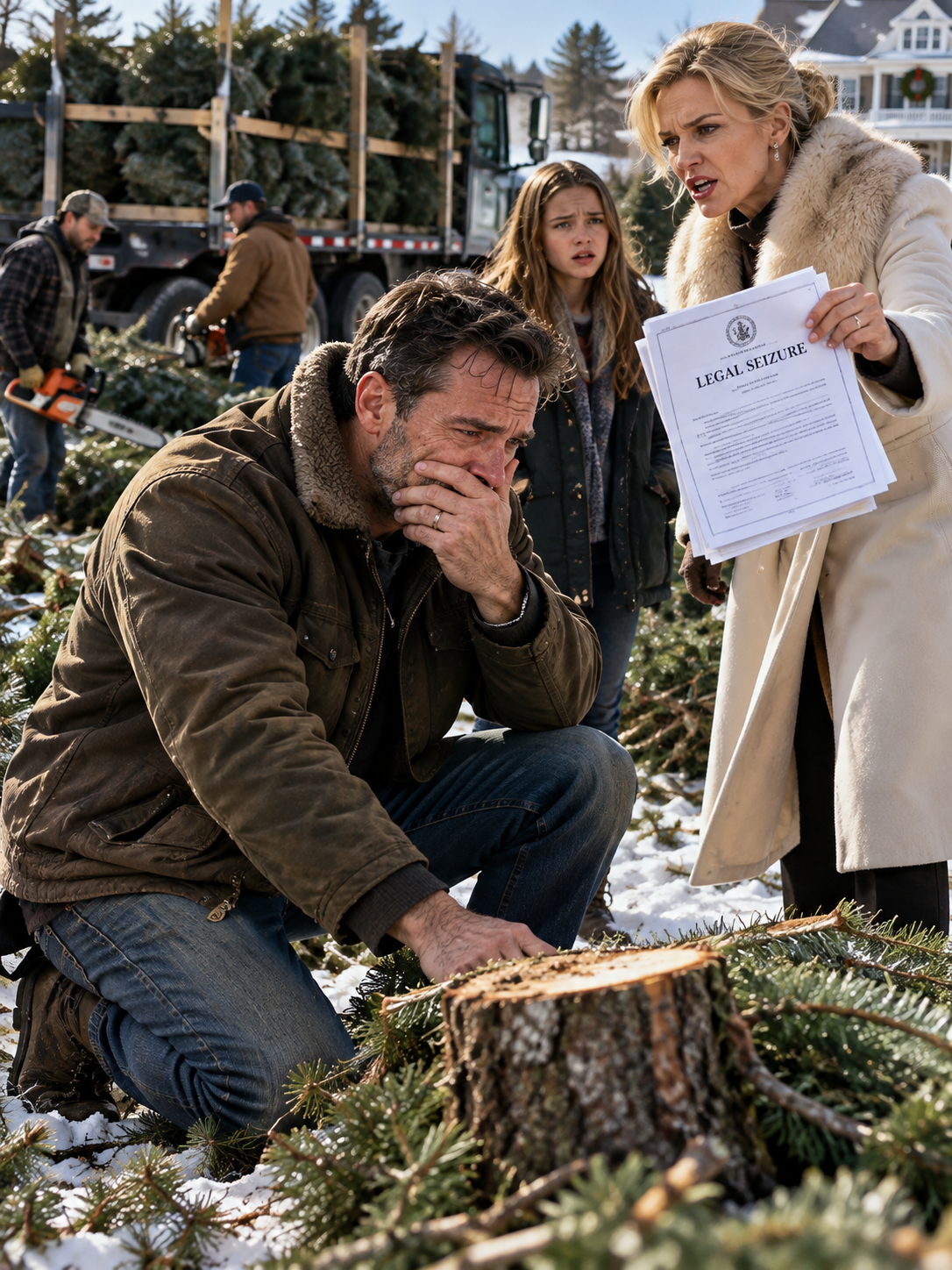
The HOA President Sent Chainsaws Into My Christmas Tree Farm—Then My Daughter Found the Paper She Was Using to Call the Theft Legal – Life Story
I woke before dawn to the sound of chainsaws cutting down the trees I had bought with the last money...

A MILLIONAIRE FATHER CAME TO SURPRISE HIS DAUGHTER AFTER MONTHS AWAY—THEN HE SAW A DRIVER SHOVE HER FROM A SCHOOL BUS AND HEARD THE APOLOGY THAT CHANGED EVERYTHING – Life Story
The driver threw the little girl’s walking aid into the gutter before forcing her down the school bus steps. Her...