IN A CHICAGO BLIZZARD, A BILLIONAIRE FOLLOWED A FIVE-YEAR-OLD GIRL TO SAFETY—THEN HER HOSPITAL WRISTBAND EXPOSED THE QUIET SYSTEM HIS OWN COMPANY HAD HELPED BUILD – Life Story
The little girl offered Graham Vale half her last cracker while snow buried Chicago around them.
An hour later, he learned her grandmother was trapped between a hospital discharge problem and a redevelopment deadline worth hundreds of millions.
Then Graham saw a familiar company name on her paperwork—and understood that walking away would mean protecting a system he had helped finance.
The storm had erased the curb before Graham realized he was standing in the middle of the street.
Snow drove sideways off Lake Michigan, hard enough to sting his face.
Ten feet away, his black sedan sat crooked behind a stalled delivery van, hazard lights blinking orange through the white.
His driver, Marcus, was arguing with a police officer near the barricade, but the wind tore every word apart before it reached Graham.
Graham checked his watch anyway.
p.m.
His meeting with Calder Rusk had been scheduled for seven.
Two hundred and eighty million dollars in redevelopment financing depended on that meeting, according to three attorneys, six bankers, and a board that had spent the previous month reminding Graham that Chicago did not forgive hesitation.
His phone showed one bar of service.
Then none.
He turned toward the faint outline of Michigan Avenue and took three steps before a voice came from behind him.
“Mister?”
Graham stopped.
The voice was small, but not frightened.
“Are you lost?”
A bus shelter stood twenty yards back, half buried in windblown snow.
Beneath its narrow roof was a little girl in a purple knit hat.
One mitten was blue and the other gray.
A thick scarf had been wrapped twice around her neck, but her winter coat looked a size too large.
She couldn’t have been more than five.
Graham stared past her for an adult.
There was no one.
“There’s less wind in here,” she said. “You can stand by me.”
He almost told her he was fine.
Instead, another gust hit his chest so hard that he stumbled, and the little girl moved politely to one side of the shelter as though making room at a dinner table.
Graham stepped inside.
The difference was immediate.
The glass walls rattled, but they broke the worst of the wind.
“Thank you,” he said.
The girl nodded. “My nana says you say thank you even if you’re freezing.”
Graham looked down at her boots.
Clean.
Mismatched.
One red lace, one white.
“What’s your name?”
“Emmy Carter.”
“I’m Graham.”
“I know.”
That made him look at her sharply.
Then she pointed toward a digital billboard across the intersection, barely visible through the snow.
For six seconds between weather warnings, Graham’s own face appeared beside the words VALE URBAN CAPITAL—BUILDING THE NEXT CHICAGO.
He nearly laughed.
“Right.”
Emmy held a paper cup between her mittens.
Inside were four saltine crackers, each broken neatly in half.
“You want one?”
“No.
You keep them.”
“I have enough.”
“You have four crackers.”
“Eight pieces,” she corrected.
Before he could answer, she selected one half and held it toward him.
Graham had eaten nothing since noon, but hunger wasn’t why he accepted it.
Something about refusing seemed worse.
“Thank you,” he said again.
“You already said that.”
“I can say it twice.”
She considered this and nodded.
When she reached for another cracker, the sleeve of her coat pulled back.
A white hospital band circled her wrist.
LAKEVIEW MERCY MEDICAL CENTER.
Graham’s attention sharpened.
“Were you at the hospital today?”
Emmy nodded.
“My nana is there.”
“And the person you’re waiting for?”
“Miss Tessa.”
“Who’s Miss Tessa?”
“She runs the community room.
Nana wrote her name on my card.”
Emmy dug carefully into her coat pocket and produced a laminated emergency card attached to a pink string.
Graham read it under the weak shelter light.
JUNE CARTER — LEGAL GUARDIAN.
TESSA MONROE — AUTHORIZED EMERGENCY CAREGIVER.
There were two phone numbers.
Both calls failed.
“How did you get here?”
“The hospital shuttle.”
“Alone?”
Emmy frowned, offended by the question.
“No.
Mr.
Leon was driving, and Miss April was with us.
But a bus slid sideways.
Mr.
Leon stopped.
A police lady told everybody to go to different warming places.
Miss April had the baby and two other kids, and she told me to stay right here because Miss Tessa was coming from the community center.”
That was better.
Not good.
But better.
“How long ago?”
Emmy looked toward the buried street.
“The clock said six something.”
Graham checked his watch again.
.
A full hour.
He pulled out his phone and tried both numbers again.
Nothing.
Then he called 911.
That call connected.
Within minutes, a dispatcher confirmed that emergency crews were stretched thin but had recorded a separated-minor report associated with the blocked shuttle.
Emmy was exactly where responders had been told she would remain.
She had followed instructions perfectly.
That somehow made Graham angrier.
Not at the driver.
Not at the hospital.
Not even at the storm.
At the fact that a five-year-old had needed to be this competent.
A police SUV finally appeared through the snow twenty minutes later.
The officer who stepped out knew Emmy’s name before reaching the shelter.
“Emilia Carter?”
Emmy raised her mitten.
“That’s me.”
The officer smiled with visible relief. “We’ve got your Miss Tessa on the phone.
She can’t get across the river right now, but your nana’s hospital knows you’re safe.”
Graham exhaled.
The officer looked at him. “You’re Mr.
Vale?”
“Yes.”
“I recognized the billboard.”
“Apparently everyone does tonight.”
She almost smiled. “Lakeview Mercy has an emergency family room open.
We can take her there until Ms.
Monroe arrives.”
Emmy looked up at Graham.
“Are you coming?”
He should have said no.
Marcus had already texted that another vehicle could reach him from the south.
Calder Rusk was waiting at the Langham.
The Northline redevelopment package had consumed nine months of Graham’s life.
Instead, he looked at the hospital bracelet again.
“I’ll come.”
The police SUV crawled north through streets made unfamiliar by snow.
Emmy sat secured in the back beside the officer, still holding the paper cup.
Graham’s phone vibrated as service returned.
CALDER RUSK.
He ignored the call.
A second vibration followed.
Then a message.
**We have fifty people waiting on your signature.
Don’t turn weather into a business decision.**
Graham read it twice.
Emmy leaned toward the window.
“Look.”
Lakeview Mercy appeared through the storm, its emergency entrance glowing gold against the white.
Inside, heat hit Graham’s face so suddenly that his skin hurt.
A social worker met them before they reached the desk.
She hugged Emmy first.
Not tightly.
Carefully.
“You did everything exactly right,” she said.
Emmy looked relieved for the first time all evening.
Then the social worker checked her clipboard, glanced at Graham, and lowered her voice.
“Mr.
Vale?”
“Yes?”
“You may want to see this.”
She turned the page.
At the bottom of Emmy Carter’s emergency intake record, beneath the hospital information and June Carter’s temporary housing status, was a referral line.
**BRIGHT HAVEN FAMILY TRANSITION SERVICES — NORTHLINE COMMUNITY PARTNERSHIP.**
Graham stopped breathing for half a second.
Northline.
Calder Rusk’s company.
The company he had been on his way to finance.
Then Graham saw the name printed beneath the hospital logo—and realized the meeting he had abandoned was already waiting for him inside.
## THE NAME ON THE FORM
June Carter lay behind a glass partition on the cardiac step-down floor, awake but exhausted.
She was sixty-four, smaller than Graham expected, with silver hair braided loosely over one shoulder.
Oxygen tubing rested beneath her nose.
A paperback novel lay open on the blanket, face down as though she had intended to return to the same sentence.
The first thing she asked when the nurse brought Emmy in was not what happened.
It was, “Did you keep your emergency card?”
Emmy held it up.
June closed her eyes in relief.
“I told you.”
“Yes, ma’am.”
“And you stayed where they told you?”
“Yes.”
“And you didn’t get into a stranger’s car?”
Emmy glanced at Graham.
“He got into the police car with me.”
June opened one eye.
“That is technically different.”
Graham laughed before he meant to.
Emmy climbed onto the visitor chair rather than the bed.
A nurse had explained the wires, the monitors, and why Nana needed space.
The child followed every instruction with the seriousness of someone who had spent too much time around adults trying not to frighten her.
Tessa Monroe arrived forty minutes later.
She was in her early forties, wearing snow boots, a navy parka, and the exhausted expression of someone who had spent two hours trying to cross six miles.
She hugged Emmy, thanked the nurses, apologized to June, then turned to Graham with no trace of celebrity recognition.
“You found her?”
“I stood next to her.
The police found both of us.”
Tessa studied him for a moment.
“Good answer.”
She signed the hospital’s caregiver paperwork.
Everything about the process was painfully ordinary: identification, authorization forms, a social worker verifying June’s existing guardianship and Tessa’s emergency designation.
No miracle.
No billionaire exception.
Graham appreciated that more than he expected.
When Emmy left with Tessa to get hot chocolate downstairs, June motioned Graham closer.
“Mr.
Vale.”
“Graham is fine.”
“I know who you are.”
“So does your granddaughter.”
“She watches weather reports.
Your company buys half the advertising around them.”
There was no warmth in the observation.
Graham pulled the visitor chair closer but did not sit until June nodded.
“I saw Bright Haven on Emmy’s paperwork,” he said.
June’s mouth tightened.
“That’s why you’re still here.”
“Yes.”
“I wondered.”
“What is it?”
June looked toward the closed door.
“A program that keeps telling me it wants to make my life easier.”
“That doesn’t sound terrible.”
“No.
That’s why it works.”
Graham waited.
June had the kind of silence that made interruption feel childish.
“Our building was sold eight months ago,” she said. “Northline bought the block.
They’re turning it into mixed-income apartments, retail, medical offices.
At least that’s what the boards in the lobby showed.”
Graham knew the project.
Harbor Point Renewal District.
His company was preparing to provide the final financing tranche.
“Tenants received relocation assistance.”
June smiled without humor. “That’s the brochure sentence.”
“What happened?”
“We were offered three choices.
Transfer to another Northline property, accept a cash relocation package, or enter temporary assisted housing while they found something ‘appropriate.’”
“And you declined?”
“I asked for time.”
“Why?”
June looked at him directly.
“Because when someone puts a clock on your home, I read everything twice.”
Graham felt the sentence settle.
She continued.
“The first transfer was forty-five minutes from Emmy’s school and almost an hour from my doctors.
The second building had stairs and no elevator.
I’m not dead yet, Mr.
Vale, but my knees have negotiated an early retirement.”
Despite himself, Graham smiled.
June didn’t.
“The cash package looked generous until I called three landlords.
Nobody holds an apartment for a woman waiting on medical treatment when other applicants can move in tomorrow.”
“So Bright Haven?”
“They called it a bridge.”
Graham knew the phrase.
Bright Haven had appeared in Northline’s investor materials as a family-stability partnership.
Temporary lodging, academic continuity, case management.
“Did you sign?”
“I signed an intake acknowledgment.”
“Placement consent?”
“No.”
“Are you sure?”
June’s eyes sharpened.
“I spent thirty-two years running payroll for a manufacturing company.
I know the difference between ‘I received information’ and ‘you can move my granddaughter.’”
There it was.
Not helplessness.
Not confusion.
A woman paying attention.
“What happened after you declined?”
“Nothing dramatic.”
She looked toward the monitor beside her bed.
“That’s the problem.
Everything just got harder.”
Her apartment move-out deadline remained March 1.
A promised accessible unit disappeared.
Her relocation specialist changed twice.
Then June developed chest pain during an argument with a property representative and was admitted to Lakeview Mercy.
Graham kept his voice neutral.
“You think Northline affected your medical care?”
“No.”
The answer came immediately.
“I think life became complicated in twelve places at once, and Bright Haven was always waiting at the easiest exit.”
That distinction mattered.
A lot.
Graham leaned back.
“Did anyone threaten you?”
“No.”
“Tell you Emmy would be removed?”
“No.”
“Forge anything?”
“Not that I know.”
“Then what concerns you?”
June’s expression softened, but only slightly.
“They kept solving problems I hadn’t asked them to solve.”
Tessa returned with Emmy and three cups of hot chocolate.
The conversation stopped.
Before Graham left, June caught his sleeve.
“Mr.
Vale.”
He looked back.
“If your company is part of Northline, don’t come back here tomorrow pretending you didn’t know anything.”
The words were quiet.
More effective than accusation.
Graham nodded once.
“I won’t.”
In the elevator, his phone showed eleven missed calls.
Nine from his office.
Two from Calder.
The twelfth came before the doors opened.
Graham answered.
Calder did not bother with hello.
“Where are you?”
“Lakeview Mercy.”
Silence.
Then, very softly, “Why?”
Graham watched the floor numbers descend.
“I met one of your tenants.”
Another silence.
This one lasted longer.
When Calder finally spoke, the warmth had disappeared from his voice.
“Then before you decide what you think you saw, you and I need to talk.”
The elevator doors opened.
Graham stepped into the lobby.
“I agree.”
He ended the call.
And for the first time in nine months, he was no longer thinking about whether the Northline deal would close.
He was wondering who needed it to close so badly.
## PRESSURE WITHOUT A THREAT
Calder Rusk chose a conference room instead of a restaurant the next morning.
That told Graham more than the meeting itself.
Northline’s headquarters occupied six floors of a renovated warehouse in Fulton Market.
Exposed brick, pale oak, black steel, expensive restraint.
Nothing looked accidental.
Calder stood at the windows when Graham entered.
At fifty-one, he had built Northline from three neighborhood renovations into one of the Midwest’s largest urban redevelopment firms.
He was handsome in the disciplined way of executives who understood cameras: silver at the temples, dark suit, no tie, sleeves never wrinkled.
“You walked out on a quarter-billion-dollar closing because you met a child at a bus stop.”
Graham set his gloves on the table.
“A police officer found the child.”
Calder turned.
“That correction matters to you?”
“It should matter to everyone.”
Calder exhaled.
“I heard she’s safe.”
“She is.”
“And her grandmother?”
“Stable.”
“Good.”
The answer sounded sincere.
That bothered Graham more than indifference would have.
Calder poured coffee into two cups.
“I know what you’re thinking.”
“I doubt that.”
“You saw Bright Haven on a form.
You heard an unhappy tenant explain a difficult relocation.
Now the entire project feels contaminated.”
“She didn’t sound confused.”
“I didn’t say she was.”
“Then what are you saying?”
Calder pushed one cup across the table.
“I’m saying cities are messy.”
Graham didn’t touch the coffee.
Calder sat.
“Harbor Point contains four hundred and twelve occupied units across nine buildings.
Two structures have major plumbing failures.
One needs electrical replacement.
Three have accessibility issues.
The city approved phased redevelopment because keeping every resident in place while we rebuild is impossible.”
“I know the project.”
“You know the capital stack.
That isn’t the same thing.”
The remark landed exactly where Calder intended.
Graham’s jaw tightened.
Vale Urban Capital supplied financing, not property operations.
His analysts studied loan covenants, schedules, environmental reports, construction costs, public incentives.
People appeared in spreadsheets as relocation reserves.
Households.
Units.
Risk exposure.
Calder saw the recognition and leaned forward.
“You think I enjoy asking an elderly woman to move? I don’t.
But if we miss the demolition window, we lose federal tax-credit timing.
If we lose that, the affordable units shrink.
Contractors walk.
Interest carry jumps.
The entire project starts eating itself.”
“And Bright Haven?”
“A nonprofit partner.”
“Funded by Northline.”
“Partly.”
“Used for children when caregivers are in temporary medical or housing instability.”
“Yes.”
“Emmy was referred before her grandmother consented.”
“Referral isn’t placement.”
June had said almost the same thing in reverse.
Graham watched him.
“Why was the referral opened?”
“Because the family had a housing deadline, an elderly caregiver in the hospital, and a minor child.”
“An authorized emergency caregiver already existed.”
Calder’s brow moved slightly.
“You’ve done homework quickly.”
“I’ve had twelve hours.”
“Then use the next twelve before you turn one edge case into a moral crisis.”
Graham stood.
Calder’s irritation surfaced.
“Sit down.”
“No.”
“Graham, your board approved this investment.”
“Conditional approval.”
“Your signature is on the bridge facility.”
“Not the final tranche.”
Calder looked at him for several seconds.
“There are twelve hundred jobs tied to the next phase.”
“I know.”
“Two hundred affordable units.”
“I know.”
“A clinic.”
“I know.”
“Then don’t behave as if stopping a project is cleaner than finishing one.”
That was the first thing Calder said that Graham couldn’t dismiss.
Because it was true.
Walking away had consequences too.
Graham picked up his gloves.
“I’m not stopping anything today.”
Calder relaxed by a fraction.
“I’m reviewing Bright Haven and relocation practices before I sign.”
The fraction disappeared.
“We’ve already been reviewed.”
“By firms Northline hired.”
“Standard practice.”
“So is independent diligence.”
Calder stood slowly.
“You know what delays cost.”
“Yes.”
“Do you?”
Graham turned toward the door.
Calder’s voice followed him.
“Because the people hurt first by your conscience won’t be sitting in this room.”
Outside, cold sunlight flashed against frozen sidewalks.
The sentence stayed with Graham all the way to his office.
Evan Hart was waiting there.
Evan had been Graham’s general counsel for eleven years and his friend for thirteen, which meant he had earned the right to insult him without warming up.
“You look terrible.”
“Good morning.”
“You missed Northline’s signing dinner, ignored the board, and spent midnight asking our compliance department for nonprofit placement agreements.”
“I had a productive evening.”
“I heard.”
Evan closed the office door.
“Tell me the child is safe.”
“She is.”
“Good.
Now tell me you didn’t promise anyone you could fix Chicago before breakfast.”
Graham gave him a look.
Evan held up both hands.
“I’m asking because you do one of two things under pressure.
You either become emotionally unavailable or decide you can carry a bridge by yourself.”
“That’s unfair.”
“You own three bridges.”
“Investments in bridges.”
“See? Emotionally unavailable.”
Graham almost smiled.
Then he handed him a copy of June Carter’s relocation packet.
Evan read in silence.
His expression changed around page eleven.
“What?”
Graham leaned forward.
Evan tapped a paragraph.
“Here.
Resident acknowledges that failure to secure alternative housing before the scheduled vacancy date may result in referral to partner stabilization services.”
“Referral.”
“Yes.”
“Not consent.”
“No.”
“Keep going.”
Page seventeen listed Bright Haven.
Page twenty-three described dependent-care planning.
The language was technically voluntary.
But every pathway flowed in one direction.
Northline transfer.
Cash exit.
Temporary stabilization.
There was no visible option labeled **challenge the deadline**.
Evan closed the packet.
“This isn’t illegal on its face.”
“I know.”
“It may not even be improper.”
“I know.”
“Then what are you looking for?”
Graham glanced toward the windows.
“Whether the choices are real.”
Evan studied him.
Then he reached for his phone.
“I’ll bring in Sloan from compliance.”
“No company-wide review yet.”
“Why?”
“Because I don’t know who designed the incentives.”
Evan stopped.
Graham turned his monitor toward him.
A financial dashboard filled the screen.
Northline’s quarterly disbursement milestones.
Construction starts.
Vacant units delivered.
Relocation completion percentage.
Evan stared at the last column.
A bonus payment triggered at ninety-two percent.
“Where did that come from?”
“Our credit agreement.”
“Northline proposed it?”
Graham shook his head.
“No.”
He opened the document history.
The revision had been inserted fourteen months earlier by Vale Urban Capital’s structured-finance team.
Approved in the final committee package.
Under Graham’s electronic signature.
Evan looked at him.
Graham felt suddenly cold despite the heated office.
He had not designed the metric.
But he had approved it.
And somewhere between his signature and Emmy Carter’s bus shelter, a financial incentive had learned how to speak in the language of urgency.
## THE SIGNATURE HE FORGOT
By noon, Graham had reconstructed the history.
That made everything worse.
The relocation-completion bonus had been proposed as a protection for investors.
Northline’s previous project in Milwaukee had suffered an eighteen-month delay after relocation stalled.
Interest costs ballooned.
Affordable-housing subsidies nearly collapsed.
So Vale’s team created a simple solution.
Reward faster resolution.
The memo used clean phrases.
**Operational alignment.**
**Schedule discipline.**
**Resident-transition completion.**
No one had written **pressure elderly guardians until they stop asking questions**.
No one had needed to.
Systems rarely announced what they would become.
Evan sat opposite Graham with a yellow legal pad.
“Before you blame yourself for inventing gravity, remember Northline controls how it treats residents.”
“I paid them more for speed.”
“You paid them more for meeting a deadline.”
“Those sentences are cousins.”
“They are not twins.”
Graham rubbed his eyes.
His flaw had never been greed.
He wished it had been.
Greed was easy to identify.
His flaw was abstraction.
He could look at a city block and see debt service, tax credits, construction schedules, yield, and long-term affordability before seeing the woman whose kitchen window faced the alley.
Numbers made complicated things manageable.
People made them morally expensive.
His phone buzzed.
Tessa Monroe.
She did not waste time.
“June said you asked permission to speak with me.”
“Yes.”
“She gave it.
Come to the community center at four.”
“What should I bring?”
“Your ability to listen.”
The center occupied the ground floor of an old parish building in Uptown.
The heat clicked loudly through metal radiators.
Folding tables held donated coats, tax forms, coloring books, bus schedules, and a crockpot someone had labeled **TUESDAY SOUP**.
Nothing matched.
Everything was used.
Tessa led Graham into a narrow office.
On the wall behind her hung a neighborhood map crowded with colored pins.
“Blue is households already relocated,” she said. “Yellow is pending.
Red is people with complications.”
There were too many red pins.
“Medical?”
“Some.
Disability.
Custody schedules.
Jobs.
Schools.
Immigration paperwork.
A hundred things developers call exceptions because spreadsheets prefer straight lines.”
Graham accepted the hit.
“You’ve worked with Northline?”
“For six years.”
“Do you think Calder Rusk is deliberately hurting families?”
“No.”
The answer surprised him.
Tessa folded her arms.
“I think Calder believes chaos is more dangerous than control.”
“That sounds philosophical.”
“It becomes practical when you have four hundred families and a construction clock.”
She pointed to the map.
“Northline is better than some developers I’ve dealt with.
They pay relocation benefits.
They answer calls.
They fund after-school transportation.
Their people aren’t monsters.”
“Then what’s wrong?”
“They stopped noticing when efficiency became pressure.”
Graham looked at a cluster of red pins.
“Bright Haven?”
“Started well.”
“What changed?”
“Scale.”
Tessa sat.
“Bright Haven was originally short-term respite for families in real emergencies.
A parent hospitalized.
A caregiver evicted after a fire.
Things like that.
Children stayed with vetted host families or licensed facilities while adults stabilized.”
“And now?”
“Now it’s a standard box on Northline’s transition workflow.”
“Is that illegal?”
“No.”
“Coercive?”
“Sometimes.”
“How?”
Tessa opened a drawer and pulled out three anonymized case files.
“No threats.
That would be easy.
Instead, a mother is told her transfer apartment is available Tuesday, but she works until midnight and can’t sign until Thursday.
Suddenly Thursday may be too late.
Bright Haven can hold the children while she sorts it out.”
Another file.
“A grandfather asks for a wheelchair-accessible unit.
There isn’t one immediately.
Bright Haven can keep his grandson ‘stable’ during temporary hotel placement.”
A third.
“A parent wants to challenge a relocation valuation.
Fine.
But the demolition date stays.”
Graham looked up.
“So the program becomes leverage.”
“Not intentionally every time.”
“That distinction won’t comfort families.”
“No.”
Tessa leaned back.
“But here’s the part you won’t like.”
“I’m getting used to those.”
“Some families need it.”
Graham said nothing.
“Bright Haven has kept kids from sleeping in cars.
It has arranged school transportation.
It has paid for medication.
If you march in and destroy the program because you need a villain, you’ll hurt people.”
“I don’t need a villain.”
“Rich men usually do when they decide to have a conscience.”
He almost objected.
Then didn’t.
“What do you want?”
“Independent advocates before any family signs.
Deadlines paused when disability or medical issues are documented.
Separate the people helping families from the people measured on vacancy targets.”
Graham nodded.
“And the bonus metric?”
Tessa’s eyes narrowed.
“What bonus metric?”
There was no graceful way to answer.
So Graham told her.
When he finished, the radiator clicked twice into the silence.
“You pay Northline more when households are cleared faster.”
“When relocation milestones are completed.”
Tessa stared at him.
“That’s the sentence you use with yourself?”
Graham swallowed.
“It was.”
Tessa stood and walked to the window.
“You know what June kept telling me?”
“What?”
“She said everyone helping her seemed nice.”
Graham waited.
“That terrified her.”
He understood.
No dramatic enemy meant no obvious moment to resist.
Only polite professionals, each solving one small problem in the direction of the same exit.
His phone buzzed again.
Evan.
Graham answered.
“Tell me.”
Evan’s voice was unusually flat.
“We found another document.”
“What kind?”
“A Northline internal presentation attached to last quarter’s lender update.”
“And?”
“Slide thirty-two.”
Graham heard keys tapping.
Then Evan read the title.
“‘Household Resolution Strategy: Protecting Q1 Incentive Eligibility.’”
Graham closed his eyes.
Tessa watched his face.
“What does it say?”
Evan hesitated.
“Bright Haven referrals are listed as one of five tools for reducing unresolved household count.”
The room seemed to shrink.
There it was.
Not proof of a crime.
Something more ordinary.
Proof that a child-welfare service had entered the vocabulary of a financial deadline.
Graham opened his eyes.
“Send it to me.”
“Already did.”
When the call ended, Tessa did not ask what had happened.
She seemed to know.
Graham looked at the red pins on the wall.
For years he had believed bad systems announced themselves through corruption, fraud, or cruelty.
He was beginning to understand the more dangerous ones could be built by reasonable people pursuing reasonable goals until nobody remembered to ask what the goal was doing to the people inside it.
## WHAT THE STORM UNCOVERED
Calder did not deny the presentation.
That was the second surprise.
He read the slide in Graham’s office the next morning and pushed the printed page back across the desk.
“Poor wording.”
“Is it inaccurate?”
“No.”
Evan shifted in his chair.
Calder glanced at him.
“You wanted honesty.”
Graham folded his hands.
“I want an explanation.”
“You already know it.”
“Say it.”
Calder’s jaw tightened.
“Unresolved households delay demolition.
Delays threaten financing.
Bright Haven can provide temporary stability while complicated cases are resolved.”
“You counted those referrals toward vacancy performance.”
“We counted completed transitions.”
“Children entering temporary care helped you reach a financing threshold.”
“Sometimes.”
The word landed without decoration.
Graham stood.
Calder stood too.
“Don’t perform outrage for me.”
“I’m not performing.”
“You signed the incentive.”
“I know.”
“Then don’t act as if Northline created the weather.”
Graham stared at him.
Calder continued, quieter now.
“You want the ugly truth? Fine.
Without schedule pressure, Harbor Point dies by committee.
Everybody asks for one more review, one more accommodation, one more month.
Contractors price uncertainty.
Banks price uncertainty.
Cities pretend they don’t.
Eventually the project becomes too expensive, and the same families you’re trying to protect stay in buildings with failing pipes for another decade.”
“That does not justify turning a family-support program into a vacancy tool.”
“No.
But pretending every delay is harmless doesn’t make you moral either.”
Graham walked to the window.
Traffic moved normally now.
Snowbanks lined the street, gray at their edges.
“What would you do with June Carter?”
Calder didn’t answer immediately.
“Find her an accessible apartment near her doctors.”
“She asked for that.”
“We didn’t have one available.”
“Then pause her deadline.”
“And delay demolition of the entire building?”
“For one household?”
“For seventeen.
She isn’t the only one.”
That mattered.
Graham turned.
“Seventeen?”
Calder nodded.
“Medical needs, school issues, pending appeals, family disputes.
Every unresolved case has a reason.
Every reason matters.
Add them together and eventually nothing moves.”
“So you move the weakest first.”
Calder’s expression hardened.
“That is not what I said.”
“It’s what the system does.”
“Systems are what keep four hundred competing needs from becoming chaos.”
“And who gets to define chaos?”
For the first time, Calder raised his voice.
“The person responsible when the project collapses.”
Silence followed.
Then something changed in his expression.
Not anger.
Fatigue.
“My father grew up in public housing on the South Side,” Calder said. “A pipe burst in their building when he was twelve.
Mold followed.
Nobody repaired it for nine months because the city, the landlord, insurers, and contractors all argued about responsibility.”
Graham said nothing.
“He spent his entire life believing delay was a form of neglect.
So do I.”
There it was.
The motive beneath the machine.
Not cruelty.
Fear of paralysis.
Calder picked up his coat.
“You think I care about quarterly bonuses? I care about finishing what everyone else spends years discussing.”
“And if people get pushed?”
“I fix the process.”
“After?”
“If necessary.”
Graham looked at him.
“That’s where we differ.”
Calder gave a tired half smile.
“No.
The difference is you can afford to discover principles after signing the loan.”
The door closed behind him.
Graham stood motionless.
Evan waited.
“He’s right about one thing,” Graham said.
“Which thing?”
“My signature.”
Evan leaned back.
“Be careful.”
“About what?”
“Turning accountability into self-destruction.”
Graham looked at the Northline documents spread across the table.
“What’s the difference?”
“Accountability fixes what you did.
Self-destruction makes what you did the center of the story.”
That sentence stayed with him.
That afternoon, Graham returned to Lakeview Mercy.
June looked stronger.
Emmy sat beside her coloring a picture of three houses under one enormous sun.
Tessa occupied the other chair with a laptop.
When Graham entered, June took one look at his face.
“You found something.”
“Yes.”
“Sit.”
He told her about the incentive.
Not the sanitized version.
The real one.
He told her his company had approved a structure rewarding faster household transitions.
He told her Bright Haven referrals appeared in Northline’s internal strategy for reaching those targets.
Then he told her his signature was on the financing agreement.
June listened without interrupting.
Emmy continued coloring.
Tessa watched him carefully.
When he finished, June asked one question.
“Did you know what it would become?”
“No.”
“That wasn’t my question.”
Graham frowned.
June repeated it.
“Did you know what it could become?”
He thought about the investment committee fourteen months earlier.
One analyst had asked whether relocation incentives could create “adverse resident experience.”
The concern had been answered with three words.
**Northline controls implementation.**
Graham had moved to the next slide.
“Yes,” he said.
The truth tasted worse than he expected.
“I knew speed could create pressure.
I decided the operational safeguards were someone else’s responsibility.”
June nodded.
“That’s more honest.”
“I’m going to suspend the incentive.”
Tessa looked up.
“Can you?”
“Yes.”
“What happens?”
“We probably breach the current timeline.
Northline could challenge it.
My board could refuse.”
June’s fingers tightened slightly on the blanket.
“And the project?”
“Continues if we restructure the financing.”
“If you can’t?”
Graham did not lie.
“Parts could be delayed.”
June looked toward Emmy.
The child had drawn a red door on the largest house.
“I don’t want you burning down everybody else’s future because mine got complicated.”
“I’m not planning to.”
“Good.”
June turned back to him.
“Then don’t rescue us.”
Graham waited.
“Change the choice.”
That evening, he convened Vale Urban Capital’s investment committee.
Twelve faces appeared around a polished table.
Three joined by video.
The chief investment officer objected first.
“Suspending the milestone incentive three weeks before closing is reckless.”
Graham slid the Northline presentation onto the screen.
“This is what the incentive is doing.”
“It is improving transition completion.”
“It is putting a child-services pathway on the same slide as vacancy performance.”
The CFO frowned.
“Correlation is not misconduct.”
“I didn’t say misconduct.”
“Then what are you alleging?”
“Misaligned incentives.”
A board member spoke from the far end.
“Graham, every incentive can be abused.
That does not mean we rewrite agreements whenever an anecdote becomes emotionally difficult.”
Graham felt heat rise behind his collar.
“A five-year-old in a snowstorm is not our evidence.”
He changed the slide.
Seventeen pending hardship cases.
Eight Bright Haven referrals.
Four families who believed challenging relocation would jeopardize temporary assistance.
Two residents who had signed forms they later said they did not understand.
“This is.”
The room went quiet.
Then the CFO said, “If we pause the metric now, Northline misses its demolition milestone.”
“Yes.”
“We lose pricing protection.”
“Possibly.”
“How much?”
“Eleven to fourteen million.”
Someone swore under his breath.
The board member stared at Graham.
“You are asking us to spend fourteen million dollars correcting a problem that may not be legally actionable.”
“No.”
Graham looked around the table.
“I’m asking us to stop paying for a result until we can prove we’re not paying for pressure.”
The vote failed.
Six to five.
Graham had expected anger.
He had not expected how calm defeat would feel.
Everyone packed folders.
Everyone promised further review.
Everyone left.
Evan remained.
“What now?”
Graham stared at the empty chairs.
For the first time since the storm, he understood the actual size of the problem.
It was no longer Northline.
It was his own company.
And unlike Calder Rusk, Vale Urban Capital could not be confronted from the outside.
Graham would have to break the system from the chair he was sitting in.
## THE PRICE OF DAYLIGHT
Two days later, the story leaked.
Not Emmy’s name.
Not June’s medical information.
Just enough.
**VALE CAPITAL EXECUTIVE QUESTIONS RELOCATION PRACTICES IN PROJECT HIS OWN FIRM FINANCES.**
The article was accurate.
That made it brutal.
Graham read it at a.m. in his kitchen while snowmelt tapped steadily from the roof.
By six, three television crews waited outside his building.
By seven, Northline’s communications team had released a statement emphasizing that all family programs were voluntary and independently licensed.
By eight, Vale Urban Capital’s board had scheduled an emergency meeting.
At , Tessa called.
“We have reporters outside the community center.”
“I’m sorry.”
“I don’t need an apology.
I need them gone.”
Graham contacted his communications director and issued one instruction.
No child.
No grandmother.
No community center.
No details.
“If someone asks why you’re reviewing Northline?” she said.
“Tell them we identified concerns in our own financing incentives.”
There was a pause.
“You want to say our own?”
“Yes.”
“That will increase liability exposure.”
“I know.”
“And board anger.”
“I know.”
“Anything else?”
“Say the families involved are not public figures and we will not discuss them.”
By nine, the statement was live.
By ten, Graham’s board chair was in his office.
Helen Mercer had spent thirty-five years in finance and had never needed volume to make a threat credible.
“You just admitted fault without a completed investigation.”
“I admitted concern.”
“You wrote, ‘Our financing design may have contributed to inappropriate pressure.’”
“It may have.”
“You could have said ‘industry practices.’”
“They weren’t industry signatures.”
Helen sat opposite him.
“You think accountability requires volunteering for execution?”
“No.”
“You act like it.”
Graham looked at the city beyond the glass.
Helen softened by a degree.
“I have known you since you were twenty-nine.
You built this company by seeing risks other people ignored.
But this—”
She tapped the statement.
“—is not risk management.
This is guilt.”
“Maybe guilt is information.”
“It is terrible governance.”
He almost smiled.
“Probably.”
Helen did not.
“The board is considering removing you from the Northline decision.”
“That would be a mistake.”
“Perhaps.
But you have become personally involved.”
“I became personally involved when I signed the agreement.”
“That is exactly the kind of sentence directors hate.”
Before he could respond, Evan entered without knocking.
His face told Graham something had happened.
“What?”
Evan handed him his phone.
An internal email had surfaced.
Fourteen months old.
From Graham.
Subject: **Relocation Metric.**
He remembered writing it.
Only barely.
The email responded to the analyst who had raised concerns about resident pressure.
**If Northline meets all legal relocation requirements, we should not micromanage operational execution.
Our job is timeline certainty.**
Eight words were highlighted in the leaked screenshot.
**OUR JOB IS TIMELINE CERTAINTY.**
Helen closed her eyes.
“That,” she said, “is going to hurt.”
It did.
By lunch, the sentence appeared on every business site covering the project.
Graham watched a television anchor describe him as “a financier now criticizing the exact pressure he once demanded.”
Accurate again.
Still brutal.
At Lakeview Mercy, June saw it too.
She called that afternoon.
Her voice was tired.
“Did you write it?”
“Yes.”
“Did you believe it?”
“Yes.”
“At the time?”
“Yes.”
A long silence.
Emmy’s voice sounded faintly in the background.
“Is that Graham?”
June covered the phone, said something Graham couldn’t hear, then returned.
“I think you should give us some space.”
The words struck harder than the headlines.
“June—”
“You told me the truth.
I respect that.”
“But.”
“But Emmy trusts you.”
Graham closed his eyes.
“And right now,” June continued, “I need to know she isn’t becoming part of how you forgive yourself.”
He had no answer.
Because somewhere inside his urgency, that possibility existed.
Not intentionally.
But it existed.
“I understand.”
“I hope you do.”
The call ended.
For three days, Graham stayed away.
He worked.
That was the only useful thing he knew how to do.
With Evan and a small independent compliance team, he reviewed two years of Northline files.
He refused to search for scandal.
Scandal would have been easier.
Instead, they found patterns.
Families with advocates took an average of twenty-three days longer to relocate.
Families without advocates were twice as likely to accept Bright Haven referrals.
Case managers’ performance dashboards included “resolution velocity.”
No one was paid per child.
No one falsified consent.
No one wrote threatening emails.
The harm existed in architecture.
On Friday, Evan entered Graham’s office carrying a single-page memorandum.
“This changes the board vote.”
Graham read it.
Vale Urban Capital’s operating agreement gave the managing partner emergency authority to suspend a funding condition when continued payment created a material compliance or reputational risk.
He could freeze the relocation incentive for thirty days.
Unilaterally.
Helen would hate it.
The board might remove him afterward.
Northline could sue.
The project might absorb millions in carrying costs.
Graham looked at Evan.
“You knew about this?”
“I spent two days trying to make sure I wasn’t hallucinating.”
“Why didn’t legal flag it before?”
“Because emergency authority is supposed to be used for fraud, sanctions, environmental issues.
Not conscience.”
Graham read the clause again.
“What would you do?”
Evan leaned against the desk.
“I’m your lawyer.”
“That has never stopped you from having opinions.”
“My legal opinion is that you can do it.”
“And your other opinion?”
Evan looked toward the window.
“My other opinion is that whatever you do next has to survive even if you lose your job.”
Graham thought of June.
Change the choice.
Not rescue us.
Not punish Calder.
Not redeem yourself.
Change the choice.
He picked up a pen.
At p.m., Graham Vale signed an emergency suspension of Vale Urban Capital’s relocation-performance incentive.
At , Northline received notice.
At , Calder called.
Graham answered.
“You did it.”
“Yes.”
“You understand what this triggers?”
“Yes.”
“No, you don’t.”
Calder’s voice had lost every trace of polish.
“Our demolition contractor has a March mobilization window.
Miss it and they reprice.
The tax-credit syndicator has a deadline.
The city has a deadline.
Everybody has a deadline.”
“Then we renegotiate.”
“With what leverage?”
“The financing.”
“You froze the financing.”
“I froze the incentive.”
Calder laughed once.
There was no humor in it.
“You think your board will let you survive this?”
“Maybe not.”
“And that makes you noble?”
“No.”
“Then what exactly are you trying to prove?”
Graham looked at the old email on his desk.
OUR JOB IS TIMELINE CERTAINTY.
“Nothing.”
Calder went quiet.
Graham continued.
“I’m trying to stop paying you to hurry people who have nowhere safe to hurry to.”
The call ended.
Twenty minutes later, Helen Mercer requested Graham’s resignation as managing partner.
He declined.
The board scheduled a removal vote for Monday morning.
And for the first time since Emmy had offered him half a cracker, Graham realized he might lose the company he had spent eighteen years building.
## WHEN EVERY DOOR CLOSED
Monday arrived cold and perfectly clear.
No storm.
No excuse.
The board vote began at eight.
Graham sat at the end of the conference table with Evan behind him.
Helen opened the meeting.
“This is not a referendum on Mr.
Vale’s character.
It is a governance question.”
Graham almost admired the sentence.
She continued.
“The managing partner exercised emergency authority to suspend a contractual incentive despite the investment committee declining that action forty-eight hours earlier.”
A director asked Graham if he wished to respond.
“Yes.”
He placed three documents on the screen.
The first was his old email.
The second was Northline’s household-resolution slide.
The third was a proposed revised financing structure.
“No one in this room needs me to explain the first two.”
He advanced.
The revised structure eliminated vacancy-speed bonuses.
Instead, Northline would receive incentive payments for measurable resident outcomes: comparable housing secured, accessibility needs met, school disruption minimized, independent advocate sign-off completed.
A director frowned.
“This will slow the project.”
“Probably.”
“How much?”
“We estimate five to seven weeks initially.”
“And cost?”
“Six to nine million.”
Another director leaned back.
“Better than fourteen.”
“If Northline accepts.”
Helen looked at Graham.
“Calder won’t.”
“Then another operator may.”
That shifted the room.
“Replacing Northline could delay the project a year.”
“I know.”
“You are prepared to do that?”
“No.”
Graham looked around the table.
“I am prepared to risk that rather than keep an incentive we now know creates pressure.”
Helen watched him for a long moment.
“You realize you are asking the board to choose uncertainty.”
“No.”
Graham clicked to the final page.
“I’m asking us to measure the uncertainty honestly.”
The vote began.
Before it finished, Evan’s phone buzzed.
He looked down.
Then immediately passed it to Graham.
A message from Tessa.
**June was discharged this morning.
Northline sent a final vacancy notice to her old apartment yesterday.
Deadline remains Friday.**
Graham’s stomach tightened.
Below it was a photograph.
Not of June.
Not of Emmy.
A document.
The notice included a paragraph stating that failure to vacate by Friday could affect eligibility for enhanced relocation assistance.
Not ordinary statutory benefits.
Enhanced assistance.
Still legal, according to the fine print.
Still pressure.
Graham handed the phone to Helen.
She read it.
Her face changed.
“When was this sent?”
“Yesterday.”
“After the incentive suspension?”
“Yes.”
A director asked, “Why would Northline still push the deadline if the bonus is frozen?”
Graham understood before anyone answered.
Because the incentive had stopped being the only reason.
Demolition schedules.
Contractor commitments.
City deadlines.
Institutional momentum.
Removing one lever did not dismantle the machine.
Helen placed the phone down.
The board vote was postponed.
Not canceled.
Postponed.
By noon, Graham was at Tessa’s community center.
June sat at a folding table wearing a gray sweater and looking furious enough to power the building.
Emmy colored beside her.
She looked up when Graham entered.
For one terrible second, he didn’t know whether she would smile.
She did.
Then she remembered something and looked at June.
June gave a small nod.
Emmy ran over.
Not into Graham’s arms.
Just close enough to hand him something.
A cracker wrapped in a napkin.
“I saved you one.”
Graham’s throat tightened.
“Thank you.”
“You can say it twice.”
He laughed quietly.
June watched.
“Sit down, Mr.
Vale.”
He sat.
Tessa placed the vacancy notice between them.
“My lawyer says they can enforce the move-out date,” June said.
“Your base relocation benefits remain protected.”
“I know.”
“But the enhanced package—”
“Requires me to cooperate with the project schedule.”
“Yes.”
June shook her head.
“Always a nicer word.”
Graham looked at Tessa.
“What alternatives?”
“We found an accessible apartment twelve minutes from Emmy’s school.”
June interrupted.
“The landlord wants first month, deposit, and proof of income.”
“Northline’s package covers that,” Graham said.
“If I sign their release.”
“What release?”
Tessa slid another page forward.
It was not a liability waiver.
It was a relocation completion acknowledgment stating that June’s housing needs had been satisfactorily resolved.
The apartment was good.
The location was good.
The money was owed under Northline’s enhanced program.
But signing would close her grievance.
“Can we separate the payment from the acknowledgment?” Graham asked.
“Northline refused.”
His phone came out immediately.
June stopped him.
“No.”
He looked at her.
“Don’t make a call because you know the man at the top.”
“I can fix this.”
“That’s exactly what I told you not to do.”
Graham froze.
June tapped the paper.
“I don’t need special treatment because my granddaughter met a billionaire in bad weather.”
Emmy looked up at the word billionaire, then returned to her drawing.
June continued.
“I need a process where the next woman doesn’t need to meet you.”
That landed deeper than anything Calder had said.
Graham put his phone away.
“What do you want?”
“I want my appeal heard.”
“That could take weeks.”
“I know.”
“You lose the apartment.”
“Maybe.”
Graham hated the answer.
June saw it.
“That feeling you have right now?”
“Yes.”
“That’s why people sign.”
He stared at the acknowledgment.
There was the whole system in two pages.
Not coercion.
Choice under pressure.
He looked at Tessa.
“Who hears the appeal?”
“Northline’s internal relocation panel.”
“Who appoints them?”
“Northline.”
“Independent review?”
“Not required under the enhanced benefits.”
Graham stood.
June raised an eyebrow.
“Where are you going?”
“To change the choice.”
This time, she did not stop him.
Graham returned to Vale Urban Capital and called Helen.
“I need a new board meeting.”
“We still have one unfinished.”
“This is different.”
“How?”
“I don’t want to suspend the incentive anymore.”
Silence.
Helen said carefully, “Go on.”
“I want Vale to waive its demolition-timing covenant for any unit with a pending hardship appeal.”
“You can’t unilaterally do that.”
“I know.”
“It could delay every building.”
“No.
Only documented appeals filed before the vacancy date.”
“Northline will say residents will file appeals to buy time.”
“Some will.”
“And?”
“We create independent review with fixed timelines.”
Helen was quiet.
“Who pays for it?”
“We do.”
“With what authority?”
“Compliance reserve.”
“That is not what the reserve is for.”
“It is if our financing created the conflict.”
She sighed.
“You are determined to make every lawyer in Chicago hate you.”
“I already have Evan.”
From behind the desk, Evan said, “I heard that.”
Helen almost laughed.
Almost.
“I’ll call the directors.”
The board met at six.
The debate lasted three hours.
Graham did not mention Emmy once.
He did not mention the blizzard.
He used data.
Cost projections.
Comparable projects.
Legal exposure.
Delay scenarios.
Resident-retention outcomes.
He spoke the language he had once used to hide from human complexity and turned it toward protecting choice.
At p.m., the board approved the new structure.
Seven to four.
Graham remained managing partner by one vote.
Northline was given forty-eight hours to accept revised financing conditions.
Calder rejected them in nineteen minutes.
At , he sent one sentence.
**You have confused slowing harm with creating good.**
Graham read it three times.
Because part of him feared Calder was still right.
## THE TRUTH BEHIND BRIGHT HAVEN
The next morning, Bright Haven’s executive director requested a meeting.
Her name was Dr.
Elise Warren.
Graham expected defensiveness.
Instead, she arrived carrying two banker boxes.
“I’m not here to protect Northline.”
She placed the boxes on his conference table.
“I’m here because they’re about to blame us for a system they helped build.”
Evan sat forward.
“What’s in the boxes?”
“Our Northline contracts, referral logs, performance reports, and emails from the last eighteen months.”
“Why bring them voluntarily?”
Elise looked at Graham.
“Because Bright Haven was supposed to be an emergency bridge.
We became a throughput tool.”
There was no drama in her voice.
Only exhaustion.
She opened the first box.
“Three years ago, ninety percent of our placements came from hospitals, domestic emergency shelters, and child-welfare referrals.
Average stay was nine days.”
She opened a report.
“Last year, Northline became our largest private funder.”
Another page.
“Referrals doubled.
Average stays dropped.
On paper, that looked efficient.”
“What changed?”
“They began sending families before crises occurred.”
“Preventive referrals?”
“That’s what they called them.”
“Is that inherently wrong?”
“No.”
Elise shook her head.
“It can be excellent practice.
The problem was what counted as risk.”
She slid over a referral checklist.
Housing transition within thirty days.
Caregiver health issue.
Uncertain school transportation.
Unresolved lease appeal.
Pending relocation decision.
Graham read the last line twice.
“Pending relocation decision is a risk factor?”
“It became one.”
“Who added it?”
“Northline’s family-stability team.”
Elise looked uncomfortable.
“We objected.”
“Where?”
She pulled out an email.
Bright Haven had warned that including unresolved relocation disputes could make the program appear connected to compliance pressure.
Northline’s response came from an operations vice president.
**The goal is continuity for children regardless of adult decision timelines.**
Reasonable words.
Again.
Evan asked, “Did Calder know?”
Elise hesitated.
“I never emailed him directly.”
“That isn’t what he asked.”
She opened the second box.
Quarterly steering committee minutes.
Calder had attended two meetings.
One entry contained a discussion of rising preventive referrals.
His recorded comment:
**If the child is stable, adults have room to resolve the housing issue.**
Graham stared at the sentence.
Not sinister.
Not innocent either.
“Did anyone use Bright Haven to threaten families?” he asked.
“Not that I know.”
“Did you place children without consent?”
“No.”
“Did your staff misrepresent forms?”
“No.”
“Then where did families lose choice?”
Elise looked toward the window.
“In the gap between technically voluntary and practically impossible.”
She explained.
A parent might be told Bright Haven was available while they contested a move.
That sounded supportive.
But once a child had transportation, meals, and temporary care arranged elsewhere, the adult often felt pressure to accept whatever housing resolved the separation fastest.
No one needed to say **sign this or lose your child**.
The parent said it to themselves.
Graham felt sick.
“Why didn’t you withdraw?”
“Because children genuinely needed us.”
There it was again.
Every door led back to the same dilemma.
Destroying Bright Haven would punish families.
Preserving it unchanged preserved pressure.
The answer had to be structural.
By noon, Evan had contacted the city’s Department of Housing compliance office and an outside child-welfare ethics consultant.
Graham called Calder.
No answer.
He called again.
Calder answered on the third attempt.
“What now?”
“Bright Haven gave us their records.”
Silence.
Then, “All of them?”
“Yes.”
Another pause.
Calder sounded tired.
“Come here.”
Northline’s office was nearly empty when Graham arrived that evening.
Calder stood alone in the conference room where they had argued days earlier.
No attorneys.
No assistants.
Only two cups of coffee neither man touched.
“They’re going to terminate us,” Calder said.
“Who?”
“The city, eventually.
Or force restructuring so severe my board replaces me first.”
“You can accept the revised financing.”
Calder laughed quietly.
“You think this is about your covenant now?”
“What is it about?”
“Confidence.”
He walked to the windows.
“Once a redevelopment project looks ethically unstable, every stakeholder protects themselves.
Banks.
Contractors.
Aldermen.
Nonprofits.
Nobody wants to be the last name on the document.”
Graham said nothing.
Calder turned.
“Congratulations.
You created daylight.”
“That sounds bitter.”
“It is.”
“Do you regret the referrals?”
Calder considered the question.
“I regret making Bright Haven operational.”
“That isn’t the same thing.”
“No.”
Graham waited.
Calder’s shoulders dropped.
“My mistake was believing support could remain support after we measured it.”
It was the closest thing to an admission Graham had heard.
“Then help change it.”
“Your board will never trust me.”
“This isn’t about your position.”
Calder gave him a sharp look.
“Easy to say when yours survived by one vote.”
Graham accepted that.
Calder continued.
“You want me to confess to coercion?”
“If there was coercion, yes.”
“There wasn’t.”
“Then say what happened.”
“Pressure.”
“Publicly.”
Calder looked away.
“That destroys Northline.”
“No.
Lying might.”
“You don’t know that.”
“No.”
Graham stepped closer.
“But I know hiding it keeps every family wondering whether the form in front of them is help or leverage.”
For a long time, neither man spoke.
Finally Calder asked, “What happens to Harbor Point if I cooperate?”
“We restructure.”
“How many months?”
“Maybe three.”
“Cost?”
“Significant.”
“Affordable units?”
“Protected.”
“The clinic?”
“Protected.”
“Contractor jobs?”
“Most.”
“And my board?”
Graham almost smiled.
“That one isn’t mine.”
Calder nodded slowly.
The next morning, Northline accepted a temporary compliance agreement with Vale Urban Capital and the city.
The company did not admit illegal conduct.
Because none had yet been established.
Instead, it acknowledged that relocation timelines, financing incentives, and family-support referrals had created potential conflicts of interest and could undermine meaningful resident consent.
Bright Haven referrals were immediately removed from relocation-performance reporting.
All pending hardship appeals received automatic extensions.
Independent advocates were assigned.
June Carter’s Friday deadline disappeared before lunch.
She did not celebrate.
She read the entire notice twice.
Then she called Tessa.
“Now,” she said, “we can talk about the apartment.”
## THE ROOM WHERE CHOICES CHANGED
The formal city review took place three weeks later.
It was not a courtroom.
No judge struck a gavel.
No dramatic crowd erupted.
The hearing room at City Hall had fluorescent lights, bad acoustics, and water bottles lined beside microphones.
That made the consequences feel more real.
Calder testified first.
Graham watched from the second row.
“We did not intend Bright Haven to pressure residents,” Calder said. “But intention is not the only measure of a system.”
The room went still.
A council member asked, “Did Northline benefit financially when household transitions happened faster?”
“Yes.”
“Did Bright Haven referrals sometimes facilitate those transitions?”
“Yes.”
“Do you understand why residents might perceive that as coercive?”
Calder paused.
“Yes.”
No excuse.
No speech.
Just yes.
Tessa testified next.
She refused to turn families into symbols.
“Most Northline staff I worked with were trying to help,” she said. “The problem was that the person explaining a family’s options was often working inside a system rewarded for one option happening faster.”
Dr.
Elise Warren followed.
Then two residents.
Neither was June.
June had declined.
Graham respected her more for it.
When his turn came, the council chair asked him about the incentive.
“Who approved it?”
“I did.”
“Did you understand it could increase pressure on residents?”
“I understood that schedule incentives can create pressure.”
“Then why approve it?”
Graham looked at the microphones.
“Because I believed legal compliance and operational safeguards would contain that pressure.”
“Did they?”
“No.”
“What failed?”
He could have blamed Northline.
He could have blamed scale.
He could have blamed a poorly written metric.
Instead, he said, “Distance.”
The chair frowned.
“Explain.”
“I treated resident relocation as an operational responsibility separate from financing.
But financing changes behavior whether financiers intend it to or not.”
A council member leaned forward.
“So your position is that capital providers should supervise every tenant interaction?”
“No.”
“Then what?”
“They should stop pretending the incentives they design end at the spreadsheet.”
The room became very quiet.
After six hours of testimony, the city announced reforms for publicly supported redevelopment projects using family-stability programs.
Independent resident advocates.
Hardship appeals that paused enhanced-benefit deadlines.
Clear separation between child-care referrals and vacancy metrics.
Plain-language consent forms.
Transparent complaint channels.
No rule solved everything.
That was the point.
Real reform looked disappointingly procedural.
It was also harder to undo.
Northline’s board accepted Calder’s resignation two days later.
Not because the city found criminal wrongdoing.
It didn’t.
The board said new leadership was needed to rebuild community trust.
Calder called Graham that evening.
“I suppose this is where you tell me accountability is not punishment.”
“No.”
“Why not?”
“Because I’d hate hearing it too.”
Calder laughed.
A real laugh this time.
“You know what the worst part is?”
“What?”
“I still think Harbor Point needed deadlines.”
“So do I.”
Silence.
“Then maybe you learned less than I hoped.”
“No.”
Graham looked out at the city.
“I learned deadlines need exits.”
Calder was quiet for several seconds.
“That’s annoyingly good.”
“I’ll pretend you never said that.”
The call ended without forgiveness.
Graham preferred it that way.
Some relationships were not meant to become friendships after conflict.
Sometimes understanding was enough.
June moved into her new apartment in early April.
Not because Graham called the landlord.
He didn’t.
Not because Vale paid a special benefit.
It didn’t.
Her appeal resulted in a revised relocation offer under the same independent standard now available to everyone in the project.
The apartment had an elevator.
A wide bathroom doorway.
A bus stop one block away.
Emmy’s school was eleven minutes by car and twenty-three by bus.
June checked both.
Twice.
On moving day, Graham arrived carrying one cardboard box.
June looked at it.
“What’s in there?”
“Books.”
“For Emmy?”
“Mostly.”
“What’s the rest?”
“A coffee maker.”
June raised an eyebrow.
“My old one survived three apartments.”
“I was told it makes sounds associated with structural failure.”
“Tessa exaggerates.”
From the kitchen, Tessa shouted, “I absolutely do not.”
Emmy ran in wearing yellow socks and carrying a roll of blue painter’s tape.
“Graham, my room has two windows.”
“I heard.”
“And Nana says I can pick where the bed goes.”
“That sounds serious.”
“It is.”
She grabbed his hand, then stopped herself.
“Can I show you?”
He looked at June.
June nodded.
That tiny permission meant more than board votes.
Emmy’s room was small.
Afternoon light fell across fresh cream-colored walls.
Two cardboard boxes sat near the closet.
She pointed at the far corner.
“Bed there.”
“Good choice.”
“How do you know?”
“I finance buildings.”
“That doesn’t mean beds.”
He laughed.
“No.
It doesn’t.”
She looked pleased to have corrected him.
On the windowsill sat the paper cup from the bus shelter.
Flattened slightly.
Empty.
“You kept that?”
Emmy nodded.
“Nana says you keep some things so you remember what they taught you.”
Graham touched the rim lightly.
“What did that teach you?”
She looked confused.
“That crackers break.”
From the doorway, June laughed so hard she had to hold the frame.
Graham laughed too.
He had spent months trying to make meaning elegant.
A five-year-old had reduced it to crackers.
Maybe that was healthier.
Later, downstairs, Tessa showed Graham a proposal.
The community center wanted to expand its housing-navigation room.
Not a Vale-branded program.
Not a Northline initiative.
A neighborhood-controlled service funded by several foundations and developers through a blind pooled grant.
“No naming rights,” Tessa said.
“I wasn’t going to ask.”
“No giant plaque.”
“I understand.”
“No photograph of you handing anyone keys.”
“Cruel.”
She almost smiled.
“People need a place to bring papers before the papers become emergencies.”
Graham read the proposal.
Independent legal clinics twice a week.
Housing counselors.
Child-care during appointments.
Translation services.
Medical-disability navigation.
Nothing glamorous.
“What do you call it?”
“We don’t.”
“You need a name.”
“Emmy already gave it one.”
Graham looked toward the kitchen.
Emmy sat at the table drawing while June unpacked cups.
On the paper was a square building with a red door.
Above it, in uneven purple letters:
HELP ROOM.
Graham looked back at Tessa.
“Perfect.”
## AFTER THE SNOW
Spring arrived slowly.
Chicago never trusted warm weather on the first attempt.
One week offered sixty degrees and sunlight.
The next sent sleet against windows at breakfast.
But eventually the dirty snowbanks disappeared.
Lake Michigan turned blue again.
Trees along the sidewalks showed small green edges.
Harbor Point restarted construction three months behind schedule.
The revised project cost more.
Not enough to collapse.
Enough to become a lesson discussed in every Vale investment meeting afterward.
Graham made one permanent change inside his company.
Every redevelopment financing committee now included a community-impact review conducted by someone with no responsibility for closing the deal.
At first, bankers complained.
Then they adapted.
Professionals were good at adapting when incentives changed.
That was another lesson.
Helen Mercer remained board chair.
She and Graham still argued.
One afternoon, after a particularly unpleasant meeting about another project in Ohio, she closed her folder and said, “You know, before the Carter matter, you were easier.”
“I’ve heard.”
“You also made faster decisions.”
“Not all of them were better.”
Helen studied him.
“No.”
Then she stood.
“But don’t become addicted to hesitation either.”
Graham smiled.
“I thought you wanted me careful.”
“I want you useful.”
Fair enough.
Bright Haven survived.
That mattered.
Under Elise Warren, the organization returned to independent eligibility criteria and stopped accepting placement referrals tied to active relocation disputes unless a resident advocate participated.
Its numbers fell.
Its funding became less predictable.
Its work became more trustworthy.
Calder Rusk disappeared from headlines within weeks.
Months later, Graham heard he had joined a nonprofit infrastructure consortium advising cities on redevelopment logistics.
Evan found that deeply funny.
Graham did not.
People were allowed to become more complicated after failure.
So were systems.
June’s health improved steadily.
She still tired easily.
She still refused anyone who suggested she stop carrying grocery bags herself.
Tessa eventually convinced her to accept delivery for heavy items by describing it as “logistics optimization.”
June called this manipulative but agreed.
Emmy turned six.
Her birthday party took place in the community center.
There were paper snowflakes on one wall because Emmy insisted they were “important decorations even when it’s warm.”
Graham brought a book.
No giant gift.
No scholarship announcement.
No photographer.
Emmy opened it, read the title, and hugged it to her chest.
“Will you read it?”
“Now?”
“Yes.”
“There are thirty people here.”
“You know words.”
June sat nearby, smiling.
So Graham read.
His character voices remained terrible.
Emmy corrected two of them.
After cake, she pulled him toward the new housing-navigation room.
It had long tables, warm lamps, locked file cabinets, a children’s corner, and three small private offices.
A woman sat with a housing counselor reviewing a lease.
An older man spoke to a volunteer attorney.
Two children built a tower from wooden blocks.
Nothing dramatic was happening.
That was the achievement.
Emmy pointed to a small sign beside the entrance.
**HELP ROOM**
Underneath, smaller letters read:
**ASK QUESTIONS.
TAKE YOUR TIME.
KNOW YOUR CHOICES.**
“You like it?” Tessa asked.
Graham nodded.
“It listens.”
Tessa smiled.
“June said the same thing.”
Toward evening, Graham left alone.
The air had turned cool.
He walked several blocks instead of calling a car.
At the corner of Clark and Delaware, he stopped.
A bus shelter stood beneath a streetlight.
Not the exact one.
The storm had damaged that shelter, and the city had replaced it.
But the emergency-warming sign remained.
Graham stepped beneath the glass roof.
Traffic moved beyond him.
No snow.
No sirens.
No child waiting alone.
He checked his watch.
p.m.
Then he laughed quietly.
Some habits survived reform.
A voice called behind him.
“Mister?”
Graham turned.
Emmy stood on the sidewalk with June and Tessa.
She wore a bright yellow coat despite June insisting the weather did not require one.
In her hands was a paper cup.
For one irrational second, Graham saw the entire storm again.
White streets.
Mismatched mittens.
Four crackers.
A hospital bracelet.
A signature he had forgotten making.
Emmy walked into the shelter and held out the cup.
Popcorn this time.
“Want some?”
Graham looked at June.
“You’re letting her share food with strangers again?”
June folded her arms.
“You stopped being a stranger months ago.”
Something inside him went still.
Not triumph.
Not redemption.
Those words had always seemed too large for ordinary life.
This was smaller.
Better.
Belonging earned slowly through repeated choices.
Graham took one piece of popcorn.
Emmy frowned.
“You can take more.”
“I remember the rules.”
“What rules?”
“You always keep enough for yourself.”
She thought about that.
Then she held the cup closer.
“We have more at home.”
Graham smiled.
There it was.
The difference between the first night and now.
She was no longer offering half of what she had because scarcity had taught her to make tiny things stretch.
She was sharing because she knew there would still be enough afterward.
The streetlight changed.
Cars began moving.
June adjusted her scarf.
Tessa checked the bus schedule.
The city continued around them with its old impatience.
Graham looked through the shelter glass at buildings rising against the evening sky.
Cities would always need deadlines.
Money would always shape choices.
Institutions would always prefer clean answers to complicated people.
Storms would return in one form or another.
But now Graham knew what responsibility looked like before the emergency.
Not rescue.
Not charity.
Not a powerful person arriving at the perfect moment.
A door that stayed open.
A question people were allowed to ask.
Enough time to choose.
Emmy tugged his sleeve.
“You’re doing the thinking thing again.”
“What thing?”
“Where you forget everybody can see you.”
June laughed.
Graham looked down at the paper cup.
“Sorry.”
Emmy held it toward him.
“Popcorn makes storms smaller too.”
“There isn’t a storm.”
She shrugged.
“You don’t know yet.”
Graham took another piece.
This time, he did not look at his watch.
This time, he already knew where he was.
And he stayed.
Recommended Stories

My Wife’s Messages to Her Ex Appeared on Our Daughter’s iPad—And One Name Changed Everything – Life Story
I picked up our daughter’s iPad because I wanted to find a recipe. Three minutes later, I was reading messages...
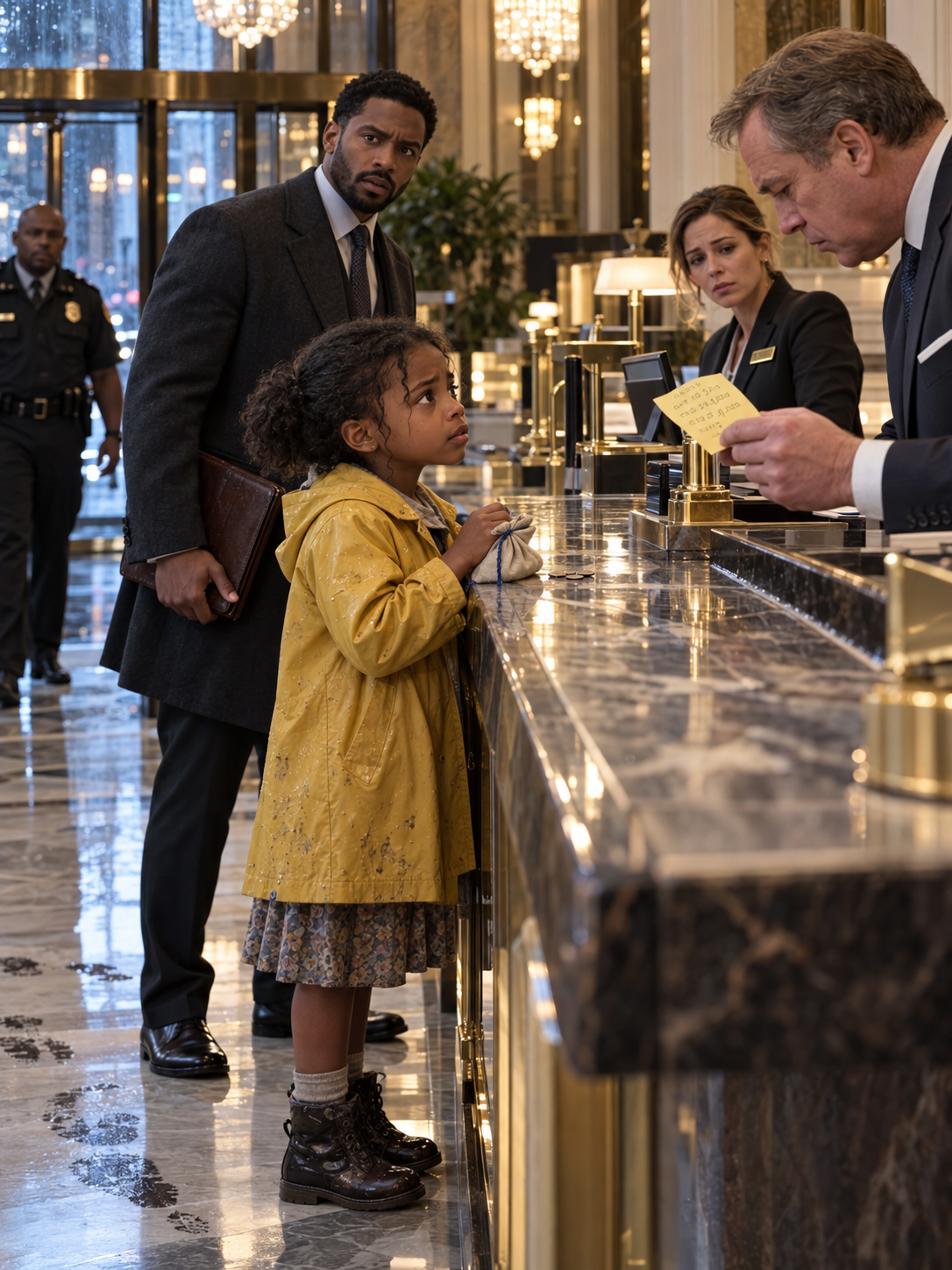
THE BANK SENT A SIX-YEAR-OLD GIRL INTO THE RAIN WITH HER MOTHER’S COIN POUCH—THEN TEN WHISPERED NUMBERS EXPOSED A SECRET HIDDEN INSIDE ITS OLDEST ACCOUNTS – Life Story
The security guard slid the little girl’s cloth pouch across the marble counter as though it were something the bank...

AFTER HIS FIANCÉE SAID THE BABY WASN’T HIS, A SIX-YEAR-OLD ASKED FOR ONE HUG—THEN HER MOTHER MADE HIM PROVE HE WOULDN’T WALK AWAY WHEN IT MATTERED – Life Story
The little girl held out her scholarship letter and asked the stranger on the bench for the one thing he...