MY WIFE ERASED THE DOORBELL FOOTAGE AFTER TWENTY-SEVEN YEARS OF MARRIAGE—THEN HER CONFESSION, OUR DIVORCE, AND ONE HOSPITAL CALL FORCED ME TO CHOOSE WHO I WOULD BECOME – Life Story
The man on my doorbell camera walked into my house at p.m.—and never walked back out.
By morning, the clip was gone, and my wife of twenty-seven years was asking why I looked so tired.
What she admitted three days later ended our marriage—but the hardest choice came after I had already filed for divorce.
At on a gray Tuesday afternoon, while I was eighty-seven miles away helping my father remember how to use a microwave he had owned for twelve years, my phone buzzed with a doorbell-camera alert.
A man I had never seen before stepped onto my porch.
He was maybe fifty, broad-shouldered, wearing a dark quarter-zip and carrying nothing.
He glanced once toward the street, once toward the camera, then used the side of his hand to shield his face as the front door opened from inside.
My wife, Laura, let him in.
I watched the twelve-second clip three times.
Then I waited for the camera to show him leaving.
It never did.
My father called from the kitchen because he had forgotten why he was holding an empty coffee mug.
By the time I helped him sit down, labeled tomorrow’s medication box, and checked the stove twice, nearly four hours had passed.
There was still no departure alert.
I told myself the camera had missed him.
I told myself the battery had glitched.
I told myself many things because after twenty-seven years of marriage, denial does not arrive wearing a blindfold.
It arrives sounding reasonable.
That night Laura called at .
“You sound tired,” she said.
“So do you.”
She laughed softly. “Long day.
I went to the gym, came home, cleaned up a little.
Nothing exciting.”
I stared through my father’s living-room window at my own reflection floating over the black glass.
“Anybody stop by?”
The pause lasted less than a second.
“No.
Why?”
“No reason.”
I hated how easily the lie landed.
The next morning, before my father woke, I opened the doorbell app again.
The clip was gone.
Not corrupted.
Not unavailable.
Deleted.
Laura knew the password because we had installed the camera together two weeks earlier after packages started disappearing in the neighborhood.
She had stood on the porch holding the ladder while I adjusted the angle, joking that now we would finally know which raccoon kept attacking the flowerpots.
I drove home that afternoon without warning her.
For most of the trip I rehearsed confrontations that sounded powerful in the car and pathetic once I imagined saying them aloud.
By the time I pulled into our driveway, anger had hardened into something colder.
Laura’s SUV was there.
So was the silence.
I found her at the kitchen island in running clothes, cutting an apple into precise, thin slices.
Twenty-seven years had given me an encyclopedia of her expressions, and I recognized the one she wore immediately.
She was afraid.
“Who was here Tuesday?” I asked.
Her knife stopped against the cutting board.
“Here?”
I placed my phone on the island between us.
“The man you let into our house.”
She looked at the screen without touching it.
Then she looked at me.
For one reckless second, I hoped she would be offended.
Confused.
Angry that I could even imagine such a thing.
Instead, her shoulders dropped.
That frightened me more than denial would have.
“I deleted the video,” she said.
“I know.”
“I panicked.”
“Who is he?”
She pressed both hands against the counter.
Her wedding ring flashed under the pendant lights we had chosen together during a renovation seven years earlier.
“His name is Evan.”
I felt my heartbeat in my teeth.
“How long?”
Laura closed her eyes.
I thought she might say once.
A mistake.
A month.
Something survivable.
When she opened her eyes again, she looked twenty years older.
“About a year.”
The kitchen seemed to tilt.
“A year?”
“I’m sorry.”
I laughed once, but there was nothing amused in it.
I had spent most weekdays of that year caring for my father while his memory slowly broke apart.
Laura had kissed me goodbye on Mondays, told me to be safe, reminded me to eat, sometimes packed sandwiches for the drive.
And while I was gone, another man had been walking through my front door.
I asked the question before I understood how much I would hate the answer.
“Was Tuesday the first time you brought him into this house?”
Laura’s face changed.
Not dramatically.
Just enough.
And in that instant, I knew Tuesday was not the beginning of the story.
THE MISSING MINUTE
“No,” she said.
The refrigerator hummed behind us.
Somewhere outside, a leaf blower started and stopped, absurdly normal.
I pulled out one of the counter stools but did not sit. “How many times?”
“Michael—”
“How many times was he in our house?”
“I don’t know exactly.”
“You know enough.”
She wrapped her arms around herself. “At first we met somewhere else.”
“At first.”
She flinched.
I had not raised my voice.
That was almost worse.
Twenty-seven years together had taught Laura the difference between my anger and my hurt, and she had always known I became quiet when something reached bone.
She said, “It wasn’t supposed to become what it became.”
“That sentence doesn’t answer anything.”
“I know.”
“Did he sleep in our bed?”
Her face told me before she spoke.
I stepped away from the island.
It is strange what the mind notices when something enormous breaks.
I remember the faint smear of apple juice on the cutting board.
A dish towel hanging crooked from the oven handle.
One dead bulb above the breakfast nook.
I remember thinking I had meant to replace that bulb on Saturday.
I said, “I’m going back to Dad’s.”
“Please don’t drive like this.”
The concern in her voice infuriated me.
“Do not suddenly start taking care of me.”
“I’m still your wife.”
“No.
You’re the person who knew where I was every Monday through Friday and decided that made our house convenient.”
She went white.
I grabbed my overnight bag, which I had never unpacked from the previous trip.
Laura followed me into the foyer but stopped several feet away. “Can we talk before you make any decisions?”
I looked at her.
“What decision did you leave me?”
She started crying.
I wish I could tell you I felt nothing.
I felt everything.
That was the problem.
I had loved Laura since I was twenty-nine years old.
I knew the scar beneath her left knee, the way she hated cilantro, the ridiculous humming sound she made while balancing the checkbook.
I knew she cried at airport reunions between strangers and always read the last page of novels too early.
I also knew that for a year she had been lying to me with the practiced ease of someone discussing groceries.
I drove away.
At a gas station forty minutes later, I sat behind the wheel and stared at my hands until my phone rang.
Caleb Ruiz.
We had worked together for nineteen years before he left our engineering firm to open a small consulting shop.
He was the kind of friend who rarely called without a reason and never said “everything happens for a reason” because he knew that sometimes things happened because people made terrible decisions.
I answered.
“You sound like hell,” he said after I managed hello.
“My marriage is over.”
Silence.
Then: “Where are you?”
“Off Route 18.”
“Are you driving?”
“Not currently.”
“Good.
Stay not currently driving for five minutes.”
That annoyed me enough to breathe.
I told him.
Not everything.
Enough.
When I finished, he said, “You don’t have to decide the rest of your life tonight.”
“It feels decided.”
“Maybe.
But tonight you need food, sleep, and no bourbon.”
“You always were controlling.”
“Only when you become stupid in predictable ways.”
I almost smiled.
Almost.
My father was asleep when I reached his house.
I sat in the dark kitchen with the blue glow of the microwave clock and understood that I had two lives demanding competence from me while I felt capable of neither.
By dawn I had made one decision.
I would not investigate Laura like a criminal suspect.
No hidden recorders.
No tracking devices.
No elaborate revenge.
I wanted facts, not obsession.
At nine, I called Dana Holt, a divorce attorney Caleb had used years earlier.
Her assistant found an opening for the following afternoon.
Then I called Laura.
“I need space,” I said.
She had been crying; I could hear it.
“I understand.”
“I’m coming home this weekend for documents and clothes.
I want you somewhere else while I’m there.”
“Michael, can we please—”
“No.”
The word surprised both of us.
Laura had always teased me about being incapable of saying it.
I volunteered for extra projects.
Took the holiday shifts.
Drove relatives to airports at five in the morning.
Helped neighbors move furniture I hated.
No had always felt selfish.
That morning it felt structural.
Like the first beam in a house I might someday live in.
She whispered, “Okay.”
At the attorney’s office the next day, Dana listened without theatrics.
She was in her early sixties, silver hair cut bluntly at the jaw, legal pad positioned square with the desk.
She asked about accounts, retirement funds, debt, the mortgage, Laura’s income, my income, my father’s care expenses.
She did not ask whether Evan was better-looking than I was.
That alone made me trust her.
“Emotion and law are roommates who don’t communicate well,” she said. “Your job is to keep one from wrecking the other.”
I nodded.
“Do you want a divorce?”
“Yes.”
She studied me.
“Is that an answer or a pain response?”
I hated the question because it was good.
I looked through her office window at a parking garage shining with rain.
“A year,” I said. “She didn’t stumble once.
She built a schedule.”
Dana capped her pen.
“That sounds like an answer.”
Before I left, she gave me a checklist.
Copy financial records.
Change personal passwords.
Do not drain shared accounts.
Do not threaten anyone.
Do not put anything in writing that I would hate hearing read aloud in court.
That last instruction saved me two days later.
I was sitting in my own driveway, staring at a furious message I had typed to Laura, when the garage door opened.
She was not supposed to be there.
She stepped out wearing leggings, sneakers, and damp hair.
The gym.
Of course.
I deleted the message instead of sending it.
Then I got out of the car.
“What are you doing here?”
Laura’s expression tightened. “I couldn’t check into the hotel until three.
I worked out and needed a shower.”
“You agreed not to be here.”
“I thought you’d be downstairs.”
“That is not the same thing as not being here.”
“I wasn’t trying to upset you.”
“But somehow I’m still upset.”
Our new neighbor, Mark Delaney, chose that precise moment to walk his golden retriever past the driveway.
He waved.
I stared at him with the desperate resentment of a man watching somebody stroll through a normal Saturday.
Mark stopped.
We had moved only six months earlier, downsizing after years in a larger place we no longer needed.
He had introduced himself once over the mailbox.
“Everything good?” he asked.
Before I could answer, Laura smiled automatically.
“Fine.
Just moving a few things around.”
The lie was so smooth I actually turned toward her.
Mark sensed enough to leave quickly.
The instant he disappeared, Laura’s face collapsed.
“I’m sorry.”
“Leave.”
“Can we talk for five minutes?”
“No.”
“Michael, please.”
I pointed toward the garage.
“This is what you caused.
I need one room in my life where I don’t have to manage your feelings about what you did to me.”
Her mouth opened.
Then closed.
For once she obeyed.
I watched her SUV back down the driveway.
Only after it disappeared did I realize my hands were shaking.
And that was when I understood something I should have learned years earlier.
Laura’s affair was not the only problem in our marriage.
My inability to draw a boundary before resentment poisoned me was another.
Hers did not excuse mine.
Mine did not excuse hers.
But if I was going to survive the end of us, I would have to stop confusing kindness with surrender.
THE HOUSE WE THOUGHT WE OWNED
Packing a twenty-seven-year marriage into plastic bins is an education in archaeology.
Sunday morning I found receipts from restaurants that no longer existed, vacation maps folded along prehistoric highways, Christmas ornaments labeled in Laura’s handwriting, and a photograph of us at thirty-two standing barefoot in the Atlantic.
We looked invincible.
That was offensive.
I nearly threw the picture away.
Instead, I put it facedown in a box marked PHOTOS.
At noon I opened a cedar cabinet in the basement and found the small sealed memorial vessel we had kept after the pregnancies we lost.
There had been three.
People had different language for those losses.
Medical terms.
Spiritual terms.
Carefully neutral phrases offered by counselors.
Laura and I had simply called them our children because we had loved the possibility of them before the world informed us that possibility was not a promise.
For years, we planned to have the memorial ashes scattered with ours someday near the Carolina beach where we spent our honeymoon.
I sat on the basement floor holding the container.
That plan had belonged to people who no longer existed.
I did not take it.
I photographed where it was, closed the cabinet, and wrote a note to ask Dana later how we should handle something neither spreadsheet nor property schedule could make sane.
By six-thirty my car was nearly full.
Laura was supposed to return after nine.
At , the garage door rose.
I closed my eyes.
She came inside slowly, carrying her purse and looking as if she had not slept.
“You’re early,” I said.
“I know.”
“That seems to be becoming a theme.”
“I need to talk to you.”
“I need to leave.”
“Twenty minutes.”
“No.”
Her face tightened. “Please.
Then I’ll stop asking.”
I should have gone.
Instead, I looked at the clock.
“Ten.”
We sat at opposite ends of the living room sofa.
The room still looked staged from when we bought the house—cream rug, slate fireplace, two blue chairs Laura insisted made the room warmer.
Nothing had ever looked colder.
She began with apologies.
I stopped her.
“Why?”
Laura rubbed her thumb against her wedding band.
“For a long time, I thought you didn’t want me.”
I stared at her.
“You cheated because you thought I didn’t want you.”
“No.
I cheated because I made a selfish, angry decision and kept making it.
But you asked why.”
That distinction made me listen.
She looked toward the window.
“After everything with the pregnancies, you changed.”
“So did you.”
“I know.
But you stopped touching me.”
“I was terrified.”
“I didn’t know that.”
“Yes, you did.”
“Not until Christmas before last.”
The conversation came back so clearly that my stomach tightened.
We had been drinking coffee after dinner.
Laura had asked why I never initiated sex anymore, and after years of deflection I finally told her the truth.
The losses had left me irrationally frightened of another pregnancy even after doctors had explained how unlikely it was without intervention.
I had gone to therapy years earlier.
I had mostly worked through it.
But some nights desire still triggered memories of hospital lighting, hopeful test results, and the look on Laura’s face after each loss.
I had hidden it because I thought hiding pain protected her from it.
When I finally told her, she cried.
I thought the crying meant relief.
Now Laura said, “I heard something completely different.”
“What?”
“That you looked at me and saw failure.”
My throat tightened.
“I never said that.”
“I know that now.”
“You knew it then.”
“No.” Her voice broke. “I believed every time you told me it wasn’t my fault because I needed to.
But when you admitted you were afraid to have sex with me because of what happened, some ugly part of me decided you had been lying all those years.”
“So you punished me.”
“Yes.”
The directness stopped me.
She did not soften it.
Did not say we had both made mistakes.
Did not tell me I had driven her into somebody else’s arms.
She said, “The first time was revenge.”
I stood.
“I’m done.”
“Please.”
“You have used the one thing I was most ashamed to admit as your justification.”
“No.
Not justification.
Explanation.”
“Convenient difference.”
“It matters to me.”
“It doesn’t matter to me right now.”
She stood too, then stayed behind the coffee table as if respecting an invisible boundary.
“Evan had been talking to me at the gym for months.
Nothing happened.
I barely thought about him.
Then after Christmas, I was angry every day.
You started spending more time with your father, and I convinced myself that was another way of avoiding me.”
“My father was forgetting his own address.”
“I know.”
“He left a burner on twice.”
“I know.”
“I was cleaning food out of his refrigerator because he couldn’t remember when he bought it.”
“I know, Michael.”
“Apparently you knew a lot.”
She flinched.
I hated that the reaction satisfied me.
That frightened me almost as much as the affair.
Laura whispered, “One night Evan asked if I wanted coffee after the gym.
I said yes.
I knew why I was saying yes.”
I picked up my keys.
She continued quickly.
“The first time, I told myself it was to prove I could still be wanted.
Then I told myself it was only physical.
Then it became something I used whenever I felt lonely or angry.
And after a while, stopping meant admitting what I had become.”
I turned toward her.
“How often?”
She looked down.
There it was.
Another missing minute.
“How often, Laura?”
“In the beginning, once every week or two.”
“And then?”
Her hands tightened.
“When you were gone…”
“Say it.”
“Most days.”
The room disappeared around me.
“What?”
She was crying now.
“For maybe six months.
Not every day.
But…”
“Most days.”
“Yes.”
My chest felt hollow.
I thought of sandwiches packed on Monday mornings.
Calls from her asking whether Dad had eaten.
Texts saying LOVE YOU, DRIVE SAFE.
“Hundreds of times?”
“I don’t know.”
“But more times with him in one year than with me in the last decade.”
She covered her mouth.
That was answer enough.
I walked out.
She called my name once.
I kept going.
The interstate blurred beneath headlights.
Caleb answered on the second ring.
“I need you to talk,” I said.
“About what?”
“Anything that isn’t my wife.”
So he described, in excruciating detail, the transmission problem in his daughter’s old Subaru.
I let him.
Twenty minutes later my breathing slowed.
“You still there?” he asked.
“Yeah.”
“Good.”
“I hate her.”
“No, you don’t.”
I gripped the wheel.
“Don’t tell me what I feel.”
“You hate what she did.
You hate who she was while doing it.
You probably hate yourself for still knowing exactly how she takes her coffee.
That’s different.”
“Why does the distinction matter?”
“Because you’re going to use hate as anesthesia if you’re not careful.
And anesthesia wears off.”
I did not answer.
He said, “Get home to your dad.”
Home.
The word hurt.
QUESTIONS WITHOUT MERCY
For the next two weeks, I became efficient.
Efficiency was my oldest defense.
I created folders for bank statements, mortgage documents, insurance policies, tax returns, retirement accounts, household expenses.
I met Dana twice and followed every instruction she gave me.
I also saw a therapist named Dr.
Leah Mercer, who had the irritating habit of allowing silence to last longer than I could tolerate.
During our third session, I told her I wanted answers from Laura.
“How many?” I said. “Where? What did they say about me? Did she compare us? Did she plan to leave?”
Leah folded one leg over the other.
“What will the answers do?”
“Tell me what happened.”
“You know what happened.”
“I know the headline.”
“And you want the autopsy.”
“Yes.”
“Why?”
I stared at her bookshelf.
Because facts felt controllable.
Because humiliation was shapeless, and I wanted numbers.
Because if I could find the exact moment I became foolish, perhaps I could travel backward emotionally and become someone else.
“I need to know what was real.”
Leah said, “A person who lied for a year may not be the person who can restore your confidence in reality.”
That irritated me because Caleb had said something similar.
“Then what am I supposed to trust?”
“Your choices now.”
I disliked therapy.
I kept going.
Laura sent messages almost daily at first.
I’m sorry.
I’ll answer anything.
I’ll sign whatever is fair.
I want counseling even if it’s only to help us end this better.
I did not respond.
Then, after four silent days, the messages stopped.
The absence hurt more than the messages.
That made me angry at myself.
I had asked her to leave me alone, and when she did, some childish part of me demanded proof that she was suffering.
I opened old photos at two in the morning.
Anniversaries.
Beach trips.
A terrible cruise where we both got food poisoning in Nassau and laughed about it for years.
I stared at Laura smiling beside me and wondered whether I had wasted more than half my adult life.
Leah corrected that idea immediately.
“A relationship can end badly without making every previous year fraudulent.”
“You don’t know that.”
“Neither do you.”
“What if she cheated before?”
“What if she didn’t?”
“That doesn’t help.”
“It isn’t supposed to.
You’re asking certainty to do a job it cannot do.”
A week later, I finally agreed to one structured conversation with Laura.
Public place.
Ninety minutes.
No touching.
No discussion of reconciliation.
I chose a quiet corner of a hotel lounge on a Thursday afternoon because I did not want memories contaminating another room in our house.
Laura arrived early.
She looked thinner.
No makeup.
Gray sweater, black pants, hair tied back.
I hated that she looked familiar.
“I wrote questions,” I said.
“I figured.”
“If I think you’re lying, I leave.”
“Okay.”
I opened my notebook.
“When did it become inappropriate?”
“Coffee with him after the gym.
February ninth.”
Exact date.
I looked up.
“I remember because it was the day after your dad’s first neurology appointment.”
The fact hit differently.
She saw it.
“I know.”
“Where?”
“A coffee place near the gym.”
“First physical contact?”
“Two weeks later.
His apartment.”
“Did you talk about me?”
“Eventually.”
“My shortcomings?”
“Yes.”
“Which ones?”
She swallowed.
“That you were absent.
That you didn’t want sex.
That I felt invisible.”
“Did you tell him why I was absent?”
“Not honestly at first.”
I sat back.
“So he thought I abandoned you.”
“I let him think our marriage was basically over.”
“Was it?”
“No.”
The answer came too quickly to be flattering.
I kept going.
“Did you plan a future with him?”
“No.”
“Did he?”
“I think he imagined one.”
“Did you love him?”
Laura took a long breath.
“I cared about him.”
“That’s not what I asked.”
“I don’t know what word fits something built inside a lie.”
“Convenient.”
“I’m not trying to escape this, Michael.”
“Then don’t use poetry.”
Her eyes filled, but she nodded.
“I was attached to him.
I missed him sometimes.
I liked how I felt around him.
But when I imagined being sick, old, scared, or just sitting on the porch at seventy-five, it was you.”
I laughed quietly.
“So I got the hospital shifts and retirement.
He got the year you actually wanted someone.”
She looked down.
That was cruel.
I knew it as soon as I said it.
I let it remain.
“Did you ever mock me together?”
“No.”
“Did you compare us sexually?”
She hesitated.
My stomach turned.
“I don’t need the details,” I said.
Relief crossed her face.
That relief hurt too.
“What did you think would happen if I found out?”
“I thought you’d leave.”
“And you continued.”
“Yes.”
“Why?”
She looked directly at me.
“Because after a while I hated the person I had become, and instead of stopping, I behaved like somebody who believed she had already destroyed everything.”
That answer did not absolve her.
It did sound true.
We sat in silence.
Then Laura said, “I had a doctor appointment yesterday.”
I closed the notebook.
“We’re not changing subjects.”
“I’m not.
I’m telling you because it might affect the divorce schedule.”
My body tightened instinctively.
“What happened?”
“Probably nothing.
I’ve had some bloating and pelvic pressure.
They found something on the exam and ordered an ultrasound.”
“Something?”
“A mass.”
The old reflex rose immediately.
Ask questions.
Fix logistics.
Find the best specialist.
Drive her.
I forced myself to remain still.
“When is the ultrasound?”
“Monday.”
“Do you have someone to go with you?”
Her expression answered.
“Laura.”
“I can go alone.”
That sentence had been mine for most of our marriage.
Suddenly I hated hearing it from her.
But I said, “You should ask a friend.”
Her only close friend, Sheila, lived nine hundred miles away and was recovering from her own surgery.
Laura nodded.
“I will.”
We finished the questions.
When the ninety minutes ended, she looked at my notebook.
“Did any of that help?”
“No.”
She nodded once.
“I didn’t think it would.”
Then she stood and left.
I watched her through the lobby windows until she disappeared into the rain.
On Monday, at p.m., she texted me.
Ultrasound wasn’t normal.
More tests Wednesday.
You don’t need to respond.
I stared at the message.
Then locked my phone.
The next morning, I signed the authorization for Dana to file.
THE CALL FROM ST.
MATTHEW’S
The divorce petition was served on Laura on her birthday.
I did not plan it.
The process server did not know the date.
When Dana’s office called to confirm service, I stared at my calendar and felt sick.
For twenty-seven years, Laura’s birthday had meant lemon cake from a bakery across town and flowers she always claimed cost too much.
That year it meant legal paper.
I nearly called.
I did not.
Three days later, our furnace failed.
Because the house had not yet been listed and both our names were on it, I drove down to meet the HVAC contractor.
Laura was not there.
I felt absurdly relieved.
The repair took four hours.
I moved boxes out of the utility room, signed the invoice, swept insulation from the floor, and was locking the back door when my phone rang from an unfamiliar number.
“Mr.
Bennett?”
“Yes.”
“This is St.
Matthew’s Medical Center.
Your wife, Laura Bennett, listed you as her emergency contact.”
Every grievance inside me went silent.
“What happened?”
“She came through the emergency department this morning after experiencing chest pain and severe shortness of breath.
Cardiac testing is reassuring.
Her symptoms appear consistent with an acute panic episode, but she is also being evaluated for another recently diagnosed condition.”
“What condition?”
The nurse paused.
“She has asked the physician to speak with you directly.”
I sat down on a moving box.
Ten minutes later, an attending physician explained that Laura had received imaging results suggesting ovarian cancer.
Not a cyst.
Not “something to watch.”
Cancer.
The room around me sharpened.
Cardboard.
Concrete floor.
A single screw near my shoe.
“Are you certain?” I asked.
“Her gynecologic oncologist will discuss the pathology and staging, but the imaging is highly concerning.”
I pressed my knuckles against my forehead.
“When?”
“She received the oncology referral yesterday.
The combination of the diagnosis, the divorce proceedings, and escalating anxiety appears to have triggered today’s episode.”
I closed my eyes.
“Is she alone?”
“Yes.”
I hated the answer.
I drove to the hospital.
The fact that I did not want to go did not stop me.
The fact that I did want to go made me furious.
Laura was asleep when I entered.
An IV line ran to her arm.
A monitor traced green light across the screen beside her bed.
Without makeup, without practiced explanations, without the armor of our arguments, she looked like the woman I had watched sleep beside me for nearly three decades.
I sat down.
For forty minutes, I watched the rise and fall of her chest.
Memory is merciless when someone is ill.
It does not show you betrayal first.
It shows you ordinary tenderness.
Laura asleep on my shoulder during a delayed flight.
Laura laughing under a hotel blanket during a thunderstorm in Savannah.
Laura holding my hand in a fertility clinic.
Laura on our kitchen floor after the second loss, whispering, “Tell me you don’t hate me.”
I had said, “Never.”
I had meant it.
I still meant it.
That was the terrible part.
When she woke, confusion crossed her face.
Then tears.
“Michael?”
“I’m here.”
She reached toward me, then stopped herself.
“Can I—”
“No.”
The word came gently.
She lowered her hand.
“Okay.”
“I came because the hospital called.”
“I know.”
“What exactly did they find?”
Laura stared at the blanket.
“The STI screening was clear.”
I winced at the phrase.
She noticed.
“I’m sorry.”
“Keep going.”
“I told the doctor I’d been bloated and uncomfortable for months.
I thought it was age, stress, diet.
She felt something during the pelvic exam.
They did the ultrasound.
Then CT.”
She took a shaky breath.
“There are masses on both ovaries, and something in the pelvic tissue.
The oncologist says they think it’s stage two, maybe higher, but they won’t know exactly until surgery.”
My mind switched into systems mode.
“How soon?”
“They want more tests tomorrow and surgery quickly if I’m stable.”
“Which surgeon?”
“Dr.
Amara Patel.”
I wrote it down automatically.
Laura watched my hand.
“You don’t have to do this.”
“Do what?”
“Become you.”
I stopped writing.
“What does that mean?”
“The person who handles everything when everyone else falls apart.”
“That person is tired.”
“I know.”
“No.
I don’t think you do.”
Her eyes closed.
“You’re right.”
I looked at the IV pump.
“I will help you understand the plan.
I’ll make sure you have what you need for surgery.
That is not reconciliation.”
“I know.”
“It does not stop the divorce.”
Her face tightened, but she nodded.
“I know.”
“I need you to say it.”
“You helping me does not mean we’re getting back together.”
“And?”
“The divorce continues.”
I breathed out.
Laura whispered, “Thank you for coming.”
I stared at her.
“Don’t make me regret it.”
The staging workup took two days.
Stage IIB.
The cancer had spread beyond the ovaries into other pelvic tissue, but imaging showed no distant disease in the liver or lungs.
Dr.
Patel was careful with language.
Serious.
Treatable.
Aggressive surgery followed by chemotherapy.
No promises.
Laura listened with both hands folded in her lap.
I took notes because someone had to.
After the doctor left, Laura looked toward the window.
“If I hadn’t cheated…”
I shut my notebook.
“Don’t.”
“I wouldn’t have gone for testing.”
“Laura.”
“I ignored the symptoms for months.
The only reason I made the appointment was because I needed the STI tests.”
Her laugh was small and horrified.
“So the worst thing I’ve ever done might be the reason they found the cancer before it spread farther.”
I had no answer.
There are moments when life produces irony so cruel that calling it irony feels obscene.
I stood beside the window.
Traffic moved eight floors below.
Laura said, “Do you think that means something?”
“No.”
She looked at me.
“I think it means biology is indifferent.”
A faint, tired smile touched her mouth.
“You always hated symbolism.”
“Only when reality is bad enough without decorating it.”
She nodded.
Then she started to cry.
Not loudly.
I stood there for several seconds before moving.
Every instinct told me to hold her.
Every wound told me not to.
So I pulled the visitor chair closer instead.
I sat beside the bed.
Near enough that she was not alone.
Far enough that I did not lie to either of us.
A KINDNESS WITH CONDITIONS
Laura was discharged two days later to prepare for surgery.
I returned temporarily to the house because she would need help after the operation, and because professional home care could not cover every hour.
Dana made me document the arrangement.
Separate bedrooms.
Separate finances except existing household obligations.
No withdrawal of the petition.
No assumption that caregiving represented reconciliation.
The legal language felt brutal until I understood what boundaries actually were.
Not punishment.
Instructions for preserving reality when emotion wanted to rewrite it.
Laura moved into the downstairs guest room because stairs would be difficult after surgery.
I took the upstairs bedroom that had once been ours.
The first night back, I stood in the doorway for ten minutes.
The mattress had been replaced.
Laura told me without being asked.
“I couldn’t keep it.”
I stared at the empty room.
The old nightstands remained.
So did the framed photograph from our twentieth anniversary.
I took the picture down and put it in a drawer.
That was all.
Caregiving created a strange domestic truce.
I drove Laura to preoperative appointments.
She organized her medications.
I cooked because she forgot to eat when frightened.
She stopped asking whether I might forgive her.
That helped more than any apology.
One afternoon, while I chopped vegetables, she came into the kitchen holding a folder.
“I signed the temporary financial agreement Dana sent to my attorney.”
I looked up.
“You didn’t have to agree to everything.”
“I know.”
“Did your lawyer advise you?”
“Yes.”
“And?”
“He said some of it was generous to you.”
I waited.
Laura gave a tired half-smile.
“I told him fair and easy are not the same thing.”
I set the knife down.
“I’m not asking you to punish yourself.”
“I’m not.
The house gets sold.
Debts get paid.
Retirement gets divided according to what we accumulated during the marriage.
Neither of us drags the other through court if we can avoid it.”
She hesitated.
“And I agreed that my future treatment costs are mine to handle through insurance and my own resources to the extent legally possible.”
I nodded.
“Thank you.”
She leaned against the counter.
“I need to do at least one thing without making you fight for it.”
There was no answer that did not sound either cruel or hopeful.
So I returned to the carrots.
Two nights later, she found me in the garage replacing the battery in an old flashlight.
“Michael.”
I looked up.
She held an envelope.
“What’s that?”
“A letter.”
“I don’t want a letter.”
“I know.”
“Then why are you holding one?”
“Because I’m not giving it to you.”
That got my attention.
Laura walked to the trash can, tore the envelope in half, then tore it again.
“What was in it?”
“Everything I wanted to say to convince you I’m still worth loving.”
My jaw tightened.
“And?”
“I realized that asking you to read it would still be me trying to control the outcome.”
She dropped the pieces into the trash.
“I’m working on that.”
Then she left.
I stared at the white scraps among cardboard and dryer lint.
For the first time since the confession, I saw change in Laura that did not require me to reward it.
That was dangerous.
Not because I wanted her back.
Because compassion began returning the moment she stopped demanding it.
Leah noticed.
“You’re worried kindness will become attachment.”
“It already is attachment.”
“You were married twenty-seven years.
Detachment isn’t a switch.”
“I don’t want to confuse taking care of her with forgiving her.”
“Then don’t.”
“That sounds simplistic.”
“It’s actually difficult.
Which is why you keep trying to turn it into a philosophy problem.”
I glared at her.
She smiled.
“Michael, you can bring someone soup and still divorce them.”
“Put that on a greeting card.”
“I charge extra for merchandising.”
I laughed.
A real laugh.
It startled me.
The surgery was scheduled for Monday morning.
Sunday night Laura asked whether I could sit with her in the den.
We took opposite chairs.
Rain tapped the windows.
She said, “There’s one thing I need you to know before tomorrow.”
My body stiffened.
“About Evan?”
“Yes.”
I nearly stood.
Laura raised a hand.
“Not details.”
“Then what?”
“He contacted me after you found out.”
“When?”
“Two weeks ago.”
Anger arrived instantly.
“You told me there had been no contact.”
“There hadn’t been until then.”
“And you didn’t tell me.”
“No.”
“Why?”
“Because he used a different number, and because I was ashamed that my first reaction was fear you would think I had invited it.”
“What did he want?”
“To know what was happening.
To apologize for the way things ended.”
“How did things end?”
Laura stared at her hands.
“I told him I never wanted to see him again.”
“When?”
“The day after I confessed.”
I tried to read her face.
“Did you answer the new message?”
“Yes.”
I stood.
“Of course you did.”
“Michael—”
“What did you say?”
“That knowing him had become the worst mistake of my life.
That I would not see or speak to him again.
That he needed to leave both of us alone.”
“Do you still have it?”
“Yes.”
She reached for her phone.
I stepped back.
“No.”
Laura froze.
“I thought you’d want proof.”
“That’s the problem.”
She lowered the phone.
I paced once across the rug.
“For weeks I’ve believed that if I just collect enough proof, I’ll finally know which version of you is real.”
She said nothing.
“But there is no final piece of evidence, is there? There will always be another question.”
“I guess so.”
“I don’t want your phone.”
“All right.”
“If you lied, the lie belongs to you.
If you told the truth, the truth belongs to you.
I’m done building my life around auditing you.”
Laura covered her mouth.
I continued before I lost the nerve.
“I’m helping tomorrow because that is my choice.
I’m divorcing you because that is also my choice.
Neither one cancels the other.”
Tears ran down her face.
She nodded.
“That’s fair.”
“No.
It’s not fair.”
I looked around the room.
“None of this is fair.
It’s simply what I can live with.”
That night I slept six straight hours for the first time since the doorbell alert.
THE MESSAGE HE WASN’T MEANT TO SEE
The surgery lasted seven hours.
Dr.
Patel removed both ovaries, the uterus, affected tissue, and every visible tumor she could safely reach.
Then Laura’s blood pressure became unstable.
The operation ended earlier than planned.
The surgeon found me in a consultation room wearing blue scrubs over her clothes and fatigue around her eyes.
“We accomplished a significant portion of what we intended,” she said. “But we had to stop.”
“What happens now?”
“We stabilize her.
Pathology guides the next steps.
Additional surgery may be considered later, but chemotherapy may come first.”
“Is she in danger?”
“She is stable right now.”
Right now.
Two words that can hold an entire life hostage.
I stayed.
Caleb arrived at eleven that night carrying a sandwich and two coffees.
“You look terrible,” he said.
“So does everyone keep telling me.”
“Maybe listen to the consensus.”
“I can’t leave.”
“You can go downstairs and eat.”
“What if something happens?”
“Then the hospital has your number.”
I stared at Laura through the glass panel of the intensive-care room.
Caleb followed my gaze.
“You still love her.”
I snapped my head toward him.
“Don’t.”
“I didn’t say go back.”
“Then don’t say it.”
He took a sip of coffee.
“Love isn’t a court order, Mike.”
I hated him briefly.
Then I ate half the sandwich.
At three in the morning, Laura developed seizure activity related to a postoperative complication.
Imaging showed bleeding that required urgent intervention.
The medical team moved quickly.
I stood in a hallway beneath fluorescent lights while a nurse explained consent forms I barely understood despite reading every line twice.
Because Laura was conscious enough to consent herself before being taken back, my signature was not needed.
That mattered to me.
Even in crisis, she still had agency.
So did I.
I called her employer.
I called Sheila.
I called my father’s memory-care facility because he had recently moved there after a long, brutal decision I had postponed for nearly a year.
The nurse told me Dad had eaten breakfast and was watching birds through the common-room window.
“Did he ask about me?”
A pause.
“He asked whether his brother was coming.”
His brother had been dead for eleven years.
I thanked her and ended the call.
Then I sat in a plastic chair and cried into both hands.
Not only for Laura.
For Dad.
For the marriage.
For the children we never brought home.
For every version of my future disappearing faster than I could adapt.
After dawn, Laura returned to intensive care.
Stable.
Fragile.
Alive.
I went to the house to shower and retrieve medication.
Her work phone sat on the kitchen counter, plugged into a charger.
I needed her supervisor’s number because human resources had asked whether someone from her department could retrieve a company laptop.
The phone unlocked with the code Laura had written for me before surgery.
I opened the contacts.
A message notification appeared from an unknown number.
I should not have read it.
I did.
Evan.
I knew because the message began:
I know you told me never to contact you again.
My pulse climbed.
The thread showed only a few recent messages.
He apologized.
Asked whether she was sick.
Said he regretted how things had ended and hoped she was okay.
Then Laura’s response.
Do not contact me again.
Meeting you became the biggest mistake of my life, not because you forced me into anything, but because I used you to become someone I hate.
My husband did not deserve what I did.
Neither did you deserve the lies I told you about my marriage.
I am sick now, but that does not change anything between us.
Please leave us alone.
I read it twice.
Then I set the phone down.
For months, I had imagined discovering one final message that would reveal everything.
This was not the message I expected.
It proved Laura had ended the affair.
It also proved she had hidden another contact from me.
Truth and deception in the same screen.
The marriage in miniature.
I sat at the kitchen table.
My old self would have photographed everything.
Archived it.
Forwarded it to Dana.
Asked Laura why she had not told me.
Built a new case inside a case already strong enough.
Instead, I wrote Evan’s number on a piece of paper.
Then tore the paper up.
I returned to the hospital.
Laura woke briefly that afternoon.
Her voice was weak.
“You came back.”
“Yes.”
“Why?”
I pulled the chair closer.
“Because I said I would.”
She looked at me for several seconds.
“Did you see my phone?”
My expression betrayed me.
She closed her eyes.
“The message.”
“Yes.”
“I was going to tell you.”
“No, you weren’t.”
A tear slipped toward her ear.
“No.”
I felt anger.
But not the electric kind.
Not the kind that demanded action.
Just sadness.
“You still don’t understand that hiding things to manage my reaction is part of what destroyed us.”
“I know.”
“Do you?”
“Yes.”
Her voice cracked.
“I was afraid every truth would become another reason for you to leave.”
I almost laughed.
“Laura, I’m already leaving.”
“I know.”
“That should have made honesty easier.”
“It should have.”
She looked toward me again.
“I’m sorry.”
I nodded.
That was all.
She asked, “Did you believe what I wrote to him?”
I considered lying.
Then remembered I was done with that economy.
“Yes.”
Her eyes closed.
“It doesn’t change anything, does it?”
“No.”
A long silence.
Then she whispered, “Good.”
I leaned forward.
“Good?”
“If one decent thing I do now could buy me back, then none of this would mean anything.”
That sentence stayed with me.
Laura slept again.
I watched the monitor pulse.
For the first time since the affair, I understood that consequence and cruelty were not the same thing.
She did not need me to hate her for the divorce to be real.
And I did not need the divorce to erase every good thing she had ever been.
THE LOWEST TIDE
Recovery was ugly in the ordinary way serious recovery often is.
Pain schedules.
Short walks.
Nausea.
Appointments.
Insurance calls.
Nutrition instructions.
Medication lists taped to the refrigerator.
Laura lost weight, then hair.
The first time she stood in the bathroom holding a clump of it, she stared at her palm.
“I knew this was coming.”
“Knowing is overrated.”
She gave me a tired look.
“You’re becoming philosophical.”
“Chemo has damaged my personality.”
“You’re not the one getting chemo.”
“Then explain my personality.”
She laughed.
The sound hurt in a different way.
We had become functional again.
That frightened me.
Not romantic.
Not reconciled.
But familiar.
I knew when she needed a blanket before she asked.
She knew I hated hospital vending-machine coffee and started packing instant packets in her treatment bag.
Some evenings we watched old game shows because neither of us could tolerate dramas about marriage.
This was exactly the limbo I had feared.
Leah warned me.
“Your nervous system recognizes caretaking as intimacy.”
“I know.”
“You also have a long history of measuring your worth by usefulness.”
“I know.”
“And you’re exhausted.”
“I know.”
She waited.
I sighed.
“I hate when you make me finish the thought.”
“That is literally why you pay me.”
I looked down.
“If she needs me, I know who I am.”
“And when she no longer needs you?”
That question followed me home.
Two weeks later, Dad failed to recognize me.
I visited after Laura’s infusion.
He was in the courtyard wearing a navy cardigan and feeding cracker crumbs to sparrows despite a sign asking residents not to feed birds.
I sat beside him.
“Hey, Dad.”
He smiled politely.
“Beautiful day.”
“It is.”
“You waiting for someone?”
The question broke something.
“For you.”
He laughed as if I were joking.
I stayed forty minutes.
Before leaving, I squeezed his shoulder.
“Love you, Dad.”
He nodded.
“Drive safe.”
He had said that my whole life.
Maybe somewhere inside him, some room still knew me.
I made it to the parking lot before the grief hit.
Not dramatic.
No collapse.
I simply sat behind the wheel unable to start the engine.
My phone rang.
Laura.
I almost ignored it.
Then answered.
“Hey.”
Her voice sharpened immediately.
“What happened?”
“Nothing.”
“Michael.”
“My father didn’t know who I was.”
Silence.
Then Laura said, “Where are you?”
“At the facility.”
“Don’t drive yet.”
The exact words Caleb had said weeks earlier.
I laughed once.
Laura asked, “What?”
“Nothing.”
We stayed on the phone.
She did not tell me to look on the bright side.
Did not remind me dementia had good days and bad days.
She just breathed on the other end.
After ten minutes, I said, “I can drive.”
“Okay.”
“I’ll be back in an hour.”
Another pause.
“You don’t have to come back because of me.”
“I live there right now.”
“You know what I mean.”
I did.
That night I understood the trap clearly.
Laura was becoming safe again in small moments.
Not because the betrayal mattered less.
Because human beings are terrible at staying emotionally simple.
The lowest point came three days later.
Dana called.
Laura’s attorney had filed a motion challenging the proposed property division.
I stood in the hospital parking garage staring at the concrete wall.
“What?”
“It may be strategic,” Dana said. “Her lawyer could be protecting her position because treatment costs and work leave have changed circumstances.”
“She signed the temporary agreement.”
“Temporary.”
“So all this talk about not fighting me—”
“Michael, stop.
We don’t know whether this was Laura’s instruction.”
I laughed bitterly.
“I know this movie.”
“Then don’t invent the ending before we read the script.”
I drove home furious.
Laura was at the dining table sorting medical bills.
I dropped my keys harder than necessary.
“Your lawyer filed against the settlement.”
She looked up.
“What?”
“Don’t.”
“I didn’t know.”
“Of course.”
“Michael, I did not tell him to do that.”
I stared at her.
For one second I saw the kitchen island again.
Who was here Tuesday?
No.
Why?
The body remembers deception faster than the mind.
Laura stood carefully.
“Call him.”
“I’m not calling your attorney.”
“Then I will.”
She grabbed her phone, put it on speaker, and dialed.
Her lawyer answered after his assistant transferred the call.
“Robert,” Laura said, “did you file a challenge to the proposed division?”
A pause.
“Yes.
Given your diagnosis and uncertainty around income, I thought—”
“Withdraw it.”
“Laura, I strongly advise—”
“Did I authorize you to contest the agreement?”
“You retained me to protect your interests.”
“My interest is ending this marriage without making Michael fight me for every inch.”
“Your medical circumstances have materially changed.”
“My cancer did not rewrite what I did.”
“Laura—”
“Withdraw it.”
The lawyer hesitated.
“I need that instruction in writing.”
“You’ll have it in five minutes.”
She ended the call.
I said nothing.
Laura opened her laptop.
Her hands shook.
“Sit down,” I said automatically.
“No.”
“You look like you’re going to fall.”
“I said I would not make this harder.”
“You’re allowed to protect yourself.”
“So are you.”
She typed.
Then stopped.
“Michael.”
“What?”
“If I get sicker, I need you to promise you won’t stay married to me because you feel guilty.”
The request struck harder than the legal filing.
“I’m not staying married.”
“I know what you say now.”
“I filed.”
“And I know you.”
She closed the laptop.
“You stayed in a job you hated three years longer because your boss was going through a divorce.
You took care of your mother’s sister for six months because nobody else would.
You kept Dad at home longer than was safe because you thought moving him meant abandoning him.”
My eyes narrowed.
“Don’t use my father.”
“I’m not.
I’m telling you what scares me.”
“What?”
“That I’ll become another person you sacrifice yourself for and secretly resent.”
The words landed because they were true.
I looked away.
Laura said softly, “Please don’t turn my cancer into the thing that steals the rest of your life after I already stole a year from you.”
I sat down.
For a long time neither of us spoke.
Then I said the sentence I had been avoiding.
“I can’t keep being your primary caregiver.”
Laura’s face crumpled.
Not with anger.
With fear.
I nearly took it back.
Instead I continued.
“I’ll get you through the next treatment cycle.
I’ll help arrange home care, transportation, meals, whatever your insurance and finances allow.
Sheila said she can come for two weeks next month.
Caleb found a volunteer transport program through the cancer center.”
Laura wiped her eyes.
“You’ve already arranged this?”
“I started researching.”
“When?”
“After Dad didn’t recognize me.”
She nodded slowly.
“I realized I’m disappearing again.”
Laura looked down at her hands.
“I don’t want that.”
“Neither do I.”
“So you’re leaving the house?”
“When support is in place.”
She cried quietly.
I stayed in my chair.
It was one of the hardest things I had ever done.
Not leaving.
Not staying.
Remaining present without rescuing her from the consequence of my boundary.
After a while, Laura took a breath.
“Okay.”
One word.
No accusation.
No bargaining.
Okay.
Something inside me unlocked.
THE LAST DOOR CLOSES
The next month reorganized our lives.
A home-health aide came three afternoons a week.
The cancer center arranged transportation for two treatments.
Sheila flew in and stayed in the guest room.
Laura returned to working remotely in short stretches when her energy allowed.
I moved into Caleb’s spare room.
The first night there, I woke at two in the morning convinced I had forgotten Laura’s anti-nausea medication.
Then I remembered it was not mine to remember.
I lay awake until sunrise.
Freedom, I discovered, can feel like neglect when you have trained yourself to be responsible for everyone.
I kept visiting Dad.
Sometimes he knew me.
Sometimes I was “the engineer.”
Once he called me by his brother’s name and asked whether Mom had made dinner.
I stopped correcting him.
We sat together anyway.
Laura’s scans after several cycles of chemotherapy showed encouraging response.
Not certainty.
Not a miracle.
Progress.
When she called to tell me, I was standing outside Dad’s facility beneath a maple tree turning red.
“They’re happy with the numbers,” she said.
“That’s good.”
“I cried in the parking lot.”
“I would have too.”
She hesitated.
“Thank you.”
“For what?”
“You know.”
“I did what I could.”
“You did more than I deserved.”
I looked at the red leaves shifting overhead.
“I’m trying to stop thinking in those terms.”
“What terms?”
“Deserve.
Punishment.
Debt.”
She was quiet.
“I spent months wanting the universe to make this fair.
Then you got cancer and I realized the universe has no accounting department.”
Laura laughed softly.
“No.
Apparently not.”
“Your treatment isn’t punishment for cheating.”
“I know.”
“And my leaving isn’t punishment either.”
Another pause.
“I know that too.”
The final divorce mediation took place six months after the doorbell alert.
Laura wore a short dark wig.
I wore the navy suit I had bought for Dad’s retirement dinner fifteen years earlier.
We sat across from each other with our attorneys.
The house had sold.
Debts were paid.
Retirement accounts divided.
Neither of us got everything we wanted.
Both of us got enough to leave.
The memorial ashes had been the only issue that nearly broke us.
No attorney had a satisfying solution.
In the end, Laura and I decided together.
We would not divide them.
We would take them to the beach we had chosen years earlier.
Not with our own ashes.
Not someday.
Now.
After the divorce.
One final promise we could still keep without pretending the marriage survived.
At mediation, Laura signed first.
Her pen paused over the last page.
She looked at me.
“Twenty-seven years.”
I nodded.
“Yeah.”
“I’m sorry this is how they end.”
“So am I.”
She swallowed.
“I loved you.”
I felt the old impulse to interrogate the verb.
Did?
Do?
When?
How could you?
Instead I said, “I know.”
Her eyes filled.
“And I loved you.”
She signed.
Then I did.
No applause.
No dramatic justice.
Just paper sliding across polished wood.
Outside the building, our attorneys walked toward separate cars.
Laura and I remained near the steps.
She hugged her coat around herself.
“Chemo again Thursday.”
“I remember.”
She smiled.
“Of course you do.”
I put my hands in my pockets.
“But Sheila’s taking you.”
“Yes.”
“And you have the new aide schedule?”
“Yes, Michael.”
I smiled slightly.
“Sorry.”
“No.
You’re learning.”
“So are you.”
She looked toward the street.
“Evan contacted me once more.”
My stomach tightened, but only briefly.
“I blocked the number without responding.”
“Okay.”
“You don’t want to know anything else?”
“No.”
She looked almost surprised.
Then proud.
That bothered me less than I expected.
“Take care of yourself,” I said.
“You too.”
We walked in opposite directions.
Three weeks later, on a cold morning beneath a silver sky, Laura and I stood barefoot near the edge of the Atlantic.
The beach was nearly empty.
Wind pulled at her scarf.
I held the sealed memorial vessel.
Neither of us spoke for several minutes.
The ocean looked exactly as it had on our honeymoon.
That seemed impossible.
Laura finally said, “Do you remember the first night here?”
“You complained there was sand in the bed.”
“There was sand everywhere.”
“You blamed me.”
“It was definitely you.”
I smiled.
She did too.
Then the smile disappeared.
“We really thought we’d come back here at the end.”
“We did.”
She looked at me.
“Just not the way we planned.”
“No.”
We had arranged everything carefully and legally.
Together, we released what we had carried for decades.
The wind caught it gently.
Laura cried.
So did I.
There was no shame in it anymore.
When it was done, we stood side by side listening to the water.
“I used to think losing them was the worst thing we would survive,” Laura said.
I looked toward the horizon.
“Maybe survival isn’t one thing.”
“What do you mean?”
“Maybe you don’t survive a life.
You survive moments.
Then eventually there are enough moments behind you that you realize you’re still here.”
She studied me.
“That sounds like something Leah would say.”
“I’m stealing it before she can charge me.”
Laura laughed.
The sound traveled out over the water.
We walked back toward the parking lot.
Near the wooden access stairs, she stopped.
“Michael.”
I turned.
“If things had been different… if I hadn’t…”
She could not finish.
I knew the question.
Would we still be together?
Would we have repaired the distance?
Would I have learned to speak before withdrawing?
Would she have asked what my fear meant instead of deciding for me?
There were too many alternate lives.
“No,” I said gently.
Her face tightened.
Then I continued.
“I mean, I’m not going to live there anymore.
In the version where we made different choices.”
She nodded.
“I understand.”
“I hope you get well.”
“Thank you.”
“I hope you build something good.”
Her eyes filled again.
“You too.”
We did not hug.
That mattered.
I drove to Dad’s facility.
He was sitting beside the window with a puzzle missing three pieces.
When I walked in, he looked up.
For several seconds I waited to find out who I would be that day.
Then his face softened.
“Michael.”
My breath caught.
“Hey, Dad.”
“You’re late.”
I laughed.
“For what?”
He frowned at the puzzle.
“I don’t know.”
I sat beside him.
“Sounds serious.”
“Probably your fault.”
“That also sounds right.”
We worked on the puzzle.
Ten minutes later he forgot my name again.
It was okay.
I knew mine.
A month after the divorce became final, I rented a small apartment fifteen minutes from work and twenty minutes from Dad.
It had white walls, cheap cabinets, and a balcony overlooking a parking lot.
I loved it.
Not because it was beautiful.
Because every object inside had entered with my consent.
Caleb helped me move.
He dropped a box in the kitchen and looked around.
“This place needs art.”
“It needs a couch.”
“Art first.”
“You’re sleeping on the art when you visit.”
He grinned.
Before leaving, he handed me a small cardboard package.
Inside was a new doorbell camera.
I stared at it.
Caleb lifted both hands.
“Too soon?”
I laughed so hard I had to sit down.
“You’re an idiot.”
“True.”
I installed it the following Saturday.
The process took twelve minutes.
Same screws.
Same app.
Same small blue light.
For a moment, standing outside my own apartment door, I remembered that first alert.
A stranger crossing my porch.
A deleted clip.
A kitchen where my life split in two.
I expected the memory to crush me.
It didn’t.
My phone buzzed.
The new camera had detected movement.
On the screen was only me, standing outside my own door with a screwdriver in one hand.
No stranger.
No hidden visitor.
No missing footage.
Just a man I recognized.
I looked older.
Tired around the eyes.
Still sad in places.
But upright.
I opened the door and stepped inside.
This time, nothing was erased.
Recommended Stories
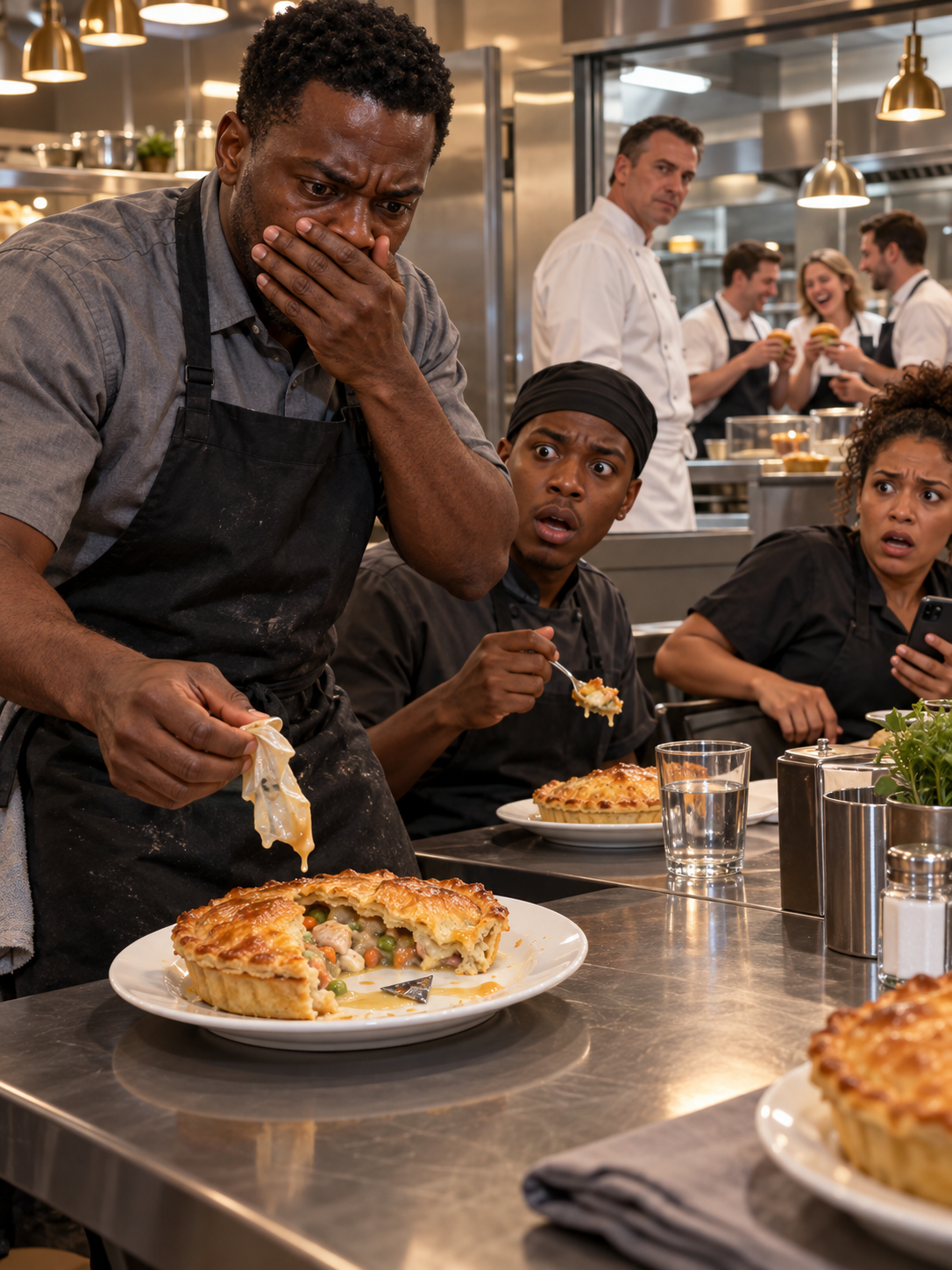
THE CHEF SERVED SIX BLACK EMPLOYEES POISONED POT PIES WHILE WHITE STAFF ATE SAFELY—BUT HE NEVER GUESSED THE QUIET DISHWASHER HAD COME TO EXPOSE HIS SECRET – Life Story
The chicken pot pie looked beautiful until Darius Wellington pulled a torn glove from his mouth. Five coworkers had been...
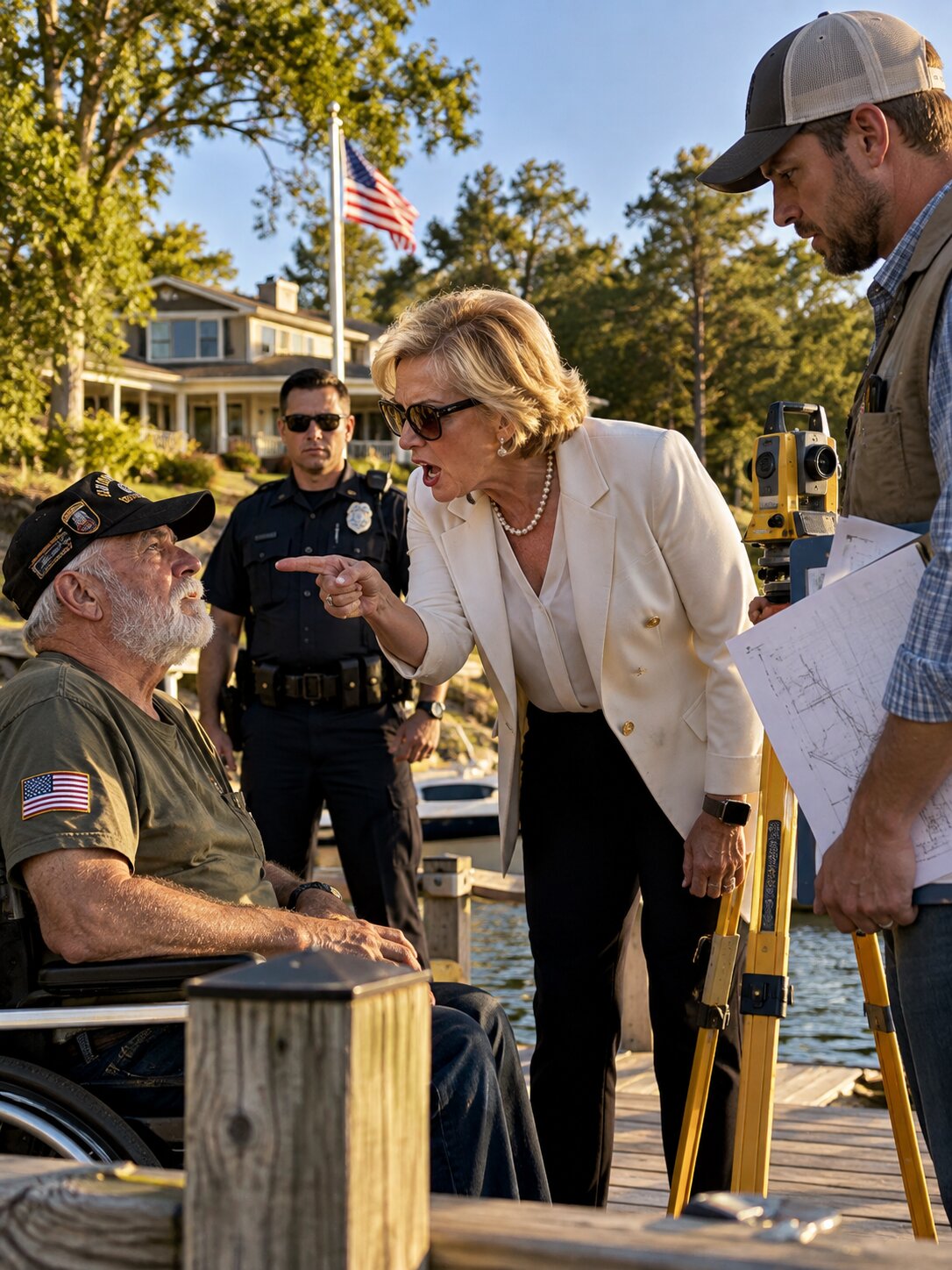
The HOA President Called Police on His Veterans’ Dock—Then the Surveyor Asked One Quiet Question – Life Story
At on a Monday morning, twelve emergency vehicles rolled onto Clayton Merrick’s property while he was building a wheelchair-accessible dock....
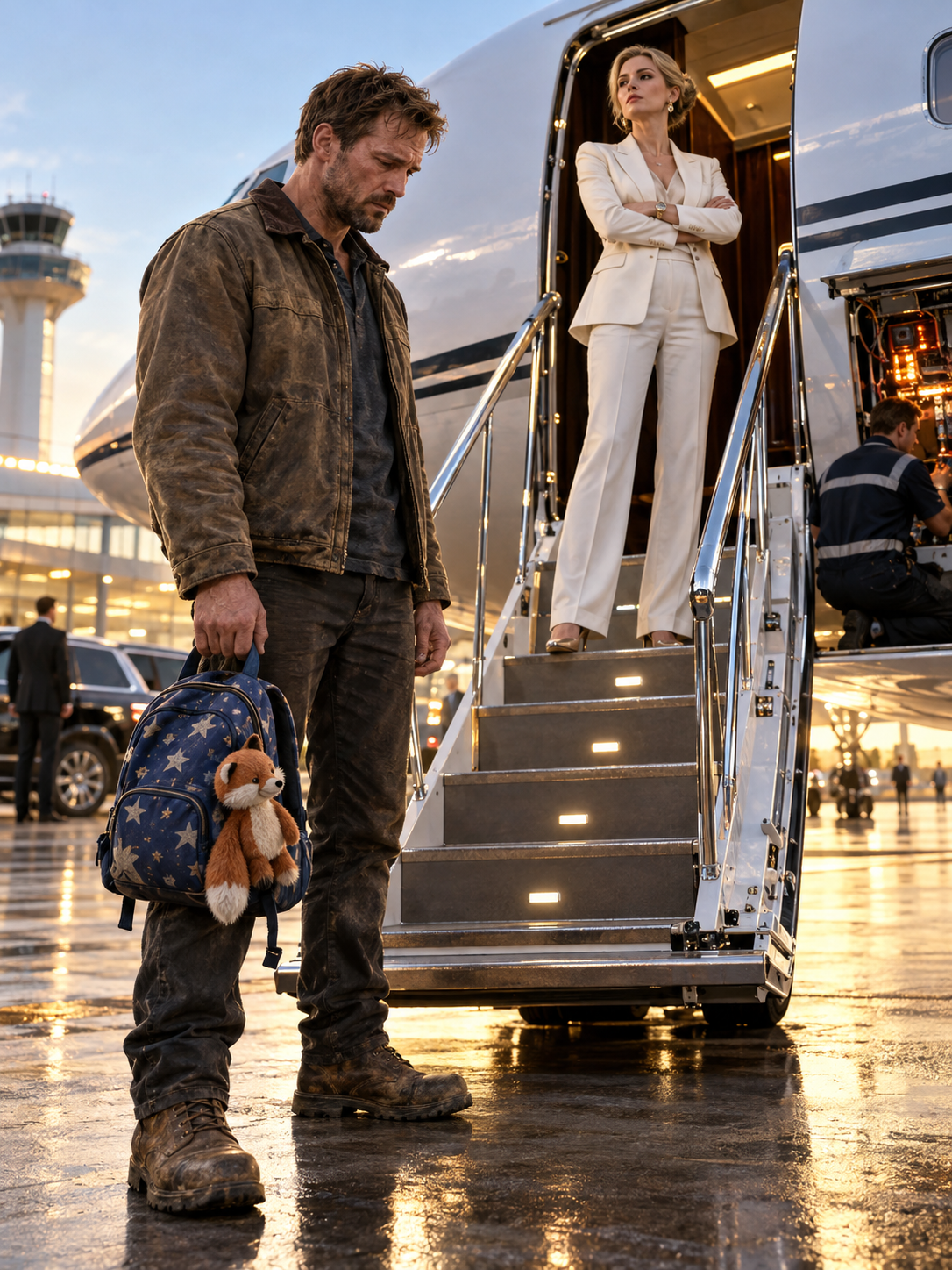
The CEO Ordered The Man In Work Boots Off Her Private Jet—Then The Cockpit Asked For His Name – Life Story
Weston Hail was halfway down the stairs of a private jet when he saw the warning flash inside an open...