MY EX-HUSBAND TURNED OUR TEN-YEAR HIGH SCHOOL REUNION INTO A PUBLIC TRIAL OF MY NEW LIFE—THEN HE DISPLAYED THE ONE PAINTING HE SWORE I WOULD NEVER SEE AGAIN – Life Story
He raised his glass and called me a woman who had sold her dreams.
By the time he finished, ninety former classmates were staring at me like I was on trial.
Then the screen behind him flickered, and I recognized something that should not have existed.
My ex-husband raised a champagne glass at our ten-year high school reunion and told a ballroom full of people that I had sold my talent for a rich man’s last name.
He said it with such practiced sadness that several people actually nodded.
I stood beside the dessert table at Northgate Country Club, holding a glass of sparkling water I hadn’t tasted.
My friend Jessica Tran stopped halfway through a sentence.
At the far end of the room, a caterer froze with a tray of coffee cups balanced on his palm.
Mark Reynolds smiled into the microphone like he had just delivered a touching toast.
“Some people work for their success,” he said. “Other people find someone successful and call it a life.”
A few of his old football friends laughed.
Everyone else did what people do when they aren’t sure whether cruelty is supposed to be funny: they watched.
I could have walked out.
The exit was maybe forty feet away, past the brass coat racks and a wide door framed by white roses.
Instead, I tightened my hand around the glass until condensation ran across my knuckles.
“Maya,” Jessica whispered, “we can go.”
I shook my head.
Not because I was brave.
My knees were trembling beneath my blue silk dress, and I could feel the familiar pressure building behind my eyes.
I stayed because Mark had spent years teaching me that leaving a room was proof he was right.
I wasn’t going to give him that sentence to use.
“For those of you who don’t remember,” Mark continued, “Maya and I were the couple everybody thought would make it.
We lived above a laundromat.
We ate dollar noodles.
I put myself through law school.”
I nearly laughed at the last part, but the sound lodged in my throat.
My grandmother had left me thirty-eight thousand dollars.
By the time Mark finished law school, most of it had paid rent and tuition charges he said we would repay together.
I had worked evenings cataloging estate-sale photographs and mornings at a framing shop, then listened while he told friends how lucky he was to have a wife who understood sacrifice.
We had been divorced four years.
He still told that story without mentioning my name in the part where the bills got paid.
Jessica moved closer.
She wore the same expression she’d had the night she’d helped me carry two suitcases down three flights of stairs: no pity, no theatrics, just the certainty that she would help me get to the next place I needed to be.
“He doesn’t get to do this,” she said.
“Apparently he does,” I murmured.
Across the ballroom, a woman I remembered from chemistry class raised her phone.
I watched the little white circle of its camera point toward the stage, then drift in my direction.
There would be a video tomorrow.
Maybe tonight.
Mark knew exactly how long a clip needed to be to make a stranger look guilty.
“I’m not angry with her,” he said gently, a lie shaped like kindness. “I just wonder what happens when someone gives up the thing that made her special.”
His eyes settled on mine.
The smile never moved.
Behind him, a ceiling-mounted projector came alive.
The reunion committee had put together a slideshow of yearbook photographs and announcements about a new alumni arts scholarship.
On the screen, the school crest dissolved into a wash of blue and gold.
At first I saw only color.
A rectangle of indigo, a narrow band of light, the silhouette of a second window reflected where no window should have been.
My breath caught.
It was an image I had painted in our old apartment, on a stretched linen canvas with a tiny split in the lower corner.
I had packed it for the move after our divorce.
Mark later told me the storage company had ruined it and the canvas had been thrown away.
But now it was hanging on the screen behind him.
And under the painting, in gold letters, was a name that wasn’t mine.
The Name Beneath The Painting
MARK REYNOLDS COLLECTION.
The words appeared beneath the image in elegant gold lettering.
Below them was a smaller line announcing the inaugural Northgate Arts Scholarship Auction.
I stared at the screen, trying to make the letters arrange themselves into something that made sense.
Mark had kept my painting.
Not only had he kept it, but he had placed his name beneath it and presented it to everyone we had once known.
“Beautiful piece, isn’t it?” he said into the microphone. “It’s called Second Window.
Some of you may remember Maya’s artistic phase.”
A few people shifted uncomfortably.
“She was talented,” he continued. “I’ll always give her that.
But life has a way of changing our priorities.”
Jessica reached for my wrist.
“May, don’t.”
I hadn’t realized I was moving.
Mark clicked to the next slide.
A photograph showed the same painting standing on a black easel, surrounded by carefully arranged white flowers.
The caption announced that the original would be offered at the Northgate Education Foundation’s fundraising reception the following Friday.
All proceeds would support arts scholarships for graduating students.
I had spent four years believing that painting was gone.
I remembered the night I made it.
Rain had been dripping through the window frame of our third-floor apartment.
Mark had been working late, and the electricity in the building had failed twice.
I had set up my easel beside the refrigerator because it was the only place with enough room to stand.
The painting showed a window reflected in a window.
The first was real.
The second existed only because I wanted it to.
My grandmother had once told me that when a room felt too small, I should find another way to see outside.
Mark had called the painting depressing.
Later, during our divorce, he had called it junk.
Now he was using it to raise money and admiration.
“Where did you get that?” I asked.
My voice didn’t travel far enough.
Jessica looked at me, then at the stage.
“Maya?”
I walked toward the center aisle.
Mark was talking about the scholarship now, about opportunity and giving young people the courage to pursue their gifts.
He sounded convincing.
He always sounded convincing when he had time to prepare.
“Mark.”
A few heads turned.
He recognized my voice immediately.
His smile tightened, but the microphone remained close to his mouth.
“Yes, Maya?”
“Where did you get my painting?”
The ballroom became quiet enough for me to hear the ventilation system.
Mark glanced at the screen.
“Your painting?”
“Second Window.
You told me it had been destroyed.”
He lowered the microphone slightly.
For one brief moment, something unguarded crossed his face.
Not surprise.
Calculation.
Then he smiled again.
“Well, I think we can all appreciate that some things are worth saving.”
A few nervous people laughed.
I didn’t.
“Is that the original?”
“Of course.”
“Then where has it been for four years?”
His expression hardened.
“Maya, this is a fundraiser.
Perhaps we can discuss our personal history somewhere else.”
“You made our personal history part of your speech.”
The response came out before I could reconsider it.
Several people exchanged glances.
Someone near the bar whispered my name.
Mark looked toward the event coordinator, a silver-haired woman standing beside the stage.
“Nora, can we move on?”
She hesitated.
I recognized Nora Bell, who had graduated two years ahead of us and now served as treasurer of the Northgate Education Foundation.
She carried a clipboard instead of a drink.
There was something reassuring about that.
“Mark,” she said quietly, “perhaps we should clarify the artwork before proceeding.”
His smile disappeared for a second.
“It’s a donated piece, Nora.
The paperwork is complete.”
“Then clarifying it shouldn’t be difficult.”
Her voice remained pleasant.
I liked her immediately.
Mark set down his champagne glass.
“Fine.
Maya, the painting was among the items left behind when our marriage ended.
I preserved it, and now I’m donating it to a good cause.”
I felt the floor shift beneath me.
“That isn’t what happened.”
He tilted his head.
“Are you really going to argue about an old painting in front of everyone?”
There it was.
The question he’d used throughout our marriage.
Are you really going to make a problem out of this?
It had worked when he’d criticized my clothes before dinner with his colleagues.
It had worked when he’d explained why I couldn’t accept an internship that required weekend travel.
It had worked when I’d found the receipt for a watch that cost more than an entire semester of my abandoned degree.
Make the problem smaller.
Make the woman raising it look unreasonable.
I swallowed.
“I’m asking where the painting came from.”
Nora stepped forward.
“I think we have enough information to pause that particular announcement.
The rest of the evening can continue.”
Mark stared at her.
Then he gave a small theatrical sigh.
“Whatever makes everyone comfortable.”
He turned back to the audience.
“Sorry, folks.
Divorce memories.
Sometimes they age worse than the people involved.”
A few people laughed again, relieved to be told they could.
He changed the slide.
The school mascot appeared beside a photograph of the old football team.
But I wasn’t looking at the screen anymore.
I was looking at the small gold plaque Nora had carried away from the stage.
There was a number printed in one corner.
Lot 17.
My painting wasn’t just being displayed.
Someone intended to sell it.
Jessica joined me before I reached the side corridor.
“Please tell me you saw what just happened,” I whispered.
“I saw a man try to embarrass his ex-wife and accidentally announce that he possesses something he told her he’d destroyed.”
“That’s not going to be enough.”
“No,” she said. “Probably not.”
That was one reason I trusted Jessica.
She didn’t confuse encouragement with pretending problems were easy.
We stepped through a service doorway into a corridor smelling faintly of floor polish and fresh coffee.
Nora stood near a folding table with two laptops.
David Chen, another former classmate, was helping her organize the presentation files.
He looked up when he saw us.
“That was uncomfortable,” he said.
“For everyone?” Jessica asked.
“Mostly for Mark, although I don’t think he’s figured that out yet.”
Nora gave him a warning look.
Then she turned to me.
“Maya, I’m sorry about what happened in there.
But I need to understand whether you’re making an ownership claim.”
“Yes.”
“Do you have documentation?”
“I think so.”
She studied me carefully.
“Thinking so and proving it are different things.”
“I know.”
“Good.
Because I can’t remove an auction item based solely on an argument between former spouses.”
She opened a folder.
Inside was a printed catalog page showing my painting.
The estimated auction value was listed as twelve thousand dollars.
Below it appeared the words:
Donated by Mark Reynolds, from his private collection.
And beneath that:
Transfer authorization on file.
I looked at Nora.
“What authorization?”
She hesitated.
“According to the documents we received, you transferred your interest in the painting several years ago.”
For a moment, I couldn’t speak.
Then she turned the page.
A photocopied form lay underneath.
At the bottom was a signature.
My old signature.
The one I had used when I was married to Mark.
Except I had never signed that document.
And the date beside my name was from a summer when I was still fighting to get my belongings back.
I looked at the page again.
Then at Nora.
“That’s not my authorization.”
Somewhere behind us, the ballroom erupted in applause.
Mark had apparently reached the end of another speech.
Nora closed the folder.
“Then we have a much bigger problem than a reunion argument.”
The Paper He Needed
Nora moved us into a small meeting room beside the corridor.
It had beige walls, a long walnut table, and a framed photograph of the country club’s founding members.
The room was quiet except for the air conditioner clicking above the door.
She placed the disputed document on the table.
I leaned over it without touching the paper.
The heading read:
Artwork Gift And Transfer Authorization.
The stated date was July 15, 2020.
The document named me as Maya Reynolds and identified Mark as the recipient of Second Window, a twenty-four-by-thirty-six-inch oil painting on stretched linen.
A paragraph beneath the description purported to transfer ownership to him.
Another authorized him to donate or sell the piece without seeking further consent.
At the bottom appeared my signature.
Maya Reynolds.
A small black flourish extended beneath the last letter.
I knew that flourish.
I also knew something was wrong.
“Where did this come from?” I asked.
“Mark submitted it with the donation package,” Nora replied.
“Did he send an original?”
“A PDF.”
“Do you have the email?”
“Yes.”
“Did he provide the original signing record?”
Nora frowned.
“What do you mean?”
“The document says it was completed electronically.
There should be an audit record from the signing service, shouldn’t there?”
David, standing beside the door, leaned forward.
“Usually.
An electronic-signature platform can provide an envelope or transaction record.”
Nora turned the page toward herself.
There was a faint statement at the bottom claiming electronic completion.
But I couldn’t see a transaction number.
“That doesn’t prove it’s false,” David added quickly.
“I know,” I said.
He nodded.
That was another reason I liked him.
He didn’t announce certainty simply because uncertainty would have been inconvenient.
Nora took out a pen.
“Tell me exactly what you’re disputing.”
“The transfer.
I didn’t sign this authorization.”
“Did you ever give Mark the painting?”
“No.”
“Was it listed in your divorce agreement?”
“I believe it was.”
“Can you produce the agreement?”
“Yes.”
She made another note.
“Then send it to me tomorrow.
I’ll suspend bidding on this particular lot while the foundation reviews the ownership question.”
My shoulders loosened.
Only a little.
“Thank you.”
“Please don’t thank me yet.
Mark is the volunteer chair of this fundraising campaign, and several donors have already expressed interest in the piece.”
“Does that change what you’re supposed to do?”
“No.”
She answered so quickly that I almost smiled.
“It changes how difficult the conversation is going to be.”
Jessica folded her arms.
“That’s still your conversation to have.”
“Unfortunately,” Nora said, “it is.”
A knock sounded.
Mark stood in the doorway.
His jacket was unbuttoned, and the confident ease he’d worn onstage had been replaced by a tight expression.
“There you are.”
Nora straightened.
“Mark, we’re discussing the artwork.”
“I assumed.”
His gaze moved to the document.
Then to me.
“You’re really doing this?”
“I want my painting back.”
“You abandoned it.”
“You told me it was destroyed.”
“It was damaged.
I had it restored.”
“Why didn’t you tell me?”
He looked at Jessica, then David, then Nora.
“I’d rather not have my personal life investigated by an audience.”
Jessica answered before I could.
“Interesting preference.”
Mark ignored her.
“Maya, may I speak to you privately?”
“No.”
He blinked.
I had said the word quietly.
I didn’t feel particularly powerful.
But the word remained where I’d placed it.
“No,” I repeated. “Nora needs to hear the same information I do.”
Mark’s jaw flexed.
“Fine.
I recovered a painting you left behind, paid to have it conserved, and decided it could help students.
Now you’re treating me like I stole something.”
“The divorce agreement will show who owned it.”
“If that’s your position, have your attorney contact mine.”
“I may.”
He gave a short laugh.
“Of course.
I suppose Rowan has excellent attorneys on speed dial.”
“My attorney will be whoever I choose to hire.”
For the first time that night, I saw genuine anger reach his eyes.
He was accustomed to treating Rowan’s wealth as the explanation for anything I did.
It allowed him to avoid the more uncomfortable possibility that I was making my own decisions.
Nora stepped between us.
“Mark, I’m suspending Lot 17 until this is resolved.”
“You can’t be serious.”
“I am.”
“We’ve already sent the catalog to donors.”
“Then we’ll inform them that the item is under review.”
“The foundation is counting on this auction.”
“Then the foundation needs clean ownership documentation.”
He looked at her for a long moment.
“You’re making a mistake.”
Nora closed the folder.
“That’s possible.
I’d rather make a reversible mistake than sell a disputed painting.”
Mark turned to leave.
At the doorway, he stopped.
“Maya, you should think about what this looks like.”
I stared at him.
He lowered his voice.
“A woman who married into an enormous fortune trying to take back an old painting from a charity auction.
That won’t play the way you think.”
He left without waiting for an answer.
Jessica swore under her breath.
Nora exhaled.
David looked toward the closed door.
“He’s already thinking about the headline.”
“So am I,” I admitted.
My phone vibrated.
It was a message from Rowan.
I’m leaving the gala.
Do you want me to come inside or meet you outside?
I stared at the question.
Three years earlier, when we’d first started seeing each other, Rowan had asked me whether I wanted him to accompany me to a difficult appointment.
I’d told him it was ridiculous that I couldn’t manage a conversation by myself.
He hadn’t argued.
He’d simply said that being accompanied and being incapable were two different things.
I remembered that now.
Outside, I typed.
I have something I need to handle myself.
His response arrived almost immediately.
Of course.
I’ll be there.
I put the phone away.
Jessica had been watching me.
“He’s coming?”
“Yes.”
“Good.”
“Jess, I don’t want him walking in and making Mark feel small.
I don’t want another man to be the reason people believe me.”
She studied my face.
“Then don’t let that happen.”
Her simplicity almost made me angry.
I wanted an answer that would make everything painless.
She gave me one that required responsibility.
Nora collected her papers.
“I’ll send you a copy of the donation package through the foundation’s secure document service.
Please provide your agreement and any correspondence about the painting.”
“I will.”
“And Maya?”
I stopped at the door.
“Yes?”
“If this document isn’t authentic, we need to establish how it entered our records.”
She glanced down at the signature.
“Because someone asked this foundation to rely on it.”
The weight of that sentence stayed with me as we returned to the ballroom.
The music had started again.
People were dancing beneath chandeliers.
Mark stood beside the bar with a group of former classmates, laughing as if nothing unusual had happened.
Then he noticed me.
He lifted his glass in a silent toast.
I realized he wasn’t frightened by the dispute yet.
He still believed he knew exactly how to make me stop.
Four Years In A Folder
Rowan was waiting beneath the country club’s front portico when I came outside.
A fine October rain had begun, turning the driveway into a ribbon of reflected light.
He wore a dark charcoal suit and carried his coat over one arm.
He looked tired.
There was a tiny looseness in his tie that most people would never notice.
I noticed because he almost never loosened it in public.
When he saw me, he didn’t ask what Mark had said.
He didn’t look past me for someone to confront.
He simply opened his arms.
I walked into them.
For a moment, the world narrowed to the warmth of his jacket and the rain whispering beyond the stone columns.
“I stayed,” I said into his shoulder.
“I can see that.”
“He used my painting.”
Rowan moved back enough to look at me.
“What?”
“He has the original.
The one he told me was destroyed.”
I felt his expression change.
Not into anger exactly.
Into attention.
“Do you want to tell me here or at home?”
“Home.”
He nodded.
Then he took off his coat and placed it around my shoulders.
It wasn’t a grand gesture.
The coat was simply warm, and I was cold.
On the drive downtown, I told him everything.
I showed him the photograph I’d taken of the screen, described the document Nora had shown me, and repeated Mark’s comment about how the dispute would look.
Rowan listened without interrupting.
When I finished, he asked one question.
“Do you still have the divorce file?”
“Somewhere.”
“Then that’s where I’d start.”
I looked at him.
“You’re not going to offer to send your lawyers after him?”
“Would you like me to?”
“No.”
“Then I won’t.”
I waited for him to add something about how much influence he had, how easily he could solve the problem.
He didn’t.
Instead, he said, “I remember that painting.”
I turned toward him.
“You never saw it.”
“I saw a photograph of it on your phone when we first met.”
I frowned.
“Really?”
“You showed it to me at dinner.
You apologized because the picture was blurry.”
Something tightened inside my chest.
I remembered that evening.
A small Italian restaurant in Lincoln Square.
Rain outside.
Rowan asking what I’d wanted to do before I began consulting.
I had shown him photographs of old paintings on my phone, then quickly changed the subject.
“I told you I’d stopped painting.”
“You did.”
“What did you think?”
“That you looked sad when you said it.”
I looked out the window.
Chicago slid past us in streaks of yellow and white.
For years, Mark had told me I was dramatic when I became upset.
Rowan had learned that my silence often meant I was trying very hard not to be.
At home, I changed out of the blue dress and into an old gray sweatshirt.
Then I carried a cardboard archival box from the guest-room closet to the kitchen table.
Rowan made tea.
He set a mug beside me and disappeared into the living room with his laptop, giving me space.
I opened the box.
There were copies of tax returns, bank statements, apartment leases, insurance papers, and the final divorce documents.
I had kept them because my divorce attorney told me to.
Later, I kept them because I couldn’t bring myself to sort through them.
It was strange how a life could be reduced to such ordinary things.
A lease with both our names.
A receipt for a sofa.
A bank statement showing a balance of $412.
A bill from the law school bursar’s office.
And a deposit slip showing the inheritance my grandmother had left me.
Thirty-eight thousand, six hundred and twelve dollars.
I had received that money at twenty-one.
It had seemed like a fortune.
My grandmother, Eleanor Vale, had worked as a bookkeeper for a printing company for thirty-seven years.
She drove the same blue Honda until the floor beneath the driver’s seat rusted.
She saved receipts in shoeboxes and never paid interest on a credit card.
When she died, she left me the money with a handwritten note.
Use this to keep your choices open.
I had used most of it to keep Mark’s choices open instead.
That distinction had taken years to understand.
I found the first transfer to his tuition account.
Then another.
Then a payment for the bar preparation course.
I didn’t feel cheated by every dollar.
At the time, I had loved him.
Couples made sacrifices.
But Mark had never told the story as a shared effort.
He had told it as proof that he built everything alone.
I found the property division schedule after midnight.
It was attached to the divorce settlement.
Under the heading Personal Property Awarded To Maya Reynolds were four paintings.
Three still hung in my studio.
The fourth was listed by name.
Second Window, oil on linen, 24 x 36 inches.
I placed the paper on the table and sat very still.
There was no confusion about the title.
No ambiguity about the description.
The agreement stated that Mark would make the remaining listed items available for collection by July 30, 2020.
I turned to the next folder.
There was an email I’d sent asking when the painting would be ready.
Then another.
Then a response from Mark dated August 3.
The storage contractor reports water damage to the canvas.
It was unsalvageable and disposed of with other damaged items.
I remembered reading those words.
At the time, I was working two temporary jobs and trying to finish my degree.
I had been sleeping on a friend’s pullout sofa.
I’d cried over that painting for twenty minutes.
Then I’d gone to work.
Mark had known I didn’t have the strength or money to argue over another thing.
I read the email again.
It didn’t say he had seen the damaged canvas himself.
It didn’t name the storage contractor.
It didn’t include photographs.
He had written only enough to make me stop asking.
My phone buzzed.
Jessica had sent me a photograph.
It showed the three of us in high school, sitting on the curb outside a diner after graduation.
I was holding a sketchbook.
Mark had his arm around my shoulders.
Under the picture Jessica had written:
You were an artist before you met him.
Don’t let him rewrite that, too.
I studied the photograph.
The girl in it looked certain that her future would be enormous.
I wanted to tell her that she had been right.
I just didn’t know how yet.
The next morning, I scanned the relevant pages of the settlement, the August email, and the old photographs of Second Window.
I sent them to Nora with a short explanation.
I didn’t accuse Mark of a crime.
I stated what I knew.
That the painting had been awarded to me.
That he had represented it as destroyed.
That I had never authorized its transfer.
I copied a local attorney, Melissa Grant, whom I hired that morning after checking her experience with property disputes and small-business litigation.
I paid the initial consultation fee from my business account.
It was more money than I wanted to spend.
But I wanted advice that belonged to me.
At eleven, Melissa called.
“I’ve reviewed the documents you sent,” she said. “They’re enough to raise a substantial question about title.
That doesn’t mean we can resolve every issue immediately.”
“I understand.”
“Do you have the original settlement?”
“Yes.”
“Keep it secure.
Don’t mark on it.”
“Okay.”
“And stop communicating directly with your ex about ownership.
If he contacts you, preserve the messages.”
I looked at the painting photograph on my computer.
“What about the foundation?”
“They should suspend any transfer while this is investigated.
We can put that request in writing.”
“Can he sue me for challenging it?”
“Anyone can file a claim.
That doesn’t mean it has merit.
We’ll respond based on the facts.”
I let out a breath.
“Thank you.”
“One more thing, Maya.
You mentioned you’re a provenance researcher.”
“Yes.”
“Then you know better than most people that possession and ownership aren’t always the same.”
“I do.”
“Good.
Don’t let him make you forget it.”
When the call ended, I noticed a new email from Nora.
She had arranged an examination of the painting for Monday afternoon, with an independent conservator present.
Mark had agreed to bring the canvas.
There was one attachment.
A copy of the donation catalog.
I opened it.
Under the painting’s provenance history was a statement I hadn’t noticed in the hurried photograph from the reunion.
Independent provenance review: Vale Provenance Consulting.
That was my business.
My name wasn’t merely missing from the artwork.
It had been attached to a report I had never written.
The Back Of The Frame
Vale Provenance Consulting occupied two rooms above a stationery store in Chicago’s West Loop.
The building was old enough that the radiator hissed before it warmed up, and the front door stuck whenever it rained.
I had rented the rooms eighteen months earlier.
Before that, I’d worked from the corner of our dining table.
My clients weren’t museum directors arriving in limousines.
They were mostly families managing inherited collections, small galleries trying to identify ownership gaps, and collectors who needed help organizing decades of incomplete records.
I researched receipts, exhibition histories, estate inventories, shipping documents, and photographs.
Sometimes I found an important missing piece.
Sometimes I told people that the evidence simply wasn’t there.
That answer didn’t always make me popular.
But it was the work I loved.
My part-time research assistant, Talia Brooks, was waiting when I arrived Monday morning.
She stood beside the window holding a printout.
“You need to see this.”
I set down my bag.
“What happened?”
“A client forwarded something to me.”
She handed over the page.
It was an email promoting Friday’s Northgate Arts Scholarship Auction.
Mark’s name appeared prominently.
Below it was a description of the donated painting, including the supposedly completed provenance review by my firm.
The message said the paperwork had been vetted by a professional consultant with ties to major Chicago collectors.
It didn’t say I owned the firm.
It didn’t say I had once been married to the donor.
It suggested I had independently examined and approved the painting.
I hadn’t even known it still existed.
“How many people received this?” I asked.
“At least everyone on the foundation’s donor list.”
My stomach tightened.
“Did our client say anything else?”
Talia hesitated.
“She asked whether we were involved in the auction.”
“What did you tell her?”
“That I’d ask you.”
I sat down.
Talia placed the page on my desk.
“We need to protect the firm.”
“I know.”
“No, Maya.
I mean we need to document this before someone decides we’ve authenticated something we haven’t examined.”
She wasn’t being harsh.
She was doing her job.
I had hired her because she was thorough and because she refused to flatter me when something was wrong.
“Draft a short statement,” I said. “We haven’t provided an ownership opinion or authenticity report for that work, and our name was used without authorization.”
“Should we send it to everyone?”
“Not yet.
Let Melissa review it first.”
Talia nodded.
Then she looked at the framed watercolor above my desk.
It was one of my early pieces.
“You know what’s strange?”
“What?”
“He seems to be selling the very thing he told you wasn’t worth anything.”
I looked at the watercolor.
There were some questions that couldn’t be answered by records.
Not directly.
At two-thirty, I arrived at the conservation studio where the disputed painting was being stored.
The building stood on a quiet industrial street west of downtown.
Inside, the air smelled of clean cotton, wood, and the faint chemical sweetness of conservation materials.
A woman named Leah Soto greeted me.
She wore a white cotton lab coat over black trousers and spoke with the careful precision of someone accustomed to working with fragile objects.
“Ms.
Ashford? I’m Leah.
Nora asked me to conduct a condition examination.”
“Thank you for doing this.”
“I’m here to describe what I can observe.
I won’t be making a legal ownership determination.”
“Understood.”
Nora stood beside a long worktable.
Mark was on the other side of the room, talking into his phone.
He ended the call when I entered.
“Well,” he said, “this feels excessive.”
I didn’t answer.
A rectangular package lay on the table beneath a soft protective covering.
Leah removed it.
And there it was.
Second Window.
Not a photograph.
Not a projection.
My painting.
The blues were darker than I remembered.
The narrow line of gold still caught the light near the middle.
At the lower edge, a faint violet shape suggested a reflection that could never quite become real.
I stepped closer.
The room blurred around the canvas.
I remembered painting that violet mark.
I’d used the end of a worn brush because I couldn’t afford to buy the smaller one I wanted.
I’d stood back afterward and thought it was imperfect.
Then I’d left it because the imperfection made the painting feel alive.
“You recognize it?” Leah asked.
“Yes.”
She studied me.
“Would you like a moment?”
I shook my head.
“If I take a moment, I might not be able to finish this.”
Leah nodded without comment.
She examined the canvas under angled light, documenting small abrasions and an old repair at the lower corner.
Then she asked permission from the custodian to turn the painting around.
Nora agreed.
The back was covered in brown paper.
A conservation label had been attached to the stretcher.
It bore a date.
September 2021.
I leaned closer.
“That’s impossible.”
Mark shifted.
“What?”
I pointed.
“You said it was destroyed in August 2020.”
Leah read the label.
“It appears to record a conservation treatment in September 2021.”
Mark folded his arms.
“I told you it was damaged.
I paid to have it repaired.”
“You told me it had been thrown away.”
“Maybe I used the wrong words.”
I turned toward him.
“You put it in an email.”
His eyes flickered.
For the first time, he looked less confident about the documents than he had about the audience.
Nora made another note.
Leah continued examining the reverse.
A small adhesive label had been partially covered by the backing paper.
She gently lifted the loose edge.
Underneath was a handwritten note.
RETURN TO MAYA — PERSONAL ARTWORK.
The handwriting was mine.
I remembered writing it on a moving-day label, afraid the painting would get mixed with Mark’s office boxes.
Leah photographed the note.
Nora looked at Mark.
“Can you explain why this remained in your possession?”
“She left things behind,” he said.
“That’s not the question.”
“I had a right to recover my costs.”
Melissa, who had joined us shortly after I arrived, spoke for the first time.
“Any claim for storage or restoration expenses is separate from the question of title.
We’re not agreeing that those expenses were authorized.”
Mark glanced at her.
“Are you her lawyer?”
“Yes.”
He turned back toward the table.
“Of course she brought counsel.”
Melissa’s expression didn’t change.
“You have counsel, too, Mr.
Reynolds.
I’m sure you understand why this should be documented.”
That ended the exchange.
Leah completed her examination.
She wasn’t dramatic about the results.
She confirmed that the painting appeared consistent with the photographs I had provided, including the distinctive lower-corner repair and several irregular brush marks.
She documented the conservation label.
She photographed the reverse.
She recorded its dimensions.
None of those observations alone settled the ownership dispute.
Together, they made it increasingly difficult to pretend the painting had simply been abandoned.
As we prepared to leave, Nora asked me to remain for another moment.
Mark stepped into the corridor to take a call.
Nora opened her tablet.
“There’s something else I need to show you.”
She brought up an email chain.
The earliest message was dated February 8, 2024.
Mark had written to the foundation’s former volunteer coordinator proposing Second Window as the centerpiece of the scholarship campaign.
He described it as an important work by a promising Chicago artist.
He also claimed that its original creator would provide discreet professional support through her consulting firm.
I read the sentence three times.
“February?”
Nora nodded.
“He began developing the donation months ago.”
The next email was worse.
Someone had asked whether I should be contacted directly.
Mark’s reply read:
Maya prefers not to be public-facing in this matter.
Given our history, please route any questions through me.
Her professional support has already been arranged.
I looked up.
“He told you not to contact me.”
“Yes.”
“And nobody did?”
Nora’s mouth tightened.
“That was a failure in our process.”
The document continued.
Mark had requested that my name remain off the public campaign materials.
He said our past relationship might distract from the scholarship’s purpose.
Yet he’d allowed my firm’s name to appear in donor-facing documents.
He wanted the authority of my work without the inconvenience of asking me.
And he had used the reunion to make the very idea of my professional credibility sound ridiculous.
Something cold and clear moved through me.
This was no longer just a dispute about a painting.
Mark had been borrowing my identity while publicly insisting I didn’t possess one.
When I finally looked away from the screen, Nora was watching me.
“Is there anything else you’ve noticed?” she asked.
I thought about the signature on the transfer form.
The electronic-completion claim.
The lack of any transaction record.
The language Mark used in the old divorce email.
Then I said, “I think he expected me to be too embarrassed to question any of it.”
Nora didn’t answer immediately.
She closed the tablet.
“Then we need to make sure embarrassment doesn’t become part of our decision-making.”
Behind the glass door, Mark stood beneath a fluorescent light, speaking rapidly into his phone.
I couldn’t hear his words.
But I could see his expression.
For once, he wasn’t performing for an audience.
He was trying to control a situation that was beginning to move without his permission.
A Different Kind Of Witness
On Tuesday afternoon, Rowan found me sitting on the kitchen floor surrounded by photographs.
He had come home early from a meeting.
His shoes stopped at the edge of the papers.
“Should I ask why the dining table has moved to the floor?”
“I ran out of space.”
“Reasonable.”
He removed his jacket and crouched beside me.
The photographs showed the painting in different stages.
A charcoal sketch.
An early wash of blue.
The first version of the gold line.
A picture Jessica had taken of me standing beside the finished canvas in our old apartment.
Rowan picked up that photograph.
“You look happy.”
“I was.”
I considered the answer.
“At least for that afternoon.”
He set it down.
“May, can I ask something?”
“Sure.”
“Why did you stop painting?”
I stared at the photographs.
The easy answer was that life had become complicated.
The more accurate answer was less flattering.
“I started believing there wasn’t any point.”
“Because of Mark?”
“Partly.”
“What’s the other part?”
I looked at him.
“Because I was afraid he might be right.”
Rowan was quiet.
“Every time I tried to make something, I could hear him telling me it wouldn’t sell, or it was sentimental, or it wasn’t serious enough.
After the divorce, I told myself I was being practical.”
“You’re good at practical.”
“Too good.”
He sat beside me.
His suit trousers creased against the kitchen floor.
I almost laughed.
“What?” he asked.
“You hate sitting on the floor in good clothes.”
“I’ve survived worse.”
I leaned against his shoulder.
For several minutes, we said nothing.
Then I told him about the emails.
About the donor catalog.
About the way Mark had used my professional name.
Rowan listened.
When I finished, his expression was troubled.
“Do you want me to contact the foundation about the use of your name?”
“No.”
“All right.”
“You’re not offended?”
“Why would I be?”
“Because he’s using your marriage to me as part of his fundraising story.”
Rowan considered that.
“He can talk about me all he likes.
He doesn’t get to speak for you.”
The simplicity of it made my throat tighten.
I touched the photograph in his hand.
“He’s going to say I only have this business because of your money.”
“Did you write your clients’ research reports?”
“Yes.”
“Did you find the ownership gaps and explain the risks?”
“Yes.”
“Did you hire Talia?”
“Yes.”
“Then why are we discussing my money as if it can do any of those things?”
I looked at him.
“Because you helped me rent the office.”
“I loaned you the deposit.
You repaid it.”
“I know.”
“May, I don’t need you to pretend I wasn’t part of your life.
I need you to stop acting as though receiving help cancels what you’ve done.”
I sat with that.
It was different from the speeches people made about being independent.
Real independence didn’t mean refusing every hand offered to you.
It meant remaining responsible for your decisions after you accepted one.
That evening, Jessica came over with Thai takeout.
She had finished a long hospital shift and still showed up carrying enough food for six people.
“Emergency supplies,” she announced.
“I didn’t know noodles counted.”
“They do in my medical opinion.”
We ate at the kitchen island.
Rowan left for a call after washing the dishes, and Jessica spread the records across the table.
She was quiet for a while.
Then she pointed to one of Mark’s old emails.
“He always did this.”
“What?”
“Used the most convenient version of reality until you were too exhausted to argue.”
I rubbed my forehead.
“Sometimes I wonder whether I should have challenged him more when we were married.”
Jessica put down her fork.
“You did challenge him.”
“Not enough.”
“Do you remember when you got accepted for that cataloging internship?”
I nodded.
The position had been at a respected Chicago museum.
It wasn’t glamorous.
I’d have spent most days entering collection data and sorting exhibition files.
But it would have been a beginning.
“Mark said the schedule was impossible.”
“Mark said he needed you to help with networking dinners.”
“Those dinners mattered to his career.”
“And your internship mattered to yours.”
I looked away.
Jessica softened her voice.
“May, I’m not saying you never made mistakes.
You stayed longer than you should have.
You kept trying to win arguments that were designed so you couldn’t win them.”
“I know.”
“But you didn’t ruin your future by trusting someone you loved.
You changed course when you understood what was happening.”
I thought about the day I left.
I hadn’t made a dramatic announcement.
There had been no courtroom confrontation or final speech.
I’d packed two suitcases.
Jessica had helped me carry them downstairs.
Mark had stood in the kitchen, watching, and told me I’d be back before the month was over.
I hadn’t gone back.
That had been my first real victory.
It just hadn’t felt like one.
Jessica reached for her phone.
“I found something.”
She turned the screen toward me.
It was a message I’d sent her in July 2020.
He still hasn’t released my paintings.
I feel ridiculous chasing them, but Grandma would be heartbroken if I let them disappear.
Below it was Jessica’s reply.
Then don’t let them disappear.
I’ll drive the truck whenever he gives you a time.
I read the exchange twice.
It was not a legal ruling.
It was not proof that every word Mark said was false.
But it showed what I had been doing before he claimed the painting was destroyed.
I had been asking for it.
Consistently.
In writing.
Jessica emailed me the full conversation export.
“Your lawyer can decide whether it’s useful.”
“Thanks.”
“Don’t thank me.
I’ve been looking for a legitimate reason to go through my old messages and delete pictures of bad haircuts.”
I laughed for the first time in two days.
Then my phone rang.
It was Talia.
Her voice was unusually careful.
“Maya, are you somewhere private?”
My stomach tightened.
“Yes.”
“I just got a call from Harbor House.”
Harbor House Collection was our largest client.
We were halfway through a six-month provenance project involving a family collection of American paintings.
The contract was important.
Not only financially.
It had taken months of proposals and interviews before they trusted my firm with the work.
“What happened?”
“They’re putting the project on hold pending a review of a complaint.”
“What complaint?”
Talia was silent for a moment.
“Someone sent them a letter alleging that we approved a questionable transfer of artwork and concealed a personal conflict.”
I closed my eyes.
“Was it signed?”
“No.
But it refers to the Northgate auction, and the client says the sender provided documents.”
I looked at Jessica.
She could read the change in my face.
“What did they say about our contract?” I asked.
“All work is suspended until further notice.”
I turned away from the kitchen light.
“Did they mention payment?”
“They’ll process completed invoices.
But the remaining work is paused.”
I calculated the amount without wanting to.
Twenty-one thousand dollars of expected fees over the remainder of the project.
Enough to cover rent, Talia’s hours, and several months of operating expenses.
I gripped the phone.
“Don’t discuss the allegations with anyone else yet.
Forward everything to Melissa.”
“Already done.”
“Thank you.”
After the call, I stood in the middle of the kitchen.
Jessica waited.
Rowan appeared in the doorway.
Neither spoke.
I told them what had happened.
When I finished, Rowan looked toward the office documents on the table.
“Can the client verify the complaint?”
“They’ll investigate.”
“Good.”
“It’s not good,” I said sharply.
The words surprised both of us.
“I know the painting is mine.
I know I didn’t sign that authorization.
But now my business is getting dragged into it, and I can’t make everyone believe me simply because I’m telling the truth.”
Rowan remained quiet.
I felt ashamed of my tone.
“I’m sorry.”
“You don’t need to apologize for being angry.”
“I need to apologize for taking it out on you.”
He accepted that with a small nod.
Jessica leaned against the counter.
“What’s your next move?”
I looked at the records.
At the photographs.
At the old settlement.
At the new complaint threatening the business I’d spent years building.
“I don’t know.”
For the first time since the reunion, I genuinely didn’t.
And then a message appeared on my phone.
It was from Mark.
We need to settle this before more people get hurt.
A second message followed.
I have a proposal.
The Price Of Keeping Quiet
Melissa insisted on handling the meeting.
Mark wanted to speak to me directly.
I refused.
By Thursday afternoon, we were sitting in a small conference room at Melissa’s office, across from Mark and his attorney, Daniel Mercer.
Mark wore a navy suit with a silver tie.
He looked composed.
That frightened me more than his anger.
People assumed anger was the dangerous part of Mark.
It wasn’t.
The dangerous part was how quickly he could turn his anger into something that sounded reasonable.
Daniel placed a draft agreement on the table.
“My client wants to avoid unnecessary expense and public controversy.”
Melissa glanced through it.
“Then your client should have disclosed the existence of the painting before representing that it had been destroyed.”
Daniel’s expression remained neutral.
“We dispute that characterization.”
“Your client’s email is fairly clear.”
“We can discuss the historical facts without escalating the matter.”
I sat beside Melissa, my hands folded in my lap.
The draft agreement offered to return the painting to me.
It also offered a payment for documented conservation expenses, characterized as a goodwill gesture.
In exchange, I would acknowledge that the ownership dispute arose from a misunderstanding.
I would agree not to publicly accuse Mark of dishonesty concerning the artwork.
And I would provide a statement clarifying that the foundation had reasonably relied on information supplied in good faith.
Melissa looked up.
“That last provision is unacceptable.”
Daniel folded his hands.
“It’s important to protecting the scholarship.”
“It’s important to protecting your client.”
Mark leaned forward.
“Maya, listen.
We can end this.”
I looked at him.
“You told me you threw it away.”
“I told you it was damaged.”
“You said it had been disposed of.”
“I was trying to spare you another argument during the divorce.”
The absurdity of that explanation stunned me.
“You spared me an argument by lying about something I loved?”
He exhaled sharply.
“See? This is why we never got anywhere.
You take everything personally.”
Melissa placed her pen on the table.
“Mr.
Reynolds, please direct your comments through counsel.”
Mark ignored her.
“I spent money fixing that painting.
I stored it for years.
I thought donating it would do some good.”
“You also used my firm’s name.”
“I thought you’d appreciate the exposure.”
“You never asked me.”
“Because I knew exactly how this conversation would go.”
I stared at him.
He seemed to believe that his certainty about my reaction excused his failure to ask.
Daniel cleared his throat.
“The foundation has assured us that the disputed lot can be withdrawn from the auction without prejudice if this agreement is signed.”
Melissa turned another page.
“This also requires Maya to state that she has no reason to question the authenticity of the transfer authorization.”
“That’s a standard peacekeeping provision.”
“No,” Melissa said. “It’s a proposed factual statement that my client says is untrue.”
Mark looked directly at me.
“Do you really want to jeopardize scholarships over your pride?”
There it was.
The real offer.
He would return what belonged to me if I helped protect the story he’d invented.
And if I refused, I would be blamed for the consequences.
I looked at the draft again.
For a terrible moment, I considered signing.
My business was exposed.
My reputation was uncertain.
Harbor House had suspended its project.
I wanted the painting back.
I wanted my life back.
I wanted to stop thinking about Mark every time my phone vibrated.
It would have been so easy to sign the paper and tell myself I had won.
But the document required me to accept a version of events I knew was false.
And somewhere in the foundation’s files would remain an authorization bearing my name that I had never executed.
I thought about the students the auction was supposed to help.
If someone could submit questionable ownership papers, borrow a professional firm’s reputation without permission, and silence objections with a settlement, what protection would future donors or scholarship applicants have?
I looked at Melissa.
“Can I have a minute?”
“Of course.”
She accompanied me into the corridor.
The office was quiet.
A cleaning cart stood beside the elevators.
I leaned against the wall and closed my eyes.
“I could make this go away,” I whispered.
Melissa didn’t answer immediately.
“You could settle a portion of it,” she said. “That’s different.”
“What’s the difference?”
“The painting may come back to you.
The ownership dispute may end.
But you would be agreeing to statements you’ve told me aren’t true.”
I looked at the carpet.
“And if I refuse?”
“Then we continue.
There may be costs.
There may be proceedings.
We can’t promise every client or donor will react well.”
I swallowed.
“Can we prove the authorization is false?”
“Not conclusively yet.
But the foundation has asked the electronic-signature provider to verify the claimed transaction.
The document Mark supplied has no usable transaction identifier.
We’re also pursuing the underlying records.”
“So we wait.”
“We investigate.”
I looked at her.
“There’s something else.”
“What?”
“The campaign used my firm for months.
If I sign that statement, people will assume I actually reviewed the painting.”
Melissa nodded.
“Which could create professional problems for you beyond this dispute.”
I took a breath.
“Then I can’t sign.”
She studied me.
“Are you sure?”
“No.”
I almost smiled.
“But I know I can’t sign.”
Back in the conference room, I slid the agreement toward Mark.
“I won’t do it.”
His face went still.
“Maya.”
“I’ll accept the return of my property.
I’ll discuss legitimate expenses and any claims through our attorneys.
But I won’t sign a statement saying I authorized something I didn’t authorize.”
He stared at me.
“You’re making a terrible mistake.”
“Maybe.”
I stood.
“But it will be mine.”
The meeting ended without an agreement.
That evening, Nora called.
Her voice sounded exhausted.
“The foundation board has suspended the auction lot.”
“Good.”
“There’s more.”
I sat down at my desk.
“The firm listed as the lead corporate underwriter has withdrawn its proposed matching contribution.”
Mark’s employer.
Conrad Pierce & Bell.
I knew the name immediately.
“Why?”
“They say there was no final authorization for a public commitment using the firm’s name.
Their management is reviewing the correspondence.”
My stomach dropped.
“How much was the expected contribution?”
“Fifty thousand dollars.”
I closed my eyes.
The scholarship campaign had hoped to raise seventy-five thousand.
Without the matching gift and with the centerpiece artwork disputed, much of the planned funding was uncertain.
Nora continued.
“Several pledges remain in place, but donors are asking questions.”
“About me?”
“About the campaign.”
I heard what she wasn’t saying.
Some of those questions would be about me.
And Mark would encourage them.
“The board is holding a special session tomorrow evening,” Nora said. “We’ll provide an update to donors and alumni who want to attend.”
“Will Mark be there?”
“Yes.”
I looked toward the windows.
Rain was tapping against the glass.
“Then I’ll be there, too.”
When the call ended, I sat alone in the office.
The building had emptied.
The fluorescent hallway lights glowed beneath the door.
I opened the Harbor House account folder.
There were months of research notes, client correspondence, shipping records, and carefully prepared provenance tables.
Every page represented work I had actually done.
Still, one allegation had been enough to put everything on hold.
I thought about how quickly confidence could unravel when someone attacked the foundation beneath it.
Mark understood that.
He had always understood it.
At home, Rowan was waiting with dinner.
He’d made pasta and burned the garlic bread.
Under ordinary circumstances, I would have teased him.
Instead, I sat at the kitchen island and told him about the failed settlement.
He listened.
Then he said, “I’m sorry.”
“Which part?”
“All of it.”
I stared down at the plate.
“What if I destroy my business over this?”
He sat opposite me.
“Then we deal with that possibility honestly.”
“We?”
He nodded.
“We’re married.
We face consequences together.
That doesn’t mean I get to make your decisions.”
I looked toward the city lights.
“Mark used to say I was bad with money because I cared too much about things that couldn’t be measured.”
Rowan gave a small sigh.
“People can measure almost anything if they choose the right units.
That doesn’t mean every measurement tells them what matters.”
I smiled faintly.
“That sounded like something from a shareholder meeting.”
“I’ll try to be less dull.”
I reached across the table.
He took my hand.
For a long moment, I held on.
Then I said something I hadn’t said aloud in years.
“I want to paint again.”
Rowan’s fingers tightened gently around mine.
“Then paint.”
“I don’t even know whether I can.”
“That’s what the first canvas is for.”
I laughed softly.
Then I cried.
Not because he’d rescued me.
Because he hadn’t tried to.
He had left the choice where it belonged.
With me.
The next morning, Talia called.
Harbor House had formally terminated the remaining work under the contract’s notice provision.
They would pay for completed services, but they weren’t reinstating the project.
I stared at the email.
The loss was real.
And for several minutes, I wondered whether telling the truth had been worth it.
The Room Without A Microphone
The special foundation session was held in Northgate High School’s renovated auditorium.
I hadn’t been inside the building in nearly ten years.
The walls were a different color, and the old trophy cases had been replaced with digital displays.
But the floors still smelled faintly of wax.
And the auditorium seats still folded upward with an embarrassing metallic snap.
I arrived forty minutes early.
Jessica came with me.
David was helping Nora connect the presentation system, though he had made it clear he wouldn’t alter any documents or release private correspondence without the foundation’s permission.
Melissa sat in the second row with a thin folder on her lap.
I carried my own folder.
Not a dramatic stack of evidence.
Just records I could explain.
The property schedule.
Mark’s email.
The conservation report.
The photographs.
The donor materials using my business name.
And the correspondence showing that Mark had asked the foundation not to contact me directly.
I had arranged everything by date.
It was the same method I used when researching old collections.
Start with what you know.
Separate observation from assumption.
Identify the missing records.
Don’t force the facts to support the conclusion you prefer.
I wished I’d applied those principles to Mark much earlier.
At six-thirty, people began arriving.
Some were foundation trustees.
Some were alumni.
Others had pledged money to the scholarship campaign and wanted to know what had happened.
I recognized faces from the reunion.
Bethany Wells stood near the back, holding a coat.
Scott Peterson sat beside her.
Neither approached me.
Mark arrived with Daniel Mercer.
He stopped when he saw me.
For one moment, we looked at each other across the aisle.
Then he turned away.
I realized something surprising.
I wasn’t frightened of him in the same way anymore.
I was frightened of losing more work.
Of paying legal bills.
Of being misunderstood.
But Mark himself no longer seemed enormous.
He seemed like a man determined to avoid answering a straightforward question.
The session began at seven.
Nora stood behind a lectern.
She explained that the foundation had suspended the disputed auction lot and was reviewing its documentation.
She announced that no transfer or sale would take place while ownership and consent remained unresolved.
She also confirmed that the campaign’s projected budget had been reduced following the withdrawal of the anticipated corporate match.
People murmured.
A trustee asked whether existing donations were safe.
Nora explained that received funds remained in the foundation’s accounts, that no proceeds from the painting had been collected, and that the board would determine a revised scholarship budget after reviewing valid pledges.
Then she invited questions.
Mark stood almost immediately.
He approached the microphone.
I watched him straighten his jacket.
There was that familiar performance.
The controlled posture.
The serious expression.
The practiced sadness.
“I deeply regret that a promising charitable initiative has been overshadowed by a private disagreement.”
I heard Jessica exhale beside me.
Mark continued.
“I donated a piece of artwork in good faith.
I believed I had the necessary authority, based on documents prepared years ago.
I never imagined an effort to help students would become an accusation about my character.”
His voice softened.
“Those of you who know me understand how much I care about this school.”
Someone behind me nodded.
Of course they did.
Mark cared about appearing generous.
He also might genuinely have cared about the scholarship.
Human motives weren’t always pure.
Sometimes people did something useful and then treated its usefulness as permission to behave badly.
Mark glanced toward me.
“It’s unfortunate that old personal wounds have made this situation more emotional than it needs to be.”
I felt my hands grow cold.
There it was again.
His version of my life.
My feelings were the problem.
His actions were merely circumstances.
Nora thanked him.
Then she asked whether I wanted to speak.
I stood.
My knees trembled.
That part hadn’t changed.
I walked toward the lectern with my folder held against my chest.
Mark stepped aside.
As I passed him, he murmured, “Don’t make this worse.”
I stopped.
For one second, I considered answering.
Then I kept walking.
At the microphone, I looked out over the auditorium.
The room was smaller than the country club ballroom.
The chairs were cheaper.
No chandeliers.
No champagne.
No one had dressed to impress old classmates.
For some reason, that made it easier.
“My name is Maya Ashford,” I began. “Some of you knew me as Maya Reynolds.
Before that, I was Maya Vale.”
I placed the folder on the lectern.
“I’m a provenance researcher.
My work involves tracing how objects move between people, and distinguishing documented facts from assumptions.”
My voice shook slightly.
I let it.
“I want to explain what I can establish about this painting and what still needs to be investigated.”
The room quieted.
I displayed a photograph of Second Window taken in our apartment in 2019.
“That’s me beside the painting shortly after I finished it.”
Next came the divorce property schedule.
“The work was specifically listed among items awarded to me in our settlement.”
Then Mark’s August email.
“Mr.
Reynolds subsequently told me that the canvas had been damaged and discarded.”
I paused.
“Last Friday, he announced that he possessed it and intended to donate it for auction.”
The image changed.
The conservation label appeared on the screen.
“The painting was treated in September 2021, more than a year after the email stating that it had been disposed of.”
A murmur moved through the audience.
I didn’t stop.
“Those documents establish a contradiction that requires an explanation.
They don’t require anyone here to decide a legal dispute tonight.”
Melissa nodded slightly from her seat.
I showed the catalog page.
“My company was also named as an independent provenance reviewer.
Neither I nor anyone employed by Vale Provenance Consulting performed that review.”
Then I displayed the foundation email chain, with unrelated personal contact information redacted.
“The foundation received assurances that my professional participation had already been arranged.
It had not.”
Mark rose abruptly.
“That’s misleading.”
Nora looked toward him.
“Please allow Ms.
Ashford to finish.”
He remained standing.
I looked at him.
“Which part is misleading?”
“You’re presenting selected emails.”
“Then I welcome a review of the complete records by the foundation and our attorneys.”
He opened his mouth.
Then closed it.
I turned back toward the audience.
“The transfer authorization submitted with the painting bears a signature attributed to me.
I dispute that signature and have asked for verification.
I won’t describe its origin as a proven fact while that review is ongoing.”
There was a long silence.
I breathed slowly.
“I didn’t come here to ask anyone to hate my ex-husband.
I didn’t come here to cancel a scholarship.
And I didn’t come here to explain my marriage.”
My throat tightened.
I looked at the faces watching me.
“At the reunion, Mark told you that I’d abandoned my dreams.
He called my life an expensive substitute for ambition.
Some people laughed.
Some people looked away.”
I paused.
“I almost looked away, too.”
I could hear the ventilation hum.
“For years, I believed that my contribution to our marriage didn’t count unless he acknowledged it.
I believed that if I worked harder, asked for less, and made myself easier to live with, eventually he’d consider me valuable.”
I glanced at Mark.
He was watching me with a blank expression.
“I don’t believe that anymore.”
I took the last page from my folder.
It was my grandmother’s note.
Use this to keep your choices open.
I didn’t project it.
Some things didn’t belong to the audience.
“Many of you remember Mark and me as a young couple.
You heard him describe putting himself through law school.
What you didn’t hear was that my grandmother’s inheritance paid a substantial portion of our early expenses while I worked and put my own education aside.”
My voice remained steady.
“I don’t regret loving someone.
I don’t regret supporting a spouse.
What I regret is allowing another person to convince me that support meant surrendering my own future.”
Someone shifted in the front row.
I continued.
“After our divorce, I finished my degree.
I learned a profession.
I started a business.
I made mistakes.
I found clients.
I lost clients.”
I swallowed.
“One of those clients terminated a contract this morning while concerns raised by this dispute remained unresolved.”
Jessica lowered her eyes.
I hadn’t planned to say that.
But the truth belonged in the room.
“I want this scholarship to succeed.
I grew up in this district.
I know what access to arts education can mean.
But students don’t benefit from a program built on questionable documentation and pressure to remain silent.”
I looked toward Nora.
“The foundation can remove my painting and continue its mission.
It can verify donations and rebuild confidence.
Those are decisions for the board.”
Then I looked directly at Mark.
“But I won’t sign away the truth to make anyone’s fundraising presentation easier.”
I stepped away from the microphone.
No one applauded.
For one terrible second, I thought I had failed.
Then Nora stood.
“Thank you, Maya.”
She turned toward the trustees.
“Before we continue, I need to disclose one additional development.”
The room became very still.
Nora opened a document on her tablet.
“The electronic-signature provider identified in the submitted authorization has been unable to verify a transaction corresponding to the document as supplied.
The foundation has requested any additional records from the submitting party.”
Mark’s attorney stood.
“We object to any suggestion that a document has been conclusively discredited.”
Nora nodded.
“Agreed.
I’m not making that assertion.
I’m saying the document remains unverified.”
She looked toward the board members.
“We also have written confirmation from Vale Provenance Consulting that no professional review was provided.”
One trustee raised his hand.
“Then why did our donor packet say there was?”
Nora looked at Mark.
“That’s a question we’ve asked Mr.
Reynolds to address in writing.”
He stared at her.
“I told your coordinator the situation was sensitive.”
“That doesn’t answer whether you had authorization to represent the firm’s participation.”
His face reddened.
“I was trying to get this thing funded.”
The words came out sharper than he’d intended.
He looked around.
“You all wanted a successful campaign.
We needed a centerpiece.
We needed donors who would pay attention.”
I watched him.
For the first time, he seemed to be speaking without a prepared script.
“And you needed my business name,” I said from beside the lectern.
He turned toward me.
“Yes, Maya.
Fine.
Your professional name helped.
Your marriage helped.
Do you have any idea how hard it is to convince people with money to support a school like this?”
There it was.
Not an admission resolving every document.
But an acknowledgment of the calculation behind the campaign.
He had valued the name he spent the reunion mocking.
He looked at the audience.
“I wanted to raise enough money to make a difference.
Is that such a terrible thing?”
Nora answered quietly.
“The purpose doesn’t excuse inaccurate representations.”
Mark stared at her.
Then he looked at me.
For an instant, I saw the man I had once loved.
Not the charming public speaker.
Not the polished attorney.
Just someone who couldn’t bear to discover that his best argument wasn’t enough.
“You could have handled this privately,” he said.
I met his eyes.
“I tried.”
The room remained silent.
“Four years ago, I asked you to return my painting.
You told me it was gone.
Last week, you displayed it in front of everyone and used me as the punch line.”
I took a breath.
“You made it public.”
He looked away.
The board chair announced that the foundation would withdraw Lot 17, discontinue use of the disputed professional endorsement, commission an independent review of its donor documentation, and establish a revised fundraising plan.
Any further questions about the artwork’s transfer and authenticity of the authorization would proceed through the appropriate legal channels.
No instant verdict.
No dramatic declaration of guilt.
No miraculous check to restore the scholarship.
Just a set of decisions that could be documented, reviewed, and enforced.
It was enough to begin.
As the session adjourned, I noticed Rowan standing near the auditorium’s rear doors.
He had arrived without announcing himself.
He hadn’t interrupted.
He hadn’t spoken.
He’d simply watched.
When our eyes met, he smiled.
Not the triumphant smile of a man who had defeated someone.
The quiet smile of someone who had seen me do something difficult and understood what it had cost.
Jessica reached my side first.
“You were shaking,” she whispered.
“I know.”
“You did it anyway.”
I let out a breath.
“Yes.”
Behind us, Mark stood beside his attorney, surrounded not by admirers but by people waiting for answers.
He looked up once.
For years, I would have tried to interpret his expression.
Anger.
Regret.
Contempt.
Fear.
This time, I didn’t need to know.
I turned toward the exit.
And I walked out without asking whether he thought I had won.
The Window She Kept
The consequences took time.
They were less theatrical than the reunion and considerably more complicated.
The foundation retained outside counsel to review its procedures.
The disputed authorization remained under investigation.
Mark’s firm placed him on administrative leave while it reviewed his use of the firm’s name in the campaign and related correspondence.
I didn’t receive a dramatic phone call announcing that his career was over.
Nor did I expect one.
Accountability wasn’t always a single moment.
Sometimes it was a sequence of questions a person could no longer avoid answering.
Through our attorneys, Mark eventually agreed to return Second Window without requiring me to validate the disputed transfer document.
The ownership resolution did not settle every question about how the authorization had been prepared.
Those matters continued separately.
I signed a receipt when the painting was delivered.
I examined the canvas.
I checked the frame.
And I watched the courier carry the empty packing crate away.
Then I closed the door and sat on the floor beside the painting for a long time.
I had imagined that getting it back would feel like recovering four years of my life.
It didn’t.
Those years were gone.
The painting couldn’t restore them.
But it could remind me that losing something wasn’t always the same as choosing to abandon it.
The Harbor House contract never came back.
That hurt.
We reduced some operating expenses, accepted smaller research assignments, and rebuilt the next quarter one project at a time.
Talia stayed.
She told me she’d rather work for someone who documented uncomfortable facts than someone who made them disappear.
I told her that was a terrible business slogan.
She said we could improve the wording.
Three months after the reunion, the Northgate Education Foundation announced a smaller scholarship program funded through verified donations and new fundraising procedures.
The first awards would be modest.
But the program was no longer dependent on one disputed painting or one impressive donor.
I contributed an original work to a later exhibition only after the foundation had established a written agreement about ownership, reproduction rights, and the use of my name.
This time, I read every line.
At home, Rowan helped me convert a spare room into a studio.
He assembled the shelving badly.
I corrected the measurements.
He accused me of being difficult.
I accused him of believing instructions were optional.
We laughed until neither of us could remember what we’d been arguing about.
One Sunday morning, I stood in that studio wearing an old shirt stained with blue paint.
Sunlight moved across the floor.
The city murmured beyond the windows.
Second Window hung above my worktable.
The gold line at its center caught the light.
I had started a new canvas beneath it.
There was no plan to sell it.
No exhibition scheduled.
No client waiting.
It was simply a painting I wanted to make.
My phone buzzed on the table.
A photograph from the reunion appeared in an old classmates’ group chat.
Mark stood beneath the chandelier, holding a champagne glass.
I looked at it for a moment.
Then I silenced the notification.
I picked up my brush.
Four years earlier, Mark had told me my painting was gone.
At the reunion, he’d held it up as evidence that my life belonged to his version of the past.
He had been wrong about both things.
I looked at the new canvas and drew the first line.
This window was mine.
Recommended Stories
Pregnant and Rejected, She Knocked on a Cowboy’s Gate—What He Did Shocked Everyone…
Pregnant and Rejected, She Knocked on a Cowboy’s Gate—What He Did Shocked Everyone Seven doors slammed in Eliza Hart’s face...
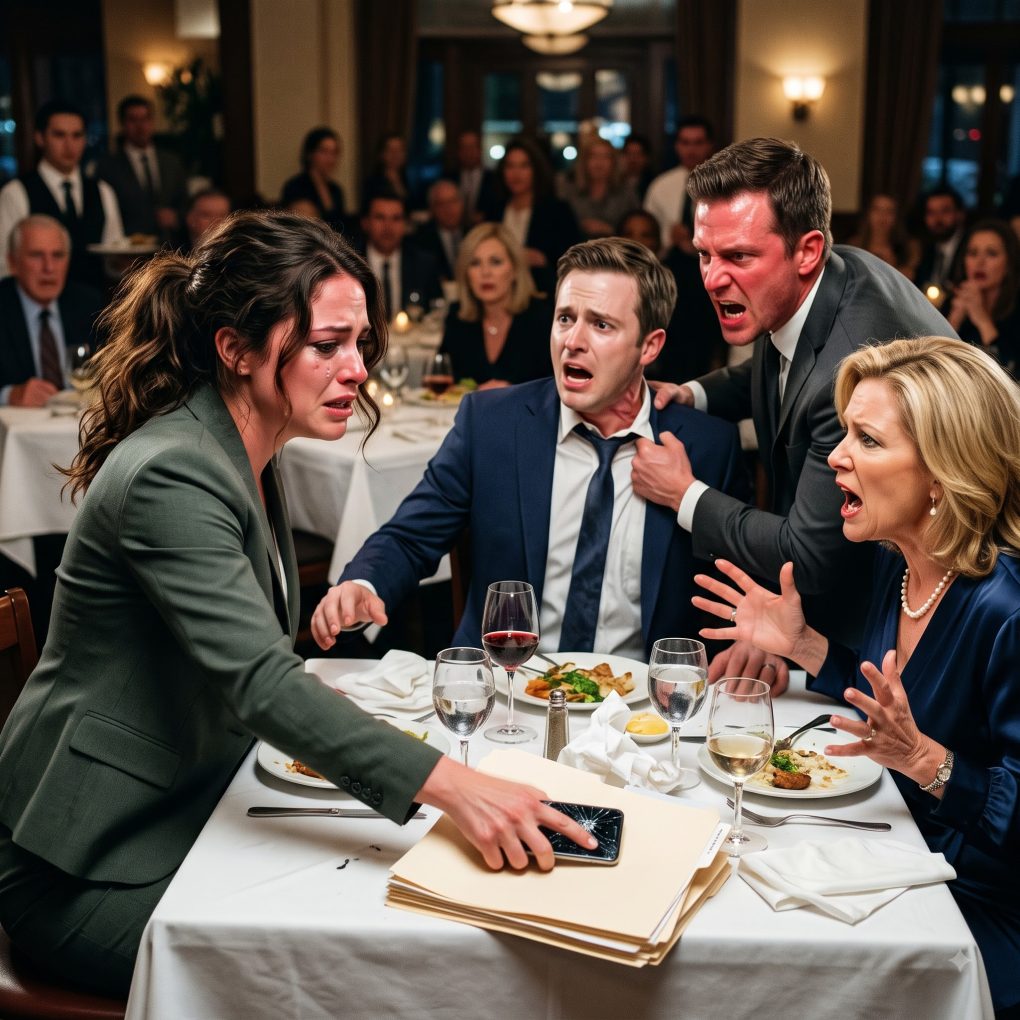
They stole $52k for a wedding… so I took it all back!
My phone buzzed at AM with a fraud alert that made my blood run cold. $52,000 had vanished from my...
AFTER HIS FIANCÉE SAID THE BABY WASN’T HIS, A SIX-YEAR-OLD ASKED FOR ONE HUG—THEN HER MOTHER MADE HIM PROVE HE WOULDN’T WALK AWAY WHEN IT MATTERED – Life Story
The little girl held out her scholarship letter and asked the stranger on the bench for the one thing he...