My older sister grabbed my writing hand in the garage before my bar exam and twisted until something snapped.
My older sister grabbed my writing hand in the garage before my bar exam and twisted until something snapped.
Then she whispered, “Good luck writing your exam now.” When Dad found me on the concrete, I expected help.
Instead, he ordered me to tell the hospital I had fallen and warned that exposing her would ruin our family name.
But someone across the street had seen more than he knew…
I was twenty-four when I learned that the worst part of my sister breaking my hand wasn’t the pain.
It was watching Dad step around me as though I were an inconvenience.
My name is Verity.
My sister, Tamsin, is three years older than I am.
We grew up in a suburban house with a neat lawn and parents who smiled for photographs.
At neighborhood cookouts, we looked like an ordinary family with two competitive daughters.
Inside our house, though, there had always been one set of rules for Tamsin and another for me.
When she broke something, I’d left it somewhere unsafe.
When she failed at school, Mom blamed the teachers.
If I objected, I was jealous.
If I stayed quiet, the family called it peace.
Our parents, Merrick and Althea, called their preferences fairness.
Tamsin needed support because she was “finding herself.” I didn’t because I was “the responsible one.” Being responsible had become a reason to give me less.
Dad insisted that Tamsin was sensitive and needed encouragement.
Mom said I was strong enough to handle disappointment.
I believed them as a child.
By adulthood, I understood that they weren’t describing our personalities so much as assigning our obligations.
At eighteen, I asked about help with college.
Dad told me plainly that I would have to pay my own way.
I worked three part-time jobs and studied between shifts.
I was proud of myself but still wanted Dad to be proud, too.
By twenty-four, I had spent three years working long hours as a paralegal at a demanding downtown law firm.
I lived on reheated coffee and the thought of a different life.
That life depended on a special bar examination.
It demanded extensive handwritten analysis and quick legal reasoning.
Passing could secure an associate attorney position paying $150,000 a year.
I dreamed of an apartment with a door I could close and a paycheck nobody could claim for Tamsin.
Tamsin, meanwhile, told everyone she was a freelance real estate broker.
She talked about investors and luxury properties with astonishing confidence.
She also lived rent-free with our parents, used their credit cards, and had little actual business to show for her stories.
Mom called it ambition.
Dad called her a born entrepreneur.
A few months before the exam, Mom served roast chicken on the good plates.
Tamsin described a commercial deal that would supposedly change her career.
Dad refilled her wine and asked about commissions.
During a lull, I mentioned that the partners at my firm had trusted me to manage a substantial corporate litigation case.
It was a major responsibility for a paralegal, and I’d been nervous and excited about it for days.
“Please, Verity,” Mom said without looking up. “Don’t bore us with depressing paperwork.
Your sister is talking about real success.”
Tamsin smiled over her glass. “She just wants to feel important.”
I set down my fork.
If I cried, I’d be dramatic.
If I argued, I’d be disrespectful.
If I left, I’d have ruined dinner.
That had been the pattern since high school.
Once, after my old laptop crashed, I printed the only copy of an essay I’d spent three weeks writing for an early-admission scholarship.
I left it on my desk overnight.
By morning, it had been shredded across my bedroom floor.
Tamsin denied it.
Mom blamed the neighbor’s tiny dog, although my door had been shut.
Even when the explanation was absurd, my parents chose it if it protected Tamsin.
I tried to tape the essay back together at my desk.
The fragments were scattered among the scholarship instructions, and I missed the mailing deadline.
It was the first time I realized she wasn’t satisfied with being praised more than me.
She wanted to interrupt my chances of leaving.
There were other incidents: bleached clothing, an unplugged alarm before an important exam, car keys disappearing and turning up in the trash.
Dad told me to stop keeping score.
I stopped reporting incidents, kept backups, made lists, and learned to solve problems alone.
Some habits were independence.
Others came from fearing that a mistake meant I didn’t deserve better.
About a month before the exam, I went downstairs late at night for water and heard Dad talking with Tamsin in the living room.
She was furious about a $10,000 credit card balance.
She wanted him to pay it.
He said money was tight and mentioned trying to arrange a second mortgage.
Then she mentioned me.
“She acts like she’s better than us,” she complained. “Once she passes, she’ll leave and look down on me.
Make her pay rent.
Make her help with my bills.
She owes this family.”
I stood in the dark hallway, waiting for Dad to tell her that my wages were mine.
Instead, his voice softened.
“Let her take the test first,” he said. “When she’s making lawyer money, we’ll make sure she contributes her fair share.
You’ll be taken care of.”
I went upstairs without my water.
Tamsin feared I’d leave; Dad viewed my future earnings as relief for her debts.
My exit looked to them like a new household income.
For the final week I barely slept.
Legal pads and flashcards covered my room.
My right hand ached from practice, but the answers were finally coming easily.
.
Tamsin made sure studying was miserable.
She blasted the television and mocked me for spending my twenties with law books instead of dating.
I kept studying.
She wanted a fight.
Three nights before the exam, I caught her reflection in my dark window.
She was standing in the hallway, staring not at my face but at my right hand while I rubbed my aching wrist.
She slipped away.
I blamed my exhaustion.
The following night, while I was filling my water bottle, I found her sitting alone at the kitchen island without the lights on.
“Ready for your big day?” she asked.
“I think so.”
“Shame if something went wrong after all that work,” she said. “Things can fall apart in a second.”
I went upstairs and locked my door.
I assumed she wanted to upset me.
I couldn’t imagine my sister deliberately injuring me.
The next morning, with the exam scheduled for the following day, I checked my bag of approved pens and my exam ticket.
I went into the garage to collect legal pads from the car.
I reached toward the driver’s door with my right hand.
Suddenly somebody seized my wrist from behind and twisted my arm backward.
There was a sharp crack, a terrible flash of pain, and then I was on my knees on the concrete, struggling to breathe.
Tamsin stood above me, looking almost pleased.
“Good luck writing your exam now,” she whispered, and walked toward the kitchen door.
For a moment I couldn’t move.
My wrist was swelling.
I tried to flex my fingers and nearly passed out.
I understood exactly why she’d chosen my right hand: she’d watched me practice, watched me struggle with cramps, and known what the exam required.
I heard Dad’s boots on the garage floor and looked up, expecting him to call for help.
His eyes went from my face to the wrist I was holding against my chest.
“Get up,” he said. “Stop being dramatic.”
“Tamsin did this,” I managed. “She broke my hand.”
.
He didn’t ask where she was.
He didn’t shout her name.
He lowered his voice and said, “We will not discuss this outside this house.
You’ll tell the doctor you tripped over a box.
If this gets out, your sister’s life and our family name will be ruined.”
I wanted to ask what he thought had happened to my life.
I couldn’t get the words out.
At the emergency room, I was diagnosed with a serious fracture.
My right forearm and hand were immobilized in a heavy plaster cast, and I was told recovery would take about eight weeks.
Dad repeated the story about the box.
I sat beside him, sick with pain and the knowledge that I was expected to agree.
When we got home, he turned on the television and left me to climb the stairs alone.
In my bedroom, I instinctively reached for a glass of water with my injured hand, knocked the cast against the nightstand, and tried the other hand instead.
The glass slipped and shattered.
Nobody came when it broke.
Mom appeared later with lukewarm chicken soup.
She avoided looking at my arm.
When I said Tamsin had attacked me deliberately, Mom called it a sibling fight and began to cry.
“Family sticks together through mistakes,” she said. “Do you really want her to go to jail over a stupid test?
We’ll find a way for you to take it next year.
Please just let this blow over.”
I looked past her at the broken glass still on my carpet.
Even now, with my exam hours away, her first concern was Tamsin’s future.
I had always been the daughter who was supposed to endure things quietly.
After Mom left, I picked up my phone with my left hand and called my college best friend, Kayla, who worked as a paralegal across town.
She listened without interrupting.
Then I heard her keys jangle.
“I’m coming over,” she said. “Don’t let them convince you this is normal.”
She arrived with legal pads and put a pen in my left hand.
The first words looked like a child’s scribbles.
We practiced short legal arguments until my fingers cramped.
I gripped the pen too low, then too hard.
Kayla adjusted my fingers and made me start again.
She reminded me that an answer could be brief and still be correct.
She helped me email the board of bar examiners with my records and X-rays, requesting emergency accommodations.
It might be too late, Kayla warned.
I knew that.
But sending the request was something I could still control.
A knock came at my locked bedroom door.
Tamsin called through it, pretending Mom wanted to know if Kayla was staying for dinner.
When I said we were studying, she laughed. “Studying for what?
You can’t even write.” Kayla looked ready to answer her, but I shook my head.
We returned to the page, and Tamsin eventually walked away.
We had just started another practice question when someone rang the doorbell downstairs.
Through my window I saw our elderly neighbor, Mrs.
Aloin, standing on the porch in her floral coat.
She held something small and silver in one gloved hand.
I knew Mrs.
Aloin watched her security cameras every evening.
One of them faced our driveway and the open garage.
When Dad opened the front door, I crept toward the stairs with Kayla behind me.
Mrs.
Aloin’s voice carried clearly through the hall.
“Merrick,” she said, “I saw what happened to your girls this morning.
I brought you the video.”
CHAPTER 2
Dad took the silver USB drive from Mrs.
Aloin before she could say much more.
I heard him assure her it had been a misunderstanding and that he would handle it privately.
She sounded unconvinced.
From the stairs, I heard her say she’d seen Tamsin grab my arm and throw me down.
He closed the door quickly.
I stepped into the entryway before he could leave.
“Please give me the drive,” I said.
His expression hardened. “Go upstairs.
This doesn’t concern you.”
“It’s a recording of my injury, Dad.
Of course it concerns me.”
He put the drive in his pocket. “I’m the head of this family.
That video is going in the trash.
You’re not ruining Tamsin’s life over one argument.”
Kayla came down the stairs with her phone recording.
She told him destroying evidence of a serious assault could have legal consequences and said she’d call the police if he refused.
Dad stared at us, furious, then threw the drive onto the rug.
“If you use that, you’re no daughter of mine,” he said.
I picked it up with my left hand. “You stopped protecting me when you told me to lie.”
Upstairs, we watched the silent footage together.
The angle was clear: I walked toward my car, Tamsin approached behind me, seized my wrist, and pulled me down.
Her deliberate attack was unmistakable.
Kayla and I copied the file to secure storage, a second email account, and three other drives.
I gave one copy to Kayla and kept another with my exam supplies.
Now my father’s permission wasn’t necessary for the truth to survive.
Later he pounded on my bedroom door and demanded the original.
I cleared that particular drive, handed it over, and told him I wouldn’t use it.
He walked away looking relieved.
The copies were safe.
At six the next morning, Kayla drove me to the testing center.
I hadn’t slept.
I was carrying a cast, a stiff left hand, and more fear than I wanted to admit.
At the administrative desk, the chief proctor, Stellan, recognized my name.
He said the board had approved time and a half and assigned me a desk where I could support my injured arm.
For the first time since the garage, somebody in authority treated my situation as a real problem worth addressing.
I also handed him a sealed envelope with my injury records, a statement, and a copy of Mrs.
Aloin’s video.
I explained that the fracture was intentional and meant to stop me from sitting the exam.
Stellan listened carefully and said he would review the evidence while I concentrated on the test.
The multiple-choice questions were slow but manageable.
The written portion was another matter.
Each letter made my left fingers tighten.
I knew what I wanted to say, yet getting the answers onto paper felt like dragging them through a narrow opening.
I simplified every essay.
Issue, rule, application, conclusion.
Nothing ornamental.
When my hand cramped, I stopped briefly and began again.
I thought about Kayla and the years of work that had brought me here.
I was determined that Tamsin wouldn’t decide whether I finished.
When the final time warning sounded, I added the last sentence to my answer and put down the pen.
My writing was crooked, and my shoulder hurt.
I had no idea whether I’d passed.
But I’d completed the examination she tried to keep me from taking.
As I left, Stellan caught my eye and gave a small nod.
The envelope was beside him.
I walked outside into the cold, exhausted and frightened, but no longer alone with the truth.
CHAPTER 3
For the next two weeks, I went back to my paralegal job and waited.
The cast stayed on, and I did most things with my left hand.
At home, Tamsin behaved as though I’d failed already.
She ordered expensive clothes, talked about imaginary clients, and accepted Mom’s praise without hesitation.
Thirteen days after the exam, she persuaded our parents to host a dinner party celebrating a commercial property deal she claimed was close to completion.
About a dozen friends came.
Mom told me to wear black and serve appetizers because I supposedly had nothing important left to study for.
I could have refused.
Instead, I carried a tray with my good arm and watched Tamsin enjoy the attention.
She snapped her fingers whenever she wanted more wine.
My cast was visible to every guest, yet nobody asked how I’d been hurt.
During her toast, Tamsin spoke about talent and knowing your place.
She glanced at me while describing people who chased dreams they could never achieve.
Dad lifted his glass proudly.
Then my phone vibrated in my apron pocket.
The State Board of Bar Examiners had released my results.
I slipped into the hallway to read the email.
I had passed.
More than that, my score was the highest in the state for that testing cycle, placing me in the top one percent.
A second attachment contained an offer from Stellan’s prestigious litigation firm: a fast-track associate position paying $150,000 annually, with a $50,000 signing bonus.
I leaned against the wall and cried quietly.
All those years of studying, the exhausting jobs, Kayla’s improvised handwriting lessons—it had amounted to something real.
Then Stellan called.
He said he’d reviewed the footage and medical documentation and forwarded them to law enforcement.
A warrant had been issued for Tamsin’s arrest, and officers were on their way to the house.
He urged me to leave as soon as I safely could.
I forwarded the results and offer to our family group chat.
Then I returned to the living room and asked everyone to check their phones.
Tamsin read first.
Her plate slipped from her hands and shattered.
Dad stared at the salary figures, speechless.
“No,” Tamsin said. “You couldn’t write.
I broke it.
I made sure you couldn’t write.”
She stopped, suddenly aware of the guests around her.
Her own words had exposed what she’d been denying.
I told her that she had broken my hand but had not stopped me from finishing.
Dad took a step toward me with his hand raised, furious that I’d embarrassed her.
Before he could strike, red and blue lights appeared through the windows.
Officers knocked and announced they had a warrant for Tamsin.
She cried that it was an accident.
Dad begged the officers to keep it within the family.
They told him they had the security footage and medical records.
Tamsin was handcuffed and taken away while her friends watched in stunned silence.
Afterward, Dad accused me of destroying the family.
I told him I’d only stopped covering for what Tamsin had done.
I posted a link to the video in the family chat when relatives began sending accusations, then stopped answering them.
I packed three suitcases and left that night.
The signing bonus helped me rent a high-rise apartment overlooking the city.
My wrist slowly recovered through physical therapy, and I began working at Stellan’s firm.
Tamsin was released on bail while her case proceeded.
I thought distance might finally be enough.
Three months into my new job, a foreclosure file landed on my desk.
The debtors listed on the front page were Merrick and Althea.
I recognized the address immediately: it was the house where my sister had broken my hand.
CHAPTER 4
The file showed that my parents had taken a second mortgage on the house roughly two years earlier and co-signed three large commercial loans.
The defaults totaled $450,000.
The dates matched Tamsin’s supposed brokerage and extravagant spending.
The bank had repeatedly warned them.
With Tamsin facing charges and legal expenses, payments stopped.
They’d financed a business existing mostly in Tamsin’s stories.
I disclosed the family relationship to the bank representative.
He nevertheless wanted me to handle the matter, arguing that I knew the borrowers and wouldn’t be swayed by their appeals.
I accepted the assignment.
Their default predated my involvement.
My office arranged a meeting.
Three days later, I entered conference room B carrying the foreclosure documents.
Dad and Tamsin sat at the table; Mom hadn’t come.
Both looked exhausted; Tamsin wore a plain sweater.
When they looked up, Dad gripped the table. “Verity?
Where’s the bank lawyer?”
“I’m the attorney assigned to this matter,” I said, taking my seat.
Tamsin accused me of arranging everything to punish her.
I opened the account history and told her I’d had no part in taking out the loans.
She and our parents had made those decisions themselves.
Dad’s anger disappeared. “You have that salary now,” he said. “And the bonus.
If you pay the arrears, we can keep the house.
Please.
We’re family.”
I remembered the garage floor, Mom telling me to wait another year, and Dad planning to use my earnings for Tamsin.
I told him I wouldn’t pay their debts.
The bank’s final deadline was Friday at five; the foreclosure would proceed if the default wasn’t cured.
I explained the consequences, closed the folder, and left the room.
I wouldn’t sacrifice my future again.
By Monday, officers supervised the loss of the house.
The bank also seized the family cars toward the debt.
With their finances ruined, Mom and Dad moved into a cheap motel outside the city.
I didn’t celebrate.
They’d had repeated warnings.
A month later, Tamsin pleaded guilty to the assault.
She received three years of probation, 500 hours of community service, and a felony record.
Her real estate prospects ended.
She took a night job cleaning a bowling alley.
Six months after the foreclosure, Kayla visited my apartment.
We stood on the balcony, looking over the city, and I held a warm mug in my right hand.
After weeks of therapy and the surgery needed to reinforce the fracture, I could use that hand again.
A small scar remained.
“Do you ever feel sorry for them?” Kayla asked. “Or wonder whether handling the foreclosure yourself was too much?”
I thought about it before answering.
I mourned the family I’d wanted, but didn’t regret refusing to become their safety net.
They’d demanded silence when I needed help and money when they needed it.
Kayla glanced at my mug. “You built your future with your left hand,” she said.
I smiled.
I’d built it through years of work, Kayla’s loyalty, and refusing to surrender.
My right hand held the cup steadily as we watched the lights come on.
For once, there was nothing I needed to prove to anyone inside that old house.
Some relatives still called me cold, saying a daughter should have paid what the bank demanded.
They knew about the money I earned but ignored why I had needed to leave.
Their messages no longer held the power they once did.
And that alone felt like a kind of freedom.
I had spent years confusing love with the obligation to accept mistreatment.
Now I knew I could miss my parents and still refuse to rescue them from choices they had made.
THE END.
I’ve shared the complete story, and I truly hope it touched your heart.
If this story moved you, please , like, and share the post.
Thank you for reading! ❤️
Recommended Stories

The Wealthy Rancher Hired a Cook for His Father Who Hadn’t Eaten in 3 Years—Then She Opened the Locked Kitchen
Part 1 The first time Nora Collins saw the old man, he was sitting on a porch overlooking three thousand...

They Put a Price on a Waitress to Settle Her Debt—Then the Most Feared Man in the Room Raised His Hand – Life Story
The first bid on Sarah Lane came from a man wearing a diamond watch and no shame. By the time...
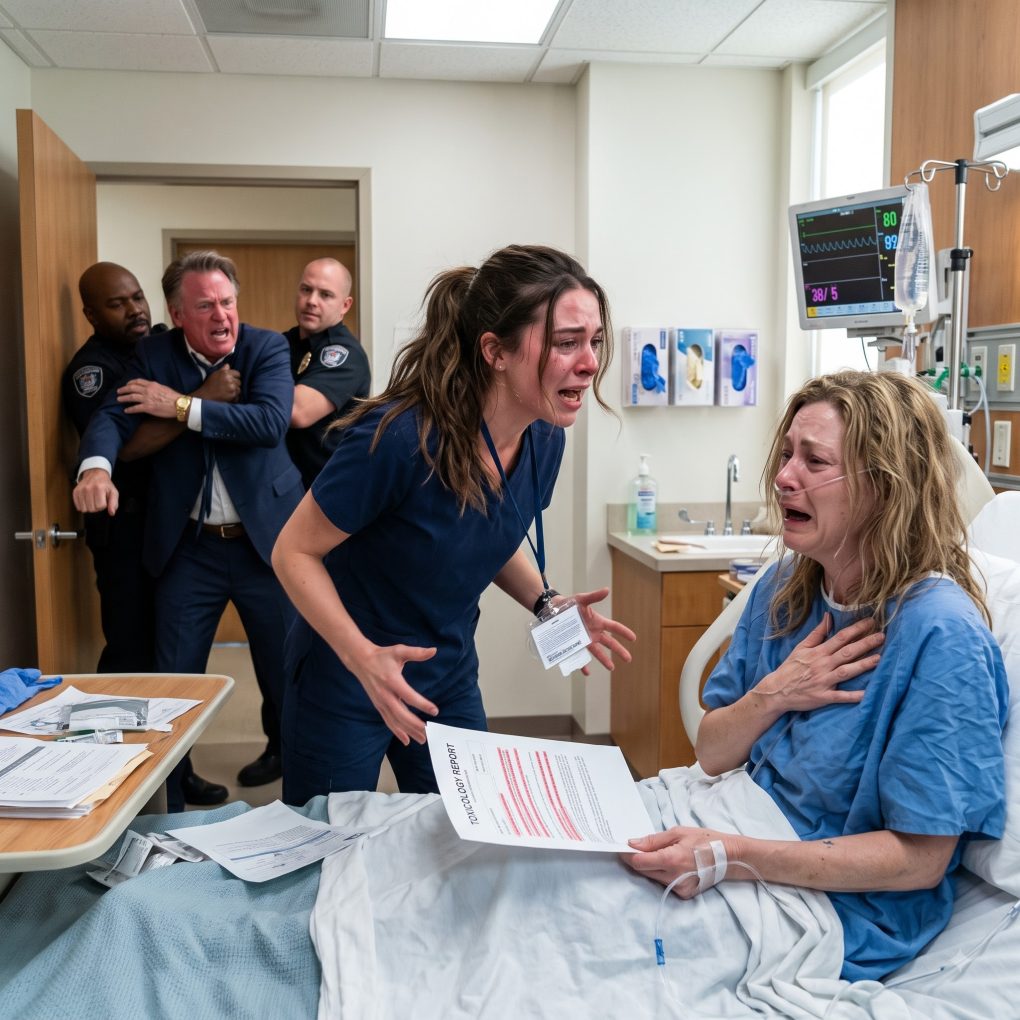
My mom chose her new husband over me at 16, dumped me at my aunt’s with two trash bags, and walked away. Twelve years later, she showed up at my hospital bed begging me for a kidney.
“She’s a match,” the transplant coordinator said, adjusting her clipboard as she stepped into my hospital room. I sat frozen...