The Single Dad Sacrificed His Dream Interview to Save a Stranger — Then He Saw Her Again…
The Single Dad Sacrificed His Dream Interview to Save a Stranger — Then He Saw Her Again
Part 1 — Thirty-Seven Minutes to Lose Everything
At a.m., a single father had thirty-seven minutes left to save his future.
Then a woman’s scream came from a burning car, and his seven-year-old son whispered, “Dad, somebody has to help her.” What Lucas Gray did next would cost him the only job that might keep his family together—and lead him toward a secret buried in the worst day of his life.
The borrowed navy suit felt too tight across Lucas Gray’s shoulders as he guided his aging Honda onto Highway 26 outside Portland, Oregon.
Morning sunlight flashed across the windshield, catching the small cracks in the dashboard and the faded photograph tucked beside the speedometer.
In the picture, Lucas stood in his paramedic uniform, smiling beside his son, Caleb, on the day the boy had started kindergarten.
That photograph belonged to a life that had ended eight months earlier.
“Dad, are you nervous?” Caleb asked from the backseat.
Lucas glanced into the rearview mirror.
His son’s brown hair stuck up at the crown despite three attempts to flatten it, and his sneakers were still damp from walking through the grass outside their apartment.
Lucas smiled because Caleb had already spent too many mornings watching him worry.
“A little,” he admitted. “But nervous doesn’t mean something bad is going to happen.”
Caleb considered that. “Mrs.
Bennett says being nervous means you care about something.”
“Your teacher is a smart lady.”
“Then you must care about this job a whole lot.”
Lucas tightened his hands around the steering wheel.
The interview at Meridian Health Systems was scheduled for nine o’clock, and it was the first serious opportunity anyone had offered him in months.
He had already arranged for Caleb’s school to accept him late that morning, knowing that if he drove directly to Meridian’s offices, he could arrive with enough time to compose himself.
A folded notice pressed against his chest inside his suit jacket.
Their landlord was demanding $2,473 in overdue rent and fees, money Lucas didn’t have.
A second envelope waited on the passenger seat, containing papers from the attorney representing his ex-wife in their increasingly bitter custody dispute.
Bethany wanted Caleb to live primarily with her.
Lucas had been his son’s main caregiver since their separation, but his unemployment and mounting debts had given Bethany legitimate reasons to worry about their housing.
The hearing was scheduled for Friday, and her attorney, Vincent Hayes, had already requested proof that Lucas could provide a stable home.
His phone vibrated in the cup holder.
Court hearing Friday.
Please provide confirmation of employment or a concrete housing plan before then.
Lucas recognized Vincent’s number.
He turned the phone facedown.
“Dad?”
“Yeah, buddy?”
“If you get this job, can we stay in our apartment?”
Lucas glanced at his son’s reflection.
Seven-year-old children weren’t supposed to understand eviction notices or calculate whether groceries could last until payday.
Caleb had learned both because Lucas hadn’t been able to protect him from the slow collapse of their ordinary life.
“That’s what I’m working on,” Lucas said.
He didn’t tell his son that Meridian’s salary would be enough to catch up on rent, replace their unreliable car, and finally stop counting every dollar at the grocery store.
He didn’t tell him that he’d practiced interview answers after midnight, standing in front of a cracked bathroom mirror.
And he certainly didn’t mention how badly he feared being asked about Portland General Hospital.
The memory arrived anyway.
Margaret Chen, sixty-four, collapsing in an outpatient treatment room.
A frantic call for emergency help, an unresponsive patient, and Lucas beginning resuscitation before the supervising physician arrived.
The hospital later accused him of disregarding internal procedures during the response, and although he never believed he had caused Margaret’s death, the incident ended his career there.
He still remembered her daughter’s face in the hallway.
He remembered the terrible silence when the resuscitation ended.
And he remembered being handed a termination letter three weeks later, with language that made a decade of professional service sound like a series of dangerous mistakes.
Lucas forced his attention back to the road.
The dashboard clock read .
Traffic was moving steadily, and for the first time in weeks, the future seemed close enough to reach.
Then the semi-truck ahead swerved.
Its trailer shifted violently as the driver attempted to correct on the damp pavement.
A black sedan in the next lane braked, skidded sideways, and struck the median barrier with a sound like an enormous sheet of metal being torn apart.
The car rolled down a shallow embankment and came to rest against a concrete drainage wall.
Lucas slammed on his brakes.
Behind him, horns blared.
He maneuvered his Honda onto the widened shoulder, switched on the hazard lights, and watched a dark column of smoke rise from the sedan’s damaged engine compartment.
For a few seconds, nobody moved.
Then a scream came from inside the wreck.
Lucas felt his body react before his mind could organize the consequences.
He assessed the stopped traffic, the damaged truck, the distance between the burning vehicle and the surrounding cars.
He knew the approaching emergency crews would need time to reach the scene.
He looked at the clock.
.
Thirty-seven minutes until the interview.
Thirty-seven minutes until the opportunity that might persuade a judge he could keep his son in the home they’d shared since Bethany left.
“Dad,” Caleb whispered.
Lucas turned.
His son’s face had gone pale.
He was staring toward the wreckage, one hand pressed against the window.
“There’s a lady in there.”
“I know.”
“Is somebody going to help her?”
Lucas saw three people standing beyond the crashed vehicles, their phones raised.
Another driver was speaking urgently to an emergency dispatcher, gesturing toward the smoke.
Nobody was approaching the sedan.
His old training returned with frightening clarity.
The smell of hot metal.
The possibility of leaking fuel.
The seconds that could separate a survivable injury from something permanent.
He pulled farther onto the shoulder, away from moving traffic, and placed the car in park.
“Caleb, listen carefully.
Keep your seat belt fastened, lock the doors, and stay inside.
I’m going to ask that gentleman to stand near the car until the police arrive.”
“But your interview—”
Lucas looked at the envelope beside him.
Then he looked at the smoke.
“I know, buddy.”
He stepped out, asked the driver of a stopped delivery van to remain near Caleb and watch for approaching traffic, and ran toward the wreck.
The sedan’s windshield was shattered.
Steam rose from beneath the crushed hood, and orange flames flickered near a damaged section of the engine compartment.
Inside, a woman was slumped against her seat belt, struggling to keep her eyes open.
Lucas crouched beside the broken driver’s window.
“Ma’am, can you hear me?”
Her eyes moved toward him.
“My name’s Lucas.
I used to work as a paramedic.
Emergency crews are coming, and I’m going to stay with you.”
The woman attempted to speak, but her voice emerged as a painful whisper.
“Rachel.”
“Okay, Rachel.
Try not to move.
Can you tell me where you’re hurt?”
“My leg.”
Lucas could see that her left leg was trapped beneath the dashboard.
There was blood along her forehead, and her breathing came in shallow, uneven bursts.
He called 911, described the accident, reported the visible fire, and requested immediate fire and medical response.
The dispatcher confirmed that units were on their way and asked him to remain connected.
Lucas tried the driver’s door.
It wouldn’t move.
“Rachel, I need you to keep talking to me.”
Her hand trembled against the seat belt.
“My son,” she whispered. “Andrew.
He’s nine.”
“Where is Andrew?”
“At home with my mother.” Her eyes filled with tears. “He thinks I’m coming back.”
Lucas reached through the broken window and took her hand.
“Then keep thinking about him.”
A sharp cracking sound came from beneath the hood.
Someone shouted that the fire was spreading.
Lucas looked at the trapped leg, then at the flames moving toward the passenger compartment.
Normally, he’d wait for firefighters with extraction equipment rather than risk worsening an injury by moving a crash victim.
But the growing fire had turned waiting into a different kind of danger.
“Rachel, I need to get you away from the car,” he said. “I’m going to do everything I can to keep you safe.”
She gripped his wrist.
“Please.”
A driver brought a small emergency tool from his truck.
With the dispatcher’s guidance and other bystanders helping from a safe position, Lucas cut the jammed seat belt and worked to free Rachel from the crushed interior.
She cried out when her trapped leg shifted, and the sound struck him with the force of another memory he had spent months trying to forget.
For one terrible second, he was back in that hospital room with Margaret Chen.
He heard his former supervisor telling him he had acted too quickly.
He remembered the termination letter.
Then Rachel’s breathing changed, and the present demanded his attention.
“Look at me, Rachel.
You’re doing well.
Just stay with me.”
He braced her injured leg as carefully as possible while another man helped clear twisted material from around her foot.
When the pressure finally eased, they supported her through the broken window and carried her away from the vehicle.
They had barely reached a safe distance when a tire ruptured in the heat with a violent report.
Rachel flinched against Lucas, sobbing.
“Andrew,” she whispered.
Lucas lowered her gently onto the pavement and kept her still while monitoring her breathing and consciousness.
Firefighters arrived moments later and moved toward the burning car, while paramedics approached Rachel with a stretcher and medical equipment.
Lucas gave them a concise report of her condition, the visible injuries, and what had happened during the rescue.
One paramedic recognized him from his years at Portland General.
“Lucas Gray?”
Lucas nodded.
“Good to see you, man.” The paramedic glanced toward Rachel. “You kept her with us.”
Lucas watched them load her into the ambulance.
He felt a rush of relief so powerful that his knees nearly buckled, but he remained standing until the doors closed.
Then he checked his watch.
.
Four minutes until the interview.
His phone rang as he hurried back toward Caleb.
“Mr.
Gray?
Jennifer Morgan from Meridian Health Systems.
We were expecting you shortly.”
“I’m sorry,” Lucas said breathlessly. “There was a major accident on Highway 26.
I helped get a woman out of a burning vehicle.
I’m still at the scene with my son.”
There was a pause.
“I understand,” Jennifer replied. “Unfortunately, our interview schedule is extremely tight.”
“I can come straight there.
I’ll explain everything.
I know this looks bad, but—”
“Mr.
Gray, the panel has several other candidates today.
If you’re unable to attend your scheduled appointment, we’ll have to move forward without you.”
Lucas stopped walking.
“Please,” he said. “I’ve been preparing for this for weeks.”
“I’m sorry.”
The call ended.
For a moment, Lucas stood beside the highway holding a phone against his ear, unable to process the silence.
He had helped save a stranger’s life.
And in doing so, he had lost the opportunity that might save his own family.
When he returned to the Honda, Caleb was waiting with his backpack clutched against his chest.
The delivery driver gave Lucas a sympathetic nod before returning to his vehicle.
“Did the lady live?” Caleb asked.
“Yes, buddy.
The ambulance took her to the hospital.”
Caleb’s shoulders relaxed.
Then he noticed his father’s face.
“Dad, did you miss your interview?”
Lucas crouched beside the open car door.
“Yeah.”
Caleb’s eyes filled with tears.
“Does that mean I have to go live with Mom?”
Lucas pulled him close.
He wanted to say no.
He wanted to promise that nothing would change, that the judge would understand, that the landlord would give them more time, and that another employer would somehow overlook the black mark in his professional record.
But he had made too many promises he couldn’t guarantee.
“I don’t know,” he whispered.
Caleb buried his face against his father’s shoulder.
And as traffic crawled past the smoldering wreckage, Lucas heard his son ask the question he would never forget.
“Dad, if saving somebody is the right thing to do, why does it feel like we’re being punished?”
Part 2 — The Eviction Notice on the Door
Lucas had no answer for his son’s question.
He drove home through Portland’s quieter streets, his bloodstained suit jacket lying inside a plastic evidence bag that a police officer had given him after taking his statement.
Caleb stared out the window, saying nothing, while Lucas tried to decide how to explain to a child that doing something good did not guarantee a good outcome.
Their apartment complex stood between a laundromat and a convenience store, its paint peeling around the stairwells.
Lucas had lived there for nearly four years, long enough for Caleb to learn how to ride a bicycle in the parking lot and make friends with the elderly woman downstairs.
It wasn’t much, but it had become the only stable thing left in their lives.
A bright red notice was taped to their door.
Lucas stopped on the landing.
Ten-Day Notice to Pay or Vacate.
The overdue balance, including allowable charges, was $2,473.
The notice warned that the landlord could begin eviction proceedings if the balance wasn’t resolved within the required period.
Lucas had already spoken to the property manager twice, and he knew another apology wouldn’t change the numbers.
Caleb stood beside him.
“Are we moving?”
Lucas slowly removed the paper.
“I’m going to talk to the landlord.”
“Does Mom know?”
“Not yet.”
“Will she be mad?”
Lucas folded the notice and slipped it into his pocket.
Bethany had a comfortable townhome in Beaverton and a stable job in pharmaceutical sales.
She loved Caleb, but their separation had left wounds neither parent had managed to heal without occasionally involving their son.
“I’ll talk to her,” Lucas said. “You don’t need to handle the grown-up problems.”
But Caleb was already handling them.
Lucas could see it in the way his son had stopped asking for toys, the way he saved half his lunch for later, and the way he watched every envelope arriving in the mail.
Inside, the apartment smelled faintly of laundry detergent and yesterday’s spaghetti sauce.
Caleb went to his room, where drawings of ambulances still covered the walls, while Lucas entered the bathroom and washed Rachel’s blood from his hands.
The water turned pink, then clear.
He scrubbed longer than necessary.
Eight months earlier, those same hands had been trusted in ambulances, emergency rooms, and accident scenes across Oregon.
Now he couldn’t convince employers to return his calls.
The incident involving Margaret Chen had destroyed his professional reputation with a thoroughness Lucas had never imagined possible.
Margaret had been receiving outpatient treatment at Portland General when she suddenly collapsed.
Lucas, working as part of the hospital’s emergency transport and response service, had been nearby when a nurse called for immediate assistance.
Finding Margaret unresponsive and without a detectable pulse, he had begun CPR while another staff member attempted to activate the hospital’s emergency response team.
The code team arrived, but Margaret could not be revived.
Later, an internal investigation criticized Lucas for entering a treatment area outside his assigned responsibilities and bypassing the expected reporting chain.
It also questioned the documentation of his actions during the first minutes of the emergency.
Although his state paramedic credential remained active, the hospital terminated his employment.
Lucas had spent months replaying that day, wondering whether he had made the right decisions and whether anything he could have done differently might have changed the outcome.
He had never been told that his actions caused Margaret’s death, but losing his job after trying to save her had made the distinction difficult to believe.
At eleven that morning, he called Meridian again.
Jennifer Morgan answered after several transfers.
“I’m hoping there’s some way to reschedule,” Lucas said. “I can provide the police report and the responding officer’s contact information.”
Jennifer’s tone remained professional.
“Mr.
Gray, I understand there were unusual circumstances, but our emergency response leadership position has attracted several qualified candidates.
The panel is continuing with the scheduled interviews.”
“I understand.
I’m asking for a chance to explain.”
“I can place a note in your file.”
Lucas thanked her because he didn’t know what else to say.
By noon, he had submitted six applications to clinics, two to medical transport companies, and one to a warehouse hiring overnight supervisors.
At three, he received a rejection from a private ambulance service that had interviewed him the previous month.
By five, he was sitting at the kitchen table with a calculator, trying to determine how much money he could earn doing delivery work before the rent deadline.
He had $418 in his checking account.
His car needed new tires.
And the custody hearing was four days away.
That evening, Bethany called.
“I received your message about the accident,” she said. “Caleb told me you stopped to help someone.”
Lucas closed his eyes. “Yeah.”
“Was he in the car the whole time?”
“He was buckled in on the shoulder.
Another driver stayed nearby, and the highway patrol checked on him afterward.”
Bethany was silent.
“Lucas, I know you used to do this for a living.
But what would have happened if you hadn’t come back?”
“I thought about that.”
“Afterward?”
“Before I went, too.”
Her voice softened slightly. “I’m not trying to make you feel worse.
I’m trying to understand how much risk Caleb was exposed to.”
Lucas stared at the overdue bills spread across the table.
He wanted to accuse her of using the accident against him, but her question wasn’t unreasonable.
“He was scared,” Lucas admitted. “I was scared, too.”
Bethany sighed.
“I don’t want Caleb losing his home.
He can stay with me if you need time to get things settled.”
“That’s not what your lawyer is asking for.”
“My lawyer is asking the court to make sure our son has somewhere stable to live.”
Lucas gripped the edge of the table.
“He has a home with me.”
“Lucas, the landlord has given you a pay-or-vacate notice.”
“How did you know?”
“You told me last week that rent was overdue.
I asked whether you’d received anything formal, and you wouldn’t answer.”
He looked toward Caleb’s bedroom.
A small light glowed beneath the door, and he could hear his son softly singing along with a cartoon.
Bethany’s voice became quieter.
“You’ve always been a good father.
I’m not disputing that.
But being a good father doesn’t make the rent disappear.”
Lucas ended the conversation feeling more exhausted than angry.
That was the hardest part: Bethany wasn’t inventing their problems.
She was using real circumstances to argue for a future he was terrified of accepting.
Tuesday and Wednesday passed in a blur of applications, phone calls, and increasingly uncomfortable conversations.
Lucas visited a community assistance office to ask about emergency rental support, then met the property manager, Mr.
Dugan, to request additional time.
Dugan agreed to consider a written payment plan if Lucas could provide evidence of reliable incoming income.
Everywhere Lucas went, the answer was nearly the same.
Come back when something changes.
Late Wednesday afternoon, Caleb was finishing his homework when someone knocked on the apartment door.
Lucas expected Mr.
Dugan.
Instead, a woman stood in the hallway leaning on crutches, her left leg supported by a medical brace.
A small bandage remained near her hairline, and her face was pale with fatigue.
Lucas recognized her immediately.
“Rachel?”
The woman smiled.
“Hello, Lucas.”
For a moment, he could only stare.
The last time he’d seen her, she had been lying on a stretcher, struggling to stay conscious while paramedics prepared to take her to the hospital.
Now she was standing in his apartment building, wearing a gray coat and looking at him with an intensity he didn’t understand.
“You saved my life,” she said. “I wanted to thank you properly.”
Caleb appeared behind Lucas.
“Dad, is that the lady from the fire?”
Rachel looked at him, and her eyes filled.
“You must be Caleb.”
He nodded.
“Your dad talked about you the whole time he was helping me,” Rachel said. “He told me he had a little boy he loved more than anything.”
Lucas stepped aside and offered her a chair.
Rachel moved carefully into the small living room, taking in the worn furniture, the school drawings, and the stack of employment applications on the kitchen counter.
She didn’t comment on any of it, but when she noticed the Meridian interview confirmation beneath Lucas’s keys, she went completely still.
“Lucas,” she said, “can I ask you something?”
“Sure.”
“Were you supposed to interview for the director of emergency response position on Monday morning?”
Lucas felt his stomach tighten.
“Yes.”
“Why didn’t you come?”
He gave a bewildered laugh.
“Because I was pulling you out of a burning car.”
Rachel closed her eyes.
For several seconds, she said nothing.
Then she reached into her handbag, removed a business card, and placed it on the table.
Lucas glanced down.
Rachel Thornton — Chief Executive Officer, Meridian Health Systems.
He looked up slowly.
Rachel’s expression was grave.
“Lucas, the interview you sacrificed to save me was with my company.”
Part 3 — The Woman Who Knew His Name
The room was silent except for the refrigerator humming in the kitchen.
Lucas stared at Rachel’s business card, then at the bruises visible above her collar.
Somewhere behind him, Caleb was trying to read the words printed beneath her name.
“You’re the CEO?” Lucas asked.
Rachel nodded.
“I was on my way to an early meeting when the accident happened.
My mother was watching Andrew, and I kept thinking about him while I was trapped in that car.” She looked toward Caleb. “I don’t remember everything clearly, but I remember your father telling me to stay awake.
I remember him saying my son was waiting for me.”
Lucas lowered himself into the chair opposite her.
“How did you find me?”
“The fire department helped pass along my request to contact you.
One of the responding officers gave me your name after you agreed I could be contacted.” Rachel paused. “Then I learned you had applied to Meridian.
I recognized your name in the interview records and realized what had happened.”
She explained that she’d been discharged after treatment for a closed leg fracture, concussion, and cuts, with orders to rest and attend follow-up appointments.
Her mother had insisted on driving her to Lucas’s apartment, and Rachel had agreed to a short visit only after Lucas failed to answer her earlier call.
“I wasn’t going to leave this without speaking to you,” she said.
Lucas looked at the crutches leaning against his couch.
“You should probably still be resting.”
“I’ve had that conversation with three doctors and my mother.”
Despite everything, he smiled.
Rachel glanced toward the kitchen counter.
“Did Meridian really refuse to reschedule your interview?”
“Yes.”
“Even after you explained the accident?”
“They said other candidates were waiting.”
Rachel’s expression tightened.
“I’m sorry.”
Lucas shrugged, a gesture that felt easier than admitting how devastated he’d been.
“Companies make decisions.
I understand that.”
“Sometimes they make them without knowing enough.”
“Sometimes they have all the information they need.”
Rachel studied him. “You don’t believe that.”
Lucas leaned forward.
“I’ve been unemployed for eight months.
I spent the last of my savings repairing my car so I could make that interview.
I borrowed this suit from my neighbor because I couldn’t afford one that fit, and I practiced answers until two in the morning because I knew I might not get another chance.”
His voice broke unexpectedly.
“Then I heard you screaming, and I knew what I had to do.
I’d do it again, Rachel.
But when I came back to my car, my son asked whether we were going to lose our home, and I couldn’t tell him no.”
Rachel’s eyes glistened.
She looked toward Caleb, who had retreated to the carpet and was quietly drawing an ambulance.
For a while, neither adult spoke.
Finally, Rachel said, “I can’t undo what happened Monday.
But I can make sure the hiring panel knows the full circumstances and gives your qualifications a fair review.”
Lucas looked up sharply.
“Are you offering me a job?”
“Not yet.
And I wouldn’t want you to accept a position merely because you saved my life.”
“Neither would I.”
Rachel nodded.
“Meridian’s hiring committee will need to evaluate your experience, references, and clinical record.
I won’t make the final hiring decision alone, especially now that I know you personally.”
Lucas searched her expression.
“Why do you care this much?”
Rachel’s gaze shifted toward the framed photograph of Lucas and Caleb.
“Because when I was trapped in that car, I thought about Andrew growing up without me.” Her voice grew unsteady. “Then a stranger appeared at the window and kept speaking to me as if my life mattered.”
She paused to steady herself.
“I can’t repay that with a job.
But I can make certain the company I lead doesn’t dismiss a qualified applicant without understanding why he was late.”
Lucas looked away.
He had spent months being treated like a problem that employers wanted to avoid.
Rachel was offering something he hadn’t expected to feel again.
A fair chance.
That evening, after Rachel left, Lucas sat at the kitchen table reading the email Jennifer Morgan had sent to confirm a new interview time.
Thursday morning, ten o’clock, with a hiring panel and a separate review of his employment history.
Caleb climbed onto the chair beside him.
“Is she going to hire you?”
“She’s going to let me interview.”
“Is that good?”
“It’s very good.”
Caleb looked toward the door.
“I liked her.”
Lucas smiled.
“Me too.”
Then Caleb became serious.
“Dad, if you get the job, does that mean you won’t have to be sad all the time?”
Lucas’s throat tightened.
He reached across the table and took his son’s hand.
“I’ll probably still have sad days, buddy.
Everybody does.
But I think things might get a little easier.”
The following morning, Lucas arrived at Meridian twenty minutes early.
The headquarters occupied a modern building overlooking the Willamette River, its glass walls reflecting the gray Portland sky.
He parked beside a row of expensive cars and sat for several minutes, trying to quiet the familiar voice telling him he didn’t belong there.
Inside, Jennifer Morgan greeted him with visible embarrassment.
“Mr.
Gray, thank you for coming.”
“Thank you for rescheduling.”
She hesitated.
“I wanted to apologize for Monday.
We didn’t know the circumstances.”
Lucas looked at her.
“I told you there was a serious accident.”
Jennifer lowered her eyes.
“You did.”
He didn’t press the point.
He knew that people sometimes needed to recognize their mistakes without being forced to defend them, and he had already spent too much of his life trapped inside arguments nobody could win.
The interview panel consisted of a medical director, an emergency operations manager, and a senior human resources specialist.
They asked about emergency preparedness, training, coordination with hospitals, disaster response, and the leadership decisions required when seconds mattered.
Lucas answered carefully, drawing on a decade of experience in ambulances and hospital response systems.
For the first time in months, he felt like himself.
He wasn’t a desperate unemployed father explaining a gap on his résumé.
He was a professional discussing the work he’d spent years mastering.
Then the medical director, Dr.
Allison Price, opened a second folder.
“Mr.
Gray, we need to discuss your departure from Portland General.”
Lucas’s pulse quickened.
“Of course.”
“The employment summary provided by your former employer states that you were terminated following a patient-safety incident involving an unauthorized emergency intervention.”
Lucas sat perfectly still.
“That isn’t how I’d describe what happened.”
Dr.
Price leaned forward.
“Then please describe it.”
Lucas took a slow breath.
He explained Margaret Chen’s collapse, the absence of a detectable pulse, and his decision to begin CPR while the emergency team was being summoned.
He described the hospital’s later criticism of his response and the fact that his professional credential had never been suspended or disciplined.
“I understand why hospitals need clear protocols,” Lucas concluded. “But I believed the patient was in cardiac arrest.
Waiting to begin CPR under those circumstances would have been difficult to justify.”
Dr.
Price listened without interrupting.
“Did the state review your clinical conduct?”
“Yes.
There was a credential inquiry, and no disciplinary action was taken.”
“Can you provide the written disposition?”
“I can.”
She nodded and made a note.
The interview continued for another twenty minutes, but Lucas could feel the change in the room.
His experience had impressed them; the unresolved questions about Portland General had introduced a risk they couldn’t ignore.
When the session ended, Jennifer escorted him toward the elevator.
“We’ll be in touch as soon as the review is complete,” she said.
Lucas thanked her and walked outside.
His phone rang before he reached his car.
It was his attorney, Sarah Kim.
“Lucas, I need you to come by the office,” she said.
“Is something wrong?”
“I received additional documents from Bethany’s attorney.
They’re planning to introduce your hospital termination at tomorrow’s custody hearing.”
Lucas closed his eyes.
Sarah hesitated.
“And there’s something else.
The summary they submitted contains an allegation I’ve never seen in the documents you gave me.”
“What allegation?”
Her voice became careful.
“It says you continued a medical intervention after being expressly ordered to stop—and that your decision contributed to Margaret Chen’s death.”
Lucas gripped the phone.
“Sarah, nobody ever ordered me to stop.”
Part 4 — The Three Minutes Nobody Could Explain
Lucas spent several seconds staring through the windshield after Sarah finished speaking.
Cars moved through downtown Portland, pedestrians crossed beneath the traffic lights, and somewhere nearby a delivery driver was arguing with a parking enforcement officer.
The ordinary noise made the accusation feel even more surreal.
“Sarah, I never received an order to stop,” Lucas repeated. “Margaret had no detectable pulse.
I started compressions, and when the response team arrived, they took over.
That’s what happened.”
“I believe that’s what you remember,” Sarah replied. “But the document submitted by Vincent Hayes is more serious than the termination summary in your original records.”
Lucas drove directly to her office.
Sarah was a family-law attorney working with him through a reduced-fee legal assistance program, and she had spent weeks helping him assemble school records, parenting schedules, employment applications, and financial statements.
Her desk was crowded with folders, but the hospital document lay alone in the center.
He recognized the Portland General letterhead immediately.
The report summarized Margaret Chen’s death and included an internal review’s conclusion that Lucas had acted outside the expected chain of command.
But the final paragraph went further, suggesting that his intervention had interfered with the response team’s assessment and might have contributed to the unsuccessful resuscitation.
Lucas read the words twice.
“That isn’t what they told me when they fired me.”
Sarah folded her hands.
“Do you have anything showing the state reviewed the incident?”
“Yes.
The inquiry was closed without disciplinary action.”
“Then we need that documentation.
And we need to be very clear about what it does and doesn’t establish.” She tapped the hospital report. “A licensing decision isn’t a complete medical investigation, but an unproven allegation also isn’t proof of negligence.”
Lucas felt a strange mixture of relief and humiliation.
He had spent eight months telling people he’d lost his job over a disputed emergency response, and most had quietly interpreted that as something worse.
Now the allegation was being presented in a custody dispute, where its emotional impact might matter more than the limitations of the evidence.
Sarah studied him.
“Lucas, why didn’t you challenge the dismissal?”
“I did.
I requested an appeal, but the hospital upheld the decision.”
“After that?”
He lowered his eyes.
“I couldn’t afford an attorney.
Bethany and I were separating, and Caleb was having nightmares.
I thought if I found another job, I could put it behind me.”
Sarah’s expression softened.
“But it didn’t stay behind you.”
“No.”
They spent the next hour reviewing every document Lucas had retained.
There were training certifications, commendations, shift schedules, performance evaluations, and a letter confirming that the state had closed its credential inquiry without disciplinary findings.
Sarah organized the material into a concise response, separating verified facts from allegations that would require independent medical evidence.
Then Lucas remembered something.
“Margaret’s daughter was at the hospital,” he said. “Her name was Naomi Chen.
She spoke to me after the code.”
“What did she say?”
“She asked whether her mother had been frightened.” Lucas stared at his hands. “I told her I didn’t know.
I said we’d done everything we could, but I couldn’t promise her that her mother hadn’t suffered.”
Sarah waited.
“Then she thanked me for staying with her.”
Lucas’s voice became unsteady.
“I thought she was just being kind.”
Sarah asked whether he would be comfortable contacting Naomi to see if she was willing to provide her recollection.
Lucas hesitated, ashamed that doing so might reopen grief for a family that had already lost so much.
But after Sarah explained that Naomi could decline and that no one would ask her to make medical claims she couldn’t support, he agreed.
Naomi answered the telephone that afternoon.
She remembered Lucas immediately.
“Mr.
Gray,” she said quietly. “I’ve wondered what happened to you.”
Lucas stood beside Sarah’s office window, looking down at the wet street.
“I lost my job.”
There was a long silence.
“I know.”
He closed his eyes.
Naomi explained that she’d written two letters to Portland General after her mother’s death.
In them, she had thanked Lucas for responding quickly and for treating Margaret with dignity during the emergency.
She had also questioned why the hospital’s written timeline began several minutes after her mother first reported feeling unwell.
“Nobody ever told me about those letters,” Lucas whispered.
“I thought they had.” Naomi sounded genuinely shocked. “I asked that one be passed along to you.”
Sarah requested permission to receive copies, and Naomi agreed.
She also explained that the hospital’s patient-relations department had eventually acknowledged confusion surrounding the initial emergency notification, although it had not determined whether that delay changed the medical outcome.
“My mother may have died no matter what anyone did,” Naomi said. “I understand that.
But you were the person who came when she needed help.
I didn’t want her death to become another reason somebody was hurt.”
Lucas gripped the phone.
For eight months, he had carried the memory of Margaret’s daughter as someone who might secretly blame him.
Now he heard grief in her voice, but not the accusation he’d imagined.
After the call, Sarah reviewed the letters.
Naomi had described seeing Lucas respond immediately after a nurse called for assistance and had specifically thanked him for speaking to Margaret throughout the resuscitation.
The letters did not prove every medical decision was correct.
But they contradicted the portrait of a reckless employee indifferent to patient safety.
Sarah placed them in the evidence folder.
“We’ll use these carefully,” she said. “The custody court isn’t the place to determine the medical cause of Margaret’s death.
What matters here is that your termination doesn’t, by itself, establish you’re an unsafe parent.”
Lucas nodded.
His phone vibrated with a message from Rachel.
How did the interview go?
He hesitated before replying.
Better than expected.
But the hospital incident is becoming a problem again.
Rachel called within minutes.
Lucas explained the new allegation and the documents Sarah had found.
Rachel listened without interrupting, then told him the hiring committee would need to complete its own review rather than rely solely on the former employer’s summary.
“I don’t want special treatment,” Lucas said.
“Good,” Rachel replied. “Because I’m not asking anyone to ignore a concern.
I’m asking them to examine it properly.”
“Your medical director seemed fair.”
“She is.
Allison has rejected candidates I wanted hired before.”
Lucas smiled faintly.
“That’s reassuring.”
“It’s supposed to be.”
Rachel’s voice softened.
“Lucas, I want you to understand something.
What happened on the highway made me want to know who you were.
It didn’t make you qualified for this job.
Your years of experience and the answers you gave our panel are what make you a serious candidate.”
He sat quietly, letting the distinction settle.
That evening, he collected Caleb from an after-school program and took him to the small park near their apartment.
They sat on a bench watching children play beneath the damp autumn trees.
Caleb leaned against Lucas’s side, unusually quiet.
“Mom says I might stay at her house more,” he said.
Lucas kept his voice steady.
“Would you like that?”
“I like Mom’s house.
She has a backyard.”
“You can like both places, buddy.”
Caleb looked at him.
“Would you be sad if I stayed there?”
Lucas felt his heart tighten.
“Of course I’d miss you.
But I would never want you to feel bad for loving your mom.”
Caleb picked at the edge of his sleeve.
“Okay.”
That night, Sarah emailed the finalized documents for Friday’s hearing.
Lucas printed them at the neighborhood library, then returned home to prepare dinner.
He was cutting vegetables when another message arrived.
This one was from Naomi.
I found something in the papers the hospital sent me after my complaint.
I don’t know whether it matters, but you should see it.
Attached was a copy of an emergency notification log that had been included in the hospital’s written response.
Naomi had highlighted two separate entries: an initial request for assistance and the time the response team was formally activated.
Lucas stared at the timestamps.
He remembered reaching Margaret within seconds of hearing the nurse’s call.
The official report treated his arrival as unusually early.
But the notification log showed that staff had been attempting to obtain emergency assistance before the formal alert was recorded.
For the first time in eight months, Lucas had documentation suggesting that the problem wasn’t how quickly he had acted.
It was how long the emergency response system had taken to react.
Part 5 — The Judge Who Asked the Hardest Question
Friday morning arrived beneath a steady October rain.
Lucas stood before his bathroom mirror wearing the same borrowed navy suit he’d worn to the failed interview, now cleaned and carefully pressed.
Caleb watched from the doorway, clutching a small plastic ambulance he’d owned since preschool.
“Does the judge decide if I can stay with you?” the boy asked.
“The judge is going to help Mom and me make sure you’re safe and cared for.”
“Can I tell her I want to stay?”
Lucas knelt in front of him.
“You don’t have to choose between us, Caleb.
That isn’t your job.”
His son nodded, but the fear remained in his eyes.
Lucas wished there were a way to explain that adults sometimes disagreed because they loved the same child and saw different risks, without making that disagreement feel like a threat to the child’s whole world.
Sarah met Lucas outside the courthouse.
She had received confirmation that Meridian’s hiring committee considered him a strong candidate, but the final offer remained contingent on completing reference and credential reviews.
The letter was encouraging, yet it was not proof of guaranteed employment.
“We’re going to be truthful about what you have and what you’re still working toward,” Sarah told him. “Don’t exaggerate.
Don’t make promises the court can’t verify.”
Lucas nodded.
His stomach had been tight since dawn.
Bethany was already waiting inside with Vincent Hayes.
She wore a dark blue dress and looked tired, not triumphant.
When she saw Lucas, her gaze dropped briefly to his suit, then toward Caleb, who was sitting beside a courthouse family-services volunteer.
“Did he eat breakfast?” she asked.
“Some toast.”
“He gets headaches when he’s nervous and doesn’t eat enough.”
“I know.”
For a moment, they looked at each other with the strange familiarity of two people who had once shared every ordinary detail of a life.
Then Vincent approached, carrying a leather folder and wearing the controlled expression of an attorney determined not to let personal history distract from the case.
The hearing began shortly after nine.
Judge Patricia Morrison reviewed the existing parenting order, which designated Lucas as Caleb’s primary residential parent while providing Bethany regular parenting time.
Vincent argued that Lucas’s unemployment, overdue rent, and uncertain housing justified a temporary modification placing Caleb primarily with Bethany until Lucas could demonstrate stability.
He did not need to invent evidence.
The unpaid rent was real.
The missed interview was real.
And Lucas’s lack of a reliable income had continued far longer than anyone originally expected.
Bethany testified that she loved her son and wanted him to remain close to his father, but feared he would face an avoidable housing crisis.
Her voice shook when she described Caleb asking whether he needed to pack his belongings and whether his father would be angry if he liked spending time at her house.
Lucas looked down at the table.
He hadn’t known about those questions.
When Sarah questioned Bethany, she asked whether Lucas had ever neglected Caleb’s medical care, failed to provide meals, or left him without appropriate supervision in their ordinary daily routine.
Bethany acknowledged that he had not.
“Lucas has always loved Caleb,” she said quietly. “That’s not why I’m here.”
“Then why are you requesting a change?”
Bethany glanced toward Lucas.
“Because love doesn’t pay the rent.
And I’m frightened our son will wake up one morning without knowing where he’s going to sleep.”
Lucas felt the truth of her words even while they hurt him.
Sarah then presented evidence of Lucas’s active job search, his professional credentials, his participation in Caleb’s schooling, and his application for emergency rental assistance.
She introduced a letter from the landlord confirming his willingness to consider a payment agreement if Lucas obtained reliable income.
When Vincent raised the Portland General termination, Sarah objected to treating the hospital’s disputed account as an established finding of medical negligence.
Judge Morrison allowed limited discussion because it was relevant to Lucas’s employment prospects, but made clear that the hearing would not determine the clinical cause of Margaret Chen’s death.
Sarah introduced the state credential disposition and Naomi’s letters, which Naomi had agreed could be used for that purpose.
The judge read them carefully, then asked several questions about the circumstances of Lucas’s departure from the hospital.
Lucas answered without trying to portray himself as flawless.
“I believed I was acting to help a patient in cardiac arrest,” he said. “The hospital criticized my compliance with its internal procedures, and I lost my job.
My state credential remained active.
I understand there are disagreements about the details, and I want those examined fairly.”
Vincent then turned to Monday’s highway accident.
“Mr.
Gray, you were on your way to a job interview that could have addressed several of the financial problems we’ve discussed today?”
“Yes.”
“And you chose to abandon that appointment?”
“I stopped because somebody was trapped in a burning vehicle.”
“While your seven-year-old son was in your car?”
Lucas felt his shoulders stiffen.
“Yes.
I parked on the shoulder, kept him buckled inside, and asked another adult to remain nearby.
I also made sure the responding officers knew where he was.”
Vincent consulted his notes.
“But you left him while you approached a dangerous accident.”
“Yes.”
“And you missed the appointment that could have stabilized his housing.”
“Yes.”
Vincent stepped back.
“Your Honor, my client isn’t asking the court to condemn the rescue.
She’s asking whether Mr.
Gray’s decision-making consistently accounts for his child’s needs.”
Lucas wanted to protest.
He wanted to explain that the woman would have died if everyone had chosen to protect themselves first.
But he could also remember Caleb’s frightened face in the rearview mirror, and he knew there had been risks beyond the ones he’d accepted for himself.
Sarah called Rachel Thornton next.
The witness had been disclosed to the other side the previous evening, and the judge permitted a limited examination concerning the accident and Lucas’s employment prospects.
Rachel entered carefully, using a cane, and identified herself as Meridian’s chief executive officer.
Vincent studied her with visible surprise.
Rachel described the accident, the fire, and Lucas’s actions in helping her escape the vehicle.
She explained that he had been scheduled to interview with Meridian that morning and that the hiring committee had since evaluated his qualifications.
“Is he employed by your company today?” the judge asked.
“Not yet.
The committee has recommended him for the position subject to its final review.”
“Then I can’t treat that as guaranteed income.”
“I understand, Your Honor.”
Rachel paused.
“But I can explain why he remains a candidate.
He has extensive emergency medical experience, a current professional credential, and demonstrated strong judgment during the panel interview.
Our committee has evaluated him on those merits.”
The judge nodded.
Rachel added, “What he did for me matters personally.
It isn’t a substitute for our hiring standards.”
Vincent questioned whether Rachel’s gratitude might influence her company’s judgment.
She acknowledged the possibility and explained that Meridian had assigned the final hiring decision to an independent committee rather than leaving it to her alone.
When Rachel stepped down, Lucas could barely look at her.
He was grateful, but her testimony hadn’t erased the problems he’d brought into the courtroom.
His son still needed a stable home, and the judge still had to decide what arrangement best protected him.
Judge Morrison reviewed the evidence, then looked directly at Lucas.
“Mr.
Gray, I believe your actions during the accident were courageous.
But courage alone is not a housing plan, and I cannot make a parenting decision based on whether someone deserves admiration.”
Lucas nodded.
“Understood.”
“I also see no evidence that you have stopped caring for your son’s daily needs.
He is attending school, maintaining his medical care, and receiving consistent parental attention.” She looked toward Bethany. “And I recognize Ms.
Gray’s concern that the current situation cannot continue indefinitely.”
The judge ordered that Caleb remain primarily with Lucas on an interim basis while directing both parents to cooperate on a documented housing contingency plan.
Bethany would have additional parenting time during the next several weeks, and the court would review Lucas’s employment and housing progress at a scheduled follow-up.
It wasn’t the sweeping victory Lucas had imagined in his most desperate moments.
But it meant he could bring Caleb home.
After the hearing, Lucas found his son waiting beside the volunteer, turning the little plastic ambulance over in his hands.
When Caleb saw him, he stood so quickly that the toy fell to the floor.
“Dad?”
Lucas knelt.
“You’re coming home with me today.”
Caleb threw his arms around his father’s neck.
Lucas held him tightly, pressing his face into his son’s hair and closing his eyes against the tears he couldn’t stop.
He could feel Caleb trembling, and the realization that his son had been carrying fear all morning was almost more than he could bear.
Rachel approached a few moments later.
“How are you doing?” she asked.
Lucas looked up.
“Better than I was this morning.”
She smiled.
“That counts.”
Outside the courthouse, Bethany asked to speak with him privately.
Lucas expected another disagreement about housing, but instead she stood beneath the awning, watching the rain gather along the curb.
“I don’t want Caleb to lose you,” she said.
Lucas looked at her.
“Then why does it feel like you’re trying to take him away?”
Bethany pressed her lips together.
“Because I don’t know how to help you without making you feel like I’m taking something from you.”
The admission caught him off guard.
She continued, “He loves you.
You know that.
But he’s frightened all the time, Lucas, and he thinks he has to protect your feelings.”
Lucas felt a quiet dread.
“What do you mean?”
Bethany reached into her handbag and removed a folded drawing Caleb had made during his last visit.
It showed two small houses connected by a road, a blue car parked between them, and a little boy standing beside a man holding an enormous red heart.
Across the bottom, Caleb had written:
I hope Dad gets a job so he doesn’t have to be scared anymore.
Lucas stared at the paper.
Bethany’s voice became almost a whisper.
“He asked me whether he could stay at my house for a little while so you wouldn’t have to spend so much money taking care of him.”
Part 6 — When a Child Tries to Save His Father
Lucas drove home from the courthouse without turning on the radio.
Caleb sat in the backseat watching the rain slide down the windows, occasionally tracing the drops with his finger.
Every few minutes, Lucas glanced into the mirror, studying his son’s face with the sudden awareness that the boy had been carrying worries he’d never been given permission to express.
At home, they changed into comfortable clothes and made grilled cheese sandwiches.
Caleb asked whether they could eat on the living room floor, and Lucas agreed, spreading an old blanket between the couch and the television.
It was a small ritual from better days, when Friday evenings had meant cartoons and buttery sandwiches rather than legal documents.
Halfway through dinner, Lucas turned off the television.
“Buddy, Mom told me something today.”
Caleb stiffened.
“Am I in trouble?”
“No.
Not at all.”
Lucas placed his plate aside.
“She said you offered to stay with her because you thought it might help me save money.”
Caleb stared at his sandwich.
For several seconds, he didn’t answer.
Then he whispered, “I don’t eat that much at Mom’s because she has lots of food.”
Lucas felt the words strike somewhere deep inside his chest.
“Caleb, look at me.”
His son raised his eyes reluctantly.
“You never have to eat less so I can afford something.
You never have to choose where you live because you’re worried about my bills.” Lucas struggled to keep his voice steady. “Taking care of you is my responsibility.
You’re allowed to be seven years old.”
Caleb’s lower lip trembled.
“But you were happier before you lost your job.”
Lucas looked away, overwhelmed by the simple accuracy of the observation.
He had tried to hide his fear by speaking quietly on the phone and waiting until Caleb was asleep before opening bills.
But children noticed everything that mattered, even when they didn’t understand the details.
“I was less worried,” Lucas admitted. “That doesn’t mean you made me unhappy.”
“Sometimes you cry in the bathroom.”
Lucas closed his eyes.
Caleb continued, “I heard you after the lady got hurt.
I thought maybe if I stayed with Mom, you could get a smaller house and not be so sad.”
Lucas moved closer and wrapped his arms around his son.
“Listen carefully,” he whispered. “You are not the reason things have been hard.
And you are not the problem I need to solve.”
Caleb began crying then, quietly at first, before clinging to his father’s shirt with both hands.
Lucas held him until the sobs eased.
“You can love Mom,” he said. “You can spend time with her, and you can tell her if you’re worried.
You don’t have to take care of either of us by pretending you’re okay when you’re not.”
Caleb nodded against his shoulder.
For the first time in months, Lucas allowed himself to acknowledge that their problem wasn’t only financial.
His son needed to feel safe enough to be honest, and no job offer could provide that security by itself.
The following Monday, Lucas returned to Meridian for a practical leadership assessment.
Dr.
Allison Price led him through emergency coordination scenarios involving multiple hospitals, limited ambulance availability, communication failures, and conflicting reports from field personnel.
The exercises were designed to test how candidates organized information and made decisions without assuming they could personally solve every problem.
Lucas approached them with the same seriousness he had once brought to real emergencies.
When one scenario described an ambulance crew receiving conflicting instructions during a cardiac arrest, he paused before answering.
“I’d establish who has clinical authority, make sure the patient receives indicated immediate care, and document the communication failure,” he said. “People should never be left guessing who they’re waiting for when seconds matter.”
Dr.
Price studied him.
“That’s a very specific concern.”
“It is.”
She nodded and continued.
At the end of the assessment, she closed her folder.
“You have strong operational instincts, Mr.
Gray.
You also understand the emotional consequences of system failures, which some administrators underestimate.”
Lucas waited.
“But I need to know whether you can work inside an organization without treating every disagreement as a reason to disregard its procedures.”
He appreciated her directness.
“I can,” he replied. “I don’t believe procedures are the enemy.
They protect people when they’re designed well and understood clearly.” He paused. “I also believe that when a procedure is confusing or creates delays, someone has to be willing to identify the problem and help correct it.”
Dr.
Price considered that answer.
“That’s the distinction we were looking for.”
Later that afternoon, Jennifer Morgan called to explain that Meridian’s compliance team had completed its credential verification.
They had confirmed Lucas’s license remained active, reviewed the state inquiry, and considered the available employment documentation.
The hospital’s allegations were noted, but the committee had not found evidence that prevented him from performing the administrative leadership role.
“We’d like to offer you the position,” Jennifer said.
Lucas stopped walking.
“I’m sorry.
Could you repeat that?”
Jennifer laughed softly.
“The director of emergency response position is yours if you accept.
The base salary is ninety thousand dollars, with full benefits and a ten-thousand-dollar signing bonus.
The formal written offer will include the standard conditions and start date.”
Lucas leaned against the wall outside a grocery store.
For months, he’d imagined this moment.
He’d imagined shouting, laughing, calling everyone he knew, or falling to his knees in relief.
Instead, he stood motionless, unable to speak.
“Mr.
Gray?”
“Yes,” he whispered. “Yes, I accept.”
When the call ended, Lucas pressed the phone against his forehead.
People passed him carrying shopping bags and coffee cups, unaware that the man standing beside the entrance had just been given back a future he’d almost stopped believing in.
He called Sarah first.
Then he called Bethany.
And finally, he called Rachel.
She answered on the second ring.
“Lucas?”
“I got the job.”
For a moment, Rachel said nothing.
Then he heard her exhale.
“I heard the committee was close to making a decision.
I didn’t want to interfere.”
Lucas smiled.
“Well, apparently they decided I was qualified.”
“They did.”
He leaned his head against the brick wall.
“Thank you.”
“Lucas, you earned the position.”
“I know.
But you made sure they looked.”
Rachel’s voice softened.
“That was the least I could do.”
Over the next several days, Lucas finalized the employment paperwork and met with Mr.
Dugan to negotiate a written rent repayment agreement.
The landlord accepted the plan after reviewing the offer letter and Lucas’s projected start date.
With the signing bonus scheduled to arrive through his first payroll, Lucas could finally see how the overdue balance would be resolved.
For the first time, he walked into the grocery store without adding every item in his head.
He bought fresh chicken, vegetables, strawberries, and a small chocolate cake.
Caleb watched him place the cake in the cart.
“Is somebody having a birthday?”
“Nope.”
“Then why are we getting cake?”
Lucas grinned.
“Because sometimes good things happen on ordinary Tuesdays.”
That evening, they ate dinner at the kitchen table with the windows open.
Caleb talked about school, his upcoming spelling test, and a classmate who had fallen off the playground equipment.
Lucas listened, laughing more than he had in months.
After dinner, Caleb helped wash the dishes.
“Dad?”
“Yeah?”
“Does this mean we’re rich now?”
Lucas laughed.
“Not even close.”
“But we can stay here?”
“We have a plan that should let us stay here.”
Caleb nodded thoughtfully.
“Good.
I like my room.”
Lucas looked toward the hallway where his son’s drawings covered the walls.
“Me too.”
Later that night, after Caleb was asleep, Lucas found an unfamiliar envelope tucked beneath his apartment door.
The return address was Portland General Hospital.
Inside was a notice stating that the hospital had received a formal request to review aspects of the emergency response surrounding Margaret Chen’s death.
The request referred to discrepancies between the original incident summary and newly identified notification records.
Lucas read the notice twice.
Then he saw the name of the person who had initiated the request.
Naomi Chen.
Margaret’s daughter had not merely written him a letter.
She had asked for the record to be examined again.
Attached was a short handwritten note.
Mr.
Gray, I don’t know whether reviewing this will change anything.
But my mother deserves an accurate account of what happened, and so do you.
I hope you’re willing to help us understand it.
Lucas sat down slowly.
He had spent eight months trying to escape the memory of Margaret Chen’s death.
Now the family he had feared facing was asking him to help uncover the truth.
And if the hospital’s timeline was wrong, the decision that destroyed his career might have been based on a mistake nobody had wanted to examine.
Part 7 — The Truth Hidden in a Hospital Report
On his first day at Meridian Health Systems, Lucas arrived forty minutes early.
He parked beneath the building’s glass entrance, sat in his car, and watched employees walk through the doors carrying coffee cups and briefcases.
For a few seconds, he expected the familiar feeling of shame that had followed him into every unsuccessful interview.
Instead, he felt nervous anticipation.
Inside, Dr.
Allison Price welcomed him to the emergency operations department and introduced him to the managers he would be working with.
His office overlooked the Willamette River, and on the desk sat a computer, a training schedule, and a small welcome card signed by the team.
Lucas placed a photograph of Caleb beside the monitor.
The boy was grinning in his school uniform, holding a homemade certificate that read Best Dad in the World.
Lucas had kept that certificate through the worst months of unemployment, folding it carefully whenever they had to move belongings or rearrange furniture.
Now he set it where he would see it every morning.
During his first week, Lucas reviewed Meridian’s emergency coordination procedures and noticed several communication gaps that reminded him of Portland General.
The policies were generally sound, but some escalation steps depended on staff reaching a particular supervisor before contacting additional resources.
In a serious emergency, he knew, the difference between clear authority and confusion could become painfully significant.
He brought his observations to Allison.
“I’m not saying these procedures have failed,” he explained. “I’m saying we should test what happens when the first person on the contact list doesn’t answer.”
She studied his notes.
“That’s a reasonable concern.”
Lucas felt an almost unfamiliar relief.
He wasn’t accustomed to raising difficult questions without preparing himself for a confrontation.
Allison continued, “Put together a simulation.
Let’s see what happens before we assume we know.”
Over the following weeks, Lucas organized training exercises involving hospital dispatchers, paramedics, emergency department supervisors, and medical transport teams.
He encouraged staff to identify confusing instructions without fear of embarrassment and made certain every exercise ended with a discussion of what had worked and what needed improvement.
One afternoon, a young dispatcher admitted that she’d been reluctant to escalate a simulated emergency because she worried about interrupting a physician unnecessarily.
Lucas recognized the anxiety in her voice.
“You’re not being difficult when you follow an escalation policy meant to protect patients,” he told her. “And if the policy makes you uncertain about when to act, we need to improve it.”
The woman looked visibly relieved.
After the session, Allison approached him.
“You have a gift for making people willing to admit what they don’t know,” she said.
Lucas thought of Margaret Chen and the endless hours he’d spent wondering whether admitting uncertainty meant admitting failure.
“I had to learn that the hard way.”
At home, the changes were becoming visible, too.
The rent arrears were paid according to the agreement with Mr.
Dugan, and Lucas began setting aside money for emergencies.
He replaced the Honda’s worn tires, repaired the broken kitchen faucet, and bought Caleb a new winter coat without waiting for a discount.
But money hadn’t solved every problem.
Some nights, Caleb still woke after nightmares about the accident.
He remembered the burning car, the frightened woman, and his father’s disappearance beyond the stopped traffic.
Lucas began spending time with him before bed, allowing the boy to talk about what he’d seen without insisting that everything was fine.
Eventually, with Bethany’s agreement, they arranged several sessions with a child counselor.
Caleb learned ways to describe his fear, and Lucas learned to recognize when his son needed reassurance rather than another explanation about why stopping had been necessary.
The counselor asked Lucas one question that stayed with him.
“When Caleb says he’s frightened something will happen to you, do you reassure him by promising you will always come back?”
Lucas hesitated.
“Sometimes.”
“Perhaps you could tell him the things you do to stay safe, and who will care for him if an emergency ever happens.
Children need plans they can trust, not promises adults can’t guarantee.”
Lucas thought about that for days.
He had spent so long trying to convince Caleb that nothing terrible would happen again.
Now he understood that true security meant helping his son feel loved even when life remained uncertain.
Meanwhile, Rachel continued recovering from the accident.
Her leg improved with physical therapy, and she gradually returned to her regular schedule at Meridian.
She occasionally stopped by Lucas’s department to discuss operations, but she respected the hiring committee’s decision and avoided treating him differently because of their personal history.
One Friday, she invited Lucas and Caleb to dinner with her son, Andrew.
They met at a modest Italian restaurant near the river, where Andrew immediately began questioning Caleb about his favorite video games.
Within twenty minutes, the boys were comparing drawings on paper napkins while Rachel and Lucas watched with amused relief.
“Andrew’s been asking about you since he heard what happened,” Rachel said quietly.
Lucas glanced toward the boy.
“Does he know the whole story?”
“As much as a nine-year-old needs to know.” She paused. “He understands that someone helped me when I was in danger.
He also knows the accident frightened me.”
Lucas noticed a faint scar near Rachel’s hairline.
“Does it still hurt?”
“Sometimes.”
“I’m sorry.”
Rachel smiled sadly.
“You didn’t cause the accident, Lucas.”
He looked away.
“I know.”
But both of them understood that knowledge and guilt weren’t always separated by a clear boundary.
After dinner, they walked along the riverfront while the boys raced ahead toward a public sculpture.
Rachel moved carefully, still occasionally favoring her injured leg.
Lucas slowed his pace without mentioning it.
“You’ve been doing well at Meridian,” she said.
“Trying to.”
“Allison says your training exercises are already improving communication between departments.”
Lucas smiled.
“She gives me plenty of things to improve, too.”
“Good.
That’s why I hired her.”
They walked in comfortable silence.
Then Rachel asked about the renewed hospital review.
Lucas explained that Naomi had continued requesting clarification about the initial emergency notification and that Portland General had appointed an outside reviewer to examine the disputed timeline.
He had agreed to provide his recollection and had submitted a statement through the appropriate process.
“What do you hope they find?” Rachel asked.
“The truth.”
“And if the truth doesn’t clear your name completely?”
Lucas considered that.
“I still want it recorded accurately.
Margaret died, and her family deserves more than a convenient explanation.
If I made a mistake, I need to understand it.
If the system failed, the hospital needs to understand that, too.”
Rachel looked at him for a long moment.
“You’re different from a lot of people I’ve worked with.”
Lucas laughed quietly.
“That’s not always been a compliment.”
“This time it is.”
Their hands brushed as they walked, and neither moved away immediately.
For a moment, Lucas became aware of how long it had been since he’d allowed himself to imagine a relationship that wasn’t defined by conflict, disappointment, or survival.
He liked Rachel, but he also valued the fragile stability they’d all worked to build and didn’t want gratitude to become an obligation neither of them had chosen.
Rachel seemed to understand.
She moved her hand back to her coat pocket and smiled toward the boys.
“Come on.
Andrew’s about to climb something he’s not supposed to.”
They returned home laughing, and Lucas found himself looking forward to another evening together.
Six weeks later, Sarah called while he was reviewing an emergency preparedness proposal.
“Lucas, the hospital review has reached a preliminary finding.”
He closed his office door.
“What did they say?”
“The notification records support your account of arriving before the formal response team was activated.
The reviewer also found that the original report doesn’t clearly establish the order you were supposedly accused of disregarding.”
Lucas sat down slowly.
“Does that mean they’re correcting it?”
“They’re seeking additional statements before issuing final findings.
The hospital has also agreed to provide us with a corrected employment summary if the disputed language can’t be supported.”
For several seconds, Lucas couldn’t speak.
Then Sarah added, “There’s a physician who was listed as having directed you during Margaret’s resuscitation.
The reviewer contacted her.”
Lucas remembered Dr.
Helen Morris, the attending physician who had arrived with the response team.
He remembered her taking over the clinical decisions while he continued compressions under direction.
“What did she say?”
Sarah’s voice became quiet.
“She says the original report attributed an instruction to her that she never gave.”
Lucas gripped the edge of his desk.
“The order you were supposedly fired for disobeying may never have existed.”
Part 8 — The Second Chance He Never Expected
Lucas read the corrected hospital report on a Thursday afternoon, almost three months after the highway accident that had changed his life.
He was sitting in Sarah Kim’s office with a cup of untouched coffee beside him, watching rain gather against the same window he’d stared through during their first desperate meeting.
This time, the documents in front of him told a very different story.
The independent reviewer had reconstructed the emergency response using staff statements, available notification records, and the documentation created after Margaret Chen’s death.
The findings identified a delay and confusion in the initial emergency notification process, along with inconsistencies in the hospital’s description of Lucas’s actions.
The report did not claim that Margaret would have survived if the response had been different.
Her underlying medical emergency had been severe, and the reviewers could not establish that the timing changed the outcome.
But the allegation that Lucas had continued resuscitation after an explicit order to stop was unsupported.
Dr.
Helen Morris had confirmed that she issued no such instruction.
She had taken responsibility for the resuscitation after arriving, and Lucas had continued assisting under the response team’s direction.
Portland General had agreed to amend its employment records, remove the unsupported allegation from future references, and clarify that Lucas’s termination had involved a disputed interpretation of internal procedures rather than an established finding that his clinical actions caused a patient’s death.
Lucas read the conclusion again.
Then he lowered the pages.
For eight months, he’d carried a version of the incident in which his judgment had been the central failure.
He had questioned every decision, every movement, and every second that passed before the response team arrived.
The report couldn’t erase Margaret’s death.
It couldn’t give him back the months he’d spent unemployed or the nights Caleb had gone to sleep frightened about losing their apartment.
But it removed an accusation that had made him doubt the very instincts on which he’d built his career.
Sarah watched him carefully.
“How do you feel?”
Lucas stared at the papers.
“I don’t know.”
She nodded.
“That’s all right.”
He rubbed both hands over his face.
“I kept thinking that if I’d waited, if I’d done exactly what they expected, maybe Margaret would still be alive.”
Sarah leaned forward.
“The review doesn’t tell us what would have happened under different circumstances.
But it does tell us that some of the things you were accused of doing weren’t supported by the evidence.”
Lucas looked down at the hospital’s corrected letter.
He had spent so long wanting someone to tell him he wasn’t a failure that finally receiving evidence in his favor felt strangely quiet.
There was no sudden disappearance of grief, no triumphant moment that made the past harmless.
There was simply room to breathe.
That evening, he called Naomi Chen.
She answered immediately.
“Lucas?”
“They corrected the report.”
Naomi was silent for several seconds.
“I’m glad.”
“Thank you for asking them to look again.”
Her voice trembled.
“I didn’t do it because I thought you’d saved my mother.
I know she died, and nothing can change that.” She paused. “I did it because the record should tell the truth about what happened to her.”
Lucas closed his eyes.
“I wish I could have done more.”
“I know.”
They remained on the phone for a moment, sharing a silence that neither tried to fill.
Then Naomi said, “My mother used to tell me that when something goes wrong, people spend so much time looking for someone to blame that they forget to ask what needs to change.”
Lucas looked toward the emergency response manual on his desk.
“I think she’d have liked my new job,” he said.
Naomi gave a small, tearful laugh.
“Then do something good with it.”
“I will.”
And this time, Lucas knew exactly what that promise required.
At Meridian, he continued developing emergency simulations that tested communication failures, delayed notifications, and unclear responsibilities.
Rather than teaching employees that individual courage could solve every crisis, he helped build procedures that made appropriate action easier and ensured that staff knew when to request additional help.
The work was demanding.
Some proposals required months of review, and not every manager welcomed changes that increased training costs or required admitting weaknesses in familiar routines.
But Lucas no longer interpreted every disagreement as a judgment on his worth.
He had learned that being capable didn’t mean never making mistakes.
It meant being willing to examine them without allowing fear or pride to dictate what happened next.
Rachel supported the improvements as CEO, while leaving the operational decisions to Allison and Lucas’s department.
She understood the importance of keeping professional authority clear, especially because her friendship with Lucas had become increasingly personal.
One afternoon, Meridian’s communications director proposed featuring Rachel’s rescue in a public campaign celebrating the company’s emergency response leadership.
Rachel considered the idea, then called Lucas into her office.
“You should know they’re suggesting a story about the accident,” she said. “Your photograph, my account of what happened, and an explanation of how you came to work here.”
Lucas sat opposite her.
“Would you want that?”
Rachel shook her head.
“Not without your agreement.
And I’m not interested in making your difficult year into a marketing strategy.”
Lucas looked through the window at the city below.
“Then I’d rather not.”
“That’s enough for me.”
He smiled faintly.
“You know, six months ago I would’ve been terrified to say no to a CEO.”
Rachel laughed.
“Six months ago, I was the woman asking you not to leave me in a burning car.”
Their eyes met.
The silence that followed was warm rather than uncomfortable.
Rachel reached across the desk and rested her hand lightly over his.
“I’m glad you stopped, Lucas.”
He looked at her hand.
“So am I.”
Spring arrived in Portland with flowering trees, warmer afternoons, and a feeling of possibility Lucas had almost forgotten existed.
After saving several months of income, he found a brighter two-bedroom apartment near Caleb’s school, with a small balcony and a living room large enough for his son’s growing collection of toy emergency vehicles.
Moving day was a chaotic mixture of cardboard boxes and misplaced screws.
Rachel arrived with Andrew and several bags of sandwiches, while Bethany brought Caleb’s favorite blanket and helped assemble the boy’s bed.
For a while, the adults worked together without discussing their old disagreements, united by the ordinary task of giving a child somewhere comfortable to sleep.
Caleb stood in the doorway of his new bedroom, staring at the sunlight spilling across the floor.
“Dad?”
“Yeah, buddy?”
“Is this really ours?”
Lucas crouched beside him.
“As long as we keep doing our part, this is home.”
Caleb walked to the window and looked outside.
“Can I put my ambulance pictures on that wall?”
“You can cover the whole thing.”
His son grinned.
Then he ran across the room and threw both arms around Lucas’s neck.
“Thank you, Dad.”
Lucas held him close.
He wanted to say that Caleb didn’t need to thank him for having a home.
But he also knew that his son had lived with uncertainty long enough to understand what this moment meant.
So he simply whispered, “You’re welcome.”
The six-month custody review arrived in April.
This time, Lucas walked into the courthouse wearing a suit that belonged to him.
He carried employment records, recent pay statements, rental documents, and Caleb’s school reports.
His attorney had organized everything, but for the first time, Lucas wasn’t relying on hope alone.
Bethany arrived without the hostility that had marked their earlier meetings.
She and Lucas had spent months practicing a more cooperative parenting routine, including regular visits, clear school arrangements, and direct communication whenever Caleb needed something.
They still disagreed sometimes.
But they had stopped treating every disagreement as evidence that the other parent didn’t care.
Judge Morrison reviewed the updated circumstances and listened to both parents.
Lucas had maintained his employment, resolved the rent arrears, obtained stable housing, and continued caring for Caleb’s daily needs.
Bethany confirmed that their son appeared happier and that the revised parenting schedule was working.
The judge declined to grant Bethany’s earlier request to change Caleb’s primary residence.
The existing arrangement would continue, with the parents expected to maintain the cooperative schedule they’d developed.
Lucas felt relief wash through him.
He knew that parenting orders could be revisited if circumstances changed, and that no court could promise a family would never face another difficulty.
But the immediate threat that had haunted him for months was over.
Outside the courtroom, Bethany stopped beside him.
“Lucas?”
He turned.
“I’m glad things worked out.”
He studied her face, then nodded.
“Thank you.”
She hesitated.
“I was scared, too.
I wasn’t always fair about how I handled it.”
“Neither was I.”
For a moment, they stood together beneath the courthouse steps, two people who had once loved each other and now shared the more complicated responsibility of loving the same child.
Then Bethany smiled.
“Tell Caleb I’ll see him Saturday.”
“I will.”
She walked toward the parking lot, and Lucas watched her go without anger.
Some relationships weren’t meant to return to what they had been.
Sometimes the best they could become was something quieter, more respectful, and better for the people who depended on them.
That afternoon, Lucas picked Caleb up from school.
His son climbed into the car carrying a spelling test covered in gold stars.
“Dad!
I got every word right!”
Lucas grinned.
“That’s amazing, buddy.”
Caleb fastened his seat belt.
“How was court?”
“It went well.”
“Do I get to stay in our new apartment?”
Lucas glanced at him through the mirror.
“That’s the plan.”
Caleb smiled so widely that his cheeks lifted.
“Good.
Andrew’s coming over Saturday, and we want to build a really big cardboard ambulance.”
Lucas laughed.
“Sounds like a serious engineering project.”
“It is.”
They drove home through familiar streets, passing the exit for Highway 26.
Caleb grew quiet as the road signs appeared, and Lucas recognized the look on his son’s face.
“Thinking about the accident?” he asked.
Caleb nodded.
“Dad, would you still stop if something like that happened again?”
Lucas considered the question carefully.
“I’d want to help,” he said. “But I’d also make sure you were safe, call for emergency services, and work with other people so nobody took unnecessary risks.”
Caleb thought about that.
“Even if it made you late again?”
Lucas smiled sadly.
“Even then.”
His son looked out the window.
“I’m glad you helped Ms.
Thornton.”
“Me too.”
“Because she got to see Andrew again?”
Lucas glanced into the mirror.
“That’s the most important reason.”
Caleb nodded.
Then he added, “And because she helped you remember you’re good at your job.”
Lucas felt his throat tighten.
For a moment, he couldn’t speak.
Finally, he said, “You helped me remember that, too.”
That Saturday, Rachel and Andrew came over for dinner.
The boys spent most of the afternoon constructing an enormous cardboard ambulance in Caleb’s bedroom, complete with paper headlights and a cardboard radio.
Lucas prepared roast chicken and vegetables while Rachel helped him wash the dishes.
When the children finally went to bed after a long evening of laughter, Lucas and Rachel sat on the small balcony overlooking the neighborhood.
The air smelled faintly of rain and spring flowers.
Rachel held a cup of tea between her hands.
“Andrew asked whether we could come back next weekend.”
Lucas smiled.
“Caleb asked the same thing.”
She looked toward the apartment.
“They’re becoming good friends.”
“They are.”
“And us?”
Lucas turned toward her.
Rachel’s expression was gentle but serious.
“I don’t want you to feel as though you owe me anything,” she said. “Not because of the job.
Not because of the accident.”
Lucas set his cup down.
“I don’t.”
“Then I’d like to ask you something.”
He waited.
“Would you have dinner with me sometime?
Just the two of us.
No work, no children, no complicated explanations.”
Lucas smiled slowly.
“I’d like that.”
Rachel laughed softly.
“Good.”
For a while, they sat together listening to the distant traffic and the quiet sounds of a neighborhood settling into evening.
Lucas thought about the morning he’d stopped on Highway 26.
He remembered the borrowed suit, the overdue rent, the courtroom notice, and his son’s terrified face in the rearview mirror.
He remembered the smoke rising from the wreckage and the woman’s voice whispering the name of a child she feared she’d never see again.
He had believed the choice would destroy the last opportunity he had to rebuild his life.
In some ways, it had.
He’d lost the interview he’d spent weeks preparing for, and nothing that followed had been guaranteed.
Rachel could not have hired him without reviewing his qualifications, the judge could not have protected his parenting arrangement without evidence of stability, and the hospital could not bring Margaret Chen back by correcting its records.
But stopping had also set something in motion.
He’d met a woman who believed that his skills deserved a fair hearing.
He’d found the courage to confront a painful professional failure rather than allowing it to define him.
And he’d learned that protecting his son meant more than keeping a roof over their heads; it meant allowing Caleb to be a child instead of a small, frightened guardian of his father’s happiness.
Rachel reached for his hand.
Lucas took it.
From the bedroom, Caleb called softly, “Dad?”
Lucas stood and walked to the doorway.
His son was sitting up in bed, Andrew asleep on the spare mattress beside him.
“Everything okay, buddy?”
Caleb nodded.
“I just wanted to tell you something.”
Lucas sat on the edge of the bed.
“What is it?”
Caleb smiled sleepily.
“I think you’re still a hero.”
Lucas felt tears gather in his eyes.
He brushed his son’s hair away from his forehead.
“I’m just your dad.”
Caleb shook his head.
“You can be both.”
Lucas leaned forward and kissed his forehead.
“I love you, buddy.”
“Love you more.”
When Lucas returned to the balcony, Rachel was waiting.
She looked at his expression and understood that something important had happened without needing to ask.
He sat beside her.
For a long time, neither spoke.
Beyond the balcony, Portland’s lights shimmered beneath the spring sky, and cars moved along distant roads carrying people toward appointments, homes, unexpected emergencies, and lives they couldn’t yet imagine.
Lucas knew there would be difficult days ahead.
He would make mistakes at work.
Caleb would grow older and face challenges Lucas couldn’t solve for him.
Rachel had a demanding career and a child of her own, and whatever relationship developed between them would require patience, honesty, and choices that couldn’t be made for anyone else.
But that no longer frightened him the way uncertainty once had.
He had learned that a good life wasn’t built by avoiding every risk or ensuring that every sacrifice received a reward.
It was built through the decisions people made when doing the right thing was difficult, through the courage to correct mistakes, and through the willingness to keep caring even when the future remained uncertain.
Six months earlier, Lucas Gray had left home believing a job interview was the only thing standing between his son and disaster.
Then a stranger had needed him.
He had stopped.
And now, sitting beside Rachel with his son sleeping safely down the hallway, Lucas finally understood something he hadn’t been able to explain that morning.
He hadn’t saved a stranger because he expected life to reward him.
He’d saved her because her life mattered—and when his own life began falling apart, the people who saw his worth helped him find the strength to rebuild it.
Recommended Stories

The Billionaire’s Security Team Missed the Man Following Her—But a Single Dad Parking Cars Noticed One Detail No One Else Did – Life Story
The champagne glass never tilted. The man holding it had been pretending to drink for nearly ten minutes while his...
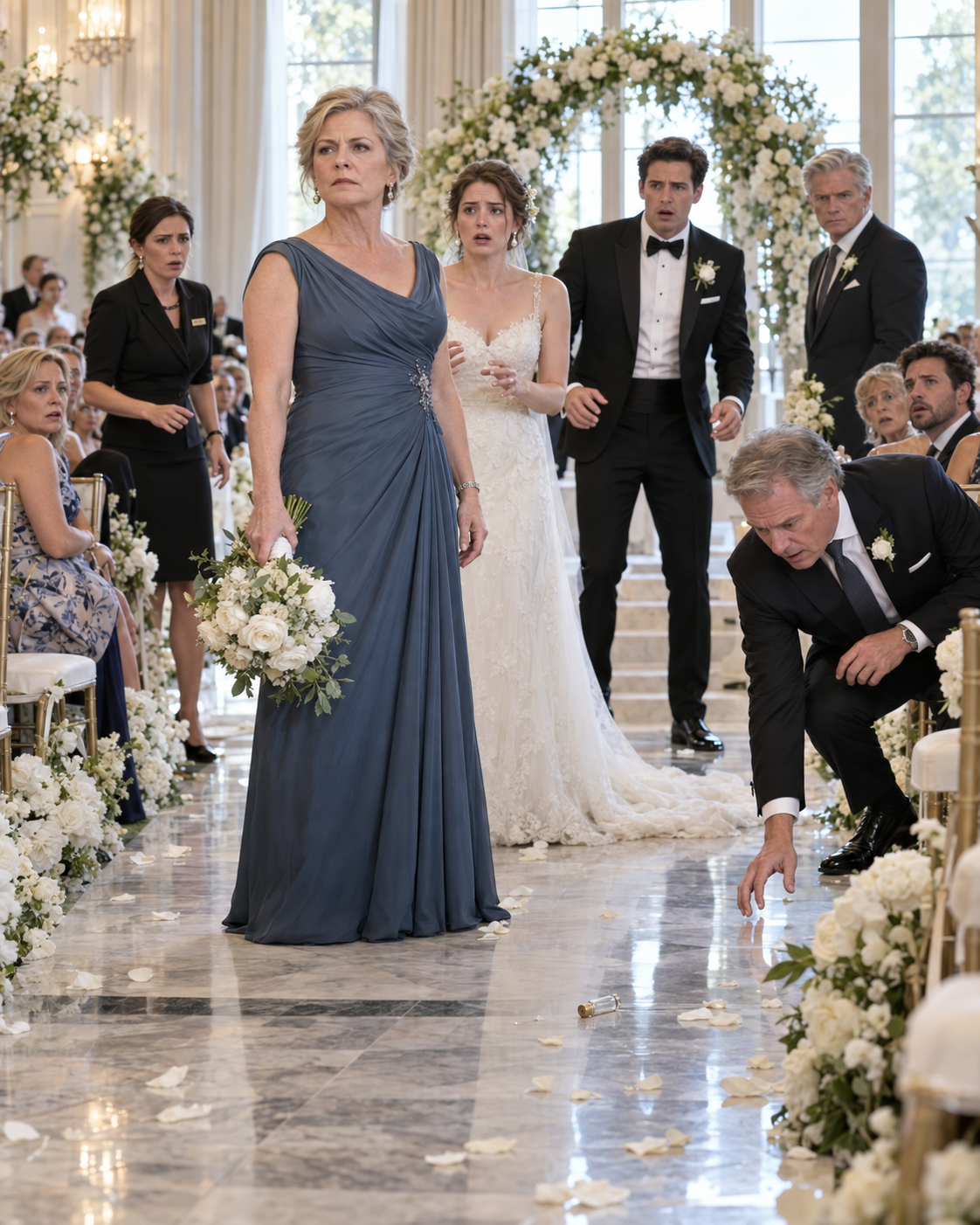
My daughter was seconds from marrying him when my wife stepped into the aisle and said one word: “Stop.”
Part 1: My daughter was halfway down the aisle when I realized she was not walking toward her future. She...

My wife suddenly became the woman I’d spent years wishing she would be. No arguments, no cold shoulders—just homemade dinner, lingering kisses, and an unforgettable night together. At 3:06 a.m., I woke with terrible stomach cramps and headed downstairs. – Family
My older brother’s name was Daniel Mercer.For several seconds, I genuinely wondered whether Rebecca had opened the wrong document. Daniel...