“You Left Me in Labor for Your Mistress,” His Wife Said—The Mafia Boss Lost Custody and His Empire…
“You Left Me in Labor for Your Mistress,” His Wife Said—The Mafia Boss Lost Custody and His Empire
PART ONE — THE NIGHT A MAFIA KING LOST EVERYTHING
The night Hannah Moretti gave birth, her husband was lying beside his mistress in a luxury hotel suite.
Seven weeks later, the most feared mafia boss in New York returned home to discover that his wife and newborn son had vanished.
And on the kitchen counter, beside her wedding ring, Hannah had left something far more dangerous than a goodbye.
Gabriel Moretti entered his Upper West Side penthouse at on a rain-soaked Thursday morning.
His expensive charcoal suit was wrinkled, his eyes were bloodshot, and the faint scent of Victoria Dayne’s perfume still clung to his collar.
He expected to find his wife asleep, his son in the nursery, and the familiar sounds of the household beginning another ordinary day.
Instead, he found silence.
Not the peaceful silence of a sleeping family, but something colder and unmistakably deliberate.
The bottle warmer was unplugged, the sterilizer had been emptied, and the little blue blanket that usually lay across the living room sofa was missing.
Even the white noise machine Hannah kept running beside Nicholas’s crib had been switched off.
“Hannah?”
His voice carried across the marble floor.
No answer came.
He moved toward the nursery, irritation rising before fear had a chance to reach him.
Hannah had been distant for weeks, refusing his attempts at conversation and watching him with an expression he could never quite read.
He had convinced himself that motherhood was exhausting her and that eventually she would return to being the affectionate woman who once greeted him at the door.
But the nursery was empty.
The bassinet was gone.
So was the diaper bag, the portable crib, and every bottle Nicholas used.
The small rocking chair remained by the window, facing the gray Manhattan skyline, with a folded receiving blanket resting neatly on its cushion.
Gabriel stared at the empty space where his son should have been.
Then he ran.
“Hannah!”
He searched their bedroom, the guest rooms, the library, and the terrace.
Half her clothes still hung in the closet, and their wedding photograph remained beside the bed.
Her favorite blue sweater was folded across the armchair, exactly where she had left it the night before.
It was not a hurried escape.
Someone had planned this.
Gabriel pulled out his phone and called her.
The call went directly to voicemail, as did the next eleven attempts.
His security chief answered immediately, insisting that no one had seen Hannah leave through the main lobby.
“Then check the service entrance,” Gabriel snapped.
“Sir, the service system went offline yesterday morning.”
The muscles in Gabriel’s jaw tightened.
“Offline?”
“Maintenance reported an electrical failure.”
Gabriel ended the call.
Only then did he notice the objects arranged on the kitchen island.
His spare house keys lay beside Hannah’s wedding ring.
Beneath a folded white envelope sat a small black USB drive.
The envelope bore his name in the careful handwriting he had once watched fill birthday cards and grocery lists.
He opened it.
Gabriel,
By the time you read this, Nicholas and I will be somewhere you cannot reach without going through the court.
Our son is safe.
My attorney knows where we are.
So does the judge.
Do not send your men.
Do not threaten my family.
Do not mistake my silence for helplessness.
You took my trust, my choices, and the one moment when I needed my husband more than anyone else in the world.
You will not take my child.
The drive contains copies.
The originals are protected.
My attorney will contact yours.
Hannah.
Gabriel read the letter three times.
He had faced federal investigations, rival families, assassination attempts, and men who would gladly have seen him buried beneath the Hudson River.
Yet nothing had prepared him for the sight of his wife’s wedding ring lying beside his keys.
He picked it up.
The small diamond glittered under the kitchen lights.
For four years, Hannah had worn it every day.
Even during long hospital shifts, she threaded it onto a chain beneath her scrubs because she was afraid of losing it.
Now she had left it behind without hesitation.
Gabriel inserted the USB drive into his laptop.
Three folders appeared.
VICTORIA.
NICHOLAS.
EAST PIER.
He opened the first folder.
Photographs filled the screen: Gabriel and Victoria entering the private elevator of the Bowmont Hotel, Victoria laughing against his shoulder, and a receipt for a presidential suite paid through a Moretti-controlled consulting company.
The timestamp on one photograph was a.m.
He remembered that night.
Snow had been falling against the hotel windows while Victoria slept beside him.
His phone had vibrated repeatedly on the nightstand, but he had silenced it after telling himself Hannah was calling about another minor discomfort.
At , his wife had been on her knees in their living room, begging him to answer.
Their son had been born hours later.
Gabriel closed the photograph.
The second folder was worse.
It contained drafts of a custody petition alleging that Hannah suffered from dangerous postpartum instability.
There was an unsigned psychiatric evaluation, a request for emergency guardianship, and a forged medical letter claiming she could not safely care for Nicholas.
He recognized the name of the attorney who prepared the documents.
He recognized the private investigator copied on the messages.
And he recognized his own approval beneath a request to establish a custody strategy before the baby’s birth.
He had told himself it was precautionary.
If Hannah ever tried to leave him, he needed a way to keep his son.
He had never allowed himself to finish the thought.
Gabriel clicked the third folder.
His blood ran cold.
East Pier was not a company or a building.
It was the name his inner circle used for the hidden financial machinery supporting his criminal empire.
Inside were shipping records, payments to corrupt officials, invoices from shell companies, and photographs of cargo containers that had never been inspected.
Nobody outside his most trusted associates should have possessed those records.
Nobody.
At the bottom of the folder was a video file.
Gabriel opened it.
Hannah appeared on the screen, sitting in the nursery with Nicholas sleeping against her shoulder.
Her face was pale, and there were dark circles beneath her eyes.
Yet her voice was steady.
“You installed cameras in our home because you said the world was dangerous,” she began. “You told me they were there to protect us.”
Gabriel leaned toward the screen.
“I believed you.
I believed so many things.”
She adjusted the blanket around their son.
“At nine this morning, Vale Harbor’s board will receive notice that your voting authority has been revoked.
The banks have already been informed that you pledged company assets using a document I never signed.”
His stomach tightened.
“Every financial record, every forged letter, and every threat has been preserved.
If you send anyone after us, my attorney will give the relevant evidence to law enforcement.”
Hannah looked down at Nicholas before raising her eyes toward the camera again.
“You always said your family was the one thing nobody was allowed to touch.”
Her voice trembled for the first time.
“I was your family, Gabriel.
So was the little boy struggling to breathe while you were with her.”
Gabriel stared at the screen.
“I didn’t leave because I stopped loving you,” Hannah continued. “I left because I finally understood that loving you was never going to make us safe.”
The video ended.
For several minutes, Gabriel remained motionless.
Then he noticed a fourth item inside the Nicholas folder.
It was an audio recording, saved from the private security system in his study.
The filename contained a date from three weeks earlier.
He pressed play.
Victoria’s voice filled the empty kitchen.
“Once the judge believes Hannah is unstable, you obtain custody.
As the child’s guardian, you position yourself to control the trust shares.
Combine those with her proxy, and Vale Harbor belongs to you.”
A long silence followed.
Then Gabriel heard his own voice.
“She is my wife.”
Victoria laughed.
“Then why did you forge her signature?”
The silence that followed was unbearable.
Finally, Gabriel heard himself answer.
“Because she would have said no.”
The recording stopped.
For the first time in fifteen years, Gabriel Moretti understood that the person who knew him best had become the person he could no longer control.
And what terrified him most was not that Hannah had discovered his affair.
It was that she had discovered what he intended to do to their son.
PART TWO — THE WOMAN WHO MISTOOK HIS POWER FOR PROTECTION
Six months before Nicholas was born, Hannah Moretti still believed there was goodness inside her husband that the rest of New York never saw.
She had once seen that goodness clearly.
Hannah Vale first met Gabriel at a charity gala held at the Plaza Hotel, where she attended as a representative of a Manhattan children’s hospital.
She was a pediatric cardiac nurse, accustomed to twelve-hour shifts, difficult conversations, and parents who prayed beside hospital beds.
Wealthy people sometimes made her uncomfortable, especially when they spoke about sick children as though suffering were a fundraising opportunity.
Gabriel attended because the Moretti Foundation was sponsoring a new cardiac research program.
The newspapers described him as a shipping magnate.
The police knew him as something else.
Hannah knew neither version particularly well.
During dinner, Gabriel’s mother, Teresa, suddenly collapsed near the entrance to the ballroom.
Guests stepped backward, waiters shouted for help, and several men in expensive suits stood frozen around her.
Hannah dropped to her knees.
“Call an ambulance.
Now.”
She checked Teresa’s breathing, loosened her collar, and directed the nearest guest to clear the crowd.
When Gabriel pushed through the gathering, his face had lost every trace of the cold authority that usually frightened people.
“That’s my mother.”
“I know,” Hannah said without looking up. “If you want to help her, give me room.”
Nobody had spoken to Gabriel Moretti that way in years.
He obeyed.
At the hospital, Hannah remained nearby until Teresa’s condition stabilized.
Gabriel sat in a plastic chair outside her room, holding a paper coffee cup he never drank from.
For six hours, he ignored his phone.
When Teresa finally opened her eyes, Gabriel bowed his head over her hand and whispered something in Italian.
Hannah looked away.
She had witnessed enough private grief to know when it deserved privacy.
The next morning, flowers arrived at the nurses’ station.
She returned them.
Two days later, Gabriel made a substantial donation to her department.
Hannah sent a formal thank-you letter to the foundation.
A week after that, he appeared in the hospital cafeteria wearing a dark suit and looking thoroughly out of place among vending machines and exhausted medical residents.
“My mother says I owe you a proper thank-you.”
“You already thanked me.”
“She says I was badly raised.”
Hannah glanced toward the two security men standing near the cafeteria entrance.
“She might be right.”
For the first time, Gabriel laughed without restraint.
That laugh was what Hannah remembered.
Not his reputation, the money, or the fact that frightened men moved out of his way.
She remembered a powerful man looking momentarily young, surprised that someone had spoken to him without fear.
He began courting her carefully.
He learned that she preferred tea after night shifts and coffee before them.
He remembered the anniversary of her mother’s death and brought dinner when grief made Hannah forget to eat.
He sat at her cramped kitchen table while she explained complicated pediatric heart conditions, listening as though the fate of his entire organization depended on understanding every word.
When Hannah’s father, Thomas Vale, suffered a stroke, Gabriel drove her to the hospital himself.
Thomas survived for eleven days.
On the final evening, Hannah sat beside his bed, holding his rough, weathered hand.
Gabriel waited in the hallway until dawn, refusing to leave even when Hannah told him there was nothing more he could do.
After the funeral, she inherited thirty-eight percent of Vale Harbor Services, a waterfront logistics company Thomas had spent his life building.
The company employed hundreds of workers and controlled valuable leases along the Hudson River, including Pier 14.
Hannah knew little about shipping.
She knew how her father smelled after working on tugboats, how he always carried peppermints for dockworkers’ children, and how carefully he folded his union jacket before church.
But she did not understand the business he had left behind.
Gabriel offered to help.
He negotiated with creditors, stabilized payroll, and resolved a dispute that threatened the company’s largest warehouse contract.
He refused compensation and assured Hannah that the business would remain independent.
When he proposed marriage, he promised he wanted no part of her inheritance.
Their prenuptial agreement protected her ownership.
Hannah believed it proved that she had found a man who could possess everything and still choose not to possess her.
For two years, their marriage almost justified that faith.
Gabriel was attentive and unexpectedly tender in private.
He cooked disastrous Sunday breakfasts, remembered which songs made Hannah cry, and held her after two early miscarriages without offering empty promises that another pregnancy would fix her grief.
But small changes followed.
A driver began collecting Hannah after work.
Then Gabriel replaced her phone with one configured by his security team.
He discouraged friendships with people whose relatives had connections to rival organizations.
Whenever Hannah resisted, he framed his requests as protection.
“I would rather have you angry with me than have someone hurt you,” he would say.
The first time, it sounded loving.
By the tenth, it sounded like a warning she was not yet prepared to recognize.
When Hannah became pregnant again, Gabriel wept as he knelt on the bathroom floor beside her.
He pressed his forehead against her stomach and promised their child would never know fear.
For the first few months, he kept every appointment.
He carried ultrasound photographs in his wallet.
He bought a pair of tiny navy-blue socks and placed them on his desk beside contracts worth millions.
Then the company’s board requested Hannah’s vote on a refinancing agreement.
Gabriel placed a document beside her breakfast.
“It’s a temporary voting proxy,” he explained. “Ninety days.
You’re exhausted, and I can handle the financial vultures.”
Hannah read it carefully.
The document seemed reasonable.
Her father’s former chief financial officer, Miriam Stone, reviewed it and found nothing unusual.
Hannah signed, relieved that someone she trusted could manage the work until after the baby arrived.
Three days later, an altered version appeared in Vale Harbor’s corporate records.
That document gave Gabriel voting authority until Nicholas turned twenty-five.
It also positioned him to seek control over twelve percent of the company’s shares held in trust for the child.
With Hannah’s thirty-eight percent and the trust’s future voting influence, he intended to secure control of the waterfront facilities his criminal network desperately needed.
Hannah knew none of this.
She was too busy decorating a nursery, taking extra hospital shifts, and trying to ignore the way her husband had begun arriving home later every night.
Victoria Dayne appeared at the Moretti Foundation’s winter gala.
She was beautiful in an exact, deliberate way, with silver-blonde hair, carefully chosen jewelry, and the confidence of a woman who understood how powerful men wanted to be admired.
Gabriel introduced her as his new crisis consultant.
“Victoria has been saving us millions.”
Victoria smiled at Hannah’s swollen ankles and sensible shoes.
“You look lovely.
I don’t think I’d have the courage to appear in public so far along.”
Hannah smiled back.
“Then I suppose pregnancy would be a lonely nine months for you.”
Teresa nearly choked on her champagne.
Gabriel did not laugh.
Later, inside the limousine, he accused Hannah of humiliating Victoria.
“She works for me.
You made her uncomfortable in front of my associates.”
“She embarrassed me first.”
“You’re imagining things.”
Hannah turned toward him.
“Then why was your hand on her waist all evening?”
“The ballroom was crowded.”
“There was plenty of room beside me.”
Gabriel looked out the window.
“Not everything is about you, Hannah.”
She said nothing more.
But something small and essential changed inside her.
Two weeks later, she discovered hotel charges on a Vale Harbor account.
Then came a jewelry receipt that had nothing to do with any gift she received.
Finally, Gabriel began taking his phone into the bathroom and sleeping with it beneath his pillow.
Hannah wanted to believe there was another explanation.
So she called Miriam.
They met at a small diner in Queens where Thomas Vale had eaten breakfast after early-morning inspections.
Miriam listened carefully, her silver hair pinned back and her untouched coffee cooling between them.
When Hannah finished, Miriam asked one question.
“Do you want to know whether your husband is having an affair, or whether he’s stealing your company?”
Hannah stared at her.
“What?”
Miriam opened a leather folder.
Inside were two copies of Hannah’s voting proxy.
One contained the ninety-day limit Hannah remembered signing.
The other extended Gabriel’s authority for twenty-five years and included provisions she had never approved.
Hannah felt the blood drain from her face.
“That isn’t what I signed.”
“I know.”
“Maybe his lawyer made a mistake.”
“Then we let an independent forensic examiner determine how the document changed.”
Miriam slid another page across the table.
It concerned Nicholas’s trust.
Gabriel’s attorneys had already begun exploring how custody and guardianship proceedings might give him influence over the child’s shares, subject to court approval.
Hannah placed both hands over her pregnant belly.
“He wouldn’t use our baby for business.”
Miriam looked at her with heartbreaking patience.
“Your father taught me something, sweetheart.
When a man starts treating the people he loves like assets, you don’t wait for him to tell you what he plans to sell.”
Hannah left the diner carrying copies of documents she desperately wanted to be mistakes.
That evening, Gabriel kissed her forehead, asked whether the baby had been kicking, and promised to be home early the next night.
For a few precious hours, she allowed herself to believe him.
She did not yet know that the night he was promising to come home would be the night she nearly lost their son.
PART THREE — SEVEN MISSED CALLS AND ONE UNFORGIVABLE BETRAYAL
The dinner Hannah prepared on the night Nicholas was born was never eaten.
She had roasted chicken with lemon and rosemary, made Gabriel’s favorite cake, and arranged the tiny navy socks beside his plate as a surprise.
Snow drifted past the penthouse windows, softening Central Park into a landscape of white rooftops and dark trees.
Their scheduled induction was still three weeks away, and Hannah wanted one quiet evening with the man she had married before their lives changed forever.
At , Gabriel texted that an important meeting had run late.
At , Hannah wrapped his dinner in foil.
At 11:45, she blew out the candles.
She had fallen asleep on the sofa when the first pain struck.
It was sharp enough to pull her forward.
Hannah sat upright, one hand gripping the cushion, and waited for it to pass.
Her obstetrician had warned her about early contractions, but this felt different—deeper, more insistent, almost frighteningly organized.
Then warm fluid ran down her legs.
She stared at the floor.
“No.
Not yet.”
Her hand moved instinctively to her belly.
Another contraction tightened across her back.
She reached for her phone and called Gabriel.
Voicemail.
She called again.
Nothing.
At a.m., she sent a message.
My water broke.
Something is wrong.
Please come home.
The message remained unread.
By the fourth contraction, Hannah was kneeling beside the sofa, breathing through pain that left her unable to stand.
She called emergency services, explained her pregnancy history, and gave the dispatcher her address in the calm, precise voice she used with frightened parents at the hospital.
Only after the ambulance was dispatched did her voice break.
“Please hurry.
He’s early.”
The building’s night doorman, an older man named Walter, heard her crying through the apartment’s intercom and came upstairs.
He found Hannah trying to reach the door with one hand pressed against the wall.
“Mrs.
Moretti?”
“My husband isn’t answering.”
Walter glanced at the wet floor and the phone trembling in her hand.
“Then we’re not waiting for him.”
He helped her into a coat and accompanied her downstairs.
The last thing Hannah saw before the elevator doors closed was the dining table, still set for two.
Across Manhattan, inside a suite at the Bowmont Hotel, Victoria Dayne turned toward Gabriel as his phone illuminated the nightstand.
“Your wife again?”
Gabriel glanced at the screen.
Seven missed calls.
“She’s been anxious lately.”
Victoria moved closer, resting a hand against his chest.
“Then let the doctors reassure her.
You’re not the one who’s pregnant.”
Gabriel hesitated.
He could have answered.
He could have checked the message.
Instead, he turned the phone facedown.
At the hospital, Hannah learned that Nicholas’s heart rate was becoming concerning during contractions.
The medical team moved quickly, explaining each decision while preparing for an urgent delivery.
She was frightened enough to forget her pride.
“Has anyone reached my husband?”
A nurse shook her head gently.
“We’re trying.”
Hannah gripped the bedrail.
“He promised he’d be here.”
Nobody answered that.
Nicholas arrived before dawn, weighing four pounds and ten ounces.
He was so small that Hannah could see the outline of his ribs beneath his fragile skin.
When his breathing became labored, the neonatal team transferred him to intensive care.
She heard the words respiratory support and prematurity.
She understood every medical term.
That made her fear worse.
For years, she had comforted other parents beside incubators.
Now she stood on the opposite side of the glass, watching strangers help her own child take each breath.
“Come on, sweetheart,” she whispered. “Stay with Mommy.”
Gabriel appeared at 10:40 that morning.
His shirt was wrinkled, his tie missing, and the familiar floral perfume of Victoria Dayne reached Hannah before he spoke.
“Why didn’t anyone contact me?”
Hannah turned slowly.
For several seconds, she simply stared at him.
The man she had waited for all night stood before her, healthy and irritated, while their child struggled to breathe beneath a clear plastic hood.
“I called you seven times.”
“My phone died.”
“Your watch receives calls.”
Gabriel’s expression hardened.
“Is this really the moment to interrogate me?”
Hannah looked back at Nicholas.
A thin tube rested beneath his nose.
“No,” she said quietly. “It isn’t.”
He remained for twenty minutes.
He took a photograph beside the incubator and sent it to his mother.
Then Victoria called, and Gabriel stepped into the hallway to answer.
Hannah watched him through the glass.
He smiled at something the woman said.
That was the moment Hannah stopped waiting for him.
Nicholas survived the frightening first days and gradually became strong enough to come home.
The apartment filled with bottles, tiny clothes, medical instructions, and the soft electronic sounds of the monitor Hannah used to track his breathing.
Gabriel hired a night nurse.
Then he dismissed her after learning that Hannah had admitted feeling overwhelmed and frightened.
“Family matters stay inside this house,” he said.
Hannah was standing in the nursery, holding Nicholas against her shoulder.
“She was helping me.”
“You need to learn to trust your husband.”
“I trusted you when I went into labor.”
His expression closed.
“We’ve discussed that.”
“No.
You’ve explained it.
There’s a difference.”
After that, Gabriel began treating her exhaustion as evidence against her.
If Hannah cried after a sleepless night, he called it instability.
If she asked him to care for Nicholas, he accused her of being unable to cope.
When she tried to leave the apartment for a walk, security wanted to know where she was going and when she would return.
One afternoon, a psychiatric clinic called to confirm an urgent assessment.
Hannah had never requested an appointment.
The receptionist explained that her husband had described dangerous changes in her behavior and was concerned she might require inpatient treatment.
Hannah listened without speaking.
When the call ended, she sat on the nursery floor and pulled Nicholas into her lap.
The baby reached toward her face with one tiny hand.
She kissed his fingers.
And finally, she understood.
Gabriel was not merely preparing for the possibility of losing his wife.
He was preparing to make sure she could not take their son.
That night, Hannah called Julian Cross, an attorney who had represented her father years earlier.
Julian listened without interrupting.
Then he said, “If the documents are what you describe, we need independent evidence and a legal plan before we do anything else.”
“He owns people in this city.”
“He doesn’t own every judge.”
“He’ll say I’m unstable.”
“Then we’ll obtain your medical records and have qualified professionals evaluate the claims.”
Hannah looked toward the camera mounted above Nicholas’s crib.
Gabriel had installed the system shortly before their son came home.
He believed she had forgotten that the household tablet carried the same administrative access he used.
“I might have something better than medical records,” she said.
For the next several nights, Hannah quietly preserved messages, security logs, and records from the apartment’s shared monitoring system.
She discovered that Gabriel had left Nicholas solely in her care on nights when he later claimed she was incapable of parenting.
She obtained her actual obstetric records.
There was no diagnosis of psychosis, no dangerous behavior, and no medical basis for the psychiatric letter his attorney had prepared.
Then, at one morning, an alert appeared on the nursery tablet.
The microphone in Gabriel’s study had recorded a conversation after Victoria arrived.
Hannah put on headphones.
At first, she heard glasses clinking.
Then Victoria spoke.
“Once the court accepts she’s unstable, you get temporary custody.
Then we work on the trust shares.”
Gabriel answered, “It’s not that simple.”
“It doesn’t need to be simple.
It needs to be possible.”
“She’s my wife.”
Victoria laughed.
“And I’m the woman you spent the night with while your son was fighting to breathe.”
Hannah stopped breathing.
Gabriel’s next words came through the headphones.
“Don’t talk about Nicholas.”
“Then stop pretending this is about love.
Ferrero is preparing to challenge you, Gabriel.
Without Vale Harbor, you lose the waterfront.
Hannah’s signature and that baby’s trust are your way out.”
The sound of a glass striking the desk followed.
“You think I don’t know that?”
“Then why are you hesitating?”
“Because she’s his mother.”
“And why did you forge her proxy?”
The silence stretched.
Hannah could hear her own heartbeat.
Then Gabriel answered.
“Because she would have said no.”
Hannah removed the headphones.
She remained in the rocking chair long after the screen went dark, Nicholas sleeping peacefully beside her.
The man she married had once asked her to share his life.
Now he was preparing to take away her right to make decisions about her own.
She uploaded the recording to the secure location Julian had arranged.
Then she lifted Nicholas from his crib and rested her cheek against his warm forehead.
“I don’t know how we’re going to do this,” she whispered. “But I promise you something.”
The baby stirred.
“No one is going to teach you that love means owning another person.”
The following morning, Julian called with news.
A forensic examiner had found strong evidence that Hannah’s voting proxy had been altered after she signed it.
But the examiner had discovered something else.
An attachment to Gabriel’s custody strategy contained a proposed petition seeking emergency control over Nicholas’s legal and financial interests.
And beside the child’s name was a handwritten instruction.
Secure guardianship before she seeks independent counsel.
Hannah recognized Gabriel’s handwriting.
Her stomach turned.
She had thought he wanted the company badly enough to betray his wife.
Now she realized he might be willing to destroy her reputation as a mother to get it.
And that meant she had very little time left.
PART FOUR — THE LAST BREAKFAST BEFORE SHE DISAPPEARED
Seventeen days before Hannah vanished, she made a decision that frightened her more than leaving her husband.
She decided not to confront him.
Every instinct urged her to demand answers, throw the photographs in his face, and force Gabriel to admit what he had done.
But Julian warned her that an accusation without a safe exit could give Gabriel time to destroy evidence, isolate her further, or obtain emergency orders before she could defend herself.
So Hannah became quieter.
She smiled when Gabriel asked about the baby.
She thanked him for flowers she did not want, endured dinners where he barely looked at her, and stopped questioning the nights he spent away.
Meanwhile, she prepared.
Miriam secured the original company documents and arranged for an independent forensic examination.
Julian prepared an emergency custody petition, supported by medical records, sworn statements, security logs, and evidence of Gabriel’s attempt to manufacture psychiatric concerns.
They also arranged temporary accommodation near Cold Spring, inside New York State, where Hannah could remain available to the court without exposing her location to Gabriel’s security organization.
A retired detective named Denise Ward agreed to escort her.
Hannah opened a separate bank account using money from her nursing salary.
She copied Nicholas’s medical records, packed emergency supplies, and placed small bags of essentials with Miriam.
The most difficult things were the ordinary ones.
She had to decide which baby clothes to take without alerting the housekeeper.
She had to listen to Gabriel discussing a family vacation knowing she would never take it.
And every evening, she had to climb into the same bed as a man who was secretly preparing to portray her as an unfit mother.
Then Nicholas developed a fever.
Hannah was changing his diaper when she noticed that his skin felt unusually warm.
The thermometer read 101.8 degrees.
For an infant his age, especially one born prematurely, it was an emergency.
She called the pediatrician and took him straight to the hospital.
Gabriel arrived shortly after midnight.
For once, he stayed.
Hannah woke at four in the morning and found him standing beside the hospital window, holding Nicholas carefully against his chest.
The baby had stabilized, and the doctors believed he was fighting a viral infection rather than a serious bacterial illness.
Gabriel was whispering in Italian.
He looked up when Hannah moved.
“My father used to tell me that sons are a man’s chance to repair what his own father destroyed.”
Hannah studied him.
“Did you believe him?”
“I wanted to.”
There was such naked uncertainty in his expression that Hannah felt the old love stir painfully inside her.
She remembered the man in the hospital cafeteria.
The one who had waited beside her father’s bed.
The one who once knelt on their bathroom floor and cried because she was pregnant.
For one terrible moment, she wondered whether leaving would destroy the parts of him that were still good.
“Gabriel,” she said softly, “loving someone isn’t the same as owning them.”
He went still.
“Who have you been talking to?”
The question cut through her hope.
She extended her arms toward Nicholas.
“Give me my son.”
Gabriel looked down at the child.
Then he looked at her.
For two or three seconds, he did not move.
Only when a nurse entered did he return Nicholas to Hannah.
The delay was brief enough that another person might have overlooked it.
Hannah never would.
Two days later, Victoria Dayne arrived at the penthouse carrying white roses.
Gabriel was away.
Rocco Bellini, one of his most trusted captains, allowed her upstairs.
Hannah was feeding Nicholas when Victoria entered the living room without waiting to be invited.
“Gabriel asked me to check on you.”
“He has my number.”
Victoria smiled.
“He’s worried.
You haven’t been yourself lately.”
Hannah adjusted the blanket over Nicholas.
“Neither has he.”
Victoria placed the roses on the table.
“You know, Gabriel had an entire city answering to him before you came along.
Men twice his age were afraid to contradict him.
Then you arrived and somehow convinced yourself he was just another husband.”
Hannah looked up.
“I never needed him to be ordinary.
I needed him to be honest.”
“Honesty is a luxury in his world.”
“No,” Hannah said. “It’s a choice.”
Victoria’s smile disappeared.
“Be very careful.
If you try to take his son, there isn’t a place in this country his influence can’t reach.”
Hannah stood, holding Nicholas securely against her shoulder.
“Are you threatening me?”
“I’m explaining reality.”
“Then let me explain something to you.
You may have his attention, his hotel rooms, and whatever promises he makes when he’s ashamed of coming home.
But you will never have authority over my child.”
Victoria moved toward the bassinet.
Hannah stepped between them.
“Don’t touch him.”
Rocco appeared at the doorway.
Victoria turned sharply.
“Did you hear the way she spoke to me?”
Rocco’s expression remained unreadable.
“I heard Mrs.
Moretti ask a guest to respect her child.”
Victoria stared at him.
Then she collected her purse and left.
That evening, Rocco found Hannah sterilizing bottles.
“Your father once paid for my sister’s surgery,” he said without preamble.
Hannah stopped.
“I remember.
She was seventeen.”
“He never asked how I intended to repay him.”
“Because he didn’t expect repayment.”
Rocco nodded.
“Tomorrow morning, I won’t be driving Mr.
Moretti.
His regular driver is taking him to a meeting.”
Hannah stared at him.
“Why are you telling me?”
Rocco looked toward the nursery.
“Because the service elevator has been unreliable.
A woman carrying a baby should know which floors are safe.”
He walked away before she could answer.
That night, Gabriel returned earlier than expected.
Hannah was folding Nicholas’s clothes when he entered the bedroom and placed his phone on the dresser.
“Victoria says you accused her of wanting Vale Harbor.”
“Victoria says a lot of things.”
Gabriel studied her.
“Do you think I’m cheating on you?”
Hannah folded another tiny shirt.
“Are you?”
He said nothing.
She looked up.
“Did you sleep with her the night Nicholas was born?”
Rain whispered against the windows.
Gabriel’s face changed.
For a long moment, he looked like a man searching for a lie he had not already used.
Then he answered.
“Yes.”
Hannah nodded.
“Thank you for telling me.”
“That’s all you have to say?”
“No.
It’s all I’m willing to say tonight.”
He crossed the room.
“Hannah, I made a mistake.”
“A mistake is forgetting an anniversary.
You made a choice.”
He reached for her arm.
She stepped back.
“Please don’t.”
Something in her expression made him stop.
Gabriel watched her leave the room with Nicholas, and for the first time he understood that his wife’s silence was not surrender.
At the next morning, Hannah woke before her alarm.
She fed Nicholas, dressed in dark pants and flat shoes, and placed her father’s old wristwatch on her arm.
She carried no suitcase.
Gabriel appeared in the kitchen at .
He drank coffee while reading messages from Carlo Vascari, his consigliere.
“You should rest today,” he said.
“All right.”
“No unnecessary trips.
Rocco will check on you later.”
“All right.”
Gabriel lowered his phone.
“Say something other than all right.”
Hannah looked toward the bassinet.
“Nicholas makes your face when he’s angry.”
Gabriel smiled faintly.
He bent down and kissed his son’s forehead.
Then he touched Hannah’s cheek.
“We’ll talk tonight.”
Hannah held his gaze.
“Yes.
We will.”
He left at .
Hannah stood motionless until she heard the elevator close.
At , she called Denise.
At , Julian confirmed that the emergency custody application had been submitted with the supporting evidence, requesting immediate judicial review.
At , Miriam delivered Hannah’s proxy revocation to Vale Harbor’s corporate secretary.
At , Hannah removed her wedding ring.
She placed it beside Gabriel’s keys, added the letter and USB drive, then lifted Nicholas into the carrier against her chest.
“We’re going now, sweetheart.”
She reached the service corridor and pressed the freight elevator button.
Nothing happened.
A red warning light flashed.
SERVICE SUSPENDED.
Hannah looked at her watch.
She had less than twenty minutes before the morning security shift began.
She opened the stairwell door.
Twenty-three floors separated her from the loading entrance.
She secured Nicholas against her chest, folded the lightweight stroller, and began descending.
At the sixteenth floor, he stirred.
At the fourteenth, a door slammed somewhere below.
Then she heard men’s voices.
“Freight control says somebody requested the top floor.”
“Mr.
Moretti’s wife?”
“She’s supposed to be upstairs.”
Footsteps began climbing.
Hannah stopped at the thirteenth-floor landing.
Her son moved against her chest.
A door opened beside her.
And a large hand reached out from the darkness.
PART FIVE — THE COURT ORDER THAT BROUGHT A KING TO HIS KNEES
Hannah almost screamed.
Then she recognized Rocco Bellini.
“Come inside,” he whispered.
He pulled her through the thirteenth-floor doorway and closed it before the approaching guards reached the landing.
A laundry cart stood beside him, piled high with folded sheets, and an electrician’s toolbox lay open on the floor.
“The freight elevator works from twelve down,” Rocco said. “I disabled the call from twenty-three.”
Hannah stared at him.
“You knew?”
“I suspected.”
“Gabriel will kill you.”
Rocco lifted the diaper bag from her shoulder.
“Then we’d better make sure this counts for something.”
Voices rose outside.
One guard called his name.
Rocco stepped into the stairwell.
“Mrs.
Moretti’s coming down with me.
The baby has an appointment.”
“Mr.
Moretti ordered her to stay upstairs.”
Rocco’s voice hardened.
“Did Mr.
Moretti give you that order personally?”
The guard hesitated.
“Miss Dayne said—”
“Miss Dayne isn’t Mrs.
Moretti.”
Silence followed.
Then the footsteps retreated.
Hannah exhaled for what felt like the first time in hours.
Rocco escorted her to the lower freight elevator and then to the loading bay, where a gray minivan waited beside a linen truck.
Denise Ward sat behind the wheel.
She showed Hannah identification and the documents Julian had prepared to establish the arrangement with the court.
“Get in.
The sooner we’re clear of Manhattan, the better.”
Hannah turned toward Rocco.
“Come with us.”
He shook his head.
“If I disappear, Gabriel knows I helped.
If I stay, there’s a chance I can stop him from doing something stupid.”
His gaze dropped to Nicholas.
“Your father saved my sister because she needed help, not because he expected a favor.
Tell your boy his grandfather was a good man.”
Hannah swallowed hard.
“He was.”
Rocco opened the door.
“Then make sure he knows.”
The minivan rolled through the loading gate at .
Rain swept across the windshield as Denise drove south, changed routes twice, and eventually headed toward the Hudson Valley.
Nicholas woke near Yonkers and began crying.
Hannah fed him after Denise stopped at a secure location.
As her son settled, she looked through the window at a city she had once loved.
She felt no triumph.
Only a frightening emptiness.
She had escaped the apartment, but she had not escaped the man who controlled so much of her life.
At 10:15 that morning, a process server approached Gabriel outside a federal courthouse where he had been meeting attorneys.
A judge had issued temporary protective and custody orders after reviewing the emergency application.
Gabriel read the papers.
Then he read them again.
His face became dangerously still.
“Where is my wife?”
“The address has been sealed, sir.”
“Where is my son?”
The server stepped back.
“Your attorney can explain the order.”
Gabriel turned toward Rocco.
“Find them.”
Rocco did not move.
“Sir, the order prohibits us from doing that.”
Gabriel struck him across the mouth.
The blow echoed against the courthouse steps.
Several people turned.
A security officer moved closer.
Rocco wiped his lip.
“That’s why she left,” he said quietly.
Gabriel stared at him.
For one second, the man who had ruled through fear looked uncertain what to do when fear stopped working.
He walked away.
By the time Gabriel returned to the penthouse the following dawn, Hannah had spent nearly twenty-four hours beyond his reach.
He had met lawyers, confronted advisers, and demanded assistance from officials who refused to interfere with the order.
Then he had gone to Victoria’s suite, unable to bear the humiliation of returning to an empty home.
At a.m., he finally opened his own front door.
And discovered how thoroughly Hannah had prepared.
By seven that morning, three banks had suspended lending facilities connected to Vale Harbor assets.
By eight, company officials were rejecting Moretti cargo instructions that relied on Gabriel’s disputed authority.
By nine, directors had received Hannah’s signed proxy revocation and the forensic report.
The financial pressure spread through his organization faster than any rival attack.
Carlo entered Gabriel’s study carrying a stack of documents.
“We’re losing access to Pier Fourteen.”
“Call the board.”
“The board is refusing instructions until the dispute is resolved.”
“Then call Miriam Stone.”
“She already has counsel.”
Gabriel slammed his palm against the desk.
“Everyone has counsel!”
Carlo waited until the room fell silent.
“Ferrero is asking for a council meeting.”
Gabriel looked up.
Sylvio Ferrero was one of the oldest and most ambitious men in New York’s waterfront underworld.
He had spent years waiting for Gabriel to make a mistake.
Now he smelled weakness.
At the cottage near Cold Spring, Hannah learned what safety felt like when it was not delivered as a promise.
The doors were reinforced.
The windows overlooked bare trees and the gray Hudson River.
Denise checked the perimeter each morning, while Julian maintained contact with the court and Miriam handled company matters through secure channels.
The first afternoon, Hannah unpacked Nicholas’s clothes.
She folded his tiny socks into a wooden drawer.
Then she sat on the floor and began shaking.
Miriam found her there.
“I thought I’d feel better.”
“You got out of a frightening situation.
Your body doesn’t know it’s over yet.”
Hannah looked at her.
“I keep thinking he’ll come through the door.”
Miriam sat beside her.
“Then we’ll make sure that if he does, you won’t be alone.”
Two days later, Gabriel had his first supervised video visit.
Hannah positioned Nicholas before the camera while a court-approved supervisor monitored the call.
Gabriel appeared wearing a plain white shirt.
He looked older.
For several seconds, he said nothing.
Then Nicholas kicked his feet at the familiar voice.
“Hello, little wolf,” Gabriel whispered.
His expression crumpled.
“Papa’s here.”
He sang part of the Italian lullaby Teresa had taught him.
Nicholas stared at the screen.
Then he began fussing.
Hannah stepped into view to lift him.
Gabriel looked at her.
The hunger in his expression was almost unbearable.
“Come home.”
Hannah said nothing.
“We can fix this.”
“Speak to Nicholas, Gabriel.”
“He needs both his parents.”
Hannah held the baby closer.
“He needed both of us the night he was born.”
The supervisor reminded Gabriel of the rules.
He pressed his lips together.
Then he turned back to Nicholas and completed the call.
Afterward, Hannah went into the bathroom, closed the door, and cried with her hand over her mouth.
She did not want her husband back.
She wanted the father their son should have had.
Meanwhile, Gabriel’s attorneys filed papers accusing Hannah of emotional instability, interference with parental rights, and improper access to business information.
Julian answered with medical reports, digital records, and sworn statements.
The psychiatrist named in the fabricated evaluation confirmed she had never examined Hannah.
The judge maintained the temporary custody and protective orders and requested an independent custody evaluation.
Gabriel was ordered not to contact Hannah outside approved legal channels.
Victoria watched the decisions accumulate with growing anger.
“You’re letting a nurse destroy everything your father built.”
Gabriel stood beside his study window.
“She’s the mother of my son.”
“She’s holding your empire hostage.”
“She didn’t forge the proxy.”
Victoria went silent.
Gabriel turned.
“I did.”
For a moment, something like disappointment crossed her face.
Then she said, “If you obey her, Ferrero will replace you.”
Gabriel approached her.
“If anyone harms Hannah or Nicholas, they answer to me.”
Victoria looked away.
She understood then that Gabriel might have betrayed his marriage for her, but he would never give her the place she wanted.
The following evening, Victoria entered a private suite at the Bowmont Hotel.
Sylvio Ferrero waited inside.
He poured her a drink and placed a photograph of a small cottage on the table.
“I believe this is where she’s staying.”
Victoria stared at it.
“How did you find her?”
“That doesn’t matter.”
“Gabriel forbade anyone from approaching her.”
Sylvio smiled.
“Gabriel is not the man deciding what happens next.”
Victoria picked up the photograph.
“What do you want from me?”
“Access.
You want a future beside a powerful man.
I want the documents she’s holding.”
He leaned closer.
“We can both get what we want.”
At the cottage, snow began falling shortly after seven.
Denise was checking the security monitors when the lights went out.
The backup system flickered to life.
For a moment, the house was silent.
Then the kitchen camera showed two unfamiliar men walking toward the rear entrance.
One carried a black equipment case.
The other held a key.
Denise grabbed her radio.
“Hannah.
Safe room.
Now.”
Upstairs, Hannah lifted Nicholas from his crib.
Before she reached the hallway, she heard the back door open.
And from downstairs came a man’s voice.
“Find the mother.
We need the drive.”
PART SIX — THE BETRAYAL THAT TURNED HIS OWN EMPIRE AGAINST HIM
Hannah did not scream.
She pulled Nicholas against her chest, grabbed the emergency bag beside his crib, and hurried toward the reinforced closet at the end of the hallway.
Miriam was waiting near the door.
Denise entered the security code and guided them inside.
“Lock this behind me.
Don’t open it unless you hear my voice and the password.”
“What about you?” Hannah asked.
“I’m calling the police and keeping them away from that door.”
Before Hannah could protest, Denise closed the reinforced panel.
The lock clicked.
A small monitor showed the hallway and stairs.
Hannah held Nicholas so tightly that she had to remind herself to loosen her arms.
Downstairs, a heavy object struck wood.
Then came a crash.
“Police have been called!” Denise shouted. “Get out of the house!”
One man answered with a curse.
A second impact shook the walls.
Nicholas began crying.
Hannah pressed his cheek against her neck and rocked him gently, whispering the lullaby her father had sung whenever thunderstorms frightened her as a child.
Miriam stood beside the emergency exit panel.
“Remember what Denise showed us.”
Hannah nodded.
Behind the wall, a narrow stairway descended toward an outbuilding beyond the cottage.
On the monitor, an intruder appeared at the top of the stairs.
He tried the bedroom door.
Then the bathroom.
Finally, he turned toward the reinforced closet.
“She’s here!”
A hard blow struck the door.
Hannah opened the emergency panel.
Miriam went first.
“Take Nicholas,” Hannah whispered.
“Not until you’re behind me.”
“Please.”
Miriam looked at her face.
Then she carefully took the baby.
“Come right behind us.”
The three descended the cramped stairway into cold darkness.
Above them, another blow landed against the closet door.
Hannah stumbled on the last step and caught herself against the wall.
She thought of Gabriel in the hospital, holding their son beneath the window.
She thought of his promise that no one would ever harm his family.
And she understood with terrible clarity that the danger had not disappeared when she left him.
It had followed the power he built.
They emerged inside a maintenance shed twenty yards behind the cottage.
An emergency vehicle was parked beyond the trees.
Miriam started the engine while Hannah secured Nicholas.
Headlights appeared near the cottage.
One of the intruders had noticed their escape.
“Drive,” Hannah whispered.
Miriam accelerated down the narrow road.
The pursuing vehicle followed.
Snow spun through the headlights, turning the forest into a moving tunnel of white.
Hannah kept one hand against Nicholas’s carrier.
Miriam gripped the wheel.
“Your father taught me to drive trucks on icy docks,” she said.
“Please don’t tell me he was bad at it.”
“Terrible.
That’s why I learned to be better.”
She turned sharply onto a maintenance lane screened by trees, switched off the headlights once they were safely stopped, and waited behind a salt storage shed.
The pursuing vehicle continued down the main road.
Only when the engine noise faded did Hannah begin to breathe normally.
Nine minutes later, Denise called.
She was injured but alive.
State police had arrested one intruder, and the second had fled.
Officers had secured the property and were collecting evidence.
“There is something you need to hear,” Denise said.
A recording from the security system captured the intruder shouting as he approached the safe room.
Miss Dayne wants the drive.
Leave the kid alone.
Hannah listened twice.
Then she called Julian.
“They came into a house where my baby was sleeping.”
“I know.
Denise told me.”
“I want the evidence submitted.”
“The attack recordings are already with the police.
We can also make a formal report about the financial records.
But once investigators act on those, the consequences will extend beyond Gabriel.”
Hannah looked at Nicholas.
He had fallen asleep again, his tiny face peaceful against the blanket.
“Those consequences belong to the people who committed the crimes.”
By dawn, prosecutors had received the first East Pier packet.
Within days, investigators obtained warrants for Moretti-controlled warehouses and financial accounts.
Cargo movements stopped.
Inspectors were questioned.
Several men who had spent years protecting Gabriel suddenly became willing to tell federal agents what they knew.
Rocco brought the cottage attack to Gabriel personally.
“The men weren’t ours,” he said.
Gabriel’s expression darkened.
“Who sent them?”
“We have reason to believe Victoria was involved.”
Gabriel stared at him.
“No.”
Rocco placed photographs on the desk.
One showed Victoria entering Sylvio Ferrero’s suite at the Bowmont.
Another showed the suspected intruders leaving the hotel’s service garage later that evening.
Investigators had also found a Bowmont matchbook in the arrested man’s pocket, bearing a handwritten room number.
Gabriel examined the photographs in silence.
Victoria had not betrayed him simply to become another man’s mistress.
She had helped create a situation in which his wife and infant son were endangered, hoping to reclaim the financial information Hannah possessed.
And the men who entered that cottage had believed the Moretti organization would protect them.
Gabriel understood why.
For years, he had taught his associates that family members could be protected, traded, or threatened according to the needs of the organization.
He had made Hannah valuable as a weakness.
Now everyone knew where to strike.
“Get Carlo,” he told Rocco.
“What are you planning?”
“A council meeting.”
Rocco frowned.
“Ferrero has supporters.”
“Then he can bring them.”
Gabriel looked at the photograph of Victoria.
“And tell him to bring her.”
Meanwhile, Hannah was making a decision of her own.
Vale Harbor’s directors had scheduled a vote to place the company under independent management while investigators examined the disputed transactions.
Without temporary oversight, lenders could withdraw support and hundreds of workers might lose their jobs.
Miriam wanted Hannah to remain in hiding.
Julian suggested participating through a secure video connection.
But the vote would determine whether the company her father built survived or collapsed alongside Gabriel’s criminal businesses.
For years, Hannah had allowed others to handle difficult decisions because the office reminded her too much of Thomas.
Now she understood what that avoidance had cost.
“I’m going,” she told Julian.
“Gabriel’s council is meeting in the same building.”
“My father’s company owns the building.”
“Hannah—”
“I’m not going to their meeting.
I’m going to mine.”
She looked toward Nicholas, sleeping peacefully in his carrier.
“And for once, I’m going to understand every document before I sign it.”
Monday arrived under a cold, bright sky.
At five in the evening, Hannah entered the old customs house at Pier 14 with Julian beside her and Denise waiting downstairs.
Nicholas remained at a protected location with Miriam and approved caregivers.
Twelve directors rose from their chairs as Hannah approached her father’s old seat.
She placed a folder on the table and opened it.
“My husband used my name to move assets I never authorized him to touch,” she began. “But I also have to admit something.”
The directors watched her.
“I let other people manage this company because understanding it meant confronting my father’s death.
I thought staying away would protect me from losing him all over again.”
Her voice strengthened.
“Instead, my absence made it easier for someone else to steal what he built.”
She proposed independent temporary management, a complete forensic audit, and the suspension of uninspected cargo contracts connected to the Moretti and Ferrero organizations.
For the first time, the directors listened to Hannah Vale not as Thomas’s grieving daughter or Gabriel’s obedient wife, but as a shareholder accepting responsibility.
The vote was about to begin when engines sounded outside.
Denise appeared in the doorway.
Her face was grim.
“Six black vehicles just entered the yard.”
Julian stood.
“Who’s inside?”
“Moretti, Ferrero, Victoria Dayne, and representatives from two other families.”
Hannah heard heavy footsteps approaching the staircase.
Then Denise added one final detail.
“They’re armed.”
PART SEVEN — THE NIGHT THE WATERFRONT CHANGED HANDS
Gabriel Moretti entered the customs house without a weapon in his hands.
He wore a charcoal suit, his expression unreadable, and walked between Rocco and Carlo as if he still owned every inch of the building.
Behind him came Sylvio Ferrero, Victoria Dayne, and several men whose fortunes depended on the waterfront continuing to operate beyond the reach of federal inspectors.
Hannah remained seated in her father’s chair.
She had imagined seeing Gabriel again a thousand times.
Sometimes she pictured herself trembling.
Other times she imagined screaming at him, throwing every betrayal back into his face, or collapsing at the sight of the man she once loved.
Instead, she felt strangely calm.
Gabriel stopped at the end of the table.
Their eyes met.
For a moment, neither spoke.
Then he said, “Finish your meeting.”
Sylvio laughed.
“Your wife is preparing to close the waterfront, Gabriel.”
“It’s her board meeting.”
“And you intend to stand there and let her destroy us?”
Gabriel turned slightly.
“I said let her finish.”
The silence that followed was more revealing than a fight.
For fifteen years, men had obeyed Gabriel without hesitation.
Now several exchanged uncertain glances, weighing whether he still possessed enough power to make disobedience dangerous.
Hannah looked toward Julian.
“Continue the vote.”
The corporate secretary called each director’s name.
Ten voted in favor of independent management and a full audit.
One abstained.
The final director, a man Gabriel had appointed, voted against.
The resolution passed.
Vale Harbor Services would immediately suspend uninspected cargo arrangements and cooperate with investigators.
Essential payroll, pensions, and legitimate shipping contracts would be placed under independent oversight.
Hannah signed the resolution.
Her hand did not shake.
Sylvio began applauding slowly.
“Thomas Vale’s little girl has managed to shut down the river.”
Hannah looked at him.
“No.
I’ve stopped you from using my father’s company to move cargo you don’t want anyone to inspect.”
A flicker of amusement crossed one older councilman’s face.
Gabriel almost smiled.
Sylvio noticed.
“Look at you,” he said. “Your wife betrays you, exposes your business, takes your son, and you admire her.”
Gabriel’s answer came quietly.
“She defended her child against me.
That’s what any parent in this room claims they would do.”
The admission changed the atmosphere.
Hannah felt it before she understood why.
A mafia boss could survive being hated.
He could survive being feared.
But Gabriel had just acknowledged, in front of men who measured every weakness, that his wife had been right to leave him.
Victoria stepped forward.
“Don’t let him pretend he’s honorable now.”
Gabriel looked at her.
“Careful.”
“No.
You planned the custody case.
You approved the false medical reports.
You told me Hannah wasn’t capable of raising Nicholas.”
Hannah stood.
“Is that true?”
Gabriel’s gaze moved to her.
“I authorized the psychiatric inquiry.”
“And the forged proxy?”
“Yes.”
“And the custody strategy?”
His voice dropped.
“Yes.”
Hannah gripped the back of her father’s chair.
For weeks, she had known the truth.
Hearing Gabriel admit it was different.
“You left me in labor for your mistress,” she said, her voice cutting across the room. “Our son was struggling to breathe while you were sharing a hotel bed with her.
And afterward, instead of helping me recover, you tried to make the court believe I was dangerous.”
Gabriel lowered his eyes.
“I know.”
“No.
You knew what you were doing.
That’s worse.”
Victoria looked between them, suddenly aware that she had lost whatever influence she once possessed over Gabriel.
Then Hannah asked the question that had brought her there.
“Who sent those men to the cottage?”
Gabriel looked toward Sylvio.
“Ask him.”
Rocco placed several photographs on the table.
The first showed Victoria entering Sylvio’s hotel suite.
The second showed two men leaving through the service garage.
Carlo added copies of financial transactions investigators had linked to a company associated with Ferrero.
Sylvio remained seated.
“Photographs prove meetings.
They don’t prove orders.”
“No,” Julian said. “That’s why the police are investigating the payments, the recovered key, and the surviving intruder’s statement.”
Victoria’s face went pale.
Sylvio looked at her.
“Don’t say anything.”
But Victoria was already shaking.
“You told me they would only take the drive.”
Gabriel went still.
She turned toward him.
“Gabriel, I didn’t know they would hurt anyone.”
“You gave them access to a house where my son was sleeping.”
“I thought Hannah had everything copied.
Sylvio said if we recovered the records—”
“Stop talking,” Sylvio ordered.
Victoria took a step backward.
“You promised no one would get hurt.”
Sylvio rose.
“Promises are what men give women who believe they can bargain with power.”
Gabriel moved closer to him.
“You used my name.”
“You made your name weak.”
“You endangered my family.”
Sylvio smiled coldly.
“Your family?
The woman who took your empire and the baby you’ll need a judge’s permission to see?”
Hannah stepped forward.
“Get out of my father’s building.”
Sylvio turned toward her.
“You don’t give orders to men like me.”
“I just did.”
One of Sylvio’s guards shifted near the doorway.
Denise moved toward Hannah.
Gabriel noticed the movement a fraction of a second before Sylvio reached inside his jacket.
A pistol appeared.
Several directors cried out.
Gabriel stepped between Sylvio and Hannah.
“Put it down.”
Sylvio aimed past him.
“You’ve forgotten how this city works.”
“No,” Gabriel said. “I finally understand what I taught it.”
The first shot shattered a window.
Glass scattered across the oak table.
Hannah ducked behind her father’s chair as another shot rang out.
Gabriel struck Sylvio’s arm, forcing the weapon away from her.
The gun discharged.
Gabriel staggered.
A dark stain spread across his shoulder.
Rocco tackled one guard while Denise ordered the others to drop their weapons.
A chair overturned.
Someone screamed.
Sylvio struggled to retrieve his pistol.
Hannah saw it sliding across the floor toward him.
Without thinking, she kicked it beneath the table.
Sylvio caught her ankle and pulled.
She fell against the chair.
Gabriel, already wounded, threw his weight against the older man.
They crashed to the floor.
“Enough!” Rocco shouted.
Outside, sirens rose.
Julian had activated the building’s emergency alert when Sylvio drew his weapon, and the state police officers already monitoring the dangerous gathering arrived within minutes.
Commands echoed through the customs house.
Weapons were lowered.
Men accustomed to having others arrested were ordered to the floor themselves.
Hannah pushed herself upright.
Then she saw Gabriel lying beside the table.
His face was pale.
One hand pressed against his shoulder.
For one terrible moment, she remembered the night Teresa collapsed at the Plaza Hotel.
The medical part of Hannah’s mind moved before the rest of her could respond.
She knelt beside Gabriel, pressed folded linen against the wound, and instructed him to maintain pressure until the paramedics arrived.
He stared at her.
“Still giving me orders?”
“These are medical instructions.
For once in your life, follow them.”
A faint, painful smile appeared.
Then his expression changed.
“Nicholas.”
“He’s safe.”
Gabriel closed his eyes.
“Thank God.”
Paramedics arrived and prepared to move him.
As they lifted the stretcher, he reached toward Hannah.
He stopped before touching her.
“I loved you,” he whispered.
Hannah looked at him for a long moment.
“I know.”
His eyes filled.
“Doesn’t that matter?”
“It mattered more than you understood.”
She stepped closer.
“But love doesn’t erase what you did.
You don’t get to destroy someone’s safety and then ask to be remembered only for the moments you were kind.”
Gabriel absorbed her words.
“Will you tell Nicholas I tried to protect you?”
Hannah looked toward the shattered window.
“Someday, if protecting us becomes something you do consistently, not something you did once after putting us in danger.”
He nodded.
The paramedics carried him away.
Outside, police officers placed Sylvio and his guards into separate vehicles.
Victoria sat in the hallway, her elegant dress covered with dust, waiting to speak to investigators.
Hannah remained beside her father’s chair until Julian approached.
“The company is legally under independent management now.”
She looked at the broken glass.
“Then tomorrow we start making sure it deserves to survive.”
Julian hesitated.
“There’s something else you should know.”
“What?”
“The investigators aren’t treating Gabriel as an innocent victim because he was shot.”
Hannah waited.
“They’ve requested a warrant for his arrest on the financial charges.”
She looked toward the ambulance disappearing beyond the gate.
For years, Gabriel had believed that protecting someone for a moment could redeem the harm he had done to them.
Now the law was about to teach him a lesson Hannah no longer had the responsibility to explain.
PART EIGHT — THE VERDICT HIS MONEY COULD NOT BUY
Gabriel Moretti survived the gunshot.
The bullet had missed a major artery, although surgery and rehabilitation would be necessary.
When he regained consciousness, two officers stood outside his hospital room, and his attorney sat beside the bed with a stack of documents.
The East Pier investigation had uncovered a network of financial fraud, bribery, and illegal cargo arrangements.
For years, Gabriel had believed his empire was protected by loyalty.
Now that the money had stopped flowing, loyalty was becoming expensive.
Former associates cooperated with prosecutors.
Accountants produced records.
Warehouse managers identified shipments they had been instructed not to question.
The organization Gabriel had built through fear began collapsing under sworn testimony.
Victoria was arrested after investigators connected her to the cottage invasion.
Facing substantial evidence, she agreed to cooperate.
She admitted her role in preparing the false psychiatric narrative against Hannah, helping arrange access to the protected cottage, and conspiring with Sylvio to recover financial evidence.
Her cooperation reduced the punishment she faced.
It did not erase her crimes.
Sylvio was prosecuted for the cottage conspiracy and the violence at the customs house, along with offenses uncovered during the investigation.
Gabriel’s own charges followed.
His lawyers advised him to challenge the evidence aggressively.
He possessed enough money for years of litigation.
Instead, after lengthy negotiations, he pleaded guilty to several financial and fraud offenses and provided records that helped prosecutors separate legitimate employees from the criminal enterprises operating around them.
Some people called it strategy.
Others called it remorse.
Hannah did not care which explanation pleased him most.
She had spent too many years trying to interpret Gabriel’s intentions.
Now she cared about his actions.
Eleven months after she left the penthouse, the final custody hearing took place in a Manhattan courtroom.
Gabriel appeared under court supervision.
His shoulder had healed, but he moved stiffly, and his face looked older than Hannah remembered.
There were no bodyguards beside him.
No captains waiting in the hallway.
No frightened men standing when he entered.
Just an attorney and the consequences of his decisions.
The judge reviewed months of evidence.
The court considered the fabricated psychiatric allegations, Gabriel’s efforts to control Hannah’s finances, his criminal activities, the risks created around Nicholas, and independent evaluations of both parents.
The affair itself was not what determined custody.
The danger came from how Gabriel had used his influence, resources, and dishonesty against the child’s mother.
Hannah testified calmly.
She described Nicholas’s premature birth, her husband’s absence, the medical care she provided, and the false claims Gabriel prepared while she recovered.
When Gabriel’s attorney asked whether she believed he loved his son, Hannah did not hesitate.
“Yes.”
A brief murmur moved through the courtroom.
The attorney seemed surprised.
“Then why are you seeking sole custody?”
Hannah looked toward Gabriel.
“Because loving a child doesn’t automatically make someone a safe parent.”
She rested her hands on the witness stand.
“Gabriel loves Nicholas.
I have never denied that.
But when he thought I might leave, he tried to make me appear incapable of raising our son.
He used money, influence, and false records to threaten our relationship.”
She paused.
“A child’s security cannot depend on whether his father is angry with his mother.”
Gabriel did not look away.
Hannah continued.
“I don’t want Nicholas raised to hate his father.
I want him raised without being afraid of what his father might do.”
The judge listened.
When the ruling came, it was measured rather than dramatic.
Hannah received sole legal and physical custody.
Gabriel would have no unsupervised access.
Any future in-person contact would require appropriate supervision, compliance with protective orders, and a court-approved parenting assessment following his criminal sentence.
He was prohibited from using private investigators, associates, or employees to monitor Hannah or the child.
The trust shares held for Nicholas would remain under independent fiduciary oversight, subject to the relevant trust and court requirements.
Gabriel had lost the authority he had once tried to secure through fraud.
He lowered his head.
Hannah felt no pleasure in watching him suffer.
But when the judge completed the ruling, she released a breath she seemed to have been holding since the night Nicholas was born.
Outside the courtroom, Gabriel asked to speak with her.
Their attorneys remained nearby.
“I signed the final proxy release,” he said. “Your lawyer has it.”
“I know.”
“The penthouse is being sold.
Your personal things were sent to Miriam.”
“Thank you.”
Gabriel studied her face.
“Is there anything you want to ask me?”
Hannah considered the question.
Once, she had imagined a thousand answers she needed.
When he first touched Victoria.
Whether he had laughed about her behind closed doors.
Whether he ever considered answering the telephone that night.
But those questions no longer held the power they once did.
She asked something else.
“Why did you finally admit the fraud?”
Gabriel looked down the corridor.
“Because when Sylvio raised that gun, I saw what I’d taught everyone around me.”
He swallowed.
“Take what you want.
Use fear when someone refuses.
Call it protection when the people you love are the ones paying for it.”
Hannah waited.
“Victoria didn’t invent those rules,” he continued. “She learned them from me.”
For the first time, Gabriel offered an explanation without asking Hannah to comfort him.
“I don’t know how to make Nicholas proud of having me as a father.”
“Then stop trying to make him proud,” Hannah said. “Start becoming someone he can trust.”
Their divorce became final the following spring.
Hannah retained her protected ownership in Vale Harbor.
The fraudulent proxy was voided, disputed transactions were reviewed, and restitution claims were pursued through lawful proceedings.
Gabriel’s criminal assets were subject to forfeiture and other court orders.
Hannah did not accept them as compensation for her marriage.
Any child support would come through documented, lawful sources.
With Miriam’s help, Hannah devoted herself to rebuilding her father’s company.
Some warehouses were sold because they could not survive the audit.
Others returned to legitimate operation.
The board negotiated new labor protections, strengthened inspections, and separated pension funds from risky company borrowing.
Every decision involved uncomfortable compromises.
Hannah learned to read financial statements until midnight, then woke early to feed Nicholas before attending meetings.
She made mistakes.
When she did, Miriam made her correct them.
“Your father never wanted you to inherit a perfect company,” Miriam told her. “He wanted you to know enough to protect the people who depended on it.”
Hannah returned to pediatric nursing two days a week.
She also helped establish a transport program connecting smaller Hudson Valley hospitals with specialized children’s cardiac centers.
The first ambulance funded through the program carried the Vale Harbor name.
Hannah cried when she saw it.
Not because she had won.
Because something built by her father was finally helping children again without being used to hide somebody else’s crimes.
Teresa Moretti eventually requested permission to see Nicholas.
Hannah agreed after appropriate arrangements had been made.
Teresa arrived without an entourage, carrying the christening gown she had bought before he was born.
She looked much older.
For several minutes, she held her grandson without speaking.
Then she turned toward Hannah.
“I raised Gabriel to believe protecting family justified almost anything.”
Hannah poured tea.
“You didn’t force him to forge my name.”
“No,” Teresa said. “But I praised him when people feared him.
I called it strength.”
She looked down at Nicholas.
“I never asked whether the people closest to him felt safe.”
Hannah did not forgive Gabriel on Teresa’s behalf.
She did not allow the grandmother’s grief to become another obligation.
But over time, Teresa learned to visit as Nicholas’s grandmother rather than as Gabriel’s messenger.
She stopped asking questions about Hannah’s private life.
She stopped suggesting that reconciliation would make everything easier.
And slowly, they built a relationship based on the boundaries Teresa’s son had refused to respect.
Gabriel eventually received a prison sentence.
He did not appeal to Hannah for sympathy.
He completed parenting education, cooperated with the conditions imposed on him, and maintained only the contact with Nicholas that authorities approved.
Years passed.
Nicholas learned to walk, speak, and ask questions that adults sometimes found difficult to answer.
He knew his father’s voice from the supervised calls permitted over time.
But he had never truly known what it meant to sit across from him.
Then, more than three years after Hannah walked out of the penthouse, Julian called with news.
Gabriel had completed his sentence and the required assessments.
The family court had authorized an initial supervised in-person visit, with strict conditions and no presumption of expanded contact.
Hannah looked toward the living room.
Nicholas was kneeling on the carpet, carefully pushing a wooden boat between two rows of toy trucks.
He looked up.
“Mommy?”
“Yes, sweetheart?”
“Is that about Papa?”
Hannah sat beside him.
“Yes.”
“Am I going to see him?”
“If you’re comfortable, we can go to a special place where someone will help you spend a little time together.”
Nicholas thought about it.
Then he asked something that tightened Hannah’s chest.
“Will he try to take me away from you?”
PART NINE — THE ONLY THING THE MAFIA BOSS COULD NEVER BUY BACK
Hannah placed the phone on the table.
She drew Nicholas into her lap and brushed a dark curl away from his forehead.
“No, sweetheart,” she said. “You don’t have to go anywhere with him.
You’ll come home with me.”
Nicholas studied her face.
“Promise?”
“I promise.”
He considered that carefully, then returned to his wooden boat.
Children had a remarkable way of moving between enormous fears and ordinary pleasures.
Hannah watched him play.
For years, she had worried about what Gabriel’s name might mean to their son.
Now she understood that Nicholas did not need every adult answer immediately.
He needed truthful words, predictable care, and the freedom to love his father without fearing that loving one parent meant betraying the other.
The visit took place at a supervised family center outside Manhattan.
It was an ordinary building with pale walls, comfortable chairs, children’s books, and a small playroom full of toys.
There were no marble floors.
No private elevators.
No armed men at the doors.
Gabriel arrived early.
He wore a navy sweater, dark trousers, and simple shoes.
The Moretti ring was gone from his hand.
He carried no expensive gift.
Only a small wooden boat he had made during his time away.
When Hannah entered with Nicholas, Gabriel stood.
Then he stopped himself from approaching.
“Hello, Hannah.”
“Gabriel.”
His eyes moved to Nicholas.
For a moment, he seemed unable to speak.
The boy stood beside his mother, holding a toy truck.
Gabriel knelt slowly.
“Hello, little wolf.”
Nicholas tilted his head.
He recognized the voice.
“Papa?”
Gabriel closed his eyes briefly.
“Yes.”
Nicholas studied him.
“You’re bigger than on the screen.”
A surprised laugh escaped Gabriel.
“I suppose I am.”
Nicholas looked at the supervisor.
Then at his mother.
Hannah nodded.
“You can say hello however you like.”
The little boy stepped forward.
He stopped just beyond Gabriel’s reach.
“Do you have a boat?”
Gabriel looked down at the small wooden object in his hands.
“I do.”
“Can it float?”
“I hope so.”
Nicholas frowned seriously.
“Boats are supposed to float.”
Gabriel smiled.
“Then we should test it sometime, if everyone agrees.”
He placed the boat on the carpet between them.
Nicholas sat down.
After a moment, Gabriel sat opposite him.
They pushed the boat back and forth.
For twenty minutes, nothing extraordinary happened.
There were no declarations about becoming a family again.
No dramatic apology in front of the child.
No promises Gabriel could not guarantee.
Just a father and son sharing a wooden toy beneath the quiet supervision of people whose purpose was to keep Nicholas safe.
Hannah watched from a chair near the door.
Once, she had dreamed of scenes like this inside the penthouse nursery.
Gabriel on the floor with their child.
Laughter instead of arguments.
Ordinary moments rather than grand gestures purchased with money.
She had wanted them so badly that she ignored the warning signs gathering around her marriage.
Now she could witness a small piece of that dream without wishing to return to the life that had nearly destroyed her.
When the supervisor announced that the visit was ending, Gabriel looked disappointed.
But he did not argue.
Nicholas collected his truck.
Then he looked at the wooden boat.
“Can I keep it?”
Gabriel nodded.
“If your mom says it’s okay.”
Nicholas turned.
“Mommy?”
Hannah examined the small boat.
It was plain, carefully sanded, and painted blue.
“Yes, sweetheart.”
Nicholas smiled.
“Thank you, Papa.”
Gabriel swallowed.
“You’re welcome.”
The boy started toward Hannah, then stopped.
He returned to Gabriel and placed one small hand against his shoulder.
“Does it still hurt?”
Gabriel looked confused.
Nicholas pointed toward the faint scar visible near his collar.
“That.”
Gabriel glanced at Hannah.
She said nothing.
“Sometimes,” he answered gently. “But it’s much better now.”
Nicholas nodded as though this were perfectly reasonable.
Then he returned to his mother.
Gabriel remained seated until they reached the door.
“Hannah?”
She turned.
He looked at Nicholas, then back at her.
“Thank you for bringing him.”
“I brought him because it was safe and he wanted to come.”
Gabriel accepted the distinction.
“Of course.”
For a moment, the room seemed to hold everything they had once been.
The young nurse who had refused his flowers.
The powerful man who stood in a hospital cafeteria because he did not know how else to ask her for another chance.
The husband who abandoned her during labor.
The wife who escaped carrying their son.
The two strangers now connected by a child who deserved better than either revenge or denial.
Gabriel spoke again.
“Your mother saved everything worth saving,” he told Nicholas.
Hannah shook her head.
“Don’t put that burden on him.”
Gabriel looked up.
She continued quietly.
“I protected what I was responsible for.
What you become from here is your responsibility.”
He nodded.
“You’re right.”
It was the first time Hannah had heard those words from him without an excuse following them.
Outside, spring rain had begun to fall.
Hannah fastened Nicholas into his car seat and drove north along the Hudson.
The road was lined with young green trees, and sunlight broke through the clouds in narrow golden patches.
Nicholas held his wooden boat in his lap.
After several miles, he spoke.
“Mommy?”
“Yes?”
“Papa was nice.”
“He was kind to you today.”
Nicholas looked out the window.
“Can he be nice again?”
Hannah considered her answer.
“I hope so, sweetheart.
We’ll see what he chooses to do.”
It was the truth.
Not the comfortable truth she once told herself to protect her marriage.
Not the frightening stories she could have told Nicholas to make him reject his father.
Simply the truth.
Gabriel would have opportunities to demonstrate whether he had changed.
He would not have the right to demand belief.
And Hannah no longer needed to make his recovery the center of her life.
By the time they reached home, the rain had stopped.
Their house stood on a quiet road overlooking the Hudson.
It was smaller than the penthouse, with a narrow front porch, uneven kitchen tiles, and a garden that Nicholas insisted belonged to the squirrels.
There was a loose shutter Hannah kept forgetting to repair.
The downstairs bathroom faucet dripped.
And every room felt more like home than the magnificent apartment where she once slept beside the most powerful man in New York.
Nicholas ran inside and placed his new wooden boat beside the others on his bedroom shelf.
Hannah prepared dinner.
Later, they sat on the porch while the evening light turned the river silver.
“Grandpa Thomas had boats, didn’t he?” Nicholas asked.
“Yes.
Lots of them.”
“Did he make this one?”
“No, sweetheart.
Your father did.”
Nicholas considered that.
“Can I love both of them?”
Hannah looked down at him.
Thomas had died before Nicholas was born.
Gabriel was alive, but much of his son’s childhood had already passed without him.
Both men would become part of the boy’s story in different ways.
“Of course you can,” she said.
Nicholas leaned against her.
“Even if one of them made mistakes?”
Hannah kissed the top of his head.
“Love doesn’t mean pretending people never hurt anyone.
It means we can care about someone and still have rules that keep us safe.”
Nicholas seemed satisfied.
He rested his head against her shoulder and watched the boats moving slowly along the distant river.
That evening, after putting him to bed, Hannah went downstairs to finish reviewing the latest Vale Harbor financial reports.
The company had survived.
It was smaller now, but its payroll was stable, its operations transparent, and the workers who remained no longer had to pretend not to notice what happened behind locked warehouse doors.
Miriam had finally begun discussing retirement.
The children’s transport program had helped dozens of families reach specialized care.
Hannah had returned to the profession she loved while learning to carry responsibilities she once believed were beyond her.
She had not become a different person simply because Gabriel’s empire fell.
She had become more fully herself.
Near midnight, she walked into Nicholas’s room.
The boy was asleep beneath the blanket Thomas had bought years before his grandson existed.
On the shelf, the new wooden boat rested beside his favorite toys.
Hannah stood in the doorway and listened to his breathing.
Once, those small sounds had been enough to keep her awake with fear.
Now they brought her peace.
She remembered the night of his birth.
The untouched dinner.
The snow against the ambulance windows.
The unanswered calls.
The terrifying sight of her newborn beneath hospital lights.
She remembered standing outside the neonatal intensive care unit, waiting for a man who never came.
And she remembered the morning she finally stopped waiting.
Hannah had kept one other object from the penthouse.
The tiny navy-blue cap Gabriel bought before Nicholas was born.
It rested in a memory box beside the first hospital bracelet and a photograph of Thomas Vale holding Hannah as a baby.
She never threw the cap away.
Not because she wanted her marriage back.
But because she had learned something important about the past.
A tender memory did not become false because the person who created it later caused pain.
Gabriel had loved her.
He had also betrayed her.
He had loved Nicholas.
He had also endangered the very relationship he claimed to treasure.
Both truths could exist.
And neither required Hannah to return.
She closed the memory box and looked around the quiet room.
There were no guards in the hallway.
No cameras watching her sleep.
No husband demanding to know where she had been or whom she had called.
Only a child breathing peacefully, a house full of ordinary imperfections, and a life she had built through difficult choices.
For years, people claimed Hannah Moretti had destroyed one of New York’s most powerful mafia empires.
But standing there, she understood that the story was simpler.
She had removed her name from its false documents.
She had reclaimed her father’s company.
She had protected her son.
The empire had fallen because it could not survive without the people and institutions Gabriel believed he had the right to control.
Hannah turned off the hallway light.
Nicholas stirred.
“Mommy?”
“I’m here.”
“Will you be here tomorrow?”
She walked back to his bed and smoothed the blanket over his shoulders.
“Yes, sweetheart.”
He smiled sleepily.
“Good.”
Within seconds, he was asleep again.
Hannah remained beside him for another moment.
Once, she had believed love meant finding someone powerful enough to keep the world from hurting her.
Now she knew that love was not measured by how fiercely someone could hold on.
Sometimes it was measured by the freedom they gave another person to breathe, choose, and grow.
And if Nicholas inherited only one lesson from everything his parents had endured, she hoped it would be this:
A man may lose his fortune, his power, and even the family he thought he owned.
But real love begins the moment he understands that the people he loves were never his possessions.
Hannah kissed her son’s forehead and stepped into the peaceful hallway.
The house was quiet.
And this time, the silence meant they were safe.
THE END
Recommended Stories
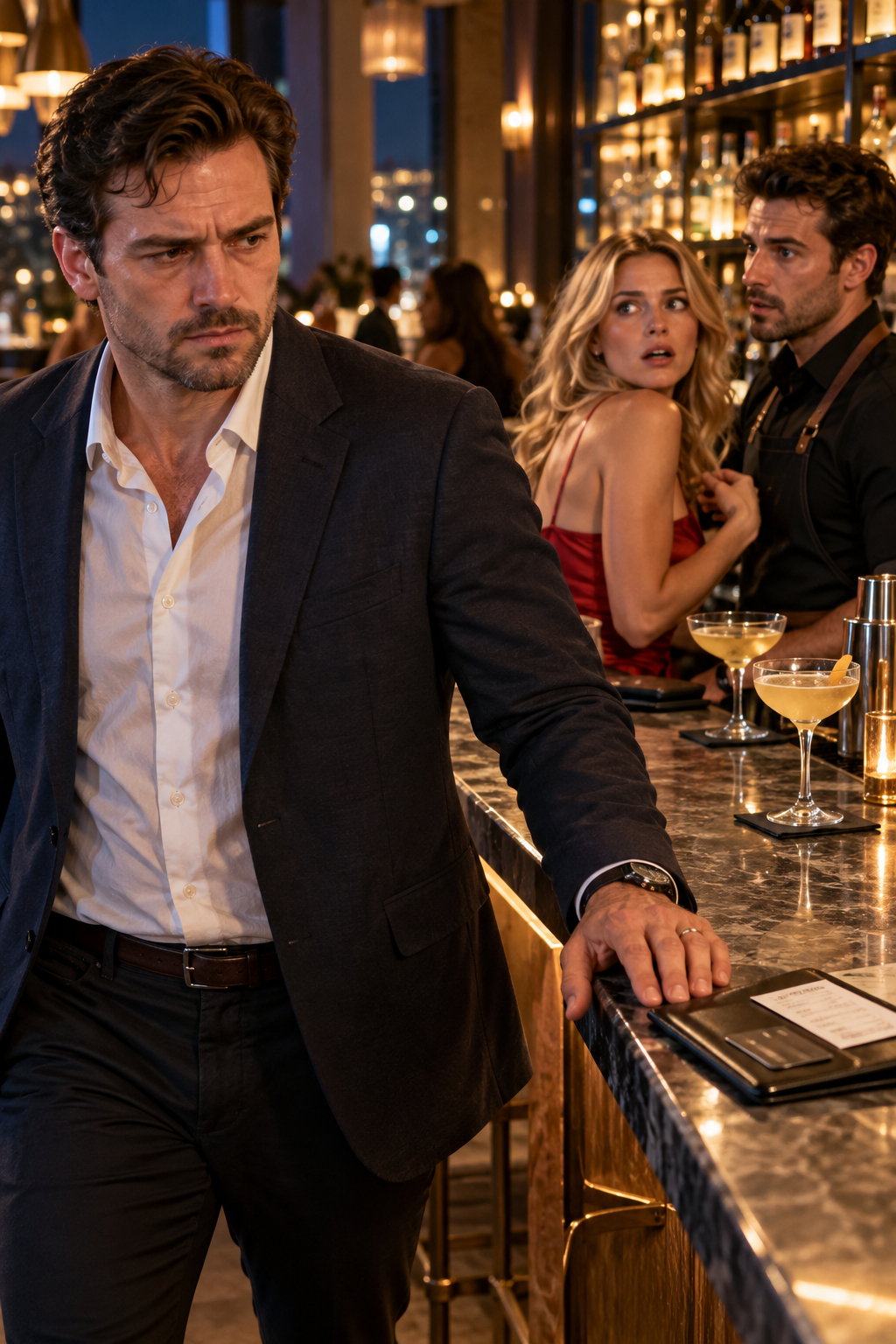
My Wife Kissed the Bartender for Free Drinks… So I Paid the Tab and Left Her There…
My Wife Kissed the Bartender for Free Drinks… So I Paid the Tab and Left Her There My wife kissed...
The CEO Offered a Widowed Mechanic $5 Million to Play Her Fiancé—Then His Daughter Looked at the Ring and Asked One Question She Couldn’t Buy Away – Life Story
The diamond ring cost more than Luke Bennett’s house was currently worth to the bank. The contract beside it offered...
My boyfriend came home at 4:47 a.m. smelling like alcohol, smoke, and perfume that wasn’t mine,
My boyfriend came home at a.m. smelling like alcohol, smoke, and perfume that wasn’t mine, then told me, “Even if...