“My seven-year-old daughter was sitting beside a stone fireplace with blood at the corner of her mouth and her jaw visibly out of place
“My seven-year-old daughter was sitting beside a stone fireplace with blood at the corner of her mouth and her jaw visibly out of place.
My ex’s brother had hit her, my ex had filmed it, and nobody had called an ambulance.
When I carried Sophie outside, eleven relatives surrounded my SUV and Grant said, ‘You’re not leaving with her.’ Then I opened the black credential wallet they never knew I had…”
My name is Mara Ellison.
I was thirty-nine when I learned that a family can become dangerous without anyone in it believing they are the dangerous ones.
The call came on an ordinary afternoon.
Grant’s younger brother Owen almost never contacted me.
So when his name appeared on my phone, I answered immediately.
“Mara.”
His voice was barely above a whisper.
“You need to come get Sophie.”
I set down the coffee mug I was rinsing.
“What happened?”
“She got hurt.”
“How?”
Silence.
“Owen?”
“She hit her face.”
My stomach tightened.
“Is she conscious?”
“Yes.”
“Is she bleeding?”
“A little.”
“Can she speak normally?”
Another silence.
“Not really.”
I grabbed my keys.
Grant and I had been divorced for two years.
We shared custody because I had wanted our daughter to have both parents in her life.
I worked hard at being cooperative.
Sometimes too hard.
.
Grant’s family was loud, close, intrusive, and proud of handling everything “inside the family.”
I had spent years telling myself that was annoying, not dangerous.
Seventeen minutes after Owen called, I reached Grant’s house.
There were cars everywhere.
Too many for an ordinary visit.
Owen opened the door before I knocked.
His face was pale.
“Where is she?”
He stepped aside.
Sophie was on the floor near the stone hearth.
Seven years old.
One hand under her chin.
Blood at the corner of her mouth.
The left side of her face swelling.
When she saw me, she tried to say:
.
“Mom.”
The word barely came out.
Grant stood several feet away holding his phone.
His older brother Caleb was near the fireplace.
Relatives talked over one another.
“She fell.”
“She was hysterical.”
“Don’t overreact.”
I ignored all of them.
I knelt beside Sophie.
Her jaw looked wrong.
She could not close her mouth properly.
When I touched her cheek, she flinched.
Then she grabbed my sleeve.
Not my hand.
My sleeve.
As though even holding onto me too tightly might get her in trouble.
That frightened me almost as much as the injury.
I lifted her carefully.
Grant stepped forward.
“Wait.
We need to talk first.”
“No.”
“Mara—”
“She needs a hospital.”
Behind him, Caleb said:
“She needs discipline.”
I stopped.
For half a second.
Then I looked at Sophie.
Her eyes were fixed on me.
So I kept walking.
By the time I reached my SUV, almost the entire family had followed.
I eased Sophie into the passenger seat.
“Stay with me, sweetheart.”
She nodded.
Then I turned around.
Eleven people were standing around my vehicle.
Not in a neat circle.
That would have looked deliberate.
This was worse.
Two near the front.
Several along the passenger side.
Caleb near the hood.
Grant between me and the driver’s door.
Different faces.
Same message.
Grant said:
“You’re not leaving with her.”
For sixteen years, I had worked in a federal recovery unit that did not appear on public rosters.
My family knew almost nothing about it.
I had been trained to read crowds.
To recognize when several frightened or angry people were beginning to act like one body.
But I had no federal authority over a custody dispute.
So I did not threaten them.
I did not pretend I did.
I opened the black credential wallet I still carried.
Caleb’s expression changed first.
Grant looked at the seal.
Then at me.
I closed it.
“That does not give me authority over you.”
Nobody spoke.
“But you are blocking emergency medical care for a seven-year-old with a serious facial injury.”
I pointed toward the house.
“There are cameras.”
Then toward the phones in several hands.
“There are timestamps.”
Grant glanced toward the garage camera.
He had forgotten about it.
I said:
“Decide very carefully what you do next.”
Caleb stepped closer.
“This is family business.”
“No.”
I looked through the windshield at Sophie.
“It stopped being family business when she couldn’t close her mouth.”
Then I looked at Owen.
“You called me.”
His face changed.
Caleb snapped:
“Don’t.”
Owen looked at Sophie.
Then stepped backward.
One step.
Another relative shifted too.
The wall broke.
I moved toward the driver’s door.
Grant hesitated.
Then Sophie made a small sound of pain.
Finally, he stepped aside.
I got in.
Locked the doors.
Started the engine.
And drove my daughter to the hospital.
Part 2…..
IF FACEBOOK BROUGHT YOU HERE, HERE’S THE CONTINUATION YOU’VE BEEN WAITING FOR.
ENJOY!
Once Grant’s house disappeared in my mirrors, my hands started shaking.
Training can delay fear.
It cannot erase it.
I kept one hand on the wheel.
Sophie reached toward me with two fingers.
“Mom.”
“I’m here.”
She tried to speak again.
“Don’t talk, sweetheart.”
She whispered anyway.
“Sorry.”
That almost broke me.
“For what?”
Her lips trembled.
“For crying.”
I gripped the steering wheel.
“You never have to apologize to me for crying.”
At the pediatric emergency department, a nurse took one look at Sophie and called for a wheelchair.
Then everything happened quickly.
Assessment.
Imaging.
Questions.
When did this happen?
How?
Did she lose consciousness?
Why wasn’t she brought in immediately?
That last one hurt.
“I was called afterward.”
Dr.
Naomi Patel came in once the scans were reviewed.
She pulled a stool beside me.
“Sophie has multiple fractures of the jaw.”
I stared at her.
“She’ll need stabilization and surgery.”
I looked through the glass at my daughter.
Seven years old.
A child who still asked me to cut the crust off sandwiches.
Now doctors were discussing how to keep her jaw stable long enough to heal.
A social worker arrived.
Then child-protection professionals.
Then law enforcement.
For the first time, Grant’s family no longer controlled the room.
Every fact was separated.
Time of injury.
Time Owen called me.
Time I arrived.
Time I left.
Time Sophie reached the hospital.
Pictures.
Scans.
Swelling.
Speech difficulty.
Pain.
Every minute became evidence.
I called Leah Monroe, the lawyer who had handled the end of my divorce.
“Sophie was assaulted during Grant’s parenting time.”
Leah went silent.
“Was Grant there?”
“Yes.”
“Who hurt her?”
“His brother Caleb.”
“And Grant?”
“He was holding his phone when I arrived.”
Leah said:
“Do not confront them.
Preserve everything.
Let investigators recover any recordings properly.”
That advice mattered.
Because I wanted to call Grant and demand answers.
Instead, I stayed beside Sophie.
That night she went into surgery.
While I waited, I wrote down every warning I had minimized.
Sophie asking to come home early.
Diane telling her, “Big girls don’t run to Mommy.”
Caleb mocking her for calling me.
Grant complaining that she was too dependent.
None of those things alone predicted what happened.
I refused to rewrite the past into a story where I should somehow have known Caleb would seriously injure her.
But together, they showed something I had not wanted to admit.
Sophie had been uncomfortable there for a long time.
I had been trying so hard to be fair to Grant that I had translated her fear into adjustment.
The next day, an investigator asked:
“What did you personally see?”
I answered carefully.
“Sophie injured.”
“Caleb said she needed discipline.”
“Grant tried to stop me from leaving.”
“Eleven relatives surrounded my vehicle.”
“What happened before you arrived?”
“I don’t know.”
At least, not yet.
Grant’s phone answered that question.
He had started recording because he believed he was documenting Sophie “misbehaving.”
The video began with her crying.
“I want my mom.”
Grant’s voice came from behind the camera.
“You’re with your dad.”
“I want to go home.”
Then Caleb entered.
He told Sophie she was too old to act like a baby.
She cried harder.
He moved closer.
“Stop crying.”
“I want my mommy.”
Then he struck her.
Sophie turned from the impact and hit the side of her face against the stone hearth.
She fell.
The worst part came immediately afterward.
Grant did not rush to her.
He made a small laugh and said something about maybe now she would stop crying for her mother.
The recording continued.
Nobody called an ambulance.
Owen said she needed a doctor.
Grant told him not to overreact.
Diane wanted everybody to calm down first.
Then the recording ended.
I watched it once.
Only once.
Afterward, I locked myself in a hospital bathroom and pressed my fists against my eyes.
Caleb had injured my daughter.
But Grant had destroyed something else.
For two years after our divorce, I had defended the idea that Sophie deserved access to her father.
Even when his family annoyed me.
Even when they crossed boundaries.
I thought weakness was different from cruelty.
That day taught me weakness around cruel people can become its own form of danger.
Grant had watched his brother intimidate a frightened child.
Then he stayed aligned with Caleb.
That ended the last piece of trust I had left.
Emergency custody restrictions moved quickly because the medical report, video, delay in treatment, and driveway footage all created immediate safety concerns.
Grant started messaging me.
This is getting out of control.
Caleb didn’t mean for her to hit the fireplace.
We can handle this without police.
Then:
You’re using your job to intimidate us.
That almost made me laugh.
My credential was not the story.
It had bought me seconds.
Nothing more.
Everything afterward came from their own choices.
I sent one message.
Sophie is receiving treatment.
Communicate through counsel regarding anything beyond immediate medical needs.
Grant called eleven times.
I did not answer.
Diane wrote:
Please think about what this will do to the family.
That sentence clarified everything.
Protect the family.
She did not mean protect Sophie.
She meant protect the structure.
The family’s story kept changing.
First Sophie fell.
Then Caleb merely touched her.
Then she stumbled.
Then Grant claimed the recording stopped before the impact.
Investigators recovered the complete file.
The exterior cameras caused another problem.
They showed me carrying Sophie out.
They showed relatives following.
They showed people surrounding my SUV.
They showed Grant standing between me and the driver’s door.
They showed Owen stepping away.
There did not need to be audio.
Their bodies told enough of the story.
Then Owen gave a formal statement.
He confirmed Caleb struck Sophie.
Confirmed Grant was recording.
Confirmed Sophie did not receive immediate medical care.
Confirmed the family wanted to delay my departure until everyone agreed what should be said.
He had participated in the pressure.
Telling the truth afterward did not erase that.
But he became the first person inside Grant’s family to choose reality over loyalty.
Once Owen did that, others began telling smaller truths.
One relative admitted she thought Sophie needed the hospital immediately.
Another confirmed Caleb had been angry.
Another said Grant told people to wait before calling me.
Eventually, Diane was directly asked whether she saw Caleb strike Sophie.
Her answer was one word.
“Yes.”
The shared version collapsed.
The custody case and Caleb’s legal case moved separately.
That mattered.
Caleb’s case concerned what he did.
Grant’s parenting restrictions concerned whether Sophie was safe with him.
Grant’s favorite defense became:
“I didn’t hit her.”
As though fatherhood required only one thing.
Do not be the hand.
But the recording showed everything around the hand.
He filmed.
He mocked.
He delayed treatment.
He helped stop me from leaving.
At every moment when a father could have changed the direction of that afternoon, Grant chose his brother instead.
Sophie’s recovery was slower.
Her jaw could heal.
What worried me more was what she believed about herself.
After surgery, speaking was difficult, so she used a small whiteboard.
One day she wrote:
Dad mad?
“Your dad’s feelings are not your responsibility.”
Then:
Uncle Caleb mad because I cried.
I leaned closer.
“Caleb was responsible for what he did.”
She watched me.
“You crying did not make him hurt you.”
Tears filled her eyes.
This time she did not apologize.
She just cried.
I cried with her.
Later, during a child-focused forensic interview, Sophie gave her account without me in the room.
Caleb became angry.
Called her a baby.
She asked for me.
He struck her.
She hit the hearth.
Grant laughed.
Adults argued.
Owen called me.
But the detail that stayed with me most was this:
Sophie believed she had caused everything because she would not stop asking for her mother.
That was the injury no scan could show.
So healing changed.
I stopped measuring progress by whether she became the same child she was before.
I measured it differently.
Could she say she was scared without apologizing?
Could she be angry?
Could she disagree with me?
Could she miss her father without believing she was betraying me?
I never made her choose which parent she was allowed to love.
Grant failed her.
That did not mean Sophie needed to stop loving him to prove she loved me.
Months passed.
Caleb faced consequences through the criminal process.
There was no magical courtroom moment where everything became right.
Real consequences accumulated slowly.
Grant’s unsupervised parenting time ended.
Any contact became structured around Sophie’s safety and professional recommendations.
Eventually, Grant stopped denying what the recording showed.
He admitted he should have stopped Caleb.
Admitted Sophie should have been taken directly to a hospital.
Admitted the driveway should never have happened.
He cried.
I believed his regret was real.
I still did not trust him.
Remorse is an emotion.
Trust is a history.
He had one.
He no longer had the other.
For a while, I thought justice would feel like watching them lose things.
It didn’t.
What mattered were the things Sophie regained.
The first night she slept until morning.
The first day she stopped asking whether somebody was angry.
The first time she disagreed with me and did not immediately say sorry.
Those were victories.
By late autumn, her surgeon finally cleared her for foods that required real chewing.
Sophie did not want a celebration.
She wanted something crunchy.
So one evening, we sat at the kitchen table in pajamas.
I sliced an apple thinly.
She picked up one piece.
“Small bite,” I warned.
She rolled her eyes.
That eye roll nearly made me cry.
She bit down.
Stopped.
Chewed carefully.
Then smiled.
“Well?”
“It doesn’t hurt.”
Four words.
Nothing said by any investigator, lawyer, or judge sounded better.
She ate another slice.
For a while, we simply sat there.
Then Sophie asked:
“Mom?”
“Yeah?”
“Do I ever have to go back to Dad’s house?”
I knew which house she meant.
The stone hearth.
The driveway.
The place where crying had become dangerous.
“No.”
“Ever?”
“No.”
She studied my face, searching for a condition.
There wasn’t one.
Her shoulders relaxed.
“Okay.”
Then she picked up another piece of apple.
My black credential wallet eventually went back into a drawer.
People who heard pieces of the story always wanted to know about it.
What agency?
What did Grant think?
Was his family afraid of federal agents?
None of that mattered.
The credential bought seconds.
Owen stepping backward created space.
The hospital created records.
Grant preserved his own behavior.
Witnesses eventually stopped repeating the same story.
And Sophie found enough safety to tell hers.
That was how Grant’s family lost control of what happened.
Not because I was more powerful than they were.
Because the truth finally existed somewhere they could not edit it.
And once that happened, my only job was the one I should have been doing all along.
Believe my daughter.
Protect her.
And make sure she never again learned that keeping a family together mattered more than keeping a child safe.
THE END.
I’ve shared the complete story, and I truly hope it touched your heart.
If this story moved you, please , like, and share the post.
Thank you for reading! ❤️
Recommended Stories

THE BILLIONAIRE WAITED TO END HIS MARRIAGE IN A MANHATTAN BOARDROOM—THEN HIS ESTRANGED WIFE WALKED IN WITH TWINS AND A TRUTH HIS MONEY COULD NOT FIX – Life Story
The divorce papers were spread across Tobias Marorrow’s desk when Ara Quintana pushed a double stroller through his office door....

I Caught My Fiancée At A Secret Party—So I Canceled The Wedding And Vanished…
I Caught My Fiancée at a Secret Party—So I Canceled the Wedding and Vanished… But She Never Expected What Happened...
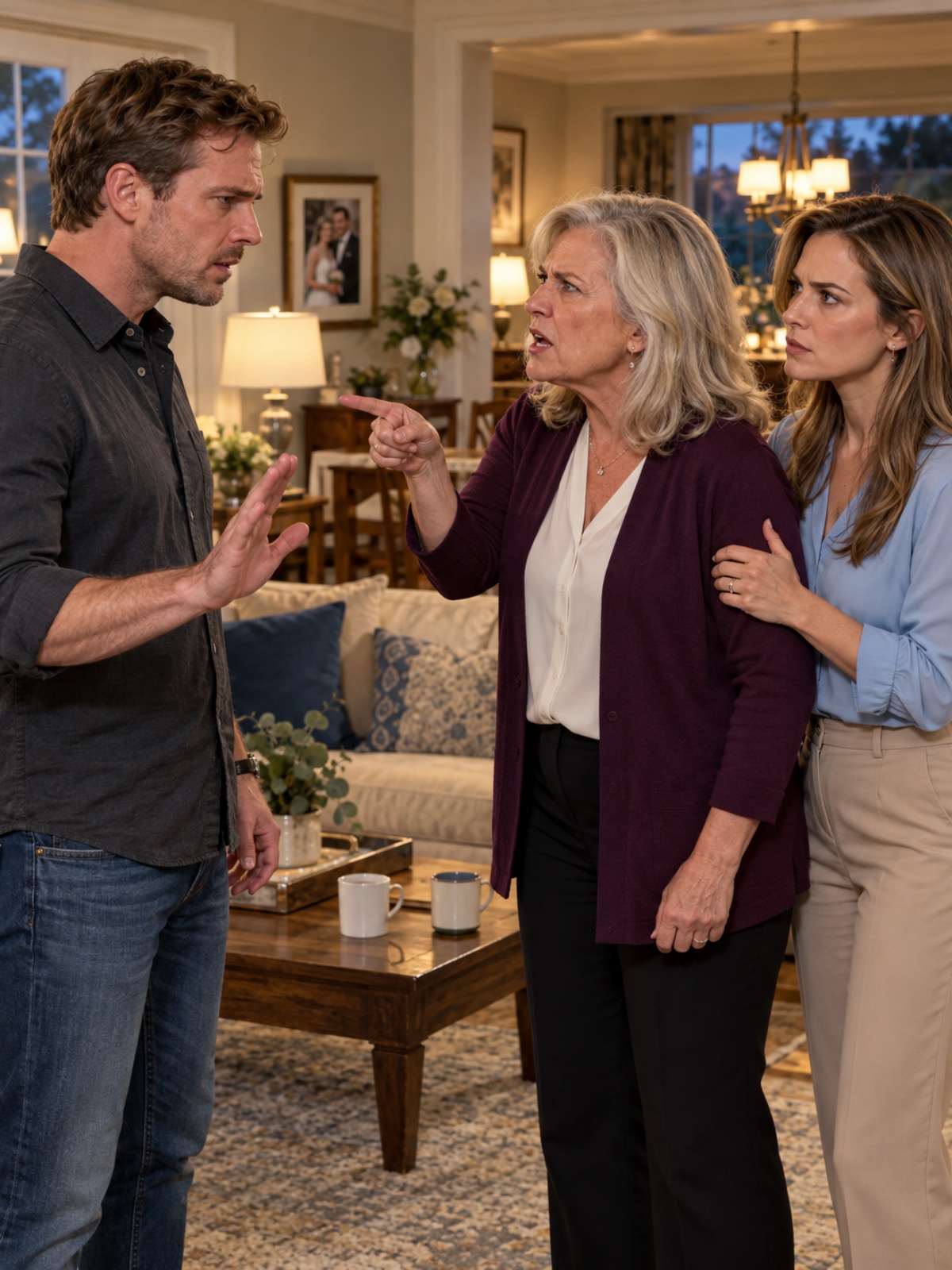
My Mother-in-Law Is Furious I Finally Stood Up to Her, And My Wife Is Taking Her Side
My Mother-in-Law Kept Breaking One Rule With Our Baby—Then I Took Her Phone, and Our Whole Marriage Went on Trial...