CEO Denies Single Father Entry to Gala, Unaware He OWNS the Company…
CEO Denies Single Father Entry to Gala, Unaware He OWNS the Company
Opening Hook
Daniel Hayes came to the gala carrying nothing expensive enough to impress the people inside.
His eight-year-old daughter carried something far more dangerous: a handmade card from the woman they had buried eight months earlier.
And before the night was over, the CEO who ordered security to throw them into the snow would discover that the grieving father in the worn gray suit owned the hotel, the foundation—and seventy-one percent of the company paying her salary.
PART ONE — THE MAN AT THE DOOR
The snow over Aspen had been falling since late afternoon, thick enough to soften the edges of buildings and swallow the sound of traffic.
By seven-thirty, black town cars were lining the circular driveway of the Aspen Crown Hotel, releasing men in tuxedos and women wrapped in silk, fur, diamonds, and the practiced confidence of people accustomed to doors opening before they reached them.
Daniel Hayes arrived from the parking garage on foot.
His daughter Emma walked beside him.
Daniel wore a charcoal wool suit that had once fit him better.
He had lost nearly fifteen pounds since Eleanor died, mostly because grief had changed ordinary things like eating into tasks that had to be remembered.
His black shoes were polished, but years of use had faded the leather around the toes.
Emma’s red velvet dress was different.
It looked almost new because Eleanor had chosen it sixteen months earlier and deliberately bought it one size too large.
“She’ll grow into it,” she had told Daniel from the passenger seat after chemotherapy, smiling while he complained about spending eighty dollars on a children’s dress.
Emma had grown into it.
Eleanor had not lived long enough to see her wear it.
Daniel felt his daughter’s fingers tighten around his hand as they reached the stone steps.
“You okay?” he asked.
Emma nodded.
She always nodded too quickly when she wasn’t.
In her other hand was a cream envelope that had been crushed slightly along one corner.
Inside was an index card covered in purple marker, gold glitter glue, and a bow that leaned to the left.
Emma had worked on it for three nights at their kitchen table.
Daniel had watched without asking too many questions.
On the front she had written:
FOR THE KIDS.
Inside:
Mom said we don’t stop helping.
The Eleanor Hayes Foundation Gala had once been Eleanor’s favorite night of the year.
Not because she liked galas.
She hated them.
She disliked photographers, formal speeches, donors who wanted buildings named after themselves, and expensive dinners pretending to be acts of sacrifice.
But she loved what the evening made possible.
Seven years earlier, Eleanor had planned the foundation’s first fundraiser from a folding table in their basement in Denver.
They raised $216,000 that year for families moving out of temporary shelters.
By the year before her death, the foundation was distributing nearly four million dollars annually across six states.
Tutoring programs.
Emergency rent assistance.
School supplies.
Temporary housing.
Job placement for single parents.
It was never supposed to become glamorous.
It was supposed to work.
Emma had found Eleanor’s handwritten notes three weeks earlier in a cardboard box Daniel had not been ready to open.
The last page contained one sentence.
Please don’t let the children disappear.
That was why they were here.
Not for the champagne.
Not for the photographs.
Emma wanted to give her card to the foundation staff herself.
They climbed the steps.
Warm amber light spilled through the hotel’s glass doors.
Through them Daniel could see the marble lobby, candlelight, champagne flutes, white orchids, and perhaps sixty guests talking beneath a chandelier that Eleanor had once called “a ridiculous upside-down crystal octopus.”
For the first time that evening, Daniel almost smiled.
Then the door opened.
A woman stepped outside.
She was around forty, tall, elegant, dark-haired, and dressed in a black column gown beneath a tailored blazer.
Her name was Isabella Vaughn.
Daniel recognized her immediately.
He had never met her.
That distinction would matter.
Eight months earlier, three weeks after Eleanor’s funeral and less than forty-eight hours after Daniel had been hospitalized with a cardiac arrhythmia, the North River Holdings board had approved Isabella’s appointment as chief executive of its philanthropic division.
Daniel had signed off electronically from his hospital room.
He remembered almost nothing about doing it.
Since then, Isabella had sent him fourteen emails.
He had answered none.
She looked at Daniel’s suit.
Then his shoes.
Then Emma.
“This is a private event.”
Daniel stopped one step below her.
“We’re attending.”
“Black tie.
Invitation only.”
“We have an invitation.”
Daniel reached into his coat and removed the cream envelope bearing the embossed Hayes Foundation seal.
He held it toward her.
Isabella did not take it.
“That name isn’t on my current registry.”
“You haven’t looked at the name.”
Her mouth tightened almost imperceptibly.
“We updated the guest list last week.”
Daniel glanced through the doors.
A waiter crossed the lobby carrying champagne.
“Then perhaps the update was incomplete.”
“Sir.”
The word came softer this time.
And colder.
“I don’t want to embarrass you in front of your daughter.”
Daniel looked at her.
“What exactly would embarrass me?”
For the first time, Isabella seemed irritated.
“We have people come to events like this every year claiming connections to the foundation.
People looking for donations.
Employment.
Access to donors.
Occasionally money.”
Emma shifted beside him.
Daniel felt it.
“I’m Daniel Hayes.”
Isabella gave a small breath through her nose.
Not laughter.
Something worse.
Disbelief without curiosity.
“I understand that’s what you’re saying.”
Daniel studied her face.
There had been a time when being recognized mattered to him.
Business magazines had photographed him when North River went public.
Financial television had called him a visionary when the company crossed its first billion in valuation.
Then Eleanor got sick.
Suddenly there were hospital elevators where nobody cared what he owned.
There were doctors who walked into rooms with their eyes lowered.
There were mornings when he would have traded every share he possessed for an extra week.
Recognition had stopped feeling useful.
Tonight, however, his anonymity had become information.
“Would you please read the invitation?” he asked.
Isabella’s expression flattened.
“Security.”
Daniel heard movement behind the glass.
Two guards turned.
Emma looked up at him.
“Dad?”
“It’s okay.”
Isabella stepped closer.
“Sir, you need to leave the entrance.”
Daniel did not move.
“My daughter came here to deliver something that belonged to her mother.”
“I’m sorry, but—”
“Then read the invitation.”
“You’re creating a disruption.”
“I am standing in the snow.”
“You are refusing a reasonable request.”
“And you’re refusing to read a name.”
That sentence changed something.
Guests were beginning to notice.
A gray-haired man near the coat check stopped speaking.
A woman in a silver gown glanced toward the door.
Isabella understood audiences.
Daniel saw the calculation happen behind her eyes.
The conversation needed to end before it became visible.
She reached for his arm.
“Sir, step aside.”
Daniel pulled back instinctively.
Her fingers tightened.
For a brief second, neither moved.
Then Isabella gave his arm a firm sideways pull.
Daniel’s shoe caught the wet granite.
His heel slipped.
He hit the railing hard enough to send pain through his wrist.
Emma gasped.
The envelope fell from her hand.
It struck the stone and opened.
Her card slid out.
Purple marker.
Gold glitter.
A crooked bow.
FOR THE KIDS.
It landed in melting snow.
Emma immediately crouched.
So did Daniel.
But Isabella stepped forward at the same moment.
Her heel came down on the lower corner of the card.
The sound was almost nothing.
A soft crack of wet paper against stone.
Emma froze.
Isabella lifted her foot.
Gold glitter clung to the sole of her shoe.
Nobody spoke.
Daniel picked up the card.
Water had blurred one side of the purple lettering.
The bow had torn.
He stared at it.
Not at Isabella.
At the card.
Three nights.
Emma had worked three nights on it.
“She made that,” Emma whispered.
Isabella’s face changed slightly.
Whether from embarrassment or annoyance, Daniel couldn’t tell.
“My mom.”
Several guests were watching now.
One had raised a phone.
Isabella lowered her voice.
“I’m sorry for your loss.”
Emma took the damaged card from her father’s hands.
“It’s for the kids.”
“I understand.”
“No.”
Emma held the card against her chest.
“You don’t.”
That startled Isabella.
Emma’s chin trembled once.
She forced it still.
“Mom said if we stopped helping them, then everything she did would be for nothing.”
Daniel closed his eyes for half a second.
Eleanor in the hospital bed.
Yellow legal pad.
A cup of tea gone cold beside her.
Emma reading aloud at the foot of the bed.
Please don’t let the children disappear.
Then Isabella muttered something.
Perhaps she thought only the security guard would hear it.
Perhaps she no longer cared.
“The dead-mother angle is certainly effective.”
Daniel opened his eyes.
The grief inside him did not explode.
It did something stranger.
It became quiet.
Completely quiet.
He took the card gently from Emma.
“Hold this for me.”
She obeyed.
Daniel straightened his jacket.
He faced Isabella.
“My name is Daniel Hayes.”
“I heard you.”
“No.
You heard a name and decided the man saying it couldn’t possibly belong to it.”
Her eyes narrowed.
Daniel continued.
“I founded North River Holdings twenty-two years ago.”
The security guards stopped moving.
“I own seventy-one percent of its parent equity.”
One guest lowered his champagne glass.
Daniel pointed through the glass doors.
“North River Holdings owns the Aspen Crown Hotel.”
Isabella said nothing.
“It also funds the Eleanor Hayes Foundation.”
Her face had lost color.
“And the philanthropic division you currently run.”
Daniel slipped one hand into his pocket and removed his phone.
“So before you say another word to my daughter, I suggest you verify whether the wet man whose invitation you refused to read owns the company paying your salary.”
Isabella stared at him.
For the first time all evening, she looked frightened.
Daniel unlocked his phone.
Three missed calls.
One message.
RICHARD CALDWELL — BOARD CHAIR
Daniel, I understand you’re at the entrance.
Please come inside immediately.
We need to talk.
He turned the screen toward her.
Isabella read it.
Her clipboard lowered slowly.
Behind the glass doors, someone was coming toward them fast.
Richard Caldwell.
Chairman of the board.
And the expression on his face told Daniel something more important than whether Isabella had finally recognized him.
Richard was not surprised to see Isabella blocking the door.
He was terrified Daniel had arrived at all.
Daniel looked past him into the glowing hotel lobby.
For the first time, he noticed the walls.
Something was missing.
Something Eleanor would never have allowed to disappear.
And suddenly being denied entry no longer felt like the biggest problem waiting inside.
PART TWO — WHAT THEY REMOVED FROM THE WALLS
Richard Caldwell pushed through the glass doors without bothering to button his tuxedo jacket.
At sixty-two, Richard was usually the slowest-moving person in any room because he had learned that powerful men were rarely expected to hurry.
Tonight he was almost running.
“Daniel.”
He stopped on the landing.
His eyes moved from Daniel to Emma.
Then to the damaged card.
Then Isabella.
“What happened?”
Daniel looked at him.
“You tell me.”
Richard’s jaw tightened.
“Come inside.”
Isabella recovered enough to speak.
“Richard, there was confusion regarding the guest registry.”
“No,” Daniel said. “There wasn’t.”
She turned toward him.
“My staff received an amended list.”
“You refused to read my invitation.”
“I was operating under security protocols.”
“You put your hands on me.”
Her eyes flicked toward the phones behind the glass doors.
“I was attempting to de-escalate.”
Emma looked up.
“You stepped on Mom’s card.”
Silence.
Richard glanced at Isabella.
The look he gave her contained no sympathy.
“Inside,” he said.
Daniel took Emma’s hand.
They crossed the threshold.
Warm air touched Daniel’s face, but he barely noticed it.
The lobby felt wrong.
He stopped.
Richard nearly walked into him.
Eight months earlier, photographs had covered the north wall.
Not expensive photographs.
Eleanor had deliberately refused professional advertising images.
She wanted snapshots from the actual programs.
Children holding apartment keys with their parents.
Teenagers at graduation.
Volunteer teachers in cramped classrooms.
A little boy sleeping beneath a donated winter coat during a housing intake appointment.
Those photographs were gone.
In their place were four oversized reproductions of the corporate logo.
HAYES GROUP — BUILDING POSSIBILITY.
Daniel stared.
“Where are they?”
Richard followed his gaze.
He said nothing.
Daniel turned.
“The photographs.”
“Daniel—”
“Where are they?”
Isabella spoke behind them.
“We updated the visual identity.”
Daniel looked at her.
“The visual identity.”
“The foundation needed greater alignment with the parent brand.”
“According to whom?”
“Our engagement consultants.”
Emma tugged his sleeve.
“Dad.”
He looked down.
“Where are the kids?”
The simplicity of the question made Richard close his eyes.
Daniel slowly surveyed the lobby.
Nearly everyone was watching.
Perhaps sixty guests.
Donors.
Executives.
Board members.
Political figures.
Two local journalists.
Several phones now clearly recording.
Daniel released Emma’s hand.
“I’d like an answer.”
Richard lowered his voice.
“Not here.”
“I’ve spent eight months ‘not here.’”
“Daniel.”
“No.”
His voice wasn’t loud.
That was why the lobby became silent.
Daniel turned toward the gathered guests.
“My name is Daniel Hayes.”
Some already knew.
Others began whispering.
“I founded North River Holdings twenty-two years ago.
My wife Eleanor established the foundation hosting tonight’s event.”
He paused.
Emma stood beside him holding the damaged card.
“My wife died eight months ago.”
Someone lowered their phone.
“My daughter wanted to come tonight because she found something her mother wrote shortly before she died.”
Daniel looked toward the blank corporate wall.
“She asked us not to let the children disappear.”
He waited.
“Apparently we have interpreted that instruction literally.”
No one laughed.
It wasn’t a joke.
Daniel turned toward Isabella.
“Who authorized removing the program photographs?”
“I did.”
At least she answered.
“Why?”
“Because our consultants determined that donor confidence improves when institutional branding appears more professional.”
A strange sadness moved through Daniel.
Not anger.
Recognition.
He had heard people like this before.
People who gradually forgot that an organization had been created to solve a problem and began believing the organization itself was the product.
“Professional for whom?”
Isabella’s lips parted.
Daniel did not wait.
“The children?”
“This isn’t the appropriate forum.”
“Neither was the hotel entrance.”
Her shoulders stiffened.
Daniel nodded toward the doors.
“Your employment is terminated effective immediately.”
The room changed.
Isabella blinked.
“You can’t—”
She stopped herself.
Daniel waited.
Her mistake hung there.
He could see the moment she remembered exactly who he was.
Richard stepped closer.
“Daniel, HR procedure—”
“Can begin now.”
Isabella’s face reddened.
“I have an employment agreement.”
“And we will honor every lawful provision in it.”
“You are making an emotional decision after an unfortunate misunderstanding.”
Daniel’s gaze dropped to Emma’s card.
“No.”
He looked back up.
“I’m making an executive decision after observing your judgment under ordinary pressure.”
That struck harder.
Isabella’s expression changed from fear to humiliation.
She wanted to fight.
Daniel saw it.
But cameras were recording.
She placed her clipboard on the reception desk.
“I expect counsel to contact me.”
“They will.”
She looked at Richard.
Whatever alliance she expected from him wasn’t there.
Then she walked toward the side exit.
Emma watched her go.
“Dad?”
“Yes?”
“Did you fire her because of me?”
Daniel crouched.
“No.”
“But the card—”
“I fired her because people show who they are when they think the person standing in front of them can’t hurt them.”
Emma considered that.
“What if she had known you owned everything?”
“She would’ve opened the door.”
“Then she would’ve been pretending.”
Daniel looked at his daughter.
There were moments when Eleanor seemed to speak through Emma without either of them intending it.
“Yes,” he said. “She would have.”
Richard cleared his throat.
“The ballroom is ready.”
Daniel stood.
“Is it?”
Richard understood the question.
“There’s something you should know.”
“Tonight?”
“Preferably yesterday.”
Daniel studied him.
Richard had been his friend for nineteen years.
He had stood beside Daniel at Eleanor’s funeral.
He had driven Emma home when Daniel collapsed three weeks later.
He was also the man Daniel had trusted to chair the board while he disappeared into grief.
That trust now felt less stable.
“What?”
Richard looked toward the crowd.
“Not here.”
This time Daniel agreed.
“After dinner.”
They entered the ballroom.
The doors opened.
Three hundred guests turned.
Daniel barely noticed them.
His eyes had gone upward.
A portrait stretched nearly twenty feet along the far wall.
Eleanor.
Someone had retrieved it from storage.
She was crouched beside a child at one of the foundation’s housing sites, laughing at something outside the frame.
Emma stopped.
Her fingers slipped from Daniel’s hand.
The chamber trio stopped playing.
Emma looked up at her mother.
For a long moment, she was perfectly still.
Then she lifted the damaged card.
“Hi, Mom.”
A woman at the nearest table covered her mouth.
Daniel’s throat closed.
“I brought it,” Emma said.
Her voice was barely above a whisper.
“Like you said.”
She touched the smeared glitter.
“They got it wet.”
Daniel looked away because three hundred people were watching and somehow that mattered less than being seen crying by his daughter.
Emma kept staring at the portrait.
“But Dad fixed the door.”
Daniel nearly laughed through the pain.
Of course that was how she understood it.
He knelt beside her.
“You ready?”
Emma nodded.
They walked toward their table.
For the next forty minutes, Daniel behaved like a guest.
He thanked donors.
He listened to speeches.
He cut Emma’s chicken because she was trying to repair the damaged card using the edge of a napkin and needed both hands.
He even smiled twice.
Then Richard appeared during the first course carrying a manila folder.
He sat opposite Daniel.
“No speeches,” Daniel said.
“There aren’t any.”
Richard placed the folder on the table.
Daniel didn’t touch it.
“How bad?”
“I don’t know yet.”
“That’s not an answer.”
“It’s the only honest one.”
Daniel opened the folder.
The first page was a budget summary.
He recognized the categories.
Then he recognized what was missing.
Denver transitional housing stipends.
Suspended.
Colorado Springs after-school tutoring.
Suspended.
Rural literacy grants.
Defunded.
School supply network.
Reduced by seventy percent.
Daniel looked at Richard.
“When?”
“Different dates over the last eight months.”
“Who approved it?”
Richard hesitated.
“Charles Ostro.”
Daniel looked across the ballroom.
Charles, the foundation’s managing director, was laughing beside a window with a glass of wine in his hand.
“And?”
“Isabella signed two authorizations.”
Daniel turned another page.
Funds had been shifted into something called Organizational Infrastructure and Executive Capacity Development.
He almost admired the language.
It required twenty syllables to avoid saying where the money had actually gone.
“How much?”
Richard pushed one page forward.
Daniel saw the number circled in red.
$8,200,000.
He looked again.
“Eight point two?”
“That we can currently trace.”
“To what?”
“A consulting company called Summit Strategy Partners.”
“I don’t know them.”
“Neither do I.”
Daniel’s pulse slowed.
Danger had always done that to him.
Grief made him fragile.
Business made him precise.
“Deliverables?”
“Almost none.”
“Ownership?”
“Delaware registration.
One listed officer.
No meaningful operating history.”
“Who signed the payments?”
“Ostro.”
Daniel closed the folder.
“Who else knows?”
“Three board members.
Outside counsel.”
Richard paused.
“And Isabella.”
Daniel looked toward the side exit where she had disappeared earlier.
“How long have you known?”
“Six days.”
“You called me twice.”
“I called you twenty-seven times this month.”
Daniel stared at him.
Richard’s voice softened.
“You weren’t answering anyone.”
The accusation was quiet because it was true.
Daniel looked at Emma.
She had flattened the card carefully beneath her water glass to stop the paper curling.
He suddenly understood the shape of the disaster.
People had stolen.
Perhaps.
People had lied.
Almost certainly.
But they had done it inside the space created by his absence.
That did not excuse them.
It implicated him differently.
“Full forensic audit,” Daniel said.
“Already preparing one.”
“Every account.”
“Yes.”
“Every vendor.”
“Yes.”
“Four years.”
Richard raised an eyebrow.
“Four?”
“If they started eight months ago, four years proves it.”
Richard nodded.
“Monday morning.”
“No.”
Daniel watched Charles Ostro across the room.
“Tomorrow.”
Richard was silent.
Daniel lowered his voice.
“And don’t tell Charles.”
Across the ballroom, Charles stopped laughing.
For half a second, his eyes met Daniel’s.
Then he smiled.
A polite smile.
Confident.
Almost amused.
Daniel returned it.
But something in Charles’s expression bothered him.
The man didn’t look like someone afraid of an audit.
He looked like someone who believed the audit would never reach what mattered.
PART THREE — THE SIGNATURE THAT BELONGED TO A DEAD WOMAN
Daniel did not sleep.
At a.m., after putting Emma to bed in the hotel suite, he sat alone near the window with Richard’s folder spread across the dining table.
Snow moved beyond the glass.
The ballroom footage was already online.
His phone vibrated every few seconds.
Messages.
Reporters.
Executives.
People who had not called when Eleanor died but suddenly wanted to tell him how deeply moved they were by the video.
Daniel turned the phone facedown.
He kept reading.
At , he found Eleanor’s signature.
He stopped breathing.
A grant-transfer authorization dated five months after her death contained an electronic approval marked:
ELEANOR M.
HAYES — FOUNDATION CO-FOUNDER
Daniel stared at it.
He read the date again.
Impossible.
Then another.
And another.
Three approvals.
All after Eleanor died.
His chair scraped backward.
He stood.
For several seconds he paced without knowing where he was going.
The memory arrived violently.
Eleanor at the kitchen table before the cancer spread.
Her hand moving quickly over documents.
Daniel teasing her because her signature always leaned upward.
She had laughed.
“My signature is optimistic.”
He had kissed the top of her head.
Now someone had copied it.
Daniel grabbed his phone.
Richard answered on the second ring.
“What happened?”
“Did you see the signatures?”
Silence.
“Which ones?”
“Eleanor.”
Richard did not speak.
Daniel’s jaw tightened.
“You knew.”
“I saw one today.”
“And said nothing.”
“I wanted counsel to authenticate it first.”
“She’s dead, Richard.”
“I know.”
“Then authentication isn’t complicated.”
“Daniel—”
“Someone signed my dead wife’s name to move money out of her foundation.”
His voice broke on the word wife.
He hated that it did.
Richard lowered his voice.
“I know.”
“No.
You know the fact.
I know the handwriting.”
Daniel turned toward the bedroom hallway.
Emma was asleep thirty feet away.
“We go in at seven.”
“The auditors won’t be ready.”
“They will.”
“Daniel.”
“Seven.”
By a.m., three forensic accountants and two attorneys were sitting inside the foundation’s Denver office.
Charles Ostro arrived at carrying coffee.
He stopped when he saw them.
Daniel was seated at the head of the conference table.
“Morning, Charles.”
Charles looked around.
“What is this?”
“Sit.”
Charles did.
He was forty-eight, silver-haired, athletic, handsome in the reliable television-executive way that made strangers trust him quickly.
Daniel slid a photocopy across the table.
Charles glanced at it.
His face did not change.
“Recognize it?”
“Payment authorization.”
“The signature.”
Charles looked again.
“Eleanor.”
“She had been dead five months.”
A forensic accountant stopped typing.
Charles leaned back.
“Then obviously it’s an administrative carryover.”
“Explain.”
“Automated signature credential.
Previously approved accounts sometimes process under legacy authorization.”
Daniel almost admired him.
No hesitation.
No panic.
A plausible answer delivered instantly.
“You seem familiar with the issue.”
“I’m familiar with nonprofit administration.”
Daniel placed a second page down.
“Different vendor.”
Then a third.
“Different date.”
Charles shrugged.
“The same explanation may apply.”
“Did you approve them?”
“My authorization appears there.”
“That’s not what I asked.”
Charles met his eyes.
“I approve hundreds of transactions.”
“Eight million dollars?”
“Across multiple fiscal categories.”
“Using my dead wife’s identity.”
Charles’s jaw tightened.
There.
Finally.
Not fear.
Anger.
Daniel had embarrassed him.
Charles leaned forward.
“You were gone.”
Nobody moved.
“You left a foundation with hundreds of employees and thousands of beneficiaries and vanished.”
Daniel’s eyes narrowed.
Charles continued.
“Someone had to operate it.”
“So you forged Eleanor’s name?”
“I said nothing of the sort.”
“You said I was gone as though that answers the question.”
“It answers why decisions had to be made.”
Daniel leaned back.
“Why were literacy programs defunded?”
“Restructuring.”
“Housing stipends?”
“Unsustainable cost profile.”
“School supplies?”
“Low strategic visibility.”
One of the auditors looked up at that.
Daniel almost smiled.
“Children’s notebooks lacked strategic visibility.”
“Don’t reduce complex decisions into emotional slogans.”
Charles’s tone sharpened.
“This is exactly why professional management was necessary.”
Daniel became still.
“You think Eleanor wasn’t professional?”
“I think Eleanor was emotionally attached to programs that didn’t strengthen the institution.”
“The institution exists to strengthen the programs.”
“That’s idealism.”
“No.”
Daniel looked at the fake signature.
“That’s the mission.”
Charles pushed his chair back.
“Am I being accused of something?”
“Not yet.”
“Then I have work.”
Daniel slid another paper across the table.
Charles looked at it.
His face finally changed.
The document showed a payment.
$684,000.
Summit Strategy Partners.
Then a routing sequence.
Then a second company.
Then a private investment vehicle in Wyoming.
Charles’s eyes remained on the page one second too long.
Daniel saw it.
So did the auditors.
“Know that company?”
“No.”
“You didn’t read the name.”
Charles looked up.
Daniel leaned forward.
“You just looked at the routing number.”
Silence.
The room had changed.
Charles stood.
“I want counsel present.”
Daniel nodded.
“Good idea.”
Charles left.
One forensic accountant waited until the door closed.
“Mr.
Hayes.”
Daniel turned.
She rotated her laptop.
“We found something else.”
It was a metadata report.
The electronic signature attributed to Eleanor had been generated using a credential stored on a foundation-issued laptop.
The credential had been accessed from two user accounts.
Charles Ostro.
And one more.
ISABELLA VAUGHN.
Daniel stared at the screen.
Isabella had claimed ignorance.
She had told lawyers she had merely signed routine approvals.
But the system showed Eleanor’s credential had been accessed from Isabella’s account three separate times.
Daniel’s phone vibrated.
Unknown number.
He answered.
“Daniel Hayes.”
A woman’s voice.
“Mr.
Hayes, this is Lauren Pike.
I worked for the foundation until five months ago.”
Daniel looked around the room.
“How did you get this number?”
“Mrs.
Hayes gave it to me.”
His chest tightened.
“When?”
“Before she died.”
Lauren’s voice trembled.
“She told me if anything happened to her, and if anyone started changing the programs, I should call you.”
Daniel stood.
“Why didn’t you?”
“I tried.”
He closed his eyes.
Missed calls.
Voicemails deleted unheard.
Months of silence.
Lauren continued.
“They fired me before I could send you what I found.”
“What did you find?”
A pause.
“When Mrs.
Hayes was sick, someone started moving money.”
“Charles?”
“I don’t know.”
“Isabella?”
“She wasn’t CEO yet.”
That stopped him.
Daniel looked at Richard.
If Isabella hadn’t even joined the division when the transfers began, then the corruption had started earlier.
“Who?”
Lauren whispered the next sentence.
“I think someone on your board was preparing for Mrs.
Hayes to die.”
Daniel said nothing.
“I kept copies,” she continued.
“Copies of what?”
“Emails.
Vendor records.
Draft authorizations.”
Her breathing became uneven.
“And a recording.”
Daniel felt the room disappear around him.
“Of whom?”
Lauren answered.
“Richard Caldwell.”
Daniel slowly lifted his eyes.
Richard stood across the conference room, watching him.
And for the first time in nineteen years of friendship, Daniel wondered whether the man who had warned him about the theft was the man who had designed it.
PART FOUR — THE FRIEND WHO KNEW TOO MUCH
Daniel said nothing about the phone call.
Not immediately.
He thanked Lauren, arranged for Margaret Briggs to meet her privately, and ended the call.
Then he looked at Richard.
Nineteen years.
That was long enough to build a company together, attend weddings, bury parents, survive lawsuits, celebrate births, and learn which whiskey another man poured when he was afraid.
Richard had been there when Emma was born.
He had sat beside Daniel in the hospital cafeteria the night doctors told them Eleanor’s cancer had reached her liver.
He had carried Eleanor’s casket.
Trust did not disappear cleanly.
It cracked in places you could not see.
“Everything okay?” Richard asked.
Daniel put the phone into his pocket.
“No.”
Richard’s expression tightened.
“What?”
“Nothing we can resolve this minute.”
It was the first deliberate lie Daniel had told him in years.
He hated how easily it came.
Margaret met Lauren at a law office that afternoon.
Daniel watched the recording two hours later.
Lauren had made it secretly during a meeting eleven months earlier.
The image showed almost nothing because her phone had been inside a notebook on the conference table.
But the voices were clear.
Charles.
Richard.
A third man Daniel recognized as board member Martin Kessler.
They were discussing Eleanor’s medical leave.
Then budgets.
Then succession.
Charles said, “Once Eleanor’s authority is removed, the legacy programs become negotiable.”
Martin answered, “Daniel will never agree.”
Richard’s voice came next.
“Daniel won’t be functioning.”
Daniel stopped the recording.
He replayed it.
Daniel won’t be functioning.
Margaret sat across from him.
“You want to continue?”
Daniel nodded.
Charles said, “How long?”
Richard answered, “Her doctors aren’t giving estimates.”
Martin lowered his voice.
“That’s not what he asked.”
A silence followed.
Then Richard:
“Months.
Not years.”
Daniel stopped the recording again.
He stood.
Margaret let him walk.
He reached the office window and stared down at Denver traffic.
Eleanor had been alive when this conversation happened.
Alive.
Still fighting.
Still reviewing grant applications from bed.
And men Daniel considered friends had been discussing how efficiently her death might clear the way for restructuring.
“Keep playing.”
Margaret did.
What came next was more complicated.
And somehow worse.
Richard did not propose stealing money.
In fact, twice he objected when Charles mentioned consolidating vendor approvals.
But Richard did agree that Daniel would be too emotionally compromised to oversee the foundation.
He proposed temporary authority shifting to the board.
He said they needed “continuity.”
He argued that Eleanor’s legacy programs were financially vulnerable.
Then Charles said something revealing.
“Continuity is expensive.”
Martin laughed.
Richard didn’t.
“What does that mean?”
“It means organizations pay for stability.”
“Not through donor funds.”
Another silence.
Charles changed the subject.
Daniel listened to the rest.
When it ended, Margaret closed her laptop.
“He may not be part of the theft.”
“He knew they were preparing to take control.”
“Yes.”
“And didn’t tell me.”
“Yes.”
“He knew while Eleanor was alive.”
“Yes.”
Daniel rubbed both hands over his face.
“Why bring me the folder?”
“Maybe guilt.”
“Maybe protection.”
Margaret nodded.
“Maybe both.”
Daniel met Richard that evening in the empty ballroom of the Aspen Crown.
The gala decorations were being removed.
Workers rolled tables toward storage.
Someone had taken Eleanor’s portrait down and leaned it carefully against the wall.
Richard stood near the stage.
Daniel played the recording from his phone.
He watched Richard’s face.
No denial.
No surprise.
Only exhaustion.
When the audio ended, Daniel asked one question.
“How could you?”
Richard looked toward Eleanor’s portrait.
“I was trying to keep the company intact.”
“She was alive.”
“I know.”
“You discussed her death like a quarterly deadline.”
Richard closed his eyes.
“I know.”
Daniel’s voice rose for the first time.
“She trusted you.”
“So did you.”
“Don’t.”
Richard looked at him.
“I failed both of you.”
Daniel laughed once.
There was no humor in it.
“That’s convenient.”
“It’s true.”
“Did you steal the money?”
“No.”
“Did you know Charles was?”
“Not then.”
“When?”
“Three weeks ago.”
Daniel stared.
“Three weeks.”
“I suspected.”
“You called me.”
“Every day.”
“And when I didn’t answer?”
“I should have come to your house.”
“Yes.”
“I know.”
“You should have come through the damned window if you had to.”
“I know.”
Daniel turned away.
His hands were shaking.
Not because he wanted to hit Richard.
Because grief had found a new shape.
There were betrayals that came from enemies.
Those were simple.
Then there were failures by people who loved you.
Those were harder because anger could not erase everything that had come before.
Richard spoke quietly.
“After Eleanor died, you disappeared.”
Daniel turned.
Richard continued.
“You stopped eating.
You stopped answering the door.
Emma stayed with your sister for almost three weeks.
You collapsed in your kitchen.”
“That doesn’t give you authority to decide who I am.”
“No.”
“But I was afraid.”
“Of what?”
“That if I brought you another crisis, I’d bury you next.”
Daniel’s anger stopped.
Richard’s eyes were wet.
“I made the wrong choice.”
The room became quiet.
Workers continued beyond the doors.
Richard swallowed.
“I thought I was protecting you long enough for you to survive losing her.”
Daniel looked at Eleanor’s portrait.
“And while you protected me, they dismantled her work.”
“Yes.”
“You don’t get forgiven because your reason was love.”
“I know.”
“You don’t get to remain chairman.”
Richard nodded.
“I know.”
Daniel had expected resistance.
The acceptance hurt more.
Richard reached into his jacket and removed an envelope.
“My resignation.”
Daniel took it.
“Effective immediately?”
“If that’s what you want.”
“It is.”
Richard nodded again.
Then he started toward the doors.
“Richard.”
He stopped.
Daniel looked at his oldest friend.
“Did Eleanor know?”
“Know what?”
“That you thought I wouldn’t survive.”
Richard was quiet for a long time.
“She worried about it too.”
Daniel’s throat tightened.
Richard looked toward the portrait.
“Two weeks before she died, she asked me to promise something.”
“What?”
“That if you disappeared into grief, I would bring you back.”
Daniel stared.
Richard gave a broken smile.
“I suppose I misunderstood the assignment.”
He walked out.
Daniel remained alone.
Five minutes later, Emma appeared in the doorway wearing pajamas beneath Daniel’s winter coat.
His sister Rachel stood behind her.
“She wanted you.”
Daniel crouched.
Emma walked across the ballroom.
She saw Eleanor’s portrait leaning against the wall.
“Why is Mom on the floor?”
“They’re moving her.”
Emma frowned.
“She doesn’t like being moved.”
Daniel almost smiled.
“No, she didn’t.”
Emma leaned against him.
“Are you sad?”
“Yes.”
“About Mom?”
“About a lot of things.”
She thought about that.
Then she took his hand.
“You can be sad about more than one thing.”
Daniel looked at her.
“You know that?”
Emma shrugged.
“I’m eight, Dad.
I’m not stupid.”
He laughed.
A real laugh.
Small, painful, necessary.
Then his phone rang.
Margaret.
He answered.
“We found the actual flow of funds,” she said.
“How much?”
“More than eight point two.”
Daniel’s smile disappeared.
“How much more?”
“Daniel.”
Margaret rarely used his first name like that.
“How much?”
“Thirty-seven million through the foundation.”
He closed his eyes.
“And that’s not the worst part.”
“What is?”
“They didn’t just steal foundation money.”
A pause.
“They used forged board authorizations to leverage two North River subsidiaries.”
Daniel’s grip tightened around the phone.
“For how much?”
“Forty-five million.”
Thirty-seven plus forty-five.
Eighty-two million dollars.
Daniel looked down at Emma.
“What happens now?” he asked.
Margaret exhaled.
“Now we find out whether Charles was stealing from you.”
Another pause.
“Or preparing to steal the entire company.”
PART FIVE — THE COMPANY INSIDE THE SHELL
By Monday morning, Daniel was no longer grieving in private.
He was working.
The difference shocked everyone around him.
At a.m., he entered North River’s Denver headquarters for the first time in eight months.
Employees began standing before he reached the elevators.
He hated that.
“Sit down,” he told the first group.
Nobody did.
Daniel stopped.
“Seriously.”
A nervous woman near reception sat.
Others followed.
“Thank you.”
The executive floor smelled exactly as he remembered.
Coffee.
Carpet cleaner.
Cold air from overpowered ventilation.
Normal things.
That was almost unbearable.
Eleanor used to visit him here every Friday.
She would enter his office without knocking, open the blinds because she hated artificial light, and steal whatever he was eating even if she had brought her own lunch.
Her absence lived inside familiar rooms.
Daniel entered his office.
On his desk sat a yellow legal pad.
He froze.
His assistant, Mina, noticed.
“I’m sorry.
I can remove it.”
“No.”
He touched the paper.
“Leave it.”
At seven, the forensic team began.
By noon, they had mapped Summit Strategy Partners through six entities.
Delaware.
Wyoming.
Nevada.
Cayman Islands.
A structure intentionally tedious enough to discourage ordinary review.
The money moved in fragments.
$420,000.
$780,000.
$1.2 million.
Consulting retainers.
Licensing agreements.
Technology modernization.
Executive recruitment.
The words changed.
The destination did not.
Eventually, most of the money converged in an investment vehicle called Vesper Ridge Capital.
Daniel had never heard the name.
One auditor enlarged a shareholder filing.
“Here’s where it gets interesting.”
Daniel leaned closer.
Vesper Ridge owned minority positions in several distressed companies.
One was a lender.
One a logistics company.
One a private intelligence contractor.
Then North River appeared.
Not under the company name.
Through debt instruments.
Daniel’s blood cooled.
“They’re buying our debt.”
“Yes.”
“Using our money.”
“Partially.”
“Explain.”
The auditor pointed.
“Money is diverted from the foundation and subsidiaries.
Vesper uses those funds as collateral.
That collateral supports additional borrowing.
The borrowing purchases North River debt at discounts through intermediaries.”
Daniel understood instantly.
“Then if our credit weakens—”
“They gain leverage.”
“If the stock drops.”
“More leverage.”
“If leadership destabilizes.”
The auditor nodded.
“They could potentially force asset sales.”
Daniel sat back.
This was not embezzlement.
Not merely.
It was acquisition.
Slow.
Hidden.
Financed partly with the target’s own money.
“Charles couldn’t build this alone.”
“No.”
“Isabella?”
“Not sophisticated enough.”
The auditor gave an apologetic shrug.
“Based on what we’ve seen.”
Daniel almost smiled.
“Agreed.”
“Someone understands capital structures.”
Daniel looked at the board roster.
Martin Kessler.
Former investment banker.
Board compensation committee chair.
He had been in Lauren’s recording.
Daniel pointed.
“Start there.”
By afternoon, federal investigators had been notified.
Daniel’s attorneys insisted he stop touching documents directly.
“Chain of custody,” Margaret told him.
“I built the company.”
“And the FBI doesn’t care.”
That shut him up.
Charles Ostro failed to appear at work Tuesday.
His lawyer sent a two-line email claiming illness.
Wednesday, Charles’s home was empty.
Thursday morning, his name appeared on a passenger manifest.
CHARLES O.
STROVANI
Zurich.
Connection through Toronto.
Margaret called Daniel while he was making Emma breakfast.
“He’s at Denver International.”
Daniel turned off the stove.
“Has he boarded?”
“Not anymore.”
Federal agents met Charles at the gate.
He did not run.
People imagining arrests often picture struggle.
Charles simply stood when approached.
He buttoned his coat.
He handed over his passport.
Then he looked through the terminal windows at aircraft moving through winter light.
A traveler filmed the entire thing.
By noon, it was everywhere.
Emma saw part of the clip on television before Daniel could turn it off.
“Is that the man from the gala?”
“Yes.”
“Did he steal?”
Daniel hesitated.
“We think he took money that wasn’t his.”
“From the kids?”
“Some of it.”
Emma looked at her cereal.
“That’s worse.”
“Worse than what?”
“Taking from you.”
Daniel stared.
“Why?”
“Because you have more.”
He laughed softly.
The moral clarity of children was occasionally inconvenient.
“Fair.”
She pushed one blueberry around the bowl.
“Is Isabella going to jail?”
“I don’t know.”
“She was mean.”
“Being mean isn’t usually illegal.”
Emma considered that.
“Sometimes it should be.”
Daniel smiled.
“Sometimes.”
Isabella’s attorney contacted Margaret that afternoon.
She wanted to cooperate.
Her first interview lasted six hours.
Her second lasted nine.
What emerged changed Daniel’s understanding again.
Isabella had not designed the scheme.
She had participated.
That distinction mattered legally.
It mattered less morally.
Charles recruited her eleven months earlier, before Eleanor died.
He promised her the CEO role if she helped “modernize governance.”
After Eleanor’s death, Isabella received access to legacy digital credentials.
Including Eleanor’s.
She approved three forged authorizations.
She claimed Charles told her the signatures were temporary placeholders while estate authority transferred.
The investigators asked why she believed that.
Isabella had no good answer.
Then they asked why she received $240,000 from Summit Strategy Partners through a consulting agreement.
Her silence lasted thirty-eight seconds.
She eventually said:
“Performance compensation.”
Performance for what?
“Transition support.”
Transition to what?
Another silence.
Control.
Daniel read the transcript alone.
The woman who had humiliated Emma had not been a mastermind.
She had been something more ordinary.
Ambitious.
Flattered.
Willing to avoid questions whose answers threatened the life she wanted.
That disturbed Daniel more than a cartoon villain would have.
Real damage rarely required monsters.
It required people who found useful reasons not to look closely.
Then Isabella gave investigators one name.
Martin Kessler.
The board member.
The banker.
The man whose laugh appeared in Lauren’s recording.
She said Charles reported to him.
Federal agents searched Martin’s office Friday morning.
Daniel received the call at 10:17.
He was standing in Eleanor’s old foundation office.
Margaret’s voice was unusually tight.
“They found succession documents.”
“What kind?”
“Draft restructuring plans.”
Daniel looked out the window.
“How old?”
“Fourteen months.”
Eleanor had been alive.
“Keep going.”
“There are three possible leadership scenarios.”
Daniel gripped the window ledge.
“Who replaces me?”
“Nobody.”
He frowned.
“What?”
“The plan breaks North River apart.”
Silence.
“Hotel assets sold to Vesper.
Logistics separated.
Energy division refinanced.
Foundation dissolved.”
Daniel turned slowly.
“And my shares?”
“They expected you to sell.”
“Why would I?”
Margaret hesitated.
“Because one scenario assumes Eleanor’s death would make you psychologically unfit to remain CEO.”
Daniel’s face went cold.
“And the second?”
“A cardiac event.”
His hand went instinctively to his chest.
“And the third?”
Margaret took a breath.
“A prolonged personal absence.”
Daniel stared at Eleanor’s empty desk.
They had not caused his grief.
They had simply planned to profit from it.
But one question remained.
“How did they know about my heart?”
Margaret did not answer immediately.
When she did, her voice was quiet.
“That’s what we’re trying to determine.”
Daniel remembered the hospital.
Three weeks after Eleanor died.
Chest pain.
Collapsed kitchen floor.
Private physician.
Private records.
Only family and a handful of executives knew the diagnosis.
Then another memory surfaced.
The doctor had called Richard before admitting him.
Daniel looked toward the door.
Richard had resigned.
Richard had apologized.
Richard had claimed he was trying to protect him.
But someone had passed confidential medical information into a corporate takeover plan.
And suddenly Daniel realized he might have removed Richard from the board too quickly.
Because if Richard had betrayed him, he needed proof.
And if Richard had not—
then somebody was trying very hard to make Daniel suspect the only man who might know where the final secret was buried.
PART SIX — ELEANOR’S LAST SAFEGUARD
Daniel drove to Richard’s house himself.
No lawyer.
No security.
No warning.
Richard opened the door wearing jeans and an old Denver Broncos sweatshirt.
He looked surprised.
“Daniel.”
“Who knew about my heart?”
Richard didn’t move.
“What?”
“My hospitalization.”
“You, me, Rachel, Mina.
Your doctors.”
“Board?”
“I told them you were on medical leave.”
“Diagnosis?”
“No.”
“Charles?”
“No.”
“Martin?”
“No.”
Daniel watched him.
“You’re sure?”
“Yes.”
“Think.”
Richard’s face hardened.
“I don’t need to.”
“Somebody knew.”
Daniel told him about the restructuring document.
Richard sat slowly.
When Daniel mentioned the cardiac scenario, Richard’s expression changed.
Not guilt.
Recognition.
“Hospital authorization.”
“What?”
“When you were admitted, you signed temporary medical proxy paperwork.”
“So?”
“Eleanor was still listed as primary.”
Daniel closed his eyes.
Of course.
They had never updated it after she died.
“Secondary?”
Richard looked sick.
“Foundation counsel.”
“Who?”
“Martin’s legal committee selected the firm.”
Daniel felt the final machinery align.
A legal office associated with the board could have accessed enough information during emergency authorization review to know Daniel’s condition.
Maybe not legally.
But access and permission were not the same thing.
Richard stood.
“There’s something else.”
Daniel looked at him.
“What?”
“Eleanor knew.”
“Knew what?”
“Not the theft.”
Richard walked toward a desk.
“She knew someone was trying to weaken governance.”
He unlocked a drawer.
Inside was an envelope.
Eleanor’s handwriting appeared on the front.
FOR DANIEL — ONLY IF THEY FORGET WHY WE BUILT IT.
Daniel stopped.
The room disappeared.
“You had this?”
“She gave it to me eleven days before she died.”
“And you didn’t give it to me?”
“She told me not to unless the foundation’s mission was threatened.”
Daniel’s anger rose.
“Thirty-seven million dollars didn’t qualify?”
“I didn’t know until weeks ago.”
“You should have given it to me after she died.”
“No.”
Richard finally pushed back.
“You were barely surviving.”
“Stop deciding that for me.”
“I am telling you what she asked.”
Daniel stared at the envelope.
Eleanor had touched it.
Sealed it.
Written his name.
His fingers trembled as he opened it.
Inside were four pages.
No dramatic goodbye.
That was Eleanor.
She began with financial governance.
Specific board vulnerabilities.
Concerns about Martin’s push for centralized approvals.
Concerns about Charles’s increasing interest in donor capital.
A note about protecting program-specific restrictions.
Then, halfway down page three:
If you are reading this because something has gone wrong, do not waste time being angry that I saw the possibility.
I married a man who likes solving problems after they become emergencies.
Someone had to plan ahead.
Daniel laughed through sudden tears.
Richard looked away.
He continued.
There is a reserve structure Martin does not know about.
I created it with Margaret and Patricia Holloway in case the foundation’s operating funds were ever compromised.
It cannot be accessed by the board without your direct authorization.
Daniel blinked.
Patricia Holloway.
The nonprofit executive Eleanor had quietly recruited years earlier as an outside adviser.
He read faster.
The reserve held restricted endowment funds that had never appeared in ordinary operating statements.
Enough to restore every cancelled youth program for at least three years.
Then the final paragraph.
Daniel, if I am gone, Emma will watch what you do next.
She will learn from whether you become harder or clearer.
Please choose clearer.
Protect the work, but don’t turn grief into a throne.
The foundation was never ours.
We were only responsible for it for a while.
Daniel stopped.
The page blurred.
He lowered it.
Richard remained silent.
Daniel wiped his face.
“She always got the last word.”
“Always.”
For the first time since the gala, Daniel sat beside Richard without anger.
Not forgiveness.
Not yet.
Something less dramatic and more difficult.
Understanding.
“Why Patricia?”
“Because Eleanor trusted her.”
“More than the board?”
Richard almost smiled.
“Considerably.”
Daniel looked at the letter.
One final line sat beneath Eleanor’s signature.
And please make pancakes on Tuesdays.
Emma likes yours better but refuses to admit it.
Daniel laughed.
Then he cried.
Not loudly.
He bent forward with his elbows on his knees and the letter in both hands.
Richard sat beside him.
No speeches.
No apology.
Just presence.
Twenty minutes later, Daniel’s phone rang.
Margaret.
“We have Martin.”
Daniel straightened.
“What happened?”
“He came in voluntarily.”
“Why?”
“Charles is cooperating.”
Daniel absorbed that.
“What did Charles give them?”
“Records.”
“What kind?”
“Everything.”
Charles had kept a private archive.
Insurance.
Emails.
Transfer instructions.
Encrypted messages.
Draft sale agreements.
Martin Kessler had not merely overseen the theft.
He controlled Vesper Ridge through nominees.
The company buying North River’s debt was his.
The stolen money was helping him finance a hostile dismantling of the business.
But Charles’s records contained one more discovery.
Martin had accelerated his plan after Eleanor began asking questions.
Daniel became very still.
“What questions?”
“Vendor transfers.”
“When?”
“Sixteen months ago.”
During treatment.
Eleanor had noticed.
She had confronted someone.
“Who?”
“Charles.”
“Did she know about Martin?”
“We don’t know.”
“Did Charles threaten her?”
“No evidence.”
Daniel’s breathing steadied.
Margaret continued carefully.
“But there is an email from Martin after Eleanor requested a special audit.”
“What does it say?”
Margaret hesitated.
“Read it.”
“Daniel—”
“Read it.”
She did.
If Eleanor remains involved, the transition becomes impossible.
We need her authority neutralized immediately.
Daniel’s jaw locked.
“When was it sent?”
“Four days before her final hospitalization.”
There was no evidence they harmed Eleanor.
Her cancer had killed her.
Nothing in the records suggested otherwise.
But while she was dying, men were calculating how quickly her voice could be removed.
That was enough.
Daniel looked at Eleanor’s letter.
Choose clearer.
Not harder.
“What happens next?”
“Charges.”
“And the foundation?”
“That’s your decision.”
“No.”
Daniel looked at Richard.
“That’s where we’ve gone wrong.”
He stood.
“The foundation doesn’t need another powerful person making decisions alone.”
Richard watched him.
“What are you going to do?”
Daniel folded Eleanor’s letter carefully.
“What she asked.”
He slipped it inside his coat.
“I’m going to give it back.”
PART SEVEN — THE GIRL WITH TWO CARDS
The press conference was held one week later.
Thirty-one journalists crowded into the foundation’s restored conference room.
The corporate branding had been removed.
The photographs were back.
Children at reading tables.
Families holding apartment keys.
Teenagers receiving certificates.
Real faces.
Real work.
Daniel stood behind a plain wooden podium.
No giant company logo.
No promotional video.
Emma sat in the front row beside Rachel.
She held two cards.
One old.
One new.
Daniel spoke for nine minutes.
He explained the financial irregularities without hiding behind euphemism.
Funds had been diverted.
Signatures had been forged.
Programs had been defunded.
Law enforcement was investigating.
Charles Ostro and Martin Kessler faced federal charges.
Isabella Vaughn was cooperating with prosecutors and remained personally exposed to criminal and civil consequences.
Richard Caldwell had resigned as chairman.
Then Daniel did something several attorneys had advised against.
He accepted responsibility.
“None of these crimes happened because I approved them.”
Cameras clicked.
“But leadership isn’t only responsibility for the decisions you make.”
He paused.
“It is also responsibility for the space you abandon.”
The room quieted.
“Eight months ago, my wife died.”
His voice tightened, but he continued.
“I thought disappearing from this foundation was how I survived losing her.”
Emma watched him.
“I told myself other people could handle the work while I handled my daughter and my grief.”
He looked at the photographs.
“That was partly true.”
A breath.
“It was also partly an excuse.”
Nobody moved.
“I trusted systems without checking whether the people controlling them still understood why those systems existed.”
He laid out the reforms.
Independent oversight.
Public quarterly financials.
Restricted-program protections.
External audits.
Reduced board authority over charitable funds.
No North River executive automatically receiving foundation governance power.
Then he announced Eleanor’s reserve.
Every cancelled program would reopen.
Immediately.
The rural literacy initiative first.
Housing stipends second.
School supply networks restored before the next academic term.
A reporter raised her hand.
“Mr.
Hayes, will you become CEO of the foundation?”
“No.”
That surprised them.
“Why not?”
“Because ownership isn’t qualification.”
Another reporter called out.
“Who will lead it?”
Daniel smiled slightly.
“Someone Eleanor trusted before any of us realized how much we would need her.”
Patricia Holloway entered from the side door.
She was fifty-three, wore no designer suit, and carried three binders.
She had spent twelve years running housing programs in Minneapolis.
She hated gala dinners.
Eleanor had loved her.
Patricia took the microphone.
“I have one condition.”
Daniel turned.
This had not been discussed.
“No gala next year.”
Laughter broke the tension.
Daniel smiled.
“Approved.”
“No.”
Patricia pointed at him.
“That’s exactly the problem.
You don’t approve it alone.”
More laughter.
Even Daniel joined.
“Motion submitted.”
“Better.”
Then Daniel stepped aside.
“My daughter would like to say something.”
Emma immediately looked betrayed.
“You said maybe.”
Daniel whispered, “You can say no.”
She looked at the cameras.
Then at the two cards.
She stood.
Emma approached the microphone.
The new card had been made by a foundation employee.
Fresh purple marker.
New glitter.
Perfect bow.
The old one was wrinkled and stained.
Emma held up the damaged version.
“This is the one I brought to the gala.”
Cameras clicked.
“Someone stepped on it.”
Daniel watched Isabella’s absence become visible in the room.
Emma lifted the clean card.
“They made me another one.”
She looked at both.
“I like the old one better.”
A reporter smiled.
“Why?”
Emma had not been expecting questions.
She thought.
“Because this one got hurt.”
She held the damaged card higher.
“But you can still read it.”
The room went completely quiet.
Daniel lowered his head.
Emma read the words.
“Mom said we don’t stop helping.”
She placed the old card on the podium.
“Some people took the money.”
She looked at Daniel.
“But we’re putting it back.”
Then at Patricia.
“And we’re helping more kids now.”
She stepped away.
Someone clapped.
Then another.
Within seconds, the room filled with applause.
Emma hurried back to her chair as though embarrassed by the noise.
Daniel crouched beside her.
“Good job.”
“Too many cameras.”
“I know.”
“I don’t like reporters.”
“Your mother didn’t either.”
“Good.”
That afternoon, donations began arriving.
Not the massive institutional commitments.
Those took lawyers, meetings, due diligence.
Small contributions.
Twenty dollars.
Fifty.
Eleven.
A teacher sent thirty-four dollars with a note saying it was what her class had collected.
A widower in Ohio sent one hundred and wrote:
My wife used to believe in programs like this.
Keep going.
A fourteen-year-old sent twelve dollars from babysitting.
Daniel kept that note.
By the end of the week, individual contributions passed two million dollars.
But one envelope arrived without money.
It was addressed to Emma.
Inside was a letter from Isabella Vaughn.
Margaret advised Daniel to read it first.
He did.
Isabella did not ask for forgiveness.
Daniel respected that.
She wrote that she had spent years believing access proved worth.
Important rooms.
Important titles.
Important people.
She had convinced herself that becoming CEO meant she had become someone deserving of power.
At the hotel entrance, she saw a wet man in an ordinary suit and decided his value could be measured by appearance.
Then she saw a child.
And still chose status over kindness.
The worst thing I did that night was not that I failed to recognize your father.
Daniel stopped reading.
It was that I believed recognizing him should have mattered.
He read the sentence twice.
Then:
I stepped on your card because I was impatient.
I participated in decisions I knew were questionable because I was ambitious.
Those are different failures, but they came from the same place.
I kept asking what protecting my position required and stopped asking what doing the right thing required.
Daniel folded the letter.
Emma watched him.
“Is it from her?”
“Yes.”
“Is she sorry?”
“I think so.”
“Do I have to forgive her?”
“No.”
“Can I?”
“If you want.”
Emma thought about that for almost a minute.
“What happens if I don’t know yet?”
“Then you don’t know yet.”
She nodded.
“Okay.”
She placed the letter in a drawer.
Not the trash.
Not beside her mother’s card.
A drawer.
Unresolved.
Which Daniel thought might be the most honest place for it.
That evening, Patricia called.
“I found something.”
Daniel’s stomach tightened from habit.
“Good something or federal-investigation something?”
“Good.”
He relaxed.
“Go ahead.”
“The restored literacy program opened enrollment this morning.”
“And?”
“Nine hundred forty-seven children.”
Daniel said nothing.
“Daniel?”
“I’m here.”
“Forty percent above the old enrollment.”
He turned toward the kitchen.
Emma was doing homework.
A photograph of Eleanor sat on the windowsill.
“Send me everything.”
“Quarterly report Friday.”
“Three exclamation points?”
“At least.”
Daniel smiled.
For the first time since Eleanor died, the future did not feel disrespectful.
It felt permitted.
PART EIGHT — AFTER THE WINTER
Spring came slowly to Colorado.
Snow remained beneath fences and in shaded corners through March, dirty and stubborn.
The foundation’s first official event under its new governance structure was not held in a ballroom.
Patricia refused.
Instead, forty-three board members, donors, employees, and volunteers spent a Saturday visiting three program sites.
Emma went too.
The first was a literacy classroom outside Pueblo.
Twenty children sat at mismatched tables reading books donated by three school districts.
No chandeliers.
No champagne.
No photographers until Patricia finally allowed one local newspaper inside.
Daniel stood near the doorway.
A boy about Emma’s age approached her.
“You’re the girl from the video.”
Emma looked suspicious.
“Which one?”
“The snow one.”
“Oh.”
The boy nodded seriously.
“My teacher showed us.”
Emma glanced toward Daniel.
“Was I embarrassing?”
The boy considered.
“No.”
“Okay.”
“My mom cried.”
Emma grimaced.
“Adults do that a lot.”
The boy nodded.
“My mom especially.”
They accepted this shared burden.
Then he showed her his book.
At the second location, Daniel met a father named Marcus Reed.
Marcus had two children and had spent eleven months moving between motels after medical bills consumed his savings.
The foundation’s restored housing stipend helped cover a deposit.
Marcus shook Daniel’s hand.
“I saw the gala video.”
Daniel nodded.
Marcus looked uncomfortable.
“I don’t know whether to thank you.”
“For what?”
“The program.”
“Don’t thank me.”
“Your name’s on it.”
“That has been part of the problem.”
Marcus studied him.
Then laughed.
“Fair enough.”
He looked toward Emma.
“Thank her?”
Daniel smiled.
“She’ll probably charge you pancakes.”
The third site operated from a church gymnasium east of Colorado Springs.
Volunteers packed backpacks with notebooks, pencils, calculators, and hygiene supplies.
Emma spent two hours making supply bags.
She took the task extremely seriously.
At one point Daniel found her counting pencils.
“Why six?”
“Because five feels cheap.”
“Seven?”
“Wasteful.”
“Six it is.”
Eleanor would have approved.
Outside, late-afternoon sun warmed the parking lot.
Snow along the fence had softened into gray piles.
Patricia stood beside Daniel.
“You’re quiet.”
“Watching.”
“Healthy change.”
Daniel glanced at her.
“Was that criticism?”
“Observation.”
“Sounds like Eleanor.”
“She trained me.”
They watched Emma talking to two girls near the gym door.
Patricia folded her arms.
“You know Richard called.”
Daniel looked at her.
“When?”
“Yesterday.”
“What did he want?”
“Nothing.”
“Then why call?”
“To ask whether the literacy numbers were real.”
Daniel stared across the parking lot.
Richard had disappeared from public life after resigning.
No charges.
The investigation cleared him of financial wrongdoing.
His failure had been governance.
Trust.
Cowardice dressed as protection.
Daniel had not spoken to him in six weeks.
“How did he sound?”
“Like a man learning that losing your title doesn’t kill you.”
Daniel smiled faintly.
“That’s annoyingly philosophical.”
“I’m fifty-three.
We become unbearable after fifty.”
The following Tuesday, Richard arrived at Daniel’s house.
No warning.
He stood on the porch holding a box.
Daniel opened the door.
They looked at each other.
“What’s that?”
Richard lifted the box.
“Files.”
“Are you committing new crimes?”
“Old photographs.”
Daniel stepped aside.
Richard entered.
Emma ran downstairs.
“Uncle Richard!”
The title hit both men.
Emma hugged him before anyone could make adulthood complicated.
Richard closed his eyes.
“Hi, kid.”
“What did you bring?”
“Things your mom kept in my office because your dad throws everything away.”
Daniel frowned.
“I archive selectively.”
“You lost your passport twice.”
“That was unrelated.”
They opened the box at the kitchen table.
Photographs.
Foundation receipts from the first year.
A newspaper clipping.
Eleanor’s original handwritten list of possible names for the charity.
At the bottom was a photograph Daniel had never seen.
Eleanor sat behind the folding table in their basement seven years earlier.
Pregnant with nothing.
Sick with nothing.
Just alive.
Her hair loose.
Bare feet beneath the table.
Coffee beside her.
She was holding a marker and laughing at whoever took the picture.
Daniel stared.
Richard spoke softly.
“I took it.”
Daniel swallowed.
“I don’t remember that night.”
“You were upstairs trying to fix the sink.”
“Oh.”
“You flooded the bathroom.”
“I remember that.”
Emma leaned closer.
“Mom looks happy.”
Daniel touched the photograph.
“She was.”
Emma looked at him.
“Are you happy?”
Children had no respect for preparation.
Daniel inhaled.
“Sometimes.”
“That’s not yes.”
“No.”
“Why?”
Richard started to stand.
Daniel waved him down.
“It’s okay.”
He looked at Emma.
“I think after Mom died, I thought being happy might mean I was leaving her behind.”
Emma’s face tightened.
“That’s weird.”
Richard coughed to hide a laugh.
Daniel glared at him.
“Thank you.”
Emma continued.
“If I have fun at school, I still remember Mom.”
“I know.”
“If I laugh, I remember.”
“I know.”
“If we eat pizza—”
“Your argument is becoming very food-based.”
“Pizza was Mom’s favorite.”
“Fair.”
Emma picked up the photograph.
“Maybe happy isn’t leaving.”
Daniel looked at her.
“What is it?”
She shrugged.
“Bringing.”
That night, after Emma was asleep, Daniel and Richard sat on the back porch.
Cold air.
Two glasses of whiskey.
Neither spoke for a while.
Richard finally said, “I’m sorry.”
Daniel looked ahead.
“I know.”
“I don’t expect—”
“I know.”
Richard stopped.
Daniel turned the glass in his hand.
“I was furious because you made decisions for me.”
“Yes.”
“But part of me was also angry because what you said was true.”
Richard waited.
“I wasn’t functioning.”
Daniel looked toward the kitchen window.
“I abandoned the company.
The foundation.
Half my life.”
“You were grieving.”
“Both can be true.”
Richard nodded.
Daniel continued.
“You tried to protect me.”
“And failed.”
“Yes.”
Richard almost smiled.
Daniel did too.
“I don’t trust you the way I did.”
“I understand.”
“I don’t know if I ever will.”
“I understand that too.”
“But Emma misses you.”
Richard looked down.
“And…”
Daniel hated emotional sentences when they involved other men.
Richard waited patiently.
Daniel sighed.
“I do too.”
Richard laughed once.
“That was painful to watch.”
“Don’t ruin it.”
“Sorry.”
They sat until the air became too cold.
In early March, the board voted on a new name.
The proposal came from Patricia.
Not Daniel.
The Emma Hayes Foundation.
Daniel immediately objected.
Emma objected louder.
“I didn’t make it!”
Patricia explained.
“It isn’t because you made it.”
“Then why my name?”
“Because your mother’s work was always about what came next.”
Emma frowned.
“That’s cheesy.”
Daniel covered his mouth.
Patricia stared at him.
“Control your child.”
“You named an institution after her.
She’s your problem now.”
Eventually, Emma agreed under one condition.
Eleanor’s name would remain on the founder’s wall.
The motion passed unanimously.
When the new plaque arrived, Daniel took Emma to see it.
THE EMMA HAYES FOUNDATION
Below:
Founded by Eleanor Hayes
Emma touched her mother’s name.
“That’s better.”
“Agreed.”
By April, the federal case had become public record.
Martin Kessler faced charges tied to conspiracy, wire fraud, money laundering, and falsification of corporate records.
Charles Ostro entered negotiations with prosecutors after providing evidence.
Isabella Vaughn’s cooperation reduced some potential exposure, though civil litigation continued.
Daniel did not celebrate any of it.
Prison did not restore programs.
Convictions did not erase Eleanor’s forged signature.
Justice mattered.
But revenge was not repair.
Repair happened elsewhere.
In classrooms.
Housing offices.
Church gymnasiums.
At kitchen tables.
One Tuesday morning in April, Emma entered the kitchen in her school uniform.
Daniel was making pancakes.
He was also humming.
She stopped.
Daniel didn’t notice.
Emma put down her backpack.
The humming continued.
It was a song Eleanor used to play while cleaning.
Emma climbed onto her chair.
She did not mention it.
Some things were too fragile to point at.
Daniel flipped a pancake.
“Blueberries?”
“Obviously.”
“Chocolate?”
“School day.”
“You’ve become responsible.”
“Mom said sugar makes me chaotic.”
“Your mother ate ice cream for breakfast.”
“She was an adult.”
“Allegedly.”
Emma smiled.
Daniel placed the plate in front of her.
She poured syrup.
Then she stopped.
“Dad?”
“Yeah?”
“Are we still helping the kids?”
He sat across from her.
“Always.”
“Even when there isn’t a gala?”
“Especially then.”
She nodded.
Satisfied.
After breakfast, Daniel drove her to school.
When he returned, the house was quiet.
On the windowsill stood Eleanor’s photograph.
The hiking trail.
Two summers before the diagnosis.
Hair tied back.
Laughing.
One hand extended toward the camera because she had told him not to take the picture.
He had taken it anyway.
Daniel touched the frame.
“I think we’re doing okay.”
He felt ridiculous.
He continued.
“Emma’s good.”
A breath.
“She’s really good, El.”
His eyes stung.
“You’d know that.”
Outside, light April snow drifted past the glass.
Nothing like the storm at the Aspen Crown.
This snow was thin.
Temporary.
It landed on yellow daffodils beside the fence and disappeared almost immediately.
Daniel smiled at the photograph.
“I screwed up.”
Silence.
“I know.
Shocking.”
For a moment he could almost hear her laugh.
“Richard screwed up too.”
He waited.
“We’re working on it.”
Another pause.
“And Patricia terrifies the board.”
That would have pleased Eleanor enormously.
Daniel picked up his coffee.
“I miss you.”
There were no grand words after that.
Only the truth.
“I always will.”
He stood there another minute.
Then he went to his study.
His laptop was open.
The foundation’s quarterly report was due Friday.
Patricia had emailed the new enrollment numbers that morning.
947 children enrolled in restored literacy programs.
Projected next year:
1,200.
With new commitments:
1,500.
Daniel read the numbers twice.
Three exclamation points followed Patricia’s email.
For once, he considered all three justified.
He began typing.
Not about himself.
Not about Isabella.
Not about Martin.
Not about the viral video.
The opening paragraph described a classroom outside Pueblo where twenty-two children had received books that month.
Because none of them knew what happened outside the Aspen Crown.
Most never would.
They did not need to know about the black dresses, corporate logos, false signatures, shell companies, cameras, lawyers, snow, or a frightened CEO discovering too late that the man she had thrown outside owned the building.
They only needed someone to decide that a child struggling to read deserved a teacher.
That a family sleeping in a motel deserved another chance.
That circumstances did not have to become destiny.
Eleanor had understood that before Daniel did.
Power was not the ability to make a door open because people knew your name.
It was deciding who deserved to walk through the door when nobody knew theirs.
Outside, the snow thinned.
The daffodils lifted again.
Daniel typed another sentence.
Then another.
Down the hallway, Emma’s damaged card sat inside a simple wooden frame.
The glitter was smeared.
One corner remained torn.
The purple letters had blurred where the snow touched them.
They could have replaced it.
They never did.
Because beneath the damage, the words were still readable.
MOM SAID WE DON’T STOP HELPING.
And they hadn’t.
The winter had taken Eleanor.
It had exposed betrayal.
It had nearly cost Daniel the company his family built and the foundation his wife had loved.
But winter had also shown him something wealth never had.
Ownership could put his name on buildings.
Grief could remove him from them.
Fear could close their doors.
But purpose—
purpose was what made him walk back inside.
And this time, he intended to keep the door open.
Recommended Stories
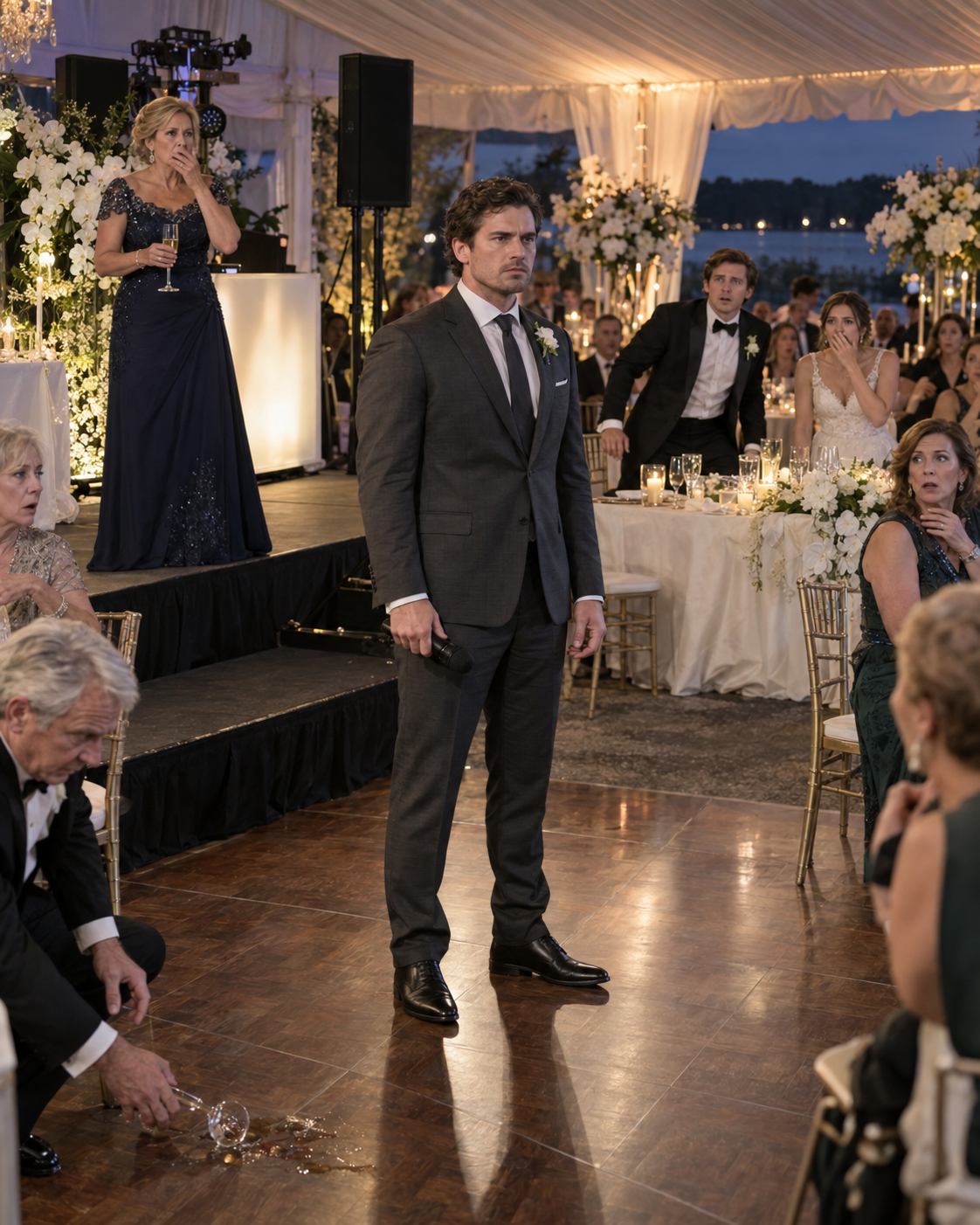
My mother humiliated me in front of 200 wedding guests, never realizing whose money was paying for everything.
Part 1: I am Julian and I am 34 years old exactly 3 days ago. I stood in the middle...
THE BILLIONAIRE ORDERED A HOMELESS BLACK ENGINEER AWAY FROM HIS $4.2 MILLION HYPERCAR—UNTIL A HIDDEN DESIGN FLAW FORCED HIM TO QUESTION EVERYTHING HE BELIEVED ABOUT THE STRANGER – Life Story
Blue-gray smoke swallowed the billionaire’s irreplaceable car before breakfast. The dashboard counted down while security blocked the only man offering...

Test Category 3 1792168730993
Testing if category 3 works or crashes WordPress