They Mocked the Single Dad Janitor—Until He Helped a Paralyzed CEO Stand After 17 Years…
They Mocked the Single Dad Janitor—Until He Helped a Paralyzed CEO Stand After 17 Years
Part One — The Janitor Who Should Have Kept His Mouth Shut
The entire boardroom erupted in laughter when a janitor claimed he could help their paralyzed CEO stand after seventeen years.
A billionaire executive pointed at his faded gray uniform and ordered security to throw him out.
But when the single father placed one maintenance report on the table, Victoria Hail saw something that made her blood run cold—and realized the man everyone was mocking might be the only person telling her the truth.
“Get that man out of here before he embarrasses this company any further.”
Martin Kessler’s voice cut across the thirty-second floor of Axis Motion Technologies’ headquarters in Baltimore, Maryland.
The vice president of engineering stood beside a conference table surrounded by some of the country’s most respected investors, while a tired-looking janitor in a gray uniform remained near the doorway holding a cleaning cloth and several crumpled maintenance reports.
Daniel Carter was forty-two years old, with tired blue eyes, dark hair touched by gray, and hands roughened by years of physical work.
His shoes were worn at the heels, and a small stain marked the cuff of his uniform.
Nothing about his appearance suggested he belonged in a room where the people sitting around the table controlled billions of dollars.
But Daniel wasn’t looking at the investors.
He was looking at the enormous screen behind them.
A red warning continued flashing across the display.
AX7 SYSTEM FAILURE — PRESSURE CONTROL ERROR
Below it, a financial projection showed the potential value of contracts and partnerships at risk if the company’s revolutionary mobility system failed its upcoming safety review.
$2.4 billion.
Twenty minutes earlier, Axis Motion’s engineers had attempted to demonstrate the AX7, a sophisticated robotic mobility-support system designed to help people with severe physical disabilities achieve supported upright movement.
Instead, the demonstration unit had locked halfway through its programmed motion sequence, triggering pressure alarms and forcing an emergency shutdown.
Three separate technical teams had spent the morning trying to explain the failure.
None had succeeded.
At the head of the table sat Victoria Hail, the forty-three-year-old CEO who had built Axis Motion into a technology company recognized throughout the country.
Seventeen years earlier, a highway accident had severely damaged her spinal cord and left her unable to stand or walk independently.
At twenty-six, she had been a promising mechanical engineer with plans to develop assistive technology.
After the accident, she spent years in rehabilitation, learning how to live in a body that no longer responded as it once had.
She had eventually built a company around the belief that engineering could expand possibilities for people with disabilities.
But she had never found a device that could safely give her the particular upright support she had been seeking.
Now her most ambitious project appeared to be falling apart.
“Ms.
Hail,” Daniel said quietly, “I think I know why the system keeps failing.”
Kessler stared at him.
Then he laughed.
“You think you know?”
Several directors joined him.
Julian Cross, Axis Motion’s chief financial officer, leaned back in his leather chair and looked Daniel up and down.
“Has the cleaning department started offering engineering consultations?”
The laughter grew louder.
Daniel felt heat rise beneath his collar, but he didn’t move.
“I noticed an inconsistency in the maintenance reports.”
Kessler waved dismissively.
“Those reports are restricted technical documents.”
“They were left on the service printer beside the observation area.
I was clearing a paper jam when I saw the readings.”
“Then you should have put them back and continued cleaning.”
Victoria raised one hand.
“Martin.”
Kessler stopped.
She looked directly at Daniel.
“What inconsistency?”
Daniel stepped closer to the table.
“The primary pressure sensor is being corrected against a secondary reference that appears to be using the wrong calibration baseline.
When the temperature changes, the controller reads a pressure difference that isn’t actually there.”
The laughter faded slightly.
Kessler folded his arms.
“Our engineers have already checked the pressure system.”
“They checked the physical components,” Daniel replied. “The discrepancy is in how the controller interprets one of the reference signals.”
Dr.
Priya Nair, Axis Motion’s lead controls engineer, leaned forward.
“Which reference?”
Daniel pointed toward a line on the printed report.
“Module three.
The correction value doesn’t match the temperature compensation table used by the other modules.
The system thinks it’s correcting an unsafe pressure rise, so it keeps overcompensating until the automatic lock engages.”
Priya studied the figures.
Her expression changed.
“Where did you learn to read this?”
Daniel hesitated.
“I used to work in mechanical engineering.”
Julian laughed again.
“Of course you did.
And I used to play quarterback for the Ravens.”
Daniel lowered his eyes.
For one terrible moment, he considered walking away.
He needed this job.
His eight-year-old daughter, Lily, depended on the paycheck he brought home every other Friday.
Their apartment above an old bakery wasn’t much, but it was warm, and the landlord had allowed him time to catch up after a difficult winter.
Losing this position would mean more than embarrassment.
It would mean explaining to his daughter why they might have to leave the little home where she still kept photographs of her mother beside her bed.
Victoria watched him.
“Dr.
Nair,” she said, “can you verify his observation?”
Priya took the report and opened the controller’s diagnostic history on her laptop.
For several minutes, the boardroom fell silent.
Her fingers moved quickly across the keyboard.
Then she stopped.
“Oh.”
Kessler leaned toward her.
“What?”
Priya enlarged the calibration table.
“He’s right.”
Julian sat forward.
“Excuse me?”
“The pressure sensor isn’t necessarily malfunctioning.
The reference adjustment is inconsistent with the installed controller configuration.
That’s why the system keeps reporting pressure spikes.”
Kessler’s face tightened.
“That doesn’t prove he understands the system.”
“No,” Priya replied. “The data proves he identified a genuine fault.”
She turned toward Victoria.
“We can correct the configuration in the isolated test environment, rerun validation, and determine whether the false alarms disappear.
The mechanical safety systems still need independent checks.”
Victoria nodded.
“Proceed with a controlled diagnostic test.”
Kessler looked irritated.
“We’re taking technical advice from a janitor now?”
Victoria met his gaze.
“We’re evaluating evidence, Martin.
That’s what engineers are supposed to do.”
Daniel remained beside the table while Priya and two specialists checked the system.
After a careful verification of the calibration data, they ran the unoccupied demonstration unit through its diagnostic sequence.
The robotic support frame responded.
Its actuator readings stabilized.
The false pressure alarm disappeared.
Nobody laughed.
Daniel watched the numbers settle into their expected ranges, feeling a quiet relief that had nothing to do with proving the executives wrong.
For the first time in years, he had solved an engineering problem that mattered.
Victoria looked at him differently.
“Mr.
Carter, how long have you worked here?”
“Almost eleven months.”
“And before that?”
“Different jobs, ma’am.”
“I meant before you became a janitor.”
He swallowed.
“I was a mechanical engineer.”
Kessler folded his arms.
“Then perhaps you can explain why you’re cleaning our floors.”
Daniel looked toward the conference room windows.
“Life changed.”
The simple answer silenced several people.
Victoria studied his face, recognizing the careful way he avoided explaining more than necessary.
Then Daniel looked toward the technical diagram still displayed on the wall.
“Ms.
Hail, there’s something else.”
Kessler sighed loudly.
“Of course there is.”
Daniel ignored him.
“The AX7’s adaptive support controls could potentially be configured differently for users with unusual postural and pressure-response requirements.
I don’t know whether that would be medically appropriate for you, but I think your clinical team might want to evaluate it.”
Victoria went still.
For seventeen years, specialists had examined her injuries, tested equipment, and offered possibilities that eventually became disappointments.
She had grown tired of people treating her wheelchair as a personal tragedy and even more tired of strangers promising miracles they could never deliver.
Her voice hardened.
“Are you telling me you can make me walk?”
“No, ma’am.”
“Then what exactly are you telling me?”
Daniel met her eyes.
“I’m saying there may be an engineering reason some devices haven’t been able to support your particular needs.
If the medical team agrees it’s safe, we might be able to investigate another way for you to stand with assistance.”
The room fell silent again.
Victoria’s hands tightened around her wheelchair’s armrests.
Before she could respond, Priya spoke from the diagnostic station.
“Victoria, there’s another problem.”
Everyone turned.
Priya pointed toward the archived safety records.
“The controller wasn’t simply using the wrong calibration reference.
Someone attempted to restart the system after its safety interlock had already rejected the configuration.”
Kessler’s face changed.
“That must be an automated recovery sequence.”
Priya shook her head.
“No.
The log shows a manual override request.”
Victoria leaned forward.
“Who authorized it?”
Priya hesitated.
Then she turned the laptop so the CEO could see the screen.
The authorization field contained a name.
VICTORIA HAIL — EXECUTIVE ACCESS APPROVED
Victoria stared at it.
Her face turned white.
“That’s impossible,” she whispered.
Kessler looked toward the door.
Daniel noticed.
Then Victoria spoke again, louder this time.
“Because I never authorized that override.”
And somewhere inside Axis Motion Technologies, someone had used the paralyzed CEO’s identity to bypass the very safety system that was supposed to protect her.
Part Two — The Secret Hidden Behind the Safety Lock
For nearly a minute, nobody moved.
Victoria Hail stared at her name glowing on Priya’s laptop, while the boardroom’s enormous windows reflected the bright Maryland morning.
Beyond the glass, employees continued walking between buildings and delivery trucks moved through the loading area, unaware that a single line of computer history had just turned a technical failure into a serious internal investigation.
“I want the original logs preserved,” Victoria said.
Her voice was calm, but her fingers had gone pale around the armrests.
Priya nodded.
“I’ll notify information security and place the test unit under an engineering hold.”
Julian Cross leaned forward.
“Victoria, before we create a crisis, perhaps we should establish whether this was simply an administrative mistake.”
“An administrative mistake doesn’t explain why my credentials appear on an override I never approved.”
Kessler cleared his throat.
“Executive access sometimes passes through delegated support accounts.
It may not mean anyone deliberately used your credentials.”
“Then we need to establish exactly what happened.”
Daniel watched the exchange quietly.
He had spent enough years around machinery to recognize that the most dangerous moment often came after a system appeared to be working again.
People became eager to celebrate the improvement and overlooked the underlying reason the equipment had failed.
The AX7’s calibration problem had been identified.
But the authorization discrepancy remained.
Victoria turned toward him.
“Mr.
Carter, I’d like you to stay.”
Kessler looked startled.
“Why?”
“Because he identified the fault everyone else missed.”
“He’s not part of the engineering department.”
“Then somebody should ask why our engineering department spent six hours arguing about a problem he recognized in six minutes.”
The remark struck hard.
Daniel looked down, uncomfortable with the sudden attention.
Victoria noticed.
“You’ll be compensated for your time, Mr.
Carter.
Human Resources can arrange a formal technical consultation while we review your background.”
He nodded.
“Thank you, ma’am.”
She studied him.
“Daniel, please.
Call me Victoria.”
He offered a faint smile.
“That may take some getting used to.”
For the first time that morning, she almost smiled back.
Later, in a smaller meeting room, Priya showed Daniel the controller’s maintenance history.
His observation had been correct: a calibration table created for an earlier actuator configuration had been carried into the AX7’s latest software build.
The mismatch produced unstable compensations under certain thermal conditions.
But something bothered him.
“The safety lock worked,” he said.
Priya looked up.
“Initially.”
“Then someone tried to push past it.”
She nodded.
Daniel leaned back.
“That’s a different problem.”
Priya closed the laptop halfway.
“How long were you an engineer?”
“Twelve years, counting university research.”
“Where?”
“Mostly at Meridian Adaptive Systems.
Small company in Pennsylvania.
We designed mechanical supports and rehabilitation equipment.”
Priya stared at him.
“Meridian?”
Daniel nodded.
“My wife and I moved back to Maryland when she got sick.
I left engineering to take care of her.”
Something shifted in Priya’s expression.
She had heard of Meridian.
The company had closed after losing a major investor several years earlier, but some of its early work on adaptive load distribution remained familiar to specialists in rehabilitation engineering.
“Did you work on variable-support calibration?”
“A little.”
“That’s not a little field.”
Daniel smiled faintly.
“It was a long time ago.”
Priya considered asking more, but stopped when she noticed his expression.
Whatever had happened after he left engineering wasn’t something he wanted to discuss with a stranger.
Across the building, Victoria returned to her private office.
The walls were lined with framed engineering sketches, photographs of her company’s first workshop, and awards she had received for technological innovation.
Beside her desk stood an old black-and-white photograph showing a much younger Victoria standing next to her father outside a small machine shop.
She was twenty-five in the picture.
One year before the accident.
She stared at it for a long time.
Seventeen years had passed since the rainy November morning that changed her life.
Her car had struck a concrete divider after another vehicle crossed into her lane, leaving her with a severe thoracic spinal cord injury.
The surgeons saved her life.
The rehabilitation specialists taught her how to live independently.
But she never regained functional control of her legs.
For years, she had pursued every responsible medical option available.
Specialists evaluated her for emerging rehabilitation devices, and research teams occasionally offered promising designs.
Yet her complex postural needs, episodes of autonomic instability, and repeated difficulties with conventional support equipment meant that an appropriate standing system had never been established.
Eventually, she stopped allowing herself to hope for it.
Her wheelchair was not a symbol of defeat.
She had built a remarkable life in it.
But part of her still remembered the sensation of standing at a workbench beside her father, leaning forward over an unfinished design while he pointed out the mistake she’d made.
She wanted to experience that perspective again, even with assistance.
A knock came at her door.
“Come in.”
Daniel entered carrying his maintenance reports.
He looked uncertain.
“Dr.
Nair said you wanted to see me.”
Victoria gestured toward a chair.
“Sit down.”
He did.
For several seconds, she studied him.
“Why did you speak up this morning?”
Daniel looked surprised.
“The system was failing.”
“That doesn’t answer my question.
You knew those men would laugh at you.”
He considered it.
“I thought about keeping quiet.”
“What changed your mind?”
Daniel reached into his pocket and took out a folded drawing.
It showed a man in a gray uniform standing beside a little girl beneath a bright yellow sun.
“My daughter drew this yesterday,” he said.
Victoria smiled.
“She thinks you’re a superhero?”
“No.
She thinks I’m the smartest person in the world.”
He ran his thumb along the paper’s folded edge.
“I couldn’t go home knowing I’d seen something important and stayed quiet because I was afraid someone might laugh.”
Victoria looked at the drawing.
“How old is she?”
“Eight.”
“And her mother?”
Daniel’s expression changed.
“She died three years ago.”
Victoria immediately softened.
“I’m sorry.”
He nodded.
“Her name was Emily.
She was a nurse.
She used to say that doing the right thing doesn’t become unnecessary just because nobody appreciates it.”
The words remained between them.
Victoria looked down at her hands.
“And this possibility you mentioned about the AX7?”
Daniel leaned forward slightly.
“I don’t know whether it’s suitable for your condition.
Only your rehabilitation team can assess that.
But if you’re willing, I’d like to show them why I think the support geometry deserves a second look.”
She studied him.
“You’re not promising me a miracle.”
“No.”
“You’re not claiming you can reverse my spinal cord injury.”
“No, Victoria.”
“Then what are you offering?”
He smiled gently.
“A question worth investigating.”
For the first time in seventeen years, Victoria found herself interested in a possibility that hadn’t been presented as a cure.
She nodded.
“All right.”
Daniel began gathering the papers.
But before he reached the door, Victoria’s phone rang.
It was Axis Motion’s head of information security.
She listened, and her expression tightened.
The unauthorized override had been requested through a maintenance workstation on the engineering floor.
Investigators had confirmed that the executive credentials were used through a delegated account, but the record linking that account to an individual employee was missing.
The deletion had occurred less than an hour after the morning test failed.
Victoria slowly looked toward Daniel.
“Someone erased the access record.”
And whoever had done it was still inside the building.
Part Three — The Little Girl Who Believed Her Father Could Fix Anything
Daniel Carter’s apartment smelled of fresh bread and cinnamon every morning.
The bakery downstairs began preparing its first batches before sunrise, and the warm scent drifted through the old floorboards into the two-bedroom apartment above it.
The kitchen was small, the refrigerator hummed too loudly, and one of the windows wouldn’t close properly during winter.
But Lily loved the place because the bakery owner sometimes left a bag of day-old cinnamon rolls outside their door.
At six thirty the following morning, Daniel stood beside the stove, attempting to braid his daughter’s hair.
“Ow, Daddy.”
“Sorry.”
“You’re pulling the wrong piece again.”
Daniel squinted at the three sections of brown hair between his fingers.
“There’s a wrong piece?”
Lily sighed with the exaggerated patience of an eight-year-old who had accepted that her father would never become an expert hairstylist.
“Mommy used to do it faster.”
The words made Daniel’s hands pause.
Lily immediately looked worried.
“I’m sorry.”
He leaned down and kissed the top of her head.
“You don’t have to be sorry for remembering Mommy.”
She relaxed against him.
“Can we look at her pictures tonight?”
“Of course.”
Daniel finished the crooked braid, then helped Lily into her yellow sweater.
She examined herself in the hallway mirror and declared the result acceptable, although she insisted on adding two purple clips.
As they ate breakfast, Lily noticed a small engineering sketch on the kitchen table.
“What’s that?”
“Something I’m trying to figure out.”
“At work?”
“Yes.”
“Is it broken?”
“Part of it isn’t working the way it should.”
Lily studied the drawing.
“Then you can fix it.”
Daniel smiled faintly.
“I can try.”
She took another bite of toast.
“You’re good at fixing things.
You fixed my bike, the toaster, and Mrs.
Patterson’s heater.”
“Those are a little different.”
“But you still fixed them.”
He looked at her for a long moment.
Lily still saw the father he had been before grief and debt reduced his choices.
She didn’t see a man who had left a promising engineering career, exhausted their savings on medical treatment, and accepted a janitorial job because it offered reliable hours and health insurance.
She saw someone who kept trying.
After walking her to school, Daniel returned home to change into his gray work uniform.
On the bedroom dresser sat a photograph of Emily Carter.
She was laughing in the picture, holding a coffee mug with both hands.
Her dark hair was tied loosely behind her head, and her eyes had the mischievous expression Daniel remembered from the first day they met.
Three years had passed since her death.
He could still remember the last night she spent awake in the hospital, when she’d asked him to stop pretending he wasn’t frightened.
“You can’t fix everything, Dan,” she had whispered.
He had squeezed her hand.
“I know.”
“Then promise me something.”
“Anything.”
“Don’t disappear into taking care of Lily.
She needs her father to have a life too.”
He had promised.
Then Emily died, and keeping that promise became harder than surviving the long nights that followed.
By eight forty-five, Daniel was back at Axis Motion.
The building’s glass entrance reflected the gray Baltimore sky, and employees hurried past the security desk carrying laptops and coffee.
Daniel collected his cleaning equipment and began his morning route without drawing attention.
But the previous day’s boardroom incident had already spread.
Two junior managers stopped talking when he entered the elevator.
One smiled.
“Hey, Professor Mop.”
The other laughed.
“Got any more billion-dollar ideas today?”
Daniel looked toward the illuminated floor numbers.
“Just trying to get to the sixth floor.”
When the elevator opened, the managers walked out laughing.
Daniel waited until they were gone before moving his cart.
Their words hurt less than they would have years earlier, but they still reminded him of the distance between who he had once been and the man the world believed him to be now.
At ten, Priya Nair found him cleaning a conference room.
“Daniel, Victoria wants you to attend a technical review.”
He looked at his uniform.
“Like this?”
Priya glanced at the mop bucket.
“Your clothes didn’t stop you from being right yesterday.”
He almost smiled.
In the engineering laboratory, Priya introduced him to the technicians investigating the AX7’s configuration history.
Daniel was given temporary access to the specific engineering records under review, and the team walked through the system’s calibration assumptions.
He recognized the load-distribution architecture immediately.
Years earlier, he’d helped develop a research model that adjusted mechanical support according to a user’s changing posture rather than applying identical assistance throughout every movement.
The AX7 was far more advanced, but some of its underlying control problems were familiar.
“You’re assuming the user’s support requirements stay within one narrow pattern,” he explained. “When the body shifts differently than expected, the software compensates instead of reassessing whether the model itself is appropriate.”
Priya considered his words.
“That would explain why the device performs well in standard simulations but struggles with some complex body configurations.”
Daniel nodded.
“It might.
We’d need proper testing.”
Martin Kessler entered halfway through the discussion.
His expression darkened when he saw Daniel standing beside the diagnostic screen.
“Why is he here?”
Priya straightened.
“Victoria requested his participation.”
“As a consultant?”
“We’re arranging the proper authorization.”
Kessler looked toward Daniel.
“You’re an employee of the facilities department, Mr.
Carter.
You’re not qualified to conduct independent engineering evaluations on this project.”
Daniel quietly stepped away from the keyboard.
“I’m not conducting anything independently.”
“Then perhaps you should return to your assigned duties.”
Priya intervened.
“Martin, he’s contributing observations under my supervision.”
Kessler smiled thinly.
“If his observations cause a problem, will you accept responsibility for them?”
Priya met his gaze.
“Yes.
That’s what supervision means.”
For several seconds, the two engineers stared at each other.
Then Kessler turned and walked away.
Later that afternoon, Daniel received a message requesting his presence in Human Resources.
Lydia Cho, the department director, looked uncomfortable as she invited him to sit.
“Daniel, this isn’t an easy conversation.”
He waited.
“Mr.
Kessler has raised concerns about your access to technical materials and your participation in yesterday’s executive meeting.”
“Dr.
Nair authorized today’s review.”
“I understand.
We’re verifying that.”
She folded her hands.
“Pending that review, you’ve been placed on paid administrative leave.
Please don’t return to the engineering areas until we contact you.”
Daniel stared at her.
“For how long?”
“I don’t know yet.”
He thought about the apartment rent due next month, Lily’s school expenses, and the small emergency savings that had barely recovered from Emily’s medical bills.
“Am I being fired?”
“Not at this point.”
The answer was supposed to reassure him.
It didn’t.
As Daniel returned his temporary access badge to security, his phone vibrated.
It was a message from Priya.
I checked the archived AX7 configuration history.
The calibration mismatch was flagged internally three weeks ago.
Someone closed the warning without correcting it.
A second message followed.
The person who signed off on that warning was Martin Kessler.
Daniel stood beside the building’s glass doors, staring at the screen.
The man who had mocked him for speaking up had known about the technical problem long before Daniel entered the boardroom.
And Kessler had let the company move toward a public demonstration anyway.
Part Four — Seventeen Years of Learning Not to Hope
Victoria Hail read the warning report three times before setting it on her desk.
The document was dated twenty-one days before the failed executive demonstration.
An AX7 engineer had recorded inconsistent pressure readings during an internal test and recommended suspending further high-load evaluations until the calibration assumptions could be verified.
Martin Kessler had closed the issue with a brief electronic note.
Acceptable variance.
Proceed with development testing.
Victoria knew engineering decisions sometimes involved uncertain results and tolerances.
She had spent her professional life making those judgments.
But closing a safety warning without the supporting analysis, then attempting to override the protective lock when the same problem returned, was a different matter.
She called Priya.
“Has anyone confirmed why Martin dismissed the warning?”
“Not yet.
The investigation is ongoing.”
“Keep the original records preserved.”
“I will.”
Victoria looked toward the old photograph of herself beside her father.
For years, she had believed that the greatest threat to Axis Motion would come from a technical problem too difficult to solve.
Now she was beginning to understand that poor decisions made by people afraid of losing money might be far more dangerous than defective machinery.
Julian Cross arrived half an hour later.
He carried a financial forecast showing the potential consequences of postponing the AX7 launch.
“If we delay the demonstration, several partners may reconsider their commitments,” he said. “We’re looking at a possible reduction in projected agreements worth billions.”
Victoria glanced at the report.
“Projected agreements aren’t money we’ve already earned.”
“They represent years of development.”
“And a failed safety system represents people who could be injured.”
Julian’s jaw tightened.
“Nobody was hurt.”
“Because the system shut itself down.”
He leaned forward.
“Victoria, I respect your position more than anyone.
But you built this company because you believed technology could change lives.
You cannot abandon that dream every time development becomes difficult.”
She looked at him.
“I’m not abandoning it.
I’m refusing to sell it before it works.”
Julian said nothing.
Victoria turned her wheelchair toward the windows.
“Seventeen years ago, I lay in a hospital bed listening to people discuss the rest of my life as if I weren’t in the room.
Some were compassionate.
Others were careless.
But the ones I trusted were the ones who told me the truth, even when I hated hearing it.”
She faced him again.
“I will not build a company that tells patients what they want to hear while hiding what they need to know.”
Julian slowly closed the folder.
“I’ll inform the partners that the demonstration is postponed.”
After he left, Victoria sat in silence.
The previous afternoon, Daniel Carter had offered something she hadn’t allowed herself to consider in years.
Not a cure, not a promise of restored movement, but an engineering investigation that might make assisted standing more suitable for her needs.
She wanted to be hopeful.
That frightened her.
The first years after her injury had been filled with appointments, specialists, and devices that seemed promising until the practical limitations became clear.
Some couldn’t accommodate her posture safely.
Others failed to provide the stability she needed, and several attempts had been stopped because of medical concerns.
Eventually, every new possibility began to feel like another invitation to be disappointed.
She had learned to protect herself by refusing to imagine the outcome.
That afternoon, Victoria visited Axis Motion’s clinical rehabilitation partner, where Dr.
Elena Ortiz oversaw evaluations for assistive mobility technologies.
Elena was a rehabilitation physician who had worked with Victoria for nearly six years.
She was warm, direct, and completely unimpressed by corporate titles.
“You’re not going to tell me you found someone who can cure spinal cord injuries, are you?” Elena asked when Victoria explained Daniel’s proposal.
“No.”
“Good.
Because I would have sent you home.”
Victoria smiled faintly.
Elena examined the preliminary engineering diagrams.
“A different support configuration could be worth evaluating.
But after seventeen years, we need to be particularly careful about bone density, joint positioning, skin protection, muscle responses, and cardiovascular tolerance.”
“I understand.”
“And upright posture with a robotic support system would not mean you’ve regained voluntary control of your legs.”
“I know.”
Elena looked at her more closely.
“Do you?”
Victoria lowered her eyes.
“I think I do.”
The doctor set the papers aside.
“Then tell me why this matters so much.”
Victoria stared at the examination room window.
“Because my father taught me engineering while we stood beside his workbench.
I remember leaning over the drawings, arguing about measurements, laughing when I got something wrong.”
Her voice grew quieter.
“I’ve built an extraordinary life since the accident.
I know that.
But sometimes I miss the ordinary things I could do without thinking.”
Elena waited.
“I don’t need to walk across this room,” Victoria continued. “I just want to know whether there is a safe way for me to experience standing upright again.”
The doctor nodded.
“That’s a goal we can discuss without pretending it will change your diagnosis.”
They agreed to begin with a comprehensive clinical assessment rather than a demonstration.
Meanwhile, Daniel returned home earlier than usual.
Lily was sitting at the kitchen table drawing flowers around a photograph of Emily.
“Daddy!”
She ran into his arms.
“You’re home early.”
“Work changed my schedule.”
“Does that mean we can go to the library?”
He smiled.
“Absolutely.”
She studied his face.
“Are you sad?”
He hesitated.
“A little.”
“Did somebody yell at you?”
Daniel looked away.
“Something like that.”
Lily wrapped her arms around his waist.
“Mommy said people who yell aren’t always right.”
He swallowed.
“She did.”
That evening, after Lily fell asleep, Daniel opened the old cardboard box beneath his bed.
Inside were engineering notebooks, university certificates, worn technical drawings, and a photograph of himself standing beside Emily outside Meridian Adaptive Systems.
He had kept everything.
But he hadn’t opened the box in years.
For the first time since his wife’s death, he found himself wondering whether the man he used to be still existed somewhere beneath the gray uniform.
His phone rang.
Victoria Hail.
“Daniel, I’ve arranged for my clinical team to review your proposal.
I’d like you to participate as an engineering consultant, with the proper employment and safety arrangements.”
He closed his eyes.
“Thank you.”
“There’s something else.
Human Resources tells me you’ve been placed on leave.”
“Yes.”
“That review will be handled properly.
You won’t be punished merely for reporting a safety concern.”
Daniel let out a breath he hadn’t realized he was holding.
Victoria continued.
“I need people who are willing to question assumptions.
Especially when everyone else wants an easy answer.”
They spoke for several minutes about the proposed technical review and the importance of making no medical promises.
Then Victoria received an urgent message.
A public news alert had appeared on her phone.
She opened it.
The headline read:
AXIS MOTION JANITOR CLAIMS HE CAN MAKE PARALYZED BILLIONAIRE CEO WALK AGAIN
Below it was a photograph of Daniel carrying his cleaning equipment.
Someone inside the company had leaked the story.
And whoever wrote it had transformed a cautious engineering proposal into a dangerous promise neither Daniel nor Victoria had ever made.
Part Five — The Lie That Followed Him Home
By lunchtime, Daniel Carter’s photograph had appeared on three news websites.
One showed him pushing a cleaning cart through Axis Motion’s lobby.
Another used an old photograph from his engineering school graduation, placing it beside a picture of Victoria Hail in her wheelchair.
The headlines varied, but they all suggested the same thing: an unqualified janitor had promised to accomplish what seventeen years of medical treatment could not.
Daniel sat at his kitchen table reading the articles while Lily colored beside him.
He wanted to be angry.
Instead, he felt sick.
He had carefully explained that an engineering adjustment might make assisted standing worth investigating under medical supervision.
Somehow, that statement had become a promise to make a paralyzed woman walk again.
“Why are they calling you a liar?” Lily asked.
Daniel looked up.
His daughter had seen one of the headlines on his phone before he could turn it over.
“They misunderstood something I said at work.”
“Did you lie?”
“No, sweetheart.”
She studied him.
“Then tell them.”
He reached across the table and took her hand.
“I’m trying.”
The simplicity of her advice stayed with him.
At Axis Motion, Victoria faced a very different kind of pressure.
Julian Cross stood in her office with the company’s communications director, presenting a proposed statement that described Daniel as an employee who had made unauthorized medical claims.
Victoria read it once.
Then she pushed it back across the desk.
“Absolutely not.”
Julian sighed.
“We need to distance the company from this story.”
“Then tell the truth.”
“The truth is complicated.”
“No.
The engineering proposal was limited.
Clinical assessment has not been completed.
No treatment has been promised.”
The communications director looked uncomfortable.
“We could issue that clarification without mentioning Mr.
Carter.”
Victoria turned toward her.
“His photograph is everywhere.
He has a child.
His livelihood is being dragged into a story he never asked to be part of.”
Julian rubbed his forehead.
“Victoria, we’re trying to protect the company.”
“And I’m trying to ensure we don’t destroy an employee to protect ourselves from embarrassment.”
She leaned forward.
“Release a statement confirming that Daniel identified a genuine technical issue and that no medical outcome has been promised.
Make it clear that any rehabilitation evaluation will be conducted only by qualified professionals.”
Julian looked at the draft.
“That will invite more questions.”
“Then we’ll answer them accurately.”
The statement appeared that afternoon.
It slowed some speculation, but it couldn’t erase the photograph that had already circulated through Daniel’s neighborhood.
The following day, Lily came home from school unusually quiet.
She placed her backpack beside the kitchen table without asking for a snack.
Daniel immediately noticed.
“How was school?”
“Fine.”
“Anything interesting happen?”
“No.”
He waited.
Then Lily’s eyes filled.
“Benjamin said my dad is stupid because he cleans toilets and pretends to be a doctor.”
Daniel felt something tighten behind his ribs.
He crouched beside her.
“What did you say?”
“I told him you were an engineer before Mommy got sick.”
He held her shoulders gently.
“And then?”
“He said if you were smart, you wouldn’t be a janitor.”
The words struck Daniel harder than anything Kessler had said in the boardroom.
He pulled Lily into his arms.
For years, he had told himself that the job didn’t matter as long as it allowed him to care for his daughter.
He still believed honest work deserved respect.
But hearing a child repeat the same contempt that powerful adults had shown him brought back every compromise he’d made since Emily’s illness.
Lily cried against his shoulder.
“I told him you’re the smartest person I know.”
Daniel closed his eyes.
“Thank you, sweetheart.”
“Are you going to stop being a janitor?”
He considered his answer.
“I don’t know yet.”
She pulled away.
“Do you want to?”
Daniel looked toward the old engineering notebooks stacked beside the refrigerator.
For the first time in years, he answered without pretending.
“Yes.”
That evening, Priya called.
She had discovered something important in the archived software records.
“The faulty calibration table came from a development build that was never approved for the final demonstration configuration,” she explained. “There was a warning attached to it.”
Daniel sat upright.
“What happened to the warning?”
“Martin closed it.
Then the old table was carried forward into the new build.”
“Does the original development record still exist?”
“Yes.
Information security recovered a copy from the engineering repository.”
Daniel stared toward Lily’s bedroom.
“Then you can prove I didn’t cause the failure.”
“I already know you didn’t.”
Her voice softened.
“But Martin has submitted a report claiming your unauthorized access interfered with the investigation.
He’s recommending disciplinary action.”
Daniel felt his stomach drop.
“He’s blaming me?”
“He’s trying to shift attention away from the decisions made before you ever saw the reports.”
Priya paused.
“There’s something else.”
She had located an internal message sent to Kessler weeks before the demonstration.
It warned that bypassing the AX7’s safety lock without completing the calibration review could expose the development team to serious liability.
Kessler’s reply was brief.
We cannot afford another failed investor demonstration.
Resolve the alert before the board review.
Daniel stared at the kitchen wall.
Kessler hadn’t merely overlooked a technical concern.
He had been warned about it.
And now he was trying to make a janitor responsible for the consequences.
Part Six — A Dream That Could Break Her
Victoria Hail had never been afraid of difficult numbers.
She had built Axis Motion from a small engineering company into a global enterprise by learning how to evaluate risks that frightened other executives.
But when Dr.
Elena Ortiz placed the results of her medical assessment on the desk, Victoria found herself struggling to look at the page.
“Your bone density is significantly reduced in several areas,” Elena explained. “That’s common after long-term loss of normal weight-bearing activity, but it makes the design of any standing system especially important.”
Victoria stared at the diagrams.
“Does that mean we stop?”
“It means we cannot use the approach originally proposed.”
The words brought back an old memory.
A rehabilitation center seventeen years earlier.
A smiling equipment representative promising that a new brace would change everything.
Then weeks of adjustments, repeated discomfort, and another specialist finally admitting the device couldn’t safely accommodate her needs.
Victoria had promised herself she wouldn’t go through that again.
Elena continued.
“An appropriately designed overhead support system may reduce the load placed through your legs.
But we’d still need progressive conditioning, detailed mechanical testing, careful monitoring, and independent clinical clearance.”
Victoria looked toward the window.
“You’re saying there might be another option.”
“I’m saying we have enough information to investigate whether one exists.”
She almost laughed.
“That sounds exactly like Daniel.”
“Then perhaps he’s learning to speak like a responsible engineer.”
Victoria smiled despite her disappointment.
Later, she met with Daniel and Priya in a small conference room adjoining the rehabilitation laboratory.
Because Daniel’s administrative leave had been resolved in his favor, Human Resources had arranged a temporary paid assignment allowing him to participate in the technical review under Priya’s supervision.
He wore his gray uniform.
He hadn’t asked for different clothes.
Victoria placed the medical findings in front of them.
“The original approach isn’t suitable.”
Daniel read the summary carefully.
“That makes sense.”
She looked at him sharply.
“You’re not disappointed?”
“I’m disappointed that the option isn’t right for you.
But finding that out before anybody gets hurt is the point of testing.”
Victoria studied him.
Most people responded to disappointing medical news by trying to cheer her up.
Daniel didn’t attempt to replace the truth with encouragement.
He simply respected it.
Priya opened the technical model.
“We might be able to build a support configuration that transfers much more of the load to an overhead frame while using the robotic components primarily for controlled alignment.”
Daniel examined the diagram.
“Then we’d need to rethink the entire transfer sequence, not just the calibration.”
Priya nodded.
“And test it independently.”
Victoria looked between them.
“How long?”
“Several months at least,” Priya answered. “Possibly longer, depending on the clinical findings.”
Victoria’s shoulders sank.
She had hoped for a possibility.
Now she was being offered a long process with no guarantee of success.
Daniel noticed.
“Victoria, we don’t have to begin this.”
She looked at him.
He continued.
“You built a life that matters.
You don’t have to prove anything by standing.”
For several seconds, she couldn’t answer.
Then she looked down at her hands.
“I’m tired of people assuming I want to stand because I’m ashamed of my wheelchair.”
“Are you?”
“No.”
“Then why do you want it?”
Victoria took a breath.
“Because I miss it.
Because I still remember what it felt like to look someone directly in the eyes while we stood beside the same workbench.”
Her voice trembled.
“And because I want to make that choice for myself, not because somebody thinks I need to be fixed.”
Daniel nodded.
“Then that’s the goal we work toward, if the medical team says we can do it safely.”
She looked at him.
“You don’t think that’s foolish?”
“No.”
He smiled faintly.
“I think it’s yours.”
That evening, Victoria returned home to her waterfront apartment and opened the small drawer beside her bed.
Inside was a photograph of her father holding a wooden model of an early robotic support frame.
He had died nine years earlier, long after the accident, and the last project they had worked on together was an experimental support mechanism she never finished.
She traced the edge of the photograph.
For the first time in years, she allowed herself to imagine completing something with the same excitement she’d felt while working beside him.
Across town, Daniel met with an independent investigator retained by Axis Motion’s audit committee.
He provided a detailed statement about how he had discovered the maintenance reports and explained the technical findings he had passed to Priya.
The investigator listened carefully.
Then she asked a question that made Daniel pause.
“Mr.
Carter, did anyone tell you to identify the system failure publicly?”
“No.”
“Did you change the software before the boardroom meeting?”
“No.
I didn’t have engineering access.”
“Can you establish that?”
Daniel almost laughed.
“My employee badge only opened the service corridors and janitorial supply rooms.”
The investigator made a note.
A day later, information security confirmed that Daniel’s credentials had never been used to access the AX7 development environment.
The unauthorized executive override had originated from an engineering workstation assigned to Martin Kessler’s department.
Although its identifying audit record had been deleted, a separate security backup preserved the workstation and session history.
The evidence pointed toward deliberate concealment.
Victoria immediately ordered an independent investigation into the safety decisions and the missing logs.
But Kessler wasn’t prepared to accept responsibility.
He contacted several board members, arguing that Victoria’s personal interest in the rehabilitation project had compromised her judgment and placed the company at financial risk.
Within forty-eight hours, the board received a formal request for an emergency meeting.
The agenda contained one item.
Review of Victoria Hail’s authority as Chief Executive Officer.
After seventeen years of fighting to build a life no one could take away from her, Victoria was about to face the possibility of losing the company she had created.
And the men who had laughed at Daniel were preparing to use her own disability as the reason she could no longer lead it.
Part Seven — The Boardroom Where the Truth Finally Spoke
The emergency meeting began at eight thirty on a rainy Thursday morning.
Victoria entered the boardroom alone, maneuvering her wheelchair toward the same polished table where Daniel had been mocked weeks earlier.
The windows were streaked with rain, the atmosphere was tense, and the directors avoided looking at one another as she took her place.
Martin Kessler sat beside Julian Cross.
He wore an immaculate dark suit and had placed a thick folder in front of him.
Victoria recognized the strategy immediately.
They would try to make her appear emotional while presenting themselves as the reasonable people protecting the company.
Margaret Ellis, the board’s independent chairwoman, opened the meeting.
“We’re here to review the AX7 safety failure, the handling of internal reports, and concerns regarding executive oversight.”
Kessler spoke first.
“Axis Motion faces a serious financial crisis.
The CEO has delayed our most important product launch, authorized an unusual technical consultation with a facilities employee, and redirected research resources toward her personal rehabilitation goals.”
Victoria remained still.
Kessler continued.
“Whatever we think of her accomplishments, we must ask whether her medical circumstances are influencing decisions that affect thousands of employees.”
The room fell silent.
Julian looked uncomfortable.
Victoria turned toward Kessler.
“My injury doesn’t make me incapable of evaluating engineering risks.”
“Nobody is saying that.”
“You just implied it.”
Kessler straightened.
“I’m saying that the company’s future cannot depend on one person’s hope.”
Victoria looked around the table.
“Then let’s discuss evidence instead of my medical history.”
Margaret nodded.
“Dr.
Nair has submitted the technical investigation.
I’d like her to present it.”
Priya entered with an independent information-security specialist and the audit committee’s legal counsel.
She displayed the original calibration warning.
Then the archived safety-lock record.
Finally, she showed the recovered session history from Kessler’s engineering workstation.
“The system failed because an outdated calibration table was carried into the current controller configuration,” Priya explained. “The safety interlock detected unstable readings and correctly interrupted testing.”
Kessler folded his arms.
“Which proves the protective systems functioned.”
“Initially,” Priya replied. “The subsequent override request attempted to resume operation without resolving the fault.”
She enlarged the recovered record.
“The authorization used a delegated executive account accessed through your department.
The available evidence links the session to the workstation assigned to you.”
Kessler leaned forward.
“That account was used by multiple authorized engineers.”
“Then we need their statements,” Margaret said.
Priya nodded.
“We’ve interviewed the relevant personnel.
Two employees reported that you instructed them to keep the investor schedule unchanged despite the unresolved safety warning.”
Kessler’s face flushed.
“I was trying to protect this company.”
Victoria finally spoke.
“By hiding a problem?”
“By keeping a project alive.
We had three years of research, hundreds of employees, and enormous obligations to investors.”
“Then you should have told me the truth.”
Kessler looked at her.
“You would have canceled the demonstration.”
“Yes.”
The simplicity of her answer filled the room.
“Because it wasn’t ready.”
The independent investigator then confirmed that Daniel Carter had not accessed or modified the AX7 software before the boardroom demonstration.
His observations had identified a real fault, and the records supporting that finding predated his involvement.
Margaret asked Daniel to enter.
He wore a plain blue shirt and dark trousers, but the uneasiness in his expression remained the same as on the day he first stood before the executives.
“Mr.
Carter,” she said, “why did you believe the calibration readings were wrong?”
Daniel explained the conflicting reference values and how they could produce false corrections.
He avoided unnecessary technical language, making certain each director understood the relationship between the incorrect configuration and the safety lock.
When he finished, Margaret asked one final question.
“Why did you come forward when you knew it might put your job at risk?”
Daniel looked toward Victoria.
“Because the machine was designed to support people who need it.
If something is wrong, those people deserve to know before anyone uses it.”
His voice remained quiet.
“And because my daughter is growing up watching the choices I make.”
Nobody laughed.
Julian lowered his eyes.
Kessler looked away.
After hearing the investigators’ findings, the board voted to place Kessler on leave, remove his access to the AX7 program, and refer the matter for further employment and legal review.
The directors also affirmed that the product would remain on hold until independent safety validation was complete.
Victoria retained her position.
But the victory carried a price.
The projected partnerships remained uncertain, and several investors had already delayed commitments.
Julian approached her after the meeting.
“We’ll have to make difficult financial decisions.”
“I know.”
“And Daniel?”
Victoria looked toward the man waiting beside Priya.
“He should be offered a proper engineering position once the review is completed.
His qualifications and contribution speak for themselves.”
Julian nodded slowly.
“I owe him an apology.”
“Then tell him.”
He did.
For the first time, Daniel heard one of the men who had laughed at him acknowledge that his job title had never justified dismissing his expertise.
He accepted the apology without pretending the humiliation hadn’t happened.
That afternoon, Priya received the independent laboratory’s preliminary safety report.
The original AX7 configuration would not be cleared for clinical use.
The revised support system would require a substantial redesign, separate validation, and new authorization before anyone could attempt the assisted-standing trial.
Victoria read the report in silence.
She had survived the attempt to remove her as CEO.
But saving her company had not brought her any closer to standing.
And the engineering problem Daniel had identified was only the beginning of a far more difficult challenge.
Part Eight — The First Attempt That Failed
Four months passed before the revised AX7 support system was ready for preliminary clinical evaluation.
During that time, Daniel learned what it meant to be an engineer again.
His new position came with technical responsibilities, a dependable salary, and access to a team that wanted his input.
He worked alongside Priya and the rehabilitation specialists to develop a configuration that used an overhead support structure, adjustable trunk stabilization, and independently monitored load management.
The equipment wasn’t intended to restore lost nerve function.
Its purpose was to help a medically cleared person reach and maintain an upright position while the system safely supported their body.
Every change required documentation.
Every mechanical component underwent testing.
Whenever a result was uncertain, the team stopped and investigated rather than hiding the problem behind a reassuring explanation.
Daniel sometimes returned home exhausted, but it was a different kind of tiredness.
He was no longer spending his days pretending the work he loved belonged to someone else.
One evening, Lily found him sketching a support frame at the kitchen table.
“Is that for the lady in the wheelchair?”
He nodded.
“Part of it.”
“Will she stand?”
“I don’t know yet.”
Lily frowned.
“But you fixed the other machine.”
“This is different.”
He set down his pencil.
“People aren’t machines, sweetheart.
We can design things to help them, but we can’t promise their bodies will respond in a certain way.”
Lily thought about that.
“Then why are you trying?”
Daniel smiled.
“Because she wants to try, and we think there may be a safe way to help her.”
His daughter studied the drawing.
“Then I hope she gets her chance.”
A week later, Lily met Victoria during a company family afternoon.
Victoria had invited employees to bring their families to an open demonstration of nonclinical engineering projects.
She wanted the people building the technology to see the children, spouses, and parents whose lives depended on the work happening inside those laboratories.
Lily approached her shyly.
“My daddy says you’re very smart.”
Victoria smiled.
“Your daddy is a remarkable engineer.”
Lily brightened.
“I know.”
Then she looked at the wheelchair.
“Can I ask you something?”
“Of course.”
“Do you want to stand because you don’t like your chair?”
Victoria considered the question carefully.
“No.
My chair helps me live the life I’ve built.
I can work, travel, and make decisions because it gives me independence.”
Lily nodded.
“Then why?”
“Because standing upright again is something I’d like to experience if it can be done safely.”
The little girl smiled.
“That makes sense.”
Victoria laughed.
It was the first time anyone had asked her the question without pity or an expectation that she needed to become a different person.
By early spring, the independent engineers had completed the necessary bench testing for a limited clinical evaluation.
Elena and her rehabilitation team had also spent months assessing Victoria’s bone health, cardiovascular response, joint flexibility, and tolerance for gradual changes in posture.
The physician finally approved an initial supervised session.
It would not be a public demonstration.
There would be no investors, cameras, or press releases.
Only medical professionals, the approved equipment, Priya, and Daniel as technical observers.
The first session began in a quiet rehabilitation room overlooking a courtyard filled with young trees.
Victoria wore comfortable exercise clothes and sat in her wheelchair while the clinicians reviewed the plan.
She had signed the appropriate consent forms and could stop at any time.
Elena knelt beside her.
“Remember, today is about gathering information.
There’s no pass or fail.”
Victoria managed a nervous smile.
“I’ve always hated tests I couldn’t study for.”
Elena smiled back.
“We’re going to take this slowly.”
The team completed the transfer using the approved support equipment and verified the monitoring systems.
The frame began a gradual change in position while the clinicians watched Victoria’s blood pressure, comfort, and responses.
At first, everything appeared stable.
Victoria felt her body moving into a posture she hadn’t experienced in years.
She closed her eyes.
For a moment, she imagined her father’s workshop.
The smell of machine oil.
Sunlight across the drawings.
His hand resting beside hers on the workbench.
Then her expression changed.
“I’m dizzy.”
Elena immediately signaled the team to stop.
The blood-pressure readings had dropped.
The clinicians returned the equipment to a safer position and continued monitoring until Victoria recovered.
The session ended.
No one suggested continuing.
Victoria sat quietly while Elena explained that her body had not yet tolerated the planned change in posture and that further evaluation and conditioning would be necessary before any future attempt.
Daniel stood near the equipment, silent.
He wanted to say something comforting.
But he remembered how many empty reassurances Victoria had already heard.
She looked toward him.
“I thought this time might be different.”
Her voice broke.
He moved closer.
“It was different.
We learned something important without pushing you into danger.”
She shook her head.
“Seventeen years, Daniel.”
A tear rolled down her cheek.
“Seventeen years of people telling me to be patient.”
He said nothing.
She looked at the machine beside her.
“I’ve spent so much of my life waiting for something that never comes.”
Elena gently offered a tissue.
Victoria accepted it.
Then she looked directly at Daniel.
“I don’t want to do this anymore.”
The words left the room painfully quiet.
The first attempt had ended safely.
But the woman who had risked allowing herself to hope was no longer certain she could survive another disappointment.
Part Nine — The Promise He Refused to Make
Daniel didn’t call Victoria the following morning.
He didn’t send encouraging messages or ask whether she had changed her mind.
He knew the difference between supporting someone and making them feel responsible for protecting another person’s hope.
Instead, he returned to the engineering laboratory and completed the safety documentation from the canceled session.
The system had responded correctly to the medical team’s decision to stop.
Its mechanical components remained stable, and the monitoring data gave Elena important information about Victoria’s cardiovascular response.
From an engineering perspective, the first trial had accomplished its limited purpose.
From Victoria’s perspective, it felt like another door closing.
Three days later, Daniel found her alone in the company’s original workshop.
She sat beside her father’s old wooden workbench, turning a small brass gear between her fingers.
Afternoon sunlight crossed the dusty window, illuminating tools that hadn’t been used in years.
Daniel stopped at the doorway.
“I’m sorry.
I didn’t know you were here.”
Victoria looked up.
“It’s all right.”
He nodded toward the workbench.
“Your father built this?”
“With his own hands.”
She smiled faintly.
“He used to say every broken machine was trying to tell you something.
The difficult part was learning how to listen.”
Daniel stepped closer.
“Sounds like a good engineer.”
“He was.”
Victoria placed the gear on the table.
“He never treated me as though my life ended when I lost the use of my legs.
But he could tell when I was pretending not to miss something.”
Daniel pulled up a chair.
For several minutes, neither spoke.
Then Victoria looked at him.
“How did you keep going after your wife died?”
The question surprised him.
He studied the faint lines in the wooden floor.
“I didn’t always.”
Victoria waited.
“There were mornings when getting Lily dressed felt impossible.
I forgot appointments.
I burned dinners.
I sat in my car outside the grocery store because I couldn’t remember what I was supposed to buy.”
His voice grew quieter.
“I thought if I kept busy enough, the grief would eventually get tired and leave.”
“Did it?”
“No.”
He looked toward the photograph of Victoria’s father hanging above the workbench.
“But I learned that I could still build a life while carrying it.”
Victoria lowered her eyes.
“I don’t want another disappointment.”
“Then don’t do another trial unless you decide it’s worth it.”
She looked at him.
“You’re willing to stop?”
“Of course.”
“What about the months of work?”
“The work still taught us things.
It may help other people someday.”
“And you?”
Daniel gave a small smile.
“I already got something I thought I’d lost.”
“What?”
“My work.
My confidence.
The chance to show Lily that setbacks don’t mean you have to give up on what matters to you.”
Victoria studied him.
He had never asked her to prove his engineering was valuable by achieving a dramatic result.
He had offered his knowledge, accepted the medical limits, and remained respectful when she wanted to stop.
For the first time, she understood why his presence felt different from the countless people who had offered her hope over the years.
He was willing to tell her no.
And he was willing to let her say it herself.
Two weeks later, Victoria called Elena.
“I’d like to discuss whether there are any medically appropriate steps we haven’t considered.”
Elena listened carefully.
They reviewed the response from the first session and discussed whether more gradual conditioning might improve Victoria’s tolerance for assisted upright positioning.
The physician explained that there were no guarantees, and that any future trial would depend on repeated clinical assessments.
Victoria agreed.
The process took months.
Some days were encouraging.
Others ended early because she was exhausted, uncomfortable, or simply unwilling to continue.
She attended carefully monitored therapy sessions, followed an individualized conditioning program, and gradually became more comfortable with supported changes in position.
Daniel and Priya continued refining the equipment.
They improved the fit of the support frame, added clearer monitoring displays for clinicians, and documented how the system should respond when pressure or positioning moved outside approved limits.
No one spoke about a miracle.
No one promised that the next attempt would succeed.
Then, near the end of summer, Elena determined that Victoria’s improved tolerance and the independently validated configuration justified another carefully supervised evaluation.
The morning arrived quietly.
Victoria sat in the rehabilitation room wearing a pale blue shirt, her hair pulled back from her face.
Daniel stood beside Priya.
Elena reviewed the procedure.
“Remember, Victoria.
You can stop at any moment.”
Victoria nodded.
“I know.”
The team completed the transfer and began the controlled positioning sequence.
The support frame moved slowly.
Victoria’s eyes filled with tears as she felt herself approaching a more upright posture than she had tolerated during the first trial.
Then a warning sounded.
A load-monitoring sensor detected pressure outside the approved range near her right leg.
The clinicians stopped immediately.
Daniel stepped back from the equipment as the medical team returned Victoria to a safe position.
Nobody was hurt.
But the trial could not continue.
Priya examined the monitoring data and discovered that a support component had shifted slightly under load, changing how pressure was distributed through the frame.
It was a problem they could investigate.
It was not something they could ignore.
Victoria stared at the ceiling while Elena explained why they had stopped.
Then she turned toward Daniel.
“Don’t tell me it’s going to be fine.”
He nodded.
“I won’t.”
“Tell me what happened.”
He showed her the data.
She listened.
When he finished, Victoria took a slow breath.
“Then we fix what can be fixed, test it properly, and let the medical team decide whether another attempt is appropriate.”
Daniel smiled faintly.
It was the first time he had heard her speak about another trial without fear controlling every word.
But Priya was still studying the sensor record.
She looked toward Daniel.
“The support arrangement isn’t reliable enough yet.”
He nodded.
“Then we’re not ready.”
For the second time, Victoria had come painfully close to a moment she had imagined for seventeen years.
And for the second time, the safest decision was to stop.
Part Ten — The Moment She Finally Stood
It took another six weeks to resolve the support-frame problem.
Daniel and Priya redesigned the affected component, then submitted the revised configuration for independent mechanical evaluation.
The team repeated the appropriate load tests, verified the monitoring system, and documented the equipment’s response to simulated positioning changes.
Elena reviewed the clinical findings before approving another attempt.
She made one thing clear.
“This is still a supported-standing trial.
We’re not testing whether Victoria can walk or whether her spinal cord function has returned.”
Daniel nodded.
“Understood.”
“We’re testing whether this equipment can help her achieve and tolerate an upright position safely under clinical supervision.”
Priya closed her notebook.
“That’s exactly what the revised system is designed to do.”
The next trial took place on a clear October morning.
There were no reporters waiting outside the rehabilitation center, no investors watching through the windows, and no corporate executives demanding a dramatic result.
Victoria had insisted on privacy.
She wanted the experience to belong to her before it belonged to anyone else.
Lily had made a small drawing for Daniel to carry in his pocket.
It showed a woman sitting beside a large machine, with a bright yellow sun overhead.
Underneath, in uneven letters, she had written:
It’s okay to try again.
Daniel folded the drawing carefully and slipped it into his shirt pocket before entering the laboratory.
Victoria was waiting.
She wore a light gray shirt and comfortable trousers, her hands resting against the wheels of her chair.
“You look nervous,” she told him.
“I am.”
That surprised her.
“Why?”
“Because this matters to you.”
Victoria smiled gently.
“It does.”
Elena approached.
“We’ve reviewed the equipment, your assessment results, and the trial plan.
Everything required for today’s evaluation is in place.”
She paused.
“But you still get to decide whether we begin.”
Victoria looked toward Daniel.
Then toward the support frame.
Then she nodded.
“Let’s try.”
The team completed the transfer using the approved equipment and secured the support system according to the clinical protocol.
Every connection was checked, every monitoring channel confirmed, and every specialist took their assigned position.
Daniel remained outside the clinical working area, watching the engineering display.
He could offer information.
He could identify technical concerns.
But the medical team controlled the procedure.
Elena looked directly at Victoria.
“Ready?”
Victoria closed her eyes.
She remembered being twenty-six, waking in a hospital room after the accident and slowly understanding how much her life had changed.
She remembered her father’s hand resting on hers.
She remembered years of rehabilitation, countless appointments, and the exhausting pressure of people expecting her to either overcome her disability or become an inspiration simply by living with it.
She had never needed to be rescued from her wheelchair.
She had needed people to respect the choices she wanted to make.
Victoria opened her eyes.
“Ready.”
The support system began moving.
Slowly.
Carefully.
The clinicians watched the monitors while the equipment provided controlled assistance.
Victoria felt herself rising into a more upright position.
Not by recovering the movement she had lost.
Not through a sudden reversal of seventeen years of spinal cord injury.
But through a carefully engineered arrangement that supported her body while the rehabilitation team guided the process.
The room remained quiet.
Daniel watched the load readings.
Priya watched the controller.
Elena monitored Victoria’s condition.
The equipment continued moving within its approved limits.
Victoria felt the angle of her body change again.
A few moments later, Elena spoke.
“Your readings are stable.
How are you feeling?”
Victoria’s lips trembled.
“All right.”
“Would you like to continue?”
She nodded.
“Yes.”
The team proceeded.
Then the frame reached the planned upright position.
Victoria Hail was standing.
Her legs remained supported.
The equipment carried the loads her body could not safely manage on its own.
She was not walking independently, and her paralysis had not disappeared.
But for the first time in seventeen years, she had reached a fully upright standing position in a medically supervised support system designed for her needs.
Victoria stared straight ahead.
The room looked different.
She could see across the rehabilitation center at a height she remembered from another lifetime.
The courtyard trees stood beyond the windows, their orange leaves moving softly in the autumn breeze.
Tears began sliding down her cheeks.
“Oh,” she whispered.
Elena leaned closer.
“How do you feel?”
Victoria tried to answer.
No words came.
She looked toward the window again.
Then she began to cry.
Not because her disability had disappeared.
Not because she believed every limitation in her life had been erased.
But because she had reached a personal goal she once believed would remain forever beyond her.
Daniel stood beside the monitor, tears gathering in his own eyes.
Priya looked down at the stable readings, then pressed a hand against her mouth.
Victoria turned her head slightly.
“Daniel?”
“I’m here.”
She smiled through her tears.
“Look at me.”
He looked directly at her.
She laughed softly.
“I’m standing.”
He nodded.
“Yes, Victoria.”
Her voice broke.
“After seventeen years.”
He couldn’t speak for a moment.
Then he smiled.
“You did it.”
She shook her head.
“We did.”
The moment lasted only as long as the clinical team considered appropriate.
Elena carefully guided the end of the session, and the specialists helped Victoria return to her wheelchair.
Nobody protested when it was time to stop.
The goal had never been to remain upright at any cost.
It had been to achieve a safe, meaningful experience.
When Victoria was comfortably seated again, she looked toward Daniel.
“Do you know what I was thinking?”
He shook his head.
“My father used to tell me that engineering wasn’t about building impressive machines.
It was about solving problems that mattered to people.”
She wiped her cheeks.
“I wish he could have seen this.”
Daniel reached into his pocket and unfolded Lily’s drawing.
Victoria studied it.
Then she began crying again.
“Your daughter made this?”
He nodded.
“She wanted you to have it.”
Victoria held the picture close.
For a long time, nobody spoke.
Six weeks later, Axis Motion’s board received a proposal from a major investment group interested in financing the next phase of AX7 development.
The proposed investment was substantial.
It could help stabilize the company, fund further testing, and bring the technology closer to eventual clinical availability.
But there was a condition.
The investor wanted exclusive commercial rights that would initially limit access to a small network of expensive private rehabilitation facilities.
Victoria stared at the proposal.
Daniel sat across from her, holding the same worn engineering notebook he had carried before anyone knew his name.
The machine had finally helped her stand.
Now the company had to decide whether that achievement would become an opportunity for many people—or an expensive privilege reserved for a few.
Part Eleven — The Man They Finally Learned to See
Victoria read the investment proposal twice before placing it on the conference table.
Around her sat the directors who had once watched Martin Kessler mock a janitor for offering engineering advice.
The atmosphere was different now.
Kessler had been removed from his executive position following the independent investigation, and the company had strengthened its safety-review procedures.
Yet the financial pressure that had contributed to the crisis hadn’t disappeared.
Julian Cross looked toward Victoria.
“The offer would provide significant development funding.
It could help us complete the next stages of validation and prepare for broader production.”
“At what cost?” she asked.
“The investor wants exclusive initial commercialization rights.”
“Which would restrict access to patients at a handful of private facilities.”
Julian sighed.
“For the initial period, yes.”
Victoria looked toward Daniel.
He sat near Priya, wearing a blue engineering badge attached to his shirt.
The same man who had once been ordered out of this room for speaking up was now helping evaluate the future of the company’s most important technology.
“What do you think?” Victoria asked.
Daniel considered his answer.
“I think getting a device through development and appropriate clinical evaluation costs real money.
We can’t ignore that.”
Julian nodded.
“Exactly.”
“But we also shouldn’t design a business model that treats affordability as somebody else’s problem.”
Victoria looked at him.
Daniel continued.
“I spent years making decisions based on whether I could afford groceries, rent, and medicine.
I know what it’s like to read about technology that might help someone and realize the price makes it irrelevant to your life.”
He glanced toward the engineering plans.
“If this system eventually proves safe and useful, I’d like us to consider the families who don’t have wealthy donors or private clinics waiting for them.”
The room grew quiet.
Julian studied the proposal.
“Then we need a realistic alternative.”
Victoria nodded.
“Agreed.”
Over the following weeks, the company developed a different financing strategy.
It combined staged commercial partnerships with research grants, cost-reduction work, and a carefully supervised pilot-access program intended to include patients from different financial backgrounds.
There were still regulatory requirements, clinical evaluations, manufacturing challenges, and significant expenses ahead.
Nobody pretended the device was ready for unrestricted use.
But the company had chosen a direction that did not depend entirely on selling exclusivity to the highest bidder.
The board approved the revised strategy.
Victoria didn’t celebrate with champagne.
Instead, she returned to the rehabilitation laboratory, where Elena was preparing her next supervised session.
Standing once had not cured her injury.
Some days, Victoria continued using her wheelchair without attempting upright rehabilitation.
Other days, when her medical team considered it appropriate, she worked toward repeating the supported-standing experience.
There were occasional setbacks.
There were adjustments and uncomfortable sessions.
But she no longer measured success by whether every day surpassed the one before it.
Her wheelchair remained part of her independent life.
The standing system had become another option she could choose.
One afternoon, Daniel found her beside the workshop window, studying a new design with Priya.
“Mr.
Carter,” Victoria said, smiling, “I believe Human Resources has something for you.”
He looked confused.
Lydia Cho approached carrying a small envelope.
Inside was confirmation of his permanent appointment as a senior rehabilitation systems engineer.
Daniel stared at the letter.
For several seconds, he didn’t speak.
Lydia smiled.
“You’ve earned it.”
He looked toward Victoria.
“I don’t know what to say.”
“You don’t have to say anything.”
Then she added, “I do have one request.”
Daniel looked up.
“Anything.”
“I’d like you to help establish a technical training pathway for employees who have relevant experience but lack conventional credentials or have gaps in their careers.”
Daniel’s eyes filled.
He thought about the countless times employers had glanced at his résumé, noticed the years spent caring for Emily, and decided his engineering experience no longer mattered.
He thought about his gray uniform.
The cleaning cart.
The laughter in the elevator.
And the little girl who had insisted her father could still fix anything.
“I’d be honored,” he said.
Several months later, Axis Motion opened its first internal career-development program for employees interested in technical training.
Participation did not guarantee an engineering position, but it offered structured education, mentorship, and fair opportunities to demonstrate relevant skills.
Daniel helped teach the first group.
Among the participants was a maintenance technician who had abandoned college to care for his mother, a warehouse worker with an unfinished computer science degree, and a young woman from the cleaning department who had been studying electronics at night.
Daniel never told them that hard work alone could erase every obstacle.
He knew better.
But he made certain their questions were heard.
On the program’s opening morning, Lily arrived holding his hand.
She wore a yellow dress and carried a paper folder filled with drawings.
The receptionist smiled.
“Good morning, Lily.
Here to visit your dad?”
She nodded proudly.
“He’s an engineer.”
Daniel looked down at her.
His daughter grinned.
“But he can still fix toilets too.”
The receptionist laughed.
Daniel groaned.
“Thank you for sharing that.”
Lily squeezed his hand.
“That’s important, Daddy.
You always said there’s nothing wrong with honest work.”
He stopped walking.
For a moment, the words caught him completely unprepared.
He crouched beside her.
“You’re right, sweetheart.”
She hugged him.
Across the lobby, Victoria watched them with a soft smile.
She had received many awards during her career.
She had appeared on magazine covers and stood—or sat—beside some of the world’s most influential business leaders.
But the scene unfolding before her felt more important than another corporate achievement.
A father had regained a part of himself he thought was gone.
A daughter had never stopped believing in him.
And the company had become stronger because one overlooked employee had been willing to speak when the people in charge refused to listen.
That evening, Daniel returned to the apartment above the bakery.
The smell of warm cinnamon bread drifted through the floorboards as Lily sat at the kitchen table drawing a picture of Axis Motion’s headquarters.
Daniel placed his new engineering badge beside the old photograph of Emily.
For several minutes, he stood looking at it.
He remembered the hospital room.
The unpaid bills.
The job applications that went unanswered.
The first morning he put on the gray uniform and told himself it didn’t matter how people looked at him as long as Lily had everything she needed.
He had meant those words.
And he still did.
But he was beginning to understand that taking care of his daughter didn’t have to mean abandoning every dream he had once shared with her mother.
Lily approached quietly.
“Daddy?”
“Yeah, sweetheart?”
“Do you think Mommy would be proud of you?”
Daniel looked at Emily’s photograph.
Her smile was exactly as he remembered it.
He swallowed.
“I hope so.”
Lily slipped her hand into his.
“She would.”
Daniel pulled his daughter close.
For a long time, they stood together in the little kitchen, surrounded by the ordinary sounds of a life they had fought to rebuild.
One year after the boardroom confrontation, Victoria attended the opening of Axis Motion’s new rehabilitation research center.
She arrived in her wheelchair, greeted the clinical staff, and spoke with patients who had agreed to participate in carefully supervised research.
She explained the limitations of the technology as clearly as its possibilities, refusing to let anyone mistake the device for a universal cure.
Daniel stood near the back with Lily.
Victoria noticed them.
She smiled and raised her hand.
Lily waved enthusiastically.
Later, when the event ended, Victoria approached Daniel.
“Do you remember the first thing you said to me?”
He laughed.
“I think Martin was yelling too loudly for anyone to hear me.”
“No.
You said you thought you knew why the system was failing.”
Daniel nodded.
“That sounds right.”
She studied him.
“Then you told me there might be another way to help me stand.”
He looked toward the rehabilitation center.
“I wasn’t certain there was.”
“I know.”
She smiled.
“That’s why I trusted you.”
Daniel was quiet.
Victoria continued.
“Everyone around me wanted the perfect result.
Investors wanted a successful launch.
Executives wanted their projections protected.
And for years, people kept offering me answers before they really understood my questions.”
She looked directly at him.
“You were willing to say you didn’t know.
Then you stayed long enough to help find out.”
Daniel lowered his eyes.
“I’m glad I did.”
“So am I.”
Lily approached carrying a drawing she’d made during the reception.
It showed Daniel in his old gray uniform standing beside Victoria in her wheelchair.
Behind them was a large blue machine, with a yellow sun above its frame.
Victoria accepted the drawing.
“It’s beautiful.”
Lily smiled.
“I wanted you to remember how you met Daddy.”
Victoria studied the little figures.
Then she asked, “Why did you draw him in his old uniform?”
Lily looked surprised.
“Because that’s what he was wearing when he helped you.”
Daniel felt his throat tighten.
His daughter continued.
“His clothes weren’t what made him smart.”
Victoria looked toward him.
Her eyes filled with tears.
“No, Lily.
They weren’t.”
She carefully folded the drawing and placed it beside the one Lily had given her before the successful trial.
Later that evening, as sunlight turned the Baltimore skyline gold, Daniel walked out of Axis Motion Technologies holding his daughter’s hand.
He no longer wore the gray janitor’s uniform.
But he had kept it, neatly folded in a drawer at home.
Not as a reminder of humiliation.
As a reminder of the years when he had done everything necessary to care for the people he loved.
And Victoria Hail had never forgotten that the man who helped her reach an upright position after seventeen years was the same man her executives had laughed at before he ever finished speaking.
Her greatest achievement wasn’t the moment she stood with the assistance of a machine.
It was knowing that her choices had been respected, her safety had never been sacrificed for applause, and the technology she helped create might one day offer meaningful options to others.
As Daniel reached the parking lot, Lily tugged his hand.
“Daddy?”
“Yes?”
“Do you think you helped her because you’re a really good engineer?”
He smiled.
“Being an engineer helped me understand the machine.”
“Then what made you help her?”
Daniel looked back toward the glass building.
For a moment, he remembered the laughter in the boardroom, the red warning lights, and Victoria’s expression when she realized someone had finally listened.
Then he looked down at his daughter.
“Because she deserved someone who would try to help without pretending to know everything.”
Lily considered that.
Then she smiled.
“That’s what Mommy would have said.”
Daniel squeezed her hand.
Together, they walked toward the car.
Behind them stood a company that had nearly lost its future because powerful people were too proud to listen to a janitor.
Inside, engineers were working on technology that might improve people’s lives, and a woman who had spent seventeen years being told what she could not do continued defining her own possibilities.
Daniel Carter had never claimed he could perform miracles.
He had simply refused to let a person’s uniform determine whether their ideas deserved respect—or let another person’s disability become an excuse to take away their choices.
They had laughed at the single father because he cleaned their floors.
But when Victoria Hail finally stood after seventeen years, supported by the machine his work had helped make possible, the world saw what his daughter had known all along: the man they considered invisible had never been worthless.
Recommended Stories
sc-After I spent 19 days in intensive care, my mother asked why I hadn’t called her. I told her I’d tried 23 times, but her phone showed nothing, and my sister said the medication had confused me. Five weeks later, Mom asked me to fix her phone. I opened her blocked-number list and saw the Columbus hospital’s number there. Then I found a voicemail folder nobody had mentioned…
After I spent 19 days in intensive care, my mother asked why I hadn’t called her. I told her I’d...
MY WIFE SAID SHE WAS VISITING HER AUNT—THEN ONE NAME IN HER INSTAGRAM MESSAGES CONNECTED HER TO ANOTHER WOMAN’S HUSBAND – Life Story
The lie that ended my marriage was not about sex. It was about Six Flags. My wife told me she...
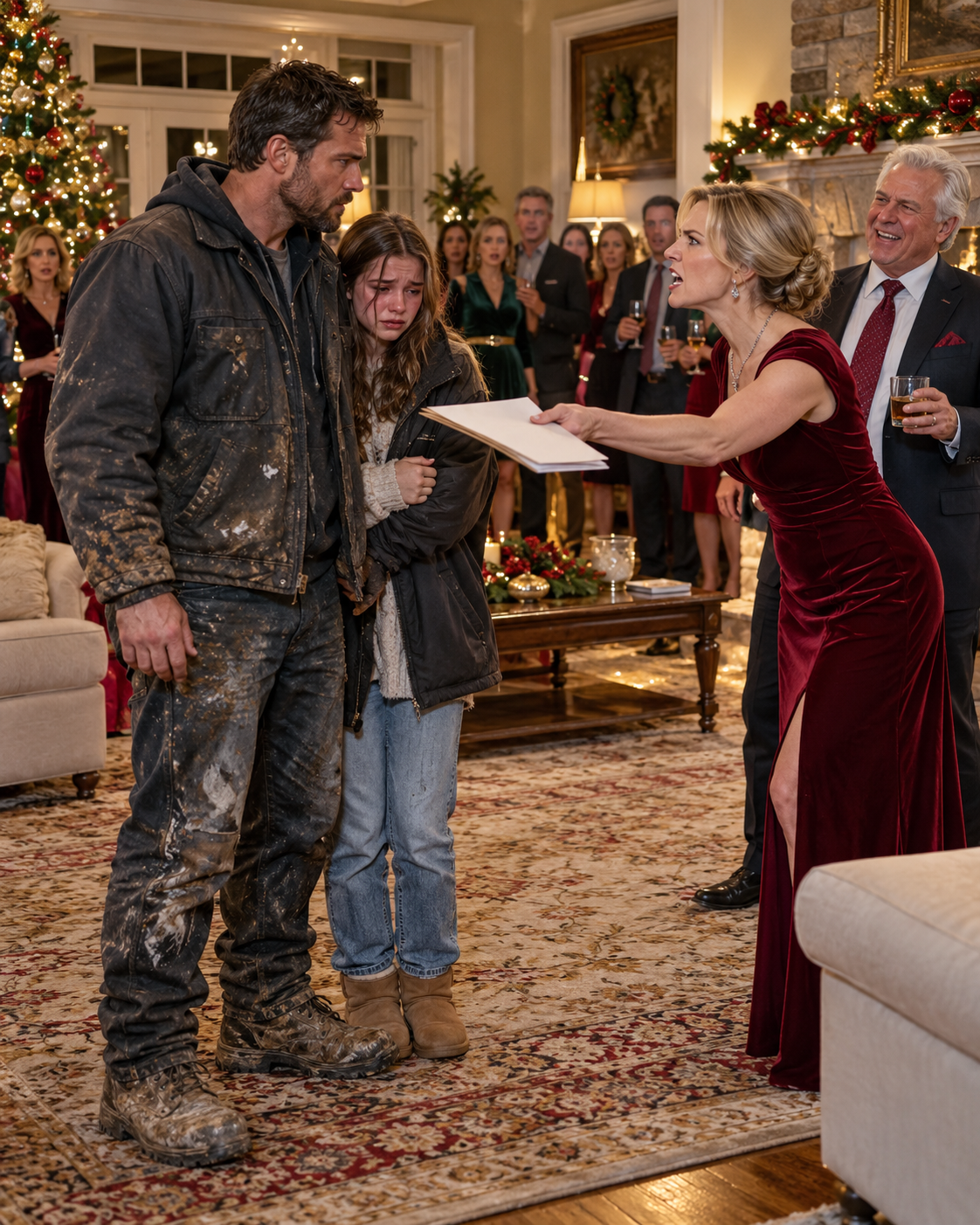
My father-in-law threw my daughter into the freezing cold. Then my wife handed me divorce papers.
Part 1: I am Liam. I am 35 years old. For eight long years, I hid the absolute truth about...