My sister ruined my hair hours before my wedding—and my father’s first words changed everything.
Part 1:
I never imagined the night before my wedding would end with me staring at the floor, watching thick dark strands of my own hair scattered across the marble tiles like fallen leaves.
The sound of the metal shears snapping shut right next to my ear is a noise that will echo in my nightmares forever.
The cold, heavy steel pressed against the back of my neck.
The sudden, violent yank that sent blinding pain shooting through my scalp as she twisted her fingers into my roots.
The sickening crunch of the blades slicing through years of careful growth.
I was frozen in the bridal sweet chair, the delicate white lace of my robe trembling as the reality of what just happened settled in.
Vesper stood over me, panting slightly, the heavy silver dress making scissors still clutched in her fist.
Her lips curled into a smile that was so deeply ugly, so full of pure, venomous satisfaction that it made my stomach turn over.
She had one.
That is what her eyes said.
She had taken the one thing I could not fix before I walked down the aisle.
That is exactly when the heavy oak door swung open and dad walked in.
For one breathless, desperate second, I thought he would drop the garment bag he was holding.
I thought he would rush over, see the jagged, ruined mess of my hair, see my tears, and finally be the father I needed.
I thought he would turn his anger on her.
Instead, his eyes moved from the piles of hair on the floor to Vesper and then finally to me.
There was no shock.
There was no outrage.
His face hardened into a familiar mask of annoyance.
Please
Part 2:
“You started it,” he said.
His voice was flat, bored, dismissive.
The words hit me harder than any physical blow ever could.
He did not ask what happened.
He did not care that my scalp was bleeding.
My chest heaved, a scream building in the back of my throat, but the sheer injustice of his words suffocated me.
He turned around and walked out of the room, leaving me alone with the monster he had created.
I looked at myself in the mirror, my reflection distorted by tears, and realized something terrifying.
This was not the end of the nightmare.
It was just the beginning.
Thank you for watching video.
Before I take you back there, do me one small favor.
Take a second to like and subscribe and tell me in the comments where you’re watching from and what time it is where you are.
It helps more than you know.
My name is Marin.
I am 29 years old and I work as a logistics operations manager in Chicago.
I am a woman who deals in hard facts, precise spreadsheets, and unforgiving deadlines.
I manage massive supply chains, ensuring that millions of dollars in freight move across the country without a single delay.
In my professional life, I am known for being sharp, rational, and unshakable.
People look to me to solve disasters because I do not let emotion cloud my judgment.
But if you were to look at the girl I used to be, the ghost who haunted the halls of a two-story house in Scranton, Pennsylvania, you would not recognize me.
Growing up, my house was a place where love was a currency, and I was entirely broke.
My older sister, Vesper, who is now 33, was the son around which our entire family orbit revolved.
Vesper was loud, dramatic, obsessed with appearances, and possessed a terrifying ability to manipulate the truth until it served her narrative.
My father, Orson, was a regional manager for an auto parts distributor.
He was a man who cared deeply about how the neighbors perceived him.
He loved the illusion of a perfect family.
And Vesper knew exactly how to paint that picture for him.
She was the golden child, the flawless daughter who knew how to stroke his ego, while I was simply the collateral damage in her endless quest for attention.
I remember a specific dinner when I was 15 years old.
It is burned into my memory because it was the moment I realized the game was rigged.
I had just won a state level mathematics competition.
I came home clutching a crisp gold embossed certificate, my heart hammering with a rare, fragile hope that maybe this time dad would look at me the way he looked at her.
I placed the certificate carefully on the center of the dining table right before Dad walked in.
A few seconds later, Vasper stormed into the room, twirling in her new cheerleading uniform.
She announced she had been named team captain.
Dad dropped his briefcase.
His face lit up with a massive grin, and he scooped her into a hug, praising her leadership, her popularity, her brilliance.
I sat quietly in my chair, waiting for a pause in the celebration to mention my award.
When they finally sat down to eat, Dad reached across the table for the coffee pot.
He did not even look down.
He set his hot, dripping coffee mug squarely on top of my math certificate.
The dark brown liquid seeped into the thick paper, ruining the gold seal.
I gasped and pulled it away, my eyes filling with angry tears.
“Dad, that was my award.
I won first place in the state.”
Vesper rolled her eyes, cutting her steak with deliberate slowness.
“Oh, stop being so dramatic, Marin.
It is just a piece of paper.
You are ruining a happy family dinner because you always need everything to be about you.”
Dad sighed, rubbing his temples like my very existence was a headache he could not cure.
“Listen to your sister, Marin.
Go wash that off in the sink and stop causing a scene.
We are celebrating Vesper tonight.”
I stood by the kitchen sink running cold water over the ruined paper, watching the ink bleed down the drain.
I realized then that no matter how hard I worked, no matter how many awards I won or how quiet I kept, I would never be enough.
Vesper did not just want to be the favorite.
She needed me to be the loser.
She fed on my humiliation.
If I ever showed a hint of pride, she would find a way to crush it beneath her heel.
And dad would always hand her the shoes.
I learned to bury my feelings deep down, locking them away in a dark place where neither of them could reach.
But the resentment was a seed, and it was growing roots.
How much longer could I survive in a house where my shadow was treated like a burden?
When I was 20, the fragile foundation of our family finally cracked.
My mother, who had always been a quiet, passive presence passed away after a sudden illness.
Her death left a massive echoing void in the house, and Vesper wasted no time rushing in to fill it.
She stepped into the role of the household matriarch with terrifying enthusiasm.
She began dictating dad’s schedule, controlling the grocery budget, and offering unsolicited advice on his business decisions.
Dad, crippled by grief and his own inability to manage a household, leaned heavily on her.
He surrendered his authority, mistaking her controlling nature for devoted care.
I was away at college, working two part-time jobs just to pay my tuition because dad claimed things were tight at home.
I rarely visited, unable to stomach the sight of Vesper playing the tragic, heroic daughter.
But when I was 24, the reality of dad’s financial situation came crashing down.
He had made several reckless investments trying to expand his territory, and the bank was threatening to foreclose on the family home in Scranton.
He was drowning, too ashamed to ask his golf buddies for help, pacing the living room late at night, a shadow of the proud man he used to be.
I had just landed a major promotion at my logistics firm.
The company awarded me a massive performance bonus for restructuring a failing supply route.
I suddenly had $45,000 sitting in my bank account.
It was the security I had starved for my entire life.
It was a down payment on a house, a safety net, a ticket to true independence.
But despite everything, despite the ignored awards and the cold shoulders, the thought of my father losing the house where I grew up made me sick with guilt.
I was still that little girl hoping to buy his love.
I contacted a financial adviser.
I set up an anonymous trust and wired the $45,000 directly to the bank holding dad’s mortgage.
I cleared the arars entirely.
I did not attach my name.
I wanted him to keep his pride.
I imagined him opening the letter from the bank, weeping tears of relief, and maybe, just maybe, recognizing that he had raised a daughter who was capable of saving him.
Two weeks later, I drove down to Scranton for a weekend visit, hoping to see the weight lifted off his shoulders.
When I walked through the front door, I heard voices coming from his home office.
The door was slightly a jar.
I stopped in the hallway, my hand hovering over the door knob.
Dad was sitting at his desk staring at a piece of paper.
He was crying real heavy tears.
Vesper was standing behind him, her hands resting on his shoulders in a sickening display of comfort.
“I cannot believe you did this, Vesper,” Dad choked out, his voice thick with emotion. “You saved this family.
You saved my life.
Where did you even get this kind of money?”
My blood turned to ice.
Vesper sighed softly, brushing a tear away from her own cheek.
“I had to do it, Dad.
I went to kill.
I begged him for a personal loan.
I leveraged my own business credit.
It was terrifying, but I could not let you lose the house.
Dad, it is just money.
I would do anything for you.”
Kale was Vasper’s sleazy, wealthy business partner.
He had never given her a dime without a predatory contract attached.
She had somehow intercepted the bank notice, realized the debt was paid anonymously, and instantly claimed the credit.
She stole my sacrifice, and wore it like a crown.
I stood in the hallway, my vision blurring with pure hot rage.
I wanted to kick the door open.
I wanted to scream the truth until my lungs bled.
I wanted to show him the wire transfer receipts on my phone.
But as I watched him turn and pull her into a desperate, grateful hug, a cold realization washed over me.
Even if I showed him the proof, he would find a way to justify her lie.
He would say she was trying to protect him.
He would accuse me of being jealous, of trying to ruin a beautiful moment.
He wanted her to be the hero.
I backed away from the door.
I walked out of the house, got into my car, and drove back to Chicago in dead silence.
I did not cry.
Crying was for people who still had hope.
That day, I took the tiny, pathetic part of my heart that still wanted my father’s approval and buried it under a layer of concrete.
I promised myself I would never bleed for them again.
But secrets like that do not stay buried forever.
They fester.
They turn toxic.
And I had to wonder when the truth finally clawed its way to the surface.
Who would be left standing in the wreckage?
Chicago became my fortress.
The brutal howling winds coming off Lake Michigan felt like a baptism, stripping away the lingering scent of Scranton and the heavy expectations of my father.
I threw myself into my career with a ferocity that frightened even my corporate mentors.
I was not just working for a paycheck anymore.
I was building an empire to protect myself.
Within 3 years, I was managing an $80 million logistics portfolio.
I bought my own clothes, paid my own rent, and cultivated a life where the word family was a concept I observed from a safe distance like a dangerous animal in a cage.
Then I met Alden.
Alden was a software engineer who worked in the building across from mine.
We met at a crowded coffee shop when he accidentally picked up my aggressively strong black coffee instead of his sweet vanilla latte.
He took one sip, grimaced, and looked at me with a genuine, self-deprecating laugh that disarmed all my defenses.
Alden was steady.
He did not play games.
He did not demand the spotlight, and he listened to me with a quiet intensity that made me feel entirely seen.
Falling in love with Alden meant stepping into his world, a world that was terrifyingly warm.
His mother, Ble, was a university professor with sharp eyes and a fierce protective streak.
The first time she invited me for dinner, I flinched when she reached across the table, expecting a reprimand.
Instead, she gently squeezed my hand and asked me about my day.
There was no hidden agenda, no test I was failing.
Then there was Gideon, Alden’s uncle.
Gideon was a retired insurance fraud investigator who spent his free time writing freelance journalism pieces.
He was a man who looked at the world in terms of evidence, motives, and hard facts.
He possessed an uncanny ability to spot a liar from a mile away.
Over Sunday dinners, Gideon would listen to the carefully sanitized anecdotes I shared about my childhood, his eyes narrowing slightly, reading the heavy silences between my words.
He knew I was hiding a war zone.
When Alden proposed on a rainy Tuesday evening in our living apartment, kneeling on the rug with a simple, elegant diamond, I said yes with a heart so full I thought it might burst.
I was finally building my own family.
But the moment the ring slipped onto my finger, the dread set in.
I had to send the invitations.
I mailed the thick cream colored envelopes to Scranton, hoping against hope that the physical distance would keep the toxicity at bay.
I invited Dad to walk me down the aisle, a final olive branch offered in the name of tradition.
I invited Vasper because excluding her would give her the ammunition she craved to play the victim.
The RSVP cards came back quickly.
They were attending.
Almost immediately, the psychological warfare began.
Vesper, whose luxury travel coordination business was entirely built on social media vanity, ramped up her online presence.
Every time I posted a small, happy update about wedding planning, tasting cakes, or picking out floral arrangements, Vesper would counter within an hour.
She posted cryptic, passive aggressive quotes on her Instagram stories.
“Some people are so obsessed with a single day of attention, they forget the people who actually built their lives.”
Or, “True success is quietly closing massive deals, not throwing expensive parties for validation.”
She was bleeding jealousy.
I ignored it.
I kept my head down, focusing on the logistics of the venue, the caterers, the seating charts.
But Vesper was not a creature who could tolerate being ignored.
If I would not give her a reaction, she would manufacture a crisis to force one.
3 weeks before the wedding, the whispers started.
I got a phone call from my aunt Alohoan, Dad’s sister, who served as the primary gossip courier for the family.
Her voice dripped with fake concern.
“Marin, sweetie,” Aloan cruned over the phone. “I was just talking to your father.
We are a little worried about the timing of your big day.
You know, Vesper has been working so hard to secure that massive corporate retreat contract.
It is a very sensitive time for her career.”
I grip the edge of my desk, my knuckles turning white.
“And aloan, my wedding date has been set for 14 months.
The venue is booked.
The deposits are paid.
What exactly does my wedding have to do with Vesper’s business?”
“Hello.” Inside the sound loud and patronizing. “Well, she is hosting a massive VIP client appreciation event that weekend.
She needs your father there to help host to show family solidarity.
She was wondering if you might consider pushing the ceremony to late evening or maybe downscaling the reception so people are not exhausted for her event the next morning.
You have to be reasonable, Marin.
Family supports family.”
A cold sweat broke out on the back of my neck.
The weeks leading up to a wedding are supposed to be a whirlwind of joyous anticipation, a montage of cake tastings, final dress fittings, and late night whispers with your partner about the future you are about to build.
For me, it felt like bracing for a hurricane.
The closer we got to the date, the thicker the air in our apartment became.
Alden could sense my anxiety.
He would find me sitting on the edge of our bed at 2 in the morning, staring blindly at the seating chart on my laptop, my stomach twisted into a hard, painful knot.
I had placed my family as far away from the headt as politely possible, shielding Alden’s wonderful, warm relatives from the inevitable passive aggressive comments my sister Vesper and my father Orson were bound to make.
But deep down, I knew that distance in a banquet hall would not be enough.
You cannot draw a boundary with people who do not believe you have the right to exist outside of their control.
The first real strike happened exactly 2 months before the wedding.
It did not come directly from Vesper, of course.
Toxic people rarely do their own dirty work when they have trained an army of flying monkeys to do it for them.
The phone rang on a Sunday afternoon.
It was Anna, Dad’s younger sister, the undisputed champion of family gossip and emotional manipulation.
I put the phone on speaker while I was folding laundry.
“Hi, Antaloan.
How are things in Scranton?”
“Oh, you know, we are surviving Marin,” she sighed, her voice dripping with that manufactured syrupy exhaustion she always used when she was about to ask for something unreasonable.
“I was actually calling about the wedding schedule.
Your father and I were talking and we are just so worried about the timing.
You know, Vesper has been under an immense amount of pressure lately.”
I froze.
A pair of Alden socks clutched in my hand.
“What does Vesper’s dress have to do with my wedding schedule?”
Aloan made a sound as if I were a stubborn child failing to grasp a simple concept.
“Well, Marin, surely
Recommended Stories

AT 2:47 A.M., A LOST SIX-YEAR-OLD ASKED A WEALTHY STRANGER FOR A RIDE HOME—BUT THE BLUE DOOR SHE LED HIM TO HID A DECISION HE NEVER KNEW HE HAD MADE – Life Story
The little girl stepped in front of his car at a.m., holding a pharmacy bag against her chest like something...
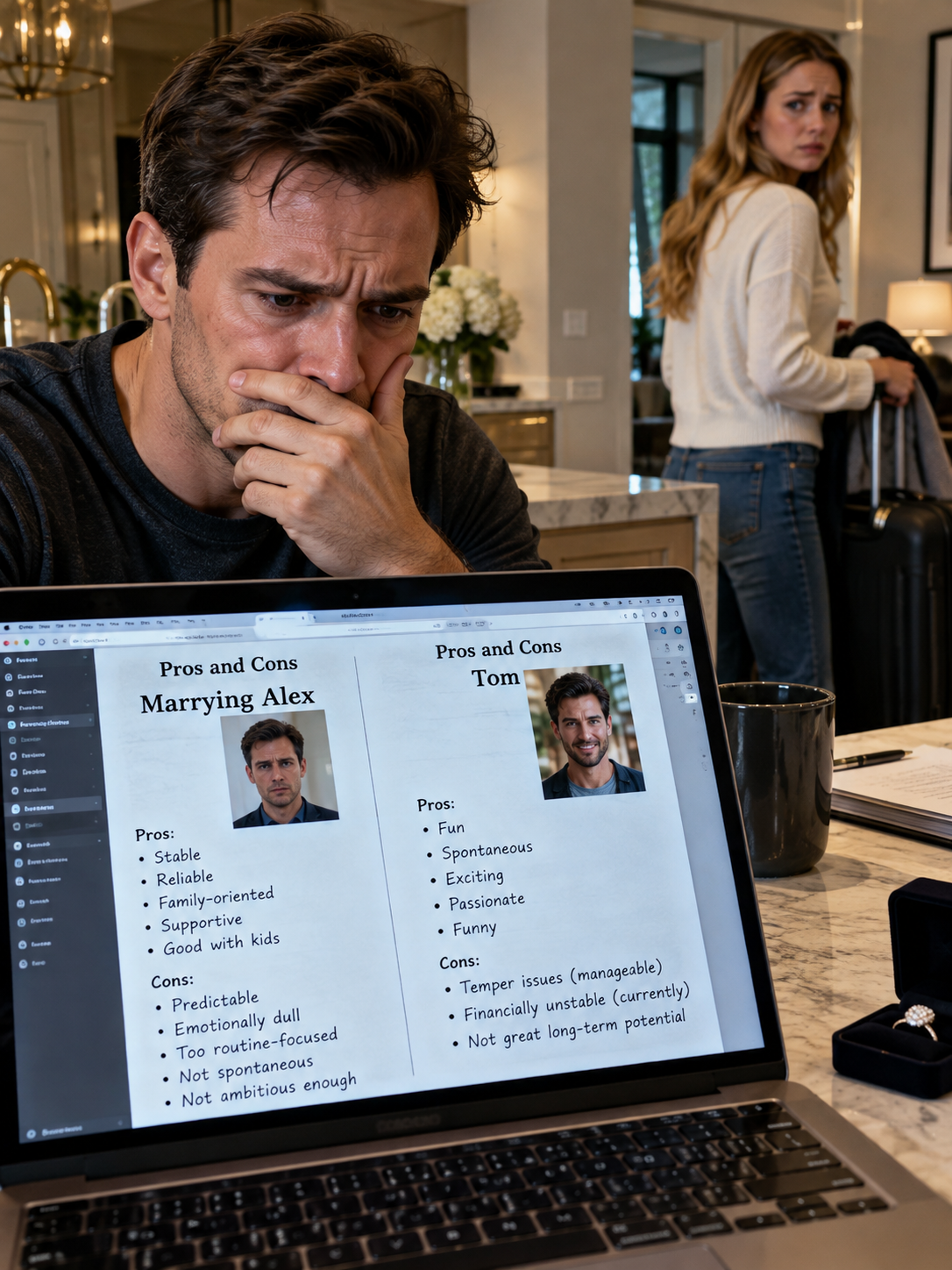
My Fiancée Wouldn’t Let Me Fix Her Broken Laptop—Then I Found a Pros-and-Cons List With Another Man’s Name Beside Mine – Life Story
My fiancée left her broken laptop on our kitchen counter and made me promise not to touch it. By noon,...
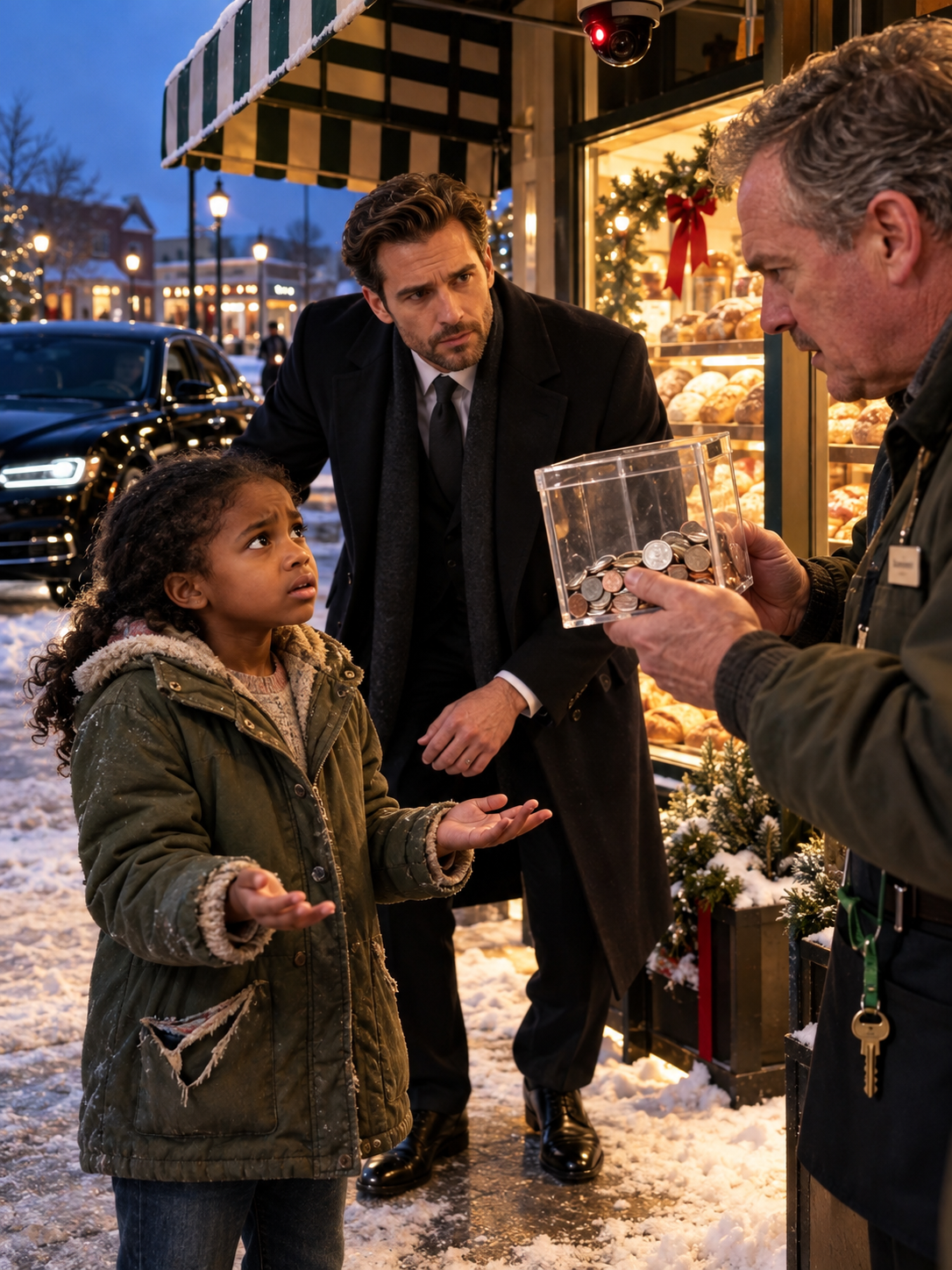
THE STORE MANAGER ACCUSED A HUNGRY EIGHT-YEAR-OLD GIRL OF STEALING CHARITY MONEY—THEN THE BILLIONAIRE WHO SAW HER LAST COIN FALL ASKED ONE DANGEROUS QUESTION – Life Story
The grocery manager lifted a charity box above an eight-year-old girl’s head and called her a thief. Her last chance...