“Withdraw the police report right now,” my mother snapped—then I found something she didn’t know I had seen. MY BROTHER SOLD MY $5.2M HOUSE “Withdraw the police report right now.” My mother’s voice cracked through the phone so sharply I pulled it away from my ear. I was sitting behind the wheel of a rental car outside my beach house in the Outer Banks, North Carolina. The ocean wind was pushing salt through the open window. A green construction dumpster sat on the lawn where my mother’s roses used to grow. And my mother was ordering me to protect the man who had just stolen the house from me. “Mom,” I said quietly, “Bradley forged my signature.” “He was trying to manage the estate while you were in Japan.” “He sold property that legally belongs to me.” “You have a high-paying architecture job,” she shot back. “You don’t need all that money.” I stared through the windshield. For one second, I honestly thought I had misunderstood her. Then she kept going. “He wants to start a business. He needs capital. He’s still your brother, Julian.” My hand tightened around the steering wheel. Three days earlier, I had been in Tokyo leading a major commercial design project. I had spent six months working fourteen-hour days, six days a week, trying to secure a promotion while helping cover my father’s escalating Alzheimer’s care. At 3:47 in the morning, my phone lit up beside the hotel bed. The message was from Bradley. “Closed on the beach house today. $5.2 million cash offer. Split it with mom and dad already.” Then came the line that made my stomach drop. “Thanks for being halfway around the world and unreachable.” He promised to wire me $500,000 when I got home. He called it a “finder’s fee.” For selling my own house. I sat on the edge of the bed staring at the screen while Tokyo glowed silently beyond the curtains. The beach house wasn’t shared property. It wasn’t Bradley’s. It wasn’t my mother’s. Seven years earlier, during one of my father’s rare clear periods, he had transferred the property entirely into my name. Not half. Not jointly. Entirely. He had looked me straight in the eye across his mahogany desk and said, “You are the only one protecting this family.” Bradley had been furious. At the law office, he slammed both hands onto the glass conference table and screamed that half the inheritance was his “by birthright.” My mother rushed to his side. “Just be the bigger person,” she told me. “Add your brother’s name. We’re family. We share our blessings.” I refused. The deed was signed, notarized, and placed in a bank safe-deposit box. As Bradley passed me in the parking lot that day, he slammed his shoulder into mine and leaned close enough for me to feel his breath. “What’s mine will always be mine,” he whispered. “I’ll get what I’m owed.” I thought it was a tantrum. Seven years later, he made good on the threat. My lawyer, Oliver, told me how. Bradley had walked into a title office carrying a power of attorney that supposedly gave him full authority over my real estate, bank accounts, and financial decisions. The signature looked like mine. It wasn’t. The document was forged. By the time Oliver was alerted, the buyers had already wired the money. I flew home immediately. Sixteen hours on a plane, no sleep. I landed in North Carolina, rented a car, and drove straight to the sheriff’s office with a binder containing years of tax receipts, maintenance payments, the original deed, medical trust records, and the fraudulent power of attorney. Detective Vargas looked skeptical at first. “Family property fights are usually civil matters,” he said. I slid the forged document across the scratched metal table. “Look at the signature.” He did. “Now look at the notary stamp.” His eyes narrowed. The stamp listed a county that didn’t legally exist. The room shifted. Vargas leaned forward. I told him the money had crossed state lines through a suspicious escrow company while I was physically in Japan. I told him Bradley had created shell entities and moved millions without my authorization. By the time I finished, the detective wasn’t treating it like a family argument anymore. He kept the binder. Then he told me not to leave the state. That afternoon, I drove to the beach house. That’s where I met Frank and Diane Montgomery. They were the couple who thought they had bought my property. Frank stormed toward me from a luxury SUV, his fists clenched. “We sold our home in Virginia,” he said. “We wired five million dollars in cash. Now we’re being told the sale was fraudulent.” Diane stood behind him crying, her purse crushed between both hands. “We have nowhere to live.” That was the moment Bradley’s theft stopped being just about me. He hadn’t only stolen my property. He had dragged two innocent retirees into it. I told them the truth. “I’m the legal owner. My brother forged my signature while I was working in Asia.” Frank’s anger drained from his face. “Your own brother did this?” “Yes.” Then my phone rang. Mom. And now she was screaming at me for calling the police. “You’re going to ruin his life over a piece of wood and sand!” “No,” I said. “He ruined his own life.” “If you don’t withdraw that report, you will tear this family apart.” I looked at the house. At the crushed roses. At the construction barriers. At the place my father had trusted me to protect. Then I answered in a voice so calm it surprised even me. “I’ll see him in court.” Silence. “And if you keep defending him,” I added, “I’ll see you there too.” I ended the call and blocked her number. For the first time all day, the yard went completely quiet. I opened my laptop and pulled up the documents Oliver had sent me. The fake escrow company had a registered mailing address. A PO box in Charleston. I clicked through the filing history. Then I stopped. Bradley wasn’t smart enough to build this operation alone. Someone had helped him. Someone close enough to know my schedule. My travel dates. My property records. My family’s weak points. And as I stared at the screen, one detail made the hair rise on the back of my neck. The person helping him wasn’t outside the family.
Part 1: I am Julian, 32 years old. 6 months ago, my own flesh and blood, my older brother, sold my $5 million beach house entirely out from under me while I was working on a massive architecture project in Tokyo.
While I was pouring my absolute heart and soul into my career to pay for our father’s rapidly escalating medical bills, my mother looked me dead in the eyes and told me to just let my brother have the money because family is supposed to share everything.
She actually laughed in my face in front of an entire real estate office, telling me I was being entirely too greedy and selfish.
But there is one thing they did not know.
I had digital forensics on my side and an ironclad inheritance document securely locked away in a vault they could never access.
And now they are begging me on their hands and knees to drop a massive federal lawsuit that threatens to put him behind bars for a very long time.
Before I tell you exactly what happened, hit that like button if you believe in true justice and don’t forget to tell me where you are watching from in the comment section below.
Now, let’s go back to how this absolute nightmare started.
The air in my Tokyo hotel room was completely still, heavy with the kind of absolute suffocating silence that only exists at in the morning in a foreign city where you do not speak the language.
Please
Part 2: It was exactly a. m.
The harsh, piercing blue light of my smartphone screen cut through the darkness of the room like a physical blade, illuminating the ceiling.
I had been in Japan for six solid months.
I was leading a major commercial design project, a massive undertaking that required me to be on site, analyzing wood with grains, stress testing structural loads, and negotiating with local contractors for 14 hours a day, 6 days a week.
It was the kind of highstakes promotion that could secure my financial future for life.
More importantly, it was the kind of salary bump that would ensure my father’s medical trust remained fully funded.
My father was drowning in Alzheimer’s and the specialized inh home care he desperately needed was draining our family’s resources faster than a sinking ship takes on water.
I was exhausted.
My bones achd.
My eyes were perpetually bloodshot.
I reached over to the nightstand. my eyelids heavy as lead and tapped the glowing screen, expecting an urgent email from a client or perhaps an alert from my calendar.
The message was not from a client.
It was from my older brother, Bradley.
The text read, “Closed on the beach house today. $5. 2 million cash offer.
Split it with mom and dad already.
Thanks for being halfway around the world and unreachable.” Don’t worry.
I’ll wire you $500,000 when you get back.
Consider it a finder’s fee for staying out of the way.
I read the words once, then I blinked, rubbing my eyes, convinced the exhaustion was playing cruel tricks on my mind.
I read them a second time, then a third.
My brain simply refused to process the English language on the screen.
The beach house in the Outer Banks of North Carolina was not just a piece of prime real estate.
It was not a shared family asset.
It was my property.
It was legally, entirely, and solely in my name.
I sat up on the edge of the mattress.
The chilling reality of the situation washing over me like a bucket of ice water.
My hands began to shake so violently that I actually dropped the phone onto the carpet.
It landed with a soft thud, the screen still glowing with that mocking, horrific message.
I stared at the device lying there, my mind racing through a thousand impossible scenarios.
How do you sell a house that does not belong to you?
How do you bypass the county clerk, the title agency, the escrow company, and the federal banking regulations?
I picked the phone back up, my fingers clumsy and numb, and immediately dialed Oliver, my personal lawyer back in the States.
The phone rang for what felt like an absolute eternity.
It was late afternoon in North Carolina.
Oliver answered on the second ring, but his voice lacked its usual calm, calculated, professional cadence.
He sounded frantic, out of breath, like a man who had been running a marathon in a tailored suit.
Julian, thank God.
I have been trying to reach you for 48 hours straight.
My emails have been bouncing back and your voicemail has been full.
What in the world is happening with the Outer Banks property?
That is exactly what I am asking you, Oliver, I said.
My voice tight, horsearo, and remarkably cold.
Bradley just texted me.
He said he sold it.
He said he closed on a $5. 2 million cash offer.
Oliver explained to me right now in plain English how someone sells a house they do not legally own.
I heard Oliver shifting thick stacks of paper on his heavy mahogany desk, the sound crackling through the international line.
He let out a long, ragged exhale.
Julian, listen to me very carefully.
Bradley walked into a local title office in Charleston 3 days ago with a power of attorney document.
The document granted him full unrestricted authority to liquidate your real estate assets, manage your bank accounts, and negotiate on your behalf.
The signature on the document was yours, Julian, or at least a very convincing, high-quality forgery of yours.
He moved the deed into escrow and pushed a cash sale through a small, highly questionable title agency before I could file a block with the county clerk.
By the time the system flagged the anomaly and I was notified, the transaction was already in its final stages.
The buyers already wired the funds.
The money is gone.
It cleared the escrow account yesterday afternoon.
The silence in my hotel room became deafening.
It felt as though all the oxygen had been sucked out of the space.
My own brother, the man who grew up in the bedroom next to mine, had committed federal wire fraud, identity theft, and grand lararseny while I was asleep on the other side of the planet.
He had stolen $5 million, my entire net worth, my father’s safety net, my legacy. and he had the absolute audacity to offer me a 10% cut of my own property like he was tossing a scrap of meat to a starving dog.
Let me show you exactly where this level of pure unchecked narcissistic arrogance leads a person.
Fast forward exactly 2 weeks from that terrible lifealtering phone call.
The midday southern son was beating down on the pristine, newly paved asphalt of the driveway at Bradley’s luxury apartment complex in downtown Charleston.
He was leaning casually against the hood of a brand new slate gray Porsche 911.
He bought it that very morning, paying straight cash using the funds he stole from my property.
He had this smug, untouchable grin plastered across his face, wearing designer sunglasses and a silk shirt that cost more than my first car.
He was chatting with a neighbor, acting like he was the king of the world, a self-made millionaire enjoying the fruits of his labor.
That smug grin stayed on his face right up until three Dare County Sheriff’s cruisers came screeching into the parking lot.
Their sirens blaring briefly before shutting off, their light bars flashing blindingly in the sun.
The heavy police vehicles angled perfectly to completely block the only exit of the parking lot.
I stood exactly 50 ft away, standing in the dark shade of a massive oak tree, watching as Detective Vargas stepped out of his lead vehicle.
Vargas was a veteran cop, a man who had zero patience for rich kids playing games with the law.
Vargas did not hesitate.
He did not introduce himself.
He walked straight up to the gleaming Porsche, his hand resting casually near his duty belt, completely ignoring Bradley’s frantic, high-pitched demands to know what was going on.
Bradley Brennan,” Vargas said, his voice carrying over the sound of the idling police engines, heavy with absolute unquestionable authority. “Turn around and place your hands flat on the hood of the vehicle.
Spread your legs.
Do it right now.” “Excuse me, what is the meaning of this?
Do you know who I am?
You are making a massive mistake.
I am a respected businessman.” Bradley shouted, his voice cracking, his face turning pale as he looked at the three armed officers advancing on him.
Hands on the hood.
Now, Vargas barked, stepping forward and physically grabbing my brother by the shoulder, spinning him around and pressing him against the hot metal of the Porsche.
You are under arrest for firstdegree forgery, federal wire fraud, and grand theft real estate.
You have the right to remain silent.
Anything you say can and will be used against you in a court of law.
The look of sheer unadulterated terror on my brother’s face as the heavy steel handcuffs clicked loudly and securely around his wrists is an image burned into my memory forever.
His expensive designer sunglasses fell to the concrete, the lenses shattering into a dozen pieces.
He looked up, scanning the area like a trapped animal, and locked eyes with me standing under the tree.
He started screaming.
He screamed that I was a monster, that I was destroying our family over a misunderstanding.
He demanded that I call the police off, begging me to tell them it was all a big joke, a simple mixup.
But the sound of those handcuffs clicking shut wasn’t the end of the story.
It was merely the opening battle of a war that would tear our entire family structure down to its 10 years.
For 10 long, agonizing, soulcrushing years, I was the invisible pillar holding my family together.
When my father, Winston, was officially diagnosed with early onset Alzheimer’s.
The entire dynamic of our household shifted overnight.
It was a Tuesday.
I remember the exact weather, the exact smell of the doctor’s office.
It was like watching a grand, magnificent building slowly collapse from the inside out, brick by brick.
The man who taught me how to throw a baseball, the man who showed me how to tie a Windsor knot, balance a checkbook, and respect the value of a hard-earned dollar, was slowly fading away.
He was being replaced by a frightened, confused stranger who sometimes didn’t even recognize his own living room, who would wander off to Walmart in the middle of the night looking for a dog that had died 20 years ago.
The medical bills began piling up almost immediately.
American health care is ruthless, and neurological decline is one of the most expensive ways to die. the out-of-pocket costs for specialized memory care facilities, the inhome nursing staff required to ensure he didn’t accidentally burn the house down, the endless stream of prescription medications.
It was astronomical.
I was 22 years old, fresh out of college with a grueling degree in architecture.
Instead of spending my weekends traveling, dating, or building a social life like every other young professional in my graduating class, I was sitting at my parents’ dining room table, buried under mountains of paperwork.
I was the one managing the agonizing 401k withdrawals, carefully calculating the tax penalties so we wouldn’t lose everything to the IRS.
I was the one organizing the massive stacks of insurance claims, fighting with heartless customer service representatives on the phone for hours just to get a single necessary treatment covered.
I was making sure the mortgage on their primary residence was paid on time every single month, taking portions out of my own entry-level salary to cover the gaps.
I took on extra freelance design work, burning the midnight oil until my vision blurred, just to keep the lights on and the nurses paid.
And where was Bradley during all of this?
Bradley was living his absolute best life, completely unbothered by the tragedy unfolding at home.
He was the golden child, the charismatic, fast-talking older brother who could do absolutely no wrong in my mother’s deeply biased eyes.
While I was sitting in sterile fluorescent lit hospital waiting rooms, holding my father’s trembling hand and feeding him ice chips, Bradley was jumping from one failed tech startup venture to another.
He would disappear for months at a time, traveling to Europe or Southeast Asia on vague business trips that produced absolutely nothing but Instagram photos.
He only showed up at the house when he needed to ask our mother, Sylvia, for another temporary loan to float his lavish lifestyle, draining the very funds we needed for dad’s care.
He never once offered to help bathe our father.
He never once offered to sit down and review the medical trust with me or even look at a hospital bill.
He just took and took and took, viewing our parents as an endless ATM.
My father, however, was not completely gone.
He was sick, but he was not blind.
In his rare moments of profound clarity, those brief windows where the fog of the disease lifted and the old sharp Winston returned, he saw exactly what was happening.
He saw who was doing the heavy lifting and he saw who was bleeding the family dry. 7 years ago, during a particularly good week where his mind was incredibly sharp and focused, my father called me into his study.
He sat behind his heavy mahogany desk. the afternoon sun filtering through the blinds highlighting the dust moes in the air.
He had a thick manila folder sitting in front of him, his hands resting on top of it. “Julen,” he said, his voice carrying that firm, undeniable authority I remembered so fondly from my childhood. “Sit down.
Close the door.
We need to talk about the future, and we need to do it right now while I still have my wits about me.” I took a seat, instantly on edge, recognizing the serious tone. “What is it, Dad?
Are you feeling okay today?
Do we need to call Dr.
Evans?” “I am fine today, but I won’t always be fine, son,” he said softly, tapping the heavy folder with a gold pen. “I have made a decision, a final binding decision.
I am transferring the deed of the beach house in the Outer Banks entirely into your name, not yours and your mother’s.
Not yours and your brothers, just yours.
We are going to the notary downtown this afternoon to finalize the legal paperwork.
I was completely stunned.
The beach house was our family’s crown jewel.
It was a beautiful, sprawling cedar property with wraparound porches that he had bought back in the early8s.
It had appreciated massively in value over the decades, becoming a prime piece of real estate in a highly coveted coastal market.
It was where we spent every summer.
Where my fondest childhood memories of fishing and swimming were made.
Dad, you don’t need to do that.
I protested, my voice thick with emotion, overwhelmed by the gesture.
We can manage the medical costs.
I will pick up more freelance work.
We don’t need to touch the house.
It’s your legacy.
I absolutely do need to do this and you need to listen to me, he insisted, his eyes locking onto mine with a fierce, desperate intensity.
Listen to me, Julian.
The medical debt is going to consume everything eventually.
I know how this disease works and I know how the system operates.
If I leave the house in my name or in your mother’s name, the state will eventually place a massive lean on it to recover the health care costs when I inevitably have to go into a full-time roundthe-clock care facility.
They will take it all.
Furthermore, and I say this with a heavy heart because he is my son, if your brother Bradley gets his hands on even a single percentage of this property, he will leverage it for one of his ridiculous business schemes.
He will take out a second mortgage, blow the cash, and lose the house in a heartbeat.
You are the only one protecting this family.
You are the responsible one.
You have sacrificed your 20s for me.
I need to know this house is safe with you.
I want you to have this inheritance.
It is yours.
We went to the notary office that very afternoon.
It was a formal, quiet law office downtown, smelling of old paper and leather chairs.
Unfortunately, my mother, in her infinite lack of judgment and unwavering loyalty to her golden child, had mentioned the appointment to Bradley during one of their daily phone calls.
When my father and I arrived at the law office, stepping out of the elevator, Bradley was already there in the lobby, pacing like a caged, furious animal.
When the senior lawyer calmly explained the situation, detailing that the deed was being transferred solely to me as an irrevocable gift to protect the asset, Bradley completely lost his mind.
He slammed his fists down on the glass conference table so hard I thought it would shatter, knocking over a picture of ice water that spilled all over the expensive carpet.
This is absolute garbage,” he screamed, his face turning an ugly shade of crimson, the veins popping in his neck as he pointed a finger an inch from my face.
I am the oldest son.
Half of that inheritance is legally mine by birthright.
You are manipulating a sick, confused old man whose brain is turning to mush to steal my college fund, my future, and my property.
You are a thief.
My mother, Sylvia, immediately rushed to Bradley’s side.
She didn’t reprimand him for screaming at his ailing father.
She didn’t correct his horrible, abusive behavior or defend my honor.
Instead, she looked at me with a pleading, deeply manipulative expression, tears welling in her eyes.
Julian, honey, please just be the bigger person here.
You always are.
Just tell the lawyer to add your brother’s name to the deed.
We are a family.
We share our blessings.
We don’t divide them.
Please do not cause a terrible rift in this family over a piece of real estate.
Give him his half.
It’s the right thing to do.
I looked at my father.
His hands were visibly shaking.
The severe stress of the screaming match clearly taking a heavy toll on his fragile mental state.
He looked terrified.
I refused to back down.
I would not let them bully him.
I looked my mother dead in the eye, my voice steady and cold.
The deed goes in my name, Mom.
That is what dad wants, and it is the only legal way to protect the asset from Medicaid recovery.
Bradley has taken enough from this family.
He is not getting his name on this paper.
I signed the documents.
The notary stamped them, the heavy thud sealing the deal.
It was officially done.
As we walked out to the parking lot, the tension was thick enough to cut with a knife.
Bradley stormed past me, deliberately and violently, bumping his shoulder hard against mine.
He stopped, leaned in close to my ear, and his voice dropped to a vicious, venomous whisper.
Enjoy holding the paper, little brother, but what’s mine will always be mine.
I will get what I am owed.
One way or another, mark my words.
I brushed off the threat as the desperate, pathetic ranting of a spoiled child throwing a tantrum because he couldn’t get his way.
I locked the original deed in a bank safe deposit box alongside the other critical family documents.
I spent the next 7 years meticulously maintaining the property, paying the exorbitant property taxes out of my own salary, repairing the roof after hurricanes, and covering the endless HOA fees.
I thought my father’s signature and the rigid structure of the American legal system were an unbreakable shield.
Sitting on the edge of that hotel bed in Tokyo years later, staring at the text message about the $5 million sale, I realized that greed is a terminal disease that can rot a person’s soul completely.
I didn’t even bother packing my clothes.
I threw my work laptop, my forensic backup drives containing years of financial records, and my passport into a leather carry-on bag.
I booked the first available first class ticket out of Narita International Airport, ignoring the massive expense and headed straight for the terminal.
The flight back to the United States was 16 hours of pure unadulterated rage.
I didn’t sleep a wink.
I spent the entire flight using the airplane Wi-Fi to calculate every legal maneuver. read up on every federal penalty for wire fraud and strategize every single step I needed to take to absolutely destroy the man who thought he could steal my legacy.
I landed at Raleigh Durham International Airport with a singular burning mission.
I bypassed my apartment entirely.
I didn’t shower.
I didn’t eat.
I didn’t rest.
I rented a car and drove 3 hours straight to the Dare County Sheriff’s Office on the coast.
I walked through the heavy double glass doors carrying a heavily bonded legal binder that I had meticulously compiled over the years.
It contained 10 years of original property tax receipts, the original notorized deed from 7 years ago, bank statements showing my payments for all maintenance, and my father’s comprehensive medical trust documents proving my sole financial responsibility for the estate.
I sat down in a cramped, overly bright interrogation room across from Detective Vargas.
Vargas was a seasoned investigator with sharp, tired eyes, graying hair, and a non-nonsense demeanor that suggested he had seen every ugly side of human nature.
At first, Vargas was highly skeptical.
Cops hate family disputes.
Family property disputes usually belong in civil court, bogged down in endless mediation and lawyer fees. not a criminal precinct. “Listen to me, Mr.
Brennan,” Vargas said, leaning back in his squeaky chair and crossing his arms over his chest. “Siblings fight over inheritance and real estate every single day in this county.
It’s sad, but it’s not a police matter.
Unless you can definitively prove that a malicious crime occurred, this is a civil dispute.” Your brother claims he had your verbal authorization to act as your proxy while you were overseas.
He says, “You two had an agreement regarding the liquidation of family assets.
I didn’t argue.
I just opened the heavy binder and slid the fraudulent power of attorney document which my lawyer Oliver had managed to pull from the county clerk’s digital records across the scratched metal desk.” “Detective, look at the signature on that document.
Really, look at it.” I said, my voice steady, analytical, and cold.
Now, look at my driver’s license.
Look at my passport signature.
Look at the bank records I’ve provided.
They don’t even closely match.
The loops on the J are wrong.
The pressure on the pen is completely inconsistent.
Furthermore, look at the notary stamp on page three.
Go ahead, pull up your computer and run that stamp through your state database.
It lists a county in South Carolina that does not legally exist.
It’s a phantom jurisdiction.
My brother didn’t just have a misunderstanding.
He manufactured forged government documents, established a fraudulent escrow account using shell companies, and bypassed international banking laws to wire $5 million across state lines while I was physically in Japan.
We are not talking about a family squabble over a grandmother’s necklace.
We are talking about federal wire fraud, firstderee forgery, and grand theft real estate on a massive scale.
Vargas picked up the document, his eyes narrowing as he scanned the fake notary stamp, his posture changed instantly, the lazy skepticism vanished entirely, replaced by the sharp, predatory focus of a seasoned cop looking at a slam dunk felony case.
He tapped his pen on the desk.
I am going to need to keep this binder, Julian.
All of it.
I will contact the federal prosecutor’s office by the end of the day to get a warrant drafted.
Don’t leave the state.
Leaving the precinct, my next stop was the beach house itself.
I needed to see the damage.
I needed to see what my brother had done to the place I loved most in the world.
I pulled up the familiar long gravel driveway.
The nostalgic scent of I remembered was completely shattered.
There was a massive, ugly green construction dumpster sitting right on the front lawn, crushing my mother’s old rose bushes and heavy metal barricades blocking the wraparound porch.
Before I could even step out of my rental car, a late model luxury SUV aggressively pulled in behind me, deliberately blocking my exit in the driveway.
A couple in their late 60s got out.
They looked exhausted, terrified, and absolutely furious.
These were Frank and Diane Montgomery, the innocent buyers who had just dropped their entire life savings into my brother’s elaborate trap. “Are you Julian Brennan?” Frank demanded, marching toward me with his fists clenched tightly at his sides, his face red with anger and stress. “Your lawyer put a freeze on the deed transfer this morning.
We sold our primary residence in Virginia, a house we lived in for 30 years to buy this property for our retirement.
We wired $5 million in pure cash to the title company.
And now we are being told the sale is fraudulent.
Where is our money?
What kind of sick scam are you and your family running?
Diane was standing behind him crying openly, gripping her designer purse so tightly her knuckles were white.
We have nowhere to live.
Our furniture is in storage.
The moving trucks are scheduled for tomorrow morning.
We trusted the real estate agents.
We trusted the legal system.
How are we supposed to know we were dealing with a family of con artists?
Looking at them, the sheer devastating collateral damage of Bradley’s greed hit me squarely in the chest.
This wasn’t just about my ego or my bank account anymore.
He had ruined these innocent people’s lives.
I didn’t raise my voice.
I didn’t get defensive or angry at them, I looked Frank directly in the eye, keeping my posture open and calm. “Mr.
Montgomery, I am the legal owner of this house, and my brother forged my signature to steal your money while I was working in Asia,” I said clearly, making sure he heard every word. “I am deeply, profoundly sorry for what you are going through right now.
I have just come from the police station where I filed federal criminal charges against him.
I swear to you on my father’s life, I will do everything in my legal power to ensure the federal investigators force that fake escrow company to release your funds immediately.
You will get every single penny back.
I am not your enemy and I am not part of this scam.” Frank’s shoulders slumped instantly, the aggressive fight draining out of him as he realized I was a victim just as much as he was.
Good Lord,” he whispered, running a trembling hand over his face. “Your own brother did this to you.” As they drove away, leaving me standing alone in the driveway of a house that felt tainted by betrayal.
My phone rang.
I looked at the caller ID.
It was my mother, Sylvia.
I stared at the screen for a long moment before answering, bracing myself for the inevitable manipulation and guilt trips.
Julian, she said, her voice dripping with that familiar, sickeningly sweet, manipulative tone she always used when she wanted me to fold and submit to her will.
Bradley called me.
He is very upset, honey.
He said, “You went to the police and are trying to have him arrested over this silly house situation.
It’s not a silly situation, Mom.” I said, my voice dangerously calm, echoing across the empty yard.
He committed multiple federal felonies.
He forged my signature on legal documents.
He stole $5 million from me and from an innocent elderly couple.
He was just trying to manage the estate while you were busy in Japan.
She shrieked, dropping the sweet facade instantly, her voice turning shrill, vicious, and defensive.
You have a high-paying salary as an architect.
You don’t need all that money.
He wants to start a new business.
He needs capital.
He is still your brother, Julian.
He is my son.
You are going to ruin his life over a piece of wood and sand.
I order you to withdraw that police report right now.
If you don’t, you will tear this family apart, and I will never forgive you.
I gripped the steering wheel of my rental car until my hands achd, the leather creaking under the intense pressure.
He ruined his own life, Mom.
He crossed a line that cannot be uncrossed.
I will see him in a courtroom.
And if you keep defending him, I will see you there, too.
I hung up the phone and permanently blocked her number.
My brother didn’t just steal a house.
He orchestrated a master class in federal fraud.
But as I sat in the driveway of my childhood home, reviewing the paperwork Oliver had sent me on my laptop, I realized something chilling.
The fake escrow company wasn’t just a random website.
It was registered to a PO box in Charleston, specifically set up to funnel the money cleanly.
Bradley wasn’t smart enough to set this up alone.
He had an accomplice, and I was about to find out exactly how deep the betrayal went and how many people in my own family were willing to stab me in the back for a piece of the pie.
The American legal system moves incredibly slowly, which unfortunately gives desperate, guilty people plenty of time to dig their own graves even deeper. 24 hours after the dramatic arrest in the Bradley managed to post a massive bail.
The main escrow accounts were largely frozen by the federal investigators, but he had already managed to siphon off a significant chunk of the cash into hidden offshore accounts before the freeze hit.
He literally used my stolen money to buy his temporary freedom.
The moment he was out on bail, the psychological warfare began in earnest.
Bradley, realizing he was facing serious prison time and panicking, launched a coordinated, vicious smear campaign across social media.
He posted long, tearful videos on Facebook and Instagram, claiming I was a greedy, absent brother who had abandoned our dying father.
He told his thousands of followers that he heroically stepped in to sell the house just to pay for our parents’ medical care because I refused to help, claiming I was hoarding the family wealth while our father suffered.
The lies were breathtaking in their absolute audacity.
He even set up a GoFundMe page for his legal defense against a malicious lawsuit, painting himself as the ultimate victim.
But people online love a victim narrative, and they ate it up, filling my inbox with death threats and hateful messages.
The worst part, however, wasn’t the public backlash from ignorant strangers.
It was the betrayal from within my own inner circle.
My uncle Gregory, my father’s brother, called me one evening.
His voice was full of sympathetic warmth and concern, playing the role of the caring elder.
Julian, my boy, I am so deeply sorry this nightmare is happening to you.
Your brother is completely out of control.
Tell me, what is your lawyer planning?
How are you going to beat this forgery charge?
You can trust me, Julian.
I’m on your side.
We have to stick together.
Exhausted, emotionally drained, and desperately needing a familiar ally in this war, I foolishly confided in Gregory.
I told him about the specific digital forensics we were running on the forge documents.
I told him about our strategy for the upcoming preliminary hearing detailing exactly how we planned to prove the notary was fake and how we were tracking the IP addresses of the wire transfers.
Two days later, my lawyer Oliver called me into his downtown office.
He looked absolutely furious, pacing behind his desk, running a hand through his hair.
Julian Bradley’s defense attorney, a notorious shark named Thorne, just filed a massive motion to suppress our digital evidence.
He cited specific technicalities that we hadn’t even filed in court yet.
He knew exactly what our angle was.
You have a leak.
Who did you talk to?
The realization hit me like a physical blow to the stomach.
Uncle Gregory.
I immediately hired a private investigator, paying top dollar to pull Gregory’s public and private financial records.
It took the PI less than 48 hours to discover a fresh, untraceable $10,000 wire transfer into Gregory’s secondary bank account.
The origin?
One of Bradley’s newly formed shell companies.
My own uncle, the man who used to carve the turkey at Thanksgiving dinners, had sold my legal strategy to my brother for pocket change.
Blood meant absolutely nothing in this family.
It was a commodity to be bought and sold.
The toxic rumors eventually reached my architecture firm in Raleigh.
The board of directors was getting incredibly nervous.
I was in line for a massive promotion to senior partner, a position that came with profit sharing, a massive salary increase, and a corner office.
But being involved in a messy, high-profile federal fraud investigation with my face plastered on social media as a greedy villain was terrible optics for a firm that handled multi-million dollar real estate accounts.
I was called into a boardroom meeting that felt more like a corporate execution.
I stood at the head of the long mahogany conference table, looking at the skeptical, tight-lipped faces of the executives.
My entire career, everything I had built over the last decade, was hanging by a single thread.
The silence was suffocating.
Then Mr.
Kensington, the CEO and a man known for his ruthless integrity and sharp intellect, held up a single hand to silence the nervous murmurss of the board. “Gentlemen,” Kensington said. his voice echoing powerfully in the large room, cutting through the tension.
I have personally reviewed the police reports, the original property deeds, and the digital forensic files that Julian provided to HR this morning.
Julian is the victim of a highly sophisticated malicious crime committed by his own family.
He has managed our firm’s most complex accounts with absolutely flawless ethics for 5 years.
We do not abandon our own when they are under fire from liars and thieves.
Julian keeps his position and the promotion remains on the table pending the trials outcome.
Are we clear?
I walked out of that room with a renewed sense of purpose and a fire in my chest.
As I sat at my desk, I received a text from Clara, my lead engineer back in Tokyo.
Just heard the news about the board meeting.
Keep fighting, boss.
We have your back over here.
For the first time in weeks, I didn’t feel completely alone.
I realized I had found my real family.
Not the people who shared my DNA, but the people who respected the truth and stood by me when the storm hit.
That afternoon, Bradley’s lawyer, Thorne, requested a formal mediation meeting, hoping to settle out of court before the federal prosecutor brought the hammer down.
I sat across from Bradley and Thorne in a sterile glasswalled conference room.
Bradley looked exhausted.
The stress of the federal indictment, the frozen bank accounts, and the looming threat of prison had worn away his arrogant veneer.
He looked small.
Thorne, wearing a suit that cost more than my first car, slid a crisp piece of paper across the table.
Julian, my client is willing to offer a generous plea deal.
He will return 80% of the remaining funds immediately and he will issue a formal public apology clearing your name.
In exchange, you formally ask the district attorney to drop the felony charges down to a minor misdemeanor civil dispute.
No prison time.
You get your money back.
He gets his life back.
It’s a win-win.
I looked at the paper.
Then I looked at Bradley.
He was practically vibrating with nervous energy, tapping his foot against the floor, waiting for me to cave.
He was waiting for me to act like the obedient younger brother our mother always demanded I be.
I picked up the paper.
I didn’t say a word.
I tore it slowly down the middle, the sound loud in the quiet room.
Then I tore it again.
I dropped the pieces on the table like trash.
I don’t want 80% of my money, Bradley, I said. my voice completely devoid of emotion.
I want 100% of my property and I want you to spend the next 5 years in a federal penitentiary reflecting on exactly what you did.
There is no deal.
We go to trial.
I stood up, buttoned my jacket, and walked out of the room without looking back.
They thought they could bury me under a mountain of emotional manipulation, fake social media tears, and cheap legal tricks.
But they forgot one crucial detail about architects.
We know exactly how to deconstruct a faulty foundation.
I knew every crack in their story.
And I was about to bring Bradley’s entire house of cards crashing to the ground in open court.
They thought the worst was over.
They were so incredibly wrong.
The federal courthouse in downtown Raleigh was a massive imposing structure made of cold gray granite and thick reinforced glass.
It was the kind of building designed to make you feel small the moment you walked up the wide, sweeping concrete steps.
It was a Tuesday morning in late September, exactly 6 months after my brother had been arrested in that sweltering Charleston parking lot.
The North Carolina air was crisp, but I was sweating under the collar of my tailored charcoal suit.
Walking into that building, I felt a heavy, suffocating weight pressing down on my chest, threatening to crack my ribs.
This was not a standard corporate lawsuit over a breached contract.
This was not a routine real estate dispute over blurred property lines or unpaid contractor invoices.
This was my own flesh and blood.
I was about to walk into a federal courtroom and actively participate in sending my older brother to a federal penitentiary.
Every single time I felt a flicker of doubt.
Every time that deeply conditioned family guilt tried to creep up my spine and tell me to drop the charges, I forced myself to think about Frank and Diane Montgomery, I thought about that innocent, hardworking couple packing their entire lives, their 30 years of marriage and memories into a temporary storage unit because my brother decided he was entitled to their retirement savings.
I thought about my father sitting in a sterile room in a memory care facility, completely unaware that his legacy, the very inheritance he had fought so hard to protect for me, was being shredded by his oldest son.
I gripped the heavy brass handle of the courthouse door and pulled it open.
I went through the metal detectors, my shoes echoing loudly on the polished marble floors of the main lobby.
My lawyer, Oliver, was waiting for me outside courtroom 4B.
He handed me a cup of black coffee and nodded.
We didn’t need to speak.
We knew the stakes.
I pushed through the heavy wooden double doors of the courtroom.
The air inside smelled of industrial floor wax, old paper, and nervous sweat.
I took my seat right behind the prosecutor’s table.
Across the wide center aisle, sitting at the defense table was Bradley.
He was wearing a dark, impeccably tailored navy suit that likely cost more than a month of my salary.
His hair was perfectly styled, sllicked back without a single strand out of place.
He was leaning back in his heavy leather chair, whispering something behind his hand to his high-priced defense lawyer, Thorne, and he was actually chuckling.
He looked incredibly relaxed.
He looked exactly like a man who fully believed that the rigid rules of society simply did not apply to him.
He thought his money, his charm, and his expensive legal representation made him completely bulletproof.
But the most painful sight in that entire room wasn’t Bradley.
It was the woman sitting in the front row of the gallery directly behind the defense table.
My mother, Sylvia, she was wearing a conservative high-necked gray dress.
She was clutching a crumpled tissue in her hands, perfectly playing the role of the tragic, heartbroken matriarch whose family was being torn apart by a cruel world.
When I walked down the aisle and took my seat, she didn’t offer a small smile of comfort.
She didn’t look conflicted or torn between her two sons.
She turned her head and glared at me with a level of pure, unadulterated hatred that chilled me straight to the bone.
In her deeply twisted mind, I was the undisputed villain of this story.
I was the ungrateful, wealthy architect who was maliciously using the federal legal system to bully and destroy her precious golden child over a simple misunderstanding.
The trial officially began with opening statements.
The federal prosecutor, a sharp, incredibly focused, nononsense woman named Sarah Jenkins, laid out the facts methodically for the jury.
She didn’t use emotional appeals.
She used raw data.
She walked the 12 jurors through the timeline, explaining the forged power of attorney, the fake notary stamp from a non-existent county, the complex web of shell companies, and the fraudulent wire transfers that moved $5 million across state lines.
It was a masterclass in establishing a clear, undeniable timeline of malicious criminal intent.
But Thorne, Bradley’s lawyer, was a highly paid shark for a reason.
During his opening statement, he didn’t even attempt to deny that Bradley sold the house.
He knew the paper trail was too strong.
Instead, he painted a vivid, highly fabricated picture of a desperate family in the midst of a catastrophic medical crisis.
He talked about our father’s severe Alzheimer’s diagnosis.
He talked about the crushing, suffocating weight of American medical bills.
He paced in front of the jury box and claimed that I was a cold absentee brother, hoarding my high corporate salary overseas and flatly refusing to help pay for our father’s care.
He told the jury that my supposed neglect forced Bradley to take extreme, albeit misguided, measures to liquidate a shared family asset just to keep our elderly parents afloat and out of a state-run facility.
It was a disgusting, completely fabricated narrative carefully designed to manipulate human empathy.
And as I looked at the jury box, I could see a few of the jurors leaning forward, their expressions softening with misplaced sympathy.
Thorne was planting the seed of reasonable doubt.
For the first two agonizing days of the trial, the prosecution called a long string of forensic accountants and federal bank managers to the witness stand.
They systematically trace the $5 million from the Montgomery’s legitimate bank account through the fake Charleston Title Company and directly into Bradley’s hidden offshore accounts and the luxury car dealership where he bought the Porsche.
It was damning, but it was dry technical financial evidence.
The jury looked a bit bored, struggling to stay engaged with the endless spreadsheets and routing numbers.
But on the morning of the third day, the entire atmosphere in the courtroom shifted dramatically.
The prosecution called a witness I didn’t recognize from the initial depositions.
Her name was Brenda.
She was a woman in her late 50s wearing a modest floral blouse and a beige cardigan.
She walked up to the witness stand looking absolutely terrified.
Clutching her purse tightly to her chest.
Brenda was an administrative clerk who had briefly worked at the small, highly questionable title agency Bradley had used in Charleston before it was raided and shut down by federal investigators. “Mrs.
Brenda,” the prosecutor Jenkins began, walking slowly toward the witness box and offering a reassuring smile.
Can you please tell the court what happened on the afternoon of October 14th, the specific day the defendant, Bradley Brennan, came into your office to finalize the escrow paperwork for the Outer Banks property.
Brenda adjusted the microphone in front of her, her hands shaking slightly.
Yes, Mr.
Brennan came in around 2 in the afternoon.
He had a thick stack of documents, including a power of attorney.
He was in a massive rush.
He was sweating, constantly pacing the lobby.
He kept tapping his expensive watch and aggressively telling me to expedite the federal wire transfer. “Did you notice anything unusual about his visit that afternoon?” the prosecutor asked, her voice carrying clearly through the silent room.
Brenda swallowed hard and looked briefly at the defense table, deliberately avoiding Bradley’s furious glare.
Well, our office has very large plate glass windows facing the front parking lot.
While I was sitting at my desk, waiting for the federal wire system to process the approval codes, I looked outside.
Mr.
Brennan had left a car idling in the fire lane right in front of our glass doors.
It was a white Lexus SUV.
My stomach dropped to the floor.
The blood drained from my face.
I knew that car.
I knew the dent on the rear bumper.
It was my mother’s car.
And did you happen to see anyone sitting inside that vehicle?
The prosecutor pressed, stepping closer to the jury box. “Yes, ma’am,” Brenda said softly, but her voice echoed loudly in the quiet courtroom.
There was an older woman sitting in the driver’s seat.
She had the window rolled down.
When Mr.
Brennan finally walked out of our office with the finalized escrow receipts in his hand.
He walked straight up to the driver’s side window.
He held up the green folder and the woman smiled brightly and gave him a big thumbs up.
Then he got in the passenger seat and they drove off together.
The courtroom erupted into a low buzzing murmur.
The judge lightly tapped his gavvel to maintain order.
I felt like I had been violently punched in the throat by a heavyweight fighter.
I slowly turned my head, my neck stiff, and looked at my mother sitting in the gallery.
Her face had drained of all color, transforming into a chalky white mask.
She was staring straight ahead, refusing to look at me.
Her jaw clenched so tight I thought her teeth might shatter.
She wasn’t just defending him after the fact out of blind maternal love.
She wasn’t just a fiercely loyal mother trying to protect a wewarded son who had made a terrible impulsive mistake.
She knew she was physically sitting in the getaway car while her oldest son walked into an office, forged my signature, and actively stole $5 million of my property.
She helped him plan it.
She was an active, willing accomplice in the complete destruction of my life’s work and my legacy.
The betrayal was so profound, so sickeningly deep that the air in the courtroom suddenly felt incredibly thin.
I gripped the heavy wooden railing in front of me until my knuckles turned stark white, trying to ground myself.
All those years I spent paying for her groceries, managing her complex 401k withdrawals, ensuring she had a comfortable, stress-free life while dad was sick.
It meant absolutely nothing to her.
She was perfectly willing to let Bradley rob me blind.
And she was perfectly willing to let an innocent couple become homeless, just so long as her golden child got his massive, unearned payout.
The defense lawyer, Thorne, practically jumped out of his chair to cross-examine Brenda.
He moved aggressively, trying to rattle her confidence.
Mrs.
Brenda, you are a filing clerk, not a trained private investigator.
You saw a woman in a car from 50 ft away through a thick pane of tinted glass on a sunny day.
You cannot definitively say who that woman was or what she knew about the legal documents inside that folder, can you?
You are making a massive assumption.
Brenda sat up straighter, holding her ground with surprising strength.
I cannot speak to what was inside her head, sir, but I saw her face clearly.
And the defendant told me specifically that he was in a rush because his mother was waiting in the car for him to finish their family business.
The damage was done.
The jury saw the lie.
They saw the collusion.
But Thorne wasn’t finished.
He was a cornered animal.
And cornered animals with high retainers are the most dangerous.
As court recessed for a brief lunch break, Thorne looked across the aisle and shot me a look that was pure absolute ice.
They had a trap waiting for me.
They had a carefully constructed, highly illegal lie that they fully believed would blow the prosecution’s case completely out of the water.
They thought they had the ultimate weapon to prove I was the actual mastermind behind the real estate sale.
But they were walking blindly with supreme arrogance, right into a technological trap of their own making.
The afternoon session began with a heavy oppressive tension hanging thick over the courtroom.
The prosecution formally rested their case, having laid out a devastating, undeniable trail of financial evidence and shocking eyewitness testimony.
Now it was the defense’s turn to present their side.
Thorne stood up, buttoned his expensive suit jacket with a flourish, and walked to the center of the floor with the unearned, sickening confidence of a man holding a royal flush in a high stakes poker game.
Your honor, the defense calls Julian Brennan to the stand.
Thorne announced, his voice booming across the room.
A loud murmur rippled through the gallery.
The victim was being called as a hostile witness for the defense.
It was a highly unusual and aggressive legal maneuver.
I stood up, feeling the eyes of every single person in that room, including the jury, burning into my back.
I walked to the wooden witness box, placed my right hand on the Bible, swore to tell the truth, the whole truth, and nothing but the truth, and sat down in the leather chair.
I looked out at the gallery.
My mother was leaning forward in her seat, a faint, cruel, expectant smile playing on her lips.
Bradley looked entirely too relaxed, almost bored.
Thorne approached the podium, resting his hands on the edges and staring me down.
Mr.
Brennan, you have painted a very compelling, very tragic picture for this jury over the last 3 days.
A hardworking, dedicated architect, laboring tirelessly in Tokyo, brutally betrayed by a greedy, manipulative older brother.
It’s a great story.
It really belongs in a movie, but that’s all it is, isn’t it?
A fictional story.
It is the absolute truth, Mr.
Thorne,” I replied, my voice steady, betraying zero emotion, giving him absolutely nothing to feed on.
Thorne chuckled condescendingly, shaking his head. “Let’s talk about the truth, Julian.
You claim you had absolutely no idea your brother was selling the Outer Banks property.
You claim the power of attorney was a complete forgery, and you never at any point authorized it.
Is that your sworn testimony today under penalty of perjury?
Yes, it is my sworn testimony, I said firmly.
Thorne turned back to his defense table and picked up a clear plastic evidence sleeve containing a single sheet of printed paper.
Your honor, I would like to introduce defense exhibit D into evidence.
Copies have already been provided to the prosecution and the clerk.
The prosecutor, Sarah Jenkins, frowned deeply, reviewing her copy of the document.
Thorne walked up and handed the plastic sleeve to the baiff, who then walked over and handed it directly to me in the witness box. “Mr.
Brennan,” Thorne said, his voice dripping with theatrical triumph and condescension. “Could you please read the contents of this email to the court? specifically read the sender’s address, the recipient, the date, and the body of the message loudly and clearly for the jury.
I looked down at the piece of paper.
It was a standard print out of an email chain from Julian Brennan, arch@gmail. com to Bradley Brennan.
Investments@gmail. com.
Date October 2nd, exactly 2 weeks before the real estate sale was finalized.
Subject: Beach House liquidation.
I held the paper up and read the body of the email aloud, keeping my tone perfectly flat and analytical.
Bradley, I am completely swamped with this project in Tokyo and cannot deal with the American real estate market right now.
My salary depends on this promotion.
The medical bills for dad are getting completely out of hand.
Go ahead and draft a proxy power of attorney.
Get the beach house sold immediately, whatever it takes.
Keep the cash for your new business venture.
Just make sure you handle dad’s immediate nursing costs so mom stops bothering me about the bills.
I don’t care about the property anymore.
Just get it done.
The courtroom essentially exploded in a collective gasp.
The jury box looked absolutely stunned.
Some of the jurors scribbling frantically on their yellow legal notepads, their expressions morphing from sympathy to disgust.
Frank and Diane Montgomery, sitting in the back row of the gallery, looked horrified, whispering frantically to each other.
My mother actually let out a loud theatrical sigh of relief, placing a hand over her heart.
Bradley was practically glowing with victory, shooting a smug grin directly at the jury.
Thorne had just presented a document that completely, totally destroyed the prosecution’s entire narrative.
It made me look like a cold, calculating, wealthy elitist who ordered the illegal sale to protect his own peace and then changed his mind, throwing his own brother under a federal bus when things got complicated.
Well, Mr.
Brennan, Thorne sneered, leaning heavily on the wooden podium.
It seems you did in fact authorized the sale.
It seems you explicitly told your brother to forge that legal document because you couldn’t be bothered to deal with your own family’s crisis.
And when you realized the property sold for a massive $5 million in pure cash, you got incredibly greedy.
You filed a false police report and initiated a federal lawsuit to steal the money back from your own brother and ruin his life.
Isn’t that the real truth of the matter?
I held the piece of paper in my hand.
I didn’t panic.
I didn’t break a sweat.
I didn’t raise my voice or shout about being framed.
I looked directly at Bradley, who was smirking at me like he had just won the lottery.
Then I looked calmly at Thorne. “No, Mr.
Thorne,” I said, my voice cutting through the rising murmurss in the room like a surgical scalpel. “That is not the truth.
This email is a complete and total fabrication.” Thorne laughed out loud.
A harsh mocking sound.
A fabrication?
Mr.
Brennan, we subpoenaed the digital records from the tech companies.
That email originated from your exact Gmail address.
Are you seriously sitting there claiming a mysterious hacker broke into your highly secure account from across the globe just to tell your brother to sell a house?
I don’t need to claim anything, Mr.
Thorne, I said calmly, turning my attention away from him and looking directly at the judge.
Your honor, prior to this trial, when the defense submitted this specific exhibit in discovery, my legal team immediately hired an independent digital forensics firm to analyze the data.
The prosecutor has the sworn affidavit and the highly detailed technical breakdown from that firm ready for review.
The prosecutor, Jenkins, stood up immediately, her chair scraping loudly against the floor.
Your honor, the prosecution calls our final rebuttal witness.
Dr.
Eris Thorne, lead digital forensic analyst and cyber security expert at Cybertech Solutions.
Thorne’s arrogant smile faltered for the very first time.
His posture stiffened.
He hadn’t expected us to dig into the raw, hidden metadata of an email they had deliberately tried to bury in a massive thousandpage document dump right before the trial started.
Dr.
Aerys took the stand.
He was a brilliant, meticulous, highly focused guy who lived and breathed binary code and data architecture.
The prosecutor wasted absolutely no time.
Dr.
Aerys, did you formally examine defense exhibit D?
The email allegedly sent by Julian Brennan on October 2nd.
I did, the analyst replied, adjusting his glasses.
While the sender’s display address on the printed page does indeed say Julian Brennan’s email, email addresses can be very easily spoofed.
Spoofing is a common, relatively simple technique where the sender manipulates the visible headers of the message to make it look like it came from someone else entirely.
Takes about 5 minutes and a basic tutorial to accomplish.
However, you cannot easily spoof the originating IP address and the machine identification codes buried deep in the raw metadata.
And what exactly did you find when you examined the raw metadata of this specific email?
The prosecutor asked, walking slowly toward the jury box to ensure they were hanging on every word.
I traced the originating IP address, Dr.
Eris stated clearly, reading directly from his bound report.
The email was absolutely not sent from a server or a local network in Tokyo, Japan, where Julian Brennan was officially residing and working.
The IP address belongs to a residential internet service provider located in Charleston, South Carolina.
Specifically, it resolves to a high-speed router located in a luxury apartment complex on King Street.
The courtroom was dead silent, Dr.
Aerys continued.
Furthermore, the MAC address, which is a unique hard-coded identifier assigned to a specific piece of network hardware used to send the email, matches the exact verifiable serial number of the Apple MacBook Pro that was seized by the FBI from the defendant, Bradley Brennan, during his arrest in the parking lot.
The absolute deafening silence that fell over that federal courtroom was a beautiful, majestic thing.
It was the distinct sound of a massive arrogant lie being dragged out into the harsh light of reality and executed on the spot.
To be perfectly clear for the jury, “Doctor,” the prosecutor said, her voice ringing with absolute finality. “Did Julian Brennan send this email authorizing the sale of his real estate property?” “No, ma’am, he absolutely did not,” the expert replied firmly.
The defendant, Bradley Brennan, sat in his own apartment in Charleston, logged into his own personal laptop, and sent a fake email to himself, pretending to be his brother in a deliberate attempt to manufacture a false alibi for federal fraud.
I looked over at the defense table.
Bradley was gripping the heavy wooden edge of the table so hard his knuckles were bone white.
His face was completely drained of blood.
His mouth slightly open as he stared at the forensic expert in absolute paralyzing horror.
Thorne, the high-priced shark lawyer, had physically taken a step away from Bradley, distancing himself from his own client.
Submitting knowingly fabricated evidence in a federal trial is a massive crime that can cost a lawyer their license.
Thorne realized in that exact moment that his client had just lied to his face and handed him a fake document that completely torpedoed their entire multi-million dollar case.
I looked at my mother in the gallery.
She wasn’t glaring at me anymore.
She wasn’t playing the victim.
She was staring at Bradley with wide, terrified eyes, realizing that her golden child hadn’t just made a financial mistake.
He was a calculated, malicious sociopath who actively tried to frame his own brother for a federal crime to save his own skin.
The twist wasn’t just that Bradley lied.
Liars lie all the time.
The beautiful twist was that he was arrogant enough to believe he was significantly smarter than the digital footprints he left behind, and he walked right into his own legal slaughter.
Let’s pause for a moment.
Thank you for staying with me this far.
You’re truly amazing.
Please I know you’ve been here with me until this point.
This not only helps more people discover this story, but also lets me know that my experiences mean something to someone.
Your support is the greatest motivation for me to keep sharing the rest of this journey.
The rest of the federal trial was a mere rapid formality.
Once the digital forensics expert definitively proved that Bradley had maliciously manufactured the email to frame me, the defense’s entire narrative collapsed like a fragile house of cards in a category 5 hurricane.
Thorne, terrified for his own legal career, didn’t even attempt a redirect examination of the witness.
He simply sat down, his face flushed with anger, refusing to even look at his own client.
The jury deliberation was shockingly almost comically fast.
They were out of the room for barely 3 hours before they sent a formal note to the judge saying they had reached a unanimous verdict.
I stood in the silent courtroom, my lawyer Oliver standing steadfast by my side as the jury forperson.
A middle-aged man with a stern expression stood up to read the decision.
The silence in the room was absolute, broken only by the sound of Bradley breathing heavily, his chest heaving with sheer, unadulterated panic.
He was sweating through his expensive suit.
On the count of first-degree forgery, we find the defendant guilty.
On the count of federal wire fraud, we find the defendant guilty.
On the count of grand theft real estate, we find the defendant guilty.
On the count of manufacturing false evidence in a federal proceeding, we find the defendant guilty.
With every single word, Bradley seemed to shrink physically, as if the air was being let out of him.
When the federal judge brought down his heavy wooden gavl, sentencing Bradley to a mandatory 5 years in a federal penitentiary with zero possibility of early parole, plus the immediate full restitution of all stolen funds and court costs.
Bradley didn’t scream.
He didn’t fight.
His knees simply gave out and he collapsed heavily back into his leather chair.
A broken, utterly defeated man who had finally hit a solid brick wall that his mother couldn’t buy him out of.
The immediate aftermath was swift, efficient, and brutal.
Federal marshals immediately seized all of Bradley’s assets to begin covering the restitution.
That beautiful slate grey Porsche 911 he had bought with my stolen money.
It was impounded by the FBI on the spot, slated to be auctioned off to the highest bidder to help cover the massive legal fees.
His offshore bank accounts were officially drained by court order.
His lease on the luxury apartment was terminated.
He was leaving the courtroom in heavy steel handcuffs, destined to trade his silk shirts and designer sunglasses for a bright orange jumpsuit and a concrete cell.
As I walked out of the heavy courtroom doors and into the wide echoing marble hallway, feeling the adrenaline finally start to leave my system, I felt a hand aggressively grab my arm, I turned around.
It was my mother, Sylvia.
Her face was an absolute mess, stre with dark mascara.
Her eyes red, swollen, and wild.
The hateful, judgmental glare she had given me for months was completely gone, replaced by a desperate, pathetic, clawing panic. “Julen,” she sobbed, digging her fingernails into the fabric of my suit jacket. “Julen, please.
You have to go back in there.
You have to talk to the judge.
You have to tell them you forgive him and you want a lighter sentence. 5 years, Julian, he won’t survive 5 years in a federal prison.
He’s soft.
He’s your brother.
Please, I am begging you on my hands and knees.
You have to save him.
I looked down at the woman who had birthed me.
I looked at the woman who had sat comfortably in an idling white Lexus outside a notary office while my brother stole my entire future.
I gently, but with absolute unbreakable firmness, pried her fingers off my jacket.
Mom, I said, my voice perfectly steady, entirely devoid of the burning anger that had consumed me for the last 6 months.
I didn’t hate her anymore.
I just felt a profound hollow pity.
I didn’t put Bradley in federal custody.
His own greed put him there.
And your constant blind enabling kept him on that path his entire life.
You protected him from the consequences of his terrible actions since he was a child.
Well, you cannot protect him from the federal government.
This is the real world.
Do not call me again.
I turned my back and walked away, my footsteps echoing loudly, leaving her weeping alone in the hallway of the courthouse.
I didn’t feel victorious.
I didn’t feel happy or elated.
But for the very first time in a decade, I felt completely wonderfully free from their toxic grip. 2 days later, I drove back out to the Outer Banks.
I pulled my rental car into the long gravel driveway of the beach house.
The ugly green construction dumpster was gone.
The metal barricades had been completely removed.
I unlocked the front door with my original key and walked into the quiet cedar scented living room.
It was exactly as I remembered it from my childhood.
The massive windows overlooking the rolling ocean, the worn armchair where my dad used to read his naval history books.
But the memories didn’t feel warm or inviting anymore.
The house felt incredibly heavy, permanently tainted by the ugly, vicious war that had been fought over its market value.
An hour later, a car pulled into the driveway.
It was Frank and Diane Montgomery, the innocent buyers who had been caught in the crossfire.
I had asked Oliver to contact their legal team and arrange a face-to-face meeting.
They walked up onto the wooden porch looking hesitant, tired, and deeply worn down by the stress of the frozen escrow funds. “Julian,” Frank said, extending his hand and shaking mine firmly. “Our lawyer called us this morning with the good news.
The federal authorities have officially released the freeze on the title company’s accounts.
Our $5 million is being fully refunded to our primary bank account tomorrow morning.
We can’t thank you enough for making sure we weren’t left out in the cold.
You are a good man.
You were victims just as much as I was, Frank.
I replied honestly.
I’m just incredibly glad the money was recovered before he could hide it all offshore.
Diane looked around the wraparound porch, a sad, wistful smile on her face.
It truly is a beautiful house.
We had so many wonderful plans for our retirement here.
We were going to build a deck for the grandkids.
It breaks my heart that we have to start our real estate search all over again in this crazy inflated market.
I looked out at the rolling white capped waves of the Atlantic Ocean.
Taking a deep cleansing breath of the salt air, I looked back at the couple.
You don’t have to start your search over, Diane.
If you still want the house, I want to sell it to you.
Frank blinked in absolute surprise, stepping back. “Are you serious?
After everything your family just went through over this property, the lawsuit, the trial?” “Exactly because of what I went through,” I said, my voice resolute. “This house is a symbol of a family that simply doesn’t exist anymore.
I don’t want to hold on to it and let it rot with bad memories.
I want it to belong to people who will fill it with joy, laughter, and actual love. not greed and resentment.
We will do this completely legally.
Clean title, a reputable escrow company, and my actual verified signature.
If you want it, it’s yours for the exact same price.
Diane burst into happy tears and hugged me tightly.
We shook on the deal right there on the porch.
The real estate transaction closed seamlessly 3 weeks later.
The funds were legally, safely transferred into my accounts.
It was the definitive closing of a massive, painful chapter, and the quiet, peaceful beginning of a brand new life.
One year later, the crisp, biting autumn wind was blowing through the ancient oak trees at the local cemetery.
I stood alone near the back of the small, quiet gathering, wearing a heavy black suit, watching as they slowly lowered my father’s casket into the earth.
Winston Brennan had finally lost his long agonizing battle with Alzheimer’s.
In the end, his passing was a profound mercy, he passed away quietly in his sleep at the specialized memory care facility, completely unaware of the absolute devastation that had fractured our family. completely unaware that his oldest son was sitting in a prison cell.
I had used a significant portion of the legitimate inheritance money from the sale of the beach house to ensure he had the absolute best most compassionate paliotative care available in his final months.
I wanted him to pass with dignity.
I also took the remaining funds and established a substantial college fund trust for some of my younger hard-working cousins and I donated a large anonymous sum to neurological research in my father’s name.
I took absolute custody of my own life, refusing to let Bradley’s toxic greed dictate my financial or emotional future.
My mother, Sylvia, stood at the 1 giờ, very front of the open grave, leaning heavily on Uncle Gregory, the very man who had sold my legal secrets to Bradley for $10,000.
They were a matching pair of traders.
She looked incredibly frail, her hair entirely white, deeply aged by the stress of losing her husband and her favorite son.
Bradley, of course, was not there.
Federal inmates are rarely, if ever, granted furlow for family funerals, especially those serving hard time for major federal fraud.
During the entire service, my mother never once looked in my direction.
When the chaplain finished his prayer, she walked slowly back to the waiting limousine, a hollow ghost of the manipulative, demanding woman she used to be.
I didn’t approach her.
I didn’t offer my condolences.
Some bridges are burned so thoroughly, so completely that the ashes just blow away in the wind.
We had absolutely no relationship left, and I was entirely at peace with that permanent boundary. 1 giờ, My career, on the other hand, had absolutely skyrocketed.
Following the highly publicized trial, my firm’s board of directors recognized my ability to handle extreme crisis management with integrity, grace, and unwavering focus.
I received that massive promotion to senior partner.
I moved into a beautiful, spacious penthouse apartment in Raleigh.
Working on massive architectural designs that truly inspired me, surrounded by colleagues who respected my work ethic, and building a life with a woman who understood the true value of loyalty and honesty. 3 years into Bradley’s 5-year sentence, I walked to my mailbox and found a plain, cheap white envelope.
The return address was stamped by a federal correctional institution in Pennsylvania.
I walked into my kitchen, poured a cup of black coffee, sat down at my island, and stared at the envelope for a long time before finally slicing it open with a pairing knife.
The handwriting on the single sheet of thin lined prison notebook paper was remarkably neat, completely lacking the frantic, arrogant, rushed scroll Bradley used to possess.
Julian, the letter began.
I don’t expect you to write back and I don’t expect you to ever forgive me.
I just have a lot of time in this cell to think.
I spent my entire life thinking the world owed me something massive just for existing.
Mom always told me I was special and I weaponized that against you.
The truth is I wasn’t trying to steal the house just for the money.
I was furiously, blindingly jealous of you.
You were the one dad trusted with his life and his legacy.
You were the one who held it all together when he got sick.
I felt incredibly small, so I tried to take the one thing that proved you were a better man than I am.
Prison is a brutal, unforgiving mirror.
Little brother, I see exactly who I am now, and I hate him.
You did the right thing by prosecuting me.
If you hadn’t stopped me, if you hadn’t fought back, I would 1 giờ, have ruined my own life even worse.
I am sorry for all of it, Bradley.
I read the letter three times.
I analyzed every word looking for the manipulation, but there were no demands.
There were no manipulative pleas for commissary money.
No requests for early release character letters.
No legal help.
It was just a raw, broken admission of absolute guilt from a man who had finally been forced to sit in a concrete box and face his own horrific demons.
I carefully folded the letter and placed it in the bottom drawer of my desk.
I didn’t write back.
I didn’t pick up the phone to arrange a visitation.
Forgiveness is a beautiful concept.
And perhaps on a spiritual level, I forgave him for the immense pain he caused.
But forgiveness does not mean reconciliation.
Forgiveness does not mean blindly allowing a toxic person back into your life to potentially poison the well again.
I had established an ironclad boundary and I was going to protect the peace I had fought so incredibly hard to build.
Family is a highly complicated word.
We are conditioned by society to believe that blood is thicker than water.
That we must endure endless emotional abuse, financial theft, and manipulation simply because we share a last name and a childhood.
But that is a lie.
True family is built on a foundation of mutual respect, brutal honesty, and unwavering support.
True inheritance isn’t a piece of prime real estate, a swollen bank account, or a cedar beach house in the Outer Banks.
True inheritance is the character you build, the integrity you maintain when everything is falling apart around you, and the sheer courage it takes to stand up and demand the justice you deserve, even when the people you love are the ones holding the knife to your back.
My brother thought he could steal my legacy with a fake signature and a cheap scam.
Instead, he handed me the keys to my absolute freedom, and he locked himself in a cage of his own design. 1 giờ, This long, painful journey taught me that sometimes the absolute hardest thing you will ever do in your entire life is look your own family in the eye and say, “No more.” But once you do, once you establish that boundary, the world opens up in ways you cannot even begin to imagine.
Have you ever faced something similar with your own family?
Have you ever had to draw a hard, painful line in the sand with someone you loved in order to protect your own peace, your sanity, and your future?
Share your story in the comments below.
I read every single one of them, and your courage inspires me to keep moving forward.
And please don’t forget to hit that like button and subscribe to the channel so you don’t miss the next journey.
Until next time, stay strong, protect your boundaries, and never let anyone tell you what your truth is.
Recommended Stories
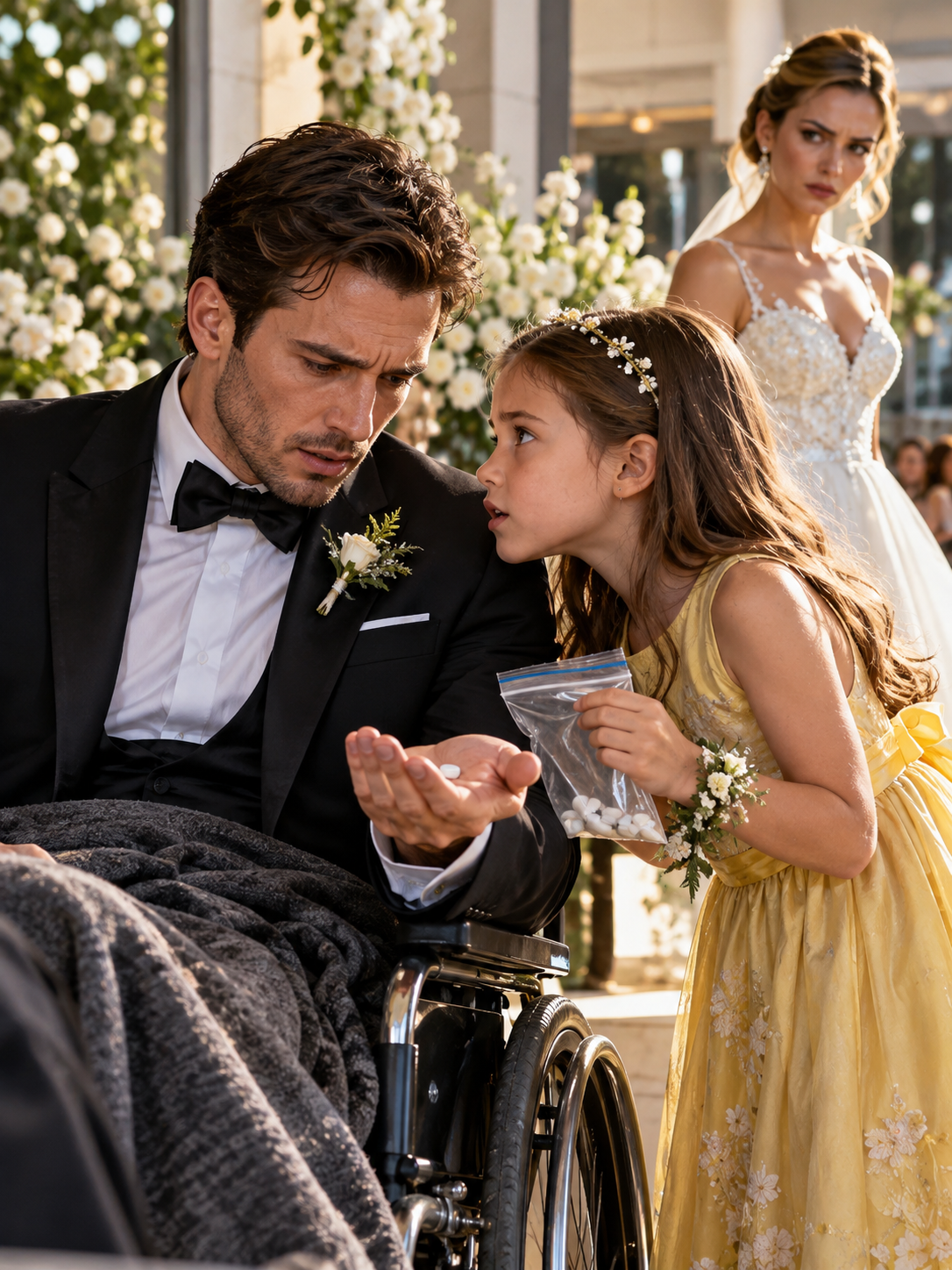
THE BILLIONAIRE’S FIANCÉE KEPT TELLING EVERYONE HIS LEGS WERE FAILING—UNTIL A LITTLE GIRL SHOWED HIM THE WHITE PILL SHE FOUND HIDDEN IN HER BAG BEFORE THEIR WEDDING – Life Story
The little girl placed a white pill in Ethan Hale’s palm and whispered, “Your fiancée dropped this after she changed...
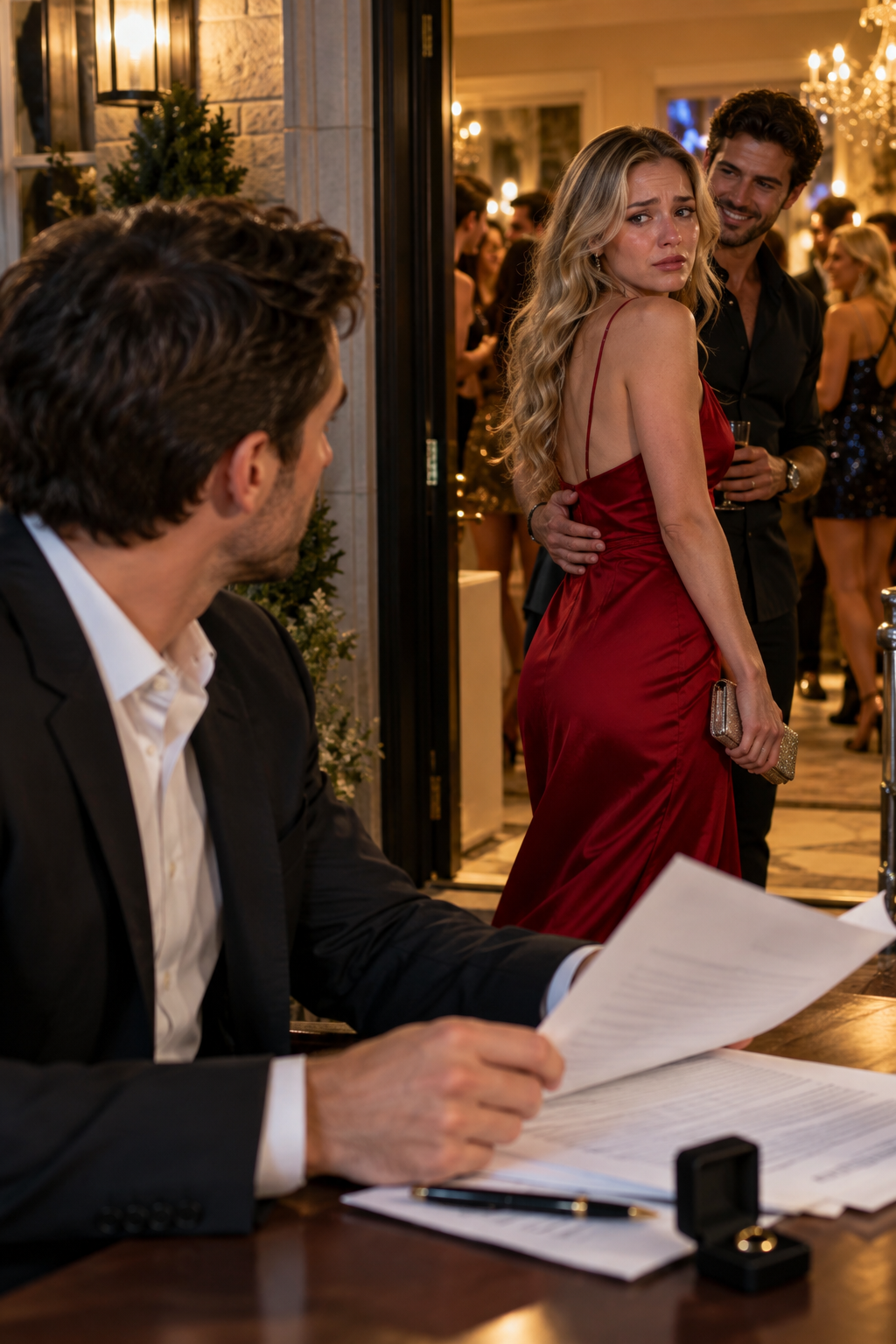
My Wife Went To Her Ex’s Party Against My Will, So I Ignored Her And Filed For Divorce…
My Wife Went To Her Ex’s Party Against My Will, So I Ignored Her And Filed For Divorce… My wife...
“My mother walked through my kitchen, looked around the house I had paid for myself, and calmly announced that my brother, his wife, and their children would be taking all four upstairs bedrooms.
“My mother walked through my kitchen, looked around the house I had paid for myself, and calmly announced that my...