My Mother Listed Grandma’s House for $289,900 While I Still Lived There—Then I Found a Hidden Envelope.
Part 1:
My mom slid the listing across grandma’s kitchen table the way she used to slide me the check at restaurants.
Face down, two fingers without looking at me.
“We’re selling,” she said. “You have 60 days to move out.”
I turned the page over.
The first photo was my bedroom, my quilt, my scrubs on the hook behind the door.
Somebody had stood in my room while I was at work and photographed it for strangers.
Under the photo, it said $289,900.
Across the table, my sister Kendra already had her phone up, the little red dot glowing.
“Finally,” she said to the camera. “Good luck, loser.”
I didn’t cry.
I folded the listing in half, then in half again, and said, “Okay.”
But my eyes went past my mother’s shoulder to the shelf behind her, to grandma’s cedar recipe box, and to the envelope I had promised never to open unless someone tried to move me out.
The next morning, a lawyer read one line from that envelope, stood up, and locked his office door.
Welcome back to Calm Drama Stories.
Here we tell long family stories about daughters, sisters, and granddaughters who were overlooked for years until the day they finally stood up and protected the one thing that mattered most.
Every story ends with courage, honest boundaries, and the quiet kind of justice that lets a person sleep peacefully again.
Drop a comment and be sure to subscribe.
Mom had printed the listing in color on the heavy glossy paper realtors use, and there was a yellow sticky note on the front that said 1418 lark spur priority.
Please
Part 2:
I had come home from a Sunday shift at the hospital an hour earlier, still in my seal blue scrubs, and found her car in the driveway.
She almost never came over.
I had actually been glad.
“The probate court made me administrator in August,” she said, tapping the table with one nail. “I’m her only child.
It’s mine to sell.”
Kendra, still filming, asked, “Can I have the dining chairs?”
I asked, “Who had let someone into my room?”
Mom looked at me like I had asked, “Who paid for the sky?”
“It’s my mother’s house, Bridget.
I have a key.
You’ve lived here rentree for 6 years,” she added. “Most people would say, ‘Thank you.’”
I looked at the folded paper in my hand and asked one question.
“Did you look at anything of grandma’s before you listed it?”
She laughed.
Not a mean laugh exactly.
The laugh of a woman who had already decided how this would go.
“There’s nothing to look at.
She left a house and a lot of old Tupperware.”
She picked up her keys.
“60 days is November 28th.
Tamson will text you about showings.
Please keep the bathroom clean.”
Kendra stopped recording, checked the clip, and smiled at it.
Then they were gone, and the house was quiet in the way it only gets after somebody has taken something out of it.
I washed the three plates mom had used for the cookies she brought and didn’t eat.
I dried them, put them away, and then I stood on a chair and took down the recipe box.
It still smelled like cedar and vanilla.
Grandma had kept it on that shelf for 50 years, and I had never moved it.
I flipped past chicken and dumplings, past pineapple upside down, until I reached the card in the back that said peach cobbler Ruth in her slanted blue handwriting.
Behind it was a thin manila envelope, soft at the corners.
On the front, in the same blue ink, she had written:
“For Bridget.
If anyone ever tries to move you out, take this to Harold Brandt.
Not before.”
Grandma had made me promise three years ago, and I had kept that promise every day since, even on the bad days when I wanted to know what she thought of me.
I held the envelope up to the kitchen light.
I could see folded paper and something smaller tucked inside it.
I didn’t open it.
Somebody was trying to move me out.
That meant before was over.
And it meant the next step belonged to Harold Brandt, not to me.
I put the envelope in the inside pocket of my olive canvas jacket, the one that hangs by the back door, and I zipped the pocket closed.
Then I set my alarm for .
At 11 that night, my phone started buzzing.
It was Marisol from work.
“Is this you?”
There was a link.
Kendra’s video was 14 seconds long.
The caption said 60-day countdown with a little house and a peace sign and then #finally.
It already had a few hundred likes.
Someone had commented, “Who’s the loser?
LOL.” And Kendra had answered with a laughing face.
I watched it once with the sound off.
Kendra had caught the exact moment I folded the listing.
My face in that video did not look shocked.
It looked like the face of someone who had done this before.
I didn’t comment.
I didn’t text my sister.
I put the phone face down on the nightstand and lay there looking at the ceiling.
And I thought about the first time my family had decided where I would sleep.
I was 16.
Kendra was 11 and had just started competitive dance.
And mom decided Kendra needed my bedroom because it had the morning light and the wall that fit a mirror.
My things went down to the basement in black trash bags.
Down there, the ceiling was low enough that I could touch it flat-handed, and the dryer ran half the night.
Nobody asked me.
Mom said, “You’re never home anyway.”
Which became true very quickly because I got a job at the bakery on Wilmington Pike and took every shift they would give me.
Grandma noticed before anyone else did.
She started picking me up every Saturday morning in her Buick and driving me back to Larksburg Drive, where nobody had ever moved my things.
She taught me to make peach cobbler that first fall.
She made me write the recipe on a card in my own handwriting.
Then she took it, read it, and said I had the nutmeg wrong.
I rewrote it her way.
We ate at the same kitchen table, the oil cloth sticking a little to our elbows.
One Saturday, I offered to do her dishes before I’d eaten, the way I did at home, and she put her hand flat on my wrist.
“You don’t have to earn a chair at my table,” she said.
I didn’t know what to say, so I ate.
When we were done, she tapped the cedar box with one finger.
“Everything important in this house is in here,” she said.
I thought she meant the recipes.
In February of 2017, Grandma slipped on the ice by her mailbox and broke her hip.
She was 77.
I was 25, and I had just been accepted into a surgical technologist program in Columbus that started in March.
I had saved for it for 3 years.
I had a deposit down on a studio apartment near the campus.
The day after grandma’s surgery, mom came to the hospital in Ketaring and stood in the doorway of the room without taking off her coat.
I had a whole plan ready.
If mom took the weekdays for 6 weeks, I could start school and come home on weekends.
I said it to her in the hallway quietly because grandma was sleeping.
“I can’t take her,” Mom said. “Kendra’s starting cosmetology school.
She needs me.”
I said Kendra was 20.
Mom said, “Exactly.
She’s just getting started.
You’re single, Bridget.
You don’t have anything going on.”
Then she checked her phone and said she had a dentist appointment.
I walked down the hall to the vending machines, called the program office, and gave up my seat.
It took 4 minutes.
The woman on the phone was very kind about it.
I lost the apartment deposit, too.
But I didn’t think about that until later.
That night, I moved into the spare room at Larkur Drive with two suitcases and a box of work clothes.
I learned how to change a surgical dressing.
I learned how to help a proud woman onto a toilet seat riser without making her feel like a patient.
I counted her pills into a plastic organizer every Sunday night.
And I wrote the counts down because that is what I do at work and it calmed me.
At Easter that year at mom’s house, I heard her tell my aunt, “Bridget’s living at mother’s rentree now.
Poor thing.
It’s good for her.”
I was carrying a tray of devild eggs.
I didn’t correct her.
I set the tray down and went to get more napkins.
When I told grandma about it later, she was quiet for a long time.
Then she squeezed my hand.
“I saw what she did at the hospital,” she said. “I’m not as deaf as I let her think.”
Grandma got better mostly.
She walked with a cane after that, and she never drove again.
But she was sharp and stubborn and funny, and she liked having me there.
I stayed.
I told myself it was temporary for about 2 years, and then I stopped telling myself anything.
I got a full-time job in sterile processing at St.
Brendan’s Medical Center, the department in the basement that cleans, inspects, counts, and packs every surgical instrument in the building.
It was not the job I’d wanted.
I was very good at it anyway.
Being useful became the way I stayed in the family.
When Kendra’s car insurance lapsed, I paid it for 2 years so she wouldn’t lose her license.
When mom had a crown that her insurance wouldn’t cover, I paid the $1,900 until she got back on her feet.
I cooked every Christmas dinner at Grandma’s.
And every Christmas, mom brought guests I hadn’t been told about and introduced me as my oldest.
She lives with mother.
I kept thinking that if I was useful enough long enough, she would look at me one day and see somebody she was proud of.
I know how that sounds now.
It made sense at the time.
It made sense for years.
In the fall of 2023, grandma started to fade.
One night in October, she asked me to bring the recipe box to her bed.
She didn’t open it.
She found the envelope by feel and held it up so I could see the writing.
“If anyone ever tries to move you out of this house, take it to Harold,” she said. “Not before.
Promise me.”
I promised.
She died in November at 83 in her own bed.
At the funeral lunch, before the casserles were even cold, mom leaned toward me and asked, “So, what happens with the house?”
I said I would keep paying the property taxes for now.
Mom said, “Good.”
That was the whole conversation.
So, I paid them 3 years of taxes.
A new furnace when the old one quit in January, $7,400.
The back porch steps.
I didn’t keep a tally to throw at anyone.
The receipts were simply in my email.
The way all of my life was in a record somewhere.
And on Monday morning, the day after mom slid the listing across the table, I parked my car in front of a small brick office on Far Hills Avenue at a.m.
The sign by the door said, “Brandt and Kierney, attorneys at law.”
I took the envelope out of my jacket pocket, held it against my chest, and went to find Harold.
The front door was unlocked, but the reception desk was empty, and the lights in the hallway were still off.
A man came out of a back office holding a mug of coffee and looked at my scrubs, then at my face.
He was in his 40s, sleeves rolled, tie not on yet.
“We don’t open till 9,” he said, not unkindly. “Can I help you?”
I said I needed Harold Brandt.
Something changed in his face.
“Harold was my father,” he said. “He passed two years ago.
I’m Owen.
I have his files.”
I told him my grandmother’s name, Ruth Hail, Larksburg Drive.
He set his coffee down on the reception desk.
“Come on back,” he said.
His office had bookshelves on three walls and a window that looked out at the parking lot.
He offered me a chair, and I said I’d stand.
I never sit in offices.
I don’t know why.
I stood by the window with my jacket still zipped while he took the envelope, turned it over to read my grandmother’s handwriting, and slid it open with a letter opener that looked older than both of us.
Inside there was a letter folded in thirds, a photocopy of some kind of official document with a county stamp in the corner, and a smaller envelope sealed with three words on the front:
“For Diane.”
And under that, smaller:
“Only if she asks why.”
Owen unfolded the letter and read the first line.
Then he stopped.
He didn’t read the second line.
He put the letter face down on his desk, flat with his palm on it.
And for a few seconds, he just looked at the wall.
Then he stood up, walked past me to his office door, closed it, and turned the lock.
The click was very loud in that small room.
“My father did that,” he said quietly, still facing the door. “Whenever somebody was about to hear something that would change the way they walked out of here, I used to think it was theatrical.”
He turned around and looked at me.
“Ms.
Summers,” he said, “you need to sit down.”
I sat down.
It was the first time I had ever sat in a lawyer’s office.
Owen picked up the letter again and read the first line out loud so I would hear it in my grandmother’s words and not his.
“Harold, if my granddaughter is sitting across from you, then Diane has tried to sell my house.”
I put my hand over my mouth.
Not because I was surprised that mom had done it, because grandma had known.
7 years ago, sitting in this building, she had known exactly what her daughter would do after she was gone, and she had written it down and hidden it behind a recipe for peach cobbler.
Owen slid the photocopy across the desk toward me.
“Do you know what this is?” he asked.
I didn’t.
“It’s a deed,” he said. “A copy of one.
Your grandmother signed it in April of 2019.
It transferred her house on Larksburg Drive to something called the Ruth M.
Hale revocable trust.”
He explained it the way I explained a sterilization cycle to a new hire, plain and in order.
While she was alive, Grandma ran the trust herself and could change it whenever she wanted.
When she died, the trust became permanent, and the person named to run it after her, the successor trustee, took over.
“That’s you,” he said.
He turned the letter so I could see the paragraph with my name in it, Bridget Anne Summers.
And under that, the residence at 1418 Larks Drive to be distributed to my granddaughter, Bridget.
“The house hasn’t belonged to your grandmother’s estate since 2019,” Owen said. “It belongs to the trust, and the trust for all practical purposes has belonged to you for 3 years.
You just didn’t know.”
I asked him to show me, not because I didn’t believe him, but because at work I don’t sign off on a tray until I’ve counted every instrument myself.
He turned his monitor toward me and pulled up the Montgomery County Recorder website.
He typed in the address.
Two clicks.
The deed came up on the screen.
The same one that was on his desk with a recording stamp from April 2019.
“This is public,” he said. “Anyone can see it.
Your mother could have found it in 5 minutes.”
I asked who had signed it, who had witnessed it, and what day.
He read me the names and the dates.
Grandma’s signature, a notary named Patricia Voss, March 14th, 2019, on the trust itself.
The deed recorded in April.
I wrote it all in the notes app on my phone.
Then I asked the question that had been sitting in my chest since he locked the door.
“Mom said the probate court made her administrator.
Doesn’t that mean she can sell it?”
Owen shook his head.
“It means she can handle whatever your grandmother owned when she died.
Your grandmother didn’t own that house when she died.
The trust did.
Your mother has been given the keys to an empty room and she thinks it’s the whole building.”
He said he needed to pull his father’s complete file from their storage company before he sent anything to anyone to make sure the original trust and his father’s notes were where the letter said they were.
2 or 3 days.
Then I asked the thing I was most ashamed of asking.
“Will this hurt her?”
Owen leaned back in his chair.
He didn’t laugh at me, which I appreciated.
“It will embarrass her,” he said. “That’s not the same thing.”
He unlocked the office door and opened it.
Out in the hallway, the lights were on now, and a receptionist was hanging up her coat.
I looked at my phone.
I was 11 minutes late for my shift.
I have been late to work maybe three times in 9 years.
Sterile processing is in the basement of St.
Brendan’s, past the loading dock and the linen carts, behind two sets of doors that need a badge.
There are no windows.
There are washers the size of cars and the steady hiss of steam from the sterilizers.
And there are rules for everything.
That afternoon, I was assembling an orthopedic tray for a hip replacement.
And the count sheet said there should be four home retractors.
I counted three.
I counted again.
Three.
I didn’t sign the tray.
I don’t sign a tray that’s short, no matter who is waiting on it.
It took me 20 minutes to find the fourth retractor stuck in the bottom of a washer basket.
Then the tray was complete and I signed it.
On my break, Marisol pulled up Kendra’s video on her phone and held it out to me without saying anything.
It had 14,000 views.
Now, someone in the comments had written, “Isn’t that the girl from SPD at St.
Brendan’s?” And somebody else had tagged the hospital
Recommended Stories

I Pushed My Allergic Husband Into A Beehive For Laughs… Then He Refused To Cover For Me
I Pulled Off My Husband’s Bee Veil to Make Our Friends Laugh—Then One Sting Exposed the Truth About Our Marriage...

The Ultimate Payback: No mercy — every debt paid in full!
“If you open that safe, Marcus, everyone in this house dies.” My hands froze on the steel dial. Behind me,...
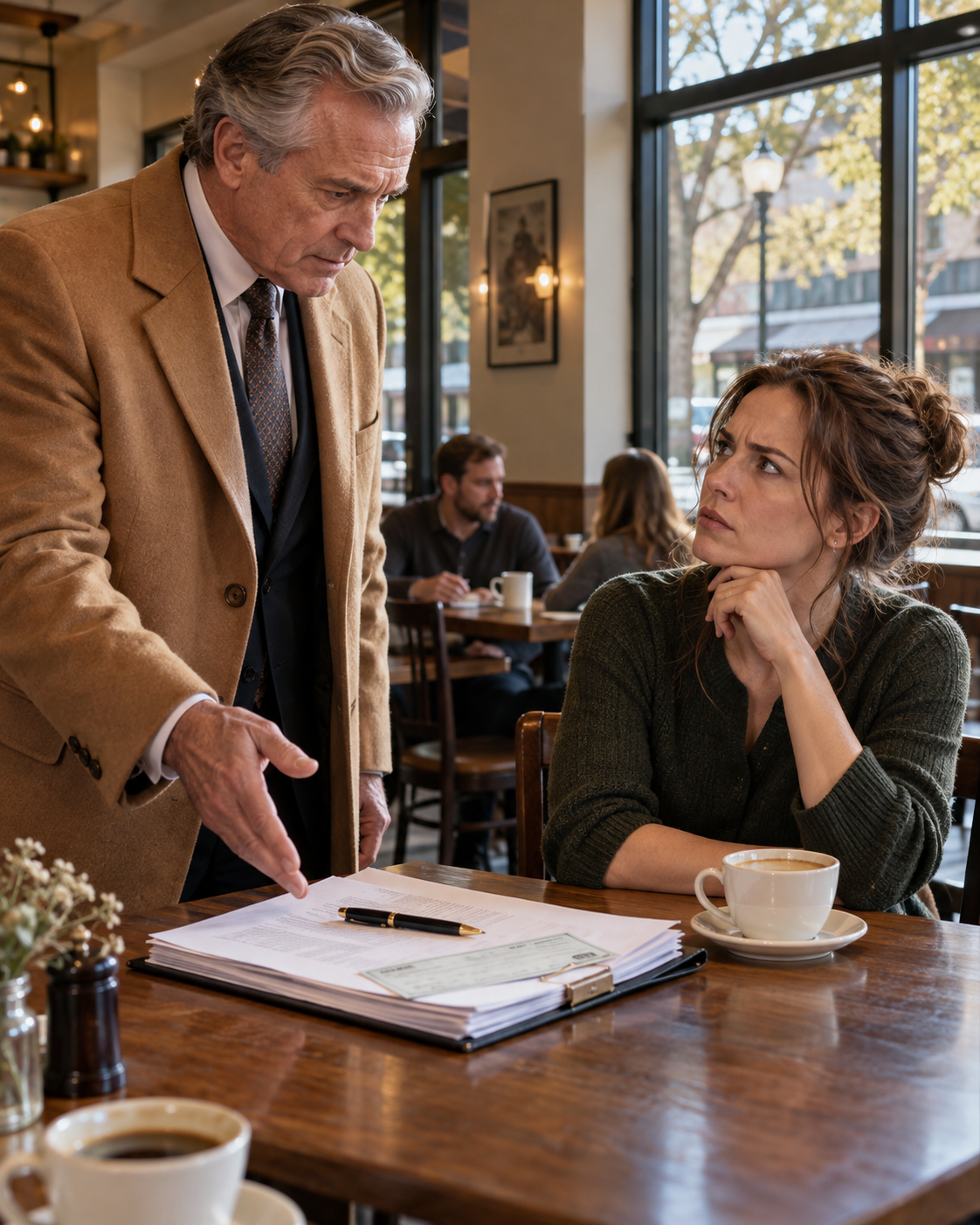
My Stepfather’s Lawyer Offered Me $5,000 to Sign One Paper. Then I Asked About the Thumbprint.
Part 1: Two years ago, my mom let her new husband call my late father, a man who never amounted...