Mafia Boss’s Pregnant Wife Brought An Ultrasound — Then A Woman Left His Hotel Suite In His Shirt…
Mafia Boss’s Pregnant Wife Brought Him an Ultrasound—Then a Woman Walked Out of His Hotel Suite in His Shirt
She had driven forty minutes to tell her husband they were having a son.
Instead, Elena Moretti watched another woman walk out of his hotel suite wearing his shirt.
And the woman was smiling.
Part One — The Smile in the Hallway
That was the detail Elena would remember.
Not the stranger’s bare legs beneath the oversized white shirt.
Not the damp dark hair falling across one shoulder.
Not even the black monogram stitched into the cuff—C.M.—the same initials Elena had ordered from a tailor in Manhattan for Cassian’s fortieth birthday.
It was the smile.
Easy.
Unhurried.
Private.
The smile of a woman who believed the morning belonged to her.
Elena stood fifteen feet away in the fourteenth-floor corridor of the Harrington Grand, one hand wrapped around the ultrasound photograph inside her coat pocket.
Twelve weeks.
A strong heartbeat.
A boy.
She had rehearsed the moment during the entire drive from Westport.
Cassian would probably stare at the image for three silent seconds because that was how he received important information.
Then his face would change in that almost invisible way only she knew how to read.
Maybe he would touch her stomach.
Maybe, for once, he would cancel whatever meeting came next.
She had even imagined him smiling.
Instead, the woman stepped away from Suite 1408 and typed something into her phone.
She laughed softly.
Elena’s fingers closed around the ultrasound until the corner bent.
The woman passed her without looking up.
Her perfume lingered after she disappeared into the elevator.
For several seconds Elena did nothing.
Then she looked at the hotel door.
Cassian’s regular suite whenever business kept him in Manhattan overnight.
She could have knocked.
She could have walked inside and demanded an explanation.
She could have screamed loudly enough for the entire floor to hear.
But Elena had been married to Cassian Moretti for four years, and one thing his world had taught her was that the person who reacted first usually surrendered control.
So she folded the ultrasound.
Once.
Then again.
She pushed it deep into her coat pocket and walked toward the elevator.
Her spine remained straight until the doors closed.
Her knees failed in the parking garage.
Elena lowered herself onto the concrete between her Mercedes and a black sedan.
She pressed both palms against the cold floor and breathed through her nose.
Nothing felt real except the concrete.
She stayed there perhaps thirty seconds.
Perhaps five minutes.
Then she stood.
She drove home.
She packed one suitcase.
And she disappeared before Cassian returned.
Cassian Moretti arrived at their Westport house shortly after eleven that night.
The lights were off.
That did not disturb him.
Elena occasionally went to bed early when he worked late.
He loosened his tie, poured two fingers of whiskey and opened the financial report Silas Romano had left on his desk.
There were irregularities in the western accounts.
Small numbers.
Annoying numbers.
The kind that usually meant someone was either careless or stealing.
Cassian spent forty-seven minutes studying them.
He never once wondered where his wife was.
That was the part he would hate himself for later.
At forty-one, Cassian had spent more than half his life building an organization people whispered about rather than named.
His father had ruled through fear.
Cassian preferred leverage, information and the certainty that consequences did not need to be loud to be understood.
Violence still existed in his world.
He had simply made it less visible.
People called that sophistication.
Elena would later call it another form of absence.
He finished the report, ate the dinner the housekeeper had left covered on the stove and went upstairs.
Only then did he notice Elena’s side of the closet.
Empty hangers.
Missing suitcase.
Her jewelry box remained.
Her passport was gone.
Cassian stared at the open wardrobe.
Then he called.
No answer.
Again.
Nothing.
He called nineteen times before midnight.
At the following morning, Elena finally answered.
“Where are you?”
No greeting.
No relief.
That was Cassian’s first mistake.
Elena sat in her friend Mara’s kitchen with untouched coffee cooling between her hands.
“I’m not coming home.”
Cassian stopped walking.
“What does that mean?”
“It means I’m not coming home.”
“Elena.”
“I was at the Harrington yesterday.”
Silence.
Something inside him shifted.
“Why?”
“I came to surprise you.”
Her thumb brushed the folded ultrasound photograph lying beside the coffee.
“I saw her.”
Cassian frowned.
“Saw who?”
“The woman who walked out of your suite wearing your shirt.”
For several seconds, he genuinely believed he had misunderstood.
“Elena, there was no woman in my room.”
“Please don’t.”
“I was alone.”
“I said don’t.”
His voice hardened automatically—the reflex of a man accustomed to correcting facts until reality obeyed him.
“I was alone from the time I went upstairs until eleven.”
“And she walked out at nine forty-seven.”
Cassian froze.
“How do you know the time?”
“Because I stared at the clock beside the elevator while I tried not to throw up.”
The anger disappeared from his face.
“Elena—”
“I didn’t call to hear you explain it.”
“Then why did you call?”
“Because after four years, disappearing without saying anything would make me more like you than I want to become.”
That landed.
He gripped the edge of his desk.
“I did not sleep with anyone.”
“Maybe.”
“Elena.”
“Maybe I believe you someday.
Maybe I don’t.
But right now, I know exactly what I saw.”
“You saw something that didn’t happen.”
Her laugh held no humor.
“You hear yourself, right?”
He closed his eyes.
“Tell me where you are.”
“No.”
“I need to see you.”
“No.”
“Elena.”
“You’ve needed to see me for four years, Cassian.
You just kept finding more important rooms to be in.”
The line went dead.
Cassian stood motionless.
Then he drove directly to Manhattan.
The Harrington Grand’s manager initially cited privacy policies.
Cassian listened for twenty seconds.
Then he placed one business card on the counter.
The manager reconsidered.
At the previous morning, the security camera outside Suite 1408 showed exactly what Elena had described.
A dark-haired woman stepped out.
White shirt.
Bare legs.
Phone in hand.
Smiling.
Cassian moved closer to the monitor.
“Stop.”
The image froze.
He knew the shirt.
French cuffs.
Black monogram.
The same tailoring Elena had given him.
For the first time, his certainty cracked.
“Who is she?”
The hotel’s security director swallowed.
“Registered as Claire Vander.
She had the adjacent room.”
“Identification?”
“Apparently fraudulent.”
Cassian turned slowly.
“Apparently?”
“We discovered it this morning.”
“How did she enter my suite?”
Another hesitation.
“We don’t know.”
Cassian stared at him.
The man corrected himself.
“We don’t know yet.”
Cassian looked back at the screen.
Someone had walked out of his locked hotel suite wearing an exact copy of his shirt during the only window when his wife happened to arrive.
Not a random woman.
Not an affair.
A message.
And messages like this were never sent without an intended recipient.
Cassian’s eyes remained on the frozen smile.
Then he understood the most disturbing part.
The woman had never looked surprised to see Elena.
She had looked as though she had been expecting her.
And somewhere in the architecture of Cassian Moretti’s life, someone had known exactly when his pregnant wife would be standing outside that door.
Part Two — The Marriage Was Broken Before the Trap
Silas Romano arrived in Westport the following morning carrying a gray folder.
He had worked beside Cassian for eleven years.
In Cassian’s world, that qualified as family.
Silas was forty-four, lean, controlled and so reliably unemotional that men sometimes forgot he was in the room until he spoke.
Cassian trusted him with schedules, money and information.
Most dangerously, he trusted Silas with questions he did not have time to answer himself.
“Claire Vander doesn’t exist,” Silas said.
Cassian stood at the study window.
“Explain.”
“Identity assembled about eighteen months ago.
Social Security number purchased.
Credit profile manufactured.
Previous addresses tied to empty apartments and mail services.”
“Who paid?”
“Still tracing it.”
“The shirt?”
Silas hesitated.
That hesitation was almost too small to notice.
Cassian noticed everything.
Usually.
“It isn’t yours.”
Cassian turned.
“We inventoried your wardrobe.
Every shirt matching the order is accounted for.”
“I saw the monogram.”
“It was duplicated.”
Silas placed an invoice on the desk.
“Same tailor.
Same measurements.
Same thread.
Purchased four months ago through a different billing account.”
Cassian stared at the paper.
Four months.
The trap had existed months before Elena entered that corridor.
“Someone staged it.”
“Yes.”
“For Elena.”
Silas said nothing.
Cassian looked up.
“Say it.”
“The circumstances strongly suggest the intended audience was your wife.”
Cassian’s jaw tightened.
“Then find who knew she was coming.”
“That may be harder.”
“Why?”
“Because she apparently told no one.”
That disturbed him more.
Elena had made the trip spontaneously after her prenatal appointment.
No scheduled meeting.
No calendar entry.
Yet someone had known.
Or someone had created a trap and waited for opportunity.
Neither possibility comforted him.
Cassian called Elena again that afternoon.
She answered after seven rings.
“I have proof.”
“Of what?”
“The woman was planted.”
Elena stood beside the window of the small apartment she had rented under her maiden name.
Voss.
Not Moretti.
Her stomach was only beginning to change.
She had spent the morning hiding maternity vitamins behind cereal boxes because seeing them on the counter made everything feel too permanent.
“I believe you,” she said.
Cassian stopped.
“What?”
“I said I believe you.”
He had prepared arguments.
Evidence.
Hotel records.
The duplicate shirt.
He suddenly had nowhere to put them.
“Then come home.”
“No.”
The word was immediate.
Cassian leaned against his desk.
“Elena, if you believe me—”
“This is what you still don’t understand.”
Her voice was tired, not angry.
That frightened him more than anger.
“The woman wasn’t our whole problem.”
He said nothing.
“She was just the thing that finally made me stop pretending the rest of it wasn’t happening.”
“What rest?”
Elena closed her eyes.
Of course he had to ask.
“Do you remember our anniversary last year?”
“We had dinner at Le Jardin.”
“For thirty-eight minutes.”
“I had an emergency.”
“You always had an emergency.”
“Elena—”
“Do you remember when I restarted my design work and got the Mercer property?”
He searched his memory.
Her silence answered for him.
“I told you while you were answering a message from Philadelphia,” she said. “You said, ‘That’s good.’ You didn’t ask another question.”
He sat down.
“Do you remember when my mother had surgery?”
“Yes.”
“What kind?”
Cassian’s face changed.
Elena looked through the window at strangers walking beneath umbrellas.
“I stopped telling you things because eventually it hurt less than watching you half-listen.”
“That doesn’t mean I didn’t care.”
“I know.”
Her quiet answer wounded him unexpectedly.
“I think you cared very much.
You just kept treating caring like something that could survive without being practiced.”
Cassian rubbed his thumb across the edge of his phone.
“What else didn’t you tell me?”
Her free hand moved automatically to her stomach.
She almost said it.
Almost.
But the ultrasound was still folded inside a drawer.
“I can’t do this today.”
“Elena.”
“I need a week.”
“A week for what?”
“To decide whether there is anything left to discuss.”
Every instinct he possessed told him not to give her time.
Time allowed adversaries to organize.
Time allowed uncertainty to spread.
Time weakened leverage.
But Elena was not an adversary.
He was only beginning to realize how often he had treated marriage like another system to control.
“All right,” he said.
She went silent.
“You’ll give me a week?”
“Yes.”
“Thank you.”
The call ended.
Cassian remained seated.
For once, winning access had meant agreeing not to use it.
Across the city, Elena sat on the edge of her bed and pressed both hands over her stomach.
“Your father is learning,” she whispered.
The words made her cry for the first time since the hotel.
Not because they were hopeful.
Because she had no idea whether they were true.
That same night, at 11:14, Silas Romano answered a phone that Cassian did not know existed.
A man spoke first.
“She agreed to meet him.”
Silas stood in darkness beside his apartment window.
“When?”
“A week.”
“That’s too long.”
“We can keep watching.”
“No.”
Silas looked down at the traffic twenty floors below.
“If she reaches him before we close the accounts, everything changes.”
“What do you want done?”
Silas remained silent for several seconds.
He had waited eleven years.
Patience was the one resource he had never lacked.
But patience only mattered if you knew when to stop using it.
“Make it look like she left,” he said.
“And if she refuses?”
Silas’s face remained still.
“Then make sure she isn’t there when he comes looking.”
Part Three — The Ultrasound He Never Received
Two nights later, Elena’s downstairs neighbor knocked at in the morning.
Bert Holloway was seventy-three and spent most mornings sitting beside the entrance with coffee and a newspaper he rarely seemed to read.
“Somebody asked about you last night.”
Elena’s hand tightened on the door.
“Who?”
“Man in a dark coat.
Said he knew you from work.”
“What did he look like?”
“Forties.
Maybe fifty.
Didn’t like his eyes.”
Bert shrugged apologetically.
“I told him nobody named Elena lived here.”
“Thank you.”
“Everything all right?”
“Yes.”
The lie came easily.
That scared her.
She closed the door and called Mara.
No answer.
She tried again.
Nothing.
Then Elena noticed the black sedan across the street.
She had seen it yesterday.
Or one like it.
Her pulse changed.
Cassian’s people were better than this.
If Cassian wanted someone watching her, she would never have noticed.
Which left another possibility.
Elena packed quickly.
Documents.
Cash.
Medication.
Prenatal vitamins.
The envelope containing four ultrasound images.
She had just zipped the bag when footsteps entered the fourth-floor corridor.
Slow.
Heavy.
One person.
Then another.
They stopped outside 4B.
Her apartment.
Elena backed away from the door.
No knocking.
That was worse.
She crossed to the bedroom window and pushed it open.
Cold rain struck her face.
The fire escape was slick.
She climbed out anyway.
Halfway down, she heard her apartment door open above her.
Elena did not look back.
She reached the alley, ran two blocks and called the one man she had spent weeks trying not to need.
Cassian answered before the second ring.
“Elena?”
“Someone came into my apartment.”
His chair scraped violently across the floor.
“Are you inside?”
“No.”
“Where?”
“Ferrell and Ninth.”
“Are you hurt?”
“No.”
“Stay where people can see you.”
“Cassian—”
“Nine minutes.”
He made it in eight.
The black SUV stopped hard against the curb.
Cassian opened the rear door himself.
Elena climbed inside.
Only after the locks engaged did her body realize she was safe enough to shake.
Cassian saw it.
He removed his coat and placed it around her without asking.
“Who knew the address?”
“Mara.”
“Anyone else?”
“My landlord.”
“Silas?”
She looked at him.
“I never told him.”
Cassian’s expression remained neutral.
That itself was information.
“You’re thinking something.”
“I’m always thinking something.”
“Don’t do that.”
“Do what?”
“Become the boss when I need my husband.”
The sentence stopped him.
Cassian looked at her properly.
Her hair was wet.
Her face had lost color.
One hand remained underneath his coat, pressed low against her abdomen.
“All right,” he said quietly. “Your husband thinks somebody knew where you were who shouldn’t have known.”
“Better.”
“Not much.”
“No.”
The SUV entered heavier traffic.
Cassian made two calls, speaking only in fragments.
No Moretti security had been assigned to Elena’s building.
No vehicle belonging to his organization had been positioned on Ferrell Street.
Someone else had been watching her.
“I have a house in Fairfield,” he said. “Not in my name.
Very few people know it exists.”
“I’ll stay until we understand what this is.”
“Nothing more.”
“Nothing more.”
She studied him.
For the first time in weeks, he did not push.
Elena looked down at her hands.
The envelope was inside her bag.
She had imagined revealing the pregnancy under a hundred circumstances.
None included running down a wet fire escape after strangers entered her apartment.
But fear had clarified something.
Their marriage could end.
His right to know about his son could not.
“Before Fairfield,” she said, “I need to tell you something.”
Cassian turned.
She removed the envelope.
Her fingers were not steady.
Neither were his when she handed him the first image.
He looked at the grainy black-and-white shape.
For several seconds he seemed unable to understand what he was seeing.
Then his eyes moved toward the printed information.
ELENA VOSS.
12 WEEKS.
His face emptied.
“I’m fifteen weeks now,” she said.
Cassian looked at her stomach.
Then the photograph.
Then her face.
“You’re pregnant.”
“Yes.”
The words came out rougher than he intended.
“Mine?”
Elena’s expression closed instantly.
Cassian hated himself before she even answered.
“Forget I said that.”
“No.”
“Elena—”
“No.
You asked it.
Let it exist.”
He pressed his lips together.
“I’m sorry.”
“It’s yours.”
He lowered his eyes to the ultrasound.
“Why didn’t you tell me?”
She stared through the windshield.
“I was trying to.”
The answer took a second to connect.
Then it did.
“The hotel.”
“I had the ultrasound in my hand when she walked out.”
Cassian’s fingers tightened around the picture.
His eyes closed.
The entire morning reconstructed itself differently.
Elena driving through traffic.
Elena walking down the corridor.
Their child in her pocket.
The woman smiling.
He had spent his adult life believing rage was hot.
It was not.
Real rage was cold enough to make the world perfectly clear.
“A boy,” Elena said.
Cassian looked up sharply.
“What?”
“The doctor called yesterday.
He’s a boy.”
His mouth opened.
No sound came.
“A son,” he finally said.
Elena nodded.
Cassian stared at the photograph again.
His thumb hovered near the tiny image but did not touch it.
Almost reverent.
Almost afraid.
“What happens between us doesn’t change that he’s yours,” Elena said. “But do not mistake this for me coming back.”
“I won’t.”
“I mean it.”
“I know.”
The SUV left the city.
For ten miles, neither spoke.
Then Cassian said, “When did you know someone was watching your apartment?”
“Last night, maybe earlier.”
“Did Mara know you were meeting me in a week?”
“Yes.”
“Anyone else?”
“No.”
Cassian went still.
Elena noticed.
“What?”
He looked through the window.
“Silas knew.”
“Because you told him?”
“No.”
A beat.
“He told me.”
Elena felt the back of her neck go cold.
“How would Silas know something I only told you and Mara?”
Cassian did not answer.
For the first time in eleven years, the shape of one man’s loyalty began to look entirely different.
And Cassian suddenly understood that the enemy who had destroyed his marriage might not be outside his empire.
He might be the man standing closest to the throne.
Part Four — Eleven Years Beside the Wrong Man
The Fairfield house had been purchased through three layers of corporate ownership eight years earlier.
Cassian had never brought Elena there.
That was intentional.
He had built an entire geography of his life that his wife had never seen.
Safe houses.
Warehouses.
Offices entered through kitchens.
Apartments used only for meetings.
It occurred to him, watching Elena unpack her medication into a strange bathroom, that he had called her the center of his life while keeping her outside most of its rooms.
She came into the kitchen twenty minutes later.
“Tell me about Silas.”
Cassian poured water instead of whiskey.
That did not escape her notice.
“His older brother, Marco Romano, died eleven years ago.”
“How?”
“My father ordered it.”
Elena sat down.
“Why?”
“Marco was moving money.
My father believed he was preparing to defect.”
“Was he?”
“I found evidence years later suggesting he was trying to leave, not betray us.”
“And Silas knows?”
“I don’t know.”
“You never asked?”
“No.”
Her face hardened.
“You kept the dead man’s brother beside you for eleven years and never had the conversation?”
“In my world, some conversations create more danger than silence.”
Elena gave a humorless smile.
“There it is again.”
“What?”
“You keep treating silence like protection.”
Cassian leaned against the counter.
She was right.
He disliked how often that had started happening.
“Silas came to me six months after Marco died,” he continued. “Said he wanted nothing to do with his brother’s mistakes.
Worked harder than everyone else.
Never complained.
Never asked for special treatment.”
“Perfect loyalty.”
“Yes.”
“Or perfect patience.”
Cassian looked at her.
The financial irregularities suddenly returned to him.
Silas had discovered them.
Silas had directed his attention toward them.
Silas had investigated Claire Vander.
Silas controlled every report Cassian received about the hotel.
“He’s been managing my investigation.”
Elena’s face changed.
Cassian picked up his phone.
“Who are you calling?”
“An accountant Silas doesn’t know.”
“You have one of those?”
“I have several things Silas doesn’t know.”
“That may be the healthiest sentence you’ve said all week.”
Despite everything, the corner of Cassian’s mouth moved.
Elena saw it.
Neither commented.
Four hours later, the accountant called.
The western irregularities were not theft.
They were architecture.
Small withdrawals from six operational accounts had been routed through dormant companies into one holding structure over fourteen months.
The amount was deliberately modest.
Enough to finance something.
Not enough to trigger alarm.
Cassian requested every downstream payment.
At the following morning, he found one.
A Delaware identity broker.
Payment date: fourteen months earlier.
Service delivered: synthetic identification package.
Name attached:
Claire Vander.
Cassian stared at the document.
Elena stood opposite him.
“That’s him.”
“Yes.”
“Are you certain?”
“No.”
She frowned.
“You just showed me the payment.”
“I know where the money came from.
I still need to know who controlled the mechanism.”
“You think Silas.”
“I think accusing a man like Silas without certainty gives him time to become dangerous.”
Elena’s hand went to her stomach.
“He’s already dangerous.”
Cassian looked at the gesture.
“Yes.”
His phone rang.
Silas.
Cassian answered normally.
“Cass.”
“Talk.”
“I found the hotel woman.”
Cassian looked at Elena.
“Did you?”
“Real name Daria Moss.
Used in Baltimore and Philadelphia for staged blackmail situations.
I think I can get us to whoever hired her.”
“Where are you?”
“Carmine Street.”
“I’ll come.”
He ended the call.
Elena stood.
“You’re walking into a meeting with the man you think engineered this?”
“Yes.”
“That sounds insane even by your standards.”
“If I refuse, he knows.”
“Take people you trust.”
“I will.”
“Do you still have people you trust?”
Cassian paused.
That question hurt because it was operationally relevant.
“Two.”
At the doorway, Elena said his name.
He turned.
She touched her stomach.
“Be careful.”
He waited.
“Not because I’ve forgiven you,” she added.
“I know.”
“Because he deserves to meet his father.”
Cassian looked at her hand.
“I’ll come back.”
The Carmine Street restaurant had been closed to the public for three years.
Behind its kitchen was a private room where Cassian had conducted more negotiations than he could count.
Silas was already seated.
A folder lay before him.
“Daria Moss,” Silas said. “Thirty-one.
Professional placement work.”
He pushed forward a photograph.
Cassian did not touch it.
“Who paid her?”
“Three shells.”
“And after the shells?”
“Still working.”
Cassian sat.
“You’ve been working for three weeks.”
Silas watched him.
“Something wrong?”
“Yes.”
Cassian placed his own folder on the table.
“I finally started doing your job.”
Silas’s eyes lowered toward it.
“The western accounts you flagged weren’t irregularities.
They were a routing mechanism.”
Silence.
“One holding account paid the broker who created Claire Vander.”
Silas leaned back.
“That proves someone inside the organization—”
“The administrator key belongs to you.”
For the first time, Silas stopped pretending to be confused.
Cassian watched eleven years disappear from his face.
Not loyalty.
Not professionalism.
Performance.
“You knew,” Silas said quietly.
“About the accounts?”
“My brother.”
Cassian did not lie.
“Yes.”
Silas laughed once.
No humor.
“You knew your father murdered Marco, and then you kept me beside you.”
“I believed what we built after that mattered.”
“To you.”
“To both of us.”
Silas’s eyes became almost sad.
“That was the insult.”
Cassian remained still.
Silas leaned forward.
“My brother begged your father to let him leave.
Your father made an example of him.
You inherited everything.
The houses.
The men.
The money.
The name.”
“I didn’t order Marco’s death.”
“No.
You just benefited from it.”
Cassian accepted the blow.
Silas continued.
“I spent eleven years watching you build a life men like us aren’t supposed to get.
And then Elena came along.”
His expression tightened.
“She loved you.
God knows why.”
“Leave her out of this.”
“She was always in it.”
Silas smiled faintly.
“That was the point.”
Cassian’s voice dropped.
“You destroyed my marriage to avenge your brother?”
“No.”
Silas shook his head.
“I showed your wife the truth.”
“A lie in a hotel hallway is not truth.”
“The woman was a lie.
Your marriage wasn’t.”
Cassian said nothing.
Silas’s voice grew quieter.
“You would have missed your whole life, Cass.
Elena could have stood beside you for twenty years and you would have called yourself a good husband because you never cheated on her.”
The words landed because Elena had said something painfully similar.
Silas saw it.
His eyes sharpened.
“She was pregnant, wasn’t she?”
Cassian went completely still.
Silas’s expression changed.
Genuine surprise.
“You didn’t know.”
“No,” Silas said.
Cassian believed him.
That made everything worse.
“You put men outside her apartment.”
“They were supposed to watch her.”
“They entered it.”
Silas frowned.
For the first time, something appeared outside his control.
Cassian stood.
“What did you authorize?”
Silas reached inside his jacket.
Two of Cassian’s men moved through the door.
“Hands where I can see them,” Torres said.
Silas slowly removed a phone.
He placed it faceup on the table.
A message had arrived less than one minute earlier.
Cassian read it.
His heartbeat disappeared.
She left the house.
We have her.
Cassian looked at Silas.
Silas looked at the message.
And the horror on his face lasted just long enough for Cassian to understand something else.
Silas had started the machine.
But someone inside it had just moved beyond his orders.
Part Five — The Warehouse on Delm Road
Cassian hit Silas once.
Not because it was useful.
Not because violence would reveal Elena’s location.
He hit him because for one second he ceased to be the disciplined man who had spent twenty years turning rage into calculation.
Silas fell sideways with the chair.
Torres stepped forward.
Cassian raised one hand.
“Don’t.”
Silas wiped blood from his mouth.
“You think that helps?”
“No.”
Cassian crouched.
“Where would they take her?”
“I don’t know.”
“Wrong answer.”
“It’s the truth.”
“You authorized surveillance.”
“Yes.”
“You told them to make her disappear.”
Silas looked away.
Cassian saw enough.
“You did.”
“I meant remove her from the city.
Frighten her.
Make her leave before she reconciled with you.”
“She’s fifteen weeks pregnant.”
“I didn’t know.”
“You know now.”
Silas closed his eyes.
Cassian straightened.
He forced his mind into the place where emotion became geometry.
Locations.
Travel time.
People Silas controlled.
Buildings accessible without public records.
“Torres.
List every holding property Silas has used in three years.”
Torres started.
Queens storage facility.
Yonkers apartment.
Bridgeport repair yard.
Newark warehouse.
Delm Road.
At the fifth location, something changed in Silas’s eyes.
Almost nothing.
Cassian had spent eleven years reading that face.
It was enough.
“Delm Road.”
Silas looked at him.
Cassian already knew.
Twenty-two minutes away.
They made it in sixteen.
Cassian drove himself.
Rain darkened the industrial streets, turning the asphalt into broken reflections of orange streetlights.
Torres called ninety seconds before Cassian arrived.
“Two cars outside.
At least four men.”
“Elena?”
“Can’t confirm.”
“Get closer.”
A pause.
Then movement through the receiver.
“I see a woman.”
Cassian’s hand tightened around the steering wheel.
“Condition?”
“Seated.
Upright.”
“Is she moving?”
“Yes.”
The air returned to Cassian’s lungs.
He parked two blocks away.
“Front entrance is covered,” Torres said.
“I’m going rear.”
“Cassian—”
“Rear.”
The loading gate was chained.
Cassian forced it rather than waste time searching for a key.
Inside, the warehouse smelled of oil, concrete and old rain.
A man near the rear partition turned too late.
Cassian dropped him with one strike and kept moving.
The next man reached for a weapon.
Cassian fired once into the man’s upper arm.
A third man froze.
“Down.”
He obeyed.
Elena sat at the far end beneath a fluorescent light.
Her wrists were secured to a metal chair.
She was pale.
Furious.
Alive.
Cassian crossed the distance so quickly he nearly slipped.
He cut the restraints.
“Are you hurt?”
“No.”
“Did anyone touch you?”
“No.”
“Are you sure?”
“Cassian.”
He looked at her face.
She flexed her wrists.
“I am sure.”
He exhaled.
Not relief.
Relief was too gentle a word for what happened inside him.
“What did they want?”
“They kept asking where the ultrasound photographs were.”
Cassian froze.
“What?”
“They searched my bag.
They wanted the photographs.”
That did not fit.
Silas had not known about the pregnancy.
So why were the men searching for proof of it?
Cassian looked toward the man on the floor.
“Who told you about the ultrasound?”
The man said nothing.
Cassian stepped toward him.
Elena grabbed his sleeve.
“Not here.”
He looked back.
Her fingers remained around his wrist.
“Get me out first.”
That changed him instantly.
“Right.”
He brought her through the loading entrance.
Outside, Elena stopped and took three deep breaths.
Then she sat in the passenger seat of his SUV.
Cassian crouched beside the open door.
“I need ten minutes.”
“To do what?”
“Finish this.”
Her eyes sharpened.
“Silas?”
“He’s outside.”
“You’re going to kill him.”
It was not a question.
Cassian said nothing.
Elena looked at the man she had married.
She knew what he could do.
She had always known in abstraction.
Tonight abstraction had a parking lot.
A warehouse.
A pregnant woman tied to a chair.
“Don’t.”
Cassian’s face hardened.
“He had you taken.”
“And killing him changes that?”
“No.”
“Then why?”
“Because men who do this do not get second chances.”
Elena touched her stomach.
“Then don’t give him one.”
Cassian looked confused.
“Make him live with losing everything.”
Her voice trembled now, but her words did not.
“His money.
His power.
His name.
Every structure he built inside yours.
Put him somewhere he gets to wake up every morning knowing I lived.
Knowing our son lived.”
She swallowed.
“Don’t give him the mercy of becoming the last man you killed before our child was born.”
Cassian stared at her.
The child moved beneath her hand.
Elena flinched.
“What?”
Her eyes widened.
Nothing around them existed for a second.
“He moved.”
Cassian’s expression changed completely.
“Now?”
She placed both hands over the curve of her stomach.
“He’s never done that before.”
The happiness and grief collided so sharply that she laughed once and then covered her mouth.
“I didn’t want the first time to be here.”
Cassian’s eyes lowered toward her stomach.
He did not reach.
He waited.
That mattered.
After a moment, Elena took his hand.
She placed it lightly against the side of her abdomen.
Nothing.
Cassian barely breathed.
Then a faint movement touched his palm.
So small he might have imagined it.
His eyes lifted to hers.
Neither spoke.
Elena removed his hand.
“Go finish it.”
Cassian found Silas in the back of Torres’s car.
Hands bound.
Lip split.
Eleven years reduced to a man sitting in darkness.
“She’s alive,” Cassian said.
Silas closed his eyes briefly.
“Good.”
“The men were looking for ultrasound pictures.”
Silas frowned.
“I didn’t order that.”
“Who did?”
“I don’t know.”
Cassian believed him again.
He hated that.
“You built something you no longer controlled.”
Silas stared at the windshield.
“Yes.”
“Who else knew?”
“One man.”
“Name.”
Silas hesitated.
Cassian leaned closer.
“Your revenge ended the second strangers put their hands on my pregnant wife.
Whatever loyalty you think you still owe anyone disappeared with it.”
Silas’s jaw worked.
Finally:
“Vincenzo Carra.”
Cassian sat back.
Carra.
His father’s oldest surviving lieutenant.
A man who had benefited enormously from Marco Romano’s death.
Suddenly the past changed shape again.
“Why?”
Silas laughed bitterly.
“Because I was wrong about one thing.”
“What?”
“My brother wasn’t killed for trying to leave.”
Cassian felt the night become colder.
Silas looked directly at him.
“Marco found out Carra was stealing from your father.”
“And my father ordered Marco killed anyway?”
“No.”
Silas’s eyes hardened.
“Carra forged the order.”
For eleven years Silas had destroyed Cassian’s life to avenge a murder Cassian’s father may never have ordered.
And somewhere beyond the warehouse, the man who had caused it all had just learned there was an heir to the Moretti name.
Part Six — The Man Who Profited From the Grave
By dawn, Vincenzo Carra was gone.
His apartment had been emptied.
His phone was dead.
Three accounts were drained.
That told Cassian more than a confession could have.
Carra had been waiting for the possibility that Silas might discover the truth.
The kidnapping had not been part of Silas’s design.
It had been Carra cleaning up loose ends.
Elena’s pregnancy had changed the equation.
A Moretti son gave Cassian something he had never possessed before.
A reason to dismantle the structure instead of defending it.
Carra understood that.
So did Cassian.
For the next four days, the Fairfield house existed in a strange suspension.
Elena slept badly.
Cassian barely slept at all.
He took the chair beside her bed the first night.
At a.m., Elena woke from a dream she could not remember and sat upright, shaking.
Cassian woke instantly.
He did not touch her.
He simply sat beside her.
“I’m here.”
Not you’re safe.
Not it’s over.
Both statements would have been promises he could not guarantee.
Just:
“I’m here.”
Elena pressed her hands against her thighs until the shaking stopped.
“You should sleep.”
“So should you.”
“I’m pregnant.
I have an excuse.”
“What’s mine?”
“You spent twenty years making terrible career choices.”
He looked at her.
She almost smiled.
It was the first joke between them since the hotel.
The following morning Cassian received confirmation.
Carra had been arrested in Philadelphia on charges generated from evidence Cassian anonymously provided through an attorney.
Fraud.
Racketeering.
Financial conspiracy.
Enough to keep prosecutors interested for years.
Cassian could have solved the problem another way.
His younger self would have.
Instead, he had begun doing something much more difficult.
He was separating justice from anger.
Silas helped.
Not willingly at first.
But once confronted with the forged order bearing Carra’s signature, something inside him collapsed.
Eleven years of identity built around revenge had no foundation.
“My brother died because of Carra,” Silas said.
Cassian sat opposite him in a secure room.
“Yes.”
“And I destroyed your marriage.”
“You tried.”
Silas looked up.
Cassian’s face gave nothing away.
“You almost destroyed it,” Cassian corrected. “I handled the first four years myself.”
That surprised Silas.
“You’re taking responsibility now?”
“I’m trying something new.”
Silas laughed softly.
Then the laugh disappeared.
“What happens to me?”
“You live.”
Silas’s eyes hardened.
“You think that’s mercy?”
“No.”
Cassian stood.
“I think it’s consequence.”
Silas was transferred into federal custody three weeks later after providing financial evidence against Carra and several other operations.
He would spend decades in prison.
Cassian did not visit again.
He had stopped confusing closure with one final conversation.
The harder work waited at home.
One Thursday evening, Cassian returned to Fairfield with a bruised rib and split lip after dismantling the last operational partnership tied to Carra.
Elena saw him enter the kitchen.
“Sit.”
“I’m fine.”
“Sit.”
Cassian sat.
She lifted his shirt and inspected the bandage around his ribs.
“This is terrible.”
“I did it in the car.”
“I can tell.”
She replaced the wrapping with practiced care.
Cassian watched her.
“Why are you doing this?”
Elena did not look up.
“Because I don’t want you getting an infection.”
“That isn’t what I meant.”
“I know.”
Her hands stopped.
The kitchen was quiet.
“Do not turn every decent thing I do into evidence that we’re fixed.”
“I won’t.”
“I mean it.”
“I know.”
She resumed the bandage.
Cassian let her.
After a minute Elena asked, “What happens to the organization?”
He looked toward the dark window.
“I’m dismantling it.”
Her hands stopped again.
“What?”
“Not all at once.
That creates vacuums.
Vacuums get people killed.”
“You’re serious.”
“Yes.”
“Why?”
Cassian lowered his shirt.
For once, he did not reach for the answer that sounded strongest.
“I spent twenty years building something because I thought power meant never having to depend on anyone.”
He looked around the kitchen.
“I ended up with hundreds of people depending on me and no idea how to be dependable to the one person who actually mattered.”
Elena said nothing.
He continued.
“I don’t blame the organization for what I did to our marriage.
That would be convenient.”
His voice grew quieter.
“I used it as permission.”
“For what?”
“To leave every room before anything could require too much of me.”
Elena’s eyes sharpened.
That was the first explanation he had given her that felt deeper than apology.
Cassian looked toward her stomach.
“I’m not asking you to forgive me.”
“Good.”
“I’m asking you to let me be present while you decide whether forgiveness is even relevant.”
Elena folded the used bandage.
“And if I decide it isn’t?”
His answer came without hesitation.
“I’ll still be his father.”
Something shifted in her face.
Not forgiveness.
Respect, perhaps.
The smallest possible amount.
She stood.
“There’s pasta on the stove.”
Cassian nodded.
“Thank you.”
“And wash the pot.”
He almost smiled.
“Yes.”
She reached the doorway.
“Elena.”
She turned.
“Did he move today?”
For one moment she simply looked at him.
Then:
“Twice.”
Cassian’s expression softened.
“You should have told me.”
The old Elena would have apologized.
This Elena did not.
“You weren’t here.”
The words hurt.
He accepted them.
“Next time,” he said, “I will be.”
And for the first time, Elena wondered whether he actually meant it.
Part Seven — A Cradle Built by a Man Who Had Never Built Anything Small
Cassian began coming home for dinner.
At first Elena assumed it was temporary.
Guilt had its own adrenaline.
People could perform extraordinary changes while still terrified of losing something.
The test was what remained after fear stopped feeling urgent.
One week became two.
Two became six.
If Cassian had a call at six, he moved it.
If someone insisted a meeting had to happen at eight, he demanded a better reason.
The world did not collapse.
That seemed to surprise him.
One evening Elena found him in the garage surrounded by lumber.
She stopped.
“What are you doing?”
Cassian looked up from an instruction manual.
“Building a cradle.”
She stared at him.
“You can’t build a cradle.”
“I’m aware.”
“There are safety standards.”
“I’m also aware.”
“You own three companies that could have one made professionally.”
“I know.”
“Then why are you doing this?”
Cassian looked at the unfinished wood.
“Because buying things has always been how I avoided making them.”
Elena leaned against the doorway.
“That sounded suspiciously therapeutic.”
“Don’t tell anyone.”
She left him there.
Over the following three weeks he ruined two side panels, installed one support backward and discovered that expensive tools could not compensate for impatience.
The finished cradle was slightly uneven.
Elena ran her fingers across one rail.
“It rocks.”
“It’s supposed to.”
“The entire cradle rocks.”
“I’ll fix the foot.”
She looked at the imperfect piece of furniture.
“Don’t.”
Cassian glanced at her.
“Why?”
“I said don’t.”
She walked inside.
He stood alone in the garage for several seconds.
He understood.
Some imperfections became evidence that something had actually been made by human hands.
Their son arrived on a Tuesday morning in March.
Seven pounds, two ounces.
Dark hair.
Angry expression.
Healthy lungs.
Cassian stood beside Elena’s hospital bed when the nurse placed the baby into his arms.
The man who had negotiated with armed men without blinking looked terrified.
Elena watched him adjust his hand under the baby’s head.
“Support his neck.”
“I am.”
“You’re holding him like he’s explosive.”
“He feels more dangerous.”
“Cassian.”
“I’m joking.”
“You don’t joke.”
“I’m learning.”
The baby opened his eyes.
Cassian stopped breathing.
“Luca,” Elena said.
They had chosen the name three weeks earlier after rejecting eleven others.
Cassian looked at his son.
“Hello, Luca.”
Nothing dramatic happened.
No speech.
No vow.
That made the moment more powerful.
Cassian simply sat beside Elena and held him.
Twenty minutes passed.
Then forty.
When the nurse came to take Luca for routine measurements, Cassian followed her movement with his eyes until Elena said:
“She’s not stealing him.”
“I know.”
“You look like you’re considering tackling a nurse.”
“I’m assessing.”
“Stop assessing.”
Cassian looked at her.
Exhausted, Elena smiled.
Barely.
But it was real.
They did not return to Westport.
That had been Elena’s condition.
“I learned how to disappear in that house,” she told him. “I’m not raising Luca there.”
Cassian did not argue.
They bought a smaller house forty minutes north.
Three bedrooms.
A backyard.
Neighbors who left bicycles in driveways.
No gates.
No marble entrance.
Cassian initially wanted security cameras covering every angle.
Elena allowed four.
He requested eight.
They negotiated six.
Marriage, she discovered, could sometimes be rebuilt through very unromantic victories.
At three weeks old, Luca developed the habit of waking at every morning.
Cassian took the first shift.
Elena woke on the fifth night and heard him downstairs.
She quietly walked toward the nursery.
Cassian stood near the window with Luca against his shoulder.
No phone.
No earpiece.
No laptop open.
He was simply walking slowly back and forth.
“You’re terrible at sleeping,” Cassian whispered to his son.
Luca made a small sound.
“You inherited that from me.
Your mother can sleep anywhere when she isn’t furious.”
Elena almost entered.
Then she stopped.
Cassian continued.
“I’m going to tell you something before you’re old enough to understand it.”
His hand spread carefully across Luca’s back.
“Men in my family were very good at being feared.”
He looked down at the child.
“I’d rather you trust me.”
Elena stepped backward before he saw her.
She returned to bed.
She did not tell him she had heard.
Some moments deserved to exist without immediately becoming currency.
Three months later Cassian received an urgent call during dinner.
Elena watched him read the screen.
Old instinct appeared immediately.
Shoulders tightening.
Mind leaving the room before his body did.
“What is it?” she asked.
“Baltimore.”
“Serious?”
“Yes.”
She nodded.
“Go.”
Cassian looked at Luca in the high chair.
Then back at the phone.
He typed something.
Placed it facedown.
“No.”
Elena frowned.
“What did you do?”
“Moved it to tomorrow.”
“You said it was serious.”
“It is.”
“Then why—”
“Because serious doesn’t always mean mine.”
The answer silenced her.
Cassian picked up his fork.
Luca threw a piece of carrot onto the floor.
Cassian looked down.
“This,” he said, “is apparently mine.”
Elena laughed.
A small laugh.
But Cassian heard it.
And for the first time, the life he had lost did not feel like something he was chasing.
It felt like something being rebuilt around him.
Part Eight — Forgiveness Was Not a Door
Summer arrived.
Luca was eleven weeks old when Elena finally asked Cassian to sit with her on the back porch.
He brought coffee.
She did not touch hers.
“I need to tell you something you probably won’t like.”
Cassian sat.
“I’ve had practice.”
“I was angry before the hotel.”
“I know.”
“No.
You understand it intellectually.
I’m not sure you understand what it did to me.”
He waited.
Elena looked toward the backyard.
“I became someone who expected nothing from you because expecting something made disappointment possible.”
Cassian’s face tightened.
“I convinced myself that was maturity.”
She rubbed her thumb against her wedding ring.
She had started wearing it again after Luca was born.
Not every day.
Cassian had never commented.
“It wasn’t maturity.
It was resignation.”
“I’m sorry.”
“I know.”
She looked at him.
“And I also need to say something I don’t like admitting.”
Cassian remained silent.
“I helped build the silence.”
He frowned.
“You didn’t make me absent.”
“No.
But when I stopped telling you things, I didn’t tell you I had stopped.
I tested you without telling you there was a test.”
“Elena—”
“Let me finish.”
He did.
“I waited for you to notice.
Every day you didn’t, I became more certain you didn’t care.”
She looked away.
“That doesn’t excuse you.
It doesn’t erase anything.
But I don’t want to spend the rest of my life telling the story as if I was only standing still while things happened to me.”
Cassian looked at the woman beside him.
This was one of the reasons he had fallen in love with her.
Elena preferred painful truth to flattering innocence.
“I see what you’ve been doing,” she continued.
His expression changed.
“The dinners.”
She counted quietly.
“The nights with Luca.
Moving meetings.
The business.
The cradle.”
She smiled faintly.
“Even the terrible cradle.”
“It passed inspection.”
“Barely.”
“I reinforced it.”
“I know.”
They sat in the summer quiet.
“I see it,” Elena said. “Every time.”
Cassian lowered his eyes.
He had not realized until then how badly he had needed to hear that.
“I’m not ready to say everything is forgiven.”
“I’m not asking you to.”
“I’m not sure forgiveness works like that anyway.”
“No.”
“I think people talk about it like a door.
You open it and walk through and suddenly the old room is behind you.”
She shook her head.
“It feels more like carrying furniture downstairs.
One piece at a time.
Some of it gets stuck.”
Cassian smiled.
“You’re an interior designer.”
“I use the tools available.”
He looked toward the lawn.
“What are we, then?”
Elena considered.
“I don’t know.”
That answer once would have terrified him.
Now he allowed it to exist.
“But,” she continued, “I’m willing to find out.”
Cassian looked at her.
She met his eyes.
“I think we might be something that comes after the marriage we had.”
“Better?”
“Different.”
He nodded.
“That’s more honest.”
Luca began making noises inside.
Elena started to rise.
Cassian stood first.
“I’ll get him.”
She sat back.
Through the open door she heard his footsteps cross the kitchen.
Up the stairs.
Nursery door.
Then Luca stopped fussing.
Elena wrapped both hands around her coffee.
For years she had imagined love as something measured in dramatic declarations.
Then she had married a powerful man and discovered declarations were almost useless.
Presence was harder.
Presence required repetition.
Anyone could race through a warehouse once.
The real question was who climbed the stairs on an ordinary Sunday morning.
Cassian returned carrying Luca.
“He’s hungry.”
“He’s always hungry.”
“He gets that from you.”
“Careful.”
Cassian sat beside her.
Luca grabbed his father’s finger.
Elena watched Cassian’s expression.
The same man who once checked his phone during dinner now sat motionless because a baby had wrapped five tiny fingers around one of his.
The change was not spectacular.
It was better.
It was believable.
Then Cassian’s phone buzzed.
He checked the screen.
His face changed.
Elena saw it.
“What?”
He handed her the phone.
A message from Torres.
Silas Romano requested to speak with Elena.
Says he has information about the hotel woman he never gave us.
He says she wasn’t chosen randomly.
Elena looked up.
Cassian’s jaw tightened.
The past, apparently, still had one last layer.
Part Nine — The Woman in the Shirt Had Her Own Reason
Elena agreed to the meeting on one condition.
Cassian would not enter the room.
“You think I’m going to intimidate Silas?”
“I think your definition of sitting quietly is different from everyone else’s.”
“He kidnapped you.”
“Carra’s men kidnapped me.”
“Silas started it.”
“Yes.”
She touched his arm.
“And I’m not forgiving him.
I want information.”
Silas looked older behind the thick glass.
Prison had not broken him.
But it had stripped away the immaculate control.
Elena sat opposite him.
“You asked for me.”
Silas nodded.
“I owe you something.”
“You owe me several things.”
“Yes.”
He looked down.
“The hotel woman.
Daria Moss.”
“What about her?”
“I chose her because she knew Carra.”
Elena’s eyes narrowed.
“How?”
“Her younger sister worked for one of his clubs in Baltimore.
Carra destroyed her financially after she tried to leave.”
“And Daria agreed to help you?”
“She thought she was helping expose him.”
Elena sat back.
“That makes no sense.
She walked out of my husband’s suite.”
“She wasn’t told you were Cassian’s wife.”
The room became very quiet.
“What was she told?”
“That you were Carra’s mistress.”
Elena stared at him.
Silas continued.
“She believed the photograph would be used to convince Carra you had slept with Cassian and turn him against you.”
“So she thought she was hurting Carra.”
“Yes.”
“Did she know I would be there?”
“No.”
Elena froze.
“Then who did?”
Silas looked at her.
“Carra.”
The final structure clicked into place.
Silas had built the fake identity.
Silas had hired Daria.
But Carra discovered the operation.
Instead of stopping it, he redirected it.
He arranged Elena’s arrival.
“How?”
“Your doctor’s office.”
Elena’s stomach turned.
“What about it?”
“One receptionist had gambling debts.
Carra owned the debt through a bookmaker.”
Silas spoke carefully.
“She saw the appointment.
She heard you tell a nurse you were driving to the Harrington to surprise your husband.”
Elena remembered.
The receptionist smiling.
Telling her congratulations.
A stranger had sold one casual sentence.
Silas looked ashamed.
“Carra realized he could use my plan to destroy both of us.”
“You and Cassian.”
“Yes.”
“If Cassian discovered you, you were finished.
If he didn’t, his marriage was finished.”
“And either way Carra remained invisible.”
Elena leaned back.
Eleven years of revenge.
Four years of neglect.
One hotel corridor.
None of it had been caused by a single villain.
That was strangely harder to accept.
Life would have been simpler if Silas had been purely evil.
If Cassian had been purely innocent.
If she herself had made every correct decision.
But truth rarely arrived clean.
“You told Cassian his father killed Marco.”
“I believed it.”
“And when you learned Carra forged the order?”
Silas’s eyes lowered.
“I understood I had spent eleven years punishing the wrong man.”
Elena studied him.
“Do you regret it?”
“Yes.”
“That doesn’t help me.”
“I know.”
“Do you regret it because you’re here?”
Silas looked up.
“No.”
His voice was raw.
“I regret the moment I saw the ultrasound photographs on the warehouse table.”
Elena went still.
“One of Carra’s men sent me a picture before Cassian arrived.”
He swallowed.
“That was when I understood revenge doesn’t stay aimed.
You point it at one person long enough and eventually it hits everyone standing near them.”
Elena stood.
Silas did too on the other side of the glass.
“I’m sorry.”
She picked up the receiver one last time.
“I believe you.”
Hope moved across his face.
Elena finished:
“But believing your apology and releasing you from its consequences are two different things.”
Silas’s expression fell.
She returned the receiver.
Cassian waited in the corridor.
He rose when she approached.
“What did he say?”
Elena told him everything.
Cassian’s face became colder at the mention of the doctor’s receptionist.
“Leave her alone.”
He looked at Elena.
“She sold information about you.”
“She sold a sentence because she owed money.”
“That sentence nearly destroyed our family.”
“And destroying hers fixes ours?”
Cassian said nothing.
Elena held his gaze.
“You said you were building something different.”
He exhaled.
“I am.”
“Then build it.”
They walked toward the exit together.
At the doors, Cassian stopped.
“There’s something I need to ask.”
Elena waited.
“Do you ever wish you had knocked?”
“At the hotel?”
“Yes.”
She thought about it.
“No.”
His eyebrows lifted.
“If I had knocked, you would have shown me evidence.
We would have discovered the setup sooner.
Maybe I would have stayed.”
“That sounds better.”
“It isn’t.”
Elena looked directly at him.
“Because then we might have saved the old marriage.”
Cassian went silent.
“And the old marriage needed to end.”
She took his hand.
Not dramatically.
Not permanently.
Just for the walk across the parking lot.
“The question was never whether we could get it back.”
Cassian looked at their joined hands.
“It was whether we could build something worth having instead.”
For once, Cassian Moretti had no argument.
Part Ten — The Life After the Last Page
By November, Cassian’s old empire was less than half its former size.
The legitimate companies remained.
Construction.
Logistics.
Commercial property.
The rest was being dismantled in careful pieces.
Some relationships ended politely.
Others required lawyers.
A few required Torres.
Cassian no longer asked for details unless necessary.
There was a difference between ignorance and refusing to make violence your first language.
He was learning it.
Elena restarted her interior design practice.
Her first major client wanted a lake house renovated.
She took Luca to the initial site visit and discovered that motherhood had not erased ambition.
It had merely changed the scheduling.
Cassian bought her a new drafting table.
She made him return it.
“I can buy my own furniture.”
“I know.”
“Then why did you buy it?”
“I wanted to do something nice.”
“Buy dinner.”
He bought dinner.
Two weeks later Elena ordered the drafting table herself.
Cassian assembled it.
Badly.
She made him redo one leg.
Their second house came almost accidentally.
Elena found the listing.
Larger backyard.
A workshop attached to the garage.
Good schools nearby.
She left the page open on her laptop.
Cassian saw it.
“Do you want to move?”
“I might.”
He scrolled through the pictures.
“There’s a workshop.”
“I noticed.”
“For my terrible furniture?”
“For your improving furniture.”
“That sounded almost complimentary.”
“Don’t get used to it.”
He looked at her.
“Are you asking me to move somewhere with you?”
Elena closed the laptop.
“I’m asking if you want to look at a house.”
Cassian understood the distinction.
A year earlier he would have demanded certainty.
Now he had learned to respect invitations that did not arrive as guarantees.
“Yes.”
They bought it three months later.
Both names on the deed.
Elena insisted.
Cassian agreed before she finished the sentence.
One Wednesday afternoon, Cassian returned from a meeting with Luca asleep in the car seat.
He carried a hardware-store bag into the kitchen.
Elena looked up from her laptop.
“What did you buy?”
“Leveling feet.”
“For what?”
“The cradle.”
She stared.
“I told you not to fix that.”
“That was before.”
“Before what?”
Cassian set the bag on the table.
“Before I knew I’d make other things.”
Elena waited.
“He’ll need a bed eventually.
Maybe a desk.”
Cassian glanced toward the garage workshop.
“If I’m allowed.”
Elena’s face did that subtle thing he had learned not to chase.
Opening.
Not surrender.
Not forgiveness.
Something healthier.
“Fix the cradle,” she said.
Cassian nodded.
He turned toward the garage.
“Cassian.”
He looked back.
Elena hesitated.
“I’m pregnant.”
He stopped.
Completely.
For three seconds he did not move.
Exactly as she had imagined the first time.
Years earlier.
Before the Harrington.
Before the woman in the white shirt.
Before the warehouse.
Before Luca.
Cassian looked at her stomach.
Then her face.
“How far?”
“Ten weeks.”
“You knew?”
“Four days.”
“And you waited?”
She smiled.
“I wanted to tell you here.”
Cassian crossed the kitchen slowly.
No panic.
No demands.
No assumption.
He stopped in front of her.
“Can I?”
His eyes lowered toward her stomach.
Elena nodded.
Cassian placed his hand against her gently.
There was nothing to feel yet.
They both knew that.
The gesture was not about movement.
It was about arrival.
His eyes closed.
Elena watched him.
Years ago she had carried an ultrasound through a hotel corridor hoping the image would finally make him stop.
She knew now that no photograph could have done that.
No baby could rescue a marriage.
No dramatic crisis could permanently transform a man.
Cassian had changed through hundreds of smaller decisions made after the crisis ended.
Coming home.
Moving the meeting.
Taking the night feeding.
Washing the pot.
Putting down the phone.
Building the cradle.
Climbing the stairs.
Listening when silence would once have been easier.
Elena covered his hand with hers.
Cassian opened his eyes.
“You’re smiling,” she said.
“I’m allowed.”
“You look terrified.”
“I am.”
“Good.”
He laughed.
From the living room came Luca’s voice.
“Dad!”
Cassian turned automatically.
Luca appeared at the doorway holding one shoe.
He was nearly two now and deeply suspicious of wearing matching footwear.
“Mom says baby,” Luca announced.
Elena stared.
Cassian stared.
The toddler had apparently been listening from the hall.
Cassian crouched.
“You heard that?”
“Baby.”
“Yes.”
Luca considered this.
Then he pointed toward Elena’s stomach.
“Mine?”
“No,” Elena said quickly.
Cassian laughed so hard he had to sit down.
Elena tried not to.
Failed.
Luca looked between them, annoyed that whatever had happened was funny without his permission.
Then he climbed into Cassian’s lap.
Cassian wrapped one arm around his son.
His other hand remained extended toward Elena.
She took it.
Outside the kitchen windows, November had stripped the trees almost bare.
Nothing hidden.
Nothing pretending to be fuller than it was.
The house was smaller than the Westport estate.
Cassian’s organization was smaller than the empire he once commanded.
His name frightened fewer people.
His phone rang less often.
And his life contained more.
Later that evening, after Luca was asleep, Elena found the original ultrasound photograph from her first pregnancy inside a wooden box in Cassian’s workshop.
The folds were still visible.
Four hard creases.
The paper had been flattened carefully beneath glass.
Beside it lay the photograph from Luca’s birth.
Elena held the old ultrasound for a long time.
Cassian appeared in the doorway.
“I wondered where that went,” she said.
“You gave it to me in the car.”
“You kept it.”
“Yes.”
She traced one crease through the glass.
“I hated this picture for a while.”
“So did I.”
“That doesn’t make sense.”
“It was proof of everything I almost missed.”
Elena looked at him.
“And now?”
Cassian glanced toward the ceiling, where their son slept.
Then toward her stomach.
“Now it reminds me that almost isn’t the same as did.”
He came closer.
“I almost lost you.”
Elena’s expression changed.
“But you did lose me.”
Cassian stopped.
She placed the framed photograph back inside the box.
“That matters.”
“I know.”
“The woman who walked into that hotel wasn’t the woman who came home with you.”
“I know.”
Elena touched his face.
“And the man who slept in Suite 1408 isn’t standing here either.”
Cassian covered her hand.
“No.”
Silence settled between them.
Years earlier, silence had been the evidence of everything missing.
Now it was simply quiet.
There was a difference.
Elena turned toward the stairs.
“Come on.”
“Where?”
“Bed.”
Cassian switched off the workshop light.
Halfway upstairs, they heard Luca beginning to fuss.
Cassian stopped.
“I’ll go.”
Elena looked at him.
Those same words.
Again.
He had said them hundreds of times now.
Not dramatically.
Not as penance.
As habit.
Cassian entered Luca’s room.
Elena remained in the hallway.
She heard the crib creak.
Then her son’s sleepy voice.
“Dad.”
“I’ve got you.”
Luca quieted.
Elena placed one hand against the small, still-secret curve of her stomach.
Once, she had believed love was proven by what someone would do when everything was burning.
She knew better now.
Love could run through a warehouse.
Fear could do that.
Guilt could do that.
Even rage could do that.
The harder proof came afterward, when nothing was burning.
On ordinary Wednesdays.
At two in the morning.
At dinner.
In kitchens.
Beside cribs.
In the endless collection of small moments nobody applauded and nobody photographed.
Cassian Moretti had once built an empire around being the man everyone needed.
Then he nearly lost his wife because he had never learned how to let the people he loved need him.
So he built something smaller.
A cradle.
A home.
A routine.
A marriage that was not the one they had started with.
A life in which his son knew the sound of his footsteps coming down the hallway.
And when Elena finally went into Luca’s room, she found Cassian seated in the chair beside the crib, their son asleep against his chest.
Cassian looked up.
No phone in his hand.
No meeting waiting.
No door half-open behind him.
Elena leaned against the frame.
For once, nobody was leaving.
And this time, when Cassian smiled at her, she understood exactly what the smile meant.
He had nowhere better to be.
Recommended Stories

My husband handed me divorce papers during dinner with his parents, brother, and sister,
My husband handed me divorce papers during dinner with his parents, brother, and sister, expecting me to cry in front...

THEY HUMILIATED A BLACK CUSTOMER OVER AN $85,000 WATCH AND ORDERED HIM OUT—BUT THE MEETING WAITING UPSTAIRS WOULD EXPOSE WHAT MADISON’S BOUTIQUE HAD BEEN HIDING – Life Story
At p.m., a saleswoman laughed when Marcus Johnson asked to see an $85,000 watch. By , a security guard was...
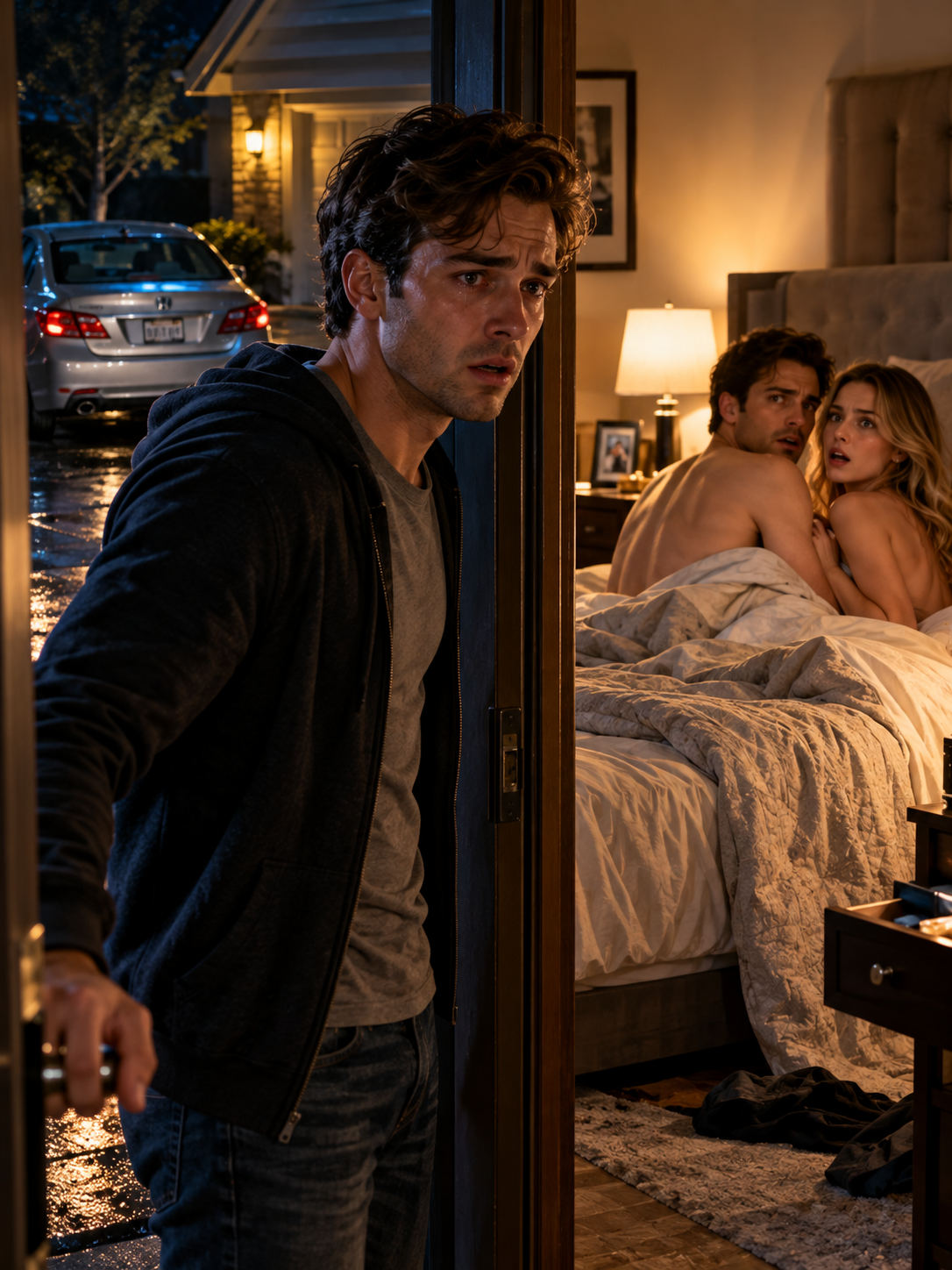
MY WIFE SAID SHE NEEDED SPACE BEFORE VISITING HER SISTER, BUT HER CAR WAS AT MY BEST FRIEND’S HOUSE—AND THEY HAD BEEN LYING TO ME FOR WEEKS – Life Story
The headlights swept across my best friend’s driveway, and my wife’s silver Honda was parked beside his garage. Sophie had...