The Waitress Fed a Widowed Man’s Autistic Daughter During a Diner Meltdown—She Never Knew He Was a Millionaire, or Why He Returned the Next Morning – Life Story
The plate hit the tile and shattered under Grace Thomas’s table before anyone reached her.
By the time the eight-year-old covered her ears and began rocking, three customers were staring and one waitress had already whispered, “We should ask them to leave.”
Christine Ringwall looked at the terrified child, then at the father who seemed one breath from breaking, and did the one thing nobody else in Harmony Diner thought to do.
She turned off the noise.
The morning crowd had been building since seven.
Coffee cups knocked against saucers.
Silverware clattered into plastic tubs.
The overhead fluorescent lights buzzed faintly.
A blender screamed behind the counter every time someone ordered a smoothie nobody needed before breakfast.
For most customers, it was background.
For the girl in booth seven, it had become unbearable.
Christine recognized the signs before she knew the child’s name.
Hands clamped over ears.
Eyes squeezed shut.
Breathing fast and shallow.
The repeated rocking that wasn’t a tantrum or defiance but an attempt to make a world that had become too large feel predictable again.
Christine dropped the order pad she had been carrying.
“Turn off the blender,” she told Carlos behind the counter.
He looked at her.
“What?”
“Please.”
Another server, Denise, stood near the kitchen door holding a tray.
“She threw the plate.”
“I saw.”
“The manager’s going to—”
“Give me two minutes.”
Christine walked toward the booth slowly.
The father was crouched beside his daughter.
He looked to be in his early forties, broad-shouldered, dark-haired, wearing jeans and a plain charcoal sweater.
Nothing about him suggested wealth or importance.
His coat had been folded beside him.
His coffee had gone untouched.
“Grace,” he said softly. “Sweetheart, look at me.”
Grace pressed harder against the corner.
“Don’t touch her right now,” Christine said.
The man looked up.
It wasn’t anger she saw in his face.
It was exhaustion.
Old exhaustion.
The kind that came from loving someone so much that every moment of their pain felt like evidence of your own failure.
“I wasn’t going to force her,” he said.
“I know.”
Christine lowered herself several feet away rather than kneeling directly beside Grace.
She took off her metal name badge and set it on the floor.
The tiny pin had been catching the overhead light.
Then she reached behind her and switched off the decorative lamp mounted beside the booth.
The corner became slightly dimmer.
Grace’s rocking did not stop, but the pace changed.
Christine looked toward Carlos.
“Music.”
He understood.
The old speakers over the counter went quiet.
Several customers turned.
Christine ignored them.
“My name’s Christine,” she said, keeping her voice low. “You don’t have to answer me.”
Grace’s breathing hitched.
“I’m going to clean up the glass.
I’m not coming closer to you.”
She waited.
Then she slowly pulled a dustpan from beneath the service station.
She swept the largest pieces first.
No sudden movements.
No questions.
No demands for eye contact.
When the floor was clear, Christine remained where she was.
“You know something?”
No response.
“I hate that blender too.”
The father glanced at her.
Christine continued.
“It sounds like somebody put rocks inside an airplane engine.”
Grace’s hands loosened slightly against her ears.
Christine saw it.
She did not react.
“When I’m tired,” she said, “even the coffee grinder makes me want to hide in the walk-in freezer.”
One of Grace’s eyes opened.
Then the other.
Christine stayed still.
“You don’t have to eat pancakes.”
Grace looked at the syrup on the floor.
Her lower lip shook.
“It’s okay,” Christine said.
“I broke it.”
The words were barely audible.
Her father closed his eyes for half a second.
Christine smiled.
“The plate?”
Grace nodded.
“We own more.”
Grace stared at her as if that answer required evaluation.
Christine gestured toward the kitchen.
“We have an unreasonable number of plates.”
The corner of the girl’s mouth moved.
Only slightly.
Christine reached into her apron.
“I also have something very boring.”
She produced an unopened packet of saltine crackers.
Grace looked at it.
“No syrup.
No smell.
No surprise texture.”
Christine put the package on the edge of the table, far enough away that Grace would have to choose it herself.
Beside it she placed a plastic cup of ice water with no straw.
Then she backed away.
Grace did not touch the crackers at first.
Christine picked up her order pad from the floor.
Her manager, Rob, was standing near the kitchen now with his arms crossed.
He looked unhappy.
Christine gave him a look that said not yet.
Grace reached for the crackers.
The movement was tiny.
But her father saw it.
So did Christine.
She opened the packet herself.
One cracker.
Then another.
Her shoulders gradually lowered.
The restaurant sounds returned one by one, though Christine motioned for the blender to remain off.
Five minutes later, Grace was sitting upright.
Ten minutes later, she had eaten four crackers.
Her father had returned to the opposite side of the booth, giving her space while never looking anywhere else.
Christine brought a fresh towel for the table.
“Would you like anything else?” she asked Grace.
Grace shook her head.
“Okay.”
Christine turned to leave.
“Wait.”
She looked back.
Grace was staring at the packet in her hands.
“Will you be here tomorrow?”
Christine smiled.
“Not tomorrow.
Thursday.”
Grace considered this.
“What time?”
“Seven until two.”
The girl looked at her father.
He looked startled by the question.
“We can come Thursday,” he said.
Grace nodded.
Then she looked at Christine.
“I’m Grace.”
“It’s nice to meet you, Grace.”
Her father stood when they were ready to leave.
He was taller than Christine had realized.
Up close, there were gray threads at his temples and a wedding band no longer on his finger but hanging from a thin chain beneath his sweater.
He took out his wallet.
“You don’t owe us for the plate,” Christine said.
“I wasn’t going to pay for the plate.”
He placed cash beneath the coffee mug.
“Then what’s that?”
“Breakfast.”
Christine looked at the bills.
It was too much.
She started to lift one.
He stopped her with a small shake of his head.
“Please.”
“I didn’t do anything unusual.”
His expression changed.
“You have no idea how unusual it was.”
Christine looked toward Grace, who stood near the door studying the fish tank with both hands tucked into the sleeves of her coat.
“Maybe that’s part of the problem.”
He looked at her for another second.
“Brent Thomas.”
“Christine Ringwall.”
“I know.”
She tapped the name printed on the apron over her chest.
“Right.”
For the first time, he smiled.
It transformed him more than she expected.
“Thursday,” he said.
Then he and Grace walked out into the cold.
Christine watched them through the front window until they disappeared around the corner.
Denise came up beside her.
“That man left you two hundred dollars.”
Christine turned.
“What?”
Denise pointed to the booth.
Christine looked under the mug.
Two crisp hundred-dollar bills.
Her first reaction was irritation.
Her second was embarrassment that the money mattered.
Her car needed brakes.
Her younger brother Michael had texted her the night before about a medical school fee he was pretending not to worry about.
Christine worked pediatric nursing shifts at St.
Catherine’s three days a week and picked up diner mornings whenever she could.
Two hundred dollars was groceries, gas, and part of an overdue electric bill.
That did not make her like the tip.
She folded one bill into her apron.
Then she asked Rob to break the other into smaller notes.
When Brent returned Thursday, Christine placed one hundred dollars beside his coffee before he had taken off his coat.
“What’s this?”
“Your change.”
“I didn’t ask for change.”
“You tipped two hundred dollars on an eighteen-dollar breakfast.”
“So?”
“So you don’t know me well enough to make me feel like a charity case.”
Grace climbed into the booth and immediately took a packet of crackers from her pocket.
Brent looked from Christine to the money.
“I wasn’t trying to insult you.”
“I know.”
“Then keep it.”
“No.”
His eyes narrowed slightly.
Christine expected resistance.
Instead he took the money.
“Fair enough.”
That surprised her.
Grace looked up.
“Can I have pancakes?”
Christine blinked.
“You can.”
“With nothing touching.”
“Plain pancakes?”
“And syrup in the little cup.”
“Done.”
“And no blender.”
Christine smiled.
“I can’t promise the blender never runs.”
Grace’s face tightened.
“But,” Christine added, “if it does, I can tell you before.”
Grace nodded.
“That’s okay.”
It became their routine.
Tuesday, Thursday, and Saturday mornings when Brent’s schedule allowed.
Always booth seven if it was free.
Grace started with plain pancakes.
Then toast.
Then scrambled eggs, but only if they were not touching the toast.
Christine learned not to praise every new food as if Grace had won an Olympic medal.
She learned that Grace liked marine animals, especially dolphins.
That she collected smooth stones and could identify more constellations than most adults.
That she hated perfume, balloons, and the sound of people scraping forks against plates.
That she did not like being touched unexpectedly.
Brent noticed everything Christine learned.
Christine noticed him noticing.
He never treated Grace like she was fragile.
He gave warnings before transitions.
He carried soft ear protectors in his coat.
When Grace needed to leave, they left.
If she could stay, they stayed.
He did not apologize for her existence.
Christine liked him for that before she admitted she liked anything else.
She assumed he had a comfortable job.
Consultant, maybe.
Something flexible.
His clothes were good but not flashy.
His watch looked expensive to Christine only because her own had come from a pharmacy clearance shelf and had a crack through the face.
He drove different vehicles.
Sometimes a dark SUV.
Once an old pickup.
He never talked much about work.
When she asked, he said, “Industrial systems.”
That could have meant anything.
Christine did not press.
She had enough people in her life who asked questions only because they wanted to measure what the answers were worth.
By March, Grace no longer asked whether Christine would be there.
She knew her schedule.
One morning she arrived carrying folded construction paper.
“This is for you.”
Christine opened it.
Three figures stood beneath a blue-and-purple rainbow.
Grace had drawn herself in the center.
Brent on one side.
Christine on the other.
The proportions were terrible.
Christine’s arms reached almost to her knees.
She loved it immediately.
“Why am I so tall?”
“You’re not tall.”
“I look eight feet tall.”
“That’s because I needed your hand to reach mine.”
Christine stopped smiling for a second.
Across the booth, Brent looked down at his coffee.
“She worked on that all week,” he said.
Christine folded the drawing carefully.
“It’s going on my refrigerator.”
Grace nodded, satisfied.
Then she ate her pancakes.
That afternoon, Christine received the call she had been waiting nearly two years to receive.
St.
Catherine’s wanted to offer her a full-time position in pediatric nursing.
Not another rotating contract.
Not per diem.
Permanent.
Benefits.
Predictable hours.
Training opportunities.
A chance to finally stop living between two jobs.
Her supervisor, Dr.
Elena Martinez, offered it in person.
“You earned this,” she said. “But I need an answer by Monday.”
Christine should have said yes immediately.
Instead she thought of Tuesday mornings at Harmony Diner.
Of Grace asking for warnings before the blender.
Of Brent’s coffee.
Of a routine she had never meant to become attached to.
That evening she sat across from Michael in their small apartment.
He was twenty-four, in his final year of medical school, and still capable of looking at Christine exactly as he had at fourteen when their parents died and she became the adult responsible for keeping them together.
“You’re taking it,” he said.
“I haven’t decided.”
“Yes, you have.”
“I’d lose most diner shifts.”
“You say that like it’s a tragedy.”
“It pays.”
Michael looked around the apartment.
Their kitchen table doubled as his study desk.
Three medical textbooks occupied one chair.
“You’re a nurse working breakfast shifts because you spent half your twenties helping me stay in school.”
“You were fourteen.”
“I’m not fourteen anymore.”
“You still eat like you are.”
“Christine.”
His voice softened.
“Take the job.”
She looked down.
Michael knew her too well.
“Is this about the little girl?”
Christine glanced at him.
“You’ve mentioned Grace approximately nine thousand times.”
“I have not.”
“You told me how she organizes crayons by temperature.”
“That was funny.”
“You told me her father finally figured out how to braid her hair.”
“That was tragic.”
Michael smiled.
“Take the job.”
Christine stared at her hands.
“What if I miss them?”
“You will.”
“That’s your advice?”
“Yes.
Missing people is not proof you made the wrong choice.”
Monday morning, Christine accepted.
Tuesday at breakfast, she told Brent and Grace.
Grace’s fork stopped halfway to her mouth.
“You’re leaving?”
“The diner.”
“Why?”
“I got offered a nursing position at the children’s hospital.”
Grace looked down.
Christine resisted the instinct to fill the silence.
Finally Grace asked, “Will you still be my friend?”
Something tightened behind Christine’s ribs.
“If you want me to be.”
“You won’t be here Tuesday.”
“No.”
“Thursday?”
“Sometimes.”
“Saturday?”
“I can probably keep some Saturdays.”
Grace’s eyes were wet, but she was thinking.
Then she looked up.
“You help sick kids?”
“Yes.”
“A lot of them?”
“I hope so.”
Grace nodded slowly.
“You should do it.”
Brent watched her.
Grace took another bite.
“More kids need someone who turns off blenders.”
Christine looked away before either of them saw her cry.
Brent walked her to her car after her shift.
A wet wind pushed wrappers along the sidewalk.
“You okay?”
“I’m supposed to be excited.”
“You can be excited and sad.”
Christine shoved her hands into her coat pockets.
“I know.”
Brent stood beside her.
Neither of them moved.
“These last few months have mattered to Grace,” he said.
“They mattered to me too.”
“I know.”
Christine looked at him.
The words sat between them.
Not flirtation.
Not yet.
Something riskier because neither of them had defined it.
Brent rubbed the back of his neck.
“Would you have dinner with us sometime when you’re not being paid to tolerate us?”
Christine smiled.
“Is Grace inviting me or are you?”
“Both.”
“That’s convenient.”
“I have an eight-year-old strategist.”
Christine looked toward the diner windows.
“Dinner would be nice.”
The first time Christine saw Brent’s house, she thought he had given the driver the wrong address.
She stared through the windshield at a pair of iron gates opening onto a tree-lined driveway.
“Where are we?”
“My house.”
“No.”
Brent glanced at her.
“Yes.”
“That is not a house.”
Grace leaned forward from the back seat.
“It’s a house.”
“It has gates.”
“Gates are still part of houses.”
Christine looked at Brent.
“What do you actually do?”
He was suddenly very interested in parking.
“Industrial systems.”
“You said that.”
“I own a company.”
Christine looked toward the enormous stone home appearing beyond the trees.
“How much company?”
Grace answered cheerfully.
“A lot.”
“Grace.”
“What? She asked.”
Christine turned toward him.
“Brent.”
He sighed.
“Thomas Industrial Technologies.”
Christine knew the name.
Everyone in the city knew the name.
Automation systems.
Warehouse robotics.
Distribution software.
A campus north of downtown with its logo visible from the interstate.
She had once read an article about the company selling part of its logistics platform for several hundred million dollars.
Her seat belt suddenly felt tight.
“You own Thomas Industrial?”
“I founded it.”
Grace unbuckled.
“Can we eat now?”
Christine remained sitting.
“You’ve known for four months that I work two jobs.”
Brent’s face changed.
“I know.”
“You’ve watched me drive a car with tape holding the passenger mirror together.”
“Yes.”
“You tipped two hundred dollars the first day and let me lecture you about charity.”
“I deserved that.”
“This is not funny.”
“I’m not laughing.”
Christine got out of the vehicle because Grace was watching.
Dinner was spaghetti.
Not catered.
Brent cooked it himself.
Badly.
Grace complained that he had put too much oregano in the sauce.
Christine helped clear dishes.
She stayed until Grace went upstairs with the housekeeper to shower.
Then she turned to Brent in the kitchen.
“Why didn’t you tell me?”
He leaned against the island.
“Because the first time you met me, I was Grace’s father.”
“You’re still her father.”
“That was the only thing you saw.”
Christine frowned.
“After my wife died, people started treating Grace and me differently once they knew who I was.”
“How?”
“Some became very helpful.”
The bitterness in those words answered enough.
“Some wanted introductions.
Some wanted donations.
Some wanted access.
A woman I dated for six weeks gave an interview after I ended it.”
Christine folded her arms.
“So you decided nobody gets to know anything?”
“I decided I was allowed to be careful.”
“You were.”
She paused.
“But at some point, careful became dishonest.”
His jaw tightened.
“I never lied.”
“You told me you worked in industrial systems.”
“I do.”
“That’s like the President saying he works in government.”
Brent almost smiled.
He stopped himself.
Christine continued.
“This matters because you knew things about me I didn’t know about you.”
“What things?”
“That I work at the diner because I need the money.
That Michael and I lost our parents.
That I helped raise him.
That I’m trying to pay down school debt.”
“I never used any of that against you.”
“No.
But you had the choice to stay private while I was standing in front of you with my life exposed.”
Brent was quiet.
Christine softened despite herself.
“I understand why you did it.”
“That doesn’t sound like forgiveness.”
“It isn’t yet.”
He nodded.
“What do you need?”
There it was.
The question could have meant money.
He seemed to realize it at the same time she did.
Christine’s expression hardened.
“Not that.”
“I didn’t mean—”
“Yes, you did.
A little.”
Brent looked ashamed.
Christine picked up her coat.
“If we keep seeing each other, you don’t solve my life with money.”
“I can respect that.”
“You don’t pay Michael’s tuition.”
“I hadn’t offered.”
“You were thinking about it.”
He looked away.
“Brent.”
“Fine.
I was thinking about it.”
“No paying off my loans.
No car.
No apartment.
No surprise job.
No making me dependent on you and calling it generosity.”
He met her eyes.
“Okay.”
“And if you want to know something about me, ask.
I expect the same.”
“Okay.”
Christine moved toward the door.
“Where are you going?”
“Home.”
“I can drive you.”
“I have my car.”
“It sounds unsafe.”
She pointed at him.
“That sentence was very close to buying me a car.”
He raised both hands.
“Good night, Christine.”
She made it outside before smiling.
Their relationship became more careful after that.
And, strangely, more honest.
Brent told her about Sarah.
Not the polished version.
Not only the photographs and happy memories.
He told her about the arguments in the last months of Sarah’s illness.
How terrified he had been.
How he had tried to solve every medical problem by finding another specialist.
How Sarah had once told him, from a hospital bed, “Sometimes I need my husband more than I need another expert.”
He told Christine he still felt guilty about not understanding what she meant sooner.
Christine told him about being nineteen when a state trooper knocked on the apartment door to say her parents had died on black ice.
About relatives arguing over where Michael should live.
About lying that she was less scared than she was because Michael was fourteen and watching her face for permission to panic.
“I got very good at being needed,” she said one night.
They sat in her small living room while rain tapped against the windows.
Michael was on call at the hospital.
Grace was home with Mrs.
Alvarez, the housekeeper who had helped raise her since infancy.
Brent sat on the far end of Christine’s old couch holding a mug of coffee.
“Is that why you work too much?”
“Probably.”
“Is that why you don’t accept help?”
“Maybe.”
“Is that why you yelled at me for being rich?”
“I yelled at you for being evasive.”
“You were loud.”
“I’m leaving.”
“It’s your apartment.”
Christine laughed.
The sound surprised both of them.
The rain intensified.
An hour later the power flickered.
Brent looked at the ceiling.
“Does that happen often?”
“Don’t.”
“What?”
“Do not buy my building.”
“I was going to ask where the flashlight is.”
Christine narrowed her eyes.
“Kitchen drawer.”
He found it.
When he returned, the apartment was dark except for the yellow beam and the occasional flash of lightning beyond the windows.
Christine sat curled against one arm of the couch.
Brent remained standing.
“What?”
She asked.
“Nothing.”
“You’re staring.”
“I’m thinking.”
“That usually ends badly.”
He smiled.
Then his expression changed.
“I like being here.”
Christine looked around.
The apartment suddenly seemed painfully small.
Secondhand shelves.
A rug with one corner curling.
A framed graduation photo of Michael.
A chipped ceramic bowl their mother had made.
“You live in a mansion.”
“I know.”
“And you like this?”
“I like where you are.”
The air changed.
Christine looked at him.
“Brent.”
“I’m trying not to make this complicated.”
“That seems unsuccessful.”
“Very.”
He sat again.
Closer.
Not touching.
“What are we doing?”
Christine asked.
He looked toward the window.
“I haven’t done this since Sarah.”
“What?”
“Wanted something that could hurt.”
Christine let that sit.
Then she reached across the space between them and placed her hand over his.
“I’m scared too.”
He looked at her.
She continued.
“I spent years making sure Michael was okay.
Then work.
Then bills.
Then more work.
I don’t really know how to build a life around wanting something for myself.”
“What do you want?”
Christine’s pulse quickened.
“That’s a dangerous question.”
“I’m learning.”
She looked at their hands.
Then at him.
“You.”
Brent leaned forward.
Stopped.
“Can I kiss you?”
Christine smiled.
“Yes.”
The kiss was gentle.
No dramatic rush.
No certainty that every wound had closed.
Just two adults choosing one honest thing.
When he left later, Christine stood behind the door for almost a minute with her forehead against the wood.
The next morning Michael found her smiling at nothing while making coffee.
“No.”
Christine looked at him.
“No what?”
“I know that face.”
“What face?”
“You kissed Diner Dad.”
Christine nearly dropped the spoon.
“Diner Dad?”
“That’s his name in my phone.”
“You have his number?”
“He gave it to me in case you ever work yourself into the hospital.”
Christine stared.
Michael grinned.
“You absolutely kissed him.”
Three weeks later, Michael met Brent properly.
Christine chose the hospital cafeteria because she believed public settings reduced the chance of either man acting ridiculous.
She was wrong.
Michael shook Brent’s hand and said, “So you’re the billionaire.”
“Not exactly.”
“Multi-millionaire?”
Brent looked at Christine.
“She told you?”
“She tells me everything eventually.”
Christine muttered, “I’m reconsidering that policy.”
Michael sat.
“I have questions.”
“I assumed.”
“Why my sister?”
“Michael.”
“No.
He has an eight-year-old daughter who adores you.
You’re a pediatric nurse.
You’re patient.
You work too much for too little money.
I want to know whether he loves you or whether he found the world’s most overqualified live-in caregiver.”
Christine stared at her brother.
Brent did not become defensive.
That mattered.
“She is wonderful with Grace,” he said.
Michael waited.
“But if Christine never helped my daughter with another meal, never came to another appointment, never read another bedtime story, I would still love her.”
Christine’s breath caught.
It was the first time either of them had used the word aloud.
Brent looked at her.
Apparently he realized it too.
Michael leaned back.
“Well.”
Christine’s eyes filled.
“Brent.”
He kept looking at her.
“I was planning something better.”
Michael stood.
“I’m getting coffee.”
“Sit down.”
“No.
This feels private now.”
He walked away.
Christine laughed through her tears.
“You love me?”
Brent exhaled.
“Yes.”
“That’s terrible planning.”
“I know.”
“I love you too.”
Michael shouted from the coffee station, “Great.
Can I come back?”
Their first serious disagreement came months later, not over romance but money.
Christine had begun volunteering with a hospital assistance program connecting families to therapy providers.
Insurance gaps were brutal.
Some children received occupational or behavioral support only until a policy limit was reached.
Then their parents faced choices nobody should have to make.
Rent.
Food.
Therapy.
Christine began quietly using part of her diner savings to cover transportation, adaptive equipment, and occasional therapy sessions for a few families.
Not thousands at first.
Then more.
She told herself every payment was temporary.
Michael discovered the credit card balance.
“You are doing it again.”
Christine stood in their kitchen.
“Doing what?”
“Setting yourself on fire because somebody else is cold.”
“That is melodramatic.”
“You put twelve hundred dollars on a credit card for a child’s communication device.”
“His mother got denied twice.”
“And you think destroying your credit fixes the system?”
“It fixed Tuesday.”
Michael’s anger vanished.
That made the conversation worse.
“You cannot save everyone.”
“I know.”
“No, you don’t.”
He touched her arm.
“Christine, you taught me how to survive after Mom and Dad died.
You worked nights.
You skipped things.
You made sure I never felt like a burden.”
“You weren’t.”
“I know.”
His voice broke slightly.
“But sometimes I think you never stopped proving it.”
Christine looked away.
Brent learned about the assistance program accidentally.
Not through investigators.
Not through private financial digging.
A mother named Rosa thanked Christine during a hospital family event while Brent stood nearby.
“If you hadn’t paid for Mateo’s device—”
Christine’s face changed.
Rosa realized she had said too much.
Later Brent asked.
Christine told him.
Not all the details.
Enough.
His first instinct was exactly what she feared.
“I can fund this.”
“No.”
“Christine.”
“No.”
“You’re putting expenses on personal credit cards.”
“That isn’t the point.”
“It is absolutely the point.”
She turned on him.
“This is what I warned you about.”
“What?”
“You see pain and reach for money.”
“Because sometimes money solves the immediate problem.”
“And sometimes the person with money ends up deciding what the solution should look like.”
Brent stopped.
Christine continued.
“I don’t want a Brent Thomas charity where you write a check and I become the grateful woman in the photograph.”
His face tightened.
“That isn’t fair.”
“No.
It’s my fear.”
Silence.
Christine took a breath.
“I know you mean well.”
“Meaning well is starting to sound like an accusation.”
“Then listen to the rest.”
She stepped closer.
“If you want to help, help me build something that does not belong to either of us.”
He frowned.
“Independent board.
Published criteria.
Social workers deciding eligibility.
Financial audits.
No favors because somebody knows me or you.”
Brent’s expression changed.
Christine knew that look.
Business.
But this time she did not resent it.
“How many families?”
“Currently?”
“Yes.”
“Seventeen.”
“How many get turned away?”
“More.”
“How much would it take to run a pilot properly?”
“I don’t know.”
“Then that’s the first answer we need.”
Six months after Christine first turned off the diner blender, she and Brent sat in a conference room with two social workers, a pediatric occupational therapist, a hospital administrator, Michael, and an accountant who looked personally offended by charitable inefficiency.
Brent offered startup capital.
Christine insisted the fund be independently governed.
Neither got everything they wanted.
That was why it worked.
They called it the Sarah Thomas Family Access Fund.
Not because Christine believed Sarah had sent her.
Because Grace deserved to see her mother’s name attached to something that continued helping people.
The first pilot supported twenty-three families.
Christine did not take a salary.
Brent argued with her about that.
She won temporarily.
Then Dr.
Martinez called Christine into her office.
“I have a different problem.”
Christine sat.
“What?”
“You’re doing too much.”
“I’m fine.”
“That answer should be illegal among nurses.”
Christine smiled weakly.
Dr.
Martinez slid a folder toward her.
“We’re expanding pediatric family services.”
Christine opened it.
A leadership position.
Better hours.
More responsibility.
Actual authority over patient support programs.
Christine stared.
“This is full-time.”
“Yes.”
“I’d have to leave the diner.”
“Yes.”
“I’d have less time for the access fund.”
“Yes.”
Christine looked up.
Dr.
Martinez smiled.
“You have a habit of assuming valuable work only counts if you suffer while doing it.”
The sentence sounded disturbingly similar to Michael.
Christine accepted the job.
Her last Saturday at Harmony Diner was harder than expected.
Carlos made a cake.
Denise cried before Christine did.
Rob pretended he had onions to cut.
Grace sat in booth seven wearing her ear protectors around her neck.
When Christine untied her apron for the final time, Grace looked unhappy.
“This feels bad.”
“A little.”
“Are you leaving us?”
Christine sat across from her.
“No.”
“But this is where we met.”
“I know.”
“What if things change?”
Christine reached across the table but stopped before touching Grace.
Grace turned her hand palm up.
Christine took it.
“Things will change.”
Grace looked worried.
“That doesn’t mean they disappear.”
Brent stood near the counter, listening.
Christine nodded toward the wall beside the booth.
“You know what I remember most about our first day?”
“The plate?”
“The crackers.”
Grace smiled.
“You gave me the boring ones.”
“They worked.”
“You turned off the music.”
“I did.”
“And Daddy looked like he was going to cry.”
“I did not,” Brent said.
Grace turned.
“You did.”
Brent took a sip of coffee.
“I had something in my eye.”
Christine laughed.
A month later, Grace showed Christine a photo album.
They were in Grace’s room sorting old books because Brent had finally agreed the overflowing shelves had become a fire hazard.
Grace pulled a worn leather album from under the bed.
“My first mom.”
Christine sat.
“Do you want to look at it?”
Grace nodded.
The photographs began with Sarah and Brent before Grace was born.
Sarah on a beach, hair blown across her face.
Sarah laughing in a hospital gown after Grace’s birth.
Sarah holding a sleeping toddler.
Sarah and Brent dressed badly for a costume party.
Christine had seen photographs before.
Not these.
Looking at them felt intimate.
Grace pointed.
“She volunteered at the hospital.”
Christine turned the page.
Then stopped.
The photograph was ordinary.
A hospital hallway.
Three volunteers.
A pediatric nurse.
Sarah standing near a cart of stuffed animals.
Christine stared at her.
Not because she suddenly believed in destiny.
Because she knew that face.
Years earlier, during Christine’s nursing rotation at Metropolitan Children’s, she had spent one afternoon locked in a supply room crying.
She had been exhausted.
Her grades were slipping.
Michael had been having trouble at school.
Christine had begun wondering whether pediatric nursing was a mistake.
A volunteer had found her.
A woman with kind eyes who did not offer advice immediately.
She simply sat on an overturned box until Christine stopped apologizing for crying.
Then the woman said something Christine had never forgotten.
“You don’t have to be fearless to be good at this.
You just have to stay when a child is scared.”
Christine looked at the photograph.
Her hands started shaking.
“Grace.”
“What?”
“Where was this taken?”
“Metropolitan.”
“What year?”
Grace read the label.
Christine’s breath caught.
Brent was downstairs.
Christine carried the album into his study.
He looked up and immediately stood.
“What happened?”
She placed the album on his desk.
“Did Sarah volunteer at Metropolitan Children’s?”
“For two years.”
“Did she ever talk about nursing students?”
Brent frowned.
“Probably.
Why?”
Christine pointed at the photograph.
“I met her.”
Brent went still.
Grace entered behind them.
“I told you Mommy knew everybody.”
Christine laughed nervously.
“No, sweetheart.
Not everybody.”
She explained.
The supply room.
The breakdown.
The woman who stayed.
The sentence.
Brent sat slowly.
“You’re sure?”
“No.”
Christine appreciated hearing herself say it.
She looked again.
“I’m almost sure.
Same face.
Same voice in my memory.
Same year.
Same hospital.”
She opened an old cloud folder on her phone.
After several minutes she found a photograph of a journal entry from nursing school.
Michael had once digitized her notebooks after a pipe burst in their storage unit.
The entry mentioned a volunteer named Sarah.
No last name.
It quoted the sentence.
Brent read it.
His eyes filled.
Christine sat beside him.
“This doesn’t mean she chose me for you.”
Grace frowned.
“Why not?”
Christine looked at her.
“Because that would be a very big thing to claim.”
Grace climbed onto Brent’s lap.
“But Mommy helped you.”
“She did.”
“And then you helped me.”
“Yes.”
Grace considered this.
“So maybe people don’t have to know where the help goes.”
Christine felt tears come.
“That I believe.”
Brent touched Sarah’s photograph.
For a long time he did not speak.
Then he looked at Christine.
“She would have liked you.”
Christine smiled through tears.
“You can’t know that.”
“I can know enough.”
That night Grace asked something harder.
“Can I call you Mom?”
Christine’s breath caught.
Brent looked away, giving the choice to them.
Christine sat beside Grace on the bed.
“You can call me Christine forever if you want.”
“I know.”
“You don’t have to call me anything because you think it makes me happy.”
“I know.”
“And calling me Mom wouldn’t make Sarah less your mom.”
Grace looked at the photograph on her nightstand.
“I want two.”
Christine swallowed.
“Then you have two.”
Grace leaned into her.
Not cured.
Not transformed into a different child.
Still Grace.
Still sensitive to noise.
Still sometimes unable to speak when overwhelmed.
Still brilliant about stars and terrible about putting laundry in the hamper.
But safer.
More practiced at asking for what she needed.
And surrounded by adults who had finally stopped treating progress as a performance.
Brent proposed fourteen months after the morning at Harmony Diner.
He did not do it at a gala.
He did not rent an orchestra.
He did not put Christine’s name on a hospital wing.
He had learned.
They were at the new family access center after hours.
The pilot program had grown slowly, with grants from several donors rather than Brent alone.
Christine served on the clinical advisory board but had refused the executive director position.
She kept her hospital career.
That decision had caused their biggest argument in months.
Brent thought she was turning down an opportunity because of pride.
Christine thought he still struggled to understand that supporting her did not mean designing her life.
They eventually reached the only solution that felt adult.
He stopped trying to optimize her.
She stopped assuming every offer carried control.
That evening Grace wandered around the empty sensory room testing light switches.
Christine was checking a shipment list when Brent said her name.
She turned.
He was holding a small ring box.
Christine stared.
Grace gasped loudly.
Then covered her own mouth.
“Sorry.”
Brent laughed.
Christine’s eyes filled.
“You had a speech.”
“I did.”
“What happened?”
“I forgot it.”
“Good.”
He stepped closer.
“I spent years thinking loving someone meant protecting them from every bad thing I could see coming.”
Christine waited.
“Sarah taught me that wasn’t possible.”
His voice roughened.
“You taught me that trying to control everything can become another way of not trusting people.”
Christine looked down.
“And Grace taught me that apparently proposals require rings and appropriate knee placement.”
“Correct,” Grace said.
Brent dropped to one knee.
Grace whispered, “Finally.”
Christine laughed.
Brent looked up at her.
“I don’t need you to save Grace.”
Christine’s smile disappeared.
“I don’t need you to repair what Sarah’s death broke.”
He took her hand.
“I need you because when you are in the room, I tell the truth more often.
I listen longer.
I laugh more.
And I want to keep choosing this life with you when it’s easy and when it’s not.”
Christine was crying openly now.
“Will you marry me?”
She squeezed his hand.
“Yes.”
Grace launched herself at both of them.
The proposal photographs were terrible because nobody had planned to take any.
Christine preferred them that way.
Engagement did not make their life simpler.
Grace had a difficult transition when Christine moved into the house.
Everyone expected excitement.
There was excitement.
There was also disruption.
Christine’s shampoo smelled different.
Her shoes appeared beside the back door.
Her alarm rang earlier than Brent’s.
She moved a basket Grace expected to remain beside the stairs.
The first week ended with Grace crying on the laundry room floor because Christine had reorganized the towels.
Christine sat several feet away.
“I thought it would make things easier.”
“They were already easy!”
“You’re right.”
Brent hovered in the doorway.
Christine looked at him.
“Don’t fix it.”
He nodded and left.
Christine moved the towels back.
Not because every preference had to control the household.
Because this change had been unnecessary and Grace’s home deserved to feel like hers too.
They made a list afterward.
Things that could change without warning.
Things that needed warning.
Things Grace wanted to help choose.
Christine added her own items.
“Why do you need warnings?” Grace asked.
“Because I’m a person.”
Grace seemed surprised.
Christine laughed.
“I don’t like people moving my coffee mug.”
“That’s weird.”
“So is having an assigned towel shelf.”
Grace considered that.
“Fair.”
Financial differences remained harder.
Christine insisted on contributing to household expenses.
Brent told her it was mathematically ridiculous.
She told him he was being emotionally ridiculous.
One night their argument lasted until almost one in the morning.
“I am not asking you to pay half the mortgage,” Brent said.
“Good, because I cannot.”
“Then why are we doing this?”
“Because I need to contribute.”
“You do.”
“Not as Grace’s emotional support person.
Not as your girlfriend.
With money I earned.”
“Why does money prove equality?”
Christine stopped.
The question irritated her because it was good.
“Why does paying for everything prove love?”
Brent stopped too.
They looked at each other.
Then both laughed from sheer exhaustion.
Eventually they created a shared household account.
Christine contributed an amount proportionate to her income.
Brent stopped pretending proportionate meant equal dollars.
Christine stopped treating every dinner he paid for as a threat to her independence.
Compromise turned out to be less romantic than declarations and more useful.
Sixteen months after they met, Christine became pregnant.
The news delighted them.
It also frightened her more than she admitted.
She had spent years defining herself by how much she could carry.
Hospital work.
The access fund.
Grace.
Michael.
Wedding planning.
Now pregnancy became another responsibility she treated as something to perform correctly.
At seven weeks, Christine nearly fainted during a meeting at the family center.
Brent caught her before she hit the floor.
The hospital evaluation found dehydration, low blood pressure, and exhaustion.
The baby was fine.
Christine was not in immediate danger.
Dr.
Martinez stood beside the bed with the expression of a woman trying not to strangle one of her own nurses.
“You know better.”
Christine looked away.
Brent sat in the chair beside her.
Grace was coloring near the window.
“I’ve been busy.”
Dr.
Martinez folded her arms.
“That is not a diagnosis.”
“I’m okay.”
“No.
You’re fortunate.”
Christine’s face burned.
After the doctor left, Brent remained silent.
That was worse than a lecture.
“Say it.”
“No.”
“You’re angry.”
“I’m scared.”
Christine looked at him.
Brent rubbed both hands over his face.
“I watched one woman I loved disappear while I kept telling myself I could solve the next problem.”
His voice cracked.
“I cannot do that again.”
Christine’s irritation vanished.
“Brent.”
“I know this isn’t the same.”
He looked at her.
“But when you refuse to rest because everyone needs you, you don’t get to pretend that only affects you.”
Christine stared at the hospital blanket.
Grace came to the bedside.
“Mom?”
“Yes?”
“Remember when you told me asking for quiet isn’t failing?”
Christine nodded.
“Maybe resting is like that.”
She looked at her daughter.
Grace returned to her coloring.
No grand speech.
No miracle.
Just the truth.
Christine took four days off.
Then six.
She delegated two foundation projects.
She cancelled a speaking event.
The world continued.
The access fund did not collapse.
The hospital did not burn down.
Michael brought soup.
Brent ruined laundry.
Grace reminded Christine to drink water with the authority of a prison guard.
Christine hated being cared for for approximately forty-eight hours.
Then she began understanding what Michael had tried to tell her years earlier.
Being needed was not the same as being loved.
Two weeks before the wedding, Christine visited Harmony Diner alone.
She had not planned to.
She was driving back from a prenatal appointment when she saw the sign and turned into the parking lot.
The morning rush had ended.
Carlos was still there.
Denise had moved to Arizona.
Rob had finally replaced the blender.
Christine sat in booth seven.
The vinyl had been repaired with a darker patch.
Carlos set coffee in front of her.
“Decaf.”
Christine stared.
“You’ve become controlling.”
“You’re pregnant.”
“How does everyone know?”
“Grace announced it last Saturday.”
Christine covered her face.
Carlos laughed.
She looked around the diner.
Nothing about it was beautiful.
Chrome edges.
Fluorescent lights.
Old tile.
A menu with coffee stains.
Yet her life had turned here.
Not because she rescued anyone.
That idea embarrassed her now.
She had not saved Grace.
She had listened to her.
She had not saved Brent.
She had met him when he was ready to risk loving someone again.
And Brent had not saved Christine from poverty with his money.
He had learned to stand beside her without turning love into a rescue plan.
The distinction was the reason they had survived.
She opened her purse.
Grace’s old drawing was inside.
Three figures beneath a rainbow.
Christine carried a copy in her wallet now.
The original was framed at home beside one of Sarah’s photographs.
Carlos noticed.
“She made that?”
“Years ago, apparently.”
“It’s been eighteen months.”
Christine smiled.
“It feels like years.”
“Marriage will do that.”
“I’m not married yet.”
“Same problem.”
She laughed.
On the wedding morning, Grace knocked on Christine’s door at six-thirteen.
“Are you awake?”
“No.”
“You answered.”
“Then why did you ask?”
Grace entered wearing pajamas and holding a garment bag containing her dress.
She climbed onto the bed.
Christine opened one eye.
“Nervous?”
Grace asked.
“Yes.”
“About Daddy?”
“No.”
“Then what?”
Christine thought.
“About wanting something this much.”
Grace nodded as if that made perfect sense.
“I get nervous before things I want too.”
She lay beside Christine.
For a while neither spoke.
Then Grace said, “I dreamed about my first mom.”
Christine turned.
“Good dream?”
“She was at the wedding.”
Christine waited.
“She didn’t say anything.”
Grace looked toward the window.
“But she was smiling.”
Christine did not tell her it was a sign.
She did not turn a child’s dream into certainty about the dead.
She simply squeezed Grace’s hand.
“That sounds like a nice dream.”
“It was.”
The ceremony took place in Brent’s garden.
Small.
No press.
No business photographers.
Michael stood with Christine.
Brent’s mother, Margaret, sat beside Grace.
Their relationship with Margaret had taken time.
Sarah’s death had left blame in every corner of that family.
Margaret had spent years believing Brent should have noticed the cancer earlier.
Brent had spent years believing some part of her was right.
Christine did not repair that relationship.
Therapy, apologies, and uncomfortable conversations did.
She simply refused to become another reason they avoided one another.
When Christine reached the end of the aisle, Brent looked at her as though everyone else had disappeared.
He did not cry immediately.
That happened during the vows.
Christine went first.
“I spent a lot of my life believing love was proved by how much you could carry for other people.”
Her voice trembled.
“I know better now.”
Brent’s eyes filled.
“Love is also letting someone carry something for you.
It is listening when you want to fix.
It is telling the truth when privacy would be easier.
It is making room for grief without treating grief like competition.”
She glanced at Grace.
“And it is knowing that families do not have to begin in the same place to belong to each other.”
Brent wiped his cheek.
His vows were shorter.
“Christine, I cannot promise nothing will hurt you.”
He looked at her steadily.
“I cannot promise Grace will never struggle, that I will never retreat into control, or that we will always know the right thing to do.”
Christine smiled through tears.
“I can promise that when I’m afraid, I will tell you instead of managing you.”
A few guests laughed softly.
“I will respect the life you built before me.
I will never confuse providing with owning.
And I will keep choosing you on ordinary days, because those are the days that make a marriage.”
Grace carried the rings.
After Brent slipped Christine’s band onto her finger, Grace remained standing between them.
“I have something.”
Brent looked confused.
Grace reached beneath the neckline of her dress and pulled out a thin chain.
A gold wedding ring hung from it.
Sarah’s.
Christine inhaled sharply.
Grace did not remove it.
“This stays mine.”
Christine nodded immediately.
“Of course.”
“But I wanted it here.”
Brent’s face folded.
Grace looked at Christine.
“So everybody is here.”
Christine bent and kissed Grace’s forehead.
“Yes.”
Everybody who could be.
At the reception Michael gave a speech that lasted too long.
Margaret told a story about Brent getting his head stuck between staircase rails when he was five.
Grace corrected at least three adults about autism terminology.
Christine drank sparkling water and spent twenty minutes barefoot because her shoes hurt.
Nobody announced the pregnancy with fireworks or a staged reveal.
Grace told people accidentally before dessert.
“I’m going to be a sister.”
Brent closed his eyes.
Christine laughed until she cried.
Weeks later, after the wedding flowers had wilted and the photographs had begun arriving, the three of them returned to Harmony Diner on a Saturday morning.
Grace was ten now.
Taller.
Her hair longer.
She still chose booth seven.
Christine sat beside her.
Brent sat opposite.
The new blender started without warning.
Grace flinched.
Her hands rose halfway toward her ears.
Christine’s body reacted before her mind did.
She almost stood.
Almost shouted for someone to turn it off.
Then she stopped.
Grace reached into her backpack and pulled out her ear protectors.
She put them on.
Breathed.
Once.
Twice.
Brent watched quietly.
The blender stopped.
Grace removed the protectors.
“I hate that thing.”
Christine smiled.
“Me too.”
Grace looked toward the counter.
Then back at her menu.
“I’m okay.”
Christine felt something settle inside her.
Not triumph.
Grace would have other difficult mornings.
Other sounds would overwhelm her.
There would be school transitions, teenage years, doctors, misunderstandings, days when coping strategies worked and days when they did not.
Real love did not erase those things.
It changed who stood beside you when they happened.
Carlos brought breakfast.
Plain pancakes for Grace.
Eggs for Brent.
Toast for Christine.
And, without explanation, a packet of saltine crackers in the center of the table.
Grace stared at it.
Then laughed.
“You remember?”
Carlos shrugged.
“Some customers are trouble.”
Grace opened the packet.
She handed one cracker to Christine.
One to Brent.
Kept one for herself.
Christine looked around the booth.
On the wall beside them hung an old community bulletin board covered with photographs.
Softball teams.
Local fundraisers.
Graduations.
Families.
In one corner was a picture Rob had taken on Christine’s last day working there.
Christine in her apron.
Grace beside her.
Brent behind them.
Three people who had not yet understood what they were becoming.
Christine looked across the table.
Brent was explaining something to Grace with too many hand gestures.
Grace was correcting him.
His wedding band caught the morning light.
Christine placed one hand over the slight curve of her stomach.
Then she looked at the saltine cracker between her fingers.
Eighteen months earlier, she had offered the same thing to a terrified child because it was quiet, predictable, and safe.
She had thought kindness meant knowing exactly what someone needed.
Now she understood it differently.
Sometimes kindness was not the answer.
Sometimes it was making the room quieter long enough for another person to find their own answer.
Grace reached across the table.
“Mom?”
Christine looked at her.
“You’re staring again.”
“Sorry.”
“What are you thinking about?”
Christine glanced at Brent.
Then at Grace.
Then at the ugly diner where a plate had once shattered and changed the shape of three lives.
“That I’m glad I was working that morning.”
Grace nodded.
“I’m glad I broke the plate.”
Brent pointed at her.
“We are not turning property destruction into philosophy.”
Grace grinned.
Christine laughed.
And when the sound rose above the coffee cups, silverware, conversations, kitchen bells, and Saturday morning noise, nobody at booth seven needed the world to become perfectly quiet.
They simply knew how to make room for one another inside it.
If someone hid a life-changing truth from you because they were afraid of being loved for the wrong reasons, would you see it as betrayal—or as a fear they could still earn the chance to repair?
Recommended Stories

Mafia Boss Hit His Pregnant Wife—Seconds Later, a Helicopter Arrived With Her Secret…
Mafia Boss Hit His Pregnant Wife—Seconds Later, a Helicopter Arrived With Her Secret He struck his seven-month-pregnant wife in the...

My Wife Saved a Younger Man as “Consultant”—Then I Saw the Monthly Payment on Her Screen – Life Story
My wife’s phone lit up at 10:17 p.m. with a message from someone saved as CONSULTANT: You home yet? After...
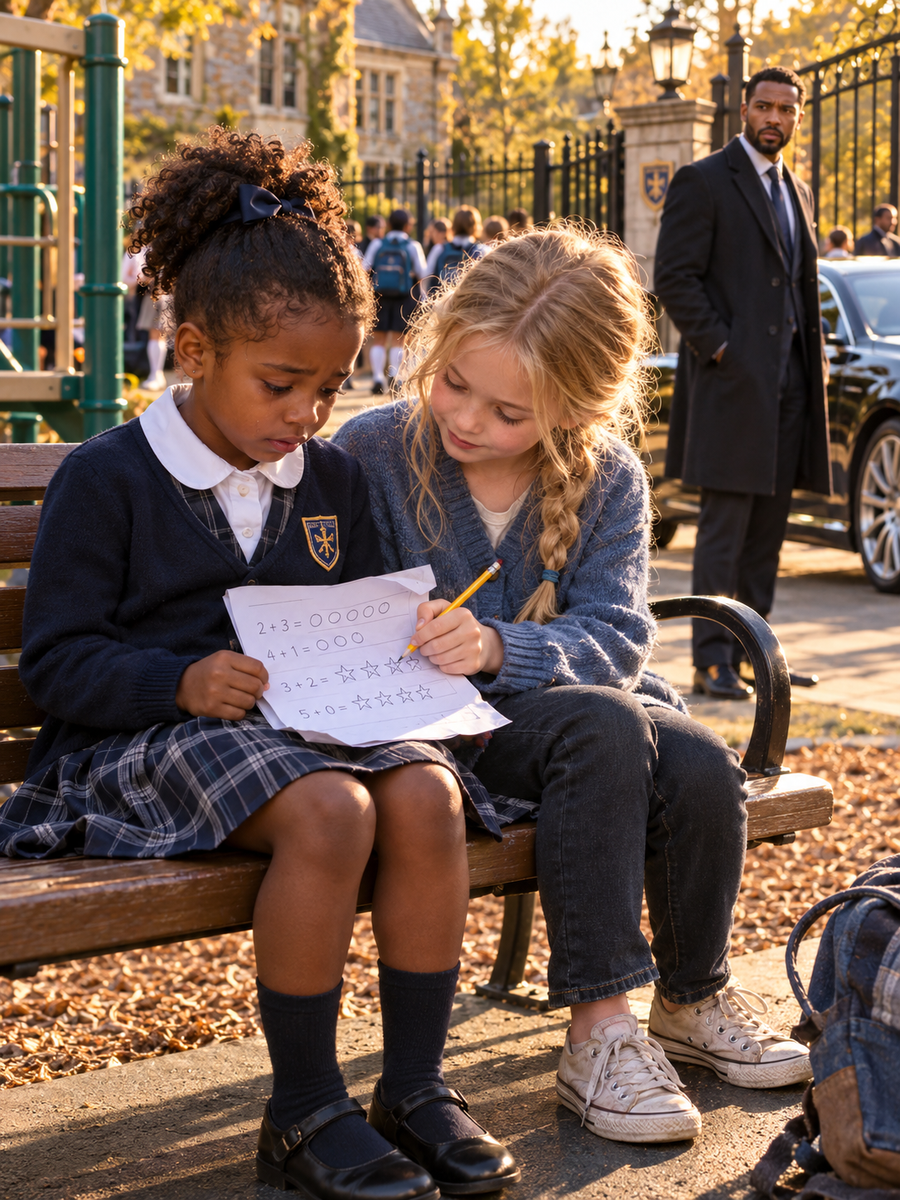
A BILLIONAIRE FOUND HIS DAUGHTER HIDING AN UNFINISHED MATH WORKSHEET—THEN THE POOR GIRL WHO HELPED HER DISAPPEARED, AND A QUIET QUESTION THREATENED EVERYTHING HE THOUGHT HE KNEW ABOUT FAMILY – Life Story
His six-year-old daughter shoved her math worksheet beneath a playground bench because she was terrified someone would see her struggling....