My Mom Berated Me For Making Her A Surprise Dinner So I Was Done And Got Take Out
My Mom Called Me Selfish After Rejecting My Kindness—But She Wasn’t the Only Person Who Learned What Happens When a Thoughtful Gesture Gets Thrown Back
I bought dinner for myself after my mother made me cry for trying to cook hers.
At another family’s wedding, a $500 gift left the bride furious instead of grateful.
And somewhere else, a seller who insisted “a book is a book” was about to discover that a box is a box.
Part 1: The Dinner My Mother Rejected—and the Truth I Finally Put on the Table
My mother asked why I hadn’t bought her dinner less than an hour after making me cry for trying to cook her one.
She stood in the hallway, looking at the McDonald’s bag in my hand as though I had carried home evidence of a crime.
Behind her, the kitchen light shone on the counters I had cleaned that morning.
In the refrigerator, two steaks waited beside the leftovers that had somehow become more important than anything I had meant by taking them out.
“When did you order that?” she asked.
Before I could answer, her eyes moved to the drink in my other hand, then back to the bag. “And why didn’t you ask if I wanted anything?” Her tone held the familiar combination of disbelief and disappointment, as if consideration were something I owed her even when mine had just been rejected.
I was twenty-nine years old, but something about that look could still make me feel twelve.
My shoulders tightened, and I felt the old impulse to explain quickly, apologize sooner, and turn whatever I had done into something she could forgive.
Usually, I would have offered her half my fries before she finished asking.
That night, I held the bag a little closer.
“You told me we needed to eat leftovers,” I said. “You were very clear about that.” My voice sounded flatter than I expected, worn out rather than angry.
She glanced toward the kitchen, then back at me, already preparing to explain why those words did not mean what I thought they meant.
“That doesn’t mean you couldn’t ask,” she said.
There it was: another rule I was supposed to understand without anyone having to say it.
I could make a meal and be wasteful, or buy a meal and be selfish.
Somehow, there was always a way for me to arrive at the wrong answer.
The apartment smelled faintly of dish soap, reheated coffee, and the cigarettes my mother smoked with a frequency I had stopped counting.
Our shoes sat together by the door, two pairs belonging to women who spent their working hours on aching feet.
We both had full-time jobs that left us physically exhausted.
On paper, we had more in common than we had reasons to fight.
Living together was supposed to be temporary, practical, and beneficial to both of us.
I didn’t have a car, and I was trying to save enough money to buy one without putting myself in another financial hole.
We were both on the lease, and I paid the full monthly rent.
Yet whenever we disagreed, the apartment somehow became her house and I became the child who needed to remember it.
I handled most of the housework because our arrangement had seemed reasonable when we made it.
She cooked, partly because she was better at it and partly because dividing the work that way gave us each something clear to manage.
I washed dishes, cleaned floors, scrubbed the bathroom, and tried to keep the rooms from disappearing beneath the things she brought home.
There was rarely one enormous task that broke me; it was the steady accumulation of little ones.
Some evenings, I would finish cleaning and stand in the doorway of the kitchen, hoping she would notice without my having to point anything out.
Not praise me extravagantly, not thank me for existing, just see that something had been done.
Instead, she might ask why I had moved a container or whether I had used the last clean dish towel.
The room would be clean, but the conversation would settle on the one thing I had apparently handled wrong.
I knew she worked hard, too.
I knew what it meant to come home with sore legs and no patience left for another decision.
That knowledge was part of why I kept trying to find small ways to make her day easier.
I had spent so long understanding her exhaustion that I rarely stopped to ask who was making room for mine.
I liked buying people little things they enjoyed.
A favorite snack, a drink they mentioned once, something that said I had listened when there was nothing to gain by listening.
I never thought of those gestures as grand demonstrations of generosity.
They were simply the way affection tended to come out of me.
And my mother liked surprises—or at least, I had always believed she did.
She liked something pleasant appearing when she hadn’t expected it.
The problem was that when the surprise came from me, it often arrived with an invisible test attached.
I would discover the requirements only after I had failed.
There was the ice cream, for example, an incident so small that explaining how much it hurt made me feel ridiculous.
We often bought Häagen-Dazs, and her favorite flavor was vanilla bean.
Our local store regularly ran out of it, leaving a gap in the freezer where the cartons should have been.
One evening, I stood in front of that empty space and chose another brand in the same flavor.
It was Blue Bell, and I remember thinking I had made a perfectly ordinary decision.
I was getting ice cream for myself, so I would bring some home for her, too.
She had never told me that the brand mattered more than the flavor.
I pictured putting it in the freezer and hearing her say it sounded good after the day she’d had.
Instead, she looked at the carton and frowned. “I don’t like that brand,” she said, in a tone that made the purchase sound careless rather than thoughtful.
When I explained that her usual one was sold out, she pushed it back toward me. “Well, you can have it, because I don’t want it.”
There was no acknowledgment that I had thought of her.
No simple explanation of what she preferred next time.
Just the rejection, delivered with enough irritation to make me regret stopping at the store at all.
I put the ice cream away and told myself I should have known better.
That became the private conclusion I drew more often than I wanted to admit.
I should have known the brand mattered, the timing mattered, the size mattered, the particular version mattered.
If I could just remember every preference and anticipate every mood, perhaps I would eventually do something that reached her without being corrected.
It took me years to understand how exhausting it was to love someone as if I were studying for an exam that kept changing.
After the ice cream, I never bought that brand for her again.
I added it to the mental list, along with the other things that had gone wrong.
The list grew, but my confidence did not.
I still wanted to do something kind, and every attempt came with a little more apprehension.
The day everything finally erupted was my day off.
My mother had gone to work, and the apartment was quiet enough that I could hear the refrigerator cycling on and off while I cleaned.
I moved through the familiar chores, thinking about laundry, my savings, and how tired she had looked the night before.
Eventually, I opened the freezer and saw the steaks.
We didn’t have steak often.
It was the sort of meal that felt a little special without requiring candles or a restaurant reservation.
I thought I could make mashed potatoes and vegetables, have everything ready, and give her one evening when she wouldn’t have to stand over the stove.
The idea pleased me because it felt uncomplicated.
I took the steaks out to thaw and began planning the timing.
I knew I could cook them well enough, even if she usually had the better instinct for a meal.
I pictured us sitting down together with something different on our plates and maybe having an ordinary, peaceful conversation.
There was nothing dramatic in what I wanted, which somehow made what followed hurt more.
She came home around one-thirty.
I heard her keys, the familiar movement at the door, and the sound she made when she set down her things after work.
I stepped into the kitchen and told her I had taken steaks out for dinner. “I thought I’d cook tonight,” I added, expecting at least a flicker of relief.
She looked toward the refrigerator. “Why would you take more meat out when we still have chicken and hamburger left from the other night?” The question came sharply enough that I felt myself stiffen before I had even decided whether it was fair.
The meal I had imagined disappeared, replaced by the need to defend why I had thought of it.
“I thought it would be nice,” I said. “We don’t have steak very often, and you wouldn’t have to cook.” I told her about the potatoes and vegetables, explaining the entire dinner as though its completeness might prove that I had been considerate.
She wasn’t interested in the menu.
“There’s rice in there, too,” she said. “We could have the chicken with the rice instead of wasting food.” She opened the refrigerator and looked inside, and for one foolish second I wanted the containers themselves to defend me.
They were still there, still perfectly available, still things I fully intended to eat.
“I’m not wasting it,” I said. “We can have the leftovers tomorrow.” I ate leftovers most of the time, and I wasn’t in the habit of leaving food until it spoiled.
I knew what groceries cost because I paid half of them, every shopping trip, every total, every transfer.
But once she had decided what my action meant, my explanation seemed only to irritate her more.
I was no longer a daughter trying to give her mother a break.
I was somebody creating an unnecessary problem, somebody who needed to be reminded that money didn’t grow on trees.
Then she delivered the sentence that made something in me snap.
“We’re not rich.”
It was an ordinary sentence, and on another day it might not have landed so hard.
But I heard it with the rent payment in my head, the grocery transfers, the cleaning, the car I still didn’t have because every month my savings grew more slowly than I hoped.
I heard it as if I were a reckless child spending money someone else had earned.
I had been trying to give her an evening off, and somehow I was being lectured about responsibility.
“I know we’re not rich,” I said, my voice rising despite my effort to control it.
She began answering before I finished, and the words tangled between us.
I could feel tears coming, which made me angrier because I knew how easily crying could make everything else I said seem childish.
Finally, I said the thing that had been sitting beneath all the other things.
“Apparently, I’m incapable of being thoughtful in your eyes.”
The kitchen went still for a moment, but I was too upset to wait for whatever came next.
I went to my room and shut the door, then sat on the bed with my face hot and my hands shaking.
I hated that I had shouted.
I hated even more that shouting seemed to be the only way the pain ever became visible.
From the other side of the wall, I could hear ordinary apartment sounds.
A cabinet opened, water ran, something was set on a counter.
Life carried on with insulting ease while I tried to stop crying over a dinner that hadn’t even been cooked.
I knew it wasn’t really the steak, but knowing that did not make it easier to explain.
It was the ice cream, and the other treats, and all the moments I had walked into a room carrying affection and left feeling foolish.
It was the expectation that I should keep trying without ever being hurt by the response.
It was being old enough to pay for the roof over our heads and still not being treated as old enough to deserve a respectful answer.
By the time I reached for my phone, I was hungry and emotionally wrung out.
I ordered McDonald’s because it was simple.
I would not have to negotiate what anyone else wanted, choose the wrong brand, or defend the timing of a meal.
For once, I could decide on something that pleased me without making it into an argument about whether I had considered everyone properly.
I knew delivery cost more than cooking, and I ordered it anyway.
When the food arrived, I stepped out to collect it, hoping to get back to my room before another conversation began.
That was when my mother saw the bag and asked why I hadn’t offered her anything.
The question might have been almost funny if I hadn’t still felt bruised.
She sounded genuinely wronged.
“You just yelled at me for trying to make dinner for both of us,” I told her. “You said we should eat the leftovers.” She crossed her arms, looking at me as if I were deliberately refusing to understand something obvious.
I could smell the fries through the paper, and all I wanted was to sit down.
“You’re being petty,” she said. “And childish, over getting yelled at a little.” The last two words stayed with me: a little.
As though hurt could be measured only by the person who caused it, and anything beneath their chosen amount did not deserve a response.
“This isn’t one time,” I said. “Every time I try to do something nice, there’s something wrong with it.” I reminded her about the ice cream and the other occasions when the gesture had disappeared beneath a complaint. “If I get you something, it’s wrong, and if I don’t get you something, that’s wrong, too.”
She started to answer, but I wasn’t finished. “You wanted leftovers tonight, so you can have leftovers,” I said. “I want this.” It was blunt, and I knew she would remember the bluntness more easily than she remembered what had led to it.
Still, I went back to my room without offering away half my dinner.
The food was warm, and for a few minutes I concentrated on small things: opening a sauce packet, finding somewhere to set the drink, keeping grease off my bedding.
Eating gave my hands something to do while my thoughts kept circling the argument.
I did not feel triumphant.
Mostly, I felt tired and ashamed of how badly I wanted her to understand.
Hours passed without either of us seeking the other out.
The silence filled the apartment differently from the peaceful quiet that morning.
It felt watchful, like both of us were listening for evidence that the other person might be ready to concede.
Eventually, my anger cooled enough for doubt to take its place.
Maybe I had been petty.
Maybe I should have asked about dinner before taking anything out.
Maybe she had only been worried about wasting groceries, and I had piled years of frustration onto one ordinary comment.
I could always produce a reasonable explanation for her, even when I struggled to find one that allowed me to be hurt.
I wrote about what had happened because I needed a perspective that did not come from inside our apartment.
I described the ice cream, the steaks, the leftovers, and the bag of food I had ordered for myself.
Putting it into words made it look smaller and larger at the same time.
Smaller because the objects were so ordinary, larger because the pattern became difficult to ignore.
Some people focused immediately on the rent.
If I was paying the full amount already, they asked, why not pay for a place where I could make dinner without being spoken to that way?
Others said the problem was that my mother still treated me like a child instead of another adult sharing responsibilities.
I read those responses more than once.
A few people raised a different possibility: perhaps my mother did not actually enjoy surprises as much as I believed.
Maybe the simplest solution was to ask before buying something or planning a meal.
That suggestion stung at first, because surprises had always felt like one of the ways I expressed love.
Then I realized that changing the delivery of affection was not the same as admitting I deserved to be treated badly.
I could ask what she wanted without accepting contempt.
I could acknowledge that meal planning affected both of us without pretending her tone had been harmless.
Those were separate things, and for the first time, I began to see them separately.
I also began thinking about the parts of our financial arrangement I had left out.
The rent was only the largest payment.
We split groceries equally, and I also paid one hundred and twenty dollars each month for two storage units.
Most of what filled them belonged to her.
I had been carrying that expense so long that it had started to feel like part of the weather, something that simply existed and could not be questioned.
That evening, I opened my banking app and looked at the payments together.
Not as individual inconveniences, but as the actual structure of my life.
My mother had a car payment and a heavy cigarette habit, while I was still trying to save for basic transportation.
The more clearly I looked, the harder it became to keep calling myself an ungrateful daughter.
When I finally stepped out of my room, she was sitting in the living room.
I asked if we could talk, and something in my voice must have been different because she turned down the television.
I sat where she could see me and resisted the urge to soften everything before I had even begun.
My hands were still trembling, but I kept them in my lap.
“I’m sorry I shouted,” I said. “But I’m not going to apologize for being hurt.” She drew a breath as if to interrupt, and I asked her to let me finish.
For once, I needed the whole truth to reach the room before anyone started taking it apart.
“I pay the rent here,” I told her. “I pay half the groceries, I do most of the housework, and I pay for storage that’s mostly full of your things.” Her expression changed, and I saw her understand that this conversation had moved far beyond dinner.
I was no longer asking whether she thought I had meant well.
“I’m twenty-nine, Mom, and I can move out,” I said. “If this doesn’t change, that’s what I’m going to do.” I let the words settle between us without adding a joke or an apology to make them easier for her.
Then I asked the question I had avoided for years: “Do you understand what happens to all these bills when I’m gone?”
Part 2: The Conversation That Changed Our Home—and the $500 Wedding Gift That Exposed Another Family’s Secret
My mother looked at me for a long moment without speaking.
Usually, I would have rushed to fill that silence, terrified that a pause meant I had gone too far.
This time, I stayed where I was and allowed the discomfort to belong to both of us.
I had spent enough years carrying it alone.
“I’m not threatening you because of one dinner,” I said. “I’m telling you that I can’t keep living like this.” Her gaze dropped briefly to my hands, which I had pressed together to stop them shaking.
I wanted her to understand that setting a limit did not mean the limit was easy for me to set.
The storage units were a perfect example of how our responsibilities had become tangled.
My mother had a hard time letting go of things, and our apartment had begun filling with more than we could comfortably keep.
I had suggested storage because I wanted space to move, clean, and live.
Since it had been my idea, I had somehow become the person responsible for paying for it.
At least three-quarters of the contents belonged to her.
My own things were in there, too, buried behind or underneath hers, which made dealing with them more difficult than simply deciding to clean out a few boxes.
We had talked about sorting everything and getting rid of what we no longer needed.
The conversations happened more reliably than the sorting.
“I can’t keep paying forever because we keep saying we’ll deal with it later,” I told her. “If I leave, I’ll arrange to get my things out and sell what I don’t need, and we’ll have to sort out responsibility for the units.” I was not offering to throw away her possessions or punish her for having them.
I was explaining that my money and effort were no longer an unlimited extension of hers.
Then I said something I had always considered too cruel to mention.
Paying the rent helped make room in her budget for cigarettes and her car payment, while I still did not have a car of my own.
She went through roughly four packs in two days, an expense I tried not to think about whenever I transferred money.
Saying it aloud made me feel disloyal for a moment, but leaving it unspoken had not made it untrue.
“I know you work hard,” I said. “I’m not saying you don’t, and I’m not saying you’ve never done anything for me.” That mattered, because I did not want the conversation to become a competition over who had suffered more or contributed more across an entire lifetime.
I wanted her to see what was happening now.
“What I’m saying is that I’m helping keep this home running, and I still get spoken to like I’m a child who doesn’t understand anything.” My voice cracked on the last word, which frustrated me, but I kept going. “I need you to talk to me like somebody whose feelings count.” For once, I did not replace the sentence with something smaller.
She rubbed her forehead and looked toward the kitchen.
When she finally spoke, her voice had lost the edge it carried earlier. “I did appreciate that you wanted to cook,” she said. “I was thinking about the food we already had, and I didn’t want it going to waste.”
Hearing that acknowledgment nearly undid me.
It was such a small sentence compared with how long I had waited to hear it, yet I felt tears pressing behind my eyes again.
I wanted to accept it immediately and declare everything fixed.
Instead, I reminded myself that relief was not the same thing as resolution.
“I understand worrying about leftovers,” I said. “I can ask next time before taking something out, especially if you already have a plan.” She nodded, and I could feel the conversation beginning to move toward familiar safety.
Before we stopped there, I made myself say the part that still mattered.
“But it isn’t only about the steaks,” I told her. “It’s the ice cream and the other things, too.” I explained what it felt like to think about someone in a store, bring home something intended to make them happy, and receive irritation before anything else.
I did not need her to eat something she disliked; I needed her to stop treating my attempt as an offense.
“You can tell me you prefer another brand,” I said. “You can tell me you don’t want it.” Those things were not the problem, and I wanted that distinction to be clear. “But you can say it without making me feel stupid for thinking of you.”
She listened, and that alone changed the shape of the evening.
There was no miraculous speech, no instant rewriting of every difficult memory between us.
We were two tired women in a modest apartment, trying to say things we had handled badly for too long.
The fact that we were finally saying them plainly felt important enough.
We agreed that if her usual brand was unavailable, I would call and ask whether she wanted something else.
She could choose another brand, suggest a different treat, or say she did not want anything.
I would stop assuming that the pleasure of being surprised mattered more to her than getting exactly what she preferred.
In return, she needed to acknowledge the thought behind what I did and speak to me respectfully.
Part of me mourned that compromise more than I expected.
I liked imagining a person’s face brightening when I handed them something they hadn’t known was coming.
Calling first felt less spontaneous, less like the small language of affection I naturally spoke.
But I could survive changing that language for one person, especially if it meant we finally understood each other.
We also made an actual plan for the food.
The steaks would become the meal I had wanted to cook, and the leftover chicken would go into soup the following evening.
The rice and remaining food would be used instead of forgotten.
Once we stopped arguing over what my intentions supposedly meant, the practical problem turned out to be manageable.
I went into the kitchen and looked at the refrigerator differently.
Nothing inside it had changed: the same containers, the same ingredients, the same shelves I had wiped down.
Yet the room no longer felt like a place where I had to defend my right to stand.
My mother came in behind me, and we talked about dinner without either of us raising our voice.
I did not mistake one good conversation for a guarantee.
I still needed to save for a car, and the storage units still needed attention.
Moving out remained a real option, not a dramatic line I had used and forgotten.
But for the first time in a long while, staying did not feel exactly the same as surrendering.
What changed most was not the menu or the brand of ice cream I would buy next time.
It was that I stopped treating every disappointed reaction as proof I had failed to love properly.
Sometimes a kind gesture needed better communication, and sometimes the person receiving it needed to behave better.
Both could be true without erasing either one.
I had finally learned to ask what another person wanted before giving it.
Across another family, however, someone had done exactly that—read the instructions, followed them carefully, and given a generous gift in the way requested.
He still ended up standing in front of a furious bride while people around him called him rude.
His mistake, if it could be called one, was believing the words on a wedding website meant what they said.
The groom was one of my closest friends, the kind of person I called my cousin even though there was no blood relationship between us.
An aunt and uncle in our families had dated years earlier, and the adults’ relationship had eventually ended.
Ours hadn’t, and over almost fifteen years, friendship became its own version of family.
By the time his wedding invitation arrived, there was no question that my wife and I would be there.
His father had died before the wedding.
That absence existed beneath every happy detail, even when nobody mentioned it directly.
There would be people smiling for photographs who had once assumed he would stand beside them in those pictures.
I knew how much my friend missed him, and I wanted whatever we gave to honor the marriage without pretending the loss wasn’t part of the day.
The wedding website made that seem straightforward.
Under the registry section, instead of a list of household items, there was a request for donations to the Heart and Stroke Foundation in his father’s name.
The wording said, “In lieu of gifts.” I read it as an invitation to do something meaningful with the money we would otherwise have spent on a wedding present.
My wife and I decided on five hundred dollars.
It was a substantial gift, chosen because he mattered to us and because the tribute seemed worth supporting.
I made the donation in the requested name and saved the confirmation.
Then I printed it and tucked it inside a congratulatory card so they would know we had followed their wishes.
I did not post about the donation online.
I did not announce it to friends, compare it with what anybody else was giving, or plan to make a speech about generosity.
The screenshot was proof that the gift had been made, not a display I expected anyone to applaud.
If the envelope had been opened quietly after the wedding, I would have considered that perfectly normal.
The celebration took place in a backyard with around sixty guests.
It was smaller and simpler than many weddings, but I did not walk in measuring what was missing.
There were people who cared about the couple, food to share, and the particular tenderness that gathers around someone marrying while grieving a parent.
I thought it was a good day to show up with affection and leave judgment somewhere else.
The bride greeted us warmly.
She and my wife got along, and I had never had a conflict with her that would have prepared me for what happened later.
She seemed like the same generally calm person I had known before.
Looking back, I can remember moments when her smile appeared tired, but weddings exhaust people, and I had no reason to interpret it as a warning.
After the cake was cut, the couple opened gifts.
That was how they had chosen to do it, with people still gathered around and attention drifting toward each envelope and package.
Some guests had brought physical presents, and others had included small amounts of cash along with donations.
I watched without thinking their choices changed the instructions we had been given.
Then she opened our card.
I saw the sheet of paper unfold and watched her eyes move over the donation confirmation.
At first, I expected recognition, perhaps a quiet moment about the groom’s father.
Instead, her expression tightened in a way that made me sit a little straighter.
“You donated five hundred dollars?” she asked.
Her voice was louder than the surrounding conversation, and a few people turned toward us.
I smiled uncertainly and said yes, explaining that we had followed the website.
Even then, I thought there had to be some simple misunderstanding.
“To the foundation?” she said.
I nodded again, feeling the first cold sensation of something going wrong.
She looked at the card as if another envelope might be hidden inside it.
Then she looked back at me and asked why we hadn’t given the money to them.
For a moment, I genuinely did not understand the question. “The registry said donations in your dad’s name,” I told my friend, glancing toward him because the request had seemed connected to his loss. “In lieu of gifts.” The bride’s face changed again, and now there was no mistaking that she was angry.
People nearby stopped pretending not to listen.
My wife’s hand touched my arm beneath the table, a small, steadying contact that made me realize how tense I had become.
The donation confirmation remained in the bride’s hand.
I had meant it to represent love, and now it seemed to be functioning as evidence against me.
“You had five hundred dollars to spend,” she said, “and you gave it away?” The phrasing stunned me because I had thought giving it away was the entire point of the request.
I tried to explain again, more carefully this time.
Each sentence seemed to make her feel more exposed rather than less.
Her parents began speaking, and members of the wedding party joined in.
The exact words varied, but the message was consistent: I had upset the bride, and upsetting the bride on her wedding day meant I had behaved badly.
Nobody seemed interested in stopping long enough to look at the website.
The emotional reality in front of them had become more important than the instructions that had created it.
Someone said I should have known better.
Someone else suggested that showing the amount was inappropriate.
I could understand, even then, that perhaps the confirmation might have been handled differently, but that did not explain why following the request had become an insult.
I kept looking for the missing piece while everybody else seemed to have decided I was it.
My friend looked miserable.
He was not a person who enjoyed attention under the best circumstances, and this was attention he clearly wished he could make disappear.
I wanted him to say something that settled the confusion, but I also understood he was standing beside his new wife in front of their families.
His discomfort was visible, and his silence still hurt.
I did not want to fight in someone’s backyard while a wedding cake sat half-served nearby.
I lowered my voice, said there had been no intention to offend, and stopped trying to argue the meaning of the sentence.
My wife stayed close, answering politely when people spoke to us.
Eventually, we left with the strange sensation of having been pushed out without anybody actually asking us to go.
In the car, I sat for a moment before starting the engine.
The day had turned so abruptly that my mind kept returning to the moment before she opened the card, trying to locate the mistake I could have prevented.
My wife said, “You did what they asked.” I believed her, but I could still hear all the other voices telling me otherwise.
That was the part that unsettled me most.
One angry person could be mistaken, but when several people repeated the same accusation, it became harder to trust my own understanding.
Had I missed a convention everybody else knew?
Was there some unwritten rule that a charitable request never actually replaced a wedding gift?
I went back to the website and read the registry section again.
There was no money tree, no additional list, no instruction that donations should be made alongside a present.
The words still meant what I had believed they meant when I sent the money.
Seeing them gave me some reassurance, but it did not undo the humiliation.
I wrote about it because I needed to know whether there was something obvious I had failed to understand.
I explained the request, the amount, the screenshot, and the reaction.
People immediately asked what I was leaving out.
Their suspicion was understandable: the story sounded absurd even to me, and I had been there.
No, I had not announced the donation publicly.
Yes, I had been invited.
No, the bride and I did not have a history of hostility, and yes, she normally got along well with my wife.
I answered the questions as honestly as I could, hoping one of them would uncover the explanation that was still missing.
Some people believed the couple had wanted to appear charitable while still expecting guests to give them money.
Others thought the five hundred dollars had been the trigger, because it was too large an amount for the bride to dismiss as symbolic.
A few said I should never have included the number in the card.
I considered all of it, but none of those strangers knew her well enough to tell me what had actually happened.
Then my friend texted.
He thanked me privately for the donation and said he and his wife had been talking about the incident.
I was relieved to hear from him and hurt that the gratitude had arrived only after we left.
He explained that their entire wedding budget had been a little over a thousand dollars.
I read that number twice.
Suddenly, the size of the donation had a context I hadn’t known about.
To us, five hundred dollars had been a generous tribute to his father and a celebration of someone we loved.
To her, it had apparently looked like half of everything she had struggled to gather for the wedding.
He said the small celebration had not been the wedding she originally imagined.
They were having financial difficulties, and the limits had weighed on her more heavily than he had realized.
Seeing that amount go somewhere else had set something off.
He did not say the outburst was justified, but he wanted me to understand that it had come from somewhere more complicated than simple dislike.
I could understand disappointment without believing I had caused it.
I could feel sympathy for their finances without accepting responsibility for reading a request correctly.
Still, the message changed my anger into something less clean and more difficult.
I did not want a fifteen-year friendship reduced to a story about one disastrous envelope.
A few days later, I invited them over.
My wife agreed that we needed a real conversation, not a series of messages passed between people trying to keep everyone calm.
I made it clear that I wanted to understand, but I also needed them to understand how it had felt from our side.
They accepted, and I spent the hours before they arrived wondering whether we were about to repair the friendship or confirm that it had changed permanently.
When they sat down in our living room, the bride looked embarrassed before anyone mentioned the wedding.
My friend stayed close beside her, but he did not try to answer every question for her.
I began with the simplest fact: we had followed the instructions because we wanted to respect their wishes.
Then I told her what it felt like to be called rude in front of people who had watched us arrive with good intentions.
She looked down at her hands. “You didn’t deserve that,” she said, and the directness of it surprised me.
There was no immediate explanation attached, no claim that my feelings came from misunderstanding her tone.
She said it again, more quietly, before I asked the question that had been bothering several people.
“When you wrote ‘in lieu of gifts,’ what did you think that meant?” She closed her eyes for a moment, and my friend looked at the floor. “I thought it meant in addition to,” she admitted.
For a second, none of us spoke.
That misunderstanding was so simple that I almost laughed from sheer disbelief, though there was nothing funny about what it had caused.
She had believed guests were being asked to donate and bring a wedding gift.
I had believed we were being asked to donate instead of bringing one.
The same sentence had created two completely different expectations.
But she did not use the definition as an escape route. “Even if I had written it differently, I shouldn’t have spoken to you like that,” she said. “And I shouldn’t have let everybody pile on.” I watched her carefully, because an apology can sound convincing until the moment responsibility begins slipping out of it, but she stayed with what she had done.
She admitted she had been jealous.
Not because I had done something wrong, but because the five hundred dollars looked easy in a way that none of her own money had felt lately.
She had scrimped and saved for a wedding that still fell short of what she had pictured.
In that instant, she had taken her frustration about her circumstances and aimed it at the nearest person holding a reminder of them.
“I know that isn’t fair,” she said. “I know it wasn’t your money to give us just because I wanted it.” Her voice shook, and for the first time I saw how much effort it was taking for her to remain in the conversation.
She was not asking us to pretend the scene hadn’t happened.
She was trying to explain the feelings behind it without claiming they excused it.
Then she mentioned the health problems.
I will not repeat the details because they were hers, shared in a private room during a difficult conversation.
What mattered was the burden they had created: financial uncertainty, emotional exhaustion, and a future that felt harder to plan with confidence.
The wedding had been sitting on top of all of that.
My anger did not vanish, but it changed shape.
I could remember the woman in the backyard holding our card with resentment, and I could see the woman in front of me struggling with fear she had hidden from most people.
They were the same person, and understanding that required more effort than deciding she was simply awful.
I asked the question that now seemed unavoidable.
“If money was so tight, why not wait?” I said gently. “Why have the wedding now instead of saving for the one you wanted?” She looked at her husband, and the answer came without defensiveness. “Because I wanted to marry him.”
Then she glanced back at me. “And after his dad died, I kept thinking about who else might not be there if we waited.” My friend took her hand, and the room grew quiet in a different way.
Beneath the argument about five hundred dollars was a fear none of us could solve with a better gift.
For a while, nobody tried to solve anything at all.
We sat with the fact that joy and grief had collided in the same backyard, and one person had handled the collision badly enough to hurt others.
That did not make the harm imaginary.
It did make forgiveness feel possible without requiring me to lie about what had happened.
My wife eventually offered coffee, giving everyone something ordinary to do.
She used her espresso machine, the one she enjoyed operating with a level of care I usually considered excessive for a drink.
There were small sounds from the kitchen, cups set down, milk steaming, a spoon touching ceramic.
After the tension of the conversation, the familiar noises felt almost merciful.
The bride took a sip and looked genuinely surprised. “This is really good,” she said, and my wife began explaining how she made it.
For the first time since they arrived, the conversation moved toward something that did not require an apology.
I watched their faces relax and felt the friendship become recognizable again.
They left with things better than they had been when they walked in.
Not erased, not magically restored to a world in which nobody had behaved badly, but better in a way that felt honest.
A few days later, I found myself looking up the same espresso machine.
I knew exactly how that decision might appear to anyone who had only heard the wedding story.
I bought it anyway, as a late gift.
Not because she had earned a reward by humiliating me, and not because I believed I owed a replacement for the donation.
I bought it because I had seen somebody take responsibility while carrying more pain than I knew, and I wanted to put something pleasant into the days ahead.
The foundation kept the five hundred dollars, and my friend’s father was still honored.
Some people might have chosen differently, and I would understand that.
For me, preserving a friendship I valued did not mean surrendering the truth; the truth was what finally made preserving it possible.
We ended on good terms because we had asked the uncomfortable questions and received answers that included genuine remorse.
The apology mattered more than the machine ever could.
But not every person responds to a complaint with that kind of honesty.
Sometimes you explain the problem clearly, give someone every opportunity to correct it, and receive nothing but a sneer disguised as common sense.
That was what happened to a reader who bought a book and discovered that its seller had omitted one very important detail.
When the seller finally agreed to arrange a return, he made one request of his own—and forgot to ask one question that would have saved him considerable trouble.
Part 3: He Told Me “A Book Is a Book”—So I Returned It in a Box He Would Never Forget
The book was so small that, for a moment, I thought the seller had sent a promotional sample.
I held it in my palm and looked inside the packaging for the rest of the order, as if the full-sized copy might be tucked beneath a piece of paper.
There was nothing else.
The tiny object in my hand was apparently the entire purchase.
I had ordered it on eBay because the price was good and the listing described it as new.
There was nothing unusual about the transaction from my side.
I wanted a book, found a copy that appeared to meet that need, and paid for it.
I had not been shopping for a miniature, a novelty item, or something intended primarily to sit on a shelf.
The difference was not subtle.
It was less than a quarter of the size of an ordinary paperback, small enough that the cover itself should have warned anyone holding it that it required a clear explanation.
But photographs can make an object look ordinary when there is nothing beside it for scale.
On a screen, a book-shaped rectangle can look like any other book-shaped rectangle.
I opened it, hoping the interior might somehow be more usable than the outside suggested.
The print was tiny, packed into pages that were not remotely suited to my needs.
I brought it closer, then moved it away, searching for a comfortable distance that did not exist.
The familiar frustration arrived before I wanted to acknowledge it.
I have a progressive eye condition.
Reading had already become something that required more care and adjustment than it once did.
I was accustomed to checking what I could manage and making practical choices around those limits.
I did not expect a seller to know my medical history, but I did expect a listing to tell me when a book was a miniature.
That distinction mattered.
I had not ordered a clearly described small-format edition and then demanded that the world accommodate a mistake I had made.
The information I needed had not been supplied.
Without it, I had no reason to believe this particular book would arrive in a form I could not read.
I went back to the listing before contacting him.
I wanted to be certain, because there is a special kind of embarrassment in accusing someone of leaving out a detail you simply failed to notice.
I read the title, the description, and every available line beneath the photographs.
There were no measurements, and nowhere did it state that the book was a miniature version.
The seller was not someone clearing out a single unfamiliar item from a drawer.
He was a professional bookseller with more than twenty copies of the same edition available.
That made the omission harder to dismiss as an innocent oversight.
He had enough of these books to know exactly what he was selling.
Still, I began politely.
I explained that the book was much smaller than the listing had led me to expect and that the print was unusable for me because of my eye condition.
I said I would need to return it.
I also pointed out that the miniature format should have been mentioned clearly.
I asked him to cover the return shipping because the missing information had created the problem.
That seemed reasonable to me: I was not trying to keep the book and get my money back, nor was I demanding compensation for the inconvenience.
I wanted to send back something I could not use and receive a refund.
There was a straightforward path out of the situation.
His reply made it clear he did not see it that way.
He told me I should have asked how big the book was before buying it.
Then he added the sentence that transformed an annoying transaction into something I would remember. “A book is a book.”
I read it again.
There was no apology for the missing description and no acknowledgment that a miniature edition might be relevant to a buyer.
Nothing suggested he regretted the confusion or had any intention of making the listing clearer.
His position seemed to be that I had received an object technically belonging to the correct category, and the rest was my problem.
It was such a careless sentence.
A book is a book, as though size could not affect its purpose, as though readability were an eccentric personal preference rather than the reason someone might buy one.
I had taken the trouble to explain why the omission mattered.
He had answered by reducing the entire issue to a smug little slogan.
I could have replied angrily.
There were several things I wanted to say about professional sellers, incomplete descriptions, and the difference between being technically correct and behaving decently.
I pictured a long exchange in which he would keep insisting I should have asked more questions.
The thought exhausted me before it began.
Then I read the rest of his message.
He was willing to arrange for UPS to pick up the return at his expense, and he would refund the purchase once it reached him.
That was the practical outcome I had requested.
But he attached a condition: I was not to leave negative feedback.
That condition irritated me almost as much as the remark about the book.
He wanted the item returned quietly and the transaction left looking as though nothing had gone wrong.
The refund was being treated as a favor tied to my silence rather than the correction of a problem.
I looked at the miniature copy again and felt my anger become unexpectedly calm.
The seller had made his own principle very clear.
If a customer cared about dimensions, the customer should ask.
The category alone was sufficient information, and anyone who assumed a conventional size had only themselves to blame.
I began thinking about how consistently he might wish to apply that principle.
Somewhere in the house was a box.
Not a modest shipping carton, not a padded envelope, not anything a person would naturally select for a book that fit in a palm.
It had once held a large chandelier.
The moment I remembered it, I stopped composing an angry reply.
The box was enormous, roughly four feet by four feet.
It was the kind of packaging that makes a room feel smaller simply by occupying a corner of it.
I stood beside it and imagined the miniature book inside.
For the first time since opening my order, I laughed.
There was something wonderfully precise about the idea.
I would return the actual item, just as requested.
I would package it securely, make it available for pickup, and allow the seller to receive it before issuing the refund.
The only unexpected detail would be the size of the container.
I did not damage the book or alter it.
Whatever I thought of the seller, the item itself was going back in the condition in which it arrived.
I wrapped it carefully and made sure it would not be lost or knocked around inside the carton.
A tiny book, after all, could disappear remarkably well in a very large space.
Preparing the package took longer than putting the book in an ordinary mailer would have taken.
That was part of what made the whole thing so ridiculous.
I was expending effort on the return of an object the seller had insisted required no special explanation.
Every strip of packing tape felt like a punctuation mark.
As I worked, I kept returning to the first message I had sent him.
A simple apology would have changed everything.
Even a brief acknowledgment that the listing should have mentioned the dimensions would probably have left me mildly annoyed and willing to move on.
Instead, he had chosen to tell me the missing information was my responsibility to discover.
I had dealt with enough limitations around my eyesight to know the difference between a solvable inconvenience and being dismissed.
The miniature book was an inconvenience.
The contempt in his reply was what stayed with me.
I did not need him to feel sorry for me; I needed him to stop pretending the facts I had explained were irrelevant.
When the package was ready, I stepped back and inspected it.
The taped seams looked ordinary, the carton was closed, and the book was protected somewhere inside that enormous square of cardboard.
Nothing about it announced the joke.
That made it better.
I sent him a short message saying the return was packed and ready for pickup.
I did not write a speech about fairness.
I did not borrow his tone or explain what I had decided.
He had offered to arrange the collection, and I gave him the information needed to proceed.
Then I waited.
There was no need to imagine a grand confrontation or pretend I knew exactly what the shipping charge would be.
I did not see a final invoice, and I could not honestly claim to know what expression crossed his face when the package reached him.
The satisfaction was in the symmetry, not in inventing an ending I had not witnessed.
I could, however, imagine the sequence well enough.
A large box arriving at a bookseller’s premises, someone checking the return information, the tape being opened, and the contents gradually revealing themselves.
All that space surrounding one very small book.
The dimensions would suddenly seem like useful information.
That was the lesson his own sentence had supplied.
Categories do not tell people everything they reasonably need to know.
A book can be too small to read, and a box can be much larger than someone expects to pay to ship.
Details matter most to the person who bears the consequence of not having them.
The first woman had learned that thoughtfulness did not require accepting endless criticism.
The wedding guest had learned that an ugly reaction could conceal grief and confusion, but repair still required an honest apology.
My lesson was smaller, more petty, and considerably more difficult to fit through a doorway.
Sometimes, a person’s dismissive words provide all the instructions you need.
I did not know whether he would change the listing.
I did not know whether he would become kinder to the next customer who asked a reasonable question.
But I hoped that, the next time he decided an omitted detail was somebody else’s problem, he would remember the return he had arranged himself.
It had given his philosophy a physical shape.
After all, a book was a book.
And a box was a box.
He should have asked what size.
Recommended Stories

I ENTERED A BOSTON CHURCH TO FIND THREE MISSING WOMEN—THEN A STRANGER IN THE CONFESSIONAL WARNED ME THE MEN COMING THROUGH THE DOORS ALREADY KNEW MY NAME – Life Story
A stranger answered my confession in a Boston church after eleven at night. Minutes later, men in dark coats pushed...
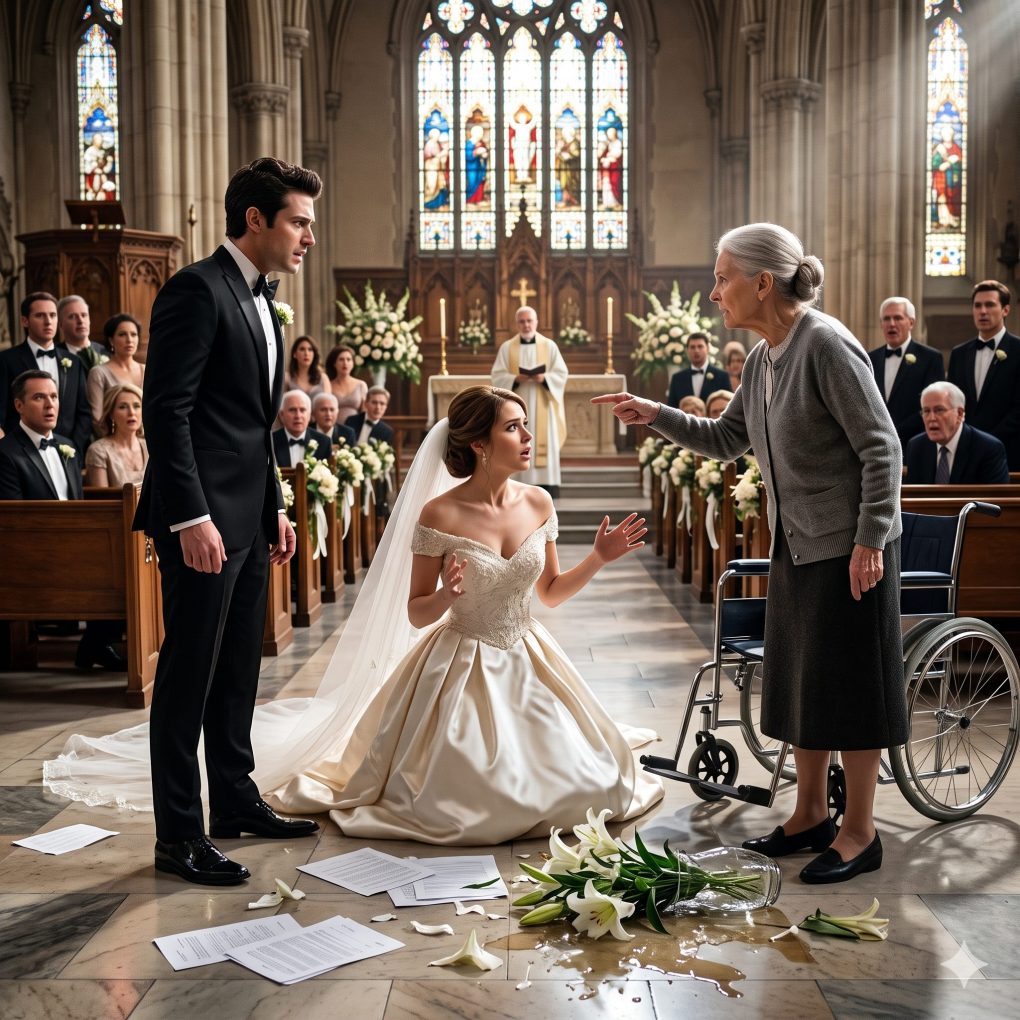
My Groom Dismissed His Wheelchair-Bound Grandmother as Completely Helpless Right at the Altar, but She Stood Up with Her Own Strength to Hand Me Damning Legal Paperwork That Proved the Betrayal of the Man I Was About to Marry.
The morning light streaming through the stained glass of St. Jude’s Chapel cast shimmering hues across my ivory gown. For...

She Got Trapped in an Elevator With a Stranger—Three Days Later, He Sat Across From Her at the Meeting That Could Make or Break Her Career – Life Story
The elevator stopped between the nineteenth and twentieth floors hard enough to knock Natalie Ashford’s shoulder against the mirrored wall....