Her CEO Husband Told The Court She Was Too Unstable To Raise Their Son—Then The Judge Asked For The Other Daycare Camera – Life Story
Maxwell Harrington sat three seats away from his wife and told a Franklin County judge that she was too unstable to be trusted alone with their six-year-old son.
Rain had spent twenty-nine days hearing versions of that lie from police officers, child-welfare workers, attorneys, strangers online, and the man who had once promised she would never have to face anything alone.
Then her lawyer stood, turned toward the courtroom monitor, and said, “Your Honor, Mr.
Harrington showed the court one daycare camera.
We’d like to show you the other one.”
Rain kept both hands beneath the table.
If she left them where people could see them, they would notice the shaking.
The family courtroom in downtown Columbus was smaller than the news photographs made it appear.
No soaring marble columns.
No dramatic gallery built for television.
Just beige walls, fluorescent light softened by tall windows, two rows of wooden benches, attorneys with files open in front of them, and enough reporters crowded near the back to make every whisper feel public.
Rain could hear a camera shutter somewhere behind her.
She did not turn.
Across the aisle, Maxwell sat beside his attorney in a charcoal suit she had picked out for him two Christmases ago.
He had always looked good in charcoal.
That irritated her now.
Not because she wanted him to look broken.
Because some childish part of her still believed betrayal ought to leave a visible mark.
A ripped seam.
A bruise.
Something.
Instead, Maxwell Harrington still looked like the founder and CEO whose photograph appeared in business magazines every few months.
Thirty-eight.
Tall.
Controlled.
Expensive without seeming flashy.
His dark hair was cut exactly the way it had been the morning he kissed Rain in their kitchen and told her he would be home early.
That was before she knew about Zara.
Before the photographs.
Before Mason’s injured wrist.
Before the officers came to her house.
Before Maxwell stood in the driveway and watched them take her away.
Rain felt Tanika’s knee touch hers beneath the table.
A reminder.
Here.
Now.
Breathe.
Rain inhaled.
The judge looked toward her attorney.
“Proceed, Ms.
Grant.”
Marisol Grant nodded.
She was fifty-four, silver threaded through her dark hair, with reading glasses she wore low on her nose and a habit of waiting an extra second before answering a difficult question.
Rain had learned to trust that pause.
Marisol lifted a small remote.
“This is the video Mr.
Harrington submitted with his original complaint.”
The monitor brightened.
Rain had seen the clip enough times to hate it.
The side entrance of Mason’s daycare appeared from a high corner angle.
A timestamp flickered at the bottom.
Children crossed the room.
Teachers moved between tables.
Then Mason appeared near the edge of the play area.
The perspective was poor.
Rain entered through the main doorway seconds later.
From that camera, depth collapsed.
She looked close to Mason.
Closer than she had actually been.
The clip stopped with Mason low in the frame and Rain moving toward him.
Maxwell’s attorney had called it “consistent with her proximity to the incident.”
Rain called it what it was.
A lie that did not technically alter the pixels.
Marisol stopped the video.
Maxwell did not move.
He had expected this.
He had built his case around this.
Then Marisol said, “Now Camera Four.”
For the first time that morning, Maxwell looked directly at Rain.
And Rain remembered the morning she still believed he was the safest man in her life.
It had begun with waffles.
Mason sat at the kitchen island wearing a red superhero cape over dinosaur pajamas.
“Captain Syrup is attacking,” he announced.
Rain slid his plate away from the bottle he was threatening with a plastic fork.
“Captain Syrup is going to attack the floor if you keep doing that.”
“That’s his power.”
“What is?”
“Stickiness.”
Rain laughed.
Mason grinned so hard his cheeks rounded.
Saturday sunlight filled the kitchen through three tall windows overlooking their backyard.
The house was large without feeling like a showplace because Rain had refused to let designers fill it with furniture nobody could sit on.
There were Mason’s crayons on one counter.
Her fabric swatches on another.
A wooden bowl Maxwell’s mother had given them sat beside a stack of unopened mail.
Their life was visible.
That mattered to Rain.
She had grown up in a home where beautiful things were used, not protected behind glass.
Maxwell entered already dressed for work.
That was the first thing she noticed.
Saturday.
Eight in the morning.
Dress shirt.
Watch.
Phone in hand.
Mason pointed his fork.
“Daddy.
Superhero breakfast.”
Maxwell lowered his phone and immediately changed his expression.
“You didn’t tell me we had security in the building.”
Mason stood on the stool.
“I’m not security.
I’m Solar Man.”
“My mistake.”
Maxwell lifted him, cape and all, and turned once before setting him back down.
Rain watched them with the familiar warmth that had kept her patient through months of late nights and short answers.
Then Maxwell kissed her temple.
“Morning, superstar.”
He had called her that since their second year together.
Rain smiled automatically.
“Coffee?”
“Already had some.”
“At home?”
“Office.”
She glanced at the clock.
“You went in?”
“Six-thirty.”
“Max.”
“I came back.”
“You left the house before dawn on Saturday and came back without me knowing?”
He smiled.
Not guiltily.
Almost.
“Investor problem.”
His phone buzzed.
Rain saw only the first letter of the sender before he turned the screen toward himself.
Z.
A small movement crossed his face.
Gone immediately.
“What?”
“Nothing.”
“You did the thing.”
“What thing?”
“The face.”
He laughed lightly.
“I have a face now?”
“You always had a face.”
“That’s unfortunate.”
“Who texted?”
He slipped the phone into his pocket.
“Office.”
A correct answer that somehow felt less honest than a lie.
Rain wiped syrup from Mason’s chin.
“You’re still coming tonight?”
Maxwell paused.
Their dinner reservation had been made almost three weeks earlier.
No Mason.
No phones at the table.
No investors.
No boutique deliveries.
Just the two of them.
“Of course.”
“On time?”
“I promise.”
He kissed her again.
This time the gesture felt hurried.
Rain watched him walk toward the mudroom.
Mason jumped from his stool.
“Wait!”
He ran after Maxwell and wrapped both arms around his leg.
Maxwell looked down, softened, and crouched.
“What’s up, buddy?”
“You didn’t say goodbye right.”
“There’s a right way?”
Mason threw both arms around his neck.
“This way.”
Maxwell held him.
For two seconds longer than Rain expected.
Then he whispered something she could not hear.
Mason nodded solemnly.
Maxwell stood.
Rain would remember that hug later.
It would become one of the cruelest things memory did to her.
It refused to simplify people.
Maxwell had betrayed her.
He had lied about her.
He would eventually try to use their son as leverage.
And still, on that Saturday morning, he had loved Mason.
The truth was harder because it was not clean.
Rain had met Maxwell eight years earlier at a charity gala in Cleveland.
She was twenty-six and building a clothing line out of a rented studio above a florist.
Maxwell was thirty, recently named chief executive of a software company that had grown faster than its own internal systems.
Rain had been standing in front of an abstract painting when a man beside her said, “I’m trying to decide whether I’m supposed to understand this.”
She looked over.
He was wearing a tuxedo and the expression of someone who wished he weren’t.
“You’re supposed to nod slowly and say something about tension.”
“Tension.”
“Slower.”
He nodded.
“Tension.”
Rain laughed.
Maxwell smiled.
That was it.
No lightning.
No orchestra.
Just a bad joke beside a painting neither of them understood.
They left the gala ninety minutes later and ate fries at a diner before the kitchen closed.
He asked about her sketches.
Not whether fashion was difficult.
Not whether she wanted to “go big.”
He asked why she used certain shapes.
Why she combined clean modern lines with patterns inspired by the women in her family.
Rain talked for almost an hour.
Maxwell listened.
That was what she fell in love with first.
His attention.
He made you feel as if the room had emptied around you.
When they married three years later, people liked to describe them as opposites.
The Black fashion designer with Gullah roots and a laugh that filled rooms.
The white Midwestern technology founder raised on a farm outside Cincinnati.
Rain never understood why strangers considered difference proof of difficulty.
Their private differences had been smaller.
She slept with the television on when Maxwell traveled.
He needed total darkness.
She seasoned food without measuring.
He once used a digital scale to make pancakes.
She believed birthdays should take over an entire week.
He thought cake on the correct day was sufficient.
The differences that mattered, they negotiated.
Then Mason was born.
Maxwell cried before Rain did.
Their son had been placed on her chest, tiny and furious, and Rain looked toward Maxwell to find both hands covering his face.
She had never seen him cry.
“Hey,” she whispered.
He lowered his hands.
“I know.”
“You okay?”
“No.”
Rain laughed weakly.
“Good.”
He kissed her forehead.
“He’s perfect.”
Mason was not perfect.
No child was.
He screamed through most of his first three months, hated peas, refused naps, and once spent an entire preschool Christmas program waving to his parents instead of singing.
They adored him.
For five years, Rain would have called their marriage solid.
Not effortless.
Solid.
By the sixth year, the word became harder to use.
Maxwell’s company was preparing a major expansion.
Rain’s boutique had grown from one small shop into a regional label with online orders coming from all over the Midwest.
Success should have made their life easier.
Instead, it made every calendar feel like a negotiation.
Maxwell stopped coming home for dinner twice a week.
Then three times.
He carried his phone into the shower.
He stopped sitting beside Rain while she sketched.
At first, she blamed stress.
That was one of Rain’s weaknesses.
She was excellent at finding compassionate explanations for people she loved.
Sometimes compassion was wisdom.
Sometimes it was how she avoided hearing what her instincts were already saying.
Tanika noticed first.
Or at least said it first.
“Where’s Max?”
Rain was at the boutique pinning the sleeve of a navy dress when Tanika dropped two iced coffees onto the cutting table.
“Work.”
“It’s Sunday.”
“Companies continue existing on Sunday.”
“So do wives.”
Rain pushed a pin into the fabric.
“Don’t start.”
“I haven’t started anything.”
“You made the face.”
“I have a face now?”
Rain looked up.
Tanika smiled.
Rain groaned.
“I hate when people use my own marriage against me.”
“I’m not against your marriage.”
Tanika pulled over a stool.
“I’m against you making excuses before anybody asks for one.”
Rain removed the pin.
“He’s under pressure.”
“Maybe.”
“He is.”
“Okay.”
Rain narrowed her eyes.
“That ‘okay’ had quotation marks.”
“No.
It had earrings.”
Tanika’s sunflower earrings swung when she turned her head.
Rain laughed despite herself.
Then stopped.
“He doesn’t talk to me anymore.”
Tanika’s expression softened.
“About work?”
“Anything.”
Rain stared at the dress.
“He’s in the house.
He’s good with Mason.
He asks about the boutique.
But sometimes I feel like I’m talking through glass.”
“Have you told him?”
“I’ve tried.”
“And?”
“He says he’s tired.”
Tanika reached across the table.
“Rain.”
“I know.”
“No, you don’t.”
“What?”
“You don’t know what’s wrong.
That doesn’t mean nothing’s wrong.”
Rain looked away.
Two days later, the charity project changed.
For years, Rain’s boutique and Maxwell’s company had co-sponsored an annual program funding design and technology workshops for teenagers.
Rain had submitted the fall collection for promotional review.
The revised concepts returned with unfamiliar comments attached.
Too regional.
Needs broader luxury positioning.
Reduce heritage-specific pattern emphasis.
Rain read the last note twice.
Approved by Zara Montgomery, Marketing Director.
Zara.
The Z on Maxwell’s phone.
Rain called him.
He answered after six rings.
“Hey.”
“Did you approve Zara reviewing my collection?”
A pause.
“What?”
“The youth initiative.”
“Oh.
Yes.
She’s leading campaign integration.”
“She changed my designs.”
“She made recommendations.”
“Without talking to me.”
“Rain, it’s corporate branding.”
“The collection is mine.”
“I know.”
“Do you?”
Maxwell exhaled.
“I don’t have time for this tone.”
Rain became still.
“What tone?”
“I’m in the middle of something.”
“Then call me when you’re not.”
“I will.”
He didn’t.
That night, Rain lay awake while Maxwell worked behind the closed door of his home office.
At 11:47 she texted him from twenty feet away.
Coming to bed?
No reply.
At 12:18 she walked into the hallway.
Light showed beneath the door.
She almost knocked.
Instead she returned to bed.
The next morning Maxwell said he had fallen asleep at his desk.
Rain said nothing.
The light had been on until almost two.
Craig Vanderholt had known Maxwell since before Harrington Systems occupied twelve floors downtown.
He was one of the few people at the company who spoke to Maxwell without first calculating consequences.
One afternoon he walked past Maxwell’s office and saw Zara leaning over the desk beside him.
Too close was not proof of anything.
Craig knew that.
He also knew familiarity when he saw it.
Zara said something.
Maxwell laughed.
Not the polite laugh he used with executives.
A real one.
Craig had not heard that sound from him in months.
Later, Craig stepped inside.
“You got a minute?”
“Barely.”
“You’re relying on Zara a lot.”
Maxwell kept typing.
“She’s good.”
“She is.”
“Then?”
“She’s also overstepping.”
Maxwell looked up.
“That your concern or hers?”
Craig leaned against the chair.
“Mine.”
“Why?”
“Because people notice things.”
Maxwell’s face tightened.
“People should work.”
“People do both.”
“Is there an actual issue?”
Craig watched him.
“Is there?”
Maxwell closed the laptop.
“Be careful.”
That answer told Craig enough.
He left without pushing further.
Rain did not learn any of that until much later.
What she received first was a folder.
Brown.
Plain.
No return address.
It appeared on her kitchen table one Tuesday morning.
She assumed Maxwell had left it.
Inside were photographs.
The first showed Maxwell and Zara at a restaurant in New York.
Not across from each other.
Beside each other.
His hand rested at the small of Zara’s back as they walked toward a private dining room.
The date printed in the corner was a Thursday Maxwell had told Rain he was meeting investors in Boston.
The second photograph showed them in Central Park the following morning.
The third, stepping from the same car.
The fourth made Rain sit down.
Maxwell leaned toward Zara’s ear.
Her face was turned toward him.
Smiling.
Not professional.
Not ambiguous.
Rain had seen that expression on her own face in old photographs.
It was the look of someone who believed the person beside her had chosen her.
Rain kept flipping even after she understood.
Her hands became cold.
The refrigerator hummed.
A delivery truck passed outside.
Upstairs Mason sang to himself while building something with blocks.
Rain stared at photographs of her marriage ending in a room where breakfast dishes were still drying beside the sink.
A floorboard moved behind her.
“Rain?”
Maxwell entered adjusting his tie.
She turned.
He stopped.
His gaze dropped to the pictures.
His face changed.
“Where did you get those?”
That was the wrong first question.
Rain heard it immediately.
Not what is this?
Not those aren’t real.
Where did you get those?
She slid one photograph toward him.
“Does it matter?”
“Rain.”
“Who is she to you?”
“You know who Zara is.”
“I know her title.”
He approached the island.
Rain stepped back.
Maxwell stopped.
“It looks worse than it is.”
Rain almost smiled.
The phrase was so ordinary it felt insulting.
“How bad is it?”
“What?”
“You said it looks worse than it is.
So tell me what it is.”
“We’ve been working closely.”
“New York?”
“There were meetings.”
“You told me Boston.”
He looked at the photograph.
“I changed plans.”
“And forgot to mention changing cities?”
“Rain.”
“Did you sleep with her?”
Maxwell’s jaw tightened.
“I’m telling you there were boundaries that got blurry.”
“That isn’t an answer.”
“No.”
“No, you didn’t, or no, you won’t answer?”
He looked away.
Rain pressed both palms against the cold edge of the island.
“Say it.”
“It became emotional.”
Her knees weakened.
She hated that phrase.
Emotional.
As if betrayal became less real without naming what bodies did.
“How long?”
“A few months.”
A few months.
Rain thought of every night she had defended him.
Every closed office door.
Every missed dinner.
Every time Tanika asked a question and Rain supplied Maxwell’s answer for him.
“Did you love her?”
“No.”
The speed of it hurt almost as much as yes.
“Then why?”
Maxwell rubbed a hand over his face.
“I don’t know.”
“You do know.”
“Things were hard.”
“For you?”
“For us.”
Rain stared at him.
“Do not split this with me.”
“That’s not what I’m doing.”
“You don’t get to take something you did and divide it between us like debt.”
Upstairs, Mason laughed.
Both parents looked toward the ceiling.
Rain lowered her voice.
“You could have told me you were unhappy.”
“I tried.”
“No.
You withdrew.”
“I was under pressure.”
“So was I.”
“I know.”
“Do you?”
Maxwell opened his mouth.
Rain raised one hand.
“Don’t come closer.”
His shoulders dropped.
“I’m sorry.”
She believed he was.
That was another hard truth.
People could be sorry and still be dangerous to your life.
Rain picked up the photographs.
“I need space.”
“Don’t make any decisions tonight.”
She looked at him.
“Why?”
He hesitated.
That small hesitation became important later.
“Because we have Mason.”
Rain’s grief sharpened.
“What does that mean?”
“It means anything we do affects him.”
“Yes.”
“I don’t want this becoming ugly.”
Rain almost asked who had made it ugly.
Instead she walked upstairs.
Maxwell stood alone in the kitchen.
For the first time since Zara entered his life, he imagined Rain leaving.
Not threatening.
Actually leaving.
Taking clothes from the closet.
Taking her sewing machine.
Taking the framed family photographs she had chosen.
Taking Mason to another house.
The thought frightened him more than losing Rain.
That truth would have horrified the man Maxwell once believed himself to be.
He told himself he was thinking like a father.
He told himself custody needed stability.
He told himself Rain was emotional.
Angry.
Busy with the boutique.
He told himself that he had the more predictable schedule if he delegated properly.
He told himself many things before he ever told himself the truth.
He wanted control over what happened next.
Within a week, Maxwell began picking Mason up from daycare.
Rain should have been pleased.
For years she had wanted him to protect more time for their son.
Instead, the change felt staged.
One afternoon Rain arrived and found Mason already gone.
“His dad picked him up around three,” the receptionist said.
“Three?”
“Yes.”
“He wasn’t supposed to.”
The receptionist looked worried.
“Mr.
Harrington is an approved parent.”
“I know.
I just… I didn’t know.”
At home, Mason ran toward her.
“Mommy! Daddy took me for ice cream.”
Rain hugged him.
“Did he?”
“Chocolate.”
“Of course.”
Maxwell stood in the kitchen.
“I didn’t think it was a problem.”
“It isn’t.
I would like to know where our son is.”
“I’m his father.”
“I know.”
“You keep saying it like I need permission.”
“That isn’t what I said.”
He folded his arms.
“You’ve been keeping him close since the photographs.”
Rain stared at him.
“He is six.”
“That doesn’t answer what I said.”
“Maybe because what you said doesn’t deserve an answer.”
Maxwell’s expression hardened.
Mason entered wearing his superhero cape.
Rain stopped.
Not in front of him.
That became her rule.
Whatever else happened, Mason did not become the audience.
Two days later, Rain was adjusting a hem at the boutique when her phone rang.
Mason’s daycare.
She answered immediately.
“Hello?”
“Mrs.
Harrington? This is Denise.
Mason had a fall.”
Rain stood.
“What happened?”
“He hurt his wrist.
The nurse thinks you should have him checked.”
“Is he conscious?”
“Yes.
He’s upset.”
“I’m coming.”
Rain dropped the dress on the worktable.
Her assistant looked up.
“Everything okay?”
“No.”
She drove too fast.
Not recklessly.
Fast enough that every red light felt personal.
When she entered the daycare, Mason was on the nurse’s lap with tears dried across his cheeks.
“Mommy.”
Rain crossed the room.
“I’m here.”
She crouched.
“What hurts?”
“My hand.”
“Your hand or your wrist?”
He pointed.
Rain kissed his forehead.
Denise said, “He stumbled near the activity area.”
“Did he hit his head?”
“No.”
“Who saw?”
“One of the teachers was nearby.”
Rain looked around.
No Maxwell.
No reason to think he had been there.
At the hospital, X-rays showed a mild sprain.
No fracture.
Rain could breathe again.
The nurse watched Mason’s fingers.
“Can you wiggle these?”
He did.
“Good job.”
“I’m Solar Man.”
“Does Solar Man usually fly into furniture?”
Mason thought about it.
“Sometimes.”
Rain laughed weakly.
The hospital documented the injury.
Rain’s arrival time.
Mason’s condition.
Her own behavior.
No intoxication.
No impairment.
Nothing unusual.
At the time, she did not know she would later need every line.
That evening, Maxwell came home and looked genuinely alarmed when he saw the wrap on Mason’s wrist.
“What happened?”
“Daycare called me.”
“You didn’t call me.”
“I was taking him to the hospital.”
“You should have called.”
Rain stared at him.
“Maxwell.”
“I’m his father.”
“Stop saying that like I forgot.”
His jaw flexed.
“I’m saying I should have known.”
“Then ask the daycare why they called the parent listed first.”
“Maybe that should change.”
The words were quiet.
Rain looked at him.
“What?”
“Nothing.”
“No.
Say it again.”
Maxwell looked toward Mason, who was watching television.
“Not here.”
Rain felt the warning.
The next morning, police knocked on her door.
Two officers.
Professional.
Calm.
Rain opened the door holding a dish towel.
“Mrs.
Harrington?”
“Yes.”
“We need to speak with you about your son.”
She looked behind them.
Maxwell’s car was at the curb.
He stood beside it.
Already dressed.
Already watching.
Rain’s grip tightened around the towel.
“What about Mason?”
“A report was filed concerning possible child endangerment and impairment during yesterday’s incident.”
Rain blinked.
“I’m sorry?”
“We need to ask you some questions.”
“I wasn’t with him when he fell.”
One officer glanced at his notes.
“We were given information indicating otherwise.”
“By who?”
The officer did not answer.
Rain looked past him.
Maxwell did not move.
Her stomach turned.
“Mason?”
“He’ll remain with his father while we clarify the situation.”
Rain stepped outside.
“Maxwell.”
His face was composed.
Too composed.
“What did you do?”
He said nothing.
That silence told her more than a denial could have.
The interview room at the police station had gray walls and a table bolted to the floor.
An investigator named Officer Hale sat across from her.
He was not cruel.
That almost made the process worse.
Cruelty would have given Rain something simple to fight.
Procedure gave her nothing.
“We received a statement that you appeared disoriented when you arrived at the daycare.”
“I was scared.”
“That you had difficulty responding to staff.”
“My child was crying.”
“That you may have been under the influence.”
“No.”
“Alcohol?”
“No.”
“Prescription medication?”
“No.”
“Recreational substances?”
“No.”
Hale made a note.
Rain stared at the pen.
“Who filed this?”
He paused.
“Your husband made the initial report.”
The words did not surprise her.
They still hurt.
Hale slid a printed image across the table.
A still from the daycare camera.
Rain recognized herself near the play area.
Mason low in the corner.
The flattened angle made them appear close.
Rain leaned forward.
“This is wrong.”
“The image?”
“The distance.”
“How?”
“I came after he was hurt.”
“Do you remember where you entered?”
“That door.”
She pointed.
“And Mason was already with the nurse.”
Hale looked at the picture again.
Rain said, “There are other cameras.”
“We’ll request all relevant footage.”
“Request it now.”
His eyes lifted.
“Please.”
Hale nodded slowly.
Rain sat back.
A small part of her returned.
Observation.
Detail.
Facts.
Things Maxwell could not define for her.
She was released from the interview, but not back to her life.
An emergency child-welfare recommendation restricted unsupervised contact with Mason while the allegation was reviewed.
Maxwell met her outside.
“I’ll take you home.”
“No.”
“Rain.”
“Did you tell them I was drunk?”
“I told them you seemed unstable.”
Her face went numb.
“You knew I had just seen Mason hurt.”
“I had concerns.”
“No, you had an affair.”
“Do not do this here.”
Rain laughed once.
“Here? You filed a report about me.”
“I filed a concern as his father.”
“You weren’t there.”
Maxwell’s eyes shifted.
Just slightly.
Rain saw it.
“Were you?”
“What?”
“At daycare.”
“No.”
Too fast.
Rain stored the answer.
Maxwell reached into his coat.
“I didn’t want to give you this here.”
The papers were thick.
Petition for divorce.
Request for temporary primary custody.
Rain read the first page twice because the words refused to settle into meaning.
“You already filed.”
“Rain.”
“You filed before the investigation was finished.”
“I need to protect Mason.”
“From me?”
“From instability.”
Rain looked at the man she had married.
Not a stranger.
That would have been easier.
She knew his face when Mason was born.
She knew the way he laughed after too much champagne.
She knew he hated cilantro.
She knew he woke during thunderstorms because his childhood dog had been struck by lightning near a barn.
She knew him.
And he was doing this.
“Why?”
His eyes moved away.
“We can’t keep living like this.”
“That isn’t what I asked.”
“It’s better if this stays controlled.”
There it was.
Controlled.
Rain folded the papers.
“For who?”
Maxwell did not answer.
The investigation escalated that afternoon after the child-welfare complaint was temporarily referred for possible neglect review.
Rain spent several hours in county holding while paperwork moved between agencies.
It was not a dramatic prison.
It was worse in a quieter way.
Metal bench.
Fluorescent light.
Women waiting for different reasons.
A door opening and closing.
Time refusing to move normally.
Tanika arrived with Rain’s family attorney just before midnight.
She also brought Mason’s stuffed giraffe.
Rain stared when she saw it.
“Where did you get that?”
“Your aunt grabbed it before Maxwell took Mason.”
Rain pressed the giraffe against her chest.
It smelled faintly like Mason’s shampoo.
For the first time all day, she cried.
Not loudly.
Her face simply folded into the toy.
Tanika sat beside her after she was released.
“You don’t have to be strong tonight.”
Rain wiped her cheeks.
“I can’t see him.”
“I know.”
“He thinks I hurt him.”
“Mason doesn’t think that.”
“He watched police take me.”
“Rain.”
“I let this happen.”
Tanika turned toward her.
“No.”
“I knew something was wrong with Maxwell.”
“That is not the same as knowing he would do this.”
“I kept explaining him.”
“That doesn’t make his choices yours.”
Rain stared at the giraffe.
“Why would he risk Mason?”
Tanika waited.
Rain looked up.
“He didn’t plan the fall.”
“No.”
“But he saw it and used it.”
Tanika’s face tightened.
“Yes.”
Rain’s crying stopped.
That was the moment grief began making room for anger.
Not revenge.
Focus.
“I need every camera.”
“What?”
“The daycare.”
Tanika leaned closer.
“He showed them one angle.”
“Okay.”
“There are at least four cameras.
I’ve seen them.”
“Then we get them.”
“Hospital records too.”
“Yes.”
“The boutique security log.”
Tanika nodded.
“I was at work when the daycare called.
My alarm records when I left.”
“Good.”
Rain looked at her.
“Photos.”
“What photos?”
“Maxwell and Zara.”
Tanika hesitated.
“For custody?”
“To establish timing.
He filed after I confronted him.”
“Keep everything.”
Rain held the giraffe tighter.
“He thinks I’m going to fall apart.”
Tanika did not give her a motivational speech.
She simply said, “Then don’t waste time proving anything to him.”
That was better.
The next morning Rain met Marisol Grant.
Marisol read the complaint without interrupting.
She read the police interview.
The temporary custody petition.
The hospital discharge report Rain had downloaded from the patient portal.
Then she looked at Rain.
“Your husband is building a story.”
“I know.”
“Do you know what story?”
“That I’m unstable.”
“More specific.”
Rain thought.
“That I became emotionally unreliable after discovering his affair.”
“Yes.”
Marisol tapped the custody filing.
“He is using your legitimate emotional reaction to betrayal as evidence that you are an unsafe parent.”
Rain’s throat tightened.
“How do I stop him?”
“You don’t argue about whether you were emotional.”
Rain frowned.
“I was.”
“Exactly.”
Marisol removed her glasses.
“A mother can cry and still be competent.
A betrayed wife can be angry and still be a safe parent.
Do not let him turn normal emotion into a diagnosis.”
Rain nodded slowly.
“So what do we do?”
“We prove the event.”
Mason’s fall.
Where Rain was.
Who was present.
When Maxwell became involved.
Who called the daycare.
Who saw Mason before and after.
No sprawling conspiracy.
No character witnesses saying Rain was a wonderful person.
Facts.
Rain liked that.
They sent a preservation demand to the daycare before noon.
All camera footage.
Entry records.
Pickup records.
Staff incident notes.
Internal messages regarding Mason Harrington.
Rain called the hospital.
Requested full records.
She printed her boutique alarm log showing she had deactivated the rear exit at p.m. and the daycare called her at .
Impossible for her to have been there when Mason originally fell.
Marisol looked at the timestamps.
“Good.”
Rain did not feel good.
Every fact that helped her case also made Maxwell’s accusation look more deliberate.
That hurt differently.
The daycare resisted turning over the footage immediately.
Privacy.
Children.
Legal review.
Marisol obtained a court order.
Two days later, a secure video link arrived.
Rain sat beside Tanika in Marisol’s office.
Camera Two first.
The one Maxwell had provided.
Rain entering.
Mason low in the frame.
Perspective distorted.
Then Camera One.
Lobby.
Rain arriving through the front door at .
The fall had been reported at .
Rain gripped the chair.
“He knew I wasn’t there.”
Marisol said nothing yet.
Camera Three showed the nurse bringing Mason from the activity room at .
Then Camera Four loaded.
Hallway and play-area entrance.
Timestamp.
.
Rain watched a familiar figure enter from the side corridor.
Maxwell.
She leaned forward.
“No.”
Tanika covered her mouth.
Maxwell crouched beside Mason.
No audio.
The footage showed body language.
Maxwell pointed toward the exit.
Mason pulled backward.
He wanted something across the room.
Maxwell reached for his wrist.
Hard.
Too hard.
Mason twisted.
Maxwell tugged.
The child lost balance.
His foot caught against the low edge of a play mat.
He fell sideways onto his arm.
Maxwell froze.
For two seconds he did not move.
Then he crouched.
A teacher entered.
Maxwell spoke to her.
The camera had no audio.
He looked toward the lens.
Then toward the hallway.
Three minutes later, he walked out through the side entrance.
Rain stared at the screen.
Her hands did not shake anymore.
“He was there.”
Marisol paused the video.
“Yes.”
“He caused it.”
“The footage shows his action immediately preceded the fall.”
“He lied.”
“Yes.”
“Why did the daycare call me?”
Marisol opened the staff statement.
“Because he told the teacher he had an urgent meeting and that you were already on your way.”
Rain closed her eyes.
Maxwell had left.
The daycare called her.
She rushed Mason to the hospital.
Then Maxwell later pretended to know nothing and asked why she had not called him.
Tanika whispered, “Rain.”
Rain opened her eyes.
On the frozen screen, Maxwell’s hand was around Mason’s wrist.
Mason’s body was already tipping.
“This was never about protecting him.”
Marisol looked at her.
“No.”
That truth was worse than the affair.
Rain had spent nights imagining Zara.
What Maxwell said to her.
Where they touched.
Whether he compared them.
Suddenly the affair became smaller.
Not less painful.
Smaller.
Because Maxwell had taken his own mistake with their child and turned it into a weapon against Mason’s mother.
Rain stood.
“I need air.”
Outside Marisol’s office, winter wind cut between downtown buildings.
Tanika followed but stayed several feet away.
Rain appreciated that.
After a minute she said, “I want to call him.”
“Don’t.”
“I know.”
“I mean legally.”
“I know.”
“You can say everything later.”
Rain looked at the courthouse across the street.
“No.”
“What?”
“I don’t think I want to say everything anymore.”
Tanika waited.
Rain wiped her face.
“He knows what he did.”
That realization changed the way she entered court two days later.
She did not need Maxwell to admit the truth.
She needed the truth to exist without his permission.
Camera Four began playing.
The courtroom watched Maxwell enter the daycare.
His attorney leaned toward him.
Maxwell did not respond.
Rain watched the screen, not him.
There was Mason.
His red backpack.
The corner of his superhero cape sticking out because he had insisted on bringing it to daycare for dress-up.
Maxwell reached for him.
Mason pulled away.
The grip.
The tug.
The fall.
A reporter behind Rain sucked in a breath.
The video continued.
Maxwell spoke to a teacher.
Checked his phone.
Looked toward the camera.
Left.
Marisol stopped the footage.
The judge removed his glasses.
“Mr.
Harrington.”
Maxwell’s lawyer rose.
“Your Honor, if I may—”
“No.”
The judge looked directly at Maxwell.
“Were you present at the daycare before your son’s injury?”
Maxwell swallowed.
“Yes.”
Rain stared at the table.
She did not want to watch his face.
“Did you disclose that in your initial complaint?”
“I believed the relevant issue was Mrs.
Harrington’s condition when she arrived.”
The judge paused.
Rain heard the scratch of the clerk’s pen.
“Your wife arrived eighteen minutes after the recorded injury.”
Maxwell’s attorney whispered something.
Maxwell said, “I was concerned about her response.”
Marisol stood.
“Your Honor, the hospital notes describe Mrs.
Harrington as alert, oriented, appropriately concerned, and without signs of alcohol or drug impairment.”
She submitted the report.
The judge read.
Marisol continued.
“The boutique access logs place Mrs.
Harrington at her business when the injury occurred.”
Another document.
“And daycare entrance records confirm she arrived only after staff called her.”
Maxwell’s attorney rose.
“We do not dispute that timing.”
The judge looked over his glasses.
“Then what exactly are you disputing?”
No one answered immediately.
Marisol did not need to make a speech.
She simply said, “Mr.
Harrington used a camera angle taken after the injury to imply proximity that the full timeline disproves.”
The judge looked at Maxwell.
“Why?”
Maxwell pressed his lips together.
His attorney touched his arm.
Do not answer.
Rain recognized the advice from the movement alone.
The judge turned to Marisol.
“Is there evidence of marital conflict preceding the complaint?”
“There is.”
Rain’s stomach tightened.
Marisol had warned her they might need to establish motive.
Not every detail.
Enough.
“The parties’ marriage deteriorated after Mrs.
Harrington discovered Mr.
Harrington’s relationship with an employee.
Mr.
Harrington filed for divorce and sole temporary custody within days.”
Maxwell shifted.
His attorney said, “My client’s private relationship has no bearing on child safety.”
Marisol nodded.
“I agree.
The affair itself does not.
Timing does.”
That was why Rain chose her.
No theatrics.
The judge studied Maxwell’s custody petition.
“Mr.
Harrington, did you file this before or after reporting your wife?”
“After.”
“How long after?”
Maxwell’s attorney answered.
“Approximately six hours.”
The judge set down the paper.
Six hours.
Rain had been sitting in an interview room while Maxwell’s attorney prepared to remove her from Mason’s daily life.
The judge looked toward Rain.
“Mrs.
Harrington.”
Rain stood.
Her knees wanted to lock.
She forced them loose.
“Did you consume alcohol or any impairing substance before responding to the daycare?”
“No, Your Honor.”
“Did you witness your son fall?”
“No.”
“Did you know your husband had been present?”
“No.”
“Did you know before this week that his contact with Mason preceded the injury?”
Rain glanced at the monitor.
“No.”
The judge nodded.
“Sit.”
She did.
Maxwell looked at her.
For one second, the courtroom disappeared and Rain saw the kitchen eight years earlier.
Maxwell holding an engagement ring with shaking fingers.
I can build companies, but I don’t want to build a life without you in it.
The memory hurt.
Rain let it.
Pain was not proof she wanted him back.
It was proof the marriage had once been real to her.
The judge dismissed the neglect allegation.
The prosecutor reviewing the associated complaint withdrew the pending child-endangerment inquiry.
Rain’s temporary restrictions were lifted.
Primary residential custody returned to her pending a full custody evaluation.
Maxwell received supervised parenting time until the court completed its review.
He stood.
“Supervised?”
His attorney grabbed his sleeve.
Maxwell pulled free.
“I’ve never harmed my son.”
The judge looked toward the paused image on the screen.
“No one said you intended to injure him.”
Maxwell breathed hard.
“But you responded to an accident by misleading investigators about his mother.
That decision is the issue before me.”
Maxwell sat.
Rain closed her eyes for two seconds.
Not victory.
Not yet.
Mason.
She could take Mason home.
That was the sentence she allowed herself.
Outside the courtroom, reporters pushed toward the rail.
Tanika stayed beside her.
Marisol told Rain not to comment.
Rain agreed.
She had nothing to say to cameras.
Maxwell came through the doors behind them.
“Rain.”
She kept walking.
“Rain.”
She stopped.
Marisol looked at her.
Rain nodded.
It was okay.
Maxwell approached.
His lawyer remained several feet behind.
His face looked different now.
Not because the suit had changed.
Because control had.
“You made me look like a monster.”
Rain stared at him.
“No.”
He flinched.
“You know I didn’t mean for Mason to fall.”
“I know.”
“I would never hurt him.”
“I know.”
Maxwell’s shoulders dropped slightly, almost relieved.
Then Rain said, “That isn’t why I’m afraid of you.”
His relief disappeared.
“I panicked.”
“You planned.”
“You don’t understand what I thought you were going to do.”
“What?”
“Take him.”
Rain stared.
“You cheated on me.”
“I know.”
“And you thought the solution was making sure I lost our son first?”
“I thought you would use Mason against me.”
“So you used him against me.”
Maxwell looked away.
There was no defense to that sentence.
Rain saw photographers beyond the courthouse doors.
She lowered her voice.
“I spent weeks trying to figure out what Zara had that I didn’t.”
Maxwell closed his eyes.
“Rain—”
“I don’t care anymore.”
He looked at her.
“This stopped being about who you slept with the moment you put our child between us.”
His eyes filled.
Not enough for tears.
Almost.
Rain felt nothing triumphant.
She felt tired.
“Follow the visitation order.”
“I want to see him.”
“Then follow it.”
“Can we talk about us?”
“No.”
The answer came easily.
That surprised her.
Maxwell stepped closer.
Marisol shifted.
Rain held up one hand.
“I loved you.”
Maxwell went still.
“That is why this hurts.”
She breathed.
“But love is not permission to keep access to me after you use what I love against me.”
She turned.
Tanika walked beside her down the courthouse steps.
Halfway down, Rain stopped.
“What?”
Tanika asked.
Rain put one hand over her mouth.
Then laughed.
Not happiness.
Disbelief.
“I get to pick him up.”
Tanika’s eyes filled.
“Yes.”
“I get to go get my son.”
“Yes.”
Rain cried then.
Publicly.
Cameras probably captured it.
She did not care.
Mason was at Rain’s aunt’s house under the temporary placement arrangement by the time she arrived.
She barely made it through the door.
He ran at her.
“Mommy!”
Rain dropped her bag.
Mason collided with her hard enough to push her back a step.
She wrapped both arms around him.
His stuffed giraffe was crushed between them.
“You came back.”
Rain closed her eyes.
“Always.”
“You took forever.”
“I know.”
“Were you in trouble?”
Rain looked toward her aunt.
Then back at Mason.
“No.”
That was not completely true.
But it was true enough for a six-year-old.
“Adults had to figure something out.”
“Did Daddy figure it out?”
Rain’s heart squeezed.
“Daddy has some things he needs to work on.”
Mason frowned.
“Is he bad?”
There it was.
The question Rain had feared.
She crouched.
“No.”
Her aunt looked surprised.
Rain continued.
“Your dad made some bad choices.”
“Like when I colored on the wall?”
“Bigger than that.”
“Way bigger?”
“Yeah.”
Mason thought.
“Is he still my dad?”
Rain swallowed.
“Yes.”
That mattered.
She would not make Maxwell a monster for Mason even though Maxwell had nearly made her one for the court.
Parenthood, Rain realized, sometimes required refusing the easiest version of your anger.
The custody evaluation lasted four months.
That was the first cost of winning.
Rain did not walk out of court and immediately own her life again.
There were interviews.
Home visits.
Parenting assessments.
Therapy recommendations.
Scheduling rules.
Lawyer invoices that arrived with terrifying regularity.
The boutique suffered.
Rain had missed weeks of work.
Orders had been delayed.
One retailer paused a contract after her name appeared beside headlines involving a child-welfare investigation.
The allegation had been dismissed.
Google did not care.
Search results displayed accusation and correction side by side as if both deserved equal weight.
Rain considered closing the boutique.
Tanika told her no.
Not dramatically.
She simply arrived one Saturday morning with coffee, opened the front blinds, and said, “What orders are late?”
Rain stared.
“All of them.”
“Great.
Where do we start?”
“I might shut down.”
“No.”
“Tanika.”
“You can shut down after we finish the navy collection.”
“That makes no sense.”
“Neither does your face before coffee.”
Rain laughed.
Then cried.
Then packed twelve orders.
Recovery often looked embarrassing.
Half grief.
Half shipping labels.
Maxwell’s consequences unfolded differently.
Court records involving Mason remained sealed as much as possible, but Maxwell’s public position made privacy impossible.
The story spread.
His company board requested an internal review because Zara Montgomery worked directly under him.
That review discovered trips billed as business travel that corresponded with the dates in Rain’s photographs.
Hotel upgrades.
Private meals.
Transportation.
Nothing large enough to destroy a company.
Enough to prove Maxwell had mixed corporate resources with his affair while exercising authority over Zara’s department.
Craig sat across from him during the board interview.
Maxwell looked exhausted.
“You knew?”
Craig asked after counsel stepped out.
Maxwell stared at the table.
“About Zara?”
“Yes.”
“I knew it was becoming something.”
“That wasn’t my question.”
Maxwell looked up.
“Yes.”
Craig leaned back.
“How long?”
“Months.”
“You had a wife.”
“I know.”
“A kid.”
“I know.”
“Stop saying you know.”
Maxwell’s jaw tightened.
Craig almost stopped.
Then he remembered Mason on the daycare footage.
“You blamed Rain for that boy getting hurt.”
“I didn’t blame her for causing the fall.”
Craig stared.
“You let investigators believe she might have.”
Maxwell looked away.
“I was scared.”
“Of what?”
“Losing everything.”
Craig’s voice softened.
“And what do you call this?”
Maxwell had no answer.
Zara resigned before the internal investigation finished.
She met Maxwell once in a conference room after business hours.
He looked older than he had four months earlier.
“You told me this would settle down,” she said.
“I was wrong.”
“My name is everywhere.”
“So is mine.”
“That’s your answer?”
Maxwell rubbed his forehead.
“What do you want me to do?”
Zara stared at him.
For months he had been the powerful man offering escape from her own ambitions and frustrations.
Now he looked small.
Not because he had lost money.
Because when consequences arrived, his instinct remained the same.
Protect himself first.
“You used me too,” she said.
Maxwell looked up.
“That’s not fair.”
“Isn’t it?”
“You knew I was married.”
“Yes.”
“I never lied about that.”
“No.
You lied about everything else.”
She collected her purse.
“I thought you were going to leave her.”
“I did.”
Zara gave a short, bitter laugh.
“No.
You tried to destroy her so leaving would look like something that happened to you.”
The sentence landed.
Maxwell’s face changed.
Zara walked out.
They did not speak again.
The board removed Maxwell from day-to-day executive control three weeks later.
Not because he had cheated on his wife.
Companies did not usually collapse over adultery.
He was removed because he had used company resources in the affair, exercised compromised judgment with a subordinate, missed critical executive duties during the custody crisis, and exposed the company to reputational and governance risk.
He retained shares.
He retained money.
Rain was almost annoyed by that at first.
Some part of her had expected consequences to operate like morality.
You hurt enough people; therefore the universe emptied your bank account.
Life was not structured that neatly.
Maxwell lost his title.
Several board allies.
Much of his public reputation.
A marriage.
Daily access to his son.
Those were consequences no financial statement could measure.
Rain lost things too.
The family house was sold during the divorce.
She could have fought to keep it.
Marisol asked whether she wanted to.
Rain walked through the rooms once after Maxwell moved out.
Mason’s pencil marks still climbed the pantry doorway.
Three feet four.
Three feet seven.
Four feet.
Rain touched the highest line.
In the kitchen she remembered waffles.
In the living room, Christmas.
In the bedroom, nights spent waiting for a door to open.
She sat on the stairs.
For months, she had imagined reclaiming the house as proof that Maxwell had not driven her out.
Now she understood she did not want to spend the next ten years proving something to an empty building.
“Sell it,” she told Marisol.
“You’re sure?”
“No.”
Marisol smiled faintly.
“That’s honest.”
“I don’t want it.”
“That’s different from being sure.”
Rain nodded.
“Sell it.”
They did.
Rain and Mason moved into a smaller house fifteen minutes from his school.
Three bedrooms.
Old oak floors.
A kitchen that needed new cabinets.
A backyard with one maple tree and a fence Mason immediately declared perfect for a superhero headquarters.
The first night, they ate takeout pizza on the floor because the dining table had not arrived.
Mason lined stuffed animals along the baseboard.
Rain opened one moving box and found the red cape.
She held it.
For a moment, the daycare footage returned.
The corner of the cape sticking from Mason’s backpack.
Maxwell’s hand.
The fall.
Rain sat down.
Mason looked over.
“What?”
“Nothing.”
“You’re making the sad face.”
“What sad face?”
He demonstrated an exaggerated frown.
Rain laughed.
“That is not my face.”
“It is.”
“Come here.”
He climbed into her lap.
At six, he was already too big to fit the way he used to.
She held him anyway.
The custody order eventually gave Rain primary physical custody.
Maxwell received structured parenting time that could expand if he followed therapy and parenting recommendations.
Rain hated the arrangement the first time she read it.
Not because she wanted Maxwell gone forever.
Because she wanted a court to promise Mason would never be hurt emotionally by any of this.
Courts could not make that promise.
Neither could Rain.
The first supervised visit took place at a family services center.
Rain brought Mason.
Maxwell waited inside.
Mason saw him through the glass door.
“Daddy!”
He ran.
Rain’s body reacted before her mind did.
Every muscle tightened.
Marisol had warned her.
Trauma did not care that a visit was lawful.
Mason threw himself into Maxwell’s arms.
Maxwell held him.
His face crumpled.
Rain looked away.
A counselor approached.
“You can leave for the hour.”
“I know.”
Rain did not move.
“Mrs.
Harrington?”
She forced herself to step backward.
Mason was laughing.
He was safe.
For that hour.
That was all she had to know.
Rain sat in her car and cried harder than she had in court.
Tanika arrived with coffee twenty minutes later.
Rain stared at her through the windshield.
“You followed me?”
“You location-shared.”
“I forgot.”
“I didn’t.”
Tanika got into the passenger seat.
“I hate this.”
“I know.”
“He loves Maxwell.”
“I know.”
“That makes me angry.”
“I know.”
Rain wiped her face.
“I want him to hate him.”
Tanika said nothing.
Rain laughed through tears.
“That’s horrible.”
“It’s human.”
“I won’t do it.”
“I know.”
That was the line Rain held.
She would not turn Mason’s love into another courtroom.
Maxwell began individual therapy.
Rain knew because the custody coordinator documented compliance.
She did not ask what he discussed.
That part of him no longer belonged to her.
Three months after supervised visits began, Maxwell requested a conversation through the co-parenting app.
Rain nearly declined.
Then agreed to fifteen minutes at a coffee shop near Mason’s school.
Public.
Daylight.
He arrived early.
No suit.
Jeans.
Dark sweater.
Rain sat across from him.
Neither ordered coffee.
Maxwell spoke first.
“I’m sorry.”
Rain waited.
“I know I’ve said that before.”
“Yes.”
“I don’t think I understood what I was apologizing for.”
She folded her hands.
He looked down.
“I kept telling myself I was afraid you’d take Mason.”
“You were.”
“Yes.”
He swallowed.
“But that wasn’t an excuse.”
“No.”
“I was ashamed.”
Rain said nothing.
“I cheated.
You found out.
I thought everybody would eventually know what I’d done.
My board.
My family.
Mason someday.”
He rubbed his palms together.
“I needed a version where I wasn’t the man who ruined everything.”
Rain’s eyes burned.
“So you made me the woman who did.”
“Yes.”
The honesty hurt.
Maxwell continued.
“When Mason fell, I panicked.
I knew I’d pulled him too hard.”
Rain stared at him.
“I left because I had a call.”
“You left because you didn’t want questions.”
He nodded.
“Yes.”
“You let me rush him to the hospital without telling me.”
“Yes.”
“You came home and acted surprised.”
His mouth tightened.
“Yes.”
“You watched police take me.”
He closed his eyes.
“Yes.”
Rain looked out the window.
Cars moved through the intersection.
A woman crossed pushing a stroller.
Ordinary life.
She turned back.
“Do you know what I remember?”
Maxwell waited.
“Mason asking me if you were bad.”
His face changed.
“I told him no.”
“Rain.”
“I told him you made bad choices.”
Maxwell looked down.
“You protected me.”
“No.”
He looked up.
“I protected him.”
The difference landed.
Rain’s voice stayed calm.
“I don’t forgive you yet.”
“I know.”
“I may never trust you.”
“I know.”
“Stop saying that.”
A sad smile touched his face.
“Sorry.”
She almost smiled back.
Didn’t.
“What do you want from me?”
“Nothing.”
That surprised her.
“I wanted to tell you without asking you to fix how I feel about it.”
For the first time, Maxwell sounded like someone therapy might actually be reaching.
Rain appreciated it.
She did not confuse appreciation with access.
“Then we’re done.”
He nodded.
As she stood, Maxwell said, “You built a beautiful life with me.”
Rain stopped.
“We did.”
“I’m sorry I made you question whether it was real.”
That sentence hurt because it named something she had not been able to explain.
After betrayal, people told Rain she had been living a lie.
She hated that.
Mason was not a lie.
The nights cooking together were not lies.
The farm visits.
The wedding.
Maxwell’s tears when Mason was born.
Her own love.
A marriage could have been real and still become unsafe.
Rain looked at him.
“It was real.”
Maxwell’s eyes filled.
“That’s why losing it mattered.”
She left.
Her boutique recovered slowly.
Not magically.
One retailer never returned.
A loan she had planned for expansion became too expensive after months of instability.
Rain had to let go of the dream of opening a second location that year.
That loss embarrassed her more than she expected.
She had spent so long fighting for Mason that admitting the business damage felt selfish.
Tanika disagreed.
“You’re allowed to care about what this cost you.”
“My son is safe.”
“And?”
“That should be enough.”
“No.”
Rain stared.
Tanika sat across the boutique worktable.
“You always do this.”
“Do what?”
“Turn survival into a reason you’re not allowed to mourn.”
Rain looked at the unfinished spring collection.
“I wanted the second store.”
“I know.”
“I was close.”
“I know.”
Rain touched a folded piece of fabric.
“I hate that his choices reached this too.”
“Then hate it.”
“What does that fix?”
“Nothing.”
Tanika shrugged.
“Feelings don’t have to be efficient.”
Rain laughed.
“That should be on a mug.”
“I accept royalties.”
Rain did not open the second store.
Instead she reduced the collection.
Focused online.
Kept her staff.
Paid every employee.
Some months she took less salary than planned.
There was no sudden media profile that made her rich because she survived.
That was another story people liked to tell.
Pain goes public.
Woman survives.
Business explodes.
Reality was quieter.
Customers returned because they liked the clothes.
A few came because they had seen the headlines.
Rain did not ask which.
She created a small annual workshop at the boutique for women rebuilding careers after major family disruptions.
Divorce.
Caregiving.
Domestic instability.
It was not a foundation.
Not a national nonprofit.
Twelve women sat around cutting tables one Saturday with coffee, notebooks, and children playing in the back room.
Rain talked about invoices.
Emergency savings.
Keeping business records separate.
Asking for help.
Practical things.
One woman approached her afterward.
“My husband keeps all our financial passwords.”
Rain’s stomach tightened.
She did not tell her what to do.
She said, “Start by learning what you legally own and what you can access.
Quietly, if you need to.”
Power, Rain had learned, often began with information.
Craig left Harrington Systems six months after Maxwell did.
He visited the boutique once before moving to another company.
Rain recognized him when he entered.
“You’re Craig.”
“Guilty.”
“What are you doing here?”
“My wife needs an anniversary gift, and I’ve been told choosing kitchen equipment would end my marriage.”
Rain laughed.
“Smart woman.”
Craig looked around.
“You doing okay?”
Rain considered the question.
“Yes.”
Then corrected herself.
“Mostly.”
“That sounds real.”
He chose a scarf.
At checkout he said, “I’m sorry.”
Rain stopped folding tissue paper.
“For?”
“I saw Maxwell changing.”
Rain looked at him.
“I didn’t know what he would do.”
“I know.”
“But I saw enough to ask harder questions.”
Rain placed the scarf in the box.
“Would he have answered?”
Craig smiled sadly.
“Probably not.”
“Then stop making yourself the main character in somebody else’s choices.”
He blinked.
“That sounded practiced.”
“I’ve had therapy too.”
Craig laughed.
Then became serious.
“He loved you.”
Rain’s hands paused.
“I know.”
“That makes what he did harder to understand.”
“No.”
She tied the ribbon.
“It makes it harder to accept.
Not harder to understand.”
“What’s the difference?”
Rain handed him the box.
“Love doesn’t cure entitlement.”
Craig left thinking about that.
A year passed.
Mason turned seven.
He no longer wore the superhero cape daily.
Rain refused to throw it away.
It hung on the back of his closet door beside soccer jerseys and a rain jacket.
Maxwell’s parenting time increased gradually.
First supervised.
Then short unsupervised afternoons.
Then alternating Saturdays.
Rain resisted every expansion emotionally.
She did not fight them legally when the professionals agreed Mason was safe.
That was one of the hardest parts of becoming the person she wanted to be.
She had to distinguish between protecting Mason and punishing Maxwell.
They were not the same.
On the first Saturday Mason spent six hours alone with his father, Rain cleaned the entire house.
Then cleaned it again.
At two, Tanika arrived.
“Stop.”
“I’m cleaning.”
“You’re polishing the toaster.”
“It had fingerprints.”
“You need a hobby.”
“I have a business.”
“A fun hobby.”
“My business is fun.”
“You just lied in your own home.”
Rain threw a dish towel at her.
At , Maxwell’s car pulled into the driveway.
Rain’s stomach clenched.
Mason opened the door before Maxwell reached it.
“Mom!”
He carried a cardboard model of a bridge.
“Dad let me use the hot glue gun.”
Rain stared at Maxwell.
“Supervised.”
Maxwell immediately raised both hands.
“I held it.”
Mason groaned.
“He held it the whole time.”
Rain looked at the bridge.
“Very nice.”
“It can hold twelve toy cars.”
“Impressive.”
Mason ran inside.
Maxwell remained on the porch.
“How’d he do?”
“Good.”
“Any trouble?”
“No.”
Rain nodded.
Maxwell shoved his hands into his coat pockets.
“He asked why I don’t live with you.”
Rain’s chest tightened.
“What did you say?”
“That I hurt you and we couldn’t be married anymore.”
She studied his face.
“Anything else?”
“I told him it wasn’t his job to fix it.”
Rain exhaled.
“Good.”
Maxwell nodded.
Then left.
Rain closed the door.
The stuffed giraffe sat on the entry bench where Mason had abandoned it that morning.
He still slept with it sometimes.
Less often now.
Rain picked it up.
For months she had carried that giraffe like proof that motherhood could be taken from her.
Now it was just a toy again.
She liked that.
Rain eventually changed her last name professionally.
Not because Harrington embarrassed her.
Because she wanted her work under her own name.
Rain Beaufort.
Her grandmother’s surname.
Mason remained Harrington.
Rain saw no contradiction.
Identity did not have to be tidy.
Neither did family.
Maxwell never returned as CEO.
He joined a smaller technology firm two years later in a consulting role.
The business press covered it briefly.
Rain saw the headline because Tanika texted it to her with:
LOOK WHO LEARNED HUMILITY.
Rain replied:
STOP SENDING ME THIS MAN.
Tanika sent three laughing emojis.
Rain did not read the article.
That surprised her.
There had been a time she monitored every public consequence.
Board meetings.
Property filings.
Articles.
Zara’s resignation.
Maxwell’s career.
She had mistaken knowing what happened to him for knowing she was safe.
Eventually she stopped needing updates.
Safety became something she built inside her own life.
Separate accounts.
A lawyer she trusted.
A business emergency fund.
A custody calendar.
People who knew when she was struggling.
And the ability to say something was wrong before she could fully prove why.
That last one had been the hardest lesson.
Rain had spent months sensing Maxwell moving away and telling herself that trust meant overriding discomfort.
Now she understood trust differently.
Trust did not require abandoning observation.
Love did not require arguing against your own nervous system.
One spring morning, almost three years after the courtroom hearing, Rain stood in the kitchen of the smaller house braiding Mason’s hair before school.
He was nine now.
Too old, according to him, for the stuffed giraffe.
The giraffe remained on his bed.
Rain never mentioned this contradiction.
“Hold still.”
“I am.”
“You’re rotating.”
“I have to see.”
“You do not have to see the back of your own head while I’m braiding it.”
Mason sighed dramatically.
Outside, the maple tree had begun blooming.
Morning sun spread across the scratched kitchen table.
No marble island.
No oversized windows.
Rain preferred this room.
The doorbell rang.
Mason jumped down.
“Dad!”
“Shoes first.”
He put on one shoe while hopping toward the door.
Rain followed.
Maxwell stood outside.
He looked older.
So did she.
That was fair.
They had reached a co-parenting rhythm neither would have believed possible in the first year.
Not friendship.
Not hostility.
Structure.
Information.
Boundaries.
Respect earned in small portions.
Maxwell held out a folder.
“The school forms.”
“You could upload those.”
“The portal hates me.”
“The portal hates everyone.”
Mason came running back.
“Ready.”
Rain handed him his backpack.
Maxwell looked at the red fabric loop sticking from the zipper.
For half a second, his face changed.
Rain knew why.
The new backpack was not the one from the daycare.
But the red was close enough.
Memory did not ask permission.
Mason ran toward the car.
Maxwell stayed on the porch.
“Rain.”
She waited.
“I know I’ve said it.”
He did not need to finish.
Rain leaned against the doorframe.
“I know.”
“Do you forgive me?”
He had never asked that directly.
Rain looked toward Mason climbing into the back seat.
She thought about the photographs.
The officers.
The holding cell.
The stuffed giraffe.
Camera Four.
The house they sold.
The second boutique that never opened.
The years Mason would always remember as the time his parents stopped living together.
Then she thought about Maxwell showing up for therapy.
Following the custody plan.
Never again using money or attorneys to intimidate her.
Telling Mason the divorce was not his fault.
Change did not erase damage.
Damage did not make change meaningless.
“I forgive the parts I’ve been able to put down,” she said.
Maxwell’s eyes stayed on hers.
“And the rest?”
“I don’t carry them every day anymore.”
“That’s not an answer.”
“It’s the only one I have.”
He nodded slowly.
Rain added, “Forgiveness isn’t how you get access back.”
“I know.”
This time she did not tell him to stop saying it.
Because he finally did.
Maxwell walked toward his car.
Mason waved through the window.
“Bye, Mom!”
“Love you.”
“Love you too!”
The car pulled away.
Rain stood at the doorway until it disappeared around the corner.
Years earlier, she would have gone inside and checked the parenting app.
Maybe Maxwell had changed the route.
Maybe something was wrong.
Maybe she had missed something.
Not today.
She closed the door.
Not locked yet.
Just closed.
The house was quiet.
Rain returned to the kitchen.
On the counter lay Mason’s stuffed giraffe.
He had forgotten it.
She picked it up.
One ear was nearly flat from years of sleeping beneath his cheek.
The stitching along the neck had been repaired twice.
Rain remembered holding it against her chest in the county holding room, convinced she might lose her son because the person she trusted most had learned exactly where to aim.
She remembered Tanika reaching through the bars.
She remembered the first morning in her aunt’s guest room.
The computer monitor in Marisol’s office.
Camera Four.
Maxwell’s hand.
Mason falling.
The moment Rain stopped needing her husband to tell the truth because she had learned how to find it herself.
She carried the giraffe upstairs.
Mason’s room looked like controlled disaster.
Soccer ball.
Books.
One sock somehow on the desk.
His old red superhero cape still hung behind the closet door.
Rain opened the closet.
For a second, she considered moving it.
She didn’t.
She placed the giraffe on Mason’s pillow.
Then she saw herself in the small mirror above his dresser.
Not the woman who had won.
She disliked that word now.
Winning suggested a scoreboard.
Suggested she had received something equivalent to what had been taken.
There was no equivalent.
She had lost a marriage she once believed would last.
Lost money.
Lost time.
Lost the second store.
Lost the ability to hear a knock at the door for months without her stomach tightening.
Mason had lost the assumption that both parents would always be waiting in the same house.
Maxwell had lost the family structure he had tried so desperately to control.
Nobody won all of that back.
What Rain had gained was different.
She believed herself now.
That sounded small until she remembered how many times she had talked herself out of what she saw.
A hidden phone.
A closed door.
An unexplained trip.
Zara’s name appearing where it did not belong.
Maxwell picking Mason up without warning.
His strange reaction after the hospital.
Every detail had asked her to pay attention.
Rain had kept choosing peace over clarity.
Now she knew peace built on self-doubt was only quiet.
Real peace required room for truth.
Even unpleasant truth.
Especially unpleasant truth.
Her phone buzzed.
A message from Maxwell.
Mason left his giraffe, didn’t he?
Rain looked at the toy.
She replied:
Yes.
Three dots appeared.
Then:
He says he doesn’t need it.
Rain smiled.
Another message.
He also asked me to make sure it’s on his pillow when he gets home.
Rain typed:
Already there.
She put the phone down.
No panic.
No hidden meaning.
No need to analyze whether Maxwell’s punctuation sounded angry.
Just two parents exchanging information about their child.
Rain walked downstairs.
The boutique opened in an hour.
A new collection was being photographed that afternoon.
Not the second location she once imagined.
Something better suited to who she had become.
Smaller overhead.
More control.
A studio space behind the main shop where she trained two young designers and occasionally hosted the Saturday rebuilding workshops.
On the refrigerator hung one of Mason’s drawings.
Three houses.
One for Mom.
One for Dad.
One for “me when I’m rich.”
Rain had asked why his future house was three times larger.
“Indoor basketball court.”
Obviously.
The drawing would once have broken her heart.
Now it made her laugh.
Children adapted when adults gave them permission to love without choosing sides.
Rain had made mistakes.
Maxwell had made far larger ones.
Their son did not have to inherit either parent’s war.
She grabbed her coat.
At the door, she paused.
The morning light had reached the hallway.
For years, Rain’s clearest memory of a doorway had been two police officers standing on the porch while Maxwell watched from the driveway.
Now there was only sunlight.
A quiet street.
A house she had chosen.
Rain pulled the door closed behind her.
The lock clicked.
She tested it once.
Not twice.
Then she walked toward her car without looking back.
If someone you loved sincerely changed after using your deepest vulnerability against you, could you forgive them without ever trusting them with the same access to your life again?
Recommended Stories
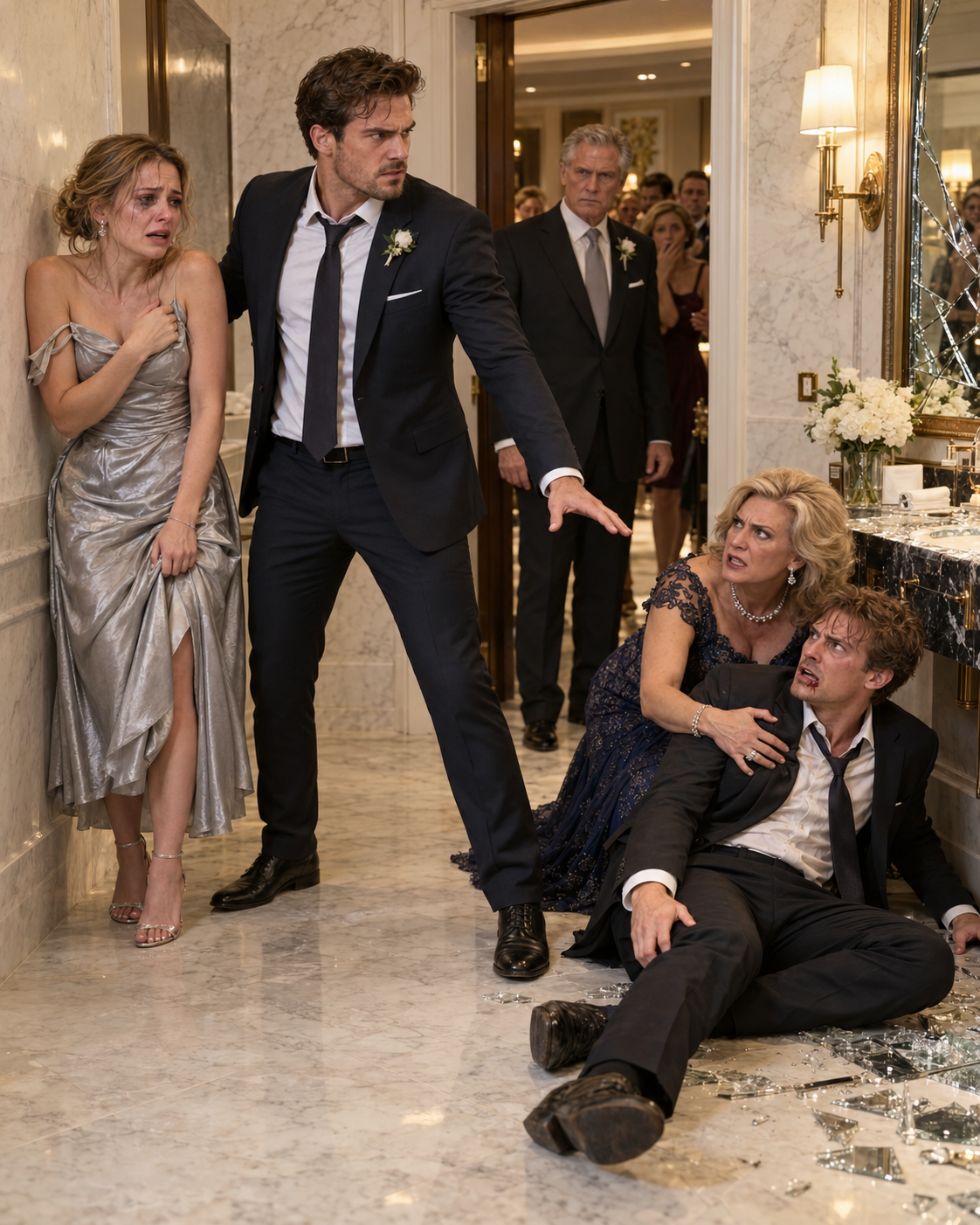
My brother cornered my drugged wife at a wedding—then panicked over one key in broken glass.
Part 1: My brother obsessed over my wife for months. When he tried to force himself on her at a...

At my $960,000 housewarming party, my sister lifted her champagne and smiled. “This house is perfect for my kids.” Then Mom added, “You’re single, Claire. You don’t need all this space.” Everyone expected me to explode. Instead, I smiled and said, “Move in Sunday.” They thought I surrendered—until they realized what I already knew.
At my $960,000 housewarming party, my sister lifted her champagne and smiled. “This house is perfect for my kids.” Then...
My son said Thanksgiving was “just my wife’s family,” then asked me to keep the whole week open.
My son said Thanksgiving was “just my wife’s family,” then asked me to keep the whole week open. His wife...