A MILLIONAIRE FATHER CAME TO SURPRISE HIS DAUGHTER AFTER MONTHS AWAY—THEN HE SAW A DRIVER SHOVE HER FROM A SCHOOL BUS AND HEARD THE APOLOGY THAT CHANGED EVERYTHING – Life Story
The driver threw the little girl’s walking aid into the gutter before forcing her down the school bus steps.
Her father reached her with scraped knees and trembling hands—and watched her shrink away from his touch.
Then she apologized for something no eight-year-old should ever have been taught to fear.
Dorian Ashcroft had been planning to surprise his daughter with ice cream.
Instead, at on a cold Thursday afternoon, he watched a woman in a yellow school bus uniform shove a little girl onto the pavement while six children stared through the windows.
The child’s aluminum walking support struck the curb first.
It bounced twice, rolled beneath a parked delivery truck, and came to rest where she couldn’t possibly reach it.
“Move along,” the driver snapped. “I don’t have all day.”
The little girl tried to catch herself on the bottom step.
Her left foot twisted beneath her, and she landed hard on her knees, her school skirt folding awkwardly around her legs.
Dorian had already slammed on his brakes.
He was reaching for his door handle when the afternoon light caught something blue in the child’s hair.
A butterfly.
Not an ordinary plastic clip, but a small sapphire butterfly with one slightly crooked wing.
His late wife had given their daughter that clip on her fifth birthday.
For one impossible second, Dorian stared through his windshield, trying to persuade himself that another little girl could own something identical.
Then the child lifted her face.
“Wren?”
The name escaped him before he realized he’d spoken.
He left his charcoal-gray Aston Martin idling beside the curb, its door hanging open, and hurried toward the bus.
The driver was already climbing back inside.
“Excuse me,” he called.
She turned with an irritated expression. “Sir, you’re blocking the road.”
Dorian barely heard her.
The little girl had begun dragging herself toward the aluminum support.
Her left leg moved stiffly, and her fingers kept slipping against the rough pavement.
He stepped between her and the road.
“Wren.”
She looked up.
Those blue eyes.
His wife’s eyes.
For months, he’d seen them only in photographs forwarded by his mother, usually accompanied by brief messages about school, therapy, and how wonderfully everything was going.
But the child looking at him now had hollow cheeks, cracked lips, and shadows beneath her eyes.
“Daddy?”
Her voice was so quiet he almost missed it.
He dropped to his knees.
“Sweetheart, what happened?”
Wren glanced toward the bus driver.
Her whole body tightened.
“I’m sorry.”
Dorian reached toward her shoulder.
She recoiled so suddenly that his hand stopped in midair.
“I’m sorry, Daddy.
I didn’t mean to make trouble.”
Behind him, the driver muttered, “She’s always making a scene.”
Dorian turned.
“What did you just do to my daughter?”
The woman blinked.
Her gaze traveled from his expensive suit to the car behind him, and recognition slowly replaced irritation.
“Mr.
Ashcroft?”
“You pushed her.”
“She wouldn’t get off.
I told her three times.”
“She’s eight years old.”
“Then somebody ought to teach her to follow directions.”
Dorian felt his hands curl into fists, but the sound of Wren’s frightened breathing stopped him from moving closer.
He took out his phone instead.
“I need your name, your employer, and the number of this bus.”
The driver’s expression changed.
“There’s no reason to make this complicated.”
He photographed the license plate and the company name printed beside the door.
Through the windows, several children were watching.
One boy was crying.
Dorian returned to Wren and lowered himself beside her.
“You’re not in trouble,” he said, trying to keep his voice steady. “I’m going to get you somewhere safe.”
She looked at his phone.
Her small hand suddenly caught the cuff of his jacket.
“Please don’t call Grandma,” she whispered.
THE ROAD HE NEVER MEANT TO TAKE
Dorian had spent the previous eleven weeks crossing time zones, negotiating acquisitions, and telling himself that the distance was temporary.
He had returned from London that morning.
His executive assistant, Marcus Hale, had arranged a driver, but Dorian had taken his own car because he wanted an hour without anyone asking him for decisions.
At three o’clock, a meeting had ended early.
He’d looked at the photograph of Wren beside his office computer and decided, impulsively, to collect her from Saint Aurora Academy.
He had imagined her running toward him.
That had been the entire plan.
A lane closure near the school had redirected him through Oakridge, an older neighborhood of modest houses and narrow sidewalks.
The school shuttle in front of him had pulled over abruptly, and he had considered driving past until he saw the walking support flying out of its door.
Now, kneeling on that same sidewalk, he could hardly reconcile the little girl beside him with the smiling child in the framed photographs on his desk.
Wren had always been petite.
She had been born with a neuromuscular condition affecting her left leg, something her doctors had managed with physical therapy and mobility supports.
Maris had insisted that their daughter learn to do as much as she could independently, without being made to feel that independence was a requirement for being loved.
Maris had also insisted that Wren never be ashamed of asking for help.
Dorian wondered when his daughter had stopped believing that.
The driver had retreated to the bus, speaking urgently into a radio.
Dorian could hear fragments about an accident, an unauthorized passenger, and an angry parent.
He called emergency services.
The dispatcher asked whether Wren was conscious and breathing normally.
Dorian answered the questions while removing his suit jacket and laying it over the cold pavement beside her.
When he said an ambulance was coming, Wren gripped his sleeve again.
“Will I have to explain?”
“Only what you want to tell the people helping you.”
“Grandma doesn’t like it when I talk to strangers.”
Dorian swallowed.
“Doctors aren’t strangers you have to be afraid of, sweetheart.”
Wren looked down at her skirt. “She says I make things sound worse than they are.”
He wanted to ask a hundred questions.
He wanted to know why she was riding a crowded shuttle instead of the private transportation he’d arranged, why her support was scratched and bent, and why the child who once argued with him about everything now seemed frightened to finish a sentence.
Instead, he asked, “Does anything hurt besides your knees?”
“My leg.”
“More than usual?”
She nodded.
“And my tummy.
But that’s probably because I was bad this morning.”
Dorian looked at her carefully. “What happened this morning?”
She glanced toward the bus.
“I went somewhere I wasn’t supposed to.”
He waited.
“I just wanted to see my classroom.”
Something inside him shifted.
“You were at school today?”
Wren’s eyes filled.
“Only for a little while.”
Before he could ask what that meant, a woman came out of a nearby house carrying a clean towel and a bottle of water.
She said she’d seen the incident from her kitchen window and had recorded part of it while calling for help.
Dorian thanked her and asked whether she would be willing to give the footage to the investigating officer.
“Of course,” she said.
Then she looked at Wren and added gently, “You didn’t do anything wrong, honey.”
Wren stared at her as though the words were in a language she had never heard before.
The ambulance arrived six minutes later.
While the paramedics examined her, Dorian stood beside the open doors, answering questions about her diagnosis, medications, and recent treatment.
He knew the diagnosis.
He knew the name of the specialist who had supervised her therapy after Maris died.
He knew the monthly amount he paid for her medical care.
But when the paramedic asked when Wren had last eaten, he realized he didn’t know.
He turned toward his daughter.
“Sweetheart, did you have lunch?”
Wren shook her head.
“Breakfast?”
She hesitated.
“Yesterday?”
Her silence lasted too long.
The paramedic looked at Dorian, then asked Wren quietly whether she would like a blanket.
Wren nodded.
As the ambulance doors closed, Dorian climbed inside beside her.
He ignored his vibrating phone and the messages gathering on its screen.
His daughter was watching him with the solemn attention of someone expecting a promise to be withdrawn.
“Daddy?”
“I’m here.”
“Are you going to be angry when you find out?”
Dorian felt the weight of the question settle between them.
“About what?”
She closed her eyes.
“About where Grandma makes me sleep.”
The ambulance pulled away from the curb.
And Dorian understood that the school bus was only the beginning.
The worst part of his daughter’s life might be waiting inside his own house.
THE NAME ON THE FORM
The emergency department smelled of antiseptic, coffee, and rain-soaked coats.
Outside, clouds pressed against the windows, turning the late afternoon prematurely dark.
Dorian followed the stretcher through the automatic doors until a nurse gently stopped him beside the treatment area.
“We’ll need some room to examine her, Mr.
Ashcroft.”
He looked past the nurse at his daughter.
Wren had both hands wrapped around the blanket.
When the stretcher began moving again, her eyes darted toward him.
“I’m right here,” he promised.
She didn’t seem convinced until a nurse pulled a chair beside the examination bed and invited him to sit.
For the next hour, Dorian discovered how little he knew about the child whose life he financed.
He could tell the doctor the exact date of her birth.
He remembered the name of the pediatric orthopedic specialist who had fitted her first walking support.
He could even recall the difficult medical terms Maris used to explain their daughter’s condition to relatives.
But he couldn’t say when Wren had last attended physical therapy.
He couldn’t name her current medications.
And when Dr.
Gideon Shaw asked how often she experienced pain, Wren answered before Dorian could guess.
“Mostly when I have to use the stairs.”
Dorian turned toward her.
“What stairs, sweetheart?”
She lowered her gaze. “The ones going up to my room.”
Dr.
Shaw didn’t press immediately.
He examined her knees, checked her circulation, and carefully assessed the movement of her left ankle.
He explained everything before touching her.
Wren watched him with obvious suspicion.
When he asked whether she’d like her father to stay, she whispered yes.
A nurse brought her juice and crackers.
Wren accepted them with both hands, then looked toward Dorian.
“Can I have all of it?”
The question was barely audible.
Dorian felt his throat tighten.
“Of course.”
She held the packet without opening it.
“Even if I don’t finish?”
He nodded.
Wren began eating so quickly that the nurse gently encouraged her to slow down.
Dr.
Shaw watched without comment.
Later, when Wren was resting, he asked Dorian to step into the corridor.
“Her injuries from the fall appear superficial,” he began. “We’re checking for anything deeper, particularly because of her mobility condition.
But that’s not what concerns me most.”
Dorian stood very still.
“She’s underweight for her age and growth history.
She appears dehydrated.
Her preliminary blood work suggests iron-deficiency anemia, and we need additional testing to understand the full picture.”
“She has a nutritionist.”
“Is she seeing one?”
“She’s supposed to.”
Dr.
Shaw folded his arms.
“I reviewed the records available through our system.
Her last documented specialist visit was almost five months ago.
She missed several follow-up appointments after that.”
“That’s impossible.”
“Mr.
Ashcroft, the records are quite clear.”
Dorian took out his phone.
He had authorized a substantial monthly care budget through the Ashcroft family office.
His mother supervised the household arrangements, but the money came from him.
There were supposed to be weekly physical therapy sessions, private transportation, nutritional support, and regular medical evaluations.
He had never questioned a single monthly report.
Dr.
Shaw studied him for a moment.
“I understand you’re upset.
But I need you to hear something carefully.
Your daughter’s responses suggest she may have experienced neglect or mistreatment.
Our team is going to ask some questions privately, and we’re required to report suspected child abuse to the appropriate authorities.”
Dorian’s first impulse was to say he would handle it.
He had handled everything else in his life.
A contractor missed a deadline; he replaced the contractor.
An executive mishandled an acquisition; he replaced the executive.
A problem appeared in one of his buildings; he sent money, lawyers, and instructions until it disappeared.
But his daughter wasn’t a construction delay.
“Do whatever you need to do,” he said.
Dr.
Shaw nodded.
“And one more thing.
Don’t pressure her for details tonight.
Children who have been frightened into silence often worry about what happens after they tell the truth.”
Dorian looked through the glass toward Wren’s bed.
“She’s afraid of me.”
“That doesn’t necessarily mean she’s afraid of who you are.
She may be afraid of what she’s been told you’ll do.”
The distinction hurt more than Dorian expected.
He returned to the room and found Wren examining the empty cracker wrapper.
She folded it carefully and slipped it beneath her pillow.
“Sweetheart, why are you keeping that?”
Her cheeks reddened.
“In case I get hungry later.”
Dorian sat beside her.
He wanted to apologize, but the words seemed too small.
Instead, he asked the nurse whether Wren could have another snack when she was ready.
Then he took the wrapper from beneath her pillow, with her permission, and put it in the trash.
“You don’t have to save food anymore.”
Wren watched the trash can with an expression he would remember for years.
That evening, he called Rowan Pierce.
Rowan had been his chief operating officer for seven years, which meant he knew Dorian’s habits better than most of the people who considered themselves family.
He was forty-two, methodical, and almost aggressively unimpressed by wealth.
When Dorian described the bus incident, Rowan didn’t respond with outrage.
He asked for the transportation company’s name, the driver’s identifying information, and the hospital contact number.
Then he asked, “Is Wren safe right now?”
“Yes.”
“Are you staying?”
“Yes.”
“Good.
Then don’t leave her to chase paperwork.
I’ll get the records.”
Dorian closed his eyes.
“Rowan, I think my mother has been lying to me.”
“I think you’re finally asking a question you should have asked a long time ago.”
The words stung.
Dorian didn’t argue.
Near nine that evening, Rowan called again.
He had accessed the family-office payment records and the household personnel register.
Two entries stood out.
Agnes Bell, Wren’s longtime caretaker, had been terminated four months earlier.
Her replacement was a woman named Sabine Voss.
“Who authorized that?” Dorian asked.
“Your mother.”
“Why wasn’t I informed?”
“You were.”
Dorian said nothing.
“An email went to your personal account,” Rowan continued. “It was marked as a routine household staffing update.
Someone in your office approved the corresponding payment change.”
Dorian remembered deleting dozens of household emails while boarding a flight to Singapore.
He remembered telling Marcus that Celestine could make the domestic decisions without consulting him.
He remembered believing that delegation was the same thing as care.
“What about school?” he asked.
A pause followed.
“That’s the other problem.”
Rowan had contacted Saint Aurora’s administrative office.
Because Dorian was Wren’s father and the parent listed on her enrollment agreement, they would release the relevant records directly to him.
According to the student system, Wren had not been enrolled for nearly three months.
Dorian looked toward the hospital bed.
His daughter was sleeping with one hand curled beside her cheek.
“Where did she go every morning?”
“From what I’ve been told,” Rowan said carefully, “she didn’t.”
Dorian felt the floor beneath him become strangely unreliable.
Rowan continued.
“The school received a withdrawal form stating that Wren would transfer to a residential rehabilitation program abroad.”
“Who signed it?”
“That’s what they want you to come in and verify.”
Dorian stared at the rain sliding down the hospital window.
He already knew whose name he expected to find.
But he had no idea how far the lie extended.
The following morning, he entered Saint Aurora Academy through the main doors.
For once, he wasn’t wearing a tie.
He hadn’t shaved.
His expensive coat was wrinkled from spending the night beside a hospital bed.
Headmaster Edmund Crowe met him in the administration office, where framed awards lined the walls and a portrait of Dorian hung beside a plaque commemorating the Ashcroft Science Pavilion.
Crowe extended his hand.
Dorian didn’t take it.
“My daughter’s enrollment file,” he said.
Crowe glanced toward the secretary, who quietly closed the door.
“Mr.
Ashcroft, first let me say how distressed I was to hear about the unfortunate transportation incident.”
“Show me the file.”
Crowe opened a folder on his desk.
There was a withdrawal request, dated three months earlier, indicating that Wren required specialized residential treatment in Switzerland.
Below it appeared a typed statement explaining that public appearances and routine school communication should be restricted for medical reasons.
Dorian recognized the wording.
His mother used those phrases whenever she wanted people to stop asking questions.
At the bottom of the document was her signature.
Celestine Ashcroft.
The accompanying authorization identified her as Wren’s legal guardian.
Dorian read it twice.
“My mother is not Wren’s legal guardian.”
Crowe shifted in his chair.
“She informed us that the household arrangement had changed.”
“Did you ask for a court order?”
Crowe hesitated.
“She provided a letter.”
“A letter from whom?”
“The family office.”
Dorian looked at him.
“A letter from people my mother supervises?”
Crowe removed his glasses.
“Mr.
Ashcroft, your mother has served on our foundation advisory board for sixteen years.
We had no reason to believe—”
“You had a living parent listed on the enrollment agreement.”
“Yes.”
“And you didn’t call him.”
Crowe looked down.
“No.”
Dorian felt anger rising, but the memory of Wren flinching on the pavement held him in place.
“She came here yesterday,” he said. “What happened?”
Crowe checked his notes.
“She arrived shortly after lunch.
She told the receptionist she wanted to see her classroom.
She became upset when told she wasn’t enrolled.”
“Then why was she on one of your transportation contractor’s buses?”
Crowe’s expression tightened.
“The office arranged a courtesy ride to the community center near the address in her old transportation file.
It was an error.
She was not on the authorized passenger list.”
“And the driver put her out on Oakridge Lane.”
“We’re investigating.”
“You should have investigated yesterday.”
Crowe had no answer.
Dorian collected copies of the documents and left instructions that the school preserve all relevant records, including transportation assignments and communications about Wren.
He didn’t threaten to demolish the academy.
He didn’t demand the headmaster’s resignation on the spot.
For the first time in years, he recognized that the loudest response was not necessarily the most useful one.
Outside, rain was beginning again.
He stood beneath the portico, staring at the signature on the withdrawal form.
His mother had removed his daughter from school while keeping him convinced that she was receiving an expensive education.
Someone had prepared the paperwork.
Someone had approved the transportation changes.
And someone had kept sending him photographs of a smiling little girl in her school uniform.
The lie required more than one person’s silence.
It required his own.
THE ROOM ABOVE THE STAIRS
Wren remained in the hospital until Saturday morning.
By then, the investigating social worker had interviewed her privately, and a hospital child-protection team had developed a safety plan with Dorian.
She would not return to Celestine’s care or have contact with Sabine while the allegations were investigated.
Dorian spent Friday night in a chair beside her bed.
He woke shortly after two to the sound of her crying.
At first, he thought she was in pain.
Then he realized she was dreaming.
“No, please.
I’ll be quiet.”
He approached the bed but stopped before touching her.
“Wren.
Sweetheart, it’s Daddy.”
Her eyes opened.
For several seconds, she seemed unable to recognize where she was.
Then she saw the hospital monitor and the chair beside her bed.
“You’re still here.”
Dorian nodded.
“I told you I would be.”
She looked toward the dark window.
“Grandma says people always get tired of difficult children.”
Dorian sat.
“You’re not difficult.”
“But you went away.”
The words were simple.
She wasn’t angry when she said them, which somehow made them worse.
He could have explained his work.
He could have told her about the overseas properties, the obligations, the hundreds of employees whose livelihoods depended on him.
All of it was true.
None of it answered her.
“I did,” he said. “I went away too much.”
She studied his face.
“Because Mommy died?”
Dorian felt something tighten beneath his ribs.
He had avoided saying Maris’s name for so long that hearing it spoken aloud made the room seem smaller.
“Partly.”
Wren picked at the edge of her blanket.
“Grandma says you don’t like talking about Mommy because it makes you unhappy.”
“Talking about your mother makes me sad sometimes.”
“That’s bad?”
“No.”
He looked toward the folded cardigan he’d placed on the chair.
Maris had bought it for him during their last Christmas together, a dark green sweater he’d stopped wearing after her funeral.
“Being sad isn’t bad,” he said. “Pretending we’re not sad can make us do things we shouldn’t.”
Wren considered that.
“Like not coming home?”
He nodded.
“Yes.”
She didn’t forgive him in that moment.
She merely pulled the blanket a little closer and asked whether he could stay until morning.
He told her he could.
At seven, Rowan arrived carrying two coffees and a paper bag containing fresh muffins.
He found Dorian trying to untangle Wren’s hair with a hospital comb.
“You’re starting at the ends,” Rowan observed.
Dorian glanced up.
“Isn’t that where you’re supposed to start?”
“Not when you’ve wrapped the whole thing around your finger.”
Wren giggled.
It was a small sound, almost rusty from disuse, but it stopped both men.
Rowan set down the bag.
“Morning, Miss Ashcroft.”
“Morning, Rowan.”
“Your dad tells me you like blueberry muffins.”
She looked suspiciously at the bag.
“Can I pick one?”
“You can pick whichever you want.
I brought several because your father eats like a man who thinks coffee is a vegetable.”
Dorian gave him a tired look.
Wren smiled again.
The doctors had advised small, regular meals while her nutritional needs were assessed.
She ate half a muffin and saved the other half on a napkin.
No one told her she had to finish.
Later that morning, when Rowan stepped into the corridor, Dorian followed him.
“I need to see the house.”
Rowan nodded.
“But you need to make arrangements for Wren first.
The care team is right about keeping her away from your mother.”
“I’ve arranged temporary accommodation.
Two connected suites at a quiet hotel, with accessible facilities.
I’ll stay in one, Wren in the other.”
“Good.”
“The hospital is recommending a rehabilitation clinic and counseling.”
“Also good.”
Dorian rubbed his forehead.
“I feel like I’m learning how to be her father from a checklist.”
Rowan waited until he looked up.
“Then pay attention to the parts that aren’t on the checklist.”
“What parts?”
“Ask her whether she likes the room.
Ask if the lights bother her at night.
Ask what she wants for breakfast.
Don’t confuse organizing her care with knowing her.”
Dorian wanted to disagree.
Instead, he went back inside and asked Wren whether she would prefer a room with a view of the park or a room facing a courtyard.
She thought seriously about it.
“Can I have a window that opens?”
“I’ll ask.”
“And a door that locks?”
Dorian went still.
“Yes.
You’ll have privacy.”
She looked up.
“From the inside?”
“From the inside.”
Only then did she say she wanted the courtyard, because birds might come near the window.
That afternoon, Dorian returned to Ashcroft Manor alone.
The mansion stood beyond iron gates and meticulously maintained gardens, its white limestone walls gleaming in the weak October sunlight.
He had bought the property from the family trust after his father’s death, partly because Celestine insisted it should remain in the family.
Maris had never liked the place.
She said the rooms were beautiful but the house always seemed to be waiting for someone important to arrive.
For three years, Dorian had mistaken that emptiness for peace.
Celestine was seated in the drawing room when he entered.
She wore a burgundy silk blouse and cream trousers.
A porcelain teacup rested beside a stack of embossed invitations.
Her silver hair was arranged with the same precision he remembered from childhood.
“Dorian,” she said, looking up. “At last.”
He closed the door behind him.
“Mother.”
“I’ve been calling.
Wren’s caretaker tells me you took the child to a hospital.”
“She was injured.”
“Yes, I heard something about an unfortunate incident at school.”
Dorian studied her.
“She’s no longer enrolled at Saint Aurora.”
Celestine’s hand paused above her teacup.
Then she sighed.
“Really, Dorian.
Must we do this now?”
“Why did you withdraw her?”
“Because the school environment had become inappropriate.”
“For whom?”
“For Wren.”
“She loved that school.”
“Children love many things that aren’t good for them.”
He looked at her across the polished coffee table.
“You signed paperwork claiming to be her legal guardian.”
Celestine’s expression sharpened.
“I have been acting as her guardian for three years because you’ve been absent.”
“That isn’t what the law means.”
“Don’t lecture me about the law in my own family.”
She stood.
“Dorian, I have devoted myself to that child.
Do you have any idea how exhausting her condition can be?”
Something in his face changed.
Celestine noticed.
She softened her voice immediately.
“Darling, grief has been difficult for all of us.
I know you still miss Maris.
We all do.
But you mustn’t let one unpleasant incident make you question people who have sacrificed so much.”
He had heard variations of that sentence throughout his life.
His mother had a remarkable ability to present her own authority as a form of suffering.
“Where does Wren sleep?” he asked.
“Upstairs.”
“Which room?”
Celestine looked irritated.
“The smaller room.
It’s quieter.”
“The one beneath the roof?”
“It’s perfectly adequate.”
“Show me.”
She laughed lightly.
“Don’t be absurd.
The room isn’t presentable.
Sabine has been reorganizing things.”
Dorian walked toward the staircase.
“Dorian.”
He kept walking.
His mother’s heels clicked behind him.
“You’re behaving irrationally.”
He reached the second floor, then continued toward the narrow staircase that led to the old servants’ quarters.
The air changed as he climbed.
Below, the mansion smelled of fresh flowers and polished wood.
Above, the corridors were colder, with a faint odor of damp plaster.
At the end of the passage stood a white door.
There was a bolt on the outside.
Dorian stopped.
For several seconds, he could only stare at it.
He remembered Wren asking whether her new hotel-room door would lock from the inside.
Behind him, Celestine spoke sharply.
“The bolt is there because she wanders.”
Dorian touched the metal.
It was new.
The screws were bright against the old painted wood.
“Who installed this?”
“Maintenance.”
“Why?”
“I just told you.”
He opened the bolt.
The room was barely larger than a walk-in closet.
A narrow bed stood beneath a sloping ceiling.
One small window overlooked the rear gardens.
The paint had begun peeling near the radiator, and a single lamp sat on a scratched wooden desk.
There was no television.
No bookshelf.
No collection of toys.
On the bedside table stood a plastic cup, a folded washcloth, and a bottle of water.
Dorian opened the wardrobe.
Two dresses hung inside, both too small.
Beneath them were three neatly folded school uniforms and a pair of worn slippers.
He thought of the photographs Celestine had sent.
Wren smiling beside a rosebush.
Wren in a holiday sweater before the Christmas tree.
Wren sitting on a velvet sofa beside a birthday cake.
Each photograph had been carefully framed to suggest a life she no longer possessed.
On the desk lay a thin notebook.
Dorian opened it.
The first page contained handwriting in large, uneven letters.
Things To Remember.
Don’t ask twice.
Walk quietly.
Don’t talk about the stairs.
Smile when Grandma says.
Don’t make Daddy sad.
He read the last line again.
His mother watched him from the doorway.
“Children make lists,” she said dismissively.
Dorian turned another page.
There were drawings of birds, blue flowers, and a woman with dark hair holding a little girl’s hand.
At the bottom of the drawing, Wren had written:
Mommy would have opened the door.
Dorian closed the notebook.
For a moment, he couldn’t trust himself to speak.
Celestine crossed her arms.
“If you’re finished indulging this little performance, we have a gala to prepare for.”
Dorian looked at her.
“The Children’s Legacy Gala?”
“Of course.
It’s the most important charity event of the season.”
He looked down at the bolt.
“You’re being honored for your work with children who have disabilities.”
She smiled, relieved to have returned to familiar territory.
“And rightly so.”
Dorian put the notebook carefully into his jacket pocket.
He would ask Wren whether she wanted it back.
Then he walked past his mother into the corridor.
Behind him, Celestine called his name.
He didn’t answer.
At the bottom of the stairs, he noticed something else.
Mounted beside the service elevator was a recently installed security camera.
Its lens pointed directly toward the corridor leading to the attic staircase.
For the first time since the school bus stopped on Oakridge Lane, Dorian had a way to check something his mother couldn’t explain away with a smile.
THE RECORDS THAT DIDN’T LIE
Rowan arrived at the manor shortly before six carrying a laptop and an expression Dorian recognized.
It was the expression he wore when a financial discrepancy had stopped looking accidental.
They sat in Dorian’s old study, surrounded by shelves of architectural models and books he hadn’t opened in years.
Outside, gardeners were putting protective coverings over the rosebushes.
Inside, Rowan connected his laptop to the household management system.
“The camera by the service elevator has been recording continuously,” he said. “Your security contractor installed it in March after that insurance claim about missing jewelry.”
Dorian remembered approving the expense.
“How much footage?”
“Ninety days of stored recordings.
Some of the older files have already been overwritten.
I’ve asked the contractor to preserve what’s left, and the investigator can request it through the proper channels.”
“Can you show me?”
Rowan hesitated.
“Dorian, we should decide what we’re looking for first.”
“My daughter lived behind a bolted door.
I want to know who put her there.”
“Then let’s establish the timeline.”
The first recording was dated three weeks earlier.
At in the morning, Sabine appeared in the hallway pushing Wren’s empty wheelchair.
She left it beside the elevator, then returned carrying the little girl’s walking support.
Instead of taking either item upstairs, she wheeled them into a storage closet.
At , Wren emerged from the attic stairwell, holding the banister with both hands.
She was wearing a nightdress.
She reached the bottom step and sat, rubbing her left leg.
No adult came to help her.
The camera continued recording the empty hallway while Wren waited.
At , Sabine returned.
She stood over the girl for a moment, pointing toward the staircase.
Wren lowered her head and began climbing back up.
Dorian looked away.
Rowan paused the video.
“Do you want me to stop?”
“No.”
They continued.
Another recording showed Celestine standing beside the attic door while Sabine carried a tray downstairs.
Celestine inspected the tray, spoke to Sabine, and pointed toward the service elevator.
The soundless video couldn’t establish the words exchanged, but the sequence mattered.
Several minutes later, Sabine returned to the attic corridor without the food.
On another afternoon, Celestine herself slid the bolt into place.
Dorian stared at the screen.
He had spent three years believing his mother was a demanding but dependable caretaker.
He had mistaken expensive household arrangements for attentive care.
Here she was, standing beneath a camera he had paid to install, locking his daughter behind a door.
The details were horrifying precisely because they were ordinary.
No dramatic confrontation.
No shouting that the camera could record.
Just an elderly woman in a silk blouse performing a small mechanical action before returning downstairs.
Rowan closed the video.
“There’s enough here for the investigators to examine.
I’ll preserve the original files and their timestamps.”
Dorian stood and walked toward the window.
For a long time, he watched the gardeners working among the roses.
“She used to call every Sunday,” he said.
Rowan waited.
“Maris.
When she was alive, she called my mother every Sunday because she thought family mattered.
Even when they argued.”
He could remember Maris standing in their kitchen, one hand balancing the phone against her ear while she stirred soup with the other.
Celestine had never approved of the marriage.
Maris was the daughter of a public-school music teacher, and she’d worked as a pediatric physical therapist before Wren was born.
She treated family money as a useful resource, not a measure of personal worth.
Celestine found that attitude strangely offensive.
After Wren’s diagnosis, the disagreements became sharper.
Maris wanted their daughter to attend a regular school with appropriate support.
Celestine believed the family could provide superior education privately.
Maris encouraged Wren to choose her own clothes and use mobility aids without embarrassment.
Celestine insisted that photographers be told which angles made the child look more graceful.
Dorian remembered those disagreements.
He remembered telling Maris to ignore his mother because Celestine was from another generation.
He remembered thinking that was a reasonable compromise.
Now he understood how much of his marriage he had spent asking the person who was being hurt to accommodate the person who caused the hurt.
Rowan interrupted his thoughts.
“There’s something else.”
He opened a spreadsheet.
It contained the household-care allocations submitted to the family office over the preceding twelve months.
Dorian recognized the numbers.
Fifty thousand dollars each month had been designated for Wren’s education, medical treatment, transportation, nutrition, and specialized support.
The amount had originally been established during Maris’s final illness.
At her insistence, it included a reserve for future accessibility needs.
After her death, Dorian had authorized Celestine to administer those payments through a separate family-care account.
He had retained legal control over the account, but the routine expenditures were approved under a delegation he rarely reviewed.
The arrangement had been convenient.
That was the word he’d used.
Convenient.
Rowan highlighted a line.
“January.
Fifty thousand deposited.
The account paid eighteen hundred dollars in identifiable care expenses.”
Dorian stared.
“Where’s the rest?”
“Forty-eight thousand two hundred transferred to an account described as the Ashcroft Image Fund.”
“What’s that?”
“An expense account controlled by your mother.
It finances foundation public relations, event planning, and reputation management.”
Dorian leaned closer.
“That’s not a charitable expense account.”
“No.
It’s connected to a private management entity.
We’re still tracing the ultimate recipients.”
Rowan scrolled.
“February.
Fifty thousand in.
Nine hundred dollars of care expenses.
The remaining amount moved into the same fund.”
“March?”
“Similar.”
Dorian reached for the mouse.
He examined transaction after transaction.
Therapy sessions had been canceled.
Transportation payments had ceased.
School tuition had stopped.
But the monthly transfers from his family office continued without interruption.
The money hadn’t disappeared through a complicated investment scheme.
It had been redirected through a payment authority he’d granted his mother, then obscured beneath broad administrative descriptions.
He felt sick.
“How much?”
“From the records we’ve confirmed, more than four hundred thousand dollars over the last year appears to have been diverted from Wren’s designated care account.
The exact amount and whether other funds were involved will require a full forensic review.”
Dorian sat down.
He owned office towers, hotels, residential developments, and more property than one person could reasonably visit in a lifetime.
Yet he had not noticed that the money meant to feed and care for his child was paying for publicity.
“Where did it go?” he asked.
Rowan opened a second file.
Invoices appeared on the screen.
Professional photography.
Private styling.
Event consultants.
A public-relations agency retained to promote Celestine’s charitable initiatives.
And a large deposit to the venue hosting the upcoming Children’s Legacy Gala.
Dorian examined the date.
Three days after Wren had been withdrawn from school, Celestine authorized a new promotional campaign.
The campaign’s title appeared in elegant gold lettering.
Every Child Deserves To Be Seen.
Dorian leaned back slowly.
For a moment, neither man spoke.
Then Rowan said, “There’s something I need to tell you about Marcus.”
Dorian looked up.
His executive assistant had worked for him for almost five years.
“What’s wrong?”
“Some of the approval requests went through your office.
Marcus processed them using the standing authorization you gave him.
He says your mother assured him the expenses were routine.”
“Did he check?”
“Not beyond the categories.”
Dorian closed his eyes.
He had once threatened to fire Marcus over a delayed harbor-front acquisition.
Meanwhile, the same office had spent months authorizing expenses that should have raised questions.
“I want an independent audit,” he said. “Outside counsel.
Separate from the foundation and my company.”
“Already preparing the engagement letters.”
“And Marcus?”
“That’s your decision.”
Dorian considered the question.
A week earlier, he would have dismissed the assistant immediately and announced that accountability had been restored.
Now the answer seemed less comfortable.
“Remove his approval authority pending review.
Preserve the records.
We investigate how the controls failed, including the instructions I gave.”
Rowan nodded.
Dorian looked at the photograph of Maris standing on his desk.
She was wearing a yellow raincoat, laughing at something outside the frame.
He had taken the picture during a weekend in Vermont when Wren was three.
Maris had asked him then whether he wanted another child.
He’d laughed and said he barely had time for the one they already had.
She’d stopped laughing.
He hadn’t understood why until now.
He picked up his phone.
“Call the investigators,” he told Rowan. “They need the camera recordings and these financial records.”
Rowan reached for his own phone.
Dorian stopped him.
“One more thing.”
“Yes?”
“I don’t want Wren’s private medical information or images of her suffering released to the press.”
Rowan nodded.
“Then we make sure the legal team understands that.
The investigators can have the evidence without turning her life into a spectacle.”
Dorian looked once more at the photograph.
For the first time since Maris died, he found himself wondering not what she would have wanted him to do to his mother, but what she would have wanted him to do for their daughter.
The answer was painfully simple.
Keep her safe.
Even if nobody applauded.
THE PRICE OF SILENCE
On Saturday morning, Wren arrived at the hotel wearing borrowed pink pajamas beneath her coat.
The hotel had arranged a ground-floor accessible suite overlooking a quiet courtyard.
Dorian had inspected it himself before her discharge.
There were no stairs between the bedroom and the bathroom.
The doors were wide enough for her wheelchair.
The windows opened a few inches for fresh air.
Most important, the bedroom door could be secured from the inside, and Wren had been shown how to unlock it herself.
She explored slowly, one hand resting on her new temporary walking support.
Dorian followed several steps behind.
“There’s a television,” she observed.
“Yes.”
“And books?”
He pointed to a small shelf.
“Rowan brought some.”
She examined the covers.
There were stories about animals, a collection of mysteries, and a book about a girl who loved astronomy.
“Can I read after bedtime?”
“Within reason.”
“What’s reason?”
Dorian smiled faintly.
“That’s a difficult question.”
Wren considered that answer before choosing the astronomy book.
At lunchtime, a meal arrived from the hotel kitchen.
The nutrition team had provided recommendations, and Dorian had asked the chef to keep the food simple.
Chicken, rice, steamed carrots, and a small bowl of applesauce.
Wren studied the plate.
“Did Grandma tell them what I like?”
“No.”
“How did they know?”
“I asked what you wanted.
You told me yesterday.”
She looked surprised.
“Oh.”
She ate slowly, pausing often to examine the courtyard.
A sparrow hopped along the edge of a stone fountain.
Wren pointed.
“That one’s brave.”
“How can you tell?”
“It keeps coming back even when the bigger birds chase it.”
Dorian watched the sparrow disappear behind a hedge.
“Maybe it knows where the food is.”
“Maybe it doesn’t want to lose its place.”
He looked at his daughter.
She was eight years old.
She should have been worrying about homework, friends, and whether she could persuade him to buy a puppy.
Instead, she spoke about being driven out of places as though she understood it better than adults.
That afternoon, a child-protection caseworker visited with a pediatric social worker.
They spoke with Wren in private after explaining to Dorian what the meeting would involve.
He waited in the adjoining room, staring at a newspaper he couldn’t read.
When Wren emerged, she looked tired.
The caseworker said they were documenting her account alongside the medical records and other evidence.
She explained that any criminal investigation would be handled separately by law enforcement and that the family would receive guidance about the next steps.
Dorian listened carefully.
He asked questions.
For once, he didn’t try to dictate the process.
After the visitors left, Wren climbed onto the sofa and pulled the blue blanket around her knees.
“Daddy?”
“Yes?”
“Are you going to tell Grandma what I said?”
“No.
You don’t have to explain your private conversations to her.”
Wren stared at the edge of the blanket.
“She says telling people family things is betrayal.”
Dorian sat beside her.
“Some family things are private because they’re personal.
Other things are kept secret because someone knows they’re wrong.”
“How do you tell?”
He thought for a moment.
“If somebody tells you to keep a secret that makes you frightened, hungry, hurt, or ashamed, you can tell a trusted adult.
You don’t need anyone’s permission.”
She was quiet.
Then she asked, “Can a grandmother get in trouble?”
“Yes.”
“Even if she’s old?”
“Even then.”
Wren pulled the blanket higher.
“She wasn’t always mean.”
Dorian turned toward her.
“What do you remember?”
“After Mommy died, Grandma slept in my room sometimes.
She made me hot chocolate.
She brushed my hair.”
Dorian remembered those weeks.
He had been almost unable to function after Maris’s funeral.
Celestine had stepped into the household and taken charge of everything, including his daughter.
He had felt grateful.
“Then she got upset when I couldn’t walk fast enough,” Wren continued. “She said I was making everybody look sad.”
“When did that start?”
“I don’t know.
After the pictures.”
“What pictures?”
“The ones for her charity.”
Wren frowned, searching for the right words.
“She wanted me in a white dress.
There were flowers and people with cameras.
She told me to stand without my support because it looked nicer.”
Dorian remembered the photographs.
He had seen one on the cover of a foundation newsletter.
Wren stood beside Celestine beneath an arch of roses, her face pale but smiling.
“Did that hurt?”
Wren nodded.
“I fell after they took the picture.
Grandma said I embarrassed her.”
Dorian waited.
“Then she said I should stay upstairs when important people came.”
The sparrow returned to the fountain outside.
Neither of them moved.
Wren spoke again.
“At first, Sabine brought me books.
Then she said Grandma thought I was lazy.
When I complained about my leg, she took away my support.”
Dorian gripped his hands together.
“I tried to walk anyway,” Wren said. “But sometimes I couldn’t.”
She looked toward the bedroom door.
“That’s when she started bringing my food late.”
“Did she ever leave you without dinner?”
Wren nodded.
“Sometimes.”
Dorian’s voice came out rough.
“I’m sorry.”
She looked at him.
“Because you were gone?”
“Because I was supposed to make sure you were safe, and I didn’t.”
Wren considered that carefully.
“Are you going to go away again?”
“I’ll still have to work sometimes.
But I’m changing how I work, and I’ll be here for you.
If I have to travel, we’ll talk about it beforehand.”
She studied him, testing the words.
Then she said, “Can you come to school on the days when parents visit?”
“Yes.”
“Even if there’s an important meeting?”
“Even then.”
“Promise?”
Dorian hesitated.
He had made promises to her before.
He’d missed birthdays, school performances, and one Christmas morning because he was stranded overseas after extending a business trip.
This time, he didn’t want the reassurance to come cheaply.
“I promise I’ll put it on my calendar and make arrangements so I can be there.
If something truly unavoidable happens, I’ll tell you myself, and we’ll make another plan.
I won’t just disappear.”
Wren nodded.
It wasn’t the magical promise she might once have wanted.
But it was one she could measure.
Later that evening, Dorian received a call from Celestine.
He answered in the corridor.
“Where is my granddaughter?” she demanded.
“Somewhere safe.”
“You’re being ridiculous.
Bring her home immediately.”
“She won’t be staying with you.”
Silence.
Then Celestine laughed, a small brittle sound.
“Dorian, don’t allow a child’s imagination to ruin this family.”
“Her medical records aren’t imagination.”
“She’s always been delicate.”
“She hasn’t had physical therapy in months.”
“Her condition is complicated.”
“She was sleeping behind a door with a bolt on the outside.”
Celestine’s breathing became audible.
“She wanders.”
“She was locked in.”
“I was protecting her.”
“From what?”
His mother didn’t answer.
Dorian waited.
Then she said, “You have no idea what it’s like to raise a child everyone stares at.
People can be cruel.”
He looked through the open doorway at Wren, who was turning the pages of her astronomy book.
“You’re right,” he said. “People can be cruel.”
Celestine seemed to mistake the words for agreement.
“Then you understand.
We needed to protect the family from gossip.
There are people who would exploit her condition, use it to make you look weak.”
Dorian felt his anger settle into something colder.
“She isn’t a weakness.”
“Dorian—”
“She’s your granddaughter.”
“Of course she is.”
“Then why did you take money meant for her care?”
Silence.
The silence told him more than the excuses that followed.
“I’ve always managed those accounts responsibly.”
“I have the bank records.”
“The foundation has obligations you don’t understand.”
“Then the independent auditors can explain them.”
Celestine’s voice sharpened.
“Do you have any idea what this could do to the Ashcroft name?”
Dorian looked at Wren again.
“Yes,” he said. “For the first time, I do.”
He ended the call.
Minutes later, Rowan sent him a message.
An old email had been recovered from the household correspondence archive.
It was from Agnes Bell, Wren’s former caretaker, dated four months earlier.
The subject line read:
Urgent Concern Regarding Wren’s Care.
Dorian opened it.
Agnes had written that Celestine was restricting Wren’s school attendance and limiting her access to mobility equipment.
She described repeated arguments with Sabine, who had recently begun working at the manor, and requested a private meeting with Dorian.
The email ended with a sentence that made him put down his phone.
Mr.
Ashcroft, I know how much you loved Maris, but your daughter needs you to pay attention to what is happening while you’re gone.
The message had never reached his inbox.
It had been categorized as household correspondence and archived under the standing delegation he’d approved.
Two days later, Agnes had been dismissed.
Dorian sat on the edge of his bed and stared at the carpet.
For months, he’d believed nobody had warned him.
Now he knew someone had tried.
He called Rowan.
“Can you find Agnes?”
“I have her forwarding address.”
“Ask whether she’ll speak with the investigators.
And tell her I’m sorry I never answered.”
Rowan paused.
“Better tell her that yourself.”
Dorian looked at the email again.
“You’re right.”
When he returned to Wren’s room, she had fallen asleep with the astronomy book open against her chest.
He moved it gently to the nightstand.
Then he sat beside her until the courtyard lights came on.
He didn’t ask for forgiveness.
He stayed.
THE GIRL BEHIND THE PHOTOGRAPHS
On Sunday morning, Dorian visited Agnes Bell.
She lived in a small apartment above a bakery in White Plains, where the stairwell smelled of yeast and cinnamon.
When she opened the door, he barely recognized her.
Agnes had always been a solid, practical woman in her late fifties, the kind who carried tissues, spare hair ribbons, and emergency snacks in a handbag large enough to qualify as luggage.
Now she looked tired.
She didn’t invite him inside immediately.
“Mr.
Ashcroft.”
“Agnes.”
Her gaze moved past him toward the street.
“Is Wren all right?”
“She’s safe now.
She’s getting treatment.”
Agnes closed her eyes.
“Thank God.”
Dorian held out a copy of the email.
“I found this.”
She read the first lines and looked away.
“I wondered whether you’d ever see it.”
“I should have.”
“Yes,” she said.
There was no anger in her voice, which made the answer harder to bear.
She stepped aside and let him enter.
The apartment was neat, with mismatched furniture and framed photographs of her grandchildren along the mantel.
A small television played quietly in another room.
Agnes brought him coffee.
He hadn’t asked for any, but she poured it into a chipped blue mug and placed it in front of him.
“Tell me what happened,” he said.
Agnes sat opposite him.
“Your mother became more controlling after Maris died.
At first, I thought it was grief.
She was frightened about the family’s future, and everything had to be just so.”
She folded her hands.
“Wren used to eat breakfast in the kitchen with me.
We had a little game where she’d choose a different country every morning, and we’d pretend the oatmeal came from there.”
Dorian felt something catch in his throat.
“Then Mrs.
Ashcroft said the kitchen was too busy.
Wren had to eat in the breakfast room.
Later, she decided meals should be taken upstairs.”
Agnes stared at her coffee.
“She was always concerned about photographs.
If Wren looked tired, I was told to brush her hair and make her smile.
If she needed her walking support, your mother tried to keep it outside the frame.”
“Why didn’t you contact me directly?”
“I tried.”
“After the email?”
“I called your office twice.
I was told you’d be informed.”
Dorian remembered the policies he’d established to keep family matters from interrupting business meetings.
His own efficiency had become another locked door.
Agnes continued.
“Then Sabine arrived.
She said I was being too soft.
She started changing the routine, taking away things Wren needed to move around.
When I challenged her, your mother said I was undermining discipline.”
“Did you see her hurt Wren?”
“I saw her pull the walking support away.
I saw Wren crying because she couldn’t get down the stairs.
I reported it.
Two days later, they told me my services were no longer required.”
Her mouth tightened.
“I should have gone straight to the authorities.”
Dorian said quietly, “I should have answered you.”
Agnes looked at him.
“Wren never stopped waiting for you.”
He lowered his head.
“She had a calendar,” Agnes continued. “Before I left, she used to put a little blue star on the days you called.
Sometimes she asked me to move a star because she said you might have tried but been too busy.”
Dorian pressed his palms against the mug.
He remembered the calls he had postponed.
The messages he’d dictated between meetings.
The way he’d begun addressing his daughter’s birthday cards to my favorite girl, because he couldn’t remember what subject she was studying or which books she liked.
Agnes reached into a drawer and removed a small envelope.
“I found this among my things when I packed.
Maris gave it to me before she died.
She asked me to keep a copy in case the original was ever lost.”
Dorian recognized his wife’s handwriting.
His fingers trembled as he unfolded the paper.
It wasn’t a legal document.
It was a letter.
Maris had written it during one of her final hospital stays, when she still believed she might recover.
Celestine,
I know we haven’t always agreed about how to raise Wren.
But I want you to understand something important.
Her leg is part of her body.
It is not a family embarrassment, and it is not something she should have to hide.
If I can’t be there, please help Dorian remember that she needs ordinary things as much as medical care.
Friends.
School.
Birthday parties.
The freedom to make mistakes.
Most of all, she needs to know that being loved isn’t something she has to earn.
Please don’t make her small to make the rest of us look important.
Maris.
Dorian read the letter twice.
For three years, he had kept Maris alive in photographs, anniversary donations, and the name of a hospital wing.
He had preserved her memory in public.
But he had failed to protect the ordinary principles she lived by.
“Did my mother get the original?” he asked.
Agnes nodded.
“I gave it to her myself.”
Dorian folded the copy carefully.
“Thank you.”
Agnes leaned forward.
“Mr.
Ashcroft, may I ask you something?”
“Anything.”
“Don’t turn Wren into a symbol.
She’s already spent too much time being whatever somebody else needed her to represent.”
He looked at the letter.
“I won’t.”
When Dorian returned to the hotel, Rowan was waiting with outside counsel.
The independent auditors had finished their preliminary assessment.
There was enough evidence to support formal referrals concerning the diverted care funds, although the total and the responsible parties still required investigation.
The foundation’s independent board members had also been notified of serious governance concerns.
The Children’s Legacy Gala was scheduled for that evening.
Celestine’s award presentation had not yet been canceled.
“Why?” Dorian asked.
Rowan set down his tablet.
“The board chair says they need an emergency meeting.
Your mother controls the event committee and claims the allegations are a personal family dispute.”
“Then let the independent trustees see the records.”
“They have them.”
“Are they going to act?”
“Some will.
Others are afraid of litigation and public scandal.”
Dorian looked toward the courtyard.
“She’s still planning to take the stage?”
“According to the event organizer, yes.”
An uncomfortable idea began forming.
Celestine would stand in a ballroom full of donors, give a speech about vulnerable children, and accept an award financed partly by money diverted from her own granddaughter’s care.
The documents would be reviewed.
The investigators would do their work.
But the public story might remain exactly as Celestine wanted it.
Dorian understood how reputations were manufactured.
He had paid public-relations firms for years to manage difficult announcements.
He also understood that silence created space for the best-funded version of events to prevail.
“What if I speak at the gala?” he asked.
Rowan considered him.
“As a board member?”
“As Wren’s father.”
“You have every right to challenge the award.
But what are you planning to show?”
Dorian opened his laptop.
He had been assembling a presentation containing the enrollment form, selected financial transactions, and the security footage from the manor.
He clicked on a still frame showing Wren struggling down the attic staircase.
Rowan said nothing.
Dorian clicked again.
The image of his daughter’s small figure filled the screen.
Then a voice came from behind him.
“Is that me?”
Wren stood in the doorway, one hand resting against the frame.
Dorian closed the laptop immediately.
“Sweetheart, I didn’t hear you.”
She wasn’t looking at his face.
She was looking at the computer.
“Why were you watching me?”
He stood.
“I was reviewing some things that happened at the house.”
“Are you going to show people?”
The question stopped him.
“I was thinking about speaking at Grandma’s charity event.”
Wren stared at him.
“With the video?”
Dorian didn’t answer quickly enough.
Her expression changed.
It wasn’t the panic he’d seen on the bus.
It was something quieter.
Disappointment.
“Grandma always made me pose for pictures,” she said.
“Wren—”
“She said people would love us more if I looked nice.”
Dorian moved toward her.
She stepped back.
“Now you want them to look at me when I don’t look nice.”
The words went through him with terrible precision.
He had spent two days collecting proof of what had happened to his daughter.
Somewhere along the way, he’d begun treating her suffering as the most powerful presentation he could make.
He hadn’t asked how she would feel about strangers seeing it.
He hadn’t considered that exposing humiliation might become another kind of humiliation.
“Wren,” he said quietly, “you’re right.”
She looked startled.
“I shouldn’t have planned that without asking you.”
“Are you mad?”
“No.”
“Because I don’t want them to see?”
“No.
You don’t owe anybody those pictures.”
She glanced toward Rowan.
The older man was standing quietly near the window.
“Can I go back to my room?”
“Of course.”
Wren turned and walked away.
Dorian watched her disappear into the adjoining suite.
For several seconds, he couldn’t move.
Then he reopened his laptop, removed the private video clips from the presentation, and deleted the draft he had prepared for the event’s technical team.
Rowan approached.
“What are you going to do?”
Dorian closed the computer.
“I’m going to tell the truth without making my daughter pay for it again.”
“And if your mother controls the room?”
“Then she controls the room.”
Rowan studied him.
“You’re willing to let her take the award?”
Dorian looked toward Wren’s closed door.
“I’m not willing to use my child to stop her.”
For the first time in forty-eight hours, Rowan smiled.
“That’s probably the first thing you’ve done that Maris would have recognized.”
Dorian looked down at his wife’s letter.
He still intended to attend the gala.
He still intended to challenge his mother’s lies.
But the one person whose opinion mattered most had just told him exactly where the line was.
And this time, he would not cross it.
WHEN THE BALLROOM LIGHTS CAME UP
The Plaza ballroom glittered beneath thousands of tiny lights.
White roses filled the centerpieces.
Gold-rimmed plates rested on ivory tablecloths, and a string quartet played near the entrance while photographers recorded the arrival of New York’s wealthiest families.
The Ashcroft Children’s Legacy Gala had become one of the city’s most prestigious philanthropic events.
It supported educational programs, rehabilitation services, and accessibility initiatives for children whose families could not afford private care.
Much of that work was genuine.
That truth made the evening more painful.
Dedicated staff members had spent years raising funds and helping children.
Volunteers had donated their time.
Doctors and therapists had accepted reduced fees.
Families had trusted the foundation because its public reputation suggested compassion.
Celestine had built her influence by standing at the center of those efforts.
And somewhere along the way, she’d begun confusing the foundation’s success with her own importance.
At , she appeared at the ballroom entrance wearing an emerald-green evening gown and diamond earrings.
Her silver hair swept elegantly above her shoulders.
She smiled for the photographers.
She embraced old friends.
She accepted compliments about her extraordinary devotion to children.
When someone asked about Wren, Celestine lowered her voice and said her granddaughter was recovering beautifully overseas.
Dorian heard the claim from several feet away.
He had arrived alone.
Wren was at the hotel with a care professional recommended by the hospital team.
He’d asked whether she wanted to come, and she’d said no.
He had accepted the answer.
Now he stood near the back of the ballroom in a dark suit, watching his mother perform the version of family life she preferred.
Rowan approached.
“The independent board chair wants to see you.”
Dorian followed him into a private room adjoining the ballroom.
Three trustees and outside counsel sat around a conference table.
The board chair, Margaret Ellis, had spent twenty-five years overseeing nonprofit organizations.
She was a small woman with an unremarkable voice and a reputation for asking questions powerful people disliked.
“Mr.
Ashcroft,” she began, “we’ve reviewed the preliminary records.”
Dorian sat.
“Then you understand why the award cannot go forward.”
“We understand there are serious allegations requiring independent investigation.”
“Not merely allegations.
Your auditors have the transfers.
You have the withdrawal form and the surveillance records.”
“We do.”
“Then why is my mother preparing to walk onstage?”
Margaret folded her hands.
“Because the event committee rejected our request to postpone the presentation.
They argue that the allegations have not yet been adjudicated.”
Dorian stared at her.
“You’re the board chair.”
“The foundation’s governance structure is complicated.
More complicated than it should be.
Your mother has cultivated significant influence over the event committee, and some trustees are reluctant to confront her publicly.”
“Then what are you asking me to do?”
Margaret slid a printed page across the table.
It was a statement acknowledging the concerns, announcing an independent review, and suspending Celestine’s financial authority pending that review.
“We can release this tonight.
But if we make an accusation from the stage without allowing her to respond, her lawyers will challenge every word.”
Dorian read the statement.
It was careful.
It was legally restrained.
It was also likely to be buried beneath photographs of Celestine holding a gold-plated award.
He looked up.
“Will you let me speak?”
Margaret considered him.
“As a donor and member of the founding family?”
“As the parent whose child’s care account was involved.”
“We could allow a brief statement after the award presentation.”
“Before.”
She shook her head.
“That requires cooperation from the event organizers.”
Dorian stood.
“Then I’ll ask them.”
As he reached the door, his phone vibrated.
A message from Wren appeared on the screen.
Are you there yet?
He typed back.
Yes.
I’m here.
A few seconds later:
Are you going to tell them about Grandma?
He sat down on a chair in the hallway.
I’m going to tell the truth.
But I won’t show your pictures or videos.
I promise.
He waited.
Three dots appeared, disappeared, then returned.
Can you tell them I like school?
Dorian stared at the message.
Of all the things she could have asked him to say, she’d chosen that.
Not that she had been hurt.
Not that she had been frightened.
Not that she wanted revenge.
She wanted strangers to know she liked school.
Yes, he wrote.
I can tell them that.
Another message arrived.
And I am not in Switzerland.
Dorian closed his eyes.
I’ll tell them that, too.
He put away his phone and returned to the ballroom.
At eight, the lights dimmed.
The orchestra finished its final piece, and the master of ceremonies stepped toward the podium.
He began with a speech about generosity and the importance of giving children opportunities they might otherwise never receive.
Dorian listened from the aisle.
The applause rose when Celestine’s name was announced.
She stepped onto the stage with a smile that had been rehearsed over decades.
“My dear friends,” she began, “I’m deeply humbled to receive this recognition.”
The audience settled.
“Throughout my life, I’ve believed that the measure of a family, and of a society, is the compassion it shows to those who need us most.”
Dorian felt the familiar old anger rise.
He kept his hands at his sides.
Celestine continued.
“I have been especially inspired by children who face physical challenges, children whose courage teaches us to see strength where others see limitation.”
Somewhere in the audience, someone nodded approvingly.
“And none has inspired me more than my beloved granddaughter, Wren.”
Dorian looked up.
His mother’s voice softened.
“Wren has faced extraordinary difficulties since birth.
For her own well-being, we’ve arranged specialized residential rehabilitation in Switzerland, where she’s receiving the finest care available.”
The lie moved through the ballroom like something beautiful.
Guests murmured sympathetically.
One woman near the front wiped her eyes.
Celestine placed a hand over her heart.
“Though she’s far away, I carry her courage with me every day.”
Dorian stepped into the aisle.
He had intended to wait for the foundation’s statement.
He had intended to follow the careful sequence discussed with counsel.
But the moment his mother publicly used Wren’s name to support a lie, he understood that remaining silent would mean letting the lie become another official family story.
“Mother.”
His voice carried farther than he expected.
Celestine looked toward him.
For one second, her smile wavered.
“Dorian, darling.
What a lovely surprise.”
He kept walking toward the stage.
“You’re mistaken about something.”
The audience grew quiet.
Celestine’s smile tightened.
“Perhaps we could discuss this afterward.”
“You said Wren is in Switzerland.”
“She is receiving specialized treatment.”
“She isn’t in Switzerland.”
A ripple of whispers moved through the ballroom.
Celestine leaned toward the microphone.
“My son has had a difficult few days.
Our family has been under considerable strain.”
Dorian stopped at the foot of the stage.
“She’s here in New York, recovering from neglect and mistreatment.”
The room went still.
Celestine’s expression hardened.
“Dorian, this is neither the time nor the place.”
“When would be the time?”
“Please don’t embarrass yourself.”
He looked at her.
“That seems to be what you’ve been afraid of all along.”
Margaret Ellis rose from her table.
She approached the stage, carrying the board’s statement.
“Mrs.
Ashcroft,” she said, “as chair of the foundation’s independent board, I need to address the audience.”
Celestine turned sharply.
“Margaret, sit down.”
Margaret continued.
“The board has received serious evidence concerning the administration of funds designated for a minor child’s care and the accuracy of representations made in connection with this foundation.”
The whispers became louder.
Celestine stepped away from the microphone.
“This is outrageous.”
Margaret remained calm.
“Pending an independent investigation, the board is suspending your authority over foundation finances and withdrawing tonight’s award.”
The words seemed to strike Celestine more deeply than anything Dorian had said.
For several seconds, she simply stared.
Then she laughed.
It was a strange, brittle sound.
“You can’t do that.”
“The board has acted under its emergency governance provisions.”
“I built this foundation.”
“You helped build it,” Margaret replied. “That doesn’t exempt you from oversight.”
Celestine turned toward the audience.
“Do you see what’s happening? My own son is using a family tragedy to humiliate me.”
Dorian stepped onto the stage.
He didn’t touch her.
He didn’t ask for the microphone.
He simply stood beside Margaret.
“My daughter was withdrawn from school without my authorization,” he said. “She was deprived of appropriate medical care and kept in a locked room in our home.
The authorities are investigating.”
Several guests gasped.
Celestine shook her head.
“She’s exaggerating.
Children exaggerate.”
Dorian’s voice remained steady.
“Her doctors disagree.”
“She’s always been fragile.”
“Her condition requires treatment, not isolation.”
Celestine’s face reddened.
“You have no idea what I’ve sacrificed for that girl.”
Dorian looked at her.
“Then tell us.”
She seemed almost grateful for the invitation.
“Do you understand what it’s like to spend your life building a respected family? To devote decades to a name that people admire?”
She gestured toward the room.
“Then suddenly every newspaper wants a photograph of a child who can’t even walk properly.”
The silence deepened.
Celestine kept talking, unaware that the audience was no longer listening with sympathy.
“I did everything to protect her from ridicule.
I kept her out of situations where people would stare.
I gave her privacy.”
Dorian looked toward the guests.
“She wanted to go to school.”
“School was humiliating for her.”
“She loved her classroom.”
“She didn’t understand what people were saying.”
“She understood that she was being hidden.”
Celestine’s composure began to crack.
“Because she was becoming a liability!”
The word rang through the microphone.
Liability.
Several people in the front row turned toward one another.
Celestine saw their faces and realized, too late, how much she’d revealed.
She tried to recover.
“I mean medically.
The expenses, the responsibilities—”
Dorian interrupted.
“Those expenses were already provided for.”
Margaret raised the board’s financial report.
“Mrs.
Ashcroft, the independent auditors have documented transfers from the child’s care account into an entity connected to your personal publicity expenses.
You will have the opportunity to respond through counsel.”
Celestine stared at the document.
“Those funds were used for the foundation.”
“Some were used for this event,” Margaret replied.
“This event raises millions for children!”
Dorian looked at the rows of white roses.
“And you took money meant for one child to help pay for it.”
A man in the front row slowly set down his glass.
Another guest lowered her eyes.
No one applauded.
Celestine turned toward Dorian.
“You think you can stand there and judge me? You weren’t home.
You gave me the house, the staff, the money, and every decision you didn’t want to make.”
Dorian felt the accusation land.
It was true.
Not all of it.
But enough.
“Yes,” he said.
His mother blinked.
“I wasn’t there when my daughter needed me.
That is my responsibility.
I’ve told the investigators exactly what I delegated and what I failed to check.”
Celestine’s expression shifted.
She had expected denial.
She had expected him to defend his reputation.
He did neither.
“But being absent doesn’t excuse what you chose to do.”
The room was utterly quiet now.
Dorian looked toward the microphone.
“My daughter asked me to tell you two things tonight.”
He paused.
“She likes school.”
A woman near the aisle lowered her head.
“And she’s not in Switzerland.”
Dorian stepped back.
He had said what he came to say.
There would be no video.
No photographs of a frightened child.
No public display of her medical records.
The truth was enough.
Then the ballroom doors opened.
At first, Dorian assumed another guest was arriving late.
But Rowan appeared near the entrance, speaking quietly with two investigators.
They had been examining the household records since the hospital’s initial report.
Their presence at the event had been arranged without public announcement because they had additional questions for Celestine and intended to prevent any interference with the investigation.
One of them approached the stage and identified herself.
“Mrs.
Ashcroft, I’m Detective Laura Bennett.
We need to speak with you.”
Celestine stared at her.
“Now?”
“Yes, ma’am.”
“This is a private event.”
Bennett’s expression didn’t change.
“We’re aware.”
Celestine turned to Dorian.
“Do something.”
He stood still.
“Please,” she said more quietly. “I’m your mother.”
The words carried an old command.
Dorian had obeyed that command in a hundred forms throughout his life.
Be reasonable.
Protect the family.
Don’t embarrass us.
Trust me.
He looked at the woman who had raised him, then remembered the small notebook in Wren’s attic room.
Don’t make Daddy sad.
He answered softly.
“And she’s my daughter.”
For once, Celestine had nothing to say.
The investigators escorted her from the stage for questioning.
Outside the ballroom, after advising her of the allegations and the legal basis for taking her into custody, they arrested her in connection with the ongoing child-endangerment investigation.
The financial allegations would require further investigation and separate charging decisions.
No audience members saw the formal arrest.
There were no theatrical handcuffs beneath the chandeliers.
There was only the sight of Celestine walking through the side doors without her award, her silk gown brushing the carpet, while the room she had spent decades trying to impress remained silent.
Dorian stayed behind.
Margaret was speaking with the trustees.
Reporters gathered near the entrance, calling his name.
A familiar instinct urged him to control the story.
Issue a statement.
Call the public-relations team.
Protect the company.
Instead, he took out his phone.
Wren had sent him another message.
Did you remember what I asked?
Dorian typed:
Every word.
A minute passed.
Then her reply appeared.
Good.
Dorian read it twice.
Beyond the ballroom windows, Manhattan glowed beneath the night sky.
For the first time in years, he had somewhere more important to be than the center of the room.
He walked toward the exit.
Behind him, the applause never came.
He didn’t need it.
THE DOOR HELD OPEN
One month later, Dorian stood in a small kitchen in Connecticut, attempting to make pancakes.
The first batch had burned.
The second had somehow managed to be raw in the middle.
The third looked promising until he tried to flip one and sent it folding over itself like a badly packed suitcase.
Wren sat at the table wearing blue pajamas, watching him with great interest.
“Rowan says you can build a hotel faster than you can make breakfast.”
“Rowan talks too much.”
“He says you’re not allowed to fire him for telling the truth.”
Dorian glanced over his shoulder.
“He says that, does he?”
Wren grinned.
It was a real grin, bright and unguarded.
The kind he remembered from before Maris died.
He placed a pancake on her plate.
She examined it.
“It looks like a cloud.”
“That’s what I was going for.”
“A cloud that had an accident.”
Dorian laughed.
The sound surprised him.
For weeks, he’d been discovering small things about his daughter.
She hated the smell of overcooked broccoli.
She loved astronomy and wanted to know whether people could really live on Mars.
She preferred the window open slightly at night, even when the air was cold.
She collected smooth stones from the garden and arranged them by color along her windowsill.
And she had started asking for seconds at dinner without looking frightened.
There were still difficult days.
Sometimes she woke from nightmares and needed him to sit beside her until she could sleep again.
Sometimes she hesitated before entering a room, checking where the doors were.
Physical therapy was helping her rebuild strength and improve her mobility, but progress wasn’t simple.
Her specialists had adjusted her braces and developed a treatment plan that would take months, possibly longer.
Her left leg would not suddenly become identical to her right.
That wasn’t the goal.
The goal was comfort, strength, independence, and a childhood that didn’t revolve around shame.
Dorian had learned to ask before helping.
Sometimes Wren wanted his arm.
Sometimes she wanted her walking support.
Sometimes she wanted him to stand back and let her try.
He was learning that love could mean being close enough to help without deciding everything for someone else.
The house they rented in Connecticut was smaller than Ashcroft Manor.
It had a covered porch, a garden with crooked stone paths, and a kitchen that received the morning sun.
There were ramps where needed, accessible bathrooms, and bedrooms on the main floor.
No marble staircase.
No portrait of Celestine.
No household staff moving silently through distant rooms.
Rowan had helped reorganize Dorian’s responsibilities so he could work remotely several days each week.
The company had hired an experienced executive to oversee the international projects he’d previously insisted on managing personally.
Some investors complained.
Dorian listened to them.
He did not change his decision.
The investigations continued.
Sabine Voss faced charges arising from Wren’s treatment, and the shuttle driver had been charged following the incident on Oakridge Lane.
Both cases remained subject to the legal process.
Saint Aurora had suspended its headmaster while the school’s governing body examined the withdrawal and transportation failures.
The school had agreed to cooperate with investigators and review its procedures for verifying parental authority and protecting children with disabilities.
Celestine had been removed from her foundation leadership roles.
The independent board was cooperating with financial investigators, and the disputed accounts were under review.
Her lawyers maintained that she had acted in the family’s interests.
Dorian no longer argued with that phrase.
He knew what she had meant by family interests.
It had never been about Wren’s happiness.
One afternoon, Celestine’s attorney sent a letter asking whether Dorian would permit supervised contact with her granddaughter.
Dorian read it twice.
Then he discussed the request with the professionals supporting Wren.
There would be no contact while the safety concerns remained unresolved.
He didn’t tell Wren that she was required to forgive her grandmother.
He didn’t tell her she was required to hate her, either.
He understood now that protecting his daughter meant allowing her to grow into her own feelings without carrying the burden of his.
The foundation continued operating under independent management.
Its legitimate programs were preserved while its finances and governance were examined.
Dorian had asked that any recovered money belonging to Wren’s care account be restored and that safeguards be established so no single household member could redirect it again.
He had also requested an outside review of his own family-office procedures.
Rowan called the process uncomfortable but necessary.
Dorian agreed.
There was no ceremony for accepting responsibility.
No photograph.
No speech.
Just new rules, difficult conversations, and the daily work of keeping promises.
That Tuesday morning, Wren finished her pancake and put down her fork.
“Daddy?”
“Yes?”
“Do you think they’ll like me?”
Dorian looked at the new backpack beside the door.
Today was her first day at Cedarbrook Day School.
The school had small classes, accessible facilities, and a support team familiar with children who used mobility aids.
Wren had visited twice before enrolling.
She’d met her teacher, seen the library, and chosen a desk near the window.
But first days were still first days.
“Some people will,” Dorian said. “Some people might take longer to get to know you.
And you won’t have to be friends with everybody.”
She considered that.
“What if they stare at my braces?”
“Some might.
They may be curious.”
“What if they think they’re weird?”
He pulled out the chair beside her.
“What do you think of your braces?”
Wren looked down at the lightweight pink supports beneath her pajama pants.
“They help me walk.”
“Then that’s what matters.”
She nodded.
After breakfast, Dorian helped her pack her lunch.
She insisted on carrying the lunchbox herself.
He didn’t argue.
Outside, the sky was clear and bright.
Yellow leaves had gathered along the driveway, and a faint breeze moved through the trees.
Dorian opened the car door.
Wren stood beside the white SUV, adjusting the strap of her backpack.
“Want a hand?” he asked.
She shook her head.
“I can do it.”
He stepped back.
She climbed into the car carefully, using the support he’d shown her how to hold.
It took longer than it would have taken if he’d lifted her.
He let it take longer.
When she settled into the seat, she looked at him with a pleased expression.
“See?”
“I see.”
The drive to Cedarbrook took twelve minutes.
Dorian knew because he had practiced it twice.
He parked near the entrance, where children were gathering beneath a broad maple tree.
Parents stood beside cars, adjusting backpacks and offering last-minute reminders.
Some children ran toward their friends.
Others lingered near their families.
It looked ordinary.
Dorian had never been so grateful for ordinary.
He helped Wren get her things, then followed her toward the building.
She moved carefully, her pink braces visible beneath a navy-blue skirt.
Near the entrance, a boy with a red backpack stopped and looked at her legs.
Dorian felt Wren hesitate.
The boy pointed.
“Those are cool.”
Wren looked down.
“My braces?”
“Yeah.
They look like superhero gear.”
She smiled.
“That’s what I call them.”
“Do you like dinosaurs?”
Wren blinked.
“Some of them.”
“My class has a dinosaur project.
You should come see.”
He held the door open.
Wren turned toward her father.
For a moment, Dorian saw the uncertainty he remembered from the hospital.
Then she looked back at the boy.
“Okay.”
She walked toward the entrance.
Dorian didn’t reach for her.
He didn’t remind her to be careful in front of everyone.
He simply watched.
At the doorway, Wren stopped and turned.
“Daddy?”
He straightened.
“Yes?”
“You’re coming on Friday, right? For the school open house?”
He smiled.
“It’s on my calendar.”
She studied him for another moment.
Then she nodded.
“Okay.
I love you.”
“I love you too, sweetheart.”
Wren waved and stepped inside.
The boy followed, still talking about dinosaurs.
Dorian remained beside the path until she disappeared around the corner.
He was thinking about the afternoon on Oakridge Lane, when he’d watched a school bus door open and his daughter fall onto the pavement.
Back then, he’d rushed toward her believing that the most important thing he could do was pick her up.
He knew better now.
Sometimes a father needed to lift his child when she was hurt.
Sometimes he needed to protect her from people who had forgotten her worth.
And sometimes he needed to stand quietly beside an open door, trusting her to walk through it on her own.
A breeze moved across the schoolyard.
The sapphire butterfly clip in Wren’s hair caught the sunlight just before she vanished from view.
Dorian stood there a moment longer.
Then he returned to his car, leaving behind a school entrance where no one had asked his daughter to hide.
This time, the door stayed open.
Recommended Stories
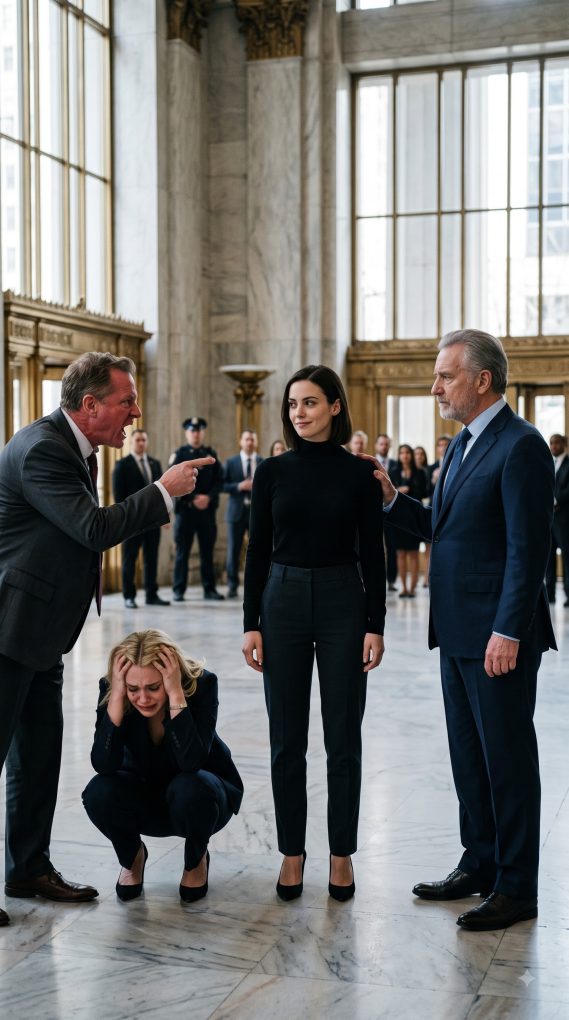
“You’re fired!” the VP’s daughter sneered on my first day. Minutes later, a $3B investor walked in, hugged me, and asked, “Ready to sign the merger?” I smiled and replied, “She just fired me. No deal.”
“Did you even read the dress code?” Chloe Vance’s shrill voice echoed through Vance Financial’s marble lobby. The CEO’s twenty-four-year-old...
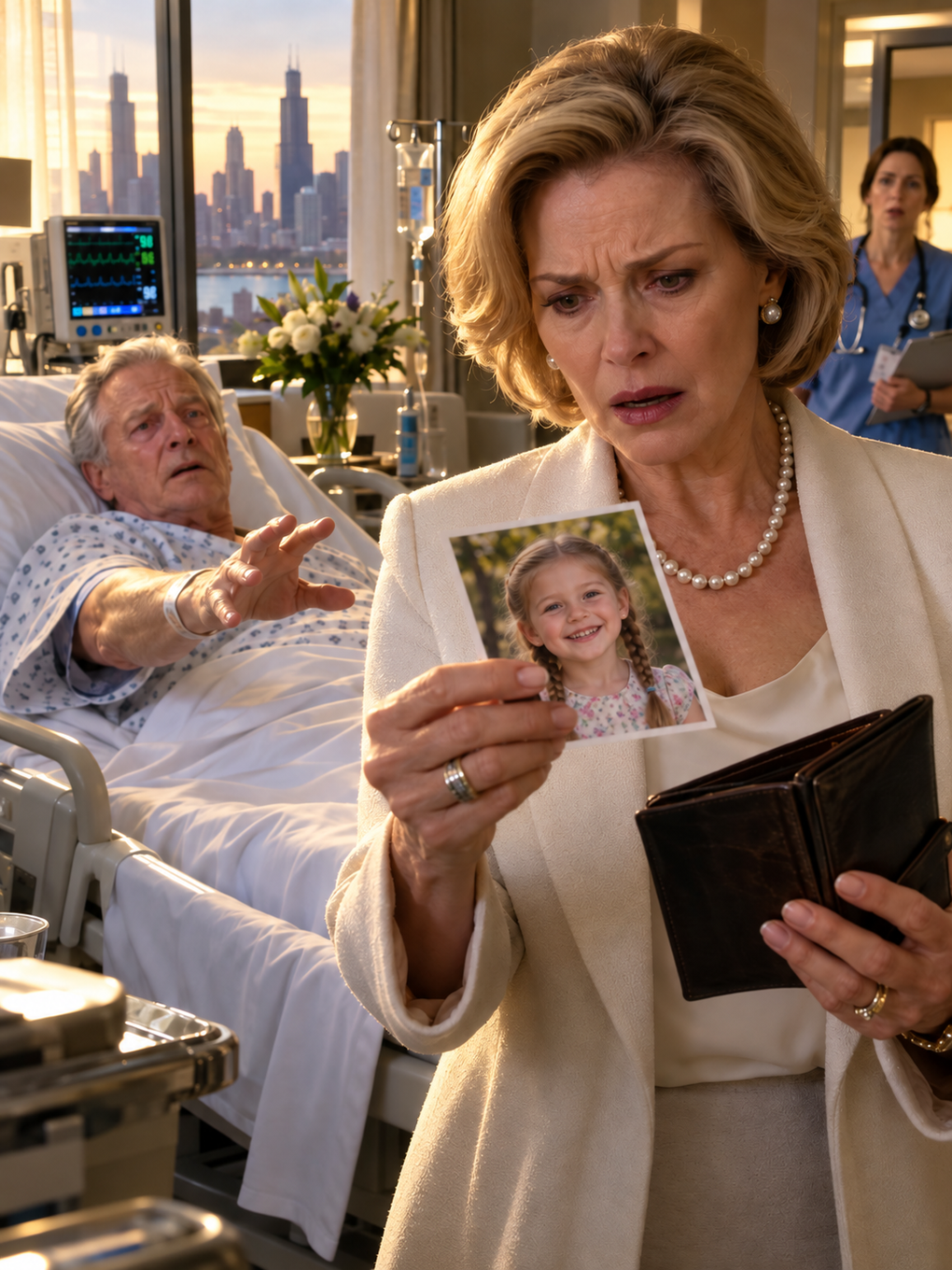
THE BILLIONAIRE ASKED TO SEE THE LITTLE GIRL WHO SAVED HIS LIFE BEFORE HEART SURGERY—BUT HIS WIFE FOUND A SECRET THAT CHANGED WHAT HE OWED HER – Life Story
“Before they move me,” Jonathan Hail whispered, “I need to see Annie.” His wife had never heard the name, and...
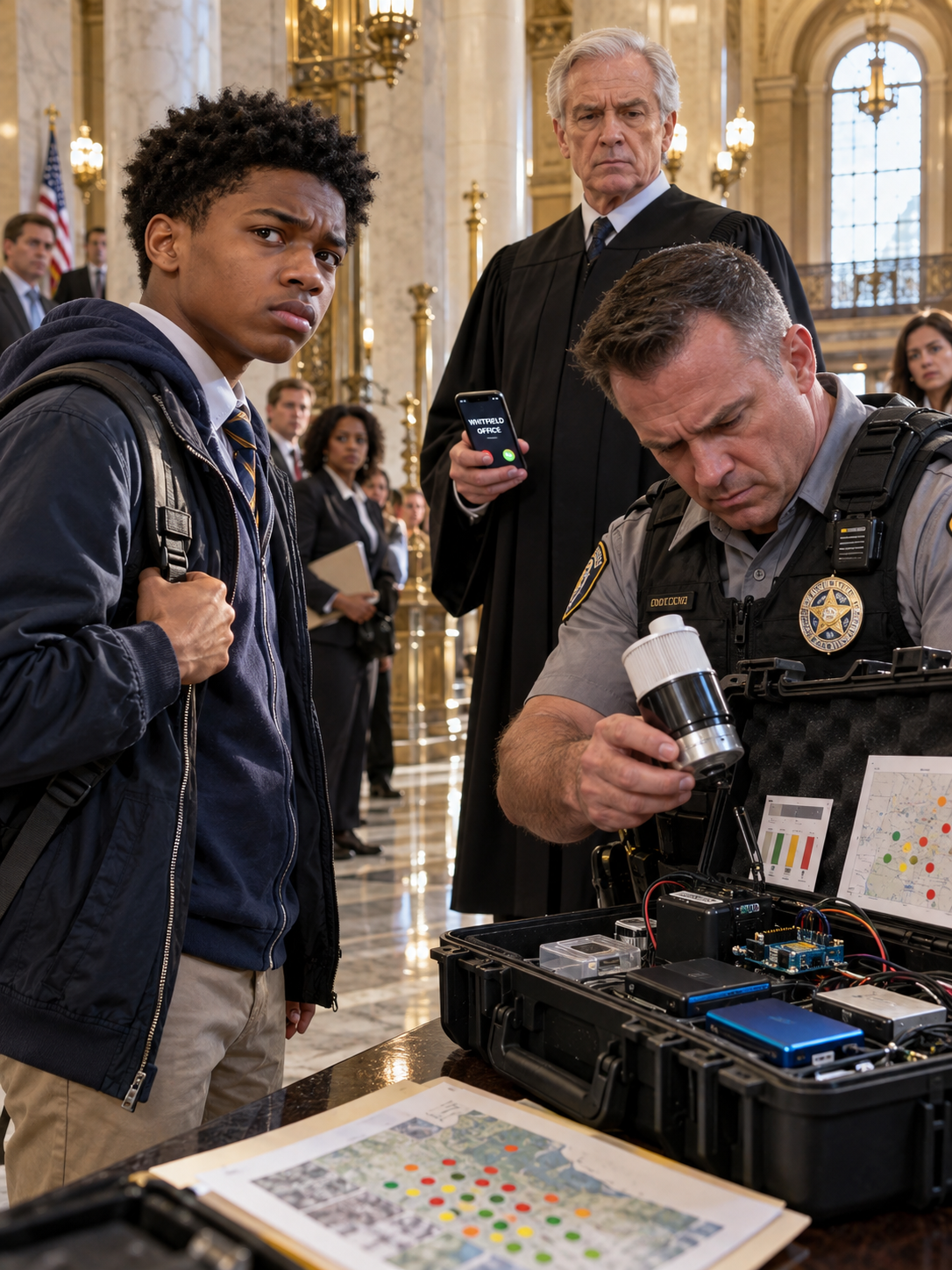
A FEDERAL JUDGE HUMILIATED A BLACK TEEN OVER HIS SCIENCE PROJECT—THEN THE BOY MADE ONE PHONE CALL THAT FORCED THE WHOLE COURTHOUSE TO ASK WHO HIS FATHER WAS – Life Story
The judge looked at Devon’s homemade air monitor as if seventeen-year-old hands had no legitimate reason to build something that...