She Asked For 1 Night With Another Man—But What I Did Instead Completely Shattered Her Expectations
MY WIFE ASKED FOR ONE NIGHT WITH ANOTHER MAN—SHE CAME DOWNSTAIRS TO TWO ENVELOPES
My wife sent me a voice message asking for one night with another man.
She thought I would hear it after she had already left our house.
Instead, I was downstairs, writing two words on two envelopes: EXIT and TRUTH
PART 1: THE NIGHT SHE THOUGHT SHE HAD PLANNED
The shower was running when my wife asked me not to interfere with her affair.
I stood outside our bedroom with my phone in my hand, listening to her voice while water struck the tile a few feet away. “Tom, I need you to listen.
Don’t ask questions.
Tonight, I need one night with another man.
Just one.
Please don’t interfere.”
There was no crying in the recording, no hesitation she hadn’t decided to leave in.
She sounded like she did when explaining a schedule change to a client who might be inconvenient about it.
The message lasted less than twenty seconds.
I played it twice, because some part of me believed a second hearing might turn it into something else.
I wasn’t supposed to be there yet.
A project review had ended early, and when a colleague suggested drinks, I had said I wanted to get home before dinner.
I remembered feeling faintly pleased with myself as I left the parking garage.
For once, I would beat the traffic and maybe catch my wife before she disappeared into another evening of work.
Her car was in the driveway when I pulled in, its windshield reflecting the trees above the garage.
Inside, the house smelled of lavender, the expensive kind she bought in a bottle with almost no label.
A diffuser blinked beside the bowl where we used to drop our keys together.
Her keys weren’t there, but her overnight bag stood beneath the console table.
I had noticed the bag before I heard the message.
Dark leather, brass zipper, the initials I had paid to have embossed on the handle two Christmases earlier.
One of its straps had fallen across a pair of heels she had placed neatly beside it.
Nothing about the arrangement looked impulsive, and nothing about it looked like work.
Upstairs, a hanger lay on the bed beside a black dress.
Her phone charger had been unplugged from the wall, and the small travel case she used for jewelry was missing from the dresser.
I had paused at the bedroom door, my hand still resting on the frame.
Then my own phone vibrated, delivering the explanation she had intended to leave behind.
For a moment, all I could hear was the shower.
I imagined her standing under the water, certain the difficult part was finished because she had pressed send.
She wouldn’t have to watch my face change or sit through a question she didn’t want to answer.
She had arranged for my pain to arrive in an empty house.
I didn’t knock on the bathroom door.
That surprised me more than anything that happened afterward, because I had imagined confrontations during those last months, and in every version I was louder.
I demanded names, explanations, an admission large enough to make sense of what I knew.
Standing there, I discovered that the argument I had rehearsed no longer interested me.
Our marriage hadn’t collapsed in one spectacular fight.
It had thinned gradually, through meals she missed and questions I learned to phrase carefully.
We became two people checking whether the other needed the car moved.
Sometimes we spent an entire evening in the same house without saying anything we couldn’t have put in a text.
At first, I had defended the silence.
Lindsay’s career was demanding, and she had worked hard for the promotion that finally put her name on the glass wall outside an office.
When she came home exhausted, I heated dinner instead of asking why she hadn’t called.
Loving someone can make patience feel like a responsibility long after it has stopped being useful.
I had a demanding job, too, but I was better at leaving it in the driveway.
That difference became one of the explanations we used for everything.
She was ambitious; I was steady.
She needed to network; I preferred home.
Somewhere along the way, a description of our personalities became permission for her to stop showing up.
There had been good years, and I wouldn’t later pretend otherwise.
Lindsay once drove forty minutes in a snowstorm because I had mentioned having a fever, then complained about the weather while she made soup.
She used to rest her cold feet against my legs at night and act offended when I moved.
Remembering those things made the present harder to understand, not easier to forgive.
The first time I suspected another man, there was no lipstick, no dramatic photograph, no stranger calling after midnight.
There was a dinner receipt folded into a parking validation, left in the pocket of a coat she asked me to take to the cleaners.
Two entrees, one dessert, a bottle of wine she would never have ordered with clients.
The date was an evening she had told me she was working through a quarterly report alone.
When I asked about it, she smiled before she answered. “You know those dinners run together, Tom.
I probably forgot who was there.” She kissed my cheek and carried the coat upstairs.
I stood holding the cleaner’s ticket, embarrassed by how relieved I was to accept an explanation that explained almost nothing.
After that, I began noticing details I had trained myself to overlook.
Her phone faced down beside her plate, then stopped coming to the dinner table altogether.
A man’s name appeared in conversation often enough to become familiar, then disappeared so completely that its absence felt deliberate.
Daniel Pierce had apparently gone from indispensable colleague to a person she never needed to mention.
I had met Daniel once at her company’s holiday reception.
He shook my hand while looking past my shoulder, then became attentive when Lindsay joined us.
She laughed at something he said before he had finished saying it.
I remembered that laugh later with an accuracy that made me wish memory were less efficient.
None of those things was proof by itself.
I knew how easily a hurt person could build a case from ordinary behavior, and I didn’t want to become a man who mistook suspicion for certainty.
So I waited, and waiting became its own damage.
I checked the clock when she said she was leaving work and felt ashamed of myself when an hour passed.
The next receipt wasn’t an accident I could explain away.
A hotel charge appeared on a card we both used, followed by a credit several days later.
Lindsay said a conference reservation had been moved to her company account.
The hotel was eleven miles from our house, and the conference she named had taken place in another city.
I began keeping notes because I couldn’t trust conversations that changed afterward.
On Monday she had said dinner with clients; on Wednesday she remembered a team meeting instead.
When I repeated her first explanation, she looked at me as if I were manufacturing a problem.
Writing things down gave me a place where Tuesday could remain Tuesday.
The three black notebooks started with dates and grew into something I hated needing.
One held expenses and explanations, another the evenings she hadn’t come home when she said she would.
The third contained things that wouldn’t fit neatly into a financial record: the birthday dinner, the canceled weekend, the way I had begun apologizing before asking an ordinary question.
I never intended them to become a history of our marriage, but they were becoming one.
A few months before that Thursday, I met with an attorney named Helen Walsh.
I told her I wanted to understand my options without being pushed toward one.
She asked practical questions about the house, our accounts, and whether we had children, which we didn’t.
Her calm made the whole situation feel more real than my suspicion ever had.
The house had been mine before we married, though marriage had filled it with things that belonged to both of us.
Helen told me to keep records, stay away from accounts I wasn’t authorized to access, and stop confusing preparation with a decision.
She drafted a petition I took home in a folder and left unsigned.
For weeks, simply knowing it existed felt like a kind of betrayal of my own.
I still wanted to be wrong.
That was the part Lindsay would never understand when she later called the evidence a trap.
Every time I found something, I looked for the interpretation that would let me go back to being her husband without feeling foolish.
Certainty didn’t arrive like victory; it arrived like a door closing in a room where I was still standing.
Eventually, I hired someone who could verify what I couldn’t bear to keep guessing about.
The first photographs came in a secure folder one wet Tuesday afternoon.
Lindsay and Daniel at a rooftop bar, her hand resting on his wrist.
Outside a hotel later that night, his jacket around her shoulders, her face turned toward him with an ease I hadn’t seen at home in months.
I closed the folder at work and went into the stairwell.
For several minutes I sat on a concrete step while people passed on the other side of the fire door, carrying on with ordinary problems.
Then I returned to my desk and answered a question about a delivery schedule.
That evening, I asked Lindsay whether she wanted rice with dinner.
She said she had eaten already.
I watched her place a hand on the back of a kitchen chair without pulling it out, poised to leave a room she had only just entered. “Everything okay?” she asked, looking at my untouched plate.
I said I was tired, and hated how natural the lie felt in my mouth.
The messages came later, from a conversation left open on the shared home tablet.
I wasn’t proud of looking, and I didn’t dress it up afterward as some noble pursuit.
But I saw my wife’s name beside words that couldn’t belong to the marriage she still claimed we had. “Last night was what I needed,” she had written, and Daniel had answered, “Next time, my place.
Fewer eyes.”
By then, there were expenses beyond our own accounts.
A company reimbursement sheet Lindsay had printed at home matched one hotel date and described it as client development.
I could establish what the documents said; I couldn’t establish who had approved them or what company policy required.
Helen advised me to report the specific discrepancy if I chose to report anything, and leave the investigation to the people responsible for it.
On Wednesday, I sent a short confidential message to the company’s employee conduct address.
I described the apparent misuse of a business account and attached the records I could support, without insults or demands.
An acknowledgment arrived with a reference number and a request for relevant supporting material.
I saved the fuller packet, then spent the next day wondering whether I had finally crossed a line I could never uncross.
Now, outside our bedroom, Lindsay had removed the last reason for pretending the truth was still uncertain.
She hadn’t asked whether I would agree to change our marriage.
She hadn’t said she wanted to leave, or confessed that she already had.
She had instructed me to absorb what she intended to do and behave in a way that made it easier for her.
I went downstairs and entered the study without turning on the overhead light.
The desk lamp illuminated the edges of Helen’s folder, the stack of unopened mail, a photograph of us at a lake with our hair flattened by rain.
I turned the photograph facedown.
Then I opened the bottom drawer and took out two heavy envelopes I normally used for contracts.
My hand shook when I wrote the first word.
EXIT came out larger than I intended, the last stroke pressed hard enough to mark the paper beneath it.
Inside, I placed five hundred dollars, a copy of the draft petition, and an old hotel key card from a business trip.
The card wouldn’t open anything anymore; it was a useless thing I had kept without knowing why.
I almost took the card back out.
It was theatrical, and somewhere under the exhaustion I knew theater would not make this hurt less.
Still, I left it beside the cash, a blunt little symbol of the night away she had already packed for.
The petition mattered more: the name on it was hers, and the marriage described in it was ours.
On the second envelope, I wrote TRUTH.
Into that one went a flash drive containing the photographs, relevant messages, receipts, and the report I had spent weeks assembling.
I added a printout of the acknowledgment from her company’s conduct office.
There was no threat written beneath it, no demand that she stay, and no bargain I was prepared to make.
The shower stopped.
I stood in the hall holding the envelopes while the pipes ticked behind the wall, thinking absurdly that I should put the trash out because collection was in the morning.
A marriage can end while a house keeps asking to be maintained.
I set the envelopes on the console table and moved her overnight bag out of the way.
When Lindsay came down, she was still wearing a towel.
Her damp hair darkened one shoulder, and she had her phone in her hand, apparently checking for the reply she expected from somewhere else.
Then she saw me and stopped three steps from the bottom.
For one brief second, her face showed something unguarded: not guilt, exactly, but the shock of finding me outside the place she had assigned me.
“You’re home,” she said, as if I had arrived at someone else’s house.
I looked at the phone in her hand and said, “I heard your message.” Her fingers closed around it, and her eyes moved to the envelopes.
Neither of us mentioned the bag, though she had to step around it when she came down the last stairs.
“What is this?” she asked, lifting the envelope marked EXIT.
I told her to open it, and watched the cash slide against the petition as she pulled out the contents.
She looked at the old key card first, then at the names on the legal paperwork. “You had this ready?” she whispered, and I realized she was more frightened by preparation than she would have been by shouting.
“I had questions for a long time,” I said.
She put the papers down carefully, aligning their edges with the table in a small, familiar gesture that hurt more than it should have. “Tom, you’re misunderstanding what I meant,” she began.
Then she picked up TRUTH, and the flash drive dropped into her palm.
Her gaze stopped on the printed acknowledgment. “You contacted my company?” she asked, her voice suddenly sharper, and I said their conduct office had the initial billing records.
Her eyes lifted to mine, searching for a bluff she could push against. “What’s on the drive?” she asked, and I turned toward the study.
“Everything you thought you could call one night,” I said.
She followed me as far as the doorway, one hand gripping the towel while the other closed around the drive.
I opened the first photograph on my laptop, and the rooftop bar filled the screen.
Then I clicked the next file—and she saw the date beneath the hotel entrance, three weeks before the night she had just asked me to forgive in advance.
PART 2: WHAT SHE WAS REALLY AFRAID TO LOSE
Lindsay stared at the date as though the numbers might rearrange themselves if she waited. “That was a work trip,” she said, but her voice had lost the certainty she used downstairs.
I opened the receipt beside the photograph and let the location answer her.
The hotel was in our own city, and she had told me she was at the office that evening.
She took one step into the room, then stopped.
Water from her hair touched the edge of the towel and disappeared into the fabric while the laptop fan hummed between us.
I had wanted an admission for so long that I thought it would arrive with relief.
Instead, I found myself noticing the chipped polish on her thumb and remembering when I had held that same hand through her father’s surgery.
“This isn’t what it looks like,” she said.
I looked at the photograph again, at Daniel’s jacket around her shoulders, and wondered how many people had heard those words while staring at something that looked exactly like itself. “Then tell me what it is,” I said.
She opened her mouth, but the explanation didn’t come.
I clicked through the files slowly, giving her time to recognize each one.
The rooftop dinner, the hotel entrance, the room charge that had disappeared from our card and reappeared in paperwork with a business description.
I wasn’t performing for her anymore; I needed to hear whether she would keep denying what we were both looking at.
When I opened the messages, she finally sat down.
Her words appeared in the center of the screen: “Last night was what I needed.” Below them was Daniel’s answer about his place and fewer eyes.
Lindsay covered her mouth, and her shoulders folded inward as if she had suddenly become cold.
The towel was an ugly detail in a conversation this serious, so I told her to get dressed and come back.
She looked at me with startled gratitude, which made me angrier than another excuse would have.
I hadn’t offered kindness she could turn into a sign that everything might still be manageable; I just didn’t want to watch her shiver while our marriage ended.
She left the flash drive on the desk and went upstairs.
I waited until I heard a drawer close before I let my own face change.
My hands were shaking badly now.
I pressed them flat against my thighs and counted the books on the shelf opposite the desk because looking at anything familiar felt dangerous.
On the fourth shelf was a travel guide for a trip we had talked about taking the following spring.
I had bookmarked a small hotel with a courtyard where we would never have breakfast.
She returned in gray sweatpants and a college sweatshirt I had bought her at a homecoming game.
That was how I remembered her on ordinary Sunday mornings, carrying coffee through the house, still half asleep.
The clothes made her look like my wife again, and for a second I resented her for wearing them.
Then I reminded myself that fabric wasn’t evidence of intention.
“I know how bad this looks,” she began, sitting across from me. “I’ve been unhappy, and I didn’t know how to tell you.” I asked her whether she had known how to tell Daniel, and she flinched. “That’s not fair,” she said, then looked down when she heard what she had asked fairness to do for her.
I wasn’t going to claim that our marriage had been perfect until she damaged it.
I had withdrawn when conversations became difficult, and sometimes I used work to avoid an evening I didn’t know how to repair.
There were apologies I owed her for specific failures, and I knew them without being reminded.
None of those failures had required her to book a room and tell me she was still at her desk.
“I would have gone to counseling,” I said. “I would have listened if you told me you wanted to leave.” She rubbed the seam of her sleeve between two fingers, a habit I had watched during a hundred anxious conversations. “I didn’t want to leave,” she said, and for the first time that evening, I believed an answer she gave me.
She wanted our house, our shared calendar, someone who knew where she kept her spare glasses.
She wanted the familiar life waiting when the exciting one exhausted her.
Daniel could be dinner above the city and a hand on her back in a hotel lobby because I was still changing the furnace filters and remembering her mother’s birthday.
She didn’t have to say all of that for it to become visible between us.
“Then what was tonight?” I asked.
Her eyes filled, and she said she had thought honesty might be better than another lie. “You asked me not to ask questions,” I reminded her. “You didn’t tell me the truth about what happened; you gave me instructions about what you were going to do next.”
She wiped her face with the heel of her hand. “I thought if I said it first, maybe it wouldn’t be the same,” she admitted.
The sentence was so small after everything it had been asked to justify that neither of us spoke for a while.
Outside the study, the refrigerator motor started, filling the hall with a familiar low vibration.
I could hear our whole ordinary life continuing without our permission.
“How long?” I asked.
She said Daniel and she had become close during a difficult project, then tried to describe weeks of conversations before admitting there had been a first hotel.
I stopped her when the chronology began turning into weather, something that had simply happened around her. “How long have you been sleeping with him?” I asked, and this time she answered in months.
I didn’t need the exact number to know what it contained.
The anniversary, the weekend she said she couldn’t get away, the night I had called from the pharmacy to ask which cold medicine she wanted.
I had been moving through those days inside one marriage while she was living through them inside another arrangement.
Even the memories I wanted to keep now had doors in them I couldn’t close.
She reached across the desk, but I moved my hand before she could touch it.
Her face changed at that, more visibly than it had at the photographs. “I’ll stop seeing him,” she said quickly. “I’ll call him now.
You can listen.” I told her I wasn’t staying to supervise a decision she should have made before there was anything to hide.
Then her phone lit up beside her.
Daniel’s name appeared across the screen, followed by a message preview asking whether she was on her way.
We both looked at it, and neither of us moved until it went dark.
His expectation had entered the room with the casual confidence of someone who didn’t know there had been an interruption.
Lindsay picked up the phone and turned it over. “He doesn’t matter,” she said, and I asked why he had mattered enough an hour earlier for her to send that recording.
She looked toward the door, but there was no answer waiting in the hall.
For months, I had mistaken her refusal to explain herself for a complexity I wasn’t capable of understanding.
I took the three black notebooks from the cabinet and placed them on the desk.
Lindsay stared at their worn covers as though I had produced something crueler than the photographs. “You’ve been keeping a record of me?” she asked.
I opened the first one to a page where an expense and her explanation sat beside each other in my handwriting.
“I’ve been keeping a record of what happened,” I said.
The distinction mattered to me, even if it couldn’t make those notebooks less sad.
I showed her the evening she had said I was confused about a date, and the message confirming the date I remembered. “I started writing because you kept telling me I was remembering my own life wrong.”
Her eyes moved down the page.
There were no insults, no names I had called her in anger, just the small entries I had made after conversations that left me less certain of myself.
She touched the edge of one page without turning it. “I didn’t know you felt like that,” she whispered, and I couldn’t tell whether she meant she hadn’t known or hadn’t wanted to know.
The third notebook stopped her at our anniversary.
She read the name of the restaurant and lifted her eyes toward me, already understanding which evening I meant. “I called you,” she said.
I nodded, remembering the waiter who had refilled my water while I pretended the empty chair wasn’t making the whole table visible.
She had called forty minutes after the reservation.
A client problem, she said, something urgent that would make more sense when she got home.
I had told the waiter we wouldn’t need the second place setting, and he had removed it with a discretion I still remembered gratefully.
In my jacket pocket was a small box I carried home unopened.
I took that box from the drawer now.
The ring inside was a custom band, designed to sit beside her wedding ring, with an engraving only she would have understood.
She touched her own bare right hand before looking at it. “You had this made for me?” she asked, and I said I had meant to give it to her over dinner.
She cried then in a way that made words difficult.
I wished I could believe those tears had reached the whole distance between the ring and the room Daniel had booked. “I was lost,” she managed, and I closed the box before I could do something foolish with the part of me that still wanted to comfort her. “You knew how to get home,” I said, more quietly than I intended.
That was the hardest moment of the evening.
Anger had given me tasks, but grief wanted me to put the ring on her hand and pretend the last hour had been the worst thing that would ever happen to us.
I looked at the notebooks because they remembered what my body was trying to forget.
Missing her wasn’t the same as being safe with her.
When I turned the laptop toward myself, she noticed the email open behind the photographs.
The subject line included her name and the reference number from the conduct office. “Tom, please,” she said, leaning forward. “We can deal with us privately.
You don’t have to bring my work into this.”
“I reported the expenses,” I said. “They asked for the supporting records.” She insisted the company wouldn’t understand, and I asked what part of a room described as client business she thought needed an explanation from me.
She said Daniel had handled some of the submissions.
That was the first time she offered his name as a place to put responsibility.
I didn’t know what her company would decide, and I told her so.
The packet contained no intimate images, no speculation, and nothing sent to her coworkers or family for entertainment.
It contained dates, relevant messages, and documents connected to the expenses I had reported.
I had gone through it with Helen because I didn’t trust anger to decide what belonged in someone else’s investigation.
Still, my finger stopped above the trackpad.
Lindsay watched me, and I could see her hope trying to build itself around that hesitation.
The truth was that part of me wanted to send it because I wanted someone else to know what had happened in the house where I had been lonely for months.
Recognizing that didn’t excuse her; it made me responsible for being precise about what I was doing next.
“I won’t send things to humiliate you,” I said. “But I’m not withdrawing records because you need them to stay hidden.” Then I sent the supporting packet to the conduct office and forwarded the confirmation to Helen.
The message disappeared from drafts, leaving a blank space that felt much larger than a screen.
Lindsay made a sound I had never heard from her before.
“You’ve ruined me,” she said.
I wanted to answer with something cutting enough to leave a mark, and for a second I had exactly the words.
Instead, I looked at the photograph facedown beside the lamp. “I don’t know what happens to your job,” I said. “I know I can’t keep pretending nothing happened to my life.”
Her phone vibrated again.
This time she took it into the hall, and I heard her say Daniel’s name in a voice that tried to sound normal before it broke.
She spoke quietly, but the house was quiet, too.
After a long pause, she asked, “What do you mean, don’t put anything in writing?”
I stayed at the desk.
I didn’t want to hear a lover become a liability in real time, but there was nowhere for the sound to go.
Her next words came slowly: “You knew I was married.
You came here once when he was away.” The silence after that sentence was the sharpest thing I had felt all evening.
When she came back, she didn’t sit down.
I asked whether he had been in our house, and she nodded without looking up.
It had been an afternoon, she said, and she offered the detail that they hadn’t gone upstairs as though geography might spare me something.
I looked toward the hallway, trying to identify which ordinary memory I would lose next.
Daniel had told her they needed to stop talking until he understood the situation.
He had reminded her that the expenses were submitted under her name and said he couldn’t risk being dragged into a personal dispute.
She repeated the words with disbelief, waiting for me to share it.
I had nothing to offer a betrayal that depended on forgetting she had just inflicted one.
“I thought he cared,” she said at last.
I let the sentence sit between us, because answering it would have required a tenderness she could no longer ask me to provide.
Then I slid the petition across the desk and gave her Helen’s contact information.
The papers in the envelope were a draft; the decision I was making now was not.
She asked whether I had already filed, and I told her Helen would handle the next step. “So there’s nothing I can do tonight?” she asked.
I thought about the message, the packed bag, the hotel dates she hadn’t volunteered until I put them on a screen. “You can stop asking me to make this easier by calling it something smaller,” I said.
She stayed in the guest room that night.
I wasn’t going to drag her bag onto the driveway or pretend a marriage ended with a performance at the front door.
We would arrange the practical things through attorneys in the days ahead.
Before she went upstairs, she placed her phone on the console table, beside the two opened envelopes, as if leaving it visible now could repair all the hours it hadn’t been.
I lay awake until after three, listening to a house I suddenly didn’t recognize.
A floorboard creaked overhead, then a bathroom door closed softly.
I had imagined that certainty would let me sleep, but my body had spent months preparing for danger and didn’t know how to stop.
At dawn, I made two cups of coffee out of habit and poured one down the sink before she came downstairs.
The next days were filled with small, humiliating arrangements.
Separate groceries, separate calls, a conversation about which towels she would take when she stayed elsewhere.
She apologized in pieces, sometimes honestly and sometimes as a way to ask whether I might reconsider.
I learned to hear the difference by noticing whether an apology ended with a request.
Helen filed the petition, and Lindsay retained her own attorney.
Her company’s inquiry moved behind doors I couldn’t see, while Daniel became a name that appeared in requests for clarification rather than on her phone.
I wasn’t copied on internal decisions, and I stopped asking for updates I had no right to expect.
Knowing the truth didn’t entitle me to live inside every consequence of it.
Weeks later, Helen called to say a disputed expense issue would require additional testimony at the upcoming hearing.
There were financial questions to settle, and accounts of the hotel bookings that no longer matched what Lindsay’s side had first supplied.
I asked who would be testifying. “Daniel Pierce has been subpoenaed,” she said, and after a pause added, “Your wife has been told.”
Until then, Lindsay had still tried to describe what happened as a confused season she could explain if someone would finally listen.
Daniel had apparently developed an explanation of his own.
Soon they would have to give those explanations in the same room, with lawyers asking the questions neither of them could turn off.
And for the first time, the man she had risked our marriage for would have to answer her lies with his own name attached.
PART 3: THE TRUTH DIDN’T NEED HER PERMISSION
Lindsay wore a dark suit to the courthouse.
Her hair was pulled back, her makeup careful, her shoes the same understated pair she wore when she expected to be taken seriously.
For a moment, seeing her across the corridor brought back years of waiting beside her before professional events.
Then she looked at Helen’s file beneath my arm, and the old instinct to stand on her side had nowhere to go.
She was speaking quietly with her attorney when Daniel arrived.
He carried no bag and kept his coat on, although the corridor was warm.
Lindsay stopped in the middle of a sentence, but he didn’t approach her.
He looked toward a clerk’s desk as though the person who had once made her laugh before he finished a joke had never existed.
I found a chair near the courtroom door.
Helen reviewed the schedule beside me, her voice calm enough to give me something ordinary to follow.
We were there to resolve remaining financial questions and put the settlement on the record.
I knew that, but my body still behaved as though I were walking into the last argument of my marriage.
“Answer what you’re asked,” Helen reminded me. “You don’t have to tell the whole story every time someone gives you a question.” I nodded, looking down at my hands.
There was a pale band where my wedding ring had been, a mark so much smaller than the absence it represented.
Across the corridor, Lindsay twisted hers once, then stopped when she noticed me watching.
Inside, the room was less dramatic than I had imagined.
No one looked astonished that two people had made a mess of a life together.
A clerk checked names, papers moved across tables, and the judge asked which issues remained unresolved.
The plainness of it made the photographs in Helen’s folder feel suddenly heavy.
Lindsay’s attorney first tried to limit the supporting material.
Some of it was personal, he argued, and not relevant to how assets should be divided.
Helen agreed that the court didn’t need a performance about the affair.
She identified the records connected to the disputed spending and the dates that established what had happened to money we both had an interest in.
I was grateful to her for that restraint.
In the darkest version of the hearing I had imagined, every lie was read aloud until the room understood how much it had hurt.
Sitting there, I realized strangers understanding my pain would not give me back the years before it.
What I needed from the proceeding was an ending I could live with, written clearly enough to stop the story changing afterward.
When Daniel took his place to testify, he looked older than he had at the holiday reception.
There was nothing especially powerful about him under fluorescent light.
He was a man choosing words carefully while someone recorded them.
I wondered how much of what Lindsay had fallen for had depended on never seeing him in a room where charm couldn’t change the question.
Helen began with dates and the hotel records.
Daniel confirmed that he had met Lindsay outside work and that some of those meetings involved overnight stays.
He acknowledged that he knew she was married.
Hearing him say it plainly made my throat tighten, even though none of the information was new.
There are facts you can know for months without ever hearing another person accept them.
The knowledge had lived in photographs and messages, where Lindsay could still call it a misunderstanding or complain about how I obtained it.
Now it occupied the room in a man’s unembellished voice.
I kept my eyes on the edge of the table until I could breathe normally again.
Daniel said he hadn’t asked Lindsay to leave me.
Her head turned at that, fast enough for me to see it without looking directly at her.
He added that they had understood the relationship to be separate from decisions about her marriage.
It was the sort of sentence a person could rehearse with an attorney until it sounded almost reasonable.
Helen asked whether he knew what Lindsay had told me about those evenings.
He said he hadn’t been involved in our conversations.
Then she showed him a relevant message in which he had asked whether she had “handled things at home” before a hotel stay.
He studied the page for several seconds before admitting that he understood she was concealing where she was going.
Lindsay looked down.
She had spent months protecting the excitement of their secret from the ordinary obligations of our marriage.
Now Daniel was making the secret smaller, trimming it until he could step around it without catching his coat.
I didn’t feel satisfaction watching her discover the distance between what he had promised privately and what he was prepared to say aloud.
The expense questions followed.
Daniel confirmed who had been present at particular dinners and that no client had attended one evening described that way on a reimbursement record.
He disputed responsibility for some of the paperwork and admitted that he had known about other submissions.
Helen moved carefully, distinguishing the things he knew from the things he claimed he hadn’t seen.
No one became noble in that room.
Daniel answered what he had to answer, and Lindsay’s attorney questioned details he thought might help her position.
The judge redirected everyone whenever the testimony drifted away from the financial issues.
I watched the story lose the polished phrases both of them had used to make it bearable for themselves.
When I testified, I described the shared accounts, the charges, and the records I had retained.
Lindsay’s attorney asked whether I had been angry when I contacted her employer. “Yes,” I said, because pretending otherwise would have made everything else I said less trustworthy.
He waited, expecting me to defend the anger, but I let the answer stand.
Then he asked whether I had wanted Lindsay punished.
The question stayed in the air long enough for me to hear what my younger, more furious self might have said. “I wanted the truth acknowledged,” I answered. “I was angry enough that I got advice before sending anything, and I sent the records connected to the expenses.”
I couldn’t make my motives perfectly clean by describing my process.
There had been nights when I wanted her to feel some fraction of what I felt, and I wasn’t going to turn myself into a better man by forgetting them.
But I hadn’t invented a receipt, altered a message, or demanded that her employer fire her.
Whatever happened next had to rest on facts that existed outside my hurt.
By the time the testimony ended, the remaining numbers were less complicated than the story surrounding them.
Our attorneys had already negotiated most of the agreement.
The disputed spending was accounted for, the marital accounts were divided under the settlement, and the house remained with me under the property arrangements documented before the hearing.
Neither of us would receive ongoing support from the other.
Those terms weren’t a prize for being the spouse who hadn’t cheated.
They came from the ownership records, our finances, and the agreement placed before the court.
Lindsay hadn’t lost her right to fairness because she had betrayed me.
What she lost was the ability to make me abandon my own boundaries in order to protect her version of events.
The judge approved the agreement, and eventually the final order would carry the end of our marriage in language that didn’t know what our kitchen looked like.
I listened to the next steps and signed where Helen indicated.
Lindsay signed after her attorney spoke quietly to her.
The pen made a small scratching sound, nothing like the noise I had once imagined an ending would make.
In the corridor afterward, Daniel was already gone.
Lindsay stood near a window while her attorney made a call several feet away.
I had almost passed her when she said my name, softly enough that I could have pretended not to hear.
I stopped because I didn’t want the last decent thing I did in our marriage to depend on whether anyone was watching.
“You really destroyed me,” she said.
There was exhaustion in it now, less accusation than there had been that night, but the old request was still there: take responsibility for what happened after I was found out.
I looked at the woman I had loved and wished, uselessly, that she had found a different sentence. “Lindsay, I couldn’t keep living inside your explanation,” I told her.
She looked toward the floor.
For a moment I thought she might apologize without asking for anything, and some stubborn part of me still wanted to hear it.
Instead, she pressed her lips together and stepped back.
I walked toward the elevator carrying papers that weighed almost nothing, while my chest felt as though someone had filled it with wet sand.
That was the last conversation we had.
Afterward, the necessary communication went through attorneys, then stopped when there was nothing left to transfer or sign.
No late-night calls arrived, and no letter appeared in the mail explaining the woman I had lived beside.
I learned that an unanswered question could remain unanswered without becoming a task I had to finish.
Her company’s review ended within the month.
Through the remaining legal correspondence, I learned that Lindsay no longer worked there after findings connected to the expenses and the investigation.
I didn’t know every internal conclusion, and I didn’t try to get a copy.
Her career had become a place I no longer belonged, even in the role of the man who had reported what he found.
Daniel transferred to another state.
Someone who knew someone at the company mentioned it as if they were handing me the last piece of a puzzle.
I thanked them and changed the subject.
I had spent enough evenings thinking about where that man was sleeping, and I wasn’t willing to carry the habit into another season of my life.
The house was difficult before it became peaceful.
Lindsay took the things we agreed were hers, and their absence changed rooms in ways I hadn’t expected.
A bare patch on the bathroom shelf could stop me more effectively than the empty side of the closet.
The diffuser stayed on the console until one afternoon I unplugged it and threw away the lavender refill.
I washed the guest-room bedding myself.
Halfway through folding a sheet, I sat on the edge of the bed and cried so hard that I had to take my glasses off.
There was no audience, no important revelation, no sentence sharp enough to turn it into a triumph.
I was simply a man missing the person who had hurt him, and admitting that took more effort than anger ever had.
For a while, I kept waking at the hour she used to come home.
My body listened for a garage door that no longer needed to open.
I would lie still, annoyed that it hadn’t understood the paperwork, then eventually get up for water.
Healing wasn’t a decision I could make as neatly as filing; it was a hundred small corrections to habits that still expected her.
I began seeing a counselor after realizing I could describe every hotel date more easily than I could answer the question of how I was doing.
At first, I told the story in order, careful about details, as though she might grade the evidence.
She listened, then asked what I had stopped doing while I waited for Lindsay to come home.
I couldn’t answer immediately, and that told me more than another hour of explaining the receipts.
I had stopped making plans unless I knew her schedule.
I had stopped calling friends back because I didn’t want to be asked whether we were both coming.
I had stopped trusting my own discomfort until I could produce proof of it.
Recovering those things was quiet work, and much of it had nothing to do with whether Lindsay ever regretted what she did.
The notebooks went into a box.
I kept the legal records where Helen told me to keep them, but I stopped opening the photographs.
There was no new answer hiding in the angle of Daniel’s hand or the expression on Lindsay’s face.
The evidence had done the job I needed it to do, and continuing to study it would only give the worst months of my marriage more of my life.
The two envelopes were harder to put away.
I had their fronts framed side by side above the study desk, a decision that would have looked self-assured to anyone who didn’t know how often I stood beneath them feeling foolish.
EXIT and TRUTH were easier words to display than grief, doubt, or the stubborn reflex to tell her something funny before remembering I couldn’t.
For a while, I needed the visible reminder that leaving had been a choice I was allowed to make.
Over time, I looked at them less.
A friend’s invitation stayed on the desk longer than an attorney’s letter, and a book I actually wanted to read replaced the stack of printed statements.
I repaired the loose hinge on the back gate, then planted something beside the steps without wondering whether Lindsay would like it.
None of those things made an impressive story, which was part of their value.
One evening, I cooked a meal that would have been too spicy for her.
I ate it at the kitchen table with a window open, listening to someone down the street struggle to teach a child to ride a bicycle.
A laugh drifted through the screen, followed by the thin clatter of a wheel falling over.
I realized I had gone most of the day without checking the time against another person’s whereabouts.
That night, I opened the small box containing the anniversary ring.
Under the desk lamp, the engraving caught the light, and for once I could remember choosing the words without immediately seeing an empty restaurant chair.
I had meant them when I chose them.
The fact that our marriage ended didn’t make the love I had offered counterfeit.
I closed the lid and put the box away.
There was no reason to destroy it, and no reason to keep it beside my bed like a question waiting for an answer.
Lindsay had asked for one night because she thought a life together could be paused without consequence.
I had spent months learning that I was allowed to stop waiting for the woman who believed that.
Before turning off the study lamp, I looked at the framed envelopes.
Once, I had thought the frightening choice was whether I could survive opening my eyes to the truth.
I knew the answer now, and the house around me was finally quiet enough to let another question form. **If love ever knocked again, would I be brave enough to open the door?**
Recommended Stories
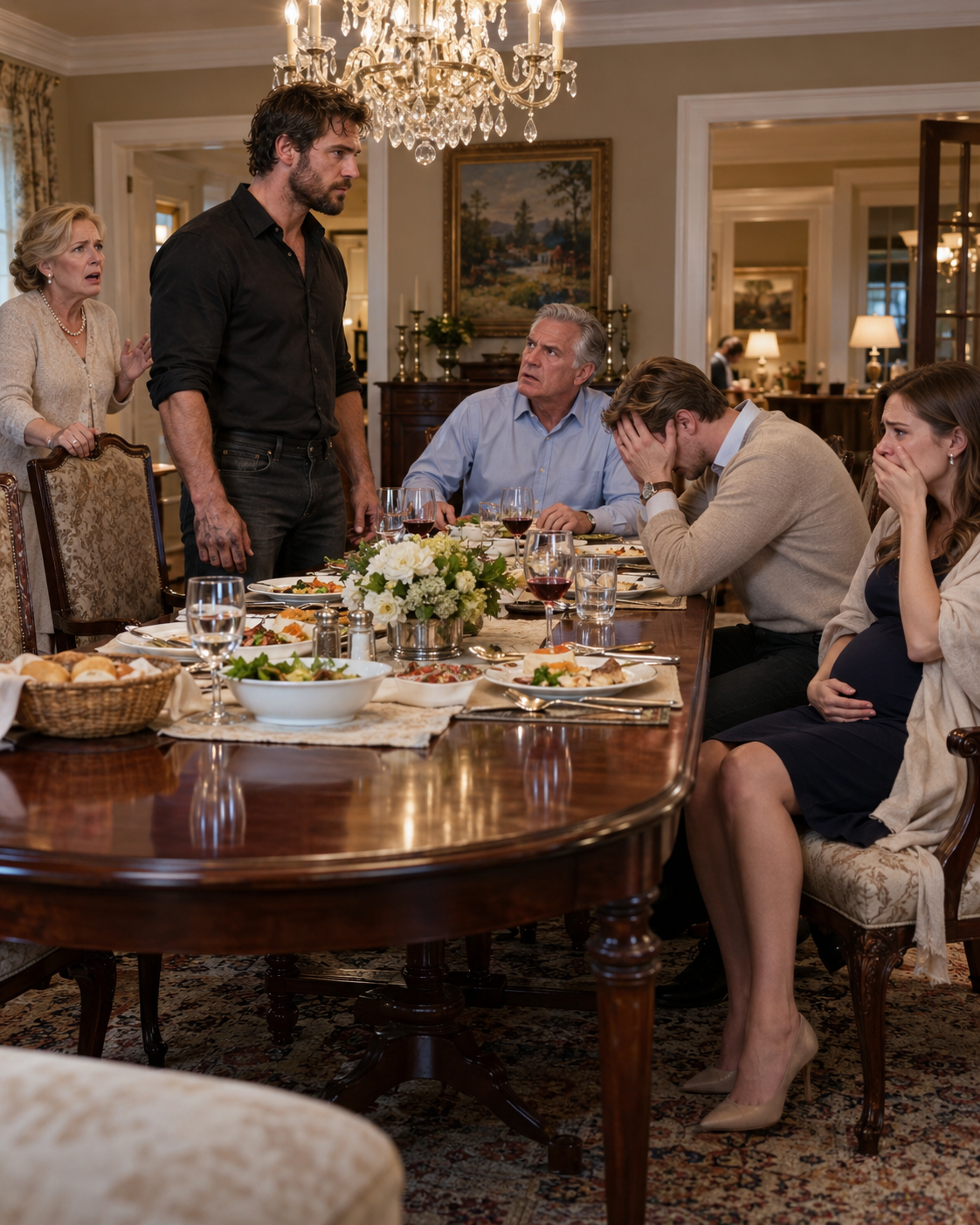
My family had already decided my life savings belonged to my brother—before they realized what I had done.
Part 1: “Your money is family property now,” my mother smirked. So I silently move the funds, let them humiliate...

My Wife Didn’t Come Home Last Night — The Message I Got In The Morning Told Me Everything…
My Wife Stayed Out All Night After a “Work Dinner”—Then a Stranger Sent Me the Photos She Never Expected Me...

A Hundred Engineers Couldn’t Wake the Prototype—Then the Janitor Put Down His Mop and Asked for Twenty Minutes – Life Story
At in the morning, nearly a hundred engineers stood around Aurora Dynamics’ dead prototype while its founder asked if anyone...