Mafia Boss Abandoned His Pregnant Wife—Then Found Her Hospital Bracelet and a Hidden Secret…
Mafia Boss Abandoned His Pregnant Wife—Then Found Her Hospital Bracelet and a Hidden Secret
The other woman was wearing his shirt when his pregnant wife opened the bedroom door.
The most feared mafia boss in Seattle watched his wife walk away—and never followed her.
Seven weeks later, a hospital bracelet revealed what she had suffered alone.
But the secret hidden behind her disappearance was far more dangerous than the affair that destroyed their marriage.
PART 1 — The Night He Let Her Walk Away
Celeste Morrow was standing beside Vivien’s bed, barefoot, wearing Adrien Vescari’s white dress shirt, when Vivien opened the bedroom door.
The shirt reached the middle of Celeste’s thighs, its sleeves rolled carelessly to her elbows.
A half-empty glass of red wine sat on the nightstand beside Vivien’s framed wedding photograph.
And beneath the warm bedroom lights, Celeste smiled as though she had been expecting an audience.
Vivien stood motionless in the doorway, one hand resting beneath her seven-month pregnant belly.
She had spent the afternoon at a prenatal appointment, listening to her daughter’s heartbeat and discussing the final weeks before her due date.
Inside her purse was a tiny ultrasound photograph she had intended to show her husband over dinner.
Now her husband was standing on the opposite side of their bedroom, fastening the buttons of his dark trousers.
Nobody spoke for several seconds.
Adrien was forty-one, the head of a powerful criminal organization operating beneath a network of legitimate Seattle businesses.
He had negotiated with men who hated him, survived betrayals that would have destroyed most people, and built an empire by never allowing uncertainty to show on his face.
Yet when his wife looked at him, his expression changed in a way she had never seen before.
For the first time since she had known him, Adrien Vescari appeared to have no idea what to say.
“Vivien,” he began.
She looked at Celeste, then at the wineglass, then at the indentation in the pillow on her side of the bed.
It was an ordinary collection of objects, almost offensively ordinary.
She noticed that Celeste had moved her pregnancy pillow onto the upholstered bench beneath the window.
Someone had made room for another woman in the bed where Vivien had spent months trying to sleep comfortably.
“How long?” Vivien asked.
Adrien swallowed. “That’s not going to help you.”
“No,” she said quietly. “I imagine it won’t.”
Celeste lifted her glass. “There’s no reason to make this uglier than it already is.”
Vivien turned toward her.
Celeste was thirty-two, elegantly beautiful, with dark hair and the practiced confidence of a woman accustomed to entering expensive rooms without hesitation.
Vivien recognized her from charity dinners, private gatherings, and a fundraising reception for the children’s literacy foundation she had spent three years building.
She remembered Celeste complimenting her pregnancy dress and asking whether she was frightened of giving birth.
She remembered answering honestly because she had believed the question came from kindness.
“You were in my kitchen last Sunday,” Vivien said.
Celeste lowered her glass slightly.
“You asked me whether the baby’s nursery was finished.
You touched the blanket my sister knitted for her.”
“Vivien,” Adrien said sharply.
She raised one hand without looking at him. “I wasn’t speaking to you.”
Celeste’s smile disappeared for an instant, then returned with a colder shape. “Perhaps you should have understood the kind of marriage you were entering.
Men like Adrien don’t belong to ordinary domestic lives.”
Vivien looked at the expensive shirt hanging from Celeste’s shoulders.
“And women like you,” Celeste continued, “were never meant to stand beside men like him.”
The baby kicked hard against Vivien’s ribs.
For an irrational second, Vivien wanted to protect her daughter from the sound of those words.
She pressed both palms against her belly, as though the child could somehow feel humiliation traveling through her mother’s skin.
Then she turned toward the bedroom closet and took down the charcoal wool coat hanging beside Adrien’s jackets.
“Where are you going?” he asked.
“Somewhere I don’t have to look at this.”
He moved toward her. “We need to talk.”
Vivien stepped aside before he could touch her.
The movement stopped him more effectively than any threat he had ever heard.
“We needed to talk when I asked why you kept missing my appointments,” she said. “We needed to talk when you told me I was imagining things.
We needed to talk when you stopped sleeping beside me and started calling it work.”
Adrien’s jaw tightened.
“Did you think I wouldn’t notice?” she whispered.
He looked toward Celeste, who had finally stopped smiling, then back at the woman carrying his daughter.
He could have explained the security arrangements, the threats against his organization, the exhaustion he had been using as an excuse for everything he refused to face.
None of those things explained the woman wearing his shirt.
None of them changed the decision he had made.
“There’s no explanation that makes this acceptable,” he admitted.
Vivien nodded once.
She removed her wedding ring and placed it beside the untouched ultrasound photograph she had taken from her purse.
Then she walked past him without another word.
Adrien followed her into the hallway but stopped before the elevators.
Vivien pressed the button, watching the illuminated arrow above the doors.
When the elevator arrived, she stepped inside and turned around.
Her husband stood several feet away, his hands hanging uselessly at his sides.
She waited, though afterward she would hate herself for remembering that she waited.
The doors began closing.
Adrien said nothing.
At 10:18 that November night, Vivien Vescari left the penthouse apartment of one of Seattle’s most feared men with forty-three dollars in her wallet, a nearly dead phone, and a daughter due in early February.
Outside, rain swept across the pavement beneath Aldenmore Tower.
The security guard near the entrance recognized her and instinctively reached for an umbrella.
Vivien shook her head, crossed beneath the building’s overhang, and called the one person she had spent almost a year refusing to call.
Her older sister answered on the second ring.
“Viv?”
Vivien opened her mouth.
Nothing came out.
“Where are you?” Naomi Hale asked.
“Outside the apartment.”
“Are you hurt?”
“No.”
“The baby?”
Vivien looked down as another gentle movement pressed against her palm. “She’s okay.”
Naomi remained silent for a moment.
Then Vivien said, “I don’t think I can go back upstairs.”
“Don’t,” Naomi answered. “I’m coming.”
Naomi lived in a modest two-story house in Eastlake, with peeling paint around the kitchen windows and a front porch that creaked beneath anyone heavier than a child.
She was a public-school counselor, practical to the point of bluntness, and had never approved of her sister’s marriage.
Eleven months earlier, after warning Vivien that Adrien’s world would eventually consume everything around it, she had walked out of the wedding reception.
The sisters had barely spoken since.
When Naomi arrived, she took one look at Vivien’s face and did not ask for an explanation.
She opened the passenger door.
Vivien climbed inside.
Only when they were several blocks away did Naomi notice the missing wedding ring.
“Oh, sweetheart,” she said.
Vivien looked through the windshield. “Please don’t tell me you warned me.”
Naomi kept both hands on the steering wheel. “I was going to ask whether you’ve eaten.”
That was when Vivien finally began to cry.
Back at Aldenmore Tower, Adrien stood in his bedroom staring at the open door.
Celeste had changed into her own clothes and was watching him carefully, waiting for the next part of a conversation she had expected to control.
“She’ll come back,” Celeste said. “Women like her always do.”
Adrien turned his head.
“Leave.”
Celeste blinked. “Adrien—”
“Get out of my home.”
There was something in his voice that made her set down the wineglass without arguing.
After she left, Adrien called Marcus Webb, his head of security and a former federal investigator.
He ordered discreet protection around Vivien’s location, insisting that nobody approach her or interfere with her decisions.
“Does she know you’re arranging this?” Marcus asked.
“No.”
“Would she want it?”
Adrien looked at the wedding ring on the nightstand.
“Probably not.”
Marcus hesitated. “Then we should be careful about what you call protection.”
Adrien ended the call without answering.
For the next six days, Vivien lived in Naomi’s guest room.
She contacted Patricia Cole, an independent attorney with no loyalty to the Vescari organization, and began separating the finances she could legally control.
She refused Adrien’s calls, continued managing her literacy foundation from Naomi’s kitchen table, and attended her medical appointments with her sister instead of her husband.
On the seventh night, November 19, Vivien woke shortly after two in the morning with a sharp pain low in her abdomen.
She sat upright, waiting for it to pass.
It didn’t.
A second wave came several minutes later, accompanied by a frightening tightness that made her grip the edge of the mattress.
“Naomi,” she called.
Her sister appeared almost immediately.
Vivien had gone pale.
“Get the keys,” she whispered. “Something’s wrong.”
At Harborview Medical Center, she registered through a restricted confidential-patient procedure arranged after Patricia raised concerns about her safety.
The temporary display name on her hospital bracelet was Ellen Marsh, while her medical records remained linked to her verified identity.
Vivien checked the name twice before allowing the nurse to fasten the band around her wrist.
By a.m., monitors were tracing her daughter’s heartbeat across a screen.
Dr.
Renata Singh entered carrying a tablet and a folder.
“Mrs.
Hale,” she said gently, using Vivien’s preferred name, “we’ve found a complication involving the placenta.
I need you to listen carefully.”
Vivien gripped the sheet.
“Is my daughter going to die?”
Dr.
Singh pulled a chair beside the bed.
“Her heartbeat is reassuring right now.
But there has been a small placental separation, and we need to monitor both of you closely.”
Vivien closed her eyes.
Before she could ask another question, Dr.
Singh glanced at the tablet again.
Something in her expression changed.
“There’s one more thing,” she said. “Our privacy office flagged an unauthorized request for your prenatal records earlier today.”
Vivien opened her eyes.
“The request didn’t come from this hospital or your regular doctor.”
Dr.
Singh hesitated.
“And whoever made it was looking specifically for information about your unborn daughter.”
PART 2 — The Name That Wasn’t Hers
For the first time since leaving her marriage, Vivien felt something colder than heartbreak.
Someone had been looking for her baby’s medical information.
Not her bank accounts, not her address, not the ownership documents Patricia was helping her organize.
Medical records that should have remained between her and the people caring for her daughter.
“Who requested them?” she asked.
“The access appears to have originated through an outside administrative contractor connected to your previous coverage arrangements,” Dr.
Singh explained. “Our privacy team has restricted further disclosures and opened an investigation.
We don’t yet know who directed the request.”
Vivien thought of the Vescari organization, with its accountants, corporate attorneys, security contractors, and seemingly endless collection of people who possessed information they had no business possessing.
“Please don’t contact my husband,” she said.
Dr.
Singh studied her for a moment. “Is there a safety concern involving him?”
Vivien struggled to answer.
She could not say Adrien would harm her, because she did not believe that.
But she knew how his world operated, and how easily his attempts to protect someone could become a system of restrictions, watchers, and decisions made without consent.
“There are people around him I don’t trust,” she said. “And right now, I don’t know how many of them know about this pregnancy.”
Dr.
Singh nodded. “Then we’ll work with our privacy and social work teams to protect your information.
We won’t release it simply because someone claims to represent your family.”
The first forty-eight hours passed in a rhythm of examinations, monitoring, medication, and painfully cautious reassurance.
The small abruption appeared stable, but Vivien’s blood pressure remained higher than her doctors wanted.
Dr.
Singh was careful not to blame the complication on emotional distress.
She explained that placental problems could have several causes and that, whatever had contributed, Vivien now needed close follow-up and considerably less physical strain.
Naomi slept badly in the visitor’s chair and brought food Vivien was rarely hungry enough to finish.
She took calls from Patricia in the hallway, helped complete hospital privacy paperwork, and refused to leave when Vivien told her she could go home.
On the second morning, she returned from the cafeteria with two cups of tea and found her sister staring at the empty chair beside the bed.
“You’re thinking about him,” Naomi said.
Vivien nodded.
“Do you want me to call?”
“No.”
“All right.”
Vivien turned her face toward the window.
“That’s the terrible part,” she said. “I want him here.
I just don’t trust what happens after I tell him I’m frightened.”
Naomi set down the tea without answering.
Their mother had died when Vivien was nineteen, leaving Naomi to finish raising a sister who was only beginning to understand adulthood.
Naomi remembered the night Vivien received the news, how she had tried to organize the funeral before allowing herself to cry.
She recognized that same determination now: the conviction that if Vivien remained useful, organized, and composed, grief would eventually become something she could manage.
“You don’t have to prove anything to me,” Naomi said.
Vivien’s mouth trembled.
“I know.”
But she kept staring at the empty chair.
On the third afternoon, Dr.
Singh returned with an additional specialist and a folder that had nothing to do with the placental complication.
Weeks earlier, an ultrasound had raised questions about the baby’s unusually flexible joint positioning.
Her maternal-fetal medicine team had recommended targeted genetic testing, and Vivien had agreed after receiving counseling about its limitations.
The laboratory results had arrived during her hospitalization.
The specialist sat down.
“We identified a genetic variant associated with a connective tissue disorder,” she explained. “That doesn’t tell us exactly how your daughter will be affected.
Some children have mild symptoms, while others need more involved monitoring and treatment.”
Vivien looked at the folder.
“Is it something she can live with?”
“Yes.
But it’s important that a pediatric team assess her after birth.
Depending on the findings, that may involve cardiology, genetics, and physical therapy.”
Vivien lowered her eyes to her belly.
Her daughter had been moving steadily all morning, completely unaware of the medical terminology being assembled around her.
Vivien thought of the lavender blanket folded in Naomi’s guest room and the tiny white socks she had purchased after the twenty-week ultrasound.
She had imagined teaching her daughter to walk, buying school supplies, and arguing about bedtime.
Now those ordinary milestones seemed suddenly precious.
“Then we find the right doctors,” Vivien said.
“We’ll help you arrange that,” the specialist replied.
“Whatever she needs.”
The specialist asked whether the baby’s father had any known family history of similar conditions.
Vivien realized, with a wave of embarrassment and anger, how little Adrien had ever told her about the medical history of his relatives.
She knew which men he had buried, which men had betrayed him, and which business partners he considered dangerous.
She did not know why his older sister had undergone heart surgery at nineteen.
“I’ll try to obtain that information,” she said.
But even as she spoke, she knew she was not ready to make the call.
That night, Naomi found her sitting upright with a pen and a small sheet of hospital stationery.
Adrien’s telephone number was written beneath the heading for an emergency contact.
A heavy line crossed through the name.
Vivien folded the paper.
“I thought about calling him,” she admitted.
“I know.”
“What if something happens and he doesn’t know?”
Naomi pulled the chair closer. “Then we’ll have to decide what he needs to know and when.
But you don’t have to make that decision while you’re terrified.”
Vivien looked at her sister.
“For months, whenever I was afraid, he told me everything was being handled.
He never told me what was happening.
I thought that was strength.”
“And now?”
“Now I think it made me smaller.”
Naomi reached for her hand.
There were no comforting words that could fix the admission.
The silence between them did more.
Before dawn, Vivien took a pen and wrote three words on the inside of the plastic hospital bracelet, where there was just enough room beside the printed information.
She chose us.
She stared at the words for a long time.
She had written them in the third person because she needed to imagine herself as someone she could recognize from a distance.
A woman who had been frightened, abandoned, and uncertain, but had still made the next necessary decision.
Someone her daughter might one day understand without knowing how much it had cost.
On November 23, Vivien was discharged with strict instructions to seek care immediately if her symptoms returned.
Dr.
Singh arranged close follow-up, and Patricia helped her establish contact with Dr.
Leah Okafor, a pediatric specialist experienced in inherited connective tissue disorders.
Vivien paid the initial expenses through her own accounts and insurance.
It wasn’t because she wanted to punish Adrien by excluding his money.
It was because she had spent so long living inside arrangements he controlled that she needed to know what remained hers when he was absent.
Back at Naomi’s house, the guest room began changing.
Naomi moved an old dresser into the hallway, brought home a secondhand crib, and insisted on washing every blanket twice.
The place smelled of cardamom, laundry soap, and the chicken soup she kept making even after Vivien complained that she couldn’t possibly eat another bowl.
For the first time in weeks, Vivien could imagine sleeping without watching the door.
Then Patricia called.
“I’ve received the report from the hospital privacy officer,” the attorney said. “The outside request was routed through an administrative services company called Northline Benefits.”
Vivien sat straighter.
“Do you recognize the name?”
“No.”
“According to the records we’re reviewing, Northline performs contracted work for several private organizations, including companies associated with your husband’s business group.”
Vivien looked at the bedroom window.
A black sedan was parked across the street.
She had seen one like it on three different mornings, always with a different driver.
“Does Adrien know?” she asked.
“I haven’t contacted him.”
“Good.”
Patricia paused. “Vivien, I want you to understand something.
We have evidence that someone accessed information they shouldn’t have.
We do not yet have evidence that your husband ordered it.”
“I understand.”
“Then don’t confront anyone until we’ve verified the source.”
Vivien agreed.
That evening, Adrien left an eleven-second voicemail.
He said he would respect her decision to stay away.
He said Marcus had arranged security on her street because there were risks she might not know about.
He said he wasn’t asking her to come back.
Vivien listened twice.
Then she turned off her phone.
Two days later, Patricia introduced her to Damon Cross, an attorney who had previously handled discreet negotiations involving the Vescari organization but no longer worked for Adrien.
Damon arrived at Naomi’s house carrying a slim leather folder.
“I’ve spent the last week looking into Northline,” he told Vivien. “I can prove someone inside your husband’s organization used the company to obtain your appointment information.”
Vivien tightened her grip around her mug.
“Who?”
“That’s what I’m still establishing.”
He opened the folder and slid a photograph across the table.
It showed Celeste Morrow leaving a private office building with a middle-aged man Vivien had never seen before.
“His name is Gil Tran,” Damon said. “He supervises operations for Adrien.
And for eight months, he’s been communicating with a man named Dorian Voss.”
Vivien looked from one face to the other.
She knew Voss’s name.
It was one of the names Adrien never allowed anyone to mention over dinner.
“What does Celeste have to do with him?”
Damon took a breath.
“Vivien, I don’t think that woman entered your marriage by accident.”
He paused before delivering the rest.
“And I don’t think destroying your marriage was the final objective.”
PART 3 — The Woman Who Had Been Sent
By early December, Vivien understood that the affair had been only the visible part of something larger.
Damon brought her documents over several meetings, each one revealing another piece of the operation.
Celeste had first appeared at a fundraising event connected to Vivien’s literacy foundation, introduced by donors who later turned out to have financial relationships with companies controlled by Dorian Voss.
Her invitations to private dinners, her growing familiarity with Adrien’s staff, and even her apparent friendship with Vivien had followed a pattern.
Nothing had happened quickly.
Someone had spent months building the conditions for one disastrous night.
“Was she supposed to sleep with him?” Vivien asked Damon.
He looked uncomfortable.
“From what I’ve established, her original assignment was to gain access to the household and gather information.
Whether the affair was specifically ordered is less clear.”
Vivien pushed away her untouched coffee.
“She made sure I found her.”
“Yes.”
“And Adrien made sure there was something to find.”
Damon didn’t answer immediately.
“Yes,” he said at last.
She looked through the café window at pedestrians crossing beneath umbrellas.
For several weeks, she had wanted the affair to make sense.
She had searched for some hidden explanation that might soften the memory of Celeste standing in her bedroom.
Now she was learning that the scene had been constructed by people who wanted to hurt her husband, and the discovery changed nothing about Adrien’s responsibility.
Someone had opened a trap.
Adrien had willingly stepped inside.
“Tell me about Voss,” Vivien said.
Damon closed his folder.
“Dorian Voss used to operate alongside Adrien’s organization.
Three years ago, a dispute ended their arrangement.
Voss lost someone close to him, and he has blamed Adrien ever since.”
“Who did he lose?”
Damon hesitated.
“I’m not certain enough to tell you.”
Vivien recognized the evasion.
She had heard variations of it throughout her marriage, whenever a question came too close to something dangerous.
Damon noticed the expression on her face and looked down.
“I’ll find out,” he said.
“You should have found out before asking me to trust you.”
He accepted the criticism without arguing.
Across the city, Adrien was beginning to receive information of his own.
Marcus had discovered that Gil Tran was moving money through accounts associated with Voss’s businesses.
The transfers were small enough to resemble ordinary consulting payments, but they occurred immediately before security shifts, confidential meetings, and changes in Vivien’s medical appointments.
Adrien studied the records in his downtown office.
“How long?” he asked.
“At least fourteen months.”
Adrien looked up.
Fourteen months meant the betrayal had begun before his wedding anniversary, before the pregnancy, before Celeste entered their lives.
“And Celeste?”
“Likely recruited eight months ago.”
Adrien stood and walked to the window.
For years, he had trusted Gil Tran with operational decisions and private information.
Tran had attended family dinners, arranged security for Vivien’s nonprofit events, and once delivered flowers to Naomi after a medical emergency.
Adrien had mistaken familiarity for loyalty because it was easier than examining the people who benefited from his trust.
“Does Vivien know any of this?”
“We don’t know.”
“Find out.”
Marcus hesitated.
“Sir, with respect, she asked for distance.
Having people investigate what she knows is not the same thing as keeping her safe.”
Adrien turned.
“She’s carrying my daughter.”
“Then perhaps she deserves to know what is threatening her.”
Adrien stared at him.
It was not advice he was accustomed to receiving.
For several seconds, neither man spoke.
Then Adrien said, “Keep investigating Tran.
Leave Vivien alone.”
But the order did not resolve the problem.
It merely allowed him to postpone the conversation he feared most.
On December 8, Vivien returned briefly to Aldenmore Tower.
Patricia had arranged the visit in writing, and Adrien had agreed to remain away while Vivien collected legal records, clothing, and the notebooks containing financial information for her foundation.
Naomi accompanied her.
Neither woman had entered the building since the night Vivien left.
The penthouse looked exactly as Vivien remembered.
A vase of dried flowers still stood on the piano.
Her favorite blue mug was sitting beside the espresso machine.
Someone had removed the wilted fruit from the kitchen bowl, but nobody had moved the nursery furniture waiting in the smaller bedroom.
Vivien stopped outside that room.
Naomi looked at her.
“You don’t have to go inside.”
“I know.”
But Vivien opened the door.
The crib stood beneath the window, its pale wooden rails catching the afternoon light.
A folded blanket lay across the rocking chair.
On the wall hung three framed illustrations from children’s books, which Vivien had selected because she wanted her daughter to grow up surrounded by stories.
Adrien had installed the shelving himself.
Vivien remembered him standing on a ladder, sleeves rolled up, asking whether she thought the shelves were straight.
She remembered laughing when he insisted on using a level for the third time.
For one long afternoon, the dangerous man who controlled half the city’s most secretive transactions had been an ordinary expectant father worrying about crooked bookshelves.
The memory hurt more than the empty bed.
Naomi stood behind her.
“Take what you want.”
Vivien touched the rocking chair, then withdrew her hand.
“Not today.”
They collected the nonprofit files from the study and packed several bags.
While Vivien searched through a cabinet beside the living room, a small paper envelope slipped from the side pocket of her bag and disappeared into the narrow space behind a radiator cover.
She heard a faint scraping sound but assumed one of the folders had brushed the furniture.
She did not see the envelope fall.
Inside it was the hospital bracelet from November.
By the time Naomi carried the last bag downstairs, Vivien was too tired to notice anything missing.
That same afternoon, Celeste Morrow found an unfamiliar car parked outside her children’s school.
It was not Adrien’s security team.
She recognized the driver from a meeting arranged by Gil Tran and immediately turned away from the school entrance.
Her two children, eight-year-old Sophie and five-year-old Ben, were holding her hands.
Sophie noticed the change in her mother’s breathing before Celeste said anything.
“Mom, are we going home?”
“Not yet, sweetheart.”
“Did we do something wrong?”
Celeste crouched beside her daughter.
“No.
You haven’t done anything wrong.”
She said it twice because she needed Sophie to believe it.
That evening, Celeste received a call from an unfamiliar number.
A man explained that Dorian Voss was disappointed with her progress.
She had failed to deliver the financial information promised in September, and her relationship with Adrien had ended before she obtained the necessary access.
The man reminded her that Sophie attended school at eight every morning and that Ben liked the playground near their apartment.
Then he hung up.
Celeste sat on her kitchen floor after putting the children to bed.
She had accepted Voss’s arrangement because he possessed evidence involving her younger brother’s financial fraud and had threatened to destroy her family if she refused to cooperate.
She had told herself she would only gather names and schedules.
She had told herself she would leave before anyone was seriously hurt.
Then she had slept with Adrien.
She had helped destroy a marriage.
And she had continued serving the people who threatened her children because, by then, she could no longer imagine an exit.
The next morning, Celeste opened a locked folder on her laptop.
Inside were copies of information Tran had provided, including a prenatal appointment summary bearing Vivien’s name.
There was also a reference to pending genetic test results.
Celeste stared at the screen.
She knew what Voss wanted.
Medical uncertainty could become leverage against a man who controlled everything except the bodies of the people he loved.
A threatened child would make Adrien Vescari negotiate on terms he had always refused.
Celeste deleted the prenatal documents from the shared folder and removed the local copies she controlled.
She could not guarantee that Tran had no duplicates, but she could prevent the information from passing through her own hands.
Then she called Damon Cross.
“I need help,” she said.
Damon recognized her voice immediately.
“Why should I believe anything you tell me?”
“Because if I don’t find a way out, my children will be next.”
Within two days, Vivien learned that Celeste’s family was being threatened.
She spent an entire evening staring at the information Damon had sent.
Naomi watched her from across the kitchen table, waiting for anger or satisfaction or the quiet triumph of discovering that the woman who had humiliated her was now frightened herself.
Instead, Vivien opened her laptop.
“What are you doing?” Naomi asked.
“Finding a family-safety attorney who isn’t connected to Adrien.”
Naomi frowned.
“For Celeste?”
“Her children.”
“Vivien, she destroyed your marriage.”
Vivien kept typing.
“No.
Adrien and Celeste destroyed my marriage.
Her children didn’t do anything.”
Through Patricia and an independent victim-support organization, Vivien helped arrange temporary protection and legal advice for Celeste’s family without revealing who had initiated the assistance.
She did not call it forgiveness.
It was a boundary she refused to cross in the other direction: she would not allow her own suffering to become an excuse for ignoring the suffering of children.
Three nights later, Damon brought her an additional photograph.
It showed Gil Tran beside a vehicle outside a medical office.
“Look at the date,” he said.
September 14.
Vivien had been twenty weeks pregnant.
On the back was a note recovered from an exchange between Tran and a Voss associate.
If she leaves him, maintain coverage of the child.
Vivien read the sentence twice.
Then she lifted her eyes toward Damon.
“They knew the marriage was going to fall apart before I did.”
Damon nodded.
“And they were prepared to follow you afterward.”
Vivien slowly lowered the photograph.
For weeks, she had believed she was escaping the consequences of her husband’s betrayal.
Now she understood that someone had been waiting for her to leave.
And the next stage of their plan had already begun.
PART 4 — The Hospital Bracelet Behind the Radiator
On December 30, Adrien Vescari returned to the penthouse for the first time in nearly three weeks.
He had been sleeping in an office apartment downtown, telling himself that the old bedroom was easier to leave untouched.
The penthouse still contained Vivien’s books, her favorite paintings, and the nursery furniture she had chosen with such care.
He had ordered nobody to disturb it, a decision that allowed him to pretend he was respecting her memory rather than avoiding his own.
He needed documents from the study safe.
On his way through the living room, he accidentally knocked a small ceramic bowl from a side table.
It struck the radiator cover and dislodged a thin paper envelope caught behind it.
Adrien bent to retrieve the bowl, noticed the envelope, and reached into the narrow gap.
The printed heading stopped him.
Harborview Medical Center.
He turned the envelope over.
November 19.
Seven days after Vivien walked out of their bedroom.
Adrien opened it.
Inside lay a white plastic hospital bracelet, cut at one end, its printed label slightly smudged.
ELLEN MARSH.
He didn’t recognize the name.
Then he turned it over and saw the handwriting.
Three small words, written in black ink.
She chose us.
Adrien knew that handwriting.
He knew the way Vivien’s letters tilted forward when she wrote quickly.
He knew how she formed the letter S, how she pressed harder at the end of a sentence, and how she sometimes left the tops of her lowercase letters open.
He had received hundreds of notes from her over four years.
He sat down before his knees could betray him.
Vivien had been in a hospital under another name.
She had been there seven days after leaving him.
And she had not told him.
He took out his phone.
“Marcus.”
“Yes, sir.”
“November nineteenth.
Vivien disappeared from your surveillance reports for several days.”
Marcus was silent.
“Tell me where she was.”
“We confirmed a hospital admission,” Marcus said eventually. “Harborview.
November nineteenth through the twenty-third.”
Adrien stared at the bracelet.
“Four days.”
“Yes.”
“Four days in a hospital, and you didn’t tell me?”
“We found the registration after the fact.
The clinical details were protected, and I didn’t have authorization to obtain them.”
Adrien closed his eyes.
For the first time, Marcus heard something dangerously close to desperation in his employer’s voice.
“Was the baby alive when she left?”
“We have no indication otherwise.
Vivien attended a prenatal appointment afterward.”
Adrien pressed the bracelet against his palm.
He remembered the evening she had left, the weight of her absence settling across the apartment, and the selfish relief of not having to hear exactly how much he had hurt her.
He remembered convincing himself that leaving her alone was an act of restraint.
He had spent weeks learning to live with the idea that she hated him.
He had never seriously considered that she might have been fighting for their daughter’s life while he waited for his own courage to return.
“Who is Ellen Marsh?” he asked.
“A confidential hospital registration name.”
“Why would she need one?”
Marcus hesitated.
“Because somebody was trying to access her medical records.”
The answer moved through Adrien like winter water.
He looked toward the nursery.
Everything he had built to protect his family had become something they needed protection from.
That afternoon, Celeste Morrow called.
Adrien almost rejected the unfamiliar number, but something in her voice made him listen.
She told him she had documents involving Gil Tran and Dorian Voss.
She admitted she had been placed near his household deliberately and had been coerced through threats against her children.
“Where are you?” he asked.
“A coffee shop on Pine Street.”
“Why are you contacting me?”
“Because Voss gave me until New Year’s Eve to deliver what I was hired to collect.”
“And you don’t have it.”
“No.”
A long silence followed.
Then Celeste said, “There’s something else you need to know.
Your wife helped keep my children safe.”
Adrien said nothing.
“She knew what I did to her,” Celeste continued. “She knew I was being threatened.
She could have left me to deal with it.”
“What are you saying?”
“I’m saying she arranged help for Sophie and Ben while she was pregnant, sick, and trying to stay hidden from your people.”
Adrien looked down at the bracelet.
His wife had been arranging protection for another woman’s children while he was still trying to understand why his own marriage had ended.
He met Celeste in a crowded café an hour later, accompanied only by his attorney.
She looked exhausted.
There were dark circles beneath her eyes, and her hands trembled when she opened the folder.
Adrien examined messages, payment records, and photographs linking Gil Tran to Voss.
Much of it supported what Marcus had already discovered.
Then Celeste showed him a copy of the instructions she had received.
Primary objective: disrupt domestic stability.
Secondary objective: preserve access to spouse and child.
Adrien read the line without moving.
“Did he order you into my bed?” he asked.
Celeste looked down.
“No.”
He waited.
“I was supposed to gain your trust.
Gather information.
Create distance between you and Vivien if an opportunity appeared.” She swallowed. “Sleeping with you was a choice I made.
I won’t pretend otherwise.”
Adrien closed the folder.
“And destroying her marriage in front of her?”
Celeste’s eyes filled.
“I was told to make sure she left.
I thought if I refused, they’d hurt Sophie.”
Adrien looked away.
He wanted to be furious with her.
He was furious with her.
But a more uncomfortable truth had settled beneath the anger: Celeste might have been forced into the operation, yet nobody had forced him to betray his wife.
Voss had created the opportunity.
Adrien had supplied the betrayal.
When Celeste finally stood to leave, he asked one last question.
“Why did you withhold the prenatal file?”
She froze.
“Because it mentioned a condition the baby might have,” she answered. “And I knew Voss would use it to frighten you.”
Adrien stared at her.
“What condition?”
“I don’t know the details.
I destroyed what I could access before the results were complete.”
He looked down at the bracelet again.
Until that moment, he had believed its secret was that Vivien had been hospitalized.
Now he understood it concealed something else.
Something about their daughter.
And somebody inside his own organization was still trying to obtain it.
PART 5 — The Enemy Inside His House
Adrien spent the next eighteen hours discovering how thoroughly a trusted man had betrayed him.
Gil Tran had worked for the Vescari organization for four years.
He supervised legitimate shipping operations while quietly managing relationships with people who conducted the less respectable parts of Adrien’s business.
He knew the family’s routines, the names of their attorneys, and the locations of private properties.
More importantly, he knew Adrien’s weaknesses.
For fifteen years, Adrien had responded to threats by tightening control.
He trusted only a small circle, concealed information even from people he loved, and expected unquestioning compliance from the men around him.
Tran had learned to imitate loyalty so well that Adrien never noticed how much power he had surrendered.
By evening, Marcus had traced payments, suspicious communications, and records of unauthorized requests through Northline Benefits.
Damon Cross supplied corroborating documents.
Celeste agreed to speak with federal investigators.
The name overseeing the investigation was Special Agent Elena Reyes, a veteran agent already examining financial crimes involving both Voss’s operations and parts of Adrien’s organization.
She was not interested in rescuing a mafia boss from the consequences of his decisions.
When Adrien’s attorney requested a meeting, Reyes agreed only after receiving an initial package of verifiable evidence.
They met in a conference room away from Adrien’s properties.
Reyes placed the folder on the table.
“You understand that cooperation doesn’t erase what you’ve done,” she said.
“I do.”
“This investigation isn’t limited to Voss.”
“I know.”
“If you give us records, we follow those records wherever they lead.”
Adrien met her eyes.
“Then follow them.”
For the first time in his adult life, he was offering information without demanding control over its consequences.
That evening, through his attorney and Marcus, Adrien confronted Tran with the evidence and informed him that federal investigators wanted to question him.
Tran initially denied everything.
When his own lawyer arrived and examined the documents, his confidence began to collapse.
He agreed to cooperate rather than continue protecting Voss.
His account was devastating.
Dorian Voss had planned to isolate Vivien emotionally, monitor her departure, and then use the threat of harm to her daughter as leverage against Adrien.
The objective wasn’t a simple kidnapping or a territorial dispute.
Voss wanted financial records, cooperation, and ultimately the destruction of the organization Adrien had spent his life building.
“Why my daughter?” Adrien asked.
Tran kept his gaze on the tabletop.
“Because you could replace your warehouses.
You could rebuild your accounts.
You could survive losing the people who work for you.”
Adrien waited.
Tran looked up.
“He knew you couldn’t replace her.”
The answer made Adrien feel physically ill.
Tran explained that Voss’s remaining associates planned to pressure Celeste on New Year’s Eve and had prepared to approach Naomi’s house if Celeste failed to cooperate.
The plan had been developed before anyone realized federal investigators were closing in.
“How many people?” Marcus asked.
“Four confirmed, perhaps more.”
“Where?”
“Near Eastlake.”
Adrien pushed back his chair.
For one terrible moment, everything inside him wanted to respond as he always had: gather his men, seal the streets, and make the threat disappear through overwhelming force.
Then he remembered the hospital bracelet.
He remembered Vivien explaining, months earlier, how frightened she became when he made decisions without telling her.
He remembered doing exactly that when she left.
“Give Reyes everything,” he said.
Marcus looked at him.
“Everything?”
“Every address.
Every communication.
Every name.”
His attorney cautioned him about the legal consequences.
Adrien listened.
Then he repeated the instruction.
What he did next was more difficult.
He picked up his phone and stared at Vivien’s number.
He had wanted to call her since finding the bracelet.
He wanted to ask about the hospital, the baby, the medical condition, and the nights she had survived without him.
He wanted to tell her he knew about Voss and that he was finally doing something useful.
Instead, he imagined her hearing his voice and recognizing another plan already made on her behalf.
He put the phone down.
“Tell Damon to contact her,” he said. “He has her trust.
She needs the full information, and she needs it now.”
Marcus watched him.
“Why not tell her yourself?”
“Because I’m still learning how to give her information without making it a demand.”
The following morning, December 31, Damon called Vivien at a.m.
She was standing in Naomi’s kitchen, preparing tea, when she heard the strain in his voice.
“Damon?”
“There’s something serious you need to know.”
He told her about Tran, the medical information, and Voss’s plans.
He told her Celeste had cooperated.
He told her Adrien had discovered the operation and surrendered records to federal investigators.
When he finished, Vivien was silent.
“Adrien found the bracelet,” she said.
Damon hesitated. “Yes.”
Vivien closed her eyes.
She had wondered where it had gone.
“And he knows about our daughter?”
“He knows there may be a medical concern.
He hasn’t been given her confidential records.”
She gripped the counter.
“Good.”
“Vivien, there’s a credible threat against Naomi’s address.
Agent Reyes is arranging protective transport.
I need you to let them move you.”
Vivien looked toward the staircase, where Naomi was still sleeping.
“Does Adrien know you’re calling me?”
“Yes.”
“And he’s not deciding where I have to go?”
“No.
Reyes will explain the options.”
For the first time that morning, Vivien’s shoulders relaxed slightly.
“All right,” she said. “Send me her number.”
But when Damon ended the call, another message arrived.
It came from a number Vivien didn’t recognize.
Attached was a photograph of Celeste’s children standing outside their temporary apartment building.
Beneath it were six words.
Tell their mother the deadline changed.
Vivien felt the baby move.
Then she called Reyes.
“Celeste’s location has been compromised,” she said. “And I think Voss is going to reach her before your people do.”
PART 6 — The Woman She Refused to Forgive
Naomi was furious when Vivien announced that she wanted to help Celeste.
“You’re thirty-five weeks pregnant,” she said. “You were hospitalized in November.
You have a complication that could become serious without warning.
You are not going to walk into somebody else’s dangerous situation just because you feel responsible for every child in Seattle.”
Vivien stood beside the kitchen table, pulling on her coat.
“I don’t feel responsible for every child in Seattle.”
“Then explain what you’re doing.”
“Helping make sure two children aren’t used to punish their mother.”
Naomi’s face tightened.
“That mother slept with your husband.”
“I remember.”
Vivien’s voice was so quiet that Naomi stopped arguing.
For several seconds, the sisters looked at one another.
Then Vivien added, “I don’t have to forgive her to refuse what Voss is doing.”
She was not planning to confront armed men or enter an unsecured building alone.
Reyes had arranged for officers to escort Celeste and her children to another location, and Vivien knew the apartment address through Damon.
She and Naomi would meet the family only after the officers established that it was safe.
It was a sensible plan.
Until the officers reported that a man claiming to be a private caseworker had already entered Celeste’s apartment.
Reyes instructed everyone to remain outside while her team approached.
Vivien and Naomi waited in their parked car across the street.
The building was a narrow three-story structure near Melrose Avenue, with faded brickwork and holiday lights still hanging from a balcony.
People walked past carrying coffee, unaware that a confrontation was unfolding behind the second-floor windows.
After several minutes, Reyes called.
“The man has been detained,” she said. “We found messages consistent with coercive threats.
Celeste and the children are safe for the moment.”
Vivien exhaled.
“Can I speak with her?”
Reyes hesitated.
“Briefly.
With an officer present.
Then I need all of you moved somewhere secure.”
Inside the apartment, Celeste sat on a couch between her children.
Sophie was clutching a stuffed rabbit.
Ben leaned against his mother’s shoulder, one hand wrapped around a plastic dinosaur.
Both children looked exhausted in the way children do when they have been frightened for too many nights.
Celeste rose when Vivien entered.
“You shouldn’t be here.”
“Probably not.”
“Why did you come?”
Vivien looked at Sophie and Ben.
“Because someone should tell them it’s going to be all right without asking their mother for anything in return.”
Celeste’s face crumpled.
She turned away before her children could see.
Vivien sat carefully in the chair opposite her.
Her lower back had been aching since morning, and she wanted to conserve her strength.
Naomi remained beside the door, speaking quietly with the officer about transport arrangements.
Celeste looked at Vivien’s belly.
“Is your daughter okay?”
“She’s being monitored.”
“The records…”
“I know you withheld them.”
Celeste pressed her palms against her knees.
“I saw the note about the genetic testing.
Tran wanted me to forward the results when they arrived.
I couldn’t do it.”
“Why?”
Celeste looked at her children.
“Because I knew exactly what would happen if somebody threatened them with something they couldn’t understand.”
Vivien followed her gaze.
She had spent weeks imagining Celeste as the woman in her bedroom, perfectly composed and smiling.
Now she saw a mother who had made unforgivable choices and was desperately trying to prevent her children from paying for them.
Neither image erased the other.
“I’m not forgiving you,” Vivien said.
Celeste nodded.
“I know.”
“What you did to me was deliberate.
You stood in my home and tried to make me feel like I didn’t belong there.”
Celeste began to cry silently.
Vivien continued.
“But you kept my daughter’s medical information out of Voss’s hands when you had a chance to use it.
That matters, too.”
Celeste wiped her face.
“I don’t know what to do with that.”
“You don’t have to do anything with it.
Get your children somewhere safe.
Then tell the investigators everything.”
The two women sat without speaking.
From the hallway came the sound of Ben asking an officer whether the stuffed dinosaur could ride in the front seat.
Vivien almost smiled.
Then her phone rang.
Unknown number.
She considered declining it, but Reyes, standing nearby, indicated that the call could be put on speaker for the investigators to hear.
Vivien answered.
“Mrs.
Vescari.”
The man’s voice was polished and calm.
“My name is Dorian Voss.”
Vivien stood completely still.
“I imagine your husband has told you about me.”
“He hasn’t told me enough.”
“No,” Voss replied. “I suppose he hasn’t.”
Reyes began silently instructing an agent beside her.
Voss continued.
“I know the operation is finished.
Tran has cooperated, Celeste has turned against me, and federal investigators have enough evidence to pursue what comes next.”
“Then surrender,” Vivien said.
A pause.
“That is what I’m considering.”
“Consider faster.”
To her surprise, Voss laughed once, without amusement.
“You’re more direct than Adrien said.”
“Adrien doesn’t know half as much about me as he thinks.”
“I believe that.”
Vivien rested one hand against her belly.
“What do you want?”
“A conversation before I surrender.
About why this began.”
“Tell your attorney.”
“My attorney knows what I did.
He doesn’t know what your husband did.”
Vivien looked toward Reyes.
The agent was listening intently.
Voss’s voice lowered.
“Three years ago, Adrien made a decision that destroyed my family.
He knew what happened afterward, and he buried it beneath legal documents and money.”
Vivien swallowed.
“What decision?”
“You should ask him about Mira.”
The name meant nothing to her.
“Who’s Mira?”
For several seconds, Voss said nothing.
Then he answered.
“My daughter.”
A chill moved through Vivien.
“She was twenty-two when she died.
And the order that put her in danger came directly from the man you married.”
Vivien felt the first hard tightening across her abdomen.
She pressed her hand against the chair.
Voss continued, his voice suddenly older.
“He told the world she was an unfortunate casualty.
He never told you that he knew exactly whose daughter she was.”
Vivien looked at Naomi, who had seen the change in her face.
“Mrs.
Vescari,” Voss said, “if you’re going to decide what kind of father Adrien will become, you deserve to know what kind of man he has already been.”
The line went silent.
Vivien stared at the phone.
For four years, she had believed Adrien’s greatest secret was the violence and corruption surrounding his organization.
Now she was beginning to understand that the secret he had guarded most carefully might not be what he had done.
It might be what he had allowed himself to forget.
PART 7 — The Daughter He Never Spoke About
Vivien did not agree to meet Dorian Voss alone.
She gave Reyes a simple condition: if Voss truly wanted to explain himself before surrendering, he could do it somewhere investigators controlled, with no private security, no hidden associates, and no opportunity to disappear afterward.
Reyes initially objected to involving a pregnant civilian at all.
Vivien reminded her that Voss had already made her and her child central to the case.
“I won’t make myself an easy target,” Vivien said. “But I won’t let everyone else decide what I get to know.”
By afternoon, Reyes had arranged a brief supervised meeting inside an administrative building near Seattle’s industrial waterfront.
Officers secured the entrances, and Naomi insisted on accompanying her sister.
Vivien was tired, her back was aching, and she had begun noticing occasional contractions that felt different from the ones she’d experienced before.
Naomi noticed her pausing in the parking lot.
“Tell me that’s just the baby moving.”
Vivien gave her a small smile.
“I wish I could.”
Dorian Voss was waiting in a plain conference room.
He was fifty-eight, with gray hair, tired eyes, and the appearance of a man who might have spent his career teaching accounting instead of arranging threats.
There was nothing theatrical about him.
No elaborate speech, no threatening entourage, no satisfaction in watching a pregnant woman enter the room.
He stood when Vivien appeared.
“Mrs.
Hale.”
She noticed that he used her maiden name.
“Tell me about Mira,” she said.
Voss looked toward the window.
“She was twenty-two.
She liked old movies, terrible coffee, and drawing buildings she’d never actually visited.
She worked evenings at a restaurant on Capitol Hill because she wanted to pay for her own design classes.”
He stopped.
Vivien waited.
“Three years ago, Adrien ordered a group of men to pressure a warehouse operator who owed his organization money.
The confrontation turned violent.
Mira was visiting someone who worked nearby.”
Voss clasped his hands.
“She was caught in it.”
The silence between them grew heavy.
“Adrien didn’t know she was there when he gave the order,” Voss continued. “I found that out later.
But he knew afterward what his decision had caused.”
“What happened when you confronted him?”
“He sent attorneys.”
Voss’s face tightened.
“There was a financial settlement.
A statement describing her death as unrelated to the organization’s leadership.
Documents that made responsibility disappear beneath careful language.”
Vivien looked at him.
“And you decided to do to his daughter what you believe he did to yours.”
Voss flinched.
“I told myself I only needed to threaten her.
I told myself I would never actually hurt a child.”
“But you were willing to make her mother believe you would.”
“Yes.”
“Then you know exactly what you became.”
For the first time, Voss looked away.
Vivien felt another contraction.
She placed her palm against her side and breathed slowly until it passed.
Naomi moved closer, but Vivien shook her head.
Voss watched her.
“Celeste told me what you did for her children,” he said. “I couldn’t understand it.
She had helped ruin your life.”
“Her children weren’t responsible.”
“I know.”
“No,” Vivien answered. “You know it now.
That’s different.”
Voss lowered his eyes.
He had brought copies of records relating to Mira’s death and communications connecting his own extortion operation to Tran.
He handed them to Reyes, who entered the room to receive them.
Voss also confirmed that he had ordered his remaining associates to abandon their planned intimidation efforts and agreed to provide investigators with the names needed to verify it.
His cooperation did not cancel the crimes he had committed.
Nor did the truth about Mira excuse his campaign against Vivien.
When the documents were secured, Vivien looked at him one last time.
“Your daughter deserved justice,” she said. “Mine deserves a childhood.
Neither of those things required what you did.”
Voss’s face crumpled, but she did not stay to comfort him.
In the hallway, she called Adrien.
He answered immediately.
“Viv?”
“I’m with Reyes.
Voss is surrendering.”
Adrien exhaled.
“Are you safe?”
“Yes.
And I know about Mira.”
Silence.
“Vivien—”
“Did you order the warehouse confrontation?”
“Yes.”
“Did you know your decision helped cause her death?”
His answer came slowly.
“Not when I gave the order.
I learned afterward.”
“And you let your lawyers make it look as though you had nothing to do with it.”
“Yes.”
Vivien closed her eyes.
She had spent years asking him to tell her the truth before the consequences arrived.
Even now, the words came only after she had uncovered what he wanted hidden.
“Why didn’t you tell me?”
Adrien’s voice broke.
“Because I knew what you’d see when you looked at me.”
“I would have seen the truth.”
“I know.”
“No, Adrien.
You were afraid I would stop loving you if I knew what you’d done.
So you made certain I couldn’t choose with all the information.”
He said nothing.
Vivien leaned against the hallway wall as another contraction tightened across her abdomen.
This one lasted longer.
“Adrien,” she whispered.
His voice sharpened. “What’s wrong?”
She waited for the pain to ease.
“I think your daughter is coming.”
Naomi took the phone while Vivien sat down.
Reyes called for the medical personnel already standing by outside, and Adrien was directed to meet them at Harborview rather than drive to the waterfront.
Within minutes, Vivien was being examined and prepared for transport.
She tried to reassure Naomi, but the contractions were becoming more regular.
At the hospital, Dr.
Singh reviewed the monitors and examined her.
“Thirty-five weeks,” she said. “Earlier than we’d hoped.”
Vivien pressed her lips together.
“Can you stop it?”
“First we need to understand how you and the baby are doing.”
Adrien arrived as the monitoring team was reviewing the fetal heart tracing.
Vivien saw him in the doorway and held out her hand.
He crossed the room immediately.
Then the baby’s heartbeat slowed during a contraction.
Dr.
Singh moved closer to the monitor.
“Vivien, I need you to listen,” she said calmly. “We’re going to monitor this very carefully, and the neonatal team needs to be ready.”
Vivien tightened her grip on Adrien’s hand.
For once, he couldn’t order anyone to fix what was happening.
He could only stay beside her.
And as the next contraction began, Dr.
Singh made the decision that would change their lives.
“We need to prepare for delivery tonight.”
PART 8 — The Child Who Changed Everything
At 11:43 p.m., Vivien asked Adrien a question she had been avoiding since November.
“Are you afraid?”
He was sitting beside her hospital bed, holding a cup of water he had forgotten to drink.
“Yes.”
“Good,” she whispered.
He looked at her.
“Maybe now you’ll understand what it’s like when someone you love is in danger and you don’t get to control what happens next.”
Adrien lowered his eyes.
The hours that followed were difficult and exhausting.
Dr.
Singh’s team monitored the baby’s heart rate closely, prepared for an urgent change in delivery plans if necessary, and kept Vivien informed of each decision.
As labor progressed, the concerning heart-rate episodes settled, allowing the team to continue under close supervision.
Naomi waited nearby.
Adrien remained in the room because Vivien had said he could stay.
That permission was not forgiveness.
She wanted him there for their daughter’s birth, and she wanted the right to change her mind if his presence became too much.
Adrien accepted both conditions without argument.
Between contractions, Vivien asked him about his family’s medical history.
He told her about his older sister’s heart surgery, the joint problems several relatives had experienced, and the diagnoses nobody had clearly explained when they were younger.
“Why didn’t I know any of this?” Vivien asked.
“Because I kept my family history to myself.
I didn’t think it mattered.”
“Everything matters when you’re having a child.”
He nodded.
“I’ll give the doctors whatever they need.”
This time, she believed he would.
Shortly after two in the morning on January 1, Ara Hale entered the world.
She weighed four pounds and thirteen ounces.
Her cry was thin but fierce, and when a nurse briefly placed her against Vivien’s chest, the little girl opened her mouth in protest as though she had already developed strong opinions about the world.
Vivien laughed through tears.
“She’s angry.”
Adrien stood beside her, unable to speak.
“Look at her,” Vivien whispered.
He did.
For several seconds, his face carried an expression she had never seen before.
Not the composure he wore in meetings, not the fierce protectiveness that had so often made their marriage feel like a guarded building.
He looked astonished, almost frightened by how completely his daughter existed beyond his control.
The neonatal team assessed Ara and moved her to the NICU for monitoring and feeding support.
Vivien watched them take her.
“She’s coming back to me,” she said.
Dr.
Singh touched her shoulder.
“She’s receiving the care she needs.
We’ll keep you informed every step of the way.”
Adrien remained beside the bed.
When the room grew quiet, Vivien turned toward him.
“I wrote something on my hospital bracelet in November.”
He froze.
“I found it.”
“I know.”
He reached into his coat pocket and produced the small plastic band.
Vivien stared at it.
She had not expected him to carry it.
“She chose us,” Adrien read softly.
“That night, I thought we might lose her,” Vivien said. “And all I wanted was for you to hold my hand.
But I couldn’t call you because I no longer trusted you to let me be part of the decisions.”
Adrien looked down.
“I abandoned you when you needed me.”
“Yes.”
“I told myself giving you space was respecting your decision.
But I used that explanation to avoid hearing how badly I’d hurt you.”
Vivien’s eyes filled.
“That’s the first time you’ve said it without trying to explain it away.”
He took a shaky breath.
“I’m sorry.”
She let the words remain between them.
Then she held out her hand.
He took it.
“I don’t know what happens to us,” she said.
“I understand.”
“But she’s your daughter.”
His eyes moved toward the door where the neonatal team had disappeared.
“I know.”
“And if you’re going to be her father, you have to become someone who tells the truth before he’s caught.”
Adrien nodded.
“I’ll try to be that man.”
Vivien studied him.
“Trying is where you start.
It isn’t where you stop.”
Ara remained in the NICU for thirteen days.
Vivien spent those days learning how to feed a premature infant, interpret the monitors, and ask questions without allowing fear to become her daughter’s entire story.
Dr.
Okafor reviewed the genetic findings and explained that Ara would need ongoing assessment, although her early examinations were encouraging.
Adrien completed the requested family medical history and came during the visiting periods Vivien approved.
He never arrived with an entourage.
He never demanded special treatment.
He sat beside Ara’s incubator, watched the nurses work, and learned how to hold a child who was small enough to fit almost entirely against his chest.
On the ninth day, he met with Reyes and his attorneys.
He gave a detailed account of the operation that had led to Mira Voss’s death, including his own role in ordering the confrontation and approving the misleading statement issued afterward.
He also agreed to continue cooperating in the financial investigation, knowing that his disclosures could support charges against him.
When he returned to the hospital, Vivien was feeding Ara.
“Did you tell them everything?” she asked.
“Everything I could remember.
Including the things that make me look guilty.”
She looked at him for a long moment.
“That’s what telling the truth means.”
He sat down beside her.
Ara’s tiny fingers closed around his thumb.
For the first time, Adrien did not mistake that small gesture for forgiveness or a promise that his family would be restored.
It was simply his daughter holding his hand.
And he understood that he would have to earn the right to keep showing up.
PART 9 — The Price of Telling the Truth
By spring, the world Adrien Vescari had built was beginning to disappear.
Federal investigators used Tran’s testimony, Celeste’s documents, and the financial records Adrien surrendered to pursue cases involving extortion, money laundering, and conspiracy.
Dorian Voss pleaded guilty to charges arising from his threats and coercive operation.
His grief over Mira was acknowledged, but it did not excuse what he had done to another family.
Celeste entered a protected relocation program with Sophie and Ben.
Before leaving Seattle, she sent Vivien a letter through Reyes.
She did not ask for forgiveness.
She acknowledged the affair, the deliberate humiliation, and the choices she had made even when she was being threatened.
She thanked Vivien for helping protect her children and promised to spend the rest of her life becoming someone they could trust.
Vivien read the letter once.
Then she folded it and placed it in a drawer.
Some apologies deserved to be heard without requiring a relationship to continue.
In April, Vivien finalized her divorce.
The proceeding was quiet.
Her personal accounts and literacy foundation remained hers, while independent legal arrangements provided for Ara’s support using assets verified as legitimate.
Vivien insisted on maintaining control over her daughter’s medical and educational decisions, subject to the custody arrangements approved by the court.
Adrien did not contest her requests.
When they left the courthouse, he stood beside her beneath the gray Seattle sky.
“I wanted to keep you,” he said.
Vivien looked toward the street.
“You spent years trying to keep me without learning how to stand beside me.”
He accepted the words.
“Do you think you’ll ever forgive me?”
She took her time answering.
“I don’t know.
But I’ve stopped organizing my life around whether I will.”
Then she walked to Naomi’s waiting car.
Ara came home healthy enough to leave the NICU, though her specialist appointments continued.
Vivien found a bright ground-floor apartment in Madison Valley, planted a small maple tree in the backyard, and painted the nursery pale yellow.
Her literacy foundation expanded into additional public schools, and she began developing a program for women rebuilding financial independence after difficult relationships.
Meanwhile, Adrien prepared for the consequences of his cooperation.
He eventually pleaded guilty to federal financial and conspiracy offenses.
His attorneys secured credit for his substantial assistance, but the court still imposed a four-year prison sentence, restitution, and forfeiture obligations.
The death of Mira Voss remained part of the public account of the harm caused by his decisions, even where particular conduct was not separately charged.
Vivien attended sentencing.
She watched the man who had once controlled an entire room simply by entering it stand before the court without an entourage, a title, or anyone authorized to make the consequences disappear.
Afterward, Adrien was permitted a brief conversation with her.
“Will you tell Ara about me?” he asked.
“Yes.”
“What will you say?”
“The truth, in words she can understand.”
His eyes filled.
“Will she hate me?”
Vivien looked at him steadily.
“That’s not a decision either of us gets to make for her.”
She left him standing beside his attorney.
That night, after putting Ara to sleep, Vivien opened the small cedar box she had purchased for her most important keepsakes.
Inside lay the hospital bracelet, Dr.
Singh’s contact card, and the folded paper on which she had once written Adrien’s name as an emergency contact before crossing it out.
She held the bracelet beneath the kitchen light.
She chose us.
For the first time, reading those words did not make her cry.
They no longer described the night she had nearly lost everything.
They described the life she had decided to build afterward.
PART 10 — The Secret Inside the Cedar Box
Five years after Vivien walked out of Aldenmore Tower, her daughter was standing in the backyard arguing with a maple tree.
Ara was five, serious-eyed, curious, and convinced that every fallen leaf should be organized according to color.
Her connective tissue condition required continuing medical follow-up, but she was an energetic child with strong opinions about books, mangoes, and which shoes were comfortable.
Adrien stood beside her holding a small paper bag.
He had been released from prison under supervision and had spent months following a carefully structured parenting schedule.
He was no longer involved in the organization he once controlled.
Instead, he worked in an administrative role for a community reentry program, helping people navigate some of the practical problems he had encountered after incarceration.
Vivien watched from the back porch.
She had not welcomed him into her life as a husband again.
She had welcomed him into Ara’s life as a father willing to follow boundaries.
There was a difference, and Adrien understood it now.
He arrived on time, attended the appointments he was permitted to attend, and never used his relationship with Ara to demand access to Vivien’s private life.
When his daughter spoke, he listened.
When she asked difficult questions, he answered without inventing excuses.
One Saturday afternoon, Ara abandoned her leaves and ran into the kitchen.
“Mommy, what’s in the wooden box?”
Vivien looked up from the manuscript spread across the table.
The cedar box sat on the shelf beside the window.
She lifted it down.
Inside were the little objects she had kept from the year Ara was born.
Ara pointed at the bracelet.
“Was that mine?”
“No, sweetheart.
It was mine.”
“Why does it have another name?”
Vivien turned the plastic band in her hands.
“Because when you were still growing inside me, we needed to be somewhere safe.
So the hospital used a different name to help protect our privacy.”
Ara considered that explanation.
“Like when we use pretend names in a game?”
“A little.
Except this wasn’t a game.”
Ara touched the faded writing.
“What does it say?”
Vivien read the three words aloud.
“She chose us.”
Ara frowned thoughtfully.
“Who’s she?”
Vivien looked at her daughter.
For a moment, she remembered the cold hospital room in November, the monitors beside her bed, the frightened woman who had written those words because she needed to believe she could survive what came next.
“Me,” she answered. “I chose us.”
Ara looked toward the backyard, where Adrien was waiting patiently beside the maple.
“Did Daddy choose us, too?”
Vivien took a slow breath.
“Daddy made some very hurtful choices before you were born.
Later, he worked hard to make better ones.”
“Did you wait for him?”
Vivien shook her head gently.
“No, sweetheart.
I couldn’t wait.
You needed me, and I needed to take care of us.”
Ara thought about that for a while.
Then she leaned across the table and wrapped her little arms around her mother’s neck.
“Good,” she whispered.
Vivien held her close.
Outside, Adrien was crouching beside the maple tree, examining a caterpillar Ara had discovered beneath a leaf.
When she ran back to show him another one, he listened as though nothing in the world mattered more.
Vivien watched them through the window.
She no longer confused a man’s willingness to change with an obligation to return to him.
She could acknowledge Adrien’s growth, allow him to love their daughter, and still recognize that the life she had built independently was worth protecting.
She placed the bracelet back inside the cedar box.
The little strip of plastic had once seemed to contain every terrible thing that had happened to her: the betrayal, the hospital, the fear for her daughter, and the loneliness of having to make impossible decisions without the person she had expected to stand beside her.
Now it represented something different.
It reminded her that she had been terrified and had acted anyway.
That she had accepted help without surrendering her choices.
That she had protected her daughter without allowing bitterness to decide the kind of woman she would become.
Vivien closed the lid.
Then she returned to her manuscript.
Through the kitchen window, she could hear Ara laughing as Adrien helped her gather the last orange leaves beneath the maple.
The sound was ordinary.
There was no grand reconciliation, no promise that the past had been erased, no sudden transformation that made every painful year worthwhile.
There was simply a little girl who knew she was loved, a father learning to deserve her trust, and a mother who no longer needed anyone’s permission to decide what came next.
Vivien picked up her pen and wrote one final sentence.
The day I stopped waiting for someone to rescue me was the day I finally understood that my daughter and I had never been abandoned by the person who mattered most.
I was still there.
She looked out at Ara beneath the autumn tree.
And for the first time in a very long time, the future did not feel like something she needed to survive.
It felt like something she was free to choose.
Recommended Stories
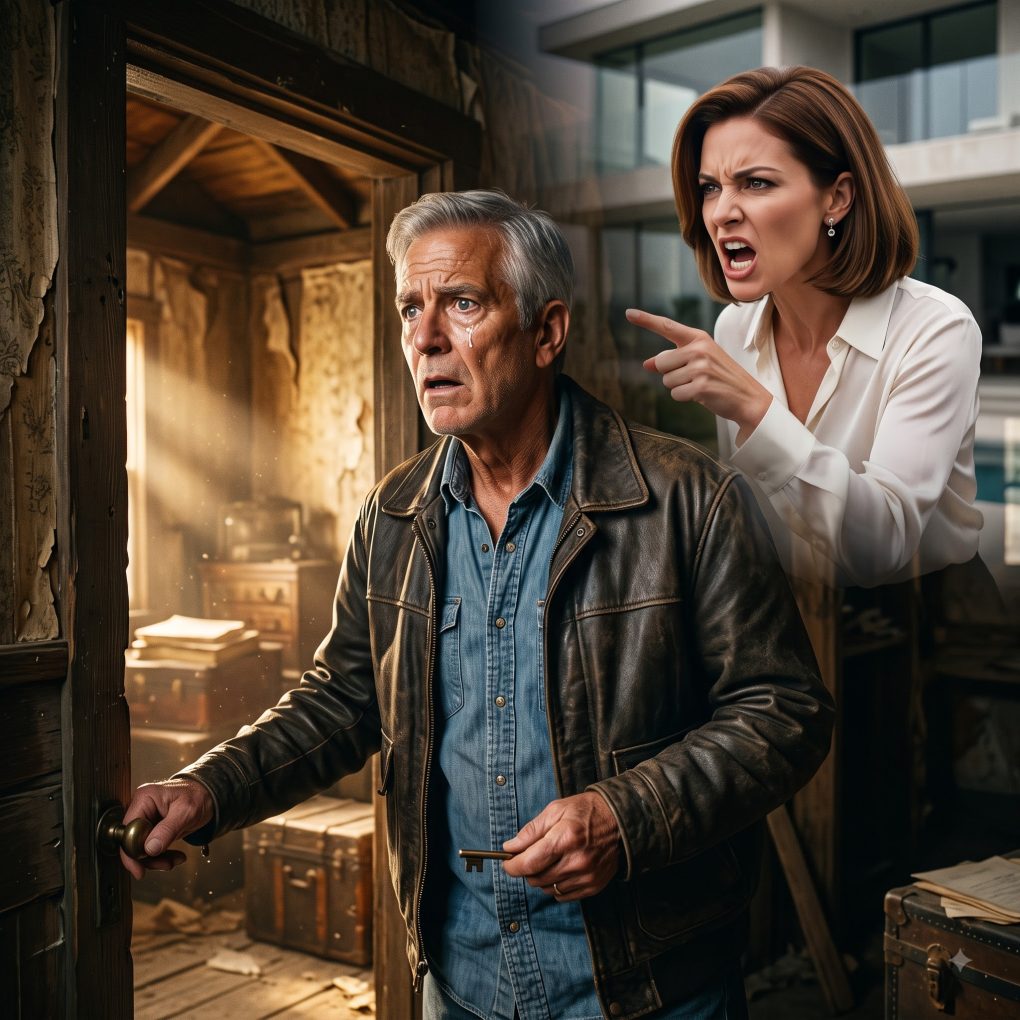
I inherited a rotting mountain lodge while my daughter got a $4 million La Jolla beach house. When she called me a “useless old man” and kicked me out, I drove to the worthless cabin, unlocked the door, and froze at what was waiting inside.
I inherited a rotting mountain lodge while my daughter got a $4 million La Jolla beach house. When she called...

For 10 painful years, my family looked down on me, believing I was just a struggling freelancer. Then, feeling hopeless, they applied for jobs at the Fortune 500 company I secretly owned from the shadows. The look of pure shock on their faces when I walked into the interview shattered their pride forever…
For 10 painful years, my family looked down on me, believing I was just a struggling freelancer. Then, feeling hopeless,...
“This is my house now. You should be grateful we even allow you to stay here,”
“This is my house now. You should be grateful we even allow you to stay here,” my daughter-in-law shouted before...