Cheating Wife Spat, “My Ex Never Said No. That’s a Real Man.” I Handed Her Suitcase & Said…
Cheating Wife Spat, “My Ex Never Said No.
That’s a Real Man.” I Handed Her Suitcase & Said, “Then Go Back to Him.”
My wife compared me to the man she had betrayed me with while carrying his child.
She expected me to apologize for not being enough.
Instead, I carried her suitcase downstairs—and that was when her perfect new life began to crack.
The Sentence That Ended Eight Years
There are sentences that hurt because they are cruel.
Then there are sentences that hurt because they reveal how long someone has secretly despised you.
Melanie stood at the foot of our staircase with one hand pressed against the polished oak banister, staring at me as though I were the disappointing employee in the room instead of her husband.
Her face was flushed from anger, but her posture was almost elegant—back straight, chin high, the same posture she used when presenting quarterly reports at Dunston Regional Holdings.
I had loved that confidence once.
That evening, it looked like contempt wearing expensive perfume.
“My ex never said no,” she spat. “Cal knew how to make things happen.
That’s a real man.”
For several seconds, I heard nothing but the refrigerator humming behind me.
Not the rain tapping against the kitchen windows.
Not the old clock above the fireplace.
Not even my own breathing.
Just that sentence.
My ex never said no.
Cal.
Callum Dunston.
Her boss.
Her former boyfriend.
And, as I had discovered less than six hours earlier, the father of the child growing inside my wife.
I looked at Melanie’s face and realized she had expected the sentence to wound me into submission.
That was her mistake.
Some insults make a man fight harder for a marriage.
Others tell him the marriage is already dead.
I walked past her.
“Where are you going?”
I climbed the stairs without answering.
Our bedroom still smelled faintly of the lavender candle Melanie burned every night before bed.
Her gray silk robe hung over the chair beside the window.
Two photographs sat on the dresser—our wedding day and a picture from our fifth anniversary in Bar Harbor.
I turned both photographs facedown.
Then I opened the closet.
Melanie appeared in the doorway.
“What are you doing?”
I pulled down the large cream-colored suitcase we used for vacations.
Her expression changed.
“Tom.”
I set it on the bed and opened it.
“Pack.”
She laughed once.
Not because anything was funny.
Because she still believed she controlled the room.
“Oh, stop being dramatic.”
I walked to the dresser, removed two empty packing cubes, and placed them inside the suitcase.
“You just told me your ex is the definition of a real man.”
“That isn’t what I—”
“It’s exactly what you said.”
“You pushed me.”
“No.” I finally looked at her. “I asked why you were twelve weeks pregnant when we haven’t slept together in almost four months.”
The color disappeared from her cheeks.
That morning I had followed her silver BMW into Portland after hearing part of a conversation at our neighbor’s barbecue three days earlier.
I had not intended to become the kind of husband who followed his wife.
I had intended to prove myself paranoid.
Instead, I watched Melanie walk out of North Coast Women’s Health smiling into her phone.
“Everything’s perfect,” she had said.
Then she paused beside her car.
“Twelve weeks.”
Another pause.
Her smile softened in a way I had not seen directed at me in years.
“I know, Cal.
I love you too.”
The parking lot had been full of ordinary life.
A woman struggling to buckle a toddler into a car seat.
An elderly man holding an umbrella over his wife.
A delivery truck reversing near the pharmacy.
And inside my pickup, something in me quietly collapsed.
Twelve weeks placed conception around Valentine’s Day.
I had spent that weekend in Bangor repairing water damage at an apartment complex after a pipe burst.
Melanie had told me she had the flu.
She had even sent me a photograph of soup on our kitchen counter.
Apparently deception could be staged with chicken noodles.
When she came home that evening, I confronted her.
At first she denied nothing.
That surprised me more than denial would have.
“Yes,” she had said, removing her earrings at the kitchen island. “It’s Cal’s.”
She said it as if announcing the ownership of a company vehicle.
I stared at her.
“You’re pregnant by another man.”
“I know how pregnancy works, Tom.”
“And that man is your boss.”
“He was part of my life long before you were.”
That was when another piece slid into place.
I had always known Melanie dated Cal Dunston briefly in her twenties.
What she had never told me was that he had recently become her direct superior.
“What happened to ‘Cal and I barely speak outside work’?”
Her mouth tightened.
“Things changed.”
“When?”
She looked away.
That was the first answer she gave me.
Not with words.
With silence.
Now, upstairs, she watched me place the suitcase on our bed.
“You can’t throw me out because you’re upset.”
“I’m not upset.”
“You’re shaking.”
I looked down.
She was right.
My hands were trembling.
But my voice wasn’t.
“That doesn’t mean I’m confused.”
Her eyes narrowed.
“You think this is all my fault?”
I actually smiled.
It came out tired.
“Whose fault would you recommend?”
“Ours.”
There it was.
The word betrayed people hear when the betrayer needs somewhere to put half the guilt.
Ours.
Melanie began pacing.
“You’re never home.”
“I work.”
“You work constantly.”
“I own a construction company.”
“A small construction company.”
The emphasis was surgical.
“Right.”
“Don’t twist this.”
“I’m not twisting anything.”
“You stopped seeing me.”
“I renovated this house because you said it was your dream.”
“I wanted a life, Tom.
Not an endless renovation project.”
I looked toward the hallway.
The house had consumed two years of weekends.
I restored the original pine floors myself because she loved their color.
I rebuilt the porch because she wanted somewhere to drink coffee in summer.
I turned the neglected room above the garage into the office she used during the pandemic.
Apparently love becomes invisible when expressed in lumber.
Melanie crossed her arms.
“Cal understands ambition.”
“So that excuses sleeping with him?”
“He made me feel wanted.”
“You could have left.”
“You would have made it difficult.”
That stopped me.
“How?”
“You would have asked questions.
Wanted counseling.
Wanted months of conversations.
You always need to fix everything.”
Her voice softened, but not kindly.
“I didn’t want to be fixed.”
I nodded.
“And now?”
She placed one hand over her abdomen.
“Now things are complicated.”
“No.
Now they’re simple.”
Her eyes sharpened.
“What does that mean?”
I took three dresses from the closet and laid them inside the suitcase.
“It means you’re leaving.”
“This is my home too.”
“The deed is mine.
Bought three years before we married.
You contributed to household expenses, and your lawyer can discuss whatever marital claim you believe you have with mine.”
That frightened her.
Not enough to show openly.
Enough that she blinked twice.
“You already called a lawyer?”
“I called one after hearing my wife tell another man she loved him.”
“You’re unbelievable.”
“So I’ve been told.”
She stepped closer.
“You’re going to regret this when you calm down.”
“Maybe.”
“Cal can give me things you never could.”
I continued packing.
“He has connections.
He has confidence.
When something needs doing, he does it.
He doesn’t spend three weeks comparing estimates.”
I closed one packing cube.
“Anything else?”
“Yes.”
Her eyes were glossy now.
Anger, not tears.
“My ex never said no.
That’s a real man.”
I stopped.
Then I zipped the suitcase.
I carried it downstairs.
Melanie followed me, suddenly less composed.
“Tom.”
I opened the front door.
Rain blew beneath the porch light.
I placed the suitcase beside her.
Then I looked at the woman I had married eight years earlier.
“If Cal never says no,” I said quietly, “go ask him for a place to live.”
For the first time that night, Melanie had no answer.
Then headlights appeared at the end of our driveway.
A black Bentley turned through the gate.
Melanie’s face went pale.
Because neither of us had called Cal.
And he was already coming.
The Man at My Door
Cal Dunston did not knock.
Men like Cal rarely did anything that suggested they were waiting for permission.
He stepped onto my porch beneath a black umbrella held by another man, tall and square-shouldered, wearing a charcoal suit despite the weather.
Cal was fifty-one, silver-haired, broad through the chest, and carefully handsome in the way wealthy men often become when everyone around them is paid to remove inconvenience.
His eyes moved from me to Melanie.
Then to the suitcase.
“You didn’t tell me you were coming,” Melanie said.
Interesting.
Not What are you doing here?
You didn’t tell me.
Cal ignored her.
“Tom.”
“Cal.”
His gaze settled on my face.
“I think everyone’s emotional.”
I almost admired the audacity.
“You got my wife pregnant.”
His jaw moved slightly.
“And your opening argument is that everyone’s emotional?”
Melanie stepped between us.
“Can we not do this outside?”
I looked toward the neighboring property.
Jenny Morrison’s downstairs lights were suddenly on.
A curtain shifted.
“We’re already doing it outside.”
Cal exhaled.
“I’m not here to provoke you.”
“No?”
“No.”
He gave the umbrella man a glance.
The man stepped backward toward the Bentley.
Cal knew theater.
He understood that appearing reasonable was often more valuable than being reasonable.
“I came because Melanie called me earlier,” he said.
Melanie turned.
“I didn’t call you tonight.”
“Not tonight.”
Something moved across her face.
Cal continued.
“She told me there was a chance you might react badly when you learned about us.”
I looked at Melanie.
She looked away.
Another layer.
“How long have you known she planned to tell me?”
Cal’s pause was almost invisible.
“Several weeks.”
Melanie spoke quickly.
“We were trying to find the right time.”
“There’s a right time to tell your husband you’re carrying another man’s child?”
“No.”
Cal finally sounded almost human.
“There isn’t.”
I studied him.
That admission was smarter than defensiveness.
Cal was dangerous not because he shouted.
Because he understood which truths cost him nothing.
“What do you want?”
“For tonight?
Peace.”
“Then take her.”
Melanie stiffened.
“Stop talking about me like I’m luggage.”
I glanced at the suitcase.
“Ironic choice of metaphor.”
Her eyes flashed.
Cal raised a hand.
“Enough.”
I looked at him.
“This is my house.
You don’t say ‘enough’ here.”
For a fraction of a second, the civilized mask slipped.
Something cold entered his eyes.
Then it vanished.
“You’re right.”
Again, the easy concession.
“I apologize.”
He turned toward Melanie.
“You can stay at the Harbor Hotel tonight.
We’ll sort this out tomorrow.”
Melanie stared at him.
“The hotel?”
The disappointment in her voice was unmistakable.
I understood before she did.
Melanie had imagined leaving my house and entering Cal’s.
She had imagined a penthouse, perhaps.
A guest suite overlooking the bay.
A new beginning with clean sheets and expensive furniture.
Instead, the father of her child had booked her a hotel.
“I thought…” She stopped.
Cal’s expression hardened slightly.
“My situation is complicated.”
“Your situation?”
“My wife doesn’t know yet.”
The rain seemed to grow louder.
I stared at Melanie.
She stared at Cal.
And in that moment, betrayal performed one of its rare acts of fairness.
It surprised the betrayer too.
“You said you were separating,” Melanie whispered.
“I said Lisa and I have had problems.”
“You told me the marriage was over.”
“Emotionally.”
I laughed.
I could not help it.
Cal looked at me.
“What?”
“Nothing.”
“Say it.”
I leaned against the doorframe.
“You two deserve each other.”
Melanie’s face burned.
Cal’s jaw tightened.
She turned on him.
“You said you were filing after the promotion announcement.”
“I am.”
“When?”
“Melanie.”
“When?”
His silence answered.
She stepped backward.
The suitcase stood between them.
An object neither wanted.
Finally, Cal said, “Get in the car.”
She looked at him as if he had struck her.
Then she looked at me.
Perhaps she expected sympathy.
Perhaps she expected me to invite her back inside now that her romantic escape had revealed its first crack.
I did neither.
Melanie grabbed the suitcase handle.
As she passed me, she whispered, “You’re enjoying this.”
“No.”
I meant it.
“I’m learning from it.”
She stopped.
“What’s that supposed to mean?”
“It means five minutes ago, Cal was your example of a man who never says no.”
I looked toward the Bentley.
“He just said no to letting you through his front door.”
Her mouth opened.
Nothing came out.
She dragged the suitcase through the rain.
Cal watched her approach the car.
Then he looked back at me.
“This doesn’t need to become ugly.”
“It already is.”
“I mean between you and me.”
“There is no between you and me.”
“You own Crane Construction.”
The subject change was so abrupt it chilled me.
“Yes.”
“You’re bidding on the new municipal library renovation.”
I said nothing.
Cal smiled faintly.
“Good project.”
That was when I remembered Dunston Regional Holdings owned the development firm partnering with the town.
My business depended on that contract more than I wanted to admit.
Cal knew it.
Of course he knew it.
“Good night, Tom.”
He turned.
“Cal.”
He looked back.
“If my bid disappears tomorrow, I’ll know why.”
His smile widened slightly.
“Sometimes bids disappear because better companies submit better numbers.”
The Bentley drove away.
I remained beneath the porch light long after its taillights vanished.
The suitcase was gone.
So was my wife.
Yet the confrontation had left something behind.
A threat.
At the next morning, my project manager called.
“Tom,” Danny said, sounding confused, “did you withdraw us from the library bid?”
I sat upright in bed.
“No.”
“Well, somebody did.”
And suddenly the affair was no longer only about my marriage.
The First Thing Money Bought
By nine that morning, I was sitting across from Laura Bennett in a second-floor law office above a pharmacy in Portland.
Laura had handled two contract disputes for Crane Construction and one ugly mechanics-lien case that nearly cost me six figures.
She was fifty-eight, wore navy suits regardless of season, and possessed the rare ability to make silence feel like cross-examination.
She listened without interrupting.
Affair.
Pregnancy.
Cal’s visit.
The library bid.
When I finished, she removed her glasses.
“First, your marriage and your business are now separate legal problems.”
“They feel pretty connected.”
“They may be.
Feeling it and proving it are different.”
She wrote three words on a yellow pad.
Document.
Don’t retaliate.
I stared at them.
“Is that your legal advice?”
“It’s my advice for staying out of jail, bankruptcy court, and bad newspaper photographs.”
I almost smiled.
Almost.
Laura leaned back.
“If Dunston interfered with a public procurement process because you threw his pregnant mistress out of your home, that is potentially serious.
But if you accuse him without evidence, he will bury you in litigation while smiling for cameras.”
“So what do I do?”
“Become boring.”
I frowned.
“Boring?”
“Save everything.
Emails.
Bid submissions. timestamps.
Call logs.
Bank records.
Security footage.
Do not threaten him.
Do not post about your wife.
Do not send angry messages.”
She pointed toward me.
“And do not punch anybody.”
“I wasn’t planning to.”
“Every betrayed husband says that before someone posts the arrest video.”
Fair.
She opened another file.
“Now the divorce.”
The word felt strangely clean.
Divorce.
A procedure.
Forms.
Deadlines.
Signatures.
Things that could be completed.
“She’ll likely claim marital contribution toward improvements to the property,” Laura said. “That does not mean she owns half the house.
We document premarital ownership, renovation expenses, and contributions.”
“The baby isn’t mine.”
“Do not sign anything acknowledging paternity.
Once the child is born, genetic testing can establish that formally if necessary.”
“I know who the father is.”
“Courts prefer evidence over confidence.”
Document.
Again.
I left Laura’s office carrying a folder thick enough to make my marriage feel like a business failure.
Outside, my phone showed six missed calls from Melanie.
I ignored them.
Then a seventh came.
I answered.
“What?”
“You got served too?”
Her voice sounded strained.
“With what?”
“The company announcement.”
I stopped walking.
“What announcement?”
There was silence.
“Melanie?”
“Cal postponed my promotion.”
I stared across Congress Street at a delivery driver unloading boxes.
“Why are you telling me?”
“Because this is your fault.”
I actually closed my eyes.
“You slept with your married ex while married to me, became pregnant, and your promotion being delayed is somehow my fault?”
“You embarrassed him.”
“At my house?”
“You challenged him.”
“By refusing to raise his child?”
“You don’t understand how men like Cal operate.”
“No.
I’m beginning to.”
Her breathing changed.
Then she said, “He thinks someone inside the company talked.”
“About what?”
Silence.
There it was again.
The answer she gave by withholding one.
“Melanie.”
“It’s nothing.”
“What does Cal think someone talked about?”
“It’s work.”
“You called me.”
“I shouldn’t have.”
She hung up.
I stood on the sidewalk staring at my phone.
An hour later, Danny called from the office.
“We found the withdrawal.”
“Who sent it?”
“That’s the weird part.”
My stomach tightened.
“The email came from your account.”
“That’s impossible.”
“I know.”
“I was asleep.”
“Sent at a.m.”
The night Cal visited.
I drove back to Crane Construction.
My company operated from a converted brick warehouse near the edge of town.
We were not glamorous.
Twelve full-time employees, subcontractors when projects expanded, two old pickups, one new excavator I still worried about paying off.
But it was mine.
I had started with a borrowed truck and a tool belt at twenty-six.
Calling it “small-time contractor work” had been Melanie’s favorite insult lately.
Small-time paid our mortgage.
Small-time paid for her MBA classes.
Small-time renovated the home she had used as a backdrop for Instagram photographs.
Danny pulled up the email.
The withdrawal looked legitimate.
My signature block.
My account.
My wording.
But one detail was wrong.
I never wrote “kindly withdraw.”
Not once in my life.
“Check the login history.”
Danny did.
The account had been accessed from an IP address associated with Dunston Regional Holdings.
We stared at each other.
“Print it,” I said.
Danny’s eyebrows rose.
“You thinking what I’m thinking?”
“I’m thinking my lawyer told me to become boring.”
I printed three copies.
Then I called Laura.
By noon, the town procurement director had restored our bid pending investigation.
By two, Dunston Regional’s legal department emailed me claiming the login was likely a technical routing error.
At three fifteen, Cal called personally.
I answered.
“Tom.”
“Cal.”
“I heard there was confusion with your bid.”
“Funny word.”
“I’m told your company remains eligible.”
“For now.”
A pause.
“You should be careful about making allegations based on incomplete information.”
“I haven’t made any allegations.”
Another pause.
That bothered him.
He had expected anger.
Anger could be used.
Silence could not.
“Good,” Cal said. “Because this town is small.
Reputations matter.”
“Yes.”
“I’m glad we understand each other.”
“We don’t.”
His voice cooled.
“What’s that supposed to mean?”
“It means you’re talking about reputation.”
I looked at the printed login record in front of me.
“I’m talking about timestamps.”
I hung up.
Ten minutes later, an unfamiliar number texted me.
You need to know why Cal brought Melanie back into his company.
Then another message appeared.
The baby isn’t the biggest secret.
What Melanie Had Been Trading
The anonymous texter refused to speak over the phone.
Instead, they instructed me to meet at a diner off Route 1, forty minutes south of town.
Laura hated the idea.
“Public place,” I told her.
“Daylight?”
“Yes.”
“Send me the location.”
“Already did.”
She sighed.
“You’re becoming trainable.”
The woman waiting for me was named Rebecca Sloan.
Forty-two.
Former finance manager at Dunston Regional.
She sat in the back booth with untouched coffee and both hands wrapped around the mug.
“I’m not doing this because I like you,” she said.
“We’ve never met.”
“Exactly.”
She glanced toward the window.
“I’m doing it because Cal Dunston has spent fifteen years making people believe the cost of opposing him is higher than the cost of obeying him.”
I said nothing.
Rebecca studied my face.
“He had you followed yesterday.”
That got my attention.
“How do you know?”
“I still have friends inside.”
“What do you want?”
“For you to understand what your wife stepped into.”
My chest tightened.
“Melanie made her choices.”
“I know.”
Rebecca looked almost relieved that I said it.
“She wasn’t seduced by Cal, Tom.
Not in the innocent sense.”
“I didn’t think she was.”
“She approached him.”
I sat very still.
“When?”
“Last November.”
Four months before the pregnancy.
“Why?”
“She wanted the regional vice president position.”
Rebecca opened a thin folder.
Inside were printed emails.
I did not touch them.
“Where did you get these?”
“They were included in documents my attorney preserved during my wrongful-termination case.”
My pulse increased.
“Why were you fired?”
“Because I questioned vendor payments.”
There it was.
The other secret.
Rebecca continued.
“Cal had been steering maintenance and renovation work toward three companies.
All three were connected through shell entities to people close to him.”
“Construction companies?”
“Yes.”
My thoughts moved immediately to the library bid.
“Melanie knew?”
“She knew enough.”
Rebecca slid one email toward me.
It was from Melanie to Cal.
I can make the Crane numbers look less competitive if we need room for Hartwell.
Tom never reads the administrative language closely.
For several seconds, the letters seemed to rearrange themselves.
Crane numbers.
My company.
My wife had discussed manipulating my bids.
“When was this?”
“January.”
Before Valentine’s Day.
Before the pregnancy.
Before Cal had supposedly rekindled some irresistible old love.
I read the email again.
My hands stayed flat against the table.
That took effort.
Rebecca watched me.
“You okay?”
“No.”
“Good answer.”
Another email.
Melanie again.
I did what you asked on the North Harbor estimates.
You owe me dinner somewhere Tom won’t recognize anyone.
The date was December 14.
I remembered that night.
Melanie had told me she was attending Sasha’s birthday dinner.
She came home after midnight smelling like red wine.
I had been asleep on the couch with construction drawings across my chest.
She kissed my forehead.
Or I thought she had.
“You said she approached him.”
Rebecca nodded.
“She started feeding him information from your company.”
“Why?”
“To demonstrate loyalty.”
The words landed harder than adultery.
Sex was personal betrayal.
This was deliberate.
Calculated.
She had used our marriage as an asset in negotiations with another man.
“What did she get?”
“Access.
Better accounts.
A promise of promotion.”
“And then?”
Rebecca’s expression changed.
“Then Cal remembered he used to sleep with her.”
I looked away.
Outside, cars moved through wet afternoon traffic.
Normal people heading normal places.
Rebecca lowered her voice.
“You need to understand something.
Cal doesn’t fall in love.
He acquires leverage.”
“The child?”
“I don’t know what he feels about the baby.”
That was the first uncertainty she admitted.
It made everything else more credible.
“Why send me the message?”
Rebecca’s fingers tightened around the coffee mug.
“Because yesterday Cal’s attorneys contacted me.”
“About your lawsuit?”
“They offered to settle.”
“That sounds good.”
“They offered triple what I requested.”
I understood.
“In exchange for silence.”
“And destruction of all retained documents.”
I looked down at the emails.
“You kept copies.”
“My lawyer kept legally obtained discovery materials we are permitted to retain.”
She emphasized the words.
Careful.
Prepared.
Not revenge.
Evidence.
“What do you want from me?”
“Nothing.”
“No one wants nothing.”
A sad smile crossed her face.
“I want someone else to refuse to be afraid.”
My phone buzzed.
Melanie.
Again.
I declined the call.
Rebecca noticed.
“She’ll eventually realize Cal is protecting himself.”
“She chose him.”
“That doesn’t mean he chose her.”
I gathered the papers only after Rebecca confirmed I could provide copies to Laura.
Before I stood, she said, “There’s one more thing.”
Of course there was.
“There was a closed strategy meeting three weeks ago about the library project.”
“Who attended?”
“Cal.
Melanie.
Grant Morrison from corporate security.
Two executives.”
My body went cold at Grant’s name.
I had seen him holding Cal’s umbrella.
“What was discussed?”
“I don’t know everything.”
Rebecca leaned forward.
“But afterward, a friend in IT was ordered to create temporary administrative access to your company portal.”
I thought of the a.m. withdrawal.
“Can your friend prove it?”
“She says she can.”
“Will she?”
Rebecca looked toward the diner entrance.
“If she believes she’ll survive telling the truth.”
That evening, I arrived home after dark.
The porch light was off.
I knew I had left it on.
I stopped the truck at the bottom of the driveway.
My front door stood slightly open.
I called 911 before entering.
Nothing appeared stolen.
The television remained mounted on the wall.
My laptop sat on the desk.
Cash remained in a kitchen drawer.
But someone had opened every filing cabinet in my home office.
Every drawer.
Every folder.
They were not looking for valuables.
They were looking for documents.
On the kitchen counter sat one object.
A photograph from my wedding day.
Melanie beside me in white.
Someone had placed a black line through my face.
Underneath it were four handwritten words.
Take the hint, contractor.
For the first time since discovering the affair, anger was not the strongest thing I felt.
Fear was.
And fear, unlike humiliation, required a different kind of courage.
The Night I Stopped Fighting Alone
Old Pete Hoffman had been a county sheriff’s deputy for twenty-eight years before retirement.
He lived five miles outside town in a cedar cabin filled with fishing gear, outdated newspapers, and photographs of a wife who had died eleven years earlier.
Pete looked at the threatening photograph for approximately three seconds.
Then he looked at me.
“You called the cops?”
“They’re processing the house.”
“Good.”
“Cal has friends in town government.”
“Probably.”
“And maybe law enforcement.”
“Possibly.”
“You still think calling was good?”
Pete poured coffee.
“Especially then.”
I frowned.
“You hide from a corrupt system, you make corruption stronger.
You document every failure and force people to put their names on decisions.”
Laura would have liked him.
Pete pushed a mug toward me.
“You carrying?”
“No.”
“Good.”
“You’re the first retired cop I’ve met who says that.”
“You’re angry, scared, sleep-deprived, and getting threatened by rich idiots.”
He sipped his coffee.
“Worst possible time to carry something because it makes you feel brave.”
I sat back.
“You always this comforting?”
“Only with friends.”
That word hit harder than expected.
Friend.
For days, I had been thinking in terms of betrayal.
Who lied.
Who cheated.
Who threatened.
Who watched.
I had forgotten that lives are also built from the people who stay.
Danny at work had quietly changed every company password.
Laura answered my calls at ridiculous hours.
Pete now insisted I sleep at his cabin until cameras and alarms were installed at my house.
Pain narrows vision.
It makes enemies look enormous and allies invisible.
The next morning, Detective Maria Ortega called.
The break-in had produced a partial fingerprint.
Not enough for a match yet.
But a neighbor’s security camera captured a dark SUV leaving my road at 11:48 p.m.
The license plate was unreadable.
The vehicle model was not.
Cadillac Escalade.
Grant Morrison drove one.
I gave her the name.
She did not react.
“Why would Mr.
Morrison enter your house?”
“I can’t prove he did.”
“Good.”
I paused.
“Good?”
“You answered the question I asked rather than the question you wanted me to ask.”
She slid a card across her desk.
“If Dunston or anyone associated with him contacts you, save it.”
Document.
Apparently every competent person in Maine had joined a conspiracy to make me patient.
Melanie called as I left the station.
This time I answered.
“What?”
“Where are you?”
“Why?”
“I’m at the house.”
I stopped.
“What are you doing there?”
“I still have things inside.”
“The police sealed my office.”
Silence.
“You called the police?”
“My house was broken into.”
“Oh my God.”
Her reaction sounded genuine.
That almost made it worse.
“You didn’t know?”
“Know what?”
“Someone broke in looking for files.”
“No.”
She lowered her voice.
“Tom, listen to me.
You need to stop.”
“Stop what?”
“Digging.”
My grip tightened around the phone.
“You just said you didn’t know.”
“I didn’t know about the break-in.”
“But you know there’s something to dig into.”
She exhaled.
“Cal’s under pressure.”
“From what?”
“I can’t talk about it.”
“You keep saying that like you’re protecting a state secret.”
“You don’t understand.”
“Then help me.”
Silence.
I waited.
Finally, she whispered, “There are contracts.”
“What contracts?”
“Tom…”
“You interfered with my bids.”
Another long silence.
That one confirmed it.
I closed my eyes.
“You did.”
“I never meant for you to lose the company.”
“That is an incredibly specific denial.”
“I thought Cal was just using your internal numbers to make his preferred vendors more competitive.”
“Those are called rigged bids, Melanie.”
“I know that now.”
“You have an MBA.”
“Don’t patronize me.”
I laughed without humor.
“You gave my confidential business information to your lover and I’m patronizing you?”
“He wasn’t my lover when it started.”
Interesting.
“When did it start?”
Silence.
“November?”
She inhaled sharply.
Rebecca had been right.
“How do you know that?”
“Keep talking.”
“I only gave him estimates.”
“For a promotion?”
“He said I needed to demonstrate I could make difficult decisions.”
“And sacrificing your husband’s company qualified?”
“You were doing fine.”
“Unbelievable.”
“You don’t understand what it was like.”
There it was again.
Her justification always required me to inhabit her discomfort while she never visited mine.
“Cal had spent years telling me I wasn’t ambitious enough when we dated,” she said. “When he hired me, I wanted him to see that I wasn’t the same twenty-four-year-old girl he left.”
That stopped me.
Not because it excused anything.
Because it revealed something ugly and sad.
This entire disaster had roots older than our marriage.
“You went back to him to prove something.”
“I didn’t go back to him.”
“You gave him my business.”
Her voice cracked.
“I wanted to be someone he regretted losing.”
“And what was I?”
She did not answer.
That silence hurt more than any insult.
I spoke quietly.
“What was I while you were trying to impress him?”
“Tom.”
“Was I your husband?
Or evidence that another man had made a mistake?”
She began crying.
For once, I didn’t rush to comfort her.
“I loved you.”
“I know.”
“No.”
My voice remained calm.
“You knew I loved you.
Those aren’t the same thing.”
She stopped crying.
Then she whispered, “Cal knows you’ve been talking to Rebecca.”
My body went still.
“How?”
“I don’t know.”
“Melanie.”
“I swear.”
“Why are you telling me?”
“Because Grant was in his office this morning.”
I looked across the parking lot toward my truck.
“And?”
“I heard Cal say, ‘He should have understood the first warning.’”
Cold moved through my stomach.
“What first warning?”
“I don’t know.”
“Did Cal tell someone to break into my house?”
“I don’t know.”
“Did he order Grant to threaten me?”
“I said I don’t know!”
Her voice rose.
Then dropped.
“But I’m scared.”
“For yourself?”
“For everyone.”
“Melanie, go somewhere public.
Call Detective Ortega.
Tell her exactly what you heard.”
“No.”
“Why?”
“Because if I cooperate, I lose everything.”
I almost shouted.
Instead, I looked at Pete’s advice scribbled in my notebook.
Do not let someone else’s panic choose your behavior.
“You already lost everything you thought Cal was giving you.”
“That’s not true.”
“Then where are you staying?”
Silence.
“Sasha’s guest room?”
Another silence.
“How’s the promotion?”
Nothing.
“And Cal still hasn’t left Lisa, has he?”
Melanie hung up.
Three hours later, Detective Ortega called.
“We found Grant Morrison.”
I stood from my desk.
“And?”
“He says he was nowhere near your property.”
“Do you believe him?”
“I believe evidence.”
“What evidence?”
“We obtained traffic-camera footage.”
My heart accelerated.
“The Escalade was on your road.”
“Then arrest him.”
“It wasn’t Grant driving.”
I frowned.
“Who was?”
“We’re still identifying the driver.”
She hesitated.
“But Mr.
Morrison gave us something else.”
“What?”
“A recording.”
“Of what?”
“Cal Dunston telling him that you needed to be frightened into dropping the procurement complaint.”
I gripped the edge of my desk.
“Grant recorded his boss?”
“Apparently loyalty has limits.”
“Why is he cooperating?”
Detective Ortega’s voice became dry.
“Because Mr.
Dunston fired him this morning.”
That was when the first piece of Cal’s armor came loose.
And desperate men rarely notice what falls out with it.
The Woman He Never Planned to Choose
Melanie appeared at Laura Bennett’s office two days later carrying no lawyer and wearing the same camel-colored coat she had owned for five years.
No designer maternity dress.
No polished corporate armor.
Just Melanie.
Tired.
Pale.
Afraid.
Laura looked at me.
“This was not scheduled.”
“I know.”
Melanie glanced between us.
“I need ten minutes.”
Laura folded her arms.
“Anything you say involving potential crimes may affect your legal position.”
“I know.”
“Do you?”
Melanie swallowed.
“Yes.”
We moved into the conference room.
She placed her phone on the table.
For several seconds, nobody spoke.
Then Melanie looked at me.
“Cal fired me.”
I felt nothing.
That frightened me more than satisfaction would have.
“When?”
“Yesterday.”
“Reason?”
“Violation of company ethics policy.”
I stared.
Even Laura’s eyebrows moved.
Melanie gave a hollow laugh.
“He says my relationship with him created reputational risk.”
There are moments when hypocrisy becomes so complete it almost resembles art.
“You’re surprised?” I asked.
“Yes.”
At least she admitted it.
“He told me he loved me.”
Laura remained silent.
I said, “He told you what kept you useful.”
Melanie flinched.
“I know that now.”
“Do you?”
She opened her phone.
“There are messages.”
Laura immediately raised a hand.
“Before you show us anything, are these lawfully in your possession?”
“They’re mine.”
“Your account?”
“Yes.”
“Not accessed from his phone?”
“No.”
Laura nodded.
“Continue.”
Melanie scrolled.
“Cal started getting nervous after Tom’s bid was reinstated.
He wanted me to delete conversations.”
“Did you?”
“Some.”
Laura’s expression hardened.
“Do not delete anything else.”
“I stopped.”
“Why?”
Melanie looked at me.
“Because he told me there was no room for me at his house.”
I almost laughed.
Not because it was amusing.
Because the suitcase on my porch returned to me in perfect detail.
Go ask him for a place to live.
She had.
He had said no.
“I went to see him,” Melanie continued. “Lisa was away visiting her sister.
I thought…”
Her voice broke.
“I thought if I showed up, he’d understand that I had nowhere else.”
“And?”
“He wouldn’t let me inside.”
The room became very quiet.
“He stood in the driveway and told me I was becoming unstable.”
Melanie wiped beneath one eye.
“He said I needed to stop creating scenes.”
I remembered every night she had accused me of being dramatic.
The language of manipulation travels easily between people who share methods.
“What happened next?” Laura asked.
“I told him the baby was his responsibility.”
Melanie’s face changed.
“That’s when he said something strange.”
“What?”
“He asked whether I was certain.”
I stared at her.
“What does that mean?”
“I don’t know.”
“Is there any chance he isn’t the father?”
Her eyes flashed.
“No.”
“Melanie.”
“No.
There isn’t.”
Her anger sounded almost like the woman I remembered.
“Cal is the only man I slept with.”
I looked away.
Strange sentence to hear from one’s wife.
Technically reassuring.
Emotionally useless.
“He told me he wanted a DNA test before making any financial commitments,” Melanie said.
Laura nodded.
“That is legally reasonable.”
Melanie stared at her.
“He spent months talking about our child.”
“Emotion and legal responsibility are separate.”
“I know.”
“No,” Laura said calmly. “You are beginning to.”
Melanie’s eyes filled.
Then she looked at me.
“I was awful to you.”
I said nothing.
“I need you to know I understand that.”
“Why now?”
“Because I’m sitting on the other side of it.”
There it was.
Not redemption.
Recognition.
Sometimes people understand pain only after receiving their own version.
“I kept telling myself you were holding me back,” she said. “That you were too cautious.
Too ordinary.
That Cal was the kind of man who opened doors.”
Her mouth trembled.
“He opened doors because he expected people to crawl through them.”
I looked at her for a long time.
“You told me he never said no.”
“I know.”
“You called that being a real man.”
“I know.”
“And then the first time saying yes cost him something, he said no to you.”
She lowered her head.
“I know.”
The satisfaction I once imagined feeling never came.
There was only exhaustion.
“What do you want from me?”
Melanie pushed the phone across the table.
“Use it.”
Laura did not touch it.
“What’s on there?”
“Messages about bids.
Vendor payments.
Cal telling Grant to ‘manage Tom.’ A voice memo from a meeting.”
I stared.
“You recorded him?”
“After he told me to delete everything, I started recording conversations.”
“Why?”
Her eyes met mine.
“Because I finally realized I was disposable.”
That answer I believed.
Not noble.
Not heroic.
Human.
Laura took control immediately.
She arranged for forensic preservation of the phone and contacted Detective Ortega.
Before Melanie left, she stopped beside my chair.
“I don’t expect forgiveness.”
“Good.”
The word came out harsher than intended.
She accepted it.
“I also don’t expect you to take me back.”
“Good.”
Another flinch.
Then she reached the door.
“Tom?”
I looked up.
“When I said you weren’t a real man…”
I felt my jaw tighten.
“I said it because I knew it would hurt you.”
“I know.”
“I wanted you to feel small because you were making me face what I’d done.”
Her eyes were red.
“That was the cruelest thing I’ve ever said to anyone.”
“No.”
She waited.
I stood.
“The cruelest thing wasn’t saying Cal was better.”
“What was?”
“Making me spend years thinking loving you quietly meant I wasn’t loving you enough.”
She covered her mouth.
I did not comfort her.
Some truths are not punishments.
They are boundaries.
As Melanie left the office, Laura’s assistant entered carrying the forensic technician’s preliminary download.
“Laura?”
“What?”
“You should see this.”
She placed a printed message on the conference table.
It was from Cal to Grant.
Sent the night Cal came to collect Melanie.
If Crane starts pulling records, scare him.
No permanent damage.
I need him functional enough to lose the library bid legitimately.
Below it was another message.
From Melanie.
Leave Tom out of this.
He doesn’t know anything yet.
I stared at her name.
For the first time since the affair began, I saw evidence that Melanie had tried to protect me.
Too late.
Too weakly.
After helping create the danger herself.
But she had tried.
And that complicated everything.
Then Laura turned the page.
Her face changed.
“What?”
She looked at me.
“There’s another message.”
“From who?”
“Cal.”
I read it.
Once the baby issue is settled, Melanie is expendable too.
The affair had destroyed my marriage.
But Cal had never intended to build another one from the ruins.
When Fear Changed Sides
The investigation expanded quietly at first.
That was intentional.
Detective Ortega did not want Cal to understand how much evidence existed before search warrants were ready.
Laura advised me to say nothing publicly.
Danny Sullivan, a county reporter I knew from construction zoning meetings, called three times asking whether rumors about procurement manipulation involved my company.
I gave him the same answer each time.
“I’m cooperating with investigators.”
“Off the record?”
“No.”
“Background?”
“No.”
“You’re no fun anymore, Crane.”
“My lawyer says boring keeps me free.”
“Your lawyer sounds expensive.”
“She is.”
For two weeks, normal life attempted to reassert itself.
I went to work.
Reviewed invoices.
Met clients.
Repaired a leaking porch roof for an elderly couple after our subcontractor canceled.
There was comfort in physical problems.
Wood rotted.
Pipes leaked.
Foundations settled.
Nothing pretended to love you while weakening your structure.
The municipal library contract remained frozen.
That hurt.
I had payroll to meet.
One morning Danny—my project manager, not the journalist—walked into my office and placed a folder on my desk.
“What’s this?”
“Resignations.”
My stomach dropped.
“How many?”
“Three.”
I opened the folder.
Employees worried Crane Construction would be blacklisted.
One had a newborn.
Another cared for his mother.
I could not blame them.
“This is what Cal wanted,” I said.
Danny leaned against the doorframe.
“Maybe.”
“Maybe?”
“Or maybe this is the part where we find out whether the company is only you.”
I looked at him.
“What does that mean?”
“You’ve been acting like this whole thing is Tom versus Cal.”
He gestured toward the warehouse.
“There are eleven people out there whose paychecks are attached to your decisions.”
“I know that.”
“Do you?”
The question stung because it came from loyalty.
Danny continued.
“I’m not telling you to quit.”
“Sounds like you are.”
“I’m telling you revenge and responsibility look different when other people have mortgages.”
“I’m not taking revenge.”
“Good.”
He nodded toward the folder.
“Then prove it.”
That afternoon, I called a company meeting.
No heroic speech.
No promises that everything would be fine.
I showed them what I legally could.
The bid withdrawal.
The restored eligibility.
The fact that law enforcement was investigating interference.
Then I gave them options.
“If anyone needs to leave because this threatens your family, I’ll give you a reference and pay out unused leave.”
Nobody spoke.
“I mean it.”
One carpenter raised his hand.
“Are we going under?”
“I don’t know.”
That silence was harder than pretending confidence.
“We have six months of operating reserve if current jobs stay on schedule.
Longer if I cut my salary.”
Danny frowned.
“How much?”
“All of it if necessary.”
The room shifted.
I continued.
“I’m not asking anyone to become collateral damage in my divorce.
If Crane Construction survives, it survives because the work deserves to survive.”
A young estimator named Marcus spoke.
“My dad worked for Dunston on one of those warehouse projects.”
Everyone turned.
Marcus rubbed his palms against his jeans.
“They shorted his crew.”
“How?”
“Change orders disappeared.
Men were told to accept half payment or never work in the county again.”
“Can he prove it?”
Marcus hesitated.
“He kept everything.”
Another layer.
Then another employee spoke.
Then another.
Stories emerged.
Payments delayed.
Contractors pressured.
Permits mysteriously accelerated for Dunston affiliates and stalled for competitors.
No single story looked like an empire.
Together, they looked like architecture.
That evening, I called Danny Sullivan the reporter.
“Still interested?”
He became very quiet.
“Yes.”
“You publish nothing until lawyers vet the evidence.”
“Agreed.”
“No anonymous accusations presented as fact.”
“Agreed.”
“No mention of Melanie’s pregnancy unless it becomes legally relevant.”
He hesitated.
“That’s part of public interest.”
“No.
The corruption is public interest.
My wife’s uterus isn’t.”
After a pause, he said, “Fair.”
That surprised him.
It surprised me too.
Earlier, I had wanted everyone to know what Melanie had done.
Humiliation had seemed like justice.
Now I understood that exposure without purpose becomes entertainment.
Cal’s corruption mattered.
My marriage was simply where I stumbled across it.
The article took another three weeks.
When it finally ran, the headline was restrained.
Records Raise Questions About Dunston Contracting Practices
No screaming accusation.
No gossip.
Just documents.
Login data.
Vendor connections.
Witness accounts.
Campaign contributions.
Public records.
By noon, state investigators confirmed an active review.
By evening, two municipal officials announced temporary recusals from procurement decisions.
The next morning, Dunston Regional’s board placed Cal on administrative leave.
Fear changed sides quickly after that.
People who had once crossed the street to avoid offending him suddenly remembered things.
A former accountant produced ledgers.
A contractor had voicemails.
An assistant retained scheduling records.
Grant Morrison surrendered messages showing Cal had directed intimidation against several people—not only me.
The story grew beyond anything I had imagined.
Then at on a Thursday morning, Detective Ortega called.
“We executed warrants.”
My heart beat hard.
“On Cal?”
“His office and residence.”
“Arrested?”
“Not yet.”
I exhaled.
“What happens now?”
“We follow evidence.”
Always the same answer.
Evidence.
Not anger.
Not humiliation.
Evidence.
After we hung up, I drove to work.
Halfway there, I received another call.
Melanie.
I almost ignored it.
Something made me answer.
“Tom.”
Her voice was shaking.
“What happened?”
“Cal’s gone.”
“What do you mean?”
“No one can find him.”
I pulled onto the shoulder.
“Call Ortega.”
“I did.”
“Then stay somewhere safe.”
“You don’t understand.”
Her breathing quickened.
“He called me at four this morning.”
“What did he say?”
“He said I ruined him.”
Cold spread through my chest.
“What else?”
“He said if I had kept my mouth shut, we could have had everything.”
I stared through the windshield.
“And then?”
Melanie began crying.
“He said, ‘You think Tom saved you?
Ask him what happens when this is over and you’re alone with my child.’”
I closed my eyes.
Manipulation until the end.
“What did you say?”
“I told him you weren’t responsible for me.”
That surprised me.
“Good.”
“He laughed.”
She swallowed.
“Then he said goodbye.”
Not see you.
Goodbye.
I called Ortega immediately.
Cal’s Toyota was found three hours later at a private airfield outside Augusta.
His passport was in the glove compartment.
He had not boarded a plane.
But investigators found something else inside the trunk.
A duffel bag.
Cash.
A second phone.
And photocopies of every document Melanie had given authorities.
Someone inside the investigation had been feeding Cal information.
The corruption had not ended.
It had only moved closer.
The Last Person I Expected
For forty-eight hours, nobody knew where Cal Dunston was.
State police checked family properties.
Federal investigators monitored travel records.
Local television crews parked outside his company headquarters.
Reporters finally learned about Melanie and camped near Sasha’s townhouse.
I refused every interview.
Not because I had nothing to say.
Because I had finally learned that saying everything you feel is not the same as telling the truth effectively.
Detective Ortega called me Saturday morning.
“We identified the leak.”
“Who?”
“You’re going to want to sit down.”
I sat.
“Grant?”
“No.”
“Someone at Dunston?”
“No.”
A pause.
“Councilman Richard Hale.”
I knew the name well.
Hale chaired the municipal development committee.
He had attended my wedding.
He had shaken my hand after my father died.
He had called Crane Construction “the backbone of local business” at a chamber dinner.
“How long?”
“Financial records suggest years.”
My stomach turned.
Cal had not bought half the town.
He had bought the parts that signed papers.
“Hale warned him about the warrants?”
“We believe so.”
“Arrested?”
“Yes.”
“Does he know where Cal is?”
“He claims he doesn’t.”
I rubbed my forehead.
“Do you believe him?”
“You know my answer.”
Evidence.
I almost smiled.
Then Ortega said, “There’s something else.”
Of course.
“Hale says Dunston kept an emergency property under a company called North Pine Holdings.”
“Where?”
“Near Griggs Mill.”
My house sat on Griggs Mill Road.
“How near?”
“Three miles.”
Every muscle in my back tightened.
“What kind of property?”
“An old textile warehouse.”
I knew it.
Everyone did.
The abandoned mill had been closed for two decades.
Teenagers broke windows there.
Photographers used it for moody engagement pictures.
Construction companies occasionally discussed redevelopment, but environmental cleanup costs made the numbers impossible.
“I’m staying at Pete’s.”
“Stay there.”
“Was planning to.”
“Tom.”
Something in her voice stopped me.
“Yes?”
“Do not become curious.”
“I’m not stupid.”
“Intelligent people become stupid when they confuse curiosity with closure.”
Fair.
I stayed.
At least until Melanie disappeared.
Sasha called at eleven thirty that night.
“She’s gone.”
I stood.
“What do you mean gone?”
“She left about an hour ago.”
“Where?”
“I don’t know.”
“Did she say anything?”
“She got a message.”
“From Cal?”
“I couldn’t see.”
“Call Ortega.”
“I already did.”
I grabbed my coat.
Pete stepped out of the hallway.
“Where you going?”
“Melanie’s missing.”
“That doesn’t answer the question.”
“I don’t know.”
He stared at me.
Then said, “Good.
Keep it that way.”
My phone buzzed.
A text from Melanie.
I’m sorry.
I need to fix this myself.
Then a photograph.
Dark.
Blurry.
But recognizable.
Broken windows.
Brick walls.
The Griggs Mill.
My first instinct was immediate.
Drive.
Find her.
Confront him.
The primitive mathematics of betrayal.
One man.
One enemy.
One final meeting.
Instead, I called Ortega.
“I know where she is.”
Police reached the mill before I did because Ortega ordered me not to approach until officers secured the property.
For once, I listened.
Blue lights flashed against dead trees.
The old factory rose behind them like the skeleton of another century.
Melanie emerged twenty minutes later wrapped in a blanket.
Alive.
Unhurt.
Crying.
Cal came out in handcuffs.
He did not look like the man who had stood on my porch beneath someone else’s umbrella.
His silver hair was uncombed.
His shirt hung open at the collar.
Mud covered his shoes.
He looked smaller.
Not because he had physically changed.
Because everyone could finally see the size of the man without his money around him.
He saw me beyond the police tape.
For a second, his expression became almost amused.
“You.”
An officer guided him forward.
Cal resisted just enough to turn toward me.
“This is what you wanted?”
I said nothing.
“Look at me, Crane.”
I did.
“Happy?”
“No.”
That seemed to confuse him.
He laughed bitterly.
“You destroyed my company.”
“No.”
“My marriage.”
“No.”
“My life.”
“No.”
His face twisted.
“Stop saying no.”
I almost smiled.
How strange.
The word that had supposedly separated real men from weak ones.
No.
I stepped closer to the tape.
“You built a life where everyone had to say yes to you.”
Cal stared.
“Employees.
Contractors.
Politicians.
Melanie.”
Her face tightened behind him.
“You thought yes meant respect.”
I shook my head.
“It meant they were afraid.”
He looked toward the officers.
“You think you’re different?”
“Yes.”
“Why?”
“Because when my wife told me another man never said no, I finally did.”
Something flickered across his face.
Then Detective Ortega guided him toward the cruiser.
I expected the moment to feel triumphant.
Instead, I watched Melanie.
She was sitting in the back of an ambulance while a paramedic checked her blood pressure.
I walked over.
“What happened?”
She stared at her hands.
“He asked me to meet him.”
“Why did you go?”
“He said he had evidence that could protect the baby financially.”
I closed my eyes briefly.
“Melanie.”
“I know.”
She laughed once, bitterly.
“I know.”
“What happened inside?”
“He wanted me to say the recordings were fabricated.
He wanted a statement that you pressured me to accuse him.”
“And?”
“I said no.”
That word again.
She looked up.
“He offered money.”
“How much?”
“Enough that old me would have said yes before he finished the sentence.”
“What changed?”
Her hand rested against her stomach.
“I did.”
I wanted to believe her.
I was not ready to.
Those were separate things.
“He got angry,” she continued. “Not violent.
Just… desperate.
He kept saying none of this would have happened if everyone had stayed loyal.”
“To him.”
“Yes.”
Then Melanie looked toward the cruiser carrying Cal away.
“I finally understood what you meant.”
“About what?”
“He didn’t want loyalty.”
Her eyes returned to mine.
“He wanted obedience.”
Police lights washed red and blue across the mill walls.
Melanie shivered.
I removed my coat.
Then stopped.
For years, that movement had been instinct.
She’s cold.
Give her your coat.
Fix it.
Instead, I took the spare blanket from the ambulance rail and handed it to her.
A small difference.
A necessary one.
She understood.
Her face changed.
“Thank you.”
I nodded.
Then walked away.
For the first time in eight years, I did not confuse compassion with responsibility.
And that was the beginning of getting my life back.
Consequences Are Quieter Than Revenge
Cal Dunston’s downfall did not happen in one dramatic courtroom scene.
Real consequences rarely do.
They arrived in envelopes.
Hearings.
Suspended licenses.
Frozen accounts.
Board resolutions.
Indictments.
The state charged him with conspiracy related to procurement fraud, obstruction, witness intimidation, and several financial offenses arising from the contracting investigation.
Grant received reduced exposure in exchange for cooperation.
Councilman Hale resigned before eventually entering a plea agreement.
Three procurement officials were investigated.
Two were cleared.
One was charged.
Dunston Regional Holdings did not collapse.
That mattered.
Hundreds of innocent people worked there.
The board removed Cal permanently and appointed outside compliance officers.
Contracts were reviewed instead of blindly canceled.
Some were legitimate.
Others were not.
Justice became less satisfying the more accurately it worked.
There was no giant bonfire swallowing everything attached to Cal’s name.
Only separation.
Guilty from innocent.
Proven from rumored.
Responsible from merely adjacent.
Danny Sullivan’s reporting won a statewide journalism award.
He tried to interview me again.
I still declined.
“What am I supposed to write about the heroic contractor who started everything?” he complained over coffee.
“Don’t call me heroic.”
“You survived an affair, corporate sabotage, intimidation, and a procurement scandal.”
“I found an email.”
He shook his head.
“Terrible quote.”
“Use it.”
The municipal library project was rebid six months later under independent oversight.
Crane Construction won.
Not because anyone wanted to reward me.
Our numbers were simply best.
That meant more.
On the morning the contract was signed, Danny—my project manager—placed the final paperwork on my desk.
“Small-time contractor work,” he said.
I stared at him.
He grinned.
I had told him about Melanie’s insult months earlier.
“Don’t.”
“Multi-million-dollar small-time contractor work.”
“I can fire you.”
“No, you can’t.
You need me.”
He walked out laughing.
I sat alone afterward with the contract in front of me.
For years, I thought success would eventually make Melanie proud.
A larger job.
A nicer truck.
A finished house.
Enough money.
Enough recognition.
Enough proof.
Then I learned something painfully simple.
If someone requires your transformation before they can respect you, achievement will only move the target.
Melanie gave birth to a boy in late summer.
DNA testing established Cal’s paternity.
I learned through Laura because the divorce proceedings required several related disclosures.
I did not visit the hospital.
I did not send flowers.
I also did not celebrate her difficulty.
By then, Cal was awaiting trial under strict release conditions after bail.
His attorneys fought over child support and asset restrictions.
Melanie found work in another county with a nonprofit business incubator.
Lower salary.
No executive title.
A beginning.
Our divorce became final ten months after the night I carried her suitcase downstairs.
She asked to meet once afterward.
I almost refused.
Then agreed to coffee.
Not reconciliation.
Closure is an overused word.
Sometimes two people simply need to sit across from each other when there is nothing left to negotiate.
Melanie arrived carrying a diaper bag.
Her mother had the baby nearby.
She looked different.
Not worse.
Different.
Less polished.
More present.
“I almost didn’t come,” she said.
“Same.”
We ordered coffee.
For several minutes, neither of us spoke.
Then she smiled faintly.
“You finished the porch.”
“You drove past?”
“My mom still lives nearby.”
“Right.”
“It looks good.”
“Thanks.”
Another silence.
Then Melanie placed both hands around her cup.
“I’ve been in therapy.”
I nodded.
She laughed softly.
“I know that sentence usually comes right before someone asks for forgiveness.”
“Are you?”
“No.”
That surprised me.
“I’m not asking you for anything.”
“Okay.”
“I wanted to tell you something without expecting it to change what happened.”
I waited.
“When Cal came back into my professional life, I thought I had unfinished business with him.”
She stared into the coffee.
“He left me when I was twenty-five because he said I was too cautious.
Too domestic.
He said I’d never become anything important because I wanted stability too much.”
I remembered Rebecca’s emails.
Melanie continued.
“Then I met you.”
Her eyes became wet.
“And you gave me exactly what I had been told made me ordinary.
A house.
Someone dependable.
Sunday mornings.
Family dinners.
A man who came home covered in sawdust and still asked how my presentation went.”
She swallowed.
“For years, I loved that.”
“What changed?”
“I started believing peace meant I had settled.”
There was the sentence.
Not an excuse.
An explanation.
“I saw Cal again and wanted the person who rejected me to regret it.
At first, I told myself it was professional.”
Her fingers tightened.
“Then every time he approved of me, something ugly in me felt twenty-five years old again.”
I listened.
“I started comparing you to him because you represented everything I already had.”
She looked up.
“And people are incredibly stupid about things they already have.”
I said nothing.
She wiped one cheek.
“When you said no that night, I hated you.”
“I noticed.”
A broken laugh.
“I hated you because you did the one thing I thought you never would.”
“What?”
“Choose yourself.”
The café noise continued around us.
Cups.
Silverware.
A child laughing near the entrance.
“I always thought your patience meant I could keep pushing.”
She shook her head.
“When you put that suitcase outside, I realized I had mistaken kindness for lack of boundaries.”
I looked down at my coffee.
“That took me a while to learn too.”
“I’m sorry, Tom.”
There it was.
No dramatic collapse.
No begging.
No demand that the apology purchase anything.
Just four words.
I believed them.
Believing did not mean returning.
“I know.”
Her eyes searched mine.
“Do you forgive me?”
I thought about it.
Not because I needed the correct answer.
Because I wanted the true one.
“I don’t wake up angry anymore.”
Melanie waited.
“That’s what I have.”
She nodded slowly.
“Maybe that’s enough.”
“For me, it is.”
We sat there another ten minutes.
Then her mother appeared outside carrying the baby in a blue carrier.
Melanie stood.
Before leaving, she paused.
“Do you ever wish you hadn’t found out?”
“No.”
She seemed surprised by how quickly I answered.
“Not even a little?”
“No.”
“Why?”
I looked through the window at the afternoon sun falling across parked cars.
“Because I spent years trying to become enough for someone who had already decided enough was boring.”
She lowered her eyes.
“I’m sorry.”
“I know.”
Then I said something I had not expected to say.
“I hope you raise your son differently.”
Her face tightened.
“Differently how?”
“Teach him that being a man isn’t getting everyone to say yes.”
Melanie looked toward her child.
Then back at me.
“What is it?”
“Being strong enough to hear no without trying to destroy the person who said it.”
Her eyes filled again.
She nodded.
Then she left.
I watched her cross the parking lot.
I felt sadness.
But sadness was no longer a chain.
Sometimes healing does not erase love.
It simply teaches love where it can no longer live.
The House With Good Bones
One year after Melanie left, I finished the last piece of the house.
The porch.
For almost three years, two sections of railing had remained incomplete because there was always another job, another emergency, another reason to postpone my own home.
On a cool September Saturday, I installed the final baluster.
Pete sat nearby drinking coffee.
“You know,” he said, “most people hire contractors for this.”
“I hear the good ones are expensive.”
“Small-time operation.”
“Danny put you up to that?”
“Maybe.”
I drove the final screw into place.
Then stepped back.
The house looked almost exactly as Melanie and I had once imagined it.
White clapboard.
Dark shutters.
Wide porch.
Original pine floors visible through the front windows.
For a while, that bothered me.
I considered selling.
Laura even sent listings.
But eventually I realized houses do not betray people.
They simply hold whatever happens inside them.
This one had held love.
Then deception.
Then loneliness.
Now it held me.
That was enough.
Crane Construction had grown to eighteen employees.
The library renovation was ahead of schedule.
Marcus’s father now consulted part-time for us on commercial estimates.
Danny became operations director after threatening to quit unless I stopped trying to review every purchase order personally.
I still worked too much.
Some flaws survive enlightenment.
But I had learned to distinguish devotion from self-erasure.
On the porch table sat the old wedding photograph from the night of the break-in.
The police had returned it months earlier.
The black line still crossed my face.
I had almost thrown it away.
Instead, I removed the photograph from the frame and burned it in the fire pit behind the house.
Not because I hated Melanie.
Because I no longer needed evidence that the marriage had existed.
I remembered.
That was sufficient.
Pete watched the paper curl into flame.
“Feel better?”
“No.”
“Worse?”
“No.”
“Then why do it?”
I considered the question.
“Because some things don’t need storage.”
Pete nodded as if that made sense.
Maybe it did.
My phone buzzed.
A message from Laura.
Dunston sentencing complete.
Call Monday if you want details.
Nothing urgent.
I looked at the screen.
Then locked it.
Pete noticed.
“You gonna ask?”
“Monday.”
“That’s growth.”
“Don’t ruin it.”
We sat in companionable silence.
Across the road, maple leaves moved in the wind.
Somewhere down the hill, a saw started.
The sound drifted toward us.
Clean.
Familiar.
Honest.
Months earlier, I would have wanted Cal’s sentence immediately.
How many years?
How much money?
How hard had he fallen?
I thought knowing the size of his punishment would tell me the size of my victory.
It didn’t.
His consequences belonged to him.
My life belonged to me.
That distinction had taken almost everything to learn.
The next morning, I woke before sunrise.
No alarm.
Old habit.
I made coffee and stepped onto the finished porch.
The boards were cold beneath my bare feet.
Fog sat low across Griggs Mill Road, turning the trees into dark silhouettes.
For a moment, I remembered Melanie standing beneath the porch light with that cream suitcase.
Angry.
Beautiful.
Certain.
“My ex never said no.
That’s a real man.”
At the time, those words had made me feel smaller than I had ever felt in my life.
Now they sounded different.
Almost childish.
Because adulthood had taught me something neither Melanie nor Cal understood then.
“Yes” is easy when it costs nothing.
Yes to temptation.
Yes to ambition.
Yes to secrecy.
Yes to admiration.
Yes to money.
Yes to the lie that consequences are for weaker people.
Sometimes the most important word a person can say is no.
No, you cannot humiliate me and still sleep in my bed.
No, you cannot use my loyalty as permission.
No, your money does not purchase my silence.
No, loving you does not require abandoning myself.
No, I will not become cruel just because you were cruel first.
And no, I will not spend the rest of my life measuring myself against the man you chose to betray me with.
I took a sip of coffee.
The sky brightened slowly behind the trees.
My phone remained silent.
No crisis.
No lawyer.
No wife explaining why someone else was more of a man than I was.
Just morning.
I had once imagined victory would feel like watching Cal lose everything or watching Melanie crawl back asking me to save her.
It didn’t.
Victory felt disappointingly ordinary.
Payroll made on Friday.
Employees laughing in the warehouse.
A porch finally completed.
Sleeping through the night.
Hearing Melanie’s name without my stomach tightening.
Knowing her child was innocent.
Knowing I could wish that child well without wanting his mother back.
Knowing Cal’s downfall did not need to become my identity.
Most of all, victory was understanding that the suitcase I carried downstairs that night had contained more than Melanie’s clothes.
I had packed eight years of excuses into it.
Every time I apologized for asking reasonable questions.
Every evening I assumed her silence meant she was tired.
Every expensive gift I explained away.
Every business dinner.
Every cold glance.
Every moment I believed working harder might make someone respect what they had already chosen to take for granted.
I handed all of it back.
She carried it away.
The house became quiet afterward.
Terrifyingly quiet.
Then peacefully quiet.
There is a difference.
It just takes time to hear it.
The sun finally broke through the fog.
Warm light spread across the porch railing.
I ran my hand along the finished wood.
Straight.
Solid.
Built slowly enough to last.
People had called the house beautiful before it was finished.
Melanie had called it broken because work remained.
I finally understood both could be true.
Good things can be unfinished.
Good people can be wounded.
A life can look ruined from the road and still have good bones underneath.
You do not always need to demolish everything.
Sometimes you remove what has rotted.
You reinforce what still carries weight.
Then you rebuild.
One honest piece at a time.
I went inside, showered, pulled on work clothes, and drove toward the library site.
At the first traffic light, I passed Dunston Regional’s old headquarters.
The giant silver letters bearing Cal’s name had been removed months earlier.
Only faint discoloration remained on the stone where they had been mounted.
A name that once seemed permanent had left nothing but an outline.
The light changed.
I drove on.
And for the first time, I didn’t look in the mirror to see it disappear.
Recommended Stories
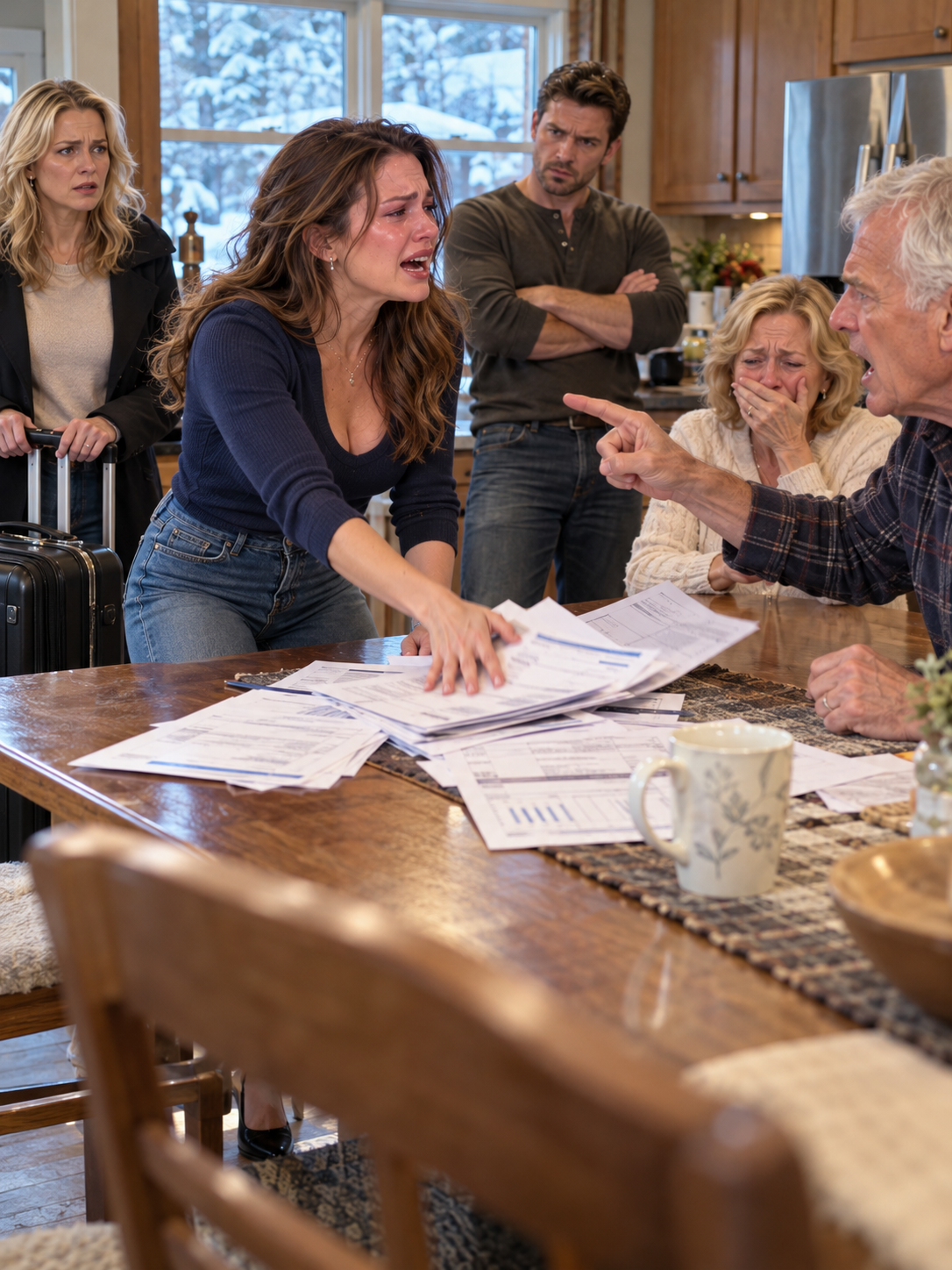
My parents made my nine-year-old daughter walk three miles to school in freezing snow
My parents made my nine-year-old daughter walk three miles to school in freezing snow while my brother’s two boys rode...
THE HOA DUMPED THREE WEEKS OF SNOW ON MY PROPERTY—THEN FINED ME $5,500 FOR BLOCKING THEIR ROAD – Life Story
The HOA dumped three weeks of dirty plow snow onto my property, then fined me $5,500 because the pile was...

HE ASKED FOR A WIFE WHO COULD RIDE—THEN A STRANGER ENTERED HIS CORRAL, AND THE MEN FOLLOWING HER THREATENED EVERYTHING HE HAD LEFT – Life Story
She arrived at a ranch that had already decided a woman couldn’t ride its meanest horse. Before the next sunset,...