THE BILLIONAIRE BOARDED HIS HONEYMOON FLIGHT BESIDE HIS NEW WIFE—THEN HE SAW HIS FORMER LOVE HOLDING A LITTLE GIRL WHO CHANGED EVERY PROMISE HE HAD MADE – Life Story
Elliot Hale stopped so suddenly that his new wife’s diamond bracelet struck his arm.
Across the airport terminal, the woman he had lost three years earlier was holding a little girl whose age could destroy the future his family had arranged.
And when the child looked directly at him, Elliot recognized something that made him afraid to ask the question already forming in his mind.
The boarding announcement for their flight to Rome was playing when Elliot Hale saw Naomi Keller sitting beside Gate E12 with a little girl asleep against her shoulder.
His hand loosened around the handle of his leather carry-on.
Beside him, Camille Rhodes Hale continued speaking about the villa in Tuscany, the photographer arriving on Sunday, and the society magazine waiting for photographs of the newlyweds.
Elliot heard none of it.
He was staring at a woman who had walked out of his life three years and three months earlier without looking back.
Naomi’s auburn hair was shorter now, brushing the collar of a simple navy sweater.
There were faint shadows beneath her eyes, and a worn canvas bag rested beside her shoes.
She was reading something on a tablet while supporting the sleeping child with the other arm.
A small gray stuffed elephant lay between them, its fabric trunk dangling over the edge of the airport chair.
The little girl’s dark curls caught the overhead lights.
She couldn’t have been much older than two.
When she stirred, Naomi shifted her carefully, brushed the hair away from her forehead, and kissed her temple with a tenderness that made Elliot’s chest tighten.
“Elliot?”
Camille touched his sleeve.
He didn’t answer.
His wife followed his gaze across the terminal.
She was thirty-eight, beautiful in a cream silk travel suit, her platinum hair secured in a flawless low chignon.
The enormous emerald-cut diamond on her finger had been photographed by three society magazines after their wedding ceremony the previous afternoon.
“Do you know her?” Camille asked.
Elliot swallowed.
“Yes.”
The little girl woke and reached for her elephant.
Naomi handed it to her without looking away from the tablet.
The child sat upright, examined the toy’s floppy ears, then began making it walk across her mother’s knees.
Elliot felt the familiar instinct to calculate.
He had built a technology company worth billions by noticing patterns other people overlooked.
He could evaluate an acquisition in minutes, identify weaknesses in a contract, and recognize when a financial projection concealed an uncomfortable truth.
But the numbers forming in his mind now terrified him.
Three years and three months since Naomi left.
A child who looked approximately two and a half.
A pregnancy he had never known about.
“Elliot,” Camille said more firmly. “We’re boarding.”
“I need a minute.”
He moved before she could respond.
The polished terminal floor seemed impossibly long.
Every step brought back details he had spent years forcing himself to forget: Naomi laughing in his kitchen while making coffee, the smell of rain on her hair, the small crease between her eyebrows when she concentrated, and the night she discovered the agreement that had been waiting to ruin them all along.
He stopped several feet from her chair.
“Naomi?”
Her head lifted.
For one suspended moment, she simply looked at him.
The color faded from her face.
Her hand moved instinctively toward the little girl, drawing her closer.
“Elliot.”
He had imagined hearing his name in that voice hundreds of times.
In his imagination, she had sounded angry or heartbroken.
Now her voice was almost calm, and that hurt more than he expected.
“I didn’t know you were in Boston,” he said.
“I live here.”
“Right.
Of course.”
His eyes moved toward the child.
Naomi noticed.
“This is Isabella,” she said. “Everyone calls her Bella.”
Bella studied him with serious brown eyes.
She had a small rounded chin, dark curls, and an expression Elliot recognized from photographs of himself as a child.
“Hello, Bella,” he managed.
The little girl raised her elephant.
“His name is Little Gray.”
“That’s a good name.”
“He’s tired.”
“I can see that.”
Bella offered the toy to him.
Elliot crouched instinctively and touched its soft ear.
Her tiny fingers rested against his hand for a moment before she pulled the elephant back.
Naomi watched the exchange without smiling.
“How old is she?” Elliot asked.
The question came out too quickly.
Naomi’s expression changed.
Behind him, Camille’s heels clicked against the floor as she approached.
“There you are,” she said. “They’ve called our group.”
She stopped when she saw Naomi and the child.
Elliot stood slowly.
“Camille, this is Naomi Keller.
Naomi, this is my wife, Camille.”
Naomi’s gaze lowered to Camille’s wedding ring.
“Your wife,” she repeated softly.
Camille extended her hand with practiced courtesy.
“We were married yesterday.”
Naomi shook it.
“Congratulations.”
Elliot heard the careful distance in her voice.
Bella tugged at Naomi’s sleeve.
“Mama, is the airplane ready?”
“Soon, sweetheart.”
Elliot looked between them.
“Naomi, please.
I need to ask you something.”
She gathered Bella’s bag, preparing to stand.
“Not here.”
“Just tell me how old she is.”
Naomi closed her eyes briefly.
Then she looked at him with an expression he remembered from their last night together, when he had finally understood that apologies could arrive too late.
“Please don’t ask me that in front of her,” Naomi said.
**THE LIFE EVERYONE ELSE CHOSE**
Elliot stepped back as Naomi lifted Bella into her arms.
He wanted to stop her.
He wanted to ask the question that had already rearranged every thought in his head.
But the child had wrapped both arms around her mother’s neck, and Naomi’s expression made it clear that this was not a conversation she intended to have under fluorescent airport lights.
“Can I call you?” he asked.
Naomi looked at Camille standing behind him.
“You have somewhere to be.”
“Naomi—”
“You made your plans, Elliot.
Don’t make a scene because you’ve suddenly remembered I existed before them.”
The words were quiet enough that Bella couldn’t understand their meaning.
Camille heard every one.
Elliot felt the old shame move through him.
Naomi had always known exactly where to place a sentence so that it reached the part of him he spent the most time protecting.
She shifted Bella against her hip and picked up the canvas bag.
“Have a safe flight,” she said.
Then she walked toward the boarding line.
Bella turned her head over Naomi’s shoulder and waved her elephant.
“Bye, tall man.”
Elliot raised his hand.
“Goodbye, Bella.”
The child disappeared into the crowd.
Camille stood beside him, holding two boarding passes.
For several seconds, neither spoke.
Finally, she said, “That was the woman you loved.”
Elliot turned toward her.
It wasn’t a question.
“Yes.”
Camille looked toward the gate.
“And the little girl?”
“I don’t know.”
But his voice betrayed him.
Camille’s expression tightened.
“How old?”
“She wouldn’t tell me.”
“And you think—”
“I don’t know, Camille.”
He said it more sharply than he’d intended.
A nearby traveler glanced at them.
Elliot lowered his voice.
“I’m sorry.”
Camille examined him with the same precision she brought to negotiations.
She had spent much of her life among people trained to conceal their intentions beneath agreeable expressions.
She was better at recognizing fear than Elliot had ever realized.
“Let’s board,” she said. “We cannot settle this standing in an airport.”
Their first-class cabin was quiet when they took their seats.
A flight attendant offered champagne.
Camille declined.
Elliot accepted a glass and left it untouched on the table beside him.
Outside, airport workers moved beneath the gray Boston sky.
Baggage carts crossed the wet pavement.
In the distance, an aircraft turned toward the runway.
Elliot looked at his new wedding band.
Twenty-four hours earlier, he’d stood beside Camille in a private ceremony at a coastal estate in Newport.
Their families had occupied the front rows, both equally pleased by a union that would stabilize two enormous business interests.
His father, Arthur Hale, had raised a toast describing the marriage as the beginning of a new environmental technology dynasty.
Camille’s father had spoken about the shared future of Hale Systems and Rhodes Energy.
Everyone had talked about partnerships, opportunities, and legacies.
Very few had talked about love.
Elliot had convinced himself that was maturity.
He was forty-six.
He had already experienced the kind of love that made a person reckless, and it had ended with Naomi leaving him in an apartment overlooking the Charles River.
He hadn’t dated seriously afterward.
When Arthur revived the longstanding marriage arrangement with the Rhodes family, Elliot agreed because he was exhausted by the expectation that a better life might still be possible.
Camille was intelligent, accomplished, and capable of running a division of her family’s company without assistance.
They respected each other.
They rarely argued.
Their marriage would be stable.
He had persuaded himself that stability was enough.
Now, as the aircraft pushed away from the gate, Elliot couldn’t stop remembering the last night with Naomi.
She had found the documents in the study of his Cambridge house.
Not by snooping.
Elliot had asked her to retrieve a contract for a real-estate donation.
The folder was stacked beside another bearing the Rhodes family name.
Naomi had opened the wrong one.
Inside was a signed agreement between the Hale and Rhodes families outlining the business consequences of a proposed marriage between Elliot and Camille.
The agreement was not legally capable of forcing either person to marry.
But it established expectations about patent licensing, investment commitments, and the eventual consolidation of family-controlled assets.
It was dated nearly two years before Elliot met Naomi.
He had never mentioned it.
When she confronted him, he tried to explain that it was an old family understanding, an outdated arrangement that could be abandoned if he chose.
But Naomi asked one question he couldn’t answer.
“Then why haven’t you abandoned it?”
He remembered standing beside the kitchen island, searching for a response that would make the truth less ugly.
“I need time,” he’d said.
“You’ve had two years with me.”
“Naomi, the company—”
“I’m not asking about the company.”
She had placed the folder between them.
“I’m asking whether there’s any future in which you choose me when choosing me costs you something.”
He told her she was being unfair.
He told her the situation was complicated.
He told her how many employees depended on Hale Systems, how much research funding could be jeopardized by upsetting the Rhodes partnership, and how his father’s health had deteriorated during the last restructuring.
Naomi listened.
Then she said, “You never planned to choose me.
You just didn’t tell me I wasn’t really an option.”
She left the following morning.
He did not stop her.
That was the truth he had spent three years burying beneath acquisitions, charitable donations, and carefully managed photographs.
He had been wealthy enough to purchase almost anything.
But he hadn’t possessed the courage to disappoint his father.
Now, somewhere behind them in Boston, Naomi was caring for a little girl who might be his daughter.
Camille unfolded a blanket across her knees.
“Tell me about her,” she said.
Elliot looked up.
“Naomi?”
“Yes.”
He hesitated.
“She works with children.
Art therapy.
When we met, she was finishing her graduate training.”
“And now?”
“I don’t know very much.”
“That must be difficult to admit.”
He winced.
Camille didn’t apologize for the observation.
“Was she kind to you?”
“Yes.”
“Did she know about our families’ arrangement?”
“Not until the end.”
“And when she found out?”
“She left.”
Camille studied him for a moment.
“Did you try to bring her back?”
“No.”
“Why?”
He looked out the window.
“Because I knew what she wanted me to do.”
“And you couldn’t do it.”
“No.”
Camille folded her hands.
“I appreciate the answer.”
He turned toward her.
“Do you?”
“I appreciate that it’s true.”
The aircraft climbed above the clouds.
Elliot watched Boston disappear beneath a blanket of white.
There were things he had never told Camille, partly because their courtship had been arranged around practical compatibility and partly because he knew every honest conversation threatened the story their families had constructed.
He wondered how much she had concealed from him.
After lunch was served, Camille turned off her tablet.
“Elliot, I need you to answer a question.”
He set down his fork.
“Alright.”
“If that child is yours, what do you intend to do?”
His first instinct was to say that he would make arrangements.
He knew how to make arrangements.
Lawyers, trusts, medical insurance, housing, educational funds.
He could solve a lifetime of financial uncertainty in a single afternoon.
But Naomi’s face returned to him.
The way she had held Bella.
The way she had refused to discuss the child in front of strangers.
Money would not make Naomi trust him.
It would not restore the years he’d missed.
And it would not tell him whether his daughter would ever want him in her life.
“I want to know her,” he said.
Camille watched him.
“Not support her?”
“Of course I’d support her.”
“That’s not what I asked.”
Elliot looked down.
“I want to know who she is.”
Camille’s expression softened, but only slightly.
“Then you need to understand that knowing someone takes considerably more than paying for their future.”
“I know.”
“Do you?”
He looked at his wife.
She seemed suddenly tired.
There was a sadness beneath her flawless composure that he hadn’t noticed during their engagement.
“Camille,” he said, “are you happy?”
The question caught her off guard.
She gave a small, incredulous laugh.
“We’ve been married for twenty-four hours.”
“That isn’t an answer.”
She looked toward the darkening sky.
For a long time, she said nothing.
Then she whispered, “I don’t know if I’ve ever been allowed to find out.”
**THE SECRET BEHIND THE WEDDING**
Their villa in Tuscany stood above a vineyard surrounded by olive trees and low stone walls.
The estate was beautiful in a way that required little explanation.
Afternoon sunlight washed the pale buildings in gold.
A narrow road wound through the hills toward San Gimignano, and cypress trees rose against the blue sky like dark brushstrokes.
Camille had chosen it because a lifestyle magazine wanted exclusive photographs of their honeymoon.
Elliot had approved the itinerary without reading half of it.
A bottle of local wine waited beside the infinity pool when they arrived.
Fresh flowers filled the bedroom.
Someone had arranged rose petals across the bedspread.
The perfection of it all made Elliot feel strangely unwelcome.
Camille dismissed the household staff for the evening and asked the photographer’s assistant to postpone the planned shoot.
Then she walked onto the terrace carrying two glasses of water.
Elliot was standing beside the stone railing.
“Still thinking about the airport?”
“Yes.”
She handed him a glass.
“I assumed so.”
Below them, a worker guided a small tractor between rows of grapevines.
For several minutes, they watched without speaking.
Then Camille asked, “Do you remember what you wanted to be when you were a child?”
Elliot almost laughed.
“Where did that come from?”
“Answer me.”
He considered it.
“A park ranger.”
Camille turned toward him.
“Really?”
“I was obsessed with Yellowstone.
My mother took me there when I was eleven.
I wanted to spend my life protecting forests and animals.”
“What happened?”
“My father had his first heart attack when I was fifteen.
After that, every conversation about my future became a conversation about his company.”
Camille looked down at her glass.
“I wanted to be a marine biologist.”
Elliot stared.
“You?”
“What’s that supposed to mean?”
“Nothing.
I just never knew.”
“That’s the problem, isn’t it?”
She smiled faintly.
“When I was twelve, I wrote a letter to a marine research center in Australia.
I wanted to study coral bleaching.
My mother found the letter and told me people from families like ours supported scientists.
They didn’t become them.”
Elliot leaned against the railing.
“That’s ridiculous.”
“It seemed perfectly reasonable when I was twelve.”
“Do you still want to do it?”
“Yes.”
The answer came immediately.
He looked at her.
Camille’s eyes filled, though her expression remained composed.
“I’ve spent years funding environmental research from conference rooms,” she said. “I’ve been telling myself that was enough.”
“It matters.”
“Of course it matters.
But it’s not the same as choosing the life I wanted.”
She turned toward the vineyard.
“There’s someone I need to tell you about.”
Elliot’s shoulders stiffened.
“Who?”
“Dr.
Alexandra Reyes.”
The name was unfamiliar.
“She’s a marine biologist working on coral restoration.
We met at a research conference in Lisbon.”
Camille paused.
“We’ve been involved for almost two years.”
Elliot stared at her.
The sounds from the vineyard seemed to recede.
“Two years?”
“Yes.”
“Before our engagement?”
“Yes.”
He should have felt furious.
He waited for anger to arrive.
Instead, he felt a strange emptiness, followed by an unexpected understanding.
“Do you love her?”
Camille’s composure broke.
“Yes.”
She covered her mouth briefly, then lowered her hand.
“I love her, Elliot.
I tried to stop.
I tried to convince myself what we were building together mattered more.
I told myself I could be a good wife and still remain connected to her work.”
Her voice shook.
“But every time I imagined our marriage, I saw myself leaving someone I loved to become someone my family recognized.”
Elliot set down his glass.
“Why did you go through with the wedding?”
Camille looked at him with painful honesty.
“For the same reason you did.”
He could not argue.
She continued.
“I believed our families needed it.
I believed our companies needed it.
I thought choosing my own happiness would mean damaging years of research that could help people.”
“But the research doesn’t need us to be married.”
“Not technically.”
He turned toward her.
“What do you mean?”
Camille hesitated.
“The licensing agreements between Hale Systems and Rhodes Energy were structured around the proposed partnership.
Your father and mine wanted the wedding because it made the relationship look permanent to investors.”
Elliot felt something cold settle in his chest.
“The patent licenses?”
“They’re still being negotiated.”
“Arthur told me the merger couldn’t proceed without the marriage.”
“He wanted you to believe that.”
Elliot stepped away from the railing.
He had spent eighteen months preparing for the marriage under the assumption that his choice was inseparable from a major technology program.
Hale Systems had developed carbon-capture components that could reduce industrial emissions.
Rhodes Energy controlled complementary materials research and manufacturing processes.
Both companies stood to benefit from collaboration.
But marriage was not a legal requirement for combining patents.
The families had treated their children as the public symbols of a business arrangement that should have been negotiated independently.
“You knew?” Elliot asked.
Camille nodded miserably.
“I knew the commercial agreements weren’t dependent on us being married.
But I also knew my father would withdraw from the negotiations if I refused.”
“Then we were both being managed.”
“Yes.”
He looked toward the hills.
For years, he had told himself he was sacrificing personal happiness for something larger.
Now he understood that some of those sacrifices had protected the preferences of powerful people rather than the work itself.
Camille spoke quietly.
“I need to apologize for not telling you about Alexandra.”
Elliot sat in a chair beside the terrace doors.
“You should have told me.”
“I know.”
“We’ve made a terrible mess.”
“Yes.”
She sat opposite him.
For the first time since the wedding, they looked at each other without trying to maintain the roles assigned to them.
“Are you angry?” she asked.
“I think I will be when I’ve had time to understand it.”
Camille nodded.
“That’s fair.”
He rubbed his forehead.
“What do you want to do?”
“I want to tell Alexandra the truth.
I want to work on something that matters to me.
And I want to stop being a woman who makes commitments she knows she cannot honor.”
Elliot considered the answer.
“What about the marriage?”
Camille looked down at her wedding ring.
“We should end it.”
The words were quiet.
They changed everything.
Elliot did not rush to agree.
Their marriage was legally real, even if it had begun for the wrong reasons.
Ending it would require lawyers, documents, and a careful separation of business interests from personal ones.
He had no desire to humiliate Camille.
He also would not pretend that either of them had entered the marriage honestly.
“We should speak with separate attorneys,” he said.
Camille nodded.
“And the companies?”
“They need to negotiate like companies.”
“My father won’t like that.”
“Neither will mine.”
She gave a small, tired smile.
“Then perhaps we’ve finally found something they can agree on.”
The photographer arrived an hour later.
Camille met her in the entrance hall and explained that the session was canceled.
There would be no golden-hour portraits.
No wine-cellar photographs.
No carefully staged image of a perfect marriage.
Afterward, Camille returned to the terrace.
Elliot was looking at his phone.
He had found Naomi’s old number stored in a backup contact list.
His thumb rested above the call button.
Camille saw it.
“Call her,” she said.
He looked up.
“I don’t know if she’ll answer.”
“She doesn’t have to.”
“What if she tells me to stay away?”
“Then you’ll have to respect that.”
Elliot studied her.
“You sound very certain.”
Camille smiled sadly.
“I’m trying to practice telling the truth.”
He called.
The call went to voicemail.
For several seconds, Elliot couldn’t speak.
Then he heard Naomi’s familiar greeting.
“Hi, you’ve reached Naomi.
Please leave a message.”
He closed his eyes.
“Naomi, it’s Elliot.
I’m sorry to call unexpectedly.
I know you asked me not to discuss Bella at the airport, and you were right.”
He paused.
“I don’t know what you want me to know or whether I’m entitled to ask.
But if you’re willing, I’d like to speak with you privately.
I won’t contact Bella or come to your home without your permission.”
His voice tightened.
“I know I have a lot to answer for.”
He ended the call.
Camille stood beside the railing, watching the last light disappear from the vineyard.
“Did you tell her you’re coming home?”
“No.”
“Why not?”
“Because she hasn’t invited me.”
Camille looked at him for a moment.
Then she nodded.
“That’s a better beginning than the one you gave her three years ago.”
The following morning, Elliot returned to Boston.
Camille remained in Italy for another day before traveling to see Alexandra.
Their lawyers would begin discussing a divorce, while the companies reviewed how to continue their technology partnership without involving the marriage.
Elliot’s father called twice during the flight.
He let both calls go to voicemail.
When he landed at Logan, a message from Naomi was waiting.
*Coffee.
Tuesday, a.m.
Morning Glory Café, Cambridge.
Just us.
Please be on time.*
He read it twice.
Then he wrote back.
*I’ll be there.*
**THE GIRL WITH THREE ELEPHANTS**
Morning Glory Café smelled of roasted coffee, cinnamon, and rain-damp coats.
Elliot arrived twenty minutes early.
He chose a table near the window and ordered black coffee, though his stomach was too unsettled to drink it.
He had prepared a dozen explanations during the flight home.
He discarded every one when Naomi walked through the door.
She wore dark jeans beneath a rust-colored sweater and carried a leather satchel over one shoulder.
Her auburn hair was pulled into a loose ponytail.
She looked tired, but there was steadiness in her movements that he remembered from their years together.
“Good morning,” she said.
“Naomi.”
She sat opposite him.
For a moment, neither reached for the menu.
“I received your message,” she said.
“Thank you for meeting me.”
“I almost didn’t.”
“I understand.”
She studied him.
“You look exhausted.”
“I haven’t slept much.”
“That’s not something I’m responsible for fixing.”
He nodded.
“No.”
The directness of her words was strangely comforting.
It was the same Naomi who had once told him that a difficult conversation became worse when people pretended it wasn’t happening.
She set her phone on the table.
“I have an hour before work.”
“Okay.”
“Then ask what you came to ask.”
Elliot looked down.
“Is Bella my daughter?”
Naomi didn’t hesitate.
“Yes.”
The word seemed to stop the room.
Outside, a bus pulled away from the curb.
Someone laughed near the counter.
A barista called out an order.
Elliot heard all of it with the strange clarity that accompanied moments his mind could not immediately absorb.
He was a father.
He had a daughter.
A little girl who loved a stuffed elephant and had offered it to a stranger without knowing the connection between them.
“How old is she?” he whispered.
“Two years and eight months.”
He closed his eyes.
The dates aligned.
Bella had been conceived shortly before the breakup, then born prematurely several months afterward.
“Did you know when you left?”
“No.”
“When did you find out?”
“About six weeks later.”
He looked at her.
“Why didn’t you tell me?”
Naomi’s fingers tightened around her mug.
“I thought about it.”
“Naomi—”
“I thought about it every day for months.”
He fell silent.
She stared toward the window.
“When I found the marriage agreement, I realized I didn’t know the man I’d been planning a life with.
You’d let me believe we were building something together while your family was still planning your marriage to another woman.”
“I know.”
“I was angry.
And frightened.
When I found out I was pregnant, I imagined calling you.
Then I imagined lawyers arriving before you did.”
Elliot looked down.
“You should have told me.”
“Yes,” she said quietly. “I know you had a right to know.
I made a decision out of fear, and it affected you too.”
The admission surprised him.
Naomi continued.
“But I was also trying to protect myself from being persuaded to accept another arrangement I didn’t choose.”
He swallowed.
“I would have helped.”
“Maybe.”
“I would have.”
She looked at him.
“Would you have been there?”
The question silenced him.
Three years earlier, he might have sent a financial adviser, arranged medical coverage, and created a trust.
He might even have visited occasionally.
But would he have stood beside Naomi when the public consequences threatened the life he’d constructed?
He couldn’t answer honestly.
Naomi saw it.
“That’s why I didn’t know how to call you,” she said.
Elliot stared at the untouched coffee.
“What happened when she was born?”
Naomi inhaled slowly.
“Bella came at thirty-two weeks.”
He looked up.
“Premature?”
“Yes.
There were complications during the pregnancy.
She spent six weeks in the neonatal intensive care unit.”
Elliot felt the air leave his lungs.
“Six weeks?”
Naomi nodded.
“She was tiny.
I could hold one of her hands between two fingers.”
He pictured the child at the airport, strong enough to wave an elephant and study his face without fear.
He couldn’t reconcile that image with a newborn struggling to grow beneath hospital lights.
“Was she in danger?”
“At first, yes.
She needed breathing support and help feeding.
Her doctors were careful about what they promised.”
Naomi’s voice remained steady, but her eyes filled.
“My mother stayed with me.
She drove me to the hospital when I was too tired.
She brought meals and sat beside the incubator while I tried to convince myself everything would be alright.”
Elliot pressed his palm against the table.
“I should have been there.”
Naomi didn’t answer immediately.
Then she said, “Yes.”
The word hurt more than an accusation.
He looked toward the window.
For years, he had believed losing Naomi was the worst consequence of his choices.
Now he understood that a daughter had spent the first weeks of her life in a hospital while he attended meetings about the future of his company.
He had not known.
But he had created a relationship in which Naomi was afraid to tell him.
Both truths existed.
“Can I see her medical records?” he asked.
Naomi hesitated.
“Why?”
“Not because I doubt you.
I want to understand what happened.”
She studied him.
“We can talk about that later.”
He nodded.
“Of course.”
Naomi leaned back.
“There are other things you need to understand.”
“Tell me.”
“Bella is happy.
She’s healthy.
She has routines.
She goes to daycare three mornings a week.
My mother watches her when I work late.
She loves picture books, swimming lessons, and elephants.”
Elliot smiled faintly.
“I noticed the elephant.”
“She has three.
Little Gray, Medium Gray, and Big Gray.”
“Logical names.”
“She’s very practical.”
Naomi’s expression softened.
“She’s also stubborn.
She wants the same spoon at breakfast every morning.
She asks questions until I run out of answers.
And she’s started noticing that some children have fathers who take them places.”
Elliot felt his throat tighten.
“What do you tell her?”
“That families look different.
That she’s loved.
That she doesn’t need to have the same family as everyone else.”
He nodded.
“But eventually she’ll ask about me.”
“Yes.”
Naomi placed both hands around her mug.
“And I don’t want to lie to her.”
Elliot looked at her.
“I want to be part of her life.”
She studied him for a long time.
“What does that mean to you?”
He opened his mouth.
Then stopped.
A week earlier, he might have answered with school fees, medical insurance, and a beautiful house.
Now he thought about six weeks in the NICU.
About the mother he’d left alone with her fear.
About Bella growing up without knowing he existed.
“It means showing up,” he said.
Naomi watched him.
“Showing up when?”
“When you need help.”
“What about when we don’t?”
He frowned slightly.
She continued.
“What about ordinary days? When she’s difficult.
When she’s tired.
When she doesn’t want to talk to you.
When she’s sick and needs someone to sit beside her for hours.”
Elliot leaned forward.
“I want to learn.”
Naomi’s expression became sad.
“Learning takes time.”
“I know.”
“And I can’t promise you anything about us.”
He looked at her.
“I understand.”
“Do you?”
“Yes.”
She studied him.
“Because I won’t let Bella become an excuse for you to try to win me back.”
Elliot lowered his eyes.
Part of him had imagined exactly that.
He had pictured a family forming around the child, Naomi forgiving him, and the three of them living the life they should have had from the beginning.
The fantasy was comforting.
It was also unfair.
“I won’t ask you for that,” he said.
Naomi nodded.
“Then we can begin slowly.”
They agreed to meet for coffee every Tuesday.
At first, the conversations would be between adults.
They would discuss Bella’s needs, Elliot’s intentions, and a responsible way to establish paternity and future parenting arrangements.
Naomi wanted legal clarity, not an informal agreement dependent on goodwill.
Elliot agreed.
He also offered to contribute financially to Bella’s care.
Naomi accepted that they would need to address child support appropriately but refused an immediate offer to move into one of his properties.
“We don’t need a new house,” she said.
“I’m not trying to buy you one.”
“You already mentioned three.”
He smiled sheepishly.
“Fair.”
She rose when her hour was nearly finished.
Elliot stood too.
“Naomi?”
She stopped.
“Thank you for telling me.”
Her expression remained guarded.
“I should have told you earlier.”
He nodded.
“And I should have been someone you weren’t afraid to tell.”
For the first time that morning, she looked directly at him without anger.
“That would have changed a lot.”
Then she left.
Elliot remained at the table until the barista began clearing breakfast dishes.
He opened a notebook and wrote down everything Naomi had told him about Bella.
Favorite animals.
Daycare schedule.
Swimming lessons.
Three gray elephants.
He added a final sentence.
*Do not make promises she cannot understand or depend on.*
He looked at the page for a long time.
Then he closed the notebook and went to meet his attorney.
**THE PROMISES THAT COULDN’T BE PURCHASED**
The next three Tuesdays were not romantic.
They were uncomfortable, practical, and often humbling.
Elliot learned that Naomi’s work at Boston Children’s Hospital involved helping children express difficult experiences through drawing, painting, and other creative activities.
Her position required specialized training, careful documentation, and the ability to remain patient when a child could not explain what was wrong.
He learned that Bella hated vacuum cleaners.
He learned she called her grandmother Gamma.
He learned Naomi had missed a promotion opportunity the previous year because she couldn’t accept evening responsibilities without additional childcare.
Each fact made him more aware of the life that had continued without him.
He tried to avoid responding with money.
Sometimes he failed.
When Naomi mentioned Bella needed a new winter coat, Elliot offered to buy an entire wardrobe.
Naomi gave him a look.
“She needs one coat.”
“Right.”
“When I say something costs money, I’m not necessarily asking you to solve it immediately.”
“I know.”
“You don’t always act like it.”
He looked down.
“I’m trying.”
“I can see that.”
The honesty between them was different from the intimacy they’d shared years earlier.
It was less exciting.
More difficult.
And slowly, more valuable.
Elliot began making changes in his own life.
He moved from the penthouse he had shared with no one into a smaller apartment in Porter Square.
It had two bedrooms, a modest kitchen, and a little garden behind the building.
He didn’t show Naomi photographs until he had signed the lease.
When he finally mentioned it, she asked why he’d moved.
“I wanted to live somewhere that feels like a home,” he said.
“And does it?”
“Not yet.”
She nodded.
“Then you’ll have to make one.”
He also began disentangling himself from his role at Hale Systems.
His father’s reaction was immediate.
Arthur Hale summoned him to the family offices overlooking Boston Harbor.
The conference room was lined with glass and pale wood.
A model of the company’s newest carbon-capture installation sat on the table.
Arthur was seventy-three and still possessed the habit of making everyone wait while he finished whatever document lay before him.
“You’re ending the marriage?” he asked.
“Yes.”
“After one day?”
“We shouldn’t have married.”
Arthur removed his glasses.
“You understand what this does to the Rhodes partnership?”
“The licensing discussions can continue independently.”
“You sound like Camille.”
“Camille’s right about that.”
Arthur looked disgusted.
“You’ve become sentimental.”
Elliot felt his anger rise.
He had spent twenty years seeking this man’s approval.
At fifteen, after Arthur’s first heart attack, Elliot had abandoned plans to study environmental science and entered the family business.
At twenty-seven, he took over an underperforming division.
At thirty-five, he became chief executive.
Every promotion brought more authority and less freedom.
Now he was forty-six, and his father still spoke to him as though he were a boy refusing to complete his homework.
“I’m stepping down from the chief executive position after a proper transition,” Elliot said.
Arthur stared.
“You cannot simply resign.”
“I can.
But I won’t abandon the company.
I’ll work with the board on a transition plan and remain available for technical projects where my expertise matters.”
“Because of that woman?”
“No.”
Arthur gave a bitter laugh.
“Don’t insult me.”
Elliot leaned forward.
“Naomi didn’t ask me to leave the company.
Neither did Bella.
I’m making this decision because I’ve spent years letting you tell me what kind of man I’m supposed to be.”
Arthur’s expression hardened.
“I built this company for you.”
“And I helped make it successful.”
“Do you think it would have survived without my sacrifices?”
“No.”
Arthur seemed momentarily satisfied.
Then Elliot continued.
“But I don’t think those sacrifices give you ownership of the rest of my life.”
The room fell quiet.
Arthur looked toward the harbor.
“You’ll regret this.”
“Maybe.”
Elliot stood.
“But it will be my decision to regret.”
The negotiations with the board took weeks.
His replacement would need to be approved, projects transitioned, and financial responsibilities handled properly.
Elliot did not become suddenly unemployed or pretend that his past commitments had disappeared.
He accepted the obligations he’d created.
But he stopped treating those obligations as permission to avoid every difficult personal choice.
By the fourth Tuesday, Naomi noticed.
“You’re different,” she said.
He looked up from his coffee.
“Different good or different concerning?”
“Less hurried.”
He smiled.
“I canceled a meeting.”
“For this?”
“For a conflict that didn’t require me.”
She studied him.
“That’s new.”
“Yes.”
Then she placed her mug down.
“There’s a children’s exhibit at the Museum of Fine Arts on Saturday.
I was planning to take Bella.”
Elliot stopped moving.
Naomi continued.
“If you’d like, you could join us.”
He tried not to look too eager.
“I’d love that.”
“There are conditions.”
“Of course.”
“You’re Elliot, a friend of mine.
We won’t introduce you as her father until we’ve agreed on how to explain it.
If she becomes uncomfortable, I’ll end the visit.”
“I understand.”
“And don’t bring expensive presents.”
He smiled.
“Define expensive.”
“Elliot.”
“Understood.”
Saturday morning, he arrived at the museum twenty minutes early.
He wore jeans and a navy sweater.
In his hand was a children’s book about a baby elephant learning to paint.
He had spent nearly an hour choosing it.
When Naomi arrived, Bella was walking beside her in purple leggings and a sweater covered with little elephants.
She looked up at Elliot.
“Tall man!”
He crouched.
“Hello, Bella.”
She stared at the book.
“Is that an elephant?”
“Yes.”
“Is he painting?”
“He’s trying.”
“Elephants can paint?”
“In this story they can.”
Bella considered the answer.
“Can you read it?”
“If your mama says it’s alright.”
Naomi nodded.
Inside the museum, Bella approached every exhibit with solemn curiosity.
She watched lights change color when she moved her arms.
She made a digital rainbow by dancing in front of a sensor.
Then she discovered a table filled with kinetic sand.
She immediately began constructing an elaborate zoo.
“This is the elephant place,” she informed Elliot.
He sat cross-legged beside her.
“Where do the giraffes go?”
Bella looked offended.
“Not with the elephants.”
“Why?”
“Because the elephants need space.”
“That’s reasonable.”
She handed him a small plastic tree.
“Put this over there.”
Elliot obeyed.
For forty minutes, he followed instructions from a child who had never attended a business school but possessed an extraordinary talent for making her expectations clear.
Naomi watched from a nearby bench.
She noticed he didn’t try to control the game.
He didn’t correct Bella’s impossible animal habitats or suggest a more efficient design.
When she insisted that one elephant needed its own swimming pool, he helped her build it.
At one point, Bella grew frustrated because a sand wall collapsed.
Elliot began to offer a solution.
Then he stopped.
“What do you think we should try?” he asked.
Bella studied the sand.
“Make it bigger.”
“Let’s try.”
They did.
The wall held.
Bella clapped.
“See? I knew.”
Elliot smiled.
“You did.”
Naomi felt something warm and unsettling move through her.
She had spent years remembering Elliot as a man who needed every problem to submit to a plan.
Now he was sitting on a museum floor, accepting instructions about imaginary elephants from a little girl.
It didn’t erase the past.
But it mattered.
When they left the museum, Bella slipped her hand into Elliot’s.
He looked down, startled.
“Did you like the zoo?” she asked.
“It was excellent.”
“We should build another one.”
“I’d like that.”
Bella nodded seriously.
“Friends help each other.”
Elliot glanced toward Naomi.
Her expression was difficult to read.
Then Bella added, “And friends say goodbye before they go away.”
The words lodged in his chest.
He crouched beside her.
“That’s an important rule.”
“Yes.”
“I’ll remember.”
At the curb, Naomi called for a car.
Bella looked up.
“Can Elliot come for lunch?”
Both adults went still.
Naomi looked at her daughter.
“Grandma’s making soup.”
“Elliot likes soup.”
Elliot smiled.
“I do.”
Naomi looked at him.
“My mother will ask questions.”
“I expected that.”
“She may not be kind.”
“I deserve some of them.”
Naomi considered him.
Then she nodded.
“Lunch.”
Bella cheered.
Elliot had closed acquisitions worth hundreds of millions of dollars without feeling as nervous as he did walking toward Margaret Keller’s front door.
Margaret opened it before they knocked.
She was seventy-two, with silver hair pulled into a practical bun and the upright posture of a retired school principal.
She looked at Elliot.
“So,” she said. “You’re the famous elephant expert.”
Bella rushed past her.
“Gamma! We made a zoo!”
Margaret’s stern expression softened instantly.
“Did you now?”
“Yes.
Elliot helped.”
Margaret looked back at him.
“How fortunate.”
Elliot offered a small smile.
“Thank you for having me.”
“Bella invited you.
I respect my granddaughter’s decisions.”
She stepped aside.
“That doesn’t mean I agree with all of them.”
Lunch was chicken soup, grilled cheese sandwiches, and apple slices.
Bella spent most of the meal explaining why elephants required more space than lions.
Margaret listened attentively.
Then, while Bella was occupied with her sandwich, she looked at Elliot.
“What happens when this stops being exciting?”
He met her gaze.
“I don’t intend to disappear.”
“That wasn’t my question.”
He looked down.
Margaret continued.
“What happens when Bella is sick? When she’s difficult? When Naomi needs help and the situation isn’t charming enough for a photograph?”
Elliot considered the answer carefully.
“I show up.”
Margaret leaned back.
“People say that.”
“I know.”
“My daughter spent nights in a hospital wondering whether her baby would survive.
She didn’t have the luxury of deciding parenting was inconvenient.”
“I know.”
“No, Mr.
Hale.
You know the story.
That’s different from having lived it.”
He accepted the correction.
Margaret’s expression softened slightly.
“I don’t need you to be perfect,” she said. “I need you to understand that Bella cannot be an experiment in becoming a better man.”
Elliot looked toward the little girl beside him.
Bella was carefully arranging apple slices around the rim of her plate.
“I understand.”
Margaret watched him.
“Then prove it slowly.”
After lunch, Bella asked him to read the elephant book.
He sat on the living-room rug while she leaned against his arm.
Halfway through, she began correcting his interpretation of the illustrations.
He listened.
Naomi stood in the doorway watching.
It was such an ordinary scene.
A child.
A book.
An adult patiently turning pages.
And somehow it frightened her more than any expensive promise Elliot could have made.
Because she could imagine Bella depending on him.
And that meant she could imagine losing him again.
**THE DAY THE PHONE RANG**
Two months later, Elliot knew more about parenting than he had ever learned from reading books.
He knew Bella became upset when the wrong spoon appeared beside her cereal.
He knew she preferred her socks with elephants facing outward.
He knew she needed ten minutes of quiet after daycare before anyone asked about her day.
He knew she loved stories but disliked being interrupted when she was explaining something important.
He also knew that none of those details made him a finished parent.
Their relationship grew gradually.
The museum visit became another Saturday outing, then an occasional Sunday afternoon at the park.
Naomi joined every visit at first.
Later, after paternity was established through a mutually agreed legal process, Elliot began spending short periods alone with Bella under a parenting arrangement the adults developed with professional advice.
The legal work took time.
Elliot did not attempt to use his wealth to hurry Naomi into giving him more access than she believed was appropriate.
He met with a family-law attorney.
Naomi retained her own counsel.
They discussed child support, decision-making, medical information, and a gradual schedule of parenting time designed around Bella’s needs.
The process was uncomfortable.
There were moments when Elliot felt excluded.
There were moments when Naomi worried she was surrendering too much control.
But they kept returning to the same question.
What would make Bella feel secure?
The answer was usually less dramatic than either adult expected.
Consistency.
Clear plans.
Adults who communicated without making their disagreements the child’s problem.
Elliot began picking Bella up from daycare on Wednesday afternoons.
Naomi approved the schedule after several successful visits and careful introductions to the staff.
The first time he arrived alone, Bella ran toward him carrying a drawing.
“Elliot!”
He crouched.
“Hello, artist.”
“I made an elephant family.”
She held up the paper.
There were three enormous gray shapes beneath a yellow sun.
Elliot felt his throat tighten.
“Who’s this one?”
“Big Gray.”
“And this one?”
“Medium Gray.”
“And the little one?”
“Little Gray.”
He smiled.
“Of course.”
Bella studied him.
“Do you want to be in my next picture?”
He looked at her.
“I’d like that.”
She nodded.
“Okay.
But you have to be an elephant.”
“I can do that.”
He framed the drawing in his apartment.
It became the only piece of art he looked at every morning.
Naomi noticed that he had stopped asking whether Bella liked him.
Instead, he asked whether she was sleeping well, how she was handling transitions, and what he could do to make the next visit easier.
Those questions mattered.
So did the smaller choices.
When Bella had a fever, Elliot canceled a professional dinner and delivered groceries to Naomi’s house.
He stayed only as long as she wanted help.
When Margaret needed a ride to a medical appointment, he offered to drive but accepted her refusal without argument.
When Naomi had a difficult week at the hospital, he took Bella to the park and returned her home on time, with no expectation of gratitude.
And when a reporter contacted him about his divorce and possible new family, he declined to discuss Bella.
He would not turn his daughter’s existence into another story managed by public relations.
The divorce from Camille was proceeding privately.
Their attorneys negotiated an orderly separation, while Hale Systems and Rhodes Energy continued patent-licensing discussions on commercial terms.
Arthur was furious.
He accused Elliot of embarrassing the family.
Elliot listened once.
Then he ended the conversation.
For the first time, he didn’t spend the evening trying to repair his father’s disappointment.
Camille sent a message from the Caribbean.
*Alexandra took me diving yesterday.
I remembered what I wanted before everyone else decided for me.*
Elliot smiled.
He wrote back.
*I’m glad.*
Then he added:
*Bella asked whether clouds get lonely.
I spent twenty minutes trying to answer.*
Camille responded with a photograph of coral beneath clear turquoise water.
*Tell her clouds have each other.*
He laughed.
The friendship that remained between them was more honest than their marriage had been.
But Naomi still kept emotional distance.
One evening, after Bella fell asleep during a story at Elliot’s apartment, Naomi stayed for tea.
Rain tapped against the windows.
Elliot made chamomile tea in mismatched mugs.
She looked around the room.
Children’s books filled one shelf.
Bella’s drawings were attached to the refrigerator.
A small pair of purple slippers rested beside the couch.
“You’ve made space for her,” Naomi said.
Elliot handed her a mug.
“She keeps expanding into it.”
Naomi smiled.
“She does that.”
They sat together at the kitchen table.
For several minutes, the conversation was easy.
They talked about work, Margaret’s insistence on attending every swimming lesson, and Bella’s latest theory that the moon followed their car because it was lonely.
Then Naomi looked at Elliot.
“Do you ever miss your old life?”
He considered it.
“Parts of it.”
“Which parts?”
“The work.
Some of the research.
Solving problems with people I respect.”
“And the rest?”
“I don’t miss the constant performance.”
Naomi wrapped both hands around her mug.
“You used to be so afraid of disappointing your father.”
“I still don’t enjoy it.”
“What changed?”
He looked toward Bella’s slippers.
“I realized I was already disappointing people who mattered more.”
Naomi lowered her eyes.
The room grew quiet.
Elliot wanted to reach for her hand.
He didn’t.
Instead, he asked, “Are you happy?”
She thought about the question.
“Most days.”
He nodded.
“Good.”
Naomi studied him.
“You’re not going to ask whether I’m happy with you?”
“No.”
“Why?”
“Because you don’t owe me that answer.”
She looked away.
Something in her expression softened.
Then Bella called from the bedroom.
“Mama?”
Naomi stood immediately.
Elliot rose too.
They entered together.
Bella was sitting upright, clutching Little Gray.
“Bad dream,” she whispered.
Naomi sat on the bed.
“Want to tell me about it?”
Bella shook her head.
Elliot remained near the doorway.
After a moment, Bella reached toward him.
“Can Elliot stay?”
He sat on the floor beside the bed while Naomi held her daughter.
For twenty minutes, neither adult tried to solve anything.
They simply stayed.
That was the first evening Naomi allowed herself to imagine a future in which Elliot might not leave.
The next morning, the hospital called.
Naomi had been involved in a car accident on her way home from work.
Elliot was shopping with Bella when his phone rang.
He recognized the hospital number immediately.
“Mr.
Hale?”
“Yes.”
“This is Dr.
Rodriguez at Massachusetts General Hospital.
Naomi Keller has been brought to our emergency department following a motor vehicle collision.
You’re listed as an emergency contact.”
The supermarket aisle seemed to tilt.
“Is she alright?”
“She’s awake and stable.
She has a concussion and several rib fractures.
She asked us to contact you.”
Elliot gripped the shopping cart.
“Was Bella with her?”
“No.
She was driving alone.”
He closed his eyes briefly.
Relief and fear arrived together.
Bella tugged at his sleeve.
“Elliot? Why are you making that face?”
He crouched.
“Sweetheart, Mama was in an accident.
She’s at the hospital.”
Bella’s eyes widened.
“Is she hurt?”
“Yes, a little.
The doctors are helping her.”
“Is she coming home?”
“We’re going to find out.”
Bella’s lip trembled.
Elliot took her hand.
“First, we’re going to call Gamma.
Then we’re going to see Mama.”
He didn’t rush them into the car.
He called Margaret, explained what he knew, and agreed to meet her at the hospital.
Then he secured Bella in her car seat and drove carefully through afternoon traffic.
At every red light, he wanted to accelerate.
He didn’t.
He had learned that caring for someone sometimes meant refusing to let panic make decisions.
At the hospital, Margaret was already waiting near the emergency department entrance.
She took Bella’s hand and looked at Elliot.
“How bad?”
“Concussion and broken ribs.
Stable.”
Margaret closed her eyes.
“Thank God.”
They went inside together.
Naomi lay in a hospital bed beneath a thin white blanket.
Her left arm rested in a sling, and a small dressing covered a cut near her forehead.
She looked exhausted.
But when Bella entered, her face changed.
“Mama!”
“Hi, baby.”
Bella approached carefully.
“Are you broken?”
Naomi laughed softly.
“Not broken.
Just sore.”
“Can I hug you?”
“Gently.”
Bella leaned against her mother’s good side.
Elliot stood beside the bed.
For a moment, he could only look at Naomi.
He had imagined losing her once, years earlier.
That loss had been the consequence of his choices.
This possibility was different.
It reminded him that love did not make anyone safe from chance.
Naomi looked at him.
“You came.”
“Of course.”
“I put you down as my emergency contact last month.”
He swallowed.
“I know.”
She smiled faintly.
“I thought it was time.”
The significance of that trust settled over him.
It had not arrived because he’d made a grand promise.
It had arrived because he’d kept dozens of small ones.
Margaret sat beside Bella.
Naomi’s doctor explained the injuries, the treatment plan, and what to watch for during recovery.
She could go home once the team was satisfied she was stable, but she would need help and monitoring initially.
Elliot listened carefully.
He asked questions.
He wrote down instructions.
He did not make decisions for Naomi.
When the doctor left, Naomi looked at him.
“My house has too many stairs.”
“You can stay at my place,” he offered. “If you’d be comfortable.”
She hesitated.
Bella looked up.
“Can Mama sleep in the room next to mine?”
Elliot smiled.
“Yes.”
Naomi looked at him for a long moment.
Then she nodded.
“Just until I can manage the stairs.”
“Of course.”
That evening, Elliot helped settle Naomi onto the couch in his apartment while Margaret brought soup and extra blankets.
Bella insisted that Big Gray sleep beside her mother.
“For protection,” she explained.
Naomi smiled.
“That sounds wise.”
After Bella fell asleep, Margaret returned home.
Elliot sat in the kitchen reviewing medication instructions while Naomi rested nearby.
The apartment was quiet.
Finally, Naomi called his name.
He looked up.
“Can we talk?”
He moved to the chair beside the couch.
“Of course.”
She studied him.
“When I woke up in the ambulance, the first thing I thought about was Bella.”
Elliot felt his throat tighten.
“I know.”
“I was frightened about what would happen if I couldn’t come home.”
“You’re here now.”
“Yes.”
She looked toward the bedroom where Bella slept.
“But I realized something.”
He waited.
“I trust you with her.”
The words landed softly.
He didn’t speak.
Naomi continued.
“I didn’t think I’d ever be able to say that.”
Elliot looked down.
“Thank you.”
Her eyes filled.
“Don’t thank me yet.
We still have a lot to work out.”
“I know.”
She reached for his hand.
For the first time since their reunion, he allowed himself to hold hers.
Neither spoke for a long time.
Then Naomi whispered, “I’m still afraid.”
He squeezed her hand gently.
“So am I.”
**THE CHOICE THAT COULD NOT BE UNDONE**
Naomi recovered slowly.
The concussion symptoms improved over the following weeks, but she tired easily and found ordinary tasks unexpectedly difficult.
Her ribs hurt when she laughed, reached for something high, or tried to lift Bella too quickly.
Elliot learned to help without taking over.
He prepared meals.
He drove Bella to daycare.
He followed the doctor’s instructions about rest and activity.
He moved quietly when Naomi slept.
And when she became frustrated by needing assistance, he didn’t tell her to be grateful.
He asked what she wanted him to do differently.
Sometimes she wanted help.
Sometimes she wanted space.
Often, she wanted someone to listen without turning her discomfort into a problem that needed immediate correction.
Those weeks changed their relationship.
Not because an accident had magically restored their romance.
Because the ordinary inconveniences of recovery revealed what each of them was capable of giving.
One night, after Bella was asleep, Naomi found Elliot folding a small pile of children’s clothes.
He had separated the socks into pairs.
Some were mismatched.
He looked up.
“I think the washing machine eats elephants.”
Naomi laughed, then winced at the pain in her ribs.
“Don’t make me laugh.”
“Sorry.”
He held up two different socks.
“Do these count as a pair?”
“No.”
“They’re both purple.”
“One has elephants.
The other has stars.”
“Right.
Obviously unacceptable.”
She smiled.
For a moment, the old ease returned.
Then Naomi’s expression grew serious.
“Elliot, what happens when this stops feeling new?”
He lowered the socks.
“What do you mean?”
“When Bella gets older.
When she doesn’t want to hold your hand.
When she tells you she hates your rules.
When she wants to spend weekends with her friends instead of you.”
He considered the question.
“I suppose I’ll miss being needed this much.”
“And then?”
“Then I’ll learn who she becomes.”
Naomi watched him.
“You make it sound simple.”
“It isn’t.”
He placed the socks on the table.
“I spent years confusing being important with being indispensable.
At work, I thought everything had to pass through me.
With Bella, I’m learning that the goal isn’t to make her depend on me forever.”
Naomi looked away.
“And what about me?”
He was silent.
She continued.
“What if I never feel the same way about you again?”
The question hurt.
But he did not look away.
“Then we’ll raise Bella as well as we can.”
Naomi studied him.
“You’d really accept that?”
“I don’t get to decide how you feel.”
She pressed her lips together.
For years, she’d carried the fear that Elliot’s affection depended on getting the life he wanted.
Now he was offering to remain even if she could not promise him romance.
That was different.
Still, she wasn’t ready to trust it completely.
A week later, another difficulty arrived.
Elliot’s father visited his apartment without warning.
Arthur Hale stood in the doorway wearing a dark overcoat and the expression of a man accustomed to being admitted everywhere.
Elliot opened the door but did not step aside immediately.
“Dad.”
“We need to talk.”
“About the company?”
“About your future.”
Elliot looked toward the living room.
Naomi was resting.
Bella was at Margaret’s house.
“This isn’t a good time.”
Arthur glanced past him.
“Is she here?”
Elliot’s expression hardened.
“Naomi is recovering from an accident.”
“I heard.”
“Then you know why I’m not inviting an argument into the apartment.”
Arthur’s jaw tightened.
“You’ve abandoned your responsibilities.”
“No.”
“You stepped away from the company.
You ended a marriage that would have secured our partnership.
And now you’re spending your days playing house.”
Elliot felt anger rise.
For years, he had absorbed his father’s disapproval as though it were a debt he was required to repay.
Now he recognized the pattern.
Arthur did not ask how Bella was.
He did not ask whether Naomi was recovering.
He asked only about the structures Elliot had stopped protecting.
“I have a daughter,” Elliot said.
Arthur looked startled by the directness.
“I know.”
“Do you?”
“Of course.”
“Then you’d understand why her needs matter.”
Arthur’s face tightened.
“You think I didn’t make sacrifices for you?”
“I know you did.”
“Everything I built—”
“Dad.”
Elliot kept his voice level.
“I’m grateful for what you built.
But I’m not going to spend the rest of my life proving that gratitude by making choices I don’t believe in.”
Arthur looked at him for a long moment.
“Your mother would be disappointed.”
The words landed exactly where they were intended.
Elliot had spent years trying to be the son his parents expected.
He thought of the boy who wanted to work in national parks.
The young man who learned to negotiate before he learned to disagree.
The adult who allowed Naomi to leave rather than challenge the life his father had planned.
Then he thought of Bella waiting for him to read another story.
“I don’t know what Mom would think,” he said quietly. “But I know what kind of father I want to be.”
Arthur looked away.
“You’re making a mistake.”
“Maybe.”
Elliot stepped back.
“But I’m not asking you to approve.”
He closed the door gently.
Then he stood in the hallway, breathing slowly.
From the living room, Naomi called his name.
He went to her.
She had heard enough to understand.
“You didn’t have to do that because of me,” she said.
“I know.”
“Then why?”
He sat beside her.
“Because I should have done it years ago.”
Naomi looked at him.
The silence between them felt different.
It no longer carried the same weight of unfinished arguments.
A few days later, Bella returned from daycare with a question neither adult expected.
She was coloring at the kitchen table while Elliot washed dishes.
“Elliot?”
“Yes, sweetheart?”
“Are you my daddy?”
The plate in his hand stopped moving.
Naomi looked up from the couch.
Bella continued coloring.
“Sophie says her daddy takes her to school.
You take me to school.”
Elliot dried his hands.
He crouched beside her chair.
“Would you like to talk about that with Mama and me?”
Bella nodded.
Naomi joined them.
They had discussed how to explain Elliot’s role in language Bella could understand.
They had agreed not to make the child responsible for adult mistakes or give her details she was too young to process.
Now the moment had arrived.
Naomi sat beside Bella.
“Yes, sweetheart.
Elliot is your daddy.”
Bella looked from one adult to the other.
“Really?”
“Yes.”
“Why didn’t I know?”
Naomi took a breath.
“Sometimes grown-ups make complicated mistakes.
Elliot and I weren’t together when you were born.
We didn’t tell each other everything we should have.”
Bella considered this.
“Was I a mistake?”
Both adults responded immediately.
“No.”
Naomi took her hand.
“You were never a mistake.”
Elliot felt tears rise.
“You are one of the best things that ever happened in our lives.”
Bella looked down at her drawing.
“Then why weren’t you here?”
The question pierced him.
He could have offered an easy explanation.
He could have blamed Naomi for not telling him.
He could have described the family arrangements that had kept him away.
Instead, he chose what the child needed.
“I didn’t know about you when you were born,” he said gently. “And before that, I made mistakes that hurt your mama.
I’m sorry I missed so much.”
Bella studied him.
“Are you going away now?”
Elliot’s throat tightened.
“No, sweetheart.
I plan to keep being here and taking care of you.”
She considered the answer.
“Even when I’m mad?”
“Yes.”
“Even when I don’t want the blue socks?”
He smiled through tears.
“Even then.”
Bella put down her crayon.
“Okay.”
Then she reached toward him.
He gathered her carefully into his arms.
Naomi watched with tears on her cheeks.
The moment wasn’t dramatic.
There were no cameras.
No applause.
Just a child asking a question and two adults finally answering honestly.
That evening, after Bella fell asleep, Naomi found Elliot sitting beside the living-room window.
He was holding the drawing Bella had made at daycare.
Three elephants stood beneath an enormous yellow sun.
This time, the smallest elephant had drawn a fourth shape beside them.
It was awkward and gray, with a very long trunk.
“That’s you,” Naomi said.
Elliot looked up.
“I know.”
“She worked on it for an hour.”
He smiled.
“It’s beautiful.”
Naomi sat beside him.
For a moment, they watched the lights of passing cars move across the window.
Then she said, “I don’t think I stopped loving you as completely as I told myself.”
Elliot turned toward her.
He didn’t speak.
Naomi looked down.
“I was angry for a long time.
Then I was busy surviving.
I had Bella, work, my mother, and everything else.
I couldn’t afford to think about what I’d lost.”
Her voice trembled.
“But watching you with her these past months has reminded me of the man I loved before everything became complicated.”
Elliot swallowed.
“Naomi—”
She raised a hand.
“I’m not promising we can go back.”
“I know.”
“We can’t.”
He nodded.
She looked at him.
“But maybe we can find out whether there’s something worth building now.”
Elliot felt his chest tighten.
“I’d like that.”
Naomi smiled faintly.
“Slowly.”
“Slowly.”
She reached for his hand.
He held it.
There was no sudden kiss.
No declaration that the years between them had been erased.
Only two people choosing, cautiously, to remain seated together when leaving would have been easier.
Three months later, their parenting plan was finalized.
It recognized Elliot as Bella’s father and established a gradually expanding schedule of parenting time, shared responsibilities, and arrangements for major decisions concerning her welfare.
The adults had worked through the details with independent counsel.
The agreement did not eliminate future disagreements.
But it gave Bella something more reliable than informal promises.
It gave her two parents committed to being present.
Naomi and Elliot continued seeing each other without rushing to define the relationship.
They went to dinner when Margaret offered to watch Bella.
They walked beside the Charles River.
They argued occasionally, then learned to return to difficult conversations without pretending nothing had happened.
Elliot discovered that Naomi could still infuriate him.
Naomi discovered that Elliot remained capable of becoming excessively organized when nervous.
They learned to laugh about some of those habits.
Others required more patience.
One evening, nearly a year after the airport encounter, Elliot accompanied Naomi to a small gallery exhibition featuring artwork by local artists.
She wore a dark green dress.
He wore a jacket without a tie.
They stood before a painting of a family gathered around a kitchen table.
Naomi looked at it for a long time.
“What do you see?” she asked.
Elliot considered the painting.
“People who seem comfortable together.”
“That’s all?”
He looked more closely.
“One chair is empty.”
Naomi smiled.
“Maybe someone’s coming home.”
He turned toward her.
She held his gaze.
Then she stepped closer and kissed him.
It was gentle.
Unhurried.
Nothing like the desperate reunion he had imagined at the airport.
And it meant more because neither of them had been required to pretend the past had disappeared.
When they separated, Naomi rested her forehead against his.
“Don’t make a speech,” she whispered.
Elliot laughed softly.
“I wasn’t going to.”
“Yes, you were.”
He smiled.
“Probably.”
They stood together beneath the gallery lights.
For the first time in years, Elliot did not feel the need to calculate what came next.
**THE FAMILY THAT LEARNED TO STAY**
Their life did not become perfect.
It became real.
Elliot and Naomi spent another year learning how to share responsibilities without repeating the patterns that had once separated them.
They disagreed about schedules, about whether Bella needed more structured activities, and about how much independence to give a child who insisted she could do nearly everything herself.
Sometimes Elliot fell back into treating disagreements like negotiations.
Sometimes Naomi became so protective of routines she’d built alone that accepting help felt like surrender.
They learned to recognize those moments.
They apologized when necessary.
And they kept showing up.
Elliot accepted a consulting role with a smaller environmental technology firm while maintaining limited advisory responsibilities to projects he had helped develop at Hale Systems.
The work challenged him without requiring his entire life to revolve around the company.
Camille moved into marine conservation work with Alexandra.
Their divorce was finalized without a public battle.
The business partnership between their families continued through separately negotiated licensing agreements.
Arthur Hale remained disappointed for a long time.
But eventually, he asked to meet Bella.
Elliot agreed only after discussing the visit with Naomi and making clear that his father’s relationship with the child could not become another source of pressure.
Arthur arrived carrying an expensive dollhouse.
Bella thanked him politely.
Then she asked whether he wanted to see her fish.
Arthur followed her to the living room.
For thirty minutes, he listened while his granddaughter explained the habits of a blue betta fish named Bubbles.
When he left, he told Elliot that Bella was extraordinary.
Elliot smiled.
“I know.”
It was the first conversation they’d had in years without discussing the company.
Later that autumn, Elliot asked Naomi whether she wanted to marry him.
He did not propose during a gala.
There was no orchestra.
No photographer.
No expensive audience.
They were standing in the kitchen after Bella’s bedtime, washing dishes from a dinner that had included too much pasta and a disagreement about whether carrots belonged in the sauce.
Elliot dried his hands.
“I want to build a life with you,” he said.
Naomi looked at him.
“We already are.”
He smiled.
“I know.
I want to keep doing it.
Officially, if you’d like.”
She studied him.
“Is that a proposal?”
“Yes.”
“That’s a very poor speech for a man who’s given presentations to investors for twenty years.”
“I thought you’d appreciate the restraint.”
She laughed.
Then she became serious.
“Are you sure?”
Elliot nodded.
“I know marriage doesn’t guarantee anything.
We have to choose each other every day.
But I’d like to make that promise with you.”
Naomi looked toward the hallway where Bella slept.
For years, she had been afraid that trusting Elliot would make her vulnerable again.
Now she understood that no relationship could promise the absence of hurt.
It could only offer honesty, responsibility, and the willingness to repair what went wrong.
“Yes,” she said.
They married several months later in a small ceremony attended by family and close friends.
Bella wore a pale yellow dress and insisted on carrying Little Gray down the aisle.
Margaret cried.
Arthur looked uncomfortable but pleased.
Camille sent flowers with a note wishing them a future chosen freely.
There were no society magazine photographs.
Elliot didn’t miss them.
Not long afterward, Naomi and Elliot began discussing the possibility of welcoming another child into their family through adoption.
Naomi’s work had brought her into contact with families whose circumstances were complicated and painful.
She understood that adoption was not a simple story about rescuing a child.
It required preparation, legal safeguards, sensitivity to loss, and a lifelong commitment to honoring a child’s history.
They completed the required assessments, training, and background checks.
They spoke with social workers.
They considered how adoption might affect Bella and whether they had the emotional capacity to parent another child.
They did not assume being wealthy would make them suitable.
They understood that stability mattered more than appearances.
Eventually, they were matched through a domestic adoption process with a baby girl named Lucy.
The legal process took time.
They honored the arrangements and privacy surrounding Lucy’s birth family and followed the required procedures before the adoption was finalized.
Bella was fascinated.
“Does she like elephants?” she asked.
“We don’t know yet,” Elliot told her.
Bella considered this.
“That’s okay.
Everyone can like different things.”
Naomi smiled.
“Exactly.”
Bella insisted on choosing a small stuffed elephant for Lucy anyway.
“Just in case,” she explained.
When Lucy arrived, their household changed again.
There were sleepless nights, feeding schedules, laundry that seemed to multiply by itself, and the constant effort of helping two children feel equally loved.
Elliot discovered that newborn babies did not respect calendars.
He also discovered that he could be exhausted beyond reason and still feel grateful to be awake in the middle of the night holding a child who needed him.
Naomi watched him with Lucy and remembered how frightened she’d been during Bella’s first weeks.
This time, she was not alone.
That difference mattered.
Five years after the airport encounter, the elementary school auditorium was filled with parents carrying cameras and grandparents holding programs.
Bella was eight, serious, imaginative, and still convinced elephants were the most intelligent animals in the world.
Today, she wore an elephant costume for her school’s animal parade.
The gray fabric ears were slightly too large.
She refused to let Naomi adjust them.
“Elephants are supposed to be big,” she explained.
Lucy, now four, sat on Elliot’s shoulders outside the auditorium.
“Why are elephants the best?” she demanded.
Bella straightened proudly.
“Because they’re smart, they remember things, and they take care of their families.”
Lucy nodded.
“And they have trunks.”
“That’s important too.”
Elliot laughed.
Naomi walked beside them carrying a thermos of coffee and two small backpacks.
She had flour on one sleeve from the pancakes they’d made that morning.
Elliot noticed.
He leaned toward her.
“You missed a spot.”
She looked down.
“That’s your fault.”
“I was supervising.”
“You were eating the batter.”
“Quality control.”
She laughed.
Inside, they found seats in the third row.
Margaret arrived with enough snacks for several families.
Arthur sat beside her, looking mildly overwhelmed by the noise.
Camille and Alexandra had sent a small bouquet of flowers for Bella’s performance.
The family that had formed around the children looked nothing like the future Elliot’s parents had planned.
It was complicated.
Sometimes awkward.
And entirely their own.
When Bella appeared onstage, Lucy shouted her name.
Bella waved enthusiastically, her enormous gray ears wobbling.
She delivered her lines about elephant families with complete seriousness.
The audience applauded.
Elliot felt the familiar rush of pride.
He remembered the first time Bella had spoken to him at Logan Airport.
The small elephant offered to a stranger.
The question he had been afraid to ask.
The life he’d nearly continued without knowing what he had left behind.
After the performance, Bella ran toward them.
“Did you see me?”
“Every second,” Naomi said.
“Did I remember all my lines?”
“Every one,” Elliot replied.
Bella beamed.
Then her expression grew thoughtful.
“Daddy?”
“Yes, sweetheart?”
“Do you remember the first time we met?”
Elliot nodded.
“At the airport.”
“I had Little Gray.”
“You did.”
“And you looked sad.”
He smiled faintly.
“I was sad.”
“Why?”
He considered the question.
“Because I’d missed a lot of time with you.”
Bella looked at him.
“But you came back.”
“Yes.”
“And you stayed.”
Elliot felt his throat tighten.
“Yes, I did.”
Lucy wrapped her arms around his leg.
“And now we have everybody.”
Naomi looked at him.
There was no need to say anything.
That evening, after the girls were asleep, Elliot and Naomi sat on their porch swing.
Autumn leaves moved across the grass.
Warm light spilled from the kitchen windows.
Through the open window upstairs, they could hear Bella whispering to Lucy about the animal parade.
“Daddy always comes to my school things,” Bella said.
“Even boring ones?” Lucy asked.
“Especially boring ones.”
Naomi rested her head against Elliot’s shoulder.
“Good day?” she asked.
“The best kind.”
He looked toward the house.
There had been a time when he measured success in quarterly earnings, market share, and the number of people waiting for his decisions.
Now he measured it in smaller things.
A child who knew he would arrive.
A wife who trusted him enough to disagree.
A home where nobody needed to perform happiness for an audience.
Naomi reached for his hand.
“Do you ever think about the airport?”
“Sometimes.”
“What do you remember?”
He smiled.
“The little girl holding an elephant.”
Naomi leaned against him.
“And?”
“The woman who wouldn’t let me ask a question until I was ready to hear the answer.”
She laughed softly.
“You weren’t ready.”
“No.”
He looked toward the warm windows.
“But I’m glad you made me become ready.”
Inside, Lucy called for another glass of water.
Elliot stood.
“My turn.”
Naomi smiled.
He walked upstairs, passed the framed photographs in the hallway, and entered the children’s bedroom.
Bella was already asleep.
Lucy sat upright beneath her blanket, clutching the little gray elephant Bella had chosen for her years earlier.
“Daddy?”
“Yes?”
“Will you stay until I fall asleep?”
Elliot sat beside her bed.
“Of course.”
She placed her small hand in his.
He stayed.
Recommended Stories
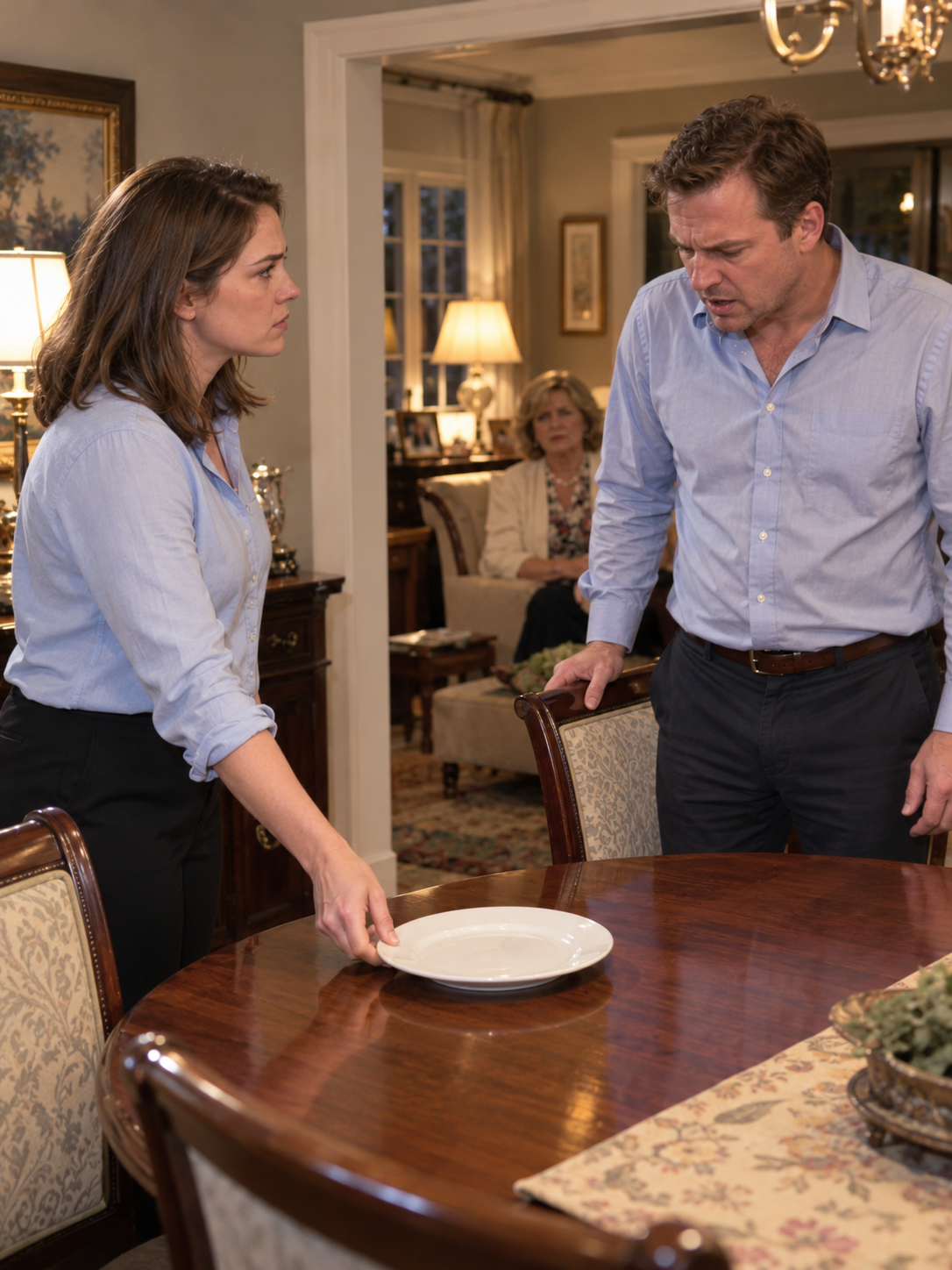
My husband announced he was giving his entire $12,000 monthly salary to his mother
My husband announced he was giving his entire $12,000 monthly salary to his mother and told me to pay my...

My Girlfriend Said My Career Success Made Her Feel Invisible—Then One Unfamiliar Scent on Her Jacket Led Me to the Man She Had Been Hiding – Life Story
Sylvia pulled away when I kissed her, went straight upstairs to shower, and washed the clothes she had just worn...

The CEO Mocked His Small Repair Shop – He Bought Her Old Factory and Stole the Entire Market…
THE CEO MOCKED HIS TINY REPAIR SHOP—18 MONTHS LATER, HE BOUGHT HER ABANDONED FACTORY AND TOOK HER ENTIRE MARKET PART...