THE DEBT COLLECTOR BRUISED MY ARM OVER MY BROTHER’S SURGERY BILL—THEN GREYPORT’S MOST FEARED CLUB OWNER PUT A BLACK CARD IN MY HAND – Life Story
The collector’s fingers were still locked around Lena Cruz’s arm when the black SUV stopped at the mouth of the alley.
The man who stepped out didn’t raise his voice, but both collectors released her as if they had been caught stealing from him.
Then he placed a black business card in Lena’s trembling hand, and she realized the stranger who had just protected her might belong to a world even more dangerous than the one she was trying to escape.
Rain streamed from the fire escape above the Rusty Spoon Diner and struck the pavement hard enough to bounce.
Lena pressed her back against the brick wall.
Her left arm throbbed where Victor Salazar had grabbed her.
He was broad through the shoulders, built like a man who had spent his life discovering how often size could substitute for persuasion.
His partner stood several feet away, thin and restless, chewing the same toothpick he had been rolling between his teeth since they stepped from the shadows.
Victor looked past Lena toward the SUV.
All the confidence went out of his face.
“Mr.
Vascari.”
The man approaching them held a dark umbrella in one hand.
Mid-thirties, maybe.
Charcoal overcoat.
Black suit beneath it.
No visible hurry.
Lena knew his face before she knew why.
Greyport had people whose names lived in newspapers and people whose names lived in lowered voices.
Adrien Vascari belonged to the second category.
He owned Verona, the private downtown lounge politicians denied visiting and business executives photographed themselves leaving.
He owned waterfront property, restaurant groups, warehouses, and enough pieces of enough companies that local reporters regularly published articles attempting to map them.
His father had died under federal investigation.
His uncle had served time for conspiracy and tax fraud.
Adrien himself had never been convicted of anything.
That fact had not made the city trust him more.
He stopped three feet from Victor.
“What are you doing?”
Victor recovered enough to gesture toward Lena.
“Account collection.”
Adrien looked at her arm.
Four finger-shaped marks had already darkened beneath her wet skin.
He looked back at Victor.
“Collection requires a hand around her arm?”
“She tried to walk away.”
Adrien’s expression barely changed.
“She is allowed to walk away.”
Victor swallowed.
“The account is delinquent.”
Lena found her voice.
“I paid last week.”
Victor turned.
“Minimum payment.”
“You said that counted.”
“Before the adjustment.”
He held up the rain-spotted paper he had shown her minutes earlier.
Lena hated that paper.
Harborline Recovery Services.
Her brother Diego’s medical debt.
Eighty-two thousand, four hundred dollars after insurance.
The number had once been higher.
Lena had worked it down through eighteen months of diner shifts, tutoring, weekend elder-care work, and every spare dollar she could scrape from financial aid.
The original repayment program had been brutal but possible.
Then Harborline acquired the hospital’s debt portfolio.
Fees appeared.
Interest changed.
A “high-risk account surcharge” showed up that morning.
The payment due Friday was now almost twice what Lena made in a month.
Victor had explained it in the alley.
Then told her there were “other ways” a young woman could make herself useful.
Adrien took the paper from Victor.
He read it beneath the umbrella.
“Who approved this increase?”
Victor hesitated.
“Corporate.”
“Who?”
“You know how it works.”
Adrien’s eyes lifted.
“That is why I asked.”
The thin collector finally stepped in.
“We’re just doing our jobs.”
Adrien folded the paper once.
Very neatly.
Then handed it to Lena.
“Go stand by the car.”
She stared at him.
“I’m fine.”
“You’re shaking.”
“I’m cold.”
“You can be both.”
She should have resisted.
Instead she walked.
The SUV’s passenger side was shielded from the rain by an awning jutting over the alley entrance.
She stood beneath it and hugged her backpack to her chest.
The collectors spoke with Adrien in voices too low for her to hear.
Victor nodded repeatedly.
The thin man threw his toothpick into a puddle.
Neither looked at Lena.
Less than a minute later they left on foot.
Adrien remained.
He crossed toward her.
Up close, Lena noticed the things distance had hidden.
A faint pale scar beneath his jaw.
Rain on the shoulders of his overcoat.
Tiredness around his eyes.
Not weakness.
Something older.
“You should photograph your arm.”
“I don’t want to call the police.”
“I didn’t say call the police.”
She looked at him.
“Why photograph it?”
“Because bruises fade faster than bad companies change their stories.”
That sounded like experience.
Lena opened her phone and took several pictures.
Adrien waited.
When she finished, he held out his hand.
“May I see the notice?”
She gave him the paper.
He read it carefully this time.
“Your brother’s surgery?”
She stiffened.
“How do you know that?”
“The account category.”
“Oh.”
She immediately felt foolish for assuming he had researched her.
Adrien handed it back.
“Harborline purchased this debt nine months ago.”
“Yes.”
“The original hospital balance was interest-free.”
“For the first year.”
“And Harborline added collection interest.”
“They say the contract allows it.”
“Does it?”
“I don’t know.”
He glanced toward the alley exit.
“Do you have the original paperwork?”
“At home.”
“Keep it.”
“I was planning to.”
“Not in your bag.
Not at work.
Somewhere safe.”
Lena stared.
“Are those men coming back?”
“Not tonight.”
“That is not an answer.”
His mouth moved almost like he was considering a smile.
“No.”
It wasn’t.
He reached into his coat.
Lena tensed.
Adrien noticed.
His hand stopped.
“Business card.”
She felt heat rise to her cheeks.
“Sorry.”
“You don’t owe me an apology for being cautious.”
He withdrew a matte-black card with silver lettering.
VERONA.
Below it:
ADRIEN VASCARI.
No title.
No slogan.
No email.
Only a phone number.
He held it toward her.
“I need another floor host.”
Lena almost laughed.
“What?”
“At Verona.”
“I’m a nursing student.”
“I know what a nursing student is.”
“I also work at a diner.”
“I noticed.”
“I’m not qualified to host at some private club.”
“You spent five minutes in an alley being threatened and still corrected Victor twice when he misstated the terms of your payment plan.”
Her eyebrows pulled together.
“You heard that?”
“I heard enough.”
“So that makes me qualified?”
“It makes me attentive while frightened.”
His eyes settled on hers.
“That is rarer than you think.”
Lena didn’t take the card.
“What’s the catch?”
“You work.”
“That’s not what I mean.”
“No.”
“I mean why would you care?”
Adrien looked at the bruises on her arm.
“Because Harborline is partly my problem.”
Lena went still.
“What does that mean?”
“My family’s holding company financed part of its acquisition three years ago.”
“You own them?”
“Not directly.”
“That sounds like the answer rich people give when they don’t want to say yes.”
This time he did smile.
Very slightly.
“Fair.”
Her stomach tightened.
“So those men work for you.”
“They do not.”
“You just made them leave.”
“That does not make them mine.”
“Then what does it make them?”
Adrien looked toward the street.
“A liability.”
She hated how calm he sounded.
Lena finally took the card.
“You’re telling me you can make the payments stop?”
“I’m telling you I can have Harborline suspend collection while the contract is reviewed.”
“And then?”
“If the principal is legitimate, you pay the principal.”
“With what?”
“The job pays thirty-eight dollars an hour plus tips.”
She stared.
“I make fourteen-fifty at the diner.”
“I assumed.”
“That’s more than some nurses make.”
“It is less than Verona charges for a bottle of mediocre champagne.”
Lena looked at the card.
“Why freeze the debt?”
“Because doubling payments through invented fees is predatory.”
“You finance predatory companies?”
The question landed.
Adrien’s face changed.
Not anger.
Something closer to shame.
“My family financed businesses I would not finance now.”
“That’s convenient.”
“Yes.”
The honesty disarmed her more than denial would have.
He stepped back.
“Come tomorrow at eight if you want the job.”
“And if I don’t?”
“Then you don’t.”
“Harborline?”
“I’ll still order a review of the account.”
Lena looked up quickly.
“You’d do that even if I don’t work for you?”
“Yes.”
“Why?”
“Because Victor put his hands on you while representing a company connected to my money.”
His gaze hardened.
“That makes it my responsibility whether you ever see me again or not.”
The rain softened.
Lena heard a bus braking at the corner.
Her bus.
She shoved the card into her backpack.
“I have to go.”
Adrien nodded.
She ran.
At the bus stop, she looked back once.
He still stood beneath the awning.
Not watching her.
Watching the alley where the collectors had disappeared.
At home, Diego was asleep on the couch with the television running.
Their apartment had once belonged to their mother.
Two bedrooms above a laundromat in East Greyport.
Old radiator.
One window that never fully closed.
A kitchen so narrow two people had to negotiate who was allowed to turn around.
After their mother died, Lena could have moved somewhere smaller.
She never did.
Too much of her childhood lived there.
Pencil marks on a pantry door where their mother measured their height.
A burn mark on the counter from Diego trying to cook when he was twelve.
The faded blue mug their mother drank coffee from every morning.
Diego stirred when Lena came in.
“You’re late.”
“Bus.”
His eyes opened fully.
He was nineteen, six feet tall now, but illness had taken weight from his face and made him look younger.
The transplant scar ran down the center of his chest beneath his shirt.
His heart surgery had saved him.
It had also rewritten their finances.
“What happened to your arm?”
Lena looked down.
The bruise had become impossible to hide.
“Nothing.”
“That is visibly not nothing.”
“Guy grabbed me outside work.”
Diego sat up.
“What guy?”
“Harborline.”
His face changed.
“Because of me.”
“No.”
“Lena.”
“Because of a bill.”
“For my surgery.”
She put her bag down harder than necessary.
“We are not doing this.”
“You wouldn’t have the bill if I hadn’t—”
“If you hadn’t what? Needed to live?”
Diego looked away.
“That is not a moral failure.”
“I know.”
“No, you say you know.”
She crouched in front of him.
“You almost died.”
His eyes filled.
“We paid for treatment.
That’s what money is for.”
“Money we don’t have.”
“We’ll get it.”
“How?”
Lena thought of the black card.
She didn’t answer.
Diego noticed.
“What?”
“Nothing.”
“That was a very obvious something.”
She reached into the backpack and placed the card on the coffee table.
He read it.
“Verona?”
“Yes.”
“Like the Verona?”
“Yes.”
His eyebrows rose.
“Adrien Vascari gave you this?”
“Yes.”
“Why?”
“He offered me a job.”
Diego stared.
Then laughed once.
“You cannot work for Adrien Vascari.”
“Apparently I can.”
“No, I mean you should not.”
“You know him?”
“I know Google.”
“So do I.”
“He’s connected to organized crime.”
“Rumors.”
“Lena.”
She sat beside him.
“I’m not joining a crime family.”
“You’re taking a job at his club.”
“If I take it.”
“He just happened to find you behind the diner?”
The suspicion in Diego’s voice made Lena defensive.
“He stopped two men from hurting me.”
“That doesn’t make him safe.”
She had no answer.
Diego picked up the card again.
“How much?”
“Thirty-eight an hour.”
His expression changed.
“No.”
“What?”
“No.”
“Diego.”
“You are not doing this because of my debt.”
“It is my debt too.”
“No, it isn’t.”
“It became mine when I signed the hospital papers.”
“You were twenty-two.”
“And?”
“And Mom had just died.
I was sick.
You should have been finishing school.”
“I am finishing school.”
“You’ve been ‘finishing’ for two years because you keep dropping classes to work.”
The sentence hurt because it was true.
Lena looked toward the stack of unopened envelopes beside the refrigerator.
Nursing school had once been a four-year plan.
Then their mother died.
Then Diego’s congenital heart defect worsened.
Then surgery.
Then complications.
Then debt.
Life had transformed Lena’s education into something she squeezed between crises.
“I can make three times as much,” she said.
Diego’s voice softened.
“At what cost?”
Lena looked at the card.
She didn’t know yet.
At seven-fifty the following night, Lena stood outside Verona.
She nearly turned around.
The building occupied the first two floors of a restored bank in the financial district.
Dark stone.
Tall windows.
No neon.
Only a brass V beside the entrance.
Women in expensive dresses moved through the velvet rope.
Men in tailored jackets handed keys to valets.
Lena wore the nicest clothes she owned.
Black trousers.
White blouse.
A wool coat Maya had given her two Christmases earlier.
She felt like a substitute teacher arriving at an awards gala.
A security guard checked the card.
His posture changed.
“Ms.
Cruz.”
She disliked that he knew her name.
“This way.”
He led her upstairs.
Adrien’s office was quieter than she expected.
Bookshelves.
A large desk.
City lights behind him.
He wore a white shirt with the sleeves folded to his forearms.
No jacket.
Reading glasses.
The glasses unsettled her.
Dangerous men weren’t supposed to look like professors reading insurance paperwork.
“You came.”
“Don’t sound surprised.”
“I wasn’t.”
“That’s worse.”
He gestured toward the chair opposite him.
A folder waited there.
Lena sat.
“Contract.”
She opened it.
Employment terms.
Thirty-eight dollars an hour.
Minimum three shifts.
Tips pooled.
Health insurance after ninety days.
No requirement to entertain guests outside normal hosting duties.
No dress code she found humiliating.
Then the debt addendum.
HARBORLINE ACCOUNT REVIEW AND PAYMENT STAY.
Collection activity paused.
Interest and late fees suspended during independent contract review.
If principal confirmed, Verona Holdings would purchase the account at Harborline’s acquisition cost.
Lena would repay at zero interest through payroll deductions capped at fifteen percent of net pay.
She looked up.
“You’re buying my debt.”
“If it is valid.”
“What if I quit?”
“Payments continue directly to the holding company under the same zero-interest schedule.”
“No acceleration?”
“No.”
“No giant penalty?”
“No.”
“Why?”
“Because then it would still be a trap.”
She returned to the document.
Everything she feared had been addressed.
That made her more suspicious, not less.
“Who wrote this?”
“My lawyer.”
“Can I have someone review it?”
“You should.”
“I don’t have a lawyer.”
“Legal aid at Greyport University reviews employment contracts for students on Thursdays.”
Lena stared.
“You looked that up?”
“Yes.”
“Why?”
“Because you were going to ask.”
She closed the folder.
“I don’t like how prepared you are.”
“Most people do.”
“I’m not most people.”
“I noticed.”
She took the contract home.
The university clinic confirmed it was unusually favorable.
Two days later Lena signed.
Her first shift at Verona changed less than she expected.
People still ordered drinks.
People still complained.
People still treated staff as if money had purchased temporary ownership of everyone in reach.
But Verona had rules.
Clear ones.
No touching employees.
No following hosts into service corridors.
No private “tips” in exchange for favors.
Security acted quickly.
Managers backed staff.
The black silk dress Maria, the floor manager, handed Lena was elegant and modest.
“You look disappointed,” Maria said.
“I thought this place would be more scandalous.”
Maria, fifty-two, silver streak in her black hair, gave Lena a dry look.
“Most scandal is bookkeeping.”
Lena laughed.
Maria didn’t.
“I’m serious.”
That became their friendship.
Maria had run luxury hotels before joining Verona.
She knew everyone.
Remembered everything.
Could remove a drunk hedge fund manager from a booth using the same tone someone else might use to offer dessert.
“Never apologize because a customer makes you uncomfortable,” she told Lena on night three.
“Why?”
“Because men hear apology and think negotiation.”
Lena stored that.
She needed it a week later.
A developer named Frank Sterling grabbed her wrist after she accidentally knocked water onto his sleeve.
Not violently at first.
Possessively.
“Careful, sweetheart.”
Lena pulled once.
He didn’t release.
“Let go.”
He smiled.
“Relax.”
“Let go.”
Still smiling.
Then Lena remembered Maria.
She didn’t apologize.
She raised her other hand.
Two fingers.
The security signal.
A guard appeared in seconds.
Frank released her.
Adrien saw the exchange from across the room.
Lena expected him to intervene.
He didn’t.
Security handled it.
Maria removed Frank’s party.
Only after Lena’s shift ended did Adrien approach.
“You okay?”
“Yes.”
“You signaled.”
“I did.”
“Good.”
That was all.
The restraint impressed her more than some public defense would have.
He had given her a system.
Then trusted her to use it.
Weeks passed.
Money changed everything and almost nothing.
Harborline stopped calling.
Lena paid the pharmacy without checking her balance first.
She replaced the broken window latch.
She bought Diego the nutritional supplements his cardiologist wanted.
She reenrolled in the clinical class she had postponed twice.
But exhaustion remained.
Three night shifts at Verona.
Two diner shifts she couldn’t yet bring herself to quit.
Classes.
Diego’s appointments.
Studying.
Adrien noticed before she admitted it.
He found her asleep in Verona’s employee break room at four-thirty one morning.
Her nursing textbook open across her lap.
A highlighter still in her hand.
He woke her by setting coffee on the table.
Lena jerked upright.
“What time is it?”
“Too late.”
“I have class at eight.”
“I know.”
“That is creepy.”
“Your schedule is on the employee availability form.”
“Less creepy.”
She rubbed her eyes.
Adrien sat across from her.
“Quit the diner.”
“No.”
“You don’t need it.”
“I’ve worked there since Mom got sick.”
“That is sentimental, not financial.”
“Thank you, financial planner.”
“You’re welcome.”
“I like the people.”
“Then visit.”
She glared.
He nodded toward her textbook.
“You’re failing pharmacology.”
Her head snapped up.
“How do you know that?”
“You left a graded quiz on the table last week.”
“I got a seventy-four.”
“That sounds like failing for you.”
She hated that he was right.
“I can handle it.”
“You’re sleeping in a break room.”
“Temporary.”
“Lena.”
The tone irritated her.
She stood.
“Do not make decisions for me.”
Adrien went still.
“I wasn’t.”
“You were getting close.”
Silence.
Then he nodded.
“You’re right.”
That stopped her.
No argument.
No wounded pride.
No you’re being ungrateful.
Just recognition.
He stood too.
“I think the diner is costing you more than it pays.”
“That’s different.”
“Yes.”
She picked up her book.
“I’ll think about it.”
She quit two weeks later.
Not because Adrien told her.
Because she fell asleep on the bus and missed Diego’s cardiology appointment.
Diego called from the clinic.
“Are you coming?”
Lena stared through the bus window at a neighborhood she didn’t recognize.
Shame hit harder than any collector.
“I’m sorry.”
He sighed.
“It’s okay.”
No.
It wasn’t.
She gave notice that afternoon.
The diner manager hugged her.
“You’ve been trying to save everybody since you were nineteen.”
Lena laughed.
“I was twenty.”
“Same disease.”
“What disease?”
“Thinking exhausted means responsible.”
That sentence followed her home.
Her relationship with Adrien grew in increments so small Lena did not realize it had changed until Diego did.
“You talk about your boss a lot.”
They were eating cereal at midnight.
Lena looked up.
“No, I don’t.”
“You just spent five minutes explaining why he hates cinnamon.”
“That was relevant.”
“To cereal?”
“Yes.”
Diego smiled.
“You like him.”
“He owns my debt.”
“That is romantic.”
“It’s not like that.”
“He owns the company that owns the debt.”
“Technically.”
“Much healthier.”
She threw a napkin at him.
Diego caught it.
Then his expression became serious.
“Just be careful.”
“I am.”
“I mean with him.”
“So do I.”
“You’ve been in survival mode so long anyone making you feel safe is going to feel bigger than they are.”
Lena stared at him.
“Where did you learn to talk like a therapist?”
“Being hospitalized for eighteen months.”
He took another spoonful.
“Lots of posters.”
She smiled.
But he was right.
That frightened her.
Adrien’s world did not let her forget it.
Verona was legitimate on paper.
Payroll taxes.
Liquor licenses.
Vendor contracts.
Security reports.
Yet some men entered through the private elevator and never appeared on reservation lists.
Some meetings made Maria close entire sections.
Adrien occasionally disappeared for days.
When Lena asked where, he gave honest but incomplete answers.
“Business.”
“What kind?”
“The kind you should not be involved in.”
That answer bothered her more each time.
Then someone fired shots through Verona’s front windows.
It happened after closing.
Lena was behind the bar totaling receipts.
The first crack sounded like a dropped tray.
The second shattered glass above her head.
Security yelled.
Lights cut.
Lena froze.
For one terrible second, her body refused to choose direction.
Then training from Verona took over.
Down.
Behind the bar.
Away from windows.
She dropped.
A shard sliced her palm.
Warm blood filled her grip.
Someone shouted her name.
Adrien appeared behind the bar seconds later.
“Are you hit?”
“No.”
“Show me.”
“My hand.”
He pulled her toward the service corridor.
Not carrying her.
Not dragging.
One hand at her elbow.
“Move.”
They entered a windowless office.
He locked the door and opened a first-aid cabinet.
Lena’s entire body started shaking once the danger disappeared.
Adrien washed the cut.
His hands were steady.
Hers weren’t.
“You knew where to go,” he said.
“I froze.”
“For one second.”
“I could have died in one second.”
“Yes.”
The blunt answer made tears sting her eyes.
Adrien looked up.
“I’m sorry.”
“For what?”
“For bringing you into a place where that sentence is true.”
He wrapped gauze around her palm.
Outside, radios crackled.
Footsteps moved through halls.
Sirens approached.
Lena watched him.
“Who did that?”
Adrien tied the bandage.
“A man named Nico Moretti.”
“The shipping guy?”
“You know him?”
“Everyone knows the Moretti name.”
“Nico controls several unions and companies on the south docks.”
“What does he want?”
“Access.”
“To Verona?”
“To the waterfront businesses connected to me.”
She pulled her hand back.
“You said this place was legitimate.”
“It is.”
“That isn’t what I asked.”
Adrien stood.
“You asked who shot at it.”
“You know what I mean.”
He looked tired.
For the first time since she met him, old.
“My father built relationships with men like Nico.”
“And you kept them.”
“Some.”
“Why?”
“Because when I took over at twenty-eight, walking away instantly would have left my employees, properties and family exposed.”
Lena laughed bitterly.
“That sounds familiar.”
He understood.
“You think I’m doing what you did with the diner.”
“I think you’re telling yourself staying is responsibility.”
“And you think it isn’t?”
“I think sometimes staying becomes habit.”
Adrien looked away.
The sirens grew louder.
“This is exactly why you should leave Verona.”
Lena’s chest tightened.
“What?”
“I can transfer your debt agreement to an independent bank.
Same terms.
You stop working here.”
“You’re firing me.”
“I’m removing you from risk.”
“That’s a prettier sentence.”
His eyes hardened.
“This is not an argument about pride.”
“No.”
She stood.
“It’s about you deciding for me.”
“Somebody fired into the building.”
“I was here.”
“Exactly.”
“You don’t get to make my choice because you’re scared.”
“I am not scared.”
Lena stared at him.
“Then why are your hands shaking?”
Adrien looked down.
They were.
Barely.
But they were.
His expression changed.
Lena moved closer.
“I can leave.”
“Yes.”
“If I leave, it will be because I decided this life costs too much.”
“Yes.”
“Not because you ordered me away.”
He closed his eyes briefly.
“Fair.”
She should have resigned the next day.
Instead, she stayed.
Not forever.
Long enough to understand what she wanted.
The shooting changed Verona.
Security doubled.
Guest lists tightened.
Adrien spent more nights behind closed doors.
Lena saw less of him.
When she did, he looked at exits before he looked at her.
The sense of safety she had associated with him began to crack.
Diego noticed.
“You’re checking the window again.”
“I’m not.”
“You’ve checked it three times.”
They were eating dinner.
Lena put down her fork.
“I’m thinking.”
“You’re afraid.”
“Yes.”
The admission surprised her.
Diego nodded.
“Good.”
“What?”
“Not good you’re afraid.”
He pointed toward her.
“Good you said it.”
Lena looked toward the window.
“Someone shot at the club.”
Diego’s face changed.
“When?”
“Three weeks ago.”
“You didn’t tell me.”
“I didn’t want you worried.”
“I’m already worried.”
“I’m sorry.”
“What happened?”
“No one was seriously hurt.”
“Were you?”
“Cut my hand.”
She showed the faint healing line.
Diego stared.
“Lena.”
“I’m okay.”
“That’s not the point.”
“I know.”
“Is this because of Vascari?”
“Yes.”
Diego stood and walked away from the table.
She followed.
“Diego.”
He turned.
“You lied to me.”
“I didn’t lie.”
“You told me it was a club job.”
“It is.”
“You forgot the bullets.”
“I didn’t know.”
“You know now.”
“Yes.”
“And you’re still there.”
The accusation hurt.
“Because leaving isn’t simple.”
“It is from here.”
“No.”
She thought of debt.
School.
Money.
Adrien.
Especially Adrien.
Diego saw that answer on her face.
“Oh.”
“What?”
“It’s him.”
“Don’t.”
“You love him.”
“I do not.”
“You’re a terrible liar.”
Lena sat.
Her knees suddenly felt weak.
“I don’t know what I feel.”
Diego’s anger softened.
“That’s worse.”
“I know.”
A week later, Diego met Nico Moretti.
Ten seconds.
That was all it took.
Diego’s physical therapist’s office occupied a clinic near downtown.
Adrien had insisted a security employee accompany him after the Verona shooting.
Lena hated that.
Diego hated it more.
The guard stepped into the restroom.
Nico approached.
No weapon.
No threat.
Just a fifty-year-old man in an expensive navy coat carrying a white envelope.
He knew Diego’s name.
Knew the hospital.
Knew Lena worked at Verona.
He offered Diego thirty thousand dollars.
“Take your sister somewhere else.”
Diego refused.
Nico left the envelope anyway.
Inside was cash and a photograph of Lena entering Verona beside Adrien.
On the back:
ASK HER WHAT HIS PROTECTION COSTS.
Diego returned home furious.
Lena found the envelope on the kitchen table.
“Where did you get this?”
“Your boyfriend’s enemy.”
“He is not my boyfriend.”
“Great.
Then ruining our lives for him makes even less sense.”
“Diego.”
“Is Vascari a criminal?”
She went still.
“I don’t know everything he has done.”
“That means yes.”
“It means exactly what I said.”
“Did his money pay my bills?”
“No.”
“Your salary did.”
“Through him.”
“Did his company buy the debt?”
“Yes.”
Diego pushed the envelope toward her.
“I don’t want this.”
“Neither do I.”
“I mean any of it.”
His voice cracked.
“The money.
The guards.
Him.”
Lena felt anger rise.
“I kept you alive.”
The words left too fast.
Diego flinched.
Immediately Lena wanted them back.
“Diego—”
“No.”
“I didn’t mean—”
“Yes, you did.”
He stood.
“You think every terrible choice becomes okay because you made it for me.”
“That isn’t fair.”
“Neither is using me as the reason you don’t have to admit you want to stay with him.”
The apartment went quiet.
Lena stared.
Diego’s eyes filled.
“I never asked you to disappear into somebody else’s world for me.”
Then he walked into his room and closed the door.
Lena sat alone.
The envelope remained on the table.
Cash she would not touch.
Photograph.
Message.
For the first time, she looked at her situation without the language she had been using.
I need the money.
I need to protect Diego.
I owe Adrien.
Verona is temporary.
Adrien makes me safe.
None of those statements were completely false.
None were completely true anymore.
At two in the morning, Lena called Adrien.
“Can I come over?”
He answered immediately.
“Yes.”
She went to his penthouse.
Not Verona.
His home.
The first thing she noticed was how little it resembled the mythology around him.
Books.
Old records.
A kitchen with dishes drying beside the sink.
A cracked ceramic mug.
A framed photograph of a woman Lena guessed was his mother.
Adrien saw the envelope.
“Nico.”
“Yes.”
His face hardened.
“He approached Diego?”
“Yes.”
“I’ll handle—”
“No.”
Adrien stopped.
Lena placed the envelope on the counter.
“That sentence is the problem.”
“What sentence?”
“I’ll handle it.”
He stared.
“I need you to listen.”
He nodded.
So she told him everything.
Diego.
The argument.
Her fear.
The club.
The shooting.
How she had started needing Adrien’s presence to feel safe while simultaneously knowing his world created the danger she wanted protection from.
Adrien said nothing for a long time.
Then:
“You should leave me.”
Lena hated how much the words hurt.
“Is that what you want?”
“No.”
“Then don’t say it like some noble sacrifice.”
His jaw tightened.
“What do you want me to say?”
“The truth.”
“The truth is I have enemies.”
“I know.”
“The truth is my father built half our wealth through deals I would not defend today.”
“I know.”
“The truth is some of those deals still benefit me.”
She waited.
“And?”
Adrien looked toward the city.
“The truth is I’ve spent eight years pretending I was cleaning up the business while keeping every piece that made me powerful.”
That was new.
Lena stayed quiet.
“Every year I sold something.”
He gestured vaguely.
“A company.
A partnership.
A property.”
“But?”
“But I kept the network.”
“Why?”
He laughed once without humor.
“Because power is useful when you grow up afraid.”
Lena looked at the photograph of his mother.
Adrien followed her eyes.
“My father never hit me.”
His voice was careful.
“He didn’t need to.”
“What did he do?”
“He controlled everything.”
Money.
School.
Friends.
His mother’s choices.
Adrien did not list them all.
He didn’t need to.
“He called protection love,” Adrien said.
The sentence settled between them.
Lena looked down.
“So do you.”
He closed his eyes.
That hurt him.
She knew it.
It needed to.
“I never touched you without permission.”
“I know.”
“I never forced you to stay.”
“I know.”
“I froze your debt because Harborline—”
“I know.”
Lena stepped closer.
“You are not your father.”
He looked at her.
“But sometimes you use the same language.”
Silence.
He nodded.
“Then tell me what to do.”
Lena shook her head.
“No.”
“What?”
“That is another version of giving me control you should own.”
She picked up the white envelope.
“You decide what kind of man you are when nobody is forcing you.”
Adrien watched her.
“And you?”
“I’m leaving Verona.”
Pain crossed his face.
She continued.
“I’m not leaving nursing school.”
He nodded.
“I’m not letting you pay the rest of my debt.”
“Lena.”
“No.”
“You already have the repayment agreement.”
“I’ll honor it.”
“The interest is zero.”
“Good.”
“You could repay it over ten years.”
“Then I will.”
He almost smiled.
“You are very stubborn.”
“So are you.”
She took a breath.
“And I’m not promising anything about us while Nico can reach my brother because of you.”
His face went still.
“That’s fair.”
Again, no argument.
That was why she loved him.
The realization came quietly.
She did not say it.
Not yet.
Lena left Verona two weeks later.
Maria hugged her.
“You lasted longer than I expected.”
“Thank you?”
“It’s a compliment.”
“What did you expect?”
Maria looked toward Adrien’s closed office.
“That he would scare you away.”
“He almost did.”
“No.”
Maria smiled.
“He scared himself.”
Lena started work at a rehabilitation hospital as a patient care technician, a job connected to her nursing program.
Less money.
Early mornings.
Actual fluorescent lights.
Her feet still hurt.
But when she came home, the danger belonged to ordinary things.
Exhaustion.
Exams.
Diego forgetting medication.
She could live with ordinary danger.
Adrien did not disappear.
He texted.
Not constantly.
Once every few days.
Hope clinical went well.
Your brother’s latest lab results good?
Maria says the new host is terrible and blames you.
Lena answered when she wanted.
Sometimes they had coffee.
Public places.
No security hovering.
No business.
No promises.
Trust began to separate itself from adrenaline.
Then Adrien made a choice Lena had not asked him to make.
He contacted a federal attorney.
Not anonymously.
Not through Lena.
Through his own lawyer.
For years, Greyport investigators had been trying to map Nico Moretti’s control of Harborline, port-service contracts and several shell companies connected to bribery.
Adrien had records.
Old partnership agreements.
Payment ledgers.
Corporate transfers.
Enough to hurt Nico.
Also enough to implicate Adrien’s own holding company in past transactions.
His lawyer told him cooperation would cost him.
Businesses could be forfeited.
Licenses reviewed.
Civil penalties.
Possibly charges.
Adrien proceeded.
He did not tell Lena until after the first interview.
They sat in a coffee shop near the hospital.
“You did what?”
“I spoke to federal investigators.”
She stared.
“Why?”
“Because Nico approached Diego.”
“That happened a month ago.”
“Yes.”
“And you waited?”
“I needed counsel.”
Lena almost laughed.
“That is the most responsible thing you have ever said.”
“I’m growing.”
“What did you give them?”
“Records.”
“About Nico?”
“And me.”
Her expression changed.
“Adrien.”
“I’m not innocent.”
“I never asked you to confess to everything you’ve ever done.”
“No.”
He looked at her.
“You asked me to decide who I am when nobody is forcing me.”
Lena’s throat tightened.
“What happens?”
“I don’t know.”
“You could go to prison.”
“Yes.”
“Lose Verona.”
“Yes.”
“Lose everything.”
“No.”
His eyes stayed on hers.
“Not everything.”
She hated that line.
She loved it too.
“Do not romanticize federal prosecution.”
“I wasn’t.”
“You absolutely were.”
He smiled.
Then the smile disappeared.
“I may need to leave Greyport.”
“For witness protection?”
“No.”
“My lawyer thinks that is unlikely.”
“Then why?”
“Because even if the case ends well, the Moretti network won’t disappear.”
“Nico?”
“His people.”
Lena looked at her coffee.
“Is this goodbye?”
“I don’t know.”
That answer hurt more than certainty.
The investigation remained quiet for nearly four months.
Adrien reduced his presence at Verona.
Sold two warehouse interests.
Placed Harborline’s financing stake into an independent trust pending federal review.
The collectors who had confronted Lena were fired months earlier.
Harborline itself entered regulatory scrutiny when investigators discovered illegal fees on hundreds of medical accounts.
Lena received a revised statement.
Original principal.
Verified payments.
Illegal penalties removed.
Her balance dropped from nearly seventy thousand to just under forty-two.
She cried at the kitchen table.
Diego thought something was wrong.
“What?”
She turned the statement toward him.
He read it.
Then read it again.
“That’s still terrible.”
Lena laughed through tears.
“It’s beautiful.”
“Forty-two thousand dollars is beautiful?”
“Compared to eighty-two?”
“Fair.”
He sat across from her.
“I’m sorry.”
“For what?”
“What I said about you using me.”
“You were right.”
“I was angry.”
“Still right.”
He folded the statement.
“You saved my life.”
Lena looked at him.
“I helped.”
“Okay.”
He smiled.
“You helped.”
She reached across the table.
“Now help me pay forty-two thousand dollars.”
“I currently make eleven dollars an hour at the campus library.”
“Excellent.
We’ll be done when we’re eighty.”
Their laughter loosened something in both of them.
Two weeks later, Nico Moretti was indicted.
No explosion.
No warehouse shootout.
No bodies on television.
Federal agents arrested him leaving a law office downtown after a sealed indictment was unsealed.
Charges included extortion, financial fraud, illegal debt collection practices and bribery tied to port contracts.
Harborline executives were charged separately.
Adrien was not publicly named as the cooperating witness.
Greyport guessed anyway.
Within days, graffiti appeared on one of his properties.
TRAITOR.
A brick came through a Verona side window.
Security found a threatening note on a parked car.
Adrien shut the club for three weeks.
Lena’s fear returned.
But this time he did not tell her he would handle everything.
He said, “I think you and Diego should stay with your aunt in Richmond for a while.”
Lena folded her arms.
“Request or order?”
“Request.”
“Reason?”
“Investigators believe retaliation is possible.”
“Against me?”
“Against anyone publicly associated with me.”
“Do they recommend it?”
“Yes.”
That mattered.
Lena agreed.
She and Diego spent six weeks in Richmond.
Lena completed coursework remotely.
Diego complained about their aunt’s obsession with feeding him.
Adrien called every evening at nine.
Sometimes for five minutes.
Sometimes an hour.
They talked about everything except danger.
His mother’s music collection.
Lena’s terrible anatomy professor.
Diego’s plan to study biomedical engineering.
Whether pineapple belonged on pizza.
The relationship became more intimate during separation than it ever had inside Verona.
Because fear no longer provided the electricity.
Choice did.
One night Lena said, “I miss you.”
Silence.
Then Adrien:
“I miss you too.”
“That’s it?”
“I am trying not to say something dramatic.”
“Why start now?”
He laughed.
She closed her eyes.
“I love you.”
The words came out before she decided to say them.
Silence again.
Longer.
Lena’s heart started pounding.
“Adrien?”
“I’m here.”
“Well?”
“I am trying very hard not to make this about how terrified I am.”
She smiled despite herself.
“Try harder.”
“I love you.”
The simplicity almost hurt.
No possession.
No protection.
No promise he could keep her safe from everything.
Just love.
When Lena returned to Greyport, Adrien looked different.
He had sold the penthouse.
Moved into a modest townhouse near the river.
Half the art was gone.
So were the men waiting outside every door.
Verona reopened under a management company.
Adrien retained a minority interest but no daily control while federal agreements were finalized.
The government seized assets associated with specific illegal transactions.
He paid a substantial civil penalty.
His attorney negotiated a cooperation agreement that spared him prison on the conduct he disclosed, but required years of reporting and restrictions.
Lena read the public filing.
All of it.
Adrien didn’t ask her to.
She needed to.
Trust after secrecy required paperwork sometimes.
He had not confessed to murder.
Not bribery.
Not violence.
His exposure centered on financial relationships, undeclared beneficial interests and business arrangements inherited from his father that he had continued longer than he should have.
Not innocence.
Not the monster Greyport imagined either.
When Lena finished reading, she found him in the kitchen.
“You should have left some of this years ago.”
“Yes.”
“You benefited from it.”
“Yes.”
“You knew some of the companies were dirty.”
“Yes.”
She put the documents down.
“I’m angry.”
“I know.”
“No.”
She looked at him.
“I need you to understand that loving you does not require me to make your past prettier.”
Adrien nodded.
“I don’t want you to.”
“Good.”
“I love you too.”
That came later.
Much later that evening.
After anger.
After questions.
After she decided she was not staying because he needed forgiveness.
She was staying because he had accepted accountability without demanding she absolve him.
Their future did not begin in Greyport.
Not immediately.
Lena still had eighteen months of nursing school.
Diego had doctors.
Adrien had federal obligations.
They remained in the city.
Separate homes.
Separate finances.
Lena paid her debt herself.
Adrien occasionally complained.
She ignored him.
By graduation, the balance had dropped below twenty thousand.
Lena wore a white nursing pin and blue graduation robe.
Diego shouted loud enough during the ceremony that three rows turned around.
Maria cried.
Adrien sat beside her and pretended not to.
Afterward, Lena found him outside.
“You came.”
He looked offended.
“Of course.”
“You had a compliance hearing.”
“I moved it.”
“That sounds inappropriate.”
“It was a scheduling conference.”
“Still.”
He held out a small box.
She froze.
“Absolutely not.”
His eyebrows rose.
“What?”
“If that’s a ring, I will throw it in the fountain.”
“It is not.”
“Promise?”
“Yes.”
She opened the box.
Inside was the black Verona business card he had given her in the alley.
Mounted beneath glass in a small frame.
Lena stared.
“You kept another one?”
“That is the original.”
Her eyes lifted.
“You took it?”
“You left it on my desk when you resigned.”
She remembered.
She had placed it beside her final timesheet.
“I thought you threw it away.”
“No.”
On the back, Adrien had written a date.
The night they met.
Below it:
YOU CHOSE.
Lena’s throat tightened.
“That’s annoyingly sentimental.”
“I practiced.”
She hugged him.
Publicly.
Without checking who watched.
A year later, Lena accepted a nursing position in a coastal town several states north.
Small hospital.
Cardiac rehabilitation unit.
Lower pay than Greyport.
Lower rent.
Ocean five minutes away.
Diego had transferred to a university nearby.
Adrien’s federal reporting requirements could be handled remotely with periodic travel.
He sold his remaining management interest in Verona to Maria and a group of investors.
The day the paperwork closed, he stood outside the club for a long time.
Lena joined him.
“Regret it?”
“Yes.”
She appreciated the answer.
“Do you want it back?”
“No.”
“That sounds complicated.”
“It is.”
He looked at the brass V above the door.
“That building gave me power when I thought power was the only thing keeping me alive.”
“And now?”
“Now I know power and safety are not the same thing.”
Lena smiled.
“Look at you.”
“Do not make this embarrassing.”
“You’re practically emotionally literate.”
“I’m leaving.”
She caught his hand.
“No, you’re not.”
He stayed.
They moved into separate apartments in the new town.
That disappointed nearly everyone.
Maria called it ridiculous.
Diego called it “aggressively healthy.”
Lena called it necessary.
She had never lived alone.
Not truly.
First with their mother.
Then Diego.
Then survival had dictated everything.
For one year, Lena wanted a door only she had keys to.
Adrien understood.
He hated it.
But understood.
Her apartment had three windows facing the water.
A kitchen large enough for one person to turn around.
A cheap couch.
A coffee table she assembled incorrectly.
The first night, Lena sat on the floor eating takeout.
No unpaid collection notices.
No security outside.
No man deciding where she should sleep.
The silence felt enormous.
Then peaceful.
At Adrien texted:
Are you okay?
Lena smiled.
Yes.
He replied:
Good.
No demand.
No offer to come over.
No “I’ll protect you.”
She slept with the window cracked open to the sound of waves.
Six months later, Adrien rented a small boat-repair workshop.
Lena thought he had lost his mind.
“You know nothing about boat engines.”
“I know business.”
“Boats are not spreadsheets.”
“I hired someone who knows boats.”
“That is better.”
He spent mornings learning from a sixty-three-year-old mechanic named Paul who swore at him with astonishing creativity.
Greyport had feared Adrien Vascari.
Paul called him “princess” when he wore expensive shoes into the workshop.
Lena loved Paul immediately.
Adrien gradually changed.
Not into another man.
Into a less defended version of himself.
He still noticed exits.
Still woke sometimes at small noises.
Still checked locks twice.
But he laughed more.
He cooked badly.
He learned to fix outboard motors.
His hands became rough for reasons unrelated to fear.
Diego improved too.
His heart function stabilized.
He began dating a classmate named Tasha and became unbearable.
Lena resumed having problems appropriate to her age.
Long shifts.
Bad supervisors.
Rent increases.
A patient who reminded her of her mother.
An argument with Adrien because he forgot dinner plans.
The first time they had a completely ordinary fight, Lena almost laughed in the middle of it.
Adrien glared.
“What?”
“Nothing.”
“You’re smiling.”
“We’re arguing because you forgot pasta.”
“Yes.”
“No one is shooting at us.”
His anger disappeared.
He stared.
Then laughed.
“You’re impossible.”
“You love me.”
“I do.”
Two years after leaving Greyport, Adrien proposed.
Not dramatically.
No restaurant.
No waterfront gala.
No crowd.
Lena came home after a twelve-hour hospital shift and found him sitting on her kitchen floor surrounded by pieces of a cabinet he had promised to install.
“What happened?”
“I believe the manufacturer made several errors.”
“You put the side panel backward.”
“I am aware now.”
She dropped her bag.
“You could have hired someone.”
“I wanted to do it.”
“That was your first mistake.”
He looked up.
There was sawdust in his hair.
A small cut across one knuckle.
“Come here.”
“No.”
“Lena.”
“I know that tone.”
He stood.
Reached into his pocket.
She stared.
“Adrien.”
“I had a better plan.”
“I’m sure.”
“There was supposed to be dinner.”
“Obviously.”
“And a walk.”
“Dangerous.”
“And I was going to say several things I have forgotten.”
“You wrote them down?”
“No.”
“Rookie mistake.”
He opened the box.
Simple gold ring.
Small diamond.
Nothing enormous.
Nothing designed to prove wealth.
Lena’s eyes immediately filled.
Adrien’s voice softened.
“I used to think loving someone meant building walls around them.”
She looked at him.
“I thought if I could control every danger, I could make sure nothing was taken from me.”
He swallowed.
“You taught me that safety without choice is just another kind of cage.”
Tears slid down Lena’s cheeks.
He stepped closer.
“I cannot promise you a life where nothing bad happens.”
“Good.”
“I can promise that when something does, I will stand beside you instead of deciding for you.”
Her chest hurt.
Not in the frightening way it had years earlier.
In the way hope sometimes hurt when it arrived larger than the space you had prepared for it.
Adrien looked suddenly nervous.
That delighted her.
“Lena Cruz.”
“Yes?”
“Will you marry me?”
She laughed through tears.
“It’s too big.”
His face fell.
“What?”
“The future.”
She pressed one hand against her chest.
“It hurts.”
Understanding moved across his face.
Slowly.
He closed the distance between them.
His thumbs brushed the tears from her cheeks.
“You don’t have to carry the whole future tonight.”
Lena looked at the ring.
Then at the half-built cabinet.
Then at the man who had once stood in a rainy alley holding an umbrella like authority belonged naturally in his hand.
He was still complicated.
Still imperfect.
Still carrying a past neither of them erased.
But he had given up something more difficult than money.
Certainty.
Control.
The belief that protecting someone gave him the right to choose for them.
Lena held out her hand.
“Yes.”
Adrien exhaled like he had been underwater.
He slid the ring onto her finger.
It fit.
Of course it fit.
“You measured one of my rings.”
He looked offended.
“I planned.”
“That’s stealing.”
“Temporary unauthorized borrowing.”
“You really learned nothing from federal investigators.”
He laughed.
Then kissed her.
Slow.
Familiar.
No danger behind it.
No desperation.
Afterward, Lena rested her forehead against his.
“You know the cabinet is still backward.”
“I know.”
“Want help?”
“Yes.”
That answer mattered too.
They sat on the kitchen floor until midnight rebuilding it together.
The black Verona card remained framed on Lena’s bookshelf.
She had once thought it represented the moment a powerful man rescued her.
Years later she understood it differently.
Adrien had opened a door.
Lena had been the one who walked through it.
Then, when that room became too dangerous, she had walked back out.
She had saved Diego without losing herself.
Returned to school.
Paid the debt.
Set terms for love.
Let Adrien make his own choices instead of turning his redemption into another burden she had to carry.
On the morning after their engagement, Lena woke before sunrise.
Adrien was asleep beside her.
The ocean beyond the window was silver under the early light.
For years, she had woken to alarms.
Medication schedules.
Collection calls.
Hospital appointments.
Work shifts.
Fear.
That morning there was nothing urgent.
She slipped from bed and went to the kitchen.
The half-built cabinet stood finished against the wall.
Slightly crooked.
Adrien had refused to admit it.
Lena made coffee.
Her ring caught the dawn when she reached for the mug.
She looked at it.
Then at the framed black card on the shelf.
Once, the card had felt like a debt.
Then a promise.
Then a trap.
Now it was only paper.
She no longer needed a powerful man’s card in her pocket to believe she could survive the next thing.
Adrien appeared in the doorway, hair messy, eyes half-open.
“You left.”
“I made coffee.”
“That is not the same thing.”
He crossed the room.
Wrapped both arms around her from behind.
Not holding.
Not claiming.
Just touching.
Lena leaned back against him.
Outside, fishing boats moved slowly across the horizon.
Diego would call later.
The hospital would page her tomorrow.
Bills would still arrive.
Adrien would still have difficult days.
So would she.
There was no kingdom.
No perfect ending.
No promise that love would protect them from every loss.
Only a kitchen.
A crooked cabinet.
Two cups of coffee.
And a future large enough to frighten her because, for the first time, nobody had chosen it for her.
If the person you loved came from a dangerous past but proved through real sacrifice that they could respect your freedom, would you trust the life they were building with you—or would some histories always be too heavy to leave behind?
Recommended Stories

“Our Marriage Means Nothing,” the Mafia Boss Told His Mistress—Seven Days Later, His Wife Vanished Without a Trace ## Part 1 The first time Adrian Duca realized he might never see his wife again, he was standing in their bedroom holding her wedding ring. It was Sunday evening, and the mansion overlooking Narragansett Bay was so quiet he could hear the clock downstairs. Claire’s expensive dresses were still hanging in the closet. Her favorite perfume stood on the vanity. The diamond necklace he’d given her on their fifth anniversary remained untouched. But Claire was gone. So were her passport, a few ordinary clothes, her mother’s watch, and the small collection of photographs she’d owned before they married. On the kitchen counter, beside a phone she’d deliberately left behind, was a note containing seven words. Now our marriage means nothing to me, too. Adrian read it three times. Then he called the man who handled the most difficult problems in his criminal organization. “Mason,” he said, his voice frighteningly calm. “Find my wife.” Within hours, men were making discreet inquiries from Providence to Boston. Adrian could locate almost anyone who owed him money, betrayed his family, or tried to disappear after breaking an agreement. But by midnight, he still had no idea where Claire was. And the reason she had vanished was a sentence he’d spoken exactly seven days earlier, believing she’d never hear it. Our marriage means nothing. Seven days. That was all it took for the most powerful man in Claire’s world to discover that the one person he’d always assumed would stay had learned how to leave. But the story began on a rainy Thursday night. Claire Langford Duca was thirty-four years old and had spent six years married to a man whose name opened nearly every door in Rhode Island. Adrian Duca owned restaurants, waterfront properties, and a regional hospitality company. Those were his legitimate businesses. Behind them was a criminal organization inherited from his father—one that controlled illicit gambling, collected debts through intimidation, and maintained quiet influence over certain business relationships. Claire knew the truth about that world. She wasn’t naive. But Adrian had always kept her away from its operations, and she had insisted on that distance. Before marrying him, she’d worked in event planning, organizing charity galas, corporate conferences, and fundraising dinners. She had loved the chaos of it. She knew how to calm furious donors, repair disastrous seating arrangements, and make impossible deadlines look effortless. Then she’d met Adrian at a hospital fundraiser in Providence. He was thirty-six then, broad-shouldered, dark-haired, and dressed in a suit that probably cost more than her monthly rent. He didn’t approach her with a compliment. Instead, he watched her resolve an argument between two major sponsors before asking, “Does anyone here realize you’re the reason this evening isn’t falling apart?” Claire laughed. “Most people think the flowers deserve the credit.” “Then most people aren’t paying attention.” He asked her to dinner. She refused twice. On the third attempt, he arrived at her office with coffee instead of flowers. “I’d prefer one honest evening to another month of polite rejection,” he said. She went. Adrian was unexpectedly attentive. He remembered the smallest details. When Claire mentioned that her mother had died during her college years, he didn’t rush to offer sympathy. He simply listened. When she spoke about her work, he asked real questions. When she told him she didn’t want a life organized around expensive parties and powerful men, he promised she’d never have to become someone else to belong beside him. Two years later, they married. Their wedding took place at a historic estate overlooking the ocean. Adrian held her hands during the ceremony and promised fidelity, honesty, and a home where she would never have to wonder whether she was loved. Claire believed him. For years, she’d had good reason to. He remembered birthdays. He stayed beside her through the illness of her favorite aunt. He warmed her side of the bed in winter because she hated cold sheets. Sometimes, after the worst meetings, he’d come home exhausted, remove his expensive jacket, and help her make grilled cheese sandwiches. Those quiet nights were her favorite. But the longer they were married, the more Claire’s independent life faded. She stopped accepting event-planning contracts because their schedules conflicted with Adrian’s. She resigned from two charitable committees after security concerns made traveling inconvenient. Her college friends gradually became people she sent Christmas cards to instead of people she saw. Adrian never explicitly ordered her to give anything up. Instead, his world made every compromise seem sensible. There was always a driver. Always a guard. Always someone available to solve her problems. Eventually, Claire stopped solving them herself. And she didn’t realize how much she’d lost until the night she drove to Harbor House. It was nearly 10:30. Rain streaked across the windshield as she pulled into the private parking area of one of Adrian’s waterfront restaurants. He’d left home after dinner, claiming two business partners needed help resolving a dispute. Twenty minutes after he departed, Claire discovered the blue folder he’d said he needed sitting beside his untouched coffee. She decided to bring it to him. The security guard at the entrance recognized her immediately. “Mrs. Duca. Evening.” “Hello, Daniel. Is Adrian upstairs?” “Yes, ma’am. Private suite.” “Don’t call him. I’ll surprise him.” Daniel hesitated. Then opened the door. Claire walked upstairs, the folder tucked beneath her arm. The corridor was nearly empty. Beyond the windows, dark water moved beneath the rain. She was approaching Adrian’s suite when she heard a woman’s laugh. A familiar laugh. Victoria Hale. Victoria managed guest relations for several of Adrian’s hospitality properties. She was beautiful, sophisticated, and always impeccably dressed. She had shared coffee with Claire. Complimented her anniversary dress. And embraced her warmly at a charity dinner only three weeks earlier. Claire slowed. The suite door was partly open. Through the narrow gap, she saw Adrian standing near the windows. Victoria was in his arms. Not an awkward business embrace. Not a brief congratulatory hug. One of Adrian’s hands rested at Victoria’s lower back. The other held her waist. Victoria’s fingers moved across the front of his shirt. Claire stopped breathing. “You keep saying you’ll handle it,” Victoria whispered. “I will.” “When?” Adrian looked down at her. “Victoria—” “You went home to her last night.” “She’s my wife.” “Exactly.” Victoria stepped closer. “If this is real, then stop treating me like something that only exists when Claire isn’t around.” For one impossible second, Claire waited for Adrian to step away. To say Victoria had misunderstood. To say he loved his wife. Instead, Adrian lowered his head. “Our marriage means nothing,” he said. The words hit Claire with such force that her knees nearly gave way. Victoria searched his face. “Then why are you still with her?” Adrian looked toward the rain-darkened windows. “Because leaving her creates problems I don’t need right now.” Claire gripped the folder. She almost dropped it. Victoria rested her cheek against Adrian’s chest. “So I just keep waiting?” “For now.” “And Claire?” Adrian exhaled. “She has everything she needs.” Everything she needed. Claire thought of the mansion, the cars, the clothes, the security, the jewelry she rarely wore. Apparently, Adrian believed those things compensated for the one thing he’d promised and failed to give her. Loyalty. She backed away. One step. Then another. Neither heard her. Downstairs, Daniel looked surprised when she returned so quickly. “Everything okay, Mrs. Duca?” Claire forced a smile. “He’s busy.” “Want me to take the folder upstairs?” She looked down at it. “No. I’ll bring it home.” Outside, she sat in her car for nearly fifteen minutes. Rain rattled against the roof. Her wedding ring caught the pale light from the parking garage. Six years. Six years of believing Adrian was different with her. She wanted to cry. Wanted to scream. Wanted to march back upstairs and demand that he say those words while looking into her eyes. Instead, she started the engine. She drove home. And when Adrian returned after midnight, Claire pretended to be asleep. He came into their bedroom quietly. Removed his watch. Changed his clothes. Then lay beside her. A familiar hand brushed her hair away from her cheek. “Sorry I’m late,” he whispered. She opened her eyes. “You’re home.” His expression softened. “Did I wake you?” “No.” He kissed her forehead. “How was your evening?” “Quiet.” “Good.” She watched him remove his cuff links. “Did the meeting go badly?” “Longer than expected.” “What happened?” “Two restaurant partners arguing about staffing costs.” The lie came effortlessly. Claire studied his face. “And Victoria?” His movements slowed for barely a moment. “What about her?” “She manages guest relations there, doesn’t she?” “Yes.” “Was she at the meeting?” He turned toward the closet. “For part of it.” A carefully measured truth designed to conceal a larger lie. Claire pulled the blanket closer. “Okay.” Adrian looked back at her. “Why?” “No reason.” Later, when he climbed into bed, he drew her gently into his arms. Claire smelled his soap. And beneath it, a faint perfume she didn’t own. For a moment, she felt physically sick. But the most terrible part was that she still wanted to remain there. She still loved the man holding her. Her body remembered years of comfort. Her mind remembered what she’d seen less than two hours earlier. “Adrian?” “Hmm?” “If something was wrong between us, would you tell me?” He tightened his arm around her. “Of course.” “Even if it was difficult?” “Especially then.” Claire closed her eyes. Another lie. She lay awake long after he fell asleep. Then she carefully lifted his arm away. She sat on the edge of the bed, turning her wedding ring around her finger. That night, she made a decision. She wouldn’t confront him yet. Not because she was afraid he would become angry. Because Adrian was exceptionally good at explanations. He would tell her she had misunderstood. He would say Victoria meant nothing. He would explain that the marriage was complicated but important. And Claire, because she still loved him, might cling to the smallest part of his explanation that allowed her to stay. She wasn’t ready to let him do that. For the next seven days, she would learn to live beside the truth. Then she would decide what to do with it. The following morning, Adrian sat across from her at breakfast. He glanced at her untouched toast. “You barely slept.” Claire looked up. “You noticed?” “I always notice.” She almost laughed. His phone vibrated. He checked the screen. She saw the slight change in his expression. “Work?” she asked. “Yes.” He turned the phone facedown. “I may be late tonight.” “Okay.” He frowned. “That’s it?” “What else would you like me to say?” He gave a small smile. “Nothing. I suppose I’m getting used to being interrogated.” Claire looked down at her coffee. “Then I won’t interrogate you.” He leaned forward and kissed her forehead. “Love you.” She waited until he left. Then whispered into the empty kitchen: “I know you think you do.” Three hours later, Claire attended a charity luncheon overlooking the Rhode Island waterfront. She was speaking with an organizer when Victoria appeared. “Claire!” The woman’s smile was warm. Perfectly practiced. “I didn’t know you were coming.” “I’ve supported this foundation for years.” “Of course.” Victoria stepped closer. “You look tired. Are you okay?” Claire almost admired the cruelty. The same woman who had spent the previous evening in her husband’s arms was asking whether she’d slept well. “I’ve had a difficult week,” Claire said. Victoria touched her arm. “You need to take care of yourself. Adrian works too much.” Claire looked at the hand resting on her sleeve. “Yes,” she replied. “I suppose I should.” Then Adrian entered the ballroom. His eyes found Claire. Then Victoria. For the briefest instant, Claire saw him calculate. He approached them with his usual confidence. “Claire.” He kissed her cheek. “Victoria.” “Adrian,” Victoria replied. Everything sounded perfectly professional. A photographer asked for a picture of Mr. and Mrs. Duca. Adrian stood beside Claire, his hand at her waist. The camera flashed. Their marriage looked beautiful. Strong. Unshakable. And just beyond the frame, his mistress smiled. Claire felt something inside her finally settle. She would not compete with Victoria. She would not beg Adrian to choose the vows he’d already made. Marriage wasn’t an audition. “I need some air,” she said. Adrian glanced at her. “I’ll come with you.” “No.” Her answer was sharper than intended. She softened it. “Stay. You just arrived.” She walked onto the terrace alone. Cold wind struck her face. For the first time since Harbor House, a tear escaped. She wiped it away. Then she looked back through the glass. Adrian was speaking to Victoria again. Nothing about them looked suspicious. That was what frightened her. They were good at lying together. Claire looked down at her wedding ring. Then she asked herself a question she hadn’t asked in years. Who am I without Adrian Duca? She didn’t know the answer. But she intended to find it. And the next morning, she opened the bottom drawer of her desk and began gathering the pieces of her old life. She found her birth certificate. Her passport. College records. An old savings account. A photograph from a charity gala she’d organized before meeting Adrian. In the picture, she was laughing with a clipboard in her hand, surrounded by people who had depended on her. She stared at that younger woman. The woman who had handled emergencies without security guards or wealthy husbands. The woman who had known exactly what to do when everything went wrong. For the first time all week, Claire smiled. Then she picked up her phone and called a woman named Eleanor Vance. Eleanor was sixty-one, the widow of a man who’d once held influence in Adrian’s world. Years earlier, Claire had helped Eleanor find temporary housing when her late husband’s relatives began fighting over property. They’d stayed friends. And during their last lunch, Eleanor had told her something she’d laughed off. “If you ever need somewhere quiet, somewhere Adrian doesn’t control, call me.” Now, Eleanor answered after four rings. “Claire?” Hearing her own name without Duca attached nearly broke her composure. “Hello, Eleanor.” “You sound different.” Claire looked around the beautiful study. “I need to ask you something.” “Ask.” “Do you remember what you said the last time we had lunch?” Eleanor didn’t hesitate. “Yes.” “Was it a real offer?” A long silence. Then: “Of course it was.” Claire swallowed. “I may need somewhere to stay.” “How soon?” Claire looked toward the gates beyond the window. The guards. The cameras. The world Adrian believed protected her. “Sunday,” she whispered. Eleanor’s voice remained steady. “Then come Sunday.” For the first time since hearing Adrian’s betrayal, Claire felt something she hadn’t expected. Not happiness. Not relief. Possibility. And while Adrian continued spending evenings with Victoria, believing his wife had finally stopped questioning him, Claire began preparing for the first decision she would make without his permission. A decision he would never see coming. ## Part 2 On Friday morning, Adrian kissed Claire goodbye while she was making coffee. “I’ll be late tonight,” he said. She didn’t ask why. She didn’t ask where. She simply nodded. “All right.” He lingered beside the kitchen island. For six years, Claire had always asked him to call when he was running late. Sometimes she complained about his schedule. Sometimes she teased him about being married to his telephone. That morning, she said nothing. “You’re unusually understanding,” he remarked. Claire spread marmalade across her toast. “Should I be upset?” “No.” “Then enjoy your evening.” He smiled, believing her mood had improved. He had no idea she’d spent the previous afternoon opening a bank account in her maiden name and consulting a divorce attorney. She hadn’t filed anything. Not yet. She needed to understand what independence would actually require. The attorney, Rebecca Shaw, had been recommended by a former colleague. Rebecca didn’t ask whether Adrian was dangerous. She asked whether Claire felt safe. “He’s never hurt me,” Claire replied. “That’s not quite what I asked.” Claire looked down. “I don’t think he’d hurt me. But he isn’t accustomed to hearing no.” Rebecca considered that. “Then whatever you decide, make it carefully. You have a right to leave your marriage. You also have a right to privacy. Neither requires taking confidential documents or doing anything deceptive.” Claire nodded. She didn’t want Adrian’s business records. She didn’t want his money. She wanted a future he couldn’t dictate. Rebecca advised her to preserve her own documents, obtain independent access to funds, and maintain a way to communicate with legal counsel. She also explained that walking away from a marriage didn’t automatically settle property rights or financial responsibilities. “You don’t need to surrender everything you’re legally entitled to merely to prove you’re not interested in his wealth,” Rebecca said. Claire thought about that on the drive home. For years, Adrian had solved financial problems before she even knew they existed. Now, for the first time, she wanted to know exactly what belonged to her. By Friday evening, she’d packed a small leather overnight bag. Her passport. A few clothes. Her mother’s watch. Old photographs. The notebook she’d used when organizing her first charity events. She left the expensive dresses and jewelry untouched. Then she placed the bag beneath her desk. At eight fifteen, Adrian texted. Running late. Don’t wait up. Claire read the message. She didn’t answer. Instead, she ate dinner in the sitting room and watched an old movie. At ten twelve, Adrian called. “Were you asleep?” “No.” “What are you doing?” “Watching a movie.” “You ate?” “Yes.” There was a pause. “Without me?” “You told me not to wait.” He laughed softly. “I suppose I did.” Claire heard music behind him. Not restaurant noise. Something quieter. Private. “Have a good night, Adrian,” she said. She ended the call. Across Providence, Adrian stared at his phone. Victoria sat on a couch nearby holding two glasses of wine. “Problem?” “No.” “Your wife?” “Yes.” “Is she suspicious?” He thought about Claire’s calm voice. Her lack of questions. Her unusual willingness to let him come and go. “No,” he said. Then he accepted the glass Victoria offered. But something about the conversation bothered him. He’d spent years learning to recognize threats before they reached him. He knew when a business partner was withholding information, when a debtor was preparing to run, and when a rival was concealing anger behind politeness. Yet he couldn’t explain why his wife’s sudden calmness felt wrong. He dismissed the thought. On Saturday, he promised Claire dinner at seven thirty. “No meetings,” he said that morning. “No calls unless there’s a genuine emergency.” Claire looked at him. “You don’t have to make promises you can’t keep.” “I want to.” She almost asked whether he’d said those same words to Victoria. Instead, she nodded. That evening, she sat alone at the dining table. At seven forty-three, her phone vibrated. Something came up. I’m sorry. Claire looked at Adrian’s empty chair. For a moment, the familiar ache returned. She remembered all the meals she’d kept warm, believing he was dealing with dangerous and unavoidable business. She wondered how many he’d missed because Victoria had been waiting. Then she picked up her fork. And finished dinner. At eight sixteen, Adrian called. “I know I promised.” “You did.” “I got pulled into something.” “Business?” He hesitated. “Yes.” Claire looked at the candle burning between the two place settings. “What would my being angry change?” The line went quiet. “Claire, if something’s wrong—” “Good night, Adrian.” She ended the call. This time, her hand didn’t shake. At ten, Eleanor called. “Everything ready?” Claire looked at the packed bag. “Yes.” “You can still change your mind.” “I know.” “You don’t owe me an explanation either way.” Claire closed her eyes. “I still love him.” Eleanor answered gently. “That doesn’t make leaving impossible.” “What if I’m making a terrible mistake?” “Then it will be a decision you made for yourself. You’ve been letting fear of making a mistake keep you standing still.” After the call, Claire sat on the edge of her bed. She removed her wedding ring and placed it on the nightstand. The pale indentation beneath it looked strangely vulnerable. She cried then. Quietly. Not because she wanted Adrian to discover her. But because she was finally allowing herself to grieve the marriage she’d believed she had. At one thirty-eight in the morning, headlights crossed the bedroom ceiling. Adrian came home. He found Claire awake. “You waited up.” “No,” she said. He frowned. “Then why are you awake?” “Couldn’t sleep.” He sat beside her. “I’m sorry about dinner.” “I know.” “I’ll make it up to you tomorrow.” Claire looked at his face. Tomorrow. They were making very different plans for the same day. “Of course,” she whispered. Adrian kissed her forehead. Then he went to shower. Claire turned toward the dark window. She didn’t sleep much. At seven the next morning, she put her ring back on for the last time. She walked downstairs carrying her leather bag. Adrian stood at the kitchen counter reading something on his phone. He glanced up. “Going somewhere?” “Taking care of a few things.” “How long?” “I’m not sure.” “Be back for lunch?” Claire studied him. His hair was disordered from sleep. His shirtsleeves were rolled to his forearms. This was the man who knew she hated lilies because they reminded her of her mother’s funeral. The man who brought home cinnamon rolls whenever he knew she’d had a difficult day. The man who had held another woman and said their marriage meant nothing. “I wouldn’t wait,” she replied. Adrian looked up. Something in her voice caught his attention. “Claire?” “Yes?” He walked toward her. “Are we all right?” There it was. The question she’d been waiting for him to answer honestly. She looked directly into his eyes. “I think you know.” He frowned. “What does that mean?” His phone rang. He glanced toward the kitchen counter. And in that brief moment, Claire understood exactly how easily she’d become someone he expected to remain available while he attended to more important things. “Have a good day, Adrian.” She walked away. He watched her go. Then answered the call. By the time he finished, Claire’s car was gone. Two hours later, she left it in a public parking garage where Eleanor had arranged for a friend to meet her. She transferred her belongings into another vehicle and continued north. There was nothing illegal about leaving. She wasn’t fleeing the police. She wasn’t stealing from Adrian. She simply wanted privacy from a husband whose influence made privacy difficult to obtain. Before reaching Eleanor’s home in western Massachusetts, she turned off the phone connected to her old life. She had already provided Rebecca with a separate contact number. Then she took a deep breath. For the first time in six years, nobody in Adrian’s household knew where she was going. Back in Rhode Island, Adrian arrived home shortly after six. The mansion was silent. “Claire?” He checked the sitting room. The kitchen. The terrace. Then their bedroom. Her clothes were still hanging in the closet. Her jewelry remained untouched. Nothing looked disturbed. Until he noticed the ring. It lay on the nightstand. He picked it up. Then hurried downstairs. Claire’s phone sat on the kitchen counter. Beside it was a folded note. Now our marriage means nothing to me, too. The blood drained from Adrian’s face. He read the words again. And suddenly remembered Harbor House. Victoria’s arms around him. The partly open door. The precise sentence he’d spoken. “No.” His voice sounded unfamiliar. He called Mason Reeve. Mason had worked with him for fourteen years, overseeing security and coordinating the people Adrian trusted most. “Boss?” “Where is my wife?” A pause. “Isn’t she home?” “No.” “I’ll check with security.” “Find her.” Within an hour, Mason arrived with an initial report. Claire had left at eight seventeen. Alone. Nobody had forced her into a vehicle. There was no sign of a disturbance. Her car had later been found locked and undamaged. Adrian paced the kitchen. “Hotels?” “Nothing confirmed.” “Airports?” “No useful information.” “Her aunt?” “Lydia says she hasn’t seen her.” “Did you believe her?” “Yes.” Adrian stopped. “You’re supposed to find my wife, not decide who’s telling the truth.” Mason remained calm. “Then listen to what the facts are telling us.” Adrian stared at him. “She left her ring,” Mason said. “Her phone. Almost everything you bought her. She took personal documents and belongings from before your marriage.” “So?” “So it looks as though she planned to leave.” Adrian looked down at the note. “She wouldn’t.” Mason didn’t answer. The silence was worse than disagreement. Adrian sat heavily. For years, he’d imagined Claire’s love as something permanent. A fact as reliable as the ocean beyond their windows. Now the ocean was still there. The house was still there. But Claire wasn’t. “Find everyone she knows,” Adrian ordered. “Adrian—” “Everyone.” Mason hesitated. “How hard do you want us to press them?” The answer nearly came automatically. As hard as necessary. But Adrian looked at the ring in his palm. He remembered Claire’s face Sunday morning. Her quiet voice. Her refusal to promise she’d return. “No threats,” he said finally. Mason nodded. “Good.” “Just find her.” Three days later, the search led to a name Adrian barely remembered. Eleanor Vance. An older widow whose late husband had once maintained connections to organized crime figures in Massachusetts. Mason placed a photograph on Adrian’s desk. “Claire has been in contact with her for years.” Adrian stared. “Why?” “Because Claire helped her after her husband died.” “I didn’t know.” “Apparently, you did. You just didn’t remember.” Adrian sat back. Mason continued. “Birthday cards. Christmas calls. Several visits.” Adrian remembered a conversation from years earlier. Claire had mentioned an older widow being pressured by her husband’s relatives. He’d listened for approximately thirty seconds before taking a business call. Now that forgotten conversation mattered more than any of his current meetings. “Give me her number.” Mason hesitated. “I’ve already spoken with her.” Adrian stood. “And?” “She knows Claire.” “Is Claire with her?” “She wouldn’t say.” Adrian reached for the phone. Eleanor answered after three rings. “Mrs. Vance. Adrian Duca.” “I know who you are.” “I’m looking for my wife.” “I assumed you would be.” “Is she safe?” “Yes.” The relief nearly buckled his knees. He gripped the desk. “Can I speak to her?” “No.” “Eleanor, I need—” “Mr. Duca, your wife is an adult. She has chosen not to speak with you.” “Where is she?” “I’m not telling you.” His voice sharpened. “Do you understand what happens when people interfere in my family?” Mason looked up sharply. The line went quiet. Then Eleanor asked: “Is that what Claire was afraid you would do?” Adrian froze. He heard his own threat again. The old instinct to use fear when someone refused him. If he pressured Eleanor, Claire would have one more reason never to trust him. He closed his eyes. “No one is going to bother you,” he said. “Good.” “Will you give Claire a message?” “If it’s a message, not an instruction.” Adrian looked at her ring. “Tell her I want to talk. And I’ll wait until she’s ready.” Eleanor was silent. Then she said: “I’ll tell her.” When the call ended, Mason stood beside the desk. “We could still identify the location.” Adrian stared at him. For a moment, the temptation was overwhelming. He could send cars. Make calls. Use favors. Appear on Eleanor’s doorstep and demand answers. Then he remembered the note. Now our marriage means nothing to me, too. “No,” he said. Mason looked surprised. “Pull everyone back.” “From the house?” “From Claire. From Eleanor. Stop following leads that exist only because she wants privacy.” Mason studied him. “You understand she might not come back?” Adrian’s jaw tightened. “Yes.” For the first time, he said the words aloud. “My wife left me.” Hours away, Claire sat beside Eleanor’s kitchen window. A cup of coffee cooled between her hands. Eleanor had just told her about the call. “He asked where you were,” she said. Claire nodded. “And?” “I refused.” “What did he do?” “He threatened me. Then he stopped himself.” Claire looked up. “Stopped?” “Yes.” “That’s unusual.” “Very.” Eleanor sat opposite her. “He says he wants to talk. And he’ll wait.” Claire looked outside. The trees were turning gold. For seven days, she’d watched Adrian choose what their marriage meant. Now she was somewhere he couldn’t simply walk in and reclaim her. “Are you ready?” Eleanor asked. Claire thought of Harbor House. Victoria. The lies. The last kiss Adrian had given her before she walked away. Then she shook her head. “No.” Eleanor nodded. “Then the answer is no.” Claire stared at her untouched coffee. She had expected leaving to feel like victory. Instead, it felt like grief, fear, and relief tangled together. But for the first time, those feelings belonged entirely to her. And in Providence, the man who commanded an organization feared across New England was beginning to learn that finding his wife would not be the same as earning the right to speak with her again. ## Part 3 Adrian Duca had spent most of his adult life believing there was no problem that couldn’t be solved through the right combination of money, influence, and determination. Then his wife left him. And for the first time, every instinct he’d relied upon made the situation worse. He could arrange meetings with powerful businessmen. He could stop a dispute between rival criminal crews with one telephone call. He could have a restaurant opened after midnight or a private plane waiting within hours. But none of that could make Claire answer him. Four days after his conversation with Eleanor, Adrian sat alone in his office staring at the small gold ring he’d taken from their bedroom. Mason stood across from him. “Any word?” Adrian asked. “Nothing directly from Claire.” Adrian looked away. He hadn’t expected a different answer. But he kept asking anyway. “Eleanor sent word that she’s safe,” Mason continued. “That’s all.” Adrian nodded. His phone vibrated. Victoria. He ignored it. It rang again. Then a third time. Mason glanced toward the screen. “You should deal with that.” “She can wait.” “You’ve been saying that for days.” Adrian looked up sharply. Mason didn’t move. Finally, Adrian answered. “What?” Victoria was silent for a moment. “Good morning to you too.” “I’m busy.” “I know. You’re searching for your wife.” “Claire is safe.” “So you’ve found her?” “No.” “Then why have you stopped looking?” Adrian glanced at the ring. “Because she doesn’t want me to find her.” Victoria laughed bitterly. “Since when do you care what people want?” The question struck closer than she realized. “Since I understood what ignoring that cost me.” Victoria’s voice changed. “You told me your marriage meant nothing.” “I know.” “You told me you were staying with her because leaving was complicated.” “I know.” “Then why are you acting as though she’s the only woman in your life who matters?” Adrian closed his eyes. Because he’d been selfish. Because he’d wanted the comfort of a devoted wife and the excitement of a secret affair. Because he’d convinced himself that caring for Claire and betraying her could somehow coexist without consequences. And because until she left, he’d never seriously considered what it meant for Claire to have a choice. “We need to end this,” he said. Victoria went silent. “What?” “Our relationship.” “Because Claire walked away?” “Because I should never have begun it.” Victoria’s voice shook. “You don’t get to discover morality because your wife caught you.” “No,” Adrian said. “I don’t.” “You made promises.” “I did.” “You said you wanted a future with me.” “I said what allowed me to keep seeing you.” The silence on the line became unbearable. Finally, Victoria whispered: “That’s cruel.” “Yes.” “You’re choosing her.” Adrian looked at the ring. “Claire isn’t asking me to choose her. She’s already left.” “Then what am I supposed to do?” “You deserve the truth. I’m ending this. It should have happened long before Claire found out.” Victoria ended the call without saying goodbye. Adrian remained seated. He didn’t feel noble. He didn’t feel relieved. He felt ashamed. He had hurt two women while convincing himself he could preserve the parts of each relationship that pleased him. Ending the affair didn’t repair his marriage. It merely stopped one betrayal from continuing. When Mason returned later, Adrian told him what had happened. “Should Claire know?” Mason asked. “No.” Mason raised an eyebrow. Adrian explained. “If I tell Claire I’ve ended things with Victoria, it’ll sound like I’m presenting her with a reason to come home.” “Isn’t that what you want?” “Of course.” “Then why not tell her?” Adrian looked toward the windows. “Because she doesn’t owe me a reward for finally doing what I should have done from the beginning.” Mason was quiet for a moment. Then nodded. “That might be the first sensible thing you’ve said all week.” Adrian almost smiled. Almost. Meanwhile, Claire was discovering that independence didn’t feel the way she’d imagined. She had expected freedom to be exhilarating. Instead, her first morning in Massachusetts was disorienting. She woke in a small guest bedroom beneath a cotton quilt. No security patrol outside the door. No household staff moving quietly through the corridors. No driver waiting downstairs. For several seconds, she reached automatically for her phone. Then she remembered she’d left it behind. She lay staring at the ceiling. The silence felt enormous. Downstairs, Eleanor was making breakfast. “Coffee?” she asked when Claire entered. “Please.” Eleanor poured a cup. Neither mentioned Adrian. Claire appreciated that. Three days later, Claire drove into town alone to buy shampoo, toothpaste, and groceries. She stood in a store aisle comparing prices for ordinary household products. Nobody recognized her. Nobody called her Mrs. Duca. Nobody insisted on carrying her bags. She paid with her own card. Then she walked outside. And cried in the parking lot. She felt ridiculous. A woman who’d once hosted dinners for governors and business leaders was crying because she’d bought toothpaste without assistance. But the tears weren’t really about toothpaste. They were about the realization that she’d forgotten how to do simple things without thinking about Adrian’s world. When she returned to Eleanor’s house, the older woman was tending plants on the porch. Claire sat beside her. “I cried in a grocery store parking lot.” Eleanor glanced at her. “That expensive, was it?” Claire laughed through the tears. “No.” “Good. I was worried about inflation.” The laughter softened into silence. Then Claire whispered: “I still love him.” Eleanor nodded. “I know.” “I wish I didn’t.” “Why?” “Because it makes me feel weak.” Eleanor set down her gardening shears. “Claire, loving someone and trusting them are two different things.” Claire stared at her. “Your feelings don’t have to disappear before you make a decision about your life.” “What if they never disappear?” “Then perhaps you learn to live with them. You don’t have to return to a situation that hurts you simply because you miss parts of it.” Claire looked across the yard. She had spent years treating love as an instruction. Love meant wait. Love meant understand. Love meant forgive. Now she was learning that love could exist without dictating her choices. That evening, she bought a cheap notebook. On the first page, she wrote: Claire Langford. Not Claire Duca. Just the name she’d carried before she met Adrian. Beneath it, she listed everything she knew how to do. Organize events. Manage budgets. Negotiate with difficult people. Coordinate volunteers. Solve problems. Make strangers feel welcome. She hesitated. Then added: Start over. She stared at those final words. She didn’t fully believe them yet. But she wanted to. A week later, Claire agreed to one conversation with Adrian. It wasn’t a sudden change of heart. It wasn’t forgiveness. She simply wanted to stop imagining what he might say and hear the truth directly. She gave Eleanor clear conditions. Adrian would come alone. He wouldn’t bring gifts. He wouldn’t arrive expecting her to return home. And if Claire asked him to leave, he would leave. Mason delivered the message. Adrian listened without interrupting. “When?” he asked. “Saturday afternoon.” “Where?” Mason handed him the address Eleanor had authorized him to receive. Adrian stared at it. Then asked: “Anything else?” Mason shook his head. “Only that she expects you to respect every condition.” “I will.” Mason looked at him carefully. “This meeting doesn’t mean she’s coming home.” “I know.” That evening, Adrian opened the drawer containing Claire’s ring. He considered taking it with him. Then put it back. Returning it would turn his apology into a request. For once, he intended to ask for nothing. On Saturday afternoon, a single dark car pulled into Eleanor’s driveway. Claire watched from the living-room window. Adrian stepped out wearing a charcoal suit. No security convoy followed. No second car waited along the road. He walked toward the porch. Then stopped before knocking. Claire had never seen him hesitate outside a door. Usually, people opened doors before he reached them. Here, he had no authority. This wasn’t his property. These weren’t his employees. And Claire was under no obligation to let him inside. He knocked. She opened the door. For several seconds, neither spoke. Adrian looked at her as though he’d spent two weeks trying to remember the precise shape of her face. “Claire.” Hearing him say her name hurt more than she expected. “Adrian.” “Thank you for seeing me.” “One conversation.” “I know.” “It doesn’t mean I’m coming home.” “I understand.” “And if I ask you to leave—” “I leave.” Claire studied him. There was no argument. No negotiation. She stepped aside. He entered. They stood in Eleanor’s living room while rain tapped against the windows. Adrian remained several feet away. Finally, he asked: “That night at Harbor House. Were you there?” Claire felt her chest tighten. She’d imagined this moment dozens of times. In some versions, she screamed. In others, she cried. Now she simply met his eyes. “I heard everything.” The color drained from his face. “I saw you holding Victoria.” He closed his eyes. “I heard her ask why you were still married to me.” “Claire—” “And I heard your answer.” She paused. “Our marriage means nothing.” Adrian looked down. She stepped closer. “Which part did I misunderstand?” He swallowed. “None of it.” Claire had prepared for excuses. She hadn’t prepared for honesty. “How long?” she asked. “Four months.” The answer wounded her all over again. “Did you sleep with her?” “Yes.” She turned away. For several seconds, she stared at the rain beyond the window. Then she asked: “Did you love her?” “No.” Claire laughed bitterly. “Is that supposed to make me feel better?” “No.” “Then why?” Adrian hesitated. She looked sharply at him. “Don’t.” He frowned. “Don’t what?” “Don’t stand there deciding which version of the truth I can handle.” He lowered his eyes. After a long silence, he spoke. “I wanted two lives.” Claire said nothing. “With you, I had a home. Someone who knew me before anyone else began measuring what they could get from me. With Victoria, I had somewhere to go where I didn’t have to think about responsibility.” Claire stared. “Responsibility?” He looked ashamed. “I know how that sounds.” “Do you?” “Yes.” “You used another woman to escape responsibility for the marriage you promised me.” “Yes.” “And every time I asked where you were, you lied.” “Yes.” “You let me stand in the same room with her.” Adrian’s expression tightened. “Yes.” Claire wiped a tear from her cheek. “She smiled at me. She asked whether I was sleeping enough.” “I know.” “No, Adrian. You knew she was there. You didn’t know what it felt like to stand beside her while everyone believed I was your cherished wife.” He lowered his head. “You’re right.” Claire walked toward the window. “I gave you chances to tell me.” “I know.” “I asked whether something was wrong.” “I remember.” “You told me you’d always be honest.” “Yes.” “Why didn’t you tell me?” Adrian’s voice was barely audible. “Because I knew the truth might make you leave.” Claire turned toward him. “So you wanted a wife as long as she didn’t know who her husband really was.” He didn’t answer. He didn’t need to. After a long silence, Adrian spoke. “The affair is over.” Claire’s heart reacted before she could stop it. “When?” “Several days ago.” “Because I left?” “Your leaving forced me to face what I’d been doing. But I didn’t end it to bargain for your return.” She searched his face. “And if I come home tonight, what happens to Victoria?” “Nothing. It’s over.” Claire shook her head. “That isn’t what I’m asking.” Adrian frowned. “What are you asking?” She stepped closer. “What happens to the man who thought he could have both of us?” He went still. Claire continued. “Victoria can disappear from your life in one conversation. But what changes in the man who believed he could betray his wife and still expect her to be waiting every night?” Adrian looked at her for a long time. Then he answered: “I don’t know yet.” It was the first answer that sounded entirely honest. He continued. “But I know I don’t have the right to ask you to come home while I figure it out.” Claire’s eyes filled. “You don’t.” Adrian’s voice roughened. “I’m sorry.” “I believe you’re sorry.” Hope flickered across his face. She stopped it immediately. “But I’m not coming home.” He closed his eyes. When he opened them again, he nodded. “I understand.” “No,” Claire said quietly. “You accept it. Understanding may take longer.” He absorbed that. Then nodded again. “You’re right.” Claire walked toward the front door. Adrian followed. She opened it. The reversal struck her suddenly. Two weeks earlier, she’d stood outside a partly open door while he destroyed their marriage without knowing she was there. Now Adrian stood at a doorway, waiting for her to decide whether he could remain. “I still love you,” she whispered. His expression changed. Claire raised her hand. “That isn’t an invitation.” “I know.” “Love is why this hurts. It isn’t a reason to pretend none of it happened.” Adrian stepped onto the porch. “Will you see me again?” Claire considered the question. “I don’t know.” He nodded. For once, he didn’t ask her to promise something more. She closed the door. And then she cried. Not because she regretted what she’d said. Because saying goodbye to someone she still loved was one of the hardest things she’d ever done. Adrian drove back to Providence alone. At the mansion, Mason was waiting. One look at Adrian’s face told him everything. “She’s not coming back?” “No.” “How did it go?” “She heard everything. I told her the truth.” Mason nodded slowly. “And?” Adrian looked toward Claire’s abandoned phone. “She asked what happens to the man who believed he could have both of them.” Mason said nothing. Adrian continued. “Cancel every remaining effort to locate her.” “We already pulled back.” “Make it permanent. No one follows her. No one checks where she works. Nobody reports where she shops or who she sees.” Mason studied him. “You understand that means accepting you may never know where she lives?” “Yes.” “Even if she divorces you?” Adrian’s jaw tightened. “Yes.” The following weeks passed quietly. Victoria resigned from Adrian’s hospitality company. He accepted the resignation without attempting to persuade her to stay. Claire signed a lease on a modest two-bedroom apartment in Massachusetts. The floors were old hardwood. The kitchen cabinets had been painted too many times. But she could see maple trees from her living-room window. And the lease carried only one name. Claire Langford. She stared at the signature after writing it. Then smiled. Eleanor helped her carry boxes inside. “You know,” Eleanor said, “Adrian probably has closets bigger than this apartment.” Claire laughed. “He does.” “Terrible closets, I’m sure.” “Actually, they’re excellent closets.” “Don’t ruin my argument.” They laughed together. A month later, Claire accepted a contract coordinating a fundraising event in Boston. The first meeting was chaotic. A donor changed the guest list twice. The venue manager complained about staffing. The caterer couldn’t provide the requested menu within budget. Claire solved each problem. At the end, the foundation director looked at her. “Where have you been hiding? We could use you every month.” Claire smiled. “I’ll check my schedule.” Driving home, she realized nobody at that meeting had cared whose wife she was. They cared whether she could do the job. And she could. Three months after leaving Adrian, Claire received a short message through the new contact number she’d authorized him to use. I heard your fundraising event went well. I’m glad. You don’t need to answer. She read it twice. Then put the phone down. Two days later, she replied. It did. Thank you. Adrian answered: I’m glad. Nothing else. No request for a meeting. No suggestion she come home. No attempt to turn four words into a reconciliation. That restraint mattered to Claire. But she no longer confused a meaningful gesture with a repaired marriage. She still didn’t know whether she wanted a divorce. She still loved Adrian. And there were mornings when missing him hurt so badly she had to sit quietly until the feeling passed. But she had learned something those seven days of silence had begun to teach her. Love wasn’t the same as trust. Regret wasn’t the same as change. And change wasn’t something she owed another person a reward for. One Sunday morning, Claire stood beside her apartment window drinking coffee. Outside, neighbors were walking dogs beneath the maple trees. Somewhere down the street, a church bell rang. Her phone vibrated. A message from Adrian. Good morning, Claire. She looked at it for a long moment. A year earlier, she would have answered automatically. Three months earlier, she wouldn’t have answered at all. Today, she considered what she actually wanted. Then she typed: Good morning. She placed the phone on the table. And went back to drinking her coffee. In Providence, Adrian read the message and smiled faintly. He didn’t call. He didn’t send another text. He simply accepted what she’d chosen to give him. Their marriage hadn’t been saved. Perhaps it never would be. The marriage they’d once had was gone, destroyed by the lies Adrian had believed he could keep separate from his love. If they ever built something together again, it would have to be something entirely different. Something honest. Something freely chosen. Something Adrian couldn’t purchase, command, or demand. Claire looked through the window at the ordinary street below. For years, she’d lived behind guarded gates in a world where her husband could open almost any door. Now she had a small apartment, her own income, friends who valued her, and a future she hadn’t yet decided. She wasn’t certain where that future would lead. But uncertainty no longer frightened her as much as the thought of surrendering the right to choose it. Adrian Duca still had men who answered his calls, businesses carrying his influence, and a name capable of opening nearly every door in New England. Nearly every door. The one that mattered most could now open only from Claire’s side. And at last, he understood that the difference between possessing someone’s loyalty and deserving it was the freedom to let them walk away.
...
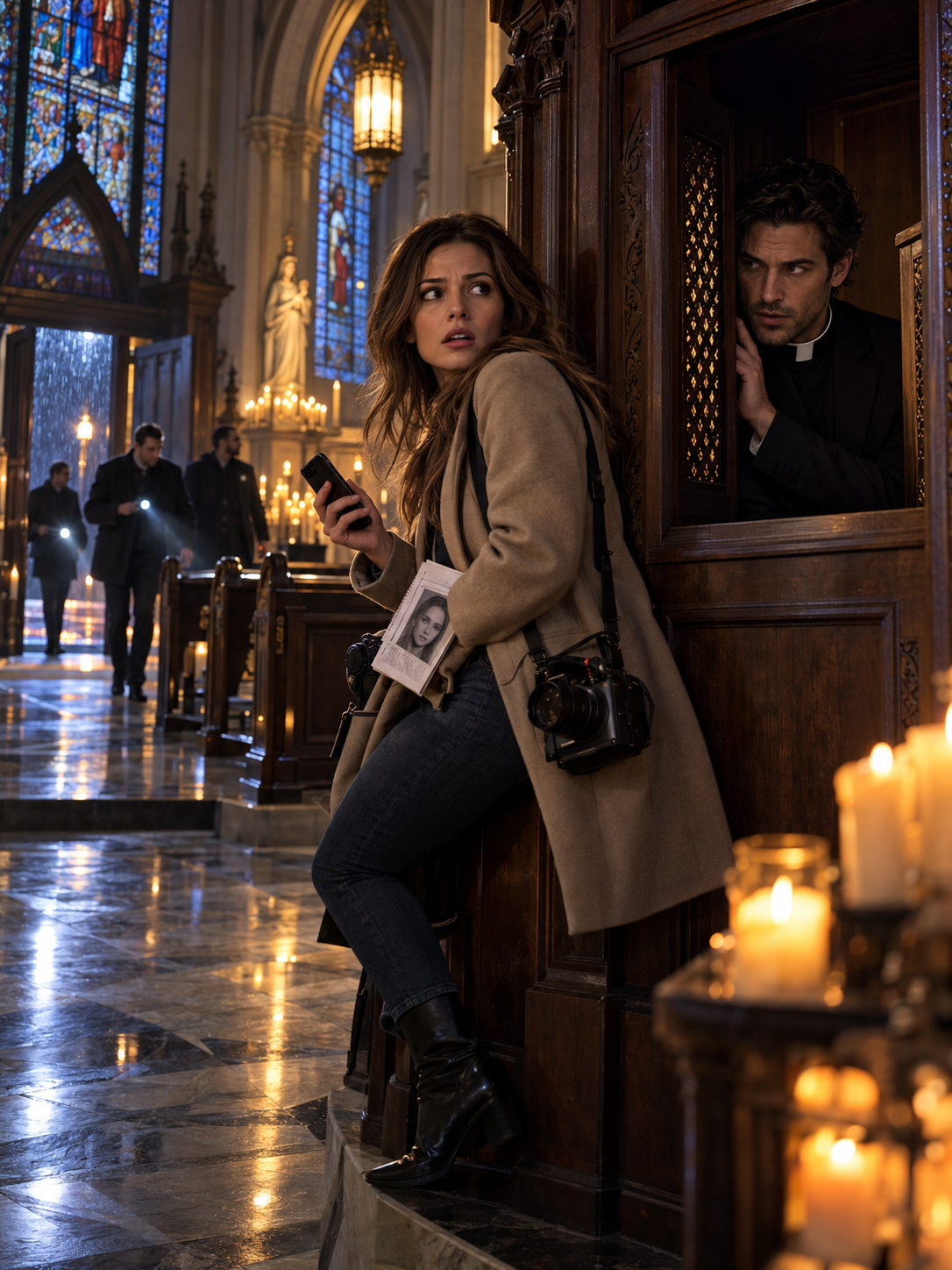
I ENTERED A BOSTON CHURCH TO FIND THREE MISSING WOMEN—THEN A STRANGER IN THE CONFESSIONAL WARNED ME THE MEN COMING THROUGH THE DOORS ALREADY KNEW MY NAME – Life Story
A stranger answered my confession in a Boston church after eleven at night. Minutes later, men in dark coats pushed...

THE EXECUTIVE DUMPED COFFEE ON THE QUIET TECHNICIAN TO HUMILIATE HIM—THEN THE CEO RECOGNIZED THE SYMBOL HE FOLDED INTO A NAPKIN – Life Story
Hunter Blake smiled the instant the coffee left his cup and splashed across Mason Carter’s faded jacket. Half the executives...