THE BILLIONAIRE WAITED TO END HIS MARRIAGE IN A MANHATTAN BOARDROOM—THEN HIS ESTRANGED WIFE WALKED IN WITH TWINS AND A TRUTH HIS MONEY COULD NOT FIX – Life Story
The divorce papers were spread across Tobias Marorrow’s desk when Ara Quintana pushed a double stroller through his office door.
One child was asleep; the other stared at the billionaire with the same gray eyes that had once made Ara believe in forever.
And neither of them knew how hard their mother had fought just to reach the forty-second floor.
The Visitors
Tobias rose so abruptly that his chair struck the glass wall behind him.
On the desk, beside the agreement his attorney had revised three times, his platinum watch continued its indifferent ticking.
His assistant, Mrs.
Patterson, stood in the doorway with one hand on the handle, looking as though she had brought in an unexploded package.
“Ara?” Tobias said.
His gaze moved from her navy coat to the stroller, then back again. “What is this?”
“A conversation we should have had a long time ago.” She pushed the stroller fully inside before she let go of the handle.
The older-looking boy in the left seat stirred, turned his face toward the window, and went back to sleep.
His brother watched Tobias without blinking.
Tobias had spent the past hour rehearsing the words he would use to keep this meeting civil.
They had been separated for three years.
Their lawyers had settled the property questions.
All that remained was a signature, and his mother had reminded him twice this week that an unfinished divorce made both him and his company look unstable.
He had intended to be firm without being cruel.
He had not prepared for two small boys wearing identical blue knit hats.
“Who are they?” he asked.
Ara’s fingers tightened around the stroller handle.
She had imagined this question in hospital corridors and while washing bottles.
She had always answered without shaking.
“Oliver and Sebastian,” she said. “Your sons.”
Outside the floor-to-ceiling windows, a helicopter passed over the East River, small and soundless at this height.
Tobias looked again at the child who was awake.
The boy tilted his head in a way Tobias recognized from his own photographs, from the face of his father, dead twelve years now.
That resemblance did not prove anything.
Tobias clung to the thought because the alternative was too large to fit inside his chest.
“That isn’t possible,” he said. “We haven’t lived together in—”
“They’re two years and five months old.” Ara kept her voice low, partly for the sleeping child and partly because anger had already cost her enough. “I found out I was pregnant seventeen days after you left.”
He reached for the edge of the desk. “You never told me.”
“I tried.” She looked at Mrs.
Patterson, who lowered her eyes. “I called this office.
I emailed the address you told me to use in an emergency.
I came downstairs when I was six months pregnant, and security told me I wasn’t on the visitor list.”
The assistant opened her mouth, then shut it.
Tobias remembered the instruction he had given after their last fight: no calls from Ara, no interruptions, no exceptions.
At the time he had called it protecting his peace.
Now a little boy was stretching his hand toward the silver paperweight at the corner of his desk.
Tobias moved the paperweight away.
It was a tiny action, almost nothing.
Ara watched him do it, and for a moment grief rose behind her ribs so sharply she could hardly breathe.
She had wanted him to move that quickly when a doctor needed consent, when the incubators alarmed, when she had sat by herself signing forms she barely understood.
“You should have gone to court,” Tobias said, and heard how inadequate it sounded.
“I know.” She took a slow breath. “I should have done several things sooner.
But today I have an appointment with you, and I intend to use it.”
He glanced at the decree.
A single yellow tab marked the place where her signature belonged. “What exactly do you want?”
Ara unzipped the diaper bag.
Instead of reaching for a bottle or a clean shirt, she took out a worn envelope bearing a hospital’s return address.
She placed it over the signature tab, leaving the rest of the papers visible beneath it.
“Before you sign anything,” she said, “you need to know what happened after you left.”
The sleeping boy stirred again, making a small sound that seemed impossibly loud in the expensive silence.
Tobias touched the envelope but did not open it.
“What is this?”
“An answer to the question you just asked.”
He slid out the documents.
The first page was a neonatal discharge summary dated two years and five months earlier.
Two names appeared near the top, followed by a list of complications associated with an extremely premature delivery.
Oliver Quintana-Marrow.
Sebastian Quintana-Marrow.
Both born at twenty-eight weeks.
Tobias read the names twice.
Then he looked at Ara, who was adjusting the blanket around Oliver’s legs.
“They were that early?”
“Yes.”
“Were they—”
“Alive?” Her voice caught, then steadied. “Yes, Tobias.
They’re alive.”
He flinched.
“That wasn’t what I meant.”
“I know what you meant.”
A small hand emerged from beneath Oliver’s blanket.
Ara caught it automatically, rubbing her thumb across his knuckles until he settled.
Tobias watched the movement.
“How long were they in the hospital?”
“Oliver came home after eleven weeks.
Sebastian stayed longer.”
“Why?”
Ara hesitated.
“Because Sebastian had complications that didn’t resolve when he was supposed to come home.”
Sebastian, hearing his name, straightened in the stroller.
He wore a little gray sweater with a crooked wooden train stitched across the front.
His shoes were not identical.
One had a firmer ankle support, something Tobias noticed only after following Ara’s worried glance.
“What kind of complications?”
“We’ll talk about that.
But first I need you to understand something.”
Ara moved closer to the desk.
“I didn’t come here to ask you to pretend the last three years didn’t happen.
I didn’t come here to make you love me again.
And I certainly didn’t bring two toddlers into Manhattan traffic because I thought it would be a charming surprise.”
Tobias looked toward the boys.
“Then why today?”
“Because your attorneys have been pressing me to finalize the divorce, and I am done letting the question of their father remain unanswered.”
“I didn’t know they existed.”
“No.
You didn’t.”
She said it without raising her voice.
The distinction was worse than anger.
He had not known because he had arranged his life so thoroughly around not hearing from her.
His assistant cleared her throat.
“Mr.
Marorrow, I’m sorry to interrupt, but Mr.
Whitfield has called three times.
There’s an emergency downstairs.”
Tobias barely turned.
“Tell him I’m occupied.”
“Sir, it’s the board.”
His phone illuminated beside the divorce agreement.
MERIDIAN CAPITAL HAS SUBMITTED A HOSTILE OFFER.
VICTORIA ASHFORD IS HERE.
For one suspended moment, Tobias stared at the name.
Then he looked at Ara and the little boys.
The two worlds he had spent years keeping separate had arrived at his door on the same afternoon.
And both were demanding an answer.
The Door He Closed
Victoria Ashford was not a name Tobias spoke often.
Five years earlier, she had been his business partner and, briefly, his lover.
Their professional relationship had ended after a bitter dispute over a development fund, competing contracts, and accusations neither had been willing to settle quietly.
He had trusted her with private financial information.
She had used some of it to negotiate against him.
Their separation had cost him millions and left him with a lesson he had mistakenly applied to everyone who came afterward: vulnerability was an invitation to be hurt.
Ara knew enough of that history to recognize the change in his face.
“Victoria?” she asked.
He looked up sharply.
“How do you know?”
“You mentioned her when we were married.”
A second message arrived from Marcus Whitfield, his chief financial officer.
The bidder wants a majority of the voting shares.
The board is considering the proposal.
We need you.
Tobias stood.
“I have to go downstairs.”
Ara’s expression closed.
“Of course you do.”
“Ara, this is serious.”
“So is this.”
“I know.”
“Then act like you know.”
Her words stopped him before he reached the door.
For years Tobias had believed that urgency belonged to whoever stood to lose the most money.
He had built an entire business around that assumption, answering investors during dinner and leaving vacations early because a financing deadline had moved.
Now Ara stood beside two children who had grown up without him, and he could see the old calculation happening inside his head.
She could see it too.
“I’m not asking you to abandon your company,” she said. “I’m asking you not to abandon this conversation.”
Tobias looked at his watch.
Then he took it off.
The platinum band landed softly beside the divorce papers.
“Mrs.
Patterson,” he said, “tell Marcus I’ll join the meeting in twenty minutes.
I need the most recent offer documents and the names of everyone who has access to them.”
His assistant hesitated.
“And please bring some water,” he added. “For all of us.”
When she left, Tobias returned to the desk but did not sit behind it.
Instead, he pulled another chair closer to the stroller.
Sebastian examined him with the solemn attention of a child deciding whether a stranger was safe.
“Hello,” Tobias said.
Sebastian looked at his shoes.
“Big.”
Tobias almost laughed.
“Yes.
They’re big.”
The child pointed toward the city.
“Trains?”
“There are trains down there.”
“Blue trains?”
“Some blue ones.”
Sebastian considered that answer and reached for the wooden train attached to his sweater.
Ara watched, guarded.
“He likes trains,” she explained. “Their schedules, their colors, how they connect.
He’s very particular about where the cars go.”
“And Oliver?”
“He likes taking the trains apart.”
As if summoned by the accusation, Oliver woke, blinked at the unfamiliar ceiling, and immediately demanded his mother’s arms.
Ara lifted him from the stroller.
Tobias noticed the practiced way she balanced Oliver on her hip while keeping a foot against Sebastian’s stroller wheel.
“You do all this alone?”
“Not entirely.
I have a neighbor who helps.
And I work when I can.”
“Are you still nursing?”
“Yes.
Part-time shifts at Methodist, plus patient education work from home.”
He remembered the woman who had once worked twelve-hour hospital shifts, returned home, and still found the patience to ask him about his day.
He had considered that kindness part of married life.
He had never understood the labor behind it.
“Why didn’t you tell my attorney?”
“I tried that too.”
Ara reached into the diaper bag and took out her phone.
“I have dates.
Emails.
Certified letters.
I didn’t bring all of them because this wasn’t supposed to become a trial in your office.”
He rubbed the bridge of his nose.
“I’m not suggesting you’re lying.”
“Then don’t make me prove motherhood to someone who hasn’t even asked their favorite colors.”
The remark landed harder than she intended.
She saw it in his expression.
But she did not apologize.
Tobias moved to the windows and stood with his back to them.
“What happened when you came here pregnant?”
Ara looked toward Mrs.
Patterson’s closed door.
“I got as far as the lobby.
Security asked for identification, checked a list, and told me you had instructed them not to admit me.”
“I did.”
“I waited anyway.”
Tobias said nothing.
“For almost two hours.
I was wearing a green maternity coat because nothing else fit.
My feet had swollen so badly that I had taken my shoes off under the bench.
A guard finally told me I couldn’t stay there.”
His jaw tightened.
“I remember that week.”
Ara looked at him.
“You do?”
“I was negotiating the Hudson Yard property.
Victoria’s lawyers were still threatening another claim.
I thought every difficult conversation was another attempt to take something from me.”
“And what did you think I wanted?”
He answered too slowly.
“Money.”
Ara looked down at Oliver.
“We were married, Tobias.”
“I know.”
“I wanted my husband.”
Outside, a gust of wind swept between the neighboring towers.
The glass trembled faintly.
“You told me that loving someone didn’t mean giving them permission to disrupt your life,” she continued. “Do you remember saying that?”
He did.
Their final argument had begun with a simple conversation about trying for children.
Ara had wanted to know whether the future they discussed while dating was still a future he intended to share.
Tobias had wanted another year.
Then another.
Another building.
Another financing round.
Another acquisition.
He had accused her of making demands at the worst possible moment.
She had accused him of treating their marriage like an appointment that could always be rescheduled.
By midnight they were saying things neither knew how to take back.
Two days later, he moved into his office penthouse.
A week afterward, he instructed his staff to stop putting her calls through.
He had never rescinded the instruction.
Now Sebastian was studying the silver buttons on his jacket.
Tobias knelt in front of him.
“Would you like to come out?”
Ara hesitated, then nodded.
“You can ask him.”
Tobias offered his hand.
Sebastian considered it.
Then he placed two small fingers against Tobias’s palm and pulled himself upright.
His left foot turned slightly inward.
He corrected it with obvious concentration.
Tobias resisted the urge to scoop him up.
Sebastian steadied himself and smiled.
“Walk.”
“Yes,” Tobias whispered. “You can walk.”
It was a small achievement.
Tobias had no idea how much work lay behind it.
Mrs.
Patterson returned carrying a tray of water, crackers, and apple slices.
Her eyes rested on the boys.
She had worked for Tobias for fifteen years, through an IPO, three recessions in the property market, and the collapse of his first major partnership.
She had never seen him look quite so uncertain.
“Mr.
Marorrow,” she said quietly, “Marcus is waiting.
The board has agreed to delay the discussion until you arrive.”
Tobias lifted his head.
“Have my attorneys contact Ara’s counsel.
I want everything involving the children handled properly.
No pressure, no surprise documents.”
Ara watched him.
“And the divorce?”
He looked at the yellow signature tab.
“That can wait.”
She did not smile.
“Don’t confuse delaying a divorce with becoming a father.”
“I won’t.”
But when Tobias entered the elevator fifteen minutes later, he found he was already making the mistake of imagining that a promise, sincerely offered, had somehow erased the years before it.
Downstairs, another woman was preparing to make sure he remembered them.
A Voice in the Boardroom
The executive boardroom occupied a corner of the thirty-ninth floor.
Tobias had designed it to convey authority: walnut paneling, low lighting, glass walls overlooking the river, and a long table with enough room for twelve directors.
He had closed deals there worth more than some cities’ annual budgets.
That afternoon, it felt like a room in someone else’s building.
Victoria Ashford sat near the center, wearing a cream blouse beneath a perfectly fitted navy jacket.
Her blond hair was shorter than Tobias remembered.
There was a narrow silver bracelet at her wrist, the same bracelet she had worn during their last meeting five years earlier.
“Hello, Tobias.”
Her voice was warm.
Her eyes were not.
“Victoria.”
“You look tired.”
“I’ve had an eventful afternoon.”
“So I’ve heard.”
He stopped pulling out his chair.
“What exactly have you heard?”
She smiled.
“Nothing that concerns this transaction.”
Marcus rose from the far end of the table.
“Tobias, Meridian Capital has launched a tender offer for a controlling position, conditional on shareholders tendering enough voting shares.
Victoria is advising the bidder.
The board has been asked to evaluate the offer.”
“How much?”
Marcus supplied the figure.
Tobias read the summary.
The price represented a substantial premium over the company’s recent trading range.
For smaller shareholders who had lived through two difficult quarters, it was an attractive proposition.
Meridian had also offered to retain the company’s name and honor existing construction commitments.
For at least one year.
That qualification troubled him immediately.
“And after the year?”
Victoria folded her hands.
“Depends on performance.”
“Whose performance?”
“The market’s, Tobias.
You understand how these things work.”
He did.
Marorrow Enterprises had become successful by acquiring neglected property, rebuilding it carefully, and holding investments long enough to establish stable neighborhoods.
Meridian preferred buying portfolios, dividing their assets, and selling whatever generated the fastest return.
Neither model was inherently illegal.
But Tobias knew what would happen to several unfinished projects if Meridian took control.
Thousands of employees and contractors depended on those projects proceeding as promised.
“What happens to the workforce?” he asked.
A director named Catherine Mills adjusted her glasses.
“Meridian is promising no immediate layoffs.”
“Immediate,” Tobias repeated.
Victoria’s smile thinned.
“You’re allowing sentiment to interfere with an exceptionally generous proposal.”
“I’m asking about commitments.”
“You’re delaying a conversation your shareholders deserve.”
Marcus cleared his throat.
“There’s another concern.”
He slid a report toward Tobias.
For six months, Meridian had accumulated shares through institutional purchases.
The purchases themselves were disclosed where required, but their timing suggested someone knew when Marorrow Enterprises would report unfavorable project delays.
One planned acquisition had fallen apart only days before Meridian began buying shares at a depressed price.
Victoria had been associated with the competing bidder.
Tobias glanced up.
“Who had access to these schedules?”
“Several executives, legal counsel, the board.”
Victoria’s expression did not change.
“Are you accusing me of something?”
“I’m asking questions.”
“Then perhaps you should begin with the questions you’ve been avoiding for three years.”
The room went still.
Tobias looked at her.
“Don’t.”
Victoria leaned back.
“Your estranged wife is upstairs, isn’t she?”
Marcus glanced toward the door.
Victoria continued softly.
“With two little boys.”
Tobias felt something cold move through him.
“How do you know that?”
“I have contacts.”
“Among my staff?”
“Among people who talk.”
He recognized the old rhythm of her provocations.
A fact placed carefully.
A suggestion left unfinished.
Enough information to make him anxious, never enough to permit a direct challenge.
“Leave my family out of this.”
“Of course.
But since you’re asking questions about trust, there’s something you ought to hear.”
She took a phone from her handbag.
Six months ago, she explained, Ara had traveled to London.
During that trip, the two women had met at a private restaurant.
Tobias remembered receiving an invoice from his attorneys around the same period.
Ara had requested copies of certain marital financial disclosures for the pending divorce.
He had dismissed it as another legal expense.
Now Victoria showed him a photograph.
Ara sat opposite her in a London restaurant.
She looked exhausted, her hair tucked behind one ear, a folder open beside her coffee.
The photograph was real.
Tobias knew her face too well to pretend otherwise.
“What did she want?”
“Information.”
“About?”
“You.”
Victoria placed the phone on the table.
A recording began.
Ara’s voice emerged from the speaker, quiet but unmistakable.
“I need to understand where he’s vulnerable.
What would make him sign before he asks too many questions?”
There was a brief silence.
Then her voice again.
“If the timing is right, he won’t see it coming.”
Tobias stared at the device.
His stomach tightened.
He recognized the tone, the soft consonants, the slight rasp Ara developed when she was tired.
He had heard that voice say his name in happiness, frustration, anger, and love.
Now it sounded cold.
Almost calculating.
Victoria watched him absorb the words.
“She’s been planning this for months.”
Tobias looked up.
“Planning what?”
“To use those children as leverage.
To make you believe you’re rescuing her.
To get whatever she wants before the divorce becomes final.”
Catherine shifted uncomfortably.
“This isn’t relevant to the tender offer.”
“It may become relevant if Tobias makes decisions under emotional pressure,” Victoria replied.
Marcus spoke.
“Victoria, that’s enough.”
But Tobias was still looking at the recording.
The sentence about signing documents pulled at a memory he couldn’t immediately place.
Ara had been angry with him over a contract once.
A mortgage refinancing agreement he had encouraged her to sign quickly because he considered the details unimportant.
She had refused until she understood every clause.
That was Ara.
She did not sign documents she hadn’t read.
And she had certainly never expected anyone else to.
“Play it again,” he said.
Victoria obliged.
The words repeated.
This time he heard something beneath them: an unnatural pause between sentences, a change in the room’s background noise.
“Where’s the complete file?”
Victoria blinked.
“That’s the relevant portion.”
“I asked for the complete file.”
“Does the remainder matter?”
“Yes.”
He held out his hand.
Victoria did not move.
“I won’t let you make copies.”
Tobias looked toward Marcus.
“Ask counsel to preserve this meeting’s records.
I want a proper examination of the recording and an investigation into the source of the information being used in this bid.”
Victoria laughed softly.
“Still the same man.
Threatening investigations whenever someone tells you something unpleasant.”
“No,” he said. “The man you remember would have believed whichever story frightened him most.”
Her smile faded.
He turned to the directors.
“We have a legitimate offer that requires legitimate evaluation.
I will cooperate with the process.
But I will not let anyone turn a board meeting into a public trial of my family.”
For the first time that afternoon, several directors nodded.
Victoria stood.
“You’re making a mistake.”
“Perhaps.
But it will be mine.”
As she gathered her things, she leaned close enough that only he could hear.
“Ask Ara why she really came to London.”
He watched her walk away.
Then he realized something else.
The question was no longer whether Victoria could hurt him.
It was whether Ara would believe him when he said he had not allowed her to.
The House with Two Small Beds
Ara was waiting beside the elevator when Tobias returned.
Oliver sat in the stroller eating pieces of banana.
Sebastian had fallen asleep, one hand curled around a wooden train.
Mrs.
Patterson stood a respectful distance away.
The expression on Ara’s face told Tobias that someone had already spoken to her.
“Victoria came upstairs,” she said.
He stopped.
“What?”
“She didn’t come into the lounge.
She passed the reception desk, looked at the boys, and told me she hoped I’d get everything I came for.”
Tobias closed his eyes.
“Ara—”
“She said you were listening to a recording.”
He said nothing.
Ara nodded slowly.
“So there was a recording.”
“Yes.”
“Of me?”
“She claimed it was.”
“And you listened.”
He could have defended himself.
He could have explained the edited sound, the suspicious timing, the questions he had asked.
Instead, he answered the question she actually posed.
“Yes.”
Ara turned the stroller toward the elevator.
“Then I think we’re finished for today.”
“Please.”
She stopped.
“I knew she was in London.”
Tobias looked at her.
“You did meet her?”
“Yes.”
“Why?”
“Because a pediatric support organization she funded had been listed as a potential source of grants for Sebastian’s treatment.
I had applied to three programs already and been turned down by all of them.”
He stared.
“A medical grant?”
“That’s what I thought.”
“What happened?”
“She asked questions about you.”
Ara’s voice sharpened.
“Your investments.
Your stress.
Whether you still cared about me.
Whether a threat to your business would make you more likely to settle our divorce.”
“And what did you tell her?”
“That she was welcome to decline my application, but I wasn’t selling information about my husband.”
Tobias looked at her.
“Then why would she have a recording of you saying—”
“Because she recorded the meeting.
And because a recording can be edited.”
Ara took out her phone.
“I recorded it too.”
He stood motionless.
“I had a bad feeling when she started asking about your stock.
I turned on my phone recorder while I was sitting at the table.
I never imagined I’d have to use it.”
“Will you send it to my attorneys?”
Her expression hardened.
“No.”
Tobias felt the answer like a door closing.
“Why not?”
“Because it’s mine.
And because you aren’t entitled to every piece of my life simply because somebody has questioned my character.”
He looked away.
She was right.
Again.
“I can send it to an independent attorney,” she continued. “Someone who isn’t employed by you.
If it matters to the inquiry, that attorney can arrange for a proper examination.”
Tobias nodded.
“That’s fair.”
For a moment, Ara seemed more surprised by his acceptance than she would have been by an argument.
The elevator arrived.
Sebastian stirred at the soft chime.
“Home?” he murmured.
Ara brushed his hair aside.
“Yes, sweetheart.
We’re going home.”
Tobias looked at the boy.
“May I come?”
Ara hesitated.
The silence extended between them.
Then she said, “For dinner.
Not forever.
Not until you understand what you’re asking.”
He nodded.
“Dinner.”
The trip to Brooklyn took forty minutes.
Tobias followed in a hired car while Ara rode with the boys in hers.
From the back seat, he watched rain begin to stripe the windows.
The city looked different at street level.
Not less beautiful.
Less obedient.
At the apartment building, Ara maneuvered the stroller through a narrow entryway.
Tobias stepped forward to help, but she had already lifted the front wheels over the threshold.
“Take the diaper bag,” she said.
He did.
Her apartment was on the second floor, in a brick building above a small neighborhood bakery.
The living room contained a secondhand couch, a bookcase overflowing with children’s books, and a narrow table covered with crayons.
Family photographs lined the wall.
Tobias stopped in front of them.
Oliver and Sebastian in hospital incubators.
Oliver wearing a tiny yellow cap, his entire hand wrapped around one of Ara’s fingers.
Sebastian connected to breathing support, with Ara leaning close to the transparent side of his incubator.
First birthdays.
First haircuts.
A snowy morning in Prospect Park.
Each photograph showed a life unfolding without him.
Ara came back from the kitchen.
“I can take those down if it’s too much.”
“No.”
He swallowed.
“Please don’t.”
He studied the photograph of Ara holding both boys outside the hospital.
She looked thinner than he remembered.
Her smile was exhausted, almost disbelieving.
A paper sign behind her read GOING HOME.
“Who took this?”
“A nurse who had been with us since their first week.”
“You were alone?”
“My neighbor picked us up.”
He stared at the photograph.
“Where was your family?”
“My parents were already gone, Tobias.
You know that.”
Of course he knew.
He remembered the funerals.
He remembered holding her hand afterward.
Somehow he had never considered what their absence might mean when two sick babies came into the world.
Sebastian appeared beside his leg, holding a toy train.
“Track?”
Tobias looked down.
“What’s that?”
“Track.”
The boy pointed toward his bedroom.
Ara nodded.
“He wants to show you his trains.”
Tobias followed.
The bedroom was small, with two child-sized beds beneath a window.
A large wooden train set occupied much of the floor.
Sebastian lowered himself carefully beside it and placed the engine on the rails.
Tobias sat cross-legged opposite him.
“Where does this one go?”
Sebastian examined him with grave disappointment.
“Here.”
He moved the engine three inches.
“Of course.”
“Not there.”
“Right.”
For twenty minutes Tobias learned a system of routes and rules that made his real-estate portfolio appear uncomplicated.
Every car had a place.
Every bridge had a purpose.
Every time Oliver rushed in and upset the arrangement, Sebastian took a breath and started again.
Tobias noticed Ara watching from the doorway.
“He used to cry when the tracks broke,” she said. “His therapist helped him learn to pause and rebuild.”
“Does it happen often?”
“Everything happens often with toddlers.”
She said it with a tired smile.
Then Oliver announced that he needed a diaper change.
Ara handed Tobias the supplies.
He stared at them.
“You want me to—”
“You asked how you could help.”
He followed her instructions with the concentration of a man defusing a complicated machine.
Oliver protested being interrupted.
The wipes fell off the table.
Tobias fastened the fresh diaper backward.
Ara corrected it without laughing.
At dinner, Oliver dropped pasta onto his father’s shirt while Sebastian explained why blue trains were better than red ones.
Tobias listened.
He didn’t check his phone.
Not when it vibrated.
Not when a second message appeared.
Not even when Marcus called.
After the boys were asleep, Tobias found Ara folding laundry beside the couch.
“Thank you,” he said.
“For dinner?”
“For letting me see this.”
She set down a tiny shirt.
“Don’t thank me yet.”
He sat opposite her.
“Ara, I want to help with Sebastian’s care.”
“You should.”
The answer startled him.
She continued.
“You should contribute to both boys’ care.
Financially, legally, practically.
But this cannot become an arrangement where your generosity depends on whether we’re getting along.”
“I understand.”
“I don’t think you do.”
She placed a folded pair of pajamas on the stack.
“I want a formal agreement.
Parentage, support, decision-making, visitation.
We can start with a gradual schedule while the boys get to know you.
I won’t make promises on their behalf.”
Tobias nodded.
“Whatever is reasonable.”
“And you’ll have to hear things you don’t like.”
“I’m beginning to understand that.”
Ara looked toward the hallway.
“Sebastian still has therapy three mornings a week.
He doesn’t always tolerate changes.
Oliver sometimes cries when a new person leaves, even if he barely knows them.”
Tobias felt his chest tighten.
“Are they going to be all right?”
“I don’t know exactly what challenges they’ll face.
Nobody does.
But they’ve been all right with the people who keep showing up.”
He leaned forward.
“I can do that.”
Her eyes filled, though her voice remained steady.
“Then start tomorrow morning.”
Tobias glanced at the hallway.
“What time?”
“Six fifteen.”
He almost smiled.
“I’ll be here.”
Ara gathered the laundry and stood.
“Good.
Sebastian has an appointment at eight.
And he’s very particular about who puts on his shoes.”
The next morning, when Tobias arrived at six ten, Ara opened the door in an old sweatshirt, her hair still damp.
She looked surprised.
Then she stepped aside.
Inside, Sebastian was sitting on the floor with one shoe in his hands.
He looked up at Tobias.
“Daddy?”
The word came out more like a question than a name.
Tobias knelt.
“Yes, buddy.”
Sebastian held out the shoe.
“Help?”
And Tobias understood that the first thing he had been offered was not forgiveness.
It was work.
The Truth Behind London
The first two weeks were humbling.
Tobias learned that getting two toddlers into a car required patience, spare clothes, and a willingness to abandon unnecessary expectations.
He learned the names of Sebastian’s therapists and the exact way Oliver liked his toast cut.
He learned that a child could spend twenty minutes refusing a blue cup, then cry because someone had washed it.
He learned that Ara had been doing most of this while working.
At first, he tried solving every inconvenience with money.
A larger car.
A full-time nanny.
A private therapy room installed in his penthouse.
Ara declined all three suggestions.
“I’m not moving the boys into a building they’ve never lived in,” she said. “And I’m not replacing their routine with one you can purchase.”
“I’m trying to help.”
“I know.
That’s what makes this difficult.”
He had no answer.
Later that afternoon, they sat in the waiting room of a pediatric rehabilitation clinic while Sebastian worked with his therapist.
Oliver occupied himself with a picture book.
Tobias watched through the observation window as Sebastian practiced stepping over low foam obstacles.
Each movement required concentration.
Sometimes he lost his balance.
Each time, the therapist encouraged him to try again.
“Has he always worked this hard?” Tobias asked.
Ara followed his gaze.
“Since he was born.”
She told him more about the hospital.
About the first night when both incubators sounded alarms.
About the week she spent learning to recognize small improvements from the numbers on a monitor.
About how she had learned to sleep in a chair and wake at the smallest change in a nurse’s voice.
“Why London?” he asked.
“Because Sebastian wasn’t progressing as expected, and I found a center that offered a multidisciplinary program.
Physical therapy, occupational therapy, developmental assessments.
I wanted another opinion.”
“Did it help?”
“Yes.
Not magically.
There wasn’t a miracle treatment.
But they taught us exercises that worked for him and helped coordinate the care he needed when we came home.”
“How did you afford it?”
Ara looked at her hands.
“My savings.
I sold the car.
Some jewelry.”
He remained silent.
“And your ring,” she added.
Tobias glanced at her bare left hand.
The loss was suddenly more painful than it had any right to be.
“I wish you’d told me.”
“I did.”
He looked away.
She let the silence stand.
A therapist opened the clinic door.
“Sebastian wants to show his dad what he learned.”
Tobias went inside.
Sebastian stood beside a small set of practice steps, gripping the rail.
“Watch.”
Tobias crouched a few feet away.
“I’m watching.”
The boy lifted one foot.
Paused.
Shifted his weight.
Climbed one step.
Then another.
When he reached the top, he looked back with an expression of pure triumph.
“I did it.”
Tobias smiled so hard his cheeks hurt.
“Yes, you did.”
That evening, after the boys were asleep, Tobias sat with Ara at her kitchen table.
Between them lay a folder from her attorney.
Inside were proposed arrangements for establishing financial support and a practical parenting schedule.
Tobias read every page.
Not once did he ask whether she trusted him.
He knew the answer.
When he reached a clause requiring written agreement before major changes to the boys’ medical providers or residence, he paused.
“You’re worried I’ll try to take them away.”
Ara folded her arms.
“I’m worried that a wealthy man who is used to controlling everything may believe he gets to control his children.”
He looked at the document again.
“Then the clause stays.”
She exhaled.
“And the support payments?”
“I’ll follow the attorneys’ advice.
Whatever is appropriate.”
“Even if we argue?”
“Especially if we argue.”
Ara studied him.
“That sounds like something a better man would say.”
He met her eyes.
“I’m trying to become one.”
Her phone vibrated.
The caller was the independent attorney handling the recording from London.
Ara listened for a moment.
Her expression changed.
“What did they find?” Tobias asked when she hung up.
“The recording Victoria played was assembled from different portions of the conversation.”
He waited.
“My attorney had a forensic audio specialist compare it with my original file.
There are discontinuities, and the full conversation changes the meaning.”
She took a breath.
“Victoria asked me what financial pressure might make you settle our divorce quickly.
I told her I didn’t know, and that I wouldn’t discuss your business.
Then she asked whether I wanted you to sign something before reading it.”
Tobias remembered the words.
“What did you say?”
“I told her that I wasn’t interested in tricks.
I said, ‘If I wanted to know where he’s vulnerable, I’d ask him honestly.
I won’t make him sign anything before he asks questions.’”
He shut his eyes.
Victoria had removed the refusal.
Rearranged the remaining phrases.
Turned a warning against manipulation into evidence of manipulation.
“And the line about timing?”
“She asked whether I planned to bring the children to your office.
I said I wasn’t ready.
That if the timing was wrong, you might react before you understood.”
Tobias sat very still.
The recording had not merely been misleading.
It had been constructed to exploit the specific fear that had already destroyed his marriage.
“Did Victoria know about Sebastian’s treatment?”
Ara nodded.
“She saw the grant application.”
“Did she fund anything?”
“No.
The program told me later that my application didn’t meet its criteria.
By then I’d already arranged the treatment another way.”
Tobias looked toward the hallway.
“I’m sorry she did that.”
Ara gave a tired laugh.
“I’m angry at her.
But I’m more angry that you listened without asking me first.”
He accepted it.
“I should have asked you.”
She reached for her coffee.
For several minutes neither spoke.
Then Ara said, “There’s something else.”
Tobias looked up.
“She knew your assistant’s schedule.
She knew the divorce meeting was today before I arrived.
She mentioned the date in London.”
“That was six months ago.”
“Yes.”
He frowned.
“Our lawyers didn’t confirm this appointment until eight weeks ago.”
“But your office was holding time for it.”
Tobias remembered his private calendar, the tentative entries Mrs.
Patterson made months in advance.
Someone with access could have seen the meeting before the date became final.
The hostile offer.
The recording.
Victoria’s arrival.
The children.
None of it had needed to be a coincidence.
He called Marcus.
“Get information security involved,” he said. “Preserve the calendar access records and the relevant company communications.
We need to know who had access to the confidential schedules.”
When he hung up, Ara was watching him.
“Are you going back to the office?”
“Not tonight.”
“Why?”
“Because there’s nothing I can do tonight that justifies leaving you alone to put two boys to bed.”
Her face softened slightly.
It was not forgiveness.
But it was the first time he had made the choice without being asked.
A few days later, Marcus called with preliminary findings.
An outside contractor who supported executive scheduling had accessed confidential calendar entries without a business reason.
The contractor’s account had also been used to retrieve documents about planned acquisitions.
The access had occurred shortly before Meridian’s trading activity.
The evidence did not yet establish who had directed the contractor or prove unlawful trading.
But it gave the company’s independent counsel a serious question to investigate.
The board formed a special committee and referred the suspicious activity to the appropriate authorities.
Victoria’s advisers stopped answering questions about the recording.
Within days, her firm announced she was stepping away from the proposed transaction.
Tobias did not celebrate.
He had watched Victoria become reckless under pressure before.
But he understood now that even if her schemes collapsed, the damage she had tried to cause between him and Ara could not be undone by a corporate investigation.
He would have to repair that himself.
And for the first time, Ara was beginning to let him try.
The Shape of Staying
Three months after the office meeting, Tobias no longer arrived at Ara’s apartment like a visitor.
He had a key.
It was a plain brass key, given to him after six weeks of consistent mornings, supervised transitions, pediatric appointments, and difficult conversations with both attorneys.
Ara handed it over without ceremony.
“It’s for the boys,” she said.
“I know.”
“And it doesn’t mean you can walk in whenever you want.”
“I know that too.”
He put it on his key ring beside the expensive electronic fob for his Manhattan penthouse.
The difference between them made him smile.
The brass key opened the place where he most wanted to be.
He was still running Marorrow Enterprises, but the company had changed around him.
Marcus handled more operational decisions.
Senior executives were given authority Tobias had previously been reluctant to delegate.
Tobias stopped taking meetings after six unless there was a genuine emergency.
At first, investors complained.
Then the company continued operating.
Deals still closed.
Projects still advanced.
The sky did not fall because he left an office before sunset.
The most difficult part was discovering how little his constant presence had actually been required.
One Thursday evening, Tobias arrived with groceries.
Ara was sitting at the kitchen table in scrubs, studying a medical bill.
He set the bags down.
“Long day?”
“Long enough.”
“Have you eaten?”
She shook her head.
He filled a pot with water and began making pasta.
Ara watched him with a skeptical expression.
“Do you know what you’re doing?”
“Not entirely.”
“That makes two of us.”
He smiled.
For a while, they worked in companionable silence.
Tobias washed vegetables while Ara explained a school form that needed both parents’ signatures.
Their fingers brushed when she passed him the colander.
Neither pulled away immediately.
He looked at her.
She looked back.
Then Oliver called from the living room, demanding assistance with a toy dinosaur.
The moment vanished.
But not entirely.
Later, after the boys were asleep, Ara found Tobias washing dishes.
“You could leave those,” she said.
“I know.”
“You have people who do this for you.”
“I know that too.”
She leaned against the counter.
“Then why are you doing them?”
He rinsed a plate.
“Because you cooked.
And because tomorrow they’ll be dirty again.
Someone has to do them.”
Ara was quiet.
He looked up.
“What?”
“Nothing.”
But she smiled.
Two weeks later, Sebastian caught a mild respiratory infection.
His pediatrician evaluated him and recommended home monitoring, fluids, and rest.
Ara had a scheduled hospital shift she could not easily exchange.
Tobias offered to stay with the boys.
She hesitated.
“Are you sure?”
“Yes.”
“Sebastian gets upset when he’s tired.
He might refuse his exercises.
Oliver will want attention.
And you can’t just—”
“Ara.”
She stopped.
“Go to work.
I’ll call if anything changes.”
That evening, when she returned, the apartment was dim.
Oliver slept on the couch beneath a blanket.
Sebastian lay curled against Tobias’s chest, breathing comfortably, his stuffed train tucked beneath one arm.
Tobias had fallen asleep too.
A half-finished picture book lay open beside them.
Ara stood in the doorway for a long time.
She had spent years imagining this ordinary scene.
She had also spent years teaching herself not to need it.
The realization frightened her.
When Tobias woke, he found her sitting beside him.
“Everything all right?” he asked.
She nodded.
“You stayed.”
“Of course.”
She looked down at Sebastian.
“I know it sounds ridiculous.”
“It doesn’t.”
“I keep expecting to come home and find you’ve decided this is too much.”
Tobias touched her hand.
“I can’t erase that expectation.”
“No.”
“But I can keep coming back until it becomes less reasonable.”
She squeezed his fingers.
It was their first touch that neither explained away as an accident.
Their relationship changed slowly after that.
Not through dramatic declarations.
Through mornings when Tobias arrived early enough to make breakfast.
Through appointments he attended without telling anyone how important he was.
Through arguments about bedtime routines, childcare arrangements, and whether Sebastian needed one more specialist appointment.
Sometimes they disagreed sharply.
Tobias wanted to hire additional care.
Ara wanted the boys’ familiar routines protected.
They learned to compromise without treating disagreement as evidence that the other person intended to leave.
One Sunday afternoon, Tobias took both boys to a park near their apartment.
Ara came along.
Sebastian insisted on climbing a low set of steps to the slide.
Tobias started forward.
Ara caught his arm.
“Give him a chance.”
“He might fall.”
“He might.
Stay close.”
Tobias stood beside the steps, one hand ready.
Sebastian climbed slowly.
One foot.
Then the other.
He reached the platform and looked down triumphantly.
“Daddy! Mommy! Watch!”
They watched him slide.
At the bottom he tumbled gently onto the grass, laughing.
Tobias laughed too.
Ara looked at him.
“That was hard for you.”
“Watching him nearly fall?”
“Not controlling what happened.”
He considered it.
“Yes.”
“He needs us to keep him safe.
But he also needs room to become himself.”
Tobias glanced at Sebastian, who was already climbing again.
“I think I need to learn that too.”
Ara smiled.
“Probably.”
As they walked home, Oliver insisted on holding Tobias’s left hand while Sebastian held his right.
Ara walked beside them.
At a crosswalk, Tobias reached for her hand.
She let him take it.
No promises were spoken.
No one mentioned reconciliation.
But when the light changed, all four crossed together.
That night, Tobias did not return to Manhattan.
He stayed in the apartment’s guest space, as he had on many evenings when the boys were sick or needed additional help.
Ara stood in the hallway before going to her room.
“Thank you for today,” she said.
He looked up.
“I had fun.”
“I know.”
She hesitated.
Then she stepped closer and kissed his cheek.
It was brief.
Gentle.
Almost unbearably familiar.
Tobias remained still.
When she drew back, he did not reach for more.
“Good night, Ara.”
“Good night.”
She closed her door softly.
He lay awake listening to the hum of the refrigerator and the occasional creak of the old building.
For the first time in years, the quiet did not feel empty.
It felt earned.
But three days later, Ara received a call that reminded them both how fragile the life they were rebuilding could be.
When the Room Went Quiet
Dr.
Harrison Chen had been Sebastian’s neurologist since infancy.
He was a careful man, more inclined to explain uncertainty than to offer reassurance he could not support.
That afternoon, Ara sat across from him in an examination room while Tobias held Sebastian on his lap.
Oliver was with Mrs.
Rodriguez, their neighbor.
Dr.
Chen reviewed the latest imaging and developmental assessments.
Sebastian had been born extremely premature and had experienced complications involving the brain’s white matter and fluid spaces.
His motor development was improving with therapy.
But the scans showed enlargement of his ventricles that required close attention.
“We’ve been watching this for some time,” Dr.
Chen said. “Today’s imaging suggests the changes may be progressing.”
Ara’s face tightened.
“How quickly?”
“Not as quickly as an acute emergency, but enough that I want our neurosurgical colleagues to reassess him.
There is a possibility he may eventually need intervention.”
Tobias looked down at Sebastian.
The boy was trying to attach two toy train cars.
“What kind of intervention?”
“That depends on how things develop.
Sometimes children with these findings need surgery to manage cerebrospinal fluid pressure.
Sometimes careful monitoring remains appropriate for a period.”
Ara asked several questions.
She wanted measurements.
Comparisons with previous scans.
Specific symptoms that should prompt an emergency evaluation.
Tobias listened.
He was accustomed to demanding certainty from people who worked for him.
Here, certainty was unavailable.
When they left, Sebastian was cheerful.
He asked for a blue train.
Then for crackers.
Then for a different blue train.
Tobias carried him to the car while Ara walked beside them.
“Are you frightened?” he asked.
She nodded.
“Very.”
“So am I.”
She looked at him.
“Don’t tell me he’ll definitely be fine.”
“I wasn’t going to.”
“Everyone keeps telling me that.
That he’s strong, that he’s a fighter, that things will work out.”
“He is strong.”
“Yes.
But strength doesn’t prevent complications.”
Tobias opened the car door.
“Then we’ll listen to the doctors, watch what needs watching, and make decisions together.”
Ara stared at him for a moment.
“That’s the first answer you’ve given me that actually helps.”
The following weeks required patience.
Sebastian continued therapy.
He laughed at cartoons and argued with Oliver over toys.
He sometimes stumbled when tired, but the family had learned to distinguish his usual challenges from changes that needed attention.
Ara kept a careful record of symptoms.
Tobias learned what to watch for and when to seek medical evaluation.
Their conversations became less about whether he would remain involved and more about how they could share responsibility without overwhelming each other.
The first real test came on a Thursday morning.
Sebastian was sitting at the kitchen table eating cereal.
Oliver sat beside him, insisting that dinosaurs did not need breakfast.
Tobias was cutting strawberries.
Ara stood at the counter pouring coffee.
Sebastian dropped his spoon.
Ara looked over.
“Sweetheart?”
He stared at the table.
His body stiffened.
Then he slipped sideways from the chair.
Tobias caught him before he reached the floor.
For one terrible second, neither parent spoke.
Then Ara moved.
“Lay him down carefully,” she said. “Time it.
Call 911.”
Tobias obeyed.
Sebastian began having a seizure.
Ara moved nearby objects out of the way and kept him protected, without restraining him.
Tobias gave the dispatcher the address and described what was happening.
Oliver started crying.
“Mommy?”
“Stay with me, sweetheart,” Ara said, her voice steady despite the terror in her face.
Tobias had negotiated under threat of bankruptcy.
He had stood before furious investors.
He had watched millions disappear in a market downturn.
Nothing had prepared him for the sight of his son’s small body convulsing while he could do nothing except follow emergency instructions and count the seconds.
The seizure stopped before the paramedics arrived.
Sebastian remained drowsy and confused.
Ara stayed beside him as the emergency team assessed him and prepared transport.
Tobias called Mrs.
Rodriguez.
Within minutes, their neighbor had come downstairs to take Oliver.
The little boy clung to his father’s neck.
“Where’s Seb?”
“He’s going to the hospital,” Tobias said gently. “The doctors are going to help him.”
“Is he coming home?”
Tobias swallowed.
“We’re going to do everything we can to bring him home.”
At the hospital, time lost its ordinary shape.
There were vital signs, examinations, scans, consultations, and questions that seemed simple until neither parent could answer them.
When had Sebastian last eaten?
Had he vomited?
Had there been changes in his walking?
Was the seizure his first?
Ara answered precisely.
Tobias watched how her nursing experience gave her a language for fear without taking the fear away.
Dr.
Chen arrived later with a pediatric neurosurgeon.
The new imaging showed that the fluid spaces had enlarged significantly and that pressure was becoming a concern.
The doctors recommended urgent surgical treatment for hydrocephalus.
The planned procedure would place a shunt to help divert excess cerebrospinal fluid.
Tobias heard the explanation.
Risks.
Benefits.
Alternatives.
The possibility of future shunt revisions.
The need for long-term monitoring.
Ara asked the neurosurgeon to explain the infection risk again.
Her hands were trembling.
Tobias sat beside her, taking notes on a yellow hospital pad.
When the surgeon finished, the room was silent.
“We need a moment,” Ara said.
The doctors agreed and stepped outside.
Ara looked at the consent documents.
“I know what these words mean,” she whispered.
Tobias took her hand.
“I know.”
“But this is Sebastian.”
“Yes.”
“I’ve signed consent forms for patients’ families to review.
I’ve explained procedures.
I’ve sat with frightened parents.
I thought that knowing what happens would make this easier.”
Her voice broke.
“It doesn’t.”
Tobias moved closer.
She leaned against him.
For several minutes they remained that way, surrounded by the quiet sounds of medical equipment and passing footsteps.
Then Ara straightened.
“Let’s ask them to come back.”
Tobias looked at her.
“Are you sure?”
“No,” she said. “But I understand why they’re recommending it.
And I’m not going to let being afraid stop me from making the decision he needs.”
They reviewed the remaining questions and gave informed consent.
When the surgical team came to take Sebastian, he was sleepy from medication.
Ara kissed his forehead.
“Mommy’s right here.”
Tobias leaned close.
“Daddy too.”
The doors closed.
Ara stood perfectly still.
Then her knees weakened.
Tobias caught her before she fell.
They waited together.
An hour passed.
Then another.
Marcus called once.
Tobias sent a brief message.
Family emergency.
Handle what you can.
I will contact you when I am able.
He turned the phone face down.
Ara watched him.
“You don’t have to ignore everything.”
“I’m not.”
“You have a company to run.”
“And I have a son in surgery.”
She studied his face.
“You say that like it’s easy.”
“It isn’t.”
He looked at the doors.
“I want to fix this.
I want to make a call, move money, find somebody who can tell me exactly how it ends.
I can’t do any of that.”
“No.”
“So I’m staying.”
Ara reached for his hand.
This time, she did not let go.
Three hours later, the neurosurgeon returned.
The operation had gone as planned.
The shunt had been placed successfully.
Sebastian would need close postoperative monitoring, and the team remained cautious about his recovery.
But he was stable.
Ara covered her mouth.
Tobias sat down so abruptly that the chair scraped across the floor.
For several seconds neither spoke.
Then he began to cry.
Not quietly.
Not with the controlled composure he had cultivated in boardrooms.
He lowered his face into his hands and wept with relief.
Ara knelt beside his chair.
She wrapped her arms around him.
They stayed together until a nurse returned to tell them they could see their son.
Sebastian looked impossibly small in the recovery bed.
His hair had been carefully arranged around the surgical dressing.
A monitor tracked his heart rate.
Ara sat beside him and rested her hand near his.
Tobias took the other chair.
Hours later, Sebastian opened his eyes.
He looked at his mother.
Then at his father.
“Daddy?”
Tobias leaned forward.
“I’m here, buddy.”
Sebastian blinked.
“Train?”
A shaky laugh escaped Ara.
Tobias smiled through tears.
“Your train is waiting for you at home.”
Sebastian closed his eyes again.
His small hand remained curled around Tobias’s finger.
For the first time, Tobias understood that there were promises money could not guarantee.
The only honest promise was presence.
And he intended to keep it.
The Price of Staying
Sebastian recovered gradually.
There were follow-up appointments, careful monitoring, and adjustments to the family’s routine.
His therapists coordinated with the surgical team before resuming his full program.
Some days he seemed entirely himself.
Other days fatigue made familiar tasks difficult.
Ara learned not to measure progress by a single good or bad morning.
Tobias learned the same lesson.
By the time six months had passed since the twins first entered his office, the family had developed a rhythm that neither parent wanted to lose.
Tobias spent several evenings each week in Brooklyn.
He attended the boys’ appointments and protected the time on his calendar.
Ara continued working, though she adjusted her schedule during Sebastian’s recovery.
Their attorneys completed appropriate parenting and financial arrangements.
Neither parent used those documents as a substitute for trust.
But both understood why the documents mattered.
One evening, after the boys had gone to bed, Ara found Tobias on the balcony outside her apartment.
He was looking at a message from Marcus.
“What happened?”
Tobias put the phone away.
“The board is asking questions.”
“About what?”
“My availability.
My plans.
The future of the company.”
“Are they right to ask?”
He considered her question.
“Yes.”
That answer surprised her.
He leaned against the railing.
“I’ve delegated more than I ever have.
Most of it has worked.
But I also made promises to employees and investors about how the company would be managed.
Some of them deserve a clearer plan than I’ve given them.”
Ara stood beside him.
“Then give them one.”
“They want me back full-time.”
“And what do you want?”
He looked through the window at the quiet living room.
“I don’t want to disappear into that building again.”
“Then don’t.”
He smiled faintly.
“You make it sound simple.”
“It isn’t.
But you know how to solve complicated problems without pretending there’s only one possible answer.”
He studied her.
“Are you saying I should leave?”
“I’m saying you should decide what kind of father and what kind of businessman you want to be.
And stop treating those identities like enemies.”
The next morning, Tobias met with the board.
Charles Whitmore, an older investor who had helped finance the company in its early years, chaired the discussion.
Charles had known Tobias since he was twenty-four.
He had also seen the company survive enough crises to be wary of sudden changes in leadership.
“Your personal responsibilities are understandable,” Charles began. “But we need consistency.”
Tobias nodded.
“I agree.”
Several directors exchanged glances.
Charles continued.
“The hostile offer exposed weaknesses in our structure.
We were too dependent on you.
Your absence made that obvious.”
“Again,” Tobias said, “I agree.”
Catherine Mills leaned forward.
“Then what’s your proposal?”
He placed a folder on the table.
Inside was an initial plan developed with Marcus and outside advisers.
A new operating structure.
Clearer executive authority.
Independent oversight of major acquisitions.
A succession process designed not to collapse if Tobias were unavailable.
Charles read the first page.
“This is substantial.”
“It should have been done years ago.”
“And your role?”
Tobias paused.
“I want to begin transitioning away from daily operations.”
Charles removed his glasses.
“You’re proposing to leave.”
“Eventually.”
“Why?”
Tobias looked at the people seated around the table.
Because my son nearly died, he wanted to say.
Because I discovered two children I didn’t know existed.
Because I spent years confusing power with responsibility.
Instead, he answered in terms the board had a right to evaluate.
“The company needs leadership that can give it sustained attention.
I can provide strategic guidance during a transition.
I no longer believe I should be responsible for every operating decision.”
Catherine studied him.
“What would happen to your shares?”
“I’ve been exploring an employee ownership structure.”
The room stirred.
Charles frowned.
“An ESOP?”
“Possibly, as part of a broader transaction.
It would require independent valuation, trustees, financing, and careful tax and legal work.
I’m not pretending it can happen overnight.”
“And why would shareholders support it?”
“Because it may preserve the long-term business better than selling to an acquirer whose principal strategy is breaking it apart.”
Charles leaned back.
“That’s an ambitious plan.”
“So was starting this company.”
The discussion lasted two hours.
No agreement was reached.
But the directors authorized further study of the proposal.
Tobias left with an unfamiliar feeling.
Not triumph.
Possibility.
That evening, he told Ara what had happened while they washed dishes.
She listened carefully.
“Would the employees actually own part of the company?”
“If the transaction works, yes.
Real ownership through a properly structured plan.
Not just a publicity announcement.”
“What happens to you?”
“I’d sell or transfer a substantial portion of my interest over time.
I’d keep enough personal assets to meet my obligations and help the boys, but I’d stop treating the company as an extension of myself.”
Ara dried a plate.
“Would you miss it?”
“Some days.”
“Would you regret it?”
“I don’t think so.”
She watched him.
“Then why do you look terrified?”
He gave a quiet laugh.
“Because I don’t know who I am without it.”
Ara placed the plate on the counter.
“Tobias, you were a husband before you became a billionaire.”
He looked at her.
“You were a son.
A friend.
A man who used to make terrible pancakes on Sunday mornings and thought he could sing.”
He smiled.
“You hated my singing.”
“I hated how confidently you did it.”
She stepped closer.
“You’re also Sebastian and Oliver’s father.
You don’t need another tower to prove that you matter.”
He brushed a strand of hair from her cheek.
She did not move away.
“Ara.”
“Yes?”
“I love you.”
The words settled between them.
He had said them before, years earlier, when loving someone had felt simpler than being responsible to them.
Now he understood the distance between the two.
Ara’s eyes filled.
“I know.”
He waited.
She reached for his hand.
“And I think I’m falling in love with the man you’re becoming.”
He closed his eyes.
For a moment neither moved.
Then she kissed him.
It was not a kiss that solved anything.
There were still old wounds, difficult conversations, and legal decisions ahead.
But when they drew apart, Ara rested her forehead against his.
“I need time,” she whispered.
“You have it.”
“Don’t make another grand promise.”
“I won’t.”
She smiled through tears.
“Then start with tomorrow.”
“I’ll be here at six fifteen.”
“You can come at seven.
Sebastian’s sleeping better.”
He laughed.
It was the first time either had laughed so freely about the future.
But the next week brought the decision Tobias had been avoiding.
The board’s independent review concluded that his proposed transition was feasible, though the employee ownership transaction would require significant restructuring and months of negotiations.
Charles called him into a private meeting.
“The board wants an answer,” he said.
Tobias sat opposite him.
“About stepping down?”
“About whether you’re genuinely prepared to do it.”
Charles opened a folder.
“We can negotiate a fair exit.
Or you can return to full-time leadership and put this discussion aside.”
Tobias glanced at the papers.
Fifteen years of work.
Thousands of employees.
A name on a tower.
Every ambition he had mistaken for certainty.
“You built something remarkable,” Charles said.
“I know.”
“Don’t throw it away because you’re frightened of losing your family.”
Tobias looked up.
“I’m not frightened of losing them because I work.
I’m frightened of becoming a man who uses work to excuse every failure.”
Charles said nothing.
Tobias pushed the folder back.
“I won’t abandon the employees either.
If there’s an orderly transition, I’ll help build it.
But I’m not returning to the life I had.”
Charles studied him for a long moment.
Then he nodded.
“Then let’s find out whether this plan can actually work.”
Tobias left the building at five thirty.
Outside, rain washed the pavement clean.
His phone vibrated.
A message from Ara.
Sebastian wants to show you something.
Oliver says it’s a secret.
Come hungry.
Tobias looked once at the tower.
Then he turned toward Brooklyn.
What Remains
The transition took longer than Tobias expected.
There were independent valuations, meetings with employee representatives, negotiations with lenders, and difficult conversations with investors who preferred the certainty of a cash offer.
At several points, Tobias wondered whether the plan would survive.
Marcus did not flatter him.
“Employee ownership isn’t a fairy tale,” he said during one particularly difficult meeting. “If we do it badly, the people you’re trying to help could carry the risk.”
Tobias nodded.
“Then we do it carefully.”
The completed arrangement combined an employee stock ownership plan with a transition in corporate governance and management.
Independent fiduciaries reviewed the transaction.
The company’s existing executives assumed greater responsibility.
Tobias transferred control through a structured process rather than a dramatic overnight gift.
Some of his shares were sold at independently supported value.
A portion of his economic interest was set aside to support the employee ownership transition on terms that did not jeopardize the business.
He retained personal wealth, but not the authority to direct every decision.
For the first time since founding Marorrow Enterprises, Tobias became someone who could offer an opinion without having the final word.
It was harder than he expected.
And healthier.
At the closing ceremony, Charles approached him beside the conference room windows.
“You’re sure?”
Tobias looked across the table at employees who had spent years working under his leadership.
The head of maintenance.
A construction project manager.
Two longtime administrative employees.
The new executive team.
People whose labor had made the towers possible.
“No,” he admitted. “Not about every detail.
But I’m sure the company is stronger when it doesn’t depend on one man believing he’s indispensable.”
Charles gave a reluctant smile.
“Your father would have argued with you.”
“He argued with me about everything.”
“He would have been proud anyway.”
Tobias looked toward the windows.
For years he had imagined his legacy as a skyline.
Now he hoped it would be something less visible and more durable.
Outside, Manhattan continued its noisy afternoon.
Inside, Tobias signed the last documents required of him.
The pen moved steadily across the page.
No trembling.
No hesitation.
When he finished, he set it down.
The tower was still there.
The company was still there.
But it was no longer the center of his life.
He left without looking back.
That afternoon, he arrived at Ara’s apartment carrying a paper bag from the bakery downstairs.
Sebastian met him at the door.
“Daddy!”
Tobias crouched and opened his arms.
Sebastian ran toward him with the slightly uneven but increasingly confident stride that therapy had helped him develop.
Tobias caught him.
Oliver appeared behind his brother, shouting that he had made a picture.
Ara stood in the kitchen doorway.
She wore jeans and an old sweater.
Her hair was tied back.
There was flour on her cheek.
Tobias could not remember ever finding her more beautiful.
“You’re early,” she said.
“I finished.”
“The meeting?”
“The transition.”
Her expression changed.
“Really?”
He nodded.
“It’s done.”
Ara stepped closer.
“How do you feel?”
He considered the question.
“Strange.
Relieved.
A little scared.”
“Good.”
He laughed.
“Good?”
“Means you’re paying attention.”
Sebastian tugged on his sleeve.
“Daddy, picture!”
Tobias followed him into the living room.
On the table lay a drawing made with thick crayons.
Four figures stood beside a crooked blue train.
The tallest figure wore a black suit.
Beside him was a woman with red hair.
Two smaller figures held their hands.
Across the top, Ara had helped Sebastian write four words.
WE ARE ALL HERE.
Tobias stared at the drawing.
Then he sat down.
Sebastian climbed onto his lap.
“Good?”
Tobias pressed a kiss to his hair.
“Perfect.”
Months later, after the boys had settled into the stability of a shared family life, Tobias asked Ara whether they could talk about their marriage.
Not the divorce papers.
Not the old arguments.
The future.
They were sitting on a bench in Prospect Park while Oliver chased fallen leaves and Sebastian explained the rules of an imaginary train station.
“I don’t want to rush you,” Tobias said.
Ara glanced at him.
“Then don’t.”
“I’ve been thinking about what it would mean to start again.”
“With me?”
“With you.
If you want that.”
She looked toward the boys.
“Sometimes I still get angry about what happened.”
“I know.”
“Sometimes I look at you helping Sebastian with his shoes and I remember doing it alone.”
“You have every right.”
“And sometimes,” she said softly, “I look at you and I see the man I married.
But not only him.”
Tobias waited.
“I see someone who has learned how to listen.”
He reached for her hand.
“I want to keep learning.”
Ara studied him.
Then she smiled.
“Then maybe we can start again.”
Their second wedding was small.
There were no magazine photographers, no elaborate flower arrangements, and no speeches about impossible destiny.
Mrs.
Rodriguez attended with a handkerchief.
Marcus stood beside Tobias.
The boys wore little blue jackets and refused to stand still for photographs.
Sebastian carried the rings in a wooden box shaped like a train.
Oliver tried to open it twice.
Ara laughed so hard she had to wipe her eyes.
When Tobias took her hands, he did not promise perfection.
He promised to remain present, to listen before assuming, and to keep choosing the family they had rebuilt.
Ara promised honesty, patience, and the courage to ask for help when she needed it.
Neither pretended that love erased the past.
They simply chose not to let the past make every future decision for them.
Afterward, Tobias began developing the work that had been forming in his mind since Sebastian’s hospitalization.
He established a nonprofit foundation supporting families whose children required complex medical care.
The organization began modestly.
It helped parents understand insurance appeals, connected families with patient advocates, and provided assistance with certain treatment-related travel and lodging expenses.
Ara helped design the patient-support program, drawing on her experience as both a nurse and a mother.
She insisted that families be treated as partners rather than recipients of charity.
“Don’t make people tell their worst stories just to prove they deserve help,” she said during one planning meeting.
Tobias remembered the sentence.
It became one of the foundation’s operating principles.
He had once believed helping meant writing a sufficiently large check.
Now he knew help often meant giving someone reliable information, practical support, and the dignity of making their own decisions.
Two years after the twins first entered his office, Tobias stood in the kitchen of the family’s home in Park Slope, attempting to fasten a tiny hair clip.
His daughter, Isabella, sat securely on Ara’s lap, reaching for everything within range.
At six months old, she possessed an impressive ability to dismantle any arrangement her father believed was finished.
“Hold still,” Tobias murmured.
Isabella laughed and grabbed his finger.
Ara watched them over her coffee.
“You’re getting better.”
“At hair clips?”
“At not giving up.”
He smiled.
“I’m practicing.”
The boys were at the breakfast table.
Sebastian, now four and a half, had arranged his cereal into separate piles.
Oliver was making an elaborate argument that all the piles should be mixed together.
Their debate had been continuing for six minutes.
Tobias listened while he prepared pancakes.
Sebastian still required regular medical follow-up and ongoing support for some motor challenges.
The shunt remained part of his medical life, and his parents knew that future problems could require attention.
But he was attending preschool, making friends, learning letters, and arguing passionately about trains.
He was not a miracle because his challenges had disappeared.
He was a child whose determination had been supported by people willing to show up.
Ara had returned to nursing on a schedule that worked for their family.
Some mornings were exhausting.
Some appointments brought encouraging news.
Others brought uncertainty.
There were still nights when one child was sick, the laundry was unfinished, and Tobias wondered whether he was doing enough.
He had learned that being a good father did not mean eliminating every difficulty.
It meant not disappearing when difficulty arrived.
At nine o’clock, his phone rang.
It was Marcus.
“Morning, Tobias.”
“Morning.”
“Thought you’d want to know.
The employee ownership trust has completed its annual review.
Participation is strong.
The company is doing well.”
Tobias smiled.
“Glad to hear it.”
Marcus hesitated.
“Do you miss the office?”
“Sometimes.”
“Really?”
“Of course.
I spent half my life there.”
“And the other half?”
Tobias looked toward the kitchen table.
Oliver was insisting that the dinosaur pancakes needed tails.
Sebastian was correcting his brother’s understanding of train schedules.
Isabella had pulled the clip from her hair.
Ara was laughing.
“I’m enjoying the other half,” Tobias said.
He ended the call.
Ara looked up.
“Everything all right?”
“Yes.”
She studied his expression.
“Good news?”
“The company is doing well.”
“I knew it would.”
He moved to the table and sat beside her.
For a moment they watched the children together.
Then Oliver climbed onto his father’s lap.
“Daddy?”
“Yes, buddy?”
“Can you come to show-and-tell tomorrow?”
“What are you showing?”
“You.”
Tobias blinked.
“Me?”
Oliver nodded enthusiastically.
“Because you help kids.
And you know how to make pancakes.
And you always come when we call.”
Ara looked down at her coffee.
Tobias felt his throat tighten.
“I’d love to come.”
Sebastian looked up.
“Daddy used to work in a big building.”
“Yes,” Tobias said.
“And now?”
Tobias considered the question.
“Now I work in different places.”
Sebastian nodded, apparently satisfied.
“But you come home.”
Tobias reached across the table and took Ara’s hand.
“Yes, buddy.”
He looked at the two boys who had once entered his office as strangers.
At the woman who had carried them through years of fear and uncertainty.
At the daughter whose tiny hand now rested against his wrist.
The memory of that afternoon returned with extraordinary clarity.
The mahogany desk.
The divorce agreement.
The unsigned line.
Ara standing beneath the cold office lights, pushing a stroller toward a man who believed he had already lost everything worth loving.
He had been wrong about so many things.
But the deepest mistake had been believing that success could protect him from needing other people.
Now the kitchen was noisy, the pancakes were uneven, and someone had spilled orange juice across the table.
Tobias reached for a towel.
He wiped up the spill.
Then he stayed for breakfast.
He was home.
Recommended Stories
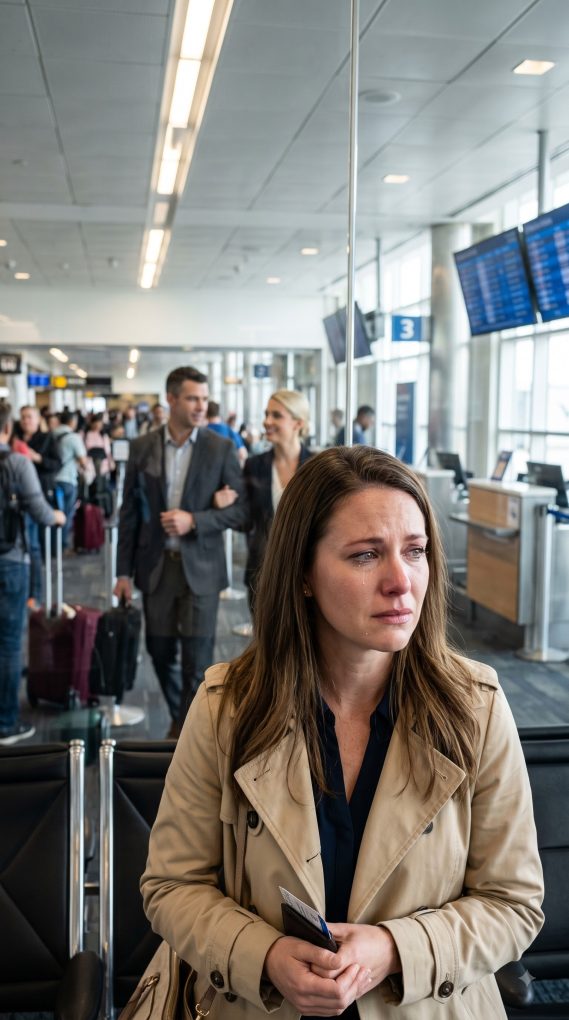
My husband demanded his secretary join our honeymoon, shattering my heart. I stayed silent and let him walk onto the plane with her… But before the plane took off, I walked away and left them behind. He had no idea I had already ended his perfect honeymoon forever.
My husband demanded his secretary join our honeymoon, shattering my heart. I stayed silent and let him walk onto the...
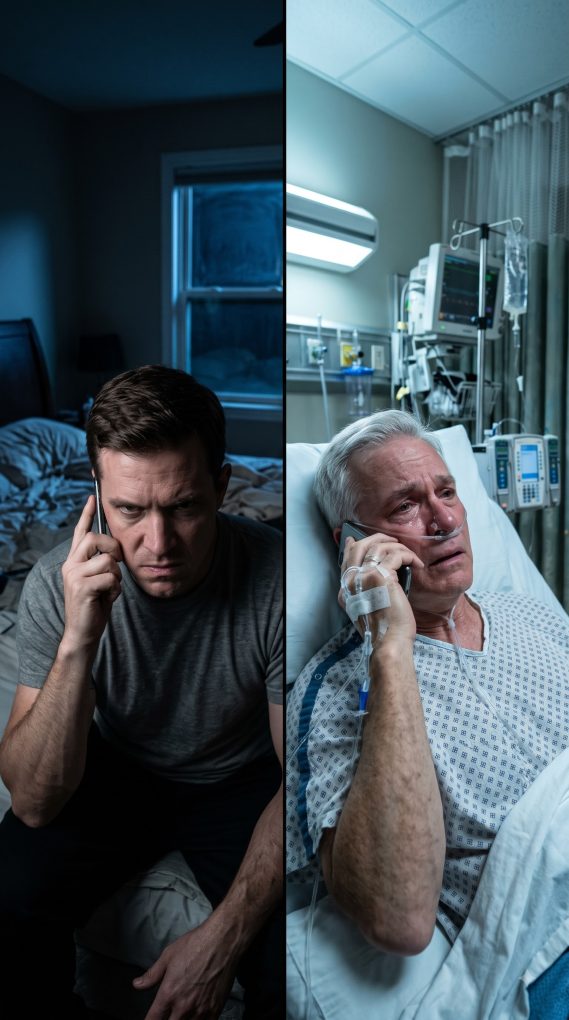
At 3 AM, a state police call revealed my injured father was in the ICU after trying to save my family. In a weak whisper, he told me my wife and her lover kidnapped my 11-year-old son toward the border. “I followed them… but they shot out my tires,” my elderly father wept, broken and helpless. They pushed a grandfather to the edge, forgetting that my old military unit called me “The Wolf of Kandahar.”
At 3 AM, a state police call revealed my injured father was in the ICU after trying to save my...

“He’s not even on the list,” my brother laughed. Then the general turned and said: “Admiral—front row.” My family froze, and my brother’s hand started to tremble… The truth hit hard.
“He’s not even on the list,” my brother laughed. Then the general turned and said: “Admiral—front row.” My family froze,...