A Dying Billionaire Threatened a Single Father: Marry My Daughter or Lose Everything—Then One Sentence About an Old Bridge Explained Why He’d Been Chosen – Life Story
“Marry my daughter by morning, or I’ll take your job, your home, and your child’s health insurance with me.”
Cal Mercer stood dripping rainwater onto a billionaire’s marble floor and refused, even though every part of the threat was real.
Then the dying man mentioned an old bridge collapse Cal had spent seven years trying to forget.
The storm had already broken part of the retaining wall below the Voss lake house by the time somebody came looking for Cal.
He had been outside for nearly two hours in a waxed canvas jacket, stacking emergency stone against runoff while rain drove sideways through the pines.
The estate’s regular contractors had turned around at the flooded access road.
The landscape architect was somewhere in Denver.
The property manager knew how to authorize invoices but not how to stop several tons of saturated earth from sliding toward a guest wing.
Cal knew.
Knowing how to keep expensive things from collapsing had become the least glamorous version of his life.
He was forty-one, broad-shouldered without trying to look imposing, his dark hair already gray above the ears.
Four years earlier, Holden Voss had hired him as grounds and facilities superintendent for the mountain estate outside Silver Pine, Colorado.
The title sounded better than the work.
Cal cleared snow, fixed pumps, monitored generators, inspected retaining walls, repaired irrigation lines, checked roofs, argued with vendors and quietly corrected the mistakes of people who charged ten times his hourly rate.
He was good at it.
That was partly why he hated it.
Once, he had been a structural engineer.
He tried not to think about that when he was unclogging gutters on somebody else’s mansion.
“Mr.
Voss wants you upstairs.”
The private nurse who found him looked too polished for the weather.
Cal glanced at the mud on his boots.
“Now?”
“Now.”
“Wall’s not finished.”
“He said now.”
That sounded like Holden.
Cal jammed his gloves into one pocket and followed her inside.
Warm air hit his wet clothes.
The back corridor smelled of cedar polish and roasted coffee.
He passed two housekeepers whispering beside a linen cart and saw the question on their faces.
Everybody knew Holden Voss was dying.
Nobody knew what the rest of them would become when he did.
Cal knew one thing.
His paycheck came from the estate.
The stone cottage where he and his daughter lived belonged to the estate.
The truck he drove belonged to Voss Meridian.
The insurance card that paid for Junie’s neurologist and anticonvulsant medication carried the same company name.
When rich men died, people like Cal did not receive inheritances.
They received policy changes.
He stopped outside the pantry.
His twelve-year-old daughter sat on a stool with a math worksheet, a microwaved burrito and one earbud dangling from her left ear.
Her after-school program had closed early because of the storm, so she had spent the afternoon at the estate.
Junie looked up.
“You look terrible.”
“Thank you.”
“You’re welcome.”
He wiped rain from his eyebrows.
“You good?”
She tapped the plastic medication pouch beside her backpack.
“Pills taken.
Homework mostly respected.
Burrito legally questionable.”
“Stay here.”
Junie studied his face.
“Are you in trouble?”
“I’m about to find out.”
“Should I hide the good silver?”
Cal almost smiled.
“Finish your algebra.”
He followed the nurse upstairs.
Holden Voss occupied the largest bedroom on the property, a glass-walled suite overlooking a lake that had turned black under the storm.
Machines breathed and clicked around the bed.
Two lawyers stood near a walnut table.
Three executives lined one wall.
Holden’s widowed sister-in-law sat stiffly on a sofa.
His younger brother, Malcolm, leaned beside the fireplace as though somebody had invited him to admire the architecture.
And near the windows stood Lillian Voss.
Holden’s only child.
Acting president of Voss Meridian.
Thirty-six years old.
Unmarried.
Cal had worked on her family’s property for four years and probably exchanged fewer than fifty sentences with her.
He knew the public version.
Financial magazines called her brilliant but difficult.
Business anchors called her reserved.
Anonymous executives called her emotional whenever she blocked a profitable decision she thought was reckless.
Cal knew only what he had observed.
She arrived when boilers failed at midnight.
She remembered the names of housekeeping staff.
She once canceled a ballroom renovation after Cal found unreported electrical problems even though the delay embarrassed the foundation in front of donors.
She also sometimes walked past him without seeming to know he existed.
People contained contradictions.
Wealth simply gave them nicer rooms in which to display them.
Tonight Lillian wore a dark green dress beneath a long cardigan.
Her hair was pinned back.
She looked exhausted.
Malcolm Voss did not.
He was sixty-three, silver-haired, lean, dry and perfectly arranged.
Even during his brother’s final hours, his suit looked recently steamed.
His gaze moved down Cal’s wet clothes.
“This should be memorable.”
Cal ignored him.
Holden looked smaller than he had three days earlier.
Cancer had hollowed his face without reducing the force in his eyes.
“Come here,” Holden said.
Cal stopped several feet from the bed.
“You wanted me?”
Holden swallowed.
The effort looked painful.
“Marry my daughter.”
Cal waited.
He assumed there had to be another sentence.
There was.
“Do it before the trust window closes tomorrow morning.”
Lightning flickered over the lake.
Nobody laughed.
Cal looked at Lillian.
She had gone completely still.
Not embarrassed.
Not surprised enough.
Angry, maybe.
But the anger seemed aimed at the bed, not at him.
Cal turned back to Holden.
“You’re medicated.”
“I’m dying, not confused.”
“Those aren’t mutually exclusive.”
Malcolm gave a quiet chuckle.
Holden’s fingers tightened on the blanket.
“If you refuse, Malcolm takes control of the interim succession committee at sunrise.”
“That sounds like a family problem.”
“It becomes yours.”
Cal felt something cold settle behind his ribs.
Holden spoke more slowly.
“Your employment can be terminated immediately.
The cottage can be reclaimed as an estate asset.
Your company vehicle can be recovered.
Your medical coverage ends with employment.”
Lillian moved.
“Dad.”
Holden did not look at her.
Cal did.
She had uncrossed her arms.
“That was not what you said you were going to do,” she told him.
“There isn’t time.”
“There is always time not to threaten someone.”
Malcolm’s mouth curved.
“Perhaps we should allow Mr.
Mercer to appreciate the generosity before we criticize the presentation.”
Cal looked at him.
“What generosity?”
“Access to this family.”
Malcolm said it as though Cal had been standing outside a cathedral asking to be admitted.
Cal wiped his wet palm on his jacket.
“My daughter needs medication refilled Monday.”
Nobody answered.
That told him the threat had not been metaphorical.
Holden forced himself higher against the pillows.
“I know.”
Something inside Cal hardened.
Of course he knew.
Holden’s company knew everything required to keep an employee useful—dependents, insurance claims, payroll deductions, addresses.
Cal thought of Junie downstairs.
He thought of the pharmacy receipt already tucked inside his truck.
He thought about the crack growing across the windshield and the two hundred and eighty dollars he had managed to save.
He thought about the stone cottage beside the orchard where Junie had finally stopped asking if they were going to move again.
Fear came quietly.
That was the dangerous kind.
The loud kind made people run.
Quiet fear sat beside you and explained why surrender was reasonable.
Holden watched him.
Cal wondered how many negotiations the old man had won by waiting for another person’s fear to do the work.
“Why me?” Cal asked.
Malcolm answered first.
“An excellent question.”
Holden’s eyes stayed on Cal.
“Because you are the only man in this company who had every reason to tell me what I wanted to hear and still told me no.”
Cal felt no pride.
A billionaire praising your integrity while threatening your daughter’s medical coverage did not feel like a compliment.
It felt like someone pricing a tool.
One lawyer shifted her weight.
“Holden, perhaps we should discuss the mechanics privately.”
“No.”
He looked around at his relatives and executives.
“You’ve all had privacy long enough.”
Cal heard the rain against the glass.
He remembered another night years ago.
A laundromat.
Junie at seven, asleep across three plastic chairs because the heat had been shut off in their apartment after Cal lost his engineering position.
His former wife, Elise, had already left.
Cal had been moving warm clothes from a dryer into a basket when Junie woke crying and asked if they were bad people because bad things kept happening to them.
He had crouched in front of her and said the only thing he could think to give her.
We don’t become wrong because life becomes hard.
He had repeated some version of it ever since.
It had cost them before.
Apparently it was about to cost them again.
Cal faced Holden.
“No.”
One of the executives looked up.
Malcolm’s smile disappeared.
Holden said nothing.
Cal continued.
“You can fire me.”
He pointed toward the floor.
“You can take the cottage.
Take the truck.
Cancel the insurance.
Lock every gate on this mountain after I leave.”
Lillian watched him.
“But I’m not going downstairs and telling my daughter I married a stranger because a rich man found the right pressure point.”
Holden’s breathing machine hissed.
Cal’s voice stayed level.
“If I teach her that fear decides what her name is worth, then whatever roof I keep over her afterward isn’t worth much.”
Malcolm pushed away from the fireplace.
“How noble.”
Cal finally looked at him.
“No.
Expensive.”
For the first time that evening, Malcolm had no quick answer.
Holden’s eyes closed.
Then something strange happened.
He smiled.
Not happily.
Almost painfully.
“Good.”
Cal stared at him.
“Good?”
Holden lifted one trembling hand and pointed at the door.
“Everybody out.”
Malcolm frowned.
“Holden—”
“Not him.
You.”
“Your medication has clearly—”
Holden opened his eyes.
“I built the company you have spent thirty years feeding from.
Do not lecture me about competence while you stand beside my deathbed calculating my voting shares.”
Silence.
Malcolm’s face changed almost imperceptibly.
Then he straightened his jacket.
The executives filed out.
The lawyers followed.
Lillian remained at the door.
“Do not threaten him again,” she told her father.
Holden looked away.
She glanced at Cal.
For a second, something like apology entered her expression.
Then she left.
The door closed.
The bedroom suddenly seemed too large.
Cal stayed standing.
“If that was a test,” he said, “you’re a cruel man.”
Holden stared toward the storm.
“If you had accepted in front of them, I would have known I was wrong.”
“So it was a test.”
“No.”
Holden’s voice weakened.
“It was desperation pretending to be one.”
Cal did not move.
Holden nodded toward a chair.
Cal remained standing.
The old man seemed to understand.
“My father created the controlling trust.”
“Your father has been dead for twenty years.”
“Twenty-three.”
“Congratulations on the bookkeeping.”
Holden almost smiled.
“The trust holds the voting block that prevents any single Voss from controlling Meridian without a legally recognized family counter-signatory.”
Cal frowned.
“A what?”
“A spouse or domestic partner.
Somebody legally bound to the beneficiary but independent from the board.”
“That may be the stupidest rich-person rule I’ve ever heard.”
“It is near the top.”
“Why?”
“My father believed concentrated power made us dangerous.”
“Was he right?”
“Yes.”
The answer came too quickly for comfort.
Holden coughed.
Cal reached toward the water, then stopped.
Holden noticed.
He took the glass himself, spilling some onto his blanket.
“My father thought marriage would give the next generation one person who could say no privately when everybody else was paid to say yes.”
“Your family turned matrimony into corporate compliance.”
“We industrialize everything.”
Cal looked toward the closed door.
“And Lillian needs a husband by tomorrow?”
“She needs a qualifying partner before the succession review begins.
Without one, the voting block goes into temporary committee control.”
“Malcolm.”
“Yes.”
“And your daughter knows this?”
“She learned the details three weeks ago.”
“Convenient timing.”
“She has spent those three weeks fighting me about every solution I suggested.”
“Apparently your latest solution was blackmailing the groundskeeper.”
Holden looked tired enough to disappear.
“Yes.”
Cal folded his arms.
“Why not marry her to somebody from your world?”
“Because every man from our world already knows what the company is worth.”
“And I don’t?”
Holden looked directly at him.
“You knew exactly what your daughter’s stability was worth five minutes ago.”
Cal’s jaw tightened.
“And you still refused.”
The compliment made him angrier than the threat.
Holden continued.
“Malcolm has a restructuring plan ready.
He will call it efficiency.”
“Every bad decision gets a clean noun.”
“He will close rural clinics, convert the employee medical fund into a commercial plan, leverage pension assets against acquisition debt and outsource internal safety review.”
Cal stopped breathing for half a second.
Holden saw it.
There it was.
The sentence beneath the sentence.
“Why are you telling me about safety review?”
Holden looked toward the window.
“Because you know what happens when Malcolm controls engineering signatures.”
Cal did not feel the room disappear.
Nothing dramatic happened.
The machines kept running.
Rain struck glass.
A bedside clock changed from 11:41 to 11:42.
But seven years vanished between one breath and the next.
Cal saw a rust-red bridge outside Red Butte.
He saw bolts arranged on a folding table.
He smelled cutting oil and wet concrete.
He heard himself arguing with a project manager.
Those anchor assemblies are not the approved grade.
He remembered the reply.
Schedule’s already gone.
Sign the load release.
He remembered refusing.
Cal had been thirty-four then, licensed, respected enough to be inconvenient, recently returned from thirteen years in Army logistics and infrastructure operations.
Voss Meridian Infrastructure had hired him because he understood both field improvisation and the point at which improvisation became negligence.
After spring flooding damaged the Red Butte rail overpass, Malcolm’s division had promised an aggressive reopening date.
Cal found substitutions in the foundation hardware.
Material certifications did not match.
Testing records were incomplete.
He refused to approve the final load rating.
Two weeks later, during maintenance work, a platform assembly failed in high winds.
Five workers fell.
Three suffered serious injuries.
Luis Aranda’s spine was damaged so badly he never walked again.
Within forty-eight hours, Cal’s written objections were missing from the central project file.
Within a month, a preliminary review described him as the field engineer whose “failure of oversight” contributed to unsafe conditions.
His license went under review.
His division dismissed him.
Contractors stopped returning calls.
Voss Meridian announced reforms.
Cal became the man whose name appeared beside the word failure.
His marriage began dying in increments.
First came money.
Then came humiliation.
Then came the exhausting arithmetic of Junie’s early seizures, specialist visits, prescription costs and insurance appeals.
Elise lasted longer than Cal sometimes gave her credit for.
She also left sooner than Junie needed.
Both things could be true.
By the time Holden quietly offered him work maintaining the lake estate, Cal no longer asked what dignity a job provided.
He asked whether it provided insurance.
Now he stared at the dying owner of the company that had buried him.
“You knew.”
Holden lowered his eyes.
Cal stepped closer.
“You knew what happened at Red Butte.”
“Not everything.”
“That is not an answer.”
“I knew enough to believe your reports had been suppressed.”
“When?”
Holden did not respond quickly enough.
Cal laughed once.
Not because anything was funny.
“Before you hired me?”
“Yes.”
Cal looked around the bedroom.
At the carved ceiling.
At the machines.
At the wool blanket over the billionaire’s thin legs.
“You let me spend four years repairing your gutters.”
“I gave you employment protection while I tried to—”
“You gave me a shovel.”
Holden stopped.
Cal’s voice remained quiet.
“That’s what you gave me.”
He pressed two fingers against his own chest.
“I lost my license.
Men I worked beside thought I got them hurt.
My daughter heard other parents whisper about me.
My wife left while I was trying to decide whether we paid the electric bill or filled a prescription.”
“I know.”
“No.”
Cal leaned toward the bed.
“You know the summary.”
Holden looked at him.
“I lived the days.”
The old man’s eyes closed.
“I suspected Malcolm’s division had altered procurement records.
I did not know the full sequence until later.”
“How much later?”
“Too late for that answer to help you.”
“You’re very good at expensive apologies.”
“I have had practice.”
“That’s not something to be proud of.”
“I’m not.”
Holden’s voice cracked.
“I delayed disclosure because Voss Meridian was closing financing on hospital acquisitions in three states.
I convinced myself that exposing Red Butte immediately could collapse contracts, cost thousands of jobs and threaten facilities that served hundreds of thousands of people.”
Cal stared.
Holden swallowed.
“I told myself I was protecting the many.”
“And I was what?”
Holden said nothing.
“One of the few?”
“Yes.”
That answer hurt more than denial would have.
Cal looked away.
His hands were shaking.
He shoved them into the pockets of his wet jacket.
Holden spoke carefully.
“Men with power become very skilled at calling cowardice responsibility.”
Cal looked back.
“You expect confession to impress me?”
“No.”
“Good.”
“I expect you to hate me.”
“I can manage that.”
“I also expect you to understand why Lillian cannot lose control to Malcolm.”
The bedroom door opened.
Lillian stood there.
Her face had changed.
She had heard enough.
“How long?” she asked.
Holden did not answer.
Lillian stepped into the room.
“How long did you know his reports had been buried?”
“Lillian.”
“How long?”
Holden’s face tightened.
“Years.”
She looked at Cal.
He saw something in her expression he had not seen before.
Not guilt exactly.
Recognition.
As if a suspicion she had carried had finally acquired a name.
“I knew there had been a Red Butte internal review,” she said. “I didn’t know they had used you.”
Cal gave a bitter smile.
“Used me is a polite phrase.”
“Yes.”
She did not soften it.
“That was cowardly.”
Holden turned toward her.
“I protected this company so you would have something to inherit.”
Lillian’s eyes went cold.
“You keep saying that as though inheritance excuses the condition of what you hand me.”
Cal left before either of them could make him part of their argument.
Downstairs, Junie had packed her backpack.
She was holding her math book upside down.
Cal stopped.
She corrected it immediately.
“I was checking if you noticed.”
“Excellent recovery.”
Her smile disappeared.
“What happened?”
“We’re going home.”
“Are we fired?”
“Not yet.”
“Did somebody die?”
Cal looked toward the ceiling.
“Not yet.”
They walked through the service entrance.
The rain had weakened, but the wind still shoved through the trees.
Inside the truck, Junie clicked her seat belt.
Cal started the engine.
She watched him in the dashboard glow.
“Dad?”
“Yeah?”
“Did you do something brave or something stupid?”
He looked at her.
“Those are cousins.”
“Mom used to say that about you.”
The words landed gently and still hurt.
Cal turned onto the estate road.
After several minutes Junie asked, “Are we okay?”
He could have lied.
Parents learned to manufacture okay in a thousand small ways.
He had told her cereal was dinner because it was fun.
He had called temporary apartments adventures.
He had said the pharmacy delay was paperwork when the problem was money.
Tonight he was too tired.
“We’re together.”
Junie nodded.
“All right.”
She turned toward the window.
Cal hated how easily she accepted that as enough.
Holden Voss died at the next morning.
By seven, cable business networks had assembled montages of his life.
By eight, Voss Meridian employees received a memorial email.
By eleven, Cal received a termination appointment.
He sat across from an HR director he had once pulled from a snowdrift during a February whiteout.
She could barely look at him.
“Your position is being eliminated as part of immediate estate restructuring.”
“Immediate meaning Holden’s body is still warm?”
Her mouth tightened.
“This decision came from corporate.”
“Malcolm.”
“I can’t discuss—”
“Malcolm.”
She glanced toward the assistant beside the door.
Cal had his answer.
The cottage had to be vacated within seventy-two hours.
The company truck would be collected.
His insurance would terminate at the end of the month.
Then came the interesting part.
A separation agreement.
Six months’ severance if Cal signed a broad confidentiality clause covering private conversations at the estate, succession issues and “nonpublic historical company matters.”
Cal read it twice.
Malcolm’s assistant pushed a pen toward him.
“This package is more generous than standard.”
Cal placed both hands on the table.
“Is the generosity before or after I promise not to talk about the dying man asking me to marry his daughter?”
The assistant swallowed.
“The agreement speaks for itself.”
“So do I.”
Cal stood.
“I’m not signing.”
“You may want to consider your daughter’s medical expenses.”
That stopped him.
The assistant seemed to realize too late that the sentence had escaped.
Cal looked back.
“You people really do have one language.”
He left the pen untouched.
Packing the cottage took less time than leaving it.
Junie labeled boxes with a black marker.
KITCHEN.
BOOKS.
MEDS—DO NOT PUT IN STORAGE.
Cal found the pencil drawing she had made at nine.
Three stick figures holding hands in front of a square house.
She had drawn smoke coming from the chimney even though they had never lived anywhere with a fireplace.
He stared at it too long.
Junie appeared beside him.
“Keep pile.”
He nodded.
She found his old engineering field bag in the hall closet.
The leather was cracked.
His initials were still pressed into one flap.
Junie lifted it.
“What’s this?”
“My old work stuff.”
“You mean bridge stuff?”
“Yes.”
She had heard about Red Butte only in fragments.
Children always knew more than adults intended and less than they deserved.
“Were you good at it?”
Cal looked at the bag.
“I thought so.”
Junie put it in the keep pile.
Near midnight, she found him sitting on the empty living room floor.
“Dad?”
“Yeah?”
“Are we losing the house because you told that man no?”
Cal rubbed both hands over his face.
“In part.”
Junie absorbed that.
Then she picked up a lamp.
“Okay.”
He looked at her.
“Okay?”
“You always say doing the right thing doesn’t guarantee a prize.”
“I say many irritating things.”
“You do.”
She carried the lamp toward the door.
“But if you stop doing it because we got punished once, then the punishment gets to decide who you are.”
Cal stared after her.
He wondered when his child had begun handing his own lessons back to him.
Their new apartment sat above Weaver’s Hardware in Silver Pine.
Two bedrooms.
One dependable stove burner.
A radiator that sounded as if somebody lived inside it with a wrench.
The bathroom window had been painted shut.
Junie inspected the place and announced, “It’s not haunted.”
“Encouraging.”
“Just underfunded.”
Cal spent the next four days looking for work.
A county maintenance supervisor liked him until the background check.
A private engineering firm became warm, then careful, then unavailable.
A commercial contractor told him Red Butte was old news but clients might still “have concerns.”
Cal unloaded lumber for cash.
He fixed a church furnace.
He repaired a farmer’s well pump.
At night he searched job listings while Junie did homework across the kitchen table.
Every so often, she glanced at him.
He pretended not to notice.
On Thursday evening, a black sedan stopped outside Weaver’s.
Lillian Voss climbed out.
No driver.
No security.
No umbrella.
Junie looked through the window.
“That’s the daughter.”
“Her name is Lillian.”
“The one you didn’t marry.”
“Correct.”
“Yet.”
Cal slowly turned his head.
Junie kept a perfectly straight face.
“Algebra,” he said.
“I finished.”
“Do more.”
The buzzer sounded.
Cal waited.
Then he let Lillian upstairs.
She appeared at the apartment door carrying a document folder.
Rain dotted her camel-colored coat.
Her first words were, “I’m not here to defend my father.”
“Good.”
“I’m also not here to threaten you.”
“Even better.”
She looked past him toward Junie.
“May I come in?”
Cal stepped aside.
Lillian entered as if she understood that being invited into a poor man’s apartment did not make it a place available for inspection.
She did not glance at the worn carpet.
She did not comment on the radiator.
She went directly to Junie.
“Hello, Juniper.”
Junie narrowed her eyes.
“Teachers call me Juniper when paperwork is involved.”
Lillian almost smiled.
“Junie?”
“Accepted.”
She looked at the map spread across the table.
Junie had drawn an imaginary national park.
“What’s that?”
“Emergency Waffle Station.”
“It appears dangerously close to a canyon.”
“That’s why it’s emergency.”
“Reasonable.”
Cal hated how quickly Junie approved of her.
Lillian placed the folder on the table.
“I brought copies of the trust terms, probate schedule and a letter my father wrote to you.”
Cal did not touch it.
“There’s also a sealed reference in the probate inventory,” she added. “An emergency integrity statement held by outside counsel.
I don’t know what is in it.”
That caught his attention.
“Your father loved dramatic names.”
“He loved dramatic control.”
“At least we agree on something.”
Lillian nodded.
“He did.”
No defense.
Again.
Cal opened the folder.
Holden’s handwritten letter began with an apology.
Cal nearly stopped there.
He had received enough wealthy apologies to understand their favorite structure.
Regret first.
Explanation second.
Request third.
Holden did not quite follow it.
He admitted Red Butte should have been reopened years earlier.
He admitted he had allowed lawyers and executives to persuade him that delay protected Voss Meridian employees.
He wrote that leadership had become indistinguishable from self-preservation.
And he asked Cal to help Lillian stop Malcolm.
Cal lowered the paper.
“He still managed to make his guilt somebody else’s assignment.”
Lillian sat across from him.
“Yes.”
“You really are bad at defending your family.”
“I’m trying to quit.”
Junie’s pencil stopped moving.
Cal continued reading.
The letter did not include detailed evidence.
No procurement log.
No original inspection reports.
Just admission.
Guilt.
And one sentence Cal read twice.
I chose the company’s survival over the names of people the company had harmed, and eventually I stopped noticing the difference.
Cal folded the letter.
“Why are you here?”
Lillian placed her hands in her lap.
“Because Malcolm has already started implementing the restructuring.”
“How fast?”
“Faster than I expected.”
“The clinics?”
“Funding review begins Monday.”
Junie looked up.
Cal saw it.
Lillian did too.
The nearest Voss Foundation clinic hosted Junie’s pediatric neurologist twice a month.
Without it, they would drive nearly ninety miles to Denver.
“What else?” Cal asked.
“Employee medical reserves will be transferred into a commercial benefits structure.
Internal safety review will be outsourced.
Pension assets may be pledged as collateral for acquisition debt.”
“And marrying you stops it.”
“It gives me legal standing to receive the trust’s controlling voting block while the succession challenge is reviewed.”
“How long?”
“Ninety days at minimum.
Six months if Malcolm contests validity.”
“He will.”
“Yes.”
“What exactly are you proposing?”
“A courthouse marriage.
Prenuptial agreement.
Separate property.
No claim on your assets, income or future settlement rights.
No claim from you on mine.
We make necessary public appearances.
When control is secure, I sign uncontested dissolution papers.”
Cal stared at her.
“So your father threatened me on Friday.”
“Yes.”
“And now you’re asking on Thursday.”
“Yes.”
“Much classier.”
“I hoped so.”
The dryness of the answer surprised him.
He almost smiled.
Almost.
“Why me?”
Lillian’s expression changed.
“Because the people Malcolm would accept all want something from me.”
“So do I.”
“What?”
“My daughter’s clinic open.”
“That is not something from me.
That is something the company owes the communities it promised to serve.”
Cal leaned back.
“Careful.
You almost sounded idealistic.”
“I try to limit it in public.”
He looked at her for a long time.
“You knew about Red Butte.”
“I knew my father had reopened an internal archive last year.
I knew he had concerns about Malcolm’s old infrastructure division.
I learned your name was connected three weeks ago.”
“And you didn’t tell me.”
“No.”
“Why?”
She did not hide behind a lawyer’s answer.
“Because my father asked me to wait until he could confirm the records.”
Cal’s jaw tightened.
“You obeyed.”
“Yes.”
“Do you regret it?”
“Yes.”
“Would you do it differently?”
“Yes.”
“Easy now.”
Lillian looked at him.
“I cannot ask you to trust me.
I can only stop giving you new reasons not to.”
Cal looked toward Junie.
His daughter pretended to concentrate on her map.
He turned back.
“No.”
Lillian inhaled slowly.
“All right.”
That was it.
No threat.
No persuasion.
She stood.
Junie looked disappointed.
“Are they really closing Dr.
Patel’s clinic?”
Lillian stopped.
“If Malcolm’s proposal goes through, specialist programs are likely to be suspended.”
“For kids with epilepsy?”
“For everyone who uses that program.”
Junie looked at Cal quickly.
“I’m not saying you should marry her.”
“Thank you.”
“I’m just saying closing a clinic is terrible.”
“I know.”
Lillian picked up her coat.
At the door she faced Cal.
“I will fight him either way.”
“You’ll lose.”
“Possibly.”
She said it without self-pity.
Cal disliked respecting her.
It complicated things.
The next week complicated them more.
On Monday, the pharmacy told Cal Junie’s prescription authorization had been interrupted by employment transition coding.
He paid for three days out of pocket.
The amount on the receipt made his stomach tighten.
Tuesday, the Silver Pine Clinic taped a notice inside its glass entrance.
SPECIALIST SERVICES TEMPORARILY SUSPENDED PENDING FUNDING REVIEW.
Wednesday, Cal sold a compressor and the watch his Army unit had given him when he left active service.
Thursday, somebody called from a blocked number.
“Mercer?”
Cal recognized the voice after several seconds.
Ethan Rowe.
They had worked together at Red Butte.
Ethan had managed field documentation and material certification.
After the accident, he stopped returning Cal’s calls.
“Been a long time,” Cal said.
“I know.”
“Seven years is longer than most people need to return a message.”
Ethan breathed into the phone.
“Malcolm’s office is asking whether you took company documents.”
“I didn’t.”
“I know.”
Cal gripped the phone tighter.
“Did you know then?”
Another pause.
“Not all of it.”
Cal nearly hung up.
Ethan rushed on.
“I knew your refusal report existed.
I saw it in the system before legal locked the project folder.”
“And you said nothing.”
“I had a newborn.
Mortgage.
I was scared.”
Cal closed his eyes.
There it was again.
Fear.
The universal subcontractor.
“What do you want, Ethan?”
“To tell you that some records survived.”
Cal went still.
“Where?”
“Not on a Voss server anymore.”
“Why?”
“Because somebody ordered archive reconciliation after Holden reopened Red Butte.
I was contacted as former document control.
Some old backups didn’t match the official file.”
“Who has them?”
“I can’t say on this phone.”
“Then call me when you can.”
“Cal.”
“What?”
“I’m sorry.”
Cal looked at the pharmacy receipt beside him.
“Save that for when it costs you something.”
He disconnected.
Friday evening, Junie had a seizure at the kitchen table.
It lasted less than two minutes.
Cal knew exactly what to do.
That knowledge never made it easier.
He lowered her safely to the floor, turned her onto her side, moved the chair away, checked the time and waited.
Waiting was the terrible part.
A father could fight a person.
Fix a machine.
Repair a wall.
He could not negotiate with electricity inside his child’s brain.
When it ended, Junie lay exhausted on the couch.
Cal sat beside her until she fell asleep.
At 11:37, his phone lit with a news alert.
VOSS MERIDIAN ANNOUNCES STRATEGIC REVIEW OF COMMUNITY HEALTH COMMITMENTS.
Malcolm appeared beneath the headline, calm and statesmanlike.
His statement mentioned stewardship.
Sustainability.
Modernization.
Responsible compassion.
Cal read the phrase twice.
Responsible compassion.
It sounded like something Holden would have once approved.
He hated that.
The next morning Cal drove to the clinic.
Nurses were boxing records.
Somebody had drained the fish tank halfway for transport.
A handwritten sign read DO NOT DISCARD—LIVE FISH.
Children’s drawings had been removed from one hallway.
Cal stood in the doorway of the therapy room.
Lillian was on the floor in jeans and an old navy sweater helping a six-year-old boy pack wooden animals into a plastic bin.
The boy handed her a giraffe.
“That goes with dinosaurs.”
Lillian examined it.
“Historically questionable.”
“They’re friends.”
“Then I withdraw the objection.”
The boy nodded seriously.
Cal watched for several seconds.
No photographers.
No staff around her acting impressed.
No benefit.
She was just there.
A nurse walked past him carrying framed drawings.
“Tessa,” Cal said.
She stopped.
“Any chance the specialist program survives?”
She glanced toward Lillian.
“If she wins, yes.”
“And if Malcolm wins?”
Tessa’s mouth tightened.
“We’ve been told to prepare for closure.”
Lillian looked up and saw Cal.
She stood.
She did not ask him anything.
That mattered.
Cal walked toward her.
“I have conditions.”
Her eyes searched his.
“So do I.”
They met with lawyers Monday.
Cal’s first condition was that his marriage could not waive any Red Butte claim.
Lillian agreed before her attorney finished writing.
Second, Junie’s healthcare would not come directly from Lillian’s money.
No private rescue.
If the clinic survived, it survived for everybody.
“Agreed.”
Third, Cal would not lie about why they married.
“We can decline questions,” Lillian said.
“But we don’t invent answers.”
“Yes.”
Fourth, if either of them wanted out after the trust issue stabilized, the other would not use Junie, money or public pressure to stop it.
Lillian met his eyes.
“Especially Junie.”
They married Tuesday morning at the county courthouse.
The clerk wore turquoise glasses and seemed disappointed by nothing because she had probably seen every human reason for signing a marriage license.
Junie wore a yellow cardigan and held supermarket daisies.
Cal looked at them.
“Why flowers?”
“Photosynthesis deserves representation.”
Lillian laughed.
A small laugh.
Unpracticed.
The judge asked whether either party entered willingly.
Cal looked at Lillian.
The question should have been simple.
It was not.
Holden had threatened him.
Malcolm had closed around them.
The clinic mattered.
Red Butte mattered.
Junie mattered.
But standing here today had been Cal’s decision.
Nobody had taken his answer from him.
“Yes,” he said.
Lillian watched him.
“Yes.”
They signed.
Junie clapped twice.
Nobody joined her.
She lowered her hands.
“Tough crowd.”
By lunchtime, photographs were online.
The headlines did what headlines did.
HEIRESS MARRIES DISGRACED FORMER ENGINEER DAYS AFTER FATHER’S DEATH.
MYSTERY HUSBAND COULD CONTROL VOSS FORTUNE.
Lillian Voss’s “groundskeeper groom.”
Cal read one story that mentioned Junie as “his medically fragile daughter.”
He shut off his phone.
“I hate them,” Junie announced.
“They don’t know us.”
“That’s why they should stop writing.”
“Compelling theory.”
They moved temporarily into Lillian’s Denver townhouse because security around Silver Pine had become ridiculous.
Cal expected something sleek and sterile.
Instead, the house was narrow, old and full of dark wood.
Books covered most available shelves.
There was a grand piano nobody appeared to use.
Junie found foxes hidden in the wallpaper of a downstairs bathroom and immediately approved the building.
Lillian gave her a bedroom overlooking a maple tree.
“Why this one?” Junie asked.
“The other room faces an alley.”
“So?”
Lillian seemed uncertain how to explain.
“Children should see trees when possible.”
Junie considered that.
“Okay.”
Cal took the guest room on the second floor.
Lillian stayed upstairs.
Their marriage began as a calendar.
School.
Medication.
Board meetings.
Security.
Press restrictions.
Meals.
Legal briefings.
They spoke politely.
Carefully.
Like people carrying glasses filled to the rim.
Then ordinary life began eroding the edges.
Lillian discovered Cal fixed things automatically.
A cabinet hinge.
A loose stair spindle.
A bathroom latch.
One morning she found him tightening a handrail with a multitool while waiting for coffee.
“We employ people for that,” she said.
“Apparently not before seven.”
Cal discovered Lillian drank tea and forgot it everywhere.
Desk.
Windowsill.
Piano.
Kitchen counter.
He discovered she answered emails at midnight and was dressed for work before Junie came downstairs.
He discovered she treated drivers and attorneys exactly as she treated executives—by expecting competence, noticing details and thanking them without ceremony.
None of that made her easy.
She could be controlling.
She hated unfinished plans.
She corrected people while they were still speaking when she thought numbers were wrong.
When frightened, she became more formal instead of less.
Cal recognized that habit because he had his own version.
When frightened, he became useful.
He fixed something.
He checked Junie’s medication.
He calculated.
He controlled the pieces he could reach.
Two weeks into the marriage, Malcolm challenged its validity.
His filing called Cal financially vulnerable.
It called Lillian emotionally unstable.
It suggested coercion.
Cal read that part twice.
“The man whose brother threatened to make my child homeless is alleging coercion?”
Lillian’s lawyer pinched the bridge of his nose.
“Hypocrisy is not jurisdictionally prohibited.”
The attack spread beyond court filings.
Somebody leaked the original Red Butte investigation summary.
Not the missing reports.
Not Cal’s objections.
Only the version that blamed him.
Reporters camped outside.
Commentators called him opportunistic.
A radio host joked that Voss Meridian had finally found a cost-efficient way to outsource marriage.
Cal could ignore most of it.
Junie could not.
She came home from school one afternoon with a torn backpack and a swollen lip.
Cal saw the injury and felt his vision sharpen.
“What happened?”
Junie stared at the floor.
“A boy said you marry rich women when you run out of money.”
Cal’s hands curled.
Lillian appeared from the kitchen holding ice wrapped in a dish towel.
“And?”
Junie accepted it.
“I told him his history essay had no thesis.”
Cal blinked.
Lillian looked down quickly.
Her mouth moved.
“Are you laughing?”
“No.”
“You are.”
“The academic component surprised me.”
Junie pressed the ice against her lip.
“It really didn’t have one.”
Cal knelt in front of her.
“Did you hit him?”
“No.”
“Did he hit you?”
“He shoved my backpack.
I shoved him back.
Then I tripped into a bench.”
Cal exhaled.
“We’ll talk to the school.”
“Please don’t become terrifying.”
“I don’t become terrifying.”
Both Lillian and Junie looked at him.
He frowned.
“Fine.”
Lillian crouched beside them.
“People who cannot imagine choosing duty over advantage usually assume everyone is acting for advantage.”
Junie squinted.
“That sounded like a plaque.”
Lillian nodded gravely.
“My family owns many plaques.”
Junie laughed and immediately winced.
Lillian took the ice pack gently.
For one brief second, Junie leaned into her hand.
Cal looked away.
He had spent years imagining danger as the thing that could hurt his daughter.
He had forgotten that hope could frighten him too.
One night he woke sitting upright in bed, lungs pulling air too quickly.
He had been back in Iraq.
Not a dramatic memory.
Those were easier.
This had been one of the quiet ones.
A road.
A stopped convoy.
The terrible absence of normal sound before an explosion.
He heard a voice from the hall.
“Cal.”
He focused.
Lillian stood outside the open doorway.
She did not enter.
“You’re in Denver,” she said.
He swallowed.
Rain touched the windows.
She listened.
“It’s raining.
Junie is asleep.
The house is secure.”
His breathing slowed.
Embarrassment arrived after awareness.
“Sorry.”
“Don’t.”
He wiped his face.
“You can go back to bed.”
“I intend to.”
She hesitated.
“Would you like the door closed?”
“Yes.”
She closed it.
The next morning neither mentioned what had happened.
But there was better coffee in the kitchen.
Cal repaired the loose hinge on her study door.
Neither of them acknowledged the exchange.
Trust, he was learning, could be built out of things nobody announced.
Near the end of the second week, he found her downstairs at in the morning.
Snow had begun covering the parked cars outside.
Lillian sat in the dark with a glass of water.
“You all right?” Cal asked.
“Define all right.”
“Bad start.”
She rubbed her forehead.
“My mind is conducting a retrospective audit of every mistake I’ve made since adolescence.”
“Efficient.”
“I inherited systems thinking.”
He made coffee.
Lillian looked at the mug.
“It’s two thirty.”
“Your point?”
“I had one.
It left.”
He leaned against the counter.
After several quiet minutes, he asked, “Were you ever close to marrying somebody?”
She stared toward the window.
“Yes.”
He waited.
“His name was Nathaniel.”
Cal had never heard it.
“He worked in environmental policy.
He was kind.
Which was inconvenient.”
“To you?”
“To my family.”
She turned the glass between her hands.
“Malcolm had his firm audited.
Someone started calling his clients.
A donor withdrew from his mother’s nonprofit.
He received anonymous complaints against his license.
Then he was offered a job in Boston that would make most of the problems disappear.”
“Did he take it?”
“Eventually.”
“Did you blame him?”
“No.”
Her answer was immediate.
“I loved him enough not to ask him to prove it by letting my family destroy him.”
Cal looked into his coffee.
“Do you still love him?”
“No.”
A pause.
“I respect the version of him that left before fear made him cruel.”
She looked at Cal.
“What about Elise?”
He was surprised she used his former wife’s name.
“Some days.”
The honesty came before he could edit it.
“Some days I remember the woman who slept on hospital floors beside Junie.
Some days I remember the woman who packed while our daughter was at school because she couldn’t face saying goodbye.”
Lillian said nothing.
“Mostly,” Cal continued, “I want Junie to understand her mother left because adults failed each other.
Not because she was too hard to love.”
Lillian’s eyes lowered.
“Children always volunteer to become the cause.”
“Apparently daughters too.”
Her face changed.
Cal saw he had hit something.
“Holden?”
Lillian gave a small nod.
“My father could make every sacrifice sound like an investment in my future.
Eventually I started wondering whether I was responsible for the people he hurt building it.”
Cal thought of the lake house.
The threat.
Holden’s letter.
“He wasn’t building it for you.”
“No?”
“He was building what he wanted and naming you beneficiary.”
Lillian looked at him.
“That may be the cruelest accurate thing anyone has said about him.”
“Sorry.”
“No.”
She lifted the glass.
“Don’t apologize for accuracy.”
Two days later, Ethan Rowe called again.
This time Cal met him at an all-night diner near Aurora.
Ethan had aged.
Thinner hair.
Deep lines around his mouth.
He kept glancing toward the windows.
“You look like you’re smuggling uranium,” Cal said.
“I wish it were uranium.”
Ethan slid an envelope across the table.
Inside were index pages.
Not evidence itself.
A map of archived records.
“When Holden ordered the Red Butte review reopened,” Ethan explained, “outside counsel requested old backups from the infrastructure document system.
I helped reconstruct them.”
“And?”
“The official incident archive doesn’t match the backup.”
“I know that much.”
“No.
You don’t.”
Ethan pointed at several numbers.
“Your refusal memo was reclassified three days before the platform failure.
Somebody changed the document code from engineering hold to field correspondence.”
“Who?”
“Authorization came from Malcolm’s division controller.”
Cal’s jaw tightened.
“And after the accident?”
“The procurement substitutions were removed from the primary file.”
“By whom?”
“I can’t prove who clicked delete.
But legal meeting minutes reference the mismatched anchors.”
“Do those minutes still exist?”
Ethan met his eyes.
“Yes.”
“Where?”
“Outside counsel has a copy.
So does the archive Holden created.”
“Why give me this?”
Ethan rubbed both hands over his face.
“Because seven years ago I had a six-month-old baby and a mortgage.
When they told me the issue was being handled, I let myself believe it.”
Cal said nothing.
“I watched what happened to you.”
“Yes.”
“I should have spoken.”
“Yes.”
Ethan’s eyes reddened.
“You really make apologies work.”
“They should cost something.”
Ethan nodded.
“I’m willing to testify.”
That was a cost.
Cal pushed the envelope back.
“Keep the originals where they are.
Send nothing to me electronically.”
Ethan looked surprised.
“You trust me?”
“No.”
Cal stood.
“But I trust a chain of custody more than revenge.”
Friday afternoon, a courier delivered a brown envelope to Lillian’s townhouse.
No return address.
Inside were copies of the records Ethan had described.
Procurement substitutions.
Cal’s original refusal memorandum.
Risk meeting minutes.
Emails discussing “narrative containment.”
One memo recommended concentrating liability around “field-level inspection failures.”
Cal’s name appeared twice.
Then he found Holden’s initials.
Beside a recommendation delaying disclosure until financing closed on three hospital acquisitions.
Cal sat in Lillian’s study.
He read the page again.
He had spent years telling himself Holden might have learned too late.
That hiring Cal at the estate had been guilt after ignorance.
The initials destroyed that version.
Holden had not known everything.
But he had known enough.
And chosen timing.
Chosen financing.
Chosen reputation.
Chosen Cal.
When Lillian came home, she stopped in the doorway.
She saw the documents.
Her face drained.
“Where did you get those?”
“Courier.”
She closed her eyes.
“I got authenticated versions through counsel this morning.”
Cal stood.
“This morning.”
“Yes.”
“And when were you going to tell me?”
“As soon as I came back.
I’ve been at the emergency board session trying to stop Malcolm from freezing clinic payroll.”
“Your father signed it.”
“I know.”
“He knew enough to stop them.”
“Yes.”
“He let them blame me.”
“Yes.”
“He hired me later and watched me mow his lawn.”
Lillian’s eyes filled.
“Yes.”
Cal turned away.
His anger needed somewhere to go.
That frightened him more than anger itself.
He could not yell at Holden.
Could not undo Red Butte.
Could not reclaim seven years by making Lillian pay for being nearby.
He gripped the edge of the desk.
“Your family has an incredible talent.”
She waited.
“You turn people into damage you plan to repair later.”
Lillian flinched.
Good, part of him thought.
He hated that part immediately.
“Tell me it was complicated,” he said. “Tell me about financing.
Jobs.
Hospitals.
Give me the full ten-thousand-dollar-carpet explanation.”
She walked toward the desk.
Instead of defending herself, she took a blue folder from her bag.
Placed it in front of him.
“What’s that?”
“Signed annulment petition.”
Cal stared at her.
“Property waivers are attached.
Public statement too.
It says I requested the marriage and accept responsibility for the arrangement.
My attorneys will not contest anything.”
He looked up.
Lillian’s hand trembled once.
Then stopped.
“My father used guilt to control people,” she said. “Malcolm uses fear.
I will not use your daughter.”
Cal said nothing.
“You can leave tonight.”
“You’ll lose the trust challenge.”
“Probably.”
“The clinic closes.”
“I’ll keep fighting.”
“Red Butte may disappear again.”
“I’ve instructed counsel to preserve everything we have.”
“That may not be enough.”
“I know.”
Cal looked at the blue folder.
A door.
That was what she had given him.
Not a strategy.
Not another argument.
A door.
Holden had offered choice while holding a weapon against it.
Malcolm offered choice only after naming a price.
Lillian had just handed Cal freedom even though it might cost her everything.
Something shifted.
Not forgiveness.
Not love.
Something smaller and perhaps more dangerous.
Belief.
“If I leave,” he said, “you might lose.”
“Yes.”
“And you’re still telling me to go if I want.”
“Yes.”
Junie appeared in the hallway wearing star-patterned socks.
“Are we moving again?”
Cal closed his eyes.
“Were you listening?”
“Our walls are historic and acoustically judgmental.”
Lillian laughed despite herself.
Junie entered the study.
She saw the papers.
“Is that bridge stuff?”
Cal nodded.
“They really did it?”
“Yes.”
She looked angry.
Not childish anger.
Simple moral clarity.
“Then people should know.”
Cal looked at her.
Safety had been his obsession since Elise left.
Keep medicine stocked.
Keep rent paid.
Keep doors locked.
Keep Junie insulated from consequences.
But there were lessons children absorbed from what their parents protected them from.
And lessons they absorbed from what their parents surrendered to.
Cal picked up the annulment folder.
For one second, Lillian’s face went blank.
He opened the desk drawer.
Placed it inside.
“I’m not leaving tonight.”
Her lips parted.
“Cal—”
“That is not a promise about next month.”
“I understand.”
“It is not romantic.”
“I definitely understand.”
Junie raised her hand.
“Can it become romantic later or is that legally prohibited?”
“Bed,” Cal said.
“It’s seven forty.”
“Early bed.”
“This marriage is oppressive.”
She left.
Lillian covered her face for several seconds.
Cal heard a small laugh.
The next morning, he called Ethan.
Then he called an attorney named Renata Pike.
She had represented engineers, whistleblowers and injured workers against companies large enough to own buildings with their logos visible from airplanes.
They met in her office.
Renata was sixty, compact, sharp-eyed and unimpressed by mythology.
She read the documents for forty minutes.
Then she looked at Cal.
“Where are the originals?”
“Preserved in two independent archives.”
“Witness?”
“Former document control manager.”
“Has he agreed to affidavit?”
“Yes.”
“Digital authentication?”
“Outside probate counsel has verified hashes on part of the archive.”
Renata leaned back.
“Good.”
“You sound disappointed.”
“I’m a lawyer.
Competent clients reduce billing opportunities.”
He almost smiled.
“What do I do?”
“You do not release this to the press.”
“Wasn’t planning to.”
“You do not threaten Malcolm with it.”
“Also wasn’t planning to.”
“You do not let your wife’s corporate counsel control your personal claim.”
Cal liked her immediately.
“Then?”
“We submit sealed copies to the probate court and appropriate regulators.
We protect chain of custody.
We preserve whistleblower status.
And we find out exactly how much the old man recorded before he died.”
Cal remembered the sealed integrity statement.
“You know about that?”
“Everybody in probate knows it exists.
Nobody except Holden’s outside counsel knows what it contains.”
“Can Malcolm stop it?”
“If the trust conditions for release are met, probably not.”
“Probably?”
Renata smiled without warmth.
“Anyone who gives you certainty in litigation is selling either religion or invoices.”
Cal retained her for one dollar plus contingency rights if his Red Butte claim reopened.
She examined the dollar.
“Do you have anything less wrinkled?”
“No.”
“Fine.
I’ve had worse clients.”
The day before the probate hearing, Malcolm requested a private meeting.
Lillian opposed it.
“He wants to buy you.”
“I know.”
“Then why go?”
“Because I want to know his number.”
“That sounds dangerously like curiosity.”
“It is.”
“Cal.”
He looked at her.
“I’m not going to negotiate.”
Her jaw tightened.
“That is not what worries me.”
“What does?”
“That he will say something about Junie that makes refusing feel irresponsible.”
Cal was quiet.
She understood the danger exactly.
He went anyway.
Malcolm’s office occupied the forty-second floor of Voss Meridian Tower.
Denver spread below the windows.
From that height, neighborhoods became blocks and highways became lines.
Cal understood why powerful people liked tall buildings.
Distance converted lives into geometry.
Malcolm stood beside a conference table.
“Mr.
Mercer.”
“Cal.”
“We are not friends.”
Malcolm smiled.
“No.
Friendship usually assumes a degree of equality.”
Cal remained standing.
“Your offer?”
“So direct.”
“I charge extra for small talk.”
Malcolm poured water.
“My brother became sentimental at the end.
Regret makes old men theatrical.”
“Holden was theatrical long before cancer.”
“True.”
Malcolm sat.
“Lillian, unfortunately, inherited his appetite for moral gestures without his talent for containment.”
“You mean she says no to you.”
“I mean she confuses reluctance with virtue.”
There was the logic beneath him.
Not mindless greed.
Malcolm genuinely believed hesitation was weakness.
He continued.
“Voss Meridian employs tens of thousands of people.
It cannot be managed like a church pantry.
Rural clinics are admirable, but admiration does not make every program sustainable.
Pension assets sitting idle while capital opportunities disappear are not sacred.
Internal safety departments become captured by legacy thinking.”
“Like engineers who object to bad bolts.”
Malcolm’s smile thinned.
“Red Butte again.”
“Yes.”
“You have spent years building your identity around an event you did not fully understand.”
“I understand men fell.”
“Construction is dangerous.”
“I understand my report disappeared.”
“Records management is imperfect.”
“I understand your procurement division substituted hardware.”
Malcolm looked at him.
“Allegations improve very little through repetition.”
Cal said nothing.
Malcolm mistook the silence for progress.
“Annul the marriage.”
Cal waited.
“State that Holden was impaired and Lillian exploited your financial desperation.
In exchange, I will guarantee your daughter comprehensive medical coverage for seven years.”
There it was.
Junie first.
Exactly as Lillian predicted.
Malcolm continued.
“A private education trust through university.
Restoration of your professional license through an independent engineering consultancy.
And two million dollars in a protected account.”
Cal imagined the number.
No pharmacy calculations.
No rent fear.
No explaining why a field trip cost too much.
Junie could choose a college without asking what he could afford.
He could have his name professionally restored.
Not justice.
Something that resembled it closely enough from a distance.
Malcolm watched him.
“No admission from you.
No humiliation.
You leave this unpleasant family dispute with security.”
“You altered Red Butte records.”
Malcolm’s eyes cooled.
“You cannot prove that.”
“You’re very confident.”
“I am experienced.”
“You had the original procurement substitutions removed.”
“Again, allegation.”
“You let them make me the failure.”
Malcolm stood.
“Mr.
Mercer, poverty has a habit of turning pride into religion.
Do not make your daughter worship at that altar.”
Cal felt the sentence hit exactly where Malcolm intended.
He thought of Junie on the kitchen floor after her seizure.
He thought of three emergency pills purchased at retail cost.
He thought of the apartment over the hardware store.
Then he thought of Junie carrying a lamp out of the cottage.
If the punishment decides who you are, it wins.
Cal walked toward the door.
Malcolm’s confidence broke slightly.
“You’re refusing?”
“Yes.”
“Two million dollars.”
“Yes.”
“Seven years of medical coverage.”
“Yes.”
“Your license.”
Cal looked back.
“You’re offering to buy my daughter a softer life if I teach her truth is only affordable when somebody else pays for it.”
Malcolm’s jaw tightened.
“Spare me the performance.”
“It isn’t for you.”
“Men in your position do not get many opportunities to turn suffering into security.”
Cal opened the door.
“If I take your deal, Junie pays every time she looks at me.”
Malcolm’s voice followed him.
“You are making an enemy of this family.”
Cal turned.
“No.”
His hand rested on the door.
“You made me one seven years ago.”
The probate hearing began at ten the next morning.
The old Voss Meridian boardroom had walnut walls, brass lights and portraits of dead men who had apparently spent generations staring down at living people making the same mistakes.
Reporters occupied the back rows.
Board members whispered.
Lawyers arranged binders.
Lillian sat beside Cal in a navy suit.
Her hands rested flat on the table.
The signed annulment papers were inside Cal’s coat pocket.
He had taken them from the drawer that morning.
Not because he planned to file them.
Because he wanted to remember that leaving was still possible.
A choice mattered only when the other door remained unlocked.
Junie was at school.
Cal had promised to pick her up regardless of the result.
Malcolm entered last.
Of course he did.
His attorneys attacked the marriage first.
Holden had been impaired.
Lillian faced documented “emotional instability.”
Cal was economically vulnerable.
The union was opportunistic.
The trust should not recognize it.
Then Malcolm’s lead attorney approached Cal.
“Mr.
Mercer, did you marry Lillian Voss because you loved her?”
Cal felt Lillian become perfectly still beside him.
There it was.
The question built to force either lie or humiliation.
No, and the marriage looked fraudulent.
Yes, and Cal turned complicated reality into convenient fiction.
He stood.
“I married Lillian because her father tried to force me to.”
A murmur moved through the room.
The lawyer blinked.
“That does not answer my question.”
“It answers a better one.”
The judge leaned forward.
Cal continued.
“I refused Holden Voss that night.”
Malcolm shifted in his chair.
“I agreed later, after I learned the succession fight was connected to decisions that had already affected my family and workers at Red Butte.”
The attorney’s expression sharpened.
“Are you attempting to introduce irrelevant allegations?”
“No.”
Cal opened his briefcase.
“I’m explaining why I stayed.”
He placed Renata’s indexed filing on the table.
“Authenticated copies of procurement records, my original engineering refusal report, internal risk minutes and post-incident legal communications have been submitted under seal to this court, federal regulators and independent counsel.”
Malcolm half rose.
“That material was stolen.”
Renata stood behind Cal.
“No, Mr.
Voss.
It was preserved.”
Her voice carried easily.
“Chain of custody affidavits, archive metadata and third-party authentication are included.”
Malcolm’s attorney objected.
Renata responded.
The judge demanded order.
Reporters leaned forward.
Cal looked at Lillian.
Shock had broken through her composure.
“You didn’t tell me,” she whispered.
“No.”
A flicker of hurt.
Then understanding.
“Why?”
“Because last time people decided the truth needed better timing.”
Lillian held his gaze.
Then nodded.
No argument.
Malcolm’s attorney tried to exclude the records.
Renata explained why that was unlikely to work.
Then Lillian’s probate counsel stood.
“Your Honor, the evidence submission triggers an additional trust provision.”
Malcolm froze.
Cal remembered Lillian’s folder.
The sealed emergency integrity statement.
The attorney continued.
“Holden Voss recorded a declaration three days before his death, to be released only if succession litigation raised questions of fiduciary misconduct.”
Lillian turned.
“What declaration?”
Her own attorney looked uncomfortable.
“Your father ordered it held outside company control.”
Malcolm whispered one word.
“No.”
A screen descended at the front of the room.
Holden appeared.
Thinner than Cal remembered.
Pale.
Angry at his own weakness.
For several seconds he only breathed.
Then he spoke.
No dramatic absolution.
No attempt to become heroic after death.
Names.
Dates.
Decisions.
Red Butte.
Malcolm’s procurement division.
The substituted anchor assemblies.
Cal’s refusal memorandum.
The decision to delay complete disclosure.
The post-accident strategy that allowed blame to settle on field inspection staff.
Holden admitted his own part.
“I told myself that disclosure before financing closed would threaten hospitals, payrolls and projects serving people who had never heard of Red Butte.”
He paused to breathe.
“I used the scale of what I protected to excuse the lives I allowed to be damaged.”
Cal stared at the screen.
The admission did not heal him.
That surprised him less than he expected.
Holden continued.
“My brother will say I was weak when I recorded this.”
Malcolm did not move.
“Perhaps I was.
But weakness is not the same as regret.
Regret arrives after strength has already been used badly.”
Holden named Lillian.
Said she should receive the voting block.
Not because she obeyed him.
Because she had repeatedly resisted him.
“If they call my daughter unstable, examine what behavior this family has historically called stable.”
Lillian’s eyes filled.
She did not wipe them.
Holden looked directly into the camera.
“And to Calvin Mercer: I cannot return your name to the years when you needed it most.
I can only stop pretending I did not help take it.”
The recording ended.
Nobody spoke for several seconds.
Cal had imagined vindication before.
Often.
He had imagined triumphant anger.
Malcolm humiliated.
Apologies.
Relief.
Reality felt different.
The room still smelled like coffee and old wood.
Luis Aranda still used a wheelchair.
Junie had still spent years hearing whispers.
Elise had still left.
Cal had still stood in grocery aisles adding prices in his head.
Justice did not travel backward.
It simply prevented certain lies from traveling forward.
The judge issued a temporary order recognizing Lillian’s standing under the trust while the broader challenge proceeded.
Regulators announced investigations before the building emptied.
Malcolm resigned from interim authority that afternoon, officially to protect the company from distraction.
By evening, the board had suspended him.
Three directors announced sudden retirements.
The clinic closures stopped.
Not because Lillian personally wrote a check.
Because the foundation obligations were frozen under independent supervision.
The employee medical fund was placed into temporary independent trusteeship.
Red Butte reopened.
Ethan Rowe signed his affidavit publicly.
Cal’s former license review was referred for reconsideration.
News anchors who had called him disgraced began using words like whistleblower.
He hated how quickly language changed when powerful people approved a new version.
Luis Aranda’s wife, Marisol, called that evening.
Cal saw the name and almost did not answer.
The last time he had seen her was outside a hearing seven years earlier.
She had looked past him as if he were part of the machinery that broke her husband.
He answered.
Neither of them spoke for a long time.
Finally Marisol said, “Luis saw the hearing.”
Cal sat on the townhouse stairs.
“I’m sorry.”
“For what?”
“For not proving it sooner.”
“You tried.”
“Not hard enough.”
She exhaled.
“Maybe.”
Cal closed his eyes.
“But they had more weapons then.”
He pressed his thumb against his forehead.
“Does he want to talk to me?”
“Not yet.”
“Okay.”
“But he knows.”
Cal’s throat tightened.
“Okay.”
When the call ended, he remained on the stairs until Junie came home.
She dropped her backpack.
“Are we homeless?”
“No.”
“Is the clinic closing?”
“No.”
“Are you going to jail?”
Cal stared at her.
“Why would I be going to jail?”
“News is confusing.”
Lillian entered behind her.
“Accurate assessment.”
Junie looked between them.
“So we won?”
Cal thought about it.
“No.”
Junie frowned.
“Then what happened?”
“We stopped losing the same way.”
She considered that.
“Can we order pizza?”
“Yes.”
“That feels like winning.”
Settlement talks began within a week.
Cal refused to negotiate only for himself.
Red Butte had injured workers besides him.
People lost wages.
Careers.
Health.
His individual exoneration could not become another version of the same mistake—protect the visible person and leave everybody else beneath the paperwork.
Lillian supported the position.
She did not call it generosity.
Did not announce it publicly.
She simply instructed company counsel that no resolution involving Cal could bypass the injured workers’ claims.
Cal noticed.
Trust continued arriving in small, inconvenient pieces.
Elise called from Arizona after the hearing became national news.
He almost ignored that call too.
“Cal?”
Her voice sounded older.
So did his, probably.
“I saw everything.”
“Most people did.”
“I didn’t know.”
He leaned against the pantry counter.
“No.”
“About your reports.
Holden.
Any of it.”
“I didn’t know all of it either.”
She started crying.
Cal waited.
Years earlier, he would have rushed to comfort her.
Then later he would have used her tears against her in his mind.
Tonight he did neither.
“Does Junie hate me?”
“No.”
“Don’t protect me.”
“I’m not.”
He looked through the doorway.
Junie sat at the kitchen table while Lillian helped her build a model watershed for science class.
“She misses what she wishes we had been.”
Elise breathed shakily.
“That’s worse.”
“Maybe.”
“Can I talk to her?”
“I’ll ask.”
Not yes.
Not no.
A boundary.
Junie agreed to a call Sunday.
It lasted fourteen minutes.
Afterward she sat quietly on the stairs.
Cal sat one step below her.
“You okay?”
“I don’t know.”
“That’s allowed.”
“Mom said she was sorry.”
“How did that feel?”
“Annoying.”
“Also allowed.”
“She wants to call again.”
“What do you want?”
Junie shrugged.
“Maybe.”
Cal nodded.
“Then maybe.”
No speech.
No forced forgiveness.
Healing, he discovered, often sounded disappointingly ordinary.
A month after the hearing, the townhouse changed.
Not physically.
The same stairs creaked.
The same maple branches tapped Junie’s window.
The same foxes hid in the wallpaper.
But people began leaving evidence of themselves around.
Junie’s Rescue Waffle Station map remained on the refrigerator.
Beside it appeared the clinic’s reopening notice.
A science fair schedule.
A medication chart.
And a handwritten note from Lillian:
WE ARE OUT OF COFFEE.
GENERIC IS NOT AN ACCEPTABLE EMERGENCY SUBSTITUTE.
Cal bought the expensive brand.
He complained loudly.
Lillian thanked him without mentioning the second bag he hid in the pantry.
Cal began working with the independent Red Butte review.
His engineering license had not magically returned.
That mattered.
He sat through interviews.
Submitted documentation.
Completed updated training.
Agreed to supervised project review.
The process was slow.
Humbling.
Real.
His hands remembered drawings.
His mind remembered load paths.
One afternoon he spent three hours reviewing anchor calculations and realized he had gone the entire time without thinking about the version of himself who had been publicly disgraced.
He was simply an engineer solving a problem.
He went to the bathroom afterward and stood at the sink longer than necessary.
Some recoveries arrived too quietly for anyone else to notice.
Lillian worked longer hours than before.
Restructuring a company was less cinematic than saving one.
There were arguments over pension protections.
Clinic budgets.
Compliance independence.
Board seats.
People who supported reform in public objected when reform limited their power in private.
She came home exhausted.
But slowly she stopped entering the house like an executive arriving at another meeting.
Some evenings she kicked off her shoes near the door.
Sometimes she asked Junie about school before checking her phone.
Once, Cal found her asleep on the sofa with a regulatory filing across her chest and Junie’s blanket over her legs.
He did not wake her.
He removed the papers.
Set them on the table.
Turned off the lamp.
Another Sunday, he heard piano music.
Not good piano music.
He followed it downstairs.
Lillian sat at the grand piano.
Junie lay under it reading a graphic novel.
“What’s happening?” Cal asked.
Junie did not look up.
“Lillian is committing crimes against Beethoven.”
Lillian kept playing.
“He had a difficult life.
This won’t be the worst thing that happened to him.”
“You play?” Cal asked.
“Technically.”
“Why did you stop?”
Her hands slowed.
“My father liked performances.”
That answered enough.
Cal sat in a chair.
“Don’t stop because I’m here.”
She looked at him.
Then began again.
The song stumbled.
Restarted.
Improved.
Junie remained under the piano, feeling vibrations through the floor.
Cal listened.
No board.
No cameras.
No purpose.
Just sound in a house.
There were bad nights too.
Cal still woke angry at Holden.
Vindication had made some of the anger worse.
Now he knew exactly what had been taken.
Lillian struggled whenever newspapers transformed Holden’s final confession into sainthood.
VISIONARY FOUNDER’S LAST ACT SAVES COMPANY.
She threw one article into the recycling bin hard enough to tear it.
“He doesn’t get to become good because he finally became honest.”
Cal looked at her.
“No.”
“I loved him.”
“I know.”
“I hate parts of him.”
“I know.”
“Those things shouldn’t fit together.”
“They do.”
She sat at the kitchen table.
“How?”
Cal thought of Elise.
“I don’t know.
But they do.”
The annulment papers remained in Lillian’s study drawer.
One evening, as snowmelt dripped from the roof, she brought them up.
Junie had gone to bed.
Cal carried two mugs onto the narrow balcony off the kitchen.
Lillian stood in a gray coat looking down at trash bins and bare branches.
Not much of a billionaire’s view.
Cal liked it.
He handed her coffee.
She tasted it.
“Not generic.”
“I’m capable of learning.”
“Evidence remains mixed.”
They stood side by side.
After several minutes, Lillian said, “Renata says the simplest annulment window closes at the end of the month.”
Cal looked into his mug.
“She also says simple litigation is a mythical animal.”
“She likes you.”
“She insults me professionally.”
“That is how Renata expresses affection.”
Lillian’s fingers tightened around the mug.
“You can still go.”
He looked at her.
“The trust is stable,” she continued. “The clinic protections are no longer dependent on our marriage.
Red Butte is preserved outside corporate control.
You did what you agreed to do.”
“What did I agree to do?”
“Help me stop Malcolm.”
“I remember agreeing to a marriage.”
Her mouth curved slightly.
“I was trying to make that sound less alarming.”
Cal watched headlights move along the street below.
Lillian’s voice became quieter.
“I meant what I said that night in the study.
I will not fight you if you want out.”
“Is that what you want?”
She stared toward the alley.
For once, she did not answer quickly.
He appreciated that.
Fast answers had done enough damage in their lives.
“No.”
The word nearly disappeared into the cold.
Cal waited.
“But wanting something has never been a reliable moral guide in my family.”
He turned toward her.
Lillian looked different outside the boardroom.
Not softer exactly.
More visible.
Cal thought about the first night at the lake house.
Her father had tried to turn marriage into leverage.
Cal had refused.
Then Cal himself had turned the marriage into duty.
Protect Junie’s clinic.
Protect workers.
Expose Red Butte.
Stop Malcolm.
Every reason had been serious.
None of those reasons answered the question now standing between them.
“What if we don’t decide about the marriage tonight?” he asked.
Lillian looked confused.
“The deadline—”
“I heard you.”
“Then what are you proposing?”
“Dinner.”
She stared.
“Dinner.”
“Tomorrow.”
“We eat dinner almost every day.”
“With Junie telling us about middle-school corruption.”
“Important briefings.”
“I mean dinner outside this house.”
Lillian’s eyes widened slightly.
“No lawyers.”
“Risky.”
“No trust.”
“Reckless.”
“No board agenda.”
“Now you’re frightening me.”
Cal smiled.
“Just you and me.”
The humor left her face.
Something more vulnerable took its place.
“Why?”
Cal looked over the railing.
Because he respected her was not enough.
Because Junie loved her was dangerous.
Because they had survived something together was not a reason to build something afterward.
He had learned that trauma could make people feel bonded simply because they recognized each other’s wounds.
He did not want another bargain wearing a prettier suit.
So he gave her the smaller truth.
“Because the first honest thing between us was me saying no to your father.”
Lillian said nothing.
“And the second was you handing me those annulment papers.”
Her eyes lowered.
“You gave me a way out when keeping me would have helped you.”
“That was the minimum decent thing.”
“Maybe.”
He turned toward her.
“But after years of people deciding what my choices were worth, it didn’t feel minimum.”
Her eyes shone.
She looked annoyed by that.
Cal continued.
“I don’t know what this is without the trust clause.”
“Neither do I.”
“Good.”
“Good?”
“I’d be worried if one of us already had a five-year strategic plan.”
A laugh escaped her.
Cal set his mug on the railing.
“I don’t want Junie growing up believing the only real part of this marriage was the damage that created it.”
Lillian’s breath caught.
“And I don’t want to walk away from something potentially good just because it came into our lives wearing the ugliest possible disguise.”
“Cal.”
“No promises.”
He held up one hand.
“No grand speech.
Dinner.”
Her mouth trembled into a smile.
“Just dinner?”
“Just dinner.”
“And afterward?”
“We decide whether we want another.”
“You are proposing a quarterly review of romance.”
“I knew you’d understand.”
She laughed.
Not the careful laugh she used around lawyers.
Not the brief one Junie sometimes surprised from her.
A full laugh.
Warm.
A little disbelieving.
From inside the townhouse came Junie’s voice.
“Are you having a serious balcony conversation?”
Cal closed his eyes.
“Go to sleep.”
“That means yes.”
“Juniper.”
“Do I need earplugs?”
Lillian covered her mouth.
Cal called through the door.
“Bed.”
“If there is kissing, I want no report.”
“Junie.”
“I support privacy.”
Her bedroom door clicked shut.
Lillian leaned against the balcony wall, laughing silently.
Cal shook his head.
“I’m losing authority.”
“You never had as much as you believed.”
“Good to know.”
The laughter faded.
They stood close now.
Not touching.
Cal could feel the temptation to turn the moment into a promise.
That was the old mistake people in the Voss family made.
They tried to secure uncertainty.
Put it in writing.
Own the outcome.
Cal had spent years doing his own version—trying to protect Junie from every future loss because he could not forgive himself for the ones already behind them.
Maybe some things deserved to remain unguaranteed.
He held out his hand.
Not dramatically.
Palm up between them.
Lillian looked down.
Then at him.
She placed her hand in his.
No witnesses.
No lawyer.
No dying billionaire.
No trust language.
No clinic attached to the gesture.
No child’s medicine.
No company voting block.
Her hand was cold.
Cal closed his fingers around it.
The past remained what it was.
Luis Aranda still had injuries no settlement could reverse.
Cal would never get his missing years returned.
Junie would still need time to believe people stayed because they wanted to.
Lillian would spend years separating her father’s lessons from her own instincts.
Malcolm’s investigation would not restore everyone he had harmed.
Elise’s apologies would not recreate a family that had once existed.
Nothing had become neat.
But the front door downstairs belonged to none of those old bargains.
Cal had a key because he chose to remain.
The annulment papers were still in the drawer.
The door was still available.
That was precisely why staying finally meant something.
The next morning, Cal woke before sunrise.
He went downstairs.
The house was quiet.
Lillian’s half-finished tea sat on the counter from the night before.
Junie’s medication organizer waited beside the refrigerator.
Cal filled the coffee maker.
Outside, the snow had nearly disappeared from the narrow back garden.
Water dripped steadily from the eaves.
He opened the kitchen door and stepped onto the small patch of wet stone.
For years, a key had meant something temporary.
Company cottage.
Company truck.
Borrowed apartment.
Access that another person could revoke.
He looked at the brass townhouse key in his hand.
Then he heard footsteps.
Junie shuffled into the kitchen wrapped in a blanket.
“Why are you outside?”
“Thinking.”
“That’s usually expensive.”
“Go take your medication.”
She turned toward the cabinet.
Then stopped.
“Are we staying?”
Cal looked at her.
The old instinct told him to promise forever.
Instead he gave her something better.
“Today?”
Junie nodded.
“Yeah.”
He looked toward the stairs where Lillian would soon come down.
“We’re staying today.”
Junie thought about it.
Then smiled.
“Good.”
She opened the cabinet.
Cal stepped back into the house and locked the door from the inside—not because somebody had forced him behind it, but because, for the first time in years, he knew he had chosen which side of it felt like home.
If the person you married for survival later became the first person to give you a truly free choice, would you leave to protect yourself—or stay long enough to discover whether trust could become love?
Recommended Stories

The Executive Shoved the Quiet Repairman in Front of the CEO—Then the Man He Humiliated Put Down His Tools and Said One Sentence – Life Story
The shove drove Reed Harland’s shoulder into the brass edge of the hotel counter hard enough to rattle six porcelain...
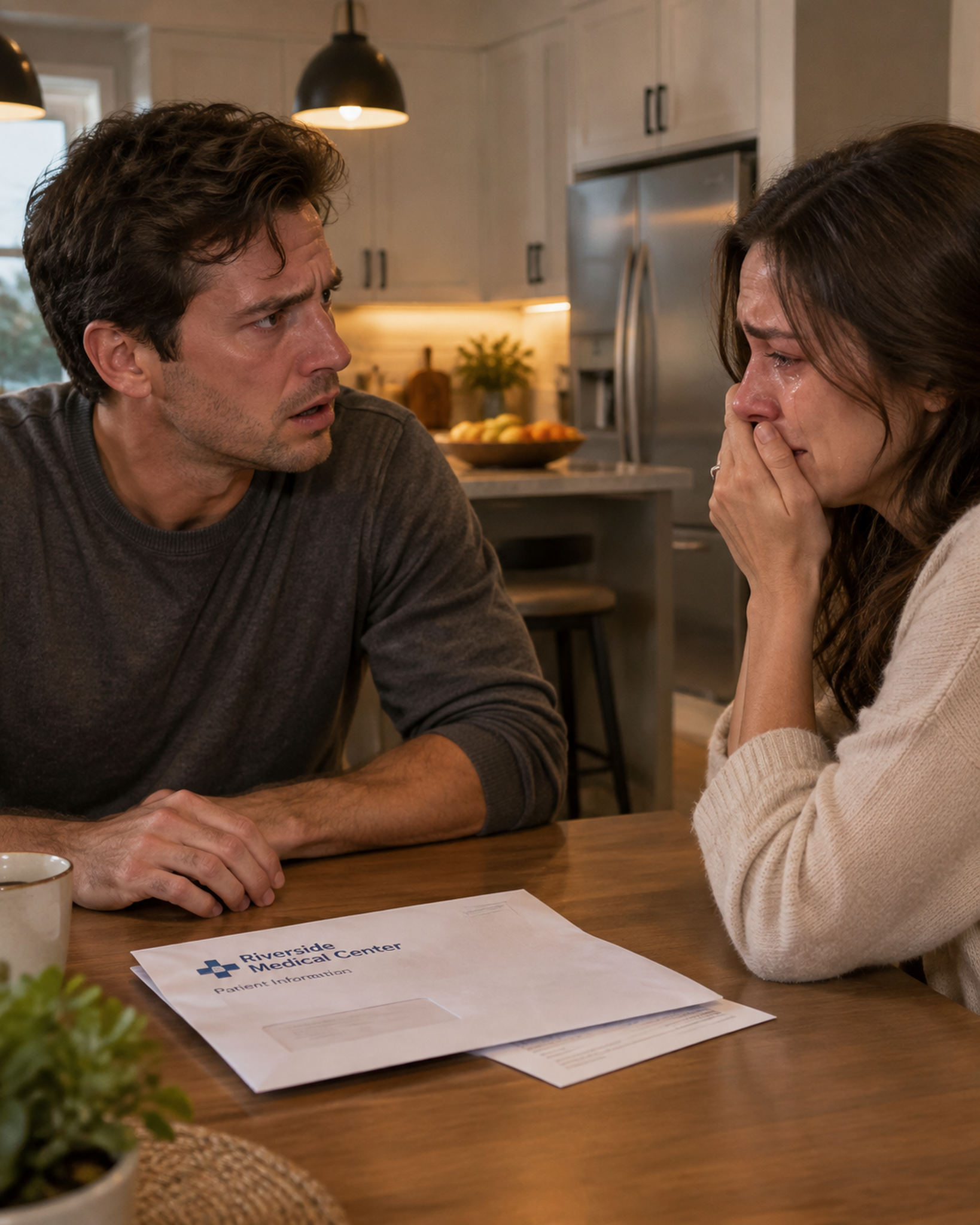
I found a hospital report confirming that my wife was nine weeks pregnant—but we hadn’t been intimate in nearly four months. When she came home, I slid the envelope across the table and asked, “Who’s the father?” She burst into tears. “Ryan.” I froze. Ryan wasn’t a stranger—he was someone I had once considered a brother.
For several seconds after Harper whispered Ryan’s name, the only sound in our kitchen was the low hum of the...
THE BILLIONAIRE THREW A USB INTO THE TRASH TO BURY A CORPORATE SECRET—THEN AN EIGHT-YEAR-OLD GIRL FOUND IT AND ASKED THE ONE QUESTION HE COULDN’T ESCAPE – Life Story
An eight-year-old girl reached into a polished steel trash can behind Vale Aeronics and pulled out the one thing its...