THE BILLIONAIRE SPENT CHRISTMAS ALONE UNTIL HIS EX WALKED INTO THE CAFÉ WITH A LITTLE GIRL—AND ONE FALLEN TEDDY BEAR UNRAVELED THE SECRET SHE HAD KEPT – Life Story
Ethan Callaway’s coffee had been cold for almost an hour when his former girlfriend walked into the café carrying the little girl he had never known existed.
He recognized Natalie Brooks before the Christmas bell above the door stopped ringing.
She was struggling with a stroller and a canvas diaper bag, her auburn hair damp from the Seattle rain.
A toddler in a red wool dress clutched a brown teddy bear to her chest and pointed at the string of paper stars above the counter.
For two years, three months, and sixteen days, Ethan had imagined meeting Natalie again.
Sometimes she would be furious.
Sometimes she would pass him without a word.
Never, in any version, had she arrived with a child whose steel-blue eyes looked painfully familiar.
“Hot chocolate?” the girl asked.
“For you, the little cup,” Natalie said. “And we’re going to let it cool.”
At thirty-two, Ethan could move enormous sums of money with a signature.
His technology company occupied three floors of a waterfront tower, and his name appeared on lists of people whose fortunes supposedly gave them freedom.
Yet he had spent the previous two Christmas Eves alone in the back booth of Cornerstone Café, where Natalie used to steal the foam from his cappuccino and insist that cinnamon made everything taste better.
He had chosen the table again today.
He had told his assistant not to call.
Now Natalie stood twelve feet away.
Maya, the barista, greeted her with the familiar warmth reserved for regular customers. “Rough morning?”
“Pediatrician.
Rain.
A missing mitten.” Natalie shifted the diaper bag higher. “In that order.”
The girl laughed.
Her bear slipped from her arm, struck the tile, and slid toward Ethan’s shoes.
“Teddy!” she cried.
Ethan was already on his feet.
He retrieved the worn toy, one ear nearly flattened from months of holding, and straightened just as Natalie reached the edge of his table.
Her smile vanished.
“Ethan.”
It was the first time he had heard her say his name in more than two years.
“Natalie.” His voice came out hoarse. “Hello.”
She looked at the bear in his hand and then at the daughter balanced against her hip.
Something protective passed across her face.
The little girl seemed unaware of it.
She reached toward Ethan with the absolute confidence of someone who expected adults to return the things children loved.
“Bear, please.”
He handed it over.
Tiny fingers touched his knuckle.
“Thank you,” the child said.
“Of course.” He could barely hear himself.
The girl tucked the bear beneath her chin.
Her eyes were blue-gray, unusually clear against her dark lashes.
They reminded Ethan of a photograph his mother kept of him at the same age, standing on a beach with a red plastic shovel.
He hated himself for immediately counting backward.
Natalie had left in September.
A child who looked about eighteen months old would have been born the following summer.
There was nothing conclusive about a resemblance, he knew.
He had negotiated too many contracts to confuse a suspicion with proof.
Still, his heart was racing.
“What’s her name?” he asked.
“Amelia.”
“She’s beautiful.”
Natalie glanced toward the exit. “We need to go.”
“Please.
Just one question.”
“You can ask it another time.”
The girl’s hand reached toward a paper snowflake on the window.
Natalie shifted her gently out of reach.
Ethan watched the practiced movement, the easy way she balanced a bag, a child, and an entire morning without anybody helping her.
“How old is she?” he asked.
Natalie’s eyes returned to his.
The cheerful music over the speakers carried on.
Maya stopped wiping the counter.
Across the café, someone set down a spoon.
“Ethan,” Natalie said, low enough that only he could hear, “don’t make me explain my daughter in front of strangers.”
Then Amelia dropped the bear again, and both adults looked down at the small brown shape between their shoes.
**THE EMPTY CHAIR**
Ethan retrieved the bear for the second time.
He did not hand it directly to Amelia.
Not immediately.
He held it against his palm, looking at the small patch of faded stitching where someone had repaired its neck with brown thread.
The repair was untidy and careful at once.
He could imagine Natalie doing it after bedtime, leaning beneath a kitchen light, determined to save a toy because replacing it would not be the same.
“Please,” Amelia said.
He placed it in her hands.
“Here you go, sweetheart.”
The word escaped before he could decide whether he had any right to use it.
Natalie’s expression tightened.
“Thank you,” she said. “We need to get home.”
“Can we talk?”
“We’re talking.”
“Privately.”
She looked toward Maya, who had resumed working while making an obvious effort not to stare.
“Not while I’m carrying a tired toddler.”
Ethan stepped aside.
“You’re right.”
Natalie seemed surprised by the agreement.
For a moment, her eyes softened.
Then she adjusted the child’s coat, lifted the canvas bag, and headed toward the door.
“Natalie.”
She stopped.
“I didn’t know,” he said.
Her shoulders became rigid.
“You don’t even know what you’re talking about yet.”
“I think I do.”
“Thinking isn’t knowing, Ethan.
You taught me that.”
He felt the sentence find its target.
For years, he’d explained every difficult personal decision as a problem of incomplete information.
He needed another quarter.
Another investor commitment.
Another twelve weeks before choosing whether to expand the company or close a division.
By the time he was finished gathering information, Natalie had already made the one decision that couldn’t be postponed.
She had left.
Amelia leaned over her mother’s shoulder.
“Bye, man.”
Ethan managed a smile.
“Goodbye, Amelia.”
The bell rang as they stepped outside.
Through the window, he watched Natalie raise the stroller’s hood against the rain.
She tucked the blanket around her daughter, checked the wheels, and began walking toward the corner.
Ethan remained beside the table.
He could have followed them.
He could have called his driver and asked him to circle the block.
He had the resources to discover almost anything about a person.
Instead, he stood still.
For once, he understood that the ability to pursue someone did not give him permission to do it.
Maya approached with a fresh pot of coffee.
“You want a refill?”
Ethan looked at the empty chair across from him.
“Does she come here often?”
Maya set down the pot.
“I’m not answering questions about a customer’s routine.”
He looked up.
Her expression was friendly but firm.
He almost smiled.
“Fair enough.”
Maya glanced toward the window.
“She looked upset.”
“I know.”
“Then perhaps give her time to stop being upset.”
Ethan sat down.
He had been accustomed to employees answering his questions immediately, even when the questions were poorly formed.
Maya had known Natalie for years, and she clearly considered protecting a customer’s privacy more important than impressing a billionaire.
He respected her for it.
He also resented how easily she had accomplished something he had failed to do.
She had made Natalie feel safe.
Outside, Seattle’s Christmas Eve rain blurred the streetlights.
Cars moved along the wet pavement, their tires hissing through shallow water.
A man hurried past carrying a poinsettia wrapped in cellophane.
Ethan took out his phone.
His assistant had sent a message reminding him about a holiday charity reception that evening.
He deleted it.
Another message contained updated revenue projections for Callaway Digital’s European division.
He closed that too.
His thoughts kept returning to Amelia.
Eighteen months, perhaps.
If the dates were what he feared, Natalie had been pregnant around the time he left.
He remembered the September morning he had packed two suitcases while she was still asleep.
The company was in trouble then.
A funding round had collapsed.
Three large clients had delayed payments.
His chief financial officer had warned that unless they secured new investment, Callaway Digital would need to lay off employees within weeks.
Ethan had responded by working fourteen-hour days.
Natalie had tried to help.
She had offered to review financial forecasts, introduce him to contacts from her consulting work, and reduce their living expenses until the situation improved.
He interpreted every offer as evidence that he had become a burden.
When she suggested moving from his expensive waterfront apartment into something smaller, he heard humiliation where she intended partnership.
One evening, she found him staring at a payroll spreadsheet in the kitchen.
“We can get through this,” she’d said.
Ethan remembered answering, “You shouldn’t have to.”
She had reached for his hand.
“I get to decide what I’m willing to go through.”
He pulled away.
Three days later, he left a note on the counter.
Three sentences explaining that she deserved stability, that he couldn’t give it to her, and that he thought separating was best.
He told himself the cruelty of leaving quickly was kinder than the uncertainty of staying.
Then he changed his telephone number during a company restructuring, moved into temporary corporate housing, and instructed his assistant to screen personal calls.
He disappeared into work.
By the following summer, new investors had stabilized the company.
A major software product took off, contracts multiplied, and Callaway Digital became one of the fastest-growing financial technology firms in the country.
The success was real.
So was the cost.
He had reached every target on the projections.
There was nobody waiting at home to celebrate.
Ethan rubbed his forehead.
At the table across from him, a couple were helping their son assemble a paper airplane.
The boy laughed when it landed in his father’s coffee.
Ethan looked away.
A child changed the meaning of everything he’d lost.
If Amelia was his, there had been a pregnancy he never witnessed, a birth he missed, and eighteen months of mornings, illnesses, first words, and ordinary afternoons that existed without his knowledge.
He could not recover those experiences by writing a check.
He also could not know whether Natalie had tried to contact him until he asked.
And he could not ask until she agreed to speak.
The café began closing early for Christmas.
Maya placed a small paper bag beside his table.
“Gingerbread,” she explained. “We made too much.”
He looked at the bag.
“Thank you.”
She hesitated.
“Mr.
Callaway?”
“Yes?”
“Whatever you’re thinking about doing next, remember there’s a little girl involved.”
Ethan nodded.
“I know.”
Maya gave him a look that suggested she wasn’t convinced.
Then she returned to the counter.
Ethan took out a business card, turned it over, and wrote a short note.
*Please give this to Natalie only if you feel comfortable doing so.
I would like to speak when she’s ready.
I won’t contact her through anyone else.*
He placed the card beside the paper bag.
Maya read it.
She didn’t promise anything.
That was the first lesson.
The second arrived three days later, when an email appeared in his personal inbox.
It was from Natalie.
*I received your card.
Coffee tomorrow, two o’clock.
Cornerstone.
No photographers, lawyers, or other people.
Amelia will be with me.
If you want to ask questions, ask them respectfully.*
Ethan read the message twice.
Then he replied.
*I’ll be there.*
He spent the evening preparing explanations.
By midnight, he had discarded all of them.
Nothing he could say would make leaving her a generous act.
Nothing could restore the months when she had needed him and he had been absent.
He could only begin by listening.
The next afternoon, Natalie entered Cornerstone wearing a forest-green sweater beneath a dark coat.
Amelia rested against her in a soft carrier, holding the same teddy bear by one ear.
Ethan stood.
“Hello.”
“Hello.”
Natalie sat opposite him.
Amelia inspected the tabletop with great interest.
Ethan kept his hands to himself.
For a while, they talked about the weather and the long lines at the grocery store.
Then Natalie looked directly at him.
“You wanted answers.”
“Yes.”
“Then ask.”
Ethan swallowed.
“Is Amelia my daughter?”
Natalie did not hesitate.
“Yes.”
He felt the answer through his entire body.
The world didn’t tilt or go silent.
The espresso machine hissed.
A spoon struck a cup.
Someone laughed beside the window.
Everything ordinary continued while his life changed completely.
Ethan looked at Amelia.
She was trying to place the teddy bear upright on the table.
“Does she know?” he asked.
“She’s eighteen months old, Ethan.”
“I mean—”
“I know what you mean.
No.
She knows she has a mommy.
She knows her grandparents love her.
She’s beginning to understand that families can look different.”
He took a breath.
“When did you find out you were pregnant?”
“Six weeks after you left.”
Ethan closed his eyes.
Natalie continued.
“I took three tests.
Then I went to the doctor.
Then I sat in my car for almost an hour, trying to decide what to do.”
“Why didn’t you call?”
She gave him a look he would remember for years.
“I did.”
He stared.
“What?”
“I called your number until it stopped working.
I emailed your old personal address.
I went to your office twice.”
Ethan’s hands became cold.
“I never received—”
“I know you didn’t.
Your receptionist told me you weren’t taking personal appointments.”
He remembered instructing his staff not to interrupt him with nonessential calls during the financing crisis.
At the time, he hadn’t imagined Natalie might be trying to tell him something that mattered more than any investor meeting.
Natalie looked down at Amelia.
“After a while, I stopped trying.”
Ethan covered his mouth with one hand.
“I didn’t know.”
“No,” she said quietly. “You made sure knowing would be difficult.”
**THE CALL HE SHOULD NEVER HAVE MADE**
Natalie expected anger.
She had rehearsed how she would respond if Ethan accused her of hiding their child, demanded immediate access, or threatened to hire lawyers before asking how Amelia was doing.
Instead, he looked defeated.
For one dangerous moment, she wanted to comfort him.
The impulse frightened her.
She had spent more than two years learning that his distress could not become another responsibility she carried.
Ethan lowered his hand.
“Tell me about the pregnancy.”
Natalie glanced at Amelia.
“Not everything today.”
“Whatever you’re comfortable telling me.”
She studied him.
The man sitting opposite her wore a charcoal sweater that probably cost more than her winter coat.
His hair was carefully styled, and his expensive watch caught the café lights whenever he moved.
But the confidence that once made rooms reorganize themselves around him was absent.
He looked like someone who had finally encountered a problem money couldn’t solve.
“I was sick for the first few months,” she said. “Not dangerously sick, but enough that keeping up with work became difficult.
I had some savings.
My mother helped when she could.”
Ethan opened his mouth.
Natalie raised a hand.
“Please don’t start calculating what I should have had.”
He closed it.
She continued.
“My pregnancy was monitored more closely near the end.
Amelia came early, at thirty-five weeks.
She needed extra help feeding and spent several days in the neonatal unit.”
Ethan’s eyes filled.
“Was she alright?”
“She recovered well.
She’s healthy now.”
Natalie looked toward the child, who had begun examining Ethan’s watch.
“She likes music.
She hates having her hair washed.
She’s been walking for six months and thinks every dog on the street belongs to her.”
Ethan laughed unexpectedly.
“What was her first word?”
“Mama.”
He smiled.
“Of course.”
“Her next favorite word was bear.”
Amelia looked up at the sound.
“Bear!”
“Yes,” Natalie said, kissing her hair. “We know.”
The little girl smiled proudly.
Ethan studied her.
The resemblance was impossible to ignore now that he knew the truth.
He saw his own eyes, the shape of his mother’s mouth, and an expression of concentration that made him remember himself sitting over wooden puzzles as a child.
“I want to be her father,” he said.
Natalie’s expression closed.
“Biology is one thing.
Being her father is another.”
“I know.”
“Do you?”
He nodded.
“Then understand this,” she said. “Amelia has a life.
She isn’t waiting for someone to arrive and make it complete.”
Ethan looked at her.
“She has you.”
“She has me, my parents, people who know her routines, neighbors who recognize her, and childcare workers she trusts.
She’s loved.”
“I don’t doubt that.”
“Good.”
Natalie shifted Amelia onto her lap.
“If you’re going to be involved, we need to handle it properly.
We need legal guidance about establishing parentage and support.
We need to consider her age and how to introduce you without frightening her.”
Ethan leaned forward.
“I’ll do whatever you need.”
“Don’t say whatever.
Listen to what I’m actually asking.”
He sat back.
Natalie took a breath.
“I need consistency.
I need you to tell the truth.
And I need you to understand that my trust isn’t something you’re entitled to because you regret leaving.”
Ethan looked down.
“That’s fair.”
Amelia dropped her bear.
Ethan reached for it.
Natalie reached at the same moment.
Their hands touched.
Both froze.
He remembered another Christmas, years earlier, when Natalie had fallen asleep against him while he read a book she had recommended.
There had been no billion-dollar company then, only a growing startup, overdue bills, and the kind of happiness he hadn’t understood until it disappeared.
Natalie pulled her hand away first.
“Please don’t confuse this with getting us back together.”
He looked at her.
“I won’t.”
He wanted to believe himself.
After the meeting, Ethan returned to his penthouse.
The apartment occupied the top floors of a modern building overlooking Elliott Bay.
Its windows stretched from floor to ceiling, and a climate-controlled wine cabinet occupied an entire wall.
He had purchased it when Callaway Digital became profitable.
At the time, he believed the apartment represented success.
Now it felt like an extremely expensive place to be alone.
He opened a photograph from an old backup folder.
Natalie stood beside him on a beach near Port Townsend.
Her hair blew across her face, and she was laughing because he’d tried to cook dinner over a portable stove and burned everything.
He stared at the image.
Then he opened his laptop and searched for information about early childhood development.
Within twenty minutes, he had twelve browser tabs open.
Attachment.
Routines.
Age-appropriate explanations.
Co-parenting after separation.
He made notes as though preparing for a corporate acquisition.
Then he stopped.
He wasn’t researching a company.
He was learning about a child.
The difference mattered.
His lawyer, Marcus Chen, called the next morning.
Ethan had asked him to recommend a family-law specialist.
Marcus was forty-one, meticulous, and one of the few people in Ethan’s professional life who regularly told him when he was behaving foolishly.
“I can give you names,” Marcus said. “But I need to ask what you’re hoping to accomplish.”
“Establish paternity.
Support Amelia.
Arrange parenting time.”
“Good.
Anything else?”
Ethan hesitated.
“I want Natalie to trust me.”
Marcus sighed.
“That’s not something a court orders.”
“I know.”
“Do you?”
Ethan smiled faintly.
“Everyone keeps asking me that.”
“Perhaps listen to them.”
Marcus recommended an attorney and explained that proper child support and parenting arrangements should be handled openly, with Natalie having independent representation.
Ethan agreed.
Then, before ending the call, he made a mistake.
“Marcus, can your investigators find out how Natalie has been doing?”
There was a pause.
“What do you mean?”
“Her employment.
Whether she’s financially stable.
If she’s been sick.
I want to understand what she’s dealt with.”
“Ask her.”
“She doesn’t want to tell me everything.”
“Then respect that.”
Ethan heard the warning.
But after the call, he contacted the private security firm used by Callaway Digital.
He asked for publicly available information about Natalie.
The firm’s investigator went further.
Within two days, Ethan received a report that included her previous addresses, employer, financial difficulties, and a reference to a recurring appointment at a counseling office.
He should have stopped when he saw it.
Instead, he read the whole report.
Then he called Natalie.
She answered after three rings.
“Ethan?”
“I wanted to check on you.”
“I’m fine.”
“I know you’ve been struggling.”
Silence.
He continued.
“Your work situation.
The counseling appointments.
I just want to help.”
Her voice changed.
“What appointments?”
Ethan felt his mistake before he admitted it.
“Natalie—”
“What counseling appointments?”
He closed his eyes.
“I asked someone to gather background information.”
“You had me investigated?”
“I was worried.”
“You had me investigated.”
“Natalie, please—”
“How did they find out about my private appointments?”
“I don’t know exactly.”
“You don’t know?”
Her voice rose.
For the first time since Christmas, he heard genuine fear beneath her anger.
“Do you understand what you’ve done?”
“I wasn’t trying to hurt you.”
“You don’t have to intend harm to cause it.”
He sat heavily on the couch.
She continued.
“Those appointments are private.
My finances are private.
Amelia’s routines are private.
You don’t get to collect information about us because you’re uncomfortable waiting for me to trust you.”
“You’re right.”
The immediate admission surprised her.
Then it made her angrier.
“If you know I’m right, why did you do it?”
Ethan stared at his laptop.
“Because I wanted to understand everything before you could tell me no.”
The truth sounded ugly.
It was ugly.
Natalie was silent.
Finally, she said, “You haven’t changed as much as you think.”
He couldn’t answer.
“I need you to stop contacting us until I’ve had time to decide what happens next.”
“Natalie—”
“No.
You asked for a chance.
I gave you one.
And you used it to invade my privacy.”
Her voice broke slightly.
“Please don’t make me regret even that.”
The call ended.
Ethan sat staring at the telephone.
He had wanted to demonstrate concern.
Instead, he had repeated the old pattern: making decisions for Natalie because he believed his intentions justified excluding her.
For years, he’d told himself he left to protect her from his financial failure.
Now he had violated her privacy to protect himself from uncertainty.
Both decisions had the same flaw.
He placed his own judgment above her right to choose.
That afternoon, he instructed the security firm to stop the assignment and preserve its records for review.
He demanded an explanation of how the confidential information had been obtained and referred the matter to independent counsel.
He did not pretend canceling an invoice erased what had happened.
He also wrote Natalie a letter.
It contained no promises of a wonderful future.
No declaration that love justified his behavior.
Only an admission that he had violated her trust, a description of what he was doing to address the breach, and an acknowledgment that she did not owe him another opportunity.
He mailed it.
Then he waited.
Waiting was the one skill he had never learned.
**THE DAYS THAT COUNTED**
Natalie read the letter three times.
The first time, she was furious.
The second time, she looked for excuses hidden between the sentences.
The third time, she admitted something she didn’t want to admit.
Ethan had taken responsibility without asking her to comfort him.
That didn’t restore her trust.
But it gave her a reason to consider whether further contact could be managed safely.
Her own attorney, Priya Shah, had advised her to slow everything down.
Priya was an old university friend who specialized in family law and had spent years helping parents separate their emotions about one another from decisions affecting their children.
She listened carefully while Natalie described the investigation.
“That’s a serious breach,” Priya said.
“I know.”
“You should ask for a complete written account of what was obtained and how.
There may be privacy issues beyond family law.”
Natalie nodded.
“And Amelia?”
“Nothing requires you to rush her into a relationship with someone she doesn’t know well.
But establishing parentage and appropriate support is worth discussing through counsel.”
Natalie sat across from Priya in the small office, her coat folded on her lap.
“Do you think I’m making a mistake?”
“About what?”
“Letting him into our lives.”
Priya considered the question.
“I think you’d be making a mistake if you let guilt, romance, or fear make the decision for you.
You have to decide based on what Ethan actually does over time.”
Natalie looked down.
“He’s her father.”
“Yes.”
“And he wants to know her.”
“That matters.
So does the fact that he’s already crossed a boundary.”
Priya leaned forward.
“Both things can be true.”
The conversation stayed with Natalie.
She had become skilled at handling Amelia’s needs independently.
Not because she believed independence was superior to partnership, but because for nearly two years she had not had a reliable partner.
She knew every medical appointment, every childcare expense, every favorite food.
She could recognize the difference between Amelia’s hungry cry and her overtired cry from another room.
She had learned to work while exhausted, to budget around unexpected expenses, and to repair the stroller’s damaged wheel with instructions from an online video.
She was proud of those skills.
But she was tired.
And she knew pride could become another kind of trap.
A week later, she emailed Ethan.
*I received your letter.
We can discuss a gradual plan for Amelia through our attorneys.
I need assurance that the private investigation has ended and that nothing obtained through it will be used to influence me.*
Ethan responded promptly.
*Agreed.
I will provide the information through counsel and respect the limits you set.*
She read the reply.
Then she put her phone away.
There would be no dramatic reunion.
They would begin with a meeting.
The first visit took place at Cornerstone on a rainy Saturday afternoon.
Natalie arrived with Amelia, who wore a yellow sweater decorated with elephants.
Ethan was already seated at a table near the window.
He had brought no gifts.
Natalie noticed.
“Good,” she said.
He looked up.
“What?”
“No enormous stuffed animals.
No miniature sports cars.”
“I considered a zoo.”
She gave him a look.
“That’s not funny.”
“Understood.”
Amelia reached toward the chair.
“Up.”
Natalie helped her settle.
Ethan smiled.
“Hello, Amelia.”
The child studied him.
“Bear man.”
He laughed softly.
“I suppose I am.”
For forty minutes, they drank coffee while Amelia played with stacking cups Natalie had packed in her bag.
Ethan did not attempt to hold her.
He did not demand affection.
When Amelia dropped a cup, he picked it up.
When she became frustrated, he waited for Natalie to respond rather than assuming he should intervene.
Before they left, Amelia waved.
“Bye, bear man.”
Ethan smiled.
“Goodbye.”
The next visit took place at a children’s section of the public library.
Amelia liked books with animals.
She insisted on turning pages herself, sometimes three at a time, and became indignant when Ethan tried to read a sentence she’d already decided to skip.
He learned to follow her pace.
Natalie watched from the chair beside them.
There was something painful about seeing him sit cross-legged on the carpet, explaining why penguins lived in cold places.
This was the man she had imagined helping her assemble nursery furniture, teaching their child to walk, and holding her hand through her first fever.
He had missed those moments.
But he was here now.
She didn’t know what to do with that.
On the fourth visit, Amelia reached for him.
It happened without ceremony.
They were walking through a small indoor conservatory because the January weather had been too cold for the park.
Amelia had grown tired of walking and raised both arms.
“Up, Ethan.”
He looked at Natalie.
She nodded.
“Go ahead.”
He lifted his daughter carefully.
She settled against him, examined the bright green leaves overhead, and pointed at a hanging plant.
“Tree!”
“That’s a very small tree.”
“Big tree.”
“Alright.
Big tree.”
Natalie laughed.
Amelia pressed her cheek against Ethan’s shoulder.
He looked at Natalie over the child’s head.
His eyes were bright.
She looked away before she could cry.
The relationship grew in fragments.
One hour at a café.
Forty minutes at the library.
A short walk through the conservatory.
Eventually, visits at Natalie’s apartment, where Amelia could remain in a familiar environment.
Ethan learned that she preferred pears cut into small pieces and refused carrots unless they were very soft.
He learned that the brown teddy bear was named Mr.
Buttons, despite having no buttons.
He learned that she became quiet before an illness and loud when she was hungry.
And he learned that raising a child did not produce predictable results.
One afternoon, Amelia refused to wear socks.
Natalie had been trying for ten minutes.
Ethan offered a pair with small elephants on them.
Amelia stared.
“Elephants.”
“Yes.”
She took the socks.
Natalie looked at him.
“Where did you get those?”
“A children’s store.”
“How many pairs did you buy?”
He hesitated.
“Six.”
She shook her head.
“Of course you did.”
But she was smiling.
That evening, Ethan cooked chicken soup in Natalie’s kitchen.
He had arrived with groceries and asked permission before opening cabinets.
Amelia sat on the floor nearby, playing with a plastic bowl and wooden spoon.
Natalie folded laundry at the small dining table.
The apartment was warm.
Rain rattled against the windows.
For a few minutes, the scene was so ordinary that Ethan forgot how fragile it remained.
Then Natalie asked, “What happens when she starts having tantrums with you?”
He looked up.
“I suppose I’ll learn to handle them.”
“And when you’re tired?”
“I’ll still be her father.”
She watched him.
“It’s easy to say that during a pleasant afternoon.”
He turned down the stove.
“I know.”
“I’m not trying to punish you, Ethan.”
“I know that too.”
She folded a tiny yellow sweater.
“I’m afraid she’ll love you.”
He went still.
Natalie looked down.
“And then I’m afraid you’ll leave.”
The confession filled the small kitchen.
Ethan crossed to the table but stopped before touching her.
“I can’t promise I’ll never make another mistake,” he said. “I can promise that I won’t disappear when things become difficult.”
She looked up.
“Promises aren’t enough.”
“No.”
He nodded toward Amelia.
“That’s why I’m here cooking soup instead of asking you to believe me.”
Natalie felt her eyes fill.
He returned to the stove.
Amelia banged her spoon against the floor.
“Soup!”
“Almost ready,” Ethan told her.
For the first time in a long time, Natalie imagined what it might feel like to have another adult share the ordinary weight of a day.
She did not yet know whether she could trust the thought.
A week later, Amelia developed a cold.
Nothing alarming at first.
A runny nose, mild fever, and a cough that made bedtime difficult.
Ethan arrived for a scheduled visit and found Natalie exhausted.
“I didn’t sleep,” she said.
“I can leave.”
“No.
She’s been asking for you.”
He looked surprised.
Natalie continued.
“She keeps pointing at the door and saying ‘Ethan.’”
Amelia appeared from the living room carrying Mr.
Buttons.
When she saw him, she raised both arms.
“Ethan!”
He picked her up.
She rested against his chest, warm and sleepy.
For nearly an hour, he sat in the rocking chair while she dozed.
Natalie watched from the doorway.
He didn’t check his phone.
He didn’t ask how long he needed to stay.
He simply held their daughter.
Something in Natalie’s chest loosened.
Later, when Amelia was sleeping comfortably, Natalie made tea.
They sat at the kitchen table beneath the yellow overhead light.
“Do you remember our first Christmas?” she asked.
Ethan smiled faintly.
“You got food poisoning.”
“You slept on the bathroom floor.”
“I didn’t want you getting up alone.”
“You had an investor meeting the next morning.”
“I missed it.”
Natalie looked at him.
“You used to know how to stay.”
Ethan’s smile faded.
“Yes.”
“What happened?”
He considered the question for a long time.
“I started believing that being useful meant being successful.
Then when I thought I was failing, I couldn’t stand letting you see it.”
She looked down at her tea.
“I would have stayed through the failure.”
“I know.”
“No,” she whispered. “I don’t think you did.”
He had no answer.
They sat in silence.
Then Natalie said something she had never intended to tell him.
“I kept going to Cornerstone on Christmas Eve.”
Ethan looked up.
“Every year?”
She nodded.
“It was our place.”
He stared.
“I went there too.”
“I know.”
He blinked.
“What?”
“Maya told me once that you came by around Christmas.
I didn’t know when.”
“Why didn’t you—”
“Because I wasn’t ready to find out whether you were looking for me or just remembering a place you used to like.”
Ethan leaned back.
For two years, they had occupied the same neighborhood, carrying the same loss, sometimes missing each other by hours.
He almost laughed at the cruelty of it.
Natalie smiled sadly.
“Maybe we both needed time.”
He looked toward Amelia’s bedroom.
“Maybe.”
Neither reached for the other.
But when Ethan left that evening, Natalie stood at the door until he had reached his car.
She watched him wave.
Then she waved back.
**THE STORY THEY SOLD**
The photographs appeared online three days later.
Someone had photographed Ethan through Cornerstone’s window on Christmas Eve.
The images showed him retrieving Amelia’s teddy bear and standing beside Natalie.
A second photograph showed the little girl reaching toward him.
The article called her his secret daughter.
It described Natalie as a mysterious former girlfriend and speculated that she’d been receiving financial support from Callaway Digital.
The claims about financial support were false.
The photographs were real.
By noon, strangers were discussing Natalie’s face, clothes, occupation, and worthiness as though she were a character in a television series.
Her telephone rang continuously.
Reporters contacted her employer.
Someone discovered her parents’ address in Oregon.
A celebrity website published the name of her apartment building before removing it after complaints.
Natalie stood in her kitchen with Amelia on her hip, watching a stranger’s camera flash from across the street.
Her stomach tightened.
She turned away from the window.
Ethan called.
“I saw the story.”
“So did half the city.”
“I’m sorry.”
“Please don’t start.”
He paused.
“My team can arrange security.”
“Your team?”
“People who handle privacy issues.”
Natalie closed her eyes.
“You don’t understand.”
“Then help me understand.”
“This is my home.
I can’t have strangers standing outside trying to photograph my daughter.”
“I know.
That’s why I’m offering help.”
“And then what? Your people decide where we go, how we live, and which photographers we should avoid?”
“No.”
She looked toward the stroller beside the door.
“That’s what happens in your world.”
Ethan was silent.
Natalie continued.
“I wanted Amelia to have a normal childhood.”
“She still can.”
“Can she?”
Her voice broke.
“Because right now, I can’t even take her outside without wondering who might recognize us.”
He took a breath.
“Let me contact the building manager and coordinate something you approve.
I won’t send anyone without asking.”
She considered it.
“Have your lawyer send options to Priya.
Don’t make arrangements directly.”
“Alright.”
“And no interviews.”
“Agreed.”
She ended the call.
For a while, she stood motionless.
Then Amelia tugged at her sleeve.
“Park?”
Natalie looked toward the window.
“Not today, sweetheart.”
The child frowned.
“Park.”
“I know.”
Amelia began to cry.
Natalie crouched beside her.
She had dealt with fevers, sleepless nights, diaper shortages, and unexpected bills without feeling helpless.
Now she couldn’t explain to her daughter why people with cameras had made an ordinary afternoon impossible.
A sharp knock sounded.
“Miss Brooks? Jennifer Walsh, Celebrity Insider.
We’d love to give you a chance to tell your side.”
Natalie froze.
The voice came from directly outside her apartment door.
Someone had entered the building.
Amelia stopped crying.
She looked toward the sound.
Natalie held her closer.
“Please leave,” she called through the door.
“Just five minutes.”
“I said leave.”
The reporter continued.
“We know Mr.
Callaway has considerable resources.
Our readers want to understand the arrangement.”
Natalie felt fury replace fear.
“There is no arrangement.”
“Then let us help you explain.”
She took out her phone.
Instead of opening the door, she called the building manager and reported an unauthorized visitor.
She documented the time and recorded the continuing knocks from inside her apartment.
The manager arrived with building security.
The reporter was escorted out.
Natalie remained behind the locked door until the hallway was quiet.
Then she sank onto the couch.
Amelia climbed into her lap.
“Mama sad?”
Natalie pressed her face into her daughter’s curls.
“A little.”
Amelia offered Mr.
Buttons.
Natalie took the bear.
“Thank you, baby.”
That evening, she called Priya.
Together, they began making decisions.
They documented the harassment.
They asked the publisher to remove identifying residential details.
They coordinated with the building manager on access procedures.
And they planned a way for Natalie to continue working without making Amelia the center of a public-relations campaign.
The process was exhausting.
But Natalie refused to disappear simply because strangers wanted a story.
The following Monday, her employer requested a meeting.
David Martinez, managing partner at the small consulting firm where she had worked for four years, looked uncomfortable when she entered his office.
A stack of client correspondence lay on his desk.
“Natalie, please sit.”
She did.
David had hired her when she was twenty-six and had been proud of her growth from junior analyst to project manager.
He knew she was good at her job.
He also knew the firm was vulnerable.
Three major clients accounted for most of its revenue.
Two had recently complained about reporters calling their offices.
One had postponed a contract renewal.
David folded his hands.
“The partners are concerned.”
“About the project deadlines?”
“No.
Your work has been excellent.”
“Then what?”
“The attention.”
Natalie stared.
He looked away.
“We’ve lost business because of the publicity.
The partners believe we need to reduce the disruption.”
“What does that mean?”
David exhaled.
“Your position is being eliminated.”
For several seconds, Natalie couldn’t speak.
Then she asked, “Am I being dismissed because strangers photographed me with my child?”
David’s face tightened.
“It’s more complicated.”
“Is it?”
“We’re offering severance.”
She looked at the envelope he slid across the desk.
Her health insurance coverage would continue only for a limited period under the terms being offered.
Her salary would stop.
She had rent, childcare, and medical expenses.
“Did I miss a deadline?”
“No.”
“Did a client complain about my work?”
“No.”
“Then please put the reason for this decision in writing.”
David hesitated.
“Natalie—”
“I’d like the documents, David.”
He nodded reluctantly.
She took the envelope.
Outside, the city looked painfully ordinary.
People hurried toward appointments.
A delivery truck blocked half the street.
Someone laughed into a telephone.
Natalie stood beside a planter holding a box of personal belongings.
She had survived the breakup.
She had survived pregnancy and childbirth.
She had built a life that belonged to her.
Now a story published without her consent had taken away the job that made that independence possible.
Her phone rang.
Jennifer Walsh.
Natalie almost ignored it.
Then she answered.
“Miss Brooks, I know this has been difficult.
We’d like to offer fifty thousand dollars for an exclusive interview.”
Natalie stopped walking.
Fifty thousand.
Nearly a year’s salary after taxes, depending on the final arrangement.
Enough to keep the apartment.
Enough to pay for childcare while looking for work.
Enough to replace the security she’d lost.
Jennifer continued.
“You could tell people your side.
We can make sure the interview presents you sympathetically.”
Natalie looked at the box in her arms.
“And Amelia?”
“We’d love to include a few photographs of her.”
Natalie’s expression hardened.
“No.”
“Miss Brooks, think about what this could mean for you financially.”
“I am thinking about it.”
“Then—”
“My daughter is not for sale.”
She ended the call.
Then she sat on a bench and cried.
The refusal had been easy.
The consequences weren’t.
She called Priya.
“I lost my job.”
Priya listened, then asked her to bring every employment document to their meeting the next morning.
“We’ll review your contract, the separation offer, and what options you may have,” she said. “Don’t sign anything today.”
Natalie wiped her eyes.
“Okay.”
“And Natalie?”
“Yes?”
“Don’t make a decision about Ethan’s money while you’re frightened.”
Natalie looked toward the gray sky.
“I wasn’t planning to.”
But that evening, an email from Ethan’s attorney arrived.
He wanted to establish a substantial fund for Amelia’s future.
He also offered immediate financial assistance to cover Natalie’s expenses while the media attention continued.
The proposed initial amount was one hundred thousand dollars.
Natalie read the message twice.
She knew Ethan could afford it.
She also knew the money was real, not symbolic.
It could solve her immediate financial problems.
But she had not asked him to pay her rent.
She had asked him to respect her boundaries.
She called Ethan.
“Did you know I lost my job?”
He went silent.
“No.”
“Then why did your lawyer offer me a hundred thousand dollars?”
“For Amelia.”
“Amelia needs support.
That’s not the same as you making a giant payment because you feel guilty.”
“I don’t want you struggling.”
“Then help me establish a proper support arrangement.
Don’t put a number on my independence.”
He exhaled.
“I wasn’t trying to control you.”
“I believe that.”
The admission surprised him.
Natalie continued.
“But you keep reaching for money whenever something becomes uncomfortable.
And every time you do, I have to wonder whether you’re trying to help me or make yourself feel better.”
Ethan looked across his empty penthouse.
For months, he’d told himself he was learning to be a father.
Now he understood he was still trying to purchase certainty.
“You’re right,” he said.
Natalie rubbed her forehead.
“Please stop agreeing with me and start changing what you do.”
He was silent.
Then he said, “I’ll tell Marcus to work with Priya on formal support.
No conditions unrelated to Amelia.”
“Good.”
“And your job?”
“That’s my problem to address.”
“You shouldn’t have lost it because of me.”
“No,” she said. “I shouldn’t have.”
After the call, Ethan sat with the consequences of something he could not repair through generosity.
The next morning, he met with Marcus and Rebecca Chen, his public-relations adviser.
Rebecca proposed an exclusive interview.
“A personal apology, a story about reconnecting with your daughter, some carefully chosen photographs,” she said. “It could change public opinion.”
Ethan looked at the presentation.
On the first slide was a photograph of Amelia.
He closed the laptop.
“No.”
Rebecca frowned.
“Ethan, this is how we control the narrative.”
“That’s the problem.”
He looked at her.
“Natalie and Amelia are not a narrative.”
Rebecca folded her arms.
“The story is already public.”
“Then we can correct what is false without displaying my daughter.”
Marcus nodded slightly.
They drafted a short statement acknowledging Ethan’s responsibility for his absence and rejecting false claims about Natalie.
He would not disclose Amelia’s medical information, routines, or location.
He would not request interviews.
He would not use his daughter’s image to rehabilitate his reputation.
The statement attracted attention.
Some people praised it.
Others called it calculated.
Ethan let them.
The only person whose opinion mattered was the woman trying to rebuild her life after his public visibility had disrupted it.
Three days later, Natalie called.
Not because of the statement.
Not because of the proposed money.
Because she needed to tell him something neither of them could control.
“Ethan,” she said, her voice trembling, “Amelia’s doctor wants to repeat some blood tests.”
He stood immediately.
“Why?”
“She’s been tired.
Her fever came back.
The blood count from yesterday isn’t quite right.”
“What does that mean?”
“I don’t know.”
He waited.
Then Natalie said something she’d never said to him before.
“Can you come with us?”
**THE RESULTS THAT MATTERED**
Seattle Children’s Hospital was quiet in the early morning, though quiet did not mean still.
Nurses moved between rooms.
Elevators opened and closed.
Parents carried sleeping children beneath blankets while others pushed strollers filled with bags, toys, and medication lists.
Ethan arrived carrying two coffees he had forgotten to drink.
Natalie sat near a window with Amelia asleep against her chest.
The little girl’s cheeks were flushed.
Mr.
Buttons rested beneath one arm.
Ethan crouched beside them.
“Hi.”
Natalie looked up.
“Thank you for coming.”
“Of course.”
He glanced at Amelia.
“How is she?”
“Tired.
She barely ate breakfast.”
He wanted to say she would be fine.
Instead, he sat beside Natalie.
“Tell me what the doctor said.”
Natalie opened a folder containing the recent laboratory results.
Amelia had experienced intermittent fever and fatigue after an apparent respiratory infection.
Her pediatrician had ordered blood tests because the symptoms persisted longer than expected.
The white blood cell count was elevated.
A few other values needed clarification.
The pediatrician had referred them for prompt evaluation to determine whether the changes reflected infection or something requiring further investigation.
Ethan read the numbers without understanding what they meant.
He had studied financial statements worth billions.
A single page of medical results made him feel helpless.
“Does this mean something serious?” he asked.
Natalie shook her head.
“We don’t know.”
He looked at her.
“I’m scared.”
“Me too.”
They sat quietly.
For once, he didn’t offer a plan.
When Dr.
Elizabeth Harper entered, she introduced herself and explained the situation without rushing.
“Abnormal blood counts in young children can have several explanations,” she said. “Infection is common.
But because Amelia has had recurring fever and fatigue, we want to examine the results carefully rather than make assumptions.”
Natalie held Amelia closer.
“Could it be leukemia?”
Dr.
Harper met her gaze.
“Some blood disorders can produce abnormal counts, and serious conditions are among the possibilities doctors consider when the findings warrant it.
But this result alone doesn’t establish that diagnosis.
We’ll review the blood smear, repeat appropriate tests, and assess her clinical condition.”
Ethan felt Natalie tense.
He reached toward her hand.
She let him take it.
“What should we do now?” he asked.
“First, let’s examine Amelia and obtain the tests we need.
We’ll explain each step as we go.”
There was no dramatic announcement.
No instant answer.
Only careful medicine and uncertainty.
That uncertainty was harder than Ethan expected.
When Amelia woke, she looked around the unfamiliar room and began to cry.
“Mama.”
Natalie kissed her forehead.
“I’m here.”
The nurse approached with supplies for the blood draw.
Ethan stood beside the chair.
He had attended investor meetings where millions depended on what he said next.
Now the only thing he could do was help his daughter remain as comfortable as possible while professionals performed a necessary procedure.
Amelia cried when the needle went in.
Ethan held her small hand.
“I’m here, sweetheart.”
She looked at him through tears.
“Ethan.”
“I know.
I know.”
He wanted to take her fear away.
He couldn’t.
When the procedure ended, Natalie gathered Amelia into her arms, and Ethan offered the teddy bear.
The child clutched it tightly.
They returned to the waiting area.
Ethan purchased a cup of tea for Natalie.
She held it without drinking.
“I’m sorry,” she whispered.
He turned.
“For what?”
“For calling you when everything is awful.”
Ethan stared.
“Natalie.”
“I keep thinking you wanted to know Amelia when she was happy and healthy.
Now this—”
“Stop.”
His voice was gentle but firm.
“You didn’t interrupt anything.”
She looked at him.
He took a breath.
“I am her father.
I should be here for this.”
Natalie’s eyes filled.
“You weren’t here for the first time.”
“I know.”
“Her fever when she was eight months old.
The nights I didn’t know whether she needed a hospital.
The time she couldn’t stop coughing.”
Ethan looked down.
“I know.”
She shook her head.
“No, you don’t.
That’s what hurts.
You can’t know what those nights were like.”
He felt the old temptation to defend himself.
He hadn’t known Amelia existed.
He would have come if Natalie had reached him.
He had been terrified of failure.
All of those statements might explain something.
None would make her memories easier.
“You’re right,” he said.
Natalie wiped her face.
For several seconds, she cried quietly.
Then she rested her head against his shoulder.
He remained still.
The gesture wasn’t forgiveness.
It was exhaustion meeting somewhere safe enough to rest for a moment.
The results took longer than either expected.
Dr.
Harper returned after reviewing the repeat studies and the clinical findings with the team.
The additional testing was reassuring in several important respects.
The blood smear did not show the concerning pattern they would have expected in certain serious blood disorders, and Amelia’s overall presentation was more consistent with an infection.
Further evaluation suggested a bacterial infection that required treatment and close follow-up.
“We’ll treat the infection and monitor her response,” Dr.
Harper explained. “We’ll also repeat the blood count after she’s had time to recover.
If the abnormalities persist, we’ll investigate further.”
Natalie closed her eyes.
“So you don’t think it’s leukemia?”
“Based on what we’ve found today, that is not our leading concern,” the doctor said carefully. “The follow-up remains important.”
Ethan exhaled slowly.
He had not realized he’d been holding his breath.
Amelia needed antibiotics, monitoring, and time to recover.
Her doctor reviewed warning signs that would require immediate medical attention.
Natalie wrote everything down.
Ethan asked practical questions about medication timing, hydration, and follow-up appointments.
They left the hospital with a treatment plan and no guarantee that every frightening moment was behind them.
But they had something better than false certainty.
They knew what to do next.
Outside, Seattle rain struck the windshield as Ethan secured Amelia in her car seat.
She held Mr.
Buttons against her cheek.
Natalie stood beside the open door, looking exhausted.
“Would you like me to drive?” he asked.
She nodded.
“Yes.”
It was a small decision.
It mattered.
During the drive, Amelia fell asleep.
Natalie watched the city pass.
For several minutes, neither spoke.
Then she said, “When I lost my job, I thought that was the worst thing that could happen.”
Ethan glanced at her.
“I know.”
“Then the doctor called.”
Her voice trembled.
“And suddenly all the money, the interviews, the things people were saying about me, none of it seemed important.”
He nodded.
“I felt the same way.”
She turned toward him.
“But it is important.
My job matters.
Our privacy matters.
Amelia’s future matters.”
“Of course.”
“I don’t want a crisis to make me forget why I stopped trusting you.”
Ethan looked at the road.
“I don’t want that either.”
She studied him.
“Really?”
“Yes.”
He swallowed.
“I want you to trust me because of how I behave when nothing dramatic is happening.”
Natalie looked down at her hands.
That was the first thing he’d said in months that made her believe he understood what she needed.
At her apartment, Ethan carried the groceries upstairs while Natalie settled Amelia on the couch.
He stayed to review the medication schedule.
Then he asked whether she wanted him to leave.
Natalie looked toward the bedroom.
“Could you stay for dinner?”
“Yes.”
“And maybe help with bedtime?”
“Of course.”
She nodded.
“Thank you.”
That night, Ethan cooked soup while Natalie checked Amelia’s temperature and gave her medication according to the doctor’s instructions.
The girl protested the taste.
She spilled water on the table.
She cried because Mr.
Buttons was in the wrong chair.
Ethan did not find any of it charming.
He was tired.
His back hurt from carrying groceries.
He had unanswered emails and a headache building behind his eyes.
But he stayed.
After Amelia fell asleep, Natalie found him at the kitchen sink washing dishes.
His expensive watch lay beside the dish soap.
His shirt sleeves were rolled above his elbows.
There was a small stain of soup near one cuff.
She watched him for a moment.
Then she said, “I used to imagine this.”
He turned off the water.
“What?”
“You.
Here.
Washing dishes while I put our baby to bed.”
Ethan looked at her.
She leaned against the doorframe.
“I imagined it when I was pregnant.
I imagined it after she was born.
Then I stopped because it hurt too much.”
His eyes filled.
“Natalie—”
She shook her head.
“I’m not telling you that to make you feel guilty.”
“I know.”
“I’m telling you because I need you to understand why this is hard for me.”
He dried his hands.
“I understand some of it.”
She smiled sadly.
“That’s probably the most honest answer you’ve given me.”
He stepped closer but stopped a few feet away.
“I want to be here tomorrow.”
Natalie looked toward Amelia’s bedroom.
“Tomorrow is a doctor’s follow-up call and two loads of laundry.”
“Then I’ll help with those.”
“And the day after?”
“If you want me here.”
She considered him.
Then she nodded.
“Tomorrow first.”
Ethan smiled.
“Tomorrow first.”
Outside, the rain continued.
Inside, the apartment smelled of soup, warm laundry, and the faint medicinal sweetness of children’s cough syrup.
For the first time in years, Natalie allowed herself to imagine that ordinary life might become something they shared again.
But the next morning, another difficulty arrived.
Her severance agreement was due for signature.
Her health insurance coverage was approaching its end.
And Ethan’s publicist had called with a proposal that threatened to place their private life in front of cameras once more.
**WHAT COULDN’T BE BOUGHT**
Rebecca Chen wanted an interview.
Not a dramatic exposé, she explained, but a carefully arranged conversation that would show Ethan as a devoted father and correct the public’s assumptions about Natalie.
The proposal included professional photographs, a lifestyle magazine, and an opportunity to discuss his departure from Callaway Digital.
Ethan listened.
Then he asked, “Has Natalie approved this?”
Rebecca hesitated.
“We haven’t approached her.”
“Then why are we discussing it?”
“Because the public story is still affecting her.
An interview could help restore her reputation.”
Ethan looked at the proposal.
The first page showed a photograph of Amelia’s face, taken through the café window on Christmas Eve.
He closed the folder.
“No.”
“Ethan, the media isn’t going away.”
“Then we’ll deal with specific false claims.
We won’t use my daughter to improve my image.”
Rebecca sighed.
“From a crisis-management standpoint—”
“She’s eighteen months old.”
Rebecca stopped.
Ethan continued.
“She can’t consent.
Natalie doesn’t want this.
I don’t want it.”
He slid the folder back.
“Find another way.”
That afternoon, Ethan sent Natalie a copy of the rejected proposal so she would know what had been suggested.
He did not ask her to thank him.
She called anyway.
“You said no?”
“Yes.”
“Without asking me?”
He felt his stomach tighten.
“Was that wrong?”
“No,” Natalie said after a pause. “You were allowed to say no to something involving your participation.”
He smiled faintly.
“I was worried I’d crossed another line.”
“You didn’t.”
She hesitated.
“Thank you for showing me.”
Ethan looked toward the harbor.
“You shouldn’t have to wonder what I’m agreeing to behind your back.”
Natalie was quiet.
“That’s true.”
For the first time, the exchange didn’t end in suspicion.
The more difficult conversation came two days later.
Priya had reviewed Natalie’s severance agreement.
There were questions about the employer’s stated reasons for eliminating her position, the confidentiality provisions, and whether the offered compensation adequately addressed the abrupt termination.
Priya recommended negotiating rather than immediately accepting.
Natalie agreed.
She wrote a detailed account of her work history, client evaluations, and the timeline of the media intrusion.
She gathered positive performance reviews and correspondence showing that clients had praised her work before the publicity began.
Then she met with David Martinez.
He looked tired.
“Natalie, I understand you’re upset.”
“I’m not here to discuss whether I’m upset.”
She placed the documents on the table.
“I’m here because you told me my position was eliminated due to business needs while acknowledging my performance remained strong.”
David looked at the paperwork.
“The partners were under pressure.”
“So was I.”
He rubbed his forehead.
“We lost two contracts.”
“I know.”
She leaned forward.
“I also know I managed the Henderson account through a difficult quarter and secured its renewal before the publicity began.
My work didn’t suddenly become less valuable because reporters learned I had a child with someone famous.”
David was silent.
Natalie continued.
“I understand that businesses make difficult decisions.
I also understand that people shouldn’t be treated as disposable when they become inconvenient.”
He looked at her.
“What are you asking for?”
“A fair separation agreement, extended health coverage, and confirmation that my record reflects the quality of my work.
I also want the restrictive language about discussing my employment removed or narrowed appropriately.”
David examined the proposed revisions.
“I’ll have to take this to the partners.”
“Then please do.”
She stood.
For the first time since losing her job, she felt something other than fear.
She had not asked Ethan to call the firm’s clients.
She had not accepted a secret payment to disappear quietly.
She had used her own experience, documents, and judgment to challenge a decision that harmed her.
A week later, the firm agreed to improved severance terms, an extended period of health coverage, and a neutral written explanation of the separation.
Natalie still had no job.
The result wasn’t a miracle.
But it gave her time and preserved her professional reputation.
More importantly, it reminded her that she had not lost the skills that had supported her long before Ethan returned.
She had been a good consultant.
She was still a good consultant.
One afternoon, she opened the notebook containing ideas for the independent business she’d once hoped to build.
The first page was dated four years earlier.
At the top, she’d written:
*Small businesses deserve strategic advice without paying the price of a corporate consulting firm.*
Beneath it were rough ideas for services, pricing, and client development.
She had abandoned the plan when Ethan left and pregnancy changed her priorities.
Now she looked at it again.
The business wouldn’t begin as a glamorous startup.
She had little savings.
Her professional network had been disrupted.
She would need clients, insurance, bookkeeping, and a reliable childcare schedule.
But the idea belonged to her.
She called Priya.
“I think I want to start my own consulting practice.”
Priya laughed.
“I wondered when you’d remember that.”
Natalie smiled.
“You knew?”
“You’ve been talking about it since college.”
They spent the afternoon discussing practical steps.
Natalie registered the business, developed a modest website, and contacted former colleagues who might refer clients.
She did not ask Ethan to fund it.
When she told him, he seemed surprised.
“You’re starting a firm?”
“Yes.”
“That’s wonderful.”
She watched him carefully.
“Don’t offer to invest.”
He closed his mouth.
Natalie laughed.
“You were about to.”
“I was going to ask what your business plan looked like.”
“That’s better.”
He smiled.
Then she surprised him.
“If you’d like, you can review it and give me feedback.”
Ethan looked at her.
“Really?”
“Yes.
Feedback.
Not money.
Not introductions I didn’t ask for.
Feedback.”
He nodded.
“I’d be honored.”
They reviewed the plan on a Sunday afternoon while Amelia napped.
Ethan questioned Natalie’s projected client-acquisition costs.
She challenged his assumption that she needed a larger initial marketing budget.
They argued about pricing.
At one point, he tried to redesign the service package.
Natalie looked at him.
“Whose company is this?”
He leaned back.
“Yours.”
“Good.”
Then they both laughed.
It was the first time in years they had disagreed about something important without either one withdrawing.
The afternoon stretched into evening.
They ordered takeout.
When Amelia woke, she demanded that Ethan read a book about a bear who hated winter.
He sat on the carpet and did the voices.
Natalie watched from the couch, her laptop open on her knees.
For a moment, she realized she was happy.
Not because everything was solved.
Because she was making choices again.
Ethan was doing the same.
His resignation from Callaway Digital had become effective after a structured transition.
He retained a minority investment and accepted a limited consulting position focused on projects that interested him.
The company continued operating under new leadership.
Some investors criticized his decision.
Others respected the orderly transition.
Ethan discovered that leaving daily control did not erase his identity.
He was still technically skilled.
Still capable of hard work.
Still interested in building useful things.
But he no longer wanted his business responsibilities to consume every hour not spent sleeping.
One morning, he joined Natalie at Cornerstone after dropping Amelia at daycare.
Maya placed two coffees on their table.
She glanced between them.
“You look less miserable than you did at Christmas.”
Ethan laughed.
“Thank you, Maya.”
“High praise from me.”
Natalie smiled.
Maya returned to the counter.
For a while, they sat watching pedestrians move through the rain.
Then Ethan reached into his coat.
Natalie’s expression sharpened.
“If that’s a ring, put it away.”
He froze.
Then slowly revealed a small notebook.
She laughed.
“I thought—”
“I know.”
He placed the notebook between them.
It contained pages of observations about Amelia.
Her favorite books.
Her medication schedule.
The words she had learned.
The names of her stuffed animals.
Questions she had asked.
At the bottom of one page, he’d written:
*When she cries, don’t assume she needs a solution.
Sometimes she needs someone to sit with her.*
Natalie read the sentence.
Her eyes filled.
“Where did you learn that?”
He smiled.
“From you.”
She closed the notebook.
For several seconds, she looked at him.
Then she reached across the table and took his hand.
It was a small gesture.
It changed the afternoon.
Their relationship did not become romantic overnight.
There were still difficult conversations about the past.
One evening, Natalie asked whether Ethan had ever truly intended to return after leaving.
He told her the truth.
“No.”
She looked away.
He continued.
“I thought I was doing you a favor.
Then I became ashamed of how much time had passed.”
“That hurt me more than the financial problems ever would have.”
“I know.”
Another evening, Ethan admitted that he feared Amelia would eventually resent him for missing her first year.
Natalie didn’t reassure him with easy promises.
“She might have questions,” she said. “She may be angry sometimes.
You have to let her feel that.”
He nodded.
“I will.”
“Don’t ask her to forgive you just so you can feel better.”
“I won’t.”
Those conversations were uncomfortable.
They also created something neither had possessed during their first relationship.
A way to tell difficult truths without treating them as the end.
By spring, Amelia had recovered completely from the infection.
Her follow-up blood tests were reassuring, and she returned to daycare.
Natalie’s consulting practice had secured its first three clients.
Ethan helped with childcare during meetings, but he did not run her company.
They began discussing a more formal parenting arrangement that would reflect the time he was already spending with Amelia.
Through their attorneys, they established clear expectations concerning support, decision-making, and parenting time.
The process was careful.
Neither wanted to turn the child into a symbol of victory.
They wanted her to know both parents could be relied upon.
One rainy evening, after Amelia fell asleep, Ethan and Natalie stood together in her kitchen.
She had been working on a client proposal.
He had finished cleaning the dishes.
The scene reminded them both of the life they’d lost.
But it no longer felt like a reenactment.
It felt new.
Natalie looked at him.
“Ethan?”
“Yes?”
“I don’t want to spend the rest of my life being afraid you’ll leave.”
He dried his hands.
“I don’t want that for you either.”
She took a breath.
“But I also know you can’t prove tomorrow will be perfect.”
“No.”
She stepped closer.
“I think I want to try again.”
He looked at her.
“As a couple?”
“Yes.”
His eyes filled.
“Natalie—”
She raised a finger.
“Slowly.”
He laughed softly.
“Of course.”
“And no making decisions for me because you think you know what’s best.”
“Agreed.”
“And if we disagree, we talk.”
“Agreed.”
She studied his face.
“You’re not going to say anything dramatic?”
He smiled.
“I’ve learned not to.”
She reached for his hand.
Then she kissed him.
It was gentle and uncertain at first.
The kind of kiss shared by two people who understood that affection alone couldn’t repair every wound.
But it held something neither of them had possessed when they were younger.
Choice.
The next morning, Natalie found a small box beside her coffee cup.
Inside was a simple silver band with a tiny diamond.
Ethan stood beside the kitchen counter looking unusually nervous.
“Before you say anything,” he began, “it’s not an engagement ring.”
Natalie looked at him.
“Then what is it?”
“A promise to keep doing the work.”
She opened the box fully.
He continued.
“You don’t have to wear it.
I don’t want it to mean anything you haven’t agreed to.”
Natalie studied the band.
“Why a ring?”
“Because I wanted something small.
Something that reminds me promises aren’t impressive unless you keep them.”
She looked up.
“Ethan, I don’t need jewelry to know you’re serious.”
“I know.”
She smiled.
“But it’s beautiful.”
He exhaled.
She held out her right hand.
“Not my left.”
“Understood.”
He slid the band onto her finger.
Amelia entered the kitchen carrying Mr.
Buttons.
“Pretty!”
Natalie laughed.
“Yes, sweetheart.”
The little girl examined the ring.
“Daddy give?”
Both adults went still.
Amelia had begun using the word occasionally during visits, after Natalie explained in simple, age-appropriate language that Ethan was her father.
But hearing it in their kitchen still startled them.
Ethan crouched beside her.
“Yes.”
Amelia looked at him.
“Daddy make breakfast?”
He laughed.
“Daddy can try.”
Natalie watched them.
For years, she’d believed love meant trusting someone not to disappoint her.
Now she understood that trust was built through something more difficult.
It was built by watching what a person did after disappointment.
Ethan had left once.
He could not erase that.
But he was learning how to remain.
And Natalie was learning that allowing someone to help did not mean surrendering herself.
They made pancakes.
Amelia got flour on the floor.
Ethan burned the first batch.
Natalie laughed.
He made another.
For once, nobody cared that breakfast was late.
**ONE DAY AT A TIME**
Eighteen months after the Christmas Eve encounter, Cornerstone Café was crowded with people escaping the October rain.
Natalie arrived pushing Amelia’s stroller, though the little girl insisted on walking the final few steps herself.
At three years old, Amelia spoke in complete sentences, asked endless questions, and considered herself responsible for supervising most adults.
She wore a yellow raincoat and carried Mr.
Buttons beneath one arm.
“Daddy here?” she asked.
Natalie looked through the window.
Ethan was already seated at their usual table.
He was reading something on his phone.
Beside him were three cups.
One black coffee.
One vanilla latte.
One small hot chocolate waiting to cool.
“He’s here,” Natalie said.
Amelia pushed open the door with both hands.
“Daddy!”
Ethan looked up.
His face changed immediately.
He stood and crouched as Amelia ran toward him.
“Hello, trouble.”
“I’m not trouble.”
“No?”
“I’m Amelia.”
“That’s right.”
She threw her arms around his neck.
He lifted her carefully.
Natalie watched them from the doorway.
There had been a time when the sight of Ethan holding their daughter frightened her.
Now it gave her peace.
They had moved into a modest house in Queen Anne six months earlier.
It was not the largest house Ethan could afford.
They had chosen it because it had a small garden, enough space for Natalie’s home office, and a park within walking distance.
Amelia liked the upstairs bedroom because the window faced a maple tree.
Ethan liked the kitchen.
Natalie liked that the mortgage and household arrangements had been discussed openly, with both adults receiving independent advice and contributing according to a plan they understood.
The house belonged to the life they were building.
Not to the money one of them had earned before they met.
Their relationship remained imperfect.
They still argued sometimes.
Ethan occasionally overcommitted to work.
Natalie occasionally tried to solve every childcare problem herself before admitting she needed help.
But now they recognized the patterns.
When Ethan missed a family dinner because a consulting call ran late, he apologized without explaining why the meeting had been important.
When Natalie became overwhelmed by client deadlines, she asked him to handle bedtime rather than silently resenting him for not noticing.
They were learning to share the ordinary work of being a family.
That afternoon, Ethan had news.
He waited until Amelia was occupied coloring a picture of a bear wearing a Christmas hat.
“A documentary production company offered me a position,” he said.
Natalie looked up.
“What kind?”
“Executive producer on a series about corporate accountability and sustainable technology.”
She smiled.
“That sounds exactly like something you’d enjoy.”
“I think so.”
“What’s the catch?”
“Some travel.
Maybe one trip a month during production.”
Natalie considered it.
“How much?”
“Usually two or three days.
Occasionally longer.”
He watched her carefully.
“I don’t want to accept without discussing it.”
She looked at him.
“What do you want?”
He smiled.
“The work interests me.”
“Then we should figure out whether the schedule works.”
He leaned back.
“You’re not upset?”
“Why would I be?”
“I promised I wouldn’t disappear into work again.”
“Taking a job isn’t disappearing.”
She reached across the table.
“Making decisions without talking to me would be.”
He took her hand.
“Then let’s talk.”
They discussed childcare.
They discussed Natalie’s client schedule.
They discussed how to handle unexpected changes without making Amelia feel that her father’s presence was unpredictable.
The conversation took twenty minutes.
It was not romantic.
It was one of the most loving conversations they’d ever had.
Amelia looked up.
“Daddy?”
“Yes?”
“When you go on airplanes, you come home?”
Ethan met her eyes.
“Yes, sweetheart.”
“Always?”
“I’ll make every plan I can to come home when I say I will.
And if something changes, Mommy and I will tell you.”
Amelia considered this.
“Pinky promise?”
He extended his little finger.
She wrapped hers around it.
“Pinky promise.”
Natalie watched them.
The promise was less sweeping than the declarations Ethan once made.
It was also more honest.
Later, after Amelia was asleep, they sat on the back porch wrapped in blankets.
The maple tree in their yard had turned red and gold.
Rain tapped gently against the railing.
Natalie rested her head against Ethan’s shoulder.
“Do you miss the penthouse?” she asked.
“Sometimes.”
She laughed.
“Really?”
“The view was excellent.”
“And the rest?”
He thought about it.
“I don’t miss eating dinner alone.”
She smiled.
He continued.
“I used to think success meant never needing anyone.
Then I thought love meant giving people everything they could possibly need.”
“And now?”
He looked toward the kitchen window.
“Now I think it means being willing to share the work.”
Natalie watched the warm light spilling across the lawn.
“I used to think independence meant doing everything myself,” she said.
“You were very good at it.”
“I was exhausted.”
He kissed her hair.
“I know.”
She turned the silver ring around her finger.
It remained on her right hand.
They had discussed marriage, but without deadlines or pressure.
Neither believed a ceremony would improve the parenting they were already doing.
Perhaps they would marry someday.
Perhaps the right time would arrive quietly, without an announcement.
For now, they were building something that mattered more than appearances.
Inside, Amelia called from her bedroom.
“Daddy?”
Ethan looked toward the open window.
“Sounds like I’m needed.”
Natalie smiled.
“Probably another glass of water.”
“Or a philosophical question about bears.”
“Could be both.”
He stood.
At the door, he looked back.
“Natalie?”
“Yes?”
“Are you happy?”
She considered the question.
There had been years when happiness felt like a dangerous thing to admit.
When she believed hoping for something made losing it more painful.
Now she looked around at the small house, the garden, the scattered toys, and the man who had learned to return after every difficult conversation.
“Yes,” she said. “I am.”
Ethan smiled.
“Good.”
He went upstairs.
Amelia was sitting in bed with Mr.
Buttons on her lap.
“Daddy, Bear is scared.”
Ethan sat beside her.
“What’s he scared of?”
“That you’ll go away.”
He felt something tighten in his chest.
Then he looked at his daughter.
He understood that he couldn’t rewrite the beginning of her life.
He couldn’t return to the day she was born or the months when Natalie held her alone.
He could only be responsible for the choices ahead.
“I’m here now,” he said.
Amelia studied him.
“Will you read?”
“Of course.”
She handed him the book.
It was the same story he’d bought during one of their first visits, about a small bear who got lost in the snow and found his way home.
He opened it.
Downstairs, Natalie washed two mugs and placed them beside the sink.
Outside, Christmas lights from a neighboring house shone through the trees, though the holiday was still weeks away.
The little brown bear rested safely beside Amelia’s pillow.
And this time, Ethan stayed.
Recommended Stories
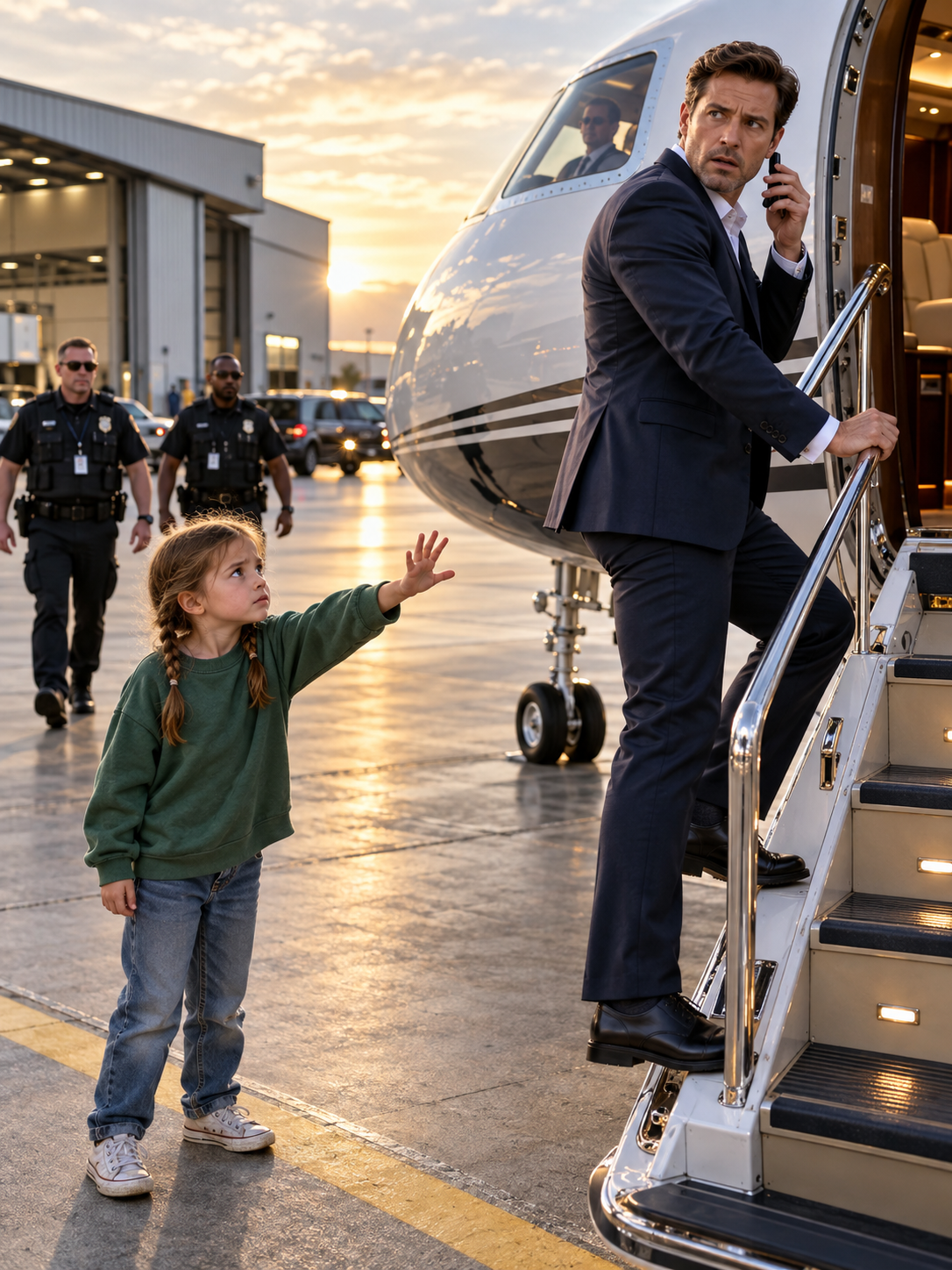
THE BILLIONAIRE WAS ALREADY ON THE STAIRS OF HIS PRIVATE JET WHEN A SIX-YEAR-OLD GIRL WARNED HIM IN RUSSIAN—BUT HIS MOST TRUSTED ASSISTANT INSISTED HE KEEP WALKING – Life Story
The little girl crossed the yellow safety line and shouted, “Don’t get on that plane!” Michael Whitmore had one foot...

The CEO Had the Maintenance Man Handcuffed for Stealing a Classified Drive—Then the Police Chief Opened His Wallet – Life Story
Vivien Lockwood ordered the man in gray maintenance coveralls handcuffed before anyone asked why he was standing outside her classified...
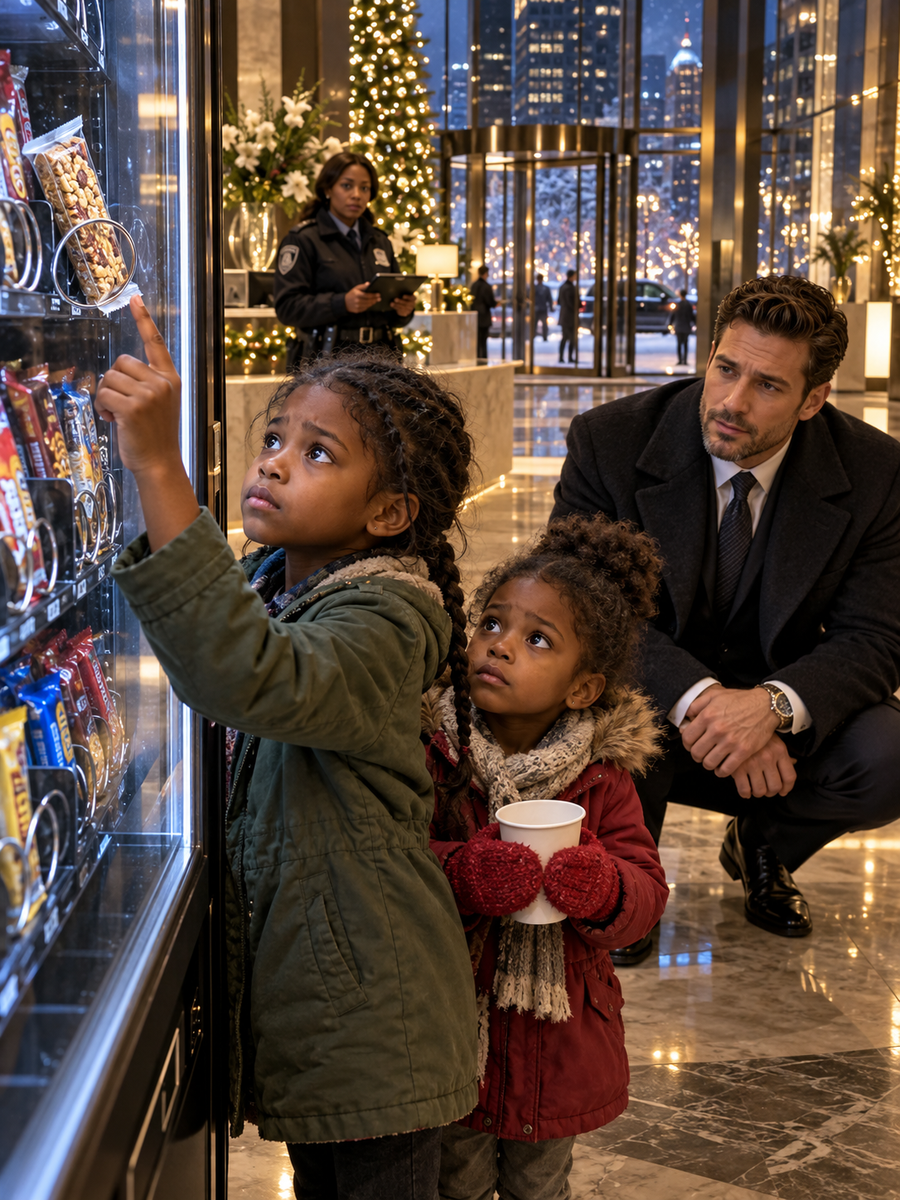
THE BILLIONAIRE FOUND TWO HUNGRY SISTERS TAPPING A BROKEN VENDING MACHINE IN HIS CHICAGO GLASS TOWER—THEN LEARNED WHY THE OLDER GIRL WAS AFRAID TO LET GO – Life Story
The little girl tapped the vending-machine glass so softly the security camera barely caught her hand. Her sister was five,...