Single Dad’s Blind Date Fell Through—Until He Found His CEO Crying Alone in the Parking Lot…
Single Dad’s Blind Date Fell Through—Until He Found His CEO Crying Alone in the Parking Lot
“Please pretend you didn’t see me,” she whispered, wiping tears from her face beside a silver Mercedes.
Ryan Mitchell had just spent forty-seven humiliating minutes waiting for a blind date who never showed up.
But when his crying CEO received a message containing his seven-year-old daughter’s name, he realized the evening had been arranged by someone who knew far more than either of them suspected.
Part One: The Woman Crying Beneath the Parking Garage Lights
At on a rainy Friday night in downtown Philadelphia, Ryan Mitchell heard something that made him stop walking.
It wasn’t quite a sob, more like someone desperately trying to swallow one before it escaped.
The sound came from behind a concrete pillar on the third level of WestBridge Systems’ employee parking garage.
He had been looking forward to getting home, taking off his uncomfortable dress shoes, and pretending the last two hours hadn’t happened.
Instead, he stood beneath a flickering fluorescent light, wondering whether the decent thing was to investigate or leave a stranger alone.
Ryan was thirty-two, the kind of man people described as dependable without realizing how exhausting it could be to earn that reputation.
He supervised facilities operations at WestBridge Systems, a rapidly growing technology company occupying twelve floors of a downtown office tower.
At home, he was the father of a seven-year-old girl named Mia, who believed he could repair anything except the mysterious disappearance of her favorite socks.
Between those two responsibilities, Ryan had forgotten what it felt like to make plans purely for himself.
Tonight was supposed to change that.
His older sister, Rachel, had spent three weeks convincing him to accept a blind date arranged through a mutual acquaintance.
She had promised that the woman was intelligent, kind, and uninterested in impressive job titles.
Ryan had resisted until Mia overheard the conversation and announced that Daddy needed someone to take to dinner because eating spaghetti alone was probably unhealthy.
Mia had chosen his navy button-down shirt herself.
She’d rejected two others, announced that this one made him look handsome, and insisted he put on proper shoes instead of his usual worn sneakers.
Before he left, she had hugged him around the waist and whispered, “Don’t be nervous, Daddy.
Just tell her you’re nice.”
He had arrived at Bellini House at , eight minutes before the reservation.
By , he had finished his first iced tea.
At , the waitress asked whether his guest was running late, and Ryan gave her the practiced smile of a man trying not to turn a small disappointment into a public embarrassment.
At , after checking his phone one last time, he ordered dinner to take home.
There had been no message, no explanation, and no apology.
The waitress brought him a paper bag containing pasta and a side of fries, apparently deciding that a man stood up on a Friday night deserved more food than he had ordered.
Ryan paid the bill, left a generous tip, and walked through the drizzle toward the company garage where he had parked his truck.
Now he was standing near the elevator, listening to someone cry.
He took a cautious step toward the sound.
Thirty feet away, beside a silver Mercedes, a woman sat on the low concrete curb separating the parking spaces from the driving lane.
Her blonde hair had slipped loose from its careful style, and one hand covered her face while the other gripped a phone with such force that her knuckles had turned white.
Ryan almost turned around.
Whoever she was, she deserved privacy, especially if she had chosen an empty garage to fall apart.
Then she lifted her head.
He stopped breathing for a second.
Emily Parker.
Twenty-eight years old, founder and chief executive officer of WestBridge Systems, and the woman whose presence could silence an executive meeting without her ever raising her voice.
Ryan had worked for her company for two years, yet their conversations rarely extended beyond building maintenance, emergency repairs, and the occasional polite greeting in an elevator.
He knew her reputation for brilliance, discipline, and an almost intimidating commitment to perfection.
He had never seen her cry.
“Ryan?” she whispered.
He slipped his car keys into his pocket. “Ms.
Parker.”
Emily stood so quickly that she nearly dropped her phone.
She brushed both hands beneath her eyes, straightened her cream-colored blazer, and attempted to arrange her expression into the familiar calm she wore at work.
But the tears had left faint tracks through her makeup, and her lower lip betrayed her by trembling.
“Please pretend you didn’t see me.”
Ryan considered her for a moment.
Then he glanced toward the empty parking spaces and said, “See what?”
Emily stared at him.
He offered a small, respectful nod and started toward his truck.
He had no intention of making her explain a moment she clearly wished he hadn’t witnessed.
Experience had taught him that sometimes kindness meant allowing someone to keep the little dignity they felt they had left.
“Wait.”
He turned.
Emily stood beside the Mercedes, looking suddenly uncertain. “You’re dressed differently,” she said, noticing his pressed shirt and unfamiliar shoes. “Were you going somewhere?”
Ryan glanced down at himself. “Blind date.”
Her eyebrows lifted. “Really?”
“That was the general idea.”
“How did it go?”
Ryan looked toward the rain glistening beyond the garage opening. “She never showed up.”
Emily blinked.
Then, against all expectation, she laughed.
It was a brief, surprised sound that escaped before she could stop it.
She immediately covered her mouth, embarrassed, but Ryan found himself smiling for the first time since leaving the restaurant.
“I’m sorry,” she said. “I shouldn’t laugh.”
“It’s okay.
I’m sure I’ll find it funny eventually.”
“How long did you wait?”
“Forty-seven minutes.”
“You counted?”
“I have a seven-year-old daughter.
She thinks being late is a sign of serious moral failure.”
Emily’s expression softened. “Mia, isn’t it?”
Ryan looked at her with surprise. “You remember her name?”
“You’ve mentioned her at work.
And I saw her name during our employee family-benefits review.” Emily hesitated. “I remember more than people think.”
A cool breeze swept through the open structure.
Emily folded her arms against it, and Ryan noticed the way her shoulders seemed to curl inward whenever she stopped concentrating on the conversation.
He had seen people look like that after receiving terrible news.
The words might not have come yet, but the body already understood what had happened.
Ryan reached into his takeout bag.
“I have fries,” he said.
Emily stared at him. “Fries?”
“My date didn’t show up, but the restaurant felt sorry for me and gave me enough food to survive a minor emergency.”
Her mouth twitched. “Are you offering your boss sympathy fries?”
“I’m offering a person who looks like she missed dinner something to eat.”
She watched him for several seconds.
Then she sat down on the curb.
Ryan joined her, leaving enough space between them to make the choice feel comfortable.
He opened the paper container and placed it between them.
Emily took one fry, then another, and finally laughed at the absurdity of sharing cooling restaurant food with an employee in a nearly deserted parking garage.
For several minutes, neither of them spoke.
The fluorescent lights hummed above their heads.
Traffic moved beyond the garage, tires whispering against wet pavement.
Somewhere below, a security gate lifted and closed again.
Then Emily said, “He proposed tonight.”
Ryan stopped reaching for another fry.
“The man I was seeing,” she explained. “Adrian Vale.
He asked me to marry him.”
Ryan turned slightly toward her. “And you said no.”
Emily looked up sharply. “How did you know?”
“Most people don’t sit alone in a parking garage crying after the kind of proposal they wanted.”
She stared at the empty driving lane.
“He didn’t ask what I wanted,” she said. “He had already spoken to two people on my board.
He’d discussed our families, our companies, what our partnership would mean for the next funding round.” Her voice tightened. “He even had a photographer waiting downstairs.”
Ryan set the fry container aside.
“That sounds more like a press conference than a proposal.”
Emily gave a bitter little laugh. “That’s exactly what it was.”
She explained that Adrian came from a wealthy investment family and had been dating her for almost a year.
At first, she appreciated how easily he understood her professional life.
He knew the investors she dealt with, understood the pressure of running a growing company, and seemed comfortable with her ambition.
But gradually, dinners became negotiations.
Vacations were planned around investor meetings.
He introduced her as his future wife long before she had agreed to anything resembling a future together.
Tonight, he had gone further.
“When I said no, he looked more embarrassed than heartbroken,” Emily whispered. “Not because I didn’t love him.
Because I ruined his announcement.”
Ryan let the silence settle.
Then he asked, “Did he ever actually tell you he loved you?”
Emily stared at the floor.
After several seconds, she shook her head.
It was such a small movement that Ryan almost missed it.
“I don’t think anyone sees me anymore,” she admitted. “They see the company.
They see the funding, the interviews, the title on my door.
They want to be associated with something successful.”
Ryan looked at the expensive car beside them, then at the woman sitting on cold concrete with mascara beneath her eyes.
“Well,” he said quietly, “I’m sitting here with Emily, who apparently needs dinner and had a terrible night.
The company doesn’t seem particularly relevant.”
Emily looked at him.
Something changed in her expression.
For the next twenty minutes, they talked about ordinary things.
Ryan described Mia’s complicated rules for bedtime stories, including her insistence that dragons should always have a chance to explain themselves.
Emily admitted she had once wanted to become a children’s book illustrator before discovering she was better at building computer systems than drawing hands.
Ryan made her laugh with an account of Mia attempting to repair their kitchen faucet using a spoon and two hair ties.
Emily told him about accidentally setting off the smoke alarm while making toast in her apartment.
Each confession made the other person seem more human, less polished, and somehow easier to understand.
For the first time that evening, Emily forgot to look at her phone.
Then Ryan noticed the cream-colored envelope beside her handbag.
The gold lettering caught his attention.
Bellini House.
He frowned.
“Emily, were you supposed to be at Bellini House tonight?”
Her smile faded. “Why?”
“That’s where I was waiting.”
Emily slowly reached for her phone.
“What time was your reservation?” she asked.
“Eight.”
She unlocked her screen.
For several seconds, she didn’t move.
“My assistant arranged something for me,” she whispered. “Three weeks ago.
She said I needed one dinner with someone who didn’t care what my title was.”
Ryan felt an uncomfortable realization gathering.
Emily turned the screen toward him.
The message read:
Friday. p.m.
Bellini House.
Ask for Ryan.
No work talk.
Just give yourself one evening.
Ryan stared at the message.
“So my blind date wasn’t a stranger?”
Emily let out a shaky breath.
“It was supposed to be me.”
They looked at each other for one suspended second.
Then both began laughing.
Not because the situation was simple, but because it was so absurd that laughter seemed the only possible response.
Ryan had spent forty-seven minutes waiting for a woman who had been trapped in an unwanted proposal three blocks away.
Emily had spent the evening believing she had disappointed everyone around her, unaware that another disappointment was waiting across town.
As she put her phone away, Ryan noticed a second line beneath the message.
A tiny blue star.
And three words.
Recommended by Mia.
His smile disappeared.
Emily didn’t notice.
Ryan looked at her, then down at the phone disappearing into her handbag.
His daughter had never met Emily Parker.
At least, that was what he had always believed.
So why was Mia’s name attached to the blind date that had brought them together?
Part Two: The CEO Who Remembered His Daughter’s Name
By Monday morning, Emily Parker had rebuilt the walls Ryan had watched collapse in the parking garage.
She arrived at WestBridge Systems in a charcoal suit, her blonde hair secured in a flawless twist, her expression composed enough to discourage unnecessary conversation.
Employees straightened when she passed, and department managers hurried to provide updates she hadn’t requested.
Nothing in her appearance suggested that she had spent Friday night crying beside a Mercedes while eating cold fries with the facilities supervisor.
Ryan entered through the employee entrance at , carrying coffee and a bag containing Mia’s forgotten library book.
He had spent Saturday recovering from his disastrous blind date and Sunday answering an astonishing number of questions from Rachel.
His sister had been horrified that the woman she helped arrange dinner with never appeared, then deeply confused when he admitted they had eventually met in a parking garage.
“You ate fries with your boss?” Rachel asked.
“Technically, she ate most of them.”
“And she’s the person Hannah wanted you to meet?”
“Apparently.”
Rachel pressed her fingers against her forehead. “That is not how I expected this to go.”
Ryan hadn’t told her about Mia’s name appearing on the message.
He wanted to understand it before asking questions that might turn an innocent coincidence into something more troubling.
Rachel knew Hannah Reed through community volunteer events, and it was Hannah who had suggested the introduction.
Ryan intended to ask her what she knew.
At , he encountered Emily outside the executive elevator.
“Good morning, Mr.
Mitchell,” she said.
“Good morning, Ms.
Parker.”
Their eyes met for half a second.
Then she continued toward her office.
Ryan was grateful.
He had no interest in turning Friday’s vulnerability into workplace gossip, and he suspected Emily felt the same way.
At work, she was his chief executive officer, and he remained responsible for ensuring the building functioned properly.
Whatever had happened in the garage belonged somewhere outside that arrangement.
But Emily found the professional distance more difficult than she expected.
During her morning operations review, she noticed Ryan helping Carla from housekeeping maneuver a heavy supply cart through a malfunctioning service door.
He didn’t summon someone else or make a show of assisting.
He simply stopped, secured the door, and remained until Carla and her equipment were safely through.
Later, Emily saw him speaking with a junior technician who had incorrectly logged a cooling-system inspection.
Ryan pointed to the mistake, explained how it could affect maintenance records, and asked the young man to correct it.
There was no public scolding.
No suggestion that the technician’s error reflected a defective personality.
At noon, Emily watched him resolve a potentially expensive failure in the building’s climate-control system.
A software update had reset temperature thresholds across several conference rooms, just before a meeting with important investors.
Grant Keller, WestBridge’s senior director of operations, arrived visibly irritated and began demanding to know who had approved the inspection schedule.
Ryan remained calm.
“The inspections were completed correctly,” he explained. “The failure happened after Saturday’s software update.”
Grant folded his arms. “Then prove it.”
Ryan turned his tablet around.
“These are the system logs.
The update changed the threshold at Saturday morning.
The inspection was signed off at Friday afternoon.”
Emily had arrived in time to hear the explanation.
“How long to fix it?” she asked.
“Eight minutes, assuming the system responds normally.”
“Take ten and verify everything.”
Twelve minutes later, the system was stable.
The investor meeting proceeded without interruption.
That afternoon, Emily received an email praising Ryan’s work.
She expected him to accept the compliment and move on.
Instead, he forwarded it to his technicians with a note crediting their careful inspections for making the problem easy to identify.
Emily read the message twice.
Her former boyfriend could transform a minor victory into a personal branding opportunity.
Ryan seemed almost determined to give his victories away.
At , Hannah Reed entered Emily’s office carrying two folders and an expression of suspicious innocence.
“You seem distracted.”
“I’m working.”
“You’ve been reading the same facilities report for nine minutes.”
Emily closed the document.
Hannah smiled. “So.
Did you meet Ryan?”
The question landed like a dropped glass.
“You arranged it,” Emily said.
“I arranged a dinner.”
“You arranged a blind date with someone who works for me.”
Hannah’s smile faded. “I should have told you.
I knew you would never agree if you recognized his name.”
Emily leaned back. “And you thought hiding that fact was better?”
“No.
I thought it was harmless because I knew both of you as people.
But it wasn’t fair to either of you, and I’m sorry.”
Emily appreciated the apology, but she wasn’t ready to dismiss the decision.
“Why Ryan?”
Hannah hesitated.
“He’s a good man.
He doesn’t chase influence, and Rachel said he hadn’t been on a date since he lost his wife.” She looked down at her folder. “You haven’t had a genuine evening off in months.
I thought you might understand each other.”
Emily stared at her.
“His wife died?”
Hannah nodded. “Three years ago.”
Emily remembered the way Ryan had spoken about Mia, the quiet affection beneath every complaint about school mornings and bedtime negotiations.
He hadn’t mentioned a wife or an ex-wife in the garage.
She had assumed he was divorced and had never considered that his marriage might have ended through loss.
A wave of embarrassment washed over her.
She had spent an hour describing her own disappointment while Ryan quietly listened, never once mentioning the grief he carried home.
“Why didn’t he tell me?” Emily whispered.
“Maybe because you didn’t ask,” Hannah said gently. “Or maybe because he wanted one evening where he wasn’t the widower everyone feels sorry for.”
Emily looked toward the framed photograph of her mother on the bookshelf.
She understood that feeling.
Her mother, Margaret Parker, had died the previous year after a long illness.
Emily had returned to work ten days after the funeral because she didn’t know how else to keep moving.
People praised her strength, complimented her professionalism, and told her how proud Margaret would have been.
Almost nobody asked whether she wanted to talk about losing her.
Emily looked back at Hannah.
“There’s something else,” she said. “The message you sent Friday mentioned Ryan’s daughter.”
Hannah’s expression changed.
“What about her?”
“Why did you write ‘Recommended by Mia’?”
For the first time, Hannah seemed genuinely uncertain how to answer.
She placed her folders on the desk.
“Because Mia is the reason I thought about arranging the dinner in the first place.”
Emily sat forward.
Hannah explained that the Parker Foundation had recently sponsored a children’s art project across several local elementary schools.
The theme was second chances, and participants were asked to draw what kindness meant to them.
Mia had submitted a drawing that caught the attention of the judges.
Emily remembered the competition vaguely.
She had reviewed the finalists during a busy week, but the entries had been numbered to keep the judging anonymous.
“Mia was one of the finalists?” she asked.
“Entry seventeen.”
Emily felt an odd flicker of recognition.
She remembered a little drawing with three people beneath stars.
A man.
A woman.
A child.
But Hannah wasn’t finished.
“After the judging, we recorded short thank-you messages for the foundation,” she explained. “Mia said her father was a good person who deserved another chance to be happy.”
Emily looked down.
“She actually said that?”
“She said he used to laugh more when her mother was alive, and that lately he only laughed when Mia did something silly.”
Emily’s throat tightened.
Hannah continued carefully. “She asked whether the woman who selected her picture was nice.
When I told her you were, she said perhaps her father should meet someone like that.”
Emily sat very still.
It was such a small, innocent wish.
And Hannah had turned it into a blind date.
“Ryan doesn’t know any of this, does he?”
“No.”
“Then he needs to.”
Hannah nodded, but before she could respond, her phone vibrated.
She glanced at the screen, and Emily noticed the hesitation that crossed her face.
“What is it?”
“Grant Keller requested a meeting with the board’s compensation committee.”
“About what?”
Hannah hesitated.
“He’s asking whether personal relationships are influencing operational assignments.”
Emily stared at her.
She and Ryan had shared french fries in a parking garage.
And somehow, before they had even gone on a proper date, someone was already trying to turn their connection into a professional liability.
Part Three: The Little Girl Who Knew Too Much
Tuesday afternoon brought the first unexpected collision between Ryan’s life at work and the small world he had built around his daughter.
At , while inspecting an air-handling unit on the fourth floor, he received a message from Mia’s after-school program.
A plumbing failure had forced the building to close early, and parents were being asked to collect their children immediately.
Ryan called Rachel, but she was attending a medical appointment across town.
His regular babysitter couldn’t arrive before five, and the neighbor who sometimes helped was working a double shift.
After checking with his supervisor, Ryan collected Mia and brought her to the facilities office, where she could sit safely while he finished his administrative work.
Mia arrived carrying her purple backpack, a half-eaten apple, and enough questions to exhaust an entire maintenance department.
She greeted the security team by name, inspected the row of wall clocks, and announced that the building needed more colorful decorations.
Ryan gave her a packet of colored pencils and a stack of paper, then established three rules about staying beside his desk.
“What about things that aren’t electrical?” she asked.
“Don’t touch those either.”
“What about things that aren’t mechanical?”
Ryan gave her a warning look.
Mia grinned. “I was just checking.”
Twenty minutes later, Emily entered the corridor accompanied by Hannah.
She was reviewing plans for an upcoming office renovation when she heard a child’s laughter coming from the open facilities office.
Emily stopped, glanced inside, and saw Ryan standing beside a desk while a little girl attempted to balance a pencil on his nose.
Ryan straightened immediately.
“Ms.
Parker.”
Emily’s attention moved to Mia.
The little girl examined her with great seriousness.
“You’re Daddy’s boss.”
Ryan closed his eyes for half a second.
Emily smiled. “That’s right.”
“The really big boss?”
“Apparently.”
Mia looked delighted. “Daddy said you started the whole company.”
“Well, I had some help.”
“Do you like being in charge?”
Emily considered the question more carefully than she would have expected.
“Some days.”
Mia nodded knowingly. “Daddy says being in charge means you have to do the hard things first.”
Ryan felt heat rise in his cheeks.
Emily looked at him.
“Does he?”
“Usually when he makes me clean my room.”
Emily laughed, and Ryan saw something soften in her face.
She crouched beside Mia’s chair and asked about the drawing spread across the desk.
Mia explained that it was a new design for a playground where children could climb through an elephant-shaped tunnel.
Emily listened attentively, asking whether the tunnel would need windows and how children would get out if they became frightened.
“You think like an engineer,” Emily said.
Mia brightened. “Daddy fixes buildings.
Maybe I can build them.”
“I think that’s a very good idea.”
Mia studied Emily again.
Then her expression changed.
“Have I seen you before?”
Emily’s smile faltered.
“I don’t think so.”
“Maybe in a picture.”
Hannah suddenly became interested in the papers she was holding.
Ryan noticed.
“Where would you have seen her, sweetheart?”
Mia shrugged. “I don’t remember.”
She reached into her backpack and pulled out a yellow flyer.
“My school has a fundraiser Thursday.
There will be cupcakes, music, and a raffle.” She lowered her voice. “The singing is going to be terrible.”
“Mia,” Ryan warned.
“I heard rehearsal.”
Emily accepted the flyer.
“Thursday at six-thirty?”
Mia nodded enthusiastically.
Ryan stepped forward. “Ms.
Parker, you really don’t have to—”
“I know.”
Emily glanced at him, then back at Mia.
“But I’d like to come.”
Mia grinned as though she had personally arranged a major diplomatic agreement.
Ryan wasn’t sure how to respond.
He had spent years carefully separating his daughter’s life from the demands of his job, and now the most powerful person at WestBridge had accepted an invitation to a school fundraiser.
Yet Emily’s expression contained none of the artificial enthusiasm he had seen executives use for publicity photographs.
She looked genuinely pleased.
Thursday arrived with unusually warm October weather.
Ryan left work early enough to help arrange tables at Maple Grove Elementary, where the gymnasium had been transformed with handmade banners, paper stars, and crooked signs advertising cupcakes for two dollars each.
Mia was assigned to the raffle table, a responsibility she regarded with the same seriousness Ryan brought to emergency maintenance calls.
At , the gymnasium doors opened.
Emily stepped inside wearing jeans, a blue sweater, and comfortable ankle boots.
Her blonde hair hung loose around her shoulders, and she carried a small envelope of cash rather than her usual leather briefcase.
Without the suit and the executive assistants, she looked younger and considerably less intimidating.
Mia spotted her immediately.
“You came!”
She abandoned the raffle table long enough to take Emily’s hand and pull her toward the displays.
Ryan followed at a distance, watching his daughter introduce Emily to a succession of teachers, classmates, and parents with complete confidence.
“This is Emily,” Mia announced. “She works with my dad.”
Ryan smiled at the understatement.
Emily spent twenty minutes buying raffle tickets and listening to children explain their artwork.
She didn’t check her phone once.
When Mia’s class performed its music selection, Emily stood near Ryan at the back of the gym and applauded with the same enthusiasm as every proud parent.
“You weren’t exaggerating,” Emily whispered.
“About what?”
“The singing.”
Ryan covered his mouth to hide a laugh.
Later, Mia brought them to a display titled What Kindness Looks Like.
Along the wall hung paintings, collages, and drawings created by the students during the district art competition.
Ryan recognized Mia’s contribution immediately.
Three people stood beneath three uneven stars.
A brown-haired man.
A blonde woman.
A little girl holding a stuffed elephant.
Beneath the drawing, Mia had written in careful block letters:
People Who Need A Second Chance.
Emily stopped walking.
The picture was strangely familiar.
She remembered reviewing a similar image in the Parker Foundation competition, but she had not realized the drawing belonged to Ryan’s daughter.
The resemblance between the blonde woman in Mia’s picture and herself was probably coincidental.
Children often drew people in simple shapes, using the colors they liked rather than the faces they had seen.
But Ryan looked unsettled.
“When did she draw this?” Emily asked.
“Three weeks ago, I think.”
“Before Friday?”
“Long before Friday.”
Mia appeared at their sides, holding a ribbon she had won for selling the most raffle tickets.
“Do you like it?” she asked.
“It’s beautiful,” Emily answered.
Mia pointed to the figures.
“That’s Daddy, and that’s me, and that’s the lady from the picture.”
Ryan crouched beside her.
“What picture, sweetheart?”
“The one at school.”
“What lady?”
Mia wrinkled her nose, apparently frustrated that adults needed everything explained twice.
“The lady who said everyone deserves another happy day.”
Emily felt a sudden tightness in her chest.
Her mother used to say something very similar.
Before either adult could ask another question, Mia’s teacher called her back to the raffle table.
The little girl hurried away, leaving them standing before the drawing.
Emily looked toward Hannah, who had just entered the gym.
Hannah saw the picture in Emily’s hand and stopped.
Ryan walked toward her.
“Hannah,” he said quietly, “I think it’s time you explained exactly how my daughter became involved in arranging a blind date with my boss.”
Hannah’s face flushed.
“I never asked Mia to arrange anything,” she replied. “But I did use something she said as the reason to make the introduction.”
Emily folded her arms.
“And the picture?”
Hannah hesitated.
“There’s an older version in the school’s art collection.”
“How much older?” Ryan asked.
“Almost a year.”
Emily looked back at Mia’s drawing.
Hannah reached into her folder and produced a photocopy from an earlier Parker Foundation exhibit.
The figures were arranged almost identically, including the three uneven stars above their heads.
In the lower corner was a date from eleven months earlier.
And beside it, written in distinctive blue ink, were two words:
Parker Foundation.
Emily recognized the handwriting immediately.
It belonged to her mother.
The woman who had died the previous year.
And somehow, a drawing associated with her had found its way into Ryan Mitchell’s daughter’s hands.
Part Four: The Difference Between Being Wanted and Being Used
Ryan drove home from Maple Grove with Mia asleep in the back seat and more questions than he’d had when the evening began.
Emily had left the school shortly after the discovery, visibly shaken by the handwriting on the old drawing.
Hannah promised to locate the original artwork and accompanying records, explaining that the foundation had supplied teaching materials to several schools over the years.
None of the information suggested anything deliberately sinister, yet the timing felt impossibly personal.
At home, Ryan carried Mia upstairs and tucked her beneath her favorite purple blanket.
Her stuffed elephant had slipped from her hand during the drive, and he carefully placed it beside her pillow.
When he kissed her forehead, she stirred and whispered, “Did Emily like my picture?”
“She loved it, sweetheart.”
Mia smiled without opening her eyes.
“Good.”
Ryan remained beside the bed longer than necessary.
Three years earlier, his wife Claire had died following complications from an unexpected illness that progressed with frightening speed.
One month she had been helping Mia learn to ride a bicycle, and the next Ryan was standing in a hospital corridor while a doctor explained that the treatment wasn’t working.
The world had continued moving afterward, but he had spent months feeling as though he were walking through rooms where the furniture had been rearranged in the dark.
Mia had been four.
For a long time, she asked whether Mommy would be home for breakfast, whether Mommy could still hear her singing, and whether people who died knew when somebody missed them.
Ryan answered as honestly as he could without pretending to know things he didn’t.
Some nights he held his daughter until she fell asleep, then sat alone at the kitchen table with an untouched dinner growing cold.
Returning to work had been necessary, but he had changed the shape of his career.
He declined opportunities requiring frequent travel, took positions that allowed him to manage school pickups, and learned to value predictable evenings more than impressive titles.
He still enjoyed solving complicated technical problems, but he no longer wanted a job that took every hour he could have spent with Mia.
On Friday morning, he found Grant Keller waiting outside the facilities conference room.
Grant was forty-six, polished, ambitious, and well regarded by several directors for his ability to deliver ambitious projects under tight financial constraints.
Ryan respected his intelligence, though he disliked the way Grant sometimes treated employees as costs rather than people.
The two men had disagreed before over staffing levels and maintenance budgets.
“Good morning, Mitchell,” Grant said.
“Morning.”
“I hear you attended a school fundraiser with the CEO.”
Ryan stopped.
“Mia invited her.”
“Of course.”
Grant sipped his coffee.
“Interesting timing, considering the senior operations leadership review.”
Ryan felt his stomach tighten.
The company had recently announced a restructuring that would consolidate several facilities and technical operations teams into a new regional division.
Ryan had been nominated to lead the implementation project, a position that would offer more responsibility and a substantial increase in salary.
He hadn’t decided whether to pursue it because the travel requirements remained unclear.
Grant continued, “I assume you understand how this looks.”
“Emily attended a public school fundraiser,” Ryan replied. “She bought raffle tickets and listened to children sing.”
“I’m not accusing you of anything.”
“Then say what you’re concerned about.”
Grant’s expression sharpened.
“People are going to wonder whether personal relationships are influencing promotions.
That’s not fair to the other candidates, and it isn’t fair to the company.”
Ryan knew the point deserved consideration, even though Grant’s tone suggested he enjoyed delivering it.
Emily held enormous influence over employment decisions, and Ryan couldn’t pretend their growing personal connection was irrelevant.
He had spent years building a reputation for doing difficult work without demanding recognition.
He wasn’t going to let a blind date turn that reputation into a joke.
Ten minutes later, Ryan withdrew his name from the senior operations project.
He opened the staffing portal, completed the withdrawal form, and submitted it before he could begin negotiating with himself.
The decision hurt more than he’d expected.
Part of him wanted the chance to lead a broader team and prove he could still advance professionally while remaining a devoted father.
But he refused to accept an opportunity if the people working under him would always wonder whether he had earned it.
At 11:12, Emily called.
“Ryan, why did you withdraw?”
He glanced toward the open office door.
“Because I don’t want anyone saying I got the role because you like me.”
“You were nominated before Friday.”
“I know.”
“Your performance record speaks for itself.”
“I know that too.”
Emily exhaled.
“Then you’re punishing yourself for something you haven’t done.”
Ryan looked at Mia’s drawing taped beside his monitor.
“Maybe.
But I have a daughter watching what kind of man I become.
I want her to understand that respect is something you earn through your actions, not something you borrow from whoever has power.”
Emily was silent.
He continued more gently, “I don’t regret meeting you.
But I can’t build something honest with you by making my job look dishonest.”
The words settled between them.
Emily closed her eyes.
“Then I need to do something about the process, not about your feelings.”
After they hung up, she asked Hannah to arrange a meeting with the company’s independent directors and human resources counsel.
She disclosed the attempted blind date, explained that she and Ryan had developed a personal connection, and requested that she be excluded from any employment decision concerning him.
The directors agreed that the leadership role should be assessed through an independent committee using documented qualifications.
Emily also asked that the role’s travel requirements and reporting structure be made clear to all candidates.
Grant objected.
He described the additional procedures as unnecessary bureaucracy, warning that restructuring was already behind schedule.
Emily listened, then asked whether he believed the existing selection process could withstand independent scrutiny.
He had no compelling reason to argue that it couldn’t.
The committee was established.
Emily would not vote.
Ryan would not be required to accept a role that conflicted with his responsibilities to Mia.
And Grant’s concerns would be addressed by evidence rather than office gossip.
That afternoon, Adrian Vale requested an urgent meeting with Emily.
He arrived with a portfolio of financial documents and the confidence of someone who believed he had allowed enough time for an emotional disagreement to fade.
Emily met him in a glass-walled conference room with Hannah present.
She did not offer him the privacy he expected.
“Your board is discussing the next funding round,” Adrian began. “Vale Capital remains interested, but we need clarity about leadership continuity.”
Emily folded her hands.
“WestBridge has sufficient operating capital to complete the current quarter.
We’re reviewing several financing options.”
Adrian’s smile tightened.
“You know my family could make that process easier.”
“I know your family would benefit from having influence over the process.”
He leaned forward.
“Emily, we were going to build something together.”
“We were dating, Adrian.
That didn’t give you the right to arrange my future without asking.”
His expression hardened briefly before he recovered.
“You’re making this personal.”
“You proposed marriage in front of a photographer and two investors.”
“Because I believed in us.”
“No.
Because you wanted the announcement.”
For several seconds, he said nothing.
Then he reached into his briefcase and placed a printed photograph on the table.
It showed Emily standing beside Ryan and Mia at the school fundraiser.
Adrian tapped the photograph once.
“You might want to be more careful about what your employees think you’re doing.”
Emily stared at it.
The photograph had been taken without her knowledge.
And beneath it was a typed caption suggesting that WestBridge’s CEO was privately involved with an employee being considered for a major promotion.
Adrian hadn’t come to repair their relationship.
He had come to show her how much trouble he could cause if she refused to give him what he wanted.
Part Five: The Photograph That Threatened Everything
Emily refused to let Adrian see how deeply the photograph disturbed her.
She picked it up, examined the crop, and recognized the background of Maple Grove’s gymnasium.
Ryan was standing beside her while Mia held a stack of raffle tickets, smiling proudly at both adults.
In the original moment, dozens of parents and teachers had surrounded them, but the photograph had been cropped until it resembled an intimate family portrait.
“Where did you get this?” she asked.
“A volunteer posted photographs from the fundraiser.
My communications team monitors public mentions of WestBridge.”
Emily set the photograph down.
“So you took a school event and turned it into a corporate accusation.”
Adrian looked irritated. “I’m trying to protect you from a scandal.”
“By manufacturing one?”
“You are the CEO of a company seeking investment, Emily.
You cannot pretend that dating an employee doesn’t matter.”
“It does matter,” she replied. “Which is why I disclosed the situation and removed myself from his employment review.”
For the first time, Adrian appeared surprised.
Emily continued, “Outside counsel is overseeing the process.
Independent directors will decide the appointment.
Whatever happens between Ryan and me will not determine his career.”
Adrian’s face hardened.
“You really believe that makes you untouchable?”
“No.
I believe it makes the decision accountable.”
He stood, collecting the photograph.
“You’re making an enormous mistake.”
Emily looked directly at him.
“The mistake would be letting you decide whom I’m allowed to know.”
After Adrian left, Emily remained in the conference room, staring at the place where he had been sitting.
She knew he was not entirely wrong about the appearance of a relationship between a CEO and an employee.
Such relationships created genuine power imbalances, and even careful disclosures could not eliminate every concern.
But Adrian wasn’t asking her to solve those problems.
He was asking her to feel so frightened by them that she would accept his influence.
She called Hannah and asked her to document the meeting.
Then she contacted the board chair, Margaret Chen, to explain that Vale Capital’s proposed funding terms should be reviewed without Adrian’s participation in any discussion involving Emily’s personal relationship.
Margaret agreed and requested an independent comparison of the financing proposals.
Emily ended the call knowing she had complicated the investment process, but the complication was necessary.
Across town, Ryan learned about the photograph from a very different source.
Rachel called while he was buying groceries with Mia.
Someone had shown her a photograph circulating in a small online discussion about WestBridge’s leadership appointments.
The accompanying comments suggested that Ryan was pursuing the CEO to advance his career.
Rachel was furious, but Ryan asked her not to respond.
He waited until Mia was choosing cereal before opening the link.
Seeing his daughter in the photograph made him feel cold.
The comments were mostly speculation, but Ryan couldn’t stop looking at Mia’s smiling face.
She had invited Emily because she wanted her father to be happy, and now strangers were interpreting that kindness as part of an ambitious man’s professional strategy.
At home, Mia noticed his silence.
“Daddy, did I do something wrong?”
Ryan looked up from his phone.
“No, sweetheart.
Why?”
“You keep looking at my school picture and making your worried face.”
He put the phone down immediately.
“You did something kind,” he said, kneeling in front of her. “You invited someone to a school event.
Nothing about that was wrong.”
Mia studied him.
“Then why are you sad?”
Ryan searched for an answer a seven-year-old could understand.
“Sometimes grown-ups make stories about other people without knowing what really happened.”
Mia considered that.
“Like when Noah said I broke the classroom globe, but it fell by itself?”
“Something like that.”
“Then you just tell them the truth.”
Ryan smiled faintly.
“I wish everybody listened as well as you do.”
She wrapped her arms around his neck.
“Mommy said the truth is still the truth even when people don’t like it.”
Ryan closed his eyes.
Claire had said that often.
He held Mia a little longer, allowing himself the sadness he usually tried to save for after she was asleep.
That evening, Rachel came over carrying homemade soup and the directness Ryan had inherited from their father.
She watched him explain the situation, then asked whether he genuinely liked Emily or simply felt protective because he had found her crying.
Ryan looked toward the living room, where Mia was building a tower from plastic blocks.
“I like her,” he admitted. “I like the way she listens to Mia.
I like that she’s brilliant and still gets embarrassed when she admits she can’t make toast.
I like that she didn’t try to fix my promotion problem by giving me something I didn’t earn.”
Rachel nodded slowly.
“Then don’t let fear make every decision.”
“Claire’s gone, Rachel.
Mia’s already lost one person she loved.
I can’t bring somebody into her life unless I’m sure.”
“You can’t be sure about another person forever,” Rachel replied. “You can only be careful, honest, and willing to accept the risk.
That’s what Claire would have wanted for both of you.”
Ryan stared at the soup bowl in his hands.
For three years, he’d treated the possibility of loving someone again as though it might erase his marriage.
He knew Claire would never have asked him to remain alone, but knowing something and allowing himself to believe it were different things.
The next morning, the independent review committee contacted Ryan.
They explained that his original nomination for the senior operations project had been made before the personal relationship became known.
Because his withdrawal appeared connected to concerns about the process rather than the duties themselves, they wanted to give him the opportunity to reconsider under a clearly defined reporting structure.
Ryan asked for the role description.
He spent that evening reviewing the travel requirements, budget responsibilities, and leadership expectations.
The position offered him a chance to redesign maintenance operations across several regional facilities, including projects he’d been quietly proposing for years.
It would be demanding, but the published schedule was more compatible with fatherhood than he had assumed.
For the first time, he allowed himself to want it.
The following Monday, he agreed to participate in the independent evaluation.
Meanwhile, the committee began reviewing records from his earlier career at WestBridge.
What they discovered was something even Ryan had almost forgotten.
Two years earlier, his supervisor had formally recommended him for facilities manager.
Eleven months after that, a regional director had nominated him for a broader leadership position.
Ryan had declined both because of travel commitments, but the nominations remained in his personnel file.
And attached to the second recommendation was an evaluation written by Grant Keller himself.
It described Ryan as the strongest operational leader in his department.
The same man now suggesting Ryan might be receiving undeserved advancement had once documented exactly why he deserved it.
Part Six: The Work Nobody Had Been Watching
Grant read the old evaluation in silence.
The independent committee had asked him to explain his previous recommendations, and he clearly hadn’t expected the records to receive so much attention.
He acknowledged writing the assessment, but argued that Ryan’s professional qualifications did not eliminate the appearance of favoritism.
The lead reviewer agreed with the principle and reminded him that the committee’s purpose was to determine whether Ryan qualified independently of Emily.
Grant’s expression tightened, but he offered no objection.
For Ryan, the process felt strangely uncomfortable.
He was accustomed to having his work noticed only when something failed, and he preferred it that way.
Buildings functioned best when people never thought about the technicians who maintained them.
Now strangers were examining years of routine decisions, interviewing coworkers, and asking him to explain why he’d declined promotions he once believed he could not accept.
One afternoon, an evaluator asked why he had introduced an energy-saving maintenance schedule without requesting recognition for the savings.
The plan had reduced electricity and repair costs across several facilities by nearly ninety thousand dollars annually.
Ryan looked confused by the question.
“Because it was my job to improve the buildings,” he answered.
“But you designed the process.”
“My team tested it and made it work.
A good idea doesn’t mean much until somebody carries it out.”
The evaluator smiled slightly and made a note.
The committee also interviewed Carla from housekeeping, Walter from security, and several technicians who had worked under Ryan for years.
Their descriptions differed in the details but shared a consistent theme.
Ryan corrected mistakes without humiliating people, took responsibility when his team encountered problems, and made decisions based on the building’s needs rather than whoever had the highest title.
One technician described a winter evening when a pipe failure threatened to close part of the building.
Ryan had remained until midnight coordinating repairs, then returned the next morning with breakfast for the crew.
Another remembered him rearranging shifts so a colleague could attend a child’s surgery without losing pay.
Ryan had never mentioned either incident during the evaluation.
Emily remained entirely separate from the review.
She received no privileged updates and declined invitations to discuss the candidates informally.
When a director asked whether she personally preferred Ryan, she answered that her preferences were irrelevant to the decision.
The restraint was difficult, particularly when she knew how much the opportunity mattered to him, but she understood that protecting his dignity required doing less rather than more.
Outside work, their conversations continued cautiously.
They met once at a quiet coffee shop far from WestBridge, after consulting company counsel about the appropriate boundaries.
Emily arrived looking tired, carrying a worn paperback from her mother’s collection.
Ryan brought a children’s story Mia had insisted he lend her.
They spent nearly two hours talking about their families.
Emily described growing up in a house where business dinners were more common than ordinary family meals.
Her father had left when she was young, and Margaret had built a charitable foundation while supporting Emily’s early ambitions.
She remembered her mother reading to her every night, even when she returned late from fundraising events.
“When she got sick, I thought keeping the company successful would make her less worried about me,” Emily said. “I kept telling her how well things were going.
I didn’t realize she wanted to know whether I was happy.”
Ryan understood more than she knew.
“Claire used to ask me the same thing,” he said. “I’d tell her about a promotion or a project going well, and she’d ask whether I’d eaten lunch.”
Emily smiled sadly.
“They sound like they would have liked each other.”
“I think they would have.”
He told her about the final weeks of Claire’s illness, and how Mia had decorated hospital cards with impossible numbers of purple hearts.
He admitted that after the funeral he sometimes dreaded the silence of the house so much that he kept the television on after Mia fell asleep.
Emily reached across the table, stopping halfway.
“Can I hold your hand?”
Ryan looked at her.
Then he placed his hand in hers.
It was a small gesture, but both understood what it meant.
They were no longer simply two lonely people who had accidentally shared an evening.
They were learning to trust each other with things that could not be repaired by money, professional success, or careful planning.
“I don’t want to replace Claire,” Emily said quietly.
Ryan’s eyes filled.
“I would never ask you to.”
“And I don’t want Mia to feel she has to like me because I make you smile.”
“She already likes you.
But we’ll let her decide what that means.”
Emily nodded.
For the first time, she understood that being invited into someone’s life required patience more than passion.
The independent committee completed its review the following Friday.
Ryan entered the conference room expecting a procedural discussion about staffing requirements.
Grant sat near the far end of the table, while three outside evaluators arranged their notes.
Emily was present only for the final procedural announcement and sat apart from the voting members.
The lead evaluator explained that eleven candidates had been assessed using documented performance, operational knowledge, leadership effectiveness, cost-management results, and the ability to support the regional restructuring.
Then she announced the outcome.
“Ryan Mitchell received the highest score.”
Ryan stared at her.
“By a substantial margin,” she continued. “Our recommendation is that he be offered leadership of the regional operations implementation project, with reporting oversight independent of the chief executive officer for the duration of the assignment.”
Grant leaned forward.
“I still think public perception matters.”
“It does,” the evaluator replied. “Which is why the evaluation criteria, reporting structure, and decision process have been independently documented.”
Ryan looked toward Emily.
She did not smile or move.
She allowed the moment to belong entirely to his work.
When the committee approved the recommendation, Ryan felt an unexpected tightness in his throat.
For years, he had been proud of choosing stability for Mia, but part of him had quietly feared that doing so meant abandoning his professional potential.
The recommendation reminded him that the work he had continued doing mattered, even when he wasn’t asking anyone to applaud.
After the meeting, Grant approached him near the elevators.
“I hope you understand this wasn’t personal,” he said.
Ryan considered the statement.
“Your concerns about the process were fair,” he replied. “The assumptions you made about me weren’t.”
Grant looked uncomfortable.
Ryan continued, “I can work with someone who questions my decisions.
I just need him to look at the evidence before deciding what kind of man I am.”
Grant nodded stiffly.
It wasn’t a friendship, but it was the beginning of a more honest professional relationship.
Later that afternoon, Emily found Ryan standing beside the windows on the twelfth floor.
The city stretched below them in silver rooftops and narrow streets, sunlight catching the river in the distance.
“Congratulations, Mr.
Mitchell,” she said.
He turned.
“Thank you, Ms.
Parker.”
They smiled at each other.
“You didn’t defend me,” Ryan observed.
“You asked me not to make your career depend on my feelings.”
“And you listened.”
“I’m learning.”
For several seconds, they stood quietly together.
Then Hannah approached carrying a thin archival folder.
“Emily, the foundation finally located the old school-art records you requested.”
Emily accepted the folder.
Inside were photographs from community events, copies of children’s drawings, and several handwritten notes from her mother.
One photograph immediately caught Ryan’s attention.
It showed a younger version of himself at a neighborhood volunteer event, holding a small girl in a yellow coat.
Mia.
She could not have been older than three.
Standing beside them was Margaret Parker, smiling warmly at the camera.
Ryan stared at the photograph.
He remembered that afternoon.
Four years earlier, long before he had ever heard of Emily Parker.
And as Emily turned the photograph over, she discovered six words written in her mother’s handwriting.
A good father.
Do not forget.
Part Seven: The Woman Who Had Seen Him First
Ryan sat with the photograph in his hands while memories he hadn’t visited in years returned in fragments.
The volunteer event had taken place at a community center in North Philadelphia, where the Parker Foundation was helping renovate classrooms and create an after-school learning space.
He had volunteered through his former employer to inspect the building’s electrical systems.
Claire had been working that afternoon, so he’d brought Mia after arranging for her to stay in the supervised children’s area.
A power problem interrupted the event just before lunch.
Several classrooms lost electricity, leaving volunteers unable to prepare the rooms for their scheduled opening.
Ryan stayed after his assigned work was complete and helped the maintenance team restore the lighting.
By the time everything was functioning again, Mia had fallen asleep against his shoulder.
Margaret Parker had found him sitting on a folding chair near the entrance.
Ryan remembered an elegant older woman with tired eyes and a warm smile.
She had offered him coffee, thanked him for staying, and asked whether he worked in electrical maintenance.
He explained that he managed building systems and that his daughter was usually his most demanding supervisor.
Margaret laughed.
“Children have a wonderful way of reminding us which responsibilities matter,” she had said.
Ryan had nodded toward Mia.
“She’s the reason I try to do things properly.”
He remembered very little else about the conversation.
Margaret had helped him gather Mia’s belongings, asked a volunteer to take a photograph, and thanked him again before returning to the event.
Ryan never knew she was Emily Parker’s mother.
To him, she had simply been a kind woman helping run a neighborhood program.
Emily listened without speaking.
When he finished, she looked at the faded photograph and gently traced the words on the back.
“A good father.
Do not forget.”
Her mother had been ill for months before her death, and Emily had become accustomed to discovering little notes in unexpected places.
Margaret wrote reminders on books, photographs, and envelopes, often describing moments she wanted to preserve.
She had never seemed especially concerned about whether those moments were impressive.
Emily remembered something her mother once told her during a difficult year at WestBridge.
“You will meet people who can open doors for you, Emily.
But the ones worth keeping are the people who notice when somebody else is struggling to get through the door.”
At the time, Emily thought her mother was criticizing her choice of business partners.
Now she understood that the warning had been broader.
Hannah remained near the doorway, watching Emily study the photograph.
“I should explain something,” she said quietly.
Emily looked up.
“The foundation kept a file of volunteers and community partners Margaret wanted us to remember.
It wasn’t a list of people she wanted you to date.
It was a record of the kindness she saw in people while they were working.”
Ryan nodded slowly.
“And my name was in it.”
“Yes.
I found the photograph when we were organizing the foundation archives.
Later, Rachel told me about you, and I realized you were the same Ryan Mitchell.”
Emily folded the folder closed.
“So you arranged the dinner because my mother once thought he was a good father.”
“Partly,” Hannah admitted. “But I also knew Ryan through volunteer events, and I knew how lonely both of you had become.
Mia’s drawing made me think you might have something in common.”
Emily looked unsettled.
“Did you think you were fulfilling some kind of wish my mother left behind?”
Hannah shook her head.
“No.
I thought I was introducing two people.
But I handled it badly by concealing the workplace connection.”
Ryan looked at Emily.
“Your mother didn’t choose anything for us,” he said gently. “She met me once.
Hannah made an introduction, and then a lot of things went wrong before we even reached the restaurant.”
Emily almost smiled.
“A lot of things.”
“And after all that, you still sat beside me in a parking garage.”
She looked down at the photograph.
“I was crying.”
“I noticed.”
“You gave me fries.”
“You ate most of them.”
Emily laughed through tears she hadn’t expected.
It was the first time she had laughed while holding something associated with her mother’s death.
The realization made her cry harder, but she didn’t apologize.
Ryan stayed beside her until she was ready to put the photograph back in its folder.
That weekend, Emily visited Margaret’s old study at the family home.
The room had remained almost untouched since her death, with framed photographs on the shelves and stacks of books arranged beside a worn reading chair.
Emily had avoided spending much time there because the familiar smell of her mother’s perfume still clung faintly to the curtains.
This time, she opened the windows.
She spent several hours sorting papers and finding reminders of the parts of Margaret’s life that had existed beyond her illness.
There were children’s thank-you letters, handwritten recipes, notes from teachers, and a small collection of photographs taken at community events.
Emily realized how many lives her mother had touched without ever making those relationships part of her public reputation.
Among the books, Emily found an old collection of student artwork produced by the Parker Foundation.
She recognized the illustration Mia had copied: three figures standing beneath uneven stars.
The original had been drawn by a different child during an earlier school program, inspired by a story about people discovering new happiness after losing something important.
On the facing page, Margaret had written a short reflection about families changing shape without becoming less real.
Emily sat with the book open in her lap.
Her mother had not left her a plan for finding love.
She had left her a way of understanding it.
On Monday, Adrian Vale delivered his next demand.
Vale Capital offered to support WestBridge’s upcoming financing round, but the revised terms included additional investor controls and a provision that would give Adrian’s investment group influence over several major strategic decisions.
The proposal was commercially plausible enough to receive serious attention from certain directors.
Emily understood that rejecting it would require finding another source of capital on terms the board could defend.
Adrian called her that evening.
“You can still make this easy,” he said.
Emily stood at her office window, watching the city lights appear.
“Easy for whom?”
“For everyone.
You get your funding, your board gets stability, and we stop turning private disagreements into public problems.”
Emily looked at a photograph of Margaret on her desk.
“There’s no reason WestBridge needs to surrender unnecessary control just because you’re offering convenience.”
“Convenience is expensive, Emily.”
“So is depending on someone who thinks every relationship is a negotiation.”
Adrian’s voice cooled.
“Then I hope your board agrees with you tomorrow.”
When the call ended, Emily remained standing beside the window.
The financing decision would be taken to the independent directors the following afternoon.
And she knew Adrian would not accept another rejection gracefully.
Part Eight: The People Who Stayed When It Became Difficult
The board meeting began at nine, and Emily arrived carrying a presentation she had rewritten until almost midnight.
She was exhausted, but the exhaustion felt different from the helplessness of the parking garage.
This time, she had chosen the difficult conversation instead of being forced into it.
The difference mattered.
She presented three financing alternatives, including Vale Capital’s offer, a proposal from an institutional investor, and a smaller funding arrangement that would require WestBridge to slow part of its expansion.
Each involved trade-offs.
Adrian’s proposal offered the most immediate convenience, but its control provisions could substantially restrict the company’s independence.
Margaret Chen asked whether Emily’s personal history with Adrian had affected her analysis.
Emily answered without defensiveness.
“My relationship with Adrian is over, and I understand why it raises questions.
That’s why an independent adviser reviewed every proposal using the same financial assumptions.
I’m asking the board to select the best terms for WestBridge, not to take sides in my personal life.”
The directors spent nearly three hours examining the competing offers.
Some favored Vale Capital because the financing was familiar and could be completed quickly.
Others worried that the additional control provisions were unnecessary for a company whose operations remained financially sound.
Emily answered questions carefully, allowing the advisers to explain the terms rather than trying to win the argument through personality.
By lunchtime, the board approved negotiations with the independent institutional investor, subject to final due diligence.
The decision was not unanimous.
It wasn’t a dramatic humiliation of Adrian or a perfect victory for Emily.
But it meant WestBridge could pursue financing without making her former boyfriend essential to its future.
It also demonstrated that Emily could handle scrutiny about her personal life while respecting the governance procedures she had helped establish.
Afterward, she called Ryan.
“How did it go?” he asked.
“We chose the more difficult option.”
“Does it feel right?”
Emily looked at the marked-up financial documents on her desk.
“Yes.”
“Then congratulations.”
She smiled.
“You’re not going to ask how much money was involved?”
“No.
I’m going to ask whether you’ve had lunch.”
Emily laughed.
“Not yet.”
“Your mother would be disappointed.”
She went quiet for a moment, then smiled again.
“She would.”
That evening, Ryan had a more difficult conversation waiting at home.
Mia had been unusually quiet during dinner, pushing her peas into neat little rows instead of telling him about school.
Ryan recognized the warning signs.
She usually became serious only when something mattered enough that she wasn’t sure how to ask about it.
“What’s on your mind, sweetheart?”
Mia shrugged.
“Nothing.”
Ryan placed his fork down.
“That’s a very organized pile of nothing.”
She glanced at him, almost smiling.
Then she asked, “Are you going to marry Emily?”
Ryan nearly dropped his water glass.
“No plans to do that, Mia.
Why?”
“Because Aunt Rachel said you seem happy again.”
He waited.
“And sometimes people get married when they’re happy.”
“Sometimes,” he agreed.
Mia looked toward the family photographs on the shelf.
“If you get married again, does that mean Mommy stops being your wife?”
The question struck Ryan harder than anything Grant or Adrian had said.
He moved from his chair to kneel beside hers.
“No, sweetheart.
Nothing can change the fact that Claire was your mom and that we were married.
We loved each other, and we’ll always have the memories we made.”
Mia’s eyes filled.
“But she’s not here.”
“I know.”
Ryan pulled his daughter close.
“I wish she were.
Every single day.”
Mia buried her face against his shoulder.
After a while, she whispered, “I like Emily.
But I don’t want Mommy to think I forgot her.”
Ryan closed his eyes.
“You could never forget your mom.
And liking someone new doesn’t make the love you already have any smaller.”
Mia was quiet for a long time.
Then she asked whether Emily liked elephants.
Ryan laughed softly into her hair.
“I think she’s learning.”
The following Saturday, Emily came to Ryan’s apartment for dinner.
She arrived carrying a small dish of baked pasta, apologizing because she’d followed a recipe and wasn’t entirely confident about the result.
Mia inspected it with the seriousness of a professional chef, then announced that it smelled acceptable.
Ryan laughed so hard that Emily threatened to take the dish home.
They ate at a kitchen table crowded with crayons and school papers.
Emily asked about Mia’s latest project, and Mia explained that she was designing a castle for animals who didn’t have homes.
The discussion quickly became an argument about whether penguins should have separate bedrooms, with Ryan insisting they needed cold storage and Emily suggesting a special ice room.
After dinner, Mia brought out a scrapbook containing photographs of Claire.
Emily looked at Ryan before touching it.
He nodded.
Mia sat beside her and pointed out pictures of her mother laughing, holding her as a baby, and teaching her to splash in a swimming pool.
Emily asked small questions and listened carefully to every answer.
She didn’t compare herself to Claire, offer comfort Mia hadn’t requested, or try to make the conversation about her own experience of losing a parent.
When Mia showed her a photograph of Claire wearing an enormous purple hat, Emily smiled.
“She looks like somebody who knew how to have fun.”
Mia nodded.
“She was funny.
Daddy says I laugh like her.”
Emily looked at Ryan.
“I believe it.”
Later, after Mia was asleep, Ryan and Emily stood beside the kitchen sink washing dishes.
The apartment was quiet except for the soft clatter of plates and the traffic outside.
Emily dried her hands, then looked toward the hallway where Mia had disappeared.
“Thank you for letting me meet her properly,” she said.
“Thank you for listening to her talk about Claire.”
“She needed to.”
Ryan nodded.
“So did I.”
He reached for Emily’s hand.
For a moment, neither moved.
Then he kissed her.
It wasn’t an impulsive kiss born from the drama of a difficult night.
It was gentle, unhurried, and full of the knowledge that their lives contained other people whose feelings mattered.
Emily rested her forehead against his, breathing quietly.
“I don’t know what happens next,” she admitted.
“Neither do I.”
“Does that scare you?”
“Less than it used to.”
She smiled.
The following afternoon, Emily returned to her mother’s study to put away the artwork book she had borrowed.
As she slid it onto the shelf, a folded piece of paper slipped from between the final pages.
She bent to retrieve it, expecting an old receipt or library note.
Instead, she found a letter in Margaret’s handwriting.
It was addressed simply to Emily.
The first sentence made her stop.
My darling girl, if you ever meet someone who makes you feel safe enough to stop pretending, I hope you recognize what a rare gift that is.
Emily sat slowly in her mother’s chair.
She had found photographs, reminders, and advice before.
But this was something she had never known her mother had written.
And the rest of the letter would change the way she understood the last four years of her life.
Part Nine: The Blind Date That Finally Happened
Emily read the letter three times before she could bring herself to turn the page.
Her mother’s handwriting slanted slightly toward the right, becoming less steady near the bottom where illness had begun to affect her hands.
There were small corrections in the margins, the kind Margaret used to make when she wanted the words to say exactly what she meant.
Emily could almost hear her voice in the pauses.
You have spent so much of your life trying to become someone nobody can question.
I understand why.
The world has not always been gentle with you, and success sometimes feels like the only protection we can build for ourselves.
But I hope you never mistake being admired for being loved.
People may admire your company, your intelligence, or the things you own.
The ones who love you will notice when you’re tired, when you’re frightened, and when you’ve forgotten to eat.
You don’t need someone to complete your life, sweetheart.
You need someone beside whom you can finally stop pretending that you have everything under control.
And when you find that person, I hope you are brave enough to let yourself be happy.
Emily pressed the paper against her chest.
For so long, she had imagined her mother watching from a distance, expecting her to keep building, achieving, and proving that she deserved everything she’d inherited.
Now she realized that Margaret had wanted something much simpler for her.
She had wanted Emily to come home to someone who cared whether she was lonely.
Emily cried in the old reading chair until the afternoon light began to fade.
Then she called Ryan.
He answered with familiar household noise behind him.
Mia was asking whether they could order pizza, and Ryan was explaining that pizza had already been dinner twice that week.
Emily laughed through her tears, and the sound made him immediately ask whether she was all right.
“I found a letter from my mother,” she said.
Ryan became quiet.
“Do you want to tell me about it?”
“Yes.
But not because I need you to fix anything.”
“Good,” he replied gently. “I’m not very good at fixing letters.”
Emily laughed again.
She told him about the message, about how deeply she had misunderstood her mother’s hopes, and about the strange comfort of realizing that love didn’t have to resemble a professional achievement.
Ryan listened while Mia continued negotiating dinner in the background.
When Emily finished, he didn’t offer a grand explanation of fate or claim that Margaret had somehow arranged their future.
He simply said, “I’m glad she left you those words.”
“So am I.”
“And Emily?”
“Yes?”
“You don’t have to be impressive when you’re with me.”
She closed her eyes.
“I think that’s why I like you so much.”
A week later, Ryan asked Emily on a proper date.
No assistants.
No anonymous messages.
No carefully arranged introductions.
He called her directly and asked whether she would like to have dinner with him the following Friday.
Emily answered yes before he had finished explaining where he wanted to take her.
“Bellini House?” she asked.
Ryan smiled into the phone.
“I thought we should finally use the reservation properly.”
Emily laughed.
“What time?”
“Eight.”
“Should I be worried?”
“Only if you leave me waiting forty-seven minutes again.”
Friday arrived with cold November rain, almost exactly like the night they had met.
Rachel agreed to keep Mia overnight, though she demanded a full account of the date the following morning.
Mia insisted on inspecting Ryan’s shirt and announced that he looked acceptable, provided he remembered to smile.
Before he left, she handed him a folded drawing.
It showed three people sitting around a dinner table beneath three uneven stars.
“What’s this?” Ryan asked.
“For Emily.”
He studied the picture.
“Why am I sitting in the middle?”
“Because you always cut everybody’s food before you eat yours.”
Ryan laughed.
Mia hugged him.
“Have a good date, Daddy.”
He kissed her forehead.
“I will, sweetheart.”
At , Ryan entered Bellini House.
The familiar pendant lights glowed over the tables, and the smell of garlic and fresh bread reminded him of the evening he’d sat alone waiting for someone he thought had rejected him.
This time, he wore the same navy button-down shirt and the same slightly uncomfortable dress shoes.
He requested a table near the window and ordered iced tea.
At , Emily walked through the door.
She wore a simple dark-green dress beneath a wool coat, her blonde hair falling naturally around her shoulders.
She paused near the entrance, spotted Ryan, and smiled with an openness that made him forget the people moving around them.
He stood as she approached.
“You’re early,” he said.
“I didn’t want to risk another parking-garage dinner.”
“That was actually a pretty good dinner.”
Emily slipped into the chair across from him.
“The fries were excellent.”
“They were average.”
“The company was excellent.”
Ryan looked down, smiling.
For several minutes, they simply enjoyed being together without a crisis demanding their attention.
Emily told him that WestBridge’s alternative financing agreement had cleared its major approval stages.
Ryan explained that his new project was beginning with a regional maintenance review and that he had negotiated a sustainable work schedule through the independent management structure.
They discussed ordinary things too.
Mia’s upcoming school performance.
Rachel’s increasingly ambitious holiday dinner plans.
The fact that Emily had finally learned to make toast without triggering her smoke alarm.
When the waitress brought their meals, Ryan reached into his jacket and removed Mia’s drawing.
Emily unfolded it carefully.
She looked at the three people beneath the stars, then at the little girl seated between them.
Her eyes filled.
“She made this for me?”
Ryan nodded.
“She told me to give it to you before dessert.”
Emily laughed softly through her tears.
“She’s very organized.”
“Unfortunately, she gets that from her mother.”
Ryan said the words naturally, without sadness overwhelming them.
Emily looked up.
“I wish I could have met Claire.”
Ryan considered that for a moment.
“She would have liked you,” he said. “Not because you’re successful or because you run a company.
She would have liked the way you listen to Mia.”
Emily reached across the table and took his hand.
“Thank you for letting me into your lives.”
Ryan squeezed her fingers.
“Thank you for not asking either of us to become somebody different.”
After dinner, they walked beneath the city lights as rain shimmered on the pavement.
Neither hurried toward a parking garage or an empty apartment.
They stopped outside a small flower shop, where Ryan purchased a simple bouquet of white flowers for Emily, remembering that her mother had always kept fresh flowers beside the window in her study.
She accepted them quietly.
Then Ryan turned to her.
“Can I ask you something?”
“Anything.”
“Are you happy?”
Emily looked at him for a long moment.
She thought about the company she had fought to protect, the mother she would always miss, and the lonely evenings she had once mistaken for the inevitable price of success.
She thought about a seven-year-old girl who drew people beneath uneven stars and a man who had sat beside her on cold concrete without asking for anything in return.
For the first time in years, she didn’t have to think about whether her answer sounded impressive.
“Yes,” she whispered. “I really am.”
Ryan smiled.
Then he kissed her beneath the warm glow of the flower shop’s awning.
It wasn’t a promise that life would always be easy.
There would still be difficult meetings, unfinished homework, memories that hurt, and days when even two people who loved each other struggled to understand what the other needed.
But they had learned something neither had known how to believe before that first Friday night.
They could face those difficult days without pretending to be invulnerable.
In the months that followed, their relationship continued slowly enough to give Mia the stability she deserved.
Emily became a welcome visitor at school performances and Sunday dinners, never attempting to take Claire’s place.
Ryan learned that building a future did not require abandoning the memories of his past.
Together, they made room for grief, laughter, ordinary mistakes, and the kind of happiness that rarely appeared in photographs but filled the hours between them.
One evening, Emily sat at Ryan’s kitchen table helping Mia repair a paper castle.
The little girl carefully attached a purple roof while Ryan prepared dinner nearby.
When Emily offered to hold one of the cardboard walls, Mia moved her stuffed elephant aside and patted the empty chair beside her.
“You can sit here,” she said. “We saved your place.”
Emily looked toward Ryan.
He was standing by the stove, wearing an old T-shirt, holding a wooden spoon, and smiling at the two people he loved.
He had spent forty-seven minutes waiting for a stranger who never arrived.
But the woman meant for that chair had been sitting alone three blocks away, believing nobody would ever love her without wanting something in return.
The blind date had fallen through.
The evening had gone wrong.
And somehow, in a cold parking garage filled with empty spaces, two people who thought their best chances at happiness were behind them had found the beginning of something worth keeping.
Not because someone arranged it perfectly.
Not because a little girl’s drawing predicted the future.
And not because love erased everything they had lost.
But because when life gave them the chance to walk away, they chose to stay long enough to know each other.
Emily settled into the chair beside Mia and picked up a piece of purple cardboard.
For the first time in years, she wasn’t waiting for someone to tell her where she belonged.
She was already home.
Recommended Stories

Family Stole Grandpa’s Entire Estate and Left Me His Blind German Shepherd While Cruelly Sneering That a Mutt Suits a Caregiver, but a Shocking Hidden Note Inside the Dog’s Collar Proved That Everything Was Just a Calculated Test
The grandfather clock in the mahogany foyer chimed four times, sounding like a funeral toll. My knees were bruised from...

My Ex Untied Her Bikini Top “Put Sunscreen on My Back—Like You Used To ”
**My Ex Asked Me To Touch Her “Like I Used To”—Then One Message Revealed What She Had Hidden For Months**...
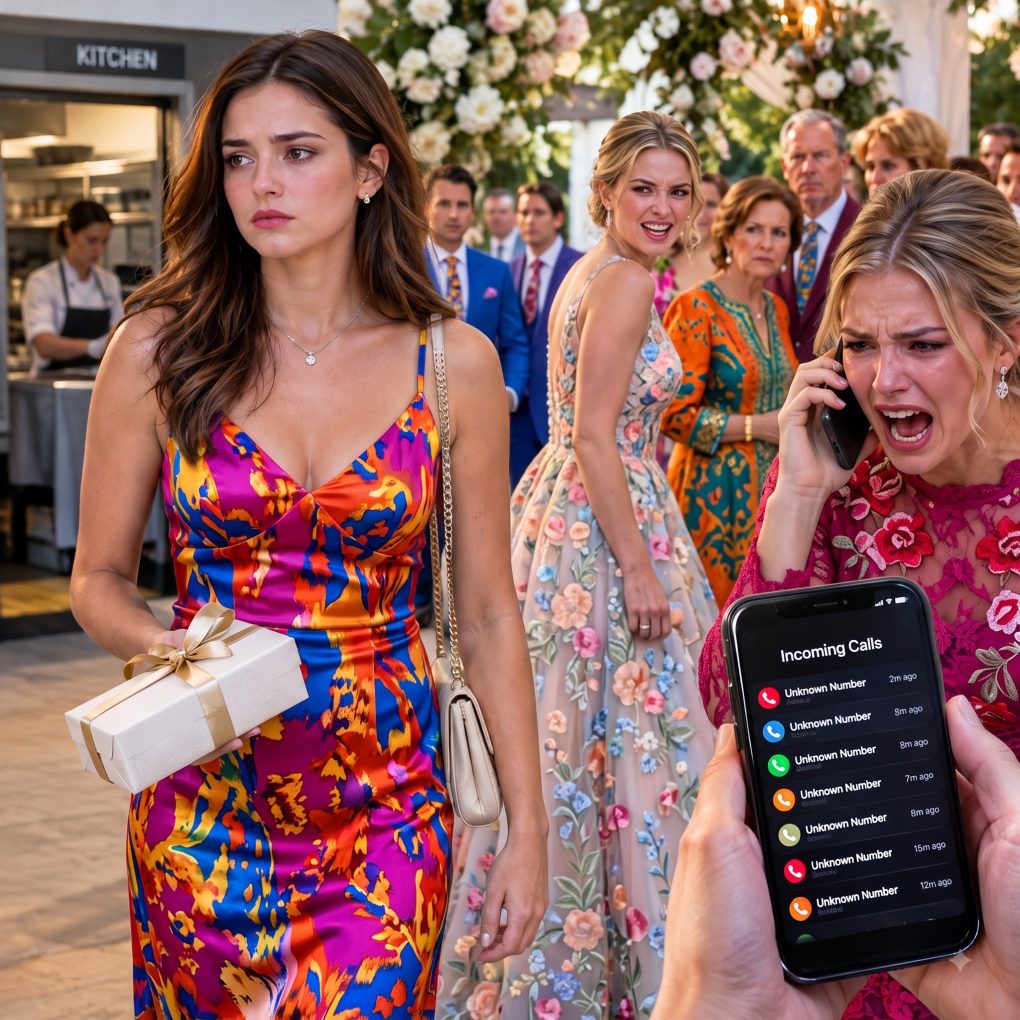
My sister made me eat in the kitchen at her high-society wedding because I “didn’t belong,” so I quietly left—taking the venue lease, security bond, and her three-million-dollar wedding gift with me.
My sister made me eat in the kitchen at her high-society wedding because I “didn’t belong,” so I quietly left—taking...