She Claimed It Was Just a Business Trip — So I Let Our Kids Be the Ones to Open Her Hotel Door…
She Claimed It Was Just a Business Trip — So I Let Our Kids Be the Ones to Open Her Hotel Door
My wife told our children she was leaving for a three-day business trip, kissed them goodbye, and promised to bring them presents.
Two days later, I took those same children to her hotel room, handed our daughter the key card, and watched her open the door.
What my daughter said when she saw the man standing behind her mother made me realize she’d been keeping a secret I never should have asked her to carry.
Part 1: The Hotel Door That Changed Everything
The suitcase was waiting beside our front door when I came downstairs, and my wife was standing in the hallway wearing the red blouse I’d bought her for our anniversary.
Sarah Carter had always been beautiful, but lately there was something unfamiliar about the care she took with her appearance.
She’d started wearing perfume to early meetings, curling her hair for ordinary workdays, and checking her phone with a little smile that disappeared whenever I entered the room.
“Three days,” she reminded me, catching my reflection in the hallway mirror. “Then I’ll be home, and we can have a proper family weekend.”
Our six-year-old son, Oliver, sat on the stairs with a stuffed dinosaur tucked beneath his arm.
He looked up at her with the serious expression he wore whenever he was trying to understand something grown-ups considered obvious. “Does your boss make you sleep in hotels because you talk too much at work?”
Sarah laughed, bending to kiss his forehead. “Something like that, buddy.
Mommy has meetings, and sometimes the meetings are too far away to drive home.”
Our daughter, Claire, was nine and considerably harder to impress.
She stood beside the suitcase holding a folded piece of paper she’d spent most of the previous evening decorating. “I made you something for your hotel room,” she said. “So you won’t forget us.”
Sarah accepted the drawing, and for a moment, her expression changed.
It showed four stick figures holding hands beneath an enormous yellow sun.
Claire had written The Carter Family across the top in purple marker, with little hearts between the names.
“That’s beautiful, sweetheart,” Sarah whispered.
She hugged Claire longer than usual.
Watching them, I had the absurd urge to ask my wife whether she was coming back to us at all.
Instead, I stood in the kitchen doorway with a mug of coffee growing cold between my palms.
My name is Nathan Carter.
I was forty-one years old, worked as an operations manager for a construction supply company in Fredericksburg, Virginia, and had been married to Sarah for thirteen years.
We’d met at Virginia Commonwealth University, gotten married in a small church outside Richmond, and spent most of our adult lives believing that whatever happened, we’d face it together.
At least, that was what I’d believed.
Sarah worked in regional sales for a medical equipment company.
Her job involved occasional travel, client presentations, and conferences that lasted several days.
It wasn’t unusual for her to spend a night away, but until that year, she’d always called the kids before bed and sent me pictures of terrible hotel breakfasts.
Lately, her trips had become more frequent.
And the pictures had stopped.
“Which hotel are you staying at again?” I asked.
She adjusted the strap of her handbag. “The Riverside.
Same place we booked last week.”
I knew the reservation well because I’d made it myself.
Sarah had said the conference rate was unavailable, and my hotel membership allowed me to reserve the last suitable room.
The booking remained under my name, with Sarah registered as the other guest, and she’d promised we’d sort out the expense afterward.
It had seemed like a harmless favor.
Now I wondered whether she’d chosen that arrangement because she knew I rarely questioned anything that made her life easier.
“Right,” I said. “Have a good trip.”
She hesitated.
For a fraction of a second, she studied my face as though searching for something.
Then she smiled.
“Love you.”
“Drive safely, Sarah.”
She looked almost relieved that I hadn’t answered the first part.
I helped Oliver carry her suitcase to the car, watched her hug both children, and stood in the driveway while she backed out beneath the bare branches of our old maple tree.
Claire waved until the car disappeared.
Then she turned toward me.
“Daddy, is Mommy mad at you?”
I looked down.
“No, honey.
Why would you think that?”
“She doesn’t laugh at your jokes anymore.”
I forced a smile.
“Maybe I need better jokes.”
Claire didn’t smile back.
That was the trouble with children.
They noticed the small changes adults convinced themselves were invisible.
By that afternoon, I would learn that Claire had noticed considerably more than I realized.
The truth was, I’d been suspicious for nearly four months.
There were the late-night phone calls Sarah took in the garage, always claiming they involved difficult clients.
There were the expensive restaurant charges on our joint credit card, the sudden password change on her phone, and the way she started leaving her screen facedown whenever we ate dinner together.
But suspicion isn’t proof.
For a long time, I’d used that distinction as an excuse to avoid asking questions.
Three weeks earlier, I’d finally shown my older brother, Mark, a credit card statement containing a hotel charge from a Wednesday when Sarah had supposedly worked late at her office.
He hadn’t told me I was imagining things.
He’d simply looked at the statement, then at me.
“Nate,” he said quietly, “you need to know what’s going on.”
Mark lived in Richmond and worked as an insurance investigator.
He understood how easily a suspicious transaction could be misinterpreted, so he encouraged me to consult a licensed private investigator rather than confront Sarah with guesses.
I hated the idea.
I hated what it suggested about the man I’d become.
But I hated the thought of continuing to live inside a lie even more.
The investigator’s first report arrived while Sarah was driving to her supposed conference.
It contained photographs of her entering the Riverside Hotel alongside a man named David Ross.
His hand rested against her lower back, and she was looking up at him with an expression I hadn’t seen directed toward me in more than a year.
David wasn’t a stranger.
He worked in corporate partnerships for a healthcare distributor and had attended several social events with Sarah.
I’d shaken his hand at a holiday dinner, talked about football with him, and once helped him carry folding chairs into our backyard during Oliver’s birthday party.
I remembered him as pleasant and unusually attentive.
Now I understood why he’d been so interested in knowing when I worked late.
Mark called shortly after I opened the pictures.
“Are you okay?”
“No.”
He didn’t insult me by pretending otherwise.
“Do you want to come down here?
We can talk.”
I stared at the photograph of Sarah smiling at David.
“I think I’m bringing the kids.”
Mark went silent.
“Nate, why?”
“Because she needs to understand what she’s doing to this family.”
“Then tell her.
Don’t make the kids deliver the message.”
I heard him.
I truly did.
But anger has a way of making revenge sound like honesty, especially when you’ve spent months swallowing questions you were afraid to ask.
“She’s lied to all three of us,” I said.
“That doesn’t mean all three of you need to be in the room when she gets caught.”
I told him I’d think about it.
I didn’t.
On Saturday morning, the third day of Sarah’s trip, I packed an overnight bag for each child and told them we were going to Richmond to surprise Mommy.
Oliver raced around the house looking for his dinosaur.
Claire packed the drawing she’d made, along with a tiny bracelet she wanted to give Sarah.
“Will Mommy be happy?” she asked.
I secured her seat belt.
“I think she’ll be very surprised.”
It was a technically truthful answer.
I would come to regret how little comfort that distinction offered.
The drive took almost ninety minutes because of traffic and a stop for lunch.
Oliver spent most of it counting trucks, while Claire asked whether we’d be able to swim in the hotel’s pool.
I answered their questions, laughed when they argued over the music, and pretended we were an ordinary family on an ordinary Saturday adventure.
But every mile toward Richmond made my stomach tighter.
I kept imagining Sarah opening the door and seeing our children.
I imagined her shame.
Her panic.
The moment she finally understood that what she called a business trip was connected to three people who loved her.
What I failed to imagine was how those same three people might experience that moment differently.
The Riverside Hotel stood near the river, its glass entrance reflecting the pale afternoon sunlight.
Inside, the lobby smelled of polished wood and freshly brewed coffee, and a wedding party was gathering near the elevators.
I approached the front desk while the children admired a large arrangement of white flowers.
The receptionist checked my identification against the reservation and confirmed that I was the registered primary guest.
I asked for an additional key card, and after verifying the booking details, she provided one.
Room 412.
Fourth floor.
East wing.
I held the little plastic card so tightly that its edge pressed into my palm.
Mark was waiting in the lobby, having agreed to meet us after I’d told him where we were going.
His expression darkened when he realized I was still taking the children upstairs.
“Let me keep them down here,” he offered.
I shook my head.
“Just a minute.
Then we’ll come back.”
“Nathan.”
“Please, Mark.”
He looked from me to the children, then lowered his voice.
“Whatever she did, they didn’t do it.”
I walked toward the elevators before he could say anything else.
Claire held Oliver’s hand as we went up.
When the doors opened on the fourth floor, I could hear the soft sound of a television coming from somewhere down the hallway.
We stopped outside Room 412.
The brass numbers shone beneath a wall lamp.
I knelt in front of Claire.
“Do you want to surprise Mommy?”
Her face brightened.
“Can I open it?”
I handed her the card.
She held it against the lock, waited for the green light, and pushed down the handle.
The door swung inward.
“Surprise, Mom!” Oliver shouted.
Sarah was standing beside the bed in a white hotel robe.
Her hair was loose, her lipstick had faded, and a half-finished bottle of wine sat beside two glasses on the desk.
Behind her, a man in dark trousers and an undershirt was reaching for a blue dress shirt hanging over the back of a chair.
She turned.
Her smile disappeared.
“Nathan?”
Oliver ran toward her.
“Mommy!”
She caught him automatically, wrapping both arms around his small body, but she couldn’t stop staring at me.
The man behind her went completely still.
Claire remained in the doorway.
For several seconds, she looked from her mother to the man beside the bed.
Then she said something that made the blood drain from my face.
“Mommy, why is David here?”
Sarah’s eyes widened.
Claire looked at me next.
And in a small, frightened voice, she added, “You told me I wasn’t supposed to tell Daddy about him.”
Part 2: The Secret My Daughter Had Been Carrying
There are moments when your mind takes longer than your body to understand what you’ve heard.
I stood in that hotel doorway, one hand resting against the frame, while Claire’s words repeated themselves in my head.
You told me I wasn’t supposed to tell Daddy about him.
For months, I’d imagined Sarah telling David secrets about our marriage.
I’d never imagined she’d asked our daughter to keep one.
Sarah shifted Oliver onto her other hip.
“Claire, sweetheart—”
“Why did you say it was a surprise?” Claire asked.
The confidence in her face was disappearing.
She looked at the hotel room, the rumpled sheets, and the unfamiliar tension between the adults, trying to assemble an explanation from pieces that didn’t belong together.
I finally moved.
“Kids, we’re going downstairs to see Uncle Mark.”
Oliver frowned.
“But Mommy’s here.”
“I know, buddy.”
“I want Mommy to come.”
Sarah took a step toward the door.
“Nathan, please.”
I looked at her.
Not angrily.
Not yet.
“Let me get them downstairs first.”
Something in my voice stopped her.
I took Oliver’s hand and guided Claire into the hallway.
She looked over her shoulder as the door closed, clutching the little bracelet she’d wanted to give her mother.
Neither child spoke until we reached the elevator.
Then Claire whispered, “Did I do something wrong?”
I crouched down in front of her.
“No, sweetheart.”
“Because I wasn’t supposed to tell.”
My throat tightened.
“Claire, you haven’t done anything wrong.”
She stared at the carpet.
“Is Mommy in trouble?”
I wanted to say yes.
I wanted somebody to understand how badly I’d been hurt.
Instead, I put one hand gently on her shoulder.
“Mommy and Daddy have something difficult to talk about.
That’s between us, not you.”
The elevator arrived.
Oliver leaned against my leg, suddenly quiet.
Downstairs, Mark was standing beside a pair of leather chairs near the lobby windows.
He took one look at my face and didn’t ask whether we’d found Sarah.
I explained that I needed a private conversation with her.
Mark nodded.
“Come on, you two,” he told the children. “There’s a bakery around the corner.
Your uncle has an emergency that can only be solved with chocolate.”
Oliver managed a small smile.
Claire didn’t.
She was watching me with an expression I’d never seen on her face before.
“Daddy, did you already know David was there?”
I froze.
Mark looked at me.
I could have lied.
I’d already lied to her once that day, telling her we were going to surprise her mother when I knew perfectly well that I was preparing for a confrontation.
But hearing the question from my daughter made the truth feel different.
“I had a reason to think he might be,” I admitted.
Her eyes filled.
“So you made me open the door?”
I didn’t have an answer that wouldn’t hurt her further.
“Nate,” Mark said quietly.
I looked at him.
He wasn’t judging me.
That almost made it worse.
“I’ll take care of them,” he said.
I watched my children walk toward the hotel entrance with their uncle.
Claire never looked back.
When I returned to Room 412, Sarah opened the door before I knocked a second time.
She was dressed now in jeans and a sweater, but her face was pale and her hands were shaking.
David stood near the window.
He looked as though he’d aged ten years in the twenty minutes since I’d first seen him.
“Nathan,” Sarah began, “I can explain.”
I walked inside and closed the door.
“How long?”
She stared at me.
“Please, can we sit down?”
“How long have you been sleeping with him?”
David looked toward the window.
Sarah swallowed.
“It’s complicated.”
“No, Sarah.
The situation may be complicated.
The question isn’t.”
She sat on the edge of the bed.
“Since February.”
Eight months.
I felt the room tilt.
It was October.
February was when we’d taken the children to the mountains for a weekend.
We’d rented a cabin near Shenandoah National Park, played board games beside the fireplace, and watched Oliver try to build a snowman from the last patches of winter snow.
Sarah had taken dozens of photographs.
In every one, we’d looked happy.
“You were seeing him when we went to the cabin?”
She pressed her lips together.
“Yes.”
I looked at David.
“Did you know she was married?”
He nodded.
“Did you know we had children?”
“Nathan, I’m sorry.”
I almost laughed.
The words were so small compared with the wreckage around us.
“Do you have a wife, David?”
He hesitated.
That was enough.
“Yes,” he admitted.
I moved toward the desk and rested my palms against its polished surface.
There were two room-service receipts beside the wine bottle.
One from Friday evening.
One from Saturday morning.
David’s name was printed on both.
A familiar pressure built behind my ribs.
“Does your wife know where you are?”
He looked down.
“No.”
I turned toward Sarah.
“Do you know he’s married?”
She nodded.
“He told me they were separating.”
David closed his eyes.
I watched that small reaction.
Sarah noticed it too.
Her expression changed.
“David?”
He didn’t answer.
“You’re separated, right?”
He ran one hand over his face.
“We’ve talked about it.”
Sarah stood slowly.
“You told me you’d moved into the guest room.”
“I did.”
“You told me you’d already spoken to Emily about leaving.”
“Sarah, not now.”
She stepped away from him.
For the first time since I’d entered the room, she looked as though she had discovered something she wasn’t prepared to understand.
I might have felt satisfaction if my own children hadn’t been downstairs trying to make sense of what they’d seen.
Instead, I felt exhausted.
“Get your things and leave, David.”
He glanced at Sarah.
“Nathan, I don’t want trouble.”
“Neither did I.”
He put on his shirt, collected his wallet and keys, and walked toward the door.
Before leaving, he turned back.
“I’m sorry about the kids.”
Something in me snapped.
“Then you should have thought about them before you came here.”
He lowered his eyes.
The door clicked shut behind him.
Sarah started crying.
She covered her mouth with both hands, sank into a chair, and shook so badly that I wondered whether she could even hear me.
Part of me wanted to comfort her.
That was what thirteen years of marriage had taught my body to do.
When Sarah cried, I moved closer.
When she was frightened, I held her.
When life disappointed her, I tried to make it better.
Now the person who had broken my heart was sitting six feet away, and my instincts were still searching for a way to protect her.
I stayed where I was.
“Why did Claire know his name?”
Sarah’s shoulders stiffened.
She wiped her face.
“She met him.”
“Where?”
“At the school fundraiser.”
I remembered that evening.
I’d been working late because a major shipment had been delayed.
Sarah had taken Claire to the event alone, and when I finally arrived, most of the parents were already leaving.
“David was there?”
“He was helping with a sponsorship.”
“Why didn’t you tell me?”
She looked at the floor.
“Because I knew how it would look.”
I stared at her.
“How did it look, Sarah?”
She didn’t answer.
I stepped closer.
“Why did you tell our daughter not to tell me about him?”
Sarah twisted a tissue between her fingers.
“It wasn’t like that.”
“Then tell me what it was like.”
She took a shaky breath.
“Claire saw us having lunch together a few weeks later.
David brought a little gift for Oliver because he’d remembered his birthday.
Claire asked why you weren’t there.”
I remembered the gift.
A remote-controlled truck Oliver had received the previous month.
Sarah had told me one of her colleagues had found it on clearance.
I looked at her.
“What did you say to Claire?”
Sarah began crying harder.
“I told her David was helping me plan a surprise for you.”
My stomach turned.
“You made our daughter keep a secret about your affair.”
“I didn’t tell her what was happening.”
“That’s not the point.”
“I know.”
“No, Sarah.
You don’t.”
She looked up.
“She’s nine years old.
She still thinks a secret is something fun that makes somebody happy later.
You used that.”
Sarah covered her face.
For a long time, neither of us spoke.
Then she whispered, “I never meant for the children to find out this way.”
I looked toward the door.
Neither had I.
But unlike Sarah, I couldn’t pretend I’d been surprised by the possibility.
I had put the key card in Claire’s hand.
I had wanted Sarah to see our children standing in front of the truth.
And when it happened, I discovered that the pain on my daughter’s face was far harder to bear than anything I’d imagined doing to her mother.
“Why?” Sarah asked suddenly.
I looked back.
“Why would you bring them here, Nathan?”
I felt anger rise again.
“Because you kept lying to them.”
She wiped her cheeks.
“So you brought them upstairs to catch me?”
I didn’t answer.
Her expression hardened through the tears.
“You wanted to punish me.”
I looked at her for a long moment.
“Yes,” I said.
The word hung between us.
Then I added the part neither of us wanted to hear.
“And I was wrong to put them in the middle of it.”
Sarah’s face collapsed.
I picked up the room key from the desk.
“We’ll talk about what happens next when the kids are somewhere safe.”
I started toward the door.
Behind me, she spoke so softly I almost missed it.
“Nathan, there’s something else you need to know.”
I stopped.
She looked at the half-empty wineglass on the table.
“I didn’t come here because of a business conference.”
“I know.”
She shook her head.
“No.
You don’t understand.”
Her fingers tightened around the tissue.
“I came here because David and I were supposed to make a decision about our future.”
Part 3: Ninety Miles of Silence
Sarah’s confession followed me out of the hotel like a second shadow.
She hadn’t simply been pretending to attend a conference while spending a few days with another man.
She’d come to Richmond to decide whether to leave our marriage.
And while our children had been making drawings for their mother, she had been sitting in a hotel room discussing the possibility of building a life without us living together.
I didn’t ask her for more details.
Not then.
There were two children downstairs who needed their father to stop thinking about himself long enough to get them home.
Mark had taken them to a bakery across the street.
Through the front window, I saw Oliver sitting on a tall stool with chocolate frosting around his mouth.
Claire was beside him, turning the bracelet she’d made for Sarah over and over between her fingers.
Mark spotted me and came outside.
“How bad?”
I looked through the glass at my daughter.
“Worse than I thought.”
He didn’t ask for the details.
“Want me to drive you home?”
I shook my head.
“I can manage.”
“That’s not what I asked.”
For a moment, I nearly broke.
Mark was six years older than me, and he’d spent most of our childhood acting like a second father after our dad worked long shifts at the railroad yard.
He’d helped me buy my first used car.
He’d taught me to change a tire.
He’d stood beside me when I married Sarah.
Now he was looking at me as though he could see the little brother beneath the grown man trying desperately to remain composed.
“I brought them here,” I whispered.
“I know.”
“I thought when she saw them, she’d finally understand.”
Mark’s expression softened.
“Nate, the kids didn’t need to teach Sarah that lesson.
She already knew what she was risking.”
I lowered my eyes.
“I know that now.”
He put a hand on my shoulder.
“Then do better from here.”
I stood outside the bakery until I could breathe normally.
Then I went inside.
Oliver ran toward me holding a half-eaten cookie.
“Daddy, can we still go swimming?”
I knelt and wiped a smear of chocolate from his cheek.
“Not today, buddy.”
“Why?”
“Because we’re going home.”
His face fell.
“But we just got here.”
“I know.”
He stared at me for a moment, then leaned against my chest.
I wrapped my arms around him.
Claire approached more slowly.
“Is Mommy coming home with us?”
“Not today.”
Her mouth trembled.
“Is she mad at me?”
I stood and took her hands.
“No, honey.
Mommy isn’t mad at you.”
“She looked scared when I opened the door.”
I swallowed.
“That’s because she wasn’t expecting us.”
Claire looked down at the bracelet.
“I didn’t mean to ruin her surprise.”
I felt something inside me give way.
There it was.
The consequence I hadn’t imagined.
My daughter believed she’d spoiled something.
Not because she’d seen her mother with another man, but because she’d been told the secret mattered, and now every adult around her was upset.
I crouched in front of her.
“Claire, listen carefully.
You didn’t ruin anything.
Mommy and Daddy have been having problems, and none of those problems are because of you.”
“Then why did we go there?”
I looked at Mark.
He nodded slightly.
I turned back to my daughter.
“Because I was hurt and angry, and I made a bad decision.
I shouldn’t have asked you to open that door.”
Claire studied my face.
“Are you saying sorry?”
“Yes, sweetheart.”
She hesitated.
Then she wrapped her arms around my neck.
I held her so tightly I had to remind myself to loosen my grip.
We drove home as the afternoon light faded over Interstate 95.
Oliver fell asleep before we’d left Richmond, his dinosaur balanced on his lap.
Claire stayed awake, watching the cars pass and occasionally glancing at me in the rearview mirror.
About twenty minutes from home, she asked a question that nearly made me pull over.
“Daddy, are you and Mommy going to stop being married?”
I gripped the steering wheel.
“I don’t know exactly what’s going to happen yet.”
“Because of David?”
I took a breath.
“Mommy and I have problems we need to work through.
Those are grown-up problems.”
“Did she stop loving you?”
The road seemed to stretch endlessly in front of me.
“I can’t answer that for Mommy.”
Claire was quiet.
Then she whispered, “Did you stop loving her?”
I looked at the wedding band on my left hand.
“No, honey.
Love doesn’t always disappear just because something bad happens.”
She thought about that.
“Then why were you both crying?”
I wanted an answer that would make the world simple again.
I didn’t have one.
“Because people can love each other and still hurt each other,” I said. “But it’s the grown-ups’ job to deal with that hurt.
Not yours.”
Claire turned toward the window.
I watched her reflection for a moment.
Then I forced myself to look back at the road.
When we arrived home, Oliver woke up crying because he thought we’d forgotten his dinosaur at the hotel.
I found it beneath his seat, carried him inside, and made grilled cheese sandwiches because neither child wanted a proper dinner.
Claire ate three bites.
Then she asked if she could sleep in my room.
I said yes.
By eight-thirty, both children were asleep in my bed, Oliver sprawled sideways and Claire curled around her stuffed rabbit.
I sat on the bedroom floor with my back against the wall and stared at them.
The house was so quiet I could hear the heating system turning on downstairs.
For thirteen years, Sarah and I had built our lives around these two children.
We’d argued about bedtimes, laughed at their mispronunciations, worried about fevers, and celebrated every small milestone as though nobody else had ever raised children before.
Now I wondered how many of those memories I’d been enjoying alone.
My phone vibrated.
Sarah.
Please tell me the kids are okay.
I stared at the message.
Then I typed:
They’re asleep.
Claire thinks she did something wrong.
Three dots appeared.
Disappeared.
Then appeared again.
Finally, Sarah replied:
Oh God.
I never wanted that.
I looked at my daughter.
For the first time that day, I felt anger without wanting to use it against somebody.
Neither did I, I wrote.
But we both made choices that hurt her.
We need to stop doing that.
Sarah called immediately.
I let it ring until I reached the hallway.
Then I answered.
“Nathan,” she whispered.
I could hear traffic in the background.
“Where are you?”
“Still in Richmond.
I’m sitting in my car.”
I leaned against the wall.
“Did David leave?”
“Yes.”
“Did you speak to him?”
“For a few minutes.”
I closed my eyes.
“What did he say?”
“He said he needed time.”
A bitter laugh escaped me.
“Apparently everybody needs time except the people they’ve been lying to.”
Sarah began crying.
“I know I deserve that.”
I rubbed my forehead.
“This isn’t about what you deserve anymore.
The kids are asking questions I don’t know how to answer.”
She took a shaky breath.
“Can I come home?”
I looked toward the bedroom.
“You can come tomorrow so we can talk.
I think tonight we should give each other some space.”
“Are you telling me I can’t come to my own house?”
“No.
I’m asking you not to come home in the middle of the night while the children are frightened and confused.”
She was silent for several seconds.
“Okay.”
I heard her car door close.
Then she said, “Nathan, I need to tell you something before you find out another way.”
My stomach tightened.
“What?”
“David and I were looking at apartments.”
I stared at the wall.
“Together?”
“Not exactly.”
“Sarah.”
She exhaled.
“I signed a short-term lease in Richmond last month.
I thought I might need somewhere to stay if I decided to leave.”
The hallway seemed suddenly too narrow.
“You rented an apartment?”
“Yes.”
“With what money?”
She didn’t answer immediately.
I walked downstairs, opened the drawer where we kept household paperwork, and pulled out the folder containing our savings statements.
“Sarah, what money?”
Her voice grew smaller.
“I used some of our joint savings for the deposit.”
I sat down at the kitchen table.
The same table where Claire had colored her family drawing two nights earlier.
“How much?”
“Six thousand dollars, including the first month.”
I looked at the envelope containing our mortgage information.
We had planned to use our savings to replace the aging heating system before winter.
Sarah knew that.
She’d helped choose the contractor.
“You signed a lease,” I said slowly, “while telling me we were saving money for the house.”
“I wasn’t sure I was going to use it.”
“But you were sure enough to spend our money.”
She began crying again.
I looked toward the staircase.
Upstairs, our children were sleeping in the bed where their mother and I had spent thirteen years planning a future together.
And somewhere in Richmond, Sarah had already rented a place for a future that didn’t include me.
Then she said the sentence that changed how I understood everything she’d been telling me for months.
“Nathan, I was going to tell you after Claire’s birthday.”
Claire’s birthday was three weeks away.
Sarah hadn’t just been hiding an affair.
She’d been planning when to leave us.
And she’d chosen to let our daughter celebrate one more birthday believing nothing was wrong.
Part 4: The House She Was Already Leaving
Sarah returned home at ten the following morning.
I was standing in the kitchen when her car pulled into the driveway.
I’d watched that same car arrive thousands of times, usually with some small sense of relief because another ordinary day was coming to an end.
This time, I felt my shoulders tighten.
Mark had taken the children to his house for the afternoon.
I’d told Claire and Oliver that Mommy and Daddy needed some quiet time to discuss what would happen next, and Mark promised to bring them home before dinner.
Sarah entered carrying her suitcase.
She stopped when she saw me.
“Where are the kids?”
“With Mark.”
She nodded slowly.
“Are they okay?”
“They’re frightened.”
Her face crumpled.
I gestured toward the kitchen table.
“Sit down.”
For a moment, she looked almost offended by the request, as though this were still an ordinary disagreement and she had the right to demand that I speak more gently.
Then she set down her suitcase and took a chair.
She looked exhausted.
Dark circles had appeared beneath her eyes, and there was a small red mark on her wrist where she’d apparently been twisting her watchband.
I noticed it because noticing Sarah was something I’d spent thirteen years learning to do.
That realization hurt.
“I canceled the rest of my hotel reservation,” she said.
“There wasn’t a conference, was there?”
She looked down.
“No.”
“What did you tell your office?”
“I took personal days.
Nobody at work thought I was attending a conference.”
I leaned back.
“So the entire trip was a lie just for us.”
Sarah closed her eyes.
“Yes.”
I waited, hoping she might continue without making me ask.
She didn’t.
“Tell me about the apartment.”
She folded her hands in her lap.
“It’s a furnished place near the river.
The lease runs for three months, with an option to extend.”
“Why Richmond?”
“Because it’s closer to my biggest accounts.”
“And David.”
She nodded.
“And David.”
I looked toward the refrigerator.
Claire’s drawing was still attached with a little red magnet.
Four smiling figures beneath a yellow sun.
“Where were the kids supposed to fit into this plan?”
Sarah followed my gaze.
“I wasn’t going to abandon them, Nathan.”
“That’s not what I asked.”
“I thought we’d figure out an arrangement.”
“From ninety miles apart?”
She rubbed her forehead.
“I didn’t know exactly how it would work.”
Something cold settled in my stomach.
She’d researched apartments.
She’d paid a deposit.
She’d packed a suitcase and lied about a conference.
Yet when it came to the two children who depended on us, her plan consisted of we’d figure it out.
“Did you think David would help raise them?”
Sarah looked at me sharply.
“No.”
“Then what did you think?”
She began crying.
“I thought if I left, maybe I’d be able to breathe again.”
The answer was so unexpected that I stopped.
She stared at her hands.
“I feel like I’ve been disappearing for years, Nathan.
At work, I’m somebody people listen to.
I make decisions.
I solve problems.
Then I come home and I’m the person who remembers dental appointments and whether Oliver needs new shoes.”
I listened.
She continued, her voice shaking.
“I know you work hard.
I know you’re a good father.
But sometimes I felt like the only thing you noticed about me was whether dinner was ready and whether the kids had finished their homework.”
I thought of the previous spring.
Sarah had told me she’d been passed over for a promotion she wanted.
I’d been preparing for an inventory audit, and although I’d said I was sorry, I hadn’t asked how she felt about it afterward.
I remembered another evening when she’d tried to tell me she was unhappy with her job.
I’d suggested she update her résumé.
Then I’d returned to my laptop.
Those moments had seemed small at the time.
Now they stood between us like furniture in a room neither of us knew how to cross.
“I wasn’t always a good husband,” I admitted.
Sarah looked up.
“I know.”
“But I was still your husband.”
She began crying harder.
“And you could have told me you wanted to leave before you started sleeping with somebody else.”
“I tried to tell you I was unhappy.”
“Yes.
And I didn’t always listen.
But you never told me you were having an affair, renting an apartment, or planning to make a decision about our marriage with another man in a hotel room.”
She covered her eyes.
“I know.”
I stared at the table.
For years, we’d treated serious problems like inconveniences we could postpone until work slowed down or the children were older.
I had contributed to that distance.
But Sarah had turned it into a secret life.
Those were not the same decisions.
“Are you still planning to be with David?” I asked.
She looked startled.
“No.”
“Because he lied to you about his marriage?”
“Because I finally saw what I was doing.”
I wasn’t sure which answer would have hurt less.
I stood and walked to the sink.
Outside, a delivery truck stopped at the neighbor’s house.
A dog barked, somebody called to a child, and the neighborhood continued moving through an ordinary Sunday morning.
Inside, thirteen years of marriage were being dismantled across a kitchen table.
Sarah followed me with her eyes.
“Can we go to counseling?”
I turned.
“I think we should talk to someone about the kids.”
“I mean marriage counseling.”
“I know.”
She waited.
I looked at her.
“I can’t promise reconciliation because you’re frightened of losing me.”
Her face tightened.
“That’s not fair.”
“Neither was spending eight months with David while asking me why I didn’t trust you enough to stop worrying about your phone.”
She dropped her gaze.
“I want to fix this.”
“You can’t make it unhappen.”
“I know that.”
“And I can’t decide today whether I could ever trust you again.”
She nodded slowly.
It was the first time she’d heard me say something other than an immediate promise to work things out.
I contacted a family-law attorney that afternoon.
Her name was Rebecca Shaw, and she came recommended by a colleague who’d gone through a divorce several years earlier.
Rebecca listened to the basic facts and asked one question before discussing anything else.
“Are the children safe, and are both parents willing to put their needs ahead of the conflict?”
I looked toward the living room.
“I think so.
But we haven’t handled this well.”
“Then start there,” she said.
She explained that Sarah and I both had parental rights, that neither of us should make unilateral decisions about custody or the house, and that we needed a temporary parenting arrangement while deciding whether to separate permanently.
She also reminded me that Virginia’s no-fault divorce process generally required a full year of separation when a couple had minor children.
I hadn’t expected legal reality to sound so ordinary.
I’d imagined one terrible day would end everything.
Instead, I was learning that a marriage could break in an afternoon while the practical consequences took months or years to resolve.
Sarah agreed to stay at her rented apartment temporarily while we worked with our attorneys on a written arrangement.
She would see the children regularly, and neither of us would discuss the affair in front of them.
Before leaving, she went upstairs to collect clothes.
I heard her moving through our bedroom.
A drawer opened.
A hanger scraped against the closet rod.
Then the house went quiet.
When I walked upstairs, she was sitting on the edge of the bed holding an old photograph.
It showed Claire as a baby, asleep on Sarah’s chest, with me beside them looking exhausted and happier than I’d ever been.
Sarah looked up.
“Do you remember this?”
I nodded.
“That was the first night she slept for more than four hours.”
Sarah smiled through her tears.
“We thought we’d finally figured out parenting.”
“We were wrong about that too.”
She laughed once.
Then the smile disappeared.
“Did we ever have a chance, Nathan?”
I thought about the people in the photograph.
How little sleep we’d had.
How little money.
How fiercely we’d believed we could face anything as long as we stayed together.
“We had thousands of chances,” I said quietly. “That’s what makes this so hard.”
She began crying again.
I left her with the photograph.
An hour later, her suitcase disappeared from the hallway.
That evening, Claire asked why Mommy hadn’t stayed for dinner.
I told her we were going to be living in different places for a while.
She nodded, but her lower lip trembled.
“Does she still want to be my mommy?”
I pulled her onto my lap.
“More than anything.”
Claire pressed her face against my shoulder.
I held her until she stopped shaking.
On Tuesday morning, the school counselor called.
Claire had been crying in class and refusing to join an activity.
When the counselor asked what was wrong, she’d explained that her mother wasn’t living at home anymore.
Then she’d said something that made the counselor ask me to come in.
“Claire told me she thinks her parents split up because she opened a hotel door.”
Part 5: The Little Girl Who Thought She Broke Our Family
I reached Claire’s school fifteen minutes after the counselor called.
Her classroom was halfway down a hallway decorated with autumn leaves, spelling charts, and bright construction-paper pumpkins.
I’d walked through that hallway dozens of times, usually carrying forgotten lunch boxes or attending parent-teacher conferences.
That morning, every child’s drawing seemed impossibly cheerful.
Claire was sitting in the counselor’s office with her feet tucked beneath the chair.
She looked up when I entered.
“Daddy?”
I knelt in front of her.
“Hey, sweetheart.”
Her eyes were swollen.
“Am I in trouble?”
“No.”
She glanced toward the counselor.
“Mrs.
Taylor said you wanted to talk.”
I took her hands.
“I came because I heard you were having a hard morning.”
She looked down.
“I didn’t finish my worksheet.”
“That’s okay.”
She rubbed her eyes.
“I tried.”
I sat beside her.
Mrs.
Taylor, a woman with silver glasses and a calm voice, explained that Claire had become upset during a classroom exercise about families.
The children had been asked to draw the people who lived in their homes.
Claire had drawn four figures.
Then she’d erased her mother.
Then she’d erased herself.
My throat tightened.
Mrs.
Taylor placed the paper on the desk.
In the center was a little house with a red roof.
Only Oliver and I remained inside.
Claire had drawn herself standing outside the front door.
She’d written three words beneath her picture.
I opened it.
I couldn’t speak.
For several seconds, I stared at the drawing.
Then I moved my chair closer to Claire.
“Sweetheart, look at me.”
She hesitated.
I waited until her eyes met mine.
“Mommy and Daddy were already having problems before we went to that hotel.”
She began crying.
“But if I didn’t open the door, you wouldn’t have seen David.”
I took a slow breath.
“That’s true.
I might not have seen him that day.”
Her face crumpled.
I squeezed her hands gently.
“But the problems were already there, and Mommy and Daddy were responsible for them.
You weren’t.”
Claire looked toward the drawing.
“Then why did you give me the key?”
There it was.
The question I’d been avoiding since Saturday.
Not because I didn’t know the answer.
Because I was ashamed of it.
“I was very hurt,” I said. “I knew something was wrong, and I wanted Mommy to understand how much her choices could hurt our family.”
Claire listened silently.
“But I made a bad decision.
I should have talked to Mommy without bringing you and Oliver into it.”
Her chin trembled.
“So you tricked me?”
I felt the words land.
“Yes,” I admitted. “I told you we were going to give Mommy a happy surprise, even though I knew it might turn into something upsetting.”
Her eyes filled again.
“I’m sorry, Claire.”
She stared at me.
Adults apologize to children all the time for small things.
Forgotten promises.
Raised voices.
Missed soccer practices.
But I realized she’d probably never heard me admit I’d done something that frightened her because I was too angry to think carefully.
She leaned forward.
I wrapped my arms around her.
“I should have protected you from that moment,” I whispered. “And I didn’t.
You deserved better from me.”
She cried into my shoulder.
I stayed with her until the tears slowed.
Mrs.
Taylor quietly handed us tissues.
Before we left, she suggested that Sarah and I arrange professional support for both children, especially because Claire seemed to be taking responsibility for the separation.
I agreed.
I’d spent the previous three days worrying about whether Sarah could ever regain my trust.
Now I understood that my daughter was questioning whether she could trust me.
That was a more urgent problem.
The following week, Claire and Oliver began meeting with a child therapist named Dr.
Helen Lin.
She didn’t ask them to describe the adult details of what they’d seen.
Instead, she used drawing, play, and simple conversations to help them understand what had changed and what remained the same.
Oliver’s biggest concern was that Sarah wouldn’t know where to find him if he got sick.
Claire’s concern was harder.
She believed secrets were dangerous.
When Dr.
Lin asked what she meant, Claire explained that she’d promised Mommy not to tell Daddy about David.
She’d kept the promise because Sarah said the secret was part of a surprise.
Now the surprise had made everyone cry.
Dr.
Lin listened carefully.
Then she explained that children weren’t responsible for keeping secrets that made them uncomfortable, especially when an adult asked them to hide something important from a parent.
She also told Claire that adults could make serious mistakes without children being responsible for fixing them.
I listened from the adjoining consultation room during the portion of the session Dr.
Lin had invited me to attend.
At one point, Claire asked, “What if I tell the truth and somebody stops loving me?”
I pressed my palms against my knees.
Dr.
Lin answered gently.
“People who love you are supposed to help you feel safe telling the truth.
Your parents’ love for you doesn’t depend on keeping secrets.”
Claire considered that.
Then she asked whether Mommy still loved Daddy.
Dr.
Lin didn’t try to answer for either of us.
Instead, she told Claire that whatever happened between her parents, both of them were responsible for showing her love through their actions.
After the session, I sat in my truck for ten minutes before starting the engine.
I hadn’t expected healing to require admitting how badly I’d handled the moment I believed would give me control.
But I knew Dr.
Lin was right.
Sarah and I had to stop making our children responsible for our adult emotions.
That Friday, we met at a quiet family counseling office.
It was the first time we’d sat across from each other without discussing the affair, money, or who was going to live where.
The counselor asked us to begin with what the children needed.
Sarah spoke first.
“Claire needs to know she hasn’t done anything wrong.”
I nodded.
“And Oliver needs to know we’re both going to keep showing up.”
The counselor looked at us.
“Can you say those things together without turning them into a conversation about who’s responsible for the marriage ending?”
Sarah glanced at me.
I looked back.
“Yes,” I said.
Sarah nodded.
We practiced explaining our separation in language the children could understand.
We agreed not to discuss David with them beyond what they’d already seen and what they needed to feel safe.
We agreed not to make promises about reconciliation, and not to ask either child to carry messages between our homes.
For the first time since the hotel, Sarah and I were working toward the same goal.
It didn’t feel like repairing our marriage.
It felt like protecting something even more important.
That evening, Sarah came over to have dinner with the children.
We ate pizza at the kitchen table because Oliver said pizza was what people were supposed to eat when everyone was having a difficult week.
Sarah laughed.
It was a real laugh.
I hadn’t heard one from her in days.
After dinner, we sat with the kids in the living room.
Sarah held Claire’s hand.
“Sweetheart, I need to tell you something.
I was wrong to ask you to keep a secret about David.
That wasn’t something a child should have to do.”
Claire looked at her.
“Are you mad I told Daddy?”
Sarah’s face crumpled.
“No, honey.”
She leaned closer.
“You could never make me stop loving you by telling the truth.”
Claire looked toward me.
I nodded.
“Mommy’s right.”
Oliver climbed onto Sarah’s lap.
“Are you coming back to sleep here?”
The room went quiet.
Sarah looked at me.
I took a breath.
“Not right now, buddy.
Mommy has another place to stay, but you’re going to spend lots of time with her, and we’re both going to take care of you.”
He considered that.
“Will I have my own dinosaur blanket there?”
Sarah smiled through her tears.
“Absolutely.”
Oliver nodded, apparently satisfied.
Claire wasn’t.
She watched us for a long moment.
Then she asked the question I would remember long after the hotel room stopped appearing in my dreams.
“If Mommy can stop loving you, how do I know she won’t stop loving us someday?”
Sarah’s face went white.
And I realized our daughter wasn’t only afraid of losing her family.
She was afraid that love itself had become something she could no longer trust.
Part 6: The Other Woman Who Had Been Lied To
The woman on the phone introduced herself as Emily Ross.
I was sitting in my office when she called, surrounded by shipping schedules and invoices that suddenly seemed impossible to understand.
“Mr.
Carter?”
“Speaking.”
“My name is Emily.
I’m David Ross’s wife.”
I leaned back in my chair.
For several seconds, I couldn’t think of anything to say.
Then she added, “I’m sorry to call you at work, but I need to know whether what my husband told me is true.”
I looked toward the office door.
“What did he tell you?”
“He said you walked into his hotel room because your wife had developed some kind of emotional attachment to him.
He says nothing physical happened.”
I closed my eyes.
David was still lying.
Not surprisingly.
Not even creatively.
Just desperately enough to preserve whatever version of his marriage remained within reach.
“Emily,” I said carefully, “I think we should speak somewhere private.”
We met the following afternoon at a coffee shop in Richmond.
She was a petite woman in her early forties, with dark hair pulled into a loose bun and tired eyes that made me recognize her before she introduced herself.
I’d seen that expression in the mirror every morning since the hotel.
She carried a folder and ordered tea she never touched.
“I have a son,” she told me after we sat down. “He’s thirteen.
His name is Jonah.”
I nodded.
“I have a daughter and a son.”
“I know.”
She stared into her cup.
“David told me you brought them to the hotel.”
Shame moved through my chest.
“Yes.”
“Why?”
I looked at her.
I could have told her the same thing I’d told myself that Saturday.
That I wanted Sarah to understand what she was risking.
That I wanted the truth exposed.
That children deserved honesty.
Instead, I told her what I’d finally admitted to my daughter.
“I was angry.
I thought seeing the kids would make Sarah understand how much she’d hurt us.
I didn’t think enough about what it would do to them.”
Emily was quiet.
Then she nodded.
“At least you’re willing to say that.”
She opened her folder.
Inside were copies of credit card statements, travel receipts, and several messages David had sent her while he was supposedly working overnight in different cities.
The hotel dates overlapped with the photographs I’d received from the investigator.
Emily had discovered the affair after David returned home from Richmond.
He’d been unusually quiet, barely touching his dinner, and his story about the trip changed twice before bedtime.
When she’d asked whether something had happened, he’d admitted there was another woman.
But he described the affair as emotional.
One kiss.
A brief mistake.
Nothing more.
“He said it ended before the hotel,” Emily told me.
I looked at the statements.
“I’m sorry.”
She gave a small, humorless laugh.
“I think I’ve heard that phrase about forty times this week.”
I nodded.
For a while, neither of us spoke.
Then she asked, “How long?”
“Sarah told me it started in February.”
Emily looked toward the window.
February.
I watched the meaning settle over her.
“Our anniversary was in February,” she said.
She rubbed her thumb along the edge of her cup.
“He bought me flowers and took me to dinner.
We talked about taking Jonah camping in the spring.”
Her voice broke.
“He told me he was grateful we’d made it through the difficult years.”
I looked down.
I knew that feeling.
The humiliation of realizing a cherished memory had happened while the other person was hiding something you never would have believed.
Emily took a breath.
“Did Sarah know he was married?”
“Yes.
But she said he told her you were separating.”
Emily closed her eyes.
“We weren’t.”
I waited.
She looked at me again.
“We had arguments.
We were tired.
Jonah was struggling at school, and David said he felt neglected.
But we were not separated.
We were planning a vacation together for Thanksgiving.”
The familiar bitterness rose in my chest.
Sarah had described our marriage as lonely.
David had apparently described his marriage the same way.
Two people had found comfort in telling each other that their spouses were the reason they felt trapped.
Perhaps parts of those complaints were true.
But neither had given the person waiting at home an honest opportunity to decide what to do with that truth.
“Are you going to stay married to him?” I asked.
Emily looked surprised.
Then she shook her head.
“I don’t know.”
She paused.
“Some mornings I think I could forgive him.
Other mornings I can’t stand hearing his keys in the door.”
I nodded.
“That’s exactly how it feels.”
She stared at me.
“Except you already know what you’re doing, don’t you?”
I thought about Sarah’s apartment.
The children.
The family counseling.
The lawyer whose number was now saved among my most frequently called contacts.
“I know we need to live separately for now,” I said. “Beyond that, I’m trying not to make decisions just because I’m hurting.”
Emily nodded slowly.
“That’s probably wiser than anything I’ve done this week.”
We talked for another hour.
Not like two people planning revenge.
Like two exhausted parents comparing the ordinary devastation of discovering that the lives they’d trusted were not the lives their spouses had been living.
Before leaving, Emily hesitated.
“There’s something I should tell you.”
I looked up.
“When David admitted the affair, he said Sarah had been planning to move to Richmond.”
“I know about the apartment.”
Emily shook her head.
“That’s not all.”
She opened her folder again.
“David told me Sarah had been researching schools near the apartment.
He said she wanted the children to have a place there if she and David eventually lived together.”
My stomach tightened.
“Did she actually apply to move them?”
“I don’t know.
I only know what he told me.”
I stared at the folder.
A moment later, Emily added, “He said she didn’t want to tell you until she’d worked out where they’d go.”
I felt the familiar urge to confront Sarah immediately.
But I forced myself to listen to the uncertainty in Emily’s words.
David had lied to both of us.
I wasn’t going to treat something he claimed as proven simply because it frightened me.
Still, the possibility was enough to make my hands shake.
I thanked Emily and drove home.
That evening, I called Sarah.
She answered from her apartment.
“Is everything okay with the kids?”
“They’re fine.”
I took a breath.
“Have you been researching schools in Richmond?”
Silence.
I waited.
“Sarah?”
She exhaled.
“Who told you that?”
“Did you?”
Another pause.
Then she answered.
“Yes.”
I closed my eyes.
“Did you make plans to move Claire and Oliver without telling me?”
“No,” she said quickly. “I didn’t enroll them anywhere.
I just looked into what the options might be if we separated.”
I leaned against the kitchen counter.
“You were thinking about moving them ninety miles away from their school, friends, and home.”
“I was trying to understand what life might look like.”
“With David.”
She didn’t answer immediately.
Then she whispered, “At the time, yes.”
I looked toward the living room.
Oliver had fallen asleep beneath a blanket while watching cartoons.
Claire was sitting beside him, carefully braiding the hair of one of her dolls.
Their lives were made of ordinary, fragile things.
A favorite teacher.
A best friend down the street.
A bedroom they’d painted together.
And their mother had been imagining a future in which all of that might have to change.
Sarah began talking quickly.
“I never decided anything.
I wasn’t going to take them away from you.”
I believed she hadn’t completed a plan.
But it frightened me that she’d come so close to creating one without understanding how many lives would be affected.
“Sarah,” I said, “before we discuss anything else, we need to agree that neither of us is changing the children’s school or primary home without talking to the other.”
She began crying.
“Okay.”
I closed my eyes.
There was a time when I would have heard her tears and immediately tried to make the conversation gentler.
Now I let the silence remain.
Then Sarah said something I didn’t expect.
“Nathan, I don’t think David ever intended to leave his wife.”
I stared at the kitchen wall.
She continued, her voice trembling.
“I think I was planning an entire future with a man who was only planning his next excuse.”
And for the first time, I heard something in her voice that wasn’t fear of getting caught.
It was the sound of someone beginning to understand how much damage she’d done chasing a life that might never have existed.
Part 7: The First Time Our Children Had Two Homes
The first time Oliver spent the night at Sarah’s apartment, I stood in his empty bedroom and realized how cruel a quiet house could become.
His dinosaur blanket was missing from the bed.
His sneakers weren’t beneath the dresser, and the little plastic train he usually left on the windowsill had disappeared into the overnight bag he’d packed himself.
Claire’s room was empty too.
For thirteen years, Sarah and I had dreamed of having an evening entirely to ourselves.
We’d imagined sleeping late, ordering takeout, and watching movies without somebody interrupting to ask for water.
Now I had the entire house to myself.
I couldn’t stand being in it.
Sarah and I had worked through our attorneys to establish a temporary parenting schedule.
The children would spend most school nights in Fredericksburg while Sarah arranged to move closer, with regular visits and overnight stays during weekends and school breaks.
Neither of us had complete control over the arrangement.
That was probably a good thing.
The first few exchanges were painfully awkward.
Sarah would arrive at the house, Oliver would race toward her, and Claire would stand between us searching our faces for evidence that another terrible conversation was about to begin.
I tried to smile.
Sarah tried not to cry.
Sometimes we failed.
One Friday afternoon, Oliver climbed into Sarah’s car and announced that he’d decided to call her apartment “the other home” instead of “Mommy’s place.”
Sarah looked startled.
“Why’s that, buddy?”
“Because Daddy says home is where people take care of you,” he explained. “And you take care of me there too.”
I watched Sarah press her lips together.
For a moment, the expression on her face reminded me of the young woman I’d married.
Then Oliver asked whether he could have two birthday cakes because he now had two homes.
Sarah laughed.
I laughed too.
It was the first time we’d shared an uncomplicated moment since the hotel.
After they drove away, I went inside and found myself standing in front of the refrigerator.
Claire’s original family drawing was still attached beneath the red magnet.
I hadn’t been able to take it down.
The four little figures seemed to belong to somebody else’s life now, but the drawing was still a record of a happiness our children had genuinely known.
I left it where it was.
That evening, Mark came over carrying Chinese food and a six-pack of root beer.
He found me sitting on the back porch, staring at the empty swing set.
“You look terrible,” he said.
“Thanks.”
He handed me a bottle.
“Brotherly honesty.”
I smiled despite myself.
We ate without talking much.
Eventually, Mark looked toward the house.
“How are the kids?”
“Better than I expected some days.
Worse than I expected on others.”
“And you?”
I turned the bottle between my hands.
“I don’t know who I am when I’m not trying to hold the family together.”
Mark leaned back.
“Maybe that’s what you need to find out.”
I stared at him.
He shrugged.
“You’ve been a husband and father for so long that you’ve forgotten you’re also a person.
I’m not saying stop being a dad.
I’m saying you need something to do when the kids aren’t here besides staring at their empty bedrooms.”
He was right.
I hated that.
Over the following weeks, I started seeing a therapist of my own.
At first, I spent most sessions talking about Sarah, David, and the humiliation of discovering the affair.
I described the hotel room repeatedly.
The white robe.
The wineglasses.
The way Sarah’s expression changed when our children appeared.
But eventually, the conversation moved toward the moment before the door opened.
My therapist asked what I’d hoped would happen.
I told him I wanted Sarah to understand what she’d done.
He waited.
Then I admitted the part I’d been ashamed to say aloud.
“I wanted her to feel helpless the way I’d felt helpless.”
He nodded.
“And did she?”
“Yes.”
“Did that help you?”
I stared at the floor.
“No.”
Because by the time I’d returned to Fredericksburg, the only helplessness I could remember clearly was Claire standing in the hotel hallway, asking whether I’d tricked her.
That understanding didn’t erase Sarah’s betrayal.
It simply stopped me from using her betrayal to excuse my own mistakes.
Sarah was changing too.
She began individual therapy, ended all contact with David, and transferred enough of her accounts at work to reduce her need for overnight travel.
She also found an apartment ten minutes from our children’s school, abandoning the Richmond lease at a financial loss.
She didn’t ask me to praise her for those decisions.
At least, not anymore.
During the first month of our separation, almost every conversation had ended with her asking whether I thought we could reconcile.
Gradually, she stopped using the children’s drop-offs as opportunities to plead for another chance.
Instead, she asked whether Oliver had finished his reading assignment.
Whether Claire needed new soccer shoes.
Whether I’d remembered the parent meeting scheduled for Thursday.
At first, I resented how ordinary those conversations sounded.
Then I realized ordinary was exactly what our children needed.
One evening, Sarah arrived to return Claire’s forgotten backpack.
The children were staying with me that night, and she’d offered to bring it over rather than make Claire worry about her homework.
We stood on the porch while the sun disappeared behind the houses across the street.
“Thank you,” I said.
Sarah nodded.
Then she looked at me.
“Nathan, I owe you an apology that isn’t just about the affair.”
I waited.
“I kept telling you how lonely I was because I wanted you to understand why I did it.
But somewhere along the way, I started treating my unhappiness as permission.”
Her eyes filled.
“It wasn’t permission.
I could have asked for counseling.
I could have told you I wanted a separation.
I could have admitted I’d fallen for someone else before I started living a double life.”
I looked at her.
She continued quietly.
“And I used Claire because I was afraid you might find out.
I told myself the secret was harmless because she didn’t understand what was happening.”
Her voice broke.
“She trusted me, Nathan.”
I swallowed.
“Yes.”
Sarah wiped her face.
“I know I can’t ask you to trust me again just because I’m finally telling the truth.”
For the first time, she wasn’t asking me to make her pain disappear.
She was simply admitting what she’d done.
I wanted that to be enough.
I wanted it so badly that I had to look away.
Because thirteen years don’t vanish simply because you discover eight months of betrayal.
I still remembered the way Sarah danced barefoot in our first apartment.
The sound of her laughing when Oliver learned to whistle.
The hospital room where she’d gripped my hand and whispered that she couldn’t believe Claire was finally here.
Those memories remained real.
So did the hotel.
And I couldn’t decide which version of our marriage I would see when I closed my eyes.
Three weeks later, Claire turned ten.
Sarah and I agreed to hold a small birthday gathering at a park near the children’s school.
There would be pizza, a cake, and a few friends from Claire’s class.
We planned to stand together for photographs if Claire wanted us to.
Nothing more.
But on the night before her birthday, Claire came into my room carrying the old family drawing she’d made for Sarah’s trip.
She climbed onto the bed and placed it between us.
“Daddy, can I ask you something?”
“Anything.”
She looked at the four figures holding hands.
“Was this picture a lie?”
My throat tightened.
“No, sweetheart.”
“But we don’t live like that anymore.”
I put my arm around her.
“The picture shows how our family was when you drew it.”
She traced one of the purple hearts with her finger.
“Can something be real if it doesn’t last forever?”
I looked at my daughter.
Ten years old.
Still young enough to sleep with a stuffed rabbit, but already asking questions I hadn’t learned how to answer until I was forty-one.
“Yes,” I said finally. “Something can be real and beautiful even if it changes.”
Claire leaned against me.
Then she whispered, “Tomorrow, can you and Mommy both stand next to me when I blow out my candles?”
I kissed the top of her head.
“Yes, sweetheart.”
She looked up.
“And can you promise neither of you will cry?”
I smiled sadly.
“We can promise we’ll try.”
Part 8: The Year Between Goodbye and Forgiveness
We stood on either side of Claire’s birthday cake beneath a pavilion decorated with purple balloons.
Sarah wore a simple blue sweater, and I wore the same jacket I’d owned for years.
Oliver bounced beside the table, impatient because he believed birthdays were only successful when somebody gave him permission to eat frosting.
Claire looked from me to Sarah.
“Closer,” she instructed.
We moved an inch toward each other.
“Closer.”
Sarah glanced at me.
I nodded.
We stood shoulder to shoulder while our daughter closed her eyes and made a wish.
For one brief moment, it looked like an ordinary family photograph.
But I knew better than to confuse a photograph with a marriage.
The candles went out.
Everyone cheered.
And Claire smiled with a happiness I hadn’t seen on her face in weeks.
That smile was enough.
After the party, Sarah helped me collect paper plates and fold the decorations.
The children were playing nearby with their friends, and for several minutes, we worked together without tension.
It reminded me of countless birthday parties we’d organized during our marriage.
There was comfort in knowing we could still cooperate.
There was also danger in how familiar it felt.
Sarah must have sensed it.
She paused beside the trash bags.
“Did today feel strange to you?”
I looked toward the playground.
“Yes.”
She smiled faintly.
“Me too.”
For a moment, neither of us spoke.
Then she said, “I miss this.”
I knew what she meant.
The easy coordination.
The shared pride in our children.
The feeling that whatever chaos happened around us, we belonged to the same team.
“I do too,” I admitted.
She looked at me with sudden hope.
I shook my head gently.
“Missing it doesn’t mean I know how to rebuild it.”
Her expression changed.
Then she nodded.
“I understand.”
I wasn’t sure she did.
But for the first time, she didn’t ask me to explain further.
The months that followed were difficult in quieter ways.
There were no dramatic confrontations.
No new hotel discoveries.
No furious messages from David.
Just the relentless work of learning how to live with a truth neither of us could change.
Sarah and I attended co-parenting counseling twice a month.
We learned how to discuss school problems without accusing each other, how to handle holidays without making the children choose sides, and how to disagree privately when one of us thought a decision was unfair.
Some weeks, we managed beautifully.
Other weeks, we stumbled.
One December evening, Oliver developed a high fever while staying with Sarah.
She called me just after midnight, frightened because his temperature was climbing despite the medicine she’d given him.
I met them at an urgent care clinic.
Oliver was sitting on Sarah’s lap in his dinosaur pajamas when I arrived.
His cheeks were flushed, and he looked miserable.
He reached for me.
“Daddy.”
I sat beside them and pressed my hand gently against his forehead.
Sarah’s eyes were red with worry.
For the next two hours, we were simply Oliver’s parents.
We answered the doctor’s questions.
We kept him comfortable.
We held his hands while he complained about the examination and begged to go home.
When the doctor reassured us that he had a viral illness and could recover at home with rest, fluids, and monitoring, Sarah began crying with relief.
Without thinking, I put my arm around her.
She leaned against me.
For a moment, the old habit returned.
The two of us sitting together after a frightening night, relieved because our child was going to be okay.
Then I felt her hand close around mine.
I didn’t pull away immediately.
But when Oliver fell asleep in the car seat, I gently released it.
Sarah noticed.
She didn’t say anything.
Later, as we stood beside her car, she looked at me.
“Thank you for coming.”
“He’s my son.”
“I know.”
She hesitated.
“Sometimes I forget we’re not married anymore.”
“We’re still legally married,” I said. “We’re just living separately.”
She gave a sad smile.
“That’s not what I meant.”
I understood.
There were moments when the shape of our old life returned so naturally that it became painful to remember what was missing.
But those moments were not enough to restore trust.
They were reminders that we’d once been good at loving each other.
And that we’d failed to protect the marriage in very different ways.
By spring, the children were doing noticeably better.
Claire no longer blamed herself for opening the hotel door, although she still became anxious when plans changed unexpectedly.
Oliver had adjusted to the parenting schedule and proudly kept dinosaur blankets in both bedrooms.
Sarah had found a stable routine in her new apartment.
She decorated the children’s rooms with photographs, favorite books, and drawings they’d made at school.
I stopped feeling threatened when Oliver told me he’d had a wonderful weekend with his mother.
Instead, I learned to be grateful that she was showing up for him.
That was harder than it sounds.
There were evenings when I wanted the children to prefer my house because it would make me feel as though I’d won something.
But children aren’t prizes.
They’re people who need to love both parents without being made responsible for either parent’s feelings.
I had to remind myself of that more than once.
During the summer, Sarah asked whether I’d consider marriage counseling again.
We met at a small café while the kids were with Mark.
She’d been in therapy for almost nine months and looked healthier than she had in a long time.
“I know I can’t make you trust me,” she began. “But I’m not the person I was when I went to that hotel.”
I stirred my coffee.
“I believe you’ve changed.”
She looked up.
“Then maybe we could—”
“Sarah.”
I waited until she met my eyes.
“I believe you’re working on yourself.
I believe you’re trying to be a better mother, and I believe you regret what happened.”
Her eyes filled.
“But I don’t know how to be your husband again.”
She stared at the table.
“Because you don’t love me?”
I looked out the window.
A young couple was walking past with a stroller, laughing at something their baby had done.
“I still care about you,” I said. “I think part of me always will.
But when I imagine rebuilding our marriage, I don’t feel hopeful.
I feel afraid of spending years trying to prove to myself that what happened won’t happen again.”
Sarah covered her mouth.
I continued gently.
“That wouldn’t be fair to either of us.”
She cried quietly for several minutes.
I stayed until she could speak.
Then I drove home.
That night, I looked through an old box of photographs.
Our wedding.
Our first apartment.
Claire’s birth.
Oliver’s first Christmas.
The mountain cabin.
There were so many good years.
And for a while, I let myself grieve them without trying to turn the grief into anger.
By October, we’d been separated for a year.
Our attorneys had been working toward a final agreement covering the house, savings, retirement accounts, and a long-term parenting arrangement.
We disagreed about some details.
But we had decided not to turn the children into evidence against each other.
Sarah didn’t try to deny the affair.
I didn’t try to make the hotel incident into proof that she was an unfit mother.
We both understood that the children needed stable parents far more than they needed either of us to win an argument about the past.
The evening before we signed the final settlement documents, Sarah came to the house after dropping off Claire’s soccer uniform.
The children were upstairs.
She stood in the hallway, looking toward the family photographs that still hung along the staircase.
“One year,” she said quietly.
I nodded.
“Feels longer.”
She smiled sadly.
“Sometimes it feels like yesterday.”
I knew exactly which day she meant.
The hotel.
The fourth-floor hallway.
Room 412.
Sarah looked at me for a long moment.
Then she asked a question neither of us had spoken aloud since the first weeks of our separation.
“Nathan, if you could go back to that Saturday, knowing everything you know now, would you still put the key card in Claire’s hand?”
I felt my chest tighten.
For an entire year, I’d replayed that moment in my mind.
I’d imagined turning the car around.
Leaving the kids with Mark.
Knocking on the door alone.
Confronting Sarah privately.
Sometimes, I’d imagined never going to the hotel at all.
But I had never told Sarah which decision I wished I could change most.
Now she stood in front of me, waiting.
And I finally knew the answer.
Part 9: The Door I Would Never Make Them Open Again
“No,” I said.
Sarah closed her eyes.
I leaned against the kitchen counter.
“If I could do it again, I would leave the kids with Mark.
I’d come to the hotel alone, or ask you to meet me somewhere private.”
Sarah wiped her cheek.
“But you would still confront me.”
“Yes.”
“And you would still leave?”
I looked at her.
“I think so.”
She nodded slowly.
For a moment, I thought she might begin crying again.
Instead, she took a steady breath.
“I wish I could go back too.”
I looked toward the staircase.
“To the hotel?”
She shook her head.
“Further than that.”
Her eyes filled.
“To the first time I lied to you about David.
To the first time I told Claire to keep a secret.
To the day I convinced myself that because I was unhappy, I was entitled to do whatever made me feel better.”
She paused.
“I can’t take any of it back.”
“No,” I said quietly. “Neither can I.”
We stood in silence.
For the first time, the silence didn’t feel like a contest.
Neither of us was trying to force the other to admit something.
We were simply two people standing in the remains of a marriage, finally able to describe what had happened without needing the other person to make it hurt less.
Sarah glanced toward the stairs.
“Do you think the kids will ever forget that day?”
I thought of Claire’s drawing.
Oliver’s frightened questions.
The way our daughter had stopped trusting surprises.
“No,” I said. “Not completely.”
Sarah lowered her eyes.
“But I think they’ll remember what we do afterward, too.”
She looked up.
“They’ll remember whether we keep showing up.
Whether we tell them the truth.
Whether we make them feel safe.”
Her face softened.
“I want to do that.”
“So do I.”
A few weeks later, our divorce was finalized.
There was no dramatic courtroom speech.
No moment when the judge declared one of us right and the other wrong.
There were signatures, documents, and practical decisions that would shape the rest of our children’s childhoods.
I refinanced the family house under the terms of our settlement, while Sarah kept her nearby apartment.
We divided our assets and addressed the money she’d spent without telling me, along with the other financial issues our attorneys had worked through.
The children continued spending time in both homes.
Their school stayed the same.
Their friends stayed the same.
And gradually, life began to feel less like something we were surviving and more like something we could actually live.
Six months after the divorce, I was making pancakes on a Saturday morning when Claire came downstairs carrying a large sheet of paper.
She was eleven now.
Her hair was tied into a messy ponytail, and she wore the oversized sweatshirt Sarah had bought her for Christmas.
“Daddy, I need help with my homework.”
I turned down the heat beneath the skillet.
“What kind of homework?”
“We have to draw something that shows what family means to us.”
I felt a familiar ache.
“Okay.”
She placed the paper on the kitchen island.
This time, she’d drawn two houses.
One was ours, with its red front door and old maple tree.
The other was Sarah’s apartment building, with the little balcony where Oliver liked to watch birds.
Between the houses was a bridge.
Claire had drawn herself and Oliver standing in the middle, holding hands.
On one side stood me.
On the other stood Sarah.
I stared at it.
“That’s beautiful, sweetheart.”
She smiled.
“Mrs.
Taylor said family doesn’t always mean everybody lives in the same house.”
“She’s right.”
Claire picked up a purple marker.
“I wanted to draw you and Mommy holding hands, but I didn’t think that would be honest.”
I felt my throat tighten.
“So I drew the bridge instead.”
I looked at her.
“Why a bridge?”
She shrugged.
“Because you and Mommy still take us places.
And when I forget something at one house, one of you always brings it to the other.”
I laughed softly.
“That’s true.”
She continued coloring.
Then she said, almost casually, “You know, Daddy, I don’t think about the hotel very much anymore.”
My hand stopped moving.
“Really?”
“Sometimes I remember it, but mostly I remember that you said sorry.”
I looked at her.
She kept coloring.
“And Mommy said sorry too.”
I sat beside her.
“Do you still feel scared when you think about it?”
She considered the question.
“Not like before.”
Then she looked up.
“I know now that adults can do wrong things and still love their kids.”
I nodded.
“Yes, sweetheart.”
“And if you do something wrong, you’re supposed to try to make it better.”
“That’s right.”
She smiled.
“That’s what you and Mommy did.”
I had to look away.
Not because I was ashamed.
Because I’d spent so long afraid that one terrible decision would define the way my children remembered me.
Now my daughter was showing me that accountability had become part of their understanding of love.
Not a perfect family.
Not a family untouched by mistakes.
But one where mistakes could be acknowledged without making children responsible for them.
Oliver came downstairs a few minutes later, demanding to know why the pancakes weren’t ready.
Claire rolled her eyes.
“Because Dad’s having one of his emotional moments.”
I laughed so hard I nearly dropped the spatula.
Oliver looked at us both.
“Can I still have chocolate chips?”
“Yes, buddy.”
He grinned.
“Then everything’s fine.”
Later that afternoon, I drove the children to Sarah’s apartment.
It was her weekend, and Oliver had insisted on bringing a shoebox containing three toy dinosaurs and a rock he’d found in the backyard.
Claire carried her drawing.
She’d decided to make a copy so both houses could have one.
When we reached Sarah’s building, I parked near the entrance and helped Oliver untangle his backpack from the seat belt.
Sarah was waiting just inside the lobby.
She looked happy.
Not because she’d recovered our marriage.
Not because I’d forgiven everything that happened.
But because our children were coming home to her.
Claire spotted her through the glass doors.
“Mommy!”
She ran ahead.
Oliver followed, clutching his dinosaur box against his chest.
I walked behind them, carrying the overnight bag.
At the entrance, Claire stopped and turned toward me.
“Daddy, can I open the door?”
For a second, I was back in Richmond.
A burgundy hotel hallway.
A brass room number.
A green light flashing on a lock.
My daughter’s little hand holding a key card I’d given her because I wanted her mother to feel the weight of what she’d done.
I remembered how certain I’d been that exposing the truth would make everything better.
I hadn’t understood that truth could be necessary while the way it was delivered could still cause harm.
Now Claire stood in front of an ordinary apartment building, smiling at me.
There was no secret waiting behind the door.
No adult betrayal she was being asked to reveal.
Just her mother, who loved her, waiting to welcome her home.
I smiled.
“Of course, sweetheart.”
Claire pushed the door open.
Sarah knelt to hug both children.
Oliver nearly dropped his dinosaurs, and Claire began talking immediately about her drawing, her homework, and the pancakes we’d made that morning.
Sarah looked over their shoulders.
Our eyes met.
For a moment, I saw the woman I’d loved for thirteen years.
Then I saw the woman she was becoming.
The two weren’t exactly the same.
And perhaps they didn’t need to be.
“Thanks for bringing them,” she said.
“Of course.”
She smiled gently.
“Have a good weekend, Nathan.”
“You too, Sarah.”
I watched the children disappear down the hallway with their mother.
Then I walked back to my car.
The afternoon sunlight fell across the windshield, and somewhere nearby, a dog barked while children laughed on a playground.
It was an ordinary Saturday.
No dramatic confrontation.
No shocking revelation.
No secret messages waiting to be discovered.
Just the quiet evidence that we’d survived something none of us would ever have chosen.
I sat behind the steering wheel for a moment, looking at the apartment entrance.
Thirteen years of marriage had ended.
The family I’d imagined growing old inside had changed beyond recognition.
But my children still had a mother who loved them.
They still had a father who showed up.
And they were finally free to walk between their two homes without being asked to carry either parent’s pain.
For a long time, I believed the most important thing I’d done was discover the truth behind Sarah’s business trip.
Now I understood that discovering the truth had been only the beginning.
The harder work had been learning how to live with it without passing the hurt down to our children.
I started the engine.
As I pulled away, my phone vibrated with a message from Claire.
It was a photograph of her drawing, now taped to Sarah’s refrigerator.
Underneath, she’d written a sentence in her careful purple handwriting.
“My family has two homes, but I am loved in both.”
I pulled over at the next safe place and read it again.
Then I cried.
Not because I wanted Sarah back.
Not because I wished I could erase every terrible thing that had happened.
But because, for the first time, I could see a future in which my children remembered more than the day their parents’ marriage broke apart.
They would remember birthdays with both parents cheering.
School plays where neither of us made them choose whom to wave at.
Sick nights when we worked together.
Forgotten backpacks delivered without arguments.
And two front doors that were always open to them.
I thought of Room 412 one final time.
The day I handed Claire that key card, I believed I was giving her the truth.
What I actually gave her was an adult burden she never should have carried.
It had taken me more than a year to understand that difference.
But today, when she asked to open another door, I finally knew what I was supposed to give her.
Not revenge.
Not proof.
Not a lesson about betrayal that she was too young to need.
Just the freedom to walk into her mother’s home and be a child.
I couldn’t change the hotel door I’d let my children open.
But I could spend the rest of their childhood making sure they never had to open another one for me.
Recommended Stories
they laughed when a 17-year-old farm boy spent his last $80 on 800 broken alternators—until an old farmer’s forgotten tractor revealed what everyone else had missed
Part 1 The first thing Ethan Miller heard was laughter. It came from three grown men standing behind a farm...
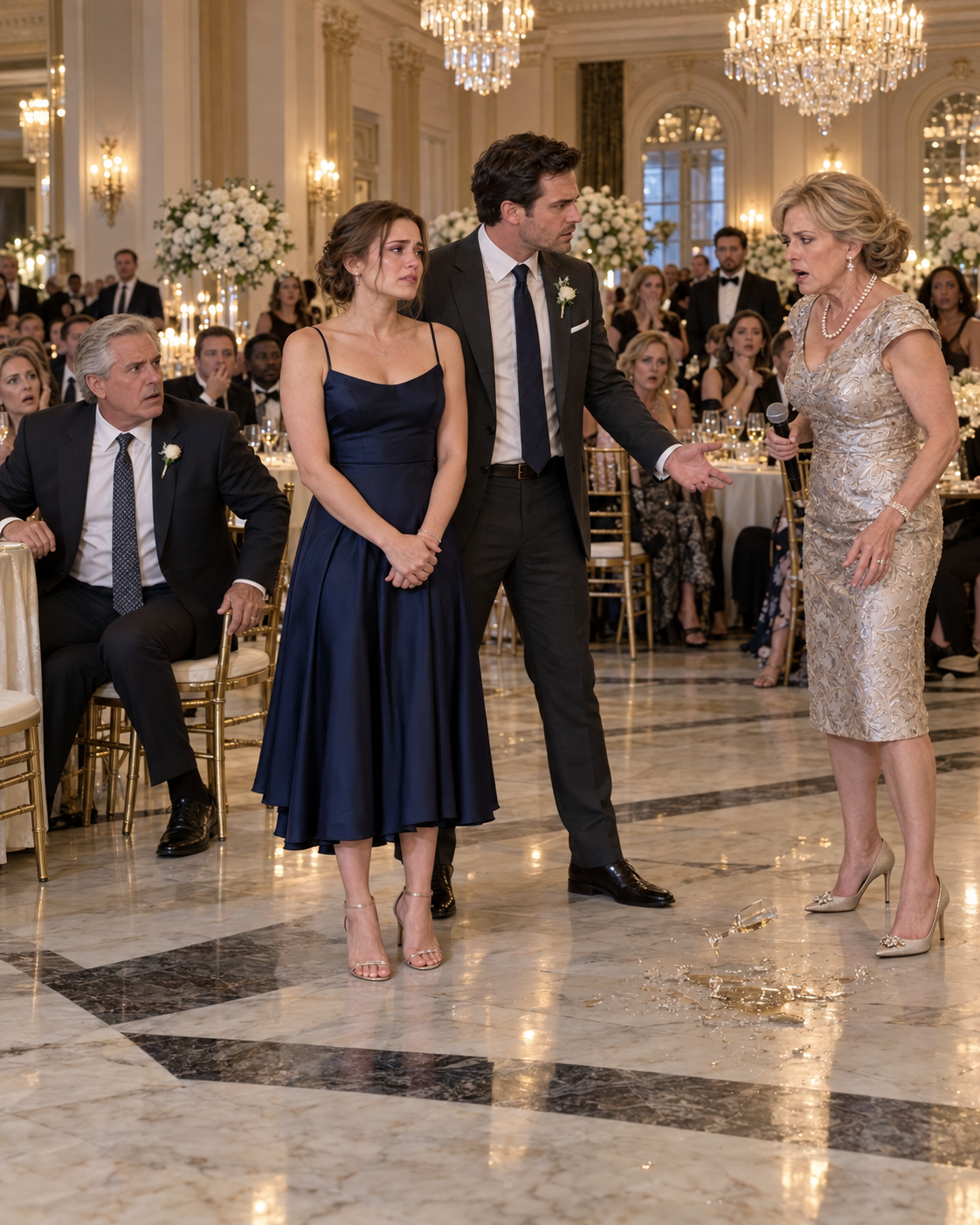
“Before you keep going, would you like to tell everyone why you really pulled Clare out of medical school, or should I do it for you?”
Part 1: My name is Claire Clatterbuk. I’m 30 years old. On October 19th, at my engagement party, my mother...
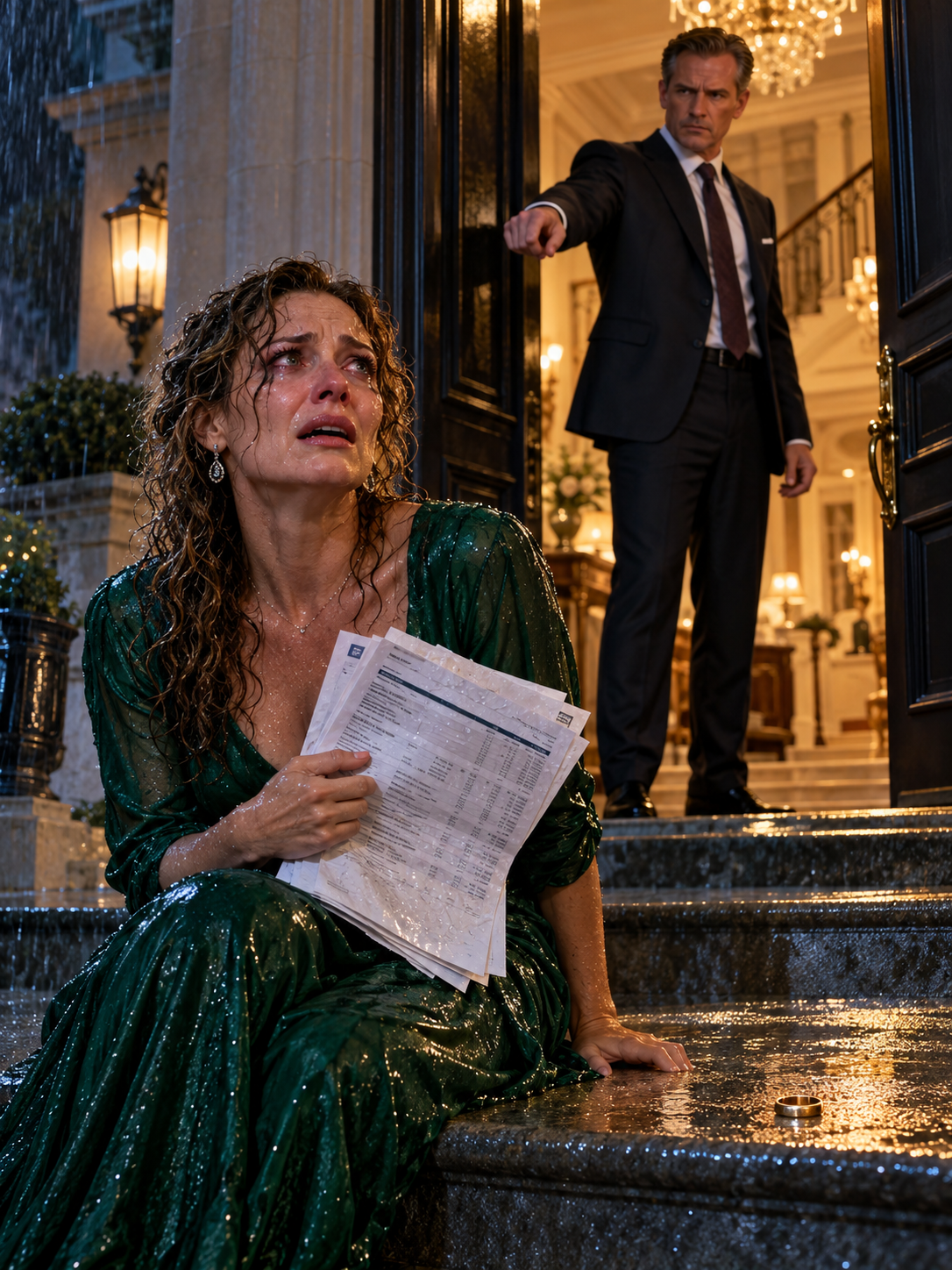
My Husband Threw Me Out Into a Storm Over $50,000 His Daughter Said I Stole—Three Hours Later, A Detective Called My Brother – Life Story
Raymond threw me out of our house during the worst storm of the year because his daughter said I had...