‘Your Wife Is Having Fun,’ The Stranger Smirked. I Didn’t Yell. I Just Walked To My Trunk…
‘Your Wife Is Having Fun,’ The Stranger Smirked.
I Didn’t Yell.
I Just Walked To My Trunk…
The stranger blocking the doorway smiled when I asked where my wife was. “She’s having a real good time in there,” he said. “Come back in an hour.” I didn’t argue, threaten him, or demand an explanation.
I simply turned around, walked down the driveway, and opened my trunk.
What I carried back that night would open a locked door—but the smallest piece of paper I found five days later would destroy everything I believed about my marriage.
Part 1: The Stranger Who Wouldn’t Let Me See My Wife
At 11:47 on a Saturday night, I parked outside a large colonial house at the end of Olmsted Lane in Hamden, Connecticut, and wondered why my wife hadn’t answered her phone in almost four hours.
Music vibrated through the closed windows, and silhouettes moved behind the curtains beneath the yellow glow of expensive outdoor lighting.
Three cars were parked crookedly along the driveway, and someone had abandoned a red plastic cup on the mailbox.
It looked like the kind of party people remembered fondly the next morning, assuming everyone made it home safely.
My name is Victor Hayes.
I was forty-two years old, worked as a commercial building inspector, and had been married to Sarah for twelve years.
I wasn’t the type of husband who checked his wife’s location every twenty minutes or demanded to know who she was talking to.
Until that night, I had always believed that trusting someone meant allowing them the freedom to live without being watched.
Sarah had left around seven to attend a birthday party hosted by her friend Jessica Mercer.
She’d worn a dark green blouse, black pants, and the delicate silver earrings I bought her for our tenth anniversary.
Before leaving, she’d kissed my cheek and reminded me that there were leftovers in the refrigerator.
I told her to enjoy herself, then spent the evening finishing a work report and watching a basketball game.
Her last message arrived at .
At Jess’s party.
Battery’s at 12%, lol.
Don’t wait up.
I replied that she should call if she needed a ride.
There was nothing unusual about the exchange.
Sarah’s phone was practically an extension of her hand, and she had a habit of forgetting to charge it before going out.
But shortly after eleven, I noticed that the location she’d shared with me for years was no longer updating.
Two calls went directly to voicemail, and when I tried Jessica, nobody answered.
I wasn’t imagining an affair.
I was imagining my wife with a dead phone, too much wine in her system, and no convenient way to get home.
So I put on my boots, picked up my keys, and drove fifteen minutes through the quiet suburban streets.
The man who answered the door was tall, broad-shouldered, and probably in his late thirties.
He wore a salmon-colored button-down shirt with the sleeves rolled to his elbows.
His cheeks were flushed, his eyes looked slightly unfocused, and he held a bottle of beer loosely between two fingers.
He glanced at my faded gray work shirt before looking down at my boots.
“Yeah?”
“I’m looking for my wife,” I said. “Sarah Hayes.
She’s here with Jessica.”
Something changed in his expression.
It wasn’t surprise exactly.
It was recognition, followed by the slow, deliberate smile of someone discovering an opportunity to amuse himself.
“Sarah,” he repeated.
“Yes.”
“Oh, she’s here.”
He leaned against the doorframe and took another drink.
“Your wife’s having fun, man.”
I waited.
He smiled wider.
“Real good time, actually.
Why don’t you come back in an hour?”
I looked past him into the entryway.
Colored lights flashed against the far wall, and I heard several people shouting along with a song.
Somewhere deeper in the house, a woman laughed.
“I’d appreciate it if you’d let her know I’m outside,” I said.
He glanced over his shoulder.
“She’s busy.”
“Then I’d like to come in.”
His expression hardened.
“Look, buddy, I’m trying to save you some embarrassment.
This isn’t really your kind of party.”
I looked at him carefully.
He didn’t know me.
He didn’t know what kind of parties I attended, what my marriage was like, or whether Sarah wanted to leave.
Yet he was speaking with the confidence of a man who believed he possessed information I didn’t.
“What’s your name?” I asked.
“Dominic.”
“Dominic, I’m not here to cause trouble.
I want to make sure my wife is okay.”
“She is.”
“Then there’s no reason I can’t speak to her.”
For a moment, we stared at each other.
Then Dominic gave me a small, dismissive laugh.
“Whatever you say.”
He eased the door closed, leaving me standing on the porch.
I heard the lock turn.
I remained there for several seconds, listening to the music and watching my reflection in the glass panel beside the door.
I could have called the police.
I could have called Jessica again.
I could have gone home and waited for Sarah to contact me.
Instead, I felt something old and uncomfortable rising in my chest.
My father had spent thirty years repairing industrial equipment.
He used to tell me that when a machine stopped working, the worst thing you could do was panic and start hitting things.
You had to understand what was wrong before deciding how to fix it.
I had followed that advice for most of my life.
But standing outside that house, with a stranger refusing to let me speak to my wife, I made a decision I would later regret.
I walked back to my car, opened the trunk, and lifted the cover above the spare tire.
Beside it lay a four-way lug wrench.
My father had given it to me when I bought my first car.
The tool was heavy, scratched, and cold against my palm.
I’d used it to change tires beside highways, in grocery store parking lots, and once during a snowstorm so severe that my fingers barely worked afterward.
I had never imagined carrying it toward somebody’s front door.
I returned to the porch and knocked again.
Nobody answered.
I called Sarah one final time.
Voicemail.
I sent a text.
I’m outside.
Please come to the door.
I waited another thirty seconds.
Then I made the worst practical decision of my adult life.
I used the wrench against the locked door.
Wood splintered, the latch gave way with a sharp crack, and the door swung inward.
The noise was much louder than I’d expected, and for a moment I stood frozen, realizing that fear had pushed me into doing something dangerous and possibly criminal.
I wasn’t proud of it then, and I have never been proud of it since.
But I was already inside.
The music struck me first.
Then came the smell of beer, perfume, and sweet cigarette smoke drifting from an open patio door.
A dozen people turned toward me, and conversations stopped in small waves across the crowded living room.
I lowered the wrench to my side.
“I’m looking for Sarah Hayes,” I said.
Someone near the kitchen called Jessica’s name.
Then I saw my wife.
She was sitting on the arm of a wide leather couch, holding a half-empty drink.
Her hair had fallen loose around her shoulders, and she was laughing at something the man beside her had just said.
His knee was almost touching hers, and his arm rested across the back of the couch.
The man was Dominic.
He had returned to the party after locking me outside and settled himself beside my wife.
Sarah looked up.
Her smile disappeared.
“Victor?”
She stood so quickly that the drink tilted in her hand.
“Victor, what are you doing here?”
There are questions that reveal more than the answers people give them.
Until that moment, I hadn’t thought much about what Sarah might say when she saw me.
I expected surprise, perhaps embarrassment, maybe relief that I’d come to get her.
I hadn’t expected her first question to sound like an accusation.
“Your phone was dead,” I said. “I came to make sure you were okay.”
Her gaze dropped to the wrench.
“Oh my God.”
Jessica hurried out of the kitchen, staring at the damaged front door.
“Victor, what happened?”
“The man at the door wouldn’t let me speak to Sarah.”
Dominic stood beside the couch.
“Are you seriously breaking into somebody’s house over a party?”
I looked at him.
His confident smile had vanished.
His shoulders were squared, but he kept his distance, and I could see that he was carefully measuring where I stood in relation to the exit.
“I’m not here for you,” I said.
Sarah moved between us.
“Victor, please.
Let’s just go home.”
She touched my free arm, speaking softly enough that only I could hear.
“My phone died.
I was about to ask Jess for a ride.
I’m sorry, okay?
Please don’t make this worse.”
I looked into her face.
There was fear there, and embarrassment.
But beneath both, I saw something I couldn’t identify at the time.
Her eyes moved quickly from me to Dominic, then toward Jessica, as though she were silently checking whether everyone understood something I hadn’t been told.
I stepped away from her.
“I’m leaving,” I told Jessica. “I’m sorry about the door.
I’ll pay for the damage.”
Jessica said nothing.
Dominic folded his arms.
Sarah grabbed her purse from the couch.
As she turned, her gaze met Dominic’s again.
It lasted barely a second, but I noticed his expression change.
He gave the smallest nod.
And Sarah looked relieved.
I carried the wrench back to my car, placed it on the rear floor, and opened the passenger door for her.
She climbed inside without speaking.
As we pulled away, I saw Jessica standing in the ruined doorway, one hand pressed against her forehead.
The drive home was silent.
Sarah stared through the passenger window.
I kept my hands on the wheel and told myself that what I’d witnessed could have an innocent explanation.
A drunken man had tried to provoke me.
My wife had been embarrassed.
I’d made a terrible decision and damaged somebody’s property.
All of those things were true.
But one detail refused to leave my mind.
When Sarah saw me standing in Jessica’s living room, she hadn’t looked relieved that her husband had come to find her.
She’d looked frightened that I had arrived before she was ready.
And just before we left, Dominic had nodded at her like a man promising to keep a secret.
Part 2: The Explanation I Wanted to Believe
Sarah began crying before we reached home.
At first, she tried to hide it by turning toward the window and pressing her fingers beneath her eyes.
Then her shoulders started shaking, and she covered her face with both hands.
I kept driving because the road was narrow and dark, and because I was afraid that if I stopped the car, I’d say something neither of us could take back.
“I’m sorry,” she whispered.
I didn’t answer.
“That was awful, Victor.
You scared everybody.”
“I know.”
“You had a tire wrench.”
“I know that, too.”
She lowered her hands.
“I’ve never seen you do anything like that.”
“Neither have I.”
The rest of the drive passed without another word.
When we reached our house in North Haven, the kitchen light was still burning.
I always left it on when one of us was out late, a habit I’d developed after my father died.
He used to leave the porch light on whenever my mother worked an evening shift, telling us that nobody should come home to a dark house if it could be helped.
I set my keys on the counter and placed the wrench near the back door.
Sarah took off her shoes.
Without the music, makeup-perfect smile, and crowd around her, she looked exhausted.
Her hair had lost its shape, and there was a faint stain on the cuff of her blouse.
She stood barefoot beneath the kitchen light with her arms wrapped around her body.
“Can we talk?” she asked.
I pulled out a chair.
She sat, but I remained standing.
“Tell me about Dominic.”
Sarah wiped her cheeks.
“He’s a friend of Jess’s.
I barely know him.”
“He seemed pretty comfortable around you.”
“He was trying to be funny all night.
You know that type.
Loud, arrogant, always trying to get attention.”
“Was he bothering you?”
“Yes.”
“Then why were you sitting beside him?”
“Because everyone was in the living room, Victor.
I wasn’t going to get up and move every time somebody acted like an idiot.”
I considered that.
There was nothing inherently suspicious about sitting beside someone at a crowded party.
Sarah had always been sociable, and I knew she’d rather endure an uncomfortable conversation than embarrass a host.
She was the woman who once spent forty minutes listening to an elderly neighbor describe his lawn mower because she didn’t want to hurt his feelings.
“Did he touch you?” I asked.
“No.”
“Did you encourage him?”
Her eyes met mine.
“No, Victor.”
I wanted to believe her.
Not because I was afraid of the truth, or because I lacked the courage to confront it.
I wanted to believe her because she was my wife, and twelve years of shared life should have counted for more than a stranger’s smirk.
We had built something real together.
We’d bought our first house four years earlier, after spending nearly a decade in cramped apartments with unreliable heating and neighbors who argued through the walls.
We’d watched my father die slowly from heart disease, cared for Sarah’s mother after a difficult surgery, and survived a period when Sarah lost her marketing job and wasn’t sure what she wanted to do next.
When money was tight, we cooked at home and turned down invitations without blaming each other.
When my work demanded long hours, Sarah left dinners in the refrigerator with handwritten notes on top.
When she began taking freelance marketing contracts, I helped turn our spare bedroom into an office.
We weren’t perfect.
But I had never thought we were strangers.
Sarah reached for my hand.
“I was uncomfortable,” she said. “And when you came through that door carrying that thing, all I could think was that somebody might get hurt.”
I looked at the wrench near the back door.
She was right about that.
“I shouldn’t have forced the door,” I said.
“No.”
“I’ll pay Jessica for the repair.”
Sarah nodded.
Then she stood and stepped into my arms.
I held her because, despite everything, the simple act of holding my wife still felt like coming home.
She pressed her face into my shoulder and cried quietly.
I kissed the top of her head, ashamed of how close I’d come to losing control.
Later, lying awake beside her, I told myself that Dominic was an arrogant drunk and the entire evening had been a misunderstanding made worse by my own fear.
By morning, I’d almost convinced myself.
I contacted Jessica, apologized for damaging her door, and arranged to cover the repair.
She replied that a contractor had quoted three hundred and eighty dollars for replacing the damaged frame and latch.
I transferred the money that afternoon and told her again that I’d been wrong to force my way inside.
Her response was brief.
Thanks, Victor.
I’m glad everyone got home safely.
I read the message twice, wondering whether she was angry, embarrassed, or simply unwilling to discuss what had happened.
Eventually, I put the phone away.
I told myself I didn’t need Jessica’s forgiveness to recognize that I’d made a mistake.
The following days were strangely pleasant.
Sarah made breakfast before I left for work.
She called me during lunch to ask about my day and surprised me on Tuesday with tickets to a minor league baseball game we’d been talking about attending.
On Wednesday, she curled against me on the couch while we watched an old comedy we’d seen so many times we could quote half the dialogue.
I welcomed the closeness.
Maybe the party had reminded us how easily ordinary things could turn ugly.
Maybe seeing me behave so unlike myself had frightened her.
Whatever the reason, we seemed more attentive to each other than we’d been in months.
By Thursday afternoon, I was beginning to feel foolish for having questioned her.
That day, I inspected mechanical systems at two construction sites outside Hartford.
The second inspection ran late because a contractor had installed several ventilation units incorrectly, and I spent nearly forty minutes explaining why the work couldn’t be approved.
By the time I reached my car, the sky was already turning gray.
My phone vibrated.
Hey, handsome.
When are you getting home?
I smiled despite my exhaustion.
Probably around seven.
Long day.
Good.
I’m making something special for dinner.
You don’t have to do that.
I want to.
You deserve a real meal after working so hard.
There was a heart at the end of her message.
I started the engine and drove toward home.
For reasons I couldn’t explain, I felt uneasy as I merged onto the highway.
It wasn’t a thought so much as a physical sensation, a tightening beneath my ribs.
I remembered Dominic leaning against Jessica’s doorway and Sarah’s eyes moving toward him when we left.
Then I looked at her message again.
I told myself I was being ridiculous.
When I reached home at , the kitchen windows glowed warmly against the darkening yard.
The stove hood was running, and the smell of garlic and butter drifted through the house as soon as I opened the front door.
“Hey,” I called.
“In here!”
Sarah stood at the stove wearing the striped apron I’d given her as a joke on our first anniversary.
She had a wooden spoon in one hand and a dish towel tucked into her waistband.
“Perfect timing,” she said. “Go wash your hands.
Dinner’s almost ready.”
I kissed her cheek.
She smelled of perfume and cooking oil.
The meal was excellent.
There was tender chicken in a white wine sauce with capers, pasta coated in garlic butter, and warm bread arranged neatly in a small basket.
She’d set the table properly, including the cloth napkins we usually saved for holidays.
A candle burned near the window.
I took two helpings.
“Sarah, this is incredible.”
She looked genuinely delighted.
“Really?”
“Best thing you’ve made in months.”
She laughed.
“Careful.
I’ll start expecting compliments every night.”
We talked while eating.
She told me about an argument with her sister Mara over their mother’s birthday plans, complained about a client who kept requesting unnecessary revisions, and asked whether my company might finally hire another inspector.
I told her about the incorrectly installed ventilation system, and she shook her head in mock disbelief.
It was an ordinary married Thursday.
That was the part I would remember most painfully afterward.
There was no awkwardness in her voice.
No visible hesitation.
She refilled my water, reached across the table to brush a crumb from my shirt, and laughed at the same stupid joke she’d heard me tell a hundred times.
I felt safe.
After dinner, Sarah moved to the living room while I cleared the dishes.
That was our usual arrangement when she cooked.
I scraped the plates, put the leftovers in containers, and started loading the dishwasher.
When I pressed the pedal on the kitchen trash can, the lid swung open.
A crumpled orange-and-white receipt lay on top of the garbage.
I recognized the logo immediately.
Osteria Tempo.
It was an Italian restaurant on Carver Street, about fifteen minutes from our house.
Sarah and I had eaten there twice for anniversaries, and I remembered the enormous portions and the slightly overpriced wine.
I almost ignored the receipt.
Then I saw the first item.
Braised Chicken With White Wine and Capers — $24.00.
I picked it up.
The next line read:
Pappardelle With Garlic Butter — $18.00.
Bread service, dessert, tax.
Total: $61.40.
Pickup time: p.m.
I looked toward the stove.
Sarah’s cast-iron skillet was still sitting on one of the burners.
There were traces of sauce along its sides, and the wooden spoon rested beside it.
The counter smelled of garlic, exactly as it had when I arrived.
She hadn’t cooked dinner.
She had bought it, transferred it into our pans, and performed the appearance of cooking for me.
That discovery alone didn’t prove anything terrible.
People ordered takeout all the time.
Sarah might have been embarrassed to admit she was too tired to cook after promising me something special.
But I remembered the message she’d sent while I was on the highway.
I just started cooking.
It’ll be ready when you get here.
I smoothed the receipt against the counter.
“Hey, Sarah?”
“Yeah?”
“What time did you start making dinner?”
She didn’t hesitate.
“Around four.
Why?”
I stared at the numbers.
“Just wondering.
It was really good.”
“Thank you, honey.”
Her voice was warm and casual.
“You deserve a little spoiling.”
I folded the receipt once and slipped it into my pocket.
Then I finished washing the dishes.
For twelve years, I’d believed I could recognize when my wife was lying.
I knew the tiny change in her voice when she was trying to hide a surprise, the way she avoided eye contact when she bought something expensive, and the laugh she gave when she didn’t want to admit she was wrong.
At dinner, I hadn’t noticed anything.
And now, standing alone at the sink with sixty-one dollars and forty cents worth of evidence in my pocket, I realized something that frightened me more than Dominic’s smile.
If Sarah could look directly into my eyes and invent an entire evening of cooking, I no longer knew how to tell the difference between a loving gesture and a carefully rehearsed lie.
Part 3: The Camera That Confirmed My Worst Fear
I didn’t sleep much Thursday night.
Sarah curled against me beneath the blanket, her hand resting over my chest, while I stared into the darkness and listened to the soft clicking of the ceiling fan.
Every time I closed my eyes, I saw the receipt.
Every time I tried to dismiss it, I remembered how naturally she’d told me she had started cooking around four.
At two in the morning, I got up for water.
The kitchen was dark except for the light above the stove.
I opened the refrigerator and looked at the leftovers Sarah had packed for my lunch.
They sat in one of our glass containers beneath a blue plastic lid, labeled with a small piece of masking tape.
For my hardworking husband.
I stood there longer than I should have.
I wasn’t angry about takeout.
If Sarah had told me she’d stopped at Osteria Tempo because work had been exhausting, I would have thanked her and enjoyed the meal just as much.
The lie bothered me because it required planning.
She’d created a small domestic scene for my benefit, then watched me admire something she knew wasn’t true.
I began reconsidering the week.
The extra affection after the party.
The sudden interest in my work schedule.
The questions about when I’d be home.
The way Dominic had stepped aside when I entered Jessica’s living room, as though his main concern was how much I might already have noticed.
Individually, none of those things proved an affair.
Together, they made the air in my house feel different.
At breakfast, I nearly confronted Sarah.
She was standing beside the toaster, spreading peanut butter on an English muffin while reading an email on her phone.
Her hair was pinned loosely, and she wore the blue sweatshirt she’d owned since college.
The familiarity of the scene almost convinced me to abandon my suspicions.
Then she smiled.
“Sleep okay?”
“Not great.”
“Work stuff?”
“Something like that.”
She leaned over and kissed my cheek.
“You think too much, Victor.”
I watched her walk upstairs.
That sentence stayed with me all the way to work.
My father had once told me that suspicion was a poor substitute for evidence.
He was talking about a disputed repair bill, but I remembered his words as I sat in my office Friday morning.
I had a receipt proving Sarah lied about dinner.
I had an uncomfortable memory from a party.
I had a stranger who seemed to know more about my wife than I did.
What I didn’t have was proof of what those things meant.
At lunch, I drove to an electronics store.
I bought a small indoor security camera, one marketed for monitoring a home’s common areas.
It was inexpensive, motion-activated, and capable of sending live video to my phone.
I’d considered buying a similar device months earlier after packages disappeared from our porch.
This time, my reason was different.
I knew that.
I was placing a camera in my own home without telling my wife, and I understood that it crossed a serious boundary.
I wasn’t going to pretend it was a harmless household upgrade.
I also knew that I couldn’t keep interrogating Sarah over a receipt while she continued giving me explanations I had no way of checking.
I went back and forth between returning the device and keeping it.
Eventually, I kept it.
On Saturday, while Sarah was visiting the farmers market, I positioned the camera in the living room where it captured the main entrance and couch.
I disabled audio recording and kept it away from bedrooms and bathrooms.
I wasn’t interested in intimate recordings or collecting material to embarrass her.
I wanted to know whether someone was coming into our home while I was at work.
Even then, I felt ashamed of what I was doing.
When Sarah returned carrying fresh tomatoes and a loaf of sourdough, I helped her unload the groceries.
She told me the market had been crowded and the flowers were overpriced.
I listened while putting things away, aware that a tiny electronic device had changed the moral shape of our house.
That night, I watched Sarah sleep.
I remembered meeting her twelve years earlier at a friend’s backyard barbecue.
She’d been arguing with someone about whether a movie adaptation could ever improve on a good novel.
She was bright, stubborn, funny, and completely unimpressed by my job title.
She’d asked me what I actually did for a living.
“Mostly tell people their buildings aren’t ready,” I’d said.
She laughed.
“So you’re a professional disappointment.”
I’d been in love with that laugh long before I admitted it.
When I proposed two years later, she cried so hard she couldn’t answer immediately.
She finally nodded, took the ring, and kissed me beneath the same oak tree where we’d met.
I remembered believing there was no better feeling than finding someone who chose you without hesitation.
Lying beside her that Saturday, I wondered when that certainty had begun to disappear.
Sunday passed quietly.
We cleaned the garage, picked up groceries, and visited my brother Evan for dinner.
Sarah played a board game with his eight-year-old daughter, Lucy, while Evan and I stood in the backyard discussing the roof repairs he needed before winter.
Evan noticed I was distracted.
“Everything okay?”
“Long week.”
He studied me.
“You’ve been saying that a lot lately.”
“Because I’ve been having a lot of long weeks.”
He didn’t push.
Evan was three years younger than me but had always been better at recognizing when somebody was carrying more than they admitted.
After our father died, he was the one who made sure I ate properly and took a few days away from work.
I had spent most of that period arranging paperwork, speaking with contractors, and pretending grief could be managed with a checklist.
On Sunday, I almost told him about the party.
I didn’t.
Monday morning, I arrived at the office shortly before eight.
My desk was covered with site reports, permit applications, and handwritten notes from Friday.
I made coffee, opened my computer, and forced myself to concentrate on work.
The camera application was on my phone, but I told myself I wouldn’t check it unless there was a reason.
At , I checked.
The living room was empty.
At , I checked again.
Nothing.
A patch of sunlight moved across the carpet.
Our throw blanket lay folded over the arm of the couch, and one of Sarah’s books rested on the coffee table.
I began to feel ridiculous.
At 10:40, I reviewed a contractor’s report and called a supervisor about a delayed inspection.
I nearly forgot about the camera.
Then, at 11:38, my phone buzzed.
Hey, handsome.
Are you super busy today?
I replied that work was manageable.
Nothing important.
Just thinking about you.
A second message appeared.
Miss you.
I smiled automatically.
Then I opened the camera application.
For several seconds, the screen showed our empty couch.
Movement appeared near the front entrance.
A man walked into the living room wearing dark jeans and a plain white T-shirt.
He had broad shoulders, closely trimmed hair, and the confident posture of someone who expected to be comfortable wherever he went.
I recognized him immediately.
Dominic.
He crossed the room without hesitation and sat on the couch where Sarah and I had watched a movie the night before.
He reached for the remote control, settled against the cushions, and glanced toward the kitchen.
He looked like a man who had been there before.
My hands went cold.
Sarah entered a moment later carrying two drinks.
She was smiling.
Not the polite smile she used for neighbors.
Not the strained expression I’d seen at Jessica’s party.
This was the unguarded smile I’d known for twelve years, the one that used to appear when she saw me waiting at the airport or bringing home her favorite dessert.
She handed Dominic a glass.
Then she sat beside him.
Their knees touched.
He said something I couldn’t hear, and she laughed, leaning toward him.
His arm moved around her shoulders, and she rested one hand on his chest.
I watched for another few seconds.
Then Dominic turned toward her.
Sarah lifted her face.
And my wife kissed the man who had stood in Jessica’s doorway and told me she was having fun.
It wasn’t a confused, drunken moment at a crowded party.
It was a kiss between two people who knew exactly what they were doing.
My phone vibrated again.
A new message from Sarah appeared across the top of the screen.
Hope you’re having a good day, baby.
Can’t wait to see you tonight.
I sat completely still.
The camera continued showing my living room, my furniture, and my wife with another man’s arms around her.
For twelve years, I had believed our home was the one place where I never needed to question whether I belonged.
Now a stranger was sitting on my couch while my wife told me she missed me.
And I finally understood why she had been so frightened when I arrived at Jessica’s party.
She hadn’t been trying to escape Dominic.
She’d been trying to keep me from discovering that she never wanted to escape him at all.
Part 4: The Man Sitting in My Chair
I watched the recording for another six seconds after Sarah kissed him.
Not because I needed more evidence, but because some stubborn part of my mind was still trying to find an explanation that would allow the world to remain recognizable.
Dominic reached for her hand, and she settled against him with an ease that made my stomach twist.
Then I locked my phone and placed it facedown on my desk.
Outside my office window, a delivery truck backed into a loading area.
Its warning alarm beeped three times.
I remember that sound more clearly than anything else about the afternoon.
While my marriage was coming apart, somebody outside was unloading construction materials, somebody was waiting for an inspection report, and somebody was probably complaining about the weather.
Nothing in the world had stopped to acknowledge what had happened.
I picked up my coffee.
It had gone cold.
At 11:54, Sarah sent another message.
Everything okay?
You’re quiet today.
I stared at it until the screen dimmed.
Then I typed, Busy.
Long Monday.
She answered almost immediately.
Poor baby.
I’ll make sure you get some rest tonight.
I set the phone down.
For a moment, I felt so sick that I thought I might vomit.
There was something particularly cruel about watching a person lie while knowing they believed the lie was working.
Sarah wasn’t responding defensively to an accusation.
She was creating ordinary affection where there was no apparent need for deception, adding small details that made our marriage appear healthy while she spent her afternoon with another man.
I tried to return to work.
A permit application sat open on my monitor, describing electrical clearances for a new mechanical room.
I’d reviewed similar documents thousands of times.
That morning, I couldn’t understand three consecutive sentences.
My supervisor, Dana, appeared in my doorway.
“Victor, you good?”
I looked up.
“Yeah.
Just tired.”
She frowned.
“You’ve been staring at the same page for twenty minutes.”
Dana had worked with me for eight years.
She wasn’t sentimental, but she understood the difference between a difficult project and a problem someone was trying desperately to keep private.
“Family issue,” I admitted.
“Serious?”
“Yeah.”
She nodded once.
“Don’t sign off on anything you’re not comfortable reviewing today.
I’ll cover the urgent inspections.”
I thanked her.
After she left, I closed the permit file and walked outside.
The parking lot was nearly empty beneath the afternoon sun.
I stood beside my car, breathing in air that smelled of asphalt and fresh-cut grass, and tried to decide what a sensible man was supposed to do after discovering his wife was cheating.
I could drive home and confront her.
I could call Dominic and demand an explanation.
I could send the recording to Jessica, Sarah’s sister, or every friend who’d attended that party.
For several minutes, the thought of exposing them felt almost irresistible.
I imagined Dominic watching the recording spread through his social circle.
I imagined Sarah trying to explain why a man she’d described as an unwanted nuisance had been kissing her in our living room.
Then I remembered myself standing in Jessica’s doorway with a tire wrench.
I had already made one dangerous decision while frightened and humiliated.
I wasn’t going to make another.
At four that afternoon, I called my brother.
Evan answered on the second ring.
“Hey, what’s up?”
“Can I stay at your place for a few days?”
The question silenced him.
“Of course.
Is Sarah okay?”
I looked across the parking lot.
“She’s fine.”
“Are you?”
I tried to answer.
Nothing came out.
Evan waited.
Finally, I said, “I found out something about my marriage.
I can’t talk about it yet.”
“Okay.”
That was all.
No demand for details.
No immediate questions about whether I needed to confront somebody.
He simply told me the guest room was available and that he’d make sure it was ready.
My second call was to a family-law attorney whose name I’d gotten from a colleague years earlier.
Her office arranged a consultation for the following morning.
I explained only that I needed advice about separating from my wife, protecting our shared finances, and handling material I’d obtained inside our home.
Afterward, I sat in my car until I felt capable of driving.
When I reached home, Sarah was genuinely cooking.
I could hear the knife striking the cutting board as soon as I stepped inside.
A pot simmered on the stove, and she was chopping onions beneath the bright kitchen light.
She looked up and smiled when she heard my keys.
“Hey, handsome.”
“Hey.”
“You look exhausted.”
“Long day.”
She put down the knife.
“Come here.”
I walked toward her because refusing would have announced something I wasn’t ready to discuss.
She wrapped her arms around my waist and pressed her cheek against my chest.
“I missed you,” she said.
I stood there with my arms at my sides.
I couldn’t stop thinking about how many times she’d embraced me like this after spending time with Dominic.
How many times I’d walked into our kitchen believing that whatever had happened during the day, the person waiting at home was on my side.
After a moment, I put one arm around her.
She didn’t seem to notice the difference.
That evening, I ate dinner and helped clean the kitchen.
I listened while she described a difficult client and complained about a software update.
I answered when she asked questions, but I couldn’t make myself invent warmth.
At nine, I went upstairs.
Our bedroom looked exactly as it had that morning.
The same blue quilt.
The same photographs on the dresser.
The same small dish beside the bed where Sarah kept her earrings.
I sat on the mattress and stared at the framed picture from our honeymoon in Maine.
We were standing on a rocky beach, wind tangling Sarah’s hair, her left hand raised to show the wedding ring she’d been wearing for less than a week.
I remembered the cold Atlantic water and the way she’d laughed when a wave soaked my shoes.
We’d been so happy that day we hardly noticed the weather.
I wondered whether she remembered it differently now.
At ten, Sarah came upstairs.
She asked whether I was coming to bed.
“In a minute.”
She kissed my forehead and disappeared into the bathroom.
I listened to the shower running and felt something inside me go terribly quiet.
For most of my life, I’d believed that discovering betrayal would produce explosive anger.
I thought a man in my position would shout, demand answers, perhaps throw something across the room.
Instead, I felt grief.
Not the clean grief of losing someone to death, where the facts were terrible but settled.
This was a stranger form of loss, because Sarah was still moving around our house, brushing her teeth and asking whether I’d remembered to lock the garage.
The woman I loved was physically present.
The marriage I’d believed in was gone.
Tuesday morning, I spoke with attorney Nina Calder.
She listened while I explained the party, the damaged door, the restaurant receipt, and the camera.
She didn’t congratulate me for obtaining proof, and she was particularly direct about the risks created by the forced entry and undisclosed recording.
“Don’t circulate any footage,” she said. “Don’t confront that man, and don’t keep monitoring your wife.
We need to review how the recording was obtained and what can legally be used.
The fact that you’re married doesn’t erase privacy concerns.”
I agreed.
She also advised me to document our financial accounts before taking any action and to make sure neither of us was left unable to meet household obligations.
Connecticut property division wasn’t simply a matter of declaring that half of every account belonged to me, and she wanted our entire financial situation reviewed before permanent decisions were made.
We discussed a temporary separation.
I told her I had somewhere safe to stay.
“Then the next step is to leave without escalating things,” she said. “You don’t need to settle your marriage in one confrontation.”
When the consultation ended, I felt no relief.
I had entered it as a husband hoping there might be some official procedure for discovering that his marriage was over.
Instead, I’d learned that the legal consequences would unfold through ordinary documents, financial disclosures, and conversations I wasn’t ready to have.
At eleven, Sarah texted to ask what I wanted for lunch.
I told her I’d eat at the office.
At two, another message arrived.
Heading to Mara’s for a few hours.
I’ll be home around seven.
Need me to grab anything for dinner?
I looked at the screen for a long time.
Then I replied, No need.
I’ll take care of dinner.
A heart appeared beneath my message.
I opened my bank records and reviewed the figures Nina had asked me to document.
I made copies of our mortgage information, account statements, insurance policies, and recent household expenses.
At , I left the office.
I drove toward the house we’d bought together four years earlier.
For the first time, I wasn’t going home to wait for Sarah.
I was going home to leave her.
Part 5: The Suitcase, the Receipt, and the Last Lie
The house was quiet when I opened the front door.
Afternoon sunlight stretched across the hardwood floor, illuminating the small scratches beneath the dining table and the faint paint mark we’d never managed to remove from the hallway wall.
My shoes made a familiar sound against the boards.
The refrigerator hummed, and somewhere upstairs, the heating system clicked into its afternoon cycle.
I stood in the entryway for several seconds.
I had spent years walking through that door after difficult days, feeling my shoulders relax the moment I stepped inside.
Sometimes Sarah would call from the kitchen.
Sometimes she’d be asleep on the couch with a book open on her chest.
Sometimes we’d argue about whose turn it was to put out the trash.
I had never imagined leaving that house because I no longer trusted the person waiting inside it.
I went upstairs and took our largest suitcase from the closet.
It was the dark blue one Sarah had insisted we buy before our first trip to California.
One wheel had never rolled properly, and I used to complain that it pulled to the left.
She always laughed and told me that if I’d stop packing half my workshop for every vacation, it might behave better.
I set it on the bed.
Then I began choosing what I needed.
Work clothes.
Jeans.
Socks.
A week of shirts.
My shaving kit and the medication I took for occasional migraines.
I collected my passport, the hard drive containing personal files, and the old wristwatch my grandfather had left me.
I paused at the photograph on the dresser.
It showed Sarah and me standing beside my father during his last summer.
He wore a baseball cap that looked too large for his thin face, and Sarah had her arm around him.
She’d been wonderful during his illness, driving him to appointments when I couldn’t leave work and sitting beside his hospital bed reading newspaper articles aloud.
I remembered finding her asleep in a chair one night, her fingers still resting against his hand.
That memory was real.
The affair didn’t erase it.
I put the photograph back.
I didn’t need to pretend Sarah had never been loving in order to accept that she’d betrayed me.
Downstairs, I collected the financial documents I’d prepared for Nina and photographed the current balances of our accounts.
After reviewing her guidance, I arranged a documented temporary transfer that left both of us with access to money and kept sufficient funds available for our shared bills.
I wasn’t trying to leave Sarah helpless or claim more than I was entitled to.
I simply needed to know I could pay for a room, groceries, and my own expenses while we worked out what came next.
I placed the confirmation with the other records.
Then I looked around the kitchen.
The striped apron hung from a hook beside the pantry.
My grandmother’s cast-iron skillet sat on the stove.
A clean dish towel lay folded beside the sink, and Sarah’s favorite blue mug rested on the drying rack.
There was nothing extraordinary about the room, yet every object seemed to carry a memory I wasn’t prepared to examine.
I walked to the living room and disconnected the camera.
The device felt absurdly small in my hand.
I had bought it because I wanted an answer, but standing there, I understood that the answer hadn’t repaired anything.
It had merely removed the last place where doubt could hide.
I preserved the recording for my attorney to review and made sure the camera could no longer operate.
Then I placed the disconnected device on the kitchen counter.
Beside it, I laid the restaurant receipt.
The paper had become soft from being folded and unfolded in my pocket.
The edges were beginning to fade, but the important details remained legible.
Osteria Tempo.
p.m.
$61.40.
I took a sheet of paper from the kitchen drawer and wrote a note.
Sarah,
I know Dominic was in our house on Monday.
I saw what happened between you.
I also know you lied about the party and about Thursday’s dinner.
I’ve gone to Evan’s.
I’m safe, and I’m not coming back tonight.
I’ve arranged access to my own funds while leaving money available for our shared expenses.
Please communicate with me in writing for now.
We need to discuss what happens next, but I’m not willing to have that conversation while we’re angry or frightened.
Victor.
I read it twice.
There were a hundred other things I wanted to write.
I wanted to ask how she could have kissed another man in our living room and then hugged me when I came home.
I wanted to know whether she’d laughed at my trust with Dominic, whether he knew how much I loved her, and whether they’d ever talked about me while sitting on furniture I’d carried into the house.
I wanted to tell her how much it hurt.
Instead, I folded the note and placed it beneath the camera.
Sarah’s photograph from our wedding day stood on the nearby shelf.
She was walking toward me beneath a canopy of white flowers, sunlight catching the lace along her dress.
I remembered holding her hands and promising to stand beside her through whatever came.
I had meant every word.
That was why leaving hurt so badly.
My phone vibrated.
Change of plans.
Mara had to go out.
I’m heading home now.
Be there in twenty.
I looked at the message.
For a moment, I considered waiting.
Part of me wanted to see her face when she found the receipt and the disconnected camera.
I wanted to watch the realization arrive, to hear her explain away something that could no longer be explained.
But I remembered Nina’s advice.
I had already made one reckless decision at Jessica’s party.
I wasn’t going to turn my departure into another scene.
I carried the suitcase to the car, placed it in the trunk, and returned to lock the house.
For a moment, I stood with my hand on the front door.
The damaged door at Jessica’s party had opened because I’d forced it.
This one closed with barely a sound.
I drove away at .
The street was quiet.
A neighbor was watering shrubs, and a delivery van sat two houses down with its hazard lights blinking.
I passed the park where Sarah and I used to walk on Sunday mornings, then turned onto the main road.
At the first traffic light, I looked in the rearview mirror.
I couldn’t see our house anymore.
And for the first time since discovering the affair, I cried.
Not loudly.
The tears simply arrived while I waited for the light to change.
I wiped them away with the back of my hand, took a slow breath, and kept driving.
Evan opened his front door before I reached the porch.
He took one look at my suitcase and stepped aside.
“Guest room’s ready.”
I nodded.
Lucy was at the dining table doing homework.
She looked up, surprised to see me carrying luggage.
“Uncle Victor, are you sleeping over?”
“Yeah, sweetheart.
For a few days.”
“Cool.
Dad makes terrible pancakes, though.”
I managed a smile.
“I know.
I’ve been warning him for years.”
Evan sent her upstairs to finish her reading and led me into the kitchen.
He poured two glasses of water, placed one in front of me, and sat across the table.
“You want to tell me what happened?”
I looked at my brother.
For most of our lives, I’d been the dependable one.
I was the older son, the one who helped with bills, fixed broken appliances, and handled emergencies.
After our father died, I had arranged the funeral while Evan sat beside our mother holding her hand.
I didn’t know how to be the person who needed help.
“Sarah’s having an affair,” I said.
Evan didn’t move.
“With the guy from that party.”
He waited.
“I found out he was coming to our house while I was working.”
My voice broke.
“I don’t know how long it’s been happening.”
Evan looked down at the table.
“I’m sorry, Vic.”
I nodded because I couldn’t manage anything else.
He didn’t tell me to get revenge or immediately file for divorce.
He didn’t ask for the man’s address.
He just pushed the glass of water closer to me and said I could stay as long as I needed.
That kindness nearly broke me more completely than the recording had.
My phone began ringing at .
Sarah.
I watched it until the call ended.
She rang again.
Then a message appeared.
Victor, what is this?
What camera?
Please call me.
A second message arrived.
I can explain.
Then another.
Please don’t do this.
Just come home.
I set the phone on the table.
Evan glanced at it.
“You don’t have to answer tonight.”
“I know.”
But part of me desperately wanted to hear her voice.
At , Sarah sent a photograph of the kitchen counter.
The camera and receipt lay beside my note, exactly where I’d left them.
Beneath the photograph, she wrote:
How much did you see?
I stared at those five words.
Not I’m sorry.
Not I hurt you.
Not even I need to tell you the truth.
Her first concern was how much I knew.
I turned the phone facedown.
At eight, another message arrived.
This one was different.
Victor, I know you think this started at Jess’s party.
It didn’t.
I’ve been trying to figure out how to tell you.
I read it twice.
Then a final message appeared.
It started in February.
And Dominic has been to our house more times than you know.
I sat in my brother’s kitchen, staring at the screen.
February.
Seven months before the party.
Seven months of mornings, dinners, birthdays, ordinary conversations, and evenings when I’d walked through our front door believing I was coming home to a faithful wife.
The kiss I’d witnessed Monday hadn’t been the beginning of a mistake.
It had been one small moment inside an entirely separate life Sarah had been living while I was at work.
And I was about to discover that the stranger at Jessica’s door had known exactly who I was long before I ever asked him where my wife was.
Part 6: Seven Months of a Marriage I Didn’t Know I Was Living
Sarah finally told me the truth on Thursday evening, two days after I left.
I was sitting in Evan’s guest room with my laptop open when she called.
A folder of financial statements lay beside me, along with a list of questions Nina had suggested we address before beginning any formal separation.
I’d spent most of the afternoon pretending to work, but every few minutes I found myself staring at my wedding ring.
I answered because I was tired of receiving fragments of the truth through text messages.
“Victor?”
Her voice was thin and unsteady.
“I’m here.”
“I don’t know where to start.”
“Start with February.”
She was silent for several seconds.
Then she began.
She’d met Dominic at a professional networking event Jessica organized earlier that year.
He owned a small event-production business and had been discussing a possible collaboration with Sarah.
At first, they exchanged emails about projects.
Then the emails became messages, the messages became long telephone conversations, and eventually they began meeting for coffee without discussing work.
“He made me feel interesting,” she said.
I looked at the wall.
“Were you unhappy with me?”
“Not exactly.”
“Then what were you?”
She struggled to answer.
“I felt like I was disappearing.
Every day seemed the same.
You went to work, I worked from home, and we talked about bills and appointments and what needed fixing around the house.”
I closed my eyes.
“You could have told me that.”
“I know.”
“You could have asked us to change something.”
“I know, Victor.”
“Instead, you started seeing another man.”
She began crying.
I let the silence remain.
For years, I’d rushed to comfort Sarah whenever she cried.
Even during arguments, the sound of her tears had a way of making me abandon whatever I was trying to say.
Now I understood that I could care about her pain without allowing it to replace the conversation we needed to have.
“When did it become physical?” I asked.
“April.”
I looked at the calendar hanging beside Evan’s desk.
April.
I remembered April.
We’d celebrated my birthday at a little restaurant near the harbor.
Sarah had given me an expensive watch strap and written a card telling me how grateful she was that we were building a life together.
I’d kept that card in my desk drawer.
By then, she’d already kissed Dominic.
“And you kept seeing him?”
“Yes.”
“How often?”
“At first, maybe once a week.”
“And after that?”
She hesitated.
“More.”
I pressed my fingers against my forehead.
“How many times did you bring him into our house?”
“I don’t know exactly.”
“Sarah.”
“Several times.”
The room seemed to lose its air.
I thought about all the mornings I’d left for work, kissing my wife goodbye while she stood in the kitchen drinking coffee.
I remembered sending messages asking whether she needed anything from the store, and the warm, ordinary replies she sent while I drove between job sites.
All those hours had seemed empty of significance.
Now I wondered how many of them had belonged to Dominic.
“Why our house?” I asked.
“I don’t know.”
“That’s not an answer.”
Her breathing trembled.
“Because you were always working, and I knew you wouldn’t come home unexpectedly.”
I looked down at the ring on my hand.
There it was.
Not passion.
Not confusion.
Not one impulsive mistake.
Planning.
She’d used the reliability of my routine as a way to make the affair easier.
“And Thursday’s dinner?” I asked.
“What about it?”
“The restaurant receipt.”
She began crying harder.
“I was with him that afternoon.”
I gripped the edge of the desk.
“Where?”
“At his place.”
For a moment, I couldn’t speak.
I remembered coming home exhausted, smelling garlic and wine, and seeing Sarah standing over the stove in her striped apron.
I remembered thanking her for taking care of me and feeling ashamed that I’d ever suspected her of doing anything wrong.
“You bought dinner on your way home,” I said.
“Yes.”
“And put it into our pans.”
“Yes.”
“Why?”
She took several breaths before answering.
“Because I told you I was cooking.
I didn’t want you asking why I was late getting started.”
I felt something inside me break in a quieter, more permanent way.
The dinner hadn’t simply been a lie about cooking.
It had been a carefully arranged explanation for two hours she couldn’t account for.
“You watched me eat that meal,” I said. “You smiled while I thanked you.”
“I know.”
“You let me believe you’d spent the afternoon doing something kind for me.”
“I was trying to make the evening nice.”
“No, Sarah.
You were trying to make it normal.”
She didn’t argue.
For a while, I listened to her crying and the faint sound of traffic outside Evan’s house.
Then I asked the question I’d been carrying since Monday.
“Did Dominic know who I was?”
“Yes.”
“How much did he know?”
She hesitated.
“Sarah, tell me.”
“He knew your name.
He knew what you did for work.
He knew we were married.”
“Did he know you were telling me there was nothing going on?”
“Yes.”
“Did you tell him I trusted you?”
Another silence.
Then she whispered, “Yes.”
I felt my jaw tighten.
She explained that Dominic sometimes joked about how easy it was for her to spend afternoons with him because I rarely questioned her schedule.
She said she’d never intended those comments to become insults, but she’d laughed along because she didn’t want him thinking she was still emotionally dependent on my approval.
I stared at the ceiling.
My trust had become a subject of entertainment.
The very thing I’d believed made our marriage strong was something they discussed as though it proved I was naïve.
“And Jessica’s party?” I asked. “Were you really uncomfortable around him?”
Sarah’s crying stopped.
“No.”
“Did he try to touch you when you didn’t want him to?”
“No.”
“Did you want to leave before I arrived?”
“Not yet.”
I looked toward the closed bedroom door.
“You told me he was bothering you.”
“I was scared, Victor.”
“Of him?”
“No.”
The answer settled between us.
“You were scared I’d find out.”
“Yes.”
I remembered the night so clearly that I could almost smell the beer and cigarette smoke.
Dominic’s salmon-colored shirt.
The beer bottle in his hand.
The way he’d looked at my work clothes before deciding I wasn’t worth taking seriously.
“You knew he talked to me at the door?”
Sarah didn’t answer.
“Sarah.”
“I saw your truck pull up.”
I stopped breathing for a moment.
“What?”
“I was near the front window.
I saw you park.”
“And you didn’t come outside?”
“I panicked.”
“Did you know Dominic was going to answer the door?”
“Yes.”
I stood and walked to the window.
Outside, Lucy was riding her bicycle along the sidewalk while Evan watched from the porch.
My niece was laughing, carefree and completely unaware of what her uncle was learning upstairs.
“You saw me arrive,” I said slowly. “You knew I was there looking for you.
And you let him answer the door.”
“I thought he’d tell you I was busy and you’d leave.”
I shut my eyes.
She hadn’t merely lied after I found her at the party.
She had watched me arrive and chosen to let another man send me away.
“Did you hear what he said to me?”
“Not at the time.
He told me afterward.”
“And you still let me believe he was harassing you?”
“I was afraid you’d leave me.”
I leaned my forehead against the cool window glass.
“You were already making choices that could make me leave.
You just didn’t want me to know about them.”
Sarah began pleading.
She said Dominic meant nothing compared with our marriage.
She said she loved me, that she’d been selfish, that she could end everything immediately if I’d only come home.
She offered counseling, complete access to her messages, anything I wanted.
I listened.
Then I said, “I don’t want to spend the rest of my life checking whether my wife is telling the truth.”
She went quiet.
“I don’t want to be somebody who needs a camera to feel safe in his own living room.”
“I can change,” she whispered.
“Maybe you can.”
“Then please give me a chance.”
I looked down at my wedding ring.
“For seven months, you knew what you were doing.
You had hundreds of chances to stop.
You had chances before you went to his place, before you brought him into our house, before you lied to me at that party.”
My voice broke.
“And you had one more chance when you saw my truck pull up.”
Sarah sobbed.
I sat on the edge of the bed.
“I need to go.”
“Victor, please.”
I ended the call.
For a long time, I remained motionless.
I had gone to Jessica’s party believing a stranger was keeping me from my wife.
Now I knew the truth was worse.
My wife had seen me standing outside.
And she’d chosen to let him.
Part 7: The House We Couldn’t Save
Separation didn’t feel like freedom at first.
It felt like waking up every morning in the wrong bed, reaching for a familiar person who wasn’t there, and remembering all over again why I couldn’t go home.
Evan’s guest room was comfortable, but nothing in it belonged to the life I’d built with Sarah.
I went to work because work gave my days structure.
I attended inspections, answered emails, and discussed construction schedules while my marriage unfolded through phone calls and legal appointments.
Sometimes I’d drive toward North Haven automatically before remembering I no longer lived there.
Once, I reached the exit near our neighborhood before realizing what I was doing.
I pulled into a gas station and sat there until I could trust myself to drive.
Sarah continued asking me to come home.
At first, her messages were emotional and desperate.
She promised to stop seeing Dominic, offered to share every password, and suggested we take a vacation to get away from everything.
Later, when I didn’t respond the way she hoped, her messages became angry.
She accused me of spying on her.
She reminded me that I’d damaged Jessica’s door.
Those accusations hurt because they weren’t invented.
I’d forced my way into a house where I wasn’t welcome.
I’d secretly recorded part of my own home without my wife’s knowledge.
Whatever Sarah had done, those choices were mine, and I couldn’t turn them into acts of unquestionable heroism simply because I’d discovered something terrible.
I discussed both incidents with Nina and followed her advice about preserving evidence privately and avoiding further surveillance.
I also began speaking with a counselor recommended by Evan, partly because I needed help understanding why fear had driven me to such a dangerous decision at the party.
I didn’t want the rest of my life to be defined by what I’d done when I felt powerless.
Sarah eventually agreed that our conversations needed to happen somewhere neutral.
We met with a marriage counselor in New Haven on a rainy Wednesday afternoon.
It was the first time I’d seen her in nearly three weeks.
She looked thinner.
Her hair was tied back, and she wore a plain navy sweater instead of the brighter clothes she usually preferred.
When I entered the office, she stood as though she wanted to embrace me, then stopped herself.
“Hi,” she said.
“Hi.”
We sat on opposite ends of a small couch.
The counselor, Dr.
Elaine Porter, asked us what we hoped to accomplish.
Sarah spoke first.
“I want to save my marriage.”
Elaine turned toward me.
“And Victor?”
I looked at Sarah.
“I want to understand whether there’s anything left that can be saved.”
Sarah began crying.
For the next hour, we discussed the affair without trying to turn it into a courtroom.
Sarah acknowledged that she’d lied repeatedly and deliberately.
She admitted that Dominic hadn’t forced her into anything and that her loneliness, frustration, and dissatisfaction didn’t justify betraying me.
I listened carefully.
For the first time, she seemed less interested in explaining why she’d cheated than in acknowledging that she’d chosen to.
When Elaine asked what I needed from Sarah, I struggled to answer.
There were practical things, of course.
Honesty about finances.
A clear plan for living separately.
Respectful communication while we figured out what would happen to the house.
But those weren’t the things I missed.
“I need to stop wondering whether every good memory I have is connected to something I didn’t know,” I finally said.
Sarah covered her mouth.
“I don’t know how to make you trust me again,” she whispered.
“Neither do I.”
Elaine let the silence remain.
That was the first conversation Sarah and I had managed without someone trying to win it.
We attended two more sessions.
The conversations became clearer, but clarity didn’t produce the outcome Sarah wanted.
I began to understand that I could forgive her eventually without wanting to remain married to her.
There was still love between us, but I no longer felt the willingness to rebuild the trust she’d repeatedly broken.
When I told her that, she cried.
I cried, too.
There was no satisfaction in watching a twelve-year marriage end.
No applause.
No feeling that I’d defeated Dominic.
One evening, Evan found me sitting alone on his back porch.
Lucy had gone to bed, and the house was quiet.
I was staring at the yard, thinking about a weekend years earlier when Sarah and I had helped Evan build the wooden steps leading into his garden.
“You okay?” he asked.
“Not really.”
He sat beside me.
“You still love her?”
I nodded.
“Yeah.”
“Then why not try again?”
I considered the question.
“Because every time I imagine going home, I imagine wondering who’s been there while I was gone.”
Evan said nothing.
“I don’t want to live like that.
And I don’t want to make Sarah live with someone who checks every move she makes.”
My brother looked across the yard.
“Then maybe leaving isn’t about punishing her.”
“No,” I said. “It isn’t.”
Eventually, Sarah and I agreed to begin divorce proceedings and put the house on the market.
The practical process was less dramatic than I’d expected.
We met with professionals, exchanged financial records, discussed the mortgage, and worked through how to divide our property fairly.
Some conversations were surprisingly easy.
Others became painful over objects that had little financial value.
Sarah wanted the dining table because her mother had helped us choose it.
I wanted my grandmother’s cast-iron skillet.
We disagreed over a painting we’d bought during our honeymoon and finally agreed that she could keep it.
The argument wasn’t really about art.
It was about how strange it felt to divide a life we’d once expected to share forever.
The day we signed the listing agreement, Sarah asked me to stay a few minutes after the realtor left.
We stood in the kitchen.
The same kitchen where she’d served me the restaurant dinner.
The same kitchen where I’d left the receipt and camera.
“I know you don’t believe me anymore,” she said.
“I believe you’re trying to tell the truth now.”
She nodded.
“I should have done that a long time ago.”
I didn’t answer.
She opened a drawer and removed a folded sheet of paper.
“I wrote this before Jessica’s party,” she said. “I kept trying to find the courage to give it to you.”
She handed it to me.
The date at the top was June 2.
More than three months before I’d stood outside Jessica’s front door.
And the first sentence made my chest tighten.
Victor, there’s something I’ve been doing that could destroy our marriage, and I don’t know how to stop lying to you.
Part 8: The Last Time I Opened My Trunk
I read Sarah’s letter sitting alone in my car outside our house.
It was two pages long, written in her familiar handwriting.
She described feeling lost after leaving her full-time job, struggling to build her freelance business, and becoming increasingly dependent on the attention Dominic gave her.
She admitted that she’d crossed boundaries she never imagined crossing when we got married.
Then she wrote something that stayed with me.
Every time you come home and ask me how my day was, I think about telling you.
But you look at me like I’m still the person you married, and I can’t bear being the one who changes that.
I lowered the paper.
She’d known.
Months before the party, months before the receipt, months before the camera, she’d understood exactly what she was risking.
For a while, I sat there wondering what might have happened if she’d handed me the letter in June.
Maybe we would have separated then.
Maybe we’d have found a way to rebuild.
Maybe I would have been furious, and she would have cried, and we would have spent months facing something neither of us wanted to face.
I would never know.
What I did know was that she had recognized the truth and chosen not to tell it.
She had folded the letter away, continued seeing Dominic, and kept coming home to me.
I placed it in an envelope and took it to my counselor at our next appointment.
We talked about the difference between understanding another person’s choices and accepting responsibility for them.
I was beginning to see that I could acknowledge Sarah’s unhappiness without agreeing that it made her betrayal inevitable.
My own failures as a husband were worth examining.
I’d worked too many hours.
I’d sometimes been distracted when she wanted to talk.
I’d assumed that keeping our home comfortable and our finances stable was enough to make her feel loved.
Those were things I needed to understand about myself.
But they hadn’t required her to begin a secret relationship.
That choice belonged to her.
The divorce moved forward.
By the following spring, the house had sold, our finances had been settled, and I had rented a modest two-bedroom apartment not far from my office.
I kept the furniture I needed, my grandfather’s watch, and the cast-iron skillet.
Sarah moved into an apartment closer to her sister.
We saw each other occasionally while completing the remaining paperwork.
The conversations were sad but civil.
She told me she’d ended her relationship with Dominic and was continuing individual counseling.
I didn’t ask for details because I no longer needed to know whether another man wanted her.
For the first time in months, my life was no longer organized around what Sarah might be doing when I wasn’t watching.
On the day our divorce was finalized, we met outside the courthouse.
Sarah stood near the steps holding a folder against her chest.
She looked at me for a long moment before speaking.
“I’m sorry, Victor.”
I nodded.
“I know.”
“I wish I’d told you the truth before everything got so bad.”
“Me too.”
Her eyes filled with tears.
“Do you hate me?”
I thought about the question.
There were things I would always regret about our marriage, and memories that would probably hurt for years.
But standing there, I realized I didn’t need hatred to justify leaving.
“No,” I said. “I don’t hate you.”
She began to cry.
I waited while she wiped her cheeks.
“I hope you’re happy someday,” she whispered.
I looked toward the parking lot.
“I hope you are, too.”
We said goodbye without embracing.
I watched her walk toward her car, then turned and went in the opposite direction.
There was no dramatic final confrontation.
No stranger emerging from the shadows.
No last-minute confession that transformed everything into a different story.
There were simply two people who had once loved each other, carrying separate futures away from a marriage they couldn’t repair.
That summer, I began cooking again.
The first dinner I made in my new apartment was terrible.
I burned the onions, overcooked the chicken, and added far too much salt to the pasta.
The kitchen filled with smoke, and I had to open the windows while the alarm complained from the hallway.
I stood over the stove laughing at myself.
Then I sat at the small table and ate what I could.
It wasn’t good food.
But it was mine.
On weekends, I visited Evan and helped Lucy with science projects.
I took short trips to the coast, started exercising regularly, and learned how to spend an evening alone without treating the silence as evidence that something was wrong.
There were difficult days, especially around our anniversary, when an old photograph or familiar song could bring back the ache without warning.
I let those days happen.
I didn’t need to pretend they were easy.
One Saturday afternoon, I was cleaning my car when I opened the trunk and noticed the old four-way lug wrench beneath the spare tire cover.
I picked it up.
The metal felt exactly as it had that night outside Jessica’s party.
I remembered the anger I’d refused to acknowledge, the fear that Sarah might be in trouble, and the humiliation of standing before a stranger who seemed to know something about my own marriage that I didn’t.
I remembered using the wrench against the door and the frightening sound of splintering wood.
For a long time, I’d been tempted to tell myself that carrying that tool had been the moment I took control.
It wasn’t.
It was the moment I let fear make a dangerous decision for me.
I had been fortunate that nobody was injured, and I had taken responsibility for the damage.
What happened afterward taught me something more difficult: being betrayed didn’t mean every response I made was justified.
The strongest choice wasn’t forcing my way into that house.
It wasn’t hiding a camera or calculating how much money I could take when I left.
It was deciding what kind of man I wanted to be after learning that somebody I loved had lied to me for months.
I returned the wrench to its place.
Then I saw the empty section of the trunk where my large blue suitcase had rested on the afternoon I left our home.
I remembered carrying it down the steps, loading it without knowing where my life would go, and driving toward my brother’s house while tears blurred the traffic lights.
That had been the harder departure.
Not because I was frightened of Sarah.
Because I still loved her.
For twelve years, I’d believed our marriage was built on the quiet certainty that we would always be honest with each other.
When that certainty disappeared, I tried to recover it through evidence, documents, and explanations.
Eventually, I understood that knowing exactly how someone betrayed you doesn’t necessarily make it possible to trust them again.
Some things can be repaired.
Others can only be acknowledged, grieved, and left behind.
The stranger at Jessica’s party had smirked when he told me my wife was having fun.
For months, those words followed me everywhere.
I heard them when I opened the restaurant receipt, when I watched the recording, and when I read Sarah’s messages begging me to come home.
I thought the humiliation would stay with me forever because another man had been able to laugh at how completely I trusted my wife.
But eventually, I stopped hearing his voice.
I began hearing my father’s instead.
Understand what’s wrong before you try to fix it.
I closed the trunk.
The afternoon was warm, the street was quiet, and I had groceries waiting in the passenger seat.
I was going home to an apartment that was smaller than the house Sarah and I had shared, with fewer photographs on the walls and nobody waiting to ask why I was late.
For the first time in a long while, that thought didn’t make me sad.
I had loved my wife.
I had trusted her.
And when the truth finally made it impossible to remain, I had left without trying to destroy her life to justify rebuilding my own.
I didn’t win anything by opening that trunk on the night of Jessica’s party.
But months later, when I opened it to carry the last of my belongings into a new home, I understood something I hadn’t known then.
Walking away wasn’t proof that I had stopped loving her.
It was proof that I had finally learned I could love someone and still refuse to live inside their lies.
THE END
Recommended Stories
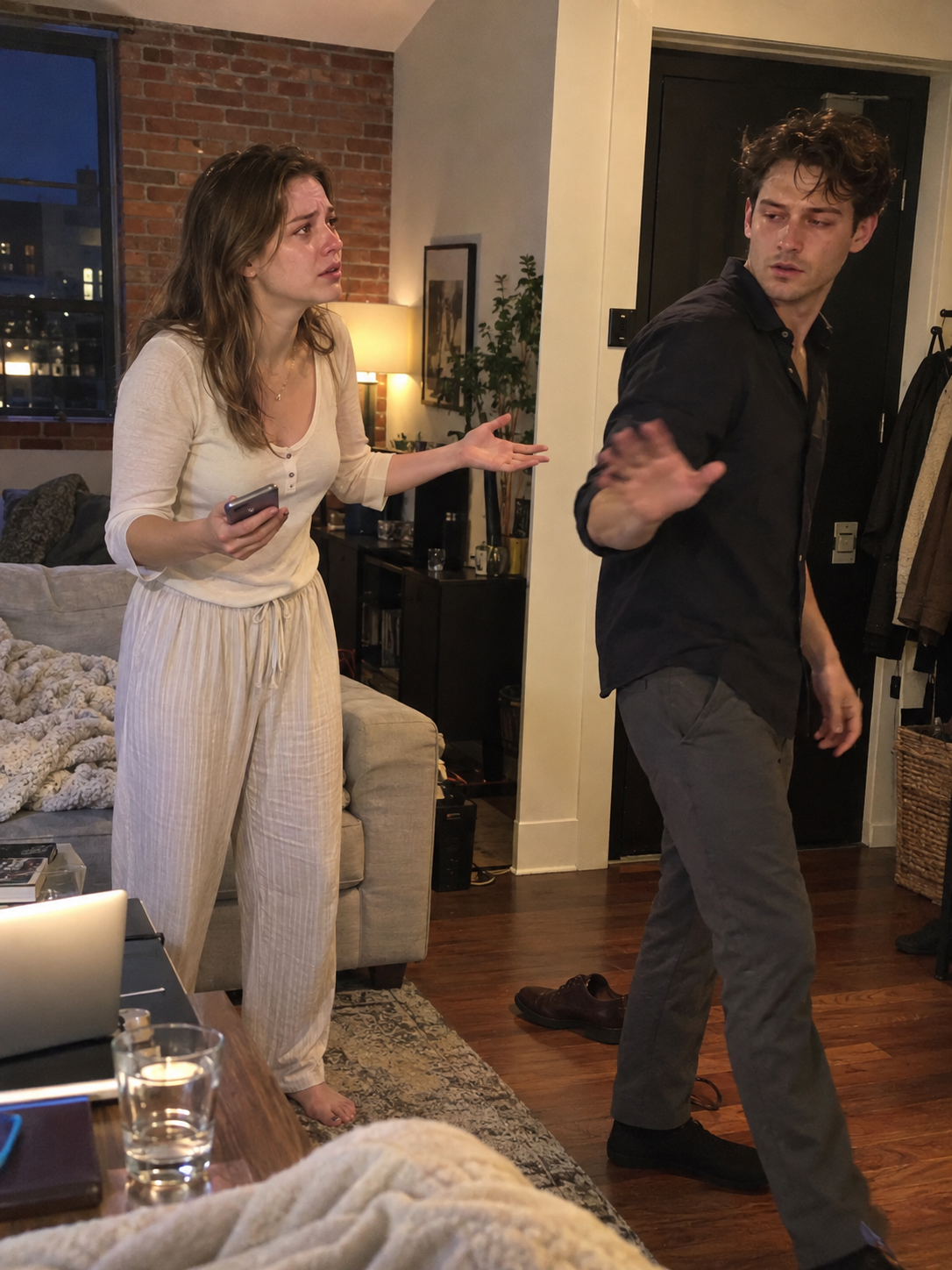
My boyfriend came home at 4:47 a.m. smelling like alcohol, smoke, and perfume that wasn’t mine,
My boyfriend came home at a.m. smelling like alcohol, smoke, and perfume that wasn’t mine, then told me, “Even if...

The CEO Threw a $599 Invoice at a Grease-Stained Single Father—Then Her $200 Million Jet Went Red Before the Cameras – Life Story
Charlotte Sterling crumpled Mason Carter’s $599 invoice and tossed it against his chest in front of investors, reporters, and the...

My husband beat me for six years, then carried me into the emergency room and told everyone
My husband beat me for six years, then carried me into the emergency room and told everyone I had fallen...