My Husband’s Parents Offered Me $50,000 to Leave Him—They Had No Idea I Was the Investor Keeping Their Company Alive – Life Story
The envelope stopped beside my plate with fifty thousand dollars inside it.
My husband sat next to me while his parents explained that a woman from “my background” could never help him become the man he was meant to be.
What none of them knew was that I already knew about his mistress—and that I owned the investment firm keeping his father’s company alive.
The chandelier above our table made everything look more expensive than it needed to.
Crystal stemware.
White linen.
Silver flatware heavy enough to feel ceremonial.
Even the envelope Robert Hutchinson had pushed toward me looked elegant beneath the warm light.
I kept my hands in my lap.
Across from me, Robert watched with the confidence of a man who had negotiated hundreds of deals and assumed this would be one of the easy ones.
His wife, Patricia, wore burgundy silk and a diamond necklace that caught the light every time she moved.
My husband, Brandon, sat beside me in a navy suit.
He had not looked at me in almost five minutes.
That told me more than the envelope did.
“Simone,” Robert said, “we’re not trying to be cruel.”
I looked at the envelope.
“No?”
Patricia gave me the soft smile she used whenever she wanted condescension to resemble kindness.
“We’re trying to be practical.”
I had heard that word many times in business.
Practical usually meant someone had already decided who was expected to lose.
I looked at Brandon.
He stared into his wine.
Three years earlier, he had promised me he did not care about status.
Two years earlier, he had told me his parents would eventually understand why he had chosen me.
Six months earlier, he had begun sleeping with a woman from his office named Tanya Peterson.
And now he was sitting beside me while his father tried to buy me out of my own marriage.
I turned back to Robert.
“What exactly are we being practical about?”
His mouth tightened slightly.
He had expected me to understand without forcing him to say the ugly part aloud.
Good.
I wanted him to say it.
“Brandon’s future,” he said.
Patricia leaned forward.
“He has tremendous potential at Hutchinson Global.”
“I know.”
“He could be running the company one day.”
“I know that too.”
“And that kind of position comes with expectations.”
I glanced at Brandon again.
Still nothing.
Patricia continued.
“Clients.
Boards.
Social obligations.
Fundraisers.
People notice who stands beside a man in those circles.”
“People notice wives?”
“They notice everything.”
“And I’m the wrong thing to notice?”
“Simone.”
Her voice softened.
That made it worse.
“You’re a lovely young woman.”
There it was.
The verbal cushion people put under an insult so they can pretend the landing was gentle.
“But?”
“You come from a very different world.”
I looked down at the green dress I had chosen specifically for dinner.
Forty-nine dollars from a department store.
Simple flats.
No visible designer label.
The only expensive thing I wore was the small gold watch my mother left me, and Patricia had never known enough about vintage watches to recognize it.
“What world is that?” I asked.
Robert sighed.
“Your mother raised you alone.”
“Yes.”
“You attended a state university.”
“Yes.”
“You work for a nonprofit.”
“Yes.”
“You and Brandon live very modestly.”
“Yes.”
He seemed almost frustrated that I kept agreeing.
Patricia stepped in.
“No one is saying there is shame in any of that.”
Robert was absolutely saying there was shame in all of that.
“But Brandon is entering a phase where relationships matter,” she continued. “Connections matter.”
“So this is about connections.”
“Among other things.”
“And you think I don’t have any.”
Patricia looked almost embarrassed for me.
“No, dear.”
For a moment, I heard my mother’s voice.
People tell you exactly who they are when they believe you have nothing they want.
Teresa Robinson had repeated some version of that throughout my childhood.
She had been raised poor enough to know what hunger did to pride and smart enough to ensure I never confused wealth with character.
She taught me compound interest before I understood algebra.
She taught me to read a balance sheet before I learned to drive.
And one night when I was fourteen, after watching a wealthy client suddenly become very friendly when he learned she had started investing successfully on her own, she told me something I never forgot.
Money is freedom, baby.
But if people know you have it, sometimes they start loving the freedom instead of you.
I had listened.
Maybe too well.
“How much is in the envelope?” I asked.
Patricia relaxed.
Robert did too.
They thought we had finally reached the price.
“Fifty thousand dollars,” Robert said.
I nodded slowly.
Enough to change many lives.
Enough for a down payment on a modest home in some cities.
Enough to clear debt.
Enough to start a business.
Enough to feel generous if you had never been the person receiving it as payment for your own humiliation.
“And what do I do for the fifty thousand?”
Robert opened his briefcase.
Brandon finally moved.
Barely.
His knee shifted beneath the table.
Robert removed a set of documents and placed them beside the envelope.
“An agreement.”
I did not touch it.
“What kind?”
“A settlement framework.”
“For my marriage.”
“For a clean separation.”
Patricia reached for my hand.
I moved it before she could touch me.
Her fingers stopped against the tablecloth.
“A clean break would be best for everyone,” she said.
“Everyone?”
“You included.”
“Of course.”
I almost smiled.
“How considerate.”
Brandon finally whispered, “Simone.”
I turned toward him.
His face looked tired.
Not guilty enough.
Just tired.
Maybe lying had exhausted him.
“Were you part of this?” I asked.
He rubbed one thumb against the stem of his wineglass.
“My parents asked me to hear them out.”
“That wasn’t my question.”
“Simone.”
“Did you know they were bringing fifty thousand dollars and divorce papers?”
His silence answered.
Still, I waited.
Finally he said, “Yes.”
The restaurant continued around us.
A waiter poured wine at another table.
Someone laughed near the bar.
A couple beside the windows leaned together over dessert.
Normal sounds.
Normal people.
I had wondered for months what it would feel like when my marriage officially ended.
Apparently, it felt like noticing how quietly other people ate dinner.
I looked at the man I had married.
“Is this what you want?”
Brandon stared at me.
“I think we need to admit we rushed into things.”
“Three years ago.”
“We were different.”
“You mean I was different?”
“We both were.”
“No.
I’m asking about me.”
His jaw tightened.
“Maybe my parents are right about some things.”
Patricia straightened.
Robert looked relieved.
Brandon continued, each sentence making the next easier.
“I’m moving up at the company.
There are more events now.
More important people.”
I nodded.
“And?”
“You don’t enjoy that world.”
“I was rarely invited into it.”
“You always look uncomfortable.”
“Because your mother introduces me by explaining that I work at ‘a little nonprofit.’”
Patricia frowned.
“I’ve never said little.”
She had.
Repeatedly.
Brandon pressed on.
“You don’t care about clothes or image.
You don’t really network.
You don’t want the country club membership.
You don’t want to host.”
“And you do.”
“Yes.”
At least that part was honest.
“For three years you told me you hated that stuff.”
“I thought I did.”
I sat back.
“Until you didn’t.”
He looked away.
I knew exactly when he stopped hating it.
Around the time Tanya Peterson started working in his department.
She was twenty-nine.
Her father was a respected judge.
Her mother chaired charity committees whose guest lists ended up in society pages.
Tanya wore custom suits, drove a silver Mercedes, and moved through Brandon’s parents’ world as if she had been trained for it from birth.
Perhaps she had.
The private investigator I hired had photographed her walking into the Grandview Hotel with my husband on six separate Thursdays.
On the seventh, I went myself.
I sat in my Honda across the street and watched Brandon leave twenty-three minutes after she did.
He checked his hair in his phone reflection before getting into his car.
That tiny gesture hurt more than the hotel.
It showed how ordinary the betrayal had become.
I looked at him now.
“Someone from my own level,” I said.
Brandon’s eyes flickered.
“What?”
“That’s what this is, right?”
He did not answer.
Robert leaned forward.
“Nobody needs to turn this into an attack.”
I looked at him.
“You brought cash.”
“As a courtesy.”
“You brought legal papers.”
“As protection for everyone.”
“You invited me to dinner to tell me I am socially unsuitable for your son while he sits beside me.”
Robert’s patience thinned.
“This emotional framing is exactly what makes difficult decisions harder than they need to be.”
I almost laughed.
There he was.
The Robert I knew from another life.
Not this restaurant version.
The version I had heard on calls with Hutchinson Global Technologies.
Impatient with resistance.
Suspicious of anyone who questioned him.
Convincing himself disagreement was irrational if the facts threatened his pride.
He still had no idea those calls had included me.
Not directly.
Not under my own name.
But me.
Three years earlier, when Hutchinson Global was three months from violating one of its major debt covenants, my investment company, Apex Holdings, had stepped in.
Ten million dollars.
Preferred equity.
Protective voting rights.
A board observer seat that later became a voting seat after a restructuring milestone.
Robert had negotiated mostly with my attorney and Apex’s managing representative.
He knew the strategic recommendations came from the beneficial investor behind the fund.
He did not know the beneficial investor was his daughter-in-law.
He simply referred to that investor as “Harper” because my legal structure used my mother’s middle name in the internal documentation.
He hated Harper.
He trusted Harper.
Depending on which quarter we were discussing.
I had spent three years preventing Robert from making several catastrophically expensive decisions.
And now he was offering me fifty thousand dollars because he believed I was too poor to belong in his family.
I let the irony sit privately.
I was not ready to use it yet.
Instead I asked Brandon one last time.
“Do you want me to take the money?”
He stared at me.
“Maybe it would help.”
That was the moment the marriage ended.
Not when I saw the hotel photographs.
Not when Frank Morrison, the investigator, showed me credit-card receipts for restaurants Brandon claimed he had never visited.
Not when I found Tanya’s name hidden under a fake contact in his phone.
Those things killed trust.
This killed love.
Because betrayal sometimes contains weakness.
Fear.
Cowardice.
Confusion.
Sitting beside your wife while your parents assign a cash value to her disappearance is a choice made with full lighting.
I nodded.
“All right.”
Patricia exhaled.
Robert pushed the envelope closer.
Brandon looked almost relieved.
I picked it up.
It was heavier than it looked.
Five bundles.
Probably hundreds.
I opened it.
The first stack sat perfectly aligned.
Fifty thousand dollars.
Their contempt had been organized by a bank teller.
I closed the envelope.
Then I placed it back in front of Robert.
“I don’t need it.”
His expression changed slightly.
Patricia smiled like I had misunderstood.
“You shouldn’t answer emotionally.”
“I’m not.”
“Fifty thousand dollars is enough to give you security.”
“I have security.”
Robert glanced at my dress.
The look was subtle.
I caught it anyway.
“Simone,” he said, “there’s no need for pride.”
“No.”
I reached into my purse.
“There really isn’t.”
I unlocked my phone.
Not the investment account.
Not Apex.
I had promised myself not to reveal that yet.
Just one personal account.
Cash reserves.
A little over $2.3 million.
I opened the balance screen and slid the phone across the table.
Robert looked.
Then again.
Patricia leaned closer.
Brandon picked up the phone.
His face went completely still.
“What is this?”
“My checking and short-term cash account.”
He stared.
“Two million dollars?”
“More than two.”
“Whose?”
“Mine.”
Robert’s eyes moved from the phone to me.
“That is impossible.”
“Why?”
“You work for a nonprofit.”
“I founded the nonprofit.”
Patricia blinked.
“What?”
“The Robinson Community Fund.”
I watched recognition arrive.
It was not famous, but it had funded local entrepreneurs and small-business programs for several years.
“That’s yours?” Brandon asked.
“Yes.”
“You told me you worked there.”
“I do.”
“You never told me you owned it.”
“It’s a nonprofit.
Nobody owns it in the way you mean.
I founded it and chair its investment committee.”
His face reddened.
“How much money do you actually have?”
There it was.
Not Why didn’t you tell me?
Not How did I not know this about my wife?
How much.
My mother would have recognized the question immediately.
“Enough.”
“Enough for what?”
“For your parents’ fifty thousand dollars to remain exactly where it is.”
Robert recovered faster than the others.
He had survived boardrooms too long not to.
“What is the source of the funds?”
I looked at him.
“Excuse me?”
“Investment income?”
“Yes.”
“Inheritance?”
“Partly.”
“Your husband had a right to know your financial position.”
Brandon grabbed that lifeline.
“Exactly.”
I looked at my husband.
“You want to discuss things spouses have a right to know?”
He stopped.
Patricia frowned.
“What does that mean?”
I opened my purse again.
Brandon’s face changed.
Now he knew.
The man who had been silent while his parents insulted my background suddenly found urgency.
“Simone.”
I removed a thin folder.
Not everything Frank had given me.
Just four photographs and a single page showing dates.
I placed the first photo beside Robert’s envelope.
Brandon and Tanya walking into the Grandview Hotel.
His hand against the small of her back.
Patricia stared.
“What is that?”
I placed the second photograph down.
Restaurant parking lot.
Brandon kissing Tanya beside her Mercedes.
Third.
The hotel again.
Fourth.
A downtown parking garage.
Robert’s expression hardened.
Not toward me.
Toward his son.
“Brandon.”
“It’s not—”
I laughed once.
He stopped.
“Please,” I said. “Don’t insult all of us.”
Patricia lifted one picture.
“Who is she?”
“Tanya Peterson.”
Her eyes widened.
“Judge Peterson’s daughter?”
“The same.”
Something passed between Patricia and Robert.
Quick.
Almost invisible.
But I saw it.
Recognition.
Calculation.
And, to my disgust, relief.
Of course.
Even the mistress met their standards.
Brandon stood.
“You had me followed?”
“Yes.”
“That’s insane.”
“No.
Expensive, but very sane.”
“You invaded my privacy.”
“You told me you were working Thursday afternoons.”
“I was working.”
“At the Grandview?”
“Sometimes we had meetings.”
“In room 412?”
His face drained.
Robert snapped, “Sit down.”
Brandon looked at him.
“Dad—”
“Sit.”
For once, Brandon obeyed immediately.
Patricia looked at me.
“How long have you known?”
“Four months.”
“Four months?”
“Yes.”
“And you said nothing?”
“I wanted documentation.”
“That is incredibly cold.”
I looked at her.
“You arrived tonight with fifty thousand dollars to purchase the end of my marriage.”
She looked away.
Robert tapped one photograph.
“Is this authentic?”
“Yes.”
“To what standard?”
“My attorney has the full investigator report, original files, timestamps, and corroborating records.”
“You already have an attorney?”
“Yes.”
Brandon’s eyes fixed on me.
“You were planning to leave.”
“I was preparing to leave.”
“That’s the same thing.”
“No.
I was waiting to see whether there was anything left worth staying for.”
His voice lowered.
“And tonight was a test.”
I considered denying it.
Then decided truth was cleaner.
“Yes.”
“You set us up.”
“No.”
I looked at the envelope.
“Your father brought that.”
Then the photographs.
“You created those.”
Then at Patricia.
“She said what she believed.”
I folded my hands.
“I just stopped interrupting.”
Nobody spoke.
The waiter approached, saw our faces, and silently turned away.
For a few seconds, I almost felt sorry for Brandon.
Not enough to change anything.
But enough to remember why I married him.
He had once been funny.
Thoughtful.
He would drive across town for the coffee I liked.
During our first year of marriage, he sat with me on my mother’s birthday while I cried over old photographs.
He had not been pretending every minute.
That would have been easier.
People prefer betrayal stories where the villain was always secretly terrible.
Real life is crueler.
Sometimes people become the kind of person who betrays you one compromise at a time.
Brandon had spent years wanting his parents’ approval while insisting he did not.
Then promotions came.
Invitations.
Comparisons.
Tanya.
Eventually he became somebody who believed status was evidence of worth.
Maybe that person had always existed.
Maybe marriage simply gave him enough time to reveal it.
I stood.
“I’ll have the divorce petition filed Monday.”
Brandon looked up.
“Simone.”
“Direct everything through counsel.”
“We can talk about this.”
“We have.”
“This isn’t fair.”
I stared at him.
He seemed to hear himself.
His mouth closed.
I looked at Robert.
“Keep the fifty thousand.”
His expression remained tight.
“You should be careful about making emotional decisions that affect more than your marriage.”
There was a warning in the sentence.
Maybe he thought my nonprofit depended on donors his circle controlled.
Maybe he imagined he could make my professional life difficult.
He still believed the balance of power belonged entirely to him.
I almost told him.
Not yet.
Instead I smiled.
“Robert, you should check your calendar for next Friday.”
His eyes narrowed.
“Why?”
“Hutchinson Global has a special board meeting.”
He went still.
“How would you know that?”
Brandon stared at me.
Patricia did too.
I picked up my purse.
“Good night.”
“Simone.”
Robert’s voice followed me.
I stopped.
He stood.
“What do you know about the board meeting?”
I looked at him.
“Enough to suggest you prepare.”
Then I walked away.
Outside, the air was colder than I expected.
The valet brought my Honda Civic.
A black Mercedes waited behind it.
The young attendant looked vaguely apologetic when he handed me the keys, as though my car had somehow failed the restaurant.
I tipped him fifty dollars.
Then drove home.
I cried at the third traffic light.
Not at dinner.
Not while Brandon watched.
Not while Robert calculated.
Not while Patricia tried to decide whether Tanya Peterson was acceptable enough to excuse adultery.
Alone in my car.
Quietly.
Because no amount of financial planning protects you from grieving the man you thought you married.
By the time I reached the house, I had stopped.
The house was technically mine.
Purchased with traceable premarital investment funds before our wedding funds ever mixed.
Brandon believed we rented from a family trust because I had allowed him to believe that.
It sounded absurd now.
So many protective layers.
So much effort spent preventing a future partner from knowing my money before he knew me.
I had wanted love without wealth in the room.
Instead I created a marriage where a piece of myself remained locked outside the door.
That was my part in the failure.
Not Brandon’s affair.
That belonged entirely to him.
But secrecy had a price even when the secret was legal, harmless, and designed for protection.
I had never given Brandon the chance to know the whole woman.
The ugly irony was that the partial woman had still been enough for him to betray.
I entered my home office.
Behind a row of financial textbooks sat the safe.
Inside were the documents of my actual life.
Investment statements.
Property deeds.
Apex Holdings operating agreement.
My mother’s final letter.
I removed that letter last.
The paper had softened at the folds.
I knew most of it by memory.
Make the money work for you.
Never for the people trying to own you.
And when you love someone, make sure he loves you before he understands what your money can do for him.
For years, I treated that last line like law.
Sitting alone that night, I wondered if I had misunderstood her.
She had said before.
Not forever.
My phone rang.
Candace Moore.
My financial adviser, closest business confidante, and one of only three people who knew the entire structure behind Apex.
“How bad?” she asked.
“Fifty thousand.”
She went silent.
Then:
“They offered you fifty thousand dollars to leave their son?”
“Yes.”
“I am offended on multiple professional levels.”
Despite everything, I laughed.
“That is an embarrassingly low hostile acquisition bid.”
“Candace.”
“I’m serious.”
“He knew.”
“Brandon?”
“Yes.”
The humor disappeared.
“I’m sorry.”
“Me too.”
“What did you reveal?”
“Personal cash account.
Robinson Fund.”
“Not Apex?”
“No.”
“Good.”
“They know about Tanya.”
“Also good.”
“Not emotionally good.”
“You know what I mean.”
I did.
“Friday still on?” she asked.
“Yes.”
“Do you want to postpone?”
“No.”
“Because you’re angry?”
I looked at my mother’s letter.
“Partly.”
“That is not the right reason to restructure a company.”
“I know.”
“Then tell me the business reason.”
“Hutchinson Global succeeds when Robert has oversight and struggles when he doesn’t.
The board has three years of data showing it.”
“Better.”
“He tried to push Hampton Healthcare despite insolvency warnings.”
“Yes.”
“He tried to expand into four European markets simultaneously without compliance infrastructure.”
“Yes.”
“He overrode procurement recommendations twice last year.”
“Yes.”
“And his family’s behavior tonight confirms what I already suspected about his leadership.”
Candace stopped me.
“No.”
I frowned.
“No?”
“That last one stays out of the boardroom.”
I knew she was right.
“You cannot use his behavior as a father-in-law as evidence he is a bad CEO.”
“I know.”
“Do you?”
“Yes.”
“Friday is business.”
“Friday is business.”
“The divorce is divorce.”
“Yes.”
“And if the numbers don’t support changing his authority?”
“They do.”
“Then we use numbers.”
I leaned back.
“That is why I pay you.”
“You pay me because I am charming.”
“Debatable.”
“Get some sleep.”
“I have packing to do.”
“Tonight?”
“Yes.”
“Simone.”
“I need him out.”
“Call Jerome first.”
She was right again.
I called my attorney.
Jerome Patterson had represented my mother before me.
He was fifty-eight, patient, and almost impossible to shock.
Even he paused when I told him about dinner.
“They brought cash?”
“Yes.”
“And a proposed divorce agreement?”
“Yes.”
“Did you take either?”
“No.”
“Good.”
“I photographed the envelope.”
“Also good.”
“I revealed some personal assets.”
“That doesn’t matter.”
“Brandon says I deceived him.”
Jerome sighed.
“He will say worse things before this is done.”
“I hid my wealth.”
“You kept premarital and separate financial information private.
Those are not identical statements.”
“What about the house?”
“We documented the purchase source years ago.”
“I know.”
“Then stop borrowing trouble from next month.”
I rubbed my forehead.
“Can I make him leave?”
“Do not physically remove him tonight.
Ask him to stay elsewhere voluntarily.
If he refuses, we handle possession properly.”
“I hate how boring law is.”
“You hired me because I make your dramatic impulses boring.”
“That is unfortunately true.”
“Simone.”
“Yes?”
“Do not let Friday’s board meeting become revenge.”
“Candace already lectured me.”
“Good woman.”
“Everyone loves Candace more than me.”
“Sleep.”
Brandon came home at 12:17.
I heard the front door.
Then silence downstairs.
He knew I was awake.
I knew he was awake.
Neither of us moved.
At one in the morning, he knocked on my office door.
“Can we talk?”
“No.”
“Please.”
I closed the laptop.
He stepped inside.
Tie gone.
Jacket over one arm.
He looked younger somehow.
That happens when confidence leaves people.
He glanced at the documents on my desk.
“How much of our life was fake?”
I looked at him.
“That’s a dangerous question from you.”
“I’m serious.”
“So am I.”
He entered fully.
“The nonprofit.
The money.
The house?”
I said nothing.
His eyes narrowed.
“The house too?”
“I purchased it before our wedding using separate funds.”
He stared around the office as though walls could betray him.
“You let me think we rented.”
“Yes.”
“Why?”
“Because I was afraid money would change the way you saw me.”
He laughed bitterly.
“Well, congratulations.”
I flinched.
He saw it.
For one second, regret appeared.
Then anger replaced it.
“You tested me our entire marriage.”
“No.”
“Yes.
The cheap clothes.
The apartment before this.
The nonprofit salary.”
“I live simply because I like living simply.”
“You’re rich.”
“That does not require me to perform wealth for you.”
“You could have told me.”
“Yes.”
“Why didn’t you?”
I thought about giving him the polished explanation.
Past boyfriends.
My mother.
Fear.
Then I decided he deserved the honest version.
“Because part of me never trusted you enough.”
His face changed.
“That’s convenient now.”
“It isn’t convenient at all.”
“So I failed a test I didn’t know I was taking.”
“No, Brandon.”
I stood.
“You cheated because you wanted to cheat.
Your parents offered me money because they believed I was beneath them.
You sat there because you agreed.”
“That’s not—”
“Those were not hidden tests.”
He said nothing.
I continued.
“The money affected what I told you about myself.
It did not create Tanya.”
He looked down.
After a moment he whispered, “She’s over.”
“What?”
“Tanya.
I ended it tonight.”
I almost felt insulted.
“As a gesture?”
“I made a mistake.”
“For six months.”
“I know.”
“No.
I don’t think you do.”
He sat on the edge of the chair.
“I loved you.”
Past tense.
He heard it too.
His eyes closed.
“I love you.”
“Then why were you embarrassed by me?”
“I wasn’t.”
“Brandon.”
He rubbed both hands over his face.
“I started caring about things I didn’t care about before.”
“Status.”
“Yes.”
“Your parents’ approval.”
“Yes.”
“Tanya fit.”
He looked at me.
“She made things easy.”
The sentence hurt precisely because it was honest.
“And I made things hard?”
“You didn’t understand that world.”
I almost laughed.
I understood it better than he did.
Different side of the table.
Same world.
“You never asked if I understood.”
“You acted like you hated it.”
“I hated being treated like decoration.”
He had no answer.
After a while he said, “How rich are you?”
That ended whatever tenderness remained.
I walked to the door and opened it.
“Stay with your parents tonight.”
“Simone.”
“Please.”
He stood.
He looked like he might argue.
Then he saw my face.
“All right.”
At the door he stopped.
“Is the board meeting connected to you?”
I held his gaze.
“Yes.”
“How?”
“You’ll know Friday.”
Fear appeared then.
Not about our marriage.
About the company.
Again, my mother had been right.
Over the next four days, I forced myself to separate the two wars.
The divorce moved through Jerome.
The business meeting moved through Candace.
No overlap.
No threats sent through lawyers.
No demand that Robert surrender control because of what happened at dinner.
If I could not justify every board proposal without mentioning Brandon, Patricia, Tanya, or fifty thousand dollars, it did not belong in the meeting.
That rule saved me from myself more than once.
Apex Holdings owned enough preferred equity to matter, but not enough to dictate.
That had been intentional.
I wanted influence tied to performance, not unilateral control.
My investment agreement provided enhanced voting rights on major capital decisions and a board seat so long as Apex maintained its ownership threshold.
For three years, that seat had been held publicly by Apex’s managing representative, Adrian Harper—my late mother’s attorney and former colleague—while I remained the beneficial owner and investment strategist behind the fund.
Adrian was retiring.
Friday’s meeting would formally transfer the board seat to me.
That made the reveal both lawful and much less theatrical than the fantasy version running through my angry brain.
No voice changer.
No hidden screens.
No spy-movie tricks.
Just a private holding company, lawyers, confidentiality agreements, and a family that had never bothered asking where my financial knowledge came from because they had already decided I had none.
On Thursday night, Candace came to my temporary apartment downtown.
Boxes were still stacked along one wall.
She opened a garment bag.
“Please tell me you are not wearing the green dress.”
“I considered it.”
“No.”
“It would make a point.”
“It would make you look like you planned a costume reveal.”
“Which I did.”
“Simone.”
I smiled.
She held up a deep maroon suit.
“Wear the woman you actually are.”
That silenced me.
Not the richest version.
Not the poorest.
The actual woman.
I wore the maroon suit.
My mother’s gold watch.
Small diamond earrings.
Nothing selected to humiliate anyone.
At Friday morning, I entered Hutchinson Global Technologies through the front lobby.
I had visited the building twice before as Brandon’s wife.
Both times I waited downstairs.
Patricia once joked that “the business side would bore me.”
Now Candace walked beside me carrying the presentation.
Jerome waited upstairs.
Not as a threat.
As counsel for Apex’s transition of board representation.
The receptionist recognized me.
“Mrs.
Hutchinson?”
“Robinson is fine.”
She looked confused.
“We have a board meeting.”
Her eyes widened.
I smiled politely.
The elevator doors closed.
My heart began pounding on the seventh floor.
By ten, my palms were damp.
At eleven, I almost told Candace I needed another minute.
She looked at me.
“You have spent three years making these recommendations.”
“Not in person.”
“So?”
“It’s different when people can see your face.”
“Yes.”
“That was supposed to comfort me?”
“No.”
The doors opened.
“Walk.”
I did.
The conference room occupied the corner of the tenth floor.
Seven board members.
Robert.
Philip Sanders, CFO.
Adrian Harper, who had flown in specifically for the transition.
He was seventy-one and looked delighted by the entire situation in a way only retired lawyers could.
Robert saw me before he saw Candace.
His chair moved backward.
“What is she doing here?”
Thomas Morrison, the oldest board member, frowned.
“Robert.”
“This is a closed meeting.”
“I’m aware.”
I placed my portfolio on the table.
Robert looked toward Adrian.
“Is this some legal issue?”
Adrian smiled.
“In a way.”
Then he stood.
“For three years, I have served as the board representative for Apex Holdings.”
Everyone knew that.
“I have also been careful to explain that I am not the beneficial owner of Apex.”
Robert’s eyes moved slowly toward me.
Adrian continued.
“The owner has elected to assume direct representation effective today.”
Silence.
I pulled out the chair beside Adrian.
“My name is Simone Robinson.”
Jennifer Walsh, a board member I respected enormously, looked from me to Robert.
Then smiled slightly.
Robert did not.
“No.”
Adrian raised an eyebrow.
“No?”
“This is some sort of joke.”
Jerome slid the formal notice across the table.
Robert picked it up.
Beneficial ownership certification.
Transfer of board representation.
My name.
His face went white.
“You?”
“Yes.”
“Apex is yours?”
“Yes.”
“You invested ten million dollars?”
“Yes.”
“You’re Harper?”
“No.
Adrian is Harper.
I am the person whose capital he represented and whose analyses informed Apex’s votes.”
Adrian added, “Very effectively, I might say.”
Robert ignored him.
His eyes locked on me.
“This meeting is retaliation.”
I expected the accusation.
Candace and I had rehearsed my answer.
Still, hearing it aloud made my pulse jump.
“No.”
“You’re divorcing my son.”
“Yes.”
“Four nights ago we had a private family disagreement.”
“You offered me money to leave him.”
Several board members shifted.
I regretted saying it immediately.
Too personal.
I corrected course.
“That has nothing to do with today’s agenda.”
Robert laughed.
“Nothing?”
“No.”
“You expect anyone here to believe that?”
Michael Torres, a venture investor on the board, spoke before I could.
“I think that is a fair question.”
I looked at him.
“It is.”
He seemed surprised.
I continued.
“If the proposals I present cannot be supported entirely by company records and three years of board data, vote against them.”
That changed the energy slightly.
No emotional defense.
A testable standard.
I nodded to Candace.
The first slide appeared.
Three years.
Revenue.
Margins.
Debt.
Client concentration.
Contract performance.
No references to marriage.
No references to dinner.
Just Hutchinson Global.
Three years earlier, the company had been deteriorating.
Strong products.
Weak financial controls.
Too many low-margin custom contracts.
No disciplined capital allocation.
Robert had built the company as an engineer.
He understood product better than anyone in the room.
He did not understand risk with the same discipline.
That did not make him stupid.
It made unchecked control dangerous.
I showed every major strategic recommendation Apex made.
Not only the successful ones.
All of them.
Two of mine had underperformed.
I included them.
Michael noticed.
“You’re showing your misses.”
“Yes.”
“Why?”
“Because cherry-picking would prove Robert’s argument.”
He nodded.
We continued.
Hampton Healthcare.
Robert wanted the contract.
Apex warned the client’s balance sheet showed severe distress.
The board declined.
Hampton filed for bankruptcy five months later.
European expansion.
Robert wanted four offices opened simultaneously.
Apex recommended one pilot market.
The German launch revealed compliance costs thirty-seven percent above forecast.
The company corrected before expanding.
Procurement modernization.
Apex recommendation.
Successful.
Subscription pricing redesign.
Collaborative.
Successful.
Acquisition target proposed by Apex.
Underperformed.
We recorded the loss.
Robert leaned forward.
“You’re implying every good decision was yours.”
“No.”
I advanced the slide.
Blue markers filled the timeline.
“These are collaborative decisions.”
Nearly half.
“The company works best when technical expertise and financial oversight challenge each other.”
I looked directly at Robert.
“That is the point.”
His jaw tightened.
“What exactly are you proposing?”
The slide changed.
Governance.
Not removal.
Not takeover.
Major capital commitments above an agreed threshold required investment committee approval.
Material acquisitions required independent financial review.
Quarterly performance metrics would be established before projects launched, not afterward.
CEO retained operational authority.
Board gained clearer oversight.
Robert read silently.
Then looked at me.
“You want to put me on a leash.”
“I want a company worth owning five years from now.”
“I built this company.”
“Yes.”
“You arrived when we had one bad year.”
“Three.”
His eyes flashed.
I softened my tone.
“Robert, you are one of the best technical founders I’ve ever invested behind.”
That surprised him.
It was also true.
“You see products before other people understand markets exist for them.”
No one moved.
“But being brilliant at one thing does not make oversight an insult.”
He leaned back.
“You think I’m incompetent.”
“No.”
“I think you confuse control with competence when people challenge you.”
The room tightened.
Maybe too direct.
But true.
Michael asked, “What happens if Robert rejects the structure?”
I answered carefully.
“Then the board decides whether the current governance model serves shareholders.”
Robert stared.
“You’d remove me.”
“If the board concludes you refuse reasonable oversight.”
“So yes.”
“I would vote for leadership change if necessary.”
He laughed bitterly.
“Because my son cheated on you.”
“No.”
My voice sharpened before I could stop it.
“Your son’s affair cost me a marriage.
Your governance decisions cost shareholders money.
I am capable of knowing the difference.”
Silence.
That sentence mattered more than any slide.
Not to Robert.
To me.
I believed it when I said it.
Thomas Morrison spoke.
“I’ve been here since Robert had twelve employees.”
Robert looked at him.
Thomas continued.
“You built this company.”
Then he looked at me.
“And she helped save it.”
Robert’s face changed.
Not dramatically.
Just enough.
Thomas continued.
“We have needed formal governance for years.”
Jennifer agreed.
Michael asked for two modifications.
We negotiated.
Actually negotiated.
Not humiliation.
Not revenge.
Thresholds changed.
One committee structure was revised.
I accepted an independent chair for the investment committee rather than controlling it through Apex.
That mattered.
Power shared voluntarily was different from power seized.
After ninety minutes, Thomas called the vote.
Five in favor.
One opposed.
Michael abstained.
Governance reform passed.
Robert remained CEO.
For the moment.
He stared at the table after the vote.
Nobody celebrated.
Good.
This was not a victory party.
It was a company trying to become less dependent on one man’s ego.
Robert stood.
He looked at me.
“May I speak with you privately?”
I hesitated.
Then nodded.
We went into a smaller conference room.
He shut the door.
For a while, he just looked at me.
“You married my son while owning part of my company.”
“Yes.”
“You sat in my house.”
“Yes.”
“Ate dinner with us.”
“Yes.”
“Listened to me complain about Apex.”
“Yes.”
Something close to humiliation moved across his face.
“You must have enjoyed that.”
“Sometimes.”
His eyes hardened.
I continued before he could.
“Other times I wanted to tell you because you were wrong about me and I hated knowing it.”
“Why didn’t you?”
“Because once people know you have money, you never get to unknow why they suddenly respect you.”
He said nothing.
“My mother taught me to protect myself.”
“So you lied.”
“I withheld.”
“That is a lawyer’s distinction.”
“Probably.”
He crossed his arms.
“Did Brandon ever know?”
“No.”
“Not even after marriage?”
“No.”
“That was wrong.”
The statement surprised me because part of me agreed.
“Yes.”
He looked at me.
“Yes?”
“Yes.”
I took a breath.
“Hiding my wealth for three years was not healthy.
I thought secrecy would protect me from being used.”
“And instead?”
“It protected the money and damaged intimacy.”
He seemed unprepared for self-criticism.
I continued.
“But Brandon cheating is still Brandon cheating.
And what happened at dinner is still what happened.”
Robert looked away.
“Patricia thought she was helping.”
“Do you?”
He did not answer.
That was answer enough.
At the door he said, “Are you going to destroy what I built?”
“No.”
“Why should I believe you?”
“Because I spent ten million dollars trying to keep it alive.”
That stopped him.
“I don’t want your company, Robert.”
“Apex owns a significant part.”
“My investment owns part.”
“That is the same thing.”
“No.”
I opened the door.
“I don’t want your identity.
I want a return.”
For the first time, he almost smiled.
Not warmth.
Recognition.
Business language.
Something we both understood.
The divorce finalized faster than I expected.
Not painless.
Just clean.
Brandon initially threatened to claim deception because I had hidden assets.
Jerome responded with documentation tracing every major account to premarital inheritance, premarital earnings, or properly segregated investments.
Brandon’s attorney stopped making dramatic arguments.
The affair evidence did not hand me magical legal victory.
Real divorce law was less satisfying than movies.
But it did make private negotiation easier because Brandon did not want hotel photographs and expense records fought over publicly.
We agreed.
No claims against separate assets.
No public accusations.
Personal belongings divided.
The marriage ended.
The house remained mine based on traced separate funds and the legal structure Jerome had documented from the beginning.
I returned every dollar Brandon had contributed toward what he believed was rent after subtracting agreed household expenses.
I did not have to.
I wanted to.
That money had always bothered me once the truth came out.
I did not want a final account between us.
Brandon came to collect his remaining things on a Sunday.
He walked through the house slowly.
Most of my boxes were already gone.
I had moved downtown.
The green dinner dress hung alone in the closet.
He saw it.
“That dress.”
“Yes.”
“You wore it on purpose.”
“Yes.”
“To make my parents think you were poor.”
“They already thought I was poor.”
“You knew what they’d do.”
“I suspected.”
He sat on the edge of the bed.
“I keep trying to figure out when you stopped loving me.”
I leaned against the doorway.
“I don’t think it happened all at once.”
His eyes reddened.
“Tanya meant nothing.”
“Please stop saying that.”
“It’s true.”
“That makes it worse.”
He looked down.
“I know.”
For the first time, I believed he understood the sentence.
He rubbed his wedding band.
“I was jealous of everyone.”
I waited.
“My father.
Men at work.
Their houses.
Their wives.
Their lives.”
He laughed quietly.
“I spent years saying I didn’t care because I didn’t have any of it.”
“And then?”
“Then I got close enough to think maybe I could.”
His voice cracked.
“Tanya knew those people.
She knew how to talk to my mother.
She looked right at events.”
I hated how sad that was.
He continued.
“And you never seemed impressed by any of it.”
“I wasn’t.”
“I thought it meant you had no ambition.”
I almost smiled.
“Apparently I hid that part very well.”
He looked up.
“If I had known who you were…”
I held up one hand.
“Don’t finish that.”
He stopped.
“That is why we cannot fix this.”
Understanding crossed his face.
Slowly.
Because anything he said after if I had known would prove the problem.
He removed his ring.
Placed it on the dresser.
“I did love you.”
“I know.”
He looked surprised.
“You do?”
“Yes.”
I swallowed.
“That’s why this hurts.”
Love did not make what happened less real.
Betrayal did not make every earlier tender moment fake.
Both truths could exist.
That was harder than hate.
Brandon left with two suitcases.
The door closed quietly.
I sat on the floor after he was gone.
Not because I regretted ending it.
Because an ending can be necessary and still feel like somebody removed a room from your life.
For almost an hour, I let myself grieve.
Then I stood.
I took the green dress from the closet.
I almost threw it away.
Instead, I washed it.
Folded it.
Donated it to the Robinson Community Fund’s career closet, where women interviewing for new jobs could choose professional clothes without paying for them.
The dress had never been the problem.
The people judging it were.
Over the following months, the board reforms at Hutchinson Global worked.
Not perfectly.
Robert resisted oversight constantly.
But numbers became harder to ignore when the process required them before decisions were made.
He still argued.
So did I.
Sometimes he was right.
That was important.
One of the first proposals I opposed after the restructure turned out to be better than my model predicted.
Robert found me after the vote.
“You were wrong.”
I looked up.
“I was.”
He seemed disappointed I did not fight him.
“That’s it?”
“What do you want?”
“I don’t know.”
“A parade?”
He almost laughed.
Something between us shifted.
Not forgiveness.
Professional respect, perhaps.
Then, four months after the board meeting, Robert announced he wanted to retire within the year.
I did not force him.
The board did not remove him.
He simply looked tired.
His entire adult identity had been tied to control of the company.
The oversight structure made him confront whether he still wanted to lead if leadership required being questioned.
His answer, eventually, was no.
Thomas approached me about the CEO role.
I refused.
“You already run half our strategy.”
“As an investor.”
“You could run the company.”
“I don’t want it.”
He stared.
“After all this?”
“Especially after all this.”
I had spent too much of my life proving I could survive other people’s systems.
I wanted to build one of my own.
I recommended Jennifer Walsh.
She understood the technology.
Respected Robert’s contributions.
And had a healthy relationship with the sentence I don’t know.
The board appointed her unanimously.
Robert abstained.
The morning the announcement went public, Hutchinson Global shares rose four percent.
I did not celebrate the number.
Markets change their minds faster than people.
But employees seemed relieved.
That mattered more.
Meanwhile, Candace and I launched Robinson Capital Management.
Not because I needed another empire.
Because after years of investing privately, I finally wanted to do the work without hiding.
We rented an office on the twentieth floor of a downtown building.
Nothing enormous.
Eight offices.
A conference room.
Floor-to-ceiling windows.
The first week, only three desks were occupied.
Mine.
Candace’s.
An analyst named Rachel Kim, who had previously worked in technology finance and impressed Candace by disagreeing with her twice during the interview.
We focused on companies whose founders knew their limitations.
That became more important to me than charisma.
I had seen what unchecked charisma cost.
The press found the Hutchinson story eventually.
Not the envelope.
Not the intimate details.
Just the business story.
The beneficial owner of Apex Holdings had been revealed as Simone Robinson.
Daughter of financial adviser Teresa Robinson.
Founder of Robinson Community Fund.
Investor whose capital had helped stabilize Hutchinson Global.
The first article called me a “secret millionaire wife.”
I hated it.
Candace printed it and taped it above the coffee machine.
“I’m firing you.”
“You cannot.”
“I absolutely can.”
“You love me.”
“Questionable.”
The second article was better.
It focused on the investment.
The third asked whether anonymous ownership harmed governance transparency.
That criticism was fair.
I agreed to an interview.
The journalist asked why I remained hidden for so long.
“Privacy,” I said.
“Or fear?”
The question irritated me.
Which usually meant it deserved an answer.
“Both.”
“Fear of what?”
“Being valued differently once money enters a room.”
“And did secrecy solve that?”
“No.”
That answer became the quote they printed.
I hated seeing it.
It was still true.
My mother taught me to protect wealth.
She had not told me to hide my entire identity from somebody who had promised to share a life with me.
I had turned a lesson into armor.
Armor works.
It also makes intimacy difficult.
That was my own lesson to carry.
Six months after the dinner at Romano’s, Patricia asked to meet.
Through Jerome.
Not by text.
Not through Brandon.
I almost declined.
Then I agreed.
We met at a quiet café.
No crystal chandelier.
No cash envelope.
Patricia wore navy.
No dramatic jewelry.
She looked older.
Maybe I had simply stopped seeing her through anger.
“Thank you for coming,” she said.
“You said you wanted to apologize.”
“Yes.”
She folded her hands.
“I have rehearsed this several times.”
“Then don’t.”
She looked surprised.
“Say the version you haven’t rehearsed.”
Patricia stared at her tea.
Finally she said, “I was awful to you.”
Simple.
Clean.
No explanation.
I waited.
“I thought Brandon’s life needed to look a certain way.”
She looked up.
“I confused appearances with quality.”
“Yes.”
“I told myself I was protecting my son.”
“From what?”
She swallowed.
“From becoming ordinary.”
That was more honest than I expected.
“My family did not have money when I was young,” she continued. “Robert built the company.
When it became successful, I became obsessed with making sure Brandon never looked like we once did.”
She laughed bitterly.
“I spent my whole life trying to escape being judged for not having enough, and then I became the person doing the judging.”
I understood that better than I wanted to.
Different reactions to the same wound.
Patricia displayed wealth so nobody could dismiss her.
I hid wealth so nobody could use me.
Neither strategy had produced what we hoped.
“I’m sorry,” she said. “Not because you turned out to be rich.”
I watched her carefully.
“I’m sorry because it should not have mattered.”
That was the only apology that could have reached me.
I still did not forgive everything.
Not then.
Forgiveness is not a door somebody knocks on and receives access to because they found the right words.
But I believed her.
“That matters,” I said.
She nodded.
“I’m not asking for anything.”
“Good.”
A small smile appeared.
“I assumed you might say that.”
We finished our tea.
Then left separately.
No reconciliation.
No new family relationship.
Just a wound no longer being actively reopened.
A year after the Romano’s dinner, I visited my mother’s grave.
I brought white lilies.
The cemetery was quiet except for traffic beyond the trees.
I sat on the grass.
Robinson Capital managed a little over forty million dollars by then.
Not all mine.
Client capital.
Partner investments.
Fourteen companies.
Some thriving.
Two struggling.
One likely to fail.
Business still involved mistakes.
Success had not turned me into somebody who could predict everything.
I was grateful for that.
People become dangerous when they interpret a winning streak as proof of permanent wisdom.
I placed the lilies beside the stone.
“Your advice worked,” I said.
Then smiled.
“Sort of.”
Wind moved through the trees.
I touched the gold watch on my wrist.
“I made it too rigid.”
My mother, had she been alive, would probably have agreed before making coffee and telling me exactly where else I was wrong.
“I thought hiding would guarantee that someone loved me.”
I looked at her name carved in stone.
“It can’t.”
Nothing can.
Love is not made genuine by a test.
Character shows itself over time.
Sometimes painfully.
I sat there until afternoon light shifted.
Then I returned to the city.
Months later, at a technology conference, I met Dante Washington.
Not because fate owed me a better man.
Not because every divorced woman needs romance for the ending to feel complete.
He was simply presenting a company Robinson Capital was evaluating.
Nexus AI Solutions built automation tools for small businesses that could not afford large enterprise systems.
His presentation was clear.
No inflated market projections.
No ridiculous promise to “change humanity.”
He admitted three weaknesses before anyone asked.
That impressed me.
We invested two million dollars after three months of due diligence.
For half a year, our relationship remained entirely professional.
Then lunches became longer.
We discovered our mothers had both raised us alone.
We discovered we both hated networking events while being unusually good at them.
He knew exactly who I was financially before we had our first date.
That terrified me.
It also felt like breathing without armor.
When he asked me to dinner—not a client dinner, as he carefully clarified—I said yes.
Slowly.
No secret accounts presented as proof.
No tests.
No pretending.
I did not know where the relationship would go.
That was fine.
For once, I did not need to control the ending before allowing myself to begin.
One evening, long after Robinson Capital had moved into a larger office, Candace found something while cleaning an old document box from the divorce.
A photograph.
The envelope from Romano’s.
I had taken the picture before leaving.
White linen.
Crystal glass.
Robert’s hand near the edge of the frame.
Fifty thousand dollars sitting where dessert should have been.
Candace held it up.
“Keep?”
I stared.
A year earlier, the image would have made my chest tighten.
Now it looked almost small.
“Delete it.”
She did.
“That easy?”
“Yes.”
“What about evidence?”
“Jerome has what he needs archived.”
“And emotionally?”
I looked out the window.
Below us, people crossed the street between office buildings.
Tiny from the twentieth floor.
“I don’t need it anymore.”
Candace smiled.
“That sounded suspiciously healthy.”
“Don’t spread rumors.”
She left.
I stayed by the window.
On my desk sat my mother’s gold watch.
I had removed it because the clasp needed repair.
Beside it lay a quarterly report from Hutchinson Global.
Jennifer’s latest numbers were strong.
Robert had been retired for almost eight months.
Brandon no longer worked there.
He had taken a position with another company in another city.
I knew that only because corporate conflict disclosures required it.
We did not speak.
I hoped he became better.
That was different from wanting him back.
Patricia sent a Christmas card through my office once.
I read it.
Put it in a drawer.
No response.
Some relationships do not need hatred to remain finished.
Robinson Capital had its own problems now.
A healthcare investment had missed projections.
A founder I trusted had resigned unexpectedly.
One analyst wanted to leave for a competitor.
Real life had not become perfect because I finally revealed my money.
That was perhaps the greatest relief.
Wealth did not make me invulnerable.
It simply gave me choices.
Exactly as my mother said.
The choice to leave a marriage where respect had disappeared.
The choice to challenge a founder without needing his approval.
The choice to build a company according to my own values.
The choice to enter a relationship without reducing myself to an experiment.
The choice to wear a forty-dollar dress or a four-thousand-dollar suit without allowing either to tell me what I was worth.
I picked up my mother’s watch.
The broken clasp opened easily beneath my thumb.
For most of my marriage, I had treated privacy like a locked door.
The Hutchinsons had treated status like one.
Both kept people out.
Neither taught us who deserved to come in.
My phone buzzed.
A message from Dante.
Still coming to dinner, or did the market steal you again?
I smiled.
Leaving now.
I placed the watch carefully in its repair box.
Turned off the office lights.
Then caught my reflection in the dark window.
A year earlier, I would have described the woman looking back with numbers.
Net worth.
Ownership percentage.
Investment returns.
Those things mattered.
But they were not identity.
Robert had once believed fifty thousand dollars could tell him my price.
Brandon eventually believed millions explained what he had lost.
They were both wrong.
The most valuable thing I recovered after that dinner had never appeared on a balance sheet.
It was the right to stop auditioning for belonging.
I locked my office and walked toward the elevator wearing a dress I loved simply because I loved it.
No disguise.
No costume.
No test.
Just mine.
And for the first time in years, that was enough.
If the people closest to you only began respecting you after discovering your money and power, would you ever believe that respect was real?
Recommended Stories
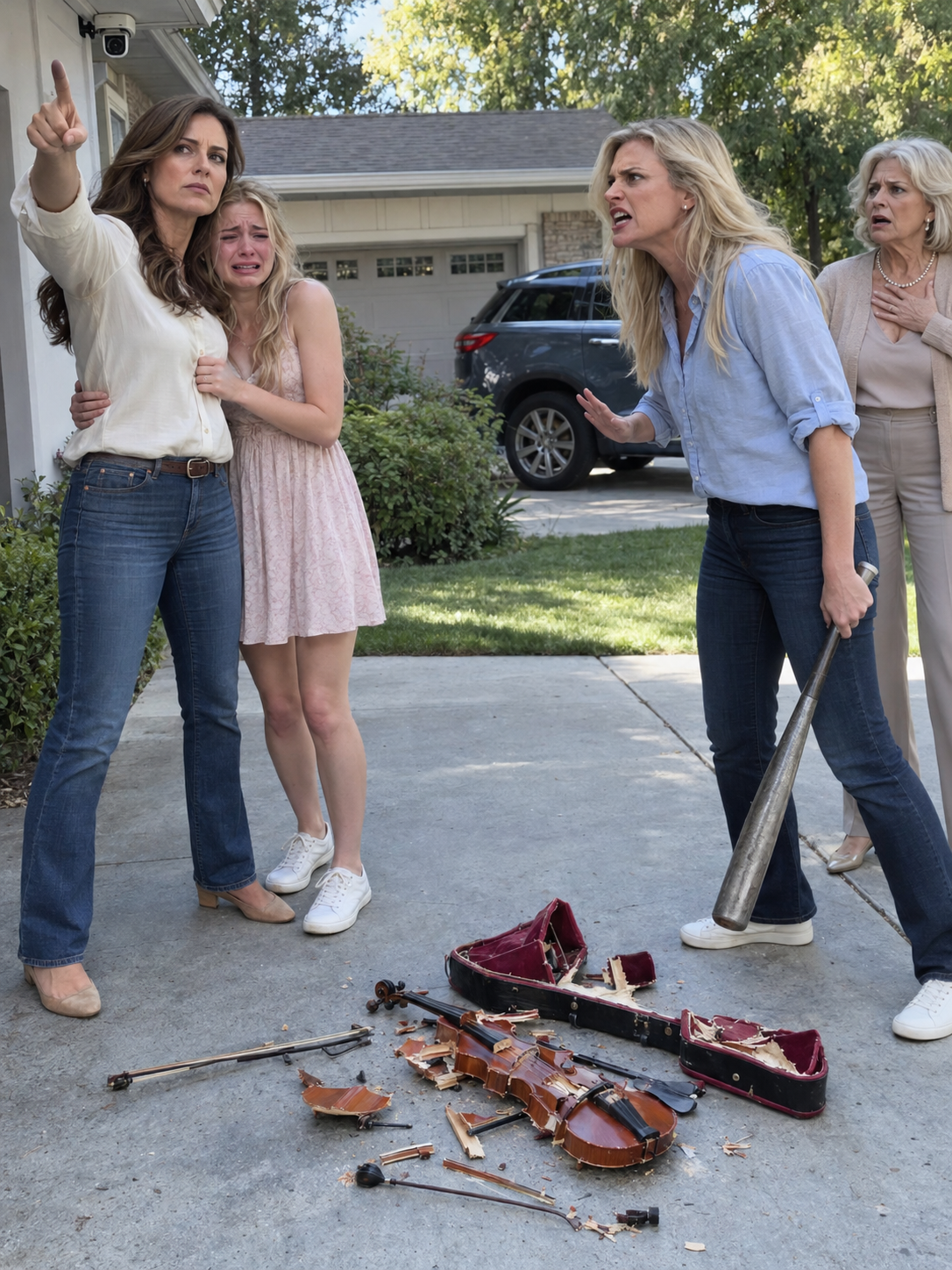
GGW. My younger sister grabbed the $5,000 custom violin I had bought for my six-year-old daughter and smashed it with a softball bat in our driveway while our mother watched.
FULL STORY CONTINUATION IF FACEBOOK BROUGHT YOU HERE, HERE’S THE CONTINUATION YOU’VE BEEN WAITING FOR. ENJOY! 👇 CHAPTER 2 For...

“Can Mom and I Go With You” a Billionaire’s Daughter Asked a Single Dad—His SEAL Past Stunned Mom…
“Can Mom and I Go With You?” a Billionaire’s Daughter Asked a Single Dad—His SEAL Past Stunned Mom “Can Mom...

GHUB. My son called on Sunday to tell me he’d gotten married without inviting me, then casually announced that he and his bride were moving into the seaside cottage my late husband and I restored by hand.
FULL STORY CONTINUATION IF FACEBOOK BROUGHT YOU HERE, HERE’S THE CONTINUATION YOU’VE BEEN WAITING FOR. ENJOY! 👇 CHAPTER 2 Julian...