My Wife Said Her Phone Secrecy Meant Nothing—Then She Demanded To See Mine – Life Story
Bailey started sleeping with her phone under her pillow three weeks before our fifth wedding anniversary.
When I asked if there was someone else, she looked me straight in the eye, touched my wedding ring, and told me I was imagining things.
Five weeks later, she was standing in our kitchen crying and demanding to see my phone—and by then, I already knew the name of the man hidden inside hers.
His name was Adam.
I wish I could say learning that name was the moment my marriage ended.
It wasn’t.
The marriage ended in smaller pieces.
A phone turning face down.
A bathroom door closing.
A laugh Bailey wouldn’t explain.
A question I asked honestly and an answer she gave while knowing it was false.
And then, eventually, the choice I made after I discovered the truth.
That part belongs to me.
I was thirty-one when this happened.
So was Bailey.
We had been together for eight years and married for five.
A few months before everything started unraveling, I had joked that we were halfway to ten.
“That’s terrifying,” Bailey said from across the dinner table.
“Why?”
“Because ten years sounds like we should own matching rocking chairs.”
“I can get us rocking chairs.”
“If you buy me a rocking chair at thirty-six, I’m leaving you.”
“I’ll get one really expensive chair and make us share.”
She laughed.
I remember that clearly because I had already started thinking about our tenth anniversary.
Not obsessively.
Just in the way you make private plans when you assume the person beside you will still be there.
I kept a savings folder on my laptop labeled TEN.
The original idea was Italy.
Then Bailey mentioned Iceland.
Then I found a ridiculous glass-roof hotel in Finland and thought she would love it.
I had five years to decide.
That was how secure I felt.
Five years did not seem like a question.
It seemed like time I owned.
Looking back, there were probably signs before I recognized them.
People love saying that after betrayal.
There were always signs.
You should have known.
But most of the behaviors people call obvious after the fact are ordinary when you are living inside a functioning marriage.
Working late.
Being tired.
Wanting privacy.
Getting distracted.
Texting friends.
Taking a phone into another room.
None of those things automatically means someone is cheating.
Trust requires accepting that your spouse has a private interior life without treating every closed door like evidence.
At least, that was what I believed.
My friend Marcus changed the way I looked at things.
We were having beers after work one Thursday when his divorce came up.
Marcus had been separated for almost a year.
His ex-wife had cheated, and though he rarely discussed details, that night he said something that stayed with me.
“The weirdest part wasn’t what changed,” he told me. “It was what didn’t.”
“What does that mean?”
“She still made coffee.
Still complained about her boss.
Still asked what I wanted for dinner.
She’d come home after seeing him and ask whether I remembered to order dog food.”
I stared at him.
“That sounds insane.”
“It felt normal.
That’s the problem.”
He rotated his glass.
“You think betrayal is going to look like betrayal while it’s happening.
Usually it looks like Tuesday.”
I laughed a little.
He didn’t.
“I spent months waiting for some giant personality change.
There wasn’t one.”
“What finally gave it away?”
“Her phone.”
That made me smile.
“Of course.”
“I’m serious.”
“So every married person who protects their phone is cheating?”
“No.”
“Good.”
“But people protect what they’re afraid you’ll see.”
I drove home thinking less about Marcus’s ex-wife than I should have.
Then I walked into our bedroom and found Bailey charging her phone beneath her pillow.
The cable ran across the mattress.
I pulled the phone out.
“What are you doing?”
Bailey looked over from the bathroom doorway.
“What?”
“You’re charging your phone under a pillow.”
“So?”
“So lithium batteries and insulation don’t love each other.”
She rolled her eyes.
“Here comes OSHA.”
“I’m serious.
It gets hot.”
“I’ve done it before.”
“Why?”
She shrugged.
“I was using it.”
“Then you stopped using it and buried it.”
“Owen.”
“I’m not accusing you of anything.
I’m trying not to wake up inside a house fire.”
She laughed.
“Fine.”
I put it on her nightstand.
The next morning it was under the pillow again.
That alone meant nothing.
What bothered me was how she reacted when she couldn’t find it.
One Saturday, she left her phone on the coffee table and went to the laundry room.
I picked it up.
Not to search it.
At that point, I wasn’t ready to become that husband.
I slid it beneath the couch cushion where she had been sitting.
It was childish.
I knew that even while doing it.
Maybe I wanted Marcus to be wrong.
Bailey came back less than two minutes later.
She looked at the table.
Stopped.
Checked beside her coffee mug.
Then behind it.
Her movements became faster.
“Where’s my phone?”
I looked up from the television.
“No idea.”
“I literally put it here.”
“Maybe you took it with you.”
“I didn’t.”
She checked the kitchen counter.
Her purse.
The armchair.
Then she turned toward me.
For half a second, I thought she was going to ask if I had taken it.
Instead she pulled back the couch cushion.
The moment she saw the phone, something in her face released.
Not irritation.
Relief.
Huge relief.
“There.”
She laughed, but it sounded forced.
“I must’ve dropped it.”
“Guess so.”
She sat down.
I watched her put the phone in her pocket.
I felt ashamed.
Not because I had learned anything.
Because I had started testing my wife instead of talking to her.
That night, I decided to talk.
We were in bed.
Bailey had placed the phone under her pillow again.
“Can I ask you something?”
She turned toward me.
“That depends.”
“On?”
“Whether you’re going to lecture me about phone batteries.”
“Not exactly.”
Something in my tone made her expression change.
“What?”
I took a second.
“Is something going on?”
“With what?”
“With you.”
“No.”
“With us?”
She frowned.
“Owen, what are you talking about?”
I looked at the pillow.
“You’ve gotten weird about your phone.”
Her eyes moved toward it.
“How?”
“You carry it everywhere now.”
“I’ve always carried my phone.”
“Not like this.”
“What does that mean?”
“You used to leave it on the kitchen counter.
You’d hand it to me to look at something.
Half the time when we sat together, you’d be leaning against me while texting.”
“And?”
“Now you turn the screen away.”
She was silent.
“You put it under your pillow every night.”
“I told you why.”
“No, you didn’t.”
“I use it before bed.”
“You have a nightstand.”
Bailey pushed herself upright.
“So what exactly are you accusing me of?”
“I’m not accusing you.”
“It sounds like you are.”
“I am asking if there’s something I should know.”
She stared at me.
That moment still bothers me.
Not because I expected a confession.
Because I gave her space for one.
I wasn’t yelling.
I wasn’t holding evidence.
I wasn’t threatening divorce.
I was scared, and I told her that.
“If something is wrong between us,” I said, “I’d rather know.”
Her expression softened.
She touched my hand.
“Nothing is wrong.”
“You’re sure?”
“Yes.”
“No one else?”
Her eyebrows rose.
“Owen.”
“Just answer.”
“There is nobody else.”
She held my gaze.
“I swear.”
Then she smiled sadly.
“I didn’t realize I was making you feel like that.”
I felt foolish immediately.
“Maybe I’m overthinking it.”
“You probably are.”
“Thanks.”
She kissed my cheek.
“But I get it.”
She picked up her phone and placed it on the nightstand.
“I have been glued to this thing lately.”
“You think?”
“I’ll be better.”
And she was.
That was what made it worse.
For the next week, Bailey stopped protecting the phone.
She left it in the kitchen while she showered.
She stopped sleeping with it under her pillow.
She stopped twisting the screen away when I sat beside her.
Her behavior improved almost too neatly.
I wanted relief.
Instead I felt something colder.
Because if her previous behavior had been meaningless, why could she turn it off so quickly the moment I noticed?
I hated myself for thinking that.
I kept telling myself there was a normal explanation.
Maybe awareness changes habits.
Maybe she realized she actually had become phone-dependent.
Maybe Marcus had planted suspicion in my head and now everything looked guilty.
For nine days, I did nothing.
Then Bailey came home on a Wednesday, showered immediately, and left her phone on the nightstand.
I barely slept.
At a.m., I looked across the bed.
Her breathing was steady.
The phone was charging.
I knew the passcode.
We had always known each other’s.
I lay there another twenty minutes.
Then I got out of bed.
I unplugged her phone.
My heart was beating so hard that I felt ridiculous.
People imagine snooping as something cold.
Calculated.
For me it felt humiliating.
I was walking barefoot through my own hallway holding my wife’s phone like stolen property.
I sat at the dining table.
Unlocked it.
Messages.
Nothing.
Instagram.
Nothing.
Email.
Nothing.
Photos.
Nothing.
I almost laughed from relief.
There.
You idiot.
You just violated your wife’s privacy because your divorced friend told you a story over beer.
I was about to put the phone back.
Then I remembered how quickly Bailey had changed her habits after our conversation.
If there had been something obvious, she would have removed it.
I opened WhatsApp.
Bailey used it constantly because much of her family lived abroad.
I scrolled.
Aunt.
Cousins.
College friends.
Work group.
Nothing strange.
Then I remembered reading once that WhatsApp had locked chats.
I had never used them.
I had no reason to.
I found the section.
Passcode required.
My hands went cold.
I tried Bailey’s current phone code.
Wrong.
For a second, I felt stupid again.
Then I entered the six-digit code she had used for years before changing it on her birthday.
The folder opened.
There was one conversation.
Adam.
I didn’t immediately open it.
That surprises people when I tell them.
I sat there staring at his name.
Adam.
Just a name.
No last name displayed.
No photograph I recognized.
My brain started bargaining.
Maybe family.
Maybe work.
Maybe something private that had nothing to do with me.
Then I opened the conversation.
The first visible message was from Bailey.
I wish I could wake up next to you instead.
I read it three times.
Below it, Adam had replied:
Someday.
I don’t remember breathing.
I scrolled upward.
Four days.
Ten days.
Three weeks.
Two months.
They talked every day.
Not constantly.
That almost made it worse.
They had a rhythm.
Morning messages.
Midday check-ins.
Private jokes.
Complaints.
Arguments.
Apologies.
Plans.
There were references to hotel rooms and nights Bailey had told me she was with friends or staying late for work.
There were conversations about physical intimacy without any ambiguity about what had happened.
I did not need explicit details.
I had enough.
Five months.
The earliest messages I found went back five months.
Five months.
While we decorated our apartment for Christmas.
While we visited my parents.
While I bought Bailey a necklace because she’d had a difficult week.
While she helped me plan Marcus’s birthday dinner.
While we sat on the couch talking about possibly buying a house the following year.
There was Adam.
Inside all of it.
Marcus had been right.
Betrayal looked like Tuesday.
I kept scrolling.
Then I found something I had not expected.
Adam seemed to believe Bailey’s marriage was already ending.
At one point he wrote:
You keep saying you’ll be free soon.
Bailey replied:
It’s complicated.
Another message:
I don’t want to be hidden forever.
She wrote:
You won’t be.
I stared at those words.
You won’t be.
Our marriage was being promised away in future tense.
I took photographs of the conversation with my own phone.
Not every line.
Dates.
Names.
Enough to prove what I had seen if she deleted it.
Then I put her phone back beside the bed.
Bailey was still sleeping.
I stood there looking at her.
She had one hand beneath her cheek.
Her hair covered half her face.
I had slept next to this woman for five years.
Loved her for eight.
She looked exactly like my wife.
That was the strange part.
Nothing in her face announced betrayal.
I went into the guest bathroom and threw up.
The next morning, Bailey asked whether I was sick.
“Maybe something I ate.”
“You look awful.”
“Thanks.”
“No, seriously.”
She touched my forehead.
I almost flinched.
Almost.
“I’m fine.”
She made coffee.
She complained that we were out of oat milk.
She kissed me before leaving.
Ordinary.
Tuesday.
I went to work and accomplished almost nothing.
At lunch, I sat in my car and opened the photographs again.
Adam.
Five months.
I considered calling Bailey immediately.
I considered driving to her office.
I considered calling Adam.
Instead, I called no one.
That surprised me too.
Anger arrived, but not first.
First came shame.
I felt stupid.
That is not rational.
The betrayed person did not create the betrayal.
But humiliation has no respect for logic.
Every memory began asking me whether I had been the only person in the room who didn’t know what it meant.
When Bailey laughed at messages during dinner, had those been his?
When she bought new lingerie before a “girls’ weekend,” had that been for him?
When she became suddenly enthusiastic about a restaurant across town, had Adam taken her there?
Memory became contaminated.
By the time I got home, I had made one decision.
I was going to give her another chance to tell me.
Not because honesty would magically repair five months of cheating.
I don’t know whether anything could have.
I needed to know whether the lie was fear or character.
After dinner, I said, “Are we okay?”
Bailey looked up from loading the dishwasher.
“Why are you asking again?”
“I don’t know.”
“That isn’t an answer.”
“I’ve felt weird lately.”
She turned off the faucet.
“Owen, we talked about this.”
“I know.”
“And?”
“Is there anything you didn’t tell me?”
Her face stayed calm.
“No.”
“Anything that would change how I see our marriage?”
“No.”
“You’d tell me?”
“Yes.”
The ease of it hit harder than the messages.
I nodded.
“Okay.”
She dried her hands.
“Where is this coming from?”
“I don’t know.”
“You need to stop letting your brain run away with you.”
“Probably.”
Bailey came closer.
“You trust me, right?”
There are questions people should be careful asking when they already know the answer.
I looked at my wife.
“Yes.”
She hugged me.
I let her.
Later that night, I lay beside her staring at the ceiling.
That was when something in me hardened.
Not healed.
Hardened.
There is a difference.
For a week, I thought about divorce.
Then I thought about revenge.
The revenge idea embarrassed me even before I acted on it.
I knew better.
If Marcus had suggested it, I would have called him an idiot.
If I had read the story online, I would have said the betrayed husband should document everything, contact a lawyer, separate cleanly, and preserve his dignity.
That would have been the intelligent choice.
I did contact a divorce attorney.
Her name was Dana Wells.
We met one morning before work.
I showed her enough of the evidence to explain why I was there.
She did not gasp.
Family lawyers apparently lose that ability.
“Do you have children?”
“No.”
“Joint property?”
“Our condo.”
“Retirement accounts?”
“Yes.”
She asked practical questions.
I answered.
Finally she said, “What outcome are you looking for?”
“I don’t know.”
“That answer is allowed today.”
I stared at her desk.
“I want her to understand what this feels like.”
Dana looked at me over her glasses.
“That isn’t a legal outcome.”
“I know.”
“Good.”
She folded her hands.
“People come in here wanting a court to declare somebody morally guilty.
Courts divide things.
They don’t repair humiliation.”
“I don’t want repair.”
“What do you want?”
I thought about Bailey asking if I trusted her.
“I want her to hurt.”
Dana did not lecture me.
She simply said, “Be careful what you do while you’re hurt.
You still have to live with your choices after the divorce is final.”
I left knowing she was right.
Then I ignored her.
Lisa came back into my life by accident.
She had worked with me for almost three years before moving to another company.
We had always been friends.
Nothing more.
Lisa Morales was funny, blunt, single, and exactly the kind of woman Bailey had never liked.
Bailey never said she was jealous.
She just made comments.
“Lisa seems very comfortable with you.”
“Lisa dresses like every day is happy hour.”
“Lisa texts you a lot.”
Usually Lisa had been texting memes about work.
When she left the company, Bailey seemed almost relieved.
I hadn’t spoken to Lisa in months when she messaged me about an old coworker getting promoted.
We exchanged jokes.
She asked how Bailey was.
I stared at the question.
Then typed:
Complicated.
Lisa called me that evening.
“What happened?”
“Nothing.”
“That’s a lie.”
“I don’t want to talk about it.”
“Okay.”
Thirty seconds later:
“Do you want to talk about it now?”
I laughed for the first time in days.
Then I told her.
Not everything.
Enough.
Lisa went quiet.
“I’m sorry.”
“Don’t be.”
“That’s a weird response.”
“I’m tired of people feeling sorry for me.”
“So what do you want?”
I should have said divorce.
Instead I said, “I want her to feel it.”
Lisa understood immediately.
“No.”
“I know.”
“Owen.”
“I know.”
“I’m serious.”
“So am I.”
She exhaled.
“You want to cheat on your cheating wife.”
“When you say it like that, it sounds stupid.”
“It is stupid.”
“Thanks.”
“You called me.”
“You called me.”
“Technicality.”
I laughed again.
Then Lisa said something I did not expect.
“If you’re going to do something destructive, at least don’t lie to the other person.”
“I wouldn’t.”
“I mean it.”
“So do I.”
There was a pause.
“If all you want is to make Bailey jealous, you don’t need to sleep with anyone.”
“I know.”
“Then don’t.”
For two days, I intended to listen.
Then Bailey came home late on Friday.
She said she had dinner with coworkers.
At 11:30, while she showered, I checked the locked chat again.
Adam:
Tonight was perfect.
Bailey:
I needed you.
Something inside me snapped.
Not dramatically.
I did not throw the phone.
I didn’t confront her.
I replaced it exactly where it had been.
The next evening I met Lisa for a drink.
We talked for two hours.
Mostly about anything except Bailey.
At one point Lisa said, “You can still go home.”
“I know.”
“You can leave your marriage without becoming part of the same problem.”
“I know.”
“That’s going to become your favorite phrase.”
“I know.”
She laughed despite herself.
Then she looked at me for a long time.
“Are you sure this isn’t about proving you’re still wanted?”
That landed harder than I wanted.
“Maybe.”
“You should figure that out.”
“I probably should.”
We ordered another drink.
Afterward we went to her apartment.
I won’t dress it up.
I cheated on my wife.
Her betrayal came first.
Mine was still mine.
That is the sentence I eventually had to learn how to say without adding “but.”
At the time, I added but to everything.
But Bailey had been doing it for months.
But she lied when I asked.
But Adam existed before Lisa.
But I was already planning a divorce.
But Bailey deserved to know what it felt like.
Every but made the decision easier.
None made it better.
The first time with Lisa didn’t feel romantic.
It felt electric.
Dangerous.
Validating.
And afterward, strangely empty.
Lisa lay beside me and said, “Do you feel better?”
I stared at the ceiling.
“No.”
“Good.”
I turned.
“Good?”
“If you’d said yes, I’d be concerned about you.”
“You’re participating.”
“I know.”
“Why?”
She looked away.
“Because I like you.”
That answer frightened me.
Not because I wanted a relationship with Lisa.
Because I had been so focused on using my own pain that I had almost forgotten another person could have feelings.
“Lisa.”
“I didn’t say I’m in love with you.”
“I know.”
“I know what this is.”
“Do you?”
She looked back at me.
“Do you?”
I didn’t answer.
That should have been the end.
It wasn’t.
I wanted Bailey to notice.
That was the ugliest part.
I did not want to hide well.
I wanted to manufacture the exact uncertainty she had given me.
So I got home after midnight.
Bailey was awake on the couch.
“Where were you?”
“Out.”
“At work?”
“No.”
“With who?”
“Lisa.”
Her posture changed.
“Lisa?”
“Yes.”
“You haven’t seen her in forever.”
“I know.”
“What were you doing?”
“Drinks.
Talking.”
I walked past her.
Close.
Lisa wore a distinctive perfume.
I knew Bailey would smell it.
She did.
“What is that?”
I turned.
“What?”
“You smell like perfume.”
“Probably Lisa’s.”
“Why would you smell like Lisa?”
I shrugged.
“We hugged.”
Bailey stared at me.
“How much did you drink?”
“A few.”
“You could’ve answered your phone.”
“I didn’t feel like it.”
She crossed her arms.
“What is going on with you?”
I almost laughed at the question.
Instead I said, “Nothing.”
Her face tightened.
That night she turned away from me in bed.
Her phone stayed on the nightstand.
Mine sat beside me.
For the next two weeks, I became a person I barely recognized.
I smiled at messages and angled the screen away.
Sometimes the message really was from Lisa.
Sometimes it was from Marcus or work.
Bailey couldn’t know which.
I took phone calls in another room.
I came home late twice.
I mentioned Lisa only when it would sting.
Bailey’s anxiety grew in exactly the way I wanted.
One night I woke at a.m. and found her standing beside my side of the bed.
“What are you doing?”
She froze.
“Nothing.”
“You’re standing over me.”
“I couldn’t sleep.”
“Okay.”
She went back to her side.
I reached for my phone.
Her eyes followed my hand.
I knew what she had been doing.
Trying to look.
It should have satisfied me.
Instead, for one second, I saw myself weeks earlier crossing the hallway with her phone in my hand.
The symmetry made me uncomfortable.
I ignored it.
Another Friday, I met Lisa again.
She was quieter this time.
“What?”
“Nothing.”
“You’re doing the Bailey thing.”
“The what?”
“Saying nothing when something is obviously something.”
I set down my beer.
“Tell me.”
Lisa looked at me.
“I don’t like this anymore.”
My stomach tightened.
“Us?”
“There isn’t an us.”
“That sounded harsh.”
“It needs to.”
She rubbed the condensation from her glass.
“You told me you wanted her to understand how it felt.”
“Yes.”
“She understands.”
“No, she suspects.”
“What’s the difference?”
“She hasn’t admitted what she’s doing.”
Lisa stared.
“Owen, what are you waiting for?”
“I don’t know.”
“Yes, you do.”
I looked away.
“You want the scene.”
“What scene?”
“The one where she’s crying and you show her you know everything.”
I didn’t answer.
Lisa shook her head.
“I liked the idea of helping you because Bailey always treated me like I was waiting to steal you.”
“She did.”
“I thought there was some poetic justice in it.”
“That’s what I thought.”
“But this doesn’t feel poetic.”
“No.”
“It feels mean.”
I looked at her.
“She cheated on me.”
“I know.”
“For five months.”
“I know.”
“She lied to my face.”
“I know.”
Lisa leaned forward.
“And now what are you doing?”
The question irritated me because I knew the answer.
“I’m not asking you to feel sorry for her.”
“I don’t.”
“Then what?”
“I feel sorry for you.”
That made me angry.
“I don’t need that.”
“Fine.”
She picked up her purse.
“I think we should stop.”
“Okay.”
“I mean it.”
“I said okay.”
Lisa stood.
Before leaving, she looked at me.
“Don’t turn the worst thing someone did to you into permission to become somebody you won’t respect later.”
It was almost exactly what Dana had warned me about.
I hated both of them for being right.
Lisa and I stopped sleeping together.
Bailey did not know that.
The jealousy had already taken over.
Three nights later, I sat on the couch smiling at a message from Marcus.
Bailey looked up.
“Who’s that?”
“Friend.”
“Which friend?”
I stared at her.
“When did we start interrogating each other?”
Her expression hardened.
“Give me your phone.”
There it was.
“What?”
“Let me see it.”
“Why?”
“Because you’re hiding something.”
I actually laughed.
Not because it was funny.
Because the hypocrisy was so complete that I couldn’t stop myself.
Bailey stood.
“Why are you laughing?”
“You’re serious.”
“Yes, I’m serious.”
“You want my phone.”
“Yes.”
“No.”
Her eyes flashed.
“If you have nothing to hide, why won’t you let me see it?”
I looked at her.
That sentence.
The exact logic she had relied on me never using against her.
“I don’t like being accused.”
“Owen.”
“I trust you with your phone.”
“That’s different.”
“How?”
“Because I showed you there was nothing going on.”
I stared at her.
She kept talking.
“You were worried.
I changed the behavior that bothered you.”
“You changed the behavior.”
“Yes.”
“That’s not the same as proving anything.”
Her face changed.
Only slightly.
I saw it.
She knew.
Maybe not exactly what I knew.
But she understood the direction.
“Owen, give me the phone.”
“No.”
“Are you sleeping with Lisa?”
I held her gaze.
She waited.
All the anger in her face sat on top of fear.
For weeks, I had imagined this moment.
I thought I would feel powerful.
I felt tired.
“Yes.”
Bailey’s mouth opened.
No sound.
I had never seen someone become pale so quickly.
“You…”
Tears appeared almost immediately.
“You slept with her?”
“Yes.”
“How could you?”
The question came out broken.
She put both hands over her mouth.
I watched my wife cry because I had betrayed her.
For half a second, I felt exactly what I thought I wanted.
Then it vanished.
“You lied to me.”
I almost laughed again.
“You came home smelling like her.”
“Yes.”
“You made me feel crazy.”
“Yes.”
“You’ve been doing this right in front of me.”
“Yes.”
Bailey’s voice rose.
“What kind of person does that to their spouse?”
I stood.
“A person whose spouse did it first.”
Her crying stopped.
Not gradually.
Stopped.
“What?”
“You heard me.”
“I don’t know what you’re talking about.”
“Adam.”
The name changed the entire room.
Bailey stepped backward.
I watched realization move across her face.
Not guilt first.
Calculation.
How much does he know?
That hurt almost more than anything else.
“Who is Adam?”
I stared at her.
“Don’t.”
“I know an Adam through—”
“Stop.”
My voice came out sharper than I expected.
We both froze.
I had never spoken to her like that.
I lowered it.
“Please don’t make the last thing you give this marriage another lie.”
Bailey looked down.
I held out my hand.
“Your phone.”
She hugged it against her chest.
I almost smiled.
Not because it was funny.
Because there it was again.
The object that had started everything.
“Why?”
“If Adam doesn’t exist, unlock it.”
“Owen, you’ve already admitted you cheated.”
“Yes.”
“So now you’re trying to turn it around on me?”
“No.”
“You slept with Lisa.”
“Yes.”
“And you’re standing there acting righteous?”
“No.”
That answer confused her.
I took a breath.
“What I did was wrong.”
She stared.
“I knew exactly what I was doing, and I did it because I wanted to hurt you.”
Bailey’s eyes filled again.
“That doesn’t make you better.”
“I know.”
“Then why are you doing this?”
“Because Adam existed before Lisa.”
Silence.
I pointed at the phone.
“Locked WhatsApp chats.”
Her face collapsed.
That was the moment denial ended.
Not confession.
Just denial.
She sat down.
“How?”
“Your old passcode.”
Bailey closed her eyes.
I could see her thinking back.
The nightstand.
My questions.
Her promise.
“You went through my phone.”
“Yes.”
“You had no right.”
“No.”
She looked up sharply.
“You don’t get to agree with everything like that makes it okay.”
“It doesn’t.”
“Then what do you want from me?”
“The truth.”
She laughed through tears.
“Now?”
“Yes.”
“After sleeping with Lisa?”
“Yes.”
“Why?”
I thought about it.
“Because I asked before Lisa existed.”
That landed.
Bailey looked down at her hands.
For a long time, neither of us spoke.
Finally she said, “Five months.”
I already knew.
Hearing it was different.
“How did it start?”
“At work.”
“You work with him?”
“Not directly.”
“Does he know you’re married?”
She nodded.
That surprised me.
The messages had made me uncertain.
“He knows.”
“Then why did he talk like you were going to be free soon?”
Bailey wiped her face.
“Because I told him we were having problems.”
“Were we?”
She looked at me.
“Yes.”
I felt anger rise.
“No.”
“Owen.”
“We had normal marriage problems.”
“You weren’t happy either.”
“Don’t.”
“You weren’t.”
“That does not turn your affair into a relationship referendum.”
“I know.”
“Do you?”
She covered her face.
“I felt invisible.”
The sentence irritated me immediately.
“You felt invisible.”
“I know how that sounds.”
“You should.”
“You were always planning.”
“What?”
“Our future.
The condo.
Savings.
Vacations.
Everything had a spreadsheet.”
I stared.
“I thought that was our life.”
“It was.”
“Then?”
“I don’t know.”
“That isn’t good enough.”
“I know.”
“Stop saying that.”
She almost laughed.
Then cried harder.
“I don’t have a clean explanation.”
For the first time that night, she sounded honest.
“Adam paid attention to me in a way that felt new.”
I flinched.
Bailey saw it.
“I know.”
“Don’t.”
“Sorry.”
She pulled her knees closer.
“I liked who I was around him.”
“What does that mean?”
“I wasn’t somebody’s wife.
I wasn’t thinking about mortgage payments or promotions or whether we were going to buy a house.”
“You could’ve told me you were unhappy.”
“I wasn’t unhappy all the time.”
“That’s worse.”
“I know.”
I looked away.
The photographs I had taken of the chat were stored on my phone.
My evidence.
My certainty.
Suddenly they felt almost unnecessary.
Bailey continued.
“It started as talking.”
“Every affair starts as talking when people are trying to make it sound accidental.”
She winced.
“You’re right.”
“Did you love him?”
“I thought I did.”
The room tilted slightly.
“Thought?”
“I don’t know now.”
“Convenient.”
“Owen.”
“What did you tell him about me?”
She hesitated.
“Enough.”
“What does that mean?”
“I made you sound worse than you were.”
I nodded slowly.
There it was.
Another humiliation.
Not only had Bailey cheated.
She had constructed a version of me that made cheating easier to live with.
“What did I do in that version?”
“You were controlling.”
I laughed.
“Because I plan vacations?”
“No.”
“What else?”
“Emotionally distant.”
“While you were hiding a relationship from me.”
She closed her eyes.
“Yes.”
“Anything else?”
“I said we were basically roommates.”
I stared.
Three nights before I discovered Adam, Bailey and I had cooked dinner together, danced badly in the kitchen, and fallen asleep on the couch with her feet in my lap.
Roommates.
I sat down across from her.
“Why didn’t you tell me when I asked?”
She looked ashamed.
“I was scared.”
“Of losing me?”
“Yes.”
“And you kept seeing him.”
“Yes.”
“So you were afraid of losing me while actively choosing someone else.”
“Yes.”
The honesty was brutal now.
Too late.
But brutal.
Bailey looked at me.
“Why Lisa?”
I almost told her because you hated her.
Then I realized how childish that sounded.
“Because she knew.”
“Knew what?”
“Everything.”
“You told her about Adam?”
“Yes.”
Bailey’s face tightened.
“So people were talking about me.”
“One person.”
“She agreed to sleep with you to punish me?”
“At first.”
“At first?”
“We stopped.”
Bailey stared.
“When?”
“Three days ago.”
“Why?”
“She didn’t like what we were doing.”
Bailey laughed once, bitterly.
“So Lisa had the moral crisis.”
“Pretty much.”
“And you kept pretending.”
“Yes.”
“Why?”
I took a long breath.
“Because I wanted this.”
“This?”
“You accusing me.”
Her eyes narrowed.
“I wanted you to stand where I stood.
Looking at someone you trusted and asking for a phone because your own instincts weren’t enough anymore.”
Bailey stared at me.
“And?”
“And I thought it would feel better.”
“Did it?”
“No.”
That was the first time I said it aloud.
Something in my chest loosened.
Not forgiveness.
Just the truth.
“No,” I repeated. “It didn’t.”
Bailey sat back.
For a while we were simply two exhausted people in a living room we had picked together.
Five years of marriage around us.
Photographs on the wall.
A blanket her mother made.
The coffee table where I had hidden her phone under a cushion weeks earlier.
I remembered how relieved she looked when she found it.
Bailey broke the silence.
“Do you want to stay married?”
I knew the answer.
That hurt.
“No.”
She nodded once.
Then again.
“Is it because of Adam or because of what you did?”
“Both.”
She looked confused.
“I don’t want to be in a marriage where you cheated on me for five months.”
I rubbed my palms together.
“And I don’t want to be in a marriage where I became the kind of husband who carefully left another woman’s perfume on my clothes just to watch you panic.”
Tears moved down Bailey’s face.
“We could get counseling.”
“Maybe.”
Her eyes lifted.
I shook my head.
“Counseling can help us understand this.
I don’t think it can make me want the marriage back.”
“You don’t know that.”
“No.”
“Then don’t decide tonight.”
I thought about the second chance I had given her.
The question before bed.
No one else?
I swear.
Then the second chance after I already knew.
Anything you didn’t tell me?
No.
“You had time before tonight.”
Bailey’s face crumpled.
“I know.”
I stood.
“I already met with a lawyer.”
She stared.
“When?”
“Before Lisa.”
“You planned all of this.”
“Not all of it.”
“But the divorce.”
“I was thinking about it.”
“And instead of filing, you decided to humiliate me.”
“Yes.”
She nodded slowly.
“Okay.”
That one word hurt more than anger.
I went into the bedroom and packed a suitcase.
Not because the condo belonged more to Bailey.
Because I needed distance.
I took clothes.
Laptop.
Medication.
A framed photograph of my father that had sat on my dresser since college.
Then I opened the drawer where I kept my passport.
My wedding ring caught the edge.
I looked at it.
I did not take it off.
Not yet.
When I returned to the living room, Bailey was sitting on the floor beside the couch.
I almost went to her.
That instinct had eight years of training behind it.
See Bailey cry.
Comfort Bailey.
I stopped.
She looked up.
“Where are you going?”
“Marcus’s tonight.”
“Can you stay?”
“No.”
“Just tonight.”
“No.”
“Please.”
I swallowed.
“I can’t comfort you about something I helped cause.”
“You helped cause?”
“The way you’re hurting right now.”
Bailey wiped her face.
“What happens tomorrow?”
“I call Dana.”
“Who’s Dana?”
“My attorney.”
Her eyes closed.
I picked up my bag.
“Owen.”
I stopped at the door.
“I am sorry.”
I believed her.
That did not change what I did.
Or what she did.
“I know.”
For once, the words did not sound empty.
Then I left.
Marcus opened his apartment door at 11:14 p.m.
He looked at the suitcase.
Then at me.
“You found something.”
“Five months.”
His face changed.
“Jesus.”
“I cheated back.”
That stopped him.
“With who?”
“Lisa.”
“Your old coworker?”
“Yes.”
Marcus stepped aside.
“Come in.”
I sat at his kitchen counter while he poured two glasses of water instead of beer.
“You don’t look proud.”
“I’m not.”
“Do you regret it?”
That should have been easy.
It wasn’t.
“I regret needing it.”
“That isn’t what I asked.”
I stared at the glass.
“Yes.”
“Lisa okay?”
“I don’t know.”
“Bailey?”
“I don’t know.”
“And you?”
“No.”
Marcus nodded.
“That’s probably the most accurate answer.”
The divorce process began the following week.
Reality was far less satisfying than the fantasy version I had built in my head.
I had imagined “cleaning Bailey out.”
That is the phrase anger uses when it thinks property division is a morality play.
Dana corrected me quickly.
“This state does not care that your wife hurt your feelings.”
“She cheated.”
“Yes.”
“So?”
“So unless marital money was significantly misused, we divide property under the law.”
I stared at her.
“You’re very comforting.”
“You’re paying me for accuracy.”
“What if I want to fight?”
“You can spend twenty thousand dollars fighting over ten thousand dollars.”
“Fantastic.”
“Or you can separate.”
I leaned back.
Dana studied me.
“Do you actually want revenge in court?”
For the first time, I answered honestly.
“No.”
“Good.”
“I’m tired.”
“Better reason.”
Bailey retained her own attorney.
The condo was sold.
We divided the equity.
We separated retirement contributions according to the settlement.
No one became rich.
No one became homeless.
There was no judge announcing that adultery made Bailey evil and revenge made me justified.
Life refused to organize itself that cleanly.
Adam disappeared from Bailey’s life quickly.
I learned that from Bailey, not because I asked.
Three weeks into the separation she called.
I almost didn’t answer.
“What?”
“Can we talk?”
“We are.”
“I mean in person.”
“No.”
A pause.
“Okay.”
I could hear her breathing.
“Adam ended it.”
I looked out Marcus’s apartment window.
Traffic moved below.
“I’m sorry.”
Bailey almost laughed.
“You don’t mean that.”
“No.”
“He said this became too much.”
I waited.
“He thought I was leaving you because I wanted him.”
“Weren’t you?”
“I don’t know.”
“Bailey.”
“I know how that sounds.”
I rubbed my forehead.
“What do you want me to say?”
“Nothing.”
“Then why tell me?”
“Because I need you to know I didn’t leave you for him.”
I closed my eyes.
“You didn’t leave me at all.”
Silence.
“I left.”
“You know what I mean.”
“No.
I actually don’t.”
Bailey started crying.
I felt the old impulse.
Fix it.
I let it pass.
“You didn’t choose me,” I said. “You tried to keep both relationships until one exposed the other.”
“I know.”
“And Adam leaving doesn’t restore anything.”
“I know.”
“This can’t become a story where you lost us because he fooled you.”
“I don’t think that.”
“Good.”
She whispered, “I lost us because I lied.”
I leaned against the wall.
“And I made it worse.”
Bailey was quiet.
“Yes.”
The answer hurt.
I had expected it.
Still hurt.
“I don’t know how to forgive what you did with Lisa,” she said.
“I don’t expect you to.”
“That makes me so angry.”
“What?”
“That you can just say that.”
“What do you want me to say?”
“I want you to defend it so I can hate you.”
I understood that more than I wanted to admit.
“I can’t.”
“Why not?”
“Because it was wrong.”
She cried softly.
“So we’re both just terrible people now?”
“No.”
“Feels like it.”
I looked down at my wedding ring.
I was still wearing it.
Not because I wanted the marriage.
Because removing it felt like acknowledging a physical amputation.
“We’re people who did terrible things.”
Bailey said nothing.
I continued.
“I don’t think that’s the same thing.”
That conversation was the first time we talked without trying to win.
It did not save the marriage.
It did something smaller.
It made the ending less cruel.
Lisa and I met for coffee a month later.
I had avoided her after the confrontation.
That was cowardly.
She deserved better.
She arrived wearing a red coat and no patience.
“You look awful.”
“Thanks.”
“Divorce chic.”
“Apparently.”
We ordered coffee.
I told her Bailey knew everything.
Lisa listened.
When I finished, she asked, “Did you enjoy it?”
“The reveal?”
“Yes.”
“No.”
She nodded.
“Good.”
“Everyone keeps saying that.”
“Because if you had enjoyed destroying someone you loved, we’d need a different conversation.”
I stared into my coffee.
“I’m sorry.”
“For?”
“Using you.”
Lisa’s face tightened.
“I volunteered.”
“You still had feelings.”
“Maybe.”
“I knew enough to ask.”
“And I knew enough to say no.”
I looked at her.
“Both can be true.”
She smiled faintly.
“You sound like a therapist.”
“Divorce lawyers are expensive.
I’m trying to get value from adjacent industries.”
She laughed.
Then became serious.
“I don’t want to date you.”
“I know.”
“I’m not saying that because I don’t like you.”
“I know.”
“Stop.”
“Sorry.”
Lisa wrapped both hands around her cup.
“You need to figure out who you are when you’re not reacting to Bailey.”
That sentence stayed with me.
For months, I had been reacting.
To Bailey’s phone.
Bailey’s lies.
Adam.
My humiliation.
My anger.
Even Lisa had become part of a reaction.
I had not made a clean decision in weeks.
I started with something stupidly small.
I stopped checking Bailey’s social media.
Then I muted Adam’s name in my own brain as best I could.
I deleted the screenshots from my phone after giving the necessary copies to Dana and storing one archive with the divorce documents.
I stopped rereading them.
That was harder.
Pain can become ritual.
You think reviewing the proof keeps you from being fooled again.
Eventually it just keeps you inside the moment you were fooled.
I moved into a one-bedroom apartment ten minutes from work.
The first night there, I had a mattress, two boxes, a folding chair, and no idea what to do with silence.
I opened my laptop.
The TEN folder was still on the desktop.
I clicked it.
Italy.
Iceland.
Finland.
A spreadsheet of monthly savings targets.
A page with hotel ideas.
There was a note to myself:
Ask Bailey whether she’d rather do northern lights or somewhere warm.
I sat on the floor.
That was the night I cried.
Not when I saw Adam’s messages.
Not when Bailey confessed.
Not when I left.
In an almost empty apartment, looking at a vacation that would never happen five years from now.
I cried because the man who made that spreadsheet had trusted his own future.
I missed him.
For a while, I blamed Bailey for killing that version of me.
Eventually I realized I had helped bury him too.
Six months after separation, Bailey and I met to sign final mediation documents.
She looked different.
Shorter hair.
No wedding ring.
I had removed mine two months earlier and put it in an envelope inside my desk.
Not thrown away.
Not pawned.
I still did not know what object could appropriately hold eight years.
Bailey noticed my hand.
“So you finally took it off.”
“Yeah.”
“When?”
“A while ago.”
She nodded.
We signed.
The mediator left us alone while copies were prepared.
Bailey looked toward the window.
“Do you hate me?”
“No.”
She turned.
“I did.”
“For how long?”
“Long enough.”
“What changed?”
I thought about Lisa asking who I was when I wasn’t reacting to Bailey.
“I got tired.”
She smiled sadly.
“I understand that.”
“Do you hate me?”
Bailey looked at my hands.
“Sometimes.”
“Fair.”
“And sometimes I miss you so much I can’t breathe.”
I swallowed.
“That too.”
“Does that happen to you?”
“Yes.”
Hope appeared in her face.
I hated that.
So I kept going.
“Missing you doesn’t make going back safe.”
The hope disappeared.
She nodded.
“I know.”
We were getting good at that sentence.
Bailey picked at the edge of the folder.
“I started counseling.”
“Good.”
“Adam wasn’t the reason.”
“For counseling?”
“For what I did.”
I waited.
“I spent months telling myself he gave me something you didn’t.”
I said nothing.
“But the more I look at it, the more I think I wanted a version of myself with no history.”
“What does that mean?”
“With you, every decision mattered.
We were married.
We were saving.
Planning.
Building.”
“I thought you wanted that.”
“I did.”
“Then?”
“I also resented that every choice felt connected to the next ten years.”
I almost laughed.
“The spreadsheet.”
“Yes.”
“You could’ve told me you hated the spreadsheet.”
“I didn’t hate it.”
“Bailey.”
She sighed.
“I liked the security.
I also wanted escape.
Instead of admitting those things could exist at the same time, I made you the reason I felt trapped.”
I leaned back.
That sounded closer to truth than anything she had told me during the marriage.
“I made you controlling in my head because then what I was doing felt like freedom.”
I looked at her.
“Was I controlling?”
“Sometimes.”
That surprised me.
“How?”
“You always had a plan.”
“That isn’t control.”
“No.
But you got anxious when plans changed.”
Fair.
“You liked solving things before I decided whether they were problems.”
Also fair.
“And I stopped correcting you because sometimes it was easier.”
I sat with that.
“Why didn’t you tell me?”
“I should have.”
“That isn’t an answer.”
She smiled sadly.
“No.
It’s not.”
For the first time, I saw something useful inside the wreckage.
Bailey’s affair was her responsibility.
My revenge was mine.
But marriage had existed before both.
There were patterns we had ignored because neither seemed dangerous enough until betrayal gave them a different weight.
Understanding those patterns did not redistribute guilt.
It simply made the past more honest.
Bailey looked at me.
“Why did you really choose Lisa?”
I almost gave the old answer.
Because you hated her.
Instead I said, “Because I knew she would make you feel threatened.”
Bailey flinched.
“And because she liked me.”
I looked down.
“I needed proof that your affair didn’t mean there was something wrong with me.”
Her expression softened.
“I never thought there was something wrong with you.”
“You chose someone else.”
“That isn’t the same thing.”
“It felt the same.”
“I know.”
I laughed.
“You get to say it this time.”
She almost smiled.
Then the mediator returned.
We signed the final pages.
Our divorce became official three weeks later.
No fireworks.
No courtroom showdown.
An email arrived.
Final decree entered.
Eight years reduced to an attachment.
I stared at it for five minutes.
Then I went back to work.
That evening Marcus came over with pizza.
He had seen the email because I forwarded it.
“So,” he said. “Free man.”
“Don’t.”
“Too soon?”
“By several years.”
He opened a beer.
“You okay?”
“I don’t know.”
“Acceptable answer.”
I smiled.
Marcus looked around my apartment.
“You need furniture.”
“I have furniture.”
“You have a chair.”
“And a bed.”
“A mattress.”
“Luxury is subjective.”
He laughed.
Then pointed toward my desk.
“What’s that?”
The envelope with my wedding ring.
“Nothing.”
“Looks like something.”
I opened it.
The ring sat inside.
Marcus did not make a joke.
“You keeping it?”
“For now.”
“Why?”
I turned the ring once between my fingers.
“Because it wasn’t all fake.”
Marcus nodded.
That mattered.
For months, I had wanted to call the entire marriage a lie.
It was easier.
A lie could be discarded.
But the marriage had been real.
The good parts were real.
Bailey’s betrayal did not travel backward through time and cancel every morning we loved each other honestly.
Neither did my revenge.
That understanding was painful.
It was also freeing.
I put the ring back in the envelope.
A year after I first found Adam’s locked chat, Bailey emailed me.
The subject line was simple.
ONE YEAR.
I almost deleted it.
Instead I opened it.
She wrote:
I know dates probably don’t matter to you the way they do to me now, but I realized this week that it’s been a year since you found out.
I used to think the worst thing I did was sleep with someone else.
Now I think the worst thing was looking you in the face when you gave me a safe chance to tell the truth and deciding that protecting the affair mattered more than respecting you.
I don’t expect an answer.
I just wanted to say that I finally understand why that part hurt you so much.
I stared at the message for a long time.
Then I replied:
You’re right.
That was all.
She did not answer.
I respected her more for that.
Lisa and I eventually became friends again, carefully.
No physical relationship.
No secret hope.
She started dating someone about nine months after my divorce.
When she told me, I felt something small.
Not jealousy exactly.
Maybe recognition that a strange chapter was closing.
“Is he good to you?”
She laughed.
“That’s a very divorced-dad question from someone who doesn’t have children.”
“I’ve aged.”
“You have.”
“Rude.”
“He’s good.”
“Good.”
She studied me.
“What about you?”
“What about me?”
“Dating.”
“No.”
“Still scared?”
“More selective.”
“That’s the male word for scared.”
I laughed.
Maybe she was right.
I went on dates eventually.
Some were awful.
One woman spent forty minutes explaining cryptocurrency to me after I said I had no interest.
Another asked about my divorce and then spent the rest of dinner trying to determine whether Bailey was more attractive than she was.
I went home alone.
It felt fine.
That was progress.
I did not become a man who checked every woman’s phone.
That had been one of my fears.
I did notice phone behavior.
Of course I did.
Once trust is injured, the nervous system keeps notes.
But I learned something I wish I had understood before everything happened.
Trust is not refusing to notice.
Trust is noticing and then choosing what to do with the information without abandoning either reason or self-respect.
Bailey’s secrecy mattered.
My instincts mattered.
Asking her directly had been the right thing.
Her lie had been hers.
Going through the phone is still something I have complicated feelings about.
Finding the affair does not magically transform every method into a virtue.
And cheating back did not restore balance.
There was no balance to restore.
Pain is not a debt that becomes fair when both people owe the same amount.
For a long time, I told myself I had given Bailey a taste of her own medicine.
That phrase made revenge sound clinical.
Necessary.
A treatment.
It wasn’t.
I had wanted her to suffer.
She did.
So did I.
So did Lisa, in smaller ways she never deserved.
Nobody came out cleaner because the damage was symmetrical.
Two years later, I ran into Bailey at a grocery store.
Not metaphorically.
Literally near the avocados.
I almost turned around.
She saw me.
“Owen.”
“Hey.”
She looked healthy.
Different again.
Hair longer.
A green coat I had never seen.
For some reason that coat hit me.
There were now ordinary things in Bailey’s life I had no knowledge of.
Coats.
Friends.
Restaurants.
Bad days.
New jokes.
The intimacy of marriage had finally become history.
“How are you?” she asked.
“Good.”
“Actually?”
“Mostly.”
She smiled.
“Same.”
There was a man farther down the aisle examining tomatoes.
He glanced toward Bailey.
She noticed me notice.
“That’s Eric.”
“Okay.”
“We’ve been seeing each other.”
“You don’t have to explain.”
“I know.”
I waited.
“Is he good to you?”
Bailey laughed softly.
“You sound like Lisa.”
I stared.
“How do you know what Lisa sounds like?”
“You told me enough over eight years.”
Fair.
“Yes,” Bailey said. “He’s good.”
“Good.”
She looked at my cart.
“You still buy that terrible coffee.”
“It builds character.”
“It tastes like burned drywall.”
“Some traditions deserve protecting.”
For a second, we were us again.
Then we weren’t.
Bailey touched the handle of her cart.
“I wanted to tell you something if I ever saw you.”
I braced myself.
“Okay.”
“I forgive you.”
I did not expect that.
“For Lisa?”
“For all of it.”
I looked down.
“You don’t have to.”
“I know.”
There it was again.
She smiled.
“I needed to.”
I nodded.
“Thank you.”
She waited.
I understood what she was not asking.
Still, I said it.
“I forgive you too.”
Bailey’s eyes filled.
She looked away quickly.
“For Adam?”
“For what I can forgive.”
She looked back.
“What does that mean?”
“It means I don’t want to carry anger anymore.”
“And the rest?”
“The rest changed me.”
She nodded slowly.
“That seems fair.”
Eric called her name.
She turned.
“I should go.”
“Yeah.”
“Owen?”
“Yeah?”
“I hope your tenth anniversary trip is amazing someday.”
I laughed.
“That’s dark.”
She smiled.
“I meant with someone else.”
“I know.”
Then she left.
I stood beside the avocados longer than any man should.
That night I went home and opened my laptop.
The TEN folder was still there.
I had never deleted it.
Italy.
Iceland.
Finland.
Five years had passed since I created it.
Our tenth anniversary would have been that summer.
For the first time, opening the folder did not hurt.
I looked at the savings spreadsheet.
The hotel with the glass roof.
The note asking Bailey whether she wanted northern lights or somewhere warm.
Then I renamed the folder.
Not DELETE.
Not BAILEY.
TRIPS.
I removed the anniversary dates.
Kept Iceland.
Kept Italy.
Deleted Finland because, honestly, the hotel had become absurdly expensive.
Then I booked a flight to Iceland for October.
Alone.
Not because traveling alone proved I was healed.
Not because solitude was some cinematic victory.
I had wanted to see the northern lights before my marriage ended.
That desire still belonged to me.
In October I stood outside a small hotel far from Reykjavík, wearing three layers and gloves that were not warm enough.
The sky stayed dark for hours.
A group nearby kept staring upward.
Nothing.
Then a thin green line appeared.
So faint I thought I imagined it.
It widened.
Curved.
Moved across the sky.
Everyone around me went quiet.
I reached automatically for my phone.
For a second, I thought about sending a picture to Bailey.
Old instincts have long lives.
I didn’t.
I took the photograph.
Put the phone back into my coat.
And watched.
The phone had once been the object that turned my marriage into a mystery.
Bailey’s under the pillow.
Mine hidden from her.
Locked chats.
Screens angled away.
Passcodes.
Evidence.
Suspicion.
For years afterward, a glowing screen on a nightstand could bring back more emotion than I wanted.
That night, under a green sky, my phone was simply a phone again.
I liked that.
I thought about the man I had been five years earlier, building an anniversary spreadsheet because he trusted the future.
I no longer felt embarrassed by him.
He wasn’t foolish.
He loved his wife.
There are worse mistakes.
I thought about Bailey.
I hoped she was better.
I thought about Lisa.
About Marcus.
About Dana warning me that I would have to live with my own choices long after the divorce.
She had been right.
I did live with them.
Not as punishment.
As ownership.
Bailey cheated.
That belongs to her.
She lied after I gave her the chance to be honest.
That belongs to her too.
I found out.
I was hurt.
Then I chose revenge over dignity.
That belongs to me.
Accepting those separate truths was the only thing that finally made the story stop feeling like a courtroom in my head.
No prosecutor.
No defense.
No need to prove whose betrayal was worse.
Just two people who had loved each other, failed each other in different ways, and eventually stopped trying to make pain into a competition.
The northern lights grew brighter.
I stood there until my fingers hurt from the cold.
Then I went inside.
Before bed, I put my phone on the nightstand.
Not under the pillow.
Not face down.
Not because anyone was watching.
Because there was nothing in it I needed to hide.
For the first time in years, that ordinary fact felt like enough.
If your spouse cheated first, would you walk away with your integrity intact—or could you understand the temptation to make them feel the same betrayal they caused you?
Recommended Stories

The CEO Said I Could Never Build a Supercar—Then Her $20 Million Apex Failed in Front of 200 Guests – Life Story
Alexandra Holt stood in the middle of my garage, looked at the grease on my sleeves, and told me in...
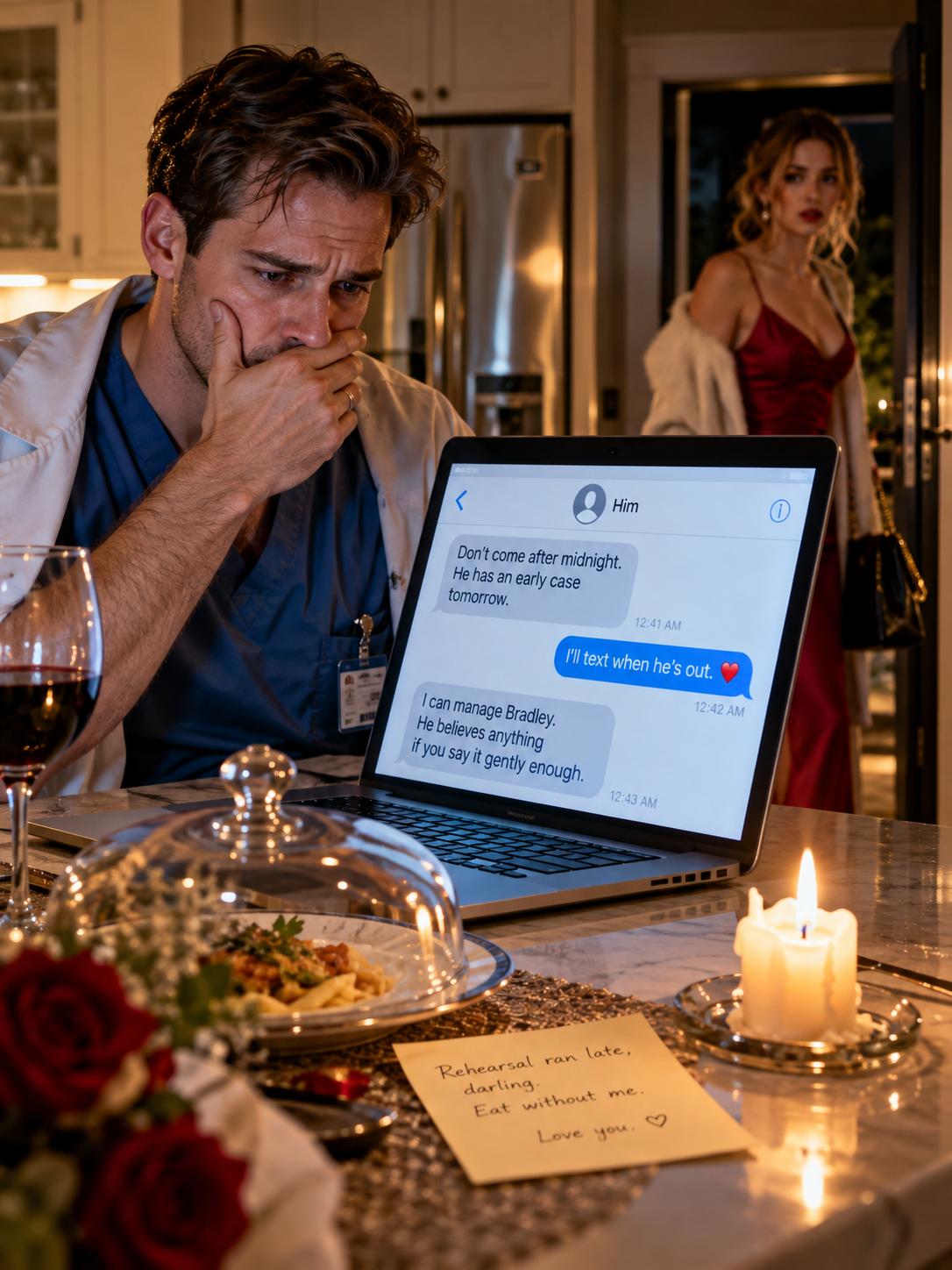
MY WIFE BLAMED LATE REHEARSALS FOR HER ABSENCE, THEN OUR SAVINGS VANISHED—BUT THE STRANGER IN HER BIRTHDAY PHOTOGRAPHS WAS SOMEONE I SHOULD HAVE RECOGNIZED YEARS EARLIER – Life Story
At 12:47 a.m., I found a message on my wife’s laptop telling another man exactly when I would be asleep....

“‘You barely passed math!’ my brother mocked me. Dad refused to fund my ‘fantasy,’ and mom told me to get a normal job. Four years later, dad’s secretary burst in: ‘The building’s been sold. The new owner is tripling the rent!’ Dad grabbed the letter—then saw my signature. The company behind it? Valued at $340 million.”
“Security!” my father screamed into the receiver, his voice cracking with a panic I had never heard in my entire...