My Grandmother Made Me Eat in the Kitchen for 26 Years—Then Her Lawyer Read My Name.
Part 1:
My grandmother called me a bastard for 28 years, but when her will reading began, I sat silent, holding the DNA proof that would destroy every spoiled cousin at that table.
“The main house goes to her,” Helen Brooks said.
She read it flat, the way a person reads a grocery list.
“Along with all liquid accounts and the three rental properties on Brantley Street.
The total estate is valued at approximately $3 million.”
Nobody breathed.
I counted two full seconds.
Then Savannah’s chair slammed backward into the sideboard.
Her wine glass tipped over.
Red soaked into the white tablecloth and crept toward the silver.
“Her?” Savannah screamed. “Her?
Josie eats in the kitchen!”
“Savannah, sit down,” her mother whispered.
Patricia’s voice had no weight in it.
Nobody sat.
“She’s a thief!” Savannah pointed at me with a hand that shook.
The ring on it was worth more than my car. “She has been stealing from a sick old woman for 8 months!”
I sat in my usual chair by the kitchen door.
It was a plain wooden chair dragged out of the pantry for every holiday since I was 2 years old.
My feet were flat on the floor.
My purse was in my lap.
I held it with both hands.
I said nothing.
Aunt Diane was crying before she even stood up.
“She manipulated her,” she said. “Look at Mother.
She can barely talk.
That girl has been alone with her every single day.
Every single day.”
Nobody else had come.
Uncle Gerald already had his phone out.
His face was the color of raw liver.
“I’m calling Phil Mercer,” he said.
Please
Part 2:
“Right now, this is undue influence.
I will have every account frozen by Monday morning.”
“Gerald,” Helen said. “Please sit down.
I am not finished.”
He did not hear her.
None of them did.
They were all talking at once.
Khloe was sobbing.
Ethan kept repeating the words “3 million” like they belonged to a foreign language.
Brooke was filming the whole scene on her phone until Mason knocked it out of her hand.
Tyler said nothing.
He was 26 years old in a navy suit with the price tag still stapled inside the collar.
He stared at the table the way you stare at the spot where you lost your keys.
My mother sat across from me with her hand over her mouth.
Linda had worked as a school secretary for 22 years.
She had never once raised her voice in this house.
She looked at me, and I saw that she did not know.
I had told her nothing.
She had begged me for 8 months to care for this woman.
Now she was watching me get rewarded for it, and she could not tell whether to feel proud or afraid.
My father stared at the grandfather clock the movers had left beside his chair.
He had just inherited it.
He stared at it like it might explain things.
And at the head of the table, in a wheelchair with a plaid blanket over her knees, sat Elanor Callaway.
She was 81.
Her left cheek had been slack since February.
Her left hand lay in her lap like something she was holding for someone else.
But her eyes were exactly the same, pale, steady.
They had spent my whole life looking at me the way you look at a stain.
She was looking at me now.
Everything she owned had just been read aloud.
Everything these people had planned their futures around.
I knew something they did not.
In my purse was a manila envelope with 10 sheets of paper inside.
I had printed them from my phone at a FedEx office on Mayfield Road at on a Tuesday morning.
My hands had shaken so hard that I started over twice.
10 sheets, 10 names.
Mine was one of them.
I looked at my grandmother.
Slowly, the good side of her mouth lifted.
It was not a smile of warmth.
It was the smile of a woman who had spent 20 years building a trap and had just watched the first foot land inside it.
I held my purse a little tighter.
I had waited 28 years for this room.
I could wait one more minute.
My name is Josephine Callaway.
Everyone calls me Josie.
I was 28 years old that October.
I worked as a pharmacy technician at a CVS on Lraine Avenue.
I made $1840 an hour.
I rented a one-bedroom above a dry cleaner for $895 a month.
And the apartment smelled like warm chemicals from September to May.
I drove a 2008 Corolla with $164,000 m on it.
I had $2,310 in savings.
I knew the number exactly because I checked it every Sunday night.
I was born on March 14th to a 19-year-old girl and a 21-year-old boy who were not married.
My mother, Linda, was the daughter of a bus mechanic from Parma.
My father, Richard, was the youngest son of Elellanar Hartwell Callaway.
That sentence is the whole problem.
Ellaner had sold her father’s company, Hartwell Tool and Die, for 11.2 million in 1994.
She lived on Lake View Drive in Shaker Heights in a brick house with 11 rooms, a slate roof, and a dining table that seated 14.
She had a husband named Walter until 2006.
After that, she had a lawyer named Helen Brooks and a great many opinions.
Then Dad met my mother at a bowling alley in Parma.
A little over 9 months later, there was me.
My parents married on June 6th at the Kyahoga County Courthouse.
The ceremony took 11 minutes.
Elellanar did not come.
She sent a card instead.
My mother kept it in a shoe box for 28 years, and I read it once when I was 15.
It said, “Congratulations on correcting your error.”
That was the day I became a bastard.
Not legally.
Elellanar knew perfectly well that Dad had signed my birth certificate, but she needed a word, and that was the one she chose.
According to my mother, she used it the first time she saw me.
She said it softly.
She said it like a diagnosis.
Dad was cut off.
For two years, he worked as a warehouse supervisor in Brook Park while my mother answered phones at a dentist’s office.
They were fine.
They were happy.
I think I have photographs of that apartment.
Everyone in them is thin and laughing.
Then the plant closed.
Dad lost his job in the spring of 2000.
I was two.
We had $640 in the bank and a baby with an ear infection.
Elellanar made one phone call.
She offered my father a deal.
She would pay him a stipend of $1,500 a month.
On the first of every month, he and my mother could come to Sunday dinners and holidays.
They could be part of the family again.
There was one condition.
“The girl eats in the kitchen.”
It lasted 26 years.
I do not say this to attack my father.
I will get to my father.
I say it because it explains the kitchen.
For as long as I can remember, every holiday followed the same ritual.
The family sat at the big table, the cousins on one side, my parents on the other, Grandma at the head.
I sat on a wooden chair by the kitchen door with a plate on my knees.
When I was little, my mother would sit with me for a few minutes before somebody called her back.
When I got older, I stopped letting her.
“Know your place, Josephine,” Grandma said.
She said it at Thanksgiving when I was six.
She said it again when I was 16.
She said it again when I was 26.
Same words, same tone.
She never varied it.
That was almost the worst part.
It was not rage.
It was routine.
Christmas was routine, too.
Every December, the grandchildren lined up in the living room by age.
Savannah, the oldest, got a laptop.
Tyler got a gaming system.
The others got watches and tablets and gift cards for $200.
I got socks and a $5 bill in a used envelope.
The envelope had somebody else’s return address crossed out.
One year, it had a coffee ring.
I checked that envelope for a note every single time.
There never was one.
When Savannah turned 16, she got a white Mini Cooper with a red bow on the hood.
I was 14.
I got a bus pass.
It was a monthly pass, $44, and I remember thinking that at least it was a good one.
Then I remembered the Mini Cooper cost $24,000.
And I stopped thinking.
Aunt Diane and Uncle Gerald thought all of it was funny.
They called me Grandma’s character project.
Uncle Gerald said it first at Easter when I was 12, with a bourbon in his hand, and everybody laughed.
My father laughed, too.
Just a little, just a breath through the nose.
I looked at him.
He studied his napkin.
My father gave me his silence for 26 years.
I called it love.
I told myself it was the best he could do.
Part of me still wonders if that was true.
I want to be honest about my own part in this.
I kept showing up.
Nobody dragged me to that house.
I was an adult for 10 of those years.
I kept going because my mother asked me to.
I kept going because I wanted her to have her family.
And I kept going because a smaller, stupider part of me believed that if I was good enough, quiet enough, useful enough, Elellanar Callaway would look at me one day and see a person.
I brought a casserole every Easter.
She threw it out.
I know because I found it in the trash behind the garage once, still in the dish.
The only person in that house who ever treated me like a human being was Tyler.
For about a year, when he was 9 and I was seven, he smuggled dessert plates into the kitchen under his sweatshirt.
Chocolate pie, lemon bars.
He never said a word.
He would slide a plate onto the counter and leave.
Then he turned 10, and somebody explained the rules to him, and the plate stopped.
Two moments from those years matter now.
I did not know it at the time.
The first one I barely thought about for 20 years.
It was Easter Sunday, April 16th, 2006.
I was eight.
My grandfather had died two months earlier, and the house was quiet in a new way.
After dinner, I was sent upstairs to wash my hands.
When I came out of the guest bathroom, my pink hairbrush was gone from the sink.
I looked everywhere.
I asked my mother.
I asked my father.
Nobody had touched it.
I cried for 10 minutes over a $3 brush.
Grandma watched me do it from the hallway with a dish towel in her hands.
She did not say anything.
She just watched.
Then she said, “Stop that noise.”
And walked away.
I assumed she had thrown it out to be cruel.
It was the logical explanation.
I accepted it for two decades.
The second moment I remember in painful detail.
It was Thursday, January 9th, three winters ago.
The radiator in my Corolla cracked on Warrenville Center Road, and I limped the car to a shop.
The mechanic quoted me $340.
I had $240 and rent due in 6 days.
I needed $100.
I had never asked my grandmother for anything, not once.
But it was 9° outside.
I had a full schedule and a 40-minute bus ride each way.
So I swallowed whatever I had left and drove to Lake View Drive.
She was in the sunroom with a cup of tea and her ledger.
She always had that ledger.
Navy blue cloth cover, a black fountain pen.
She wrote in it every evening at , and nobody was allowed to ask about it.
I told her about the radiator.
I told her I would pay it back with interest.
I told her I only needed $100.
She smirked.
I can still see it.
A thin movement at one corner of her mouth.
“Bastards don’t get blessings,” she said.
I stood there.
I did not cry.
That is what I remember most.
Something in my chest went very flat and very still.
“Okay,” I said. “Never mind.”
I turned to go.
Behind me, I heard the scratch of her pen.
She was writing something down.
I thought she was adding up the heating bill.
Even now, I remember thinking that she could not stop keeping accounts.
I took the bus for 6 weeks.
A co-worker named Denise lent me the missing $100, and I paid her back on payday.
I never asked my grandmother for another cent.
I did not understand how loud that silence would become.
Then, on a Wednesday morning in February, my grandmother collapsed on her kitchen floor and became, for the first time in my life, a woman who needed me.
It was February 4th.
The housekeeper found her at in the morning, lying beside the stove with a dish towel still in her fist.
She was taken to Hillrest Hospital.
The doctor said it was a stroke.
They said she was lucky.
Then the discharge planner sat us down.
Elellanar needed round-the-clock help for at least 3 months.
She could not safely be left alone.
She refused a care facility.
She told the planner she would rather be dead.
And she said it with the half of her mouth that still worked.
Savannah was planning her third wedding, set for November 14th at Lakeside Country Club.
“I would love to help,” she said. “But you have no idea how stressful the venue has been.”
Tyler had left for Thailand in January to find himself, and he sent a thumbs-up emoji from a beach.
Uncle Gerald had a quarter-end at the dealership group.
Aunt Diane had a knee.
On Sunday night, February 8th, my mother called me at 10:30.
I could hear her breathing before she spoke.
“Please, Josie,” she said. “Just until she’s stable.
A few weeks.
Nobody else can.
She’ll be alone.”
“Mom, she hates me.”
“I know.
I know she does.”
My mother started to cry.
“Do it for me, baby.
Please.”
I said, “Yes.”
I knew it was a mistake while the word was still leaving my mouth.
This is the first blind spot I will admit to.
I confuse being needed with being valued.
I always have.
I cut my hours at the pharmacy from 38 a week to 16.
I moved a suitcase into the second-floor guest room of the house where I had eaten every holiday meal in a doorway.
My grandmother met me in the front hall in her wheelchair.
She did not say thank you.
She did not say hello.
She looked at the suitcase and then at me.
“You’ll be paid,” she said.
The words came out thick on the left side.
“2500 a month.
I am not a monster.”
That was the first ceiling.
I thought, this is as good as it gets.
She is going to be decent in her way because she has to be.
I thought we might even make it to summer without a war.
She paid me $2,500 on February 28th.
The check was number 447.
She paid me $1,200 on March 31st, check number 4431, and said she had adjusted for expenses.
In April, she paid me nothing.
On the 7th, I asked.
I was polite about it.
I stood next to her chair while she did her left-hand exercises with a rubber ball.
And I said, “Grandma, I haven’t been paid for April.”
She did not look up.
“I don’t know what you’re talking about.”
“You said 2500 a month.
The first two checks are in my notebook.”
“I never promised you anything.”
I should explain the notebook.
On my second day in that house, I bought a green spiral binder at the Walgreens on Shagrin Boulevard.
I started logging everything.
Pills and the times she took them, meals, physical therapy appointments, blood pressure readings, every check that came my way.
I did it because I am a pharmacy tech, and logging is what we do.
I also did it because I knew whose house I was in.
That binder was the best decision I made all year.
The following Sunday, April 12th, Aunt Diane arrived with a coffee cake and a face already arranged for sorrow.
Grandma waited until I was in the room.
Then she let her chin tremble.
“Josephine has been asking me for money,” she said. “Asking an invalid.
I don’t know where I went wrong with that girl.”
Diane gasped.
“Josie, that is disgusting.”
“I’m not asking for a gift,” I said.
I kept my voice level. “She offered a wage.
I’m asking her to stop saying I’m lying.”
“Don’t you dare take that tone with her.”
Diane put an arm around my grandmother’s shoulders.
“She just had a stroke.”
“I know.
I’ve been there for every day of it.”
“Then you should be ashamed,” Diane said.
That was the second ceiling, not the missing money.
The look in my grandmother’s eyes over Diane’s shoulder.
She was calm.
She was watching me the way a person watches a pot to see if it boils.
I stopped asking about the money.
I did not stop working.
I told myself it was for my mother.
Eleanor knew exactly where to press.
On April 20th, my father called me at lunch.
He never called me at lunch.
“Your grandmother phoned me.”
He sounded tired and a little sick.
“She says you’re threatening to leave.”
“I never said that.”
“She says if you walk out on her, the stipend ends.
All of it.”
I closed my eyes.
I was sitting in my car in the CVS parking lot eating crackers.
“Dad, that’s blackmail.”
“It’s $1,500 a month, Josie.”
He cleared his throat.
“Your mother’s car payment is $389.
The property tax bill is due in June.
We can’t just lose it.”
“So I should stay.”
“I’m asking you to please, please.”
I had heard that word from him for 26 years.
It always came attached to the same request.
Sit down.
Be quiet
Worked for 52s
Inspected pasted text file contents
Recommended Stories

A MILLIONAIRE WATCHED A LITTLE GIRL TAKE ONE FREE MEAL FOR TWO—THEN HER MOTHER OPENED A FOLDER THAT COULD RUIN THE MEN WHO HAD SILENCED HER – Life Story
The little girl took one container of soup, one piece of bread, and whispered that it was enough for two....
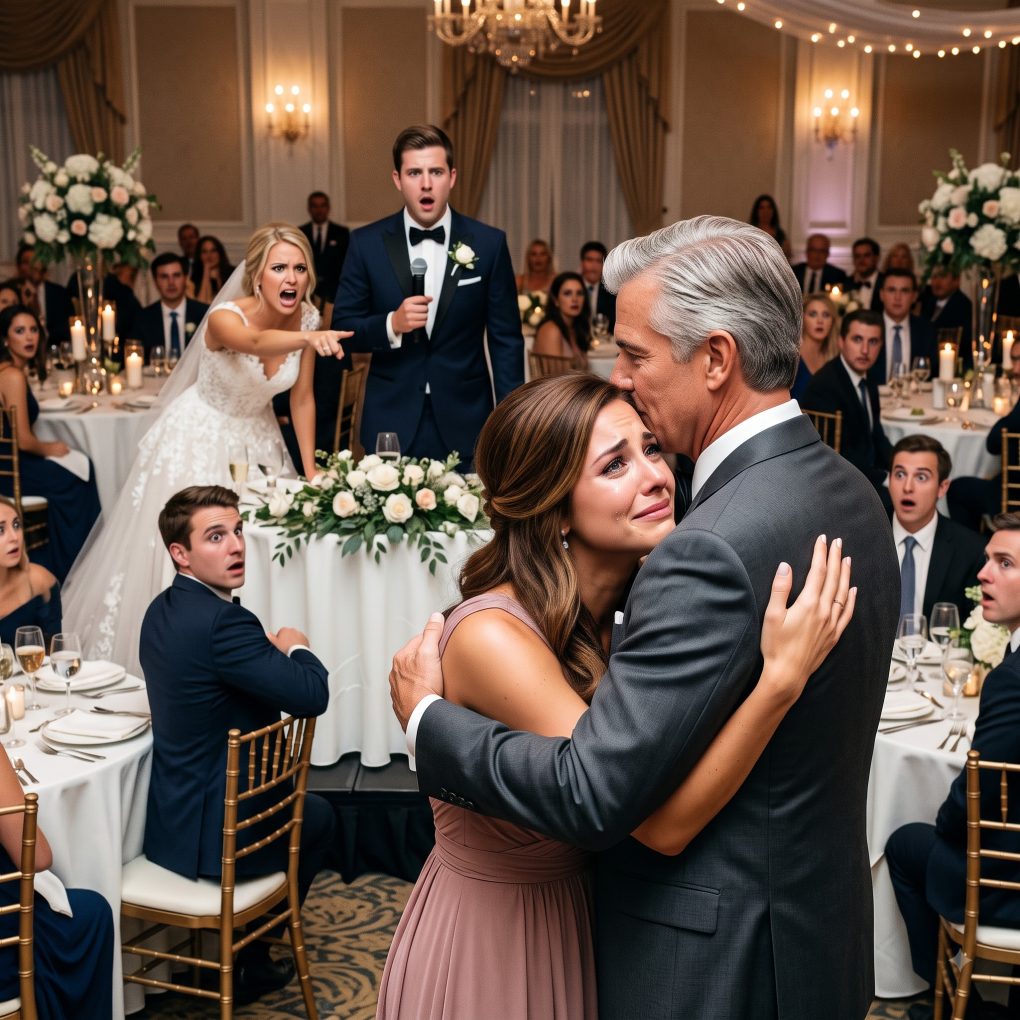
“Everyone, meet my loser sister who still lives with roommates!” my brother announced into the wedding microphone, making two hundred guests laugh at my expense. My cheeks burned in shame—until his billionaire CEO boss walked up, hugged me tightly, and uttered a sentence that instantly froze the room.
“Everyone, meet my loser sister who still lives with roommates!” my brother announced into the wedding microphone, making two hundred...
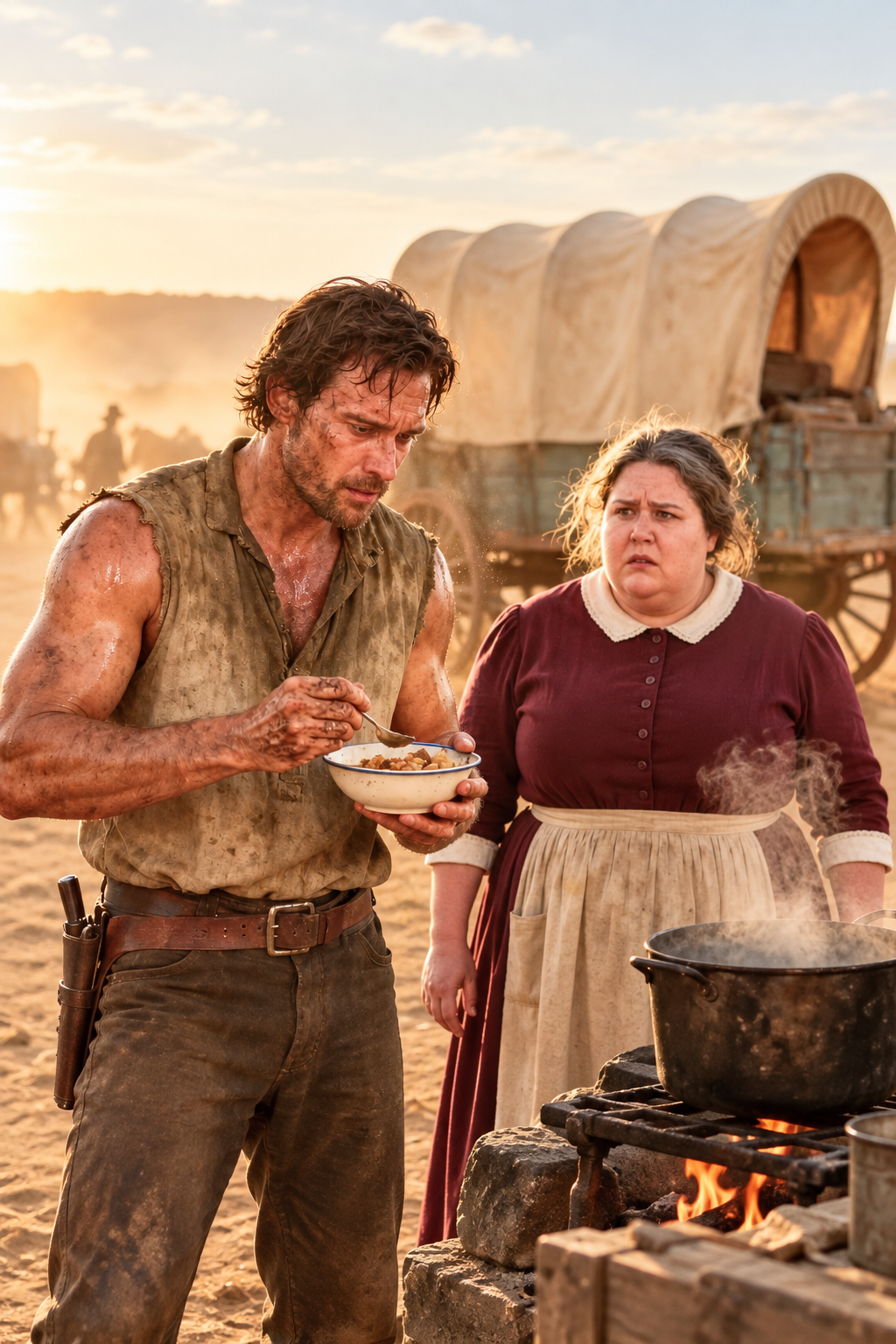
Mountain Cowboy Was Starving — The Obese Cook’s Meal Changed His Life Forever…
Mountain Cowboy Was Starving — The Obese Cook’s Meal Changed His Life Forever He had gone four days without food...