Single Dad Took a Drunk Stranger Home—Not Knowing She Was His New Boss’s Daughter…
Single Dad Took a Drunk Stranger Home—Not Knowing She Was His New Boss’s Daughter
He brought a drunken stranger home because leaving her in the freezing rain felt like a death sentence.
His six-year-old daughter offered the woman breakfast without asking who she was.
Nine hours later, that same stranger walked into his workplace beside the one man who could take everything from him.
PART 1 — THE STRANGER AT THE FERRY TERMINAL
The woman would have hit the concrete if Gideon Underhill hadn’t caught her.
Her broken heel skidded across the rain-slick pavement outside the New London ferry terminal, and her shoulder struck the locked steel door hard enough to make her gasp.
Gideon dropped his equipment bag and reached her before her head followed.
For one terrible second, she hung against him without seeming to understand where she was.
“Easy,” he said, tightening his grip beneath her arms. “I’ve got you.”
“Don’t,” she whispered.
“Don’t what?”
“Call him.”
Rain hammered the terminal roof.
Beyond the empty parking lot, the Thames River churned beneath the October storm, its black surface broken by the lights of distant boats.
Gideon looked toward the road, hoping to see a taxi, a security vehicle, anything that might make this situation someone else’s responsibility.
There was nothing.
The woman looked about thirty-two, with dark brown hair soaked against her cheeks and a charcoal coat that probably cost more than his monthly mortgage payment.
One shoe was missing its heel.
Her expensive leather handbag hung open, and a cracked phone lay in a puddle near the curb.
Gideon had spent thirteen hours supervising water-damage crews after the storm overwhelmed several commercial properties.
His back hurt, his hands smelled of disinfectant, and his six-year-old daughter was waiting at home with their neighbor.
He couldn’t afford another complication.
“What’s your name?” he asked.
The woman blinked slowly. “Cora.”
“Okay, Cora.
Is there someone I can call?”
Her expression changed so suddenly that he almost released her.
Fear moved across her face, cutting through the alcohol and exhaustion.
“No family.”
“Are you hurt?”
“Just stupid.”
She tried to straighten, but her knees folded again.
Gideon guided her onto a bench beneath the terminal awning and crouched at a respectful distance.
He had learned to recognize the difference between someone being difficult and someone being frightened.
His late wife, Miriam, had worked in a public library where people sometimes came inside because it was the only warm place they could find.
She used to tell him that embarrassment could make a person refuse help they desperately needed.
Gideon retrieved the phone.
Its screen lit briefly, revealing eleven missed calls from someone listed simply as Dad.
Cora saw the name and turned her face away.
“Please.”
He put the phone on the bench without opening anything.
“All right.
I won’t call him without your permission.”
He asked whether she’d fallen, whether she’d hit her head, and whether she’d taken anything besides alcohol.
She answered clearly enough to explain that she had been drinking bourbon at a waterfront restaurant, had walked away after an argument, and had come to the ferry terminal without realizing the last boat was gone.
When she became nauseated, Gideon called for medical assistance rather than risk assuming she was merely drunk.
The responding paramedic checked her, explained the warning signs that would require emergency care, and offered transport for further evaluation.
Cora refused the hospital, remained alert enough to answer questions, and agreed that she should not be left alone.
The paramedic suggested a trusted sober adult stay with her.
“I don’t have one,” Cora said.
Gideon thought about the empty terminal, the worsening rain, and the warm yellow light that would be glowing in his kitchen.
Then he made a decision he would spend the next several weeks defending.
“There’s a couch at my house,” he told her. “My neighbor is there with my daughter.
You’ll be safe, and we can arrange somewhere else in the morning.”
Cora studied his face.
“You don’t know me.”
“No.”
“I could be trouble.”
“That’s becoming obvious.”
For the first time, she almost smiled.
He helped her into his aging Ford pickup, placed her handbag at her feet, and made sure she could buckle her seat belt.
Before starting the engine, he called his neighbor, Elena Ortiz.
“Mrs.
Ortiz?
Something unusual happened.
I’m bringing a woman home who got stranded in the storm.
She’s been checked by a paramedic, but she shouldn’t be by herself tonight.”
There was a pause.
“Is she your girlfriend?”
“No.”
“Do you know her?”
“Only her first name.”
Another pause.
“Lord help you, Gideon.
I’ll put the kettle on.”
His house stood on a quiet residential street fifteen minutes from the waterfront.
The porch paint was peeling, the front steps tilted slightly, and a child’s paper pumpkin hung crookedly behind the storm door.
It wasn’t much, but every inch had been kept together by a father who knew exactly how much a broken furnace or missed paycheck could cost.
Mrs.
Ortiz opened the door before he reached it.
She was sixty-four, a retired elementary-school aide with silver hair, sharp eyes, and the kind of voice that made grown men stand up straighter.
“Couch,” she instructed. “Blanket.
Water.
And somebody tell me what’s happening before I start imagining things.”
Gideon explained while Cora sat quietly beneath the kitchen light, staring at the family photographs on the refrigerator.
One showed Gideon holding a little girl in a hospital blanket.
Another showed Miriam at the beach, laughing as sea wind blew her hair across her face.
The newest was a school portrait of Ada, missing one front tooth.
Cora touched the edge of that photograph.
“Your daughter?”
“Six years old.”
“Where’s her mother?”
Gideon put a glass of water on the counter.
“She died two years ago.”
Cora withdrew her hand.
“I’m sorry.”
He had heard those words so many times that he knew which ones were automatic.
Hers weren’t.
She looked at the photograph as though it had made her remember something she’d been trying not to think about.
Mrs.
Ortiz brought a clean blanket and remained until Cora was settled on the living-room couch.
Gideon left a wastebasket nearby, kept the hallway light on, and told Cora where to find water.
“You can use the phone in the morning,” he said. “We’ll figure things out when you’re feeling better.”
Cora stared up at him.
“Why are you doing this?”
He thought of Miriam standing in their old kitchen, insisting they always keep an extra blanket because someone might need it.
“Because somebody should.”
At the following morning, Gideon woke to the smell of toast and the sound of his daughter whispering.
“Do you think she likes pancakes?”
He found Ada standing beside the couch in purple pajamas, clutching a stuffed rabbit.
Cora was awake, sitting upright beneath the blanket with both hands wrapped around a glass of water.
Her face was pale.
Her eyes were swollen.
She looked horrified by the realization that she had spent the night in a stranger’s house.
“Ada,” Gideon said gently, “give our guest a little space.”
“But she looks sad.”
Cora lowered her eyes.
“I’m mostly embarrassed.”
Ada considered that.
“Daddy says embarrassed is when your brain remembers something your mouth wishes it hadn’t said.”
Gideon closed his eyes.
“That’s not exactly how I explained it.”
“It was close.”
Cora laughed.
It was small and unexpected, but it changed her face completely.
Over breakfast, she accepted half a pancake and a cup of black coffee.
She thanked Mrs.
Ortiz, who had returned to check on everyone, and apologized twice for causing trouble.
Ada watched her carefully.
“Are you somebody important?”
Cora paused with her fork halfway to her mouth.
“Why would you ask that?”
“Your coat has shiny buttons.
Important people on TV wear shiny buttons.”
“My father thinks I’m important.”
“Does he tell you?”
Cora’s smile disappeared.
“Not in the way you mean.”
Gideon noticed the silence, but he didn’t ask questions.
He had his own worries.
That morning marked the beginning of his first full week reporting directly to Raymond Beaumont, the wealthy businessman whose national restoration company had recently acquired Gideon’s longtime employer.
The takeover had brought new policies, unfamiliar executives, and rumors about layoffs.
Gideon had been promised that his regional supervisor position was secure, but promises meant little when someone else controlled the payroll.
At , Cora looked at the company logo on his work jacket.
Her coffee cup stopped moving.
“Beaumont Restoration?”
Gideon glanced down.
“Unfortunately, until I know whether I like the new management.”
Her expression tightened.
“How long have you worked there?”
“Five years with the original company.
Three weeks under the new owners.”
“And Raymond Beaumont is your boss?”
“That’s right.”
Cora slowly placed her cup on the table.
“There’s something I didn’t tell you.”
Before Gideon could answer, his phone vibrated with a message from dispatch.
An emergency safety review had been called at the regional office, and every supervisor was required to attend.
Cora read his expression.
“Something wrong?”
“Work.
They’re calling everybody in.”
She looked toward the window.
“I need to get to that office too.”
Gideon frowned.
“You work there?”
“Something like that.”
Twenty-five minutes later, they entered Beaumont Restoration’s regional headquarters separately.
Gideon had changed into a clean work shirt and returned Cora’s coat, arranging for a rideshare to drop her at the building’s front entrance while he parked in the employee lot.
He thought that would allow her to handle whatever personal business she had without involving him.
Instead, he walked into an office that had gone completely silent.
Cora stood beside Raymond Beaumont.
Raymond was sixty-one, broad-shouldered, silver-haired, and immaculately dressed in a dark navy suit.
He was the kind of executive who never raised his voice because everyone around him had already learned to listen.
His gaze moved from Cora to Gideon.
Then it stopped.
“Cora,” he said carefully, “why are you wearing the same coat from yesterday?”
She didn’t answer immediately.
A receptionist looked between them.
Someone near the dispatch board whispered something Gideon couldn’t hear.
Raymond’s voice hardened.
“Where were you last night?”
Cora lifted her chin.
“Somewhere safe.”
“With whom?”
The room seemed to contract.
Gideon stepped forward.
“Sir, if there’s a concern, I can explain.”
Raymond looked at him.
And for the first time since the acquisition, Gideon saw something other than calculated confidence in his new employer’s face.
He saw recognition.
Cora moved beside the conference table and opened the leather folder waiting there.
“My name is Cora Beaumont,” she said. “Raymond Beaumont is my father.
I’ve been appointed to review the regional division’s safety compliance following complaints about several emergency restoration projects.”
Gideon felt the blood drain from his face.
The woman who had slept on his couch was his new boss’s daughter.
The woman who had eaten pancakes with Ada was now standing in front of his entire department.
And the man who controlled his livelihood was looking at him as though he’d committed an unforgivable offense.
Cora placed a document on the table.
“The review begins with six properties and one municipal theater.
Several approvals appear to have been issued after inspectors raised safety concerns.”
She turned the first page toward Gideon.
“There’s a problem.”
Gideon looked down.
His electronic signature was attached to a work authorization he had never seen.
Cora’s next words were barely louder than a whisper.
“Gideon, this document says you personally approved the work that put those families in danger.”
PART 2 — THE SIGNATURE THAT SHOULDN’T EXIST
Gideon had survived two years of sleeping on one side of a bed that still felt too large.
He had learned to braid Ada’s hair by watching videos, stretch groceries between paychecks, and smile through school events where every other child seemed to have two parents.
But nothing had prepared him for seeing his own name on a document that could destroy his career.
“I didn’t authorize this,” he said.
Raymond folded his arms.
“The system records indicate otherwise.”
“Then the system is wrong.”
“That’s a serious accusation.”
“So is accusing me of approving unsafe work.”
The exchange ended when Cora placed another photograph on the table.
It showed the interior of the Harbor Street Community Theater, a century-old building near the waterfront.
Rainwater had seeped through the ceiling, temporary supports had been installed beneath a damaged balcony, and orange extension cables crossed the floor.
Gideon recognized the building immediately.
His crew had inspected it three days earlier.
He also recognized something that made his stomach turn.
The photograph showed insulation panels stacked across a fire exit that he’d explicitly ordered workers to keep clear.
“That wasn’t there when I left,” he said.
Raymond leaned forward.
“Are you certain?”
“I documented the exit before leaving the site.”
“Then perhaps your crew ignored your instructions.”
“Perhaps someone changed them.”
Cora raised one hand.
“We’re going to inspect the site before drawing conclusions.”
The decision appeared reasonable until Raymond looked at his daughter.
“Given your unusual overnight arrangements, are you sure you can be impartial?”
A chair scraped against the floor.
Gideon felt the accusation before anyone spoke it.
Cora’s face colored.
“I informed the company’s legal department this morning that Gideon helped me during a personal emergency.
I also requested independent oversight of any findings involving him.”
Raymond’s expression remained unreadable.
“And yet here we are.”
Gideon wanted to explain every detail of the previous night, but he understood how desperate that might sound.
Instead, he looked directly at his employer.
“I don’t want special treatment because I helped your daughter.
I want the same opportunity to defend my work as anyone else.”
Something cold passed through Raymond’s eyes.
“Then you’ll have it.”
An hour later, Gideon stood inside the damaged theater while rain ticked against its boarded windows.
Seven restoration employees waited behind the safety line.
Caleb Mercer, the company’s lead electrician, held a flashlight against the damp floor.
Mara Collins, who managed dispatch and field records, stood beside Cora with a stack of original work orders.
The theater smelled of wet plaster and old carpet.
Gideon approached the balcony, stopped several feet from a temporary brace, and crouched to examine the base.
“Nobody goes underneath that.”
Caleb followed the beam of his flashlight.
“That’s not the support we installed.”
Gideon already knew.
The original brace had been rated for a significantly heavier load and positioned on a sound section of flooring.
Someone had replaced it with a cheaper adjustable support and shifted it onto water-damaged wood.
A portable power strip had also been left near standing water.
Its indicator light was still glowing.
Gideon stepped back and called for the power to be isolated by qualified personnel before anyone approached the area.
Then he directed the crew away from the balcony and toward the front entrance.
Cora watched him closely.
“Did you approve those substitutions?”
“No.”
“Did anyone ask you to?”
“Twice.”
“Who?”
“Regional procurement.
They wanted the work completed before the insurance adjuster came back.”
Mara looked uncomfortable.
Gideon turned toward her.
“You remember the message?”
She swallowed.
“I remember receiving a revised schedule.”
“From whom?”
Mara opened her folder.
“Victor Hales.
Corporate finance.”
Raymond had brought Victor into the company after the acquisition.
He was a quiet, efficient executive with a reputation for reducing costs.
Gideon had barely spoken to him beyond arguing over equipment purchases.
Cora wrote the name down.
Then a sharp cracking sound traveled through the theater.
Everyone froze.
A shower of plaster fell from the balcony edge.
Gideon raised his voice.
“Everybody out.
Now.”
No one argued.
The crew moved through the front entrance and gathered across the street while the unstable area was isolated for professional assessment.
A structural engineer was called, and the municipal building department was notified.
From the sidewalk, Cora stared at the theater’s old brick facade.
“That was close.”
Gideon looked at her.
“It wasn’t luck that the crew got out.
We saw the warning signs and stopped work.”
She seemed to absorb the distinction.
For several seconds, neither spoke.
Then she said, “My father told me you were resistant to the company’s new procedures.”
“Depends on the procedure.”
“He said you’re difficult.”
“I’ve been called worse.”
“Why?”
Gideon watched Caleb helping a younger employee remove a heavy tool bag from his shoulder.
“Five years ago, somebody wanted me to sign off on a damaged stairwell.
I refused.
We lost the contract, and I got written up for delaying the project.”
“Was anyone hurt?”
“No.
Because the building stayed closed until the stairs were repaired.”
Cora looked toward the theater.
“That disciplinary notice is still in your personnel file.”
Gideon turned.
“How do you know that?”
She hesitated.
“Because I read it last week.”
Before he could respond, Mara hurried toward them holding her tablet.
“I found the approval log.”
Gideon took the device.
His username appeared beside the disputed theater authorization.
11:48 p.m., Tuesday.
At that exact time, Gideon had been home helping Ada finish a school project about emergency exits.
He remembered because she’d insisted that he draw their house in the correct shade of yellow.
“I wasn’t working that night.”
Mara scrolled through the entry.
“Your account was.”
Cora examined the screen.
“Was the authorization created from a company workstation?”
Mara nodded slowly.
“Warehouse terminal three.”
Gideon’s pulse quickened.
He hadn’t been inside the warehouse since Tuesday afternoon.
“Who else could use that terminal?”
“Anyone with access to the supervisors’ shared work area.”
Raymond appeared behind them.
“That’s enough speculation.
Preserve the records and let legal review the access history.”
His tone was controlled, but he had stepped closer than necessary.
Cora noticed.
“Are we including workstation logs and physical entry records?”
“Naturally.”
“And the original procurement request?”
Raymond glanced at the tablet.
“Whatever is relevant.”
Gideon looked between father and daughter.
He could feel the balance changing, though he didn’t yet understand why.
Then Cora asked for the earliest record associated with the theater’s revised work order.
Mara searched the archive.
A second document appeared.
It was dated eighteen days earlier, before Gideon had been given the revised project schedule.
Beneath the approval stamp was Raymond Beaumont’s executive authorization code.
The document instructed regional management to implement an accelerated restoration procedure that allowed certain repairs to continue before the usual secondary inspection.
Cora read it twice.
Raymond reached for the tablet.
“That’s an internal policy document.”
She moved it out of his reach.
“Then why wasn’t it included in the audit packet?”
Raymond’s mouth tightened.
“Cora.”
“Who removed the secondary inspection requirement?”
Silence followed.
Rain ran down the theater’s broken gutters, striking the sidewalk in uneven drops.
Finally, Raymond said, “There are things about this business you don’t understand yet.”
Cora looked at the date again.
Then she opened a different file on her own tablet.
Gideon saw her expression change.
The accelerated restoration procedure had not started in Raymond’s office.
Its earliest approval carried Cora Beaumont’s name.
And the program was labeled Rapid Return — Controlled Compliance Pilot.
PART 3 — THE WOMAN WHO KNEW MORE THAN SHE ADMITTED
Cora had spent most of her adult life trying not to become her father.
She had watched Raymond Beaumont turn a small Connecticut contracting business into a national restoration company, and she’d learned early that success in his world was measured by how quickly people stopped asking questions.
At seventeen, she’d heard him fire a project manager during a family dinner.
At twenty-three, she’d watched him negotiate a settlement without once mentioning the people affected.
At thirty, she’d accepted a position in corporate compliance because she believed that, from inside the company, she could change how things were done.
Now she was standing on a wet sidewalk, staring at an authorization bearing her own signature.
The difference between her intentions and the result had never looked so small.
“Explain this,” Gideon said.
Cora locked the tablet.
“Not here.”
He looked at her, stunned.
“Six families are living with the consequences of this procedure, and you want to discuss location?”
“That’s not what I meant.”
“Then what did you mean?”
She looked toward the restoration crew.
Caleb and Mara were watching from beside the truck, trying to pretend they couldn’t hear.
“I approved a limited pilot,” Cora said quietly. “Vacant buildings only.
No residents.
Independent structural clearance before occupancy.
Every safety hold was supposed to remain mandatory.”
“And?”
“My father wanted to expand it.”
“Did you agree?”
“Not to removing the safeguards.”
“That’s not what I asked.”
Cora looked away.
She had agreed to a faster approval process, believing that trained supervisors would stop work whenever conditions required it.
She had allowed the pilot to move into occupied-property restoration without personally verifying that its safeguards were being followed.
Warnings had arrived.
Some had been summarized as implementation difficulties.
Others had been buried in weekly operational reports that she skimmed between meetings.
Gideon’s reports had been among them.
She remembered one sentence now because it had irritated her at the time.
Faster completion is not evidence of safe completion.
She’d marked it for later review.
Later never came.
“I signed the expansion,” she admitted.
Gideon stepped back.
The movement hurt more than an accusation.
“You knew there were problems.”
“I knew there were concerns.”
“You had my reports.”
“Yes.”
“And you didn’t investigate them.”
Her throat tightened.
“No.”
Gideon stared at the woman who had sat across from Ada eating pancakes that morning.
For a few moments, he could see neither the frightened stranger nor the executive standing before him.
He could only think about the homeowners who’d called his office after repairs failed, asking why their ceilings stained again or why their doors no longer closed properly.
He had assumed their complaints were being reviewed.
Now he knew where some of them had stopped.
“Why were you at the ferry terminal?” he asked.
Cora blinked.
“What?”
“Last night.
Why were you out there alone?”
She rubbed her thumb over a thin silver bracelet.
A small metal tag hung from it, stamped with two faded words: LOST & FOUND.
“My father and I had an argument.”
“About the pilot?”
She nodded.
“Yesterday afternoon, a woman came to our corporate office.
Her name was Rosa Alvarez.
She brought photographs of her house after our contractors finished repairing the flood damage.”
Gideon recognized the name.
He had visited the Alvarez home twice.
Rosa lived with her elderly mother and ten-year-old son in a narrow house near the waterfront.
“The basement supports,” he said.
Cora nodded again.
“She said she felt the floor move under her feet.
She’d been complaining for weeks.
My father told her the damage was unrelated to our work.”
“And you?”
Cora’s eyes filled.
“I told her we’d review the file.”
Gideon waited.
“She asked me if I would let my own family sleep in that house.”
Cora looked down.
“I couldn’t answer.”
She had gone straight to Raymond’s office afterward, demanding the original inspection records.
Raymond told her she was overreacting, that repairs always generated complaints, and that admitting defects before the company’s refinancing would endanger hundreds of jobs.
Then he’d shown her Gideon’s signed approval.
A signature that made the field supervisor responsible for the very conditions he’d reported as unsafe.
Cora had demanded to see the source file.
Raymond told her to trust him.
She went to the waterfront restaurant instead, ordered a drink, and kept ordering because she didn’t want to return to an office where every answer seemed to require another compromise.
By the time she left, she could barely think clearly.
“I went to the ferry terminal because I wanted to leave town,” she whispered. “I didn’t even know where I’d go.”
Gideon’s anger did not disappear.
But the woman standing before him suddenly looked less powerful than she had inside the office.
“Your father doesn’t get to make my name the cost of protecting yours,” he said.
“I know.”
“Do you?”
Cora swallowed.
“I’m starting to.”
That afternoon, an emergency meeting was held in the regional conference room.
Three municipal and state officials had been invited to review preliminary safety concerns, while outside counsel began arranging a separate investigation.
The seven workers from Gideon’s crew attended as potential witnesses, along with representatives of the affected clients.
Raymond sat at the head of the table.
He looked irritated by the attention but not frightened.
That frightened Gideon more.
A company lawyer displayed the disputed authorization on the screen.
“The current records show that Mr.
Underhill’s credentials approved the substitutions and schedule changes associated with the Harbor Street project.”
Gideon stood.
“Those credentials were used without my permission.”
“Can you prove that?”
“The authorization came from a warehouse terminal I wasn’t using.”
“Someone may have accessed it remotely.”
“Then preserve the access records.”
Raymond looked at the lawyer.
“We will.”
Cora watched her father carefully.
He was speaking as though Gideon were an inconvenience rather than a man whose name had been placed on a dangerous decision.
Then Rosa Alvarez rose from the visitors’ table.
She was a small woman in her fifties, dressed in a green cardigan with a frayed cuff.
She held a photograph of her kitchen.
“I don’t understand your paperwork,” she said. “I understand that my mother has been sleeping in the living room because she’s afraid to go upstairs.”
Nobody interrupted.
“I understand that your company told us the house was safe.
I understand that we paid the deductible, signed the forms, and thanked people for helping us.”
Her voice trembled.
“And I understand that when the floor started moving, the first person who came back was Mr.
Underhill.”
Gideon lowered his eyes.
Rosa turned toward him.
“You told us not to use the upstairs rooms.
You called the building inspector yourself.”
“Yes, ma’am.”
“Then somebody explain why his name is on the paper saying everything was fine.”
The room remained silent.
Gideon looked at Raymond.
Raymond looked at his lawyer.
Cora looked at the photograph in Rosa’s hands.
It showed a little boy standing in a kitchen with a crooked doorway behind him.
She thought of Ada Underhill sitting at her breakfast table.
Then she stood.
“The Rapid Return program was approved by me,” she said.
Every face turned toward her.
“My authorization was intended to permit a controlled pilot with independent safety checks.
I subsequently approved expansion before confirming those controls were functioning.
That was my responsibility.”
Raymond’s head snapped toward her.
“Cora.”
She continued.
“I did not authorize the removal of mandatory structural inspections, and I did not approve falsifying field records.
But I received warning reports that should have stopped the program, and I failed to act quickly enough.”
Gideon watched her.
For the first time, she had placed her own reputation beside the damage instead of standing safely above it.
The company lawyer requested a recess.
Raymond didn’t wait for permission.
He rose, walked past the chairs, and stopped beside his daughter.
His voice was quiet enough that only Gideon and Cora could hear.
“You have no idea what you’ve just done.”
Cora met his eyes.
“I’ve told the truth.”
Raymond looked toward Gideon.
“No,” he replied. “You’ve chosen who you want to believe.”
He returned to the head of the table and instructed the lawyer to circulate an immediate personnel notice.
Gideon read the document when it reached him.
Effective immediately, he was suspended from field duties pending investigation of unauthorized approvals, safety violations, and improper handling of restricted company information.
Without scheduled pay.
His company vehicle would be collected that evening.
His system access would be disabled.
And every project under his supervision would be placed under review.
Cora stood again.
“You’re retaliating against him.”
Raymond shook his head.
“I’m protecting the company.”
Then he looked directly at Gideon.
“Before you decide how far you want to take this, Mr.
Underhill, consider something.”
Gideon said nothing.
Raymond continued.
“Your daughter is six.
You brought an intoxicated stranger into your home while she was there.
If your judgment becomes an issue in this investigation, other people may begin asking questions about the environment you’re providing for that child.”
The room seemed to lose all its air.
Gideon understood the threat.
Raymond wasn’t merely threatening his job.
He was threatening to turn the one decent thing Gideon had done into a weapon against his family.
And Cora, standing beside her father, had heard every word.
PART 4 — THE HOUSE THEY TRIED TO TURN INTO EVIDENCE
The first thing Gideon did after losing his job was buy a gallon of milk.
He stood in the grocery store at that afternoon, holding the plastic container while his bank balance glowed on his phone.
There were $1,846 in checking, another $3,200 in the savings account he’d spent two years trying not to touch, and a mortgage payment due in nine days.
He returned a package of chicken breasts to the refrigerated shelf.
Then he picked up the cheaper store-brand pasta.
When he got home, Ada was sitting at the kitchen table with Mrs.
Ortiz, drawing a blue river across a sheet of construction paper.
“Daddy!”
She slid off her chair and ran toward him.
Gideon caught her against his chest, breathing in the familiar smell of strawberry shampoo and crayons.
He held her longer than usual.
Ada leaned back.
“Why are you squeezing me?”
“Because you’re squishable.”
“I’m six.
That’s different.”
Mrs.
Ortiz smiled, but the expression disappeared when she saw Gideon’s face.
After Ada went upstairs to change, Gideon placed the suspension notice on the table.
Mrs.
Ortiz read it without speaking.
Then she removed her glasses.
“They’re punishing you for helping that woman?”
“That’s part of it.”
“Does she know?”
“She was in the room.”
Mrs.
Ortiz folded the paper carefully.
“Then she has a decision to make.”
An hour later, headlights moved across the living-room wall.
A dark company SUV stopped outside.
Gideon opened the front door to find Raymond Beaumont standing on the porch beside Victor Hales and a human-resources representative named Denise Carter.
Victor carried a laptop bag.
Denise held a sealed envelope.
Raymond looked past Gideon into the house.
“May we come in?”
“No.”
A flicker of surprise crossed Victor’s face.
Gideon stepped onto the porch and pulled the door nearly closed behind him.
“You can collect company property here.”
Raymond adjusted his coat.
“I hoped we could discuss your situation privately.”
“We can discuss the property.”
Denise handed Gideon an inventory sheet.
The company vehicle keys, equipment tablet, access card, and assigned radio were listed for immediate return.
Gideon had already placed everything in a box beside the door.
Victor looked toward the driveway.
“Where’s the supervisor laptop?”
“Inside the box.”
“Have you copied any restricted documents?”
“I’ve kept my own field notes and the records I’m legally entitled to retain.
Anything else is on company systems.”
Victor’s expression tightened.
“You understand that company information is confidential.”
“And you understand that there’s an active safety investigation.”
Raymond intervened.
“Gideon, you’re making this unnecessarily hostile.”
“No.
I’m making it clear.”
For several seconds, only the rain spoke.
Then Raymond lowered his voice.
“I know you have a daughter.
I know you’re trying to do right by her.
But helping Cora last night doesn’t give you the right to interfere with how my company handles its internal affairs.”
Gideon felt his hands curl, but kept them at his sides.
“I didn’t interfere with anything.
I reported unsafe work.”
“Your credentials approved that work.”
“Then find out who used them.”
Raymond watched him.
“Are you prepared for what an investigation into your judgment might uncover?”
Gideon looked directly at him.
“If you have evidence that my daughter was endangered, make a truthful report.
If you don’t, stop mentioning her.”
Raymond’s expression changed.
Not anger.
Calculation.
He reached into his coat and produced a second envelope.
“This contains a separation agreement.
Six weeks of pay, continued health coverage through the end of the quarter, and a neutral employment reference.”
Gideon stared at it.
“In exchange for what?”
“Mutual confidentiality.
No further public allegations regarding company practices.”
Victor added, “It’s a generous offer under the circumstances.”
Gideon thought of the groceries he’d just put away, the mortgage payment, and the winter coat Ada needed before November.
Six weeks of pay would solve several immediate problems.
It would also leave six families living with hazards that management had already tried to bury.
He didn’t take the envelope.
“My lawyer can review it.”
Raymond’s eyes narrowed.
“Do you have a lawyer?”
“Not yet.”
“Then perhaps you should think carefully before spending money you don’t have.”
Gideon returned the company equipment, obtained Denise’s signed receipt, and closed the door.
When he turned around, Ada was standing in the hallway.
She had heard enough.
“Are they taking your job away?”
Gideon knelt.
“For a little while, maybe.”
“Because of the lady?”
“No, sweetheart.
Because some grown-ups are having a disagreement about things that need to be done safely.”
Ada considered this.
“Did you do something bad?”
He felt the question settle inside him.
“No.”
“Then why don’t they just ask you?”
Gideon couldn’t find an answer that belonged in a six-year-old’s world.
He kissed her forehead.
“They will.”
Later, after Ada fell asleep, Gideon sat alone at the kitchen table with his old field notebook.
Its pages were crowded with measurements, dates, and little drawings of damaged supports.
He had kept it since Miriam was alive, partly because she believed he should always document his work and partly because he had learned that memory became unreliable when money was involved.
He turned to the Harbor Street inspection.
The entry was dated Tuesday, p.m.
Balcony restricted.
Existing support insufficient.
Electrical hazard pending isolation.
No authorization for public occupancy or drying operations.
Beneath it, in heavier ink, he’d written:
Secondary inspection required before any release.
He photographed the page.
Then he photographed the earlier entries for the Alvarez house and three other projects.
At , his phone rang.
Cora.
He nearly let it go to voicemail.
Finally, he answered.
“If you’re calling to apologize, don’t.”
“I’m calling because I found something.”
“I’ve had enough surprises today.”
“This one’s important.”
He listened.
Cora explained that she’d requested copies of the warehouse entry records through the company’s outside legal team.
Raymond had initially refused, claiming the logs were unrelated to safety.
But the independent investigator appointed that afternoon had ordered them preserved.
The warehouse security records showed that Gideon’s credentials were used from terminal three at 11:48 Tuesday night.
The building access system showed someone else entering seven minutes earlier.
“Who?” Gideon asked.
Cora hesitated.
“Victor Hales.”
Gideon closed his eyes.
That confirmed someone with authority had been present, but it still didn’t prove who had used the computer.
“Did he sign the authorization?”
“We don’t know yet.
The computer’s original activity record is being preserved.”
“Then why are you telling me?”
“Because my father told the investigators Victor was in Hartford that entire evening.”
Gideon sat motionless.
“Why would he lie about that?”
“I don’t know.”
But her voice told him she was beginning to suspect.
Then Cora said something that made him straighten.
“There’s another problem.
Victor wasn’t the only person whose badge was used that night.”
Gideon waited.
At the other end of the line, Cora drew a shaky breath.
“My father’s executive access card opened the warehouse office eleven minutes before your approval was issued.”
PART 5 — THE PEOPLE WHO COULDN’T AFFORD ANOTHER MISTAKE
By Monday morning, Gideon had learned that being suspended didn’t mean getting to rest.
It meant waking at his usual hour with nowhere to go.
He still packed Ada’s lunch, checked her homework, and walked her to the school entrance beneath a pale autumn sky.
He still reminded her to zip her coat and look both ways before crossing the street.
Then he returned home to a quiet kitchen.
For the first time in years, he could hear the clock above the refrigerator ticking.
He spent the morning calling attorneys.
The first wanted a consultation fee he couldn’t afford.
The second specialized in workplace discrimination but didn’t handle complex safety retaliation cases.
The third, a New London employment lawyer named Naomi Price, listened to his description without interrupting.
When he mentioned the altered signature, she asked him to stop discussing details over the phone.
“Bring the suspension notice, the separation agreement, and any records you lawfully possess,” she said. “Don’t access company systems or contact witnesses in ways that could be interpreted as pressure.
We need to preserve evidence properly.”
He arrived at her office carrying a canvas folder and the notebook that had lived in his truck for five years.
Naomi was forty-six, wore simple black glasses, and spoke with the calm precision of someone who had spent years listening to employers explain why the truth was inconvenient.
She read the suspension notice.
Then she read his field notes.
“You understand that your act of helping Ms.
Beaumont isn’t what protects your job legally,” she said.
“I wasn’t expecting it to.”
“Good.
What matters is whether you reported safety concerns, whether the employer took adverse action because of those reports, and whether the misconduct allegations against you are supported by evidence.”
Gideon nodded.
“And the threat about Ada?”
Naomi’s expression hardened slightly.
“A company executive doesn’t decide custody or child-welfare outcomes.
If anyone makes a report, it should be assessed on actual facts.
Document exactly what he said, who witnessed it, and when.”
For the first time since Raymond mentioned Ada, Gideon felt a small measure of relief.
The threat had been designed to frighten him.
It didn’t mean Raymond possessed the power he pretended to have.
Naomi studied the separation agreement.
“Don’t sign this.
I’ll contact their counsel about preservation of records, the wage issue, and possible retaliation.”
Gideon stared at his notebook.
“What about the families?”
“We can provide your relevant evidence to the authorized investigators.”
“And if the company closes?”
“Then we make sure those families are not left without a voice in whatever follows.”
Across town, Cora stood in a conference room she was no longer allowed to control.
Her father had removed her from direct oversight of the regional investigation that morning, citing conflicts of interest.
She had expected it.
What she hadn’t expected was to feel relieved.
The review was now being led by Harriet Sloan, an attorney hired by a committee of the company’s independent directors.
Harriet had insisted on preserving original electronic files, conducting confidential interviews, and retaining outside structural engineers.
Cora surrendered her access credentials and provided copies of the reports she’d received during the pilot.
Harriet examined the file list.
“Some of these warnings are marked as read by your account.”
Cora nodded.
“I saw them.”
“Did you respond?”
“Not adequately.”
Harriet set down her pen.
“I need you to understand something, Ms.
Beaumont.
This investigation cannot be designed to protect you because you volunteered to cooperate.”
“I understand.”
“Your father may have altered procedures.
Someone may have used Gideon’s credentials improperly.
Neither possibility erases your responsibility for the approvals you actually made.”
Cora looked toward the window.
“That’s why I’m here.”
Later that afternoon, she met Rosa Alvarez at a temporary community assistance center established for the affected homeowners.
Rosa had not asked to see her.
Cora had requested permission to deliver information about independent inspections and emergency housing support.
Rosa agreed only after being told that an advocate could remain present.
The room smelled of coffee and damp winter coats.
Rosa sat beside a stack of receipts, carefully organizing them by date.
Cora approached with a folder.
“Mrs.
Alvarez, I wanted to explain what the company is doing about the inspections.”
Rosa didn’t look up.
“Are you here as the owner’s daughter or the woman who approved the procedure?”
Cora stopped.
“Both, unfortunately.”
“Then I have two different things to say to you.”
Cora waited.
“To the owner’s daughter, tell your father my mother worked forty-one years cleaning other people’s houses so she could own hers.
She doesn’t deserve to spend the rest of her life afraid to sleep in it.”
Rosa’s hands trembled as she aligned the receipts.
“And to the woman who approved the procedure, I want to know why you believed we were acceptable risks.”
Cora felt the question beneath her ribs.
She could explain the pilot, the original safeguards, and the reports distorted by corporate summaries.
All of those details mattered.
None would answer Rosa’s question.
“I believed the people managing the work were following the rules,” Cora said. “When there were signs they weren’t, I didn’t check closely enough.”
Rosa finally looked up.
“You were paid to check.”
“Yes.”
“Then don’t stand here asking me to admire you for admitting it.”
Cora lowered her eyes.
“I’m not.”
Rosa pushed a photograph across the table.
It showed her ten-year-old son, Mateo, sitting on a mattress in their temporary living room.
“He keeps asking when he can sleep in his own bedroom again.”
Cora held the photograph carefully.
“I can’t give you a date.
The building has to be independently assessed first.”
“Good.”
Cora looked surprised.
Rosa continued.
“That’s the first honest answer anyone from your company has given me.”
That evening, Gideon received an email from Naomi.
Independent engineers had reviewed preliminary findings at six properties.
Two required immediate restrictions on use of certain rooms, and several needed further invasive inspection to determine whether concealed damage made them unsafe.
The theater remained closed.
Temporary relocation and emergency repairs could cost hundreds of thousands of dollars.
Gideon read the figures twice.
Then Mara Collins called.
She sounded exhausted.
“I gave my statement today.”
“Good.”
“I told them about Victor’s procurement orders.”
“You did the right thing.”
A silence followed.
“Gideon, I need to tell you why I waited.”
He moved away from Ada’s bedroom door.
“I’m listening.”
Mara explained that Victor had ordered dispatch staff to replace ordinary inspection holds with temporary administrative codes.
He claimed the new software needed the work orders cleared before field teams could request additional equipment.
She had questioned it.
He told her headquarters had approved everything.
“I thought they were moving paperwork around,” she whispered. “I didn’t understand they were making it look like the work had been signed off.”
Gideon closed his eyes.
“Did you keep the messages?”
“The originals are still in the system.
Harriet’s team has them.”
“Then tell her everything.”
“I did.”
Her voice broke.
“One of those houses belongs to Mrs.
Alvarez.”
Gideon said nothing.
Mara began crying quietly.
“I knew she was calling every week.
I kept telling her someone would get back to her.”
He thought about Rosa standing in her kitchen, holding a photograph of the floor she no longer trusted.
“Mara, tell the investigators what happened.
That’s how we keep it from happening again.”
After the call, Gideon stood in Ada’s doorway.
She was asleep beneath a blanket covered in yellow stars.
Her stuffed rabbit lay on the floor, and one small sock hung halfway off her foot.
He pulled the blanket over her shoulder.
Downstairs, his phone vibrated again.
A message from Naomi.
The investigators obtained the original Rapid Return budget forecast.
It includes the money saved by skipping secondary inspections.
A second message appeared.
The savings were tied to an emergency refinancing agreement.
Beaumont Restoration had to meet a financial target by Friday.
Gideon stared at the screen.
The shortcuts hadn’t merely happened because someone wanted projects finished quickly.
Someone had calculated how much money they could save by removing the safeguards.
And Friday—the deadline that had apparently justified everything—was only four days away.
PART 6 — THE WALL THAT FINALLY TOLD THE TRUTH
The demonstration took place inside a rented testing facility in Norwich, not at Beaumont Restoration’s headquarters.
Harriet Sloan had insisted on neutral ground.
A licensed structural engineer named Grace Kim directed the setup with two technicians, while building officials and an occupational-safety representative attended within their respective jurisdictions.
Six affected households had been offered the opportunity to observe with advocates present.
Gideon arrived with Naomi.
He hadn’t spoken to Cora since the telephone call about the warehouse access records.
She stood near the back wall, wearing dark trousers and a plain cream sweater instead of the tailored suits he’d seen at the office.
For a moment, their eyes met.
Neither smiled.
Grace Kim approached the safety line.
“We’re not trying to reproduce the exact conditions of anyone’s home,” she explained. “This is a controlled demonstration of how the disputed repair sequence performs when wet structural materials are concealed before proper evaluation and drying.”
Behind a clear protective enclosure stood two wall assemblies.
One had been prepared using the company’s documented standard procedure, including moisture assessment, appropriate repair work, and required inspections.
The other used the accelerated sequence reflected in the disputed work orders.
Both assemblies had been instrumented for measurement, and everyone remained behind the safety barrier.
Gideon watched Grace point to the second wall.
“Visible surfaces can appear finished while conditions behind them remain unacceptable.
The concern isn’t simply cosmetic damage.
It’s that the process can hide deterioration that should have been discovered and addressed.”
Rosa Alvarez stood beside her son, Mateo.
She held his hand so tightly that he whispered, “Mom, you’re squeezing.”
She loosened her grip immediately.
Cora noticed the gesture.
It reminded her of Gideon holding Ada at the breakfast table, as though he could protect her from anything merely by keeping one arm around her.
The demonstration began.
Controlled moisture was introduced into the test assembly under the engineer’s supervision.
Sensors tracked what happened behind the finished surface, while measurements appeared on a monitor facing the observers.
The first wall remained within its expected performance range.
The second began showing elevated concealed moisture and movement around a deliberately compromised support condition.
Grace stopped the system and allowed the engineers to document the readings.
Then a technician removed the outer panel after the enclosure was secured.
The damage beneath it was unmistakable.
The surface had looked acceptable.
The material behind it had not.
A second engineer pointed out that the assembly would have required additional investigation before any safe release could be considered.
Rosa covered her mouth.
“I watched them close up my walls,” she whispered.
Gideon heard her.
He remembered standing outside her house while a crew leader complained about the delay he’d caused by requesting another inspection.
At the time, Gideon believed the repair would remain on hold.
Now he knew someone had restarted work after his report left the field.
Grace turned toward the officials.
“The demonstration supports the concern that the accelerated sequence can conceal unresolved damage.
It does not, by itself, establish the condition of every affected structure.
Those sites require their own assessments.”
Harriet nodded.
“That’s what we’re arranging.”
Raymond Beaumont stood near the observation window, flanked by Victor Hales and a corporate attorney.
He had remained quiet through the first test.
Now he spoke.
“This is an intentionally compromised assembly.
It doesn’t represent our normal procedures.”
Grace answered before Cora could.
“The compromised condition reflects the documented substitutions and omitted inspections identified in the work records.
We’re showing why those omissions matter.”
Raymond looked toward Gideon.
“Mr.
Underhill supervised the regional work.
If field conditions were unacceptable, it was his responsibility to stop them.”
Gideon held his gaze.
“I did.”
“Then why was the work completed?”
“That’s what we’re here to find out.”
Victor shifted beside Raymond.
Harriet stepped forward.
“We’ve now reviewed the original procurement communications and the preserved workstation image.”
The atmosphere changed.
Raymond’s attorney looked at her sharply.
“Is this the appropriate venue to discuss personnel findings?”
“The affected clients have a right to an accurate account of the safety issues.
We can address individual employment findings separately.”
Harriet turned toward the officials.
“The disputed work authorizations are part of a broader sequence of altered records.
We have referred the relevant material to the appropriate authorities and are providing the information necessary for their investigations.”
Raymond crossed his arms.
“You’re making assumptions.”
“No,” Harriet replied. “We’re documenting evidence.”
Gideon felt Naomi touch his elbow.
A signal to remain silent.
Harriet continued.
“Mr.
Underhill’s credentials were used from warehouse terminal three after his recorded departure from the property.
The preserved workstation records show an administrative session initiated from Victor Hales’s authorized account shortly before that activity.”
Victor’s face went pale.
Raymond turned toward him.
“Victor.”
Harriet raised a hand.
“The investigation is ongoing.
We are not asking anyone to draw a final conclusion about individual culpability today.”
But there was no longer any way to pretend Gideon’s signature told the whole story.
Mara stood near the employees’ table, her hands clasped tightly.
Caleb stared at Victor.
Rosa looked directly at Raymond.
“Did your company know our house wasn’t ready?”
Raymond’s expression remained controlled.
“Mrs.
Alvarez, complex restorations involve judgment calls.
We relied on professional assessments.”
Gideon stepped forward despite Naomi’s warning.
“And when the professionals told you to stop?”
Raymond looked at him.
“I don’t recall receiving that instruction personally.”
Gideon opened his field notebook.
“March twelfth.
June ninth.
September twenty-sixth.
October fourteenth.”
He read the dates slowly.
“Four separate warnings.
Four properties.
Every one submitted through the company’s reporting system.
The last two were sent after the acquisition, addressed to regional operations, with copies requested for executive review.”
Harriet confirmed that the corresponding electronic submissions had been recovered.
Raymond said nothing.
Cora stood.
“I reviewed summaries of those warnings.
I failed to ensure they were properly investigated.
But the original reports were entered, and they called for safety holds.”
She turned toward her father.
“Did you see them?”
Raymond looked at her.
“Not every operational detail reaches me.”
“Did Victor tell you the secondary inspections were delaying the refinancing targets?”
Victor’s eyes moved toward the floor.
Raymond didn’t answer.
“Did you approve the revised budget that counted those inspections as avoidable costs?”
“Cora, this isn’t the time.”
“Then when is it?”
Her voice rose for the first time.
“When the next ceiling falls?
When another family has to leave their home?
When somebody gets hurt badly enough that even our lawyers can’t explain it away?”
Raymond’s composure cracked.
“You think these people would still have jobs if I let every project bleed money?
The banks were ready to pull our credit line.
Payroll was on the line.
Every contractor on our books depended on that refinancing.”
The words rang through the facility.
He stopped.
Too late.
Cora stared at him.
“You knew the safeguards cost money.”
Raymond’s jaw tightened.
“I knew we had to make difficult decisions.”
Gideon looked at the exposed wall.
“That wasn’t a difficult decision.
That was moving the cost onto people who trusted us.”
Nobody spoke.
Then Rosa approached the table and placed a small photograph beside Gideon’s notebook.
It showed Mateo standing in front of their house before the flood.
“The bank can take your company,” she said quietly. “But don’t tell me you had to gamble with my home to save it.”
Raymond looked away.
The testing concluded after the engineers documented the remaining measurements.
Harriet arranged for the evidence to be retained and the findings distributed through the investigation.
For the first time, the affected families had something stronger than assurances.
They had independent evidence.
Outside, evening sunlight broke through the clouds.
Gideon stood beside his aging pickup while Naomi reviewed a message from Harriet.
“The independent directors are holding an emergency meeting tomorrow,” she said. “They’re considering removing Raymond from executive authority while the investigation continues.”
Gideon exhaled.
“That’s good.”
“It may be.”
He looked at her.
“What does that mean?”
Naomi turned the phone toward him.
The lender had issued a notice demanding immediate evidence that the company could meet its obligations and address the expanding safety liabilities.
If the financing collapsed, Beaumont Restoration could enter a formal restructuring process.
Employees could lose their jobs.
Affected families could face further delays in receiving compensation.
And Gideon’s suspension might become irrelevant because there would be no position left to return to.
Gideon stared across the parking lot.
He had wanted the truth exposed.
Now the truth was threatening to bring down the entire company.
Then Naomi said, “There’s one more thing.
Raymond’s attorney contacted me this afternoon.”
“About what?”
“A private settlement.
Much larger than the first.”
Gideon looked at her.
“How much?”
Naomi hesitated.
“Enough to pay off your mortgage.”
PART 7 — THE PRICE OF KEEPING QUIET
Gideon looked at the settlement agreement for nearly ten minutes before speaking.
Two hundred and forty thousand dollars.
The amount appeared near the top of the document, printed in the same ordinary font as the rest of the legal language.
Below it were provisions requiring him to resign voluntarily, release certain employment claims, maintain broad confidentiality, and agree not to make further statements that could damage Beaumont Restoration’s reputation.
The money would pay off his mortgage.
It would replace his aging pickup.
It would cover Ada’s school expenses for years and give him something he hadn’t experienced since Miriam died.
Room to breathe.
Naomi watched him from across her desk.
“The amount isn’t the problem,” she said. “It’s what they want in return.”
Gideon rubbed his forehead.
“If I sign, can I still give evidence to the investigators?”
“Some rights to report to government authorities cannot lawfully be waived.
But this agreement goes much further than an ordinary settlement.
It creates unnecessary disputes over what you can say and to whom.
I wouldn’t recommend signing it.”
He looked toward the office window.
Cars moved through the afternoon traffic.
Somewhere beyond them, Ada would be sitting in her classroom, probably drawing another map because she’d recently become convinced every building needed at least three exits.
“Can we negotiate?”
“Yes.
But first you need to decide what matters to you.”
Gideon gave a tired laugh.
“That’s the problem.
Everything matters.”
Naomi waited.
He thought about Rosa Alvarez paying for temporary housing, Mara Collins crying over dispatch records, and Caleb standing beneath a balcony that could have failed.
Then he thought about his daughter.
For a moment, he imagined telling her they would never have to worry about the house again.
He pushed the agreement back across the desk.
“Tell them I’ll discuss a lawful resolution of my employment claims.
I won’t help conceal the safety problems.”
Naomi nodded.
“I’ll put that in writing.”
That evening, Cora visited Raymond at his waterfront estate.
The house stood above the river behind iron gates and meticulously trimmed hedges.
She had grown up there, surrounded by polished stone floors and furniture nobody was supposed to touch.
As a child, she’d thought it beautiful.
Now it reminded her of a hotel where everyone was afraid of the owner.
Raymond sat alone in the study, a glass of untouched whiskey beside him.
“I assume you’ve come to celebrate,” he said.
Cora closed the door.
“Did you offer Gideon money to stay quiet?”
“His lawyer has a proposal.”
“Two hundred and forty thousand dollars?”
Raymond looked surprised.
“You’re remarkably well informed.”
“Do you realize how that looks?”
“I realize a lawsuit could cost ten times that.”
Cora stood across from his desk.
“You threatened his daughter.”
Raymond’s expression shifted.
“I warned him that personal decisions have consequences.”
“You used a six-year-old child to frighten a man who was telling the truth.”
“He brought a stranger into his house.”
“He made sure I was medically assessed, had another adult present, and kept me safe.
You know that.”
Raymond looked away.
For several seconds, he appeared older than she remembered.
“You think I wanted any of this?” he asked.
Cora said nothing.
“I built that company for thirty-four years.
During the last downturn, I borrowed against everything I owned to keep people employed.
I know what happens when a business fails.”
“Then you should have known what happens when people stop trusting it.”
He looked at her.
“You have the luxury of saying that because you’ve never been responsible for meeting payroll.”
Cora felt the old wound open.
He had used those words against her for years.
Whenever she disagreed, she was inexperienced.
Whenever she hesitated, she was privileged.
Whenever she asked for accountability, she was naive.
This time, she didn’t retreat.
“I approved a program I shouldn’t have expanded.
I’m responsible for that.
But you took it further because the numbers mattered more than the warnings.”
Raymond’s eyes hardened.
“The board will destroy this company if you keep talking.”
“Then tell them what actually happened.”
He stood.
“You will lose your position.”
“I know.”
“You may lose your shares.”
“Then I’ll deal with it.”
“And what exactly will you have left?”
Cora touched the silver bracelet on her wrist.
Its worn metal tag caught the light.
Her mother had given it to her when she was thirteen.
Evelyn Beaumont had volunteered at the Harbor Street Community Theater, running the coat-check desk during charity performances.
She used to bring home scarves, mittens, and forgotten belongings, carefully labeling them until their owners could be found.
“People leave things behind when they’re frightened or distracted,” Evelyn would say. “That doesn’t mean those things stop belonging to them.”
Cora looked at her father.
“I’d rather lose my position than spend the rest of my life pretending I didn’t see what happened.”
Raymond lowered himself into his chair.
For a moment, she thought he might apologize.
Instead, he said, “Then you are no longer welcome to represent this company.”
Cora nodded.
“I wasn’t planning to.”
She walked out of the study without slamming the door.
Outside, the evening air smelled of wet leaves.
She sat in her car for several minutes before turning the key.
For the first time, she understood that telling the truth might cost her the last relationship she had with her father.
Her phone rang.
Harriet Sloan.
“Cora, the independent directors want you present tomorrow.”
“Why?”
“We’ve completed the preliminary electronic-record reconstruction.”
Cora gripped the steering wheel.
“And?”
Harriet paused.
“Victor Hales has retained separate counsel.
Through his attorney, he’s provided additional correspondence.”
“What kind?”
“Executive instructions concerning the disputed approvals.”
Cora closed her eyes.
“From my father?”
“His name is on them.”
A long silence followed.
Then Harriet added, “There’s another attachment.
It shows how the Rapid Return expansion was authorized.”
Cora felt the familiar dread return.
“What’s wrong with it?”
“It contains your written response to an urgent warning issued before the occupied-site rollout.”
She searched her memory.
There had been dozens of emails, hundreds of reports, endless meetings.
Then she remembered.
One message from a regional engineer.
One warning she’d answered too quickly.
Proceed with the scheduled rollout while compliance completes its review.
The words came back with painful clarity.
Harriet’s voice softened.
“Cora, tomorrow isn’t only about your father.”
PART 8 — THE DAY NO ONE COULD HIDE BEHIND A SIGNATURE
The emergency board hearing began at nine the following morning.
Raymond Beaumont entered wearing a charcoal suit and the expression of a man who had already decided everyone else was mistaken.
Victor Hales arrived with his attorney.
Cora sat near the end of the conference table, away from her father.
Gideon attended the portions relevant to his employment and safety reports with Naomi beside him.
Representatives for the affected households had been given access to appropriate findings, and the company’s independent directors had received the complete preliminary investigation.
Harriet Sloan opened the meeting.
She did not begin with accusations.
She began with dates.
First, she established when Gideon had submitted his safety warnings.
Then she displayed the disputed authorizations, the warehouse access records, and the preserved administrative-session data.
The sequence was difficult to misunderstand.
Gideon had ordered work stopped.
The safety holds had later been removed.
His credentials had been used during an administrative session associated with Victor’s account.
The original warnings had remained in the company’s records even after the final project files no longer reflected them accurately.
Victor’s attorney spoke carefully.
“My client acknowledges participating in the administrative processing of these work orders.
He disputes that he acted without direction from senior management.”
Harriet displayed the correspondence he’d produced.
One email came from Raymond’s executive account.
It instructed finance and operations to resolve approval delays before the refinancing review.
A follow-up directed Victor to use centralized administrative processing for outstanding regional approvals.
The messages did not resolve every question of individual responsibility.
But they established that the changes had been driven from above the field team.
Raymond leaned forward.
“Those instructions were about workflow efficiency, not falsification.”
Harriet nodded.
“That distinction is relevant.
It’s also why the independent investigation and regulatory inquiries must continue.”
Then she displayed Gideon’s original notebook entries beside the corresponding electronic reports.
The warnings matched.
The timestamps matched.
His instructions to stop work matched the accounts provided by Caleb, Mara, and other employees.
Gideon’s chest tightened.
For weeks, he had carried the fear that someone would find a technicality large enough to make his truth disappear.
Now it was visible on the screen.
Not because he knew the right people.
Not because he’d sheltered Raymond’s daughter.
Because he’d recorded what he saw, refused to approve what he couldn’t defend, and kept telling the same truth when it became expensive.
Harriet turned to the board.
“Our preliminary finding is that Mr.
Underhill did not authorize the disputed substitutions.
His suspension was based on records whose reliability had already been called into question.”
Naomi placed a hand over Gideon’s wrist.
He hadn’t realized his fingers were trembling.
Raymond stared at the table.
One director asked why the company had not immediately preserved Gideon’s pay while the evidence was being reviewed.
The human-resources representative could offer no satisfactory explanation.
Another director asked about the threatened child-welfare implications.
Raymond described the exchange as a private expression of concern.
Naomi provided Gideon’s contemporaneous account and the witnesses identified in her submission.
No one accepted the explanation without scrutiny.
Then came the matter of Cora’s approval.
Harriet displayed the email Cora had written during the Rapid Return expansion.
The warning from the regional engineer appeared above her response.
It described unresolved questions about how required inspections would be enforced at occupied properties and recommended pausing implementation until verification was complete.
Cora had responded by allowing the rollout to proceed while the review continued.
The room went quiet.
Gideon read the email twice.
Cora stood.
“That response was mine.”
Raymond looked at her, but she didn’t turn toward him.
“I believed the existing safety holds would remain enforceable.
I accepted assurances instead of verifying them.
When reports later showed that the controls weren’t working, I failed to intervene promptly.”
Harriet asked, “Do you dispute that your decisions contributed to the conditions that allowed these failures?”
Cora’s eyes filled.
“No.”
She looked toward Gideon.
He didn’t offer comfort.
He respected her admission, but he couldn’t pretend it changed what had happened.
That restraint mattered.
Accountability would mean very little if kindness made every mistake forgivable.
Cora returned to her chair.
The directors spent the next two hours reviewing financial exposure, operational risks, employee testimony, and the independent engineers’ findings.
By midafternoon, the board had reached several decisions.
Raymond would be removed from executive management pending the outcome of the continuing investigation.
Victor would no longer have operational access, and his employment status would be handled through a separate legal process.
An experienced outside executive would take interim control.
The board would negotiate with the lender for temporary financing under strict oversight, while establishing a protected remediation fund and pursuing applicable insurance and recovery claims.
The affected properties would remain subject to independent safety assessments.
Required repairs and temporary accommodations would be coordinated with household representatives rather than dictated solely by the company.
None of it made the damage disappear.
But it replaced secrecy with a process people could challenge and verify.
Cora was relieved of compliance leadership responsibilities, and her own decisions were referred for further independent review.
She was instructed to cooperate with the investigators without participating in their conclusions.
She accepted the decision.
Then Harriet addressed Gideon.
“The independent committee has authorized correction of your employment record and restoration of withheld compensation.
The interim leadership team will meet with you and your counsel regarding reinstatement and appropriate working conditions.”
Gideon stared at her.
He’d imagined this moment a hundred times.
In most versions, he delivered a speech.
In reality, he could barely speak.
“Thank you,” he managed.
Harriet shook her head.
“Mr.
Underhill, you shouldn’t have needed a board hearing to establish that your safety reports deserved attention.”
Outside the conference room, Mara and Caleb waited for him.
Mara hugged him without asking.
Caleb extended his hand.
Gideon shook it, then found himself laughing quietly because he couldn’t remember the last time his chest had felt so light.
Cora emerged several minutes later.
She stopped when she saw him.
“Gideon.”
He turned.
“I’m sorry,” she said.
“I know.”
“I don’t expect you to forgive me.”
He studied her face.
“Good.
Because I don’t know what forgiveness looks like yet.”
She nodded slowly.
“But you told them the truth,” he continued. “Even when it cost you.”
“So did you.”
“I had a daughter to think about.”
Cora looked away.
“That makes what you did harder.”
Gideon thought for a moment.
“No.
It made the stakes clearer.”
His phone vibrated.
A message from Mrs.
Ortiz appeared, accompanied by a photograph.
Ada was standing in their kitchen, holding a paper sign she’d made with colored pencils.
It showed Gideon standing beside a little yellow house.
Above his head, in uneven letters, she’d written:
DADDY COMES HOME.
Gideon swallowed.
Cora saw the photograph.
Her eyes filled again, but she said nothing.
He slipped the phone into his pocket.
“I need to pick her up.”
“Of course.”
He started toward the elevator.
Then Cora spoke.
“Gideon?”
He looked back.
“That night at the ferry terminal, I thought my whole life was falling apart.”
He waited.
“You didn’t know my name.
You didn’t know what I could do for you.
You just helped.”
Gideon’s expression softened slightly.
“I knew you needed somewhere safe.”
Cora looked down at her bracelet.
“I wish I’d understood that people needed the same thing from our company.”
Gideon held her gaze.
“Then make sure you don’t forget.”
The elevator doors opened.
He stepped inside.
For the first time since Raymond Beaumont had entered his life, Gideon wasn’t wondering what the next accusation would cost him.
He was thinking about dinner.
But Cora remained outside the elevator, holding the report that documented her own failure.
His name was being cleared.
Hers still had to be accounted for.
PART 9 — WHAT KINDNESS COULD AND COULDN’T SAVE
Five months later, the Harbor Street Community Theater opened its doors again.
Not for a performance.
Not yet.
The building was hosting a community meeting to mark the completion of its first independently approved repair phase and provide public updates on the remaining work.
The balcony had been properly assessed and repaired where necessary.
Electrical deficiencies had been corrected, and the fire exits were clear.
The reopened areas had received the required approvals, while unfinished sections remained closed.
Gideon stood inside the lobby, watching sunlight move across the restored floorboards.
He wore a clean blue work shirt with a small supervisor badge clipped above his pocket.
His position had been reinstated under the interim management team, with back pay and a written correction to his personnel file.
He’d negotiated a schedule of four ten-hour days, with overnight emergency assignments requiring his agreement except under narrowly defined contractual circumstances.
It meant he could pick Ada up from school more often.
It meant fewer dinners left cooling on the stove.
It meant he could keep the promise he’d made beside Miriam’s hospital bed.
I’ll make sure she knows she’s loved.
The company itself had changed more slowly.
Independent oversight had remained expensive and uncomfortable.
Some managers had resigned.
Several employees had required retraining, and others had cooperated with ongoing investigations concerning the altered records.
Raymond was no longer chief executive.
The possibility of further legal consequences remained unresolved, and the affected families were pursuing their rights through appropriate channels.
The company had not escaped responsibility simply by removing one man.
For Gideon, that mattered more than a dramatic apology ever could.
Rosa Alvarez’s house had undergone extensive independent repairs.
She and her family had spent several months in temporary accommodation while the damaged areas were evaluated and reconstructed.
Their return had been approved only after the necessary inspections.
Some compensation questions remained open.
Rosa was still angry.
She had every right to be.
But when she saw Gideon in the theater lobby, she crossed the room and took his hand.
“My mother slept upstairs last night,” she told him.
He smiled.
“How was it?”
Rosa’s eyes shone.
“She complained the room was too cold.”
Gideon laughed.
“That sounds promising.”
“She also said the new stair railing looks better than the old one.”
“Tell her I’ll take that as a compliment.”
Rosa squeezed his hand.
“She slept through the night, Gideon.”
He stopped smiling.
For a moment, neither spoke.
Then he nodded.
“That’s what we wanted.”
Across the lobby, Ada stood beside Mrs.
Ortiz, wearing a yellow dress and holding two paper cups of lemonade.
She had lost another tooth.
When she saw Gideon, she ran toward him.
“Daddy!
They have cookies!”
“That’s usually a good sign.”
“Can I have two?”
“Depends.
Have you had one already?”
Ada hesitated.
Mrs.
Ortiz raised an eyebrow.
Gideon sighed.
“One more.”
Ada handed him a lemonade and announced that she’d decided to become an engineer.
“Why?”
“Because engineers tell buildings what they’re doing wrong.”
“That’s part of it.”
“And I like drawing.”
“That helps too.”
She leaned against his leg.
For the first time in a long while, Gideon felt something close to peace.
Not the kind that came from believing nothing bad would happen again.
The kind that came from knowing he had survived something difficult without becoming someone he didn’t recognize.
Then Ada looked toward the theater entrance.
“Daddy?”
“Yes?”
“Is that the pancake lady?”
Gideon followed her gaze.
Cora Beaumont stood near the coat-check desk, helping an elderly volunteer arrange donated scarves and jackets for a winter clothing drive.
She wore jeans, a simple white sweater, and the same silver bracelet Gideon remembered from the ferry terminal.
Her life looked different now.
She no longer held an executive position at Beaumont Restoration.
An independent review had documented her failures, and she’d accepted a formal separation from the compliance leadership role while continuing to cooperate with the remaining proceedings.
She had taken work with a small nonprofit that supported households displaced by disasters, in a non-supervisory position with clear oversight.
It paid less.
There were no corner offices.
Nobody called her important because of her last name.
But she could look people in the eye without pretending she’d never made a mistake.
Ada waved.
“Cora!”
Cora turned.
Her face changed when she saw the little girl.
“Ada!”
Ada ran across the lobby, stopping just short of colliding with her.
“Do you remember our house?”
Cora smiled.
“Of course.”
“Do you remember the couch?”
“Very well.”
“Daddy washed the blanket.”
Gideon approached just in time to hear it.
“Ada.”
“What?
He did.”
Cora laughed.
The sound was different from that frightened little laugh in his kitchen months earlier.
It was easier.
Less guarded.
Ada looked between them.
“Can Cora come for pancakes again?”
Gideon didn’t answer immediately.
Cora knelt beside the girl.
“That’s up to your dad.
And only if he feels comfortable.”
Ada considered the matter with great seriousness.
Then she turned toward Gideon.
“Well?”
Mrs.
Ortiz, watching from a safe distance, made a suspicious effort to hide her smile.
Gideon rubbed the back of his neck.
He looked at Cora.
There had been no sudden romance.
No magical forgiveness.
They had spoken occasionally during the months following the investigation, usually about community repair efforts or Ada’s latest school project.
Some conversations were warm.
Others were uncomfortable.
Once, Gideon had told Cora how deeply her delayed response to the warnings had damaged his trust.
She hadn’t defended herself.
She’d listened.
That was where something better had begun.
Not with a debt she owed him.
With an understanding that kindness could open a door, but honesty was what allowed people to remain on the other side of it.
“Maybe next Sunday,” he said.
Ada beamed.
“With blueberries?”
Cora looked at Gideon.
“Are blueberries part of the invitation?”
“They’re mandatory.”
“Then I’d be happy to come.”
Ada ran off to tell Mrs.
Ortiz.
For several moments, Gideon and Cora stood beside the theater’s newly painted entrance.
Sunlight warmed the old brick wall.
Somewhere inside, someone was testing the restored stage lights.
Cora touched the bracelet at her wrist.
“My mother used to work at that coat-check desk,” she said.
Gideon looked toward it.
“You mentioned her once.”
“She told me that lost things should always have somewhere to be found.”
He smiled faintly.
“That’s a good rule.”
Cora looked at him.
“I used to think I understood what she meant.”
“And now?”
She watched an elderly woman collect a donated coat from the volunteer desk.
“Now I think it’s less about the things people lose and more about whether anyone bothers to help them find their way back.”
Gideon considered her words.
He thought about the night at the ferry terminal.
The rain.
The broken heel.
The woman who had begged him not to call her father.
He remembered how easily he could have walked away.
Nobody would have blamed him.
He had a daughter at home, a demanding job, and bills stacked on the kitchen counter.
He had every practical reason to leave an unfamiliar problem for someone else.
But he hadn’t.
That choice hadn’t made his life easier.
It had nearly cost him his livelihood, exposed him to public suspicion, and forced him to fight people who possessed more money and influence than he could imagine.
And yet he couldn’t honestly say he regretted it.
Because Ada had watched him.
She had seen what he did when someone needed help.
She had watched him refuse to lie when being truthful became frightening.
And she had learned that doing the right thing didn’t always bring an immediate reward.
Sometimes it brought hardship.
Sometimes it required evidence, patience, courage, and people willing to stand beside one another.
But that didn’t make it the wrong thing.
Cora looked toward the stage.
“Do you ever wish you’d driven past me that night?”
Gideon turned to her.
The question was quiet.
He answered just as quietly.
“No.”
She looked surprised.
“Even after everything?”
“Especially after everything.”
“Why?”
Gideon watched Ada laughing with Mrs.
Ortiz beneath the old theater lights.
“Because if I had left you there, I’d have spent the rest of my life knowing I taught my daughter one thing and did another.”
Cora’s eyes filled.
He continued.
“I can’t promise Ada that the world will always be fair.
I can’t promise her that powerful people will do the right thing or that being decent will keep her from getting hurt.”
He looked back at Cora.
“But I can promise her that, when somebody needs help and I have a safe way to give it, I won’t pretend I didn’t see them.”
Cora wiped a tear from her cheek.
For once, she didn’t try to hide it.
Across the lobby, Ada called his name.
“Daddy!
Come see!”
Gideon turned.
His daughter stood beside the community noticeboard, holding up a drawing.
It showed three people beneath a huge yellow umbrella.
A tall man.
A little girl.
And a woman wearing one broken shoe.
Above them, Ada had written in careful, uneven letters:
EVERYBODY GETS HOME.
Gideon stared at the drawing.
Then he looked at Cora.
She was crying and smiling at the same time.
Ada hurried toward them.
“Do you like it?”
Gideon knelt and pulled her gently into his arms.
“I love it.”
“Mrs.
Ortiz says I can put it on the board.”
“Then let’s find a good place.”
He took Ada’s hand.
Cora walked beside them.
Together, they crossed the theater lobby toward the sunlight pouring through the front doors.
Five months earlier, Gideon Underhill had found a frightened stranger outside a locked ferry terminal.
He hadn’t known her last name.
He hadn’t known she was the daughter of Raymond Beaumont, the powerful businessman who had just become his boss.
He hadn’t known that helping her would pull him into a fight over falsified records, unsafe buildings, and the future of his own family.
He had simply seen someone who couldn’t get home safely.
And he had refused to leave her behind.
In the end, his kindness hadn’t erased the damage, excused the guilty, or made the world suddenly fair.
It had done something more lasting.
It had begun a chain of choices in which people finally refused to look away.
And that evening, when Gideon returned to his little house with its peeling porch paint, he found Ada waiting by the kitchen table with two plates, a box of pancake mix, and a very serious announcement.
“Daddy, I think we should always keep an extra plate.”
Gideon set down his keys.
“Why’s that, sweetheart?”
Ada shrugged as though the answer were obvious.
“Because you never know who might need to come home.”
Gideon looked at the empty chair beside her.
Then at Miriam’s photograph on the refrigerator.
He smiled.
And for the first time in years, the house didn’t feel like a place where something was missing.
It felt like a place where something beautiful had survived.
THE END.
Recommended Stories
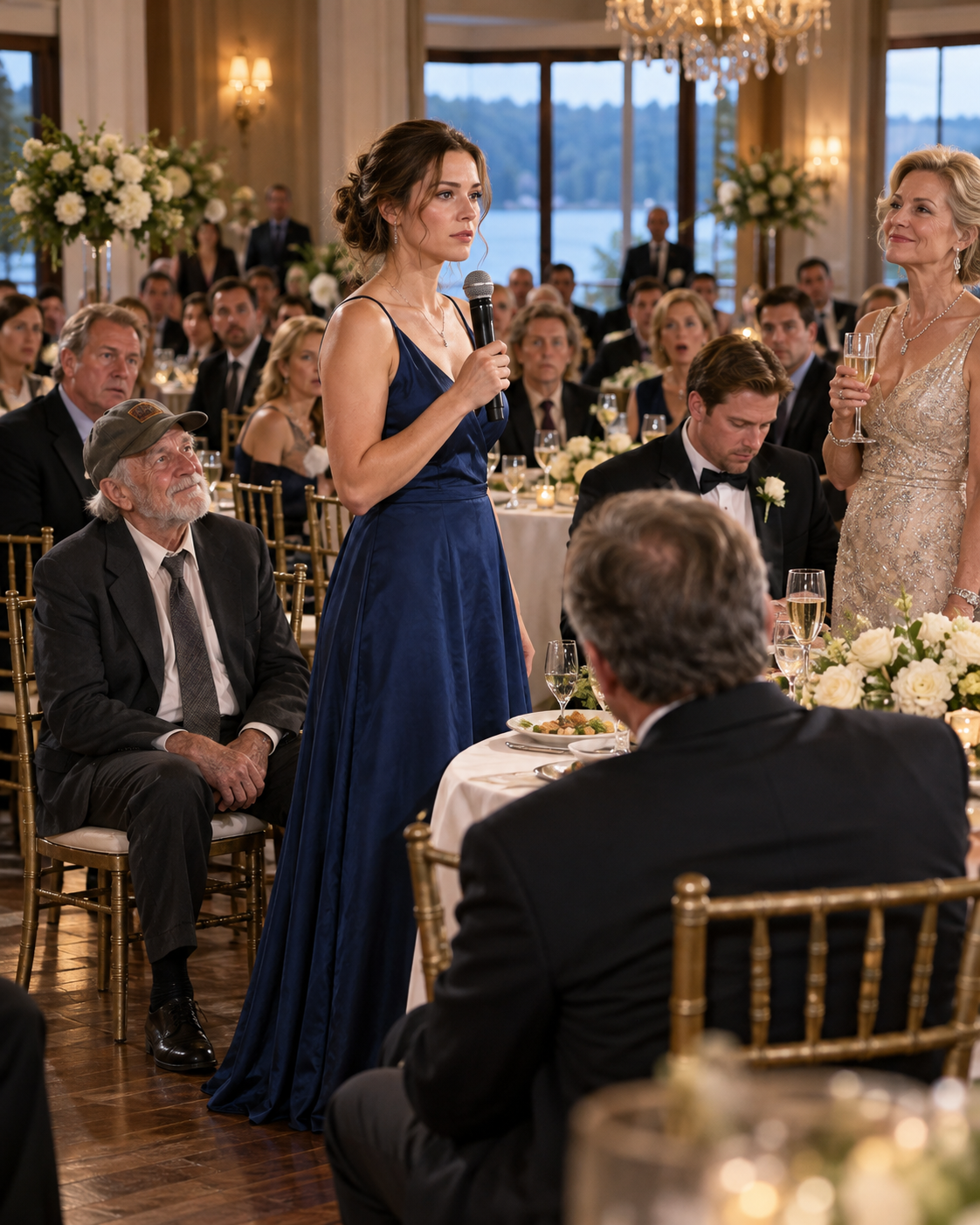
My future mother-in-law mocked my job at our rehearsal dinner—then Grandpa winked from table six.
Part 1: We wanted a doctor for our son. He insisted on marrying a mechanic. My future mother-in-law made that...

My wife brought her beautiful best friend home during a storm and insisted she sleep in our bed. “There’s plenty of room for three,” she laughed – Family
I didn’t sleep for the rest of that night. Even after Sloane stopped talking, even after the storm began moving...

Wife Went To A Halloween Party And Ended Up Cheating On Her Husband. He Filed For Divorce…
My Wife Kissed Another Man at a Halloween Party and Told Me to Go Home—Then Her Friend’s Boyfriend Called With...