CEO Humiliated the Single Dad at Christmas—Then Her Father Called Him “Boss”…
CEO Humiliated the Single Dad at Christmas—Then Her Father Called Him “Boss”
She ordered security to throw a single father out of her Christmas gala because his jacket looked too cheap for the room.
Three hundred wealthy guests watched him walk toward the exit, still clutching a little present from his nine-year-old daughter.
Then the CEO’s father appeared—and the two words he spoke would threaten everything she had spent her life building.
PART 1 — THE MAN WHO DIDN’T BELONG
“Get him out of here.
Now.”
Victoria Harrington’s voice carried across the ballroom with the sharp precision of someone accustomed to being obeyed.
Two security officers moved toward the man standing beside the towering Christmas tree, and conversations began dying around them.
Beneath the glittering chandeliers, Daniel Carter stood motionless in his faded brown jacket, holding a small package wrapped in blue paper.
He had been inside the building for less than seven minutes.
Now nearly three hundred people were watching him being escorted out.
“Ma’am,” Daniel said quietly, “I think there’s been a misunderstanding.”
“There certainly has,” Victoria replied. “This is a private event.
You cannot simply walk in because you see an open door.”
Daniel glanced at the package in his hand.
A little silver ribbon had come loose during the drive, and he carefully pressed it back into place with his thumb.
“I was told someone would be here tonight,” he explained. “Walter Brooks.
He’s one of your security officers.
I just need to give him something.”
Victoria looked him over, beginning with his work boots and ending at the worn collar of his jacket.
“And you thought the appropriate place to deliver a personal gift was our annual investors’ gala?”
The question drew an uncomfortable chuckle from a man standing behind her.
Daniel felt the familiar heat of embarrassment rising along his neck.
He had spent enough years working around wealthy people to recognize the expression on Victoria’s face.
It was the look someone gave a stranger whose presence required an explanation.
“I won’t take more than a minute,” he said.
“You’ve already taken several.”
One of the security officers shifted his weight.
The younger one, a broad-shouldered man named Eric, looked as though he wanted to say something, but Victoria raised her hand before he could speak.
“Please escort this gentleman outside.”
A hundred small sounds seemed to vanish at once.
Daniel looked past her toward the tables covered in white linen, where crystal glasses stood beside elaborate flower arrangements.
Near the far wall, a woman in a silver dress whispered into her husband’s ear.
Another guest lifted his phone before thinking better of it.
Daniel could have ended the humiliation immediately.
His phone contained the private number of the chairman.
His name appeared on documents that Victoria herself had signed without ever meeting him.
One call to the company’s general counsel would have transformed the entire room’s behavior.
But he had not come to prove anything.
He had come because his nine-year-old daughter had made a promise, and he intended to keep it.
Six years earlier, Daniel’s wife, Olivia, had died after a long illness.
Emma had been three years old then, too young to understand why her mother could no longer come home but old enough to remember the terrible quiet afterward.
Daniel remembered standing in their kitchen one December morning, staring at a pan of burned pancakes while Emma sat at the table wearing mismatched socks.
“Mommy used to make them like snowmen,” she had whispered.
He had turned away before she could see his face.
That winter, he learned to braid hair from online videos, pack lunches that his daughter would actually eat, and identify the difference between a nightmare that required a glass of water and one that required him to sit beside her until sunrise.
He worked as a maintenance supervisor for Lakefront Facility Services, a Chicago company that handled repairs and mechanical systems for commercial buildings.
His colleagues knew him as a dependable man who drove an aging Ford pickup, arrived before his shift, and kept a photograph of Emma taped inside his tool cabinet.
They didn’t know much about the life he had lived before Olivia became sick.
They didn’t know that Daniel had once developed building-energy technology used by property companies across several states, or that he had sold the business for a substantial sum when Olivia’s treatments consumed nearly everything he had emotionally left to give.
They certainly didn’t know what he had done with the money afterward.
Daniel preferred it that way.
Four days before Christmas, Emma had come home from school carrying a handmade card decorated with crooked green trees.
“Daddy, remember Mr.
Walter from the big building?”
Daniel looked up from a leaking kitchen faucet.
“The security guard who gave you the peppermint?”
She nodded.
“His wife died.”
Daniel set down his wrench.
Emma stood beside him, twisting the corner of the card between her fingers.
“He told me when we went there last week.
I asked why he looked sad, and he said Christmas was going to be quiet this year.”
Daniel understood that kind of quiet.
Walter Brooks had worked at Chicago Heritage Building for almost a decade.
He was sixty-eight, unfailingly polite, and recently widowed after forty-one years of marriage.
Emma had decided that nobody who missed someone should spend Christmas believing they had been forgotten.
She made him a present.
It wasn’t expensive.
Inside a small cardboard box, she placed a hand-painted wooden ornament, a photograph Daniel had helped her print, and a folded note she refused to let her father read.
“It’s private,” she insisted.
On Christmas Eve, Emma stayed with Daniel’s mother, Margaret, while he finished an emergency maintenance call.
He promised to deliver the gift before returning home for their traditional dinner of spaghetti and garlic bread.
A colleague had told him Walter and his family were attending a company Christmas event, where Walter would receive an award for his years of service.
Daniel had assumed he could leave the package at the front desk.
Instead, a temporary receptionist directed him upstairs to the gala check-in area, where a young hostess, Madison, began searching the guest list.
Before she could find Walter’s name, Victoria noticed him.
And now, with two guards standing beside him, Daniel regretted not leaving the gift with the concierge downstairs.
“Sir,” Eric said softly, “we should go.”
Daniel looked at Victoria one final time.
“I don’t want any trouble.
Please just make sure Walter gets this.”
Victoria folded her arms.
“This building has procedures for deliveries.”
“It’s not a delivery,” Daniel said.
“Then what is it?”
“A little girl’s Christmas present for a man who misses his wife.”
For one brief moment, Victoria’s expression changed.
Something almost human passed across her face, so quickly that Daniel wondered whether he had imagined it.
Then she noticed the members of her executive board watching.
“I’m sorry for his loss,” she said. “But grief doesn’t exempt anyone from following the rules.”
Daniel nodded once.
He didn’t argue.
He didn’t mention money, influence, or ownership.
He simply turned toward the exit.
The ballroom doors opened before he reached them.
An elderly man stepped inside, removing his black leather gloves as he walked.
His silver hair was neatly combed, and his dark overcoat looked almost too ordinary for someone whose name appeared on the building’s bronze cornerstone.
Richard Harrington.
Founder of Chicago Heritage Group.
Victoria’s father.
Richard had been speaking to a guest when he noticed the two security officers accompanying Daniel.
His smile disappeared.
He stopped so abruptly that the woman beside him nearly collided with his shoulder.
“Daniel?”
The single word crossed the room.
Victoria turned.
“Dad, it’s fine.
We’re handling a small misunderstanding.”
Richard didn’t appear to hear her.
He walked past the head of operations, past two board members, and directly toward the man in the brown jacket.
Daniel’s face softened with recognition.
“Richard.
Merry Christmas.”
The older man looked from Daniel to the security officers, then toward his daughter.
“What is going on?”
Victoria straightened.
“This gentleman entered without proper authorization.
I asked security to escort him out.”
Richard stared at her.
For several seconds, he said nothing.
Then he gently moved between Daniel and the guards, took Daniel’s free hand in both of his, and shook it with unmistakable respect.
His voice was quiet, but in that silent ballroom, everyone heard him.
“Merry Christmas, boss.”
PART 2 — THE NAME BEHIND THE COMPANY
Victoria stared at her father as though he had begun speaking a language she didn’t understand.
“I’m sorry,” she said. “What did you call him?”
Richard did not release Daniel’s hand immediately.
His gaze remained fixed on the worn brown jacket, then moved to the small package Daniel was protecting against his chest.
“Boss,” he repeated.
A low murmur rolled through the ballroom.
Daniel gave a faint, uncomfortable smile.
“Richard, there’s no need for that tonight.”
“Apparently, there is.”
Richard turned toward his daughter, and the warmth that had always softened his face when he looked at her was suddenly absent.
“Victoria, do you know who this man is?”
She glanced between them.
“He said he came to see one of our security employees.”
“That’s what he came to do,” Richard replied. “It isn’t who he is.”
Daniel closed his eyes briefly.
He had known Richard Harrington for nearly five years, and he had rarely seen the older man this angry.
“Richard,” Daniel said, “please.”
But Richard shook his head.
“No.
You have spent years protecting the dignity of people who couldn’t protect themselves.
I’m not going to stand here while someone in my own family takes yours away.”
The words made Victoria’s shoulders stiffen.
Around them, guests leaned forward, sensing that the evening had become something entirely different from the elegant charity celebration they had expected.
Richard turned toward the executive board members gathered beside the Christmas tree.
“Some of you remember when Chicago Heritage nearly lost everything.”
Victoria’s eyes narrowed.
“Dad, this isn’t the appropriate—”
“Three properties were in foreclosure negotiations,” Richard continued. “Two of our largest lenders had refused to extend their agreements.
We were facing the possibility of selling half the company simply to keep the other half alive.”
Daniel stared at the floor.
He remembered those months vividly.
Chicago Heritage had been a respected regional property company, but declining commercial occupancy, expensive refinancing terms, and a series of badly timed acquisitions had left it vulnerable.
Daniel had been approached through a financial adviser who knew he was quietly purchasing distressed commercial loans.
He hadn’t been searching for an empire.
He had been searching for investments that would give Emma a secure future without requiring him to return to the exhausting life of building and selling companies.
The initial deal involved buying discounted debt from a lender eager to recover what it could.
When Chicago Heritage’s situation worsened, Daniel provided additional capital through his investment company, Northbridge Stewardship.
The eventual restructuring converted much of that debt into equity.
Existing owners accepted substantial dilution rather than a collapse, and Daniel’s investment vehicle emerged holding fifty-four percent of the voting shares.
Richard stayed as chairman.
The company retained its name, management team, and independence in day-to-day operations.
Under Daniel’s agreement, the new majority owner would remain largely out of public view.
He wanted the company’s employees to keep their jobs.
And he wanted his daughter to grow up believing that her father’s worth had nothing to do with the amount of money attached to his name.
Richard looked directly at Victoria.
“The investor who saved this company is standing right here.”
Someone near the bar dropped a glass.
Richard continued.
“Northbridge Stewardship is the majority shareholder of Chicago Heritage Group.
Daniel Carter is its beneficial owner.”
Victoria’s face slowly drained of color.
She knew Northbridge.
Every executive knew Northbridge.
Its representative attended board meetings, reviewed major acquisitions, and held the controlling voting interest in the company.
But Northbridge operated through a private holding structure and was generally represented by attorneys and investment professionals.
Victoria had become CEO two years after the restructuring, and although ownership information was available through the company’s confidential corporate records, she had never met the individual behind the investment.
She had assumed he was an older financier who spent his days moving between private offices and luxury resorts.
Not a man in worn work boots.
Not a single father holding a child’s Christmas present.
Richard’s voice grew heavier.
“When we couldn’t make payroll without another emergency credit line, Daniel agreed to provide the capital we needed.
He could have demanded immediate layoffs and property sales.
Instead, he helped us negotiate a restructuring that gave the business time to recover.”
He looked at the board.
“He did not save this company by being sentimental.
He did it by understanding its numbers and believing its people were worth keeping.”
Victoria pressed one hand against the back of a chair.
Daniel finally spoke.
“That’s enough, Richard.”
His voice wasn’t loud, but it stopped the older man.
Daniel looked around the ballroom at the people who had stared at him moments earlier.
Many were now avoiding his eyes.
A woman who had laughed when Victoria questioned his presence appeared fascinated by the embroidery on her napkin.
Daniel recognized the change.
It was the same instinct that had once caused people to suddenly become friendly when they learned he owned a technology company.
The jacket hadn’t changed.
Only what they believed he could do for them.
“I didn’t come here to discuss shareholders,” Daniel said. “I came to find Walter Brooks.”
Victoria opened her mouth, but no words came.
“Someone please find him,” Richard ordered.
Madison, the young hostess who had tried to help Daniel at the entrance, hurried toward the staff corridor.
A minute later, Walter appeared.
He wore a navy suit that was slightly too large through the shoulders.
Beside him stood his adult daughter, Rebecca, and her twelve-year-old son, Owen.
Walter looked frightened.
“Mr.
Carter?
Did something happen?”
Daniel smiled for the first time since entering the ballroom.
“Nothing that matters.”
He offered the package.
“Emma made this for you.”
Walter’s hands trembled as he accepted it.
“My goodness,” he whispered. “She didn’t have to do that.”
“She wanted to.”
Walter carefully opened the wrapping paper.
Inside lay a small wooden star, painted blue with tiny gold dots.
On its reverse, Emma had written two names in uneven letters.
Walter and June.
He stared at the ornament for a long moment before unfolding the note.
Nobody else could read it.
But Daniel watched the old man’s expression change.
Walter pressed the paper against his lips.
Rebecca touched her father’s arm.
“Dad?”
Walter struggled to answer.
“It’s from that little girl,” he said. “She remembered June’s name.”
The ballroom remained quiet.
For several seconds, the expensive decorations and carefully arranged tables seemed almost irrelevant.
Richard rested a hand on Daniel’s shoulder.
Victoria looked away.
She could tolerate embarrassment.
She could tolerate losing an argument.
What she couldn’t tolerate was realizing that the man she had treated as an intruder had brought something more meaningful into her ballroom than any of its carefully planned charity presentations.
She approached Daniel.
“Mr.
Carter, I owe you an apology.”
He turned toward her.
“Go ahead.”
She swallowed.
“I made an assumption about you that was completely unfair.
I spoke to you disrespectfully, and I embarrassed you in front of everyone.
I’m sorry.”
Daniel studied her face.
Then he asked a question she hadn’t expected.
“Would you be apologizing if your father hadn’t told you who I was?”
Victoria went still.
The answer was there, between them, and she could not make herself deny it.
“I don’t know,” she admitted.
Daniel nodded.
“That’s what you need to think about.”
She lowered her eyes.
“I will.”
He didn’t offer forgiveness simply to make the room comfortable.
Instead, he turned to Walter and asked whether he would deliver Emma’s present personally when the holiday ended.
Walter promised he would.
As Daniel prepared to leave, a folded paper slipped from Walter’s jacket pocket.
Daniel bent to retrieve it.
The document was printed on Chicago Heritage letterhead.
At the top were the words Facilities Workforce Transition — January Implementation.
He wasn’t trying to read it, but Walter noticed where his eyes had stopped.
“I’m sorry, Mr.
Carter,” the old guard murmured. “I shouldn’t have brought that here.”
Daniel handed it back.
“What is it?”
Walter glanced toward Victoria.
Then he looked at Daniel with an expression that made the evening’s humiliation suddenly feel very small.
“They’re replacing our security and maintenance teams after New Year’s,” he whispered. “Ninety-four of us.
They told us we’d be notified after Christmas.”
Daniel looked across the ballroom at the smiling faces on the company’s charity posters.
“Who approved it?”
Walter hesitated.
Then he answered.
“Your CEO, sir.
She signed the order herself.”
PART 3 — THE CHRISTMAS PRESENT NOBODY WANTED TO OPEN
Daniel didn’t confront Victoria in the ballroom.
Walter was standing beside his daughter, holding Emma’s ornament with the careful attention people gave objects that could never be replaced.
Richard was still waiting for Daniel to say something about the humiliation, and a dozen guests seemed eager to offer apologies they hadn’t considered ten minutes earlier.
Daniel wasn’t interested in giving the evening another spectacle.
He slipped Walter his personal phone number.
“If someone gives you a notice, send me a copy,” he said. “And don’t sign anything you haven’t had a chance to read.”
Walter nodded, although his expression remained uncertain.
Daniel turned to Richard.
“We need to talk after Christmas.”
Richard studied him.
“About Victoria?”
“About what happens in this company when nobody thinks the owner is watching.”
That was the last thing Daniel said before he left.
Outside, the cold struck his face with unexpected force.
Snow had begun falling over downtown Chicago, collecting along the edges of parked cars and turning the sidewalks silver beneath the streetlights.
His truck sat in a public parking garage three blocks away.
By the time he reached it, his fingers were numb.
He placed his hands on the steering wheel and remained there without starting the engine.
His phone buzzed.
A photograph appeared from his mother.
Emma was sitting at the kitchen table in red pajamas, grinning over a plate of cookies shaped like stars.
Beneath it Margaret had written: Your little elf says you are late.
The spaghetti is getting cold.
Daniel stared at the photograph.
He could hear Olivia’s voice as clearly as if she were sitting beside him.
Don’t miss the ordinary things, Danny.
They’re the ones you’ll want back.
He started the truck.
At home, Emma ran to the door before he finished removing his boots.
“Did he like it?”
Daniel caught her in his arms.
“He loved it.”
“Did he cry?”
“A little.”
She smiled with the satisfied expression of someone who had accomplished exactly what she hoped.
“Good crying?”
“The best kind.”
Emma hugged his neck.
“Mom used to cry like that when I made her pictures.”
Daniel closed his eyes.
His mother stood in the kitchen doorway, quietly watching them.
For the next hour, Daniel let himself be what Emma needed him to be.
He cooked the spaghetti.
He helped her hang an ornament on their small tree.
He pretended not to notice when she hid a present behind the couch with most of the wrapping paper still visible.
After she went to bed, Margaret sat across from him at the kitchen table.
“You haven’t said much.”
“Long day.”
She looked at his jacket.
“Something happen downtown?”
Daniel took a sip of coffee.
“I met someone who reminded me why I stopped wearing a suit.”
Margaret waited.
He told her about the gala, leaving out only the parts that would have made her angrier than he wanted.
When he finished, she looked toward the hallway where Emma was sleeping.
“You didn’t tell that woman who you were?”
“Richard did.”
“And how did that make you feel?”
Daniel considered the question.
“Worse than I expected.”
“Because she was embarrassed?”
“Because she wasn’t embarrassed until she found out I had money.”
Margaret nodded slowly.
Then she reached across the table and touched his hand.
“Olivia would have been proud of how you handled it.”
Daniel looked away.
“Olivia would have told me I was avoiding a fight.”
His mother smiled faintly.
“She could have done both.”
Across the city, Victoria Harrington had not gone home.
The ballroom had emptied shortly after midnight.
A cleaning crew was removing flower arrangements while technicians dismantled the stage where she had delivered a speech about opportunity, community, and responsibility.
Victoria stood alone near the podium.
Her phone contained seven messages from board members.
Three concerned Daniel Carter.
Four concerned the possibility that the evening’s confrontation would become public.
None mentioned Walter Brooks.
She opened the facilities transition document on her tablet.
The proposal had been presented three months earlier by Martin Blake, Chicago Heritage’s chief operating officer.
Martin was fifty-one, polished, efficient, and widely respected for reducing operating costs without disrupting building occupancy.
He had told Victoria that the company could save approximately $1.8 million annually by replacing several directly employed security and maintenance teams with an outside contractor.
Victoria remembered the presentation.
She remembered asking whether the new contractor could maintain existing service standards.
She remembered Martin assuring her that the transition would be gradual, with current workers invited to apply for positions.
She did not remember asking how many of them would lose their benefits.
Now she found the answer buried in an appendix.
The ninety-four positions would be eliminated.
Employees hired by the new contractor would begin under new employment agreements.
Seniority, accrued benefits, and employer retirement contributions would not automatically transfer.
Several workers who had spent decades with Chicago Heritage could find themselves starting over.
Victoria stared at her signature on the final approval page.
December 17.
Seven days earlier.
She remembered signing the document between a meeting with investors and a rehearsal for the gala.
Martin had placed it in her folder with three other routine approvals.
She had asked whether the legal team had reviewed it.
He had said yes.
That had been enough.
Until now.
Her phone rang.
Martin’s name illuminated the screen.
“Victoria,” he said when she answered, “I’ve been trying to reach you.
We need to get ahead of this unfortunate situation.”
She sat down.
“Which unfortunate situation?”
“The investor incident, obviously.”
Victoria looked at the contract on her tablet.
“Martin, how many employees are losing their jobs in January?”
A pause.
“Excuse me?”
“The facilities transition.
Ninety-four positions.
How many people are actually expected to receive offers from the new contractor?”
“That’s complicated.”
“Give me a number.”
“We’ve projected that approximately forty-five to fifty could qualify for reemployment.”
Victoria closed her eyes.
“Qualify?”
“The vendor has standards.
Certifications, availability, flexibility.
You know how these things work.”
“And the other forty-four?”
Martin sighed.
“Victoria, this restructuring was approved months ago.
We can’t run a modern company like a social services agency.”
She looked toward the stage.
A large screen still displayed the words Chicago Heritage Cares.
“Why were employees told they’d receive official notice after Christmas?”
“Because it was the sensible way to handle communications.”
“Sensible for whom?”
Another pause.
Then Martin’s voice hardened slightly.
“Are we really going to reopen an approved cost-saving initiative because some shareholder decided to play working-class Santa Claus?”
Victoria’s fingers tightened around the phone.
“Watch how you speak about him.”
“I’m trying to protect you.”
“No,” Victoria replied. “You’re trying to protect a decision I signed without understanding.”
She ended the call.
For a long time, she sat beneath the darkened chandeliers.
Then she opened the executive gift budget from that evening.
Leather travel cases.
Luxury watches.
Personalized crystal decanters.
The total was $418,000.
She compared it with the estimated cost of extending employment and health benefits during the proposed facilities transition.
The difference was smaller than she expected.
Her phone buzzed again.
This time, the message came from her father.
Daniel wants a meeting on December 26.
Nine in the morning.
Bring Martin, HR, and legal counsel.
And Victoria, read everything before you come.
Victoria looked again at the document.
A separate appendix showed that the new contractor had been selected from three bidders.
The winning company was called Sterling Integrated Services.
She searched its ownership information.
There was little to see beyond a newly formed holding company and an address in Oak Brook.
Then she noticed the name of its registered representative.
It was familiar.
Painfully familiar.
The man who had prepared Chicago Heritage’s contract also represented the company that stood to receive it.
PART 4 — THE PRICE OF LOOKING AWAY
At eight forty-five on the morning after Christmas, Victoria arrived at Chicago Heritage headquarters carrying a folder so thick she could barely close it.
She had slept less than three hours.
The lobby was almost empty.
A cleaner moved a mop across the marble floor while the reception desk’s small Christmas tree blinked beside an abandoned tray of holiday cookies.
Victoria normally entered through the private executive garage.
That morning, she walked through the front doors.
The cleaner stepped aside immediately.
“Good morning, Ms.
Harrington.”
Victoria stopped.
“Good morning.
What’s your name?”
The woman looked startled.
“Rosa, ma’am.”
“Rosa what?”
“Delgado.”
Victoria nodded, embarrassed by how difficult the simplest exchange had become.
“How long have you worked here?”
“Twelve years.”
Victoria looked at the woman’s gray uniform, the practical shoes, the small compression brace around one wrist.
“Twelve years,” she repeated.
Rosa’s expression tightened.
“Am I in trouble?”
The question landed harder than an accusation.
“No,” Victoria said. “Of course not.”
Rosa nodded, but she didn’t look reassured.
Victoria continued toward the elevators, carrying the uncomfortable knowledge that an employee who had worked in her building for twelve years expected trouble simply because the CEO had asked her name.
Upstairs, Richard Harrington waited in the conference room.
Daniel was already there.
He wore dark jeans, a clean blue shirt, and the same brown jacket from Christmas Eve, folded over the back of his chair.
Victoria noticed immediately.
She suspected he had worn it deliberately.
He hadn’t.
It was the warmest jacket he owned, and he had forgotten to collect his other coat from the dry cleaner before the holiday.
Beside Daniel sat Elena Morales, Chicago Heritage’s general counsel.
Martin Blake occupied the opposite end of the table, looking composed enough to suggest he’d had time to prepare his arguments.
Richard looked tired.
He began without ceremony.
“Victoria, explain the contract.”
She opened her folder.
“The company approved a facilities outsourcing proposal that would eliminate ninety-four directly employed positions.
The original business case projected $1.8 million in annual savings, but I have concerns about how those savings were calculated and whether the employee consequences were properly disclosed.”
Martin leaned forward.
“The consequences were disclosed.”
“Not accurately,” Victoria replied.
He gave a disbelieving laugh.
“Victoria, you signed the approval.”
“I know.”
The simplicity of her admission seemed to unsettle him.
She placed a document on the table.
“The recommendation says existing employees would receive preferential consideration for positions with Sterling Integrated Services.
The final employment appendix says the contractor has no obligation to hire them.”
Martin shrugged.
“That language is standard.”
“Standard for whom?”
“For commercial outsourcing agreements.”
Daniel had remained silent.
Now he spoke.
“How much of the projected savings comes from reduced wages and benefits?”
Martin turned toward him.
“Mr.
Carter, with respect, the financial model is complicated.”
Daniel opened his laptop.
“I’ve read it.”
He turned the screen toward the table.
“According to your own comparison, nearly sixty percent of the first-year savings comes from replacing experienced workers with employees who will receive lower total compensation.”
Martin glanced at the figures.
“Labor costs are part of every competitive operating model.”
“Of course,” Daniel said. “But your executive summary describes these as scheduling efficiencies.”
“They are efficiencies.”
Daniel looked up.
“Then why didn’t you call them wage and benefit reductions?”
Nobody answered immediately.
Elena adjusted her glasses.
“There is another issue.”
She distributed copies of a document.
“The procurement review was coordinated by an outside attorney named Andrew Sloane.
He also appears as the registered agent for Sterling’s parent company.”
Martin gave a dismissive wave.
“Sloane provides corporate registration services for dozens of clients.
That’s not evidence of wrongdoing.”
“No,” Elena agreed. “It isn’t.
But the overlap should have been disclosed and assessed before he participated in reviewing the bids.”
Victoria turned a page.
“Was it?”
“Not in the records I’ve received.”
Martin’s jaw tightened.
“This is becoming a witch hunt.”
“No,” Daniel said. “A witch hunt begins with a conclusion.
We’re asking for the documents that support yours.”
Richard looked at Martin.
“Were there other bidders?”
“Three.”
“Were they independent?”
“As far as I know.”
Elena closed her folder.
“Then we need an independent review of the procurement process.
Until then, I recommend pausing implementation where contractually possible and preserving all related records.”
Victoria looked toward Daniel.
“Can we reverse it?”
“Not just because I own the most shares,” he answered. “There are contracts, employees, and legal obligations involved.
We need to understand the cost of each option.”
Richard nodded.
“Then understand it quickly.”
Elena hesitated.
“There is a deadline.”
The room went quiet.
She slid another document across the table.
“Sterling’s contract contains an early termination provision.
Because it has already begun hiring and purchasing equipment, cancellation after December twenty-seventh may trigger a disputed claim for up to $2.6 million in mobilization and termination costs.”
Victoria stared at the date.
The following day.
Martin crossed his arms.
“Which is exactly why reopening this deal is irresponsible.”
Daniel leaned back.
“Who recommended that deadline?”
“The vendor,” Martin said.
“Who agreed to it?”
Martin didn’t answer.
Elena checked her notes.
“The final language was approved as an executive exception.”
Victoria felt something tighten in her stomach.
She knew what was coming.
Elena looked directly at her.
“Your office approved it, Victoria.”
For the second time in forty-eight hours, Daniel watched the CEO confront a consequence bearing her own name.
But this time, there were no chandeliers, no wealthy audience, and no humiliating spectacle to distract from what mattered.
Victoria drew a breath.
“Then my office will help correct it.”
Martin shook his head.
“You’re risking millions over a handful of complaints.”
Daniel closed his laptop.
“Ninety-four people aren’t a handful, Martin.”
He stood and took his jacket from the chair.
“I want the independent review started today.
I also want the workers told the truth about their employment status.
Nobody should be guessing whether they can pay January’s bills while we argue over a contract.”
He turned toward Victoria.
“And you should meet the people whose lives you signed your name across.”
Victoria nodded.
“I will.”
The meeting ended shortly before eleven.
As the others departed, Richard remained seated beside his daughter.
For a moment, neither spoke.
Then he said, “I should have taught you something I learned too late.”
Victoria looked at him.
“What’s that?”
“People who bring you good news are easy to find.
People who tell you something you don’t want to hear are the ones you have to protect.”
She studied his face.
“You never told me Daniel worked with his hands.”
“I didn’t think it mattered.”
“It mattered to me.”
Richard lowered his head.
“I know.”
At noon, Victoria received an urgent message from Elena.
The independent review had found a second undisclosed connection.
A minority ownership interest in Sterling’s parent company was held through an investment partnership.
One of that partnership’s principals was Martin Blake’s brother.
Elena had attached the supporting corporate records.
Victoria stared at the screen.
Then a second message arrived.
Martin has instructed his assistant to collect the original procurement files from the department before our review team arrives.
And suddenly, Victoria understood that the contract might not be the only thing someone was trying to protect.
PART 5 — THE PEOPLE BEHIND THE NUMBERS
By three that afternoon, Martin Blake had been placed on paid administrative leave.
The decision came from a specially convened committee of independent board members after Elena presented the apparent conflict and the concern over procurement records.
No one had yet concluded that Martin had committed fraud or profited personally.
But his undisclosed family connection to the selected vendor, combined with his attempt to take custody of documents after being told to preserve them, warranted an investigation.
Martin called Victoria six times.
She answered the seventh.
“You’re making a serious mistake,” he said.
“I may have made several,” she replied. “This isn’t one of them.”
“You know what happens if the board starts questioning my decisions?
They’ll question yours next.”
“They should.”
“You’re letting Daniel Carter turn one embarrassing incident into an attack on everything we’ve built.”
Victoria sat at her desk.
“No, Martin.
I’m finally looking at something I should have examined months ago.”
His tone changed.
“Do you have any idea how hard I worked to protect your position?”
She stared at the snow falling beyond her window.
“I thought your job was to protect the company.”
He disconnected.
Victoria remained seated long after the call ended.
The worst part was that Martin had not always been wrong.
He had introduced better maintenance scheduling, renegotiated several overpriced supply contracts, and helped stabilize a portfolio of properties that were still recovering from difficult years.
He understood numbers.
He understood how executives wanted information presented.
And he had understood Victoria’s greatest weakness.
She wanted every financial report to prove she deserved the CEO title without relying on her father’s name.
So Martin had learned to bring her victories neatly packaged in charts.
He rarely brought the people those victories affected.
An hour later, Victoria walked into the employee break room on the building’s lower level.
It smelled of reheated coffee, bleach, and the soup someone had left too long in a microwave.
Six employees sat around two scratched tables.
Their conversations stopped when they saw her.
Victoria hated that she had become someone whose arrival made a room silent.
“I’m not here to make an announcement,” she said. “I wanted to hear your concerns about the proposed facilities transition.”
A man in a Chicago Bears sweatshirt gave a humorless smile.
“Are we still allowed to have concerns?”
Victoria looked at him.
“Yes.”
He pushed back his chair slightly.
“Then why did we have to find out from a rumor?”
She didn’t have a good answer.
Rosa Delgado sat near the window, eating crackers from a paper bag.
Victoria recognized her from that morning.
“Rosa, can I ask you something?”
Rosa nodded cautiously.
“Do you know if your position is affected?”
“Yes, ma’am.”
“How long have you known?”
“Three weeks.”
Victoria frowned.
“Official notices haven’t gone out.”
Rosa gave a small, exhausted shrug.
“People talk.”
The man in the sweatshirt introduced himself as Anthony Reed, an overnight maintenance technician.
He explained that several employees had been called into informal meetings with vendor representatives.
They were told to prepare updated résumés if they hoped to remain in the building.
“Some of us have been here twenty years,” he said. “They were asking whether we’d accept starting wages below what we’re making now.”
Victoria listened.
For the first time, the savings figures took on faces.
Anthony had a daughter in community college.
Rosa helped support her elderly father.
Another worker was paying for his husband’s physical therapy.
None of those circumstances appeared in Martin’s presentation.
Rosa finally looked directly at Victoria.
“My son asked me what would happen if I lost my insurance.”
Victoria lowered herself into the empty chair opposite her.
“What did you tell him?”
“That we’d figure it out.”
“Would you?”
Rosa’s eyes shone.
“I don’t know.”
Victoria felt the instinctive urge to offer a reassuring answer.
She could promise to fix the contract.
She could promise the workers would keep their jobs.
But she had already learned what happened when she signed commitments without understanding them.
So she told the truth.
“I approved the proposal.
I did not understand its full effect on you, but that was my responsibility to understand.
I can’t promise an outcome today.
I can promise we’ll review the decision openly and tell you what we’re doing.”
Anthony studied her.
“Are you saying you didn’t know?”
“Yes.”
“Then who were you listening to?”
Victoria looked around the break room.
The faces waiting for her answer were not hostile.
That made it worse.
“I was listening to the wrong people,” she said.
Anthony shook his head.
“No offense, Ms.
Harrington.
But we were right here.”
The words followed her all the way back upstairs.
That evening, Daniel arrived at his mother’s house to find Emma and Margaret assembling a gingerbread house that appeared to be collapsing under its own frosting.
Emma greeted him with icing on her cheek.
“Daddy, I think our roof needs one of your tools.”
Daniel laughed.
“Maybe a structural engineer.”
He sat beside her, holding the gingerbread walls together while she added too many gumdrops.
“Mr.
Walter called Grandma,” she announced.
“Did he?”
“He said he hung my star on his Christmas tree, but he put it next to his wife’s picture so she could see it.”
Daniel’s hands became still.
Emma tilted her head.
“Do you think people in heaven can see Christmas trees?”
He looked toward Margaret.
She gave him a tiny, helpless smile.
“I don’t know, sweetheart,” Daniel said.
Emma considered that.
“That’s okay.
He can see it.
That’s enough.”
Daniel kissed the top of her head.
A few minutes later, his phone vibrated.
Victoria had sent a message requesting permission to visit Lakefront Facility Services, where he worked.
She wanted to understand why he had chosen that life.
He almost declined.
He had spent years protecting the separation between his investment activities and his ordinary routine with Emma.
But he remembered Rosa Delgado’s uncertain face in a photograph Elena had sent from the worker meeting.
And he remembered Olivia asking him, during one of her last hospital stays, what he would do if he ever had the chance to prevent someone else from living with that same fear.
He wrote back.
Tomorrow morning.
Seven o’clock.
Wear shoes you don’t mind getting dirty.
At six forty-five the next morning, Victoria arrived at the maintenance depot.
She wore dark trousers, a practical winter coat, and flat leather boots.
Daniel greeted her beside a row of service trucks.
“You’re early.”
“I didn’t want to be late.”
He handed her a pair of safety glasses.
“Good.
Come on.”
He spent the next two hours showing her the work his team did.
They checked heating systems in an apartment building, inspected a malfunctioning boiler at a neighborhood clinic, and replaced a motor component in a commercial laundry facility.
Daniel carried tools, knelt on concrete floors, and spoke to building managers who had no idea that he controlled the voting majority of a major real estate company.
Victoria watched him explain a repair to a frightened apartment manager without making her feel foolish.
She watched him thank a junior technician for catching a dangerous wiring issue.
She watched him refuse to sign off on an inadequate repair even when it meant staying longer.
Finally, she asked the question that had been troubling her since Christmas Eve.
“Why are you still doing this?”
Daniel looked up from his toolbox.
“Doing what?”
“Working like this.
You don’t have to.”
He wiped his hands on a cloth.
“I know.”
“Then why?”
Daniel leaned against the truck.
“Because I know what it feels like when your world is falling apart and the only thing you can control is whether the heat works.”
Victoria said nothing.
“My wife spent her last Christmas in a hospital,” he continued. “The room was freezing because the heating system on that floor kept failing.
One maintenance worker came back after his shift and got it running.”
His voice softened.
“Olivia slept comfortably that night.
I remember his face better than I remember the specialist who came in the next morning.”
Victoria watched him close his toolbox.
“He probably didn’t realize what he gave us.”
Daniel looked at her.
“That’s the problem with people who run buildings.
We keep noticing the names at the top.
We forget the names of the people who make them work.”
Victoria lowered her eyes.
Then her phone rang.
It was Elena.
The general counsel’s voice was controlled, but urgent.
“Victoria, we found the final procurement authorization.
The conflict disclosure was waived.”
Victoria frowned.
“By whom?”
“Your office.”
“I never signed a conflict waiver.”
“No,” Elena said. “But there’s an email from your executive account authorizing Martin to proceed without further procurement review.”
Victoria leaned against the truck, struggling to remember the day.
Elena continued.
“The message was sent at 11:43 p.m., Victoria.
And it specifically says you didn’t want the board questioning the decision before Christmas.”
PART 6 — THE EMAIL SHE COULDN’T EXPLAIN
Victoria read the email three times.
Martin, I don’t want another round of questions on this before Christmas.
If legal says we’re covered, proceed with the vendor transition.
We cannot afford another delay.
It was unmistakably hers.
She remembered the evening.
She had been in New York for a meeting with institutional investors, sitting in a hotel room with her shoes kicked off and a headache pulsing behind her eyes.
Martin had sent a lengthy message explaining that procurement wanted additional documentation regarding Sterling.
She had skimmed it.
She remembered being irritated that the cost-saving initiative was taking longer than promised.
She had written her answer in less than a minute.
Now ninety-four people were facing the consequences of that minute.
Daniel read the message when she showed it to him.
He didn’t look surprised.
“That wasn’t a forged signature,” he said.
“No.”
“And no one made you send it.”
“No.”
Victoria folded her arms against the cold.
“I knew there were unresolved questions.
I didn’t know exactly what they were, and I didn’t ask.”
Daniel handed the phone back.
“Then that belongs in the review.”
She looked at him.
“I could lose my job.”
“Yes.”
The answer was so immediate that she almost recoiled.
Daniel noticed.
“Victoria, I didn’t say that because I want you fired.
I said it because losing your job is a possible consequence of a decision that affected other people’s jobs.
You can’t ask employees to accept uncertainty while insisting you’re exempt from it.”
She stared at him.
“You really would remove me.”
“If keeping you meant asking ninety-four families to trust someone unwilling to take responsibility, I’d have to consider it.”
She looked away.
For most of her professional life, she had been surrounded by people who softened difficult truths before delivering them.
Daniel did not.
Yet there was something unexpectedly steadying about that honesty.
He wasn’t trying to frighten her.
He was telling her where the ground actually stood.
“Then I want the email included,” she said.
Daniel nodded.
“Tell Elena.”
At the headquarters that afternoon, the independent review continued.
Victoria voluntarily provided her email records and instructed her staff to preserve relevant messages.
The review revealed that Martin had repeatedly described Sterling as the strongest bidder based on price and service flexibility.
But the scoring sheets contained inconsistencies.
The lowest-priced proposal had not initially come from Sterling.
Another bidder, Midwest Building Services, had offered a slightly higher base price but proposed retaining most existing Chicago Heritage employees under comparable wages and benefits.
That proposal had been assigned a low flexibility score.
Sterling’s had been assigned the highest.
No detailed explanation appeared in the procurement file.
More troubling was the discovery that Martin had omitted the identity of his brother’s investment partnership from an internal conflict disclosure.
The relationship did not automatically mean Sterling was incapable of performing the work.
But it raised serious questions about whether the vendor selection had been fair.
Elena recommended an outside investigator and an immediate negotiation with Sterling over implementation.
The company’s board scheduled an emergency meeting for December twenty-seventh.
Victoria understood that the review might expose not just Martin’s conduct but her own negligence.
For the first time, she was relieved.
The uncertainty was terrible.
Pretending there was no problem had been worse.
That night, Richard came to her apartment.
He brought Chinese takeout, something they hadn’t shared since Victoria was a teenager.
Her apartment overlooked Lake Michigan.
Expensive furniture filled the rooms, but the kitchen table was almost bare.
Richard placed the paper bags between them.
“I brought your favorite.”
Victoria looked inside.
“Orange chicken?”
“You used to eat it until you were sick.”
“I was thirteen.”
“You were very determined.”
She laughed despite herself.
They ate in silence for several minutes.
Then Victoria set down her fork.
“Did you know Martin was doing this?”
Richard looked offended.
“No.”
“Did you know people were afraid to talk to me?”
He hesitated.
“I knew you could be difficult.”
“That’s a polite way of putting it.”
“Victoria—”
“Dad, I stood in front of a ballroom full of people and decided Daniel wasn’t worth listening to because of his clothes.
I approved a contract that might hurt nearly a hundred employees because I couldn’t be bothered to read another appendix.”
Richard lowered his fork.
“I wasn’t the CEO.”
“No,” she replied. “But you taught me how to become one.”
He looked at her for a long moment.
“When your mother died, I thought keeping the company strong would keep everything else from falling apart.”
Victoria’s expression softened.
She had been nineteen when her mother, Catherine, died suddenly after a stroke.
Richard had buried himself in work.
Victoria had followed him.
“I watched you work sixteen-hour days,” she said. “I thought that was what being strong meant.”
“It was how I avoided coming home to an empty house.”
His voice grew rough.
“I told myself I was building something for you.
Sometimes I think I was just making sure there was never a quiet moment.”
Victoria looked toward the dark windows.
“I thought if I made the company successful enough, people would stop saying I got the job because I was your daughter.”
Richard sighed.
“Some people will always say it.”
“I know that now.”
“But proving them wrong doesn’t mean proving you can live without anyone else’s help.”
Her eyes filled.
Richard reached across the table.
“I should have taught you that.”
For the first time in years, Victoria allowed her father to hold her while she cried.
Meanwhile, Daniel sat beside Emma’s bed, reading from a library book she’d chosen because it had a dog wearing a winter hat on the cover.
Halfway through the story, she interrupted him.
“Daddy?”
“Yes?”
“Mr.
Walter said you helped his company.”
Daniel paused.
“Did he?”
“He said you were important.”
Daniel smiled.
“I’m important to you, I hope.”
She rolled her eyes.
“Daaaad.”
He closed the book.
“What did he say?”
“That you helped a lot of people keep their jobs.”
Daniel considered his answer.
“I helped with some business problems a few years ago.”
“Were you rich?”
The question was so direct that he almost laughed.
“Some of our investments are worth a lot of money.”
Emma studied his face.
“Then why is your truck so old?”
“Because it still runs.”
“And why don’t we have a big house?”
“Because I like our house.”
She thought about that.
“Are we poor?”
“No, sweetheart.”
“Are we rich?”
Daniel brushed a strand of hair from her forehead.
“We’re safe.
We have enough.
And we can help people when we need to.”
Emma nodded slowly.
Then she asked something that left him without an easy answer.
“Does everybody have enough?”
Daniel looked at the night-light glowing beside her bed.
“No.”
“Then maybe we should do something.”
He kissed her forehead.
“We should.”
The next morning, as Daniel drove toward Chicago Heritage’s emergency board meeting, Elena called.
Sterling’s attorneys had delivered a formal notice.
The contractor claimed it had already incurred substantial mobilization expenses and warned that any attempt to suspend or cancel the agreement would result in litigation.
But there was a second development.
The outside investigator had located internal correspondence suggesting Martin knew about his brother’s financial interest before recommending Sterling.
And a message from Martin to the vendor contained one extraordinary sentence.
“Once Victoria signs, the employees won’t have enough time to stop the transition.”
PART 7 — THE BOARDROOM WHERE EVERYTHING CHANGED
The emergency board meeting began at nine o’clock on December twenty-seventh.
Outside, Chicago was buried beneath several inches of fresh snow.
Inside, ten board members sat around a polished walnut table while Elena Morales distributed the investigator’s preliminary findings.
Martin Blake’s chair was empty.
Victoria had insisted on attending despite knowing that the board would be reviewing her conduct alongside his.
Daniel sat near Richard, wearing the same blue shirt he’d worn to the maintenance depot.
He looked less like an investment executive than the man who had come to fix the conference room’s broken heating system.
Elena began carefully.
“The preliminary evidence indicates an undisclosed conflict in the vendor selection process.
It does not yet establish criminal conduct, but it raises serious concerns about procurement integrity, fiduciary responsibilities, and the reliability of the financial projections.”
A board member named Thomas Caldwell leaned forward.
“What does Sterling say?”
“They deny improper involvement,” Elena replied. “Their lawyers maintain the contract is enforceable and have proposed a negotiated standstill in exchange for certain verified costs.”
Thomas shook his head.
“So we’re paying to delay a contract we already signed?”
“We’re weighing that cost against the potential cost of enforcing a contract selected through a compromised process,” Elena answered.
Victoria opened her folder.
“There’s another cost we haven’t discussed.”
She distributed a revised financial analysis.
It included severance obligations, employee replacement costs, training expenses, increased turnover, and the projected effect of reduced building familiarity on maintenance response times.
When those factors were included, Sterling’s apparent savings had declined substantially.
The figures weren’t imaginary.
They came from internal maintenance records, employee compensation files, and the same operating data Martin had used.
Daniel glanced through the pages.
For the first time since Christmas Eve, he saw Victoria doing the work he had expected of her all along.
Thomas frowned.
“Why weren’t these figures included in the original presentation?”
Victoria met his eyes.
“Because I accepted the presentation without requiring them.”
Silence settled around the table.
“I made a poor decision,” she continued. “Martin’s failure to disclose his relationship is a separate matter.
Mine is that I allowed an incomplete process to move forward because I wanted the savings reflected in our annual results.”
Richard watched her closely.
“I won’t ask the board to excuse that,” Victoria said. “I am asking it to let us prevent further damage.”
One director proposed terminating the Sterling contract immediately.
Elena advised against acting before the legal assessment was complete.
Another suggested allowing the transition to proceed while negotiating improved employment protections.
Daniel listened to each argument.
Finally, he spoke.
“When we restructured this company, we did not promise that nobody would ever lose a job.
A business that makes that promise is lying.”
The directors turned toward him.
“But we did agree that employment decisions would be evaluated honestly, with their real costs and consequences understood.
That standard was not met.”
He looked at Victoria.
“Can you negotiate a temporary solution that protects the workers while the contract review continues?”
“I believe so.”
“Can you do it without pretending the company has unlimited money?”
“Yes.”
“Then present it.”
Victoria outlined a proposal for a sixty-day extension of existing employment arrangements, subject to negotiations with the current service teams and Sterling.
During that period, an independent procurement committee would review the bids.
Employees would receive clear notices, access to legal information about their benefits, and opportunities to participate in discussions about future staffing.
The company would also establish a temporary emergency-assistance fund for employees facing immediate hardship.
The remaining uncommitted executive gift budget would contribute to that fund, alongside an allocation from the company’s existing contingency reserves.
There were objections.
There were questions about cost.
There was a long discussion about whether Victoria should remain responsible for negotiating the solution.
In the end, the board authorized the proposal, with Elena and an independent director overseeing the negotiations.
Martin’s administrative leave would continue pending the investigation.
The board also directed an independent committee to evaluate Victoria’s leadership decisions separately.
When the vote concluded, Victoria remained seated.
She had kept the opportunity to repair what she had damaged.
It was not the same as being absolved.
Daniel gathered his papers.
Richard approached him.
“Thank you.”
Daniel shook his head.
“Don’t thank me yet.
We still have ninety-four people waiting to find out what happens to them.”
Victoria stood.
“Daniel?”
He turned.
“I know the board hasn’t decided whether I should stay.”
“No.”
“I wouldn’t blame you if you voted against me.”
Daniel studied her.
“I’m not interested in punishing you because you embarrassed me.”
She swallowed.
“Then what are you interested in?”
“Knowing whether you’ll still care about those workers six months from now, when nobody is watching and there’s no Christmas gala to remind you.”
Victoria nodded.
As Daniel approached the door, she spoke again.
“There’s something else I need to do.”
He waited.
“I need to tell the employees exactly what happened.
Including what I did.”
Daniel looked at her for a moment.
“That would be a start.”
But when Victoria returned to her office, she found a new message from the communications department.
Someone had posted footage of the Christmas Eve confrontation online.
The recording showed her ordering security to remove Daniel.
It showed the guests staring.
And it ended with Richard shaking Daniel’s hand.
The video was spreading rapidly.
Underneath it, strangers had begun identifying the majority shareholder.
Victoria watched the recording once.
Then she noticed a message from Daniel.
“My daughter just saw the video.
Before you speak to the press, we need to talk.”
PART 8 — WHAT MONEY COULDN’T REPAIR
Daniel found Emma sitting on the living room couch, holding her grandmother’s phone.
Margaret stood nearby, looking worried.
Emma raised her eyes when he entered.
“Daddy, why was that lady being mean to you?”
Daniel took off his jacket.
He had hoped Emma would never see the humiliation.
He had imagined that Christmas Eve would remain a difficult memory shared by a handful of adults, not something strangers could replay and discuss.
He sat beside her.
“She thought I wasn’t supposed to be at the party.”
“Because of your jacket?”
Daniel hesitated.
“That’s part of it.”
Emma looked at his sleeve.
“But it’s a good jacket.”
He smiled faintly.
“I think so.”
She studied the video again.
“Why didn’t you tell her you helped the company?”
Daniel considered how much truth a nine-year-old could understand.
“Because I wanted her to be kind before she knew I was important to the company.”
Emma’s forehead creased.
“Aren’t people important anyway?”
He felt something tighten in his chest.
“Yes,” he answered. “They are.”
She leaned against his side.
“Then she should’ve known that already.”
Daniel wrapped an arm around her.
For a few minutes, neither spoke.
Then Emma asked, “Are you going to take her job away?”
“I don’t know what’s going to happen with her job.”
“Is she sorry?”
“I think she is.”
Emma looked thoughtful.
“Mom always said saying sorry doesn’t fix something unless you try to make it better.”
Daniel closed his eyes.
Olivia had said exactly that.
He hadn’t realized Emma remembered.
Across the city, Victoria was meeting with her communications team.
Several advisers recommended a polished public statement emphasizing her charitable work and years of service.
One suggested that she invite Daniel to a photographed reconciliation.
Victoria rejected both ideas.
“No pictures of us shaking hands,” she said. “No speech about how much I’ve learned from one embarrassing video.”
Her public statement was brief.
She acknowledged her treatment of a guest at the gala, apologized without qualification, and explained that the company was reviewing its employee relations and facilities decisions.
She did not identify Daniel or discuss his family’s private circumstances.
Then she arranged an employee meeting.
Walter Brooks sat in the second row.
Rosa Delgado stood near the back.
Anthony Reed folded his arms.
Victoria walked to the microphone without a prepared speech.
“I owe you an explanation,” she began.
She described the facilities proposal, the incomplete review, the steps taken to pause the transition, and the investigation into the procurement process.
Then she admitted her own failures.
She did not tell employees that everything would be fine.
She told them which decisions had been made, which remained uncertain, and where they could obtain information.
When she finished, Anthony raised his hand.
“Ms.
Harrington, with respect, are we supposed to trust you now because you’re apologizing?”
Victoria looked at him.
“No.”
The answer surprised the room.
“You should judge me by what happens next.”
Rosa spoke from the back.
“What about people whose hours have already been reduced?”
Victoria turned toward her.
“HR has been instructed to review those cases immediately.
If the reductions violated our existing agreements or policies, we’ll correct them and address any wages owed.”
Rosa nodded, but did not smile.
Victoria understood.
Trust was not something employees owed her for admitting she had been wrong.
It was something she would have to earn through months of ordinary decisions.
The work took longer than she expected.
Sterling agreed to a negotiated suspension while the independent review continued, with Chicago Heritage covering certain documented mobilization expenses.
The procurement process was reopened under independent oversight.
Ultimately, the board chose a revised staffing arrangement that retained the existing core security and maintenance teams, improved scheduling, and outsourced limited specialized services rather than entire departments.
The result cost more than Martin’s original projection.
It also preserved essential institutional knowledge and avoided many transition risks the first analysis had ignored.
The independent investigation later concluded that Martin had breached company conflict-of-interest policies and failed to disclose relevant financial relationships.
His employment ended following the board’s disciplinary process.
Further contractual claims were resolved through counsel, without a public accusation of crimes the investigation had not established.
Victoria received a formal reprimand and remained CEO under enhanced board oversight.
She accepted the decision.
The employee emergency fund began offering confidential assistance for urgent housing, childcare, and medical expenses.
An independent committee reviewed applications so that employees would not have to beg their supervisors for help.
The first month was difficult.
Some workers distrusted the new program.
Others believed Victoria’s sudden concern was a public relations strategy.
She stopped trying to persuade them otherwise.
Instead, she attended meetings, answered difficult questions, and followed up when promises were not kept.
One afternoon, Rosa Delgado approached her after a facilities review.
“My son’s insurance is staying in place,” Rosa said.
Victoria looked up.
“I’m glad.”
“And they fixed the overtime hours on my check.”
“Good.”
Rosa hesitated.
Then she added, “I still don’t know what I think about you.”
Victoria gave a small smile.
“That’s fair.”
“But I appreciate that you listened.”
After Rosa left, Victoria remained at her desk.
She had received dozens of awards throughout her career.
She had been photographed beside governors, university presidents, and prominent investors.
Yet four words from a woman who cleaned her company’s floors stayed with her longer than any of them.
I appreciate that you listened.
That evening, Victoria visited her father.
Richard was sorting old photographs in his study.
He handed her a picture of Chicago Heritage’s first building.
The roof was crooked, the sign had been painted by hand, and Richard stood beside three employees in work clothes.
“Those men built the company with me,” he said.
Victoria examined their faces.
“What happened to them?”
“One retired to Arizona.
One passed away.
And the third still sends me a Christmas card every year.”
She looked at her father.
“Why didn’t you ever tell me their stories?”
Richard smiled sadly.
“I suppose I was too busy telling you mine.”
Victoria placed the photograph on his desk.
“Maybe we should change that.”
Then Richard opened a drawer and removed a worn envelope.
It was addressed to Daniel Carter.
Inside was a letter Richard had written years earlier, when Daniel first helped save the company.
He had never sent it.
Victoria unfolded the page.
Near the bottom was a sentence written in her father’s careful handwriting.
You gave me the chance to keep the company my employees helped build, and I hope I never forget what that means.
Victoria looked at the date.
Then she looked back at Richard.
“Dad,” she whispered, “I think it’s time you finally gave him this.”
PART 9 — THE CHRISTMAS THAT FINALLY MATTERED
Eleven months later, Chicago Heritage announced a different kind of Christmas celebration.
There would still be music and holiday decorations, but the event would take place in the company’s renovated community hall rather than a luxury ballroom.
Employees could bring their families.
The evening would include a recognition ceremony for longtime workers, a small charitable fundraiser, and a dinner prepared by several neighborhood restaurants.
There would be no separate entrance for executives.
No velvet rope.
No invitation category labeled Important Guests.
Victoria had learned that a celebration meant little if the people being celebrated were uncomfortable walking through the door.
Walter Brooks received an invitation addressed to him, his daughter Rebecca, and his grandson Owen.
Rosa Delgado received one for herself, her son, and her father.
Daniel received his through the mail, written by hand.
Victoria had added a short note.
I hope you and Emma will come.
Not because you’re the majority shareholder, but because you helped us remember what this evening should have been about.
Daniel read the invitation at his kitchen table.
Emma leaned over his shoulder.
“Are we going?”
He smiled.
“Would you like to?”
“Will Mr.
Walter be there?”
“Yes.”
“Then definitely.”
On the evening of the celebration, Daniel stood in his bedroom holding two jackets.
One was a new dark wool coat Margaret had given him for his birthday.
The other was his old brown jacket.
The elbows were more faded than before, and one pocket had been repaired twice.
Emma appeared in the doorway wearing a green holiday dress.
She looked at the two coats.
“Are you trying to decide?”
“Apparently.”
She pointed at the brown one.
“That one.”
Daniel laughed.
“Why?”
“Because you look like Daddy in it.”
He set down the new coat.
For a moment, he remembered Olivia standing in that same doorway years earlier, teasing him about his refusal to replace clothes until they practically fell apart.
Then he put on the brown jacket.
“Good choice.”
They arrived at Chicago Heritage shortly after six.
The hall glowed with warm lights.
Children moved between tables, holding paper snowflakes and laughing over small cups of hot chocolate.
Employees who had once stood quietly at the edges of executive functions now sat beside department heads and board members.
Victoria was helping an elderly guest find her table.
She noticed Daniel entering with Emma.
For a second, her expression changed.
Then she smiled.
“Daniel.
Emma.
I’m glad you came.”
Emma stepped forward.
“Hi, Ms.
Harrington.”
Victoria crouched slightly.
“Hi, Emma.
I heard you’ve been making Christmas presents again.”
Emma held up a small package.
“This one’s for you.”
Victoria blinked.
“For me?”
Emma nodded.
“My dad said you were trying to help people now.”
Daniel looked briefly embarrassed.
“Emma—”
“What?” she whispered. “You did.”
Victoria accepted the package carefully.
Inside was a handmade ornament shaped like a little house.
Its roof was slightly uneven.
The windows were painted yellow.
On the back, Emma had written:
Everyone deserves a warm place.
Victoria stared at the words.
For a long moment, she couldn’t speak.
Then she knelt and embraced Emma gently.
“Thank you,” she whispered.
Emma smiled.
“It’s for your office.
So you remember.”
Victoria glanced at Daniel.
His eyes were bright.
“I think I will.”
Across the room, Walter Brooks approached with Rebecca and Owen.
He was wearing the same navy suit from the previous Christmas, but it fit better now.
In his hands was the small blue wooden star Emma had given him.
“I wanted you to see this,” he said.
He turned the ornament over.
Below Walter and June’s names, he had carefully written another sentence.
Our first Christmas without you was not a Christmas without love.
Emma read it slowly.
Then she looked up.
“Did you like my note?”
Walter’s voice trembled.
“Sweetheart, it helped me more than you’ll ever know.”
He reached into his pocket and handed her a small photograph.
It showed the ornament hanging beside June’s picture on his Christmas tree.
Emma examined it.
“She’s pretty.”
Walter smiled through his tears.
“She was.”
Daniel stood quietly beside them.
He had spent so much of the previous year thinking about what money could do.
It could preserve a company.
Protect jobs.
Pay bills.
Give people time when time was what they desperately needed.
But he understood its limits.
Money hadn’t brought Olivia home.
It couldn’t give Walter another Christmas with June.
And it couldn’t force anyone to become compassionate.
Those things required something more difficult.
Attention.
Honesty.
The willingness to change.
Later that evening, Richard Harrington asked Daniel to join him near the small stage.
Daniel immediately shook his head.
“No speeches.”
Richard smiled.
“I know.”
He took a folded envelope from his pocket.
“Then this is just between us.”
Daniel opened it.
Inside was the letter Richard had written years earlier, thanking him for saving Chicago Heritage and protecting the employees who had helped build it.
Daniel read it silently.
When he reached the final paragraph, his expression softened.
“Why didn’t you send this?”
Richard looked toward Victoria, who was speaking with Rosa near the refreshment table.
“I think I was afraid you’d believe I was thanking you only because you owned the company.”
Daniel folded the letter carefully.
“And now?”
“Now I know the difference.”
Richard extended his hand.
“Merry Christmas, boss.”
Daniel laughed softly.
“Richard, you really need to stop calling me that.”
The older man smiled.
“Old habits.”
Daniel shook his hand.
“Then let’s make a new one.”
Richard glanced toward the gathering.
“What do you suggest?”
Daniel looked at Emma.
She was standing beside Walter, helping him place the little blue ornament on a tree decorated with handmade gifts from employees’ families.
“Let’s remember that the people who make this place worth saving are the people who come through its doors every morning.”
Richard followed his gaze.
Then he nodded.
“I think we can do that.”
A few minutes later, Victoria stepped onto the stage.
Her speech was shorter than anyone expected.
She thanked the employees by name, beginning with Walter, Rosa, Anthony, and the facilities teams who had kept the buildings operating through another difficult winter.
She spoke about the new employee assistance program and acknowledged that the company’s improvements had required listening to people who had too often been ignored.
She didn’t mention Daniel’s ownership.
She didn’t tell the story of the previous Christmas to make herself appear transformed.
Instead, she ended with a simple acknowledgment.
“A year ago, I thought leadership meant being the most important person in the room.
This year, I’ve learned that it means being responsible for what happens to everyone else in it.”
The room applauded.
Not with the explosive excitement of a celebrity entrance.
Not because a billionaire had been revealed.
It was warmer than that.
It sounded like relief.
After dinner, Daniel and Emma prepared to leave.
Victoria walked them to the entrance.
Outside, the snow had begun falling again.
Daniel stopped beside the doors.
“Victoria?”
She turned.
“Yes?”
“You’ve done good work.”
Her face softened.
“Thank you.”
He paused.
“But keep doing it when it gets inconvenient.”
She gave a small, knowing smile.
“I intend to.”
Emma tugged on his sleeve.
“Daddy, are we going home?”
“In a minute, sweetheart.”
Victoria bent toward her.
“Thank you again for the ornament.”
Emma grinned.
“Don’t forget what it says.”
“I won’t.”
Father and daughter walked into the cold together.
Daniel’s old pickup waited beneath a streetlamp, its windshield dusted with snow.
As he unlocked the doors, Emma looked back toward the bright windows of Chicago Heritage.
“Daddy?”
“Yeah?”
“Why did Mr.
Richard call you boss again?”
Daniel helped her into her seat.
“Because of some business things.”
She considered that explanation.
“But are you his boss when you’re wearing your old jacket?”
Daniel smiled.
“Yes.”
“And when you’re fixing heaters?”
“Yes.”
“And when you’re making pancakes?”
He laughed.
“Not very good pancakes.”
Emma giggled.
Then her expression became thoughtful.
“I think you’re better at being my daddy.”
Daniel stood beside the truck with one hand resting against the open door.
For a moment, the snow, the traffic, and the distant noise of the city seemed to disappear.
He had once believed the greatest gift he could leave his daughter was financial security.
After losing Olivia, he had worked desperately to make sure Emma would never experience the uncertainty that had frightened him through those long hospital nights.
He still believed that security mattered.
But standing there in the falling snow, he understood that the most important inheritance wasn’t something Emma would find in a bank account.
It was what she would remember about the choices he had made.
How he treated people.
Whether he listened.
Whether he did what was right when doing it came at a price.
Daniel leaned down and kissed her forehead.
“That’s the only job I never want to lose.”
Emma smiled and pulled her seat belt across her lap.
On the drive home, she fell asleep before they reached the expressway.
Daniel turned down the radio.
The city lights slipped across the windshield as he drove through the quiet Christmas night.
Back at Chicago Heritage, the celebrations continued.
Walter’s blue ornament glimmered on the tree.
Rosa laughed at something her son said.
Richard stood beside his daughter, watching employees dance with their families.
And on Victoria’s office desk, a small handmade house waited beneath a lamp, its uneven yellow windows glowing in the warm light.
Daniel Carter never became the kind of wealthy man who needed his name on a building.
He kept his truck.
He kept his brown jacket.
He kept going to work, repairing things most people never noticed until they stopped working.
His investment office continued managing his holdings, and he remained involved in the decisions that mattered.
But he no longer believed that keeping his identity private meant he should stay distant from the people affected by those decisions.
Sometimes he visited Chicago Heritage for board meetings.
Sometimes he came to talk with employees.
And sometimes he arrived with Emma, carrying nothing more important than a handmade Christmas present.
Years later, Victoria would still remember the night she had ordered him out of her ballroom.
She would remember the humiliation on his face.
The silence of the guests.
Her father’s voice.
And the two words that had made her realize how little she understood about the people standing in front of her.
But Daniel remembered something different.
He remembered an elderly widower holding a wooden star.
He remembered his daughter asking whether everyone had enough.
And he remembered that the greatest changes in his life had rarely begun with extraordinary power.
They had begun with ordinary people choosing to care.
That Christmas, Daniel drove home in the same old jacket he had worn the year before.
The truck was still old.
The jacket was still faded.
And when he carried his sleeping daughter inside, her arms curled around his neck exactly as they had when she was little.
Nothing about that moment would have impressed the wealthy guests who had once stared at him.
Daniel didn’t care.
He lowered Emma gently into bed, pulled the blanket beneath her chin, and switched on the little night-light beside her pillow.
Before leaving, he noticed the handmade card she had placed on his dresser.
It was decorated with two crooked Christmas trees and a yellow star.
Inside, in the same uneven handwriting she had used for Walter’s gift, Emma had written:
Dear Daddy,
Thank you for always coming home.
I love you more than all the presents in the world.
Daniel stood there for a long time.
Then he carefully placed the card beside Olivia’s photograph.
The previous Christmas, a ballroom full of people had learned that the man in the worn brown jacket owned the company.
This Christmas, Daniel remembered why he had worked so hard to save it.
Because being called “Boss” had never meant as much to him as being called “Daddy.”
Recommended Stories
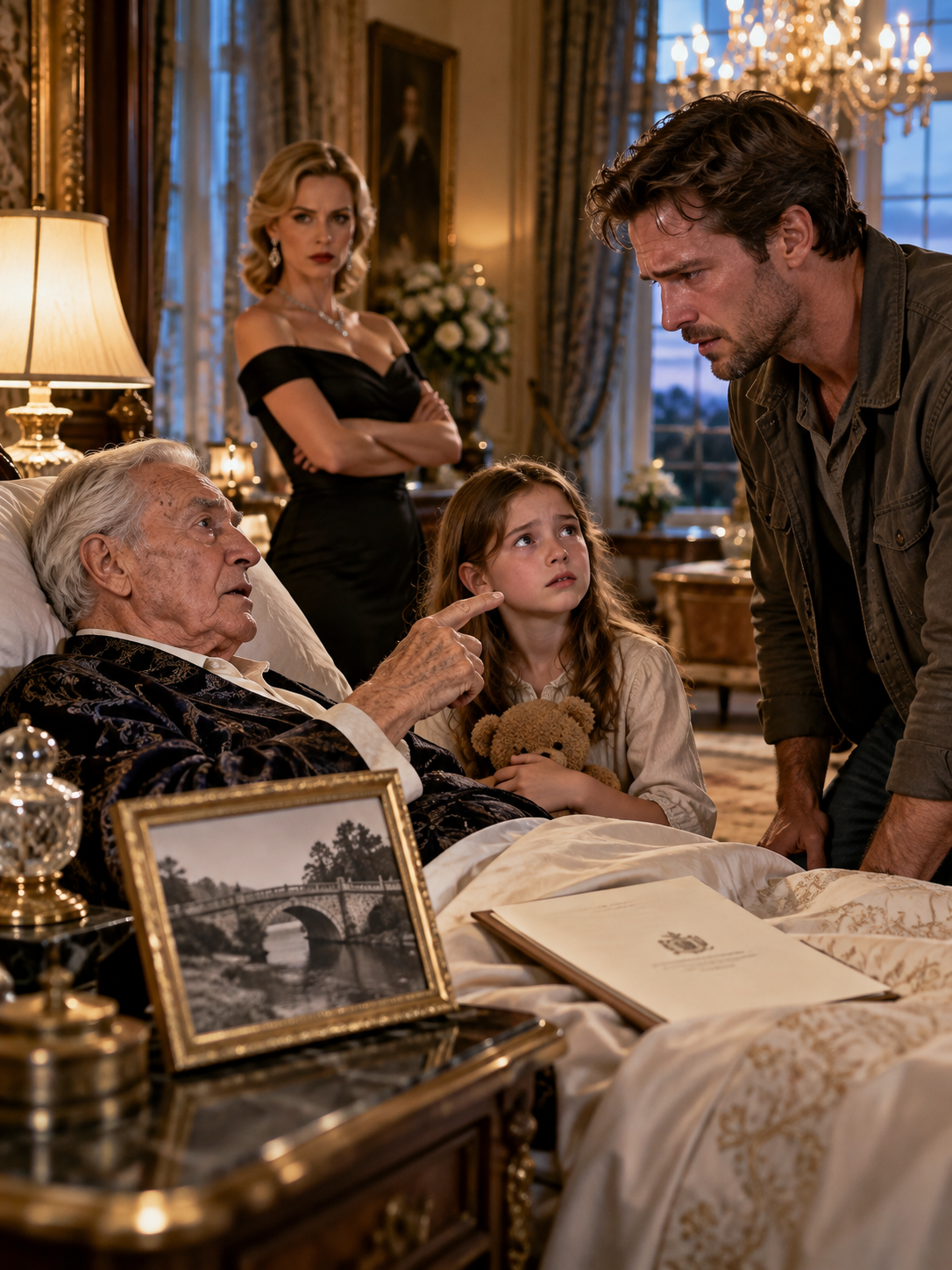
A Dying Billionaire Threatened a Single Father: Marry My Daughter or Lose Everything—Then One Sentence About an Old Bridge Explained Why He’d Been Chosen – Life Story
“Marry my daughter by morning, or I’ll take your job, your home, and your child’s health insurance with me.” Cal...
My fiancé’s mother told me he’d lost his voice and asked me not to question him on our wedding day.
My fiancé’s mother told me he’d lost his voice and asked me not to question him on our wedding day....
Her Ex Refused to Sign After the Birth—The Mafia Boss Made a Different Choice
Seven weeks pregnant, Iris came to the Moretti mansion carrying a resignation letter and nowhere else to go. The married...