A SIX-YEAR-OLD GIRL ASKED A BILLIONAIRE TO STAND BESIDE HER AT AN AWARDS CEREMONY—BUT THE REASON HER MOTHER WAS MISSING THREATENED EVERYTHING HE HAD BUILT – Life Story
“Uncle, could you stand beside me when they call my name?”
Her mother was cleaning offices twelve blocks away under a rule that could cost her the job if she left.
What neither of them knew was how much trouble one empty chair could cause.
The little girl wore a pale blue dress with a crooked hem, and she had chosen the richest man in the auditorium because he was standing alone.
Daniel Wright had just been asked whether the company’s foundation wanted its name on the next round of scholarship certificates.
He was holding a folded program and thinking about an airport meeting when a small hand appeared at the edge of his vision.
He looked down.
The girl had dark curls pinned back with a blue plastic clip.
One of her white shoes had a gray mark across the toe.
Her name tag said ANNIE JOHNSON in careful block letters.
“Did you mean me?” he asked.
She nodded, then shook her head, embarrassed by the confusion. “I’m sorry.
I know you’re not my uncle.
That’s just what I call people when I don’t know them.”
Daniel crouched to her height.
Behind her, an usher was straightening the curtain beside the stage.
Beyond it, families were settling into rows of folding chairs, calling across the aisle to one another, taking photographs while the children tried to keep their paper certificates flat.
“Where’s your grown-up?” he asked.
Annie pulled at the seam of her dress. “My mom’s at work.”
“Can she get here later?”
“She tried.” Annie’s voice became smaller. “She asked on Monday.
And Tuesday.
But her boss said if she walked out today, she shouldn’t come back tomorrow.” She glanced toward the auditorium. “I don’t want her to lose our apartment because of a certificate.”
That was not the kind of sentence Daniel expected from a six-year-old.
He looked at the empty chair in the second row, the one with a strip of blue painter’s tape across the back.
A volunteer had reserved it for each honoree’s guest.
At Annie’s chair, the tape was already starting to peel.
“Who’s looking after you today?” he asked.
“Ms.
Vega.
She’s my teacher.” Annie pointed toward a woman checking names at a table near the curtain. “She knows I’m talking to you.
She said I could ask, but you could say no.”
Daniel recognized the teacher’s wary expression.
She was watching without approaching, ready to intervene.
Good, he thought.
Somebody here understood that a well-known name did not make a stranger familiar.
“Why me?” he asked.
Annie studied his navy suit. “You weren’t holding anybody’s hand.
And you looked like you knew how to stand still.”
A laugh almost escaped him.
Instead, he felt something painful move beneath his ribs.
At ten, he had stood in a gym with a spelling certificate, searching the chairs for his aunt.
She had been called into a double shift.
Daniel had spent years remembering the empty seat as proof that he wasn’t important, until he was old enough to understand what the rent cost.
Annie watched his face change. “You really don’t have to,” she whispered. “I can do it by myself.
I practiced.”
“I’m sure you can.”
“It’s just…” She swallowed. “They tell us to look at our families when they take the picture.”
He glanced at the program in his hand.
Across the cover, beneath the name of his foundation, someone had printed EVERY CHILD DESERVES TO BE SEEN.
Daniel suddenly couldn’t bear the words.
“If your teacher and your mom are comfortable with it,” he said, “I’ll stand beside you.”
Annie’s mouth opened, but no sound came out.
She turned toward Ms.
Vega, who approached, checked her clipboard, and offered Daniel a quick, assessing look.
“Her mother approved an adult escort if needed,” Ms.
Vega said. “I’ll remain right beside the stage.
Annie, is this still what you want?”
“Yes,” Annie said, with enough force to surprise herself.
The microphone cracked overhead.
The principal asked families to take their seats.
Annie reached for Daniel’s hand, stopped halfway, and looked up for permission.
He held it out.
And then the announcer called her name.
The Seat Beside Her
For one terrifying second, Annie forgot how to walk.
The principal’s voice echoed through the auditorium. “Our first recipient is Annie Johnson, recognized for outstanding perseverance, kindness, and remarkable academic progress.”
Applause began somewhere near the back.
Daniel felt Annie’s fingers tighten around his.
He didn’t pull her toward the steps or tell her to hurry.
He simply waited until she looked up.
“Ready?” he asked.
Annie took a breath that seemed too large for her small chest. “I think so.”
“That’s enough.”
They walked together.
Daniel had crossed stages in New York, London, and Singapore.
He had accepted industry awards beneath enormous screens displaying his photograph.
He had addressed rooms containing people who could move millions of dollars with a phone call.
None of those experiences prepared him for the effort it took a six-year-old girl to climb three wooden steps while trying not to cry.
The auditorium changed as they approached the center of the stage.
Parents recognized Daniel first.
A few leaned toward their neighbors.
Phones that had been raised to photograph their own children tilted toward him instead.
Somewhere, a man whispered his name with the excitement usually reserved for a celebrity.
Daniel heard it and kept his eyes on Annie.
She was staring at the woman holding the certificate.
“Congratulations, Annie,” the principal said warmly. “We’re very proud of you.”
Annie accepted the certificate with both hands.
Her fingers trembled against the thick cream-colored paper.
“Thank you,” she whispered.
The principal lowered the microphone. “Would you like to say anything?”
Annie’s entire body went still.
She hadn’t prepared a speech.
She had practiced walking, smiling, and saying thank you.
Her mother had made her rehearse those three things in front of the bathroom mirror while brushing her teeth the previous night.
Speaking into a microphone was different.
Daniel recognized the panic immediately.
“You don’t have to,” he said quietly.
Annie looked toward the audience.
Two hundred faces blurred beneath the overhead lights.
She saw parents holding phones, teachers smiling, and children swinging their legs from their chairs.
Then she saw the second row.
Her mother’s reserved seat was empty.
Annie looked at the certificate in her hands.
“My mom says…” she began.
The principal leaned closer with the microphone.
Annie swallowed. “My mom says that doing something important still counts even when nobody gets to watch you do it.”
The room became quieter.
“She wanted to come,” Annie continued. “She ironed my dress when she got home last night.
She was really tired, but she did the sleeves twice because they kept getting wrinkly.”
A few parents smiled.
Annie glanced at Daniel.
“And I was scared to come up here by myself.
So I asked him.”
She didn’t know Daniel’s last name.
She didn’t know what his company owned or how many buildings carried its logo.
She knew that she had asked a question, and he had answered.
“That’s all,” she said.
The applause began gently, then grew.
Daniel had been photographed accepting a lifetime achievement award without changing his expression.
Now, beside a child who had simply wanted someone nearby, he felt his eyes fill.
A tear slipped down his cheek.
He made no attempt to hide it.
Annie noticed, frowned with concern, and whispered, “Did I do it wrong?”
“No,” Daniel said. “You did it beautifully.”
When they left the stage, Ms.
Vega was waiting behind the curtain.
She crouched in front of Annie. “How are you feeling?”
“Shaky.”
“That’s allowed.”
“Did I talk too much?”
“Not even close.”
Annie smiled for the first time since approaching Daniel.
Ms.
Vega turned to him. “Thank you for being gentle with her.”
Daniel looked past the curtain at the rows of families.
“Does she have a place to sit until the ceremony ends?”
“Of course.
With her class.”
Annie’s smile faded slightly, but she didn’t complain.
Daniel noticed.
“I’ve got a seat near the front,” he said to Ms.
Vega. “Would it be all right if I sat with her until the end?”
Ms.
Vega considered the request, then nodded.
The teacher walked them to a pair of seats at the end of the row, where the children remained within her view.
Daniel sat down in a folding chair that was several inches too narrow for him.
Annie carefully arranged the certificate across her knees.
For a while, neither spoke.
Then she leaned toward him.
“Do you have kids?”
“No.”
“Are you married?”
“No.”
“Do you have a dog?”
He almost laughed. “No dog either.”
Annie considered this unfortunate series of answers.
“Your house must be really quiet.”
Daniel looked at her.
“Yes,” he said. “It is.”
She thought about that, then moved the certificate so it wouldn’t bend against his arm.
“You can clap for the next kids,” she told him. “They worked hard too.”
And so he did.
Across town, Karen Johnson was standing on the twenty-third floor of Meridian Tower with a cleaning cart and a phone she wasn’t allowed to check while working.
The building’s glass walls looked out over downtown Pittsburgh.
Sunshine fell across polished conference tables, leather chairs, and an arrangement of white orchids that cost more than Karen spent on groceries in a week.
She had started at six that morning.
Her regular shift should have ended by two.
But a management inspection had been added without warning, and her supervisor had told the cleaning crew to remain until every assigned area passed inspection.
At , Karen had asked again whether she could leave.
Her supervisor, Brent Carver, had barely looked up from his tablet.
“We’re short today.”
“I finished my section.”
“Then help Rosa on twenty-one.”
“My daughter has an award ceremony.”
“You told me.”
“I requested two hours last week.”
“And I told you we don’t have the coverage.” He finally raised his eyes. “Karen, I can’t run a contract around everybody’s personal events.”
She had wanted to say that Annie’s childhood wasn’t a personal inconvenience.
Instead, she thought of the overdue electric bill folded inside her purse.
She took the elevator to twenty-one.
Now, beside the conference room windows, she checked the wall clock.
.
The ceremony had started.
Her coworker Rosa Morales appeared in the doorway, carrying a bucket.
“Go,” Rosa said quietly.
Karen shook her head. “He’ll know.”
“Let him.”
“You’ve got another income in your house.
I don’t.”
Rosa’s expression softened.
She was fifty-three, practical, and rarely impressed by the threats their supervisor used so easily.
She had worked enough cleaning contracts to recognize the difference between a genuine staffing emergency and a management decision designed to keep people frightened.
“Then don’t let him make you feel guilty for staying,” she said.
Karen gripped the edge of the cart.
“That might be the harder part.”
At , her phone vibrated.
A photograph had arrived from Ms.
Vega.
Annie stood onstage in her pale blue dress, holding her certificate.
Beside her was a tall man in a navy suit.
His eyes appeared wet.
Karen stared at the photograph, confused.
Then the message below it appeared.
Annie was wonderful today.
She asked one of our event guests to accompany her.
I stayed with them throughout.
She is very proud of herself, and you should be too.
Karen enlarged the photograph.
She recognized the man.
His face appeared in business magazines left behind in the offices she cleaned.
His company’s name was engraved above the entrance of the building where she stood.
Daniel Wright.
The billionaire whose company controlled Meridian Tower.
Karen sat slowly in an empty conference chair.
For the first time that afternoon, the tears she had been resisting escaped.
Not because a wealthy man had stood with her daughter.
Because Annie had needed to ask a stranger.
And Karen had not been there to hear her ask.
That evening, when Karen finally entered their apartment, Annie came running down the short hallway with the certificate held high.
“Mom! Mom, look!”
Karen dropped her bag and knelt.
“I see it, sweetheart.”
“I didn’t cry onstage.”
“I heard.”
“Well, I almost did.”
Karen laughed through the tightness in her throat.
Annie wrapped her arms around her mother’s neck.
“He wasn’t really my uncle,” she explained seriously. “I checked.”
Karen held her a little closer.
“I know, baby.”
“But he stood with me anyway.”
Karen closed her eyes.
Behind Annie, on the kitchen table, lay the school program.
Its cover carried a slogan Karen had never seen before.
EVERY CHILD DESERVES TO BE SEEN.
She read it once.
Then she looked at the work shoes she hadn’t yet taken off.
The irony hurt more than she wanted to admit.
The Photograph Nobody Approved
By nine the following morning, Daniel’s photograph was everywhere.
It appeared first on the Wright Foundation’s social media page, accompanied by a caption celebrating the power of compassion.
The video showed Annie reaching for his hand, his expression changing, and the two of them walking toward the stage.
The final frame caught the tear on his cheek.
By breakfast, the video had been shared thousands of times.
By lunch, it had reached local television.
Daniel learned about it from Celia Mercer, the executive responsible for both corporate communications and oversight of the foundation’s public fundraising campaigns.
Celia entered his office carrying two coffees and the unmistakable expression of someone delivering excellent quarterly results.
“Before you say anything,” she began, “this wasn’t planned.”
Daniel looked at his computer screen.
The video’s caption described Annie as a child whose absent family had been replaced, for one remarkable moment, by the generosity of a billionaire philanthropist.
He read the phrase twice.
“Take it down.”
Celia stopped.
“Daniel.”
“Take it down.”
“It’s one of the most positive things that’s happened to the foundation in years.”
“Her mother was working.”
“I understand.”
“No, apparently you don’t.
The caption makes it sound as though the child was abandoned.”
Celia set the coffees down.
“It’s emotional storytelling.
The public responds to simple narratives.”
“Her mother isn’t a narrative.”
Celia’s smile disappeared.
She had worked with Daniel for fourteen years.
She had managed hostile acquisitions, financial downturns, and investor panic.
She understood reputation better than nearly anyone he knew.
She also believed, with some justification, that goodwill could protect jobs when the economy turned against a company.
“Three major donors contacted us this morning,” she said. “One wants to double his contribution to the children’s program.
Another is considering underwriting the new after-school initiative.
Do you understand what that means?”
“It means they can donate without using a six-year-old’s face.”
“You’re treating this as though we exploited her.”
“Did her mother authorize publication?”
Celia hesitated.
“The school provided access to the event photographs.”
“That isn’t what I asked.”
“The school had media permissions.”
“Did you verify that hers covered this?”
Celia didn’t answer.
Daniel reached for his phone.
“Remove it until we know.”
He called the foundation’s communications administrator himself.
The original post disappeared within minutes.
The copies did not.
Across the city, Karen discovered the video because her neighbor knocked on her door.
“Isn’t that Annie?”
Karen watched the video on the woman’s phone, her stomach tightening as she read the caption.
She had never abandoned her daughter.
She had missed a ceremony because leaving work would have threatened their rent.
Yet thousands of strangers were praising Daniel for filling the space that she had supposedly failed to occupy.
The next comments were worse.
Some asked why Annie’s mother had not made time.
Others wondered whether Karen deserved such a thoughtful child.
A few speculated about Daniel’s relationship to the family.
Karen stopped reading.
When Annie came into the kitchen, Karen put the phone facedown.
“Why are you sad?” Annie asked.
“Some people are talking about our private business.”
“Did I do something wrong?”
“No.”
“Did Daniel?”
Karen paused.
“No,” she answered carefully. “But grown-ups sometimes make a mess around something good.”
Annie looked at her certificate on the wall.
“Can we keep the good part?”
Karen felt something shift painfully inside her.
“Yes,” she said. “We can.”
But she realized that protecting the good part would require doing something she usually avoided.
It would require making people uncomfortable.
That afternoon, Karen called Ms.
Vega.
The teacher listened without interrupting.
Then she apologized.
She explained that the school’s general ceremony permission form had allowed official photographs for the school newsletter, but the foundation’s separate promotional campaign should have required additional authorization.
“I wasn’t consulted,” Ms.
Vega said. “I wouldn’t have agreed to that caption.”
Karen sat at her kitchen table, a pen between her fingers.
“Can you help me get in touch with Mr.
Wright?”
“I can forward him a message,” Ms.
Vega said. “I won’t share either person’s private contact information without permission.”
“Please do.”
Karen wrote a short message asking Daniel to speak with her.
She did not thank him in it.
Not yet.
Two hours later, her phone rang.
“This is Daniel Wright,” a man said.
Karen stood automatically, as though he could see her through the phone.
“Mr.
Wright, I’m Annie’s mother.”
“I know.
Ms.
Vega forwarded your message.”
“I saw the video.”
“So did I.
I’ve had it removed from our account, but the copies are beyond my control.
I’m sorry.”
Karen had prepared herself to argue.
The apology left her momentarily without a response.
“I’m grateful that you stood with Annie,” she said. “More grateful than I know how to explain.
But I need you to understand something.”
“I’m listening.”
“My daughter wasn’t alone because I didn’t care enough to show up.”
“I never thought that.”
“People who don’t know us think it now.”
Daniel looked through his office windows at the city.
“I know.”
Karen swallowed.
“She’s six.
She doesn’t understand why strangers are discussing her life.
I need that to stop.”
“I’ll do what I can.”
“That isn’t a promise you can make.”
Daniel was quiet.
Then he said, “You’re right.”
It was the first answer he had given her that made Karen believe he might actually be listening.
They agreed to meet at a neighborhood café the following Saturday, with Annie present.
Karen chose the place.
Daniel accepted without suggesting somewhere more expensive.
When Saturday arrived, he was already waiting at a small table near the window.
Annie spotted him before Karen did.
“Daniel!”
She ran three steps before remembering her mother’s rule about running indoors.
Daniel stood.
“Hello, Annie.”
“You remembered me.”
“Of course.”
Karen arrived behind her, wearing a brown wool coat with a repaired cuff.
She extended her hand.
“Karen Johnson.”
“Daniel Wright.”
Their handshake was brief and careful.
Annie climbed onto a chair.
“This place has cinnamon rolls,” she announced. “But Mom says we’re only looking.”
Daniel glanced at Karen.
She raised an eyebrow.
He understood.
He ordered coffee.
Karen ordered tea.
Annie received a small hot chocolate her mother had already planned to buy.
For several minutes, they talked about school.
Annie told Daniel that her certificate was hanging beside the kitchen calendar because important things belonged where people could see them.
Daniel asked which subject she liked best.
“Reading,” she answered. “Except when the words have too many letters.”
He nodded gravely.
“Those are difficult.”
“You probably know all the words.”
“Absolutely not.”
Annie looked delighted.
When she went to examine a bookshelf near the counter, remaining within sight, Karen turned toward him.
“I need to ask you something.”
“Go ahead.”
“Why did you say yes?”
Daniel could have given her an attractive answer.
He could have talked about responsibility, generosity, or the foundation’s mission.
Instead, he told her about the school gym where he had once stood alone.
He explained that his aunt Ruth had raised him after his parents were no longer able to care for him, that she worked exhausting shifts, and that he had misunderstood her absence for years.
“She was trying to keep us housed,” he said. “I knew that much later than I should have.”
Karen studied the worn edge of her teacup.
“So Annie reminded you of yourself.”
“Yes.”
“That’s understandable.
But she isn’t you.”
Daniel met her eyes.
“I know.”
“People see a billionaire standing beside a poor little girl, and they want a story where he fixes everything.
They don’t see the mother who was already fixing everything she could.”
Daniel did not defend himself.
He looked toward Annie, who was concentrating on a book about ocean animals.
“You’re right,” he said.
Karen’s shoulders eased slightly.
“I don’t want you to feel like you owe us anything.”
“And I don’t want Annie to feel she owes me gratitude for something that should have been simple.”
“Then perhaps we understand each other.”
Daniel smiled.
“Perhaps we’re beginning to.”
Outside the café, after they had said goodbye, Annie turned back.
“Can we see you again?”
Karen felt the question before Daniel answered.
He looked at her, not Annie.
That small courtesy mattered.
“If your mother is comfortable,” he said.
Annie looked between them.
Karen considered the man standing in front of her.
He had spent his career making decisions for rooms full of people.
Yet he was waiting for her answer about one little girl.
“We can arrange something,” she said.
Annie grinned.
Daniel smiled back.
None of them noticed the woman standing across the street with her phone held discreetly in front of her coat.
By Monday, another photograph was circulating.
This one showed Daniel sitting across from Karen and Annie through the café window.
And this time, the headlines were not about an award.
The Contract Beneath the Flowers
The second photograph changed the nature of the attention.
The first had invited people to celebrate an act of kindness.
The second invited them to invent a relationship.
One local columnist wondered whether Daniel had become personally involved with the family.
Another suggested that the foundation was using Annie as the centerpiece of an emotional fundraising strategy.
A television producer requested an interview with Karen.
She refused.
A reporter approached Annie’s school.
The principal declined to comment about a student.
By Wednesday, Karen’s supervisor had heard enough.
Brent Carver called her into the supply office shortly after eight in the morning.
The narrow room smelled of detergent and damp cardboard.
Stacks of paper towels climbed almost to the ceiling.
Brent stood beside the inventory shelves with his tablet.
“I need to ask whether you’ve been speaking publicly about this company.”
Karen frowned.
“No.”
“Because corporate has received questions.”
“What questions?”
“Questions about scheduling.
Employee treatment.
Things that could affect our renewal.”
Karen’s hands went cold.
“I haven’t contacted a reporter.”
“I’m not accusing you.”
His tone suggested otherwise.
He brought up the next week’s schedule.
Karen’s name had been removed from two shifts.
She stared at the screen.
“That’s twelve hours.”
“We’re balancing staffing.”
“I need those hours.”
“Then I suggest you keep your private life separate from our contract.”
Karen looked at him.
“My daughter won a school award.
I didn’t choose to become part of a news story.”
Brent sighed.
“Everybody has something going on, Karen.
The building doesn’t clean itself.”
She wanted to tell him exactly what she thought of that sentence.
Instead, she left the office, went into an empty restroom, and gripped the sink until the shaking stopped.
When Rosa found her, Karen was checking her bank balance.
“How bad?”
“Bad enough.”
Rosa sat on the edge of the closed toilet lid.
“This isn’t just about your picture in the paper.”
Karen looked up.
Rosa lowered her voice.
“They’re cutting hours on the schedule, but the same work still has to get done.
People are staying late and being told to clock out first.”
Karen went still.
She had been told to do that twice in the past month.
Both times, she had believed her supervisor’s explanation that the time clock had to be closed before the payroll deadline.
Rosa opened her work notebook.
For years, she had written down her actual arrival and departure times because previous employers had made mistakes with her pay.
“I’ve been keeping track,” she said. “You should too.”
Karen thought about the extra cleaning she had performed after punching out.
The twenty minutes here.
The half hour there.
Small pieces of time taken from people who couldn’t afford to argue.
“Why didn’t you say anything sooner?”
“I did,” Rosa answered. “You were always worried about losing the job.”
Karen looked away.
Rosa didn’t soften the truth.
“Worry doesn’t make them fair.”
That evening, Daniel arrived at the foundation office expecting to discuss an after-school transportation proposal.
Instead, Celia placed a thick folder on the conference table.
“We have a reputation problem.”
Daniel sat without removing his coat.
“What happened?”
Celia slid a collection of printed headlines toward him.
“Reporters are asking whether you have a personal relationship with the child’s mother.
They’re questioning our safeguarding procedures.
And now the school district wants to review how our event team used the photograph.”
“Those are reasonable questions.”
Celia looked at him.
“You’re not helping.”
“I don’t recall asking to.”
She closed the folder.
“Daniel, you have a responsibility to this organization.”
“I know.”
“Then stop behaving as though one family exists outside every other consideration.”
He leaned back.
“Who owns the building where Karen works?”
Celia blinked.
“Excuse me?”
“Meridian Tower.
I saw the name on her work badge at the café.”
“Wright Meridian Properties owns it.
You know that.”
“Who has the cleaning contract?”
Celia’s expression changed slightly.
“Redfern Facilities.”
“And who oversees the contract?”
“Property operations.
Why?”
“Because I want to understand why an employee couldn’t leave two hours early for her child’s award ceremony.”
Celia folded her hands.
“That’s a personnel matter involving an outside vendor.
We don’t manage their individual schedules.”
“No,” Daniel said. “We manage the money.”
Celia was silent for a moment.
Then she stood.
“I’ll have procurement send you the file.”
When the file arrived, Daniel opened it expecting an ordinary service contract.
What he found was a renewal proposal.
Redfern had been awarded another year of cleaning services after agreeing to reduce its annual labor charges by eleven percent.
The reduced price had been celebrated internally as an operational success.
He recognized the language.
Efficiency.
Competitive procurement.
Responsible stewardship.
Words he had used in meetings for decades.
A line near the bottom of the proposal mentioned staffing flexibility and minimal interruption to building operations.
Daniel stared at it.
What did minimal interruption mean to a woman who couldn’t attend her daughter’s ceremony?
His phone rang.
Celia.
“I assume you’ve seen the numbers.”
“Yes.”
“Redfern offered the most competitive bid.”
“At what cost?”
“That’s their business model.”
“They’re cleaning our building.”
“Daniel, if we take responsibility for every employment decision made by every contractor in our portfolio, we’ll never finish anything.”
He looked at the framed photograph on his office wall.
It showed the groundbreaking of Meridian Tower.
He had stood in the center, shovel in hand, surrounded by executives in expensive coats.
The building had been one of his proudest projects.
He had never met the people who cleaned it after everyone else went home.
“Arrange a review of the contract,” he said.
Celia’s voice sharpened.
“You cannot start interfering with a competitive vendor agreement because you’re personally attached to one employee’s daughter.”
“I’m asking whether our savings depend on people working hours they’re not paid for.”
“Do you have evidence of that?”
“Not yet.”
“Then you’re making assumptions.”
She had a point.
Daniel hated that she had a point.
He ended the call without issuing another instruction.
For once, he couldn’t solve a problem by announcing that he wanted it solved.
He needed facts.
And the person most likely to know them had no reason to trust a man who signed the checks flowing through the company that controlled her workplace.
The following Saturday, Karen was sitting at her kitchen table when Daniel arrived.
Annie was on the floor building a cardboard bridge for a school project.
Daniel had brought the library book Annie had mentioned during their café meeting.
Nothing else.
Karen noticed.
She had worried he might arrive carrying shopping bags or expensive gifts, the kind of generosity that could make refusal feel rude.
“Would you like coffee?” she asked.
“Please.”
He watched Annie arrange two empty cereal boxes beneath a strip of cardboard.
“What’s the bridge for?”
“Cars.”
“Does it hold them?”
“Not yet.”
“Have you tested it?”
Annie gave him an impatient look.
“That’s why I’m building it.”
Karen hid a smile.
Daniel removed his coat and sat on the floor.
“Fair enough.”
Twenty minutes later, the bridge collapsed beneath three toy cars.
Annie glared at it.
“It’s stupid.”
“Maybe the bridge needs stronger supports,” Daniel suggested.
“Maybe the cars are too heavy.”
He nodded.
“That’s another possibility.”
Annie looked between him and her project.
“Can bridges be wrong?”
“They can be built on the wrong assumptions.”
She considered this.
Then she removed a car.
The bridge held.
“Fixed it,” she announced.
Daniel smiled.
“For now.”
Karen stood in the kitchen doorway watching them.
Something about the scene unsettled her more than the newspaper photographs had.
Daniel wasn’t trying to impress Annie.
He was allowing her to struggle.
That was harder to buy than a toy.
After Annie went to her room to find crayons, Daniel joined Karen at the sink.
“I need to tell you something,” he said.
Karen turned off the faucet.
“About the company?”
He looked surprised.
She gave him a tired smile.
“I clean your building, Daniel.
I know who signs the lease.”
“Redfern’s contract was renewed at a significantly lower price.”
Karen’s expression hardened.
“I know.
They told us we had to be more efficient.”
“Have they been asking employees to work after clocking out?”
She studied him.
“Why?”
“Because that’s what I need to establish before I can challenge the contract.”
Karen leaned against the counter.
“And what happens if I tell you?”
“I can’t promise there won’t be consequences.”
“Good,” she said quietly.
Daniel frowned.
“Good?”
“Because I’m tired of people promising safety they don’t control.”
He nodded.
Karen looked toward the hallway where Annie was singing to herself.
Then she reached for a notebook she had started keeping after Rosa’s warning.
In neat columns, she had recorded her scheduled hours, actual departure times, and the corresponding entries on her pay statements.
It wasn’t a complete record of every shift.
It was enough to show why she had begun asking questions.
“I don’t want you to take this and disappear into a room full of lawyers,” she said.
“I won’t.”
“I want to know what happens to it.”
“Of course.”
“And I want to speak to someone who doesn’t work for you.”
Daniel considered that.
Then he nodded.
“I can give you the names of independent worker advocacy organizations.
You can choose whether to contact one.
You don’t have to tell me which.”
Karen watched him carefully.
He didn’t ask to see the notebook.
That restraint mattered.
But after he left, she sat at the table with the notebook open and remembered the certificate hanging beside the calendar.
Annie had been honored for perseverance.
Karen wondered when perseverance had become another word for accepting whatever happened to you.
She picked up her pen and wrote down the hours from Friday.
For the first time, she was keeping a record not because she expected a mistake to be corrected.
She was keeping it because she might decide to challenge one.
The Things Nobody Photographs
Three weeks passed before Daniel and Karen spoke again about Redfern.
Not because the issue had disappeared.
Because Karen had begun taking steps that belonged to her.
Rosa accompanied her to a neighborhood worker center, where a staff advocate explained the difference between a legitimate scheduling decision and potentially unlawful failure to pay for all hours worked.
They discussed documentation, reporting options, and the risks of retaliation.
Karen brought her notes and pay records.
She did not bring Daniel.
When she told him afterward, he asked only one question.
“Do you feel better informed?”
“Yes,” she said. “Not safer.
But better informed.”
“I understand.”
“You might be the first wealthy person I’ve ever met who knows when to stop offering help.”
He smiled.
“I’m learning.”
Meanwhile, the ordinary parts of their lives continued.
On a rainy Wednesday, Daniel joined Karen and Annie at the public library.
He arrived carrying an umbrella that turned inside out in the wind.
Annie laughed so hard that she bent forward.
“Your umbrella broke!”
“Yes,” Daniel said, staring at the bent metal ribs. “I’ve reached the same conclusion.”
Karen took it from him.
“You know you can buy a decent one for twenty dollars.”
“I thought this was a decent one.”
“That’s because somebody else usually buys yours.”
He looked at her.
“Probably.”
She laughed.
It was the first time Daniel heard her laugh without immediately looking worried afterward.
Inside, Annie chose a book about planets and demanded that Daniel read the page describing Saturn’s rings.
He sat cross-legged in a children’s reading corner, his expensive overcoat folded beside him.
When he mispronounced the name of a moon, Annie corrected him.
He thanked her.
Karen watched from a nearby chair.
The scene would never make a fundraising brochure.
There was no dramatic embrace, no tearful audience, no transformation caught in perfect lighting.
There was simply a man listening when a child told him he was wrong.
Karen began to understand why Annie trusted him.
A week later, the washing machine in Karen’s apartment building broke down.
She took two baskets to the laundromat after dinner.
Daniel offered to carry one when he arrived to return a borrowed library book.
Karen started to refuse.
Then she looked at the overflowing baskets.
“Fine.
But you’re folding towels.”
“I can fold towels.”
“That’s a claim I’m interested in testing.”
The laundromat was nearly empty.
Machines hummed beneath fluorescent lights.
Rain tapped against the front windows.
Annie sat at a small table coloring while Karen and Daniel folded warm clothes.
Daniel worked carefully, producing precise rectangles that looked like they belonged in a store display.
Karen shook her head.
“Of course that’s how you fold.”
“Is there another way?”
“The way where your six-year-old needs pajamas before midnight.”
He deliberately folded the next towel less perfectly.
Karen laughed again.
Then the laughter faded, and she told him about Annie’s father.
His name was Marcus.
He had been a quiet man with a terrible singing voice and an unreasonable love for baseball.
He had died after a sudden illness when Annie was two.
Karen kept a photograph of him in Annie’s bedroom, along with a few recordings of his voice.
“She’s beginning to ask questions about him,” Karen said. “Questions I can’t always answer.”
Daniel placed a folded towel in the basket.
“Does she remember him?”
“Pieces.
Mostly what I’ve told her.
Sometimes she says she remembers his laugh, but I don’t know whether it’s memory or something she wants to be true.”
Daniel looked toward Annie.
“She can have both,” he said.
Karen studied him.
“You’re not going to ask whether you can replace him?”
“No.”
“Good.”
Daniel smiled faintly.
“I wouldn’t know how.”
They finished the laundry in companionable silence.
Outside, Daniel carried the heavier basket beneath his coat to protect it from the rain.
At Karen’s apartment door, she reached for it.
Their fingers touched.
Neither moved immediately.
Daniel looked at her, and Karen felt the unfamiliar impulse to remain exactly where she was.
Then Annie called from inside.
“Mom! Somebody used all the purple!”
Karen stepped back, smiling despite herself.
“Crisis,” she said.
“Apparently.”
Daniel handed over the basket.
“Good night, Karen.”
“Good night, Daniel.”
For the first time, she closed the door wishing the conversation had lasted longer.
The feeling frightened her.
She had spent years building a life that could survive disappointment.
Hope was less predictable.
At school, Annie began changing in ways Karen noticed before anyone else did.
She raised her hand more often.
She stopped apologizing when another child bumped into her.
She asked Ms.
Vega for harder books.
One afternoon, another girl told Annie that rich people only made friends with poor people when cameras were watching.
Annie came home unusually quiet.
Karen found her sitting beneath the certificate.
“Something happened?”
Annie shrugged.
“Somebody said Daniel likes cameras more than people.”
Karen sat beside her.
“What do you think?”
“I don’t know.
He doesn’t take pictures when we do laundry.”
Karen smiled.
“No, he doesn’t.”
“But people can still stop liking you.”
Karen’s smile faded.
“Yes,” she said. “Sometimes they can.”
Annie ran a finger along the edge of the certificate.
“Do you think he’ll get tired of us?”
Karen wanted to promise that he wouldn’t.
She couldn’t.
“I think we can ask him what he means when he says he’ll come,” she answered. “And we can expect him to tell us the truth.”
That evening, when Daniel stopped by, Annie asked him directly.
“Are you going to disappear?”
He lowered himself into the chair across from her.
“No.”
“What if you’re busy?”
“Then I’ll tell you before plans change.”
“What if people tell you not to come?”
Daniel hesitated.
Karen watched him.
He understood now that answering a child’s fear with grand promises was easy.
Keeping those promises inside a complicated adult life was much harder.
“People may have opinions,” he said. “But your mother and I decide what visits are right for you.
And if something needs to change, we’ll talk about it.
I won’t just vanish.”
Annie studied him.
“Okay.”
Then she returned to coloring.
Daniel glanced at Karen.
“She asks difficult questions.”
“She learned from her mother,” Karen said.
“I’m beginning to see that.”
The following Monday, the school principal requested a meeting.
A parent had raised concerns about an unrelated adult’s increasing presence in Annie’s life.
The principal emphasized that the school had received no evidence of misconduct, but it needed clear boundaries for pickups, volunteering, and participation in school events.
Karen arrived with a notebook.
Daniel arrived without lawyers.
Ms.
Vega sat beside the principal and explained what she had observed since the ceremony.
“Annie’s mother remains her parent and decision-maker,” she said. “Mr.
Wright has attended activities with her permission.
But the school should never rely on assumptions about relationships, no matter how familiar someone becomes.”
Karen agreed.
Daniel did too.
They established that Daniel would participate in school activities only when properly registered and approved, that pickups required written parental authorization, and that Annie would not be used in foundation publicity.
The district’s volunteer screening process would apply to him like everyone else.
At the end of the meeting, the principal looked relieved.
“I appreciate your cooperation.”
Daniel nodded.
“So do I.”
Outside, Karen stopped beside the school steps.
“You could have made that difficult.”
“I could have.”
“Some people with your name would have.”
“I know.”
She considered him.
“You’re different when you’re not trying to control a room.”
Daniel gave a small, rueful smile.
“That’s a painful compliment.”
“It’s still a compliment.”
He looked at her for a moment longer than usual.
And Karen realized that whatever was growing between them had very little to do with a photograph on a stage.
It was growing in the space where neither of them had to win.
But the people who benefited from the original photograph were not nearly as interested in those quiet changes.
At the Wright Foundation, Celia had been studying the same publicity report for weeks.
She knew exactly how much money the video had raised.
She also knew how many corporate donors had asked whether Daniel’s involvement with Annie would continue.
The positive attention was fading.
The uncomfortable questions were not.
And buried in the foundation’s new marketing proposal was a recommendation that would turn the six-year-old girl’s most vulnerable moment into a yearlong campaign.
The Price of Being Seen
Celia presented the proposal on a Thursday morning.
A photograph of Daniel and Annie filled the screen at the end of the conference room.
Underneath it were four words.
THE POWER OF STAYING.
Daniel looked at the image.
“Who approved that?”
Celia glanced at the other foundation trustees.
“It’s a concept.
Nothing has been published.”
“Then remove it.”
One trustee shifted in his chair.
Celia remained calm.
“Daniel, the original video increased contributions to the children’s initiative by nearly forty percent during the reporting period.
We’re proposing to turn that interest into sustainable support.”
“Without the family’s permission?”
“We would request it.”
“They already asked us to stop using Annie’s image.”
“Her mother objected to the original caption.
That isn’t necessarily a permanent refusal to participate in something positive.”
Daniel leaned forward.
“Celia, you heard her refusal.
Stop looking for a different answer.”
The room became uncomfortable.
Celia closed the presentation.
She had not become successful by accepting every objection as final.
During a difficult year, she had helped the foundation keep programs running when donors threatened to withdraw.
She believed she was protecting work that mattered.
What she struggled to understand was why Daniel, who had once made decisions with ruthless efficiency, now seemed willing to jeopardize an entire fundraising campaign over one family’s discomfort.
After the meeting, she followed him into the corridor.
“You’re allowing your feelings to dictate policy.”
“And you’re allowing numbers to erase a person.”
“Those numbers fund transportation, tutoring, meals.
Real services for real children.”
“Then raise them honestly.”
Celia looked at him for several seconds.
“You know what worries me most? Not that you’re wrong.
That you might be right in a way we can’t afford.”
Daniel stopped.
“Maybe we need to examine what we think we can’t afford.”
Celia’s expression hardened.
“Be careful, Daniel.
You are not the only person responsible for keeping this organization alive.”
That afternoon, Karen received another revised schedule.
She had lost an additional shift.
When she questioned Brent, he blamed reduced demand.
Yet Rosa was still being asked to stay after her scheduled hours.
Karen photographed her posted schedule, kept the original notices she had received, and compared them with her pay records.
The contradictions were difficult to ignore.
A few days later, the worker center helped her prepare a wage complaint based on time she believed had gone unpaid.
Rosa submitted her own account.
Neither woman did it lightly.
Karen sat outside the worker center afterward, staring at her hands.
“I’ve never filed anything against an employer,” she admitted.
Rosa looked at her.
“Neither had I.”
“What if nobody believes us?”
“Then at least we told the truth somewhere they have to write it down.”
Karen laughed weakly.
“You make it sound easy.”
“It’s not easy.
It’s necessary.”
They walked to the bus stop together.
Karen carried a folder beneath her coat, protecting the papers from the rain.
She thought about Annie standing onstage with her certificate.
She wondered whether courage always felt this much like fear.
For several days, nothing happened.
Then Redfern’s management learned that employees had raised payroll concerns.
Karen was called into Brent’s office again.
This time, a regional supervisor joined him by phone.
They asked about her records, her communications with the worker center, and whether she had been encouraged by anyone outside the company.
Karen recognized the direction of the questions.
“No one told me what to do.”
“Are you receiving financial support from Mr.
Wright?”
“No.”
“Has he offered to influence our contract?”
“Not to my knowledge.”
Brent leaned back.
“You understand how this looks.”
Karen felt something inside her settle.
That phrase.
How this looks.
It had followed her from the ceremony to the café, through the school meeting, into her workplace.
The appearance of something seemed to matter more than the thing itself.
“I understand what my pay statement looks like,” she said. “And I understand the hours I worked.”
The regional supervisor ended the call shortly afterward.
Brent told her to finish her shift.
When Karen returned the following Monday, her access card did not work.
At the security desk, she was informed that Redfern had suspended her assignments pending an internal review.
No one would tell her how long it would last.
She stood in the lobby beneath the enormous steel letters spelling MERIDIAN.
People in dark coats passed her without looking.
The security guard, who had greeted her every morning for three years, seemed embarrassed.
“I’m sorry, Karen.”
She nodded.
Then she walked outside.
The wind carried the smell of wet pavement and traffic exhaust.
Her phone vibrated.
The landlord had sent a reminder about the rent.
Karen stood beside the building’s revolving door and read the message twice.
For the first time since the school ceremony, she wanted to call Daniel and ask him to make the problem disappear.
The desire embarrassed her.
Then she remembered what the worker advocate had told her.
A worker could report suspected wage violations without surrendering the right to challenge retaliation.
The complaint process would take time, and it offered no guarantee of an immediate paycheck.
She called the worker center instead.
By the time Daniel learned what had happened, Karen had already obtained information about adding the suspension to her complaint.
He arrived at her apartment that evening looking exhausted.
Annie was at the kitchen table working on a spelling worksheet.
Karen met him in the hallway before he could speak.
“I know what you’re thinking.”
“I doubt that.”
“You’re thinking about Redfern’s contract.”
“Yes.”
“And how quickly you can cancel it.”
Daniel exhaled.
“I was thinking about asking our legal department whether they’ve received notice of a complaint.”
“That’s your decision.
But I don’t want you to call Brent and threaten him.”
“Karen—”
“I mean it.”
He stopped.
She kept her voice low.
“If you threaten them, they’ll tell everyone I used my relationship with you to get my way.
They’ll make my complaint about your influence instead of my work.”
Daniel looked past her at the kitchen.
Annie was sounding out a difficult word, unaware of the conversation in the hallway.
“I don’t want you to lose your apartment,” he said.
“Neither do I.”
“I can help.”
Karen closed her eyes briefly.
“I know you can.”
The silence lengthened.
Then she spoke more softly.
“Daniel, I’ve spent years being afraid to depend on anyone.
I don’t want to turn that fear into another kind of dependence.”
His expression changed.
It wasn’t rejection she saw in his face.
It was understanding mixed with helplessness.
“What do you need from me?” he asked.
Karen thought about it.
“Stay for dinner.”
He blinked.
“Dinner?”
“Yes.
Annie made a paper menu.
She’s been waiting to show you.”
Daniel looked toward the kitchen again.
Then he removed his coat.
“What’s being served?”
“Spaghetti.”
“Excellent.”
“And don’t offer to pay for it.”
A small smile returned to his face.
“Understood.”
Later, while Annie explained that the restaurant was called The Blue Plate because blue was her favorite color, Daniel sat in the same narrow kitchen chair he had occupied for weeks.
He listened as she described the menu.
He ate the slightly overcooked pasta.
He washed the dishes afterward.
Karen watched him standing at her sink, sleeves rolled up, carefully rinsing a chipped plate.
The scene was so ordinary that it hurt.
After Annie fell asleep, Karen found him sitting beside the window.
“I don’t know how to do this,” he admitted.
“What?”
“Care about someone and not try to solve every problem for them.”
Karen sat beside him.
“You’re allowed to care.”
“I know.”
“You’re allowed to help when I ask.”
He nodded.
“And you’re allowed to tell me when you’re worried.”
Daniel looked at her.
“I’m worried all the time.”
She smiled faintly.
“So am I.”
For a moment, neither spoke.
Then Karen reached across the small space between them and rested her hand over his.
Daniel turned his palm upward.
Their fingers met.
There was no music, no dramatic confession, no promise that everything would improve.
Only the warmth of another person’s hand.
It was enough to make the room feel different.
The next morning, Karen received an email from Redfern stating that her assignment suspension would continue.
That afternoon, Daniel received notice that a special meeting of Wright Meridian’s directors had been scheduled.
The subject line was concise.
EXECUTIVE CONFLICTS AND REPUTATIONAL EXPOSURE.
Celia had requested the meeting.
And in the attached briefing, Daniel found the sentence that frightened him more than any public criticism had.
His continuing personal involvement with a contractor’s employee may compromise the company’s ability to respond independently to allegations involving that contractor.
For the first time, Daniel understood that the company might try to force him to choose between keeping his authority and keeping his promise.
The Day They Asked Her to Be Small Again
The directors’ meeting began at eight on a gray Monday morning.
Daniel arrived early.
He had spent the weekend reviewing the company’s governance policies, the procurement process, and the separation between the foundation and its commercial operations.
He knew what the board could reasonably demand.
It could require that he step away from decisions concerning Redfern.
It could appoint an independent committee.
It could investigate whether corporate officers had misused the foundation’s publicity.
What it could not reasonably demand was that he stop being a friend to Karen and Annie simply because that friendship had become inconvenient.
Celia sat opposite him.
She had prepared the briefing.
“We’re not questioning your intentions,” she said when the meeting opened.
“Then what are we questioning?”
“Whether your personal relationship is interfering with your judgment.”
A director beside her added, “You authorized scrutiny of a vendor shortly after becoming involved with one of its employees.”
“I requested a review of our procurement practices.”
“After learning about her circumstances.”
“Yes.”
The director studied him.
“Can you see the conflict?”
Daniel nodded.
“Yes.
That’s why I support an independent review and will recuse myself from decisions about that contract.”
Celia appeared relieved.
Then Daniel continued.
“But independence goes both ways.
The review should examine whether the original service contract encouraged unrealistic staffing assumptions and whether anyone in our organization knew workers might be performing unpaid labor.”
The room went quiet.
Celia folded her hands.
“That is a much broader inquiry.”
“It should be.”
“It’s also expensive.”
Daniel looked at her.
“Apparently we can afford photographs of deserving children.
Perhaps we can afford to find out what their parents are being paid.”
The chair called for order.
The directors voted to appoint an independent committee, but they also placed Daniel’s role as foundation chair under temporary review while the conflict was assessed.
Daniel accepted the decision.
He left without making a speech.
His assistant asked whether he wanted the driver.
“No,” he said. “I’ll walk.”
Outside, Pittsburgh was covered in low clouds.
He walked several blocks past offices he owned interests in, past coffee shops and restaurants where people checked their phones while waiting for breakfast.
He had spent most of his adult life believing he could protect the people he cared about by remaining powerful.
Now he was discovering that power could become the very thing that made their lives difficult.
Meanwhile, Karen was sitting at the worker center reviewing the next steps in her complaint.
Her suspended wages meant the household budget no longer worked.
She had applied for temporary positions but had not yet received an offer.
Rosa helped her revise her résumé, removing the unnecessary apologies Karen had written into descriptions of her own experience.
“You managed cleaning crews,” Rosa said. “Say that.”
“I covered shifts.”
“You trained people, tracked supplies, and handled building access procedures.”
Karen looked at her.
“You make it sound like a real job.”
Rosa’s expression sharpened.
“It was a real job.”
Karen stared at the page.
Then she rewrote the sentence.
For once, she described her work as something requiring judgment rather than mere obedience.
That evening, Annie came home from school carrying her family drawing.
The paper had been folded into four squares.
Karen noticed immediately.
“Why is it folded?”
Annie placed it on the table.
A drawing of three figures stood beneath a yellow sun.
Karen recognized herself, Annie, and Daniel.
Someone had crossed out Daniel’s figure with a pencil.
Karen felt her chest tighten.
“Who did that?”
“A boy in my class.”
“What did he say?”
Annie shrugged.
“He said rich men don’t become people’s family just because they stand in pictures.”
Karen sat down.
“And what did you say?”
“I said Daniel wasn’t just in a picture.”
“Good.”
“But then he said Daniel would leave when people stopped clapping.”
Karen closed her eyes.
Annie’s voice dropped.
“Mom, are we making his life bad?”
Karen reached for her.
“No, sweetheart.”
“Because everybody’s upset.”
“People are upset about things that aren’t your responsibility.”
Annie looked at her drawing.
“Maybe I shouldn’t have asked him.”
The sentence broke something in Karen.
She pulled her daughter into her lap.
“Listen to me carefully.
You asked someone to stand next to you because you were scared.
There was nothing wrong with that.”
“But now you don’t have your job.”
Karen swallowed.
“That’s about decisions grown-ups made.
It isn’t about you.”
Annie rested her forehead against her mother’s shoulder.
“Can we just be regular again?”
Karen held her for a long time.
She wanted the same thing.
Not wealth.
Not attention.
Not admiration.
She wanted a morning when she could take her daughter to school without wondering which new problem would follow them home.
That night, Daniel called.
He told Karen about the review of his foundation position.
She listened.
Then she said something that surprised him.
“Maybe we should stop seeing each other for a while.”
The line went silent.
“Is that what you want?”
“No.”
“Then why?”
“Because everything gets worse when people see us together.”
Daniel leaned against his kitchen counter.
“Karen.”
She closed her eyes.
“Annie thinks she caused this.”
His answer came quietly.
“She didn’t.”
“I know.
But knowing isn’t making it easier for her.”
Daniel looked at the calendar on his wall.
Annie had drawn a blue circle around the next Friday.
It was the date of a small school assembly she had been invited to participate in.
He had promised to attend, subject to the school’s approval.
“Let’s talk tomorrow,” he said. “Not make a decision when we’re both exhausted.”
Karen almost argued.
Instead, she nodded, forgetting he couldn’t see her.
“All right.”
They met the next afternoon at the same café where they had first sat together.
Annie was at an after-school program supervised by Ms.
Vega.
Karen looked tired.
Daniel noticed immediately.
“I didn’t sleep,” she admitted.
“Neither did I.”
She stared through the window.
“I keep thinking about how easy it would be to disappear.
Find another job somewhere else.
Move Annie to another school.
Stop answering questions.”
“Would that make you feel safe?”
“For a while.”
“And afterward?”
Karen looked at him.
“I don’t know.”
Daniel leaned forward.
“If you want distance from me, I’ll respect it.”
She swallowed.
“But I won’t agree that you have to disappear because people treated you unfairly.”
“Daniel, you have a company to protect.”
“I do.”
“And hundreds of employees.”
“Yes.”
“People could lose jobs if you make the wrong decision.”
“That’s true.”
She looked down.
“Then maybe this is too much.”
Daniel waited.
For once, he didn’t reach for an answer before she had finished speaking.
Karen took a slow breath.
“My whole life, I’ve been trying to make myself easy to ignore.
Don’t complain.
Don’t ask.
Don’t take up too much space.
I thought if I was careful enough, nothing bad would happen.”
She looked up.
“Then Annie did the one thing I never taught her to do.
She asked for what she needed.”
Daniel’s eyes softened.
“And now I keep wondering whether I should teach her to take it back.”
He shook his head.
“Don’t.”
The word came out more urgently than he intended.
Karen blinked.
Daniel lowered his voice.
“Whatever happens with us, don’t teach her that asking for kindness was the mistake.”
For a long moment, Karen said nothing.
Then she reached into her coat pocket and unfolded a note Annie had written for the school assembly.
The words were uneven.
SOMETIMES BEING BRAVE MEANS ASKING SOMEBODY TO STAY.
Karen stared at the page.
“I think she’s already learned the harder lesson,” she whispered.
Daniel didn’t ask to see the note again.
He didn’t tell Karen what to do.
He simply sat across from her while she considered the choice.
At last, she folded the paper.
“I’m going to keep going with the complaint,” she said.
Daniel nodded.
“And I’m going to speak if your company asks me to.”
“Only if you want to.”
“I know.”
She looked at him.
“That’s why I’m choosing it.”
That night, Karen sent a message to the independent committee through the worker center, offering to provide information directly.
She insisted that she would speak for herself, that the company would not receive sole custody of her evidence, and that the investigation must not substitute for the workers’ separate wage claims.
She also requested that no details about Annie be included.
By morning, the committee had accepted.
Karen read the email twice.
Then she walked into her daughter’s room.
Annie was asleep beneath the yellow quilt, her school drawing resting on the bedside table.
Karen picked up the paper and carefully smoothed its folds.
She did not erase the pencil mark across Daniel’s figure.
She placed the drawing beside the certificate.
One showed the day Annie had asked for help.
The other showed what happened when the world tried to make her regret it.
And Karen knew which lesson she wanted her daughter to remember.
The Room With No Cameras
The independent review meeting took place in a conference room on the fourth floor of Wright Meridian’s headquarters.
There were no television crews.
No donors.
No photographers waiting for an emotional moment.
The windows overlooked a parking garage.
Karen arrived wearing the only blazer she owned, a charcoal one she had purchased secondhand for a job interview years earlier.
She carried her records in a plain folder.
Rosa had accompanied her to the building, along with a worker advocate who remained available outside the meeting room.
Daniel was not seated at the table.
He had formally removed himself from the committee’s decisions.
Karen had asked that he not attend her testimony.
He had respected that request.
Three independent reviewers introduced themselves.
One had experience in corporate compliance, another in employment law, and the third in organizational governance.
They explained the purpose and limits of the meeting.
They were examining procurement decisions, contractor oversight, and the foundation’s publicity practices.
They could recommend changes to Wright Meridian.
They could not decide the employees’ statutory wage claims, which would continue through the appropriate processes.
Karen appreciated the distinction.
For the first time in weeks, someone was telling her exactly what a meeting could and could not do.
The committee chair asked her to describe the day of Annie’s award ceremony.
Karen began with the schedule.
She explained that she had requested time off, offered to adjust her hours, and been told that leaving could cost her the job.
She described the additional work assigned that afternoon.
Then she explained why she had stayed.
“My rent was due the following week,” she said. “I couldn’t risk having no paycheck.”
The chair nodded.
“And did your supervisor explain why no adjustment was possible?”
“He said the building inspection couldn’t wait.”
“Were additional employees assigned?”
“No.
We’d been short-staffed for months.”
Karen opened her folder.
She showed her work notes alongside the relevant pay records.
She identified dates when she believed she had worked beyond her recorded hours.
She did not exaggerate.
When she was uncertain of an exact time, she said so.
When she knew a date, she explained how she had recorded it.
The committee asked questions.
Karen answered.
After nearly an hour, the chair leaned forward.
“Ms.
Johnson, what outcome are you seeking from this company?”
Karen had prepared for the question.
She looked at the three reviewers.
“I want you to stop pretending the cheapest contract is always the best contract.”
No one interrupted.
“I want the people who clean your buildings to be paid for the hours they work.
I want schedules that don’t depend on someone being too afraid to ask for time off.
And I want complaints taken seriously before somebody’s six-year-old has to ask a stranger to stand with her.”
The chair wrote something down.
Karen took a breath.
“But I don’t want you to put Annie in another about how much you care.
I don’t want her name in your final report.
She’s done enough.”
The room remained silent.
“That’s my request,” she finished.
When she left, Rosa was waiting beside the elevator.
“Well?”
Karen stared at the carpet.
“I said everything.”
Rosa studied her face.
“Everything you meant to say?”
Karen thought about it.
“Yes.”
Rosa squeezed her shoulder.
“Then whatever they decide, they can’t say nobody told them.”
The committee’s work continued.
The reviewers compared vendor proposals, staffing assumptions, internal communications, and independently obtained information about labor practices.
The records showed that Redfern had offered aggressive cost reductions while maintaining the same cleaning coverage.
Internal questions had been raised about whether the staffing model was realistic.
Those concerns had not stopped the contract renewal.
Celia had supported the proposal.
She had also approved the foundation’s original video campaign without obtaining the separate permissions needed for its promotional use.
When questioned, she did not deny either decision.
“The operating team presented the contract as achievable,” she said. “I relied on that assessment.”
“And the video?”
“We had an opportunity to support a children’s program at a time when donations were declining.”
“Did you consider how the caption characterized Annie’s mother?”
Celia was quiet for several seconds.
“Not sufficiently.”
“Did anyone advise you that the family objected?”
“Yes.”
“Why did your team continue considering future campaigns using the child?”
Celia looked down.
“I thought a properly authorized campaign might still be beneficial.”
The reviewer waited.
Celia exhaled.
“And I thought the first video’s success proved people wanted the story.”
It was not the admission of a monster.
It was the admission of a capable executive who had become accustomed to treating consent, dignity, and working conditions as obstacles to achieving outcomes she considered worthwhile.
The committee’s findings were submitted to the directors.
The consequences were substantial, though less theatrical than the headlines would have preferred.
The board removed Celia from foundation communications and procurement oversight while changes were implemented.
Her conduct became the subject of further governance review, and she ultimately left her executive position.
Wright Meridian initiated a broader review of contracted labor practices across its properties.
Redfern received formal notice of the concerns and faced the possibility of losing future work unless it met its contractual and legal obligations.
Its payroll practices became the subject of a separate examination.
The foundation adopted stronger permission requirements for campaigns involving children and established clearer separation between fundraising staff and corporate operations.
None of these decisions restored Karen’s lost workdays overnight.
None automatically paid her rent.
And none erased what Annie had heard at school.
But the organization could no longer claim that the harm was imaginary.
At the directors’ next meeting, Daniel was asked whether he wanted to resume his foundation chairmanship immediately.
He looked around the table.
“Not yet.”
A director frowned.
“The review cleared you of directing the contractor’s employment decisions.”
“That doesn’t mean our systems worked.”
“You aren’t personally responsible for every mistake.”
“No,” Daniel said. “But I was responsible for asking better questions than I did.”
He agreed to remain involved as a trustee without immediately returning to the chairmanship, while an independent leader oversaw the policy changes.
It cost him influence.
Several longtime associates stopped calling.
Some donors were irritated by the new restrictions.
A proposed development partnership moved forward without his preferred leadership role.
Daniel felt those losses.
He had worked too hard to pretend they were meaningless.
But when he left the meeting, he did not call Karen to announce that he had won.
He called to ask whether she and Annie still wanted him at the school assembly on Friday.
Karen answered without hesitation.
“Yes,” she said.
Then she added, “And Daniel?”
“Yes?”
“I’ll be there too.”
The assembly took place in the same school gym where Annie had first practiced speaking before a crowd.
Rain streaked the windows.
The chairs were ordinary folding chairs, the microphone occasionally crackled, and a teacher struggled to adjust the projector.
Karen arrived twenty minutes early.
She wore her charcoal blazer.
When Annie saw her sitting in the front row, she stopped walking.
“Mom?”
Karen smiled.
“I’m here, sweetheart.”
Annie crossed the room and threw her arms around her.
“You came.”
“I did.”
“Are you allowed?”
Karen felt the question like a hand against her chest.
“Yes,” she said. “I’m allowed.”
Daniel arrived a few minutes later and took the seat beside Karen.
Annie glanced at both of them.
Then she smiled.
When her name was called, she stood by herself.
She walked to the microphone carrying a folded piece of paper.
Daniel and Karen watched from the front row.
“My name is Annie Johnson,” she began. “I’m six, and I get nervous when everybody looks at me.”
A few children laughed gently.
Annie took another breath.
“Last time, I asked somebody to stand next to me.
He did.
And I was really glad.”
She looked toward Daniel.
“But today I’m going to try standing here by myself.”
Karen covered her mouth.
Annie glanced at her folded paper.
“I learned that being brave doesn’t mean nobody helps you.
It means you can ask when you need help, and you can also try things when you’re ready.”
She paused.
“My mom says both things count.”
Annie folded her paper.
“That’s all.”
The applause came slowly, then warmly.
Daniel looked at Karen.
She was crying.
So was he.
But this time, neither of them stood onstage.
Annie didn’t need them there.
She knew exactly where they were.
And she knew they would still be waiting when she stepped down.
When They Call Her Name Again
The months that followed did not turn Karen’s life into a fairy tale.
Redfern did not suddenly become a model employer.
The wage claims required records, interviews, and patience.
Eventually, Karen received payment through a resolution of her claim, including money for documented unpaid work.
The amount mattered.
It covered overdue expenses and allowed her to rebuild a modest emergency fund.
It did not make her wealthy.
By then, she had also found work as an operations coordinator at a community center, a position for which her years of scheduling, training, inventory, and building management experience had prepared her better than she had realized.
Rosa helped other former coworkers understand their rights and continued pushing for reliable schedules.
Daniel did not purchase the community center or arrange Karen’s hiring.
She applied, interviewed, and accepted the position herself.
She sometimes came home exhausted.
But when Annie had a school event, she could request time without being threatened.
That difference changed the shape of their days.
Daniel and Karen continued seeing each other, slowly and deliberately.
They disagreed about money, privacy, and how much of Daniel’s complicated professional world should enter their ordinary life.
Sometimes the disagreements lasted longer than either liked.
Karen was proud and occasionally too quick to assume that accepting help meant surrendering control.
Daniel still struggled to distinguish a request for sympathy from a problem requiring his intervention.
Neither weakness disappeared because they cared about one another.
But they became better at naming them.
One evening in late autumn, Daniel arrived at Karen’s apartment carrying groceries and discovered that she had already made dinner.
“You brought food,” she said.
“You mentioned needing milk.”
“One carton, Daniel.”
He looked at the two paper bags.
“I may have expanded the assignment.”
Karen laughed.
Then she took the milk and handed him the remaining bags.
“Put the rest in your car.
We’re having leftovers.”
He obeyed.
After dinner, Annie fell asleep on the couch while a documentary about ocean animals played quietly on television.
Karen covered her with a blanket.
Daniel watched the familiar movement of her hands.
“I love you,” he said.
The words came without ceremony.
Karen turned.
For a moment, she looked as though she might retreat into the careful distance she had maintained for years.
Instead, she walked toward him.
“I know,” she whispered.
He smiled uncertainly.
Then she touched his cheek.
“I love you too.”
She kissed him.
It was a quiet beginning, not the conclusion of everything they still needed to learn.
They married the following spring in a small ceremony attended by a few close friends, Rosa, and Ms.
Vega.
Annie wore her pale blue dress with the repaired hem.
Karen had offered to buy her a new one.
Annie refused.
“This one’s important,” she said.
Daniel understood.
Marriage did not make their family instantly simple.
It did, however, acknowledge a partnership that had survived difficult choices without requiring either adult to disappear into the other’s life.
Afterward, Daniel and Karen began discussing whether he should legally adopt Annie.
They took their time.
Karen wanted Annie to understand that loving Daniel did not erase Marcus.
Daniel agreed.
Before completing the legal process, they spoke with Annie about what adoption would mean in their family.
She listened carefully.
“So Dad Marcus is still my dad?”
“Yes,” Karen told her. “Always.”
“And Daniel would be my dad too?”
“If that’s what we all choose,” Daniel said.
Annie thought about it.
Then she smiled.
“I think I can have two.”
The legal process involved documents, professional review, and waiting.
Because Marcus had died years earlier, there was no surviving biological father’s parental consent to obtain, but the court still required the appropriate records and procedures.
Daniel answered the questions asked of him.
Karen remained fully involved.
Annie was given explanations suited to her age and opportunities to express her feelings.
Nothing happened simply because Daniel was rich.
On the morning the adoption was finalized, Annie wore the same blue clip she had worn at her first award ceremony.
The courthouse hallway was quiet.
Daniel stood beside Karen while Annie examined the pattern in the floor tiles.
When the clerk called their case, Annie looked up.
“Is it our turn?”
Karen smiled.
“Yes.”
They walked into the courtroom together.
The judge reviewed the documents and spoke with the family.
When she asked Annie how she felt, Annie answered with the seriousness she reserved for important questions.
“Happy,” she said. “And a little nervous.”
The judge smiled.
“Both are perfectly reasonable.”
When the final order was entered, Karen reached for Daniel’s hand.
Annie looked from one to the other.
“So that’s it?”
Daniel crouched beside her.
“That’s it.”
“Are we officially a family now?”
Karen brushed a curl away from her daughter’s forehead.
“We already were, sweetheart.”
Annie considered this.
“Then the papers just caught up.”
Daniel laughed, his eyes bright.
“Yes,” he said. “I think that’s exactly right.”
Outside, the afternoon sun warmed the courthouse steps.
There were no reporters.
No foundation representatives.
No photographs intended to raise money.
Rosa took one picture on Karen’s phone because Annie wanted to remember the day.
The three of them stood close together.
Annie held both adults’ hands.
Several weeks later, another school ceremony brought them back to an auditorium filled with families.
Annie was seven now.
She had grown taller, and her blue dress had finally become too short.
Karen sat in the second row.
Daniel sat beside her.
Between them lay the program, folded carefully at the corner.
When Annie’s name was called, she walked toward the stage, turned, and looked directly at the two people waiting for her.
She raised one hand.
They waved back.
Karen remembered the day she had been trapped in an office building, watching the clock while her daughter stood somewhere without her.
Daniel remembered a ten-year-old boy searching a gymnasium for a familiar face.
Neither could undo those days.
But both had made choices about the days that followed.
Annie accepted her certificate, smiled at the principal, and turned toward the audience.
This time, she didn’t have to search.
This time, nobody stood alone.
Recommended Stories

I was at a famous author’s book signing when he started reading my dead father’s private diary out loud.
I WAS AT A FAMOUS AUTHOR’S BOOK SIGNING. HE STARTED READING, AND I FROZE. THOSE WEREN’T HIS WORDS. THEY WERE...

THE VALET SHOVED A NINE-YEAR-OLD GIRL AWAY FROM THE BILLIONAIRE CEO’S CAR—THEN HER RUINED ENVELOPE RAISED A QUESTION HIS OWN BOARD DIDN’T WANT HIM TO ASK – Life Story
The valet shoved nine-year-old Briana Wilson away from the Bentley, and the envelope she’d guarded all afternoon fell into a...
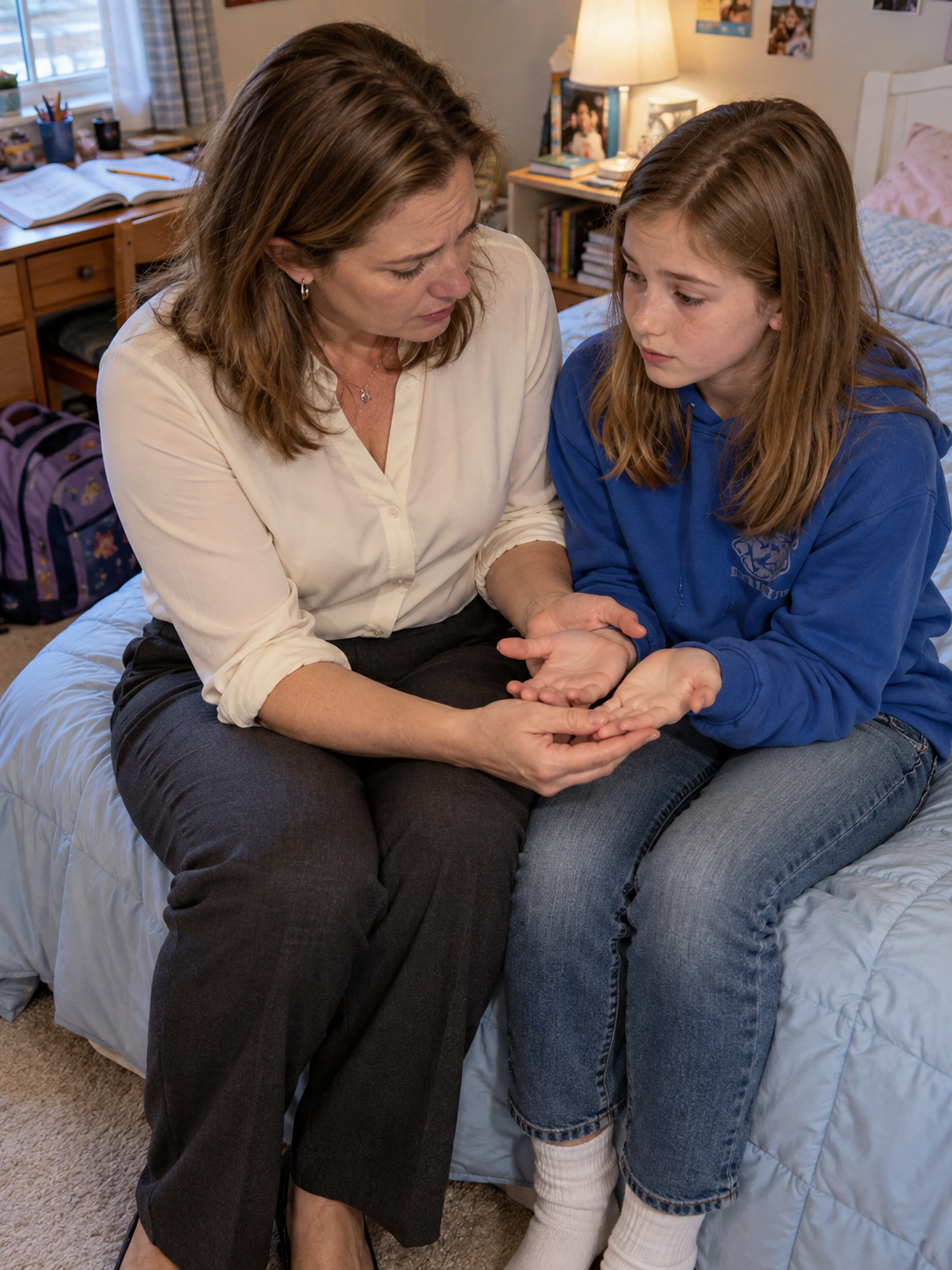
My husband demanded my eleven-year-old’s birthday money after a kitchen fire
My husband demanded my eleven-year-old’s birthday money after a kitchen fire and said she have to spend two years working...