A SIX-YEAR-OLD TRADED HER ONLY TEDDY BEAR FOR GRANDMA’S MEDICINE—THEN THE BILLIONAIRE WHO TOOK IT DISCOVERED THE WOMAN HE’D BEEN TRYING TO FORGET SINCE CHILDHOOD – Life Story
At a.m., a six-year-old girl placed her dead mother’s teddy bear on a pharmacy counter because her coins were not enough.
The medicine was for the grandmother who had raised her, and the stranger watching from the next aisle realized the child was prepared to lose the one thing she loved most.
Then the pharmacist read the grandmother’s name, and the billionaire beside the door went so still that even the little girl noticed.
### THE PRICE OF TEDDY
At that morning, Evelyn Hart had sat alone in her rocking chair and tried to cough quietly enough that Lumi would not wake up.
The November wind pressed against the windows of the little brick house on Alder Street, making the old panes tremble in their frames.
Evelyn held a handkerchief against her mouth, waited for the tightness in her chest to ease, and stared at the amber prescription bottle on the side table.
Two tablets remained.
Maybe enough for one day if she stretched them.
Evelyn hated that thought almost as much as she hated the unpaid electric bill hidden beneath a stack of grocery coupons in the kitchen drawer.
She had spent thirty-four years teaching middle school children never to confuse difficulty with defeat, yet lately every ordinary necessity seemed to arrive carrying a price she could not quite meet.
The retirement office had promised her delayed pension adjustment would clear by Friday.
Friday was three days away.
Lumi’s sixth birthday was Saturday.
On the opposite side of the room sat a small gift bag Evelyn had prepared weeks earlier.
Inside was a secondhand set of watercolor pencils, carefully sharpened, wrapped in yellow tissue paper, and tied with a ribbon she had ironed flat because buying new ribbon felt wasteful.
She looked toward the hallway.
The door to Lumi’s bedroom stood open an inch.
Evelyn could see one small socked foot beyond the blanket and the rounded brown head of Teddy, the bear Lumi had slept with since infancy.
Teddy had one mismatched button eye, a crooked left ear, and a patch across his belly sewn from an old piece of Dana’s blue blouse.
Dana.
Even after five years, her daughter’s name could still enter Evelyn’s chest like cold air.
She closed her eyes.
“Not tonight,” she whispered.
Another cough came.
This one hurt.
By , Evelyn was making oatmeal and pretending nothing was wrong.
That was the skill she trusted most these days.
Lumi shuffled into the kitchen wearing purple pajamas covered in fading silver stars.
Her dark curls had turned into a cloud overnight, and Teddy hung beneath one arm like an exhausted companion.
“Good morning, Grandma.”
“Good morning, sunshine.”
Lumi climbed into her chair and propped Teddy beside the sugar bowl.
“Teddy says you were coughing again.”
Evelyn kept stirring oatmeal.
“Teddy talks too much.”
“He worries.”
“So do you.”
Lumi considered that.
“Because you cough.”
Evelyn turned with two bowls and smiled more brightly than she felt. “I have medicine.”
Lumi looked toward the refrigerator, where the pharmacy reminder was held beneath a magnet shaped like an apple.
“You said yesterday you only had a little.”
“I’ll pick up more after I take you to school.”
“With what money?”
The spoon in Evelyn’s hand stopped.
Children were not supposed to ask questions like that at six.
But children noticed everything adults thought they had hidden.
Evelyn set the spoon down.
“My pension deposit is late.
That doesn’t mean we’re in trouble.”
“Mrs.
Bennett said trouble is when there’s not enough.”
“Mrs.
Bennett was talking about crayons.”
“She said supplies.”
Evelyn almost smiled.
There it was—the relentless literal mind she had inherited from Dana.
“We have enough,” Evelyn said. “We just have to be careful for a few days.”
Lumi stared into her oatmeal.
“And my birthday?”
Evelyn’s heart pinched.
“Especially your birthday.”
“I don’t need anything.”
“You’re allowed to want things.”
Lumi glanced toward the living-room window.
From the kitchen table, she could just see the toy store at the corner if she leaned far enough, though the red-haired doll she admired was three blocks beyond that and existed mainly in memory.
“I have Teddy.”
Evelyn reached across the table and touched her hand.
“Yes, you do.”
At , the kettle whistled.
Evelyn stood too quickly.
The room tipped.
She caught the counter.
“Grandma?”
“I’m fine.”
“You got wobbly.”
“I stood too fast.”
Lumi’s eyes narrowed with the unnerving concentration of a tiny detective.
Evelyn hated frightening her.
She hated even more that love made children good at recognizing lies.
“Go choose your school clothes,” Evelyn said. “Blue sweater.
It’s cold.”
Lumi slid from the chair but stopped in the doorway.
“You’re really going to get the medicine?”
“Yes.”
“Promise?”
Evelyn looked at her granddaughter.
Promises mattered in their house.
She should have chosen her words more carefully.
“I promise I’ll take care of it.”
Ten minutes later, the shower was running.
Lumi stood in the kitchen wearing the blue sweater and her faded red coat.
She could hear Grandma coughing through the bathroom wall.
On the table lay the prescription slip Evelyn had removed from her purse.
Lumi stared at it.
Then she looked at Teddy.
“I know,” she whispered.
Teddy, being Teddy, did not argue.
She emptied the ceramic coin jar beside the refrigerator.
Eight dollars and thirty-seven cents.
Lumi did not know what medicine cost.
Eight dollars and thirty-seven cents sounded like a lot because it was enough to buy twenty-four erasers at the school store.
She pushed the coins into her coat pocket, folded the prescription twice, and slipped it beside them.
Then she took a yellow sticky note.
Her handwriting required her entire body.
I AM HELPING GRANDMA.
I KNOW THE WAY.
LOVE LUMI.
She placed the note on top of the cereal box.
The back door opened with a squeak.
Cold air rushed inside.
Lumi hugged Teddy, stepped onto the porch, and pulled the door shut behind her.
At a.m., she stood on tiptoe at Adler Family Pharmacy, poured eight dollars and thirty-seven cents onto the counter, and learned that bravery had a price she had not expected.
Mr.
Samuel Adler looked from the prescription to the coins.
Then he looked at Lumi.
“Where is your grandmother?”
“Home.”
“Does she know you’re here?”
Lumi hesitated.
That was enough of an answer.
Mr.
Adler removed his glasses.
“Lumi.”
“I know I’m supposed to be with her.”
“You’re supposed to be with an adult.”
“But she needs this.”
Mr.
Adler’s expression softened.
He had known Evelyn for twelve years.
He also knew exactly how much the prescription cost.
Even after the insurance adjustment, the refill would require seventy-four dollars and sixteen cents.
He hated the number.
Lumi pushed the coins toward him.
“Is that enough?”
“No, sweetheart.”
“How much more?”
Mr.
Adler did not answer immediately.
Lumi began counting her coins again as if they might multiply from determination.
Near aisle four, a man in a charcoal overcoat stopped browsing.
Cassian Rowe had entered the pharmacy irritated about a migraine, a missed breakfast, and a meeting with three investors who had flown from Tokyo.
He forgot all three problems when he heard Lumi ask, “What if I give you something?”
Mr.
Adler leaned forward.
“You don’t have to give me anything.”
Lumi looked down at Teddy.
Her arms tightened around him.
Then she slowly placed the bear beside the coins.
Mr.
Adler’s face changed.
“Oh, no.”
“I know Teddy isn’t money.”
The words came out smaller than Lumi wanted.
She touched the patch across his belly.
“But he’s important.”
“That’s exactly why I can’t take him.”
Lumi swallowed.
“Grandma is more important.”
The pharmacy became strangely quiet.
An older woman waiting beside the greeting cards lowered her newspaper.
A clerk carrying a carton of shampoo stopped between shelves.
Cassian took one unconscious step closer.
Lumi kept her eyes on Teddy.
“My mom gave him to me before she went to heaven.”
Mr.
Adler shut his eyes briefly.
“That means Teddy belongs with you.”
“He does.”
Lumi’s chin trembled.
“But Grandma needs the medicine today.”
She pushed Teddy another inch across the counter.
“Teddy is used to hurting,” she whispered. “Grandma isn’t.”
Cassian felt something inside him move.
Not pity.
Pity was easy.
Pity let a man feel generous without changing anything about himself.
This was recognition.
He had once owned something like Teddy—not a toy, but a library card laminated by a teacher because his family could not afford lost-book fees.
He had once stood at a counter pretending he understood words that scattered across paper like insects.
And someone had noticed.
Cassian walked forward.
“Fill the prescription.”
Lumi spun around.
She stared at the tall stranger with dark hair, tired gray eyes, and a coat that looked too expensive for a neighborhood pharmacy.
Cassian placed his credit card beside the coins.
Mr.
Adler knew him immediately.
Most of Harbor City did.
“Mr.
Rowe—”
“No name.”
Cassian looked at Lumi.
“Just the medicine.”
She hugged Teddy again.
“No.”
The refusal surprised everyone.
Cassian blinked.
“No?”
“I have to pay.”
“You tried.”
“That isn’t paying.”
Lumi looked deeply troubled by his failure to understand this.
Cassian crouched so they were eye level.
“What if I buy Teddy from you?”
Her expression became guarded.
“He isn’t really for sale.”
“I understand.”
“You can’t put him in the trash.”
“I wouldn’t.”
“You can’t give him to a dog.”
“I don’t have a dog.”
“You have to let him sleep somewhere warm.”
“I can do that.”
Lumi glanced at Teddy.
“Sometimes he gets scared when it’s dark.”
Cassian’s throat tightened unexpectedly.
“I’ll keep a light on.”
Lumi studied him.
Six-year-old eyes possessed a frightening lack of diplomacy.
“Are you lonely?”
Cassian almost laughed.
Instead, he said, “Sometimes.”
Lumi looked at Teddy again.
Then she placed him carefully into Cassian’s hands.
“Then maybe he can help you too.”
Cassian stared down at the worn bear.
A faint embroidered D remained visible beneath the belly patch.
His hand stopped.
D.
For no logical reason, the letter unsettled him.
Mr.
Adler slid the paper bag containing Evelyn’s medicine across the counter.
Cassian paid.
Lumi gathered none of her coins.
“You forgot these,” Mr.
Adler said.
“They’re Grandma’s emergency money.”
Cassian held out his palm.
“Then take them.”
She swept the coins back into her pocket.
At the door, she turned.
“His name is Teddy.”
“I know.”
“You have to give him breakfast.”
Cassian nodded solemnly.
“What does he eat?”
“Pretend pancakes.”
“I can manage that.”
A tiny smile appeared.
Then Lumi disappeared through the glass door into the gray morning.
Cassian remained crouched with Teddy in his hands.
His phone vibrated.
He ignored it.
Then Mr.
Adler turned the prescription receipt toward him.
EVELYN HART.
Cassian stopped breathing.
For twenty-four years, he had trained himself not to think about the woman attached to that name.
Now her granddaughter had just sold him a teddy bear to keep her alive.
And for the first time since he was thirteen years old, Cassian Rowe was afraid to find out what had happened to his favorite teacher.
### THE NAME HE BURIED
Cassian followed Lumi from half a block away.
He knew it looked questionable.
He also knew allowing a six-year-old to walk home alone after discovering she had crossed several streets by herself would be worse.
He called his assistant.
Maris answered before the second ring.
“Please tell me you’re on your way.”
“I need you to move the nine.”
Silence.
“The nine is Kiyota Holdings.”
“I know.”
“They crossed an ocean.”
“I’m aware of geography.”
“You personally insisted this meeting happen today.”
Cassian watched Lumi stop at a crosswalk, look left twice and right once, then wait despite an empty street.
“Move it.”
Maris lowered her voice.
“Cassian, what happened?”
A red light reflected across his windshield.
He looked at Teddy lying on the passenger seat.
“I found something I should have dealt with years ago.”
“That sentence gives me absolutely no useful information.”
“It wasn’t meant to.”
He ended the call.
Lumi turned onto Alder Street.
Cassian parked near the corner.
He remained inside until she reached number 118.
The front door opened before Lumi touched the handle.
Evelyn appeared wearing slippers, a wool cardigan, and terror.
She had Lumi in her arms within seconds.
Cassian could not hear through the closed car windows, but he did not need to.
Evelyn held her granddaughter by the shoulders, checked her face, checked her hands, then pulled her against her chest so tightly that Lumi’s red coat vanished beneath the cardigan.
Cassian felt ashamed for watching something that intimate.
He looked down.
Teddy’s one button eye seemed to accuse him.
“Fair.”
Inside the house, Evelyn was trying very hard not to shout.
“You cannot do that again.”
“I left a note.”
“That does not make it safe.”
“I knew the way.”
“You are six.”
“I’m almost six.”
“That is still six.”
Lumi’s lip trembled.
Evelyn stopped.
She sat on the kitchen chair and pulled Lumi closer.
Fear had made her sharp.
That was not the lesson she wanted to teach.
“I’m sorry,” Evelyn said. “I’m frightened because I love you.
When I came out and you were gone…”
“I was helping.”
“I know.”
Lumi brightened and held up the pharmacy bag.
“I got your medicine.”
Evelyn looked at it.
Her relief lasted one second.
Then suspicion replaced it.
“How?”
“A man helped.”
“What man?”
“A lonely one.”
Evelyn blinked.
“That is not a description that makes me feel better.”
“He had a nice coat.”
“Lumi.”
“And he bought Teddy.”
Evelyn froze.
Her eyes moved to Lumi’s empty arms.
“No.”
“Teddy is helping him.”
Evelyn’s face drained.
“Where is Teddy?”
“I traded him.”
“Traded him?”
“For your medicine.”
Evelyn looked at the paper bag as if it had become dangerous.
That bear had been Dana’s final Christmas present to her daughter.
Dana had found it at a church thrift shop, washed it twice, repaired its ear herself, and sewn a tiny D beneath its arm.
Three months later, a rain-slick highway and one wrong turn from another driver had taken Dana out of their lives.
Teddy remained.
Teddy had been there through nightmares, birthdays, stomach flu, preschool, thunderstorms and questions about mothers who could not come home.
Evelyn lowered herself onto her knees.
“Oh, baby.”
Lumi’s face crumpled.
“You needed it.”
Evelyn pulled her close.
“No medicine is worth something that makes you feel safe.”
“But you make me feel safe.”
The words hit Evelyn harder than the cough.
She closed her eyes against Lumi’s hair.
For a moment, her granddaughter was not six.
She was every child Evelyn had ever taught who had quietly decided an adult’s problem belonged on small shoulders.
That frightened her more than an empty prescription bottle.
“Listen to me,” Evelyn said. “Helping people does not mean you have to lose the things you love.”
“But sometimes it does.”
“Sometimes,” Evelyn admitted. “But adults are supposed to make sure children don’t have to be the ones doing the losing.”
Lumi sniffed.
“Is the man bad?”
“No.”
“I think he’s sad.”
Evelyn drew back.
“Why?”
“I asked if he was lonely.”
“Lumi.”
“He said sometimes.”
Evelyn rubbed her forehead.
Of course she had interviewed the stranger.
“Did he tell you his name?”
“No.”
That answer would have mattered more if a black sedan had not remained parked near the corner.
Evelyn saw it through the window.
Her posture changed.
“Stay inside.”
“Why?”
“Because I said so.”
Evelyn walked to the porch.
Cassian knew immediately that hiding would make everything worse.
He got out.
For twenty-four years, the face in his memory had been forty-five, calm, surrounded by library shelves, always carrying a red pen.
The woman on the porch was seventy now.
Her silver hair was pinned neatly.
Her shoulders were thinner.
But when she looked at him, Cassian was thirteen again and had just been caught pretending he had finished a chapter he could not read.
“Mrs.
Hart?”
Her gaze sharpened.
“Yes?”
He approached slowly.
“I followed your granddaughter because I wanted to be sure she got home safely.”
“You could have called the police.”
“I considered it.”
“Why didn’t you?”
“Because I also didn’t want to frighten her.”
Evelyn examined him.
“And the bear?”
Cassian opened his coat.
Teddy’s head protruded from the inner pocket.
For the first time that morning, Evelyn almost laughed.
He removed the bear carefully.
“I had no intention of keeping him.”
Lumi appeared at the window.
Her whole face lit.
Evelyn noticed.
Cassian noticed Evelyn noticing.
“I wanted the transaction to feel real to her,” he said. “I didn’t want her to think her promise didn’t matter.”
“That was thoughtful.”
“I’m not sure it was wise.”
“That makes two of us.”
Cassian held Teddy out.
Evelyn did not take him.
“Give him back to Lumi yourself.”
Cassian looked at her.
Recognition had not appeared.
He had expected that.
The boy she had taught had been thin, angry, wearing hand-me-downs and hiding his dyslexia behind indifference.
Cassian Rowe appeared in financial magazines.
Cass Rowland had appeared on detention slips.
Different surname.
Different posture.
Different life.
Evelyn opened the door.
“You can come inside for five minutes.”
“Thank you.”
“Do not mistake five minutes for trust.”
“I won’t.”
Lumi ran toward Teddy before Cassian crossed the threshold.
She stopped herself two feet away.
“You came back.”
“I said I’d keep him safe.”
“You said you bought him.”
“I changed my mind.”
“Adults can do that?”
“Constantly.
Usually at inconvenient times.”
Lumi considered him.
“Did he eat?”
Cassian nodded.
“Two pretend pancakes.”
“With syrup?”
He glanced at Evelyn for help.
She folded her arms.
“You created this situation.”
Cassian looked back at Lumi.
“A little.”
“That’s okay.”
She accepted Teddy and hugged him.
Evelyn turned away before anyone noticed her eyes.
Cassian saw the house clearly now.
Clean.
Warm.
Poorer than he expected.
A space heater sat near the sofa despite the central thermostat on the wall.
Three unopened envelopes were tucked beneath a ceramic bowl.
One carried the seal of Harbor City Retirement Services.
Another came from an insurance administrator.
This was not a family destroyed by irresponsibility.
This was a family cornered by timing.
Cassian knew the difference.
His father had spent years being one late paycheck away from catastrophe.
“You paid for the prescription,” Evelyn said.
“Yes.”
“I’ll reimburse you.”
“No.”
“That was not a request.”
Cassian almost smiled.
There she was.
Not the face.
The tone.
Firm without cruelty.
Proud without arrogance.
“I’m not giving you my address.”
“Then I’ll leave cash at the pharmacy.”
“Mrs.
Hart—”
“Evelyn.”
The correction struck him strangely.
“Evelyn.”
She looked toward Lumi.
“She cannot learn that a stranger solves problems because he has more money.”
Cassian’s expression changed.
“I agree.”
That answer surprised her.
“Then you understand.”
“I understand more than you think.”
A cough seized her.
Evelyn turned away.
Cassian watched her brace one hand against the counter.
Lumi stopped playing immediately.
“Grandma.”
“I’m fine.”
Cassian’s jaw tightened.
He knew that sentence.
He had said it in a hundred boardrooms.
Sometimes it meant leave me alone.
Sometimes it meant I am scared.
He looked again at the prescription bag.
“What did your doctor say?”
Evelyn’s eyes cooled.
“Five minutes.”
“Right.”
Cassian backed off.
Before leaving, he crouched beside Lumi.
“Teddy’s officially retired from pharmacy work.”
She hugged the bear.
“Good.”
“No more walking alone either.”
Lumi looked toward Evelyn.
“That part is Grandma’s rule.”
“It’s mine too.”
“You’re not my boss.”
Cassian smiled despite himself.
“Excellent point.”
At the door, Evelyn said, “Thank you.”
“For the medicine?”
“For bringing her home.”
Cassian hesitated.
“You used to tell people that accepting help and surrendering control were different things.”
Evelyn stared at him.
The silence stretched.
Cassian immediately regretted saying it.
Her eyes narrowed.
“Have we met?”
He looked at her.
A truth waited between them.
He was not ready to hand it over in a doorway.
“Not recently.”
Then he left.
Evelyn stood on the porch long after the sedan disappeared.
Behind her, Lumi asked Teddy whether billionaires got lonely.
Evelyn turned sharply.
“Billionaire?”
“The pharmacy lady whispered it.”
“What was his name?”
“Row something.”
Evelyn looked toward the empty street.
A faint memory stirred.
Not Rowe.
Something older.
Something frightened and furious.
She did not catch it.
Not yet.
### THE BOY WHO COULD NOT READ
Cassian returned to Rowe Tower at 10:36 a.m.
The executive conference room contained ten people, three untouched coffee services, two interpreters, and Maris Bell standing near the window with the expression of a woman who had spent ninety minutes preventing international diplomacy from becoming personal.
Cassian entered.
Maris handed him a folder.
“You owe me.”
“I do.”
“You also owe Mr.
Nakahara an explanation.”
“I’ll give him one.”
“Not the real one.”
“No.”
She studied him.
“Are you wearing a teddy-bear thread on your coat?”
Cassian glanced down.
Brown yarn clung to his lapel.
He removed it.
Maris said nothing.
That was why she had lasted eleven years.
The meeting ended successfully at .
Cassian barely remembered it.
He went directly to the records storage room beneath his private office.
His chief of staff had digitized almost everything, but Cassian kept three boxes of personal papers because throwing them away felt too much like admitting the past had happened.
The second box contained school records.
CASS ROWLAND.
Attendance warnings.
Reading evaluations.
A counselor’s letter recommending psychological testing.
A disciplinary note after he shoved a textbook from a desk when another boy laughed at him.
Then a folded sheet written in blue ink.
CASSIAN IS NOT LAZY.
Cassian sat down.
He knew the handwriting.
The full note had been addressed to his father.
Mr.
Rowland,
Cassian is intelligent, observant, and unusually capable of retaining information he hears.
His reading difficulty does not reflect effort or character.
I strongly recommend formal assessment for dyslexia and structured support rather than punishment.
He needs tools, not shame.
Evelyn Hart.
Cassian read the final sentence twice.
He needs tools, not shame.
That sentence had redirected his entire life.
His father had listened.
Barely.
Testing followed.
Tutoring followed.
A library program followed.
By sixteen, Cassian could manage reading without feeling hunted by the page.
By twenty-four, he had built the logistics software that became Rowe Systems.
By thirty-seven, Forbes estimated his net worth at $4.1 billion.
The financial profiles always mentioned intelligence, grit and relentless focus.
They never mentioned Evelyn Hart.
Neither had he.
Cassian leaned back.
Why?
Because gratitude had frightened him?
No.
Because remembering who had saved him threatened the mythology he preferred.
Self-made.
He had always hated the phrase when applied to other people.
He had never questioned it when applied to himself.
Maris knocked once.
“Come in.”
She stopped when she saw the old papers.
“That looks dangerous.”
“It is.”
He handed her Evelyn’s letter.
Maris read it.
Her face softened.
“She was your teacher.”
“Yes.”
“The grandmother.”
“Yes.”
“And you didn’t tell her.”
“No.”
“Why?”
Cassian looked toward the windows.
“Because I don’t know how to explain twenty-four years of silence without sounding like exactly the kind of man I’m afraid I became.”
Maris sat opposite him.
“You became many kinds of man.”
“Comforting.”
“You pay me for accuracy.”
Cassian almost smiled.
She returned the letter.
“What are you going to do?”
“Fix the pension delay.”
“No.”
His eyes lifted.
Maris folded her arms.
“No?”
“If you interfere privately with a government pension system, I’ll personally resign before the investigation begins.”
“I meant find out what happened.”
“That is different.”
“Check public assistance programs.
Insurance appeals.
Pharmacy assistance.”
“Good.”
“And do not buy them a house.”
“I wasn’t going to.”
“You looked like you were thinking about it.”
“I was thinking about the broken gutter.”
“You are a billionaire.
Your face makes ordinary maintenance look like acquisition.”
Cassian looked back at the letter.
“I want to help without turning them into a project.”
“Then start by asking what they need.”
That afternoon, Evelyn received a call from Harbor City Retirement Services.
The delayed cost-of-living adjustment would arrive Friday as promised.
Nothing had changed.
Cassian had not touched it.
But Maris discovered another issue.
Evelyn’s supplemental drug plan had classified her inhaled medication incorrectly after a formulary change.
She had been paying seventy-four dollars for something that should have cost seventeen.
There was an appeal process.
Three pages.
Two signatures.
One physician code.
Cassian stared at the information.
“What kind of system expects a sick seventy-year-old to discover this herself?”
“The kind built by committees,” Maris said.
He called Adler Pharmacy.
Mr.
Adler confirmed it.
“I tried explaining the appeal.”
“Why wasn’t it filed?”
“Evelyn said she’d handle it.”
“Did she?”
“No.”
“Why?”
“Ask her.”
Cassian did.
He returned to Alder Street two days later carrying Teddy’s loose ear in a small paper bag.
Lumi opened the door.
“What happened?”
Cassian raised both hands.
“Not my fault.”
She gasped.
“Teddy!”
“He suffered an occupational injury.”
Evelyn appeared behind her.
“What did you do to that bear?”
“Nothing.
Lumi left him on the porch yesterday when I returned him.”
“I did not.”
Lumi looked guilty.
Evelyn looked down.
“Teddy?”
“He was on the windowsill,” Lumi admitted.
“And the dog next door?”
Lumi’s eyes widened.
Cassian produced the detached ear.
“Mr.
Kendrick caught his beagle before the rest became history.”
Lumi clutched Teddy.
“He needs surgery.”
“I know a tailor.”
Evelyn stared at Cassian.
“You came here because of a teddy-bear ear?”
“And an insurance appeal.”
Her expression immediately closed.
“There it is.”
“What?”
“The real reason.”
Cassian stepped inside only when she moved aside.
“I asked someone to check whether the prescription price was correct.”
“You investigated me?”
“The drug plan.
Not you.”
“You had no right.”
“I know.”
That stopped the argument for half a second.
Cassian continued.
“I should have asked.”
“Yes.”
“I’m asking now.”
Evelyn looked at the papers.
“The plan made an error?”
“It appears so.”
“How much?”
“Fifty-seven dollars per refill.”
Her jaw tightened.
She had paid that amount three times.
One hundred seventy-one dollars.
Enough groceries for weeks.
Enough for a proper birthday.
Enough to prevent Lumi from hearing conversations about money.
Cassian saw anger replace embarrassment.
Good.
Anger could move.
Shame only hid.
“I can help with the appeal,” he said.
“I can read forms.”
“I know.”
“Do you?”
The question had weight.
Cassian met her gaze.
“I know you can do a great many things.”
She watched him for several seconds.
Then she accepted the pages.
“Sit.”
They worked at the kitchen table.
Cassian explained the plan code.
Evelyn corrected his assumption about her pulmonologist.
Lumi performed emergency surgery on Teddy using tape until Evelyn confiscated it.
No one mentioned Cassian’s old sentence about surrendering control.
But Evelyn kept looking at him.
At one point, she asked, “What school did you attend?”
Cassian’s pen stopped.
“Westbridge.”
Her eyes sharpened.
“I taught there.”
“I know.”
“What year?”
“Nineteen ninety-nine.”
Evelyn became very still.
Cassian looked down.
She said one name.
“Cass Rowland.”
His breath left him.
Lumi looked between them.
“Who’s that?”
Cassian lifted his eyes.
“Me.”
Evelyn stared.
The man across from her vanished.
In his place she saw a thirteen-year-old boy sitting in the back row, shoulders rigid, refusing to read aloud.
A boy who memorized paragraphs from hearing classmates read them so nobody would discover the letters betrayed him.
A boy who once stayed after school and angrily told her, “I’m not stupid.”
She had replied, “I know.”
Evelyn covered her mouth.
“Oh my God.”
Cassian looked almost embarrassed.
“Hello, Mrs.
Hart.”
“You changed your name.”
“My father remarried.
I took Rowe later.”
“You built—”
“Yes.”
She sat back.
“And you knew when you came here.”
“Not at the pharmacy.”
“When?”
“When Adler said your name.”
“Why didn’t you tell me?”
Cassian had prepared no answer.
So he used the true one.
“Because I was ashamed.”
Evelyn frowned.
“Of what?”
“That I never found you.”
“You were a child.”
“Not for twenty-four years.”
“Cassian.”
“I let magazines call me self-made.”
Her expression softened.
“That is what this is about?”
“Partly.”
“You think I’m waiting for credit?”
“No.”
“You think teachers keep score?”
“No.”
“Then stop turning gratitude into punishment.”
Cassian stared at her.
There it was again.
The exact sensation from adolescence.
Being corrected without being diminished.
Evelyn leaned forward.
“I helped you because that was my job and because you deserved help.
You do not owe me your fortune.”
“I know.”
“Do you?”
Cassian looked toward Lumi.
She was sewing Teddy’s ear with a plastic craft needle and thick yellow yarn.
“I’m beginning to.”
Evelyn followed his gaze.
“What you owe,” she said, “is to notice the next child.”
Cassian looked at her.
Something passed between them.
Not forgiveness.
There had been nothing to forgive.
Something harder.
Responsibility.
That night, Evelyn’s cough became worse.
At 11:04, Lumi called Cassian.
Not emergency services.
Cassian.
Because Evelyn had written his number beside the refrigerator after the insurance appeal.
“Grandma can’t stop coughing.”
Cassian was standing before his bedroom window.
He became completely awake.
“Is she breathing?”
“Yes, but weird.”
“Put Grandma on.”
“I’m fine,” Evelyn rasped in the background.
Cassian closed his eyes.
Of course.
“Lumi, call 911.”
“Grandma says no.”
“Put me on speaker.”
A pause.
Then Evelyn’s strained voice.
“This is unnecessary.”
“Can you speak an entire sentence without stopping for air?”
Silence.
“Evelyn.”
“I can.”
“You just didn’t.”
“This is expensive.”
“I am not discussing bills while you can’t breathe.”
“You don’t get to order me around.”
“No.
But Lumi is scared.”
That worked.
Evelyn looked at her granddaughter.
Lumi stood barefoot in the kitchen holding Teddy with both hands.
Her face was white.
Evelyn’s pride broke.
“Call.”
The ambulance arrived seven minutes later.
Cassian reached Metropolitan Hospital before they did.
The emergency physician did not call it a cold.
He called it something Cassian had not expected.
Interstitial lung disease.
Possible pulmonary fibrosis.
More testing required.
Evelyn listened.
Lumi slept across three waiting-room chairs with Teddy beneath her cheek.
Cassian stared through the glass at the sleeping child.
The medicine had never been the real crisis.
It had only been the first clue.
### WHAT LUMI WAS REALLY CARRYING
The diagnosis came four days later.
Idiopathic pulmonary fibrosis.
Progressive.
Manageable in some respects.
Not curable.
Dr.
Nolan Pierce delivered the information without false softness.
“There are treatments that can slow decline for some patients.
Oxygen may become necessary.
Pulmonary rehabilitation can help.
We’ll evaluate whether transplant referral is appropriate, although age and overall health matter.”
Evelyn asked practical questions.
She always had.
“How quickly?”
“We cannot predict exactly.”
“Months?”
“Possibly years.”
“Or months?”
Dr.
Pierce paused.
“Yes.”
Cassian watched her face.
No collapse.
No melodrama.
Only a woman reorganizing reality.
“Can I live alone?”
“For now, perhaps, with support.”
“My granddaughter lives with me.”
“That changes the equation.”
Evelyn’s hands folded together.
That was the first moment fear appeared.
Not for dying.
For Lumi.
Later, when Dr.
Pierce left, Evelyn said, “Do not make promises.”
Cassian sat beside the hospital window.
“I haven’t.”
“You look like you’re about to.”
“I’m thinking.”
“That is more dangerous.”
Despite everything, he smiled.
She did not.
“I mean it.
Do not tell Lumi you’ll fix this.”
“I can’t fix this.”
“Good.”
“I can help.”
“That is different.”
“Yes.”
Evelyn closed her eyes.
“I have a cousin in Albany.
Margaret.”
“Can she take Lumi?”
“She’s seventy-six.”
“Anyone else?”
“Dana had no siblings.”
“Lumi’s father?”
Evelyn’s mouth tightened.
Cassian noticed.
“He’s alive?”
“I don’t know.”
“That is not the same as no.”
Evelyn looked toward the door.
“His name is Noah Bennett.
He was twenty-two when Dana became pregnant.
He disappeared before Lumi was born.”
“Did he sign away parental rights?”
“No.”
“Was paternity established?”
“No.”
“Then legally—”
“I know what legally means.”
Cassian stopped.
Evelyn’s voice dropped.
“Dana told me he wanted nothing to do with them.
I believed her.”
“But?”
“Two years after Dana died, I found letters.”
Cassian leaned forward.
“What letters?”
“From Noah.”
“How many?”
“Seven.”
“Sent when?”
“During Dana’s pregnancy.”
“And?”
“She never opened some of them.”
Cassian’s expression changed.
“What did they say?”
“I only read one.”
“Why?”
“Because it wasn’t mine.”
“And the one?”
Evelyn stared at her hands.
“He said he wanted to come back.
He said his parents had thrown him out.
He said he had found work in Oregon and wanted to help.”
“Did Dana respond?”
“I don’t know.”
“You never tried to find him?”
Evelyn’s eyes flashed.
“My daughter was dead.
Lumi was one.
I was grieving.
I was sixty-four years old and suddenly changing diapers again.
I made choices.”
“I’m not judging you.”
“I am.”
The confession silenced him.
Evelyn looked away.
“I told myself Noah abandoned them because that version was easier.
Later, it became too late to admit I might not know the whole truth.”
Cassian understood something then.
Pride was not Evelyn’s flaw.
Control was.
She had spent a lifetime helping others by understanding what they needed.
When life became unbearable, she responded by deciding faster, holding tighter and asking less.
It had kept Lumi safe.
It had also created secrets.
“Where are the letters?”
“At home.”
“May I see them?”
“No.”
Cassian nodded.
“Okay.”
Evelyn looked surprised.
“You’re not going to argue?”
“You told me no.”
“You used to argue about every assignment.”
“I’ve matured selectively.”
She almost laughed.
That evening, Lumi visited.
Cassian had told her only that Grandma’s lungs needed extra help.
Lumi climbed carefully onto the bed.
“Are you dying?”
The question struck the room cleanly.
Evelyn’s eyes filled.
Cassian looked toward the window.
Adults often tried to protect children by pretending children had not already noticed the truth.
Evelyn took Lumi’s hands.
“Not today.”
“Later?”
“Everyone dies later.”
Lumi frowned.
“That’s not an answer.”
Evelyn smiled sadly.
“No.
It isn’t.”
She took a breath.
“My lungs are sick in a way the doctors can’t completely fix.
They’re going to help me breathe and help me stay strong as long as possible.”
Lumi’s eyes flooded.
“How long?”
“We don’t know.”
“Is it because I didn’t get the medicine faster?”
Evelyn’s face broke.
“No.”
Cassian turned sharply.
There it was.
The burden Lumi had created inside herself.
Evelyn pulled her close.
“No, baby.
Absolutely not.
You did not make me sick.
You could not have stopped this.
Medicine that morning did not cause this and missing medicine would not have caused this.”
Lumi began crying.
“I thought maybe if Teddy was worth more—”
“No.”
Evelyn held her.
“Teddy was never supposed to save me.”
Cassian’s throat tightened.
Lumi turned toward him.
“You said he was payment.”
Cassian crouched beside the bed.
“I was wrong.”
“Adults can be wrong?”
“All the time.”
“You said that before.”
“I need repetition.”
Lumi sniffed.
Cassian continued.
“You loved your grandma so much that you tried to solve an adult problem.
But you never should have had to.”
“Then who solves it?”
He looked at Evelyn.
Then back at Lumi.
“All of us solve different parts.”
Lumi wiped her face.
“Even me?”
“Yes.
Your part is being six.”
“I’m almost six.”
“Your part is being almost six.”
“What does that do?”
“It gives Grandma someone to love.”
Evelyn closed her eyes as tears escaped.
Lumi looked thoughtful.
“I can do that.”
“I know.”
Outside the room, Cassian called Maris.
“I need a family-law attorney.”
“What happened?”
“There may be a biological father.”
“Does Evelyn want us involved?”
“No.”
“Then?”
“I need to understand options before she does.”
Maris paused.
“That is very close to doing the thing she told you not to do.”
Cassian leaned against the wall.
“I know.”
“Ask her.”
“She’s terrified.”
“So are you.”
Cassian said nothing.
Maris softened.
“You can’t protect people by removing every decision before they make it.”
The words irritated him because they were correct.
He hung up without calling an attorney.
That night, he returned to Alder Street to feed Evelyn’s cat, Juniper, and bring clean clothes to the hospital.
While searching the hall closet for a suitcase, he saw a wooden box on the top shelf.
Letters.
He knew immediately.
His hand rose.
Stopped.
Then lowered.
Evelyn had said no.
Cassian closed the closet.
That choice would matter later.
He did not know how much.
### THE FATHER IN THE LETTERS
Evelyn came home after nine days.
The house required adjustments.
Not renovations.
Adjustments.
A portable oxygen concentrator.
A shower chair.
Medication organization.
A home-health nurse twice a week.
Cassian offered to pay.
Evelyn refused.
Then the hospital social worker found a Medicare-covered provider and a local aging-services grant.
Cassian learned the value of helping someone access what existed instead of replacing every system with his bank account.
He disliked the patience required.
That made it good for him.
Lumi returned to school.
Cassian began picking her up on Tuesdays because Evelyn’s pulmonary rehabilitation sessions overlapped dismissal.
The first time he stood outside Harbor Elementary, three parents recognized him.
By the third Tuesday, no one cared.
He was simply the tall man who always remembered Lumi’s gloves and could not braid hair.
One rainy afternoon, Lumi climbed into his car holding a paper family tree.
Cassian glanced at it.
“Homework?”
“I hate it.”
“That’s strong.”
“Everyone has to write mom and dad.”
Cassian’s hands tightened on the steering wheel.
“What did your teacher say?”
“She said families look different.”
“Good teacher.”
“But there’s a blank.”
Lumi pointed.
FATHER.
“What do I write?”
Cassian had no answer.
Neither, it turned out, did Evelyn.
At home, Lumi placed the worksheet on the kitchen table.
Evelyn stared at the empty box.
Cassian watched her.
This was the moment.
Evelyn knew it too.
She went to the closet.
The wooden box came down.
Seven envelopes.
Six opened.
One still sealed.
Cassian looked at her.
“You read the others?”
“After the hospital.”
“What changed?”
“I ran out of time to protect myself from being wrong.”
Lumi sat at the table coloring.
Evelyn and Cassian moved into the living room.
The letters told a different story from the one Dana had left behind.
Noah Bennett had been immature.
Frightened.
Poor.
But he had not vanished willingly.
His wealthy parents had threatened to cut him off if he stayed with Dana.
At first, he left.
Then regretted it.
He wrote.
He called.
Dana blocked the number.
In letter three, he apologized without excuse.
In letter four, he said he had found construction work in Oregon.
In letter five, he enclosed money that Dana returned.
Letter six ended differently.
I know I failed you when you needed me most.
I don’t get to erase that.
But if you ever decide I can know my daughter, I will come.
I will not ask you to forgive me first.
Evelyn sat very still.
Cassian asked, “What’s in the sealed one?”
“I don’t know.”
“Open it.”
“It isn’t mine.”
“Evelyn.”
She looked at him.
He said nothing more.
Her fingers trembled as she broke the old seal.
Inside was a single page.
Dana,
I came to Harbor City.
Your mother told me you had moved and asked me not to contact you again.
I believed her because I thought she was protecting you.
If she ever reads this, I hope she knows I’m not angry.
I was twenty-two and weak when strength mattered.
I’m trying not to be that person anymore.
If our daughter ever wants me, I’m leaving my address below.
Noah.
Evelyn stopped breathing.
Cassian saw it happen.
Not the lung disease.
Shock.
“You told him Dana moved?”
Evelyn’s eyes closed.
“I forgot.”
“What?”
“I forgot I did that.”
Cassian stared.
“When?”
“Before Lumi was born.”
“Why?”
“Dana was devastated.
Noah’s mother had called her and said horrible things.
Dana stopped eating.
She cried for weeks.
Then Noah came to the house.”
“And you sent him away.”
“Yes.”
The word barely existed.
Cassian stood.
He walked to the window because anger arrived too quickly.
Evelyn saw it.
“You think I’m terrible.”
“I think you made a decision that wasn’t yours.”
“Yes.”
“Did Dana know he came?”
“No.”
Cassian turned.
“That matters.”
“I know.”
“For six years, Lumi has had no father partly because—”
“Do not finish that sentence.”
“Why?”
“Because I finish it every night.”
He stopped.
Evelyn’s face had collapsed inward.
This was not pride defending itself.
This was guilt finally stripped of usefulness.
“I thought I was protecting Dana,” she whispered. “Then Dana died before I could fix anything.
Afterward, every year I waited made the truth uglier.”
Cassian’s anger softened but did not disappear.
“Where is Noah now?”
“The address is twenty-six years old.”
“Six,” Evelyn corrected.
Cassian looked at the postmark.
She was right.
Dana had died five years ago.
The letter had been written six years earlier.
This was not an ancient trail.
“Maris can find him.”
Evelyn nodded.
“Find him.”
“You’re sure?”
“No.”
“That isn’t what I asked.”
Evelyn met his eyes.
“Yes.”
Maris located Noah Bennett in eighteen hours.
He was thirty-four.
Divorced.
No other children.
Operations manager for a commercial construction firm outside Portland.
No criminal record.
No lawsuits.
No obvious reason to fear him.
That did not mean he deserved immediate access to Lumi.
Everyone understood that.
Cassian called him with Evelyn present.
“Mr.
Bennett?”
“Yes.”
“My name is Cassian Rowe.”
There was a pause.
“The tech guy?”
Cassian glanced at Evelyn.
“Yes.”
“Okay.”
“I’m calling about Dana Hart.”
Silence.
Longer this time.
Then Noah’s voice changed.
“What happened?”
“She died five years ago.”
Nothing.
For seven full seconds, there was no sound.
Then a chair scraped.
“What?”
Cassian closed his eyes.
Evelyn began crying silently.
“Noah,” she said.
He heard her.
“Mrs.
Hart?”
“Yes.”
“What do you mean she died?”
Evelyn could barely speak.
“Car accident.”
“When?”
She told him.
A breath cracked through the phone.
“And the baby?”
“Her name is Lumi.”
“Is she alive?”
“Yes.”
“Is she okay?”
“Yes.”
Noah inhaled.
“Why are you calling me now?”
There it was.
The question Evelyn deserved.
She answered it herself.
“Because I lied to you.”
Noah said nothing.
“I told you Dana moved.
I told you not to come back.”
“I remember.”
“I was wrong.”
Silence.
Cassian waited.
Noah’s next words were quiet.
“Does Lumi know I exist?”
“No.”
Another silence.
Then, “I need to sit down.”
Cassian almost said you are sitting down.
He didn’t.
Noah continued.
“I thought Dana hated me.”
“She was hurt.”
“She had the right.”
“I kept your letters.”
“Why?”
“I don’t know.”
“That’s not true.”
Evelyn winced.
Noah’s voice was not cruel.
That made it worse.
“You kept them because some part of you knew I might matter someday.”
“Yes.”
“Do I?”
Evelyn looked toward the kitchen, where Lumi was drawing Teddy wearing a superhero cape.
“That depends on what you do next.”
Noah flew to Harbor City two days later.
He did not arrive at Evelyn’s house.
At Cassian’s insistence and with advice from the hospital social worker, they met first at a family counseling office.
Noah walked in carrying nothing.
No flowers.
No gifts.
No performance.
He wore jeans, work boots, and a dark sweater.
When he saw Evelyn, he stopped.
“You got older.”
“So did you.”
His mouth moved like he might smile.
He did not.
They sat.
Noah looked at Cassian.
“Who are you to Lumi?”
Cassian considered the question.
“Someone who cares about her.”
“Family?”
“Not legally.”
“Boyfriend?”
Evelyn almost choked.
Cassian stared.
“No.”
“Sorry.”
“It’s fine.”
“It was a weird room.”
The counselor suppressed a smile.
Then Noah looked at Evelyn.
“Can I see a picture?”
She handed him one.
Lumi on her first day of kindergarten.
Red backpack.
Two missing front teeth.
Teddy beneath one arm.
Noah stared for a long time.
His eyes filled.
“She has Dana’s eyebrows.”
Evelyn nodded.
“And your chin.”
Noah laughed once.
It sounded broken.
He touched the edge of the photograph but did not take it.
“I don’t get to walk into her life because I got on a plane.”
“No.”
“I want you to know I understand that.”
Cassian watched him carefully.
“I left Dana,” Noah said. “I can explain my parents, money, being twenty-two, being scared.
None of it changes that I left first.”
Evelyn’s face softened.
“I made sure you stayed gone.”
“Yes.”
“I’m sorry.”
Noah looked at her.
“I’ve hated you for about twenty minutes.”
“That seems fair.”
“I also spent twelve years hating myself.”
“You’re thirty-four.”
“I started early.”
That finally made Evelyn laugh.
The counselor outlined a cautious process.
No immediate father announcement.
Background verification.
Therapy guidance.
A first meeting with Lumi framed simply and truthfully.
No promises.
No forcing attachment.
No legal action without counsel.
Noah agreed to everything.
Then he asked one question.
“Is Evelyn sick?”
Cassian glanced at her.
Evelyn answered.
“Yes.”
“How sick?”
“Enough that time matters.”
Noah looked down.
That fact changed the room.
The secret was no longer only about the past.
It was about who would remain when Evelyn could not.
### WHEN HELP BECAME CONTROL
Noah met Lumi at a botanical garden café.
Cassian hated the plan.
That was how he knew it was probably healthy.
His instinct wanted to control the room, the entrances, Noah’s distance, Lumi’s emotions, the weather and possibly the pastry selection.
Evelyn noticed.
“You’re hovering.”
“I’m sitting.”
“You’re hovering while sitting.”
Lumi colored at another table with the counselor.
Noah approached.
He had brought one item.
A photograph.
Dana at twenty-two, laughing beside a lake.
Lumi stared.
“That’s Mommy.”
“Yes.”
“You knew her?”
“I did.”
“How?”
Noah looked toward the counselor.
She nodded.
“Your mom and I loved each other when we were younger.”
Lumi frowned.
Cassian’s hands tightened.
Noah continued.
“And I’m your biological father.”
The crayon stopped.
Lumi looked at Evelyn.
Then Cassian.
Then Noah.
“No.”
Noah’s face tightened.
Lumi hugged Teddy.
“My dad left.”
“Yes.”
“You?”
“Yes.”
“Why?”
Noah swallowed.
“Because I was scared and selfish, and I made a terrible choice.”
“Grandma said he didn’t want me.”
Evelyn closed her eyes.
“I was wrong.”
Lumi stared at her.
The betrayal on the child’s face was quiet.
That made it worse.
“You lied?”
“I told you what I believed.”
“But you knew his name.”
“Yes.”
“And you didn’t tell me.”
“Yes.”
Lumi stood.
“I want to go home.”
Evelyn reached for her.
Lumi pulled away.
Not dramatically.
One small step.
Evelyn’s hand remained suspended.
Cassian felt the entire shape of the family change.
At home, Lumi locked herself in her bedroom.
Evelyn sat on the hallway floor because her lungs would not let her stand for long.
“Lumi.”
No answer.
“I’m sorry.”
Silence.
“I thought keeping painful things away from you would keep you safe.”
Still nothing.
Cassian stood at the far end of the hallway.
Evelyn looked at him.
“Say something.”
“No.”
Her eyes flashed.
“Cassian.”
“She’s angry at you.”
“I know.”
“Let her be.”
Evelyn stared.
“She’s six.”
“Almost six.”
That earned him the smallest tired smile.
He continued.
“You can’t manage her reaction because it hurts you.”
Evelyn leaned her head against the wall.
“When did you become a teacher?”
“I had an excellent one.”
Inside the room, Lumi cried quietly into Teddy.
Noah returned to Oregon the next morning.
He did not demand access.
He sent one message through the counselor.
Tell Lumi I am sorry.
I will answer any question she asks.
I will not disappear again, even if she does not want to see me yet.
Cassian respected that.
Then he made his own mistake.
A large one.
Two weeks later, Evelyn’s oxygen needs increased.
Her doctor advised she should no longer be Lumi’s sole caregiver overnight.
A social worker discussed formal contingency planning.
Cassian heard one phrase louder than all others.
Custody uncertainty.
He reacted the way he always reacted to uncertainty.
He solved it.
Or tried.
Without telling Evelyn, he instructed his attorney to prepare a petition seeking temporary guardianship if Evelyn became incapacitated.
He believed he was protecting Lumi.
He believed Noah’s recent appearance created instability.
He believed speed mattered.
All three things were partly true.
None excused removing Evelyn from the decision.
She found the draft petition in his briefcase.
“Petitioner: Cassian Rowe.”
Her voice was terrifyingly calm.
Cassian turned from the kitchen sink.
She held the document in one hand.
“Evelyn.”
“You were going to file this?”
“Only if necessary.”
“Without telling me?”
“I was going to tell you.”
“When?”
“After I understood the options.”
“You wrote yourself into my granddaughter’s future before asking me.”
“I asked an attorney to prepare paperwork.”
“You named Noah as an absent biological parent.”
“He was absent.”
“He is trying not to be.”
“He has known her three weeks.”
“So have you known her what? Two months?”
Cassian flinched.
Evelyn saw it.
Good.
“You think money makes your attachment more legitimate?”
“No.”
“You think competence does?”
“No.”
“Then what?”
Cassian’s voice rose.
“I think I’m here.”
The kitchen went silent.
Evelyn stared.
Cassian immediately knew he had crossed a line.
He continued anyway because fear made him arrogant.
“I’m here when you can’t breathe.
I’m here at school pickup.
I’m here when she wakes from nightmares.
I’m here organizing medications and talking to doctors and making sure there’s food—”
“Stop.”
“I am not saying Noah is bad.”
“You are saying you’re better.”
“I’m saying I know her.”
“No.
You know the version of her that needed you.”
Cassian went still.
Evelyn’s voice shook.
“That can become addictive for men like you.”
“Men like me?”
“Men who build systems because systems obey.”
He looked hurt.
She was too angry to stop.
“You walked into our life, saw problems and began fixing them.
Pharmacy bill.
Insurance.
Transportation.
School.
Now custody.”
“I love her.”
The sentence came out before he planned it.
Evelyn’s eyes filled.
“That is exactly why you should have asked.”
Cassian looked toward the hallway.
Lumi stood there.
Teddy in her arms.
Her face frightened.
“You’re taking me?”
“No,” Cassian said immediately.
Evelyn closed her eyes.
Lumi backed away.
“You said adults decide.”
“Lumi—”
“You said my job was being six.”
“It is.”
“Then why are you deciding where I live?”
Cassian had no answer that did not make everything worse.
Lumi ran to her room.
The door slammed.
Cassian stood in the kitchen with the guardianship papers between him and Evelyn.
His lowest moments had rarely involved losing money.
This one involved realizing he had become the exact adult his thirteen-year-old self hated—the adult who assumed knowing what was best meant earning the right to decide.
Evelyn placed the papers on the table.
“Go home.”
He did.
Three days passed.
No calls.
No Tuesday pickup.
No hospital visits.
Maris entered Cassian’s office Friday afternoon and found him staring at nothing.
“You look terrible.”
“Thank you.”
“What happened?”
He told her.
Maris listened.
When he finished, she said, “You were wrong.”
“I know.”
“Good.”
“That’s all?”
“What would you like? A violin?”
“I was trying to protect her.”
“People do astonishing damage after that sentence.”
Cassian rubbed his face.
“What do I do?”
“You apologize.”
“I did.”
“No.
You explained.”
He looked at her.
Maris sat.
“An apology does not contain a defense.”
Cassian stared at the floor.
“What if they don’t want me back?”
“Then you respect that.”
The answer hurt.
Which meant it was probably correct.
He went to Alder Street.
Evelyn opened the door but did not invite him in.
Cassian stood in the cold.
“I withdrew everything.”
She waited.
“The attorney destroyed the drafts.”
Still nothing.
“I was wrong.”
Evelyn’s expression softened slightly.
Cassian continued.
“I used fear as permission.”
She breathed carefully through her oxygen cannula.
“I love Lumi.
That doesn’t give me ownership of her future.”
“No.”
“I love you too.”
Evelyn blinked.
Cassian swallowed.
“Not romantically.”
“Thank God.”
He laughed despite himself.
She did too.
Then the laughter triggered a cough.
Cassian waited.
When she recovered, he said, “You were the first adult who saw me clearly.
I think I started treating being useful to you as proof I deserved to stay.”
Evelyn’s eyes changed.
There it was.
The real wound.
Cassian looked down.
“When you needed less from me, I got scared.”
“You’re not thirteen anymore.”
“I know.”
“But sometimes thirteen-year-olds grow expensive suits.”
He smiled.
“I’m sorry.”
“That one I believe.”
She opened the door wider.
Lumi did not come out.
Cassian did not ask her to.
He sat at the kitchen table for twenty minutes with Evelyn.
Then left.
On the porch, he found Teddy.
The bear sat upright beside the welcome mat.
Cassian froze.
A note was pinned to his patched belly.
TEDDY CAN VISIT YOU TONIGHT BECAUSE YOU ARE LONELY.
Cassian sat down on the porch step.
He laughed once.
Then covered his face.
Inside, behind the curtain, Lumi watched.
She was not ready to forgive him.
But she had not stopped loving him either.
### THE CHOICE NO ONE COULD MAKE FOR HER
Winter settled over Harbor City.
Evelyn weakened.
Noah began visiting every other weekend.
He stayed in a hotel.
He never asked Lumi to call him Dad.
At first, she called him Noah with exaggerated seriousness.
Then she began asking questions.
Did you like Mommy’s cooking?
No.
Was she funny?
Yes.
Why did you leave?
Because I thought being scared meant I was allowed to run.
Do you run now?
Sometimes on a treadmill.
That earned him his first real laugh.
Cassian stayed involved differently.
He stopped arriving with solutions.
He began arriving with questions.
“What do you need?”
“Nothing.”
“Acceptable.
I’ll make coffee.”
Sometimes help meant replacing an oxygen filter.
Sometimes it meant leaving.
Evelyn noticed the change.
So did Lumi.
On her sixth birthday, they held a small party at the brick house.
Six classmates.
Cupcakes.
Paper snowflakes.
The watercolor pencils Evelyn had bought months earlier.
No red-haired doll.
Cassian had considered buying it.
He did not.
Lumi did not ask.
Instead, Noah brought a box containing photographs of Dana from college.
Cassian gave Lumi a book about constellations.
Evelyn gave her a letter.
Not to read now.
“For when you’re older.”
Lumi placed it beneath Teddy’s pillow.
That evening, after the children left, Evelyn asked Cassian and Noah to sit.
She had prepared legal documents.
Not guardianship.
A parenting and contingency plan developed with a family attorney, Noah’s counsel, Lumi’s therapist and the hospital social worker.
Noah, after genetic testing confirmed paternity, would petition the court to establish legal parentage.
Lumi would remain with Evelyn as long as medically safe.
Noah would gradually increase contact.
Cassian would be named in Evelyn’s estate plan as a trusted emergency caregiver and financial trustee for a modest education account—not a parent, not a replacement.
Cassian read the pages.
“You chose Noah.”
“I chose Lumi having the chance to know her father.”
Noah looked overwhelmed.
Evelyn continued.
“That does not mean he receives instant trust.”
“I know,” Noah said.
“You will earn every inch.”
“I know.”
“You do not get offended when she misses me more than she loves you.”
Noah’s face broke slightly.
“I know.”
Evelyn turned to Cassian.
“And you.”
He looked up.
“You are not being pushed out.”
“I understand.”
“Do you?”
He smiled faintly.
“I’m learning.”
Evelyn reached across and touched his hand.
“Family is not a single vacancy someone wins.”
Cassian looked toward Lumi, asleep on the sofa after too much frosting.
Teddy was crushed beneath her cheek.
“No,” he said. “It isn’t.”
The legal process moved carefully.
A judge reviewed Noah’s history.
A guardian ad litem spoke with Lumi in age-appropriate terms.
Noah underwent everything requested without complaint.
Cassian gave truthful information when asked and did not use his influence.
That part required restraint.
He practiced.
Meanwhile, the learning-center idea emerged almost accidentally.
One afternoon, Lumi struggled with a school reading sheet and threw her pencil.
“I hate words.”
Cassian looked up.
The sentence traveled twenty-four years backward.
Evelyn heard it too.
She smiled.
Cassian sat beside Lumi.
“Words can be rude.”
Lumi frowned.
“What?”
“They used to move around on me.”
“They can’t move.”
“Mine did.”
Evelyn watched.
Cassian explained dyslexia.
He explained how he had felt stupid.
How he had pretended not to care.
How one teacher noticed he could remember entire stories after hearing them once.
Lumi looked toward Evelyn.
“You?”
Evelyn nodded.
“Grandma fixed you?”
Cassian shook his head.
“No.
She helped me find another way.”
Lumi considered this.
“Like going around a puddle.”
“Exactly.”
She picked up the pencil again.
Later, Cassian said, “There should be somewhere kids can get that kind of help without families having to fight through fifteen forms.”
Evelyn looked at him.
“Somewhere already exists.”
“Not enough somewheres.”
“That sounds like a billionaire sentence.”
“It probably is.”
“What exactly are you proposing?”
“A center.
Nonprofit.
Independent board.
Evidence-based tutoring.
Learning evaluations.
Family support.
No child turned away for inability to pay.”
Evelyn listened.
“And who designs the educational program?”
“Not me.”
“Good start.”
“You.”
She laughed.
“I am seventy and attached to portable oxygen.”
“You’re also terrifying.”
“Strong credential.”
Cassian leaned forward.
“I don’t want to put your name on a building and call that gratitude.”
“Thank heavens.”
“I want you to tell me what we get wrong.”
Evelyn looked toward Lumi.
The child was drawing Teddy beneath a giant yellow sun.
“Big windows,” Lumi announced.
Cassian turned.
“What?”
“The school needs big windows.”
“Why?”
“Sunlight makes people braver.”
Cassian looked at Evelyn.
Evelyn’s eyes filled.
“Put that in the design brief.”
The project became New Horizons Learning Collaborative.
Not the Cassian Rowe Center.
Not the Hart Foundation.
A board included public-school educators, a pediatric neuropsychologist, two parents, a social worker, a disability advocate and eventually Evelyn herself.
Cassian funded the first five years but signed away unilateral control.
Maris insisted on it.
Evelyn applauded.
“You’re both enjoying this.”
“Deeply,” Maris said.
Construction began in March.
Evelyn visited the site once.
Hard hat over silver hair.
Oxygen tube beneath her nose.
Lumi wore a child-sized safety vest.
Noah came from Portland.
Cassian stood beside them.
For a photograph, a reporter tried arranging Cassian in the center.
He moved.
Evelyn noticed.
“Growth.”
“Painful.”
“Usually.”
By April, Evelyn could no longer manage stairs.
By May, she used oxygen continuously.
By June, Dr.
Pierce recommended hospice support—not because death was immediate, but because comfort and family priorities had become more important than repeated hospitalizations.
Evelyn chose home hospice.
The choice was hers.
Cassian did not argue.
Noah did not argue.
Lumi was told the truth gently.
Grandma’s lungs were getting tired.
The doctors could not make them young again.
They would keep her comfortable.
Lumi cried for an hour.
Then asked whether Grandma could still hear stories.
“Yes,” Evelyn said.
So Lumi read badly, bravely and slowly beside the bed.
When she got stuck, Cassian helped only if she asked.
Evelyn watched everything.
One evening, she motioned Cassian closer.
“You finally learned.”
“What?”
“To wait.”
He smiled.
“Worst lesson you ever taught.”
“Most expensive.”
“By far.”
She handed him an envelope.
“What’s this?”
“A letter.”
“For when?”
“When you forget.”
“Forget what?”
“That being needed is not the same as being loved.”
Cassian’s eyes burned.
“I don’t want it.”
“Good.
Take it.”
He did.
### THE LAST LESSON
Evelyn died on a Sunday morning in July.
No sirens.
No dramatic final speech.
No impossible timing.
Lumi was asleep beside her, curled beneath a light blanket with Teddy between them.
Noah sat in the kitchen making coffee.
Cassian stood by the living-room window watching early sunlight touch the empty flowerpots.
At , Evelyn’s breathing changed.
The hospice nurse had explained what to expect.
Cassian woke Lumi gently.
“Sunshine.”
Her eyes opened.
“Grandma?”
Cassian nodded.
Lumi crawled closer.
Evelyn opened her eyes once.
She looked at Lumi.
Then Noah.
Then Cassian.
Her hand moved.
Cassian took it.
She barely had breath for words.
“Big windows.”
Lumi cried.
“We made them.”
Evelyn smiled.
That was all.
Her breathing slowed.
Then stopped.
For several seconds, no one moved.
Lumi pressed her face against Teddy.
“Grandma?”
Cassian’s chest broke open.
But he did not tell her Grandma was sleeping.
He did not invent heaven.
He did not hide behind metaphors.
He wrapped one arm around her and said the hardest true sentence.
“She died, sweetheart.”
Lumi made a sound Cassian would remember for the rest of his life.
Noah knelt beside them.
The three of them stayed on the floor.
No one fixed anything.
There was nothing to fix.
Evelyn’s funeral took place at Westbridge School auditorium because the church could not hold everyone.
Former students came from fourteen states.
Teachers.
Nurses.
Engineers.
A public defender.
A restaurant owner.
A woman who said Evelyn had stopped her from dropping out in eighth grade.
A man who brought an old spelling paper with a C-minus and the handwritten note: KEEP GOING.
YOU ARE MORE THAN ONE BAD WEEK.
Cassian sat in the second row beside Lumi and Noah.
Not the front.
That had been Lumi’s choice.
At the reception, people thanked Cassian for taking care of Evelyn.
He corrected them.
“She took care of me first.”
Noah heard him say it the sixth time.
“You really loved her.”
“Yes.”
Noah nodded.
“So did I, eventually.”
Cassian looked at him.
Noah continued.
“I spent years angry at a woman I thought kept me from my child.”
“She did.”
“Yes.”
“And?”
“And she also raised Lumi when I didn’t.”
Cassian understood.
Adults rarely became easier to love when understood fully.
Usually they became more complicated.
That was better.
Two months later, Noah received legal custody.
He did not take Lumi to Oregon.
Instead, he negotiated remote work and moved to Harbor City.
He rented a three-bedroom apartment twelve minutes from her school.
Cassian offered a company-owned condo.
Noah refused.
Cassian respected him for it.
Lumi spent Tuesday afternoons with Cassian.
Not by court order.
By choice.
Some nights she stayed over in the guest room where Cassian had finally learned to braid hair passably.
Noah remained Dad only in paperwork for months.
Then one evening, Lumi called from the bathroom.
“Dad, where’s my toothpaste?”
Both men answered.
Cassian and Noah looked at each other.
Lumi appeared in the doorway.
“I meant Noah.”
Cassian placed one hand dramatically against his chest.
“Devastating.”
Lumi laughed.
Noah did too.
Nothing about the arrangement resembled a traditional family tree.
It worked anyway.
New Horizons opened the following spring.
The building had enormous windows.
Not decorative glass walls designed for photographs.
Real classroom windows low enough for children to see outside.
The reading rooms used adjustable lighting.
Tutors received structured-literacy training.
Evaluations were offered on a sliding scale.
Parents received help navigating school accommodation plans without being made to feel ignorant.
The dream wall stood near the entrance because Lumi insisted.
Children could write one hope on a paper star.
No donor names appeared above it.
On opening morning, Cassian arrived early.
The building smelled like new wood, books and coffee.
He walked through the empty hallway alone.
In one classroom sat a small round table.
Three chairs.
A basket of pencils.
A laminated card on the wall.
DIFFICULT DOES NOT MEAN IMPOSSIBLE.
Cassian stopped.
He heard Evelyn in the sentence even though she had never said those exact words.
Maybe that was how legacy worked.
Not repetition.
Translation.
Maris found him there.
“You’re due outside in eight minutes.”
“I know.”
“You’re crying.”
“I have allergies.”
“To educational furniture?”
“Severe.”
She handed him a tissue.
Outside, more than four hundred people waited.
Cassian gave a short speech.
He refused the long one written by public relations.
“This place exists because I once had a teacher who understood something our systems still forget,” he said. “A child can struggle without being lazy.
A family can need help without being irresponsible.
And accepting support should never require surrendering dignity.”
He looked toward Lumi.
She stood beside Noah wearing the same faded red coat from the pharmacy.
It was too small now.
She had insisted.
Teddy rested beneath one arm.
Cassian continued.
“Evelyn Hart changed my life because she paid attention.
Years later, her granddaughter changed it again for the same reason.”
Lumi looked embarrassed.
Good.
He smiled.
“No child should have to trade what they love for what their family needs.
Not a toy.
Not childhood.
Not safety.
Not hope.”
The applause rose.
Cassian looked toward the building.
“New Horizons is not a monument to one teacher or one donor.
It is a commitment to notice sooner.”
That was all.
Lumi helped cut the ribbon.
Then the doors opened.
Families entered.
Teachers led tours.
A boy around nine stood near the dream wall gripping his mother’s hand.
Cassian watched him write slowly on a blue star.
I WANT READING TO STOP MAKING ME FEEL STUPID.
Cassian’s throat closed.
He knelt beside the boy.
“Can I tell you something?”
The boy shrugged.
“I used to feel exactly like that.”
“You?”
“Me.”
“But you own Rowe.”
Cassian smiled.
“Unfortunately, reading difficulties do not check stock portfolios.”
The boy almost smiled.
Cassian pointed toward the hallway.
“There are people here who know how to help.”
“Did someone help you?”
“Yes.”
“Did it work?”
Cassian looked through the window.
Outside, Lumi was sitting beneath a tree with Noah.
Teddy between them.
Sunlight touched the patched ear.
“It changed everything.”
Later that afternoon, Lumi wandered into Cassian’s office.
His office at New Horizons contained no marble desk.
Evelyn would have mocked that.
Instead, there was a secondhand oak table, shelves of books and one framed document.
Her old letter to his father.
CASSIAN IS NOT LAZY.
Lumi read the first sentence.
“You kept it.”
“Yes.”
“Grandma wrote that?”
“Yes.”
“She had bossy handwriting.”
“She had bossy everything.”
Lumi laughed.
Then she placed Teddy on his desk.
Cassian raised an eyebrow.
“Why is he here?”
“He needs a job.”
“We discussed his employment history.”
“He could help scared kids.”
Cassian looked at the bear.
Patched belly.
Mismatched eye.
Yellow thread in one ear from Lumi’s terrible surgery.
“What kind of job?”
“Kids can hold him when they have to say hard stuff.”
Cassian’s expression softened.
“That is actually a good idea.”
“I know.”
“Your humility continues to inspire me.”
“What’s humility?”
“Something neither of us has enough of.”
Lumi pushed Teddy forward.
Cassian touched his patched paw.
“Are you sure?”
She nodded.
“He doesn’t have to protect me all the time anymore.”
Cassian looked at her.
That sentence contained an entire childhood changing shape.
“Why not?”
Lumi shrugged.
“I have people.”
Cassian could not answer immediately.
She had Noah.
Teachers.
Friends.
A therapist.
Cassian.
Memories of Evelyn.
She had a structure around her strong enough that love no longer required one damaged bear to carry everything.
Cassian stood.
He took Teddy to the reading room.
On the lowest shelf, beneath a sign marked QUIET CORNER, he placed the bear beside a basket of sensory toys and picture books.
Lumi adjusted him twice.
“Like that.”
Cassian stepped back.
“You know the first time I saw him, he was sitting on a pharmacy counter.”
“I know.”
“You were trying to sell him.”
“I was trying to buy medicine.”
“Correct.”
Lumi slipped her hand into his.
“Were you really lonely?”
Cassian looked down.
“Yes.”
“Are you now?”
He considered the question properly.
“No.”
She smiled.
Outside the wide windows, afternoon sunlight spread across the floor.
For a second, Cassian could almost see Evelyn standing at the end of the hallway, red pen in hand, waiting for him to stop pretending he did not need help.
Then the image was gone.
That evening, Cassian drove past Adler Family Pharmacy.
He had not planned to stop.
He did anyway.
The bell chimed when he entered.
Mr.
Adler looked up.
“Well.”
Cassian smiled.
“Well.”
“You need headache medicine?”
“No.”
Mr.
Adler leaned on the counter.
“How is Lumi?”
“Good.”
“Noah?”
“Annoyingly competent.”
“High praise.”
Cassian looked at the exact place where Teddy had sat.
The counter had not changed.
Same worn laminate.
Same candy display.
Same small jar collecting donations for the animal shelter.
For a moment, Cassian remembered eight dollars and thirty-seven cents scattered across the surface.
A child on tiptoe.
A bear pushed forward.
A sentence no adult in the room had been ready to hear.
Teddy is used to hurting.
Grandma isn’t.
Mr.
Adler followed his gaze.
“I still think about that morning.”
“So do I.”
“I was going to pay for the prescription myself.”
Cassian looked at him.
“You were?”
“Of course.”
“Why didn’t you say anything?”
“You interrupted me.”
Cassian laughed.
Of course.
The grand moment he had privately treated as the awakening of his soul had included an elderly pharmacist already planning to solve the immediate problem.
Humbling.
Evelyn would have enjoyed that.
Mr.
Adler smiled.
“Maybe you needed to interrupt.”
Cassian looked toward the door.
“Maybe.”
Outside, dusk covered Harbor City.
His phone rang.
Lumi.
He answered.
“Hello?”
“Cassian, Noah burned dinner.”
In the background, Noah shouted, “That is a hostile interpretation of roasted vegetables.”
Lumi whispered loudly, “They’re black.”
Cassian smiled.
“I’m coming.”
“Bring pizza.”
“Excellent contingency planning.”
“And Teddy isn’t here.”
“I know.”
There was a pause.
Then Lumi said, “He’s helping somebody else now.”
Cassian looked once more at the pharmacy counter.
A year earlier, a little girl had believed love meant giving away the thing that made her feel safest.
Now she had learned something Evelyn had tried to teach Cassian decades before.
Real help did not make people smaller.
Real love did not demand ownership.
And being protected did not mean losing the right to choose.
Cassian stepped outside.
The pharmacy bell chimed behind him just as it had that November morning.
But this time he was not holding a teddy bear purchased from a frightened child.
He was carrying pizza to a family no legal form could completely define.
Across town, Teddy sat beneath a wide classroom window, waiting for the next child who needed something soft to hold while telling the truth.
And for once, nothing precious had to be traded away.
Recommended Stories
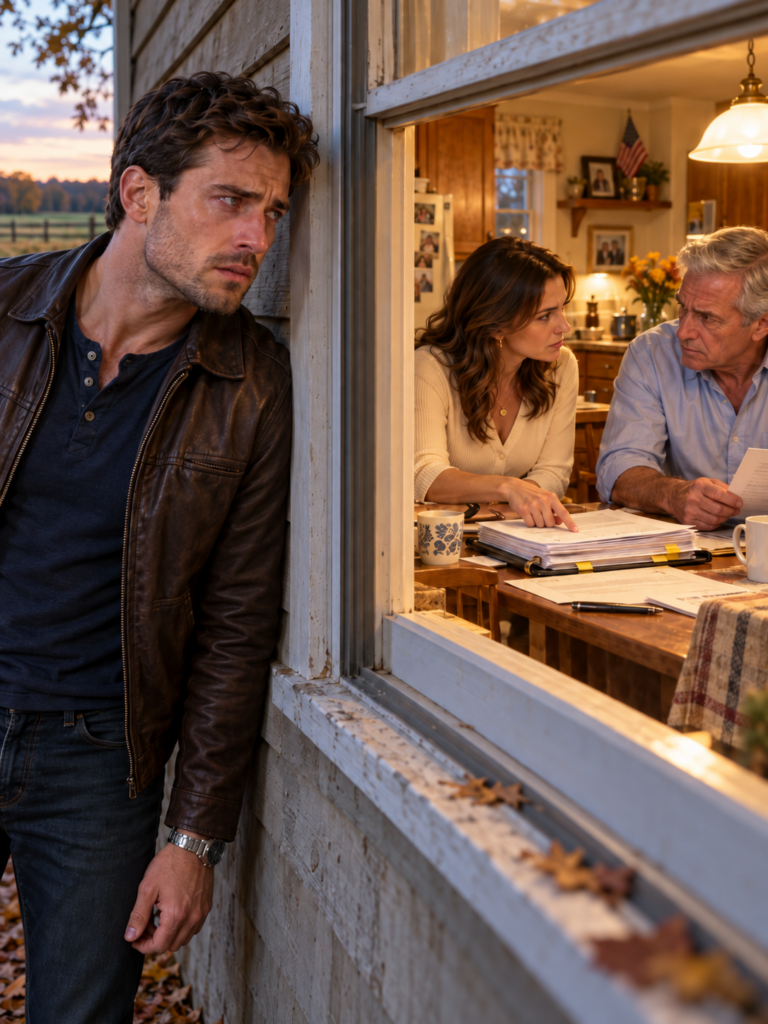
I went to visit my dad, but when I saw my wife’s car parked at his gate, I knew something was wrong. I stayed quiet, walked closer to the house, and listened through the door. What I heard them say inside shattered everything.
I went to visit my dad, but when I saw my wife’s car parked at his gate, I knew something...

The mafia boss brings his pregnant mistress home to live with him—leaving his own pregnant wife out in the rain, along with the very means to bring about his downfall…
The Mafia Boss Brought His Pregnant Mistress Home and Left His Pregnant Wife in the Rain—But the Secret Hidden in...
“She Is Carrying My First Son!” the Mafia Boss Declared—His Pregnant Wife Took Off Her Wedding Ring…
“She Is Carrying My First Son!” the Mafia Boss Declared—His Pregnant Wife Took Off Her Wedding Ring The entire ballroom...