My son asked if his in-laws could stay in my beach house. I said no, and he told me he understood.
My son asked if his in-laws could stay in my beach house.
I said no, and he told me he understood.
Then a renovation charge appeared on my emergency credit card.
When I called the contractor, he said his crew had already torn out the kitchen wall in the home I had never offered…
“Sarah’s parents need somewhere temporary,” David told me. “Since you’re away, we thought they could stay at the house.”
I was in Cincinnati, helping my sister Marlene through health problems.
My son spoke as though my absence had already settled most of the question.
I said I would think about it.
That wasn’t permission.
It was what I said while trying to work out how to refuse someone I loved without sounding as though I didn’t care about his problem.
My name is Carol.
The house David was discussing stood on Shoreline Drive in Beaufort, South Carolina.
After my husband, Gerald, died, I had chosen it for myself.
It had cedar shingles, old heartpine floors, and a porch that needed work.
I repaired things gradually, refinished the oak kitchen cabinets, planted a garden, and hung Gerald’s maritime clock beside the back door.
The work gave my days a shape when grief had made ordinary decisions difficult.
There was always another board to repair or another cabinet door needing attention, and eventually the house began feeling less like somewhere I was staying and more like somewhere I belonged.
David knew that.
He had seen what I put into it.
He also knew that being with Marlene didn’t mean I had stopped considering it home.
His wife, Sarah, wanted to help her parents, Harold and Diane.
Retirement had brought financial difficulties they hadn’t expected, and they needed somewhere to live.
I felt for them.
But the longer I considered the arrangement, the less comfortable I became.
Temporary stays could become complicated, and I didn’t want other people settled in my home while I was hours away caring for someone else.
Two weeks later, I called David.
“I’ve thought about it.
The answer is no.”
He didn’t argue.
“It’s my home,” I explained. “Not an empty vacation property.”
“I understand.”
His answer came so smoothly that I felt relieved.
I had been preparing for disappointment, questions, perhaps a request to reconsider.
Instead, my son said he understood, and I believed him.
I returned to helping Marlene.
There were appointments, errands, and the small routines that fill a day when someone you love is recovering.
I kept thinking I would go back to Beaufort when she was doing better.
My garden would need attention.
There would be dust in the kitchen and the usual collection of things a house saves for its owner.
Nothing about those thoughts included construction workers.
Then, in late March, I was waiting outside one of Marlene’s appointments when I noticed a charge on the emergency credit-card account David still had access to.
Coastal Renovations.
More than four thousand dollars.
I stared at the name, trying to place it.
I hadn’t hired anyone, approved work, or discussed renovations with my son.
There are a few seconds when you discover something wrong and still expect a simple explanation.
An error, perhaps.
Work at another address attached to the wrong account.
.
I called the contractor.
A man named Mike answered cheerfully.
He recognized the Shoreline Drive address immediately.
“How’s everything going there?” I asked.
He began describing the work.
His crew had already been there a week.
I sat straighter in the waiting-room chair.
“What work?”
The kitchen wall had come down, he said.
The cabinets had been removed, and they had started on the master bedroom.
For a moment, I couldn’t get a question out.
I pictured the oak doors I had stripped and refinished.
Gerald’s clock hanging beside the back door.
The bedroom I expected to return to when Marlene no longer needed me.
I had said no.
David had told me he understood.
Now a man I had never hired was explaining what his crew had already torn out of my house.
Continue below
.
Chapter 2/6
I spent that evening checking the account and trying to reach David.
By midnight, the unauthorized renovation charges exceeded nine thousand dollars, and I still hadn’t seen what they had done.
When he answered, he admitted Sarah believed I would change my mind once the work was finished.
Her parents needed somewhere stable, and she thought the improvements would help me see the sense in it.
“Where is Gerald’s clock?”
David went quiet.
I told him all work had to stop.
Then I removed his access to the emergency card, secured the account, contacted a locksmith, and arranged to drive south.
Gerald used to tell me to respond instead of react.
I repeated that to myself while packing, though it didn’t stop me crying.
Sarah called while I was crossing Tennessee.
The house had been sitting there, she said, and her parents needed help.
“Caring for my sister doesn’t make my home vacant.”
Ten hours is a long time to imagine damage.
At Shoreline Drive, I found a dumpster sitting across the garden before I even reached the door.
Rosemary and roses lay crushed beneath it.
Inside, the kitchen wall was open.
Cabinets I had refinished myself were gone, and Sarah held a paint sample as though I had arrived to review her choices.
David approached with his arms out.
I stepped away.
“Show me the bedroom.”
The closet wall had been removed.
A section of the old heartpine floor was replaced with plywood, and Gerald’s clock wasn’t on its hook.
David found it wrapped in newspaper inside a box.
A crack ran across the glass.
I held it against my chest.
“You heard me say no,” I told him. “You let this happen because telling Sarah no was harder.”
That night, I slept in the guest room among boxes of my belongings.
David and Sarah stayed in my bedroom.
I lay awake until anger became something I could use to decide what came next.
I couldn’t rebuild a kitchen that night, but I could stop another day’s demolition.
At three, I was still awake.
Around me were boxes of things somebody else had decided to move, while the people responsible slept in my room.
I stopped planning the argument I wanted to have and began thinking about who needed to hear from the owner in the morning.
Mike arrived early the following morning expecting to continue.
I showed him my identification, the ownership papers, and the account records.
His expression changed.
“The people who hired us don’t own this house?”
“No.”
Sarah appeared in a robe and called it a family matter.
Mike refused to proceed without the owner’s authorization.
When his crew left, she turned on me.
“My parents have nowhere to live.”
“I already said no.”
“We knew you’d say no.”
David stopped moving.
“Exactly,” I said. “You knew.”
I told them to leave by the end of the day.
Then I arranged directly with Mike to restore what could be restored, understanding that it wouldn’t all be possible.
I took the clock to Ellis, an old-fashioned repairman in Beaufort.
He examined it and said the mechanism had survived.
For the first time since Cincinnati, someone gave me news I could bear.
David sat with me on the porch later.
He admitted knowing the plan was wrong and repeatedly avoiding the conversation that would have stopped it.
He didn’t offer a good excuse.
That evening, Sarah’s father, Harold, called.
He and Diane believed I had welcomed them; Sarah had told them the arrangement was approved.
His apology sounded honest.
I didn’t blame him for believing his daughter, but I couldn’t offer the reassurance he probably hoped for.
He and Diane needed a home.
That hadn’t made mine available.
I wanted to believe the worst was panic and entitlement.
Looking at the empty place where Gerald’s clock belonged, I thought I understood the damage.
I hadn’t yet opened the insurance folder in my filing cabinet.
Chapter 3/6
Patrice arrived from Atlanta the following afternoon.
My daughter walked into the kitchen, looked around, and asked where we should begin.
She didn’t need me to perform my distress before believing it.
We found boxes, cleared working space, and started separating what could be saved from what was gone.
Mike explained the cabinets couldn’t be recovered.
I chose dark cherrywood rather than commission an imitation of the kitchen I had lost.
Patrice stayed beside me through those decisions.
She sorted what belonged to which room and helped with the work instead of telling me that new cabinets ought to make me feel better.
It was a practical decision, but I needed a minute afterward.
I had restored those oak doors with my own hands.
Choosing something different meant accepting that I wasn’t getting the house back exactly as it had been.
The floor offered better news.
A young worker named Thomas had kept most of the removed heartpine stacked in the garage.
He couldn’t bring himself to throw out wood that old.
I went out to look.
The boards were dusty and imperfect, but they were there.
We could put much of the original floor back instead of pretending new material had the same history.
On the fourth morning, I opened my property-insurance folder.
Inside was a letter addressed to David from a real-estate attorney, dated six weeks earlier.
I read it standing beside the cabinet.
It discussed a family property arrangement, extended occupancy, improvements, and possible use rights.
It considered circumstances that might complicate the owner’s position.
They had sought advice before the demolition.
I had spent days hearing that Sarah thought I would eventually approve.
Here was evidence that they had considered what might happen if I didn’t.
I called Barbara, the attorney who handled my purchase and estate documents.
She reviewed the letter.
David wasn’t on the deed, I hadn’t authorized the changes, and I had acted promptly when I learned about them.
The theory described in the correspondence was weak, she said.
That didn’t make the inquiry something I should ignore.
I asked her to preserve and document everything.
I wanted to try resolving the family damage without immediately litigating.
I also wasn’t willing to make another decision based solely on my son’s assurance.
When I called David, he recognized the letter before I finished describing it.
Sarah had asked him to consult the attorney.
He had told himself gathering information wasn’t the same as agreeing to a plan.
Then he kept telling himself similar things while the plan moved forward.
“I knew I was wrong,” he said. “I kept choosing not to face it.”
I sat with the phone in my hand, watching Patrice work through a box across the room.
“I love you,” I told him. “That doesn’t erase this.”
If we were going to have an honest relationship, he needed to understand why avoiding conflict with his wife had become permission to disregard me.
I told him he needed therapy.
He had already made an appointment.
I was glad to hear it, but I didn’t turn that appointment into proof that the problem was solved.
He had made many promises over the years; this one needed to become something he actually did.
He asked whether he could take responsibility for Gerald’s clock repair.
I agreed.
Ten days later, Ellis returned it.
The mechanism worked, and the repaired crack was difficult to see unless someone knew where to look.
I carried it home and hung it beside the back door.
Its sound was familiar enough to stop me in the hallway.
Later, Sarah called and apologized.
This time, she wasn’t explaining how badly her parents needed help or asking me to accept the house as improved.
She admitted treating her ability to solve a problem as permission to make decisions for me.
I believed her remorse.
I still didn’t know everything she needed to be sorry for.
Chapter 4/6
Near the end of the restoration, David called while I was working in the garden.
I put down what I was holding and sat on the porch.
We talked for almost two hours.
Therapy was making him notice how often he tried to manage everyone’s feelings instead of saying something that might upset them.
He traced part of it to Gerald’s illness when he was a teenager.
I understood that those years had shaped him, and I listened.
Then I stopped him gently.
“Understand the history.
Don’t use it to erase a choice you made at forty-one.”
He accepted that without arguing.
He and Sarah had arranged a modest apartment in Charlotte for Harold and Diane and taken responsibility for helping them settle there.
They had also begun couples counseling.
Their housing problem hadn’t required my house after all.
A few days later, with the kitchen usable again, Harold came alone.
He looked over the cherry cabinets, then sat at the table and placed his keys between us.
“I found the attorney letter,” he said. “Then I found another one.”
I stayed still.
The second inquiry concerned circumstances in which an adult child might seek greater legal oversight of an older parent’s finances.
Sarah had explored a conservatorship-type arrangement.
At sixty-three, I was healthy, independent, and managing my own affairs.
Nothing about caring for Marlene or spending time away from home suggested I couldn’t make decisions.
What mattered was that Sarah had considered whether someone could remove my ability to refuse.
Harold said he had confronted her.
She described it as one conversation she hadn’t pursued.
She had panicked, she said, and looked for every possible route.
He wasn’t asking me to excuse her.
“I spent my life avoiding the hard thing with Sarah,” he told me. “I’m done.”
He also admitted that he and Diane had accepted her solutions too easily.
Retirement hadn’t gone as expected, and shame had made them grateful for answers without asking enough questions.
I appreciated him saying it plainly.
He wasn’t presenting Sarah’s panic as something larger than my right to refuse.
He had come with information I needed, even though telling me meant acknowledging something painful about his own daughter.
That didn’t make the second letter easier to hear.
There was a difference between wanting to borrow a house and asking how its owner might lose control over her decisions.
I needed time to absorb that difference without anybody explaining why Sarah hadn’t meant it.
Harold gave me the information he had and left.
I called Barbara.
She confirmed that the inquiry didn’t mean Sarah could simply obtain that authority.
Neither of the legal approaches they had explored fit the facts of my situation.
I asked her to document this one too.
An unworkable plan could still reveal something important about the person considering it.
I wasn’t going to confuse a lawyer’s reassurance about my position with reassurance about my family.
That afternoon, I walked through the finished rooms.
The wall was back.
The old floorboards were where they belonged, and the clock kept time.
I could see the work that had been done correctly.
I could also remember how quickly David and Sarah had treated my absence as an opening.
I didn’t call them for another argument.
I had already made my position clear, and Harold had told his daughter that her conduct wasn’t something he would hide behind gratitude.
What happened next needed to come from her.
I returned to the garden.
Some things were growing back; other spaces needed planting again.
There wasn’t a quick way to make the crushed part look as though nothing had happened.
For once, I didn’t try.
I worked until I was tired, put the tools away, and went inside through my own back door.
Gerald’s clock sounded while I washed my hands.
The house was repaired.
My trust wasn’t.
I could live with those being on different schedules.
Chapter 5/6
Three weeks later, Sarah mailed a four-page handwritten letter.
There was no request at the end.
She wrote about believing that if she could solve a problem, she had the right to take charge of it.
She had stopped asking whether the people involved had agreed.
She named my generosity, the emergency card, and David’s reluctance to confront her as things she had used.
Then she addressed the second legal inquiry.
“I don’t ask you to forgive that,” she wrote. “I intend to prove over time that I understand what I became.”
I read it carefully.
It was the first time I had seen her account of events without an argument about how badly her parents needed somewhere to live.
Their difficulty was real.
It had never made my refusal less real.
I left the letter beneath Gerald’s clock for three days.
When I called my friend Louise, she didn’t ask whether I planned to forgive Sarah or cut her off.
She asked what I thought.
“I think she’s sorry.”
“And?”
“I think being sorry today and behaving differently for years are different tests.”
Louise let me continue.
She didn’t turn my hesitation into a failing.
I had heard enough suggestions about what a mother should do; being asked what I actually thought gave me room to answer without defending myself.
I didn’t want to close the relationship forever merely because I was still hurt.
I also wasn’t willing to act as though an apology returned everything they had taken.
I had spent a lifetime knowing how to help people.
Saying I needed more time felt less familiar than either giving in or refusing completely.
That was the answer I settled on.
Time.
I could receive the letter without sending an invitation.
I could recognize effort without announcing that I trusted them again.
The house gave me small, practical things to do while I waited.
I used the new cabinets and learned which drawer I reached for automatically.
I listened for the clock when I passed the back door.
The kitchen didn’t have to resemble the old room in every detail to belong to me.
I had chosen these changes after deciding what I wanted, which made all the difference.
Five weeks after the restoration, Marlene called.
David had told her everything himself.
She hadn’t softened it for him.
Knowing he was wrong was a beginning, she told him, and he still needed to understand what being accountable would require.
Then she told me she was proud of how I had protected myself.
I hadn’t confused protecting my home with trying to hurt my son.
I sat quietly after the call.
For months, helping Marlene had organized my days.
Then the house had demanded every bit of my attention.
Now I could spend an evening deciding what I wanted for dinner.
I found Gerald’s old recipe box and took out his rosemary-lemon chicken.
He had been the one who made it best.
I followed his notes, misjudged something he would certainly have noticed, and laughed at myself while correcting it.
There was nobody waiting to approve the kitchen or tell me how to use it.
I cooked.
A week later, David called to ask whether he and Sarah could visit with Harold and Diane.
He asked.
He didn’t tell me when they were coming or explain that I would agree once everyone arrived.
I considered what had happened since they left: therapy attended, responsibility accepted, practical arrangements made elsewhere, and apologies that no longer demanded an immediate reward.
I said yes.
It wasn’t a declaration that the past was settled.
It was permission for a visit.
That distinction mattered to me.
I didn’t need to test them by setting traps or watching for a wrong word.
I wanted a quiet morning where my answer remained what it was and nobody tried to enlarge it.
They could come for coffee.
Afterward, they would go home.
Final chapter 6/6
They arrived Sunday morning.
David hugged me in the yard.
Sarah thanked me for allowing the visit, and I thanked her for the letter.
We didn’t embrace or attempt to make the exchange warmer than it was.
Inside, they looked at the restored floor, the cherry cabinets, and Gerald’s clock beside the back door.
Diane stopped beneath it.
“It’s beautiful.”
“It needed repair,” I said. “But it came through.”
I wasn’t offering a speech about our family.
I was looking at the clock.
We sat with coffee.
Harold talked about his hardware-store job.
Diane described a painting class she had started, and we discussed Marlene’s recovery and what Patrice was doing.
The conversation stayed ordinary.
I had wondered whether the visit would become another long explanation of intentions.
Instead, nobody asked me to accept an account that made what happened less serious.
David looked around the kitchen.
“Dad would have loved this room.”
For a moment, all of us softened.
Gerald would have noticed the cabinets, asked about the floor, and inspected the clock before sitting down.
I could imagine him there without needing the morning to become something it wasn’t.
The visit didn’t restore every old feeling.
I was still conscious of what I hadn’t known while they were making decisions.
I still needed Barbara’s records, secured accounts, and the boundaries I had established.
But David and Sarah were sitting in my home as people who had asked to enter.
When the visit ended, that was what it remained.
No one suggested extending it into a stay.
No one treated the house as the answer to a problem waiting outside my door.
Three days later, a package arrived.
Inside was a framed photograph of my original garden before the dumpster crushed it.
Diane had taken it when she first arrived, believing Sarah’s claim that I had approved the arrangement.
She had written on the back.
“I didn’t know then how wrong everything was.
I know now.
I thought you should have this.”
I stood with the photograph for a while.
The rosemary was upright in it.
The roses looked as they had before the work trucks arrived.
I placed it beneath Gerald’s repaired clock.
Diane hadn’t sent me a replacement garden or an expensive object meant to distract from what was gone.
She had sent a record of something I loved and acknowledged why seeing it might matter.
I appreciated that without needing to make it stand for forgiveness.
It wasn’t evidence that everything could be put back.
Some things had survived, some had been repaired, and some were gone.
The oak cabinets weren’t coming home.
The cherry ones were mine because I had chosen them.
I continued having the financial and legal consequences documented and dealt with.
Repayment and responsibility didn’t stop mattering because we had shared coffee.
Neither did my love for David.
I had once behaved as though loving him meant finding a way to absorb whatever happened.
Now I expected him to do difficult things too: tell the truth, face disagreement, and respect an answer he didn’t like.
Sarah’s letter remained where I could read it again.
I didn’t need it to become a promise of perfect behavior.
I needed future behavior to support the words she had written.
Outside, the garden was growing again.
I took my coffee to the porch and sat down where I could hear the clock through the open door.
The room behind me was familiar in some ways and different in others.
My hands had worked on the first kitchen; my decisions had shaped this one.
I had chosen this house after Gerald died because I needed somewhere to begin again.
Then I had needed to protect it from people I loved.
That afternoon, nobody was asking what else I could give up.
I stayed on the porch, listening to the clock and watching the garden.
I was home.
THE END.
I’ve shared the complete story, and I truly hope it touched your heart.
If this story moved you, please , like, and share the post.
Thank you for reading! ❤️
Recommended Stories
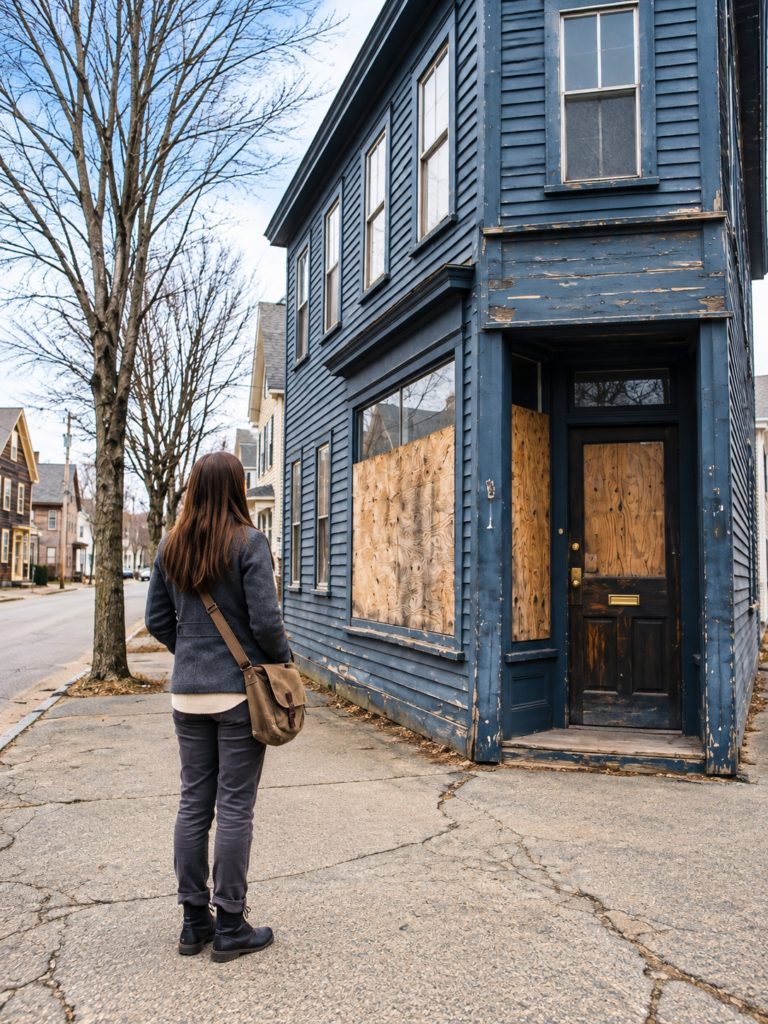
homeless at twenty, she spent her last ten dollars on an abandoned clockmaker’s shop—then found a fifty-five-year-old secret hidden behind the silent grandfather clock
Part 1 The day Ada Colvin bought the abandoned clockmaker’s shop for ten dollars, she had nowhere to sleep, no...

Her Wagon Sank in a Montana River, but Amelia Carter Refused to Release One Battered Suitcase—Then a Lonely Rancher Who Had Buried Both Parents and Sworn Never to Love Again Stepped Into the Current, Unaware That the Woman He Was Saving Would One Day Become His Wife
Amelia lifted the papers just far enough to check the oilcloth wrapping, then stopped when she realized Nathan was watching....

“Not everyone wants to see something so unpleasant while they’re eating,”
“Not everyone wants to see something so unpleasant while they’re eating,” my sister Rachel said at our parents’ summer barbecue,...