“Just a retired nobody,” my daughter’s new husband told his boss at their wedding
“Just a retired nobody,” my daughter’s new husband told his boss at their wedding, loud enough for nearby tables to hear.
I was 66, sitting beside the kitchen doors in the blue coat my late wife had bought me.
For two years, I’d let him believe I was unimportant.
Then the woman he was trying so hard to impress looked directly at me, called me “Mr.
O,” and asked him a question he couldn’t answer…
“Odessa, this is Junia’s father.
Just a retired nobody.
Loves the lake, you know?
Folks like that.
They’re happy with simple.”
My new son-in-law, Bastian Carrigan, said those words while introducing me to his company’s chief executive at my daughter’s wedding.
He was 34, wearing an expensive suit, and trying desperately to impress the woman standing beside him.
I was sitting at table 14, near the kitchen doors, with my dinner half-finished.
I was 66 years old.
My wife was dead, my only daughter had just gotten married, and the young man she’d chosen had decided I wasn’t worth introducing by name.
I set down my fork.
The woman Bastian called Odessa looked directly at me.
And her expression changed.
But to explain why, I have to tell you about my wife, Halina.
She taught third grade at Lincoln Elementary in Duluth, Minnesota, for 26 years.
She saved every drawing a student gave her and kept boxes of our daughter Junia’s schoolwork in our hallway closet.
When Junia was nine, she drew a horse with more legs than any horse needed.
Halina taped it to our refrigerator.
It stayed there until the paper turned yellow.
That was my wife.
She never made somebody feel small for trying.
For 31 years, I worked at Lakehead Freight, a trucking and rail-transfer operation near the Duluth harbor.
I started on the docks, moved into night dispatch, and eventually became director of operations.
Halina used to bring me barley soup during winter night shifts.
She drove our old 1994 Buick, whose heater worked properly only on the passenger side, and sat in the parking lot with her coat on while we shared twenty minutes together.
She did that for eleven winters.
When she became ill, she sold that Buick without telling me and put the money into an envelope labeled for Junia’s future.
Halina died five years before the wedding, when Junia was 26 and I was 61.
I still have difficulty talking about her without remembering that car.
After I retired, I stopped discussing my professional life.
For decades, people had called me at all hours when shipments went wrong or drivers needed help.
I liked being an ordinary man again.
Perhaps I liked it too much.
When Junia introduced me to Bastian two years earlier, he called me “the retired guy.”
I laughed.
.
I never corrected him.
Bastian was a regional director at Tillinghast Freight, the company that had acquired Lakehead six years earlier.
He had no idea I’d once worked for the business his employer had purchased.
I didn’t volunteer the information.
Junia loved him, and I wanted to believe that was enough.
The evening before their wedding, September 11, we gathered for the rehearsal dinner at The Copper Heron on Superior Street.
My seating card said table 14.
The head table had eight chairs.
Family tables were arranged near the windows overlooking the lift bridge.
Mine was against the wall beside the swinging kitchen doors, directly beneath an air-conditioning vent.
I found Junia near the coat rack.
“Dad, Bastian handled the seating.
His boss is flying in, so everything’s a little tight.
You understand.”
I told her I did.
She squeezed my arm and went to greet another guest.
A catering supervisor named Ludmilla Jaeger brought me bread.
She was an older woman with silver hair and a slight limp.
.
“Eat something, Mr.
O,” she said.
Throughout dinner, she quietly checked on me.
When the speeches began, she even moved a folding chair so I could see better.
“You’ve earned the chair,” she told me.
I didn’t understand why she seemed so concerned.
I simply thanked her.
The following afternoon, Junia married Bastian on the lawn at Glensheen.
The wind coming off Lake Superior kept lifting her veil.
When I walked her down the aisle, I remembered doing the same thing in our backyard when she was little, holding her hand while she practiced walking carefully in her mother’s shoes.
The officiant asked who was giving her away.
“Her mother and I do,” I answered.
Junia laughed through her tears.
For those few moments, I was happier than I’d been in years.
The reception began that evening.
Once again, table 14 was placed near the back.
At , Bastian’s boss arrived.
I watched him hurry across the ballroom to greet her.
She wore a charcoal suit and had an assistant following a few steps behind.
Her name was Odessa Tillinghast.
She was the chief executive of the company Bastian worked for.
At , he brought her to my table.
Then came his introduction.
“Just a retired nobody.”
Odessa stared at me.
For several seconds, neither of us spoke.
Then she smiled.
“Casimir Ostrowski,” she said. “Well, hello, Mr.
O.”
Bastian looked between us.
“You two know each other?”
Odessa folded the reading glasses she’d been wearing on top of her head.
“Bastian, this man ran the Duluth night dock for nine years and the entire operation for fourteen.”
She explained that she’d learned freight operations from me when she was a young dock employee in 1999.
When Tillinghast acquired Lakehead, the due-diligence report had identified me as one of the primary reasons its harbor operation functioned so well.
She had even offered me consulting work twice.
I’d declined because I wanted retirement.
Bastian slowly removed his hand from Odessa’s back.
“I didn’t know,” he said.
Odessa looked at him.
“No.
You didn’t ask.”
For the first time since I’d met him, my son-in-law seemed genuinely uncertain what to say.
But Odessa wasn’t finished.
She turned toward him and mentioned an internal review involving a freight-route redesign he’d presented that spring.
Then she said the name of a young analyst whose work had apparently been credited to someone else.
And I realized my son-in-law’s careless introduction had brought him face-to-face with a problem far more serious than embarrassing his wife’s father.
CHAPTER 2
The analyst’s name was Pilar Ocampo Reyes.
She was 26 years old, and according to Odessa, she had developed the Meridian route redesign Bastian presented in March.
Bastian had taken credit for her work.
An internal review had been underway since June.
Odessa explained that Pilar had been afraid to speak openly because Bastian was her superior.
She had been trying to arrange private conversations with the chief executive about what happened.
I watched Bastian look toward the head table.
Junia was across the room, laughing with a cousin.
She hadn’t heard the conversation.
“Odessa, I can explain,” he said.
She didn’t raise her voice.
“You’re fired.”
Bastian stared at her.
For a moment, I thought he hadn’t understood.
Then he started talking quickly, explaining that there must have been a misunderstanding about the redesign.
Odessa told him the company would address the findings of the internal review through its human resources process on Monday.
She’d intended to let him enjoy his wedding before discussing the outcome.
But hearing him dismiss me as a nobody had apparently been enough.
“This isn’t entirely about Casimir,” she told him. “Your professional conduct is the reason for the review.”
Bastian turned toward me.
“Casimir, sir, I didn’t mean—”
It was the first time he’d used my name without somebody prompting him.
I stood.
“You never asked me one question about my life, Bastian.
Not once.”
He opened his mouth.
I continued before he could answer.
“I could’ve told you what I did.
I didn’t, and that part is on me too.”
I meant it.
For two years, I’d allowed him to think I had spent my working life doing nothing important.
I’d enjoyed being underestimated.
Perhaps I’d mistaken that feeling for humility.
But I had also watched him dismiss people he considered beneath him, and I’d done very little about it.
I collected the good blue coat Halina had bought for Junia’s college graduation.
Then I walked toward the kitchen doors.
Ludmilla was standing nearby.
As I passed, she touched my sleeve.
She didn’t ask what had happened.
She simply looked at me with the same concern she’d shown at the rehearsal dinner.
And suddenly I remembered her.
Ludmilla Jaeger had worked in the Lakehead cafeteria during the 1990s.
She’d known me long before retirement.
“Eat something, Mr.
O.”
That was why her words had sounded so familiar.
I thanked her and stepped outside.
CHAPTER 3
A freighter was moving across the dark lake, its lights visible in the distance.
I stood on the lawn for several minutes.
I didn’t feel pleased that Bastian had lost his job.
I felt exhausted.
My daughter had married only hours earlier, and already there was trouble in her marriage that none of us could easily undo.
The next morning, Sunday, September 13, Junia came to my house at .
Her makeup was partly removed.
Her wedding ring was in her coat pocket.
She sat at the kitchen table where Halina used to grade schoolwork.
“Dad, why didn’t you ever tell me who you were?”
I put the kettle on.
“I thought you knew enough,” I answered.
“You told me you worked nights and eventually managed things.
You never told me how important your work was.”
She looked down at the ring.
“Bastian used to say you were nice but checked out.
I told him you’d worked nights for thirty years.
He asked what you actually did, and I couldn’t answer.”
I had no defense for that.
I’d spent so much time trying to be ordinary after retirement that I’d stopped sharing parts of my life with my own daughter.
That wasn’t entirely fair to her.
“I didn’t want to be somebody important to him,” I said. “That was a mistake, kiddo.”
She rubbed her eyes.
I made chamomile tea and let it steep for four minutes, the way Halina always had.
We talked about the wedding, Bastian’s behavior, and what Odessa had said.
Junia didn’t decide to leave her husband that morning.
She went back to him on Tuesday.
I didn’t argue.
She was an adult, and her marriage was hers to understand.
I had already learned that silence could be harmful.
I didn’t want to replace it with controlling every decision she made.
Over the following ten weeks, the situation became clearer.
The internal review at Tillinghast closed in October.
Bastian’s termination stood.
Another freight company initially showed interest in hiring him, but the opportunity disappeared after inquiries were made about his previous employment.
The industry was smaller than he’d believed.
Pilar Ocampo Reyes, whose work he’d claimed as his own, was promoted to team lead.
She received a raise and a personal note from Odessa.
I was glad to hear that.
I’d spent much of my working life watching talented young employees struggle to receive credit for work their supervisors presented as their own.
Pilar deserved recognition because she’d earned it.
Not because somebody wanted to punish Bastian.
Odessa never tried to involve me in the dispute again.
She sent me a handwritten card.
The seat’s still open.
No rush.
Eat something.
I kept that card.
In November, I accepted a small advisory position with Tillinghast.
Eight hours a month.
Nothing demanding.
I helped train new dispatchers, particularly on the harbor routes I’d worked for so many years.
Sometimes I sat in a folding chair in the dispatch room and talked through the practical problems that never seemed to appear in formal training materials.
Which roads became difficult in April.
How to coordinate an unexpected late arrival.
Why knowing a driver’s circumstances sometimes mattered as much as knowing the schedule.
I enjoyed being useful again.
But I still returned home to an empty house.
Halina wasn’t there to ask about my day.
FINAL
Junia was struggling with her marriage, and I couldn’t repair that for her.
On January 21, she finally left Bastian.
She later told me it hadn’t been one argument.
She’d begun noticing things she’d previously overlooked.
How he spoke to waitresses.
How casually he dismissed people whose jobs he considered unimportant.
How he used cheerful business language while showing little curiosity about the people around him.
And how he’d never once called her mother by name.
Halina had died before Bastian came into our lives, but Junia talked about her often.
He knew enough to understand how much she mattered.
He simply hadn’t been interested.
Junia moved back into her old room for a while.
One Saturday, she opened the boxes Halina had kept in the hall closet.
She sat on the floor looking through drawings, school papers, and little things her mother had saved.
I sat nearby.
There were years of memories in those boxes.
Neither of us hurried.
Junia found the drawing of the horse her mother had once taped to the refrigerator.
We laughed.
Then she cried.
I wished Halina had been there.
She would have known what to say.
Bastian wrote me a letter in February.
Three careful paragraphs.
I read it standing in the kitchen.
Then I put it away.
I didn’t answer.
There wasn’t anything I needed from him anymore.
Junia and I gradually settled into a different relationship.
We talked more honestly about my years at Lakehead and about the things she’d never thought to ask.
I admitted that I’d hidden behind retirement because I was tired of being needed.
She admitted she’d allowed Bastian’s opinions to influence how she saw me.
Neither confession erased what had happened.
But we understood each other better.
I no longer pretended I had no professional history.
And she no longer treated my reluctance to discuss it as evidence that there was nothing worth knowing.
The greatest loss was something neither of us could recover.
Halina would never get to see Junia build the next part of her life.
She would never sit beside us at the kitchen table again.
Recently, I walked past Lincoln Elementary, where Halina had taught for twenty-six years.
A child’s drawing was taped to the front office window.
It was a horse.
Not a particularly accurate one.
It had five legs.
I stood there for a while with my hands in the pockets of the blue coat Halina had bought me.
I thought about our old Buick with the broken heater.
The barley soup.
The twenty minutes she used to spend with me in the parking lot during winter night shifts.
And the way she always made room for someone who needed encouragement.
Then I took a photograph of the drawing.
I wanted to show Junia.
Halina would have kept it forever.
THE END.
I’ve shared the complete story, and I truly hope it touched your heart.
If this story moved you, please , like, and share the post.
Thank you for reading! ❤️
Recommended Stories
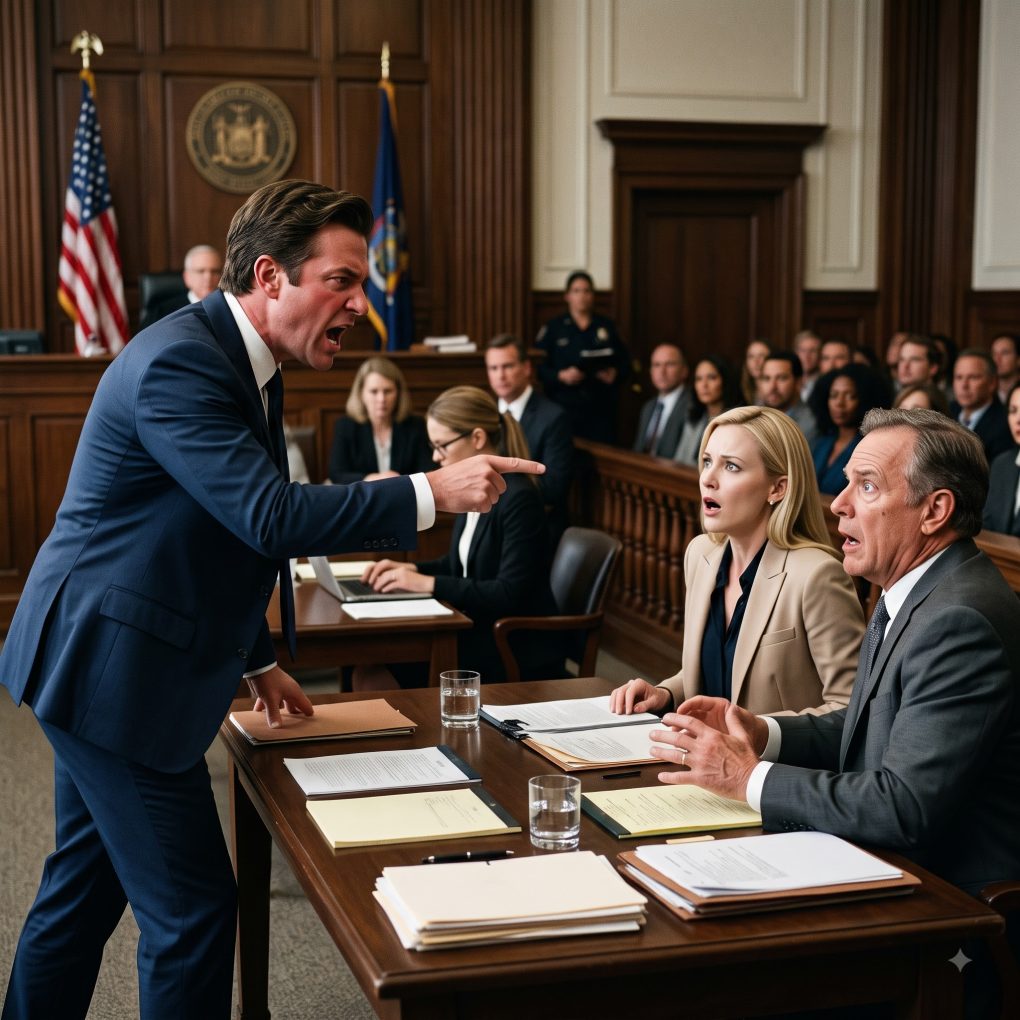
My wife asked for a divorce, demanding the mansion, three sports cars, and our offshore account, leaving me only our son. Everyone thought I went crazy when I gave her everything without a fight—until her lawyer turned dead pale in court.
My wife asked for a divorce, demanding the mansion, three sports cars, and our offshore account, leaving me only our...
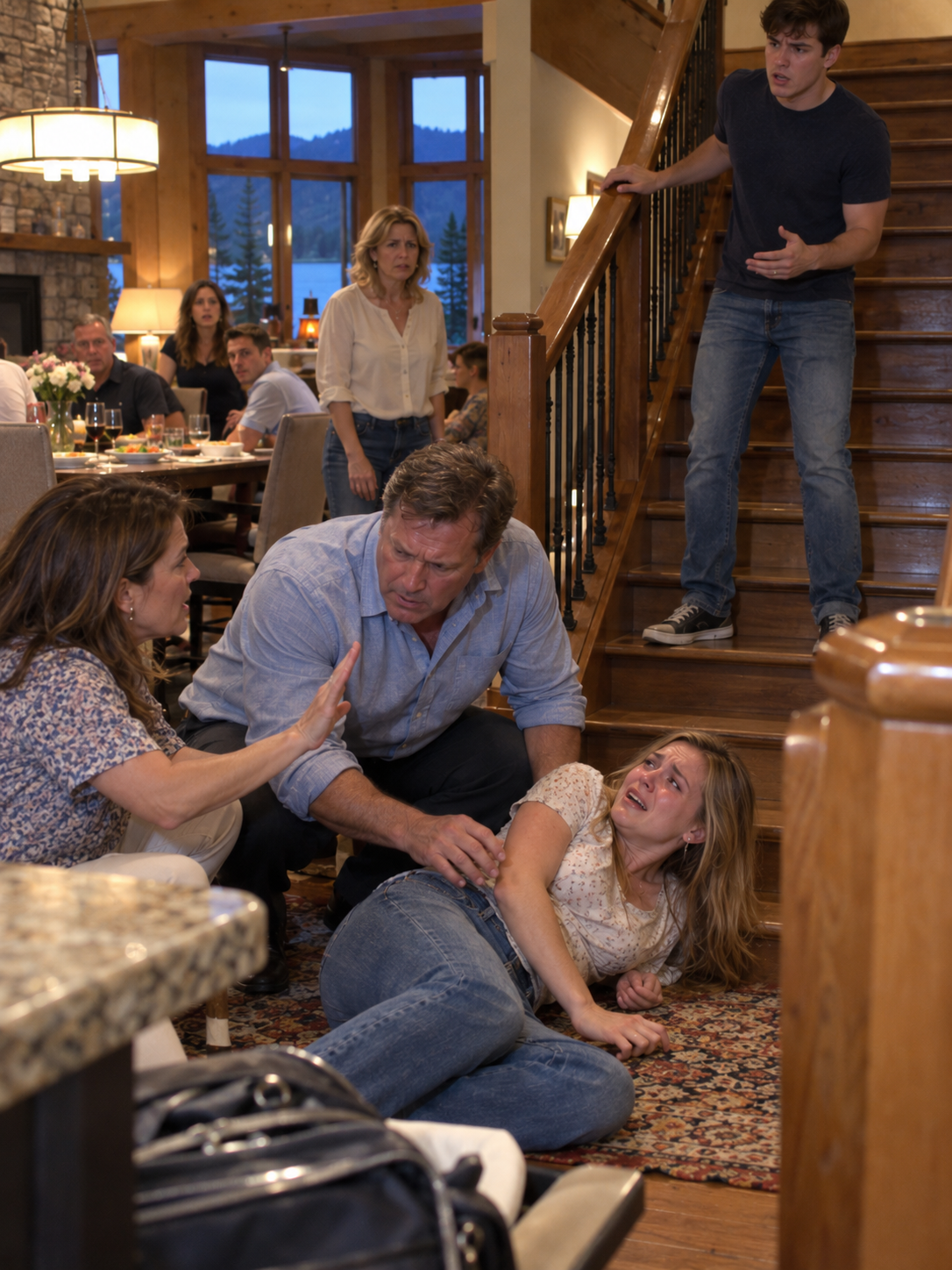
My brother pushed me down twelve stairs while our relatives watched.
My brother pushed me down twelve stairs while our relatives watched. Dad told me to “walk it off,” and Mom...
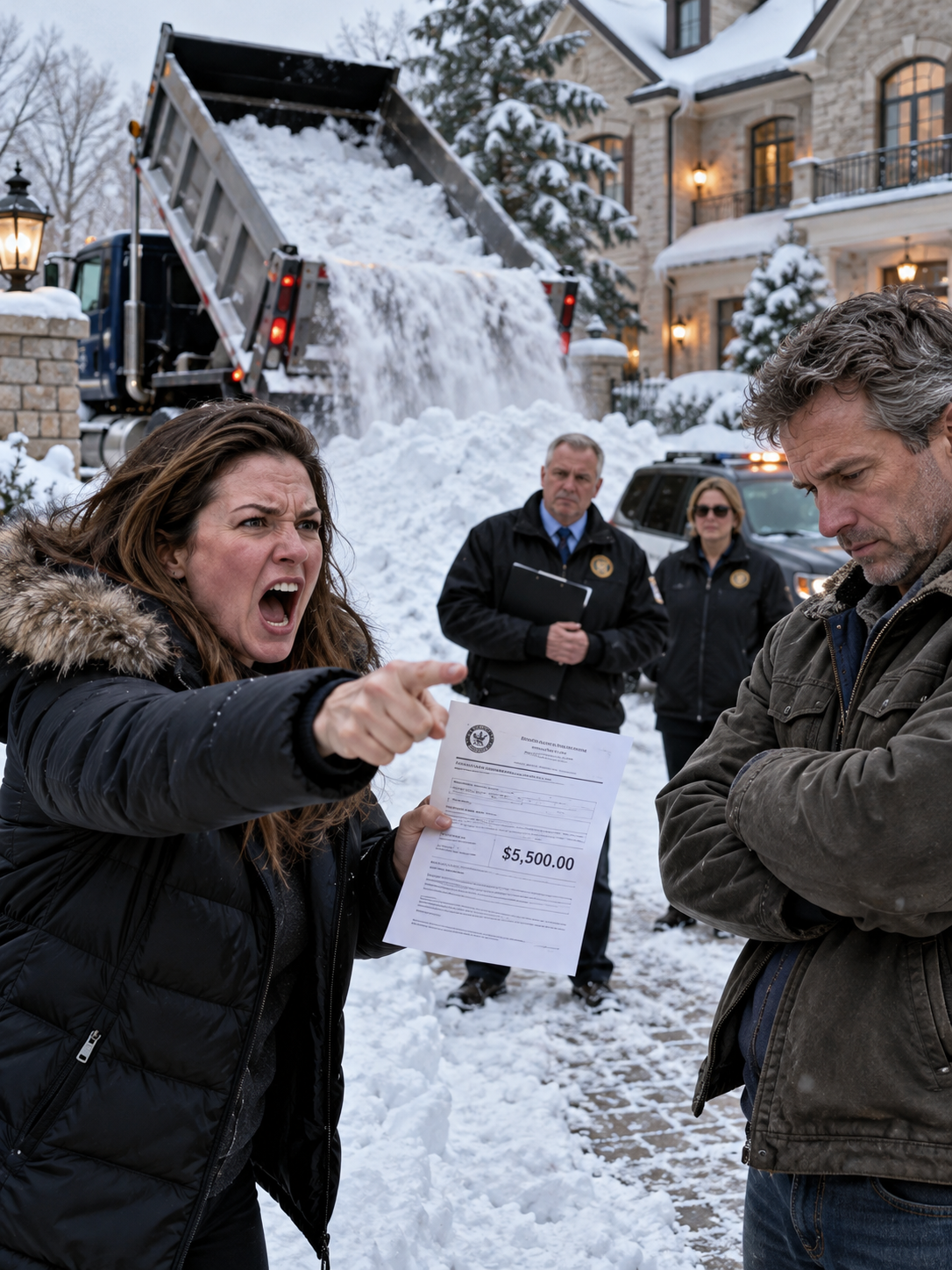
THE HOA DUMPED THREE WEEKS OF SNOW ON MY PROPERTY—THEN FINED ME $5,500 FOR BLOCKING THEIR ROAD – Life Story
The HOA dumped three weeks of dirty plow snow onto my property, then fined me $5,500 because the pile was...