My son announced he was giving my house to his mother-in-law at Mother’s Day lunch.
My son announced he was giving my house to his mother-in-law at Mother’s Day lunch.
When I asked why he hadn’t told me, he shouted, “Stay out of it, Mom.” My granddaughter started crying, and I stood there holding broken hydrangeas, deciding what to say in front of eleven guests…
Patricia was measuring the window in the downstairs suite when I arrived to help prepare for Mother’s Day.
Fabric samples covered the coffee table.
She held up two shades of green and asked which one I preferred.
“Are you thinking of moving in?” I asked.
My son appeared in the hallway before she answered.
“Just for a few weeks, Mom.
Her building’s having work done, and her knees are bothering her.”
The house belonged to me.
Nathan and his wife, Lauren, lived there with my granddaughter, Emma, but nobody had asked whether another person could move in.
Still, the explanation sounded reasonable.
I had come carrying linen napkins and a casserole, pleased that Lauren wanted my help.
I didn’t want to turn a temporary family arrangement into an argument.
“Sage,” I told Patricia. “It’s cheerful.”
Nathan squeezed my shoulder.
“Mom, you’re the best.”
For that afternoon, I let myself enjoy hearing it.
My name is Eleanor Whitfield.
I’m a widow and a retired accountant, and I had spent forty years being considerably more careful with other people’s affairs than I was with my son’s.
In the summer of 2022, Nathan lost his job.
He called early one morning, frightened about overdue bills and Lauren crying in the bathroom.
It wasn’t the first time he needed rescuing.
There had been a car he couldn’t manage and a restaurant venture that ended badly.
This time, I wanted to provide something steady for Emma instead of another temporary solution.
I arranged a home for them on a quiet cul-de-sac outside Columbus.
I retained ownership, and I explained that plainly when I handed Nathan the keys.
“When you’re steady on your feet, we’ll talk about changing that.”
He agreed.
So did Lauren.
I confirmed the arrangement in an email, and Nathan answered that he understood.
We also signed a letter stating that they could live there without rent, but ownership wasn’t being transferred.
Those papers stayed in my fireproof box.
I brought something else to the house myself: the oak rocking chair my late husband, Walter, built before Nathan was born.
“That’s on loan,” I told him.
He promised it would stay beside the window.
A week later, I heard Nathan tell our neighbor Raymond that I had given him the whole house.
I should have corrected him.
Instead, I thought about his lost job and how relieved he looked.
I decided a little pride couldn’t hurt.
That became a habit between us.
Nathan accepted more than I had offered, and I found a kind explanation for it.
By November 2023, my key no longer worked.
I had arrived with an apple pie, unaware that he had changed the locks.
I could hear the television inside, but he didn’t answer the bell or my calls for twenty minutes.
When he finally opened the door, he told me I needed to call before coming over.
I agreed that adults deserved privacy in their own home.
.
Then Patricia arrived with her own key.
She walked past me, and Nathan welcomed her warmly.
I went home with the pie.
Raymond had seen enough from next door to offer to confirm what happened if I ever needed him to.
That was the first time I wrote an incident down in my little green notebook.
I didn’t stop helping.
When the furnace failed the following December, I made sure the house was warm again.
Emma had been sitting in the kitchen bundled in coats, and I couldn’t bear the thought of leaving her cold.
At Christmas dinner, Nathan told Patricia he had handled everything.
When I began correcting him, he cut me off.
Later, Emma whispered that Daddy had told her not to mention Grandma’s help because it would make him look bad.
I held her in the kitchen and told her she never needed to keep a secret that made her feel uncomfortable.
The next morning, my friend Maggie came over.
I told her what had happened while putting the household records in order.
Maggie said I was allowed to be angry.
I said I was counting.
I wasn’t preparing a bill for Nathan.
I needed to see what I had kept dismissing as one small thing after another.
At Patricia’s birthday in March, I spent hours helping in the kitchen before being given a folding chair while her friends occupied the comfortable seats.
Nathan presented her with a bracelet and called her the most important woman in the family.
He hadn’t called on my birthday.
Lauren found me afterward with a piece of cake.
She apologized, admitted things weren’t right, and hinted that Nathan’s generosity was creating more trouble than he acknowledged.
.
Before she could explain, Patricia called her away.
So when Lauren asked me to help prepare the Mother’s Day lunch, I wanted to believe something was changing.
She sounded eager to have me there.
On that Wednesday afternoon, after Nathan explained Patricia’s temporary stay, I scrubbed the oven and ironed the napkins.
Lauren and I planned the meal.
Patricia kept comparing curtain samples.
I went home tired and pleased.
I thought I had spent an afternoon being included.
Four days later, I returned with white hydrangeas.
The florist had delayed me, and I was embarrassed about arriving forty minutes late.
As I reached the living-room doorway, I heard Nathan tapping a fork against his glass.
“Patricia, you’ve spent your whole life giving to other people,” he said. “Today, this family gives back.”
I stopped.
“This house is yours.”
There was delighted laughter, then applause.
Nathan explained that he and Lauren would take the upstairs while Patricia enjoyed the ground-floor suite.
Her knees deserved better than stairs.
The flowers slipped against my arm.
One stem snapped against the doorframe.
“Grandma!”
Emma ran across the room and hugged me.
Over her head, I watched Nathan notice me.
His expression changed.
Eleven guests turned toward the doorway.
Patricia stood among them, smiling, with her glass raised.
“Nathan,” I said, “that’s the house I provided for you.
Why would you give it to someone else without telling me?”
Lauren whispered his name from the sofa.
My son set down his glass so hard that the drink spilled over the rim.
“You gave it to me,” he shouted. “Who I give it to is my right.
Stay out of it, Mom.”
Emma began crying against me.
“Daddy, don’t yell at Grandma.”
I stood holding her and the broken flowers.
Nobody told Nathan he was wrong.
Continue below
Chapter 2/6
Lauren gathered Emma into her arms and took her toward the hall while Patricia offered me champagne, explaining that Nathan was simply proud.
I could have told the room whose name was on the deed.
Instead, I steadied the hydrangeas in my arms and congratulated Patricia.
Then I offered to help with the plates.
Nathan relaxed immediately. “Thanks, Mom,” he said, as though I had agreed to bring dessert next week.
In the kitchen, I ran the water while tears fell into the sink.
Gloria, Patricia’s bridge partner, came in and remarked on how generous my son was.
I managed an answer and kept washing.
I wanted to leave with my thoughts intact, without eleven people explaining what I ought to feel.
By evening, Patricia showed me photographs she had posted under “My beautiful new home.” Her belongings were already in the downstairs suite.
She asked me to approve the photographs online.
I did, and Nathan said he knew I would come around.
At home, I brought down the gray fireproof box from my closet.
Inside were the deed, the signed occupancy letter, and Nathan’s email acknowledging that I had kept ownership.
My polite response hadn’t changed those documents.
Still, I needed advice before doing anything that would affect Emma’s home.
Monday morning, I called Nathan and asked him to correct what he had told the guests.
He could say he had gotten ahead of himself.
“I’m not going to humiliate myself in front of Patricia.”
“I’m asking you to be honest.”
He ended the call.
On Wednesday, Patricia asked me to collect Walter’s rocking chair because it didn’t suit her curtains.
In the background, Nathan said it was just a chair.
I found it in the garage near the rubbish bins.
Walter had built it before Nathan was born, and his initials were still carved beneath an armrest.
Raymond Tillman came over to help me lift it.
We settled it in my car, and I covered it with a quilt.
Nathan remained inside, talking on his phone.
He didn’t come out to say goodbye.
On Thursday, I took the papers to attorney Calvin Prescott.
He read everything before explaining that Nathan hadn’t become the owner by living there or announcing a gift.
He found Nathan’s brief reply confirming our arrangement and read it a second time.
I had wondered whether my son remembered what he agreed to; the page made clear that he had known.
I remained the recorded owner.
The written acknowledgment and signed letter supported what I had told him.
That didn’t mean I could turn anyone out myself.
Calvin warned me against changing locks, interrupting utilities, or trying to force a departure.
He would handle written notice.
If Nathan and Lauren refused to leave, further legal steps would be necessary.
I asked whether I could recover the years of household expenses.
Calvin explained that my earlier permission hadn’t created an obligation to repay me.
I hadn’t kept the records because I wanted a bill presented to my son.
I wanted an accurate account of what I had allowed.
Calvin asked why I wanted to let the house go rather than simply recover possession.
As long as I owned it, I said, Nathan seemed to consider it his to promise while treating me as someone who ought to keep providing for it.
I wanted that arrangement to end.
My voice shook when I said it, but I didn’t take it back.
Then Calvin asked whether anyone had put paperwork in front of me.
Nobody had.
“If anyone does,” he said, “call me before you touch a pen.
Even if it looks boring.”
I remembered my smile at the party and admitted that I had also approved Patricia’s photographs.
He said those gestures hadn’t transferred my ownership, but I should stop offering reassurance I didn’t mean.
I went home to Walter’s chair by my own window.
It was the first thing I had brought back, and I sat in it before calling anyone else.
Chapter 3/6
By May nineteenth, I had engaged Helen Brooks to handle the house’s change of ownership.
She was practical and experienced, and her first important question concerned the people living there.
It would need to be empty before another family took possession.
I told her Calvin was arranging the notice.
That afternoon, I delivered separate envelopes to Nathan and Lauren.
Both named June thirtieth as the date they were to leave, and Calvin arranged the written record of delivery.
Raymond stood near his fence while Nathan read.
He laughed.
Was I still upset about Mother’s Day?
Patricia had predicted I would do something dramatic.
“Read the second paragraph.”
He insisted it was their home.
I told him it was my house, and he knew the difference.
Lauren took her envelope with trembling hands.
Nathan told her I was bluffing.
I walked to the car without arguing about whether I meant what I had put in writing.
My heart was pounding by the time I sat down.
The following day, Lauren admitted the photographer while Nathan and Patricia were out.
She straightened cushions and cleared things from the banister.
I told her she didn’t have to help.
She said she wanted to.
I had arrived prepared for resistance, and her quiet assistance left me uncertain about what she was still keeping from me.
Then she apologized and said she wished she could explain.
When I asked her to, she looked away.
“Not yet.”
In the kitchen, strips of blue tape marked the cabinets Patricia wanted removed.
I folded one into my pocket.
She had begun planning alterations without asking me.
Whatever Nathan had told her, nobody had approached the person whose name remained on the house.
When the sign appeared in the yard, Nathan removed it.
Helen arranged for it to be replaced.
Meanwhile, Patricia prepared a housewarming.
I wasn’t invited.
On May thirty-first, Lauren left a shaking message telling me what happened.
Gloria had arrived with the public house details on her phone and asked why Patricia’s supposedly new home was being offered to somebody else.
Patricia pulled Nathan into the kitchen.
Through the wall, Lauren heard her demand an explanation.
He had told her my signature was the only remaining formality.
Patricia had already committed to kitchen work and now wanted to know what he had done.
When Raymond came by with tomatoes, I was still trying to understand why Nathan had promised more than he could provide.
My neighbor described what he had actually seen, without improving it for my benefit.
He described the guests leaving one by one.
He had watched from his porch while Patricia went out among her bridge friends.
I felt an unexpected pang for her.
At that point, I thought she might have believed Nathan as completely as I once had.
It didn’t change my decision.
In early June, Helen introduced the prospect of Sofia and Javier Ramirez making the house their family home.
They had a little girl, Lucia, and wanted the rooms empty when they arrived.
Calvin reviewed the arrangements.
The date ahead was July fifteenth.
I looked at the calendar: Nathan still had until June thirtieth.
There was time to find somewhere else, if he used it for that.
Instead, on June seventh, he appeared at my door carrying carnations and a folder.
He wanted peace, he said.
There was a homeowner’s insurance update that needed my signature because of the changes concerning the house.
A woman waited in a car outside.
Nathan described her as someone there to witness the paperwork.
Five minutes, he promised, and then he would leave the matter alone.
I put on my reading glasses and took the folder to my kitchen table.
Calvin’s warning returned before I reached for a pen.
The heading on the first page was “Quitclaim deed.”
Underneath it, I saw my name and Nathan’s.
I read the words that would surrender my ownership to him, then looked up at my son.
Chapter 4/6
“This isn’t an insurance form.”
Nathan told me it was a formality.
I kept reading instead of letting him explain the page away.
He had come to my home with flowers and asked me to sign something entirely different from what he described.
My hands shook enough to make the paper rustle.
When I said so, he dropped the pleasant voice.
Patricia was crying every day, Emma would lose her home, and everyone would know what sort of mother I was.
I put down my glasses.
“I never signed the house over, Nathan.
Not then, and not today.”
Then I went to the porch and called the waiting woman over.
Her name was Brenda Klein.
She wore a lavender blazer and carried the bag containing her notarial supplies, apparently expecting the routine appointment Nathan had described.
I explained that Nathan had described an insurance update, but the document in my hand was a deed.
She looked past me toward him.
He had given her the same explanation, she said.
Brenda refused to participate and left.
Nathan stood in the doorway with the carnations abandoned on my counter.
I didn’t try to persuade him that he had hurt me.
He knew what he had brought.
The woman at the curb hadn’t come to discuss our relationship; she had come because he expected me to sign.
Calvin wrote to Nathan and Lauren about the misrepresentation and proposed a written resolution.
There would be no uncertainty about who owned the house or when they would leave.
Lauren called that evening in tears.
She hadn’t known about Nathan’s visit, she said, and had told him that either he signed the agreement or she and Emma would leave without him.
On June sixteenth, we met in Calvin’s office.
Nathan and Lauren acknowledged my sole ownership and agreed to move by June thirtieth.
The agreement also resolved the claims between us.
Nathan signed without meeting my eyes.
Lauren signed beneath him.
In the hallway, I asked her where they would go.
She had found a two-bedroom place near Emma’s school.
Patricia had told Nathan her apartment wasn’t a hotel for liars.
I thought of how warmly she had welcomed the idea of occupying my downstairs suite.
Moving day arrived with a truck in the driveway.
Emma came down holding her stuffed rabbit and wrapped her arms around my waist.
“Will you still come to my school play?”
“I wouldn’t miss it, sweet pea.”
I wanted her to hear that answer without qualifications.
The adults had changed where she lived; I wasn’t going to make her wonder whether she had lost her grandmother, too.
Nathan carried boxes past me without speaking.
I stayed out of the movers’ way.
By noon, they were gone.
The empty rooms echoed, and on the counter lay the keys with the little silver house charm I remembered placing in his hand.
I closed my fingers around it.
I had once watched him cry with relief on that lawn, and I couldn’t make that memory stop being real simply because of what followed.
On July fifteenth, the house passed to Sofia and Javier.
Their daughter colored quietly while the final arrangements were completed.
I gave them an index card with my lattice-crust apple pie recipe.
Sofia said Lucia would love the garden.
I was glad someone would.
That evening, Raymond reported seeing Patricia parked outside, looking at the house.
She stayed until the streetlights came on.
By morning, Nathan had called fifty-two times.
I let the calls go unanswered.
I didn’t know whether he wanted to argue, accuse, or make another proposal, and I wasn’t ready to find out.
The house no longer needed me to settle every argument inside it.
I put my phone down, and for that morning, I allowed the silence.
Walter’s chair remained beside my window.
I went and sat there, holding the little house charm until I could put it away.
Chapter 5/6
On July twenty-third, Lauren came to my kitchen while Emma was at day camp.
She held a mug with both hands and didn’t drink.
“I owe you the truth.
All of it.”
She began with Patricia’s birthday in March.
That evening, Patricia had pointed out that the house was still in my name and asked what I intended to do with it at my age.
Nathan said I wouldn’t agree to give it to her.
“She will if you ask in front of people,” Patricia told him. “Eleanor cannot bear a scene.”
I stared at Lauren.
The moment I had been trying to survive quietly had been chosen precisely because they expected me to do that.
The plan was to announce the gift with me present, make objecting embarrassing, and put papers before me afterward.
I had arrived late, but my smile had still given Nathan confidence.
He thought he knew what I would eventually allow.
Lauren wiped her face and told me Nathan had written what she was supposed to say when she invited me to help prepare the lunch.
I remembered choosing the curtain color with Patricia and ironing the linen napkins.
Those ordinary tasks had made me feel included while the people beside me were waiting for a different kind of agreement.
I remembered how pleased I had been.
For an afternoon, I had believed they wanted me there as family instead of simply needing another person in the kitchen.
“You said you wanted an extra pair of hands.”
“I did.”
She had participated.
She knew that, and she didn’t ask me to turn it into something harmless because she was crying now.
I also understood that my earlier pity for Patricia had rested on only part of the story.
She had been misled about how certain my agreement was, but she hadn’t been an innocent bystander to the plan.
Lauren said she had hated herself for going along.
The uneasy comments, the slice of cake, the help when the photographer came—none had amounted to telling me what I needed to know.
“I should have spoken up.”
“Yes,” I said.
For a while, we sat without saying anything.
I was angry, but I was also tired of having to decide whether every small kindness concealed something else.
I told Lauren it wasn’t all right.
Coming now and telling the truth mattered, though, and I wasn’t going to pretend it didn’t.
She explained that Nathan was working weekends and Patricia wanted the cost of her abandoned kitchen plans returned.
He wouldn’t say my name at home.
I asked about Emma.
Same school, same teacher, Lauren said.
She was determined that Emma wouldn’t pay for the adults’ conduct.
“Good,” I told her. “She never will.”
When Lauren left, I didn’t feel ready to forgive everything.
I did feel that we had finally had one conversation in which nobody asked me to agree to an explanation I knew wasn’t true.
That August, I returned to Calvin’s office to revise my arrangements for the future.
I had secured my own care needs.
Now I needed to decide who should speak for me if I couldn’t, and who should manage what I left behind.
I chose Maggie Doyle, the friend who had listened without telling me to make peace at any cost.
Nathan remained in my will with a modest provision.
Most of what I left would support Emma’s education through a trust, with Maggie responsible for overseeing it.
I wasn’t asking Emma to fix her father’s choices.
I was making a plan that didn’t depend on Nathan changing his mind about what belonged to whom.
Maggie protested that she was seventy.
I told her she would simply have to outlive the paperwork.
We laughed, and then both of us cried a little.
She had known me through young motherhood, Walter’s death, and the years I kept believing the next rescue would be the last.
This time, she watched me sign something I had chosen for myself.
Final chapter 6/6
Nathan’s letter arrived in October.
I knew his handwriting before I opened the envelope.
I held it for nearly an hour, moving it from one hand to the other while imagining what might be inside.
There was no demand.
He wrote that he was sorry.
Losing his job had left him ashamed, and he wanted to look successful.
He had allowed Patricia to tell him what he ought to want.
He didn’t expect an answer, he said; he wanted me to know that he understood.
He signed it “Nathan.” No “Love.”
I read it three times.
Part of me wanted to reach for the phone and reward the apology immediately, before he could regret sending it.
I didn’t.
I folded the pages along their original creases and set them down.
I wasn’t ready to answer, and I didn’t want to offer another reassuring sentence merely because silence made me uncomfortable.
The letter stayed.
I didn’t have to decide that afternoon what every future holiday or conversation would look like.
For once, I let myself leave a family question unanswered.
On Thanksgiving, my own table was full.
Maggie carved the turkey with the concentration she used to bring to her nursing work.
Raymond brought cranberry sauce from a can, still wearing its ridges.
Nobody suggested transferring it into something more impressive.
Lauren came with Emma, who wore her green velvet dress and carried the stuffed rabbit.
Seeing her in my doorway, I was grateful that the adults had managed at least one thing correctly: she still knew where her grandmother was.
I hadn’t invited Nathan.
I didn’t make an announcement about his absence, and nobody asked Emma to explain anything about home.
We ate dinner.
The conversation moved from school to the weather to Raymond’s opinions about the neighborhood.
Ordinary subjects, and I was glad of them.
Afterward, I brought out the apple pie.
Lattice crust, plenty of cinnamon, the recipe Nathan’s grandmother had passed down to me.
Emma took a bite and declared it the best thing she had ever tasted.
I told her it was an old family secret.
I remembered carrying a pie back down Nathan’s porch steps.
The same recipe had followed me home again.
This time I ate it at a table where someone had saved me a proper chair.
Emma sat on my lap afterward while the candles burned low.
I could hear Maggie and Raymond talking and Lauren gathering plates, and I didn’t feel the need to jump up and prove I was useful.
In early December, a card arrived from Sofia and Javier.
Inside was a photograph of Lucia in the garden, wearing a yellow coat and holding up a pie plate.
They had made my recipe for Thanksgiving.
Sofia wrote that Lucia had asked whether I was their grandmother.
The garden was still her favorite part of the house.
I stood the card beside Emma’s drawing.
I didn’t need to visit the cul-de-sac to know the place had become somebody else’s home.
Then I got the step stool and brought down the gray fireproof box.
The papers that belonged to the old ownership had been dealt with.
What remained included Nathan’s email, our original letter, and the green notebook where I had written down what happened on the porch.
I read that first entry again.
The time, the changed lock, Patricia’s key.
At the time, I had been embarrassed to record something so painful.
Now I was grateful I hadn’t kept explaining it away.
I put Nathan’s apology on top.
It wasn’t answered.
It wasn’t thrown away.
I still loved my son.
I could remember him asleep in Walter’s arms in the rocking chair without agreeing to every choice he made as a grown man.
For now, I closed the box and put it back on the shelf.
The letter would be there when I was ready.
Downstairs, Walter’s chair stood by the window.
I sat down without picking up my phone.
THE END.
I’ve shared the complete story, and I truly hope it touched your heart.
If this story moved you, please , like, and share the post.
Thank you for reading! ❤️
Recommended Stories
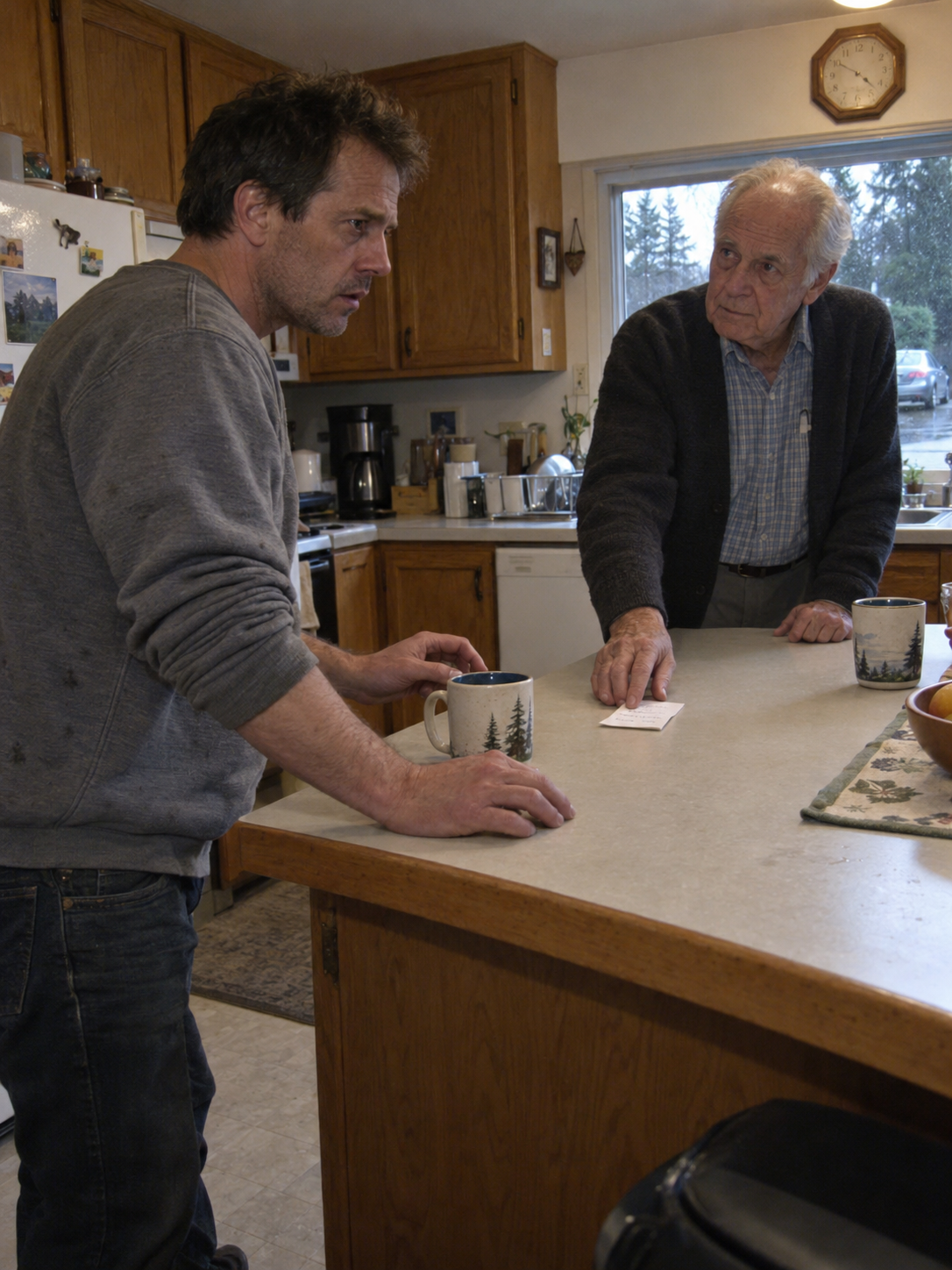
love-My parents gave my $50 million software company to my older brother while I was unconscious after a car accident, then helped convict me of stealing from my own investors. Five years later, I was washing cars for an elderly man outside Seattle when he asked, “Who framed you?” I hadn’t told him the story. Then he slid a lawyer’s phone number across the kitchen counter, and I began to wonder what he knew…
My parents gave my $50 million software company to my older brother while I was unconscious after a car accident,...

Her Family Cast Her Out as “Barren”… Then a Lonely Rancher Changed Everything…
Her Family Cast Her Out as “Barren”… Then a Lonely Rancher Changed Everything They left her tied to a horse...

I SPILLED COFFEE ON THE MAFIA BOSS AND RUINED HIS DINNER TO GET FIRED—BECAUSE I HAD SEEN WHAT HE DID IN THE GARDEN AND FEARED FOR MY SISTER – Life Story
I POURED HOT COFFEE OVER THE MOST FEARED MAN IN THE MANSION, PRAYING HE WOULD FIRE ME BEFORE HE RECOGNIZED...