At Thanksgiving, my sister laughed about my job at a “tiny investment firm,” and Dad offered to make me a vice president at Harrison Global if I would stop embarrassing the family.
At Thanksgiving, my sister laughed about my job at a “tiny investment firm,” and Dad offered to make me a vice president at Harrison Global if I would stop embarrassing the family.
They had no idea I founded Cornerstone Partners three years earlier.
The next morning, I sat across from the company my father desperately needed to acquire, knowing his $80 million offer was missing something that could change our family forever…
My sister Vanessa raised her wineglass before anybody had finished passing the sweet potatoes and asked whether I was still working at that “tiny investment firm.” She said it loudly enough for the entire Thanksgiving table to hear, although I was sitting four feet away.
“Cornerstone something?” she asked.
“Cornerstone Partners,” I said.
She nodded as if I’d reminded her of a neighborhood bakery. “Right.
The boutique place.
How quaint.”
My brother Derek laughed.
Dad continued carving the turkey, and Mom adjusted her pearls before announcing that at least I had a job.
It was familiar enough that I almost reached for another roll and let the conversation move on.
Almost.
My name is Madison Harrison.
Three years earlier, I’d told my family I was starting an investment firm.
That Thanksgiving, the company I’d founded, Cornerstone Partners, managed more than two billion dollars in client assets.
No one at the table knew it was mine.
They thought I was an employee at a modest financial office, earning perhaps eighty thousand dollars and waiting to discover that independence had been a mistake.
They weren’t fools.
My father had built Harrison Global over thirty years, growing it into a respected midsized investment business with roughly five hundred million dollars under management.
They knew balance sheets and acquisition terms better than most people.
They simply never thought to ask for mine.
I had stopped volunteering information long before the holiday.
Harrison Global was Dad’s life’s work.
Our family spoke its name the way other families spoke about the house where grandparents were married.
When Derek joined the company, Dad cleared an office near his.
Vanessa got opportunities to work with clients and attend industry functions.
My mother could name every holiday gathering where someone useful to the business had sat beside her.
I was expected to join eventually, too.
Mom reminded me again between the stuffing and green beans. “Your father could make you a vice president tomorrow, Madison.
You’d have a real office and a path forward.”
“I’m happy at Cornerstone,” I said.
“Happy making what?” Derek asked. “Eighty grand?
We close deals worth millions.”
He didn’t know that an eighty-million-dollar acquisition proposal from Harrison Global was sitting among the documents I had reviewed before driving over.
I had spent the previous week studying it, not as his little sister but in my role advising Summit Technologies, the firm he wanted to acquire.
That was what made dinner difficult.
If I told them who I was, they’d hear it as a challenge.
If I kept quiet, they’d continue treating my work as a phase I ought to outgrow.
I had reasons besides pride to remain careful: Summit was a client, and the terms under consideration were confidential.
Vanessa reminded everyone about the year I’d finished my MBA at Wharton and announced my plan to build something outside the family. “Remember how sure she was she’d own a firm?” she said.
She laughed as though ambition were an amusing childhood story.
I remembered the actual conversation.
We’d been in Dad’s study, where the framed transaction photographs lined one wall.
He asked where I’d get clients, whether I understood operating expenses, and why anyone with serious money would trust an inexperienced founder.
Those were reasonable questions until he declared I lacked the instinct to succeed and would crawl back within six months.
Derek said three months.
Vanessa said nobody outside the family would take me seriously.
Mom worried aloud about how a public failure would reflect on the Harrison name.
They called it concern, but I went to bed that night knowing none of them had asked how I planned to make it work.
Starting Cornerstone was harder than I admitted at family dinners.
Grandma Rose had believed I deserved a chance and left me the seed money to begin.
I used it carefully, not like an endless cushion.
There were lonely months of convincing clients to trust a new firm, mornings reading research before sunrise, and evenings wondering whether Dad had been right about the risk.
I hired people who were better than I was at work I hadn’t mastered.
We built our reporting systems, kept commitments, and grew steadily through recommendations and performance.
Some clients took a chance because someone vouched for me; others stayed only after seeing what we delivered.
By the third year, two billion dollars under management was a responsibility that frightened me more than it impressed me.
I never lied about my employment.
When family members asked how work was, I said busy.
When Mom called my office small, I didn’t correct her.
Once, during a Christmas party, I’d overheard Derek and Vanessa betting on how many months I’d last.
I kept that memory, and an old recording of the remarks, longer than was healthy.
It reminded me to keep going, but it also taught me to measure every success against their disbelief.
Grandma Rose had told me something different.
She said money could give me the chance to start, but afterward I’d have to earn people’s trust by doing what I promised.
I missed her especially at holidays.
She might have been the only person at our table willing to ask a question about Cornerstone and wait for the answer.
Dad set down his carving knife and asked how things were progressing at Summit Technologies.
Derek straightened in his chair.
Harrison Global was pursuing an eighty-million-dollar deal, he said, the biggest in its history, with closing expected the following month.
He talked about finally putting the company in the big leagues.
I knew the proposal.
Summit’s CEO, James Morton, had been my client since Cornerstone’s early days.
Our advisers had studied the company’s contracts, equipment, projected earnings, and risks.
Our conclusion was that Summit was worth at least one hundred twenty million dollars, a full forty million above Harrison Global’s offer.
I could not disclose James’s confidential conversations over Thanksgiving dinner.
I could ask whether Dad was comfortable with the exposure.
Harrison Global had borrowed heavily in anticipation of the acquisition, and a collapse could rattle clients already wondering about its growth.
I asked how he was handling that risk.
“Business is risk,” Dad replied. “That’s something you’ll learn when you work on transactions this size.”
Derek added that they had the financing lined up and knew what Summit was worth.
Vanessa said I should enjoy hearing professionals discuss a major deal.
She meant it playfully, or at least she would have called it playful if I’d objected.
I looked at the gravy boat while Mom warned Derek not to spill on the tablecloth.
There was something ordinary and painful about hearing a family discuss the future of a business without knowing the person beside them had spent days examining the same future.
I wanted to tell Dad that I was proud of how much he’d built.
I also wanted him to stop talking as though I hadn’t built anything.
“Why won’t you come home?” he asked me. “Harrison Global is family.
We take care of our own.”
.
“Do we?” I asked.
Mom gave a tired little sigh.
Vanessa said we didn’t need to revisit my startup fantasy.
I told them I’d heard the betting at that Christmas party, the jokes about clients never trusting me, and the predictions that I’d beg for a job.
Derek looked down at his plate.
Dad said they had only been afraid I’d fail.
“I would have understood concern,” I said. “You could have asked me about my plan.
Instead, you made my failure a family entertainment.”
Vanessa protested that it was years ago.
But she’d mocked the same job before we even ate that day.
I pointed that out, not particularly loudly.
I had rehearsed speeches about winning their respect, but none sounded useful beside a plate of cooling turkey.
Mom said people were getting upset and Thanksgiving wasn’t the right time.
I agreed that it wasn’t.
I thanked her for dinner and stood.
Derek asked whether my little firm had any important meetings the next morning.
I told him I had one that mattered.
It was all I could say without betraying someone else’s business.
I drove home more upset than I had expected.
There was no satisfaction in leaving early.
I’d spent three years wanting my father to notice what I’d done, and when I finally spoke up, all he noticed was that I’d spoiled dinner.
I set my keys beside a stack of papers and opened the Summit valuation again, forcing myself to look at the numbers instead of the family group chat.
The next morning, I went into my office in the top floor corner suite of a downtown building.
Sophie, my assistant, had already prepared the boardroom.
James Morton and Summit’s representatives arrived at nine.
We had to decide whether their company should continue negotiating with Harrison Global at the proposed price.
James knew my family background, though I’d asked him not to bring it into negotiations.
He’d dealt with Derek for six months and was surprised how little interest Derek had shown in Summit’s other advisers. “He kept telling us we’d never find a better offer,” James said. “As if confidence settles valuation.”
I showed the board the analysis again: eighty million offered, at least one hundred twenty million supported by the work.
There were reasons to discuss conditions and timing, but not to let an important client accept forty million less simply because the buyer was related to me.
James asked what I recommended.
I said we should call Harrison Global for an urgent meeting and tell them the terms needed reconsideration.
Any solution had to withstand independent scrutiny, including my connection to the Harrison family.
I wasn’t willing to turn Summit’s interests into a stage for settling Thanksgiving insults.
Sophie arranged the meeting for later that morning.
Dad, Derek, and Vanessa came up to our offices expecting to meet an adviser.
When the door opened, they found me seated at the conference table with Summit’s documents.
Dad stopped and looked from the view to my name on the office door.
“What is this, Madison?” he asked.
“Cornerstone Partners,” I said. “I founded it three years ago.”
Derek asked whether I actually owned the firm.
I said yes.
Vanessa looked toward Sophie, as though somebody might explain the misunderstanding.
Dad lowered himself into a chair while I introduced my role with Summit, then placed the acquisition proposal in front of them.
“Your eighty-million-dollar deal needs approval from the people advising Summit,” I said. “I’m one of them.
And the valuation raises a problem you should hear before this goes any further.”
.
They had entered the room assuming they’d be discussing an acquisition with strangers.
Instead they were across the table from the daughter they had spent Thanksgiving telling to find a proper job.
I watched Dad read the figure I’d marked on the report, and I knew the conversation would be about far more than my office.
CHAPTER 2
Dad was the first to speak.
He said he was impressed, and then asked why I’d hidden the business from them.
I reminded him of what he’d said at dinner the day before.
Vanessa called those remarks teasing.
I asked whether she’d have considered them funny if a stranger said them to her in front of everyone.
I had kept a recording from that Christmas party three years earlier.
The comments were as ugly as I remembered: predictions that I’d fail, doubts anyone would trust me, Dad saying I lacked Harrison determination.
I played part of it, then put the device away.
I’d used it to push myself through difficult mornings, and hearing it again in that office didn’t make me feel any taller.
Cornerstone managed more than two billion dollars in assets, I explained, compared with Harrison Global’s roughly five hundred million.
I knew assets under management weren’t the same as profit or company value.
Still, the size of our responsibilities was not something they could dismiss as a hobby.
Dad asked how I’d grown so quickly.
I told him about clients, performance, the team, and Grandma Rose’s faith in me.
Derek kept returning to Summit.
He said they’d spent months negotiating and couldn’t increase their offer by forty million.
James joined us and explained that the price had to reflect Summit’s value.
Derek had pushed the original terms confidently, but confidence didn’t justify selling a client’s business below its assessed worth.
Dad admitted that Harrison Global had borrowed heavily in preparation for the deal.
Losing it could damage the firm.
I had already asked our investment team to examine a possible financing structure: Cornerstone could provide the additional forty million in exchange for a thirty-percent equity stake in Harrison Global, subject to the necessary approvals and full legal documentation.
Derek reacted as though I’d demanded the company for free.
Vanessa said I was using family difficulties to corner them.
Dad read the proposal more carefully.
Under its terms the family would retain seventy percent ownership, but Cornerstone would receive board representation and meaningful oversight.
Summit would receive full value.
Harrison Global could still complete its acquisition.
The proposal wasn’t a favor.
Cornerstone would be putting money at risk, and I was accountable to its investors and governance procedures.
I said plainly that, if the financing couldn’t stand on its own business merits, we should not do it.
James agreed that Summit needed a fair outcome regardless of my surname.
I watched Dad trace a finger down the financing schedule.
He had taught me to distrust a deal that depended on goodwill instead of enforceable terms.
For once I could see him applying that lesson to an agreement his own daughter had prepared.
Dad requested time to discuss the terms privately.
I gave them an hour before we needed to advise Summit about seeking other buyers.
It wasn’t a theatrical deadline to punish my father; everyone had been preparing for a decision, and continued uncertainty had a cost.
Even so, watching them walk out together felt like seeing my childhood family reverse positions around the dinner table.
They returned looking tired.
Dad said they were prepared to accept the proposed financing and ownership structure, with counsel to complete the documentation.
Derek didn’t congratulate me.
Vanessa avoided my eyes.
I didn’t expect gratitude.
They were protecting a company that employed people, just as I was protecting the clients who relied on mine.
Mom had come with them for the final discussion.
She asked softly whether that meant I would now be part of Harrison Global.
I told her I’d been part of its history all my life.
Being responsible for its future would be a different arrangement, governed by what we signed rather than by whether Dad approved of me.
CHAPTER 3
The documents were reviewed, and the ownership transaction moved toward completion.
The family retained seventy percent, while Cornerstone’s thirty-percent position came with agreed governance changes.
I also asked Dad about the Harrison family estate, the house where so much of my ambition had been treated as a joke.
That request wasn’t necessary to fund Summit.
I wanted it because I had spent years believing the place represented who counted as a Harrison.
Derek called the demand spiteful, and he wasn’t entirely wrong.
Dad considered the request alongside the other terms, then agreed to transfer the property through proper documentation.
I accepted the responsibility of owning a house full of difficult memories.
I knew a deed could not change my childhood, or tell me what to do with the house afterward.
The restructuring plan went beyond the merger.
Harrison Global had lost important clients, struggled to modernize its investment approach, and relied too heavily on its name.
Our reviewed numbers showed returns below comparable firms.
Cornerstone’s more recent performance demonstrated alternatives, though it didn’t guarantee that every new strategy would succeed.
Dad saw the comparisons and asked whether I’d genuinely built Cornerstone without his help.
I said Grandma Rose had left the seed money and I’d taken that chance seriously.
My team and our clients did the rest with me.
He looked at the reports again. “You really did it,” he said, almost to himself.
I had imagined those words for years.
Hearing them felt different from winning an argument.
I wanted him to be proud, but I also wanted him to understand that I’d become capable of making decisions whether he approved or not.
I told him I’d built Cornerstone to prove to myself that I could, not to spend the rest of my life defeating him.
Under the agreed governance changes, I was nominated to chair Harrison Global’s board, with the required corporate approvals to follow.
Dad would retain a nonexecutive advisory role.
I wanted his experience available without allowing old habits to override reporting and accountability.
He had built something worth preserving, even if it needed to change.
My plan eliminated Derek’s and Vanessa’s executive positions.
Their jobs overlapped functions the combined organization would now perform differently, and their approach had contributed to stagnation.
They accused me of getting rid of them because they’d mocked me.
I couldn’t claim their behavior had no effect on my feelings.
I could insist that staffing decisions be documented, reviewed, and made for the firm’s actual needs.
I introduced senior members of Cornerstone’s team who would help with the transition.
These were people I’d hired because they knew their work, not because of their names.
Derek refused to work under my leadership; Vanessa said I was tearing the family apart.
Dad listened without challenging the operational analysis, which was more restraint than I’d seen from him at Thanksgiving.
I had to remind myself that the people losing their positions would still be my siblings at the next family meal.
It made the decision heavier, even though the combined company could not maintain redundant jobs simply to avoid an uncomfortable conversation.
Afterward Mom lingered beside the conference table.
She asked whether I’d still come to Sunday dinner.
I thought about the years of smiling through jokes and waiting for an invitation to be taken seriously. “I might,” I said. “But I won’t sit through that again.” She nodded, though I couldn’t tell whether she heard the difference.
Sophie came in later with champagne.
She knew how far the business had come and reminded me to take one evening to recognize it.
James sent congratulations and mentioned Grandma Rose.
I raised my glass to her, grateful she’d backed a young woman who had no guarantee of succeeding.
CHAPTER 4
The next morning I arrived early at Harrison Global’s offices.
The security guard recognized me and then looked twice at the new access card in my hand.
Upstairs, Derek and Vanessa were clearing the offices they had occupied for years.
They didn’t speak when I passed.
I couldn’t find anything useful to say either.
Dad’s office still held photographs of major deals, award plaques, and the heavy desk where he’d told me to abandon my startup.
I opened the curtains.
The view wasn’t better than mine downtown, despite how much it had mattered to him.
I set my briefcase down and thought about how many people had worked in the building without ever appearing in those photographs.
An image from my first Cornerstone office went on the desk: me at twenty-two, smiling in front of a space so small the whole staff could hear every telephone conversation.
Grandma Rose had given me the confidence to try, even when I was frightened.
I didn’t hang it to erase Dad’s achievements.
I wanted a reminder of what the business had looked like before anybody called it successful.
Our leadership transition wasn’t finished simply because contracts were signed.
There were reporting systems to combine, customer questions to answer, and employees anxious about what the new owners might do.
I asked the executive team to schedule meetings with department heads before changing policies.
The people doing ordinary work deserved clear information, not rumors about family battles.
Some had worked beside Dad for decades, and I needed them to know I recognized their knowledge.
I asked department heads where integration might interrupt client service and which processes were worth keeping rather than replacing for appearance’s sake.
Derek left before lunch.
Vanessa stayed long enough to collect some personal papers.
At the elevator she told me she hoped I’d enjoy running a company where everyone was afraid to disagree with me.
I said I wanted the opposite.
She looked doubtful.
I couldn’t blame her for questioning whether someone who’d just taken her job would welcome criticism.
That weekend I visited the family estate.
It was still filled with furniture chosen by my parents and rooms I’d known since childhood.
I stood outside Dad’s study without going in.
Owning the house didn’t make the old conversations disappear, and I couldn’t pretend the transfer had healed anything.
The place felt larger and less comforting than I remembered.
Mom’s question about Sunday dinner stayed with me.
I had said I’d come, but things would have to be different.
I still didn’t know whether she understood what I meant.
She had worried for years about the embarrassment of a daughter failing, and I wasn’t sure she knew how to speak to a daughter who had succeeded without her guidance.
Derek was angry about his position, and Vanessa had no reason to feel warmly toward me.
Dad had finally acknowledged my work, but one afternoon couldn’t undo thirty years of family habits.
I intended to keep my promise about dinner without making my professional decisions part of the price of admission.
A family meal could remain a family meal, if we all allowed it.
At work the following week, Sophie asked if I was ready for my first meeting as chair under the new governance arrangement.
I looked at the agenda: client retention, staffing, technology, financing.
No item mentioned revenge or proving anybody wrong.
I gathered the reports and walked toward the boardroom, already thinking about how much remained to be done.
I had wanted my family’s respect for a long time.
I still did, perhaps more than I liked admitting.
But I no longer needed their opinion before deciding whether I belonged in that room.
I opened the door, greeted the people waiting inside, and took my seat.
THE END.
I’ve shared the complete story, and I truly hope it touched your heart.
If this story moved you, please , like, and share the post.
Thank you for reading! ❤️
Recommended Stories

Her Stepmother Put Her on an Auction Block Three Days After Her Father’s Burial—Then the Most Feared Cowboy in the Territory Rode Into Town, Offered $2,000 in Gold, and Whispered That Her Dead Father Had Left Behind Evidence Someone Was Willing to Kill For
Luke’s fingers closed around the leather packet just as a shout rose behind them. “Mercer! Stop!” Marshal Briggs was hurrying...
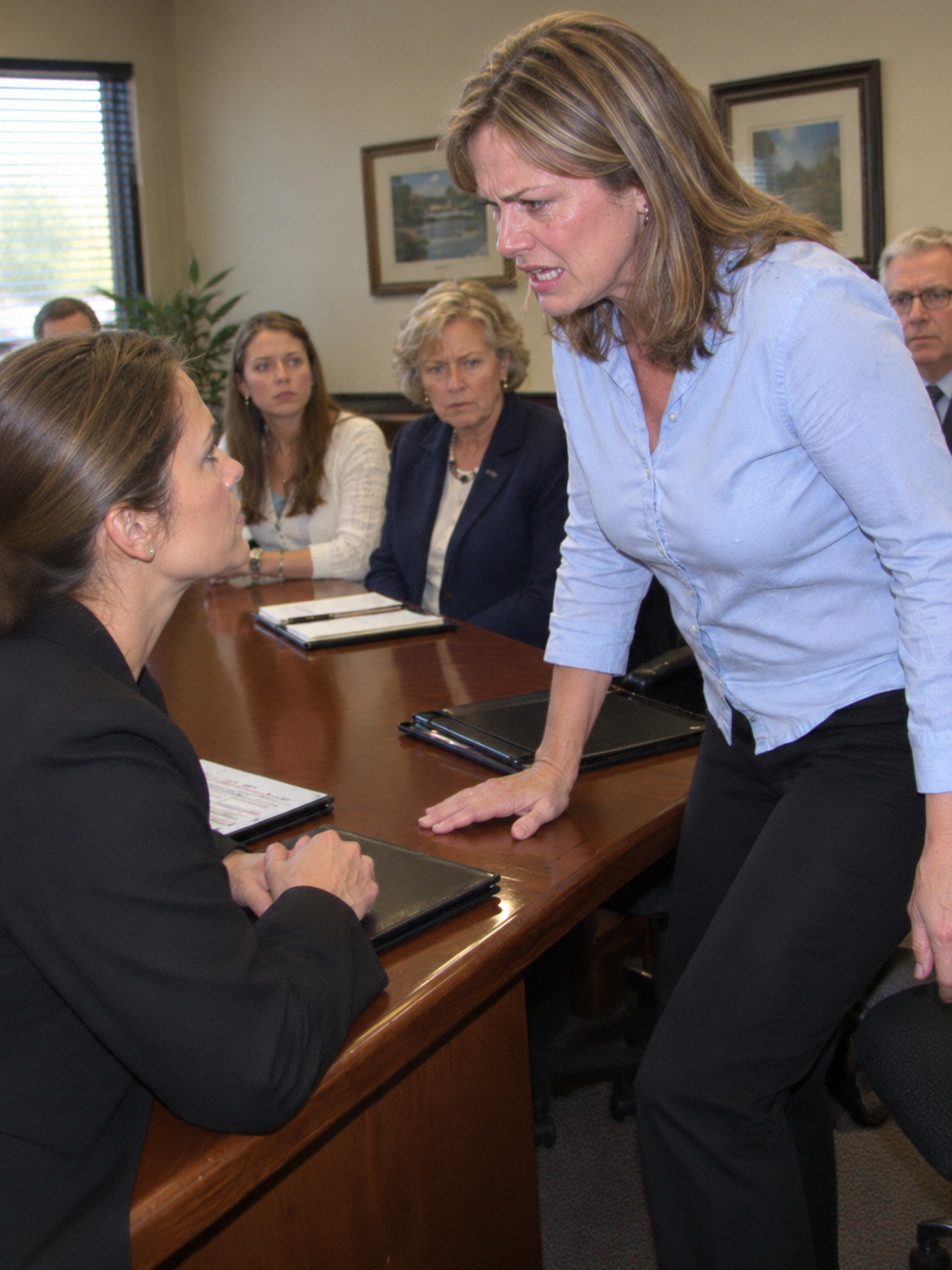
My sister called my daughter’s Stanford acceptance “charity” while my mother laughed
My sister called my daughter’s Stanford acceptance “charity” while my mother laughed, then announced that Dad’s $240,000 education fund would...
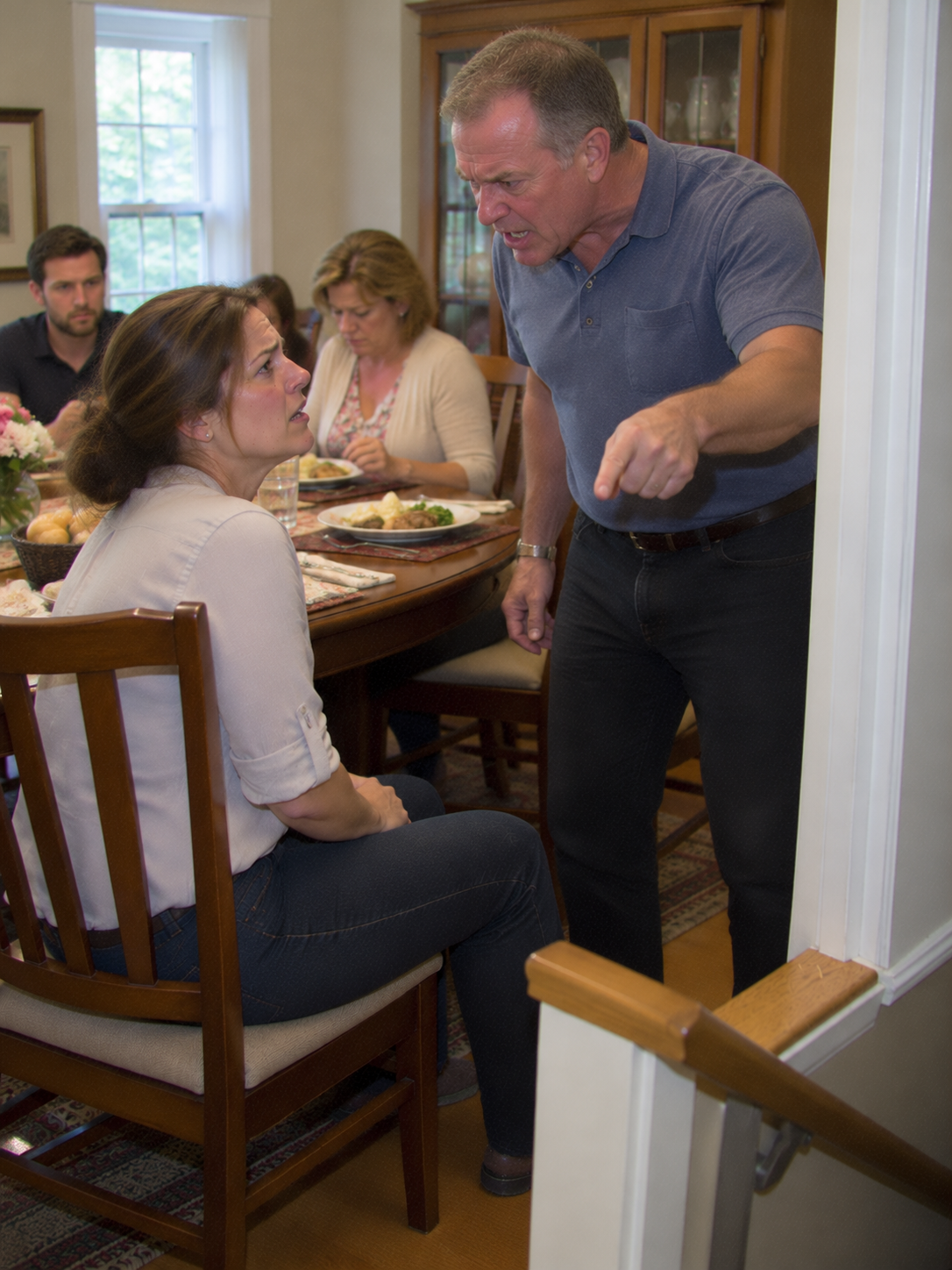
At Mother’s Day dinner, I asked why I paid $1,500 for a basement while my brother’s family lived upstairs free.
At Mother’s Day dinner, I asked why I paid $1,500 for a basement while my brother’s family lived upstairs free....