My son sent me on a cruise, then used my wedding crystal to toast the week he planned to take my house and savings.
My son sent me on a cruise, then used my wedding crystal to toast the week he planned to take my house and savings.
The ship was delayed, so I came home early and heard his wife describe the papers waiting at my grandson’s ceremony—where they expected me to be too tired to read…
My son’s truck was blocking my driveway when I came home from Baltimore, and the porch light was off.
Through the dining-room windows, I could see the chandelier glowing over a house I had left empty that afternoon.
For a moment, I thought something had happened.
A plumbing problem, perhaps, or some other reason Darren and his wife, Tawny, would both be there at nearly ten o’clock.
My friend Vita parked near the road.
We left our suitcases in her trunk and walked up the grass beside the driveway.
I had my key ready.
Our cruise should have boarded the next morning, Thursday, October eighth.
But a storm had delayed the ship, and an apologetic message moved departure to Friday.
Rather than stay another night near the terminal, Vita and I decided to go home.
We were only seventy-five minutes away, and I preferred my own pillow to the hotel’s approximation of one.
I didn’t call Darren.
There was no reason to bother him about a small change.
My front door opened silently.
Eben had oiled those hinges every spring and fall for years, and apparently his last applications were still doing their job.
I stepped into the dark hall.
Vita remained behind me, one hand on the doorframe.
Beside the stairs, my husband’s grandfather clock ticked.
Then I heard Tawny.
“To our plan finally paying off.”
I looked through the archway.
She and Darren sat at my dining table with champagne in my ice bucket.
They were holding our wedding flutes.
Eben’s aunt had given us those glasses when we married in 1981.
We used them on our anniversary, even when what we poured into them was ginger ale.
Nobody else used them.
“One more week,” Tawny said, “and everything she owns is ours.”
Darren touched his glass to hers.
“To Thursday.”
I stopped moving.
At sixty-nine, I had spent enough years managing an elementary school to recognize the difference between an unfortunate remark and a plan somebody intended to carry out.
For twenty-eight years, I had listened while adults explained things they hoped I wouldn’t examine closely.
I knew when to let someone finish.
Tawny set down her glass and opened a list on her phone.
Her mother’s crew would begin packing Saturday.
Every room.
Labels for the senior apartment, storage, and donations.
“She’ll notice,” Darren said.
“When she gets home.
By then, it’ll be done.”
I felt Vita’s hand settle on my shoulder.
Tawny continued.
There was an appraiser expected Monday.
Darren would arrange a one-bedroom apartment at Glenmore Place on Tuesday.
“She’ll love the library.”
.
“She’ll hate the library,” my son answered.
“She’ll live.”
I had driven past Glenmore.
It stood beside the hospital parking garage in Frederick.
I had never asked either of them to arrange a home there.
Then Tawny mentioned her brother, Dusty, and Penwick Homes.
Penwick was planning a development behind my property.
A letter had arrived in August asking whether I would discuss the future of my land.
I called their office and said politely that it wasn’t available.
Apparently, my refusal had become a problem other people intended to solve.
“They need her lot for the road,” Tawny said.
I looked at my dining room, at the chair Eben used to occupy, and listened to them discuss the place where we had lived since 1986.
A white farmhouse, an old barn, a porch step my husband had meant to repair.
Two acres that held more of our life than Darren seemed to remember.
My son had been unhappy after Eben’s will left everything to me.
“Dad promised me the shop,” he said afterward.
That was the barn where Eben taught himself cabinetmaking after teaching shop all day.
I told Darren we could discuss it when the loss hurt less.
We never did.
Then Darren’s heating-and-air business lost an important contract.
He asked for far more help than I felt comfortable giving.
I provided some assistance and offered a meeting with my financial planner.
.
He accepted the help and declined the planner.
I had mistaken his disappointment for something he would eventually work through.
At the table, Tawny moved to the next item.
“Thursday.
Callan’s Eagle ceremony.
Seven o’clock.”
My grandson had worked toward that evening for four years.
His service project was a rebuilt footbridge on the nature trail behind my old school.
The date was marked in red on my kitchen calendar.
Tawny said I would arrive home that morning and be at the fire hall that night.
“She’ll sign anything when she’s tired.”
Darren looked toward her.
“She wouldn’t make a scene at Callan’s Eagle.”
“Exactly.”
He would thank me publicly for my generous gift.
Everyone would clap.
Then they would put the papers in front of me.
“Why can’t I sign?” Darren asked. “I’ve got the power of attorney.”
I felt my stomach tighten.
Two years earlier, before hip surgery, he had brought a form to my kitchen.
Just in case, he said.
So he could deal with bills while I recovered.
Tawny’s mother, Jolene, came with him carrying her notary stamp.
I signed and initialed where Darren indicated.
I also gave him a house key.
I had read enough school documents to know better than to hurry through something important.
But I was preparing for surgery, and this was my son.
I believed helping me was what he meant to do.
Now Tawny explained that the property papers needed my own signature.
Jolene would notarize them at the reception.
Her mother expected a substantial share for participating.
“And if she won’t?” Darren asked.
“Then Monday you use the power of attorney at Sugarloaf.”
She named my savings.
I had let Darren sit beside me while I handled bills.
He knew where the accounts were, and he knew their approximate value.
There had been no reason, until that moment, to hide either.
Darren mentioned a deadline involving Dusty’s lender, then something about his own house on the twenty-seventh.
I hadn’t known his home was in danger.
Tawny spoke as though the arrangements fit together neatly: my accounts, my property, Dusty’s problem, Darren’s problem, and an apartment where I could be placed once the decisions were finished.
Darren leaned back in Eben’s chair.
“Best money we ever spent.”
He meant my cruise.
At Labor Day dinner, he had handed me the confirmation and said I never did anything for myself.
Eben and I had planned a cruise before the pandemic, but we never took it before he died.
I had cried over my son’s thoughtfulness.
Standing in the hall, I remembered Callan passing me a napkin.
Vita’s hand pressed gently against my shoulder.
Neither of us spoke.
I stepped backward through the doorway, and she eased the door closed without allowing the latch to click.
We walked to the car, then waited in a church parking area down the road until their vehicles passed.
Only afterward did Vita ask what I needed.
“Not to go inside tonight,” I said. “If anything changes, they’ll know I came home.”
“You’re staying with me.”
At her kitchen table, she put tea in front of me.
My ship would leave Friday.
My family still believed I would be gone Thursday.
Before they expected me home, they intended to pack my rooms and put papers in front of me at my grandson’s celebration.
I looked at the calendar on Vita’s wall.
I had one day nobody in my family knew I had.
Continue below
Chapter 2/6
I called Ria Mowbray at six-forty the next morning.
She had handled Eben’s estate and was one of the few people who never mistook a widow for someone who needed decisions made around her.
She gave me an eight-thirty appointment.
Darren had emailed me a scan of the power of attorney after I signed it.
I still had it, which spared me a trip through my own front door.
Ria read it carefully.
“It’s effective now,” she said. “Not only if you’re incapacitated.”
She showed me the authority I had initialed.
Property, banking, retirement matters.
The section authorizing gifts wasn’t initialed.
I told her everything I had overheard, as nearly as I could remember it, including the times.
She didn’t promise that nothing could happen.
She explained what we needed to change and who needed notice.
By ten, I had revoked the old authority, named Vita with Ria as backup in a replacement document, and updated my will so Darren would no longer administer my estate.
Ria prepared his formal notice.
I wanted to hand it to him myself; she would also send a copy.
Then Vita drove me to Sugarloaf’s main office in Frederick.
At my local branch, somebody would recognize my car and ask about the cruise.
I didn’t intend to lie, but I wasn’t required to announce my afternoon.
The manager, Vesta Bidinger, reviewed Ria’s documents and marked all my accounts.
I requested that any attempt by another person to act for me be referred directly to me or my attorney.
Nobody had presented Darren’s paperwork there yet.
That “yet” stayed with me.
At the courthouse, the revocation was recorded at 11:52 a.m.
I read the stamped receipt twice before placing it behind my driver’s license.
Vita touched my elbow outside.
“You’re smiling.”
“I’m concentrating.”
“I know that expression.
Fire drill.”
Our last appointment was with Laird Hadsell at Penwick Homes.
He remembered my August refusal.
In his conference room, a development map showed a proposed access road passing directly through my front yard.
The county required another entrance.
My frontage mattered more than the house’s ordinary valuation.
Laird explained that Dusty Kraus claimed to represent the family.
He had provided a letter promising that the necessary property authority would be in place by October fifteenth.
I hadn’t agreed to any of it.
Laird made clear that Dusty’s letter didn’t make him the owner and didn’t bind me.
Its limited window expired the night I returned from the cruise.
“Then let it expire,” I said.
I didn’t ask him to conceal my visit or perform some favor.
If anyone asked questions, I wanted truthful answers.
Before leaving, I asked when Dusty signed the letter.
September second.
In Vita’s car, I checked my cruise confirmation.
The reservation had been created the following morning.
I sat with the phone in my hand.
The trip hadn’t happened to provide a convenient opportunity.
The dates had been chosen around the plan.
For eleven minutes, Vita let me read without interruption.
Then she asked whether we were still sailing.
Everything I could arrange on land was underway.
Staying home would tempt me into a confrontation before I had thought through how to protect Callan’s evening.
“We’re going,” I said.
Darren’s message arrived later: “Have the best week.
You deserve it.”
I answered, “Thank you.”
Vita printed the revised luggage tags.
Friday, October ninth, appeared beneath the orange stripe.
I attached one to my suitcase and clipped another to my purse.
When we sailed the next afternoon, Darren wished me a wonderful second day.
I looked at that message, then out at Baltimore receding behind us.
“We’re underway,” I wrote.
It was the truth.
Chapter 3/6
The first morning at sea, I slept ten hours.
Vita said she considered that an excellent beginning and claimed two shady deck chairs before anyone else could develop an opinion.
For a little while, we behaved like women on vacation.
We read, ate without washing dishes, and watched other passengers organize themselves into friendships that would last exactly as long as the trip.
Then my phone caught up with messages.
Tawny reminded me about Callan’s ceremony and said there would be a surprise.
“I wouldn’t miss it,” I replied.
Vita read over my shoulder and made the sound she once reserved for library books returned with food inside them.
On Sunday, she asked whether I was frightened.
“Of ruining Callan’s evening.”
“If his father tries this there, that won’t be your choice.”
“No.
But I can decide when I speak.”
If Darren abandoned the public announcement, I would give him Ria’s letter privately.
I wasn’t planning an audience for its own sake.
On Monday, Callan sent a photograph.
My sewing-room shelves were bare.
Boxes stood by the window.
In the middle sat Eben’s oak tool chest with an orange donation sticker across the lid.
“Dad says you agreed,” he wrote. “Did you?”
I went out on deck before answering.
“No, sweetheart.
Please let me handle it.
I’ll see you Thursday.”
He replied that he hadn’t helped pack that room.
He told them he had homework.
I laughed, then cried a little.
I was grateful he had resisted, and sorry he had needed an excuse.
The following morning, Glenmore Place emailed a welcome.
An apartment had been reserved.
My move was scheduled for Saturday, two days after I returned.
The floor plan showed a small kitchenette and a window toward the hospital garage.
The rules prohibited workshops and hobby machinery.
I thought about Eben’s chest sitting beneath the donation sticker.
Darren had described himself as my son and agent.
Vita returned with coffee and looked at my face.
“What now?”
“They’ve arranged where I’m going to live.”
We called Ria.
She explained that the reservation didn’t make me a resident or replace the signature they would need from me.
I hadn’t agreed to occupy the apartment.
I also asked about Jolene notarizing the proposed deed while expecting a financial benefit from it.
Ria explained the conflict and told me what I could say if Jolene proceeded.
My bank had notice.
The county had the record.
Penwick knew I hadn’t authorized Dusty.
Ria’s letter would be waiting at Vita’s house when we returned.
I wasn’t relying on one conversation at a folding table to protect everything.
That helped me rest during our final day at sea.
I thought about our wedding glasses.
Eben insisted we use them every anniversary because something could be precious and useful at the same time.
On our last anniversary, he had promised the next one would be aboard a ship.
He died eight months later.
I hadn’t brought the flutes.
I never imagined I would need to protect them from my own family.
Thursday morning, Vita drove me home from Baltimore.
Tawny’s vehicle and Jolene’s work van stood outside.
My front door was held open by a box.
Inside, pictures had disappeared from the walls.
Rugs were rolled, the clock was wrapped, and labeled boxes narrowed the hall.
“Surprise,” Tawny said. “We got you started.”
Jolene proudly announced sixty-one boxes.
I walked into the dining room and opened one marked for donation.
Inside were the flutes.
One was intact.
The other had a fresh chip along the rim.
I held it toward the window, then carefully wrapped both again and closed the flaps.
I had the urge to carry them upstairs and lock the door.
Instead, I put them down and went to rest before Callan’s ceremony.
Chapter 4/6
From the kitchen, I heard Jolene say the trip had exhausted me.
Tawny answered that the evening would be easy.
I shut my bedroom door and lay down.
They were correct that I needed sleep.
They were mistaken about what sleeping would change.
Darren arrived that afternoon carrying a green folder.
He hugged me and asked about the ocean.
Then he said there was one small family matter after Callan’s ceremony.
“Nothing big.”
I looked at the folder.
“What did your father promise you, Darren?”
He blinked. “The shop.”
I remembered Eben making plans he didn’t finish, including that porch step.
But none of his unfinished promises authorized what Darren was preparing.
“Is there anything you want to tell me before tonight?”
I gave him time.
For a moment, I saw the boy who used to bring home crooked woodworking projects, waiting for me to admire them.
Then he checked his phone, kissed my cheek, and said he loved me.
That was the answer he chose.
Later, Laird messaged that Dusty had invited him to the fire hall to witness the signing.
He would attend and answer questions truthfully.
Vita arrived carrying Ria’s envelope.
I put it in my purse beside the courthouse receipt, then dressed in the rose blazer I had chosen for Callan’s evening.
I wore the pearl earrings Eben gave me when I became principal.
Vita stood in the doorway.
“First day of school,” she said.
“That’s the outfit.”
At the fire hall, about seventy people filled rows of folding chairs.
Scouts stood in uniform, relatives held phones, and firefighters drifted past the cake table.
The green folder waited on a small white-covered table beside Jolene’s notary bag.
Tawny had saved me a seat immediately next to it.
I noticed, then turned my attention to Callan.
His ceremony deserved more than becoming the introduction to an argument.
The scouts brought in the flag, and Mervin Heffner, their scoutmaster, read the charge in his gravelly voice.
Callan stood tall and nervous while Tawny pinned his medal.
He gave his parents their pins.
Darren wiped his eyes, and I believed the tears.
People can love a child sincerely and still make choices that hurt him.
Seeing both things in my son didn’t make either easier to understand.
Then Mervin announced the mentor pin.
Callan chose me.
I stood so quickly my knees wobbled.
He bent to fasten the tiny pin to my lapel, then spoke about the footbridge, the rainy workdays, and the lessons he remembered from me.
“She taught me to tell the truth when it costs something.”
I looked at him and nearly lost the composure I had maintained all week.
Afterward, everyone moved toward cake.
I returned to my chair while Callan stood behind me holding two portions, as though becoming an Eagle Scout had doubled his nutritional requirements.
Darren tapped his plastic cup with a fork.
“One more thing.”
I folded my hands.
He told the room that I had decided to give him and Tawny the farmhouse.
On Saturday, he said, I would move into a lovely apartment at Glenmore.
A few people clapped uncertainly.
Tawny opened the green folder.
There were property papers and directions concerning my accounts, each marked where I should sign.
Jolene arranged her journal, stamp, and pen.
“She’s had such a long trip,” Tawny announced. “Let’s get this finished so she can rest.”
Everyone looked at me.
I kept my hands in my lap.
“No, thank you.”
Chapter 5/6
Tawny laughed as though I had misunderstood.
“You’re embarrassing Callan.”
He remained behind my chair.
I didn’t turn to make him choose a side.
Darren said we had discussed it.
“No,” I answered. “You discussed it.
I listened.”
I gave them the date and time: Wednesday, October seventh, nine-forty-one in my front hall.
Then I explained the delayed ship.
I repeated Tawny’s toast and her remark about what I would sign when tired.
Her face went pale while Darren’s reddened.
“You were spying?”
“In my house, with my key.”
She said I was exhausted and confused.
Vita stood.
“I was behind her.
I heard it.”
Her voice was ordinary, almost conversational.
That was enough to stop Tawny treating my account as something I had imagined.
Darren’s expression changed.
“Fine.
I’ll deal with it Monday.
I have your power of attorney.”
“You had it.”
I explained the revocation and showed him the recording receipt.
He stared.
“Thursday?” Tawny said. “You were on the ship.”
I unclipped the orange-striped tag and read the embarkation date.
“Friday.
The ship left Friday.”
Around us, people began understanding why I had remained calm.
Dusty pushed toward the table with Laird, insisting they explain the arrangement with Penwick.
Laird freed his sleeve from Dusty’s grip.
He said there had been a conditional letter, not ownership.
I had visited his office the previous Thursday, and Penwick would not proceed through Dusty.
Dusty turned on Darren.
“You said she’d be too tired to read.”
The words carried.
I watched Jolene reach for her pen and reminded her that she expected a substantial benefit from the papers she proposed to notarize.
She stopped.
Then she packed the stamp and journal away.
Tawny tried to prevent her from leaving, but her mother pulled back.
Whatever agreement they had made in my kitchen was no longer holding together.
I told Darren about the dates I had checked.
Dusty’s letter came first.
My cruise reservation followed the next morning.
“That trip wasn’t simply a gift,” I said. “You needed me away.”
Tawny struck the table with both hands.
She shouted about my house, my savings, and how unfair it was that I had them while they faced losing their home.
Darren didn’t shout.
“Our house is going on the twenty-seventh,” he said. “Callan’s house.”
I felt the old impulse to solve it before he finished speaking.
“I know.”
He looked up.
“I heard that, too.”
I stood carefully, feeling the mentor pin against my blazer.
“I will help Callan.
I won’t agree to being removed from my own home.”
My grandson set down his cake and came beside me.
“Can I go home with you tonight?”
Darren looked at him, and for a moment the folder and the receipt seemed unimportant beside that question.
Mervin stepped forward.
“This is a court of honor,” he said. “Anything else goes outside.”
I handed Darren Ria’s envelope.
“Your notice.
Now you know.”
He took it.
Tawny and Jolene were already leaving.
Dusty followed angrily, and Laird nodded before going after them.
Darren left last.
Mervin waited until the door closed, then asked who wanted more cake.
The room began moving again.
Someone reached for plates.
A scout pulled a chair back into its row.
I stayed beside Callan.
His pin remained on my lapel.
His work on the bridge, his years with the troop, and the ceremony we had watched were still his.
I wasn’t willing to let the green folder become the only thing either of us remembered.
Final chapter 6/6
Callan slept in my guest room that night.
By the time we reached home, Laird had confirmed that Penwick’s arrangement with Dusty was terminated.
The next morning, I had the locks changed.
I had given Darren a key before surgery.
I wasn’t leaving access to my house dependent on whether he accepted what happened at the fire hall.
He canceled the movers.
Tawny lost her position at the real-estate office after questions arose about confidential development information.
Dusty received a default notice from his lender.
Their problems didn’t disappear because my home was protected.
Neither did Darren’s scheduled loss of his own house.
He, Tawny, and Callan moved into Jolene’s duplex while that process continued.
I heard much of it from Callan and later from Laird.
I asked my grandson not to feel responsible for bringing reports.
He had already been placed between enough adults.
Over the weekend, he and Vita helped me unpack.
We freed the grandfather clock first.
Its familiar sound returned to a hall that had felt strange since I came home.
Callan took Eben’s tool chest back to the barn and removed the donation sticker with his thumbnail.
Vita rehung the photographs, remembering their positions better than I did.
I handled the box containing the flutes.
I unwrapped them slowly and placed them on the shelf.
The chipped one went in front.
I didn’t want to throw it away or pretend nothing had happened.
It was still the glass Eben raised toward me, year after year.
A damaged rim didn’t erase that.
Jolene later sent me a copy of her packing bill.
I hadn’t employed her, and I didn’t accept it as my responsibility.
Ria remained involved in the practical matters.
I was finished treating paperwork as an unpleasant interruption best hurried through because somebody I loved pointed to a signature line.
I arranged sixty thousand dollars for Callan’s future education under my control.
I told him what it was for and made sure he understood that neither his parents nor their financial difficulties could redirect it.
He cried, then denied it.
I allowed him the denial.
Penwick also sent a new proposal directly to me.
It valued my property at $1.2 million and would allow me to remain for two years while deciding what came next.
There was no deadline.
I didn’t answer immediately.
The house might eventually become too much for me.
I might choose something smaller, or I might remain longer than anyone expected.
Those were questions I could consider without being tired at a folding table, surrounded by applause I hadn’t invited.
On Monday evening, Darren sent a message.
“Can we talk?”
I read it several times.
I didn’t want to turn my grandson’s future into a permanent silence between his father and me.
I also wasn’t ready to meet alone in my kitchen, where familiar habits could make another demand sound reasonable.
I offered Sunday at two in Ria’s office.
“About Callan,” I wrote. “Not about money.”
He answered, “Okay.”
I didn’t mistake one word for an apology.
It was simply the first request in weeks that I had been allowed to answer on my own terms.
The luggage tag lives in my kitchen drawer now, beside batteries and birthday candles.
Occasionally, I take it out while the coffee brews.
The orange stripe is slightly crooked where Vita’s printer pulled the paper through.
Friday, October ninth.
I remember standing in the courthouse on Thursday, then sitting beside Vita at sea, then watching Callan bend to pin that small piece of silver onto my jacket.
I also remember how close I came to missing all the signs because I wanted to believe my son had given me something kind.
The tag goes back in the drawer.
Then I pour my coffee, hear Eben’s clock begin another hour, and decide what I want to do with the day.
THE END.
I’ve shared the complete story, and I truly hope it touched your heart.
If this story moved you, please , like, and share the post.
Thank you for reading! ❤️
Recommended Stories
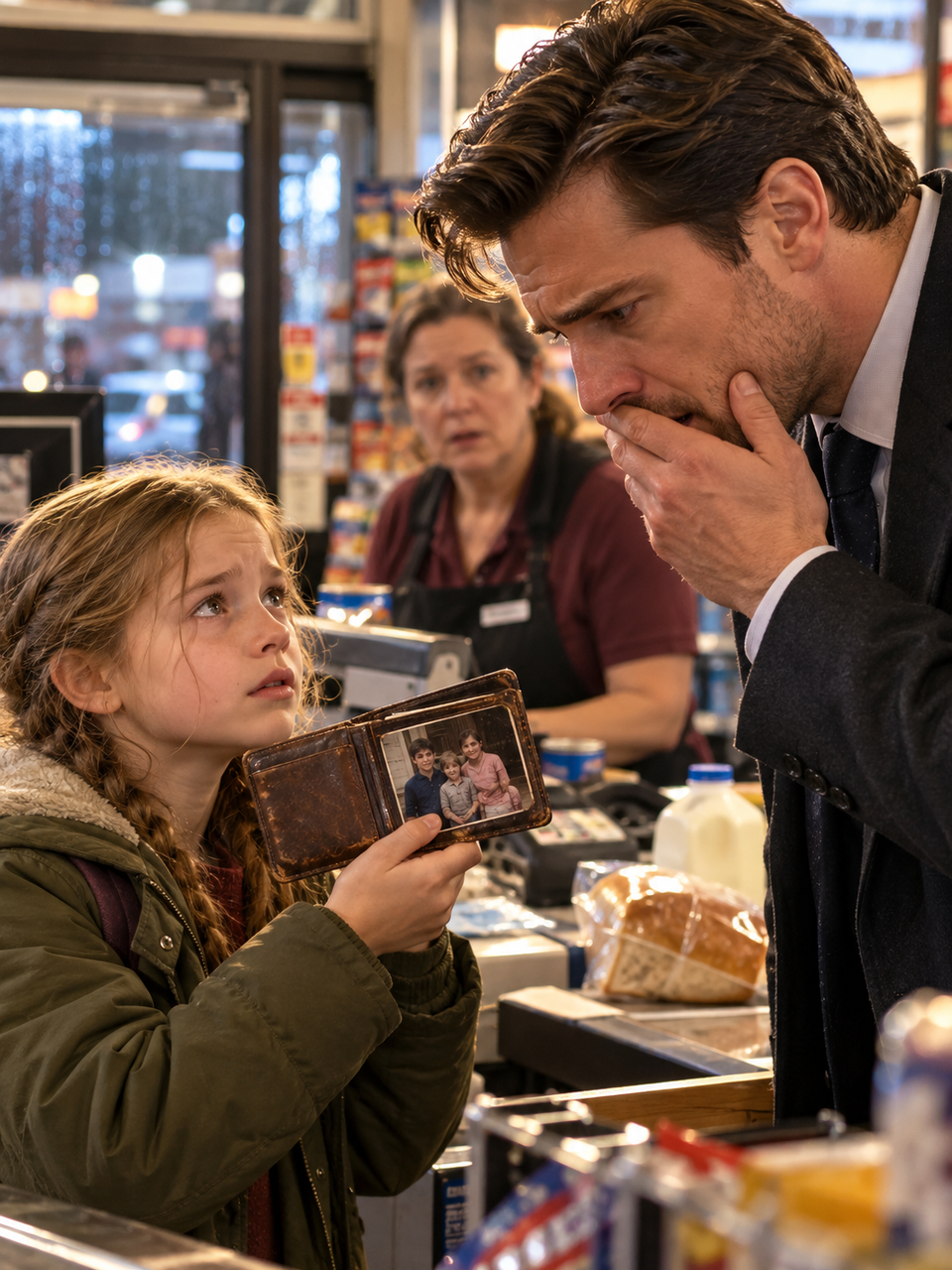
WHEN A LITTLE GIRL OPENED HER MOTHER’S OLD WALLET AT A CORNER STORE, A WEALTHY STRANGER RECOGNIZED THE PHOTOGRAPH—AND A FAMILY’S LONG-BURIED SEPARATION BEGAN TO UNRAVEL – Life Story
The cashier pushed three pennies back across the counter, and the little girl looked at them as though they were...

I thought my son was being generous when he bought me a river cruise. Finding out at the dock that he’d booked me a one-way ticket to a forced care facility made me realize he wanted my estate—and I was about to give him a war instead.
I thought my son was being generous when he bought me a river cruise. Finding out at the dock that...

“If I Had To Choose, I Would Choose My Ex,” My Wife Said During Couples Therapy. I Said: “Okay,” And…
“If I Had To Choose, I Would Choose My Ex,” My Wife Said During Couples Therapy. I Said, “Okay,” And...