HE FIXED A LITTLE GIRL’S BROKEN TRICYCLE IN A CHICAGO PARK—THEN HER MOTHER STEPPED FORWARD, AND THE SECRET HIS FATHER BURIED THREATENED EVERYTHING HE HAD BUILT – Life Story
The front wheel folded sideways, and the little girl nearly went over the handlebars.
The stranger who caught the tricycle ran one of Chicago’s largest technology companies—but he knew nothing about the child standing in front of him.
Then she pointed toward her mother, and he recognized the woman his father had told him never to see again.
“Don’t move it yet,” Daniel Whitmore said, dropping his leather briefcase onto the path.
The girl froze with both sneakers planted on the pavement.
Her pink tricycle leaned against his knee, its front wheel twisted at an angle that made riding impossible.
A few pigeons scattered around the fountain, offended by the interruption.
Beyond the bare branches of Grant Park, October sunlight flashed against the windows of the towers along Michigan Avenue.
“I wasn’t going too fast,” she informed him.
“Were you racing?”
“Only the pigeons.”
“Ah.
Competitive field.”
She considered that and nodded. “One of them cheats.”
Daniel laughed before he could stop himself.
He was supposed to be riding to another meeting.
Instead, he was kneeling on cold pavement, checking a child’s front fork for damage.
The retaining nut had loosened.
He found it caught behind the little plastic fender, worked it back into position, and tightened it with the small multitool he carried in his briefcase.
When he spun the wheel, it ran straight, though he made a mental note that the assembly should be checked properly before anyone rode very far.
“There,” he said. “You can push it, but tell your mom the wheel needs a proper check.”
The girl crouched beside him, solemnly watching the tire turn.
When she looked up, the light fell across her face.
One eye was blue-gray.
The other was dark brown.
Daniel’s hand went still.
His grandmother had eyes like that.
Plenty of unrelated people had different-colored eyes.
He knew that.
Still, the sight unnerved him.
“What’s your name?” he asked.
“Annie Monroe.” She said it with the authority of someone announcing herself at a reception desk. “I’m six.”
“That’s a good age.”
“Are you somebody’s dad?”
The question landed harder than it should have.
Daniel was forty, the founder and chief executive of Whitmore Technologies, and accustomed to questions about revenue, acquisitions, and his willingness to take risks.
No one had asked him that in years.
“No,” he said.
Then, because her gaze was so direct, he added, “Not that I know of.”
Annie frowned. “That seems like something you’d know.”
“It does, doesn’t it?”
She pointed across the path. “My mom’s over there.
She says when something breaks, you should find out why before you throw it away.”
Daniel followed the direction of her finger.
A woman in a dark green coat stood beside a park bench, one hand gripping the strap of a canvas tote.
The wind loosened a strand of brown hair at her temple.
She turned toward them, and seven years disappeared so abruptly Daniel forgot where he was.
Monica.
He had last seen Monica Monroe through the glass wall of a conference room, her employee badge in her hand and two security officers waiting by the elevator.
His father had told him she had stolen confidential files.
Monica had denied it.
Daniel had believed the wrong person and allowed the elevator doors to close.
Now she crossed the path toward him, looking not surprised but tired, as though she had always known an ordinary afternoon might end this way.
“Annie,” she said, gently drawing her daughter closer. “Did you thank him?”
“I did in my head.”
“Try out loud.”
“Thank you,” Annie said.
Daniel barely heard her.
He was looking at Monica.
“You never left Chicago,” he said.
“No.” Her fingers tightened around the tote strap. “I didn’t.”
He glanced at the child, then back at the woman he had never called to hear out. “Monica, is there something I should know?”
She checked that Annie was out of earshot, leaning over her rescued tricycle.
Then she looked straight at him.
“The last time I tried to tell you,” Monica said, “your father answered.”
THE WOMAN WHO NEVER LEFT
Daniel stared at her.
For seven years, he had kept his memories of Monica in a carefully managed corner of his mind, somewhere between regret and an uncomfortable sense of unfinished business.
He had told himself that she had made choices he could not understand, that he had made choices he could not reverse, and that their lives had continued in different directions.
Now she stood an arm’s length away, and there was a child between them whose existence threatened every comforting explanation he had constructed.
“What does that mean?” he asked.
Monica glanced toward Annie. “Not here.”
“Did you try to contact me?”
“I did.”
“When?”
Her expression changed.
Not much.
Just a faint tightening around her mouth.
“You’re asking the wrong question, Daniel.”
“Then tell me the right one.”
She looked down at the tricycle. “The right question is why a man who claimed he loved me believed I was a thief without giving me five minutes to defend myself.”
He felt the accusation settle.
“That wasn’t how it happened.”
“It’s exactly how it happened.”
Annie looked up from the handlebars. “Mom, can we still get hot chocolate?”
Monica’s face softened immediately.
“Yes, sweetheart.
Give me a minute.”
Daniel recognized that transformation.
Monica had always been able to move from difficult conversations into practical care without making the other person feel like an inconvenience.
At Whitmore Technologies, she had been the woman who noticed exhausted employees working through lunch and quietly made sure there was food left in the conference room.
He had mistaken that steadiness for an absence of ambition.
His father had called it a liability.
“Can we talk tomorrow?” Daniel asked.
Monica studied him.
“Why?”
“Because I think there are things I should have asked years ago.”
“There were.”
“I know.”
“No.
You know now because you ran into us.
That’s different.”
He could not argue.
She took a breath and adjusted the strap of her tote.
“Ten tomorrow morning.
The little coffee shop on Wabash, near Harrison.
Annie will be at school.”
“I’ll be there.”
Monica gave him a look that was almost disbelief.
“Don’t make a promise because it sounds good, Daniel.”
Then she took Annie’s hand and guided the tricycle toward the park entrance.
Annie turned around once.
“Bye, bike doctor!”
Daniel raised a hand.
He watched them disappear into the pedestrian traffic before picking up his briefcase.
His driver, Marcus, was waiting beside a black sedan.
“Everything all right, sir?”
Daniel opened the rear door, then stopped.
“Change of plans.
Back to the office.”
Marcus checked the time but asked no questions.
During the drive north, Daniel watched the people on the sidewalks.
A father carried a little boy on his shoulders.
A woman struggled to fold a stroller beside a bus stop.
Two schoolchildren ran toward a waiting grandmother.
Ordinary things.
He had passed them thousands of times without noticing.
At Whitmore Technologies, his executive assistant, Mara Chen, intercepted him outside his office.
“The acquisition team has been waiting for twenty minutes.”
“Reschedule.”
“Daniel, the Seattle people flew in.”
“Apologize for me.”
Mara lowered her tablet.
She was fifty-two, had worked with him since the company occupied rented rooms over a printing shop, and was one of the few people who spoke to him without treating his wealth as a medical condition.
“Is somebody sick?”
“No.”
“Then whatever it is, it’s serious.”
Daniel looked through the glass wall toward his office.
“I saw Monica Monroe today.”
Mara went quiet.
That was the first thing that frightened him.
She had not looked surprised.
She had looked as though she had heard a name she expected never to hear again.
“Do you remember what happened?” he asked.
“I remember what they told us happened.”
“And?”
Mara glanced toward the open executive floor.
“And I remember it never made much sense.”
Daniel felt the first sharp edge of doubt.
Seven years earlier, Monica had worked in operations compliance, helping Whitmore Technologies prepare for a major round of institutional financing.
She was meticulous, stubborn about small inconsistencies, and unimpressed by executive titles.
Their relationship had begun after a late-night systems migration, over terrible vending-machine coffee and an argument about whether a software engineer could be trusted to organize a filing cabinet.
It had lasted nearly a year.
Then, the week after a major company fundraiser, confidential financial material had supposedly gone missing.
His father, Thomas Whitmore, had shown him an internal report indicating that Monica’s access credentials had been used to download restricted files.
Thomas was board chairman and one of the company’s earliest investors.
He had demanded immediate action.
Daniel remembered Monica insisting there had been a mistake.
He also remembered turning away.
“What do you mean, it didn’t make sense?” he asked Mara.
“She wasn’t careless.
And the explanation changed twice.”
“Why didn’t you say something?”
“I did.
Your father’s office told me legal had it under control.”
Daniel felt heat rise behind his collar.
Mara held his gaze.
“You were there, Daniel.
You remember how things worked back then.”
Yes.
He did.
His father called.
Daniel answered on the second ring.
“I hear you canceled the Seattle meeting,” Thomas said.
“I had something personal come up.”
“At your level, personal things become corporate things.”
Daniel looked at his reflection in the window.
“I saw Monica.”
The silence was immediate.
Then Thomas said, “Where?”
“Grant Park.”
“What did she want?”
“Nothing.”
“People don’t reappear after seven years because they want nothing.”
“She didn’t approach me.
I approached her.”
A slow exhale came through the phone.
“Daniel, whatever story she’s telling you, remember how that situation ended.”
“I don’t think I ever understood how it began.”
“You were thirty-three.
You were building something.
She jeopardized it.”
“Did she?”
“You know she did.”
Daniel thought of Monica standing beside the security officers.
He had never seen the original investigation.
He had seen his father’s summary.
“I want the records,” Daniel said.
“Those are old personnel matters.”
“Then there should be no problem reviewing them.”
Thomas’s voice became sharper.
“Don’t reopen something that has already cost enough.”
Daniel closed his eyes.
“Cost whom?”
There was no answer.
After the call, he sat behind his desk while the lights along the Chicago River came on, one building at a time.
His company employed more than three thousand people.
It had weathered recessions, lawsuits, a failed product launch, and an acquisition that nearly destroyed its balance sheet.
He had always believed he understood the price of making difficult decisions.
But somewhere in a small apartment across the city, a six-year-old girl was getting ready for bed, and he did not even know if she was his daughter.
For the first time in years, Daniel did not know which frightened him more.
Finding out that she was.
Or finding out that someone had made sure he never knew.
THE STORY THEY TOLD
The next morning, Daniel arrived at the coffee shop at .
He ordered black coffee and chose a table near the rear window.
The place smelled of cinnamon, roasted beans, and warm pastry.
Students sat hunched over laptops while an elderly couple shared a newspaper near the counter.
No one looked at him twice.
At , Monica came in.
She wore dark jeans, a navy sweater, and the same green coat.
Her hair was tied back loosely, and she carried a brown leather folder beneath one arm.
Daniel stood.
“You don’t have to do that,” she said.
“I know.”
She sat opposite him.
For a moment, neither spoke.
“Annie’s at school?” he asked.
“Yes.”
“How is she?”
“She has a spelling test on Friday.
She thinks the word ‘because’ has too many letters.”
Despite himself, he smiled.
Monica did not.
“Daniel, I’m not here to entertain your curiosity.”
“I know.”
“Then what do you want?”
“The truth.”
She folded her hands around a paper cup.
“Which part?”
He looked at her carefully.
“Start with why you left.”
“I didn’t leave.
I was fired.”
“I was told you resigned after accepting a settlement.”
“I never accepted a settlement.”
Daniel stared at her.
“That’s not what the paperwork said.”
“Then somebody lied on the paperwork.”
He felt his stomach tighten.
Monica took a slow breath.
“Do you remember the fundraiser in June 2019?”
“Yes.”
“You spent half the evening talking to investors.
Your father spent the other half introducing you to women he thought were more appropriate.”
Daniel winced.
“I remember.”
“That night, I found an inconsistency in the vendor reconciliation file.
One of the financing projections had been circulated in an outdated version.
I flagged it for review.”
“That doesn’t explain why your credentials appeared in the report.”
“I accessed the file because I was assigned to check it.
I didn’t take anything.”
“Why didn’t you tell me?”
Her eyes hardened.
“I did.”
He remembered her voice rising through the closed conference-room door.
He remembered saying, “Let legal handle it.”
And he remembered the exhausted expression she wore when she realized he would not listen.
“I was told you copied confidential material.”
“And when I said I hadn’t?”
“I thought—”
“You thought your father couldn’t be wrong.”
Daniel looked down.
“Yes.”
Monica let the admission remain between them.
Outside, a delivery truck reversed along the curb, its warning signal faint through the glass.
“I lost my job,” she continued. “My apartment lease was ending.
Your father’s lawyer offered me a severance agreement with a confidentiality clause.
I wouldn’t sign it because the document described something I hadn’t done.”
“What happened then?”
“They canceled my company health insurance at the end of the month.
I took contract work.
A few weeks later, I found out I was pregnant.”
Daniel did not move.
Monica watched his face, not to see if he was pleased, but to see whether he would immediately begin searching for someone else to blame.
“I tried to tell you,” she said.
“How?”
“I called your office.
Twice.
The first time, I was transferred to legal.
The second time, your father answered.”
“What did he say?”
“He said that contacting you again would be interpreted as harassment.
He told me I had already caused enough damage.”
Daniel gripped the edge of the table.
“You should have called my private phone.”
“You’d changed the number after the financing round.
Do you remember?”
He did.
His father had recommended it.
“Then I wrote,” Monica said. “Twice.
One letter came back.
I never received a response to the other.”
Daniel stared at her.
“And you stopped?”
“Eventually.”
“Monica—”
“No.”
She said it quietly, but it stopped him.
“You don’t get to sit there and ask why I didn’t fight harder for the privilege of being rejected by you.”
Daniel looked away.
A barista called somebody’s name.
The ordinary sound felt intrusive.
“I was pregnant, Daniel.
I was frightened.
I didn’t have parents to call.
I had an aunt in Wisconsin who sent me a hundred dollars she couldn’t afford to spare.”
Monica’s voice remained controlled.
“I spent the first months trying to keep my health insurance sorted out, find steady work, and decide whether I could raise a child alone.
I didn’t have the money for a fight with your father’s attorneys.”
He said nothing.
“I also didn’t want Annie to grow up hearing that her existence had become a bargaining position.”
“But she deserved to know me.”
“Yes,” Monica replied. “She did.”
The answer was harder to hear than anger.
“And I deserved to know her,” Daniel said.
Monica’s expression changed.
“You deserved the truth.
You didn’t automatically deserve our trust.”
He nodded slowly.
“Fair.”
“Not fair,” she answered. “Just what happened.”
Daniel studied the worn seam of her folder.
“Is she mine?”
Monica held his gaze.
“Yes.”
“Are you certain?”
“I wouldn’t have brought this conversation into her life if I weren’t.”
He hesitated.
“I’d like a paternity test.”
She looked away toward the window.
For a moment, he thought she might stand and leave.
Instead, she asked, “What happens if it’s positive?”
“I want to take responsibility.”
“Financial responsibility?”
“That, too.”
“That’s not what I asked.”
Daniel set his coffee down.
“I don’t know what being her father would look like yet,” he admitted. “I haven’t earned the right to pretend I do.
But I want to find out.”
Monica studied him for a long time.
“You need to understand something,” she said. “Annie has routines.
Friends.
A teacher she loves.
She gets anxious when plans change at the last minute.
She sleeps with a stuffed rabbit named Captain.”
He listened.
“She has a life that doesn’t need saving.
If you come into it, you don’t get to rearrange everything because you have more money than we do.”
“I understand.”
“I don’t think you do.
But maybe you can learn.”
He nodded.
Monica opened her folder and took out a page with contact information for a clinic.
“I called this morning.
There are appointments available next week.
We can do a legally documented parentage test.
Annie will need to provide a cheek swab, too.”
“You’ve already arranged it?”
“I looked into it after yesterday.”
Daniel swallowed.
“You thought I might ask.”
“I thought you might ask a lot of things.”
She closed the folder.
“I won’t lie to her about why we’re going.
I’ll explain it in a way she can understand.
And until there’s an answer, you don’t make promises to her.”
“Agreed.”
He hesitated.
“Monica, why did you agree to meet me at all?”
She stood and pulled on her coat.
“Because Annie came home yesterday and told me a nice man fixed her bicycle.”
“Tricycle,” Daniel corrected absently.
Monica’s mouth twitched.
“She calls it her bicycle.”
He almost smiled.
“She said he was careful.
That he didn’t laugh when she explained what was wrong.”
Monica reached for her bag.
“Then she asked whether he might come to the park again.”
Daniel felt something painful move through his chest.
“I wasn’t planning to bring you back into our lives,” Monica said. “But once she met you, I couldn’t pretend the question wasn’t there.”
She paused at the door.
“And Daniel?”
“Yes?”
“If this turns out the way I think it will, please don’t confuse finding her with knowing her.”
He watched her leave.
That afternoon, Daniel asked Mara to locate the archived records of Monica’s employment separation.
He did not tell her to access anything improperly.
He asked her to identify the correct custodian and preserve whatever files remained.
Mara was quiet for a moment.
“You’re sure you want to do this?”
“Yes.”
“You may not like what you find.”
Daniel looked toward his office window.
“I haven’t liked what I’ve found so far.”
Three days later, the clinic technician handed Annie a small cotton swab.
“Open wide,” she said cheerfully.
Annie complied.
Daniel stood beside the examination chair, trying not to look more nervous than the child.
“Are they checking if we’re family?” Annie asked.
“Yes,” Monica said gently.
Annie considered that.
“Do families have to do tests?”
“Most don’t,” Monica replied. “But sometimes grown-ups have questions they need help answering.”
Annie looked at Daniel.
“Do you have questions?”
He crouched beside her.
“I do.”
“About me?”
“About how we might be connected.”
She nodded seriously.
“My teacher says questions are how scientists get smarter.”
Daniel managed a smile.
“Your teacher sounds right.”
The technician sealed the samples.
“Results should be ready in a few days.”
Outside, Annie asked for a blueberry muffin.
Monica said yes.
Daniel offered to buy it, then caught Monica’s expression.
“Would that be all right?”
Monica considered.
“A muffin is all right.”
It was the smallest permission he had ever asked for.
And perhaps the first one he had understood.
A NAME ON THE REPORT
Daniel learned the result on a Thursday at 10:17 in the morning.
He was reviewing the preliminary numbers for Whitmore Technologies’ Seattle expansion when his phone vibrated.
Monica.
He excused himself and stepped into a conference room.
“Hello?”
“The clinic sent the report.”
He gripped the phone.
“Okay.”
“Daniel, it’s conclusive.
The test supports that you’re Annie’s biological father.”
He leaned against the window.
Below him, traffic moved across the river bridges in neat, indifferent streams.
For several seconds, he could not speak.
“Daniel?”
“I’m here.”
“I thought you’d want to hear it from me.”
“Thank you.”
He swallowed.
“Does Annie know?”
“Not yet.
I wanted to talk to you first.”
“What do we tell her?”
“The truth.
Carefully.”
He closed his eyes.
“My daughter.”
Monica did not answer immediately.
“Yes,” she said at last. “Your daughter.”
He went back to his meeting, but he could not focus.
At noon, he canceled the rest of his schedule.
At one, he called an attorney who specialized in family matters.
Not one of Whitmore Technologies’ corporate lawyers.
He asked about establishing legal parentage and what voluntary involvement should look like, including the need to work through Monica respectfully.
The attorney asked whether there was a dispute.
“No,” Daniel said.
“Then start by listening to the child’s mother.”
It was the first piece of legal advice he had received in years that did not come accompanied by a strategic memorandum.
At five that evening, Daniel knocked on Monica’s apartment door.
The building was an older brick walk-up on Chicago’s South Side.
A radiator hissed in the hallway.
Someone on the second floor was cooking onions, and the smell drifted down the stairs.
Monica opened the door.
“Come in.”
The apartment was warm.
Children’s drawings covered part of the refrigerator.
Books leaned against one another on a low shelf.
A small table stood beneath the window, its surface crowded with crayons and folded construction paper.
Annie sat cross-legged on the rug.
“Bike doctor!”
“Hello, Annie.”
“Did you bring your tools?”
“Not today.”
“That’s okay.
Nothing’s broken.”
He nearly laughed.
Monica invited him to sit.
She sat beside Annie on the couch and took her hand.
“Sweetheart, remember how we talked about families being different?”
Annie nodded.
“And remember the test at the clinic?”
“Uh-huh.”
“We learned that Daniel is your biological father.”
Annie looked at him.
Then she looked at Monica.
“Like a real dad?”
“Yes,” Monica said. “A real dad.”
Annie frowned.
“Then where was he?”
The question was neither angry nor frightened.
It was practical.
Daniel felt the full weight of those six missing years.
“I didn’t know about you,” he answered.
“Why?”
“Because the grown-ups made mistakes before you were born.”
“Did Mom make a mistake?”
Monica’s hand tightened slightly.
Daniel looked at her, then back at Annie.
“I made one,” he said. “A big one.
I didn’t listen when I should have.”
Annie thought about this.
“Do you listen now?”
“I’m trying.”
She glanced toward the tricycle parked beside the door.
“You listened about the wheel.”
“Yes.”
“Okay.”
It was not forgiveness.
It was simply the information she had available.
And Daniel understood that he would have to earn the rest.
Monica suggested they eat dinner together.
There was chicken soup, toast, and sliced apples.
Annie explained that a boy named Ethan in her class kept putting glue on things that did not require glue.
Daniel listened as though she were describing a critical engineering problem.
“Have you told your teacher?” he asked.
“Yes.
She says Ethan is exploring materials.”
Monica laughed into her glass of water.
Daniel looked at her.
It was the first unguarded laugh he had heard from her in seven years.
He had forgotten how quickly it changed her face.
After dinner, Annie insisted on showing him a rocket she had drawn.
The rocket had enormous windows and an exhaust plume colored purple.
“That’s the moon,” she explained, pointing to a yellow circle.
“I thought the moon was gray.”
“Not mine.”
“Fair enough.”
She offered him a crayon.
“Draw a person inside.”
Daniel leaned over the paper.
His first attempt looked more like a crooked paper clip.
Annie examined it.
“Your person needs knees.”
He added knees.
“Now it looks scared.”
“It might be.”
“Why?”
“Going to the moon is a big deal.”
Annie nodded.
“Mom says brave doesn’t mean you aren’t scared.”
Daniel glanced toward the kitchen.
Monica was washing dishes, pretending not to listen.
“Your mom is right.”
Later, after Annie went to bed, the apartment grew quiet.
Monica sat opposite Daniel at the kitchen table.
“She likes you,” she said.
“I like her.”
“That’s the easy part.”
“I know.”
“Do you?”
He considered answering quickly.
Then he stopped.
“No,” he admitted. “Not yet.”
Monica looked surprised.
“That’s probably the first honest answer you’ve given me tonight.”
He accepted that.
“What would you like me to do?” he asked.
“Start small.
School pickup once a week, once the paperwork and school authorization are handled.
Maybe a trip to the library.
No giant presents.
No cameras.
No grand announcements.”
“Tuesday afternoons?”
“Can you make Tuesdays?”
Daniel thought about his schedule.
There was always a board meeting, a flight, a product launch, some emergency that seemed impossible to postpone.
“I can make them.”
“Then write it down.”
He opened his phone.
Monica watched.
“Daniel.”
He looked up.
“Don’t put her in your calendar like a dentist appointment.
Make room for her in your life.”
He set the phone down.
“I’m going to need you to tell me when I’m doing this badly.”
“I can do that.”
“I remember.”
For the first time, Monica smiled without looking away.
That smile unsettled him more than the hostility would have.
When Daniel returned to his condominium that night, Thomas was waiting for him.
His father stood beside the windows in a dark suit, his silver hair immaculate.
“I assume you’ve received the results.”
Daniel stopped.
“How do you know about the test?”
“You’ve canceled six meetings in three days.
You’ve been asking about old personnel records.
I wasn’t born yesterday.”
Daniel set his keys on the table.
“Annie is my daughter.”
Thomas looked at him steadily.
“I see.”
“You don’t sound surprised.”
“I suspected.”
“Since when?”
“Since you told me you saw the child.”
Daniel moved closer.
“Then you knew Monica had been pregnant?”
Thomas’s expression barely changed.
“We dealt with many complications that year.”
“That isn’t an answer.”
“Daniel, don’t make this more difficult than it needs to be.”
Daniel stared at him.
“What exactly did you deal with?”
Thomas walked to the bar.
“You were preparing to close the most important financing round of your life.
Monica’s employment situation threatened the company’s credibility.
The relationship itself was an embarrassment waiting to happen.”
“You knew we were together.”
“Of course I knew.”
“And you didn’t approve.”
“I didn’t think it was wise.”
“So you got rid of her.”
Thomas set down his glass without drinking.
“She was terminated after an internal review.”
“An internal review I never saw.”
“You saw the conclusions.”
“Yes,” Daniel said. “I did.”
The admission seemed to surprise them both.
Thomas adjusted his cuff.
“If the child is yours, there are sensible arrangements we can make.
Education.
Housing.
Financial security.”
“She’s not a settlement.”
“Nobody said she was.”
“You just listed the terms.”
Thomas’s patience thinned.
“You have a responsibility to shareholders.”
“And to my daughter.”
“You’ve known her for a week.”
Daniel looked at him.
“That’s exactly the problem.”
Thomas stepped toward the door.
“Don’t rush into a public acknowledgment.
If this becomes a scandal, the company will pay for it.”
Daniel remained still.
“Why would acknowledging my daughter be a scandal?”
His father paused.
For the first time that evening, he had no immediate answer.
When the door closed, Daniel looked around his immaculate apartment.
Every surface was expensive.
Every object was exactly where it belonged.
There was nothing in the room that a six-year-old child might have left behind.
He walked into the unused guest bedroom and stood there for several minutes.
Then he returned to the kitchen, picked up his phone, and sent Monica a message.
“Thank you for dinner.
I can be there Tuesday at three, if that still works.”
Her answer arrived eleven minutes later.
“Three is fine.
She likes the library on 31st Street.
Don’t be late.”
Daniel read it twice.
For once, the most important meeting of his week had no agenda.
THE LETTER HE NEVER SAW
The first Tuesday went badly.
Daniel had arranged to leave the office at two.
At , a supplier threatened to suspend a crucial delivery unless Whitmore Technologies revised an outstanding contract.
By , Daniel was still on a conference call.
At , Mara appeared in his doorway.
“Your car is downstairs.”
He held up one finger.
The supplier’s attorney continued speaking.
At , Daniel ended the call.
He arrived at the library at .
Monica stood beneath the awning, Annie beside her holding a purple backpack.
Daniel hurried toward them.
“I’m sorry.”
Annie looked down at her shoes.
“We already looked at the books.”
“I know.”
“The reading lady finished.”
He crouched.
“I messed up.”
“Were you busy?”
“Yes.”
She considered that.
“Mom gets busy, too.”
Daniel nodded.
“But she came,” Annie added.
He did not try to explain the supplier, the contract, or the money at stake.
“I should have called sooner.
I’m sorry.”
Annie looked at him a moment longer.
“Can we still get a book?”
“Yes.”
Monica said nothing until Annie had gone inside with the librarian.
Then she folded her arms.
“You had one job today.”
“I know.”
“She’s been asking me since breakfast whether you were coming.”
“I didn’t realize the call would take so long.”
“Then you’re going to have to start realizing different things.”
Daniel looked at her.
“You think I don’t care?”
“I think you’ve built a life where everything waits when you say it should.”
He could not deny it.
Monica’s voice softened.
“She can’t work that way.”
They spent an hour in the children’s section.
Annie chose two books about space and one about a rabbit who refused to go to bed.
Daniel sat on the carpet while she read aloud, correcting herself impatiently when she stumbled over a word.
He enjoyed every minute.
That made his earlier failure feel worse.
Outside, Monica touched his sleeve.
“You did better after you got here.”
“That’s a low bar.”
“It is.
But it’s still true.”
He glanced at Annie, who was carefully placing her library books inside her backpack.
“I won’t be late next week.”
Monica looked at him.
“Make sure you know what that promise costs before you make it.”
Two days later, Mara called Daniel into a private conference room.
She had a thin archive box on the table.
“I spoke with records management,” she said. “The original separation file was preserved because the company received a written employment complaint shortly after Monica was terminated.”
Daniel sat.
“An employment complaint?”
“It never became a lawsuit.
The company retained the file under its legal-hold procedures.
Outside counsel has authorized you to review a limited summary, but there are some things you should probably see through independent counsel.”
He looked at the box.
“Why wasn’t I told about a complaint?”
Mara hesitated.
“You may have been.”
She placed one document in front of him.
It was an old routing form.
His name appeared beside a digital executive approval.
Daniel stared at the date.
June 21, 2019.
“I approved her separation?”
“The system shows that you did.”
He rubbed his forehead.
He remembered that week.
The financing agreement.
Twelve-hour board meetings.
His father telling him the Monica situation had been resolved.
He remembered approving a stack of executive requests through his phone while walking between conference rooms.
He had not read every page.
He had assumed his father and legal had handled the facts.
“I didn’t understand what I was approving.”
Mara remained quiet.
Daniel looked up.
“That isn’t an excuse.”
“No,” she said. “It isn’t.”
She slid another page across the table.
The file summary showed that the internal investigation had never established that Monica sent confidential information to an outside party.
The access logs were legitimate.
The alleged theft was not substantiated.
Daniel read the sentence three times.
“Then why was she fired?”
“The official reason was loss of executive confidence.”
He looked at Mara.
“Whose confidence?”
She did not answer.
The next page concerned the proposed severance payment.
Monica had never signed the agreement.
The money had never been disbursed.
Daniel leaned back in his chair.
“My father told me she accepted a generous package.”
Mara nodded once.
“I remember.”
“There was no package.”
“No.”
A feeling of cold certainty began to replace his confusion.
He asked Mara to arrange an independent review, with his own involvement disclosed as a conflict.
He wanted the board’s governance committee, not his father’s office, to supervise the process.
Mara stood.
“Daniel, before you do this, understand what you’re opening.”
“I think I’ve already opened it.”
“The board may ask why you signed an approval without checking the findings.”
“They should.”
“And your father won’t take this quietly.”
Daniel looked at the old routing form.
“For seven years, Monica paid for a decision I didn’t bother to understand.”
He closed the file.
“It’s time somebody else paid attention.”
That evening, Daniel called Monica.
“Can I come by?”
“Annie’s doing homework.”
“It’s about what happened to you.”
A pause.
“Come after eight.”
When he arrived, the apartment was quiet except for the radiator ticking beneath the window.
Monica set two mugs of tea on the kitchen table.
Daniel told her what the archive summary showed.
He did not soften the part about his own approval.
Monica listened without interrupting.
When he finished, she sat very still.
“They knew I hadn’t stolen anything?”
“The records don’t support the accusation.”
“And you signed the separation?”
“Yes.”
She looked down at her hands.
For a moment, he feared she would tell him to leave.
Instead, she asked, “Do you know what happened the day I lost that job?”
Daniel shook his head.
“I went home and emptied my checking account to pay the next month’s rent.
I spent three hours figuring out which medical appointments I could postpone.”
Her voice remained quiet.
“I kept the termination letter because I thought someday I’d be able to prove I hadn’t done what they accused me of.”
“You were right.”
“That didn’t help then.”
“I know.”
“No.
You don’t.”
He accepted the correction.
Monica stood, walked into her bedroom, and returned with a worn envelope.
“I kept this, too.”
She placed it on the table.
The envelope was addressed to Daniel’s office, mailed in August 2019.
A postal marking showed that it had been received at the company.
A copy of the delivery confirmation was tucked behind it.
Daniel examined the name of the person who had signed for it.
Eleanor Price.
His father’s longtime executive assistant.
“I was told it never reached you,” Monica said.
“What’s in it?”
She watched him carefully.
“A letter telling you I was pregnant.”
Daniel looked up.
“You said one came back.”
“The first one did.
The second was delivered.
I never received an answer.”
He stared at the confirmation.
The assistant’s signature was familiar.
Eleanor had managed his father’s office for nearly twenty years before retiring.
Daniel felt his pulse quicken.
“May I show this to the independent investigator?”
Monica closed her hand over the envelope.
“Not yet.”
He stopped.
“Why?”
“Because for seven years, everyone has decided what should happen to my life without asking me.”
He sat back.
She continued.
“I want to know what this means for Annie before I turn anything over.
I want to know whether the people who hurt me will try to hurt her.”
“That’s fair.”
“And I want my own lawyer.”
“You should have one.”
“I don’t want you choosing one.”
“I wasn’t going to.”
Monica looked at him for a long moment.
Then she nodded.
A small sound came from the hallway.
Annie appeared in her pajamas, clutching a stuffed rabbit.
“Mom?”
Monica immediately turned.
“What is it, sweetheart?”
“Captain fell out of bed.”
Daniel crouched.
“Can I help?”
Annie handed him the rabbit.
He examined its floppy ear.
“Looks like Captain had a difficult landing.”
“He’s not good at gravity.”
“I know the feeling.”
Annie smiled sleepily.
Daniel walked her back to the bedroom and tucked the rabbit beside her pillow.
As he turned to leave, she caught his sleeve.
“Daniel?”
“Yes?”
“Mom says you’re my dad.”
“Yes.”
“Can I call you that?”
He felt his throat tighten.
“Only if you want to.”
She thought about it.
“Maybe tomorrow.”
He nodded.
“Tomorrow’s fine.”
When he returned to the kitchen, Monica was still sitting beside the envelope.
For the first time that evening, she looked less angry than exhausted.
Daniel did not touch her.
He simply pulled out the chair opposite her.
“I’m going to get the rest of the truth,” he said.
Monica raised her eyes.
“Then remember that the truth belongs to more people than you.”
He nodded.
He would remember.
THE COST OF BEING SEEN
The first article appeared the following Monday.
It was short, speculative, and largely wrong.
A business reporter had obtained information suggesting that Daniel Whitmore might have a previously undisclosed child.
The article did not name Annie, but it mentioned a former employee and raised questions about the company’s handling of an employment dispute.
By lunch, two television producers had called Whitmore Technologies.
By three, a reporter had contacted Monica’s workplace.
Monica now managed operations for a neighborhood health clinic.
She had built her reputation there carefully, starting as a temporary scheduling coordinator and earning a supervisory position through years of patient, dependable work.
Her supervisor closed the office door and showed her the message.
“Do you want us to say anything?”
“No.”
“Are you all right?”
Monica looked at the computer screen, where tomorrow’s patient schedule was still open.
“I don’t know yet.”
When she picked Annie up from school, a woman with a camera stood across the street.
Monica walked past without stopping.
At home, she called Daniel.
“Someone came to her school.”
Daniel stood so abruptly his chair rolled backward.
“Did they approach Annie?”
“No.
The principal called me.
But there was a camera outside.”
“I’m sorry.”
“I told you this could happen.”
“I know.”
“I’m not interested in your father trying to manage this with another secret arrangement.”
“He won’t.”
“You can’t promise that.”
Daniel looked toward his office door.
“No,” he said. “I can’t.”
He contacted Whitmore Technologies’ general counsel and requested that no statement identify Annie, her school, or Monica’s workplace.
He also asked an outside privacy attorney to help Monica understand her options for addressing unwanted media contact.
He did not order security guards to surround the school.
He did not send a fleet of vehicles to Monica’s apartment.
He had begun to understand that protection without consent could become another form of control.
That evening, Monica told Annie that some adults had learned about Daniel and might ask questions.
“Because he’s famous?” Annie asked.
“Because people know his name,” Monica said.
“Is that bad?”
“Not by itself.”
Annie looked at Daniel.
“Did you do something wrong?”
He sat on the rug across from her.
“A long time ago, I made a mistake.”
“Did you break something?”
“Something important.”
“Can you fix it?”
Daniel hesitated.
“Some of it.”
“Then you should.”
It was such a simple answer that he could not immediately respond.
Over the following week, the consequences became less simple.
A boy at school told Annie that her father had been hiding from her.
Another said that people on television were talking about her because her family had done something bad.
She came home quiet.
Monica noticed before Annie took off her coat.
“What happened?”
“Nothing.”
“Annie.”
The child sat on the floor and pulled off one boot.
“Ethan says I’m famous because nobody wanted me.”
Monica went still.
Daniel, who had arrived for dinner, felt a sharp impulse to call the school immediately, to demand names and explanations and some guarantee that it would never happen again.
Then he saw Monica’s face.
She was watching Annie.
Not him.
Monica sat beside her daughter.
“Sweetheart, do you think that’s true?”
Annie shrugged.
“I don’t know.”
Daniel knelt on the other side.
“It’s not true.”
Annie looked at him.
“Then why didn’t you come before?”
The question was no longer casual.
It was frightened.
Daniel felt the difference.
“Because I didn’t know,” he said. “And because I made mistakes before you were born that kept me from finding out sooner.”
“Did you want me?”
He swallowed.
“I didn’t know there was a you to want.”
Annie stared at him.
Then her face crumpled.
“I wish you knew.”
Daniel moved closer but did not reach for her until she leaned toward him.
“So do I,” he whispered.
Monica sat beside them, one hand resting on Annie’s back.
There was nothing he could buy that would shorten that moment.
Nothing he could announce that would make it disappear.
The next day, Daniel met with Annie’s principal and her teacher, Ms.
Alvarez, at Monica’s request.
The principal had arranged for the school’s staff to direct media inquiries to the district office.
Ms.
Alvarez had spoken to the class about privacy and the many ways families are formed, without making Annie the subject of a lesson.
Daniel thanked them.
He also listened.
The teacher explained that Annie had become reluctant to raise her hand during reading.
“She used to volunteer for everything,” Ms.
Alvarez said.
Monica looked down at her lap.
Daniel felt a fresh stab of guilt.
He had been thinking about company headlines.
His daughter had been thinking about whether her classmates believed she was unwanted.
That afternoon, Whitmore Technologies’ board convened a special governance session.
Thomas sat at the head of the table.
“Recent events have created questions about executive judgment,” he announced.
Daniel watched the other directors.
Some avoided his eyes.
Others looked openly uncomfortable.
Thomas continued.
“The potential reopening of a seven-year-old employment matter, combined with the CEO’s personal involvement, presents reputational and governance concerns.”
An independent director named Evelyn Park leaned forward.
“Are there performance concerns?”
“Not currently,” Thomas said.
“Financial reporting concerns?”
“No.”
“Then what precisely are we reviewing?”
“Risk,” Thomas answered.
Daniel spoke.
“I agree there’s a risk.
That’s why I asked for an independent review of the employment matter.”
Thomas turned toward him.
“You initiated an investigation that may expose the company to unnecessary liability.”
“If we treated an employee improperly, the liability already exists.”
A director near the end of the table adjusted his glasses.
“Daniel, nobody disputes that you have personal responsibilities.
The question is whether your judgment is being affected.”
Daniel folded his hands.
“My judgment was affected seven years ago when I approved a termination without examining the findings.
I’m not going to make the same mistake again.”
The room fell quiet.
Evelyn looked at him carefully.
“Are you acknowledging responsibility for that approval?”
“Yes.”
Thomas’s jaw tightened.
“And are you willing to accept the consequences?”
Daniel met his father’s gaze.
“Yes.”
The answer changed the atmosphere.
Thomas had expected resistance.
He had expected Daniel to defend his career.
Instead, Daniel was admitting something the board might reasonably hold against him.
The directors agreed to establish an independent committee to review the historical employment matter.
Thomas would not supervise the review because of his involvement.
Daniel would also be excluded from directing the investigation.
A separate governance review would examine Daniel’s continued suitability as CEO.
The arrangement was not victory.
It was a risk Daniel had chosen.
Afterward, Thomas followed him into the hallway.
“You’ve given them grounds to question you.”
“I gave them the truth.”
“You could lose your position.”
“I know.”
Thomas lowered his voice.
“Everything I did was to protect what you built.”
Daniel looked at him.
“Then why does every person you protected it from have my name?”
Thomas’s expression hardened.
“You’re becoming sentimental.”
“No,” Daniel said. “I’m becoming accountable.”
For the first time, his father looked genuinely uncertain.
That night, Daniel returned to Monica’s apartment.
He found her at the kitchen sink washing a pot.
Annie was asleep.
“How was the meeting?” Monica asked.
“They’re investigating.”
“Your father?”
“The company.
And me.”
She turned off the water.
“Good.”
Daniel looked at her.
“You don’t sound worried.”
“I am worried.
I just don’t think avoiding consequences is the same as avoiding harm.”
He nodded.
Monica dried her hands slowly.
“I’m going to speak to the investigator,” she said.
He looked up.
“I found a lawyer.
She reviewed the records I kept, including the letters.
She explained what an investigation could accomplish and what it couldn’t.”
“Are you comfortable doing it?”
“No.”
She set the towel down.
“But Annie is going to grow up someday.
She’s going to ask why I let other people decide what my work was worth and whether I deserved to be heard.”
Daniel said nothing.
“I want to be able to tell her I spoke for myself.”
He looked at her.
“You always should have had that chance.”
“Yes,” Monica said.
Then she walked to the cupboard and took down another mug.
“Tea?”
He smiled faintly.
“Please.”
They sat at the kitchen table long after the tea had cooled.
For the first time, neither was trying to persuade the other to forget the past.
They were beginning, awkwardly, to learn how to live with it.
THE THINGS A CHILD REMEMBERS
November arrived with hard rain and gray mornings.
Daniel kept his Tuesday appointments.
He learned which entrance of Annie’s school became crowded after dismissal.
He learned she disliked the crust on grilled-cheese sandwiches but insisted sandwiches without crust were for babies.
He learned that she wanted someone to read the same space book three nights in a row because she liked correcting the author’s drawing of Saturn.
He also learned that children remember every promise.
One Tuesday, Annie climbed into his car and immediately asked, “Did you bring the library books?”
He had forgotten.
Her expression fell.
Daniel closed his eyes briefly.
“No.”
“You said.”
“I know.”
Monica, standing by the passenger door, did not rescue him.
Daniel looked at Annie.
“We can go home and get them.
We’ll be late for the library activity, but we can still return them.”
Annie thought about it.
“Will you miss work?”
“I already left work.”
“Okay.”
She buckled her seat belt.
“Next time write it down.”
He did.
That evening, after Annie was asleep, Daniel brought the tricycle into Monica’s kitchen.
The front wheel had begun wobbling again.
He had bought the proper replacement hardware from a bicycle shop, but he had asked Monica before bringing it over.
Now he knelt on an old towel, removing the front fork while Monica sat on a stool peeling an orange.
“You always carried tools in your briefcase?” she asked.
“Since college.”
“Why?”
“I couldn’t afford to replace things.”
She looked at him.
“You had a wealthy father.”
“He made it very clear that his money wasn’t mine.”
“Your father also made it very clear that my problems weren’t his.”
Daniel tightened the new hardware.
“Yes.”
Monica handed him an orange segment.
He accepted it with grease on his knuckles, then looked at his hands.
“Probably shouldn’t eat that.”
She laughed.
“Probably not.”
For a few minutes, they worked in companionable silence.
Then Monica said, “You know we can’t just go back to what we were.”
Daniel kept his eyes on the wheel.
“I know.”
“Sometimes I look at you and remember the man I trusted.”
He stopped turning the wrench.
“And sometimes?”
“Sometimes I remember the man who let me walk out of that building alone.”
He set the tool down.
“I wish I could change that.”
“So do I.”
He looked at her.
“I don’t expect you to forgive me because I’m here now.”
“Good.”
Monica picked up the orange peel.
“But I do notice that you’re here.”
It was not an invitation.
It was not a promise.
Still, Daniel carried those words home with him.
Three days later, the independent investigator requested an interview with Daniel.
The attorney, Serena Bell, had been retained by the special committee.
She was direct, careful, and plainly uninterested in helping him craft an appealing public narrative.
“You approved Ms.
Monroe’s termination,” she said.
“Yes.”
“Did you review the underlying evidence?”
“No.”
“Why not?”
“I relied on the recommendation of the board chairman and legal team.”
“Your father.”
“Yes.”
“And you had a personal relationship with Ms.
Monroe?”
“Yes.”
“Was that relationship disclosed under company policy?”
Daniel looked at his hands.
“No.”
Serena made a note.
“Why?”
“I was concerned it would affect her career.
And mine.”
“Did concealing the relationship affect her ability to challenge the accusations?”
He hesitated.
“I think it made everything worse.”
Serena studied him.
“Mr.
Whitmore, I need facts, not character development.”
Daniel almost smiled.
“Understood.”
For two hours, he answered questions.
He admitted what he knew, what he had assumed, and what he had never bothered to verify.
When Serena showed him archived correspondence from his father’s office, he felt something tighten in his chest.
There was a record of Monica’s second letter.
It had been delivered.
It had been forwarded internally to Thomas Whitmore’s attention.
An administrative note described it as a personal matter requiring no response.
The date was August 14, 2019.
Daniel stared at the page.
“My father knew she was pregnant.”
Serena watched him.
“The material indicates that his office received that information.”
“Did he read it?”
“That is among the questions we’re investigating.”
Daniel thought of Thomas asking, in the first phone call, how old Annie was.
He had not sounded surprised.
He had sounded as though he was calculating how much of the past had resurfaced.
“Was anyone else aware?” Daniel asked.
Serena closed the file.
“I can’t share witness statements outside the committee’s process.”
Daniel nodded.
He respected that boundary, although it cost him.
When he left the interview, he went directly to his father’s North Shore house.
Thomas was in his study, reading a financial report.
He looked up.
“Daniel.”
“Did you receive Monica’s letter?”
Thomas set down the report.
“I assume you’ve been speaking with the investigator.”
“Yes.”
“Then you know this is a sensitive matter.”
“Did you know she was pregnant?”
Thomas remained silent.
Daniel stepped forward.
“Dad.”
His father removed his glasses.
“Yes.”
The word was almost inaudible.
Daniel felt the room change.
The walls, the bookshelves, the framed certificates—all of it seemed suddenly distant.
“You knew.”
“I knew she claimed to be pregnant.”
“And you never told me.”
“You were preparing for the financing vote.
The company was vulnerable.”
Daniel stared at him.
“She was carrying my child.”
“We didn’t know that.”
“You could have told me.”
Thomas’s expression tightened.
“And what would you have done? Abandoned everything? Married a woman who had just been dismissed under suspicion? Handed control of your future to a situation you barely understood?”
“I would have asked questions.”
“You weren’t asking them then.”
The accuracy of that accusation hurt.
Daniel turned away.
Thomas continued.
“I thought she would find another job.
I thought the situation would pass.
When the letter came, I believed she was trying to force her way back into your life.”
“You could have been wrong.”
“I was.”
Daniel turned back.
His father’s face was pale.
For the first time, Thomas looked old.
“Did you ever try to correct the employment record?”
Thomas looked away.
“No.”
“Why?”
“Because by the time I realized how little evidence there was, the financing had closed.
Reopening the matter would have created questions about leadership.”
Daniel let out a slow breath.
“So you protected yourself.”
“I protected the company.”
“You keep saying that as if they’re the same thing.”
Thomas stood.
“You don’t understand the pressure we were under.”
“I understand that Monica spent seven years living with an accusation you couldn’t prove.”
Thomas’s jaw moved.
“I made a judgment call.”
“You made it with other people’s lives.”
A long silence followed.
Finally, Thomas said, “The board may remove you.
You realize that.”
“Yes.”
“And you still intend to pursue this?”
Daniel looked at the window.
Beyond the lawn, Lake Michigan stretched gray under the November sky.
“I spent six years being a father without knowing it,” he said. “I’m not going to spend the next six pretending that doesn’t matter.”
He turned toward the door.
Thomas called after him.
“Daniel.”
He stopped.
“I loved you the only way I knew how.”
Daniel closed his eyes.
“I know.”
Then he walked out.
The conversation left him shaken in a way the board investigation had not.
His father had not simply concealed a letter.
He had known that a child might exist and decided Daniel’s life would be better without knowing.
But Daniel could not place every consequence on Thomas.
He had trusted his father’s judgment because it was convenient.
He had refused to listen because listening might have required him to choose.
That evening, he sat alone in his condominium while the city lights reflected against the windows.
For years, he had called his choices discipline.
Now he was beginning to recognize how often discipline had meant avoiding discomfort.
His phone buzzed.
A message from Monica.
“Annie’s family presentation is Friday at ten.
She wants you there.”
Daniel opened his calendar.
The board’s special leadership review had been scheduled for four that afternoon.
He answered immediately.
“I’ll be there.”
This time, he knew exactly what the promise might cost.
THE EMPTY CHAIR
The worst day began with a telephone call.
On Thursday evening, the board’s special committee informed Daniel that the preliminary investigation had substantiated significant concerns about Monica’s termination process and the handling of her correspondence.
It had not resolved every question.
The committee would recommend a correction to her employment record and further review of executive conduct.
Thomas’s involvement was substantial.
So was Daniel’s failure to supervise the decision he had approved.
The board would decide whether Daniel should remain CEO.
Daniel listened without interrupting.
Then he thanked the committee chair and ended the call.
Ten minutes later, Thomas called.
“You know what they’re going to do.”
“I know what they’re going to consider.”
“They may not distinguish between my actions and yours.”
“They shouldn’t ignore mine.”
Thomas’s voice sharpened.
“You are sacrificing your company to prove a point.”
Daniel looked across his silent apartment.
“No.
I’m accepting a review of how I ran it.”
“If you lose the position, you lose the ability to protect them.”
“Monica and Annie don’t need my title to be protected.”
“You’re being naive.”
“Maybe.”
Thomas fell silent.
Daniel continued.
“I’ve spent my whole career trying not to disappoint you.
I thought if I built something big enough, you would finally believe I could make decisions on my own.”
“And now?”
“Now I’m making one.”
He ended the call.
The next morning, Daniel arrived at Annie’s school ten minutes early.
Parents crowded the hallway outside the first-grade classrooms, carrying coffee cups and folding coats over their arms.
Paper leaves decorated the walls.
Someone had spilled glitter near a radiator.
Annie stood beside a large piece of poster board.
When she saw him, her face brightened.
“You came!”
“I said I would.”
“I know, but Mom said you had a big meeting.”
“Later.”
Annie held up her poster.
It showed three figures standing beside a pink tricycle.
The first had brown hair and a green coat.
The second was small, with mismatched eyes and an enormous smile.
The third was tall and wore a gray suit.
Daniel swallowed.
“Is that me?”
“Obviously.”
“Obviously,” he repeated.
Monica stood near the back of the classroom.
She looked tired.
He approached her.
“How are you?”
“Nervous.”
“About the presentation?”
“About everything.”
He nodded.
“Me, too.”
She studied him.
“You don’t have to pretend you’re fine.”
“I know.”
“Good.”
The teacher called the children to the front.
One by one, they presented their families.
Some had two parents.
Some had one.
One boy lived with his grandparents.
A little girl described the family she shared with her foster mother and their extremely large dog.
Then Annie stepped forward.
She held the poster tightly.
“This is my family,” she began.
She pointed to Monica.
“This is my mom.
She makes soup when I’m sick and she knows how to find library books even when they’re in the wrong place.”
Several parents smiled.
Then Annie pointed to Daniel.
“This is my dad.”
Daniel felt Monica’s hand brush his sleeve.
“He fixes stuff,” Annie continued. “He works in a really tall building.
He didn’t know about me before, but he knows now.”
The room was quiet.
Annie looked toward him.
“And he comes back.”
Daniel could not move.
“He was late one time,” she added seriously. “But he said sorry.”
A few parents laughed softly.
“He’s getting better.”
Daniel laughed, too, although his eyes burned.
Annie pointed to the tricycle.
“This is my bike.
It’s old, but it still works because we fixed it.”
She finished with a small bow.
The classroom applauded.
When she returned to her seat, she looked directly at Daniel.
“Was it good?”
He crouched beside her.
“It was wonderful.”
“You didn’t cry?”
“Almost.”
She considered that.
“That’s okay.
Mom cries at commercials sometimes.”
Monica covered her face.
Daniel laughed.
For a moment, the past seven weeks loosened their grip.
After the presentations, Annie ran to the classroom snack table.
Daniel stood beside Monica.
“I spoke to my father yesterday,” he said.
She looked at him.
“About the letter?”
“Yes.”
“And?”
“He admitted receiving it.”
Monica looked down.
For several seconds, she did not speak.
“I used to imagine what I would say if he ever admitted it,” she said finally.
“What would you say?”
“I don’t know anymore.”
Daniel waited.
She looked toward Annie.
“I spent so many years making sure she didn’t feel the absence.
I don’t want to spend the next six teaching her to be angry about it.”
Daniel nodded.
“You don’t have to forgive him.”
“I know.”
“Or me.”
Monica looked at him.
“I’m not there yet.”
“I know.”
The words were quiet, but they carried a kind of understanding neither had possessed seven years earlier.
At that afternoon, Daniel entered the Whitmore Technologies boardroom.
Every director was present.
Thomas sat at the head of the table, but the independent committee chair, Evelyn Park, presided over the session concerning the past employment matter.
Serena Bell summarized the findings.
The available records did not substantiate the original allegation that Monica had stolen confidential information.
The termination process had relied on unverified assumptions and had failed to address her response adequately.
Correspondence concerning her pregnancy had reached the chairman’s office but had not been passed to Daniel.
The committee found serious failures in oversight and executive judgment.
Daniel listened.
When Evelyn asked whether he wished to respond, he stood.
“I approved the termination,” he said.
The room became still.
“I did it without reading the underlying evidence.
I relied on summaries because that was easier than confronting a situation I didn’t want to face.”
Thomas lowered his eyes.
“Monica Monroe lost her job and her professional reputation.
I continued running the company as though none of it had happened.”
Daniel paused.
“I can’t undo that decision.
I can cooperate with the review, support the correction of her employment record, and accept whatever judgment this board makes about my leadership.”
One director leaned forward.
“Are you asking the company to assume responsibility for your personal relationship?”
“No,” Daniel replied. “I’m asking the company to examine its employment procedures without letting my personal relationship excuse what happened.”
Another director asked whether he intended to remain CEO.
“Yes.”
“Why?”
“Because I believe I can still lead this company.
But I don’t believe I should be allowed to ignore a mistake simply because acknowledging it puts my position at risk.”
Silence followed.
Evelyn turned toward Thomas.
“Mr.
Whitmore, do you wish to respond to the committee’s findings?”
Thomas sat very straight.
For several seconds, he looked at Daniel.
Then he spoke.
“I believed I was protecting the company from a situation that could have harmed its future.”
His voice was controlled, but it had lost its usual certainty.
“I made decisions I believed were necessary.
I now recognize that I withheld information from my son and participated in a process that treated Ms.
Monroe unfairly.”
Daniel watched him.
Thomas continued.
“I will not pretend those decisions were harmless.”
He looked down at the papers in front of him.
“I am prepared to step aside as board chairman.”
The room remained quiet.
No one applauded.
No one congratulated him.
There were only consequences.
The independent directors accepted Thomas’s resignation from the chairmanship, effective under the board’s procedures, and agreed to continue the remaining review with outside counsel.
Then they considered Daniel’s position.
The discussion lasted more than an hour.
Several directors expressed concern about his original approval.
Others pointed to his cooperation, the company’s financial performance, and his willingness to submit the matter to independent scrutiny.
Finally, the board voted.
Six directors supported retaining Daniel as CEO.
Two opposed.
He would remain in his position, subject to the governance measures the board had approved.
Evelyn read the decision.
Daniel sat still.
He had spent the day preparing himself to leave.
Now that he was staying, relief came slowly.
After the meeting, Thomas waited near the window.
Daniel approached.
For a moment, neither spoke.
“You got what you wanted,” Thomas said.
Daniel shook his head.
“No.”
Thomas looked at him.
“I wanted you to tell me the truth seven years ago.”
His father lowered his eyes.
“I thought you would throw away your future.”
Daniel looked toward the river.
“I almost did.”
Thomas remained quiet.
Then Daniel said, “You can be part of Annie’s life someday, if Monica agrees and if Annie wants that.
But you don’t get to make decisions for us anymore.”
Thomas nodded slowly.
“I understand.”
Daniel was not certain he did.
But for the first time, his father did not argue.
Daniel left the building just before sunset.
His phone was full of messages from colleagues.
He ignored them until he reached his car.
Then he called Monica.
“It’s over?” she asked.
“The board voted to keep me.”
She was quiet.
“And your father?”
“He stepped down as chairman.”
A long pause.
“Are you okay?”
Daniel looked at his hands on the steering wheel.
“I think so.”
“Are you coming over?”
He smiled faintly.
“If that’s all right.”
Monica’s voice softened.
“Annie saved you some macaroni and cheese.”
Daniel closed his eyes.
“Tell her I’m on my way.”
He drove south through the evening traffic.
At a red light, he looked toward the glass towers rising behind him.
For years, he had believed that losing his office would mean losing the person he had worked so hard to become.
Now he knew there were worse things to lose.
And one of them was waiting for him in a small apartment with a bowl of macaroni and cheese.
WHAT REMAINS
The investigation did not erase what had happened to Monica.
Her lawyer helped her negotiate a written correction to her employment record and a resolution of the company’s responsibility for the flawed termination process.
Monica made her own decisions about the terms.
She did not return to Whitmore Technologies.
She did not want to.
“I like my job,” she told Daniel one evening. “I like the people.
I like being good at something nobody gave me.”
He nodded.
“You are good at it.”
“I know.”
He smiled.
“That, too.”
Thomas remained away from the company while the remaining governance matters were addressed.
His relationship with Daniel became quieter and more difficult, though not entirely severed.
There were no grand apologies over expensive dinners.
No sudden transformation.
Some mistakes were too large for a single conversation.
Daniel learned to live with that.
He also learned to live with a very different schedule.
Tuesdays belonged to Annie.
He stopped treating the arrangement as something squeezed between business meetings.
Mara helped him delegate responsibilities he had once insisted on controlling personally.
At first, the change irritated him.
Then he discovered that the company could survive an afternoon without him.
Annie found this amusing.
“So you aren’t the boss of everything?” she asked one day.
“No.”
“Good.”
“Why good?”
“Because that would be too many things.”
He laughed.
Monica watched from the kitchen, smiling into her tea.
Their relationship changed more slowly.
Some evenings, after Annie was asleep, Daniel stayed to wash dishes or help fold laundry.
He learned where Monica kept the extra dish towels and which cabinet door needed to be lifted slightly before it would close.
One night, the kitchen light flickered.
Daniel stood on a chair to check the fixture while Monica held the flashlight.
“You really do think everything can be fixed,” she said.
“Not everything.”
He climbed down.
She looked at him.
“No?”
He shook his head.
“Some things have to be rebuilt.”
Monica said nothing.
Then she reached for his hand.
It was a small gesture.
He did not try to turn it into a promise.
Outside, the first snow of December drifted past the kitchen window.
Inside, Annie called sleepily from her room.
“Mom? Dad?”
They both turned.
Daniel looked at Monica, surprised.
She smiled.
“Go on.”
He walked down the hallway.
Annie was sitting up in bed, holding Captain by one ear.
“I had a dream the moon fell down.”
“That sounds inconvenient.”
“It landed in the lake.”
“Did anybody get hurt?”
“No.
But the fish were mad.”
Daniel sat beside her.
He listened until she finished explaining the dream, then tucked the blanket around her shoulders.
“Dad?”
“Yes?”
“Are you coming for Christmas?”
He looked at her.
“I’d like to.”
“Mom says you should.”
“Then I will.”
She nodded.
“Good.
Captain wants you here.”
Daniel adjusted the rabbit beside her pillow.
“Tell Captain I’ll do my best.”
Annie frowned.
“Not your best.
Promise.”
He paused.
A few months earlier, he might have promised anything to see her smile.
Now he thought carefully before answering.
“I promise I’ll be here Christmas morning.”
She closed her eyes.
“Okay.”
When Daniel returned to the kitchen, Monica was waiting.
“You promised?”
“Yes.”
She studied him.
“Good.”
Christmas morning arrived with a thin layer of snow covering the parked cars along the street.
Daniel had slept on Monica’s couch after helping her wrap presents the night before.
He woke to the sound of small feet moving down the hallway.
Annie appeared in the doorway, her hair tangled, her pajamas covered in tiny stars.
She stopped when she saw him.
“You stayed.”
Daniel sat up.
“I promised.”
She ran across the room and threw her arms around him.
He held her carefully, feeling the warmth of her cheek against his shoulder.
Then she pulled away.
“Can we open presents?”
He laughed.
“Let’s get your mom.”
Monica appeared a moment later, tying the belt of her robe.
“You two are impossible.”
Annie grinned.
“We waited.”
“Barely.”
They sat beneath a small Christmas tree decorated with paper stars and mismatched ornaments.
There were books, warm socks, a stuffed astronaut, and a new bicycle helmet Annie insisted on wearing immediately.
Daniel’s gift to her was not expensive.
It was a small silver necklace with two stones, one blue and one brown.
Annie held it against her chest.
“Like my eyes.”
“Exactly.”
“Are yours like that, too?”
“No.
Mine are both brown.”
“Grandma’s?”
“My grandmother’s were.”
Annie considered this.
“Then maybe she knew about me before you did.”
Daniel smiled.
“Maybe she would have liked to.”
Monica fastened the necklace around Annie’s neck.
The child hurried to the mirror and examined it from three different angles.
Then she came back carrying a folded piece of paper.
“I made something for you.”
Daniel opened it.
It was another drawing.
Three people stood beside a pink tricycle.
Above them, in careful block letters, Annie had written:
MY FAMILY.
Daniel studied the picture.
The tall figure had knees this time.
He laughed softly.
“You remembered.”
“Of course.”
Monica sat beside him.
For a while, they watched Annie organize her presents into neat piles on the rug.
Then Monica spoke quietly.
“I’ve been thinking about something.”
Daniel turned.
“What?”
“You’ve been here a lot.”
“I have.”
“And Annie’s gotten used to it.”
He nodded.
“So have I,” Monica admitted.
Daniel waited.
She looked down at her hands.
“I’m not ready to pretend the last seven years didn’t happen.”
“I wouldn’t ask you to.”
“But I’m not afraid of what comes next in quite the same way.”
He felt something shift.
Monica looked at him.
“We can keep taking this slowly.”
Daniel reached for her hand.
“I’d like that.”
She let him hold it.
There was no dramatic kiss.
No promise that everything would suddenly be easy.
Just two people who had begun to understand the difference between wanting a future and doing the work required to build one.
Later that afternoon, when the snow had stopped, Annie insisted on bringing her tricycle into the apartment hallway.
She wanted to test the repaired wheel.
Monica raised an eyebrow.
“One lap.
Carefully.”
Annie pulled on her new helmet.
Daniel knelt to check the front fork one last time.
The wheel turned smoothly.
“Ready?” he asked.
Annie nodded.
He stepped aside.
She pushed off down the hallway, the little wheels humming against the old floor.
At the far end, she turned around.
“Dad!”
Daniel looked up.
“Watch me!”
He smiled.
“I’m watching.”
She pedaled back toward him, faster now, confident and laughing.
And when she reached the place where the wheel had once failed, it kept turning.
Daniel remained kneeling beside the wall, his hands empty.
He did not need to hold the handlebars anymore.
He only needed to be there when she looked back.
This time, he stayed.
Recommended Stories

THE BANKRUPT CEO WAS SLEEPING IN HIS CAR WHEN A LITTLE GIRL SHARED HER BREAD—THEN HER MOTHER RECOGNIZED THE SECRET THAT HAD DESTROYED HIS NAME – Life Story
William Carter woke to a child knocking on the window of the car he now called home. By sunrise, the...
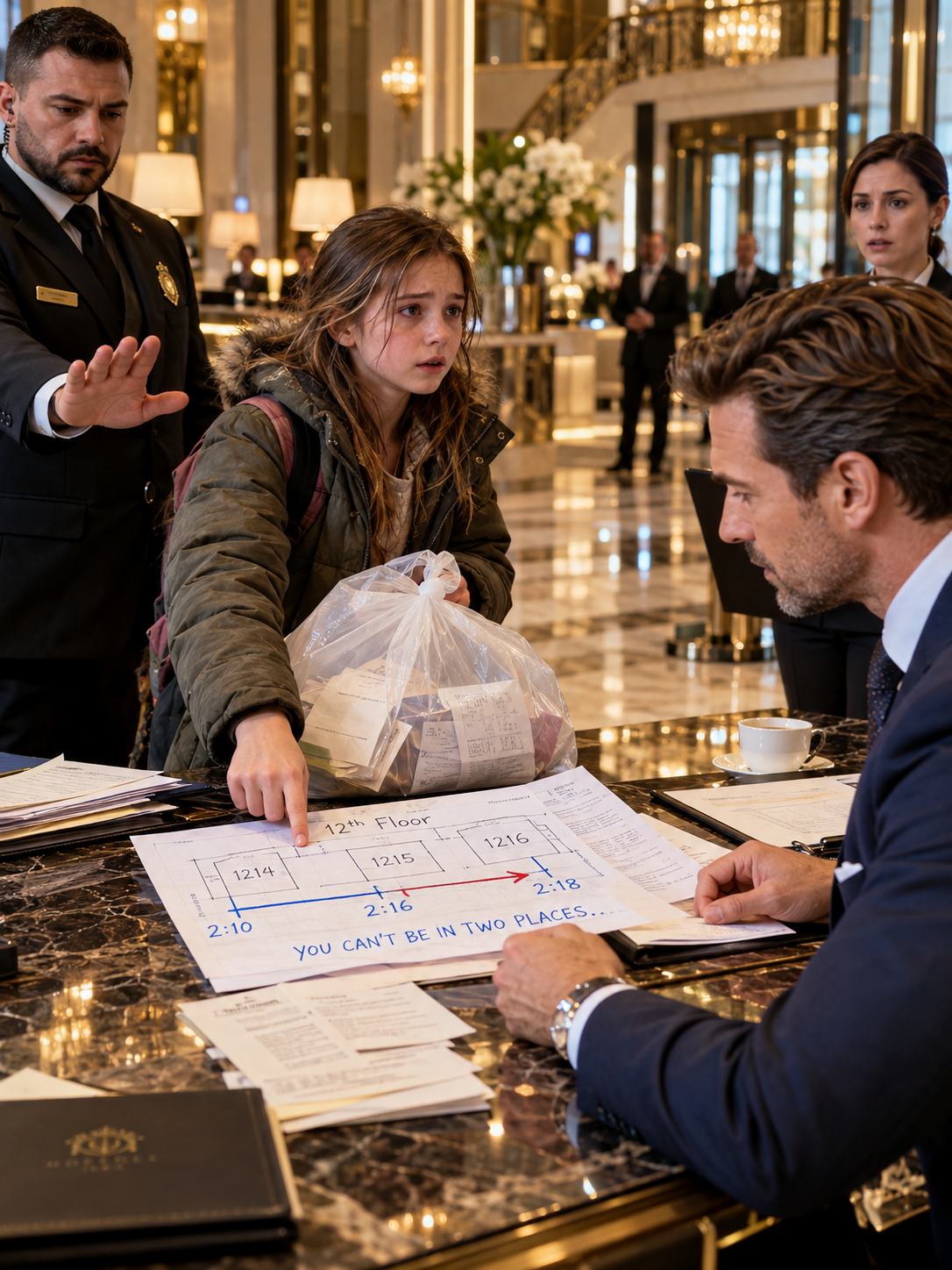
THE HOTEL ACCUSED HER MOTHER OF STEALING FROM A VIP SUITE AND LEFT HER UNEMPLOYED FOR THREE MONTHS—THEN AN ELEVEN-YEAR-OLD GIRL WALKED INTO THE OWNER’S LOBBY CARRYING A PLASTIC BAG – Life Story
The security guard put one hand out to stop the little girl before she reached the marble table. She lifted...
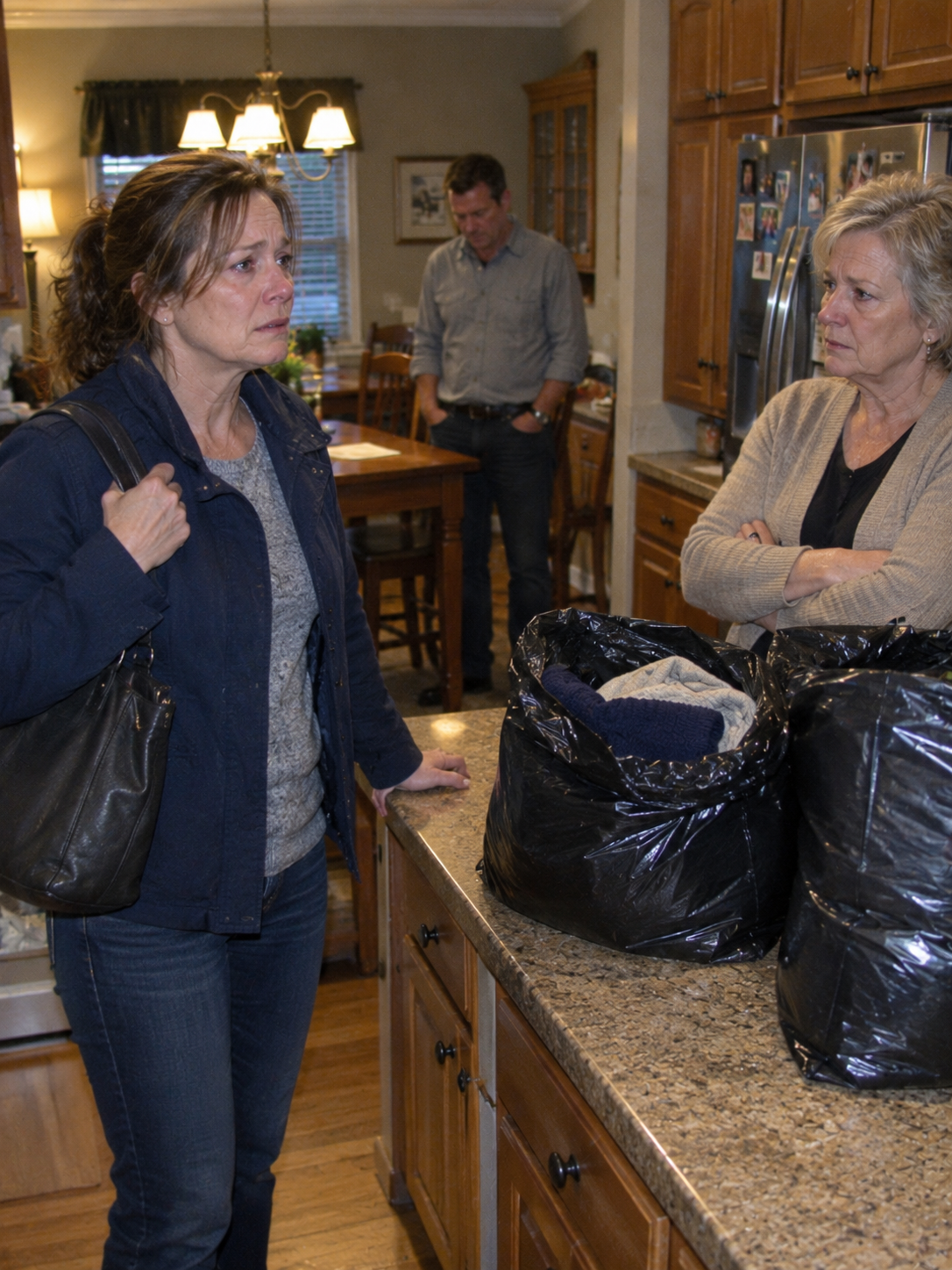
My mother-in-law set my nine-year-old daughter’s leukemia medication beside two black trash bags and called us “dead weight.”
My mother-in-law set my nine-year-old daughter’s leukemia medication beside two black trash bags and called us “dead weight.” My husband...