WHEN A HOTEL MANAGER ORDERED HIS SON OUT OF THE LOBBY, A HOUSEKEEPER’S DAUGHTER SAT DOWN BESIDE HIM—AND EXPOSED THE ONE RULE HIS FATHER NEVER QUESTIONED – Life Story
The hotel manager pointed toward the revolving doors while Richard Coleman’s six-year-old son crouched on the marble with his hands clamped over his ears.
A security guard was already approaching, and a housekeeper near the service corridor went rigid with fear.
Then her little girl sat down beside the boy—and the manager reached for his radio.
“Sir, we cannot have this in the lobby,” the manager said.
Richard stared at him.
A suitcase rattled across the marble.
Somewhere above them, a pianist was struggling through a song that sounded gentle until every note came back from the glass ceiling twice.
His son, Lucas, had stopped hearing individual sounds ten minutes ago.
Now they were one enormous, unbearable noise.
“He isn’t doing anything to you,” Richard said.
“Other guests are concerned.”
Lucas cried out again, a wordless, frightened sound, and curled tighter around his knees.
His blue sneakers scraped the floor as he tried to make himself small.
A woman beside the flower arrangement raised her phone.
Richard saw the lens turn toward his child and stepped into its path.
“Put that away.”
The woman lowered it, offended.
Richard barely noticed.
He had spent the last half hour asking for the quiet check-in he had requested when making their reservation.
They had driven into the city for an appointment with Lucas’s specialist, and Richard had promised there would be no surprises.
Instead, a corporate reception occupied half the lobby; music floated from hidden speakers; the desk clerk had directed them through the thickest part of the crowd.
“I told your staff he has trouble with noise,” Richard said.
The manager’s badge read THOMAS BELL.
He looked at Richard’s jacket, then at Lucas, calculating something. “We offered to take you to a private room.”
“You offered to have security move him while he was panicking.”
“It would be more appropriate.”
Appropriate.
Richard knew that word.
He had used it himself in conference rooms, usually to avoid saying what somebody actually wanted.
Now it meant his child should disappear because a paying guest might be uncomfortable.
Lucas lurched up and stumbled toward a brass luggage rack.
Richard moved, then stopped when Lucas flinched from his outstretched hand.
His son had told him before that unexpected touch made the noise feel closer.
Richard sank to one knee, leaving a few feet between them.
“Buddy, I’m here.
We can go when you’re ready.”
“I can’t find quiet,” Lucas gasped. “I can’t.”
Near the service corridor, a girl in a yellow sweater slipped off a bench.
She was small, with neat braids and a school backpack missing one zipper pull.
She watched Lucas rather than the adults.
Then she stepped closer and sat cross-legged on the marble, well outside his reach.
Richard turned sharply. “Please don’t touch him.”
“I won’t,” she said. “I don’t like people touching me when I’m scared either.”
Her voice was ordinary, not the whisper adults used when they thought a child might break.
She laid two fingers against her own knee and tapped a slow, almost soundless pattern.
Lucas’s eyes moved toward her hands.
“It’s okay if you don’t want to,” she told him. “I just do this when the room gets too big.”
The manager took a step forward. “Young lady, employees’ family members are not permitted to interfere with guest situations.”
The girl’s fingers stopped.
Richard saw the small change in Lucas immediately: his shoulders rose, his eyes darted, his breath shortened again.
“Let her finish,” Richard said.
Bell’s eyes flicked to the housekeeping cart beside the corridor.
A woman in a pale-blue uniform had appeared behind it, her face tight with alarm.
She looked from the child to the manager, and Richard understood suddenly that the girl had not simply wandered in from the street.
“What’s your name?” Lucas asked, his voice barely audible.
“Annie,” the girl answered, and began tapping again.
Bell lifted his radio.
He did not call for medical assistance or a quieter space.
“Housekeeping supervisor to the main lobby,” he said. “We have a staff-dependent violation.”
THE SOUND OF TWO FINGERS
The woman in the blue uniform moved before Richard could speak.
“Annie.”
Her voice was low but urgent.
Annie’s head turned.
The tapping stopped again, and this time she looked frightened herself.
“I wasn’t making trouble, Mama.”
“I know, baby.
Come here.”
Lucas made a small sound of protest.
“Please,” he whispered. “She’s helping.”
That was when Richard saw what everyone else seemed determined to miss.
His son wasn’t suddenly cured of his distress.
The lobby remained painfully bright.
Every passing suitcase still made him flinch.
But he had found one thing he could follow, and the girl had given him permission to follow it without demanding that he stop being afraid.
Richard looked at Annie’s mother.
“Would you be comfortable if she stayed another minute? Only if she wants to.”
The woman hesitated.
She was perhaps thirty-five, with tired eyes and a name tag that read MARIA VEGA.
One sleeve of her housekeeping uniform was damp.
Her fingers were roughened by cleaning chemicals, and she kept glancing toward the manager as though her answer could change her next paycheck.
“Annie,” she said carefully, “do you want to keep sitting?”
Annie nodded.
“Just until he finds his quiet.”
Maria swallowed and stepped back.
Thomas Bell did not.
“Mrs.
Vega, you’re aware of our policy regarding children on the premises.”
“I’m off the clock,” Maria answered. “My daughter was waiting for me.”
“Then you know she shouldn’t be involved in guest matters.”
Richard rose to his feet.
“She’s six years old.”
“Mr.
Coleman, I’m simply trying to maintain appropriate boundaries.”
“Then maintain them around the adults.”
Bell’s expression hardened, but he glanced at the security guard and gestured for him to remain by the column.
Richard recognized the maneuver.
The manager was trying to end the scene without admitting he had mishandled it.
Richard had done variations of the same thing in business negotiations, redirecting attention toward procedure whenever an uncomfortable fact threatened the plan.
He hated recognizing himself.
Annie tapped twice.
Then twice more.
Lucas moved one hand away from his ear.
“It’s still loud,” he whispered.
“I know.”
“Does it ever go away?”
Annie thought for a moment.
“Sometimes.
Not always.
But you can look at the little gray line in the floor if the tapping doesn’t work.”
Lucas followed her gaze.
A narrow vein ran through the white marble between their knees.
It curved around a darker patch, disappeared beneath Annie’s sneaker, and emerged again near Richard’s shoe.
“It looks like a river,” Lucas said.
“Mine looks like a road.”
“Roads are straighter.”
“Not where my grandma lives.”
Lucas considered this seriously.
Then he moved his other hand away from his ear.
Richard felt his shoulders sag.
He had been holding himself rigid for so long that the relief almost hurt.
Dr.
Meyers, Lucas’s occupational therapist, had taught him that a child overwhelmed by sensory input needed safety, space, and predictable choices.
Richard knew those principles.
He had written them in a notebook and repeated them to teachers, relatives, hotel staff.
But the moment Lucas had started screaming, Richard’s own fear had taken over.
He had worried about his son’s distress.
He had also worried about everyone watching.
That second fear embarrassed him more than anything.
Annie shifted on the floor.
“Can you tell your body where your shoes are?” she asked.
Lucas looked down.
“On my feet.”
“Yeah.
Mine too.”
He gave a shaky laugh.
It was a small, ridiculous exchange.
It worked because it made sense to two six-year-olds and didn’t need to impress anybody else.
Lucas placed one palm flat against the floor.
“Cold.”
“Very cold,” Annie agreed.
A minute passed.
Then another.
The lobby slowly resumed moving around them.
Lucas began breathing more evenly.
He wiped his cheeks with the sleeve of his green hoodie and looked toward Richard.
“Daddy?”
“Right here.”
“Can we go somewhere without the piano?”
Richard knelt again.
“Absolutely.
Would you rather walk or have me carry you?”
“Walk.
But slowly.”
“Slowly it is.”
Annie stood, brushing her yellow sweater with both hands.
Lucas rose beside her, wobbling slightly before finding his balance.
“Thank you,” he told her.
“You’re welcome.”
“Do you live here?”
Annie shook her head.
“My mama works here.”
“Does she like it?”
Maria’s mouth tightened.
“Sometimes,” Annie answered before her mother could.
Richard almost smiled.
Then he looked at Maria.
“Thank you for allowing her to stay.”
Maria’s expression was guarded.
“She’s a good kid.”
“She is.”
“She also needs to go home.”
“Of course.”
Annie lifted her backpack.
Lucas reached into his hoodie pocket and pulled out a tiny blue race car with one scratched door.
He carried it almost everywhere.
Earlier that morning, he had refused to let the valet hold it while Richard helped him out of the car.
He offered it to Annie.
“Here.”
Richard felt the need to intervene.
“Lucas, you don’t have to give away—”
“I want to.”
Annie examined the car without touching it.
“Isn’t that your favorite?”
“Yeah.”
“Then maybe you should keep it.”
Lucas thought hard.
“I want you to have something nice.”
Annie held out her hand.
“Okay.
But you can borrow it if we meet again.”
Lucas smiled.
Maria gently took her daughter’s shoulder.
“We need to go, sweetheart.”
Annie waved once.
As Maria led her toward the service corridor, Thomas Bell stepped into their path.
“Mrs.
Vega.
My office before your next shift.”
Maria stopped.
Richard heard her answer.
“Yes, sir.”
No argument.
No protest.
Just two words spoken in the exhausted voice of somebody who couldn’t afford to say anything else.
Richard took a step forward.
“Mr.
Bell, there is no reason to discipline her.”
Bell turned.
“With respect, sir, that’s an internal personnel matter.”
Maria looked at Richard then.
Not gratefully.
Fearfully.
He understood the warning in her eyes.
Please don’t make this worse.
Richard stopped.
Maria disappeared through the service door with Annie’s hand held tightly in hers.
Lucas slipped his smaller hand into Richard’s.
“Daddy?”
“Yes?”
“Why did her mama look scared?”
Richard had negotiated distressed acquisitions, managed hundreds of employees, and spent nearly twenty years learning how to answer difficult questions without exposing uncertainty.
This time he had no answer.
A bellhop quietly escorted them to a smaller elevator at the far end of the lobby.
The passage was carpeted, its lighting soft and the air free of music.
Lucas leaned against Richard as they waited.
“I like this elevator better.”
Richard looked around.
There were no chandeliers.
No grand piano.
No gathering of guests.
The hotel had possessed a quieter route all along.
And somebody had decided his son didn’t need to use it.
A NAME ON THE SHIFT SHEET
By the time Lucas fell asleep that night, Richard had replayed the scene in the lobby so many times that he could hear Annie’s tapping inside the silence of the hotel suite.
He sat at the small desk near the window.
His laptop displayed a spreadsheet from his company, Coleman Capital Partners, a private investment firm that held stakes in commercial properties and hospitality businesses across several states.
The Grand Meridian Hotel, where they were staying, was one of those investments.
Not a hotel Richard personally managed, but a property his company helped finance through a partnership with a hospitality operating group.
He had chosen it because he trusted the brand.
That trust now seemed embarrassingly thin.
His phone rang.
“Richard,” said Celia Tran, his chief of staff. “You missed the acquisition call.”
“I know.”
“The Boston team has been looking for you.”
“I know that too.”
Celia waited.
She had worked with Richard for eleven years, long enough to distinguish between the silences that meant anger and the ones that meant something else.
“Is Lucas okay?”
“He is now.”
“Was there an incident?”
Richard looked toward the bedroom.
“Yes.”
“Do you need me to arrange anything?”
He nearly asked her to call the hotel general manager, find the employee record, and make the problem disappear.
It would have been easy.
Celia was excellent at making things happen.
Instead he said, “I need a copy of the accommodation request attached to our reservation.
And I’d like to understand our company’s relationship with this hotel’s operator.”
“Business or personal?”
Richard hesitated.
“Both, probably.”
“Then keep them separate until we know what happened.”
He leaned back.
“That sounds like advice.”
“It is.”
Celia’s tone softened.
“Start with your son’s reservation, Richard.
You’re a guest.
You don’t have to investigate an employee to ask why an accommodation request wasn’t handled.”
She was right.
He thanked her and ended the call.
In the bedroom, Lucas stirred.
“Daddy?”
Richard went to him.
“I’m here.”
“Did Annie get in trouble?”
“I don’t know.”
Lucas considered that in the faint light of the bedside lamp.
“Can we find out?”
Richard sat beside him.
“We can try.
But we have to be careful.”
“Why?”
“Because sometimes grown-ups think they’re helping when they’re really making things harder.”
Lucas frowned.
“That’s dumb.”
Richard gave a tired smile.
“Sometimes.”
Lucas reached under his pillow, searching for the little blue car, and stopped when he remembered giving it away.
For a moment, Richard thought he might cry.
Instead Lucas said, “I hope she doesn’t lose it.”
Richard pulled the blanket higher around his son’s shoulders.
“I’m sure she’ll take care of it.”
The next morning, the hotel sent an email apologizing for the inconvenience caused during check-in.
There was no mention of Lucas by name.
No acknowledgment that the family had requested assistance before arriving.
The message offered complimentary breakfast and a room upgrade on a future stay.
Richard read it twice.
Then he opened the copy of his reservation Celia had obtained through the normal guest-services channel.
Beneath the requested room type and arrival time was the notation:
GUEST TRAVELING WITH CHILD WITH DOCUMENTED SENSORY NEEDS.
REQUESTS QUIET CHECK-IN, MINIMAL WAITING, AND ALTERNATIVE ENTRANCE IF MAIN LOBBY IS BUSY.
HOTEL TO CONFIRM BEFORE ARRIVAL.
His original message was attached.
He remembered writing it at his kitchen table while Lucas sat beside him drawing a spaceship.
A promise made in advance.
A promise apparently ignored.
There was no hotel confirmation.
He called the guest relations desk.
A young woman answered.
“Grand Meridian.
This is Olivia.”
“My name is Richard Coleman.
I checked in yesterday with my son.
I’m looking at a request for a quiet arrival.
Can you tell me whether anyone reviewed it?”
A pause.
“I’d need to check with my manager.”
“I understand.”
Another pause.
“Sir, I do see the note.”
“Was it confirmed?”
“I’m sorry.
I don’t see a confirmation.”
“Is a quiet entrance normally available?”
The woman hesitated.
“We have a west-side entrance and a private guest reception area.
Those are used for certain arrivals.”
“Could they have been used yesterday?”
“I can’t answer that, sir.”
He didn’t push her.
“Thank you for checking.”
When Richard came into the kitchen area, Lucas was sitting on the floor sorting the hotel’s wrapped breakfast muffins into two piles.
“Chocolate and not chocolate,” he announced.
“That seems like a solid system.”
Lucas held out a blueberry muffin.
“I’m eating this one.”
Richard sat beside him.
“Can I ask you something?”
“Okay.”
“What bothered you most yesterday?”
“The sounds.”
“Anything else?”
Lucas thought.
“People kept saying my name like I was doing something wrong.”
Richard absorbed that.
“Did I do that?”
“Kind of.”
The answer was quiet and immediate.
Richard nodded.
“I’ll work on that.”
Lucas looked up.
“It’s okay.
You were scared too.”
Richard had been forgiven by powerful men for expensive mistakes.
Somehow this forgiveness felt heavier.
After breakfast, they returned to the lobby, not to confront anyone but because Lucas wanted to see the place when it was less crowded.
Richard asked him twice whether he wanted to go.
Both times Lucas said yes.
The morning light looked different through the tall windows.
The pianist was absent.
Only a few guests stood at reception.
Lucas approached the gray line in the marble where Annie had sat.
He crouched.
“Here’s the road.”
Richard knelt beside him.
“Sure is.”
Lucas touched the stone.
“Do you think Annie comes here every day?”
“I don’t know.”
“Maybe she sits here all the time.”
Richard looked toward the service corridor.
“Maybe.”
Behind the desk, Thomas Bell noticed them and hurried over.
“Mr.
Coleman.
I understand guest relations has contacted you.
I hope everything is satisfactory now.”
“My son is feeling better.”
“Excellent.
And I trust the accommodation issue has been resolved.”
Richard looked at him.
“Why wasn’t it resolved yesterday?”
Bell’s smile narrowed.
“We had an unusually busy arrival period.”
“The request was made in advance.”
“We receive many special requests.”
“Was ours reviewed?”
Bell glanced at Lucas.
“Perhaps we could discuss this somewhere more private.”
Richard almost laughed at the irony.
“That’s what I asked for yesterday.”
Bell said nothing.
Richard lowered his voice.
“And there was another issue.
A housekeeper named Maria Vega.
I don’t want her disciplined because her daughter helped my son.”
Bell’s eyes changed.
“We have policies concerning family members on hotel property.”
“Was she violating one?”
“That matter is being handled.”
“Was she?”
Bell adjusted his cuff.
“Our employees understand the expectations.”
Richard recognized another answer that wasn’t an answer.
He handed Bell his business card.
“This is my direct contact.
Please have your general manager respond to the accommodation issue in writing.”
Bell glanced at the card.
His posture shifted.
“Coleman Capital?”
“Yes.”
Bell’s face lost some color.
Richard saw the recognition and felt a flash of something unpleasant.
An hour earlier, Bell had considered Lucas a problem.
Now he considered Richard someone important.
The difference wasn’t compassion.
It was leverage.
And Richard began to wonder what would have happened if neither family had possessed any.
THE COST OF BEING NOTICED
Maria Vega arrived home that afternoon with a headache that had settled behind her eyes.
The apartment above a laundromat smelled of warm detergent and onions from the restaurant downstairs.
Annie had spread crayons across the kitchen table and was drawing a road with little blue squares along its edges.
The race car rested beside her elbow.
Maria put her purse on the counter.
“Shoes away, baby.”
Annie slid off her chair and carried her sneakers to the closet.
“Did your boss get mad?”
Maria stopped removing her jacket.
“What makes you ask?”
“You were quiet on the bus.”
“I was tired.”
“That’s not the same thing.”
Maria turned.
Annie was watching her with the patient, unsettling attention that had always made adults underestimate how much she understood.
Maria crouched.
“My supervisor talked to me.”
“Because of Lucas?”
“Because the hotel has rules about where kids can wait.”
“But I was waiting for you.”
“I know.”
Annie looked toward the race car.
“Should I give it back?”
“No.”
“Maybe his daddy will think I took it.”
“Lucas gave it to you.”
“Maybe grown-ups will think different.”
Maria pulled out a chair and sat.
Eight weeks earlier, the hotel had stopped allowing employees’ children to wait in the designated family area near the staff entrance.
Management had called it a safety review.
Before that, Maria’s daughter could wait briefly after an after-school program’s closing time while Maria finished a shift.
It wasn’t ideal, but it was predictable.
The revised rule required all dependents to remain off-site except during approved family events.
No alternative arrangement had been provided.
Maria had spent those eight weeks juggling bus schedules, swapping shifts, and calling in favors from another mother in the building.
The day Lucas arrived, Annie’s after-school program had closed early because of a plumbing problem.
Maria had notified her supervisor.
She had asked whether Annie could wait ten minutes on the public bench near the service corridor while Maria clocked out.
The supervisor had reluctantly agreed.
Then the lobby incident happened.
Now the supervisor claimed she had never approved the arrangement.
Maria had been given a written warning.
A second incident could affect her eligibility for additional shifts.
She had worked at the Grand Meridian for seven years, cleaned rooms during influenza season, covered for colleagues with sick parents, and once returned a diamond bracelet worth more than her annual salary.
None of that appeared on the warning.
Only the words STAFF-DEPENDENT POLICY VIOLATION.
Annie tugged at Maria’s sleeve.
“Are you sad?”
“I’m frustrated.”
“Is frustrated like mad?”
“Sometimes.
But a little more tired.”
Annie climbed into her lap.
“I didn’t mean to make your job hard.”
Maria held her.
“You didn’t make anything hard, sweetheart.
Adults made choices, and now adults have to sort them out.”
Annie leaned against her.
“Can I still be Lucas’s friend?”
Maria closed her eyes.
The simplest question was suddenly the hardest.
“I hope so.”
Across the city, Richard sat in Dr.
Evelyn Meyers’s office while Lucas arranged wooden blocks in an uneven circle.
The room had soft lamps and one large window facing a courtyard.
Nothing blinked.
No music played.
Dr.
Meyers had been part of Lucas’s care team for two years.
She specialized in pediatric sensory regulation and worked closely with his pediatrician, who treated his ADHD.
She listened carefully as Richard described the hotel.
When he finished, she waited.
“What happened when the girl started tapping?” she asked.
“Lucas began following the rhythm.
He calmed down.”
Dr.
Meyers nodded.
“And what do you think helped?”
“The predictability.
She didn’t pressure him.”
“Possibly.
And she gave him control over whether to participate.”
Richard glanced at Lucas.
“I’ve been wondering whether we should see if Annie can spend more time with him.”
“Perhaps, if both children want that and their parents agree.”
“She was remarkable.”
Dr.
Meyers smiled gently.
“She sounds kind and observant.
But be careful not to turn a six-year-old into your son’s treatment plan.”
Richard felt the correction.
“That’s not what I meant.”
“I know.
And it’s worth saying anyway.”
She watched Lucas add a red block to his circle.
“Children who understand each other can be wonderful friends.
Friendship shouldn’t become an obligation to regulate somebody else’s nervous system.”
Richard stared at his hands.
Annie had approached Lucas because she wanted to.
Adults had immediately begun calling her exceptional, gifted, extraordinary.
He had done it himself.
What if all that praise became another job she couldn’t refuse?
Dr.
Meyers leaned forward.
“Lucas needs adults who prepare the environment, respect his accommodations, and respond calmly when he’s overwhelmed.
Annie shouldn’t have to substitute for that.”
Lucas looked up.
“I’m right here.”
Dr.
Meyers laughed softly.
“You certainly are.”
“Annie doesn’t fix me,” Lucas said.
Richard turned toward him.
“What does she do?”
Lucas shrugged.
“She sits.”
Dr.
Meyers nodded.
“That’s a pretty good description of friendship.”
Richard drove home with that sentence following him.
That evening Celia called.
“I found something about the hotel.”
Richard set down his glass.
“What?”
“The operating company changed its staff-dependent policy in August.
It was part of a larger cost and liability review across several properties.”
“Why was our company involved?”
“Because we co-financed the properties, and the operator’s annual budget was presented to our investment committee.”
Richard felt his jaw tighten.
“Did we approve it?”
“We approved the operating budget.
The policy changes were buried in an appendix.”
“Did you see them?”
“I didn’t review that appendix personally.”
“Neither did I.”
Celia let the silence sit.
Then she said, “Richard, there’s more.
The operator is up for a contract renewal next month.
Our board has to vote on it.”
He walked to the window.
Below, cars flowed through a busy intersection.
People crossed with shopping bags and umbrellas, moving toward homes where someone might be waiting for them.
“Do we have authority to require changes?”
“We can negotiate operating standards in the renewal.
But we can’t simply order the hotel to change its personnel decisions.
They’re a separate employer.”
Richard nodded.
“Then that’s where we start.”
“Start with what?”
He thought of Maria saying two small words to Bell.
Yes, sir.
“Finding out what the rule costs people.”
Celia exhaled.
“Then I suggest we speak to the people paying that cost before we write a proposal about them.”
Richard looked down at his phone.
For the second time in twenty-four hours, someone had reminded him that doing something quickly wasn’t necessarily the same as doing it well.
He called the hotel the following day and left Maria a message through employee relations, inviting her to contact him only if she wanted to.
He made clear that he wasn’t asking for her personnel records.
She didn’t call that day.
Or the next morning.
Richard waited.
Then, just before dinner, his phone rang.
“Mr.
Coleman?”
“Yes.”
“This is Maria Vega.”
He stood.
“Maria.
Thank you for calling.”
“I almost didn’t.”
“I understand.”
“No, I don’t think you do.”
Richard stayed quiet.
“I have a child to feed and rent to pay,” she continued. “And everyone at work suddenly has an opinion about what happened.
My manager knows you asked about me.
My supervisor says I should be grateful you noticed my daughter.
But she’s also the one who gave me the warning.”
Richard pressed his palm against the kitchen counter.
“I’m sorry.”
“I know you probably mean that.”
“I do.”
Maria’s next words were harder.
“Meaning it doesn’t give me my shift back.”
Richard closed his eyes.
“What happened?”
“They took me off Saturday overtime.
That’s almost a hundred and fifty dollars I was counting on.”
“Was that because of the warning?”
“They said it’s scheduling.”
“Do you believe them?”
“No.”
Richard’s instinct was immediate.
He could make one phone call and demand her hours be restored.
Instead he asked, “What would you like me to do?”
Maria didn’t answer for several seconds.
Then she said, “Before you do anything, I’d like you to understand what happened to us.”
THE ROOM THAT HAD ALWAYS BEEN THERE
They met at a public library three days later.
Maria chose the location.
Richard arrived early and sat at a table beside the windows, without his usual driver or anyone from the firm.
Celia had advised him not to treat a worker’s personal experience as a business interview, so he brought neither a recorder nor a company representative.
Maria arrived with Annie.
She wore dark jeans, white sneakers, and a black cardigan that had been carefully mended at one cuff.
Annie carried a children’s library book and the blue race car.
“Hi,” Annie said.
“Hello, Annie.”
“Is Lucas okay?”
“He’s doing well.
He asked about you.”
Annie smiled and moved to a nearby table within Maria’s sight.
She opened her book.
Richard waited until Maria sat.
“Can I buy you coffee?”
“No, thank you.”
He nodded.
Maria folded her hands.
“You wanted to know what happened.”
“Yes.”
“Then I want you to listen without trying to solve it halfway through.”
“I can do that.”
She watched him for a moment.
Then she began.
For years, the Grand Meridian’s employee lounge had included a small waiting area.
Staff could arrange brief supervised handoffs when after-school care ended before a shift.
It wasn’t a licensed childcare facility, and it wasn’t advertised as one.
But it acknowledged the practical schedules of employees with children.
Then management removed the waiting area during renovations.
The space became a storage room for conference equipment.
The official explanation was liability.
Workers were told to make other arrangements.
“Some people did,” Maria said. “Some changed shifts.
Some quit.
Some started spending almost as much on childcare as they earned during the last two hours of work.”
Richard listened.
“Did staff raise concerns?”
“More than once.”
“What happened?”
“We were told the hotel couldn’t make exceptions.”
“And your supervisor approved Annie waiting that day?”
“Verbally.
Because my usual plan fell apart.”
Maria looked toward her daughter.
“She was never supposed to be there longer than ten minutes.”
Richard remembered Annie’s frayed backpack and the way she had approached Lucas as though she already knew how it felt to be watched.
“Were there any safer alternatives proposed?”
“One.
We suggested changing the handoff schedule so a parent finishing a shift could pick up a child without losing hours.
Management said staffing requirements made it impractical.”
Richard thought of occupancy charts.
Labor forecasts.
Efficiencies.
Words he had seen hundreds of times.
“They’re afraid to have children in the back areas,” Maria continued. “I understand some of that.
There are chemicals, carts, equipment.
But they didn’t make a plan.
They just made a rule.”
“And when the rule was impossible?”
Maria gave a tired laugh.
“You already saw.”
Richard nodded.
“I did.”
She leaned forward.
“There’s something else.”
Richard waited.
“My daughter didn’t help Lucas because she’s some little miracle.
She helped him because she knows what being overwhelmed feels like.”
Annie looked up at the sound of her name.
Maria smiled toward her, then continued.
“She’s sensitive to noise too.
Not the same way Lucas is, necessarily.
But she knows what helps her.
Her teacher lets her sit near the window when the classroom gets loud.”
Richard felt his chest tighten.
“She’s had to learn a lot for her age.”
“Most kids do.
In different ways.”
Maria’s expression sharpened.
“And I don’t want everyone deciding that makes her responsible for other people’s children.”
“Dr.
Meyers said something similar.”
“Good.
Then listen to her.”
Richard nodded.
“I will.”
Annie closed her book and came over.
“Are you talking about the hotel?”
“A little,” Maria said.
“Are we in trouble again?”
“No, sweetheart.”
Annie looked at Richard.
“Did Lucas get in trouble?”
“No.”
“Good.”
She held out the race car.
“I kept it.”
Richard smiled.
“He was hoping you would.”
Annie examined the scratched paint.
“He said cars have to stop sometimes.”
“Yes.”
“That’s true for people too.”
Maria brushed her daughter’s braids away from her face.
“Go choose another book, baby.”
Annie obeyed.
Richard watched her walk toward the children’s shelves.
When she was out of earshot, he said, “I’d like to help address what happened.
Not with a publicity campaign.
With the actual operating agreement.”
Maria studied him.
“What does that mean?”
“Our company is reviewing the hotel’s management contract.
We can propose requirements for accessible guest services and fairer scheduling practices.”
“Can you guarantee my job?”
“No.”
“Can you guarantee they won’t retaliate?”
“No.
But I can push for an independent complaint process and ask for a formal review.”
Maria nodded slowly.
“That’s an answer I can trust.”
Richard looked at her.
“Why?”
“Because you didn’t pretend you could guarantee something you don’t control.”
He was about to respond when she added, “And I don’t want Annie’s name on a program.”
Richard sat back.
“You’ve thought about that?”
“People have been asking if they can interview her.
Someone at work said a guest wanted a picture with her.”
“Did anyone take one?”
“Not that I know of.”
“Then there won’t be one from me.”
Maria held his gaze.
“Good.”
When they stood to leave, Richard saw Annie waiting beside a display of children’s art.
She held a piece of blue construction paper in one hand.
“Mr.
Coleman?”
“Yes?”
“Tell Lucas there’s a quiet park near the library.”
“I will.”
“It has a bridge.”
Richard glanced at Maria.
She gave a small nod.
“Maybe,” Maria said, “we can meet there next weekend.”
Richard felt an unexpected warmth.
“I think he’d love that.”
He didn’t ask Maria for anything else.
As he walked toward the parking lot, his phone buzzed.
Celia.
“Richard, I have the operations review from the hotel.”
“Anything important?”
“Yes.”
Her voice had changed.
“I think you should come to the office before you speak publicly about any of this.”
Richard stopped beside his car.
“Why?”
“Because the quiet reception room wasn’t unavailable that afternoon.”
He looked back toward the library.
“Then why did they send us through the lobby?”
Celia was silent for a moment.
“Because somebody decided another guest’s experience was worth more.”
THE PRICE OF A PERFECT LOBBY
The conference room on Coleman Capital’s thirty-fourth floor had been designed to make difficult decisions feel impersonal.
Richard had once liked that about it.
The glass walls, the long walnut table, the city spread beneath them like a collection of manageable assets.
Now he found himself looking at the fingerprints on the water pitcher and thinking about the people who cleaned them away after meetings.
Celia stood beside a screen displaying an internal operations memorandum.
“The hotel had a private reception room available,” she said. “It was reserved for the technology conference occupying the west ballroom.”
Richard frowned.
“Reserved for check-in?”
“No.
For sponsor photographs and VIP welcome gifts.”
She pointed to the relevant paragraph.
The memorandum instructed hotel staff to route unscheduled arrivals through the main lobby during the conference reception.
The west entrance and private reception room were to remain available for conference VIPs unless the general manager authorized an exception.
Richard stared at the screen.
“We requested that entrance in advance.”
“Yes.”
“And there was no effort to confirm whether we could use it?”
“None recorded.”
“Who signed the instruction?”
“Thomas Bell approved the local implementation.”
Richard turned away.
He remembered Bell’s words.
More appropriate.
The problem hadn’t merely been a busy lobby or an inexperienced employee.
A quieter space existed.
A known request had been sitting in their system.
And the decision to protect a corporate event from interruption had taken priority over accommodating a child who needed a calmer arrival.
“Do we know whether the operator expected staff to make exceptions?” he asked.
Celia nodded.
“Technically, yes.
The policy says managers should assess accessibility requests individually.
But the local instruction made exceptions dependent on approval from the same managers responsible for meeting conference revenue targets.”
Richard stared at the city.
“So staff learned not to ask.”
“That’s my concern.”
He looked back at her.
“Have you discussed this with legal?”
“Yes.
They recommend an independent review.
They also warned that we shouldn’t call it an ADA violation before counsel examines the facts.
We have evidence of a poorly handled request, but legal conclusions require more.”
Richard nodded.
“Fine.”
“There’s another problem.”
“Of course there is.”
“The hotel operator says the staff-dependent rule is unrelated to the guest incident.
They want the two matters handled separately.”
“They are separate legal issues.”
“Yes,” Celia said. “But they reveal the same operating priorities.”
Richard sat down.
For years, his company had evaluated hotels according to occupancy, average daily room rates, guest satisfaction, operating margins, and return on invested capital.
He wasn’t ashamed of understanding those numbers.
Businesses needed to earn money.
Employees needed stable jobs.
Investors were entitled to accurate reporting.
But he’d rarely asked what happened when the cheapest solution required a worker to absorb an impossible schedule or a disabled guest to navigate an environment the hotel knew would overwhelm them.
His business vocabulary suddenly seemed incomplete.
“How much did the conference pay for that room?”
Celia gave him the figure.
Richard let out a low breath.
“Less than we spent on flowers for last year’s investor dinner.”
“Yes.”
“That’s what it was worth?”
Celia closed the document.
“That’s what the room was worth to the hotel that afternoon.”
The distinction stayed with him.
That evening, Lucas sat at the kitchen table lining up plastic dinosaurs.
Richard joined him.
“Would you like to see Annie at the park on Saturday?”
Lucas froze.
“For real?”
“If Maria and Annie still want to.”
“Will there be music?”
“No music that I know of.”
“Lots of people?”
“Probably some.
It’s a public park.”
Lucas considered the risks.
“Can we leave if it’s too much?”
“Anytime.”
He nodded.
“Okay.”
Then he looked up.
“Are you mad at the hotel?”
Richard hesitated.
“I think they made some bad decisions.”
“Because of me?”
“No.”
Lucas pushed a green dinosaur away from the others.
“Everybody looked at me.”
“I know.”
“I couldn’t stop.”
“You didn’t have to stop being upset just to make people comfortable.”
Lucas studied him.
“Then why did the man want me outside?”
Richard sat back.
“Because sometimes people make rules around what is easiest for them instead of what is fair.”
Lucas looked toward the window.
“Annie broke a rule.”
“She might have.”
“Was that bad?”
Richard thought carefully.
“Not every rule is wrong.
Rules can keep people safe.
But when a rule hurts someone, adults have a responsibility to ask whether it’s the right rule.”
Lucas nodded as though the answer settled something.
Then he pushed the green dinosaur back into the group.
“Maybe the dinosaur can sit here.”
Richard smiled.
“Maybe he can.”
Saturday arrived with clear skies and a cool breeze moving through the trees at Riverside Park.
Richard and Lucas reached the bridge first.
Lucas wore his green hoodie and carried a small fabric square Dr.
Meyers had helped him choose.
Its soft texture gave him something familiar to hold when the world felt unpredictable.
Richard had made no elaborate plans.
He brought water, two sandwiches, and a blanket.
Maria arrived ten minutes later with Annie, whose yellow sweater had been replaced by a red jacket.
Lucas waved so hard he nearly dropped his fabric square.
“Annie!”
She smiled.
“Hi, Lucas.”
For a moment, they stood awkwardly facing each other.
Then Lucas pointed to the bridge.
“Want to see how fast you can roll my car?”
Annie reached into her backpack and produced the little blue racer.
“I brought it.”
They spent twenty minutes experimenting with which parts of the wooden bridge made the car move fastest.
Annie insisted the sloped railing worked better.
Lucas disagreed.
They tested both theories.
Lucas was right about the speed.
Annie was right about the car falling off.
After the third attempt, they both collapsed into laughter.
Richard watched from the blanket.
Maria sat beside him, leaving a comfortable distance between them.
“He’s different here,” she said.
“He can choose where to go.”
“And nobody’s staring.”
Richard glanced toward the playground.
A few children were arguing over swings.
A father was trying to untangle a kite.
Someone’s dog barked.
Ordinary sounds.
Lucas occasionally flinched, but he stayed engaged.
He wasn’t free of his sensory difficulties.
He simply had enough control over his environment to enjoy being a child.
“Annie looks happy,” Richard said.
Maria smiled.
“She likes him.”
“I’m glad.”
Maria glanced at him.
“She’s not here to help him, you know.”
“I know.”
“Good.”
They sat quietly.
Then Maria asked, “What did you find out?”
Richard explained the reception room and the conference memorandum.
He didn’t show her internal documents she wasn’t authorized to receive.
He described what he could responsibly share and told her an independent review had been requested.
Maria listened without interrupting.
When he finished, she stared at the bridge.
“So they had somewhere quieter.”
“Yes.”
“And they chose not to use it.”
“Yes.”
She shook her head.
“You know what’s strange? I clean that private reception room all the time.
I knew it was empty before the conference started.”
Richard looked at her.
“You knew?”
“I saw the gifts being arranged.
They weren’t even letting regular conference attendees use it.
Just sponsors and executives.”
She turned toward him.
“People keep telling me the lobby incident was unfortunate.
Like it was weather.”
Richard said nothing.
“It wasn’t weather,” she continued. “Somebody planned where everyone was supposed to be.”
Across the bridge, Lucas called for Annie to catch the car.
She caught it with both hands.
Maria watched her daughter laugh.
“That’s what scares me about your world, Mr.
Coleman.
People make decisions in rooms nobody else gets to enter, and then the people outside those rooms have to live with them.”
Richard looked toward the children.
“My world?”
She met his eyes.
“You helped build it.”
He could have explained the differences between his investment firm and the hotel’s operator.
He could have pointed out that he hadn’t personally approved the lobby instructions.
All of that would have been true.
None of it answered her.
“Yes,” he said.
Maria’s expression softened just slightly.
“Then maybe you know where to start fixing it.”
THE STORY THEY WANTED TO TELL
The first photograph appeared online on Monday morning.
It showed Lucas crouched on the marble floor with his hands over his ears.
Annie sat several feet away, two fingers against her knee.
Someone had taken it from the mezzanine.
The caption read:
BILLIONAIRE FATHER’S CHILD CALMED BY HOTEL WORKER’S DAUGHTER AFTER PUBLIC MELTDOWN.
Richard found it in a message from Celia.
His stomach tightened.
Lucas’s face was clearly visible.
So was Annie’s.
By noon, the photograph had been reposted thousands of times.
Some comments were kind.
Others were cruel.
People called Lucas spoiled.
They accused Richard of bad parenting.
Strangers claimed Annie had cured a condition they clearly didn’t understand.
A few people suggested that Maria should receive money.
Others accused her of arranging the incident for attention.
Richard had spent years living with the publicity that followed wealth and business success.
He could ignore gossip about himself.
Watching strangers dissect two six-year-old children was different.
His communications director, Natalie Brooks, came into his office carrying a tablet.
“We should make a statement.”
Richard looked up.
“About what?”
“The situation.
People are already connecting it to the hotel investment.”
“Then say we’re asking the operator to protect guest privacy and cooperate with a review.”
Natalie hesitated.
“There’s an opportunity here to explain our values.”
He stared at her.
“An opportunity?”
“Richard, I mean this could show that the company takes inclusion seriously.”
“With pictures of two children who never agreed to be famous?”
“I wasn’t suggesting that.”
“You were getting close.”
Natalie lowered the tablet.
“You’re right.
I’m sorry.”
Richard rubbed his forehead.
“I’ve spent most of my career turning bad situations into controlled narratives.
I know exactly how this would work.”
Natalie waited.
“We’d talk about compassion.
We’d praise Annie.
We’d promise change.
The photographs would spread farther, and everyone would get a good feeling about a problem we hadn’t actually solved.”
“So what do you want to do?”
“Nothing about the children without their parents’ approval.
And nothing about employees without their participation.”
Natalie nodded.
“I can work with that.”
“Good.”
Richard called Maria.
She answered on her break.
“I’ve seen it,” she said before he could speak.
“I’m sorry.”
“Annie saw it too.”
Richard closed his eyes.
“How is she?”
“She asked why strangers were calling her a hero.
Then she asked why some people were angry with her.”
“What did you tell her?”
“That strangers don’t get to decide who she is.”
“That’s a good answer.”
“It’s the only one I have.”
Richard took a breath.
“I’d like to ask the original poster to take the image down.
Our lawyers can also send privacy-related requests to platforms where appropriate.”
“Do that.”
“I won’t identify you or Annie in a statement.”
“Thank you.”
She hesitated.
“Mr.
Coleman?”
“Yes?”
“Please don’t promise people that my daughter changed your life.”
Richard looked toward the window.
“Why?”
“Because then everyone expects her to keep changing it.”
The sentence stayed with him.
That afternoon, Richard attended a board meeting originally scheduled to discuss the Grand Meridian contract renewal.
The board chair, Elaine Voss, had known him for fifteen years.
She was a former hotel executive with a precise voice and a habit of removing the cap from her pen whenever she was losing patience.
She began without pleasantries.
“Richard, we have a reputational problem.”
“We have an operational problem.”
“We have both.”
“Agreed.”
Elaine looked momentarily surprised.
“Good.
Then perhaps we can be practical.”
Richard slid a proposed set of operating standards across the table.
They included a defined procedure for handling guest accommodation requests, access to quieter arrival areas when reasonably available, staff training developed with qualified specialists, and an independent channel for workers to report scheduling concerns without going through the manager responsible for their assignments.
Elaine scanned the pages.
“This is broader than one hotel incident.”
“It needs to be.”
“Who prepared the proposal?”
“Operations, legal, and Celia helped me structure it.”
“Did you consult the operator?”
“They’ve received a request for information.”
Elaine removed her pen cap.
“Richard, our partners operate properties in a competitive industry.
They have staffing constraints.
Insurance requirements.
Shareholders.
We can’t rewrite operations every time an incident attracts attention.”
“I’m not proposing that.”
“Then why this?”
Richard met her gaze.
“Because the incident showed us how our standards work when somebody actually needs them.”
A board member named Peter Lawson leaned forward.
“We don’t control the hotel employees.”
“I know.”
“Then why are we involving ourselves in a staffing dispute?”
“Because we have the right to establish certain service and compliance standards as a condition of renewing our investment agreement.”
Elaine put down her pen.
“And if the operator refuses?”
“We evaluate alternatives.”
She stared at him.
“You’re prepared to jeopardize a profitable contract over a housekeeping schedule?”
Richard felt heat rise behind his collar.
But he kept his voice even.
“I’m prepared to ask whether our profits depend on shifting unreasonable costs onto employees and ignoring guest needs.”
Elaine shook her head.
“That is an accusation.”
“Then let’s examine the facts.”
The meeting ended with a vote to authorize a limited independent review.
It wasn’t a victory.
It wasn’t nothing.
Celia caught Richard in the hallway afterward.
“You handled that better than I expected.”
“That’s encouraging.”
“You usually get louder when people challenge you.”
Richard managed a small smile.
“I’ve had some recent practice listening.”
She handed him her tablet.
“There’s something else.”
A news outlet had published an anonymous quote attributed to a hotel executive.
The executive claimed the incident had been exaggerated and suggested Richard was using a personal family matter to pressure business partners.
Richard read it silently.
Celia watched his face.
“Don’t react tonight.”
“Why?”
“Because whoever said this wants you to turn an operational review into a personal feud.”
Richard returned the tablet.
“Then they can be disappointed.”
That evening, Lucas refused dinner.
He sat at the kitchen table moving peas into a line along the edge of his plate.
Richard sat across from him.
“Something bothering you?”
Lucas kept his eyes down.
“A kid at school showed me the picture.”
Richard’s chest tightened.
“What did he say?”
“He said I cried like a baby.”
Richard waited.
Lucas pushed one pea away.
“He said Annie fixed me.”
Richard swallowed.
“What did you say?”
“I said I wasn’t broken.”
Richard reached across the table, then paused.
“Can I hold your hand?”
Lucas nodded.
Richard took it.
“You were right.”
Lucas’s face crumpled.
“Then why did everybody see me?”
There was no clean answer.
Richard moved his chair closer.
“I wish I could take that picture away.
I’m trying to stop people from sharing it, but I may not be able to remove every copy.”
Lucas stared at the peas.
“I don’t want to go back to that hotel.”
“You don’t have to.”
“Ever?”
“Not unless you decide you want to.”
Lucas leaned against him.
After a while, he whispered, “I still want to see Annie.”
Richard held his son’s hand.
“We’ll make sure she gets to decide that too.”
THE COST OF AN EMPTY BENCH
The hotel review lasted three weeks.
During that time, Richard learned more about the practical consequences of one corporate policy than he had during years of reviewing quarterly budgets.
The hotel’s management team insisted the employee waiting area had been closed for safety reasons.
The independent reviewer found legitimate concerns about unsupervised children near service equipment.
But she also found that management had failed to evaluate less restrictive alternatives, had not consulted affected employees, and had allowed informal exceptions without clear guidance.
Maria’s case had become the example everyone argued about.
She didn’t want that.
She wanted her Saturday shift back.
She wanted to stop worrying that her daughter’s presence might cost her job.
And she wanted Annie to be allowed to remain a child.
Richard learned those things because Maria told him, not because a report captured them.
They met at the library again, this time without Annie.
Maria had asked a neighbor to watch her for an hour.
“You keep talking about changing the system,” Maria said. “But I need you to understand that my landlord doesn’t accept system change as rent.”
Richard nodded.
“I know.”
“You don’t.
Not really.”
He accepted the correction.
“Then tell me what I need to understand.”
She took an envelope from her purse.
Inside were copies of her weekly schedules.
Her Saturday shifts had been reduced after the warning.
Two weekday assignments had also been moved earlier, creating conflicts with Annie’s after-school pickup.
No one had officially suspended her.
No one had cut her hourly rate.
But the schedule was becoming impossible.
“They say it’s business needs,” Maria said.
“Have you filed a complaint?”
“With the hotel’s employee relations department.
And I’ve talked to a worker advocate who explained my options.”
“What did they say?”
“That timing matters, but it doesn’t automatically prove retaliation.
They’re helping me document what happened.”
Richard nodded.
“Good.”
Maria looked at him sharply.
“Don’t sound relieved.”
“I’m relieved you have someone independent advising you.”
She softened a little.
“Okay.”
Richard studied the schedules.
“I can ask the operator to preserve the relevant records for the review.”
“Please do.”
“And I can request that their compliance team examine whether your hours changed for legitimate reasons.”
Maria nodded.
“But don’t call my manager and yell at him.”
Richard almost smiled.
“I wasn’t planning to.”
“You were thinking about it.”
He couldn’t deny that.
“Yes.”
For the first time that afternoon, Maria laughed.
It lasted only a moment.
Then she folded the schedules and put them away.
“Annie asked whether she should have stayed on the bench.”
Richard looked at her.
“What did you say?”
“That helping Lucas wasn’t wrong.”
“And?”
Maria’s eyes filled.
“She asked why everybody keeps acting like it was.”
Richard looked down.
He had wanted to change the hotel’s rules so children like Annie wouldn’t need to hide.
Instead, the attention around the incident had made Annie feel more visible than she had ever wanted to be.
His good intentions hadn’t protected her.
That was a fact he couldn’t negotiate away.
At home, Lucas was struggling too.
He avoided crowded places he had previously managed with preparation.
His teacher reported that he seemed more anxious when classmates looked at him.
Dr.
Meyers suggested giving him time, restoring predictable routines, and allowing him to choose how much to discuss the incident.
Richard followed her advice.
He stopped asking Lucas whether he felt better every hour.
He kept their evenings quiet.
They baked cookies, built block towers, and read books in the living room.
One night, while Richard was helping him build a bridge out of wooden pieces, Lucas asked, “Are you still working at your big job?”
“Yes.”
“Do you like it?”
Richard considered the question.
“Some parts.”
“Do you like the people?”
“Some of them very much.”
“Do they like Annie?”
Richard looked at his son.
“They don’t know her.”
“Then why do they keep talking about her?”
Richard had no good answer.
Lucas placed another block on the bridge.
“If they don’t know her, they should stop.”
Richard stared at the small structure.
It was uneven and slightly crooked, but it stood.
“That’s fair,” he said.
The next morning, Elaine Voss called him.
Her voice was unusually formal.
“The board wants a special meeting.”
“When?”
“Friday.”
“About the hotel contract?”
“About your leadership.”
Richard stood beside his office window.
“Go on.”
“Several directors are concerned that you’ve allowed a personal situation to influence company strategy.”
“The review identified legitimate operational gaps.”
“Which we can address without turning them into a public test of your leadership.”
Richard said nothing.
Elaine continued.
“There’s a proposal to appoint an interim chief executive while the board evaluates your role.”
He closed his eyes.
“You want me to step aside.”
“Temporarily.”
“And the hotel standards?”
“We’ll review them separately.”
Richard knew the company well enough to understand what separately could mean.
A delayed committee.
A narrower proposal.
A promise to revisit the issue after the news cycle ended.
“And if I don’t agree?”
Elaine exhaled.
“Then the board will decide.”
When the call ended, Richard remained by the window.
He had built his company from a small partnership into a substantial investment firm.
He knew its employees, its history, the debt it had taken on during difficult years, the contracts it had won and lost.
His position wasn’t just a title.
It represented two decades of work.
He wanted to keep it.
That truth mattered.
It would have been easy to cast himself as a hero willing to sacrifice anything.
In reality, he felt angry, frightened, and humiliated.
He imagined the headlines.
Founder Forced Out After Hotel Controversy.
He imagined investors questioning his judgment.
He imagined waking up without the authority he had spent his adult life acquiring.
Then his phone buzzed.
A message from Maria.
Annie doesn’t want to go to the park this weekend.
She thinks Lucas might be upset because of the picture.
Please tell him she isn’t angry with him.
Richard sat down.
He stared at those words.
Two children had met on a hotel floor and liked each other.
Adults had turned that moment into an argument about status, policies, and public image.
Now both children were afraid they had hurt their friend.
That was the lowest point of the entire affair.
Not the threatened board vote.
Not the headlines.
Not Richard’s damaged reputation.
It was the realization that the very children whose dignity everyone claimed to protect were beginning to carry the guilt of the adults around them.
He called Maria.
“Would it be all right if I told Lucas what you said?”
“Yes.”
“And maybe later, when Annie feels ready, they could talk?”
“Maybe.”
Richard paused.
“Maria, I’m sorry for how much attention this has brought.”
She sighed.
“I know you didn’t create that photograph.”
“No.
But I underestimated what could happen once powerful people started arguing over the incident.”
“That’s true.”
He accepted it.
Then she said, “I don’t need you to be a hero, Richard.”
It was the first time she’d used his first name.
“I need you to be reliable.”
He closed his eyes.
“I’m trying.”
“Then keep trying.”
THE VOTE
On Friday morning, Richard arrived at the boardroom carrying a slim folder.
Celia met him outside the door.
“Have you decided?”
“Yes.”
“Are you sure?”
“No.”
She smiled faintly.
“That’s probably a better answer.”
Richard looked at her.
“If I step down, will you stay?”
“For now.
Someone needs to make sure the work already authorized doesn’t vanish between meetings.”
“Thank you.”
“Don’t thank me yet.”
She handed him the revised operating standards.
“Legal has approved the language for the contract renewal proposal.
It’s enforceable as a negotiated condition if the board authorizes it and the operator agrees.”
Richard read the final paragraph.
Independent accessibility review.
Clear guest accommodation procedures.
Employee consultation on scheduling and dependent handoffs.
Nonretaliation reporting through an outside channel.
Reasonable safety controls.
Quarterly compliance reporting.
None of it promised perfection.
None of it made a six-year-old responsible for calming anyone.
It was a beginning written in terms a company could actually implement.
Richard looked up.
“Has the independent reviewer completed her findings?”
“Yes.
The board has the report.”
“And Maria?”
“Her representative has asked the hotel operator to review her lost shifts.
They’ve agreed to preserve the scheduling records and meet next week.”
Richard nodded.
He would have liked to guarantee a better outcome.
He couldn’t.
But the process no longer depended solely on his presence.
That mattered.
Inside the boardroom, Elaine Voss sat at the head of the table.
Richard took his usual chair.
The seat felt strangely familiar.
Elaine began.
“We’re here to consider a leadership transition and the renewal standards for the Grand Meridian operating agreement.”
Richard folded his hands.
A director named Peter Lawson cleared his throat.
“Before we discuss the contract, I want to be clear that nobody is opposed to treating children well.”
Richard looked at him.
“I know.”
Peter seemed surprised.
Richard continued.
“The issue isn’t whether we care about children.
It’s whether our operating standards reflect that care when doing so is inconvenient.”
Elaine raised a hand.
“Let’s stay with the documents.”
“Agreed.”
The independent review was presented.
Its findings were measured, specific, and difficult to dismiss.
The hotel had received a quiet-arrival request but failed to confirm or implement it.
The private reception area had been prioritized for conference use without an individualized assessment of the guest’s needs.
The staff-dependent waiting policy had been changed without sufficient consultation or a workable handoff process for affected employees.
The review didn’t claim every decision was unlawful.
It did conclude that the operator’s procedures created avoidable risks and had been applied inconsistently.
Elaine read the conclusions twice.
Then she looked at Richard.
“Why didn’t we identify these problems earlier?”
He could have blamed the operator.
He could have blamed management.
Instead he answered, “Because our oversight rewarded the numbers that looked good and rarely asked enough about the costs that didn’t appear in them.”
The room fell quiet.
Peter leaned forward.
“You’re saying we failed?”
“In this area, yes.
Including me.”
Elaine set down the report.
“What do you propose?”
Richard placed the revised operating standards in front of her.
“We make these requirements part of the renewal negotiations.
We require a measurable implementation plan.
We use qualified adults for training and support.
We establish a reporting process workers can access without going through the supervisors they’re complaining about.”
“And if the operator refuses?”
“We assess whether the contract should be renewed under the existing terms.
We don’t threaten what we aren’t prepared to reconsider.”
Peter shook his head.
“This will cost money.”
“Yes.”
“Could affect returns.”
“Possibly.”
Richard paused.
“But preventable failures cost money too.
So does employee turnover.
So do damaged guest relationships.
We don’t need to pretend the right decision is free.
We need to decide whether it’s worth making.”
Elaine looked down at the document.
“And the leadership issue?”
Richard felt the moment arrive.
For twenty years, he had fought to keep control of every room he entered.
Now the decision in front of him required accepting that he could not control the outcome.
He stood.
“I’ve spent my career believing I could solve problems by moving faster than everyone else.”
Celia watched from the side of the room.
Richard continued.
“I’ve made good decisions that way.
And some terrible ones.
I was in that hotel because I wanted my son to have a safe, predictable arrival.
When the hotel failed him, a child helped him through a difficult moment.”
He paused.
“That child didn’t ask for a campaign.
Her mother didn’t ask to become an example.
They asked to be treated fairly.”
Elaine lowered her eyes.
Richard went on.
“I don’t want this company making decisions because I have a personal grievance.
I want it to make decisions because the facts justify them.
The independent review gives you those facts.”
Peter shifted.
“Richard—”
“Let me finish.”
Richard looked around the table.
“I won’t use my position to pressure anyone into agreeing with me.
And I won’t remain in the position if the board believes my leadership prevents an independent decision.”
He took a breath.
“I’m prepared to resign as chief executive.”
Silence.
Elaine stared at him.
“Richard, that isn’t necessary today.”
“It may be.”
“You’re offering to leave?”
“Yes.
The board can decide the contract standards on their merits.
Not as a referendum on whether I get to keep my office.”
The room remained still.
Then Elaine asked the question he had expected.
“And what do you want in return?”
Richard thought of Lucas crouched on the marble.
Of Annie’s yellow sweater.
Of Maria saying she needed reliability, not a hero.
“Nothing in return,” he said.
He looked down at the proposal.
“Just vote on what we know.”
The board took its time.
Directors questioned the costs, the operator’s obligations, and how compliance would be verified.
They amended the proposal.
They narrowed one reporting requirement and strengthened another.
They agreed that worker consultation had to include employees from different shifts rather than only management representatives.
Finally, Elaine called the vote.
The renewal standards passed.
Not unanimously.
But decisively.
Richard felt relief settle through him, followed almost immediately by exhaustion.
The board then accepted his resignation and appointed an interim chief executive, effective after a short transition period.
There was no applause.
No dramatic confrontation.
No one declared that everything had changed.
Elaine remained behind as the others left.
She looked older than she had that morning.
“You could have kept fighting,” she said.
Richard gathered his papers.
“I know.”
“You might even have won.”
“Maybe.”
“Then why give it up?”
Richard thought carefully.
“Because if the only way these changes survived was by having me in charge, they weren’t much of a change.”
Elaine looked toward the city.
“You really believe that?”
“I’m trying to.”
She nodded once.
Then, in a voice stripped of its boardroom precision, she said, “I hope your son is doing better.”
Richard stopped.
“He is.
Thank you.”
He walked out carrying the same folder he’d brought in.
For the first time in twenty years, the next office he entered would not automatically belong to him.
THE SPACE THEY KEPT
The changes did not happen immediately.
The Grand Meridian’s operator challenged several provisions before agreeing to the revised renewal terms.
The hotel replaced its confusing arrival instructions, established a process for escalating accessibility requests, and reopened a small reception area for guests who needed a quieter check-in.
A staff committee reviewed scheduling conflicts and safe options for brief family handoffs.
The hotel contracted with a nearby licensed childcare provider to offer limited backup coverage during specified shifts, with an employee subsidy.
It wasn’t free.
It wasn’t available for every emergency.
But it was something employees could actually use.
Thomas Bell remained with the company under a corrective performance plan after the review found that his handling of the incident fell below the property’s standards.
He completed additional training, and guest accommodation decisions were no longer left to his discretion alone.
Maria’s scheduling complaint took longer.
The operator initially maintained that the changes were unrelated to her warning.
After a review of shift assignments and communications, it restored her regular schedule and compensated her for hours the reviewer concluded had been improperly withheld.
The written warning was withdrawn.
Maria didn’t celebrate.
She put the money toward rent, replaced Annie’s worn sneakers, and went back to work the following Monday.
But she no longer signed a schedule without checking it carefully.
And she began attending employee committee meetings.
The first time she spoke, her hands trembled.
She spoke anyway.
Richard heard about it from Celia, who still called him occasionally.
“She asked better questions than half the people at our last investment committee meeting,” Celia said.
Richard laughed.
“That doesn’t surprise me.”
After leaving Coleman Capital, he spent several weeks doing something he’d never been particularly good at.
He listened.
He visited a neighborhood family resource center with Dr.
Meyers.
He spoke with parents, teachers, disability advocates, and childcare workers.
Some offered encouragement.
Others challenged his assumptions.
A mother of three told him that a quiet room was useful, but not if parents had to fight through six layers of approval to use it.
A social worker explained that children shouldn’t be asked to perform emotional labor simply because they had learned to survive difficult environments.
A father told Richard that his son didn’t need another inspirational speech.
He needed his after-school program to stop calling him a problem.
Richard wrote these things down.
He didn’t announce a foundation named after Annie.
He didn’t commission a campaign featuring Lucas’s photograph.
Instead he helped organize an independent community initiative at an existing family resource center, with a paid program coordinator, trained facilitators, and an advisory group that included parents and workers with direct experience.
Richard contributed funding and volunteered.
He wasn’t its director.
Maria joined the advisory group only after she had reviewed the role, its responsibilities, and the compensation offered for her time.
She insisted on one condition.
“No child gets used as a mascot.”
The others agreed.
The program began with two Saturday sessions a month.
One room offered quiet activities for children who preferred fewer sensory demands.
Another space allowed games, movement, and conversation.
Parents could attend workshops led by qualified professionals or simply sit with other adults who understood the exhaustion of advocating for their children.
Children weren’t required to discuss diagnoses.
They weren’t expected to help one another.
They could participate, watch, rest, or leave with their caregivers.
Richard found that he liked setting out chairs before everyone arrived.
He liked making coffee badly enough that another volunteer eventually took over.
He liked being useful without being the most important person in the room.
Eight weeks after the board vote, Lucas and Annie visited the center together.
They hadn’t seen each other in person since the park.
Their families had kept in touch, but both children needed space from the publicity surrounding the hotel incident.
Annie arrived holding the blue race car.
Lucas saw it immediately.
“You still have it!”
“Of course.”
“Does it still go fast?”
“Only downhill.”
They sat on a rug near the window and constructed a racetrack out of wooden blocks.
Richard watched from the doorway.
Maria stood beside him.
“Your son’s taller,” she said.
“He’s been telling everyone.”
“Annie’s growing too.”
Richard nodded.
“Are things better at work?”
“Some things.”
She looked at him.
“Not everything.”
“I know.”
“The new childcare arrangement helps.
And the committee actually listens sometimes.”
“That’s good.”
Maria folded her arms.
“People still get tired.
Managers still make mistakes.
The schedule still doesn’t care when a kid gets sick.”
Richard smiled faintly.
“I’m learning there’s no permanent finish line.”
“No,” she said. “There isn’t.”
Across the room, Lucas rolled the car too hard.
It bounced off a block and disappeared under a chair.
Annie laughed.
“Too fast!”
“I know!”
They both scrambled after it.
Richard watched them.
“I’m glad they found each other.”
Maria nodded.
“Me too.”
Then Annie called out.
“Mr.
Coleman?”
Richard walked over.
“Yes?”
“Lucas wants me to help him make the road quieter.”
Richard crouched.
“What do you want?”
Annie looked at the blocks.
“I want to make a tunnel instead.”
Lucas considered this.
“Okay.
But a big one.”
Annie grinned.
“Very big.”
Richard felt a small, private relief.
She had said what she wanted.
And nobody had argued.
Over the following months, the center developed slowly.
A local occupational therapist volunteered to help design sensory-friendly play sessions.
The program hired additional facilitators when attendance increased.
Maria pushed for evening hours so working parents could participate.
Other parents suggested affordable transportation options and clearer information about school accommodations.
Some proposals worked.
Others proved too expensive or complicated and had to be revised.
Richard discovered that listening to people wasn’t enough if he couldn’t accept that they might disagree with him.
He also discovered that good intentions were easier to announce than reliable childcare, reasonable schedules, and consistent follow-through.
One afternoon, he arrived late to a planning meeting and found Maria already leading it.
She was standing beside a whiteboard, explaining why the center’s proposed weekday hours excluded families working evening shifts.
Richard slipped into an empty chair.
Maria glanced at him.
“You’re late.”
“Traffic.”
“Everybody has traffic.”
He smiled.
“Fair.”
She continued without interruption.
Celia, who had come to advise on the center’s budget, leaned toward Richard.
“I like her.”
Richard whispered back, “So do I.”
Maria looked directly at both of them.
“Gentlemen and ladies in the back, we have actual work to do.”
Celia laughed.
Richard shut his mouth.
There were still nights when he missed his old office.
Not the constant travel or the dinners that ended after Lucas was asleep, but the feeling of being able to pick up a phone and make something happen.
He missed the certainty that came with authority.
Then Lucas would ask him to read the same book twice.
Or show him a drawing.
Or demand that Richard make pancakes shaped like dinosaurs.
And Richard would remember the strange privilege of being available.
One year after the hotel incident, the center held an open afternoon for participating families.
There were no reporters.
No ceremonial ribbon.
No plaque bearing Richard’s name.
The rooms smelled of fresh coffee, washable markers, and the pizza a volunteer had brought for lunch.
A parent sat near the window holding a sleeping toddler.
Two children worked together on a puzzle.
Another child wore headphones while drawing at a separate table.
Nobody insisted that every child participate in the same way.
Richard helped carry a folding table into the activity room.
He was wearing an old blue sweater with one cuff beginning to unravel.
Lucas ran past him.
“Daddy!”
Richard stopped.
“What happened?”
“Annie found a way to make the car go through the whole tunnel!”
“Did she?”
“Come see!”
Richard followed him.
Annie was kneeling beside a structure built from blocks, cardboard, and a piece of curved plastic.
The little blue car rested at the top of a ramp.
“Ready?” she asked.
Lucas nodded.
Annie released it.
The car rolled through the tunnel, wobbled around a curve, and came to rest gently against a folded towel.
Lucas threw both hands into the air.
“It stopped!”
Annie smiled.
“I made it stop.”
Richard looked at the towel.
A tiny thing.
A simple adjustment.
Not a miracle.
Just somebody paying attention to what would happen next.
Maria joined them.
“Time to wash your hands before lunch.”
Annie looked up.
“Can we do one more?”
Maria glanced at the clock.
“One.”
They released the car again.
It rolled smoothly through the tunnel and came to rest at the towel.
Lucas laughed.
Then he turned toward Annie.
“Do you remember when we met?”
Annie nodded.
“You were really loud.”
“I know.”
“And I was scared because everybody was looking.”
Lucas thought about that.
“Me too.”
Annie placed the car between them.
“It’s better when people don’t make you feel bad about being scared.”
Lucas nodded.
“Yeah.”
Richard looked away for a moment.
Across the room, a young boy had begun to cry because another child had knocked over his tower.
Annie noticed.
Her body shifted instinctively.
For a second, Richard saw the girl from the hotel lobby, ready to cross the room and help.
Then she looked toward the program facilitator.
The facilitator was already kneeling beside the boy, offering him space and asking what he needed.
Annie watched.
Then she turned back to Lucas.
“Want to build another tunnel?”
He grinned.
“Yeah.”
And they began again.
That evening, after the families had gone home and the rooms were quiet, Richard found a folded piece of blue paper on the table.
Annie had drawn the hotel lobby.
He recognized the marble lines and the tall windows.
There were two children sitting on the floor.
But this time, beside them, several adults had pulled up chairs.
No one was standing over anyone.
No one was pointing toward a door.
At the bottom, Annie had written in careful letters:
EVERYBODY CAN SIT.
Richard held the drawing for a long moment.
He remembered the first afternoon, the glare of the chandelier, the sound of Lucas crying, the manager’s hand directing them toward the exit.
Then he looked through the open doorway.
Lucas and Annie were sitting on the rug again, finishing their last race before going home.
Maria was laughing with another parent.
A facilitator was folding blankets.
The building wasn’t grand.
The floor wasn’t marble.
But no one was being asked to disappear.
Richard placed the drawing on the table where everyone could see it.
And this time, nobody asked them to leave.
Recommended Stories
sc-On my 60th birthday, my daughter told me across a white tablecloth that she and her husband had only let me stay for my pension, and now they wanted my bedroom for an office. Then my son-in-law said they would keep the house I had paid off with my late husband. I didn’t argue. I reached into my purse and put an envelope on the table, because he had no idea what I’d already arranged…
On my 60th birthday, my daughter told me across a white tablecloth that she and her husband had only let...
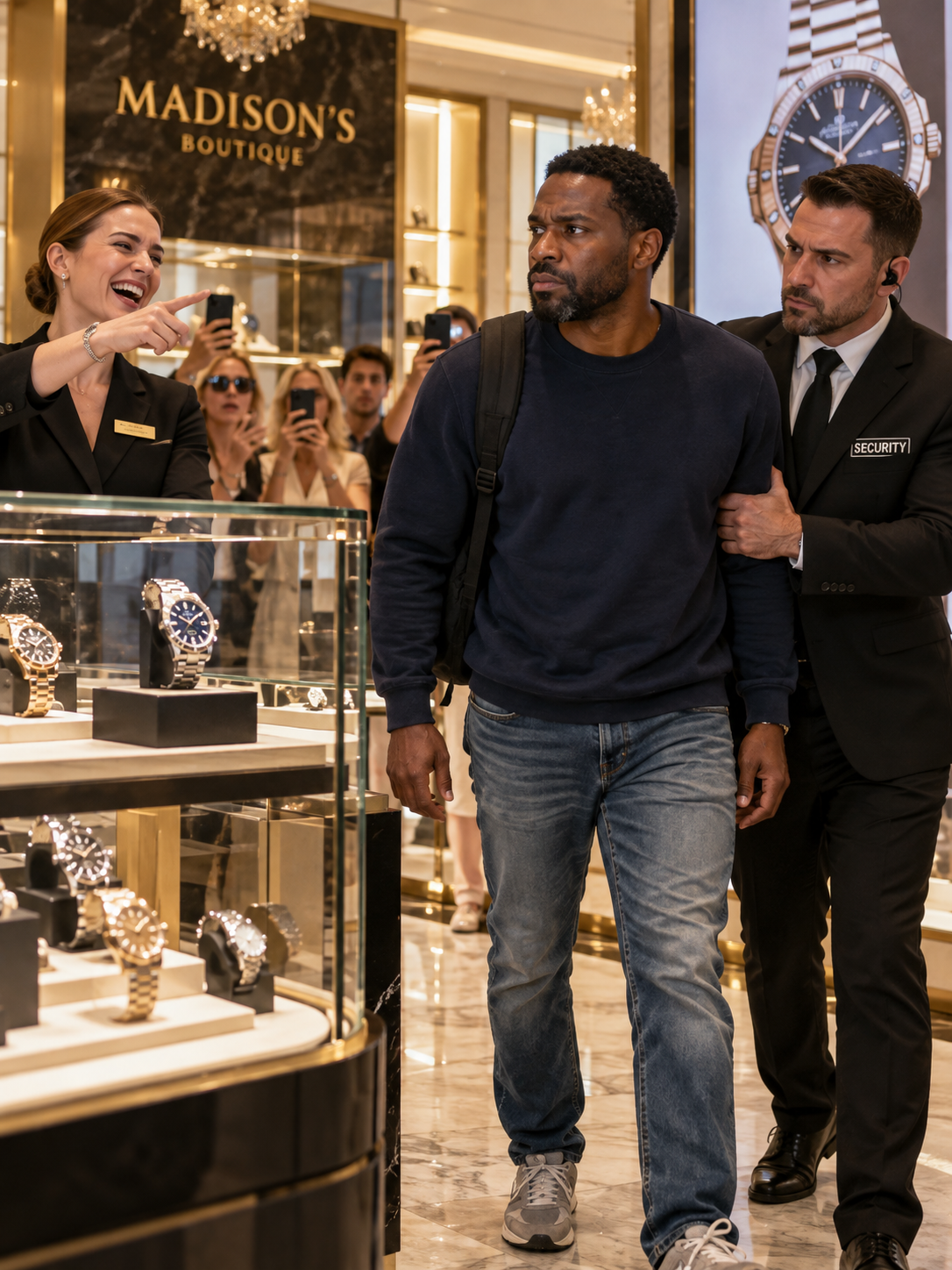
THEY HUMILIATED A BLACK CUSTOMER OVER AN $85,000 WATCH AND ORDERED HIM OUT—BUT THE MEETING WAITING UPSTAIRS WOULD EXPOSE WHAT MADISON’S BOUTIQUE HAD BEEN HIDING – Life Story
At p.m., a saleswoman laughed when Marcus Johnson asked to see an $85,000 watch. By , a security guard was...
her wealthy brother laughed when a homeless mother inherited a $5 mountain cabin—until she discovered the $30 million secret buried beneath its floor
“Speaking.” “My name is Frederick Patterson. I’m an attorney representing the estate of your grandmother, Rose Chen.” Maya straightened. Her...