A LITTLE GIRL STOPPED HER FATHER BESIDE A CRYING WOMAN IN A BROOKLYN PAWN SHOP—THEN HE RECOGNIZED THE SISTER-IN-LAW HIS WEALTHY FAMILY HAD ABANDONED YEARS BEFORE – Life Story
The pawnbroker dropped a wedding ring onto the glass and told the woman it was worth nothing.
She unfolded an eight-year-old boy’s hospital papers and asked him to take it anyway.
Then William Carter’s daughter walked toward her, and a secret his family had buried began to breathe.
The ring made a small, hard sound against the counter.
William would hear it in his sleep for months.
“Gold-plated,” the shop owner said. “Base metal underneath.
I can’t loan you anything on it.”
The woman stared at the narrow band as if it had betrayed her personally.
In her other hand, a hospital folder sagged open, crowded with appointment notices and bills.
A blue circle had been drawn around a date six days away.
She touched it with one shaking finger.
“Could you give me twenty dollars?” she asked. “Even ten? I can come back after payday.”
“Ma’am, I can’t sell what I can’t authenticate.” The owner slid the ring toward her.
His voice wasn’t cruel, only tired. “I’m sorry.”
William was there because his eight-year-old daughter, Annie, had spotted a silver bracelet in the window on their way home from her Saturday art class.
He was wearing his dark overcoat.
He had promised her twenty minutes.
“Dad,” Annie whispered, “why is she crying?”
The woman had moved to a wooden chair beneath the shop’s security camera.
She kept her head lowered, pressing the folder against her chest.
William glanced toward her and reached again for the bracelet.
“Something difficult happened,” he said. “We should give her privacy.”
“But she’s alone.”
“Sometimes people want to be alone.”
Annie considered that.
Her hair was escaping its braid, and there was a smear of yellow paint along the cuff of her sweater. “When I was scared at the children’s center, everybody thought I wanted to be alone,” she said. “I didn’t.”
William stopped moving.
Three years earlier, before he adopted Annie, she had refused to let him see her cry during their first visit.
He had learned later that she cried after he left.
He had promised to keep coming back.
Across the room, the woman folded the papers smaller, then smaller again.
The owner turned away.
“All right,” William said. “But let me speak first.”
Annie was already walking.
The woman flinched when their shadows crossed the floor.
Up close, William could see the red impressions left on her fingers by the edges of the folder.
She wore a thin green coat with a missing button, and her shoes were dark from rain.
“Excuse me,” he said, keeping his distance. “My daughter noticed you were upset.
Is there somebody we can call?”
“No.” She shook her head too quickly. “Thank you.
I’m fine.”
A tear fell onto the folder.
She wiped it away with her sleeve.
Annie looked at the ring resting in the woman’s palm. “You can have the money for my bracelet,” she said. “I don’t need it.”
“Annie—” William began.
“I was going to buy something pretty.
She needs something important.”
The woman’s mouth tightened. “You’re sweet, honey.
But it’s more than bracelet money.”
William crouched beside the chair. “Is someone ill?”
“My son.” The words barely reached him. “His name is Noah.
He’s eight.
They say his heart needs surgery, and the insurance company is still deciding what they’ll pay.” She looked down at the ring. “I thought this was the one thing I could sell without him noticing.”
At the sound of Noah’s name, something stirred in William’s memory.
He studied the woman’s face more closely: the line of her jaw, the pale scar just below her eyebrow, the way she pressed her lips together when she was trying not to cry.
“Emily?” he said.
She looked up fully.
For a moment neither of them breathed.
Then the woman his family had refused to speak of for nearly a decade whispered, “William Carter.
You really don’t know, do you?”
THE NAME ON THE PAPER
William remembered the last time he had seen Emily Carter.
She had been standing on the front steps of his parents’ Connecticut estate, wearing an inexpensive ivory dress and holding his older brother’s hand.
Daniel had just told their father that he was getting married without the family’s permission.
Their father had said something about consequences.
Their mother had looked at Emily as though she were an unfortunate stain on the white marble entrance.
William had stood behind the door, twenty-seven years old, already a senior executive, already practiced at remaining silent when silence benefited him.
Daniel had looked directly at him.
William remembered that part most clearly.
Not the argument.
Not the slammed door.
The look.
And now, almost ten years later, the woman from those steps was sitting in a pawn shop with a worthless ring and hospital papers pressed against her chest.
“Where’s Daniel?” William asked.
Emily’s face changed.
“He left.”
“I know he left the family.”
“No, William.” She swallowed. “He left us.”
William felt Annie’s fingers curl around his wrist.
He had been told that Daniel was living somewhere out West.
Their mother occasionally mentioned Nevada, then Arizona, always with the confidence of somebody discussing a man whose address she knew but preferred not to share.
“His son?” William asked.
Emily nodded.
“Daniel has a son?”
“He was there when Noah was born.” Her voice hardened slightly. “For the first three years, he was a good father.
Whatever else happened afterward, I won’t take those years away from him.”
William sank into the chair beside her.
Behind the counter, the pawnbroker began wrapping somebody’s purchase in brown paper.
Outside, rain streaked the shop window, turning the passing buses into blurred rectangles of blue and white.
“How could I not know?”
Emily laughed once, without amusement.
“You’re asking me?”
He accepted the answer.
Annie moved closer to Emily, studying her with the concentration she usually reserved for unfinished puzzles.
“Is Noah your little boy?”
“Yes, sweetheart.”
“Does he like drawing?”
“He loves drawing houses.”
Annie looked pleased.
“I draw houses, too.
Mine always have a room for a dog, even though Dad says we’re not ready for one.”
Emily managed a tiny smile.
“That sounds like Noah.”
William looked again at the hospital folder.
There was a surgeon’s name printed on the first page and a date circled in blue ink.
“May I?” he asked.
Emily hesitated before handing it over.
There were treatment summaries, insurance correspondence, a payment estimate, and an appeal acknowledgment from a health plan.
He could understand the financial language.
He couldn’t understand why a mother had been left to interpret it by herself.
“Is the operation definitely scheduled?”
“The hospital reserved the date.
His doctors say he needs it soon.
The insurance company asked for more information, and they’re still reviewing parts of the authorization.”
She rubbed her forehead.
“I’ve talked to the billing office three times.
One person says we may qualify for more assistance.
Another says we have to wait for the appeal.
I don’t even know anymore what I owe and what they’re only estimating.”
“Has anyone explained it clearly?”
“A social worker tried.
I was coming off a double shift.
I wrote everything down, but half of it stopped making sense when I got home.”
She pointed toward the circled date.
“What I know is that my boy gets out of breath walking to the bathroom.
I know he keeps telling me he’s fine when I can hear him trying to catch his breath.
And I know the doctors don’t want him waiting another month.”
William had attended hospital fundraisers, sat on charitable boards, and written seven-figure checks to medical institutions.
He had never sat beside someone who could identify the exact sound of her child’s troubled breathing.
He returned the folder.
“I can help with this.”
Emily immediately drew back.
“No.”
“Emily—”
“I didn’t tell you any of this because I wanted your money.”
“I didn’t think you did.”
“Your family spent years making sure I understood what they thought of me.
I will not give them the satisfaction of saying I came crawling back.”
William looked at her steadily.
“You didn’t come to us.
Annie found you.”
“That doesn’t change what happens afterward.”
He knew she was right.
Eleanor Carter, his mother, had an extraordinary ability to turn a favor into a debt and a debt into a lifetime of obedience.
William had watched her do it to business partners, distant relatives, and even his father.
“I won’t contact my mother,” he said. “I won’t tell anyone you’re here without your permission.
But please let me help you understand the hospital paperwork.”
Emily looked down at the folder.
He added, “No promises about what I can fix.
Just a chance to find out what actually needs fixing.”
For the first time, she seemed to hear something other than pity.
“You’d do that?”
“Yes.”
Annie tugged his sleeve.
“And we could go see Noah.”
Emily looked at the girl.
“It’s a hospital.
It isn’t very exciting.”
“That’s okay.
I don’t have to be excited.”
The simplicity of it nearly undid Emily.
William stood and retrieved his phone, then stopped.
“Before I call anyone, I need your permission.
You’re Noah’s mother.
His doctors can’t discuss his care with me unless you authorize it.”
Emily stared at him for a moment.
She had expected demands, conditions, perhaps some grand gesture intended to make her grateful.
Instead, this very wealthy man was asking permission to make a phone call.
“Okay,” she whispered.
William called his executive assistant, Mark Ellis, and asked him to find contact information for the hospital’s patient financial services office and an independent health insurance advocate.
He deliberately did not ask Mark to rearrange a surgical schedule.
When he finished, Emily was still looking at the ring.
“Keep it,” William said.
She closed her hand.
“I thought Daniel might have replaced it when he started gambling.
I thought he sold the real one.”
“You don’t know that.”
“No.”
Annie reached gently toward Emily’s hand.
“Can I see?”
Emily opened her palm.
The band was thin and scratched, with a tiny uneven mark near the setting.
Annie studied it as if she were examining something in a museum.
“My dad says something doesn’t have to be expensive to be important.”
William looked at his daughter.
He had said that about a shell she’d brought home from Coney Island.
He had not expected her to remember.
“Your dad sounds smart,” Emily said.
Annie glanced at him.
“He forgets things.”
William almost smiled.
“Frequently.”
“And sometimes he works when he says he won’t.”
“That too.”
Emily let out a small laugh.
It startled her enough that she pressed a hand to her mouth.
For a moment, she looked like the young woman William remembered from the front steps in Connecticut.
Then her phone vibrated.
She read the screen, and the color vanished from her face.
It was a message from Mrs.
Rodriguez, the neighbor who had been staying with Noah at St.
Mary’s Children’s Hospital.
Noah was asking for his mother.
And he had asked whether she had finally sold her wedding ring.
Emily closed her eyes.
“I promised him I would come back with good news.”
William picked up her folder and handed it to her.
“Then we should go back together.”
As they reached the door, Emily stopped.
“William?”
“Yes?”
“There’s something else you need to know about your brother.”
He turned.
She touched the edge of a brown envelope tucked behind the hospital papers.
“I tried to tell you once.
Years ago.”
William looked at the envelope.
“What happened?”
Emily’s expression grew strangely distant.
“Your family sent my letter back.”
SIX DAYS
St.
Mary’s Children’s Hospital occupied most of a block near the waterfront, its new glass entrance attached to an older brick building whose windows still had narrow stone ledges.
William had attended the dedication of a pediatric rehabilitation wing there four years earlier.
He remembered the ribbon, the photographs, and the grateful speech from the hospital president.
He did not remember meeting any patients.
That realization bothered him as they crossed the lobby.
Emily moved quickly toward the elevators, then slowed when she noticed Annie struggling to keep up.
Her instinct to look after someone else’s child, even while frightened for her own, was so automatic that William wondered how much of the past decade she had spent doing exactly that.
On the third floor, a woman with short gray hair was standing outside Room 312, holding a paper cup of coffee.
Mrs.
Rodriguez looked from Emily to William, then to Annie.
“Before anybody tells me anything,” she said, “Noah hasn’t finished his lunch, and he’s convinced the hospital is hiding better food from him.”
Emily reached for her arm.
“Thank you for staying.”
“Don’t thank me until you’ve tasted the coffee.”
Mrs.
Rodriguez’s eyes moved over Emily’s face.
“You didn’t sell it.”
“No.”
“Good.”
Emily blinked.
“You told me to try.”
“I told you to find out what it was worth.” Mrs.
Rodriguez lowered her voice. “I didn’t tell you that you had to sell the last thing you owned.”
William introduced himself.
The older woman gave him a firm handshake, neither impressed nor unfriendly.
“You’re Daniel’s brother.”
“Yes.”
She studied him for another second.
“Well.
That took long enough.”
Then she opened the hospital room door.
Noah Carter was sitting upright in bed, drawing a lopsided building on the back of a cafeteria menu.
He had dark hair that stood up at the crown and gray-blue eyes that stopped William in the doorway.
Daniel’s eyes.
Not simply the color.
The way they narrowed when he was concentrating.
The slight lift of one eyebrow before a question.
William remembered being twelve and listening to his seventeen-year-old brother explain how to build a treehouse without making their father angry.
The expression on Noah’s face was identical.
“Mom?”
Emily hurried to the bed and kissed his forehead.
“I’m here, baby.”
“Did you get enough?”
The question was asked so quietly that Annie barely heard it.
Emily sat beside him.
“No.
But I talked to somebody who might be able to help us figure things out.”
Noah looked over her shoulder.
He saw William first, then Annie.
“Who’s that?”
William approached slowly.
“I’m William.”
Noah frowned.
“William Carter?”
“Yes.”
“My dad’s brother?”
William nodded.
The boy studied him without smiling.
“Mom said you were busy.”
Emily looked away.
William pulled a chair toward the bed.
“Your mom was telling you the truth about what she knew.
I didn’t know about you, Noah.
I should have tried harder to find out what happened to your dad.”
Noah considered that.
“Are you rich?”
“I’m fortunate enough that money isn’t something I usually have to worry about.”
“That sounds rich.”
Annie climbed into the empty chair beside him.
“It is.
But he still makes us turn off the lights when we leave a room.”
“Electricity isn’t free,” William said.
Noah stared at Annie, then smiled despite himself.
“That’s what my mom says.”
Emily laughed softly, but her eyes were wet.
William told Noah he was glad to meet him.
He did not say that everything would be fine, because he didn’t know whether it would be.
Noah seemed to appreciate the distinction.
Annie introduced herself and asked about the building in his drawing.
“It’s a house,” Noah said.
“Where’s the front door?”
He pointed.
“That’s the garage.”
“Your garage is bigger than the whole house.”
“It’s for three cars.”
“Do you have three cars?”
“No.”
“Then that’s wasted space.”
Noah grinned.
William watched Emily’s shoulders relax by perhaps half an inch.
It was the first visible sign that she could breathe.
A hospital patient navigator arrived twenty minutes later carrying a tablet and a thick folder.
Her name was Leah Benton, and she explained the coverage questions carefully, stopping whenever Emily asked her to repeat something.
Noah had a congenital abnormality of his mitral valve.
For years, it had caused relatively minor problems; recently, the leakage had worsened, placing increasing strain on his heart.
The surgical team had recommended repair, if possible, rather than replacement.
His latest imaging had made the need more urgent, although the operation remained planned rather than an immediate emergency.
The insurer had authorized some portions of the hospital care but requested additional clinical documentation concerning the procedure and network arrangements.
A physician review was underway.
There were also outstanding deductibles, lost wages, transportation expenses, and months of household costs Emily had already absorbed.
William listened.
At one point he asked whether an immediate private payment would allow them to proceed.
Leah answered without hesitation.
“The medical team makes the clinical and scheduling decisions.
Payment won’t change Noah’s place in line.
What we can do is resolve the financial questions so his mother isn’t dealing with them alone.”
“That’s what I want,” Emily said.
William nodded.
He was accustomed to being the person who accelerated decisions.
For once, waiting was the appropriate thing to do.
Leah outlined the hospital’s financial assistance program, the insurance appeal, and a referral for an independent advocate.
Emily took notes in a small spiral notebook filled with dates, names, and phone numbers.
William noticed she had recorded every conversation.
Not carelessly.
Not approximately.
She had the name of the person she spoke with, the time, the reference number, and what had been promised.
“You’ve kept very good records,” he said.
Emily didn’t look up.
“When you don’t have money, you learn that a name and a date can be the difference between somebody helping you and somebody telling you the conversation never happened.”
Leah nodded.
“She’s right.”
William felt oddly embarrassed.
In his world, important promises arrived in documents prepared by lawyers.
Emily had been preserving hers in a notebook she carried in the lining of an aging handbag.
When Leah left, Noah was tiring.
Emily smoothed his blanket while Annie put her drawing beside his.
“What’s that?” Noah asked.
“A house that makes sense.”
It had a smaller garage, enormous windows, and two crooked stick figures standing beneath a tree.
“One is you,” Annie explained. “The other is me.”
“Where’s the dog?”
Annie looked surprised.
“I didn’t know you liked dogs.”
“I love dogs.”
She turned toward William with the expression of a child discovering powerful new evidence.
William raised one hand.
“We are not negotiating dog ownership in a hospital room.”
“Then we can negotiate later.”
Noah laughed.
Emily watched the two of them with a tenderness that hurt.
For years, she had told herself that Noah did not need the Carter family.
She had told herself that love could compensate for everything else.
But seeing another child treat him as an ordinary cousin rather than a sick boy made her understand what isolation had taken from him.
When Noah fell asleep, Emily followed William into the hallway.
“There’s something I should have told you before we came here.”
“The letter?”
She nodded.
“Daniel wanted you to know when Noah was born.
He wrote to you at the company.”
William frowned.
“I never got anything.”
“I know that now.”
“Do you still have it?”
“I kept the returned envelope.”
“Why?”
Emily looked through the small window into her son’s room.
“Because for eight years, it was the only proof I had that we tried.”
William waited.
She opened her handbag and took out the brown envelope she had touched in the pawn shop.
Its corners were soft from age.
Across the front, in blue ink, was a name William recognized immediately.
His own.
Below it was the address of Carter Industries in Manhattan.
And across the bottom was a typed sentence on stationery from the Carter family’s private office.
ALL FAMILY MATTERS MUST BE REFERRED THROUGH AUTHORIZED COUNSEL.
William read it twice.
Then he looked at the date.
The letter had been returned three weeks after Noah was born.
On the back, beneath an old delivery label, was a small stamp he had seen on confidential company correspondence throughout his career.
RECEIVED — EXECUTIVE OFFICE.
Someone had opened a letter addressed to him.
Someone had decided he would never read it.
And someone had sent it back.
THE LETTER THAT CAME BACK
William placed the envelope on a table in the family waiting area.
He didn’t touch it again until Emily sat opposite him.
“Tell me what happened after Daniel left home,” he said.
She studied his face.
“All of it?”
“As much as you want me to know.”
Outside the window, the rain had stopped.
Gray afternoon light settled against the glass, and somewhere down the corridor a cart rattled over uneven floor tiles.
Emily rested both hands on the table.
“At first, he was happy.”
She almost sounded surprised.
“We had an apartment above a bakery in Queens.
The windows leaked when it rained, and Daniel used to complain that our clothes smelled like bread.
But he would come home from work and pick me up in the kitchen as if we’d won something.”
William smiled faintly.
“He always did that.”
“He worked construction.
At first it was small projects.
Then he got onto a larger commercial crew, and he was proud of it.
He said he’d prove to your father that he could build something without borrowing the Carter name.”
William remembered Daniel’s hands.
Even as a teenager, his older brother had preferred repairing furniture to sitting through business dinners.
Daniel had wanted to build houses ordinary people could afford.
Their father had considered that ambition embarrassingly small.
“Was the job through Carter Industries?” William asked.
“Not directly.
A subcontractor.
But the site belonged to a Carter development.”
Something in William’s expression shifted.
“Which site?”
Emily named a commercial project in Long Island City.
He knew it.
The project had been completed nearly a decade earlier, following a construction accident that had attracted a short burst of unfavorable publicity.
“One of Daniel’s friends died there,” Emily said.
William remembered the news report.
A worker had been fatally injured when improperly secured materials fell during a shift change.
There had been investigations, insurance claims, and a confidential civil settlement.
William had been managing the company’s West Coast expansion at the time.
He had read a summary prepared by legal counsel and accepted its conclusion.
“He was standing less than twenty feet away,” Emily continued. “Daniel kept saying the accident shouldn’t have happened.
He’d warned somebody about the storage area.”
“Did he report it?”
“He said he did.
Later, he was told the official records didn’t support his version.”
William leaned forward.
“What happened to him?”
“He lost his position with that contractor after the project shut down.
He picked up work elsewhere.
Then work became harder to find.”
Emily traced the rim of her paper cup.
“He started drinking after that.
Not every day at first.
He was ashamed of what happened.
He thought he’d failed his friend, and he couldn’t understand why your family wouldn’t even listen.”
William stared at the table.
“He contacted us?”
“He called your father’s office.
He wrote letters.
Eventually, he wrote directly to you.”
Emily opened the old envelope.
Inside was a folded letter, written in Daniel’s familiar, impatient handwriting.
The words slanted slightly upward across the page.
William’s hands trembled when he recognized it.
He read the first paragraph silently.
Daniel had written that his son had been born.
He had included the baby’s full name and birth date, along with a short description of how Noah had grabbed his finger in the hospital.
Then the letter changed.
Daniel asked William to review what had happened at the Long Island City site.
He wasn’t asking for a job.
He wasn’t asking to be reinstated in the family business.
He wanted somebody with authority to look at the safety complaints and the assistance promised to the injured workers and their families.
Near the end, he had written:
I know Dad won’t listen to me.
Maybe you will.
William lowered the page.
For years, he had believed Daniel had simply chosen a different life and cut off contact.
Now he was holding proof that his brother had tried to reach him.
More than once, if Emily was telling the truth.
And there was no reason to believe she wasn’t.
“I never saw this,” William said.
“I believe you.”
“Why didn’t you send another?”
“We did.”
Emily’s voice was quieter now.
“Two more letters.
Daniel tried calling, too.
Eventually, a lawyer contacted us and said any further approaches to Carter Industries would be considered harassment.”
William shut his eyes.
He could almost hear his father delivering those words in the family dining room.
Daniel had once been stubborn enough to fight anyone who challenged him.
But shame had changed him.
“He took it badly,” Emily said. “He kept saying he’d been stupid to think they’d help.
He started losing work.
Then the drinking got worse.”
She rubbed the old wedding ring between her fingers.
“I worked days at a diner and cleaned offices at night.
Sometimes Daniel stayed home with Noah and made everything into a game.
Sometimes he disappeared until morning.”
William listened without interrupting.
“There were debts.
Gambling.
Lies about where he’d been.
The first time he took money from our grocery jar, he brought it back two days later and apologized.”
“The first time?”
Emily nodded.
“Eventually, he stopped bringing it back.”
She stared at the hospital wall opposite her.
“He met another woman.
One night he told me she made him feel like the man he used to be.
He said he couldn’t stand looking at our apartment and remembering everything he’d failed to become.”
William felt a mixture of grief and anger.
“Did he know what Noah would go through?”
“He knew our son needed regular cardiology appointments.
We didn’t know how serious the valve problem would become.”
She swallowed.
“He took the little money we had left.
He packed a bag.
He told Noah he’d be back after a trip.”
“Did he ever come back?”
“No.”
The answer was simple enough to leave no room for misunderstanding.
“Was there ever a divorce?”
“Not that I could complete without finding him.
I spoke to legal aid about the process, but then we moved again, and there was always something more immediate.
I’ve had to make peace with being abandoned without a proper ending.”
William looked down at the letter.
A year earlier, he would have wanted to preserve the uncomplicated memory of Daniel as a brave older brother.
Now he had to make room for another truth.
Daniel had loved his family once.
He had also hurt them terribly.
Both facts belonged to the same man.
“I’m sorry,” William said.
Emily shook her head.
“You didn’t make him leave.”
“No.
But I could have found him when it first mattered.”
“You don’t know that.”
“I could have tried.”
She looked at him steadily.
“Yes,” she said. “You could have.”
William appreciated that she didn’t absolve him simply because he had offered to help.
He folded Daniel’s letter with great care and returned it to the envelope.
“Would you let me have a copy?”
“Why?”
“I want to find out who received it.”
Emily’s expression tightened.
“And what happens if you find out?”
William considered the question.
He could have promised justice.
He could have promised that his mother would apologize, that Daniel’s name would be cleared, or that somebody would be punished.
He had spent enough of his life making promises on the strength of his position.
“I don’t know yet,” he answered. “But I won’t use your letter without telling you first.”
Emily nodded slowly.
“Then you can copy it.”
He called Mark and asked him to locate the company’s archived mail-intake records and the legal files relating to the Long Island City development.
Mark was silent for several seconds.
“William, are you sure?”
“Yes.”
“That project is sensitive.”
“I know.”
“Your mother still asks to be notified whenever anybody requests those records.”
William looked at Daniel’s handwriting.
“Does she?”
“It’s been an unusual standing instruction for years.”
William felt the first real chill of recognition.
“Don’t contact her,” he said.
After the call, he found Annie sitting outside Noah’s room, eating crackers from a small packet Mrs.
Rodriguez had given her.
She looked up.
“Did you fix it?”
“No.”
“Are you going to?”
“I’m trying.”
Annie held out a cracker.
William took one.
“Dad?”
“Yes?”
“Why didn’t we know Noah?”
He sat beside her.
“Because grown-ups made some choices they shouldn’t have made.”
“Did you?”
The question arrived without accusation.
That made it harder to answer.
“Yes.”
Annie leaned against him.
“Can you make different ones now?”
William stared toward Room 312, where Emily was adjusting Noah’s blanket.
“I think that’s what I have to do.”
That evening, William drove Annie home through wet Brooklyn streets.
They passed the pawn shop again.
Its lights were still on, and the silver bracelet remained in the window.
“Dad,” Annie said, pointing, “can we stop?”
He pulled over.
Inside, the owner recognized them immediately.
Annie walked to the display case.
“I’d like the bracelet after all.”
William hesitated.
“I thought you wanted to give the money to Emily.”
“I do.
But I want to give the bracelet to Noah.”
She looked at the owner.
“Is it real silver?”
The man checked the tag.
“Sterling silver.
It has a proper mark.”
Annie considered that very seriously.
“Good.
His mom has already had enough trouble with jewelry.”
The owner looked puzzled.
William handed him the money.
Annie held the bracelet carefully in its little cardboard box all the way home.
William watched the city slip past.
For the first time in years, he was not thinking about the next acquisition or a quarterly report.
He was thinking about an eight-year-old boy he had never known existed.
And about the old receiving stamp on a letter that someone had made sure never reached his desk.
THE WAITING ROOM
By Monday morning, William had rearranged his week.
His calendar had contained two investor meetings, a bank presentation, a charity luncheon, and a conference call involving three international offices.
He moved what could be moved and delegated what could be delegated.
His mother called twice.
He let both calls go unanswered.
At St.
Mary’s, Emily was sitting beside Noah’s bed with her notebook open when William arrived.
She had been speaking with the insurance advocate since seven-thirty.
The review had progressed, but she was still waiting on final confirmation of the surgical authorization.
William heard her explaining the dates with remarkable patience.
“No, the echocardiogram report was transmitted last Thursday.
I have the confirmation number.
Would it help if I read it to you?”
She listened.
“Thank you.
Yes, I can hold.”
She covered the phone.
“They’ve found the report.”
William raised his eyebrows.
“That sounds promising.”
“It’s the third time they’ve found it.”
He smiled faintly.
She did not.
Then the person on the phone returned, and Emily immediately straightened.
“Yes.
I’m here.”
Her eyes widened.
“You mean the medical review is complete?”
She listened for another minute, thanked the representative, and wrote a reference number in her notebook.
When she hung up, her hand remained on the phone.
“The authorization came through,” she said.
William waited.
“They approved the surgery.”
She looked at him, suddenly uncertain.
“That’s what she said.
I asked her to repeat it.”
A laugh escaped her, followed immediately by tears.
Leah arrived a little later and confirmed the information.
The approved services would still leave Emily with substantial out-of-pocket expenses, although the hospital’s assistance program was reviewing her eligibility.
Other costs, including missed work and the prospect of having no stable apartment after discharge, remained unresolved.
William offered to cover the expenses that the assistance programs did not.
Emily began to object.
He stopped her gently.
“Let me tell you exactly what I’m offering.”
She folded her arms.
“Go on.”
“I can pay the remaining patient responsibility through the hospital’s billing office, if you want me to.
I can also help with transportation and the costs of getting you settled somewhere while Noah recovers.”
“And what do you want in return?”
“Nothing.”
“That’s not how your family works.”
“I know.”
She looked at him.
“Then you understand why I’m asking.”
William nodded.
“I do.”
Emily watched Noah working on a drawing with Annie.
He had a ruler balanced across his knees, and his tongue was sticking out slightly from the corner of his mouth.
She thought about the nights she’d stayed awake after he fell asleep, calculating how many additional shifts she could take.
She thought about the car she’d sold, the furniture, the lease she had surrendered when she could no longer afford it.
For six weeks, she and Noah had been relying on Mrs.
Rodriguez’s spare bedroom.
She had told herself it was temporary.
The trouble was that nearly everything in her life had become temporary.
“Okay,” she said finally.
William didn’t move.
“You’re sure?”
“I want to read whatever documents are involved.
And I want copies of the payments.”
“Of course.”
“And if the hospital approves more assistance, we’re not going to pretend they didn’t.”
“Agreed.”
She drew a long breath.
“I can accept help.
I just need to know I haven’t handed over the right to make decisions for my son.”
William’s expression softened.
“You haven’t.”
That afternoon, Noah’s surgeon came to discuss the operation.
He explained the plan, the risks, the possibility that a repair might be more complicated than anticipated, and what recovery could involve.
Emily asked questions from two pages of handwritten notes.
William remained quiet except when Noah looked at him for reassurance.
The surgeon did not promise a perfect outcome.
He promised that the team would do everything it reasonably could.
Somehow, the honesty reassured Emily more than an impossible guarantee would have.
Later, when the doctor left, Noah turned toward his mother.
“Am I going to be okay?”
Emily sat beside him.
“I believe the doctors have a good plan.”
“That’s not what I asked.”
She smoothed his hair.
“I know.”
His lower lip trembled.
“I’m scared.”
Emily’s heart tightened.
For months, he had tried so hard not to burden her that she’d nearly forgotten he was still a child.
“Me too,” she admitted.
Noah looked surprised.
“You are?”
“Very.”
“Then what do we do?”
Emily leaned forward until their foreheads touched.
“We do what we’ve been doing.
We tell the truth.
We ask questions.
And we take the next step.”
Noah closed his eyes.
“Okay.”
From the doorway, William watched them.
He understood then that Emily had been brave in ways that would never appear in a company biography.
She had negotiated with landlords, answered calls from creditors, learned medical terminology, worked through exhaustion, and made sure her son still believed his future could be larger than their circumstances.
He could write a check.
She had been showing up every day.
That evening, Annie stayed with William’s housekeeper while he brought Emily a change of clothes and a meal from a neighborhood restaurant.
They ate at a table outside the pediatric ward because Noah was asleep.
Emily examined the container.
“Is this from the Italian place on Atlantic Avenue?”
“Yes.”
“Daniel used to take me there when we could afford it.”
William smiled.
“He took me there when he wanted to borrow money.”
Emily shook her head.
“He never told me that.”
“He always paid me back.
Usually late.”
She took a bite of pasta.
For several minutes, they ate without talking.
Then Emily said, “Can I ask you something?”
“Of course.”
“Did you ever go looking for Daniel?”
William put down his fork.
“Not the way I should have.”
“Why?”
He stared at the hospital windows across the corridor.
“Because it was easier to believe the story I was told.
That he had chosen his life and wanted nothing to do with us.”
“And because of your father?”
“Yes.”
She waited.
“My father had a way of making disagreement feel like betrayal.
I was good at my job.
I wanted his approval.
I knew that if I questioned how he treated Daniel, sooner or later I’d have to question how he treated other people.”
Emily considered this.
“That must have been difficult.”
“It wasn’t as difficult as what happened to you.”
She nodded.
“No,” she said. “It wasn’t.”
There was no cruelty in the answer.
Only a distinction she refused to let him erase.
William looked at her with new respect.
The next morning, Mark met him in the hospital cafeteria.
He carried a slim folder and looked as though he had slept poorly.
“I found the mail intake record,” he said.
William opened the folder.
There was a scanned log showing the arrival of Daniel’s letter.
The recipient field clearly identified William Carter.
The correspondence had been redirected to the private office of Eleanor Carter.
The transfer had been authorized by someone working under her supervision.
William felt his jaw tighten.
“Who instructed them to do that?”
“The archived note says family correspondence protocol.”
“That isn’t a person.”
“No.”
Mark leaned forward.
“And there’s something else.”
He placed a second page on the table.
After the Long Island City accident, company counsel had created a separate legal file involving Daniel’s allegations about the worksite.
The file had been assigned a restricted status.
Eleanor Carter’s office had requested the restriction.
William looked at the date.
It was the same month Daniel had written the letter announcing Noah’s birth.
“Does my mother have authority to restrict those files?”
“She did when your father was chairman.
She still has access through the family office, but that doesn’t mean the records are hers to control.”
“Can we review them lawfully?”
“With the company’s legal team involved.
And if you’re considering an independent investigation, you need outside counsel.
There may be privileged material in there.”
William closed the folder.
“Find me counsel who hasn’t represented my family.”
Mark regarded him carefully.
“Your mother won’t like that.”
William glanced toward the pediatric elevators.
“I don’t think she likes much of anything I’m doing.”
He returned upstairs just before Noah’s procedure.
Emily was helping her son into a clean hospital gown.
Annie had arrived with the silver bracelet in its little box.
“It’s for when you get better,” she told Noah.
He opened the lid.
“Is it really silver?”
“Yes.”
“Why?”
“Because some things should be exactly what people say they are.”
Noah looked at her for a long moment.
Then he nodded, apparently satisfied.
He closed the box and handed it back.
“Keep it safe?”
“I will.”
The surgical nurse came to the doorway a little later.
It was time.
Emily stood so quickly that her chair scraped across the floor.
Noah was transferred onto the rolling bed and covered with a warmed blanket.
The nurse explained where Emily could accompany him and where the family would need to stop.
As they moved down the hallway, Noah reached for his mother’s hand.
She walked beside him.
William followed with Annie.
At the doors to the restricted surgical area, Emily bent down and kissed Noah’s forehead.
“I’ll be here,” she whispered.
“You promise?”
“I promise.”
Noah turned toward William.
“Are you staying too?”
William swallowed.
“Yes.”
“Even if your phone rings?”
William took the phone from his pocket and switched it off.
“Even then.”
Noah looked at Annie.
“And the bracelet?”
She held up the box.
“Safe.”
The nurse began wheeling him toward the double doors.
Just before they closed, Noah raised one hand.
Emily kept hers raised until she could no longer see him.
Then her knees weakened.
William caught the back of the chair as she sat down.
He wanted to say something reassuring.
Instead, he pulled another chair beside her.
Annie sat on the other side.
For the first time in her adult life, Emily did not have to sit alone outside an operating room.
And for the first time in William’s life, there was nothing his money or authority could do to shorten the hours ahead.
The doors remained closed.
THE COST OF SILENCE
The waiting room clock had a second hand that clicked louder than it should have.
Emily noticed it after the first hour.
After the second, she began counting the clicks without meaning to.
By the third, the coffee in front of her had gone cold, and she had stopped pretending to read the pamphlet the nurse had given her.
Annie sat nearby with her drawing book open.
She had drawn a hospital with an enormous red heart above its entrance.
William sat beside Emily, his phone still switched off.
She knew it was costing him something.
She didn’t yet know how much.
“The surgeon called yesterday afternoon about an opening,” Emily said suddenly. “When they moved the operation up because of Noah’s latest scan, I was glad.
Now I keep thinking maybe we should have waited.”
William turned toward her.
“Did the medical team explain why they wanted to go ahead?”
“Yes.
They said the repair was the right next step.”
“Then you made a decision with the information they gave you.”
“What if it wasn’t enough?”
He looked at her.
“Emily, you’ve asked more questions in the last three days than I’ve asked in some entire years of my life.
Nobody could say you rushed into this.”
She folded Noah’s little blue jacket across her lap.
“I should have brought his favorite blanket.”
“It’s in his room.”
“He likes it when he’s scared.”
“Then it’ll be waiting when he gets back.”
She looked down.
“I keep thinking of all the nights I got angry because he wouldn’t go to sleep.
I was tired, and he wanted another story, another drink of water, another question answered.
Sometimes I told him he had to stop talking because I needed to be up at five.”
William listened.
“Now I’d give anything to hear him asking for water.”
He reached for the paper napkins on the table and placed them beside her.
He didn’t try to explain why she shouldn’t feel guilty.
Some fears were too deep for easy comfort.
An hour later, a member of Noah’s surgical team came to update them.
The operation was proceeding, but the valve repair was technically demanding, and it would take longer than the original estimate.
Emily nodded as though she understood.
Afterward, she went into the restroom and stood at the sink, holding the porcelain edges until her fingers hurt.
She stared at herself in the mirror.
Her eyes were swollen.
The skin beneath them was gray from sleeplessness.
There was a small tear along the cuff of her green coat.
She remembered standing in the pawn shop only days earlier, asking a stranger to give her ten dollars for a wedding ring.
She had believed that was the most humiliating moment of her life.
But this was worse.
Here she had no task to perform, no call to make, no shift to pick up.
All she could do was wait while other people tried to save her son.
When she returned, William was standing beside the window.
His phone was on again.
“Mother,” he said quietly, “this is not an appropriate time.”
Emily stopped.
She could hear the sharp, controlled cadence of Eleanor Carter’s voice, although she couldn’t distinguish every word.
William’s expression hardened.
“No.
I will not come to Manhattan while Noah is in surgery.”
He listened.
“Then hold the meeting without me.”
A pause followed.
“You need to understand something.
I know about Daniel’s letter.”
Emily saw his fingers tighten around the phone.
Another pause.
“I’m not discussing this over the telephone.”
He ended the call.
For several seconds, he stood without moving.
“What did she say?” Emily asked.
William turned.
“She said the board is concerned about my judgment.”
“Because you helped Noah?”
“Not because of the payment.
I used my own money.
They’re concerned because I’ve requested an outside review of the old construction files.”
Emily looked at Annie, who was still drawing.
“Your mother knows about the letter?”
“She knows I found it.”
“And?”
“She said Daniel’s correspondence was handled according to family policy.”
Emily gave a short, bitter laugh.
“Family policy.”
William sat beside her again.
“I asked why a letter addressed to me was redirected.
She said I was too young to understand the reasons at the time.”
“You were twenty-nine.”
“I mentioned that.”
Emily stared at Noah’s folded jacket.
“Does she know how sick he is?”
“Yes.”
“And she still wants you at a meeting?”
William did not answer immediately.
“She says the company’s reputation must come first.”
Emily looked at him.
“That’s what your father used to say.”
“I know.”
“It’s what Daniel said right before he stopped calling your family.”
William felt the old family argument settling around him like a familiar coat.
He had worn it so long that he had nearly forgotten its weight.
The operating room doors opened.
Emily stood.
The surgeon approached with his cap in his hand.
She searched his face before he spoke.
“The repair was successful.”
For a moment, the words did not seem to mean anything.
Then they did.
Emily pressed both hands over her mouth.
The surgeon explained that Noah would be monitored closely in the cardiac intensive care unit.
The next day would be important.
There were still risks, and recovery would require patience.
But the repair had gone as planned.
Emily began crying.
She couldn’t stop.
William stood beside her, one hand resting lightly on the back of her chair.
Annie approached the doctor.
“Does this mean he can have pancakes?”
The surgeon smiled.
“Not immediately.
We’ll start with the recovery plan.”
Annie nodded solemnly.
“I understand.
But after that?”
“After that, I imagine pancakes will be perfectly reasonable.”
She turned toward William.
“You heard him.”
William laughed.
It was an unexpected sound, low and unsteady.
“Yes,” he said. “I heard him.”
When Emily finally saw Noah, he was sleeping beneath a white blanket with monitors and lines attached to him.
He looked very small.
She sat close enough to touch his hand.
“I’m here,” she whispered.
The monitors continued their quiet rhythm.
For the first time in months, she allowed herself to believe there might be a future beyond hospital corridors and unpaid bills.
That evening, Noah opened his eyes briefly.
He saw Emily first.
Then he turned his head and found William sitting near the window.
“You stayed,” he murmured.
William leaned forward.
“I told you I would.”
Noah’s eyes moved toward Annie, who was holding the bracelet box.
“Still safe?”
“Of course.”
He closed his eyes again.
A faint smile remained on his face.
The next day, William returned briefly to Manhattan.
Mark met him in the Carter Industries lobby.
The forty-two-story building was as immaculate as ever.
The security guards greeted William by name, and a receptionist brought him coffee without asking.
For years, he had interpreted this choreography as evidence of respect.
Now he noticed the nervousness beneath it.
Mark handed him a folder.
“Outside counsel reviewed the material we could properly provide,” he said. “There are discrepancies.”
They entered William’s office.
Mark closed the door.
The old Long Island City project had involved multiple subcontractors.
The accident investigation and civil claims had been closed years earlier.
But Daniel’s complaint appeared in the internal records as a contemporaneous report.
That meant his warnings had not simply been invented afterward.
There were also indications that a separate assistance program, discussed after the accident to support affected worker families, had been proposed but never implemented.
The company’s public statements at the time had suggested otherwise.
William turned the pages slowly.
“So Daniel wasn’t imagining it.”
“He had grounds to ask questions,” Mark said carefully. “That doesn’t establish every allegation he made.
But there were questions the company should have addressed.”
“Why didn’t anyone tell me?”
Mark looked at him.
“You signed off on the project closeout summary.”
William remembered.
It had arrived during a busy quarter, between an overseas acquisition and an investor presentation.
He had read the executive summary.
He had approved it.
He had never asked what lay beneath it.
“You’re saying I had the chance to know.”
“Yes.”
The answer was devastating precisely because it was true.
Mark continued.
“The original settlement may have been legally valid.
The independent lawyers are still reviewing the facts.
But the company knew there were unresolved concerns about the way the incident had been described.”
William opened another document.
It was a memorandum recommending that additional communication with Daniel Carter be routed through the family’s private office rather than the business.
The justification referred to the possibility of reputational harm.
Below the notation was Eleanor Carter’s name.
William sat back.
For nearly ten years, he’d believed that his family had simply abandoned Daniel.
The truth was more troubling.
They had treated his attempts to speak as a risk to be contained.
And William had benefited from the silence.
Mark sat opposite him.
“What do you want to do?”
William looked at the city outside his window.
“The board needs an independent review.”
“They’re already resisting.”
“Then we put the request in writing.”
“And if they reject it?”
William closed the folder.
“We document that too.”
Mark remained seated.
“William, I need to tell you something as your assistant and as your friend.”
William looked up.
“You have a real chance of losing your position.”
“I understand.”
“I don’t think you do.
Your mother has been calling directors individually.
Some of them believe you’re using confidential company matters to settle an old family grievance.”
“And what do you believe?”
“I believe the family grievance is real.
I also believe the company has obligations it cannot dismiss by calling them private.”
William nodded.
“That makes two of us.”
Mark hesitated.
“There’s another problem.
The board doesn’t see Emily and Noah as family members with rights.
They see them as a liability.”
William felt his expression change.
Mark continued quickly.
“I don’t agree.
But that’s how people are talking.”
William stood.
“Then we need to make sure Emily isn’t blindsided.”
That afternoon, he told her what he had learned.
They were sitting in the hospital cafeteria.
Noah was resting comfortably upstairs, and Mrs.
Rodriguez had agreed to stay with him while Emily ate.
William placed a copy of Daniel’s letter between them.
“Your husband had raised concerns about that construction accident before the company’s investigation was closed.”
Emily looked up.
“I know.”
“The archived records support the fact that he reported those concerns.”
She went very still.
“Does that mean somebody finally believes him?”
“It means his complaint was real and documented.
We still have to establish exactly what happened.”
Emily looked down at the letter.
For years, Daniel had told her that everyone at the company considered him bitter and unreliable.
His own father had dismissed him as a disappointed son looking for someone to blame.
Eventually, even Emily had begun to wonder whether Daniel’s version of the accident had changed in his memory.
“Before he started drinking,” she said quietly, “he used to wake up at night talking about the man who died.”
William listened.
“He kept saying he’d told them the storage racks weren’t secure.
Sometimes he’d sit at the kitchen table until morning trying to remember exactly which supervisor he’d spoken to.”
She touched the page.
“I thought he needed to let it go.”
“You were trying to survive.”
“I was.
But he was telling the truth about trying to report it.”
William nodded.
“At least about that much, yes.”
Emily wiped her eyes.
She did not forgive Daniel for abandoning their child.
She did not suddenly forget the debts, the lies, or the nights she had searched for him.
But something in her understanding of their marriage shifted.
Daniel’s collapse had not begun in the way she’d believed.
His drinking and gambling had still been his choices.
His abandonment was still his responsibility.
Yet the humiliation that preceded them had been made worse by people powerful enough to bury his concerns.
“I want the truth,” she said.
William looked at her.
“Even if it hurts?”
“It’s already hurt us.”
He told her that the board might retaliate against him professionally.
She listened without interrupting.
Then she asked the question he had been avoiding.
“If they remove you, what happens to the investigation?”
William hesitated.
“That’s what I’m trying to prevent.”
Emily looked through the cafeteria window toward the hallway.
“Then you need to make sure this doesn’t depend on your job.”
He stared at her.
She continued.
“For ten years, everything my son and I were allowed to know about the Carter family depended on what somebody in that family wanted us to know.
I don’t want the truth about Daniel to depend on whether you’re allowed to sit in an office.”
William slowly nodded.
She had seen the flaw in his plan before he had.
He had still been thinking like a chief executive: gain authority, direct the process, achieve the result.
Emily understood something he was only beginning to learn.
If one person controlled the truth, another person could take it away.
And that evening, she made a decision.
She would no longer let the Carter family decide whether her story deserved to be heard.
THE ROOM WITH NO WINDOWS
Three days after Noah’s surgery, Emily received an unexpected call.
The woman introduced herself as a representative of the Carter family office.
Her tone was pleasant, efficient, and carefully impersonal.
Mrs.
Carter would like to discuss an arrangement that might provide immediate stability for Emily and her son.
Emily stood beside the hospital window, listening.
“What kind of arrangement?”
“A private financial agreement.”
“In exchange for what?”
A pause.
“Perhaps it would be more productive to discuss that in person.”
Emily looked toward Noah’s bed.
He was sitting up with assistance, working on a drawing while Annie explained the difference between ordinary pancakes and what she called celebration pancakes.
“Send me the proposal in writing,” Emily said.
The representative hesitated.
“Mrs.
Carter would prefer a personal conversation.”
“Then Mrs.
Carter can prefer it.”
Emily ended the call.
An hour later, the proposal arrived by email.
It offered assistance with Noah’s future education and a substantial fund for family living expenses.
In return, Emily would agree not to disclose certain family communications or make public statements regarding Daniel’s disputes with Carter Industries.
She would also acknowledge that no further compensation was owed concerning those matters.
Emily read the proposal twice.
The amount was more than she had earned in several years.
There had been nights when she would have accepted half of it without reading the second page.
Now she could see the price.
She forwarded it to the independent lawyer William had helped her contact.
Then she sent William a short message.
Your mother wants to buy our silence.
He called immediately.
Emily answered in the hallway.
“Did you know?”
“No.”
“She’s offering money for Noah’s future.”
William sounded exhausted.
“I’m sorry.”
“I’m not calling for an apology.”
“What do you need?”
She looked down at the phone.
“I need you to keep your promise.
No more decisions about my family without me.”
“You have my word.”
“Good.
Because I’m not signing anything.”
There was silence on the other end.
Then William said, “I wouldn’t ask you to.”
The following morning, Emily met her lawyer at the hospital.
Together, they reviewed the old letter, the returned envelope, the family office proposal, and the correspondence Emily had preserved.
The lawyer explained what the documents established and what they did not.
The stamped envelope supported the fact that Daniel’s letter had reached the executive office.
The family office’s own correspondence could establish who had intercepted it.
Daniel’s original account of the construction accident was relevant, but allegations would still require corroboration.
Emily could provide her own records voluntarily.
The company documents, however, would need to be handled through appropriate legal and governance channels.
Emily listened carefully.
She wanted accountability.
She did not want another grand promise that could collapse when somebody hired a more expensive lawyer.
“I don’t want my son’s medical history made public,” she said.
“Then we won’t use it without your permission.”
“I don’t want a settlement that says Daniel was a perfect husband.
He wasn’t.”
Her lawyer nodded.
“And I won’t sign anything that pretends the Carter family didn’t know about him.”
“That is a reasonable position.”
Emily looked down at her wedding ring.
“I’m tired of people telling me what I should be grateful for.”
She gave the lawyer permission to submit her records to the company’s independent directors through their counsel, and to request an inquiry into the handling of Daniel’s correspondence and the historical claims.
She also prepared a statement in her own words.
Not an accusation she could not prove.
Not a dramatic speech about wealthy people.
A factual account of the family she had built, the letters she had sent, and the consequences of being shut out.
She worked on it during Noah’s afternoon nap.
Her handwriting was slow and steady.
For the first time, she was not writing a plea for help.
She was writing a record.
Meanwhile, William faced his board.
The meeting room on the top floor had no windows.
It had been designed that way, his father used to say, so directors could concentrate on the work in front of them rather than the view.
William had always liked that room.
Now he felt trapped by it.
Twelve people sat around the conference table.
Eleanor Carter occupied the chair nearest the head of the room.
She wore a charcoal suit with a narrow pearl brooch, and her silver hair was arranged exactly as it had been for every board meeting William could remember.
“William,” she said, “we’re pleased you could join us.”
He took his seat.
“I’m here to discuss the independent investigation.”
One of the directors cleared his throat.
“We’ve reviewed your request.”
“And?”
“There’s concern about the scope.”
“Then let’s discuss the scope.”
Eleanor folded her hands.
“The company has legal obligations to shareholders.
We cannot reopen every dispute from the past because you feel personally responsible for your brother.”
William looked at her.
“Daniel’s complaint was documented.
The company acknowledged receiving information about safety concerns.
We should determine whether those concerns were properly evaluated and whether the public account of the incident was accurate.”
A director at the far end of the table shifted in his chair.
“That may be a question for independent counsel.”
“Exactly,” William said.
Eleanor’s expression did not change.
“You are allowing a very emotional situation to interfere with the stability of this organization.”
William thought of Emily’s tiny notebook.
He thought of the way she’d asked hospital employees to repeat information until she understood it.
He thought of the old envelope addressed to him.
“Mother,” he said, “why did you intercept Daniel’s letters?”
The room became quiet.
Eleanor looked directly at him.
“That is not relevant to today’s agenda.”
“It is relevant to the way this matter was handled.”
“Your brother was in a difficult condition.
He was making accusations against people who had tried to help him.”
“His letter also announced the birth of his son.”
A director looked up.
William continued.
“You knew Noah existed.”
Eleanor’s mouth tightened.
“We knew Daniel had claimed to have a child.”
“He included the birth information.”
“That did not obligate us to invite him back into the company.”
“No,” William said. “But it obligated us to be honest about what we knew.”
Eleanor’s composure flickered.
“Daniel had already caused this family considerable pain.
Your father believed that further contact would only encourage demands.”
William stared at her.
“And you agreed.”
“I protected the family.”
“Which family?”
The question hung over the polished table.
Eleanor looked away first.
A director asked whether the board had received all the relevant correspondence.
The company secretary confirmed that outside counsel had been asked to preserve the historical files.
Another director requested an independent review of the mail-handling decisions.
For a moment, William thought the room might finally be changing.
Then Eleanor opened the folder in front of her.
“There is another matter.”
William felt Mark, seated behind him, become very still.
Eleanor continued.
“Several directors have expressed concern about your ability to continue leading the company while this dispute remains unresolved.”
A resolution had been prepared.
It proposed removing William as chief executive.
The company would appoint an interim leader while reviewing governance procedures.
William read the first page.
He recognized the language.
He had once helped draft similar resolutions for subsidiaries.
Now the words were being used against him.
“Have the independent directors considered the supporting materials?” he asked.
One answered carefully.
“Not all of them.
The review process is still being established.”
“Then you’re voting before you’ve established the facts.”
“We’re voting on leadership,” Eleanor replied.
William looked down at the resolution.
He had spent twenty years building the organization.
He knew its offices, its executives, its financial weaknesses, and the hundreds of small compromises required to keep a large company functioning.
Losing it would not be painless.
He thought of his father’s portrait in the lobby.
He thought of Daniel standing on the front steps in Connecticut.
And he thought of Emily asking for ten dollars in a pawn shop.
“Proceed,” he said.
The vote was called.
It passed.
William Carter was removed as chief executive, effective immediately.
He remained a shareholder, but his executive authority was gone.
Eleanor did not smile.
That somehow made it worse.
Mark accompanied him upstairs to collect his personal belongings.
William placed a framed photograph of Annie in a cardboard box, along with a notebook and an old fountain pen Daniel had given him after college.
His father had given him many expensive gifts.
Daniel’s pen was the only one he kept.
When he left the building, the receptionist stood.
William smiled at her.
“Have a good evening.”
“You too, Mr.
Carter.”
Outside, the late afternoon sky was the color of wet concrete.
He stood on the sidewalk for several minutes without knowing where to go.
For the first time since his twenties, he had no office to return to the next morning.
His phone vibrated.
It was Emily.
He answered.
“William?”
“I’m here.”
There was a pause.
“Mark told me.”
William closed his eyes.
“I’m all right.”
“No, you’re not.”
He looked toward the building.
“No,” he admitted. “Not yet.”
Emily’s voice grew softer.
“Come to the hospital.”
“Emily, I need to—”
“Whatever it is, you can do it tomorrow.
Noah’s been asking for you.”
William looked at the cars moving along the avenue.
All his adult life, he had been taught that the most important work was the work waiting in that building.
Now, with its doors closed to him, he found that he could still decide where to go.
“I’ll be there,” he said.
But as he put away his phone, another message arrived.
It was from his mother’s office.
Eleanor had learned that Emily intended to submit her statement to independent directors.
The family office was withdrawing its financial proposal.
If Emily proceeded, she would receive no further voluntary assistance from that office.
William read the message in disbelief.
Then he forwarded it to Emily and her lawyer.
He called his mother.
“You’re threatening a woman whose child just had heart surgery.”
Eleanor sounded weary.
“I’m trying to prevent another family tragedy.”
“By frightening her?”
“By making sure she understands that choices have consequences.”
William looked at his own reflection in the dark glass of the office tower.
“Then you should understand that too.”
He ended the call.
He no longer had the authority to direct Carter Industries.
He could not order his mother to apologize.
He could not make the past disappear.
But he could choose what kind of man would walk into that hospital room.
And this time, he would not arrive carrying a promise he had no power to keep.
A HOUSE WITH A PORCH
Emily’s statement was delivered to the independent directors the following Monday.
She did not send it to the newspapers.
She did not post photographs of Noah in the hospital or ask strangers to take sides.
She sent her own words, supported by the documents she had preserved, through her attorney to the people responsible for examining the company’s conduct.
And she asked for a written response.
Two weeks later, she received an invitation to speak with the independent review committee.
The meeting took place in a modest conference room at the offices of outside counsel.
William offered to accompany her.
Emily shook her head.
“I need to do this myself.”
He nodded.
“I’ll be downstairs.”
She gave him a small smile.
“That’s enough.”
Inside, three directors and two attorneys listened as Emily explained what had happened.
She told them about Daniel’s letter, the returned envelope, the years of unanswered questions, and the family office’s offer to pay for silence.
She did not make excuses for her husband’s abandonment.
She spoke of his drinking, his gambling, and the harm he’d caused their son.
Then she placed the copied letter on the table.
“Daniel made choices that hurt us,” she said. “I know that better than anyone in this room.
But that doesn’t mean every concern he raised was false.”
One director nodded.
Emily continued.
“I spent years believing we had been forgotten.
Now I know people made decisions to keep us out.”
Her hands trembled slightly, but she did not stop.
“I’m not asking you to give me a different past.
I’m asking you to stop protecting people from the truth about the one we lived.”
An attorney asked what outcome she wanted.
Emily looked at the papers in front of her.
“I want an honest account of what happened at that construction site.
I want the families affected by it to be heard.
And I want it acknowledged that the Carter family knew my son existed.”
She took a breath.
“I’m not here to sell my silence.”
No one spoke for several seconds.
Then the committee chair thanked her and explained the next steps.
There would be no immediate verdict, no grand declaration, and no promise that every historical question could be answered after so many years.
But the committee would continue its independent examination.
Emily left the room with her head held higher than when she entered.
William was waiting downstairs.
“Well?” he asked.
She buttoned her green coat.
“They listened.”
“Did they believe you?”
“I don’t know yet.”
She looked toward the street.
“But I said what I came to say.”
And that mattered.
Over the following weeks, the review established that Daniel’s communications had been received and redirected under instructions from the family office.
It also confirmed weaknesses in how the company had documented the construction incident and described its promised assistance to affected families.
The findings did not erase the original settlement or establish every allegation Daniel had made.
But the company could no longer pretend that there had been nothing worth examining.
Carter Industries announced an independent governance overhaul and a review of assistance previously discussed for affected workers and their families.
Eleanor Carter stepped down from her leadership role in the family office.
She retained her wealth and her influence in certain circles, but she lost the authority she had once used to control who was allowed to approach the family.
William was not restored as chief executive.
He didn’t ask to be.
One evening, several weeks after the committee meeting, Eleanor called him.
“I thought I was protecting you,” she said.
William stood in his kitchen, watching Annie carefully measure pancake batter.
“You were protecting an idea of us.”
His mother was silent.
“I don’t expect you to understand everything immediately,” he continued. “But Noah is your grandson.
He’s a person, Mother.
Not an embarrassment we can file away.”
“I know that now.”
William looked toward Annie.
“I hope you do.”
He did not offer easy forgiveness.
Neither did he close the door permanently.
Some relationships would require more than one conversation to repair.
And some might never return to what they had been.
William was learning to live with that uncertainty.
By early spring, Noah had recovered enough to return to school with his doctors’ approval and a gradual plan for resuming normal activities.
He had gained color in his cheeks.
He no longer became exhausted walking from one end of the hallway to the other.
He still needed follow-up appointments, medication monitoring, and time to rebuild his strength.
But he was beginning to ask questions about things other than hospitals.
Emily had accepted a position at a community clinic, helping patients with administrative paperwork and appointments.
Her experience navigating Noah’s care had given her practical knowledge that many frightened parents needed.
She was also taking evening classes to strengthen her skills in patient advocacy.
One afternoon, a mother arrived at the clinic with an insurance denial she didn’t understand.
Emily sat beside her.
“Tell me what they’ve said so far.”
The woman began crying.
Emily handed her a tissue.
Then she opened a notebook.
“We’re going to write down the dates and the names,” she said. “After that, we’ll figure out the next call.”
She didn’t promise a miracle.
She offered something she knew how to provide.
A place to begin.
William, meanwhile, had started working with an established nonprofit housing organization.
He contributed his own money, helped secure partnerships, and began developing a modest program for families facing medical hardship or sudden financial instability.
He had wanted to announce twenty homes immediately.
His advisers had explained why responsible housing programs required careful planning, sustainable funding, tenant protections, and independent oversight.
For once, he listened.
The first available home was a three-bedroom rental on a quiet Brooklyn street.
Its rent would be calculated according to an affordable-housing arrangement, with clear terms and no personal obligation to William.
Emily visited it twice before making a decision.
It had white curtains, a small porch, and a kitchen window overlooking a patch of grass.
Noah stood in the doorway of his prospective bedroom.
“Would this really be ours?”
Emily knelt beside him.
“If we decide to live here, yes.
We’d have a real lease.”
“For how long?”
“As long as we keep our part of the agreement and it remains the right home for us.”
Noah considered that.
“Can I put my drawings on the wall?”
“We’ll check what the lease allows,” she said with a smile. “But we’ll find a way to display them.”
He looked relieved.
Annie, who had insisted on coming to see the house, was already inspecting the backyard.
“It needs a dog,” she announced.
William closed his eyes.
“Not this again.”
Noah laughed.
Emily looked around the empty rooms.
There would still be bills.
She would still have to budget carefully, work, and plan for Noah’s future.
But the house did not belong to somebody who could take it away because she refused to be obedient.
She had a written agreement.
She had a job.
She had people she could ask for help without surrendering her dignity.
“I think we’ll take it,” she said.
On moving day, William carried boxes while Annie supervised the arrangement of Noah’s books.
Mrs.
Rodriguez arrived with a casserole and an opinion about where the kitchen table belonged.
By late afternoon, the small living room was crowded with half-open boxes, folded blankets, and the kind of ordinary disorder Emily had once feared she would never see again.
Noah stood in the doorway holding Annie’s silver bracelet.
He had worn it on special occasions since his recovery.
“Mom,” he said, “can we have pancakes tomorrow?”
Emily looked toward William.
“I believe somebody owes you.”
William placed the box he was carrying on the floor.
“I’ve been hearing about this debt for months.”
Annie crossed her arms.
“That’s because you haven’t paid it properly.”
He nodded solemnly.
“Tomorrow morning.
My best effort.”
“No meetings,” Noah added.
“No meetings.”
“No phone calls,” Annie said.
William looked at Emily.
“I seem to be negotiating with professionals.”
“You taught them,” she replied.
He laughed.
Later, when the others had gone outside, Emily found the old wedding ring in a small cardboard box among her belongings.
The plating was worn near the bottom.
She held it under the kitchen light.
For years, she had imagined that Daniel had exchanged a valuable ring for a worthless copy.
Now she remembered the tiny uneven mark near the setting.
She had made it herself years earlier when she’d accidentally caught the ring against a kitchen shelf.
The ring was the same one Daniel had placed on her finger at their wedding.
It had never been solid gold.
That didn’t make their early happiness imaginary.
It didn’t make his later betrayal less real.
She could hold both truths without allowing either to define the rest of her life.
Emily placed the ring back in its box.
She would keep it for Noah, should he ever want it.
But she no longer needed to wear it to prove that her years with Daniel had mattered.
Outside, the children were laughing.
William stood beside the porch steps, trying to convince Annie that three different kinds of pancakes were unnecessary.
Emily went to the door.
The evening sunlight fell across the wooden floor, warming the empty space where the first piece of furniture would stand.
She thought of the pawn shop.
Of the cold glass counter.
Of asking a stranger to give her anything at all for the last thing she owned.
She remembered how desperately she had wanted somebody to help her.
And how frightened she’d been when somebody finally did.
“Emily?” William called.
She stepped onto the porch.
“What?”
“Annie says tomorrow is officially our first family breakfast here.”
Emily looked at Noah, standing beneath the maple tree with his cousin.
His face was bright.
His laughter came easily.
And when he reached for Annie’s hand, she took it without hesitation.
Emily smiled.
“Then I suppose we’d better make enough pancakes.”
William looked at her for a moment.
He no longer had the company he’d spent twenty years building.
Emily had not recovered the marriage she’d once believed would last forever.
Daniel’s absence remained a wound neither money nor forgiveness could simply close.
Their family was not perfect.
It was not the family any of them had expected.
But it was made of people who knew the difference between offering help and demanding obedience, between love and possession, between a promise and the work required to keep it.
Annie ran toward the porch.
“Dad! Come on!”
William set down his phone.
Emily held the door open.
And this time, nobody walked away.
Recommended Stories
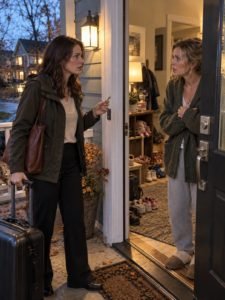
After months beside our daughter’s hospital bed, doctors told us we should prepare for the possibility
“After months beside our daughter’s hospital bed, doctors told us we should prepare for the possibility that Anna would never...

Her Sister Got Engaged to Her Ex Four Weeks After the Breakup—Then the Man Everyone Feared Asked Tessa One Quiet Question – Life Story
Tessa Morano learned her sister was dating her ex-boyfriend over Sunday dinner. Her parents called it “wonderful news” before the...

My wife held up a bottle of gel and smiled. “Tonight, I’m going to drive you crazy with this.” I noticed it was already half empty and asked, “Has someone used it already?” Her face fell. “I spilled it. After five years together – Family
The receptionist waited while I stared at the name on my computer screen. Ryan Mercer. Friday night. One room at...