sc-At my twenty-ninth birthday dinner, Dad told me to be grateful because my older brother was the only reason the Wisconsin cheese plant hired me. My brother nodded, knowing he’d collected a $500 referral bonus for a job I’d earned myself. After six years of fixing the machines he kept breaking, I’d finally had enough. I pulled out my phone, emailed my resignation to the plant manager, and told Dad something he wasn’t expecting…
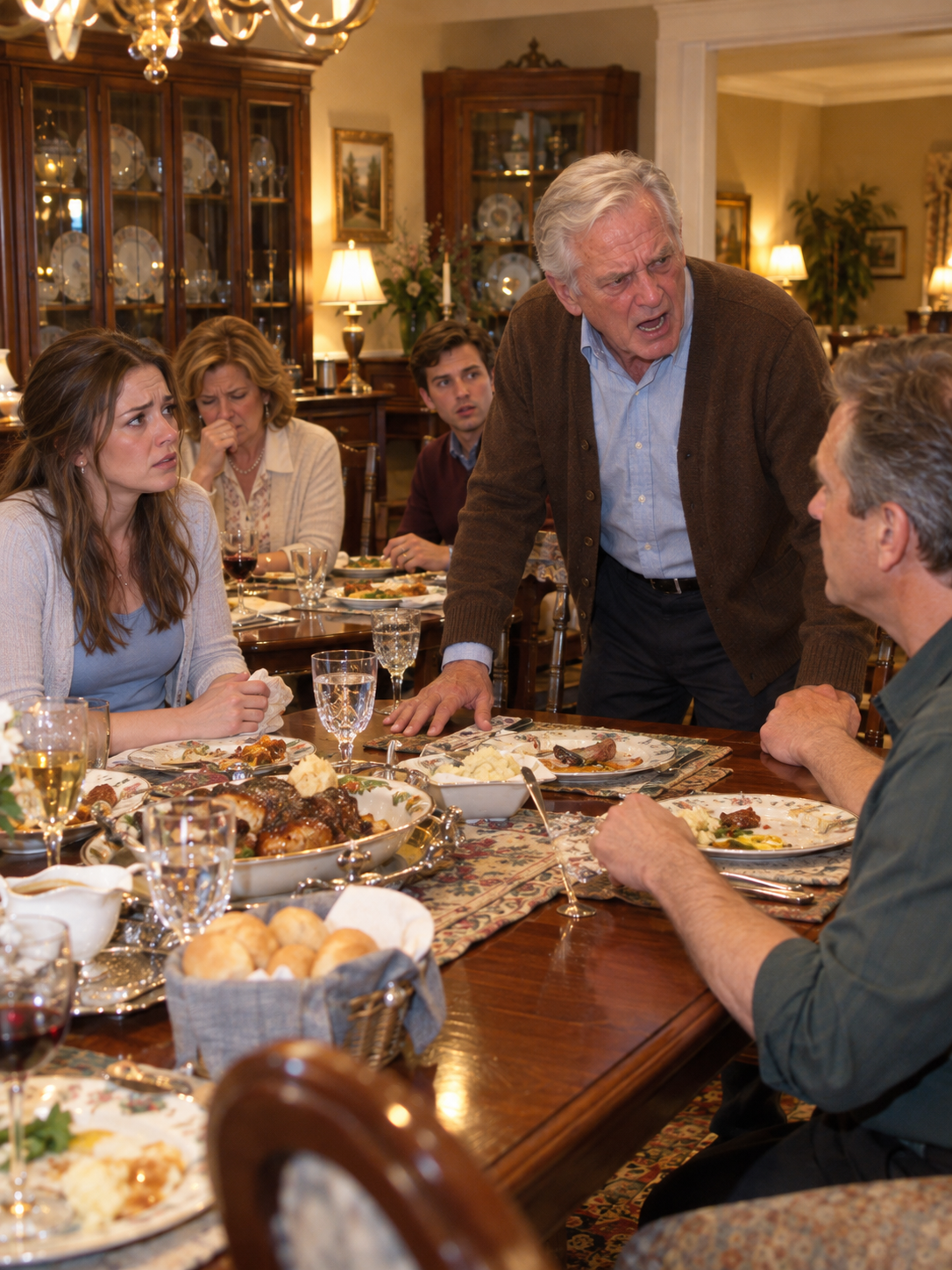
At my twenty-ninth birthday dinner, Dad told me to be grateful because my older brother was the only reason the Wisconsin cheese plant hired me.
My brother nodded, knowing he’d collected a $500 referral bonus for a job I’d earned myself.
After six years of fixing the machines he kept breaking, I’d finally had enough.
I pulled out my phone, emailed my resignation to the plant manager, and told Dad something he wasn’t expecting…
My name is Sam.
I was twenty-nine years old when I quit my job at a Wisconsin cheese plant in the middle of my own birthday dinner, with a plate of my mother’s fried chicken still sitting in front of me.
What my father didn’t know was that I already had another job offer.
What nobody at that table knew, except the brother who was nodding along with him, was that I’d spent six years keeping my brother employed.
I worked at Mill Creek Cheese, a processing plant on a county road outside Marshfield, Wisconsin.
It was a long tan building with a water tower behind it, a gravel lot for the trucks, and a smell you stopped noticing after your first week.
We made block cheese, mostly cheddar and Colby, and shipped it to grocery chains across the Midwest.
The work wasn’t glamorous, but I liked it.
I liked knowing that when a machine started making the wrong sound, I could usually figure out why before it stopped running.
I liked fixing something with my hands and seeing it work again.
And for most of those six years, I liked the people I worked with.
My older brother, Donnie, was four years ahead of me.
He started at Mill Creek when he was twenty-three, running a packaging line on second shift.
Back then, I was nineteen and repairing tractors at an equipment dealership in Abbotsford.
I’d always been good with machines.
My boss used to say I had ears like a bat and hands like a raccoon.
I took that as a compliment, although I never asked him to explain the raccoon part.
Donnie was making better money at the cheese plant.
Every Christmas, he’d sit in Dad’s recliner and talk about his wages, shift differential, overtime, and benefits.
“Real money, Sammy,” he’d say, looking at me over his beer.
Dad would nod approvingly.
Dad’s name is Chuck, and he has always believed there are two kinds of people: the ones who make something of themselves and the ones who need somebody else to help them along.
For reasons I never completely understood, Donnie was always the first kind.
I was always the second.
When I turned twenty-three, I applied for a maintenance mechanic position at Mill Creek.
I didn’t tell Donnie.
Not because I was hiding anything, but because I figured applying for a job was my business.
The plant manager, Ernie Plouts, called me for an interview.
Ernie had a gray crew cut, reading glasses he kept on a cord around his neck, and a way of speaking that made every word sound like it cost him a quarter.
He walked me through the production area.
.
Halfway through the packaging room, a wrapping machine started making an ugly noise.
Tick.
Tick.
Grind.
An operator was searching through a binder while the line slowed down.
I recognized the sound.
“Mind if I take a look?” I asked.
Ernie looked at me.
“You don’t work here.”
“Not yet.”
He shrugged.
I got permission to shut down and isolate the machine, checked the roller assembly, and found that a film roller had shifted roughly a quarter inch out of position.
I reseated it, made sure everything was secured, and restarted the equipment with the operator.
The machine ran smoothly.
Ernie watched it for several seconds.
Then he looked at me.
“Can you start in two weeks?”
.
That was how I got hired.
No family connections.
No recommendation from Donnie.
No special favor.
Just an interview and a machine that needed fixing.
What I didn’t know was that Donnie submitted an employee referral form three days after I’d already received my offer.
Ninety days later, he collected a $500 bonus.
He used the money to buy a big black barrel smoker with wheels and a little chimney.
That Thanksgiving, he parked it in my parents’ driveway and smoked a turkey.
When everybody gathered around to eat, he slapped the side of the smoker.
“This one’s on Sam,” he announced. “Five hundred bucks from Mill Creek for getting my little brother a job.”
Everybody laughed.
I corrected him.
“Donnie, I got hired myself.
Ernie hired me during the interview.”
Dad laughed even harder.
“Why would your brother lie?
The company paid him, didn’t it?”
I tried explaining.
Dad waved his hand.
“They don’t pay people for nothing.”
That was the end of the discussion as far as he was concerned.
I let it go.
I knew what had happened.
Ernie knew too.
I figured that was enough.
I was wrong about how much that little lie would grow.
Donnie started bringing up the referral bonus at every family gathering.
At Easter, he’d ask me to pass the ham and remind me I owed him.
At the Fourth of July cookout, he’d point to the smoker and call it “Sam’s smoker.”
Dad would laugh every time.
Eventually, Dad started calling me “the guy with the wrench.”
He meant it as a joke.
But there was always something underneath it, as though Donnie was the important employee and I was simply the little brother who fixed things when they broke.
In reality, I was working second shift from three in the afternoon until eleven-thirty at night.
Most evenings, I worked alongside an older mechanic named Harold Nyberg.
Everybody called him Swede.
He had forearms like fence posts and a laugh that sounded like a truck struggling to start in January.
Once, I asked why everybody called him Swede.
“Because I’m Norwegian,” he said.
That was the only explanation I ever got.
Swede taught me nearly everything worth knowing about the plant’s equipment.
Every pump that leaked.
Every motor that ran hot.
Every packaging line with a particular weakness.
By my second year, Ernie made me lead mechanic on second shift.
By my fifth, he told me our maintenance supervisor, a man everybody called Gramps, was considering retirement.
Ernie said I’d be first in line when the position opened.
I was proud of that.
But my family barely noticed.
Mom, Wendy, was a sweet woman in many ways.
She made excellent fried chicken, remembered birthdays, and sent everyone home with leftovers.
But when Dad decided something was true, Mom usually accepted it without asking questions.
Once, about two years before my birthday, she pulled me aside.
“Sweetheart, when Donnie gets his next raise, maybe you could ask him to put in a word for you.”
I stared at her.
“Mom, I make more than Donnie.”
She patted my arm.
“Well, that’s nice, honey.
You could still ask.”
I went back to my dinner.
What else was I going to do?
Bring my pay stub to Thanksgiving?
Meanwhile, Donnie was running line four at the plant.
Line four was the kind of packaging line that could make an ordinary evening miserable.
Not because it was defective.
Line three was the same model and ran beautifully.
Line four broke because Donnie ignored warning lights, rushed procedures, and treated routine maintenance like an unnecessary inconvenience.
He’d let small problems continue until they became expensive ones.
Then he’d call maintenance.
“Four’s down again.”
I’d walk over, find the problem, and fix it.
Then I’d explain what he needed to do differently.
He’d nod.
Two days later, we’d repeat the whole thing.
Some nights, I repaired his line three times.
Swede joked that line four needed a frequent visitor card.
One incident changed how I saw my brother.
About a year before my birthday, Donnie skipped the required cleaning between a cheddar run and a pepper jack run.
He wanted to take his break on time.
That decision contaminated approximately two thousand pounds of mild cheddar with pepper flakes.
The cheese couldn’t be sold as labeled and had to be discarded.
Instead of admitting he’d skipped the cleaning procedure, Donnie blamed a mechanical problem.
Swede received a write-up.
Swede had worked at that plant for thirty-one years without a disciplinary problem.
The next afternoon, he came into the maintenance shop and sat on an overturned bucket.
He didn’t say anything for nearly ten minutes.
Then he looked at the floor.
“Well, I guess I’m getting old.”
I knew something wasn’t right.
I pulled the maintenance logs.
Every repair on line four that night had been properly recorded.
The equipment had been running correctly.
Then I checked the cleaning documentation.
Donnie had initialed the sheet, claiming he’d completed the required procedure at a time when the break-room camera showed him eating a sloppy joe.
I took the records to Ernie.
He reviewed them, picked up the phone, and ordered Swede’s write-up withdrawn.
Then he looked at me.
“You know whose initials these are?”
“Yes.”
“What do you want me to do about it?”
“I wanted Swede’s record corrected,” I said. “The rest is your plant.”
Ernie opened the bottom drawer of his desk.
It was full of folders.
“Your brother’s got a drawer,” he told me. “Most employees have a folder.”
He closed it.
Later, Donnie confronted me.
“You didn’t have to go to Ernie.”
“Swede got blamed for something you did.”
“Family handles things inside the family.”
I looked at him.
“Swede’s my family on this shift.”
Donnie called me a rat for the next month.
Then he told Dad I’d thrown him under the bus to impress management.
Dad said, “That’s not how we do things, Sam.”
I stopped trying to correct them.
Around that time, I met Bruno Casper, who ran maintenance at a larger packaging plant in Stevens Point.
We met at a parts show in Wausau.
He bought me a hot dog, asked about my experience, and eventually invited me to lunch.
A few months later, he offered me a lead mechanic position on day shift.
About eight dollars more an hour.
A chance to eventually run his maintenance department.
I kept the offer letter in my truck’s glove compartment.
I liked knowing it was there.
But I wasn’t ready to leave Mill Creek.
I liked Ernie.
I liked Swede.
The supervisor position was getting closer.
And driving forty-five minutes to Stevens Point through Wisconsin winters wasn’t particularly appealing.
So I stayed.
Then came my twenty-ninth birthday.
May 31, a Saturday.
Mom invited everybody to the house in Medford for dinner.
She made fried chicken, mashed potatoes, corn, and green bean casserole with the crispy onions.
There was a big jar of sun tea on the counter with lemon floating in it.
Donnie came with his wife, Amy, a school secretary who owned a label maker and once labeled the drawer where she kept it.
Aunt Mij was there too.
She was seventy-one, Dad’s older sister, and one of the few people in our family who said what she thought without checking whether Dad approved.
We were halfway through dinner when Mom asked about work.
I don’t know why I mentioned Hilltop.
Maybe because I’d been thinking about that offer all week.
“Actually,” I said, “another plant offered me a lead mechanic position.
Day shift.
Better money.
I’ve been considering it.”
Mom smiled.
“Oh, that’s wonderful.”
Aunt Mij leaned forward.
“How much better?”
Before I could answer, Dad put down his chicken drumstick.
He wiped his fingers on a napkin and pointed it toward me.
“No.
You’re not leaving that plant.”
I looked at him.
“Dad, I’m just considering an offer.”
He shook his head.
“Be grateful, Sam.
Your brother’s the only reason that plant hired you.”
I looked at Donnie.
He nodded.
Not laughing.
Not joking.
Just nodding as though he agreed with every word.
For six years, I’d kept his production line running.
I’d answered the calls, fixed the jams, replaced the damaged parts, and explained the same procedures until I was tired of hearing my own voice.
And there he sat, letting Dad tell me I owed him my entire career.
Something in me went very quiet.
“Then he can cover my shift starting Monday,” I said.
Dad laughed.
“What’s that supposed to mean?”
I took out my phone.
For six years, I’d barely taken time away from work, and I had a large bank of unused vacation hours.
I opened an email to Ernie and Rosie in human resources.
Then I typed:
“Ernie, Rosie, please accept this as my two weeks’ notice.
My last day will be Friday, June 13.
I’d like to use my accrued vacation during the notice period, beginning Monday, if approved.
It’s been an honor working at Mill Creek. —Sam.”
I read it once.
Then I pressed send.
I placed my phone faceup beside the corn so Dad could see the message.
He leaned forward and read it.
Then he laughed again.
“You’re not quitting a job your brother got you.”
I stood and pushed in my chair.
I looked at Donnie.
He wasn’t nodding anymore.
“Better set an alarm,” I told him.
Then I turned toward Mom.
“Thank you for dinner.
The chicken was perfect.”
She looked frightened.
“Sam, it’s your birthday.
Sit down.”
I went into the kitchen, wrapped two chicken drumsticks in foil, and walked out the side door.
Nobody followed me.
As I backed out of the driveway, I could see everyone through the kitchen window.
Dad was still talking.
Mom had one hand against her chest.
Amy was looking down at her plate.
Aunt Mij raised her glass of sun tea toward me.
And Donnie was staring at my empty chair.
I stopped at Kwik Trip on the way home and ate both drumsticks in my truck.
They were still warm.
The next morning, at ten o’clock, my phone rang.
It was Ernie Plouts.
On a Sunday.
I wasn’t even sure Ernie believed in making telephone calls on Sundays.
I answered.
He didn’t say hello.
“I read your email.”
I sat up.
“Morning, Ernie.”
“You’re going to Hilltop.”
I looked toward my truck parked outside.
“Bruno Casper made me an offer.”
Ernie went quiet.
Then he said, “Don’t call him back yet.
We need to talk.”
2.
Full story continuation
I sat on the edge of my bed, looking at the boots I’d left beside the dresser.
“Ernie, I’ve been thinking about this for a long time.”
“I know,” he said. “Three dollars more an hour.
Day shift.
And when Gramps retires, the maintenance supervisor job is yours.
I’ll put it in writing.”
That was a serious offer.
Ernie wasn’t a man who promised things casually.
If he said he’d put something in writing, I believed him.
Still, I couldn’t stop thinking about Dad pointing his napkin at me across the birthday table.
“It’s not the money, Ernie.”
“Then what?”
I told him everything.
The $500 referral bonus.
Donnie’s smoker.
The Thanksgiving jokes.
Mom suggesting I ask my brother for help getting a raise.
Dad insisting I should be grateful for a job I’d earned myself.
I explained that I’d spent six years fixing line four while my family listened to Donnie describe himself as the person who kept me employed.
Ernie listened without interrupting.
When I finished, he asked, “What if your brother wasn’t working here?”
I stared at the wall.
“I don’t want you making decisions about employees because of me.”
“That’s not what I asked.”
I considered his question.
For a few seconds, I imagined going back to work without hearing Donnie call over the radio or seeing him take credit for keeping the packaging room running.
Then I remembered the contaminated cheese and Swede sitting on that bucket.
“Whatever happens with Donnie is your responsibility,” I said. “It’s your plant.”
Ernie was quiet.
Then he said, “Come to my office Tuesday at ten.
Wear clean jeans.”
He hung up.
Monday was my first vacation day in six years.
I had no idea what to do with myself.
I mowed my tiny lawn, trimmed the edges, and then mowed it again in the opposite direction because I wasn’t satisfied with the lines.
Around noon, I went grocery shopping.
By three, I was standing in my kitchen wondering what normal people did when they weren’t getting ready for second shift.
I didn’t know that while I was rearranging the tools in my garage, Ernie was meeting with my brother.
On Tuesday morning, I drove to Mill Creek wearing clean jeans.
Rosie, our human resources manager, was already sitting in Ernie’s office.
She was about fifty, always kind, and extremely particular about paperwork.
She kept a glass candy dish beside her desk and somehow always knew when someone had taken the last peppermint.
Ernie motioned toward a chair.
“I terminated your brother yesterday.”
I sat down slowly.
“What?”
“Three o’clock.
Start of second shift.”
Rosie opened a folder.
Ernie continued.
“Donnie had three disciplinary write-ups, repeated operating problems, and that incident with the contaminated cheddar.
I’ve been putting off a decision I should’ve made earlier.”
I looked at him.
“Why?”
Ernie leaned back.
“Because I didn’t want to make Thanksgiving awkward for my best mechanic.”
I didn’t know whether to laugh.
He continued.
“I figured if I let Donnie go, you’d leave too.
Turns out I got that backward.”
He pulled a maintenance report from his desk.
Over the weekend, he’d reviewed line four’s production history, downtime, replacement parts, and overtime expenses.
The numbers were worse than I’d realized.
“Keeping him has cost this plant more than replacing him would have,” Ernie said. “And I’ve known it for too long.”
Rosie cleared her throat.
“There’s something else.”
She took two papers from her folder and laid them side by side.
The first was Donnie’s employee referral form.
My name was written in his handwriting.
His signature was at the bottom.
The second was my original offer letter.
Rosie pointed toward the dates.
“Your offer letter was issued June twenty-fourth, 2019.”
I nodded.
She moved her finger.
“Donnie submitted his referral June twenty-seventh.”
I stared at the papers.
Three days after I’d already been hired.
Rosie sighed.
“The payroll clerk who processed the form didn’t check the dates.
She approved the bonus, and Donnie received five hundred dollars.”
Ernie looked at me.
“We paid your brother for referring a man I’d already hired in a hallway.”
For the first time in six years, I had the proof right in front of me.
I’d always known Donnie hadn’t gotten me the job.
But seeing those two dates made me realize something important.
He hadn’t merely accepted credit somebody mistakenly offered him.
He’d deliberately submitted paperwork after my offer was already issued.
Ernie glanced at the form.
“I should’ve charged him for that smoker.”
He made a small noise through his nose.
That was as close to a laugh as Ernie usually got.
Then Rosie turned to another section of her folder.
Gramps had agreed to move his retirement date forward by a month.
The maintenance supervisor position would be available July first.
Ernie offered me the job with the corresponding raise, day-shift hours, and five mechanics reporting to me.
The pay was competitive with Hilltop’s offer, and the opportunity was what I’d spent years preparing for.
He also reviewed my accrued vacation and made sure my time off would be handled according to company policy.
Then he added another week of scheduled leave.
“If you keep working without taking a break, I’m going to have to start sending you home myself.”
I smiled.
“Understood.”
I signed the paperwork.
Then I walked outside to my truck.
The offer letter from Hilltop was still in my glove compartment.
I took it out and called Bruno Casper.
He answered immediately.
“Sam!
Tell me you’re ready to come work for me.”
I looked back toward the plant.
“Bruno, Ernie made me an offer.
Maintenance supervisor.
Day shift.”
Bruno sighed.
A long, theatrical sigh.
“That old badger.”
I laughed.
“I’m sorry.”
“Don’t apologize.
That’s a good opportunity.”
He paused.
“Door’s still open if you ever change your mind.”
“I appreciate that.”
“And Sam?”
“Yeah?”
“Make sure you take a vacation once in a while.”
Apparently, my reputation had traveled farther than I thought.
I drove home feeling lighter than I’d felt in years.
I expected my family to call.
Surely Donnie would tell Mom and Dad he’d been fired.
Surely they’d hear about my promotion and realize what had actually happened.
Nobody called.
Not that day.
Not the next.
Not even that weekend.
Then Aunt Mij sent me a text.
She was the only person in my family who regularly messaged me just to say something.
Her texts usually had no punctuation and at least one opinion nobody had requested.
“Your brother says you quit in a huff and walked out on everybody and now he has to pick up your slack.”
I read it several times.
Donnie had been fired on Monday.
By Saturday, he was telling everybody I had quit and left him with extra work.
Aunt Mij wasn’t finished.
“Your dad told people at church you’re between jobs.
I told him he’s between brains.”
I laughed despite myself.
Then I put down my phone.
The following Monday, Dad sent me a photograph of a hiring sign in a store window.
Underneath, he’d written:
“Walmart in Medford is hiring.
Don’t come crawling to your brother for your job back.”
I typed several responses.
One mentioned Donnie’s termination.
Another mentioned my new title.
A third wasn’t particularly polite.
I deleted them all.
Then I wrote, “I’m good, Dad.”
He didn’t answer.
People have asked why I didn’t tell my parents immediately.
The truth is, I’d spent years correcting Donnie and being called jealous or ungrateful.
I knew exactly what Dad would say if I announced my brother had been fired.
He’d accuse me of getting Donnie in trouble.
He’d say I’d complained to management.
He’d find some way to make the situation my responsibility.
Besides, Donnie was a grown man with a wife and a mortgage.
Telling his family he’d lost his job was his responsibility.
I assumed he’d eventually do it.
At the end of June, Aunt Mij sent another message.
“Your brother says Ernie made him supervisor.
Your mother bought a congratulations card.”
I stared at my phone.
Donnie wasn’t merely hiding the fact that he’d been fired.
He was telling everyone he’d received the very promotion I had accepted.
I wrote back.
“Mij, I promise you Donnie isn’t supervising anything.”
She answered immediately.
“Figured he couldn’t supervise a Crock-Pot.”
I laughed.
Then I wondered how far he’d take the lie.
In July, I started my new position.
For the first time in my working life, I had a day-shift schedule, an office with a window, and a crew that reported directly to me.
There were five mechanics, all capable people.
We reviewed maintenance schedules, organized parts inventory, and worked on reducing unplanned downtime.
Line four was assigned to a new operator named Jo.
She was quiet, observant, and had been at the plant about eight months.
Unlike Donnie, she read the warning lights and followed the procedures.
Three weeks passed without a single breakdown on line four.
On the third Friday, Jo knocked on my office door.
“Sam, is it normal that four hasn’t gone down?”
I looked up from my paperwork.
“It is now.”
She smiled.
Then she went back to work.
Swede retired that summer.
He still visited the plant most weeks, usually to check whether I was ruining the equipment he’d spent thirty-one years maintaining.
One afternoon, he appeared in my office eating candy from Rosie’s dish.
“Saw your brother yesterday.”
I looked up.
“Where?”
“Kwik Trip on Central.
Three in the afternoon.”
I frowned.
“He looking for work?”
Swede shrugged.
“He was sitting in his truck wearing his Mill Creek shirt, eating a hot dog.”
I considered that.
Maybe he was meeting somebody.
Maybe he was job hunting.
I didn’t know.
What never occurred to me was that my thirty-three-year-old brother might be pretending to leave for work every day.
I learned the truth later from Amy.
For the first couple of weeks after his termination, Donnie used his final paycheck and vacation payout to keep their household running.
Then he began withdrawing money from his retirement account.
Every Friday, he transferred enough into their checking account to resemble his old paycheck.
The statements went to his email, so Amy didn’t see the withdrawals.
Their health insurance came through her school job, so there wasn’t an immediate problem there either.
Every afternoon around two-thirty, Donnie put on his Mill Creek shirt, kissed Amy goodbye, and drove away.
Sometimes he sat at Kwik Trip.
Sometimes he went to the public library and read fishing magazines.
Around a quarter to midnight, he came home, showered, and told Amy he’d had a long night.
In August, he started taking cash jobs unloading furniture trucks for a friend.
At least then he had something real to be tired from.
But he continued telling his family he was a supervisor at the cheese plant.
Meanwhile, I was having the best summer of my career.
The maintenance team was running well.
Our downtime figures were improving.
And I was enjoying work again.
Near the middle of August, Aunt Mij sent another message.
“Your mother says Donnie can’t come to Labor Day dinner because he’s running the plant open house.”
That caught my attention.
Every Labor Day weekend, Mill Creek hosted an open house for employees and their families.
There were tours, cheese curds, little foam cheese hats, and a large tent in the parking lot.
Supervisors helped organize the event.
I was scheduled to lead several tours myself.
Three days later, Aunt Mij sent another message.
“Your mother is making three pans of scotcheroos for Donnie’s crew.
Wants to surprise him at the plant.”
I stared at the screen.
Scotcheroos were Mom’s specialty.
She made them with peanut butter, crispy rice cereal, chocolate, and butterscotch.
She’d bring them to church picnics and school fundraisers.
People loved them.
And now she was preparing three pans for a crew Donnie didn’t have.
I thought about calling her.
Several times, I picked up my phone and looked at her name.
I knew she was going to be embarrassed.
But I kept remembering Dad’s birthday speech.
“Be grateful.”
I remembered his Walmart text.
And Mom telling me to ask Donnie for help getting ahead.
For six years, they’d accepted his story without asking me what I actually did.
I didn’t want to hurt Mom.
But I wasn’t willing to keep protecting Donnie’s lie either.
So I didn’t call.
The open house was Saturday, August thirtieth.
It was sunny and about seventy-five degrees, with a breeze moving across the fields.
The parking lot smelled like cheese curds and sunscreen.
A little boy in a foam cheese hat ran between the tables shouting, “I’m a mouse!”
Rosie was working the welcome tent.
I stood beside her with the tour schedule and a stack of disposable hairnets.
At about eleven-fifteen, I saw Dad’s silver Buick turn into the parking lot.
He parked near the water tower.
Dad had never parked close to a building in his life.
Mom got out carrying a foil-covered pan.
Then she reached back into the car for another.
Dad brought the third.
Three pans of scotcheroos.
Exactly as Aunt Mij had said.
I stayed beside Rosie.
Mom walked toward the welcome table smiling.
“Hello!
We’re here to surprise our son.
He’s one of your supervisors.”
Rosie looked up.
“What’s his name?”
“Donnie.
Donnie Carter.”
Rosie checked her clipboard.
Mom continued.
“He supervises second shift.
Line four.
We brought scotcheroos for his crew.”
Rosie’s expression changed.
She glanced toward me.
Mom followed her eyes.
And there I stood.
Wearing a Mill Creek polo shirt.
A hairnet.
And a name tag that clearly read:
“Sam Carter — Maintenance supervisor.”
Mom blinked.
“Sam?”
Dad turned.
He looked at me, then at my name tag.
“What are you doing here?”
“I work here, Dad.”
He frowned.
“You quit.”
“No, I didn’t.”
“Your brother said—”
Before he finished, Ernie approached the table.
He was holding a paper boat of cheese curds, eating them one at a time.
“Problem, Rosie?”
Rosie looked relieved.
“Ernie, these are Sam’s parents.
They’re looking for Donnie.”
Ernie glanced at the three pans.
Then at Mom.
Then at Dad.
He ate another cheese curd.
“Donnie hasn’t worked here since June.”
Mom stared at him.
“I’m sorry?”
“June second,” Ernie said. “Three o’clock.
I terminated his employment.”
Dad shook his head.
“That’s impossible.
He goes to work every day.”
Ernie waited.
“He’s a supervisor,” Dad insisted.
“No,” Ernie answered. “He isn’t.”
Then he pointed toward me.
“Sam is my maintenance supervisor.”
Dad looked at my name tag again.
I could almost see him trying to rearrange six years of assumptions.
Ernie wasn’t finished.
He looked directly at my father.
“You ought to be grateful, Chuck.
Your younger boy is the reason I kept your older one as long as I did.”
Nobody spoke.
Mom slowly placed her pan on Rosie’s table.
Dad reached into his shirt pocket for his reading glasses, though there was nothing he needed to read.
Then he took out his phone and called Donnie.
Voicemail.
He called again.
Voicemail.
Mom called Amy.
She accidentally put the call on speaker.
“Hi, Wendy,” Amy answered.
“Amy, honey, where’s Donnie?”
“At work.
He’s helping with the open house today.
Why?”
Mom looked at Ernie.
He leaned toward the phone.
“Ma’am, this is Ernie Plouts, the plant manager.
Your husband hasn’t worked here since June.”
There was a long silence.
Then Amy ended the call.
Dad looked at me.
“Did you know?”
“I knew he’d been fired.
I didn’t know he was pretending to go to work until recently.”
Mom looked hurt.
“You knew and didn’t tell us?”
I took a breath.
“You never asked me, Mom.
Not once in six years.
You always asked Donnie.”
She looked down at the scotcheroos.
For once, she didn’t argue.
I checked my watch.
“My next tour starts at eleven-thirty.
You’re welcome to come.”
They didn’t.
But Mom did something I’ve always appreciated.
She left all three pans of scotcheroos with Rosie.
“These are for whoever’s crew wants them,” she said.
I carried them to the maintenance shop.
My mechanics ate an entire pan before lunch.
Swede, who’d come to the open house mostly to complain about the cheese curds, ate four pieces.
“Your mother can bake,” he announced.
“I’ll give her that.”
What happened at Donnie’s house afterward reached me in pieces.
Amy checked their retirement account that afternoon.
Most of the balance was gone.
Donnie had been paying withdrawal costs and taxes while using the money to imitate regular paychecks.
She was furious.
When Donnie returned home near midnight, wearing his Mill Creek shirt, Amy was sitting at the kitchen table.
She had the account statement in front of her.
Beside it was her label maker.
She’d printed one label and stuck it on the statement.
“Long night.”
Aunt Mij told me that part.
I have no idea how she knew.
Mij always knew everything.
Amy didn’t leave Donnie.
But she insisted they make a proper financial plan.
She also made him sell the smoker.
He listed it online for four hundred dollars.
A man from Colby reportedly arrived with a horse trailer and took it away.
I tried not to laugh when Mij told me.
I wasn’t entirely successful.
About a week after the open house, Dad came to my duplex on the west side of Marshfield.
It was a Sunday afternoon.
I was watching the Brewers lose when somebody knocked.
Dad stood on my porch with his hands in his pockets.
He looked older.
I invited him in.
He walked into my kitchen and glanced around.
I’d lived there six years.
It was the first time he’d visited.
“Your brother’s having a hard time,” he said.
“I imagine he is.”
“He’s unloading furniture trucks at night.”
“It’s honest work.”
Dad nodded.
Then he said what he’d apparently come to say.
“You’ve got Ernie’s ear now.
Maybe you could put in a word for Donnie.
Get him another chance.”
I looked at him for a long moment.
“Dad, I’ve been putting in a word for him for six years.”
He frowned.
“Every time line four broke down, I fixed it.
Every time he ignored a warning, I helped get production moving.
Sometimes three times a night.”
Dad looked toward the television.
“The plant kept him as long as it did because I was there,” I said. “I’m out of favors.”
He stood quietly.
Finally, he said, “I didn’t know.”
“I told you at Thanksgiving six years ago.”
He looked at me.
“You laughed.”
Dad lowered his eyes.
For a moment, I thought he might apologize.
He didn’t.
He nodded once, said he’d better get going, and walked out.
My father had never been good at saying sorry.
He was more likely to repair a gutter or change somebody’s oil without being asked.
I didn’t know whether that conversation would change anything.
So I went back to work.
In October, Bruno Casper called.
He sounded amused.
“Sam, I’ve got an application here from somebody with your last name.”
I knew immediately.
“Donnie?”
“Says he spent ten years at Mill Creek.
Applied for a line operator position.”
I sighed.
Bruno continued.
“He didn’t list you as a reference.
Listed a guy named Swede.”
I started laughing.
“Did you call Swede?”
“I did.”
“What’d he say?”
“Hire the other one.”
I laughed so hard I had to sit down.
Then Bruno became serious.
“Anything I should know?”
I thought about the contaminated cheese, the ignored warnings, and Swede getting blamed for something he hadn’t done.
I also thought about Donnie sitting at a gas station for three months because he couldn’t bring himself to tell his wife he’d lost his job.
I felt sorry for him.
But I wasn’t going to lie.
“Ask him how he got the referral bonus for my job,” I said.
Bruno was quiet.
“All right.
I’ll handle the hiring decision from here.”
Donnie didn’t get the position.
Eventually, he found work on day shift at a feed mill near Spencer.
From what I’ve heard, he’s doing reasonably well.
The work is simpler, the expectations are clear, and he has a supervisor who doesn’t let small problems become big ones.
I hope it works out for him.
That Christmas, Swede stopped by Mill Creek with something in the back of his pickup.
His old toolbox.
A big red one with drawers that stuck and his initials scratched into the side.
He pushed it toward me.
“I’m done with it.”
I looked at him.
“Swede, you sure?”
“Don’t ruin it.”
I smiled.
“I won’t.”
It sits in my office now.
In spring, I bought a house.
Nothing fancy.
A small brick ranch on the east side of Marshfield, with a two-car garage and a backyard big enough for the garden I keep promising myself I’ll plant.
I bought it with my supervisor pay and the savings I’d built over years of working more than I should have.
I also took a real vacation.
A full week fishing near Minocqua.
Ernie insisted I send him a photograph of a fish.
He said otherwise he’d assume I’d stayed home mowing my lawn.
So I sent him one.
He answered with three words.
“About damn time.”
Then May came around again.
My thirtieth birthday.
This time, I decided to host the party myself.
I invited my maintenance crew and their families.
Rosie and her husband.
Swede.
Jo from line four.
Aunt Mij.
And Ernie, who claimed he’d stay fifteen minutes.
Two weeks before the party, Mom called.
It was the first proper conversation we’d had since the open house.
“Sam, honey, would it be all right if your father and I came?”
I thought about it.
Then I said, “You’re welcome, Mom.
But Dad needs to acknowledge what happened.”
She was quiet.
“What do you want him to say?”
“He’ll know.”
On the afternoon of the party, I grilled burgers and brats.
Rosie brought potato salad.
Aunt Mij brought a store-bought pie and announced very loudly that she’d bought it at the store, so nobody should get ideas about her baking.
Swede took over the grill after twenty minutes because apparently I was ruining his brats.
Around five, my parents arrived.
Dad parked at the far end of my driveway.
Of course he did.
Mom carried one pan of scotcheroos.
Dad followed with an envelope in his hand.
He shook Ernie’s hand a little stiffly.
Rosie smiled.
Aunt Mij greeted him with, “Well, look what the cat dragged in.”
That was her usual version of hello.
A little later, while everyone stood around the backyard holding paper plates, Dad cleared his throat.
The conversation quieted.
He lifted his can of root beer.
“I want to make a toast.”
He looked at the grass.
Then at me.
“To Sam,” he said. “Who got himself hired.”
He paused.
“And kept his brother working six years longer than he deserved.”
I stood very still.
Dad looked directly at me.
“I didn’t know because I never bothered to ask.”
Swede lifted his drink.
“Hear, hear.”
Then he tapped his barbecue tongs against Ernie’s can.
Everybody laughed.
Mom cried a little.
Dad walked over and handed me the envelope.
Inside were five one-hundred-dollar bills.
There was also a note in his blocky handwriting.
The same handwriting that used to sign my report cards.
It said:
“Referral bonus.
You earned it.
Dad.”
I looked at the money.
Then I looked at him.
I didn’t hug him.
I want to be truthful about that.
Some things take longer than a toast and an envelope to repair.
But I shook his hand.
“Thanks, Dad.”
And I meant it.
He went to sit beside Aunt Mij, who immediately started reminding him about everything he’d done wrong since 1962.
He let her.
I think that was part of the apology.
Donnie wasn’t at the party.
I hadn’t invited him.
Amy sent me a text that evening.
“Happy thirtieth, Sam.
Proud of you.”
I sent back a thumbs-up and a little cheese emoji.
As for the five hundred dollars Dad gave me, I knew exactly what I wanted to do with it.
I bought a smoker.
A big black barrel smoker on wheels, with a little chimney.
It sits on my patio.
The first thing I made was a brisket.
I smoked it slowly over the weekend, sliced it Monday morning, and carried it into Mill Creek in a covered pan.
I set it on the maintenance shop’s break-room table with a handwritten sign.
“From the guy with the wrench.”
My crew thought it was hilarious.
Rosie came down for a plate.
Swede showed up even though he’d been retired for months.
Ernie ate two servings.
He didn’t compliment the brisket.
He just made that little noise through his nose.
By then, I knew exactly what it meant.
Sometimes people ask whether I wish I’d handled my twenty-ninth birthday differently.
Maybe I could have waited until Monday to resign.
Maybe I could have calmly explained the truth one more time.
Maybe I could have called Mom before she drove to the open house with three pans of scotcheroos.
I’ve thought about all of those things.
But I also think about the six years I spent correcting a story nobody wanted to hear.
I think about Swede sitting on that bucket after Donnie blamed him for the contaminated cheese.
I think about Dad telling me not to come crawling back to a job I’d never actually lost.
And I think about Donnie nodding at my birthday dinner because he knew exactly how much he depended on me.
I didn’t get the supervisor position because Donnie was fired.
I earned it through six years of work.
Donnie wasn’t fired because I finally stood up for myself.
He was fired because of his own performance and decisions.
Those are different things.
Dad eventually learned to see the difference.
Mom has started asking about my job instead of asking whether Donnie is helping me.
Sometimes she doesn’t understand the technical details, but she listens.
That’s more than I had before.
Donnie and I still don’t talk much.
Maybe someday that will change.
I don’t hate him.
But I’m done allowing him to build his reputation by borrowing mine.
These days, I go to work in the morning.
I lead a good crew, solve problems, and come home while there’s still daylight.
I take vacations.
I spend time in my backyard.
And when a machine breaks, the people I work with know whom to call because they’ve seen what I can do.
I don’t need anybody at a family dinner to explain why I belong there.
I know who hired me.
I know what I’ve earned.
And if someone calls me the guy with the wrench, I smile.
Because there’s nothing wrong with being the person who knows how to fix things.
The mistake was believing that meant I had to keep fixing my brother’s life too.
THE END.
I’ve shared the complete story, and I truly hope it touched your heart.
If this story moved you, please , like, and share the post.
Thank you for reading! ❤️
Recommended Stories
“I spent your savings on someone better,” my father told me at family dinner while my younger
“I spent your savings on someone better,” my father told me at family dinner while my younger brother kept eating...

Seven Hours After Our Wedding, My Husband Demanded I Sign a Massive $420,000 Loan. I Looked Down in Horror to Find My Condo Listed as Collateral and My Name Already Signed. When I Rushed to the Bank, Their Verification Evidence Broke Everything
The champagne flutes from our reception were still sitting on the kitchen counter when Mark unzipped his leather briefcase. It...

t Christmas Dinner, My Arrogant Son-In-Law Kicked My Chair Away and Laughed as I Crashed to the Floor While His Parents Mocked Me. I Grabbed My Coat and Said, “You Have No Idea What You Have Done.” Twenty Minutes Later, Everything Changed.
The dining room chandelier cast a warm, golden glow over the mahogany table, reflecting off crystal wine glasses and silver...