A HOUSEKEEPER’S SIX-YEAR-OLD DAUGHTER MADE A GRIEVING MOTHER SPEAK AFTER A YEAR OF SILENCE, BUT THE FAMILY MATRIARCH CALLED HER UNWELCOME—AND THE HOUSE DIVIDED OVER ONE CHILD – Life Story
The girl caught a dead child’s drawing before it struck the floor, and the mother who had not spoken in a year suddenly rose.
Downstairs, the girl’s mother could lose the job that kept their apartment if anyone discovered where her daughter had wandered.
But what terrified Evelyn Whitmore was not a stranger touching Lily’s picture.
It was the name the stranger was about to say.
THE DRAWING AT THE WINDOW
The paper flew out of Evelyn Whitmore’s hands when the November wind pushed through the open sunroom window.
A small girl sprang forward, caught it just above the floor, and held it safely by the edges.
Evelyn rose so abruptly that her chair scraped the hardwood.
It was the first sudden movement anyone in the house had seen her make in months.
“Don’t,” she tried to say.
Nothing came out.
The girl looked down at the paper.
Three figures stood beneath a swollen yellow sun.
Their fingers were joined in a row of uneven red lines, and the smallest figure wore a dress colored so fiercely yellow that the crayon had nearly torn through the page.
“Sorry,” the girl said. “It was going to fall.”
Evelyn extended both hands.
The child gave the drawing back without arguing.
Then she stepped away, studying the older woman’s face with an uncomfortable mixture of curiosity and concern.
“My name is Annie Brooks,” she offered. “I’m six.”
Evelyn sat again.
She did not look at Annie.
She was checking the page for damage, turning it toward the light until she could see the faint pressure marks Lily’s hand had left in the paper.
Annie glanced toward the hall. “My mom works downstairs.
She said to stay in the kitchen, but Mr.
Alvarez was cleaning the big mixer and it made this awful noise.
I didn’t want to be in his way.”
A black grand piano stood beneath the sunroom windows.
A yellow ribbon hung from its music stand.
Outside, rosebushes rustled around a stone fountain.
Annie looked at the empty chair beside Evelyn. “Can I sit there?”
Evelyn’s shoulders tightened.
Annie waited, then took the absence of a refusal for permission.
The chair was too high for her feet to reach the floor, so she perched at its edge, hands folded with the solemnity of a visitor at a dentist’s office.
“Is that your drawing?” she asked.
Evelyn shook her head.
“Oh.
Somebody you know?”
The small figure in yellow seemed to move against the white paper.
Evelyn pressed her thumb over its face, as if she could protect it from being looked at.
Annie noticed and immediately lowered her eyes. “You don’t have to tell me.
My mom says sometimes questions aren’t polite even if you say please.”
A cart rattled below.
Since Lily died, the house had hardly known another sound.
Annie swung one foot. “I’m good at drawing houses,” she said. “Not people.
People always come out looking like potatoes.”
Evelyn’s gaze shifted, involuntarily, toward a pencil and a stack of unused stationery on the side table.
Annie followed it. “May I?”
Another long silence.
“Okay.
I’ll make one, and if you hate it, I’ll throw it away.”
She climbed down, took a sheet of paper, and began drawing at the window bench.
Her house leaned dangerously to one side.
Its door was bigger than its windows, and the sun looked like something a cook might have forgotten in the oven.
Annie held up the result. “See? Potato.”
Evelyn felt a painful tightening beneath her ribs.
Lily had once said the same thing about a sun she’d drawn too round.
She had laughed until she hiccupped, then demanded that Evelyn hang it in the breakfast room anyway.
Annie leaned over Lily’s picture, careful this time not to touch it.
“The little girl’s name,” she said, squinting at the letters scratched beneath the yellow dress. “Is it Layla?”
Evelyn kept her eyes on the paper.
“Lulu? Liddy?”
The child turned her head sideways.
“Her name was Lily, wasn’t it?”
“Yes.”
The word escaped Evelyn before she understood what she was doing.
It was barely audible, rough as a match being struck.
But Annie heard it.
She straightened so suddenly that her pencil rolled off the bench.
“You talked.”
Evelyn looked at her in alarm.
Annie didn’t move closer.
She didn’t cheer or run for an adult.
Instead, she seemed to consider the possibility that Evelyn might regret speaking.
“My grandma gets quiet when she misses my grandpa,” Annie said. “Mom says I shouldn’t make her talk when she’s having one of those days.”
Evelyn stared at the child.
“But Grandma also says people don’t have to be quiet just because somebody they love is gone.”
The yellow sun on Lily’s paper blurred.
Annie sat down again and picked up her pencil. “I like Lily,” she said simply. “It’s a pretty name.”
Evelyn lowered her head.
It had been twelve months since her daughter died.
Twelve months since Evelyn had sat in a hospital room after the monitors were disconnected and discovered that the words she wanted had nowhere to go.
Her voice had not vanished because her throat was injured.
Doctors had explained that gently.
A speech-language pathologist had found no structural problem, and her grief counselor had spoken carefully about trauma responses, depression, and the frightening ways the mind could separate a person from ordinary functions.
Some days Evelyn understood every explanation.
Other days she wondered whether silence was the only thing she had left to give Lily.
Annie bent over her drawing again.
“Was Lily good at art?”
Evelyn looked at the little figure in yellow.
Her lips moved.
“She loved it.”
Annie smiled without looking up.
“Then she would’ve liked my supplies.
I have thirty-six crayons at home, but three are broken, so I guess I really have thirty-three and three halves.”
Evelyn almost smiled.
In the hallway, hurried footsteps approached.
“Annie Brooks.”
The voice belonged to Maria Brooks, the Whitmores’ senior housekeeper.
Maria appeared in the doorway wearing black work trousers and a white blouse with the sleeves rolled to her elbows.
Her expression changed the moment she saw her daughter sitting beside Evelyn.
“Annie, I told you not to leave the kitchen.”
“I know, Mom.
The mixer was loud.”
“Come here, please.”
The child’s smile faded.
She put down the pencil and climbed off the bench.
Maria looked toward Evelyn.
“Mrs.
Whitmore, I’m so sorry.
I stepped away to answer a call, and she must have—”
“It’s okay.”
Maria stopped speaking.
The words had come from Evelyn’s chair.
For a second, Maria seemed unable to breathe.
“Ma’am?”
Evelyn’s fingers tightened around the drawing.
“It’s okay,” she repeated.
Maria caught the edge of the doorframe.
She had been there the night Lily died.
She had watched Richard Whitmore return from the hospital carrying his wife’s coat, with a look on his face Maria had never forgotten.
She had seen Evelyn afterward, sitting at the breakfast table while the coffee went cold and the kitchen staff moved around her as if the smallest noise might cause another tragedy.
Now the woman who had not spoken in a year was looking directly at her.
Annie pointed proudly.
“See, Mom? She knows how.”
Maria knelt beside her daughter.
“Honey, speaking isn’t something you have to prove.”
Annie considered that.
“Okay.
But she said Lily.”
At the sound of the name, Evelyn’s eyes closed.
Maria immediately understood that the moment was both extraordinary and terribly fragile.
“Mrs.
Whitmore,” she said softly, “we can go.
You don’t need to say anything else.”
Evelyn opened her eyes.
Annie was already gathering her pencil, carefully straightening the unused paper so she would not leave a mess.
The little girl’s shoulders had dropped.
She was trying hard to be obedient.
Evelyn had seen that particular sadness in children before.
Lily used to wear the same expression whenever she thought she had disappointed someone.
“Wait.”
Maria looked up.
Evelyn’s heart was pounding.
She could feel the old instinct to withdraw.
She could let Maria take Annie away and return to the safety of the chair, the window, the folded drawing.
Nobody would blame her.
But Annie was looking at the door as though she had accidentally done something wrong by being kind.
Evelyn swallowed.
“Let her stay.”
Maria stared at her.
“Are you sure?”
Evelyn nodded.
Annie’s face brightened.
“I can be quiet,” she promised.
For the first time in months, Evelyn allowed herself to look directly at another human being without wondering how soon the encounter would end.
“You don’t have to.”
THE SOUND NO ONE EXPECTED
Richard Whitmore was discussing quarterly projections with three executives in San Francisco when Maria knocked on his study door.
He almost ignored her.
The meeting had already gone badly.
One of the company’s largest commercial properties was behind schedule, and the finance director had spent twenty minutes explaining why the latest numbers should not technically be described as a loss.
Richard had spent the last year listening to people explain things in terms that avoided the truth.
He muted his microphone.
“Yes, Maria?”
She entered cautiously.
“I’m sorry to interrupt, sir.
It’s about your wife.”
Richard was on his feet before she finished.
“Is she all right?”
“Yes.
I believe so.”
Her hesitation frightened him.
“Then what happened?”
Maria pressed her hands together.
“She spoke.”
Richard stared.
The silence stretched long enough for one of the muted faces on his computer screen to wave impatiently.
“What?”
“Mrs.
Whitmore spoke.
To Annie.
To me.”
Richard moved around the desk.
“What did she say?”
“Lily’s name.
Then she told me Annie could stay.”
He shook his head slowly.
“Are you certain?”
“I heard her clearly, sir.”
He looked toward the staircase.
For a year, Richard had been measuring Evelyn’s condition in inches.
Whether she came downstairs for breakfast.
Whether she finished half a sandwich.
Whether she looked at him when he said good morning.
He had learned to celebrate movements so small that nobody outside the house would have noticed them.
Now Maria was describing a conversation.
He reached for his phone, then stopped.
“Does Dr.
Patel know?”
“Not yet.”
“Should I call her?”
Maria’s expression softened.
“Perhaps you could see your wife first.”
It was such an ordinary suggestion that Richard felt embarrassed.
He had become so accustomed to managing emergencies that he sometimes forgot a marriage was not a problem requiring outside approval.
He shut his laptop.
The executives disappeared mid-discussion.
“Thank you, Maria.”
He walked toward the staircase, then slowed at its foot.
What if he frightened Evelyn?
What if she saw his hope and felt responsible for sustaining it?
During the first months after Lily’s death, he had made that mistake repeatedly.
Every small improvement had become an event.
Every difficult morning had felt like a setback.
He had asked Evelyn questions because silence terrified him, then watched her become smaller under the effort of answering.
Eventually he had stopped asking.
He had told himself he was giving her peace.
Sometimes he wondered whether he had simply surrendered.
At the sunroom door, he heard a child’s voice.
“Okay, but this house has a problem.”
Richard stopped.
“Which problem?” Evelyn asked.
He gripped the doorframe.
Annie answered with enormous seriousness.
“The roof is too pointy.
Real roofs shouldn’t look like they’re going to poke birds.”
A faint sound followed.
Richard knew it immediately.
His wife had laughed.
He stepped into the doorway, unable to move farther.
Evelyn sat on the window bench, Lily’s drawing beside her.
Annie had spread a second sheet of paper across the cushions and was trying to fix her crooked house.
The yellow ribbon on the piano trembled in the draft.
“Mrs.
Whitmore,” Annie said, “do you think it needs a chimney?”
“Maybe.”
“Does a chimney make a house warmer?”
“Not by itself.”
Annie frowned.
“That’s disappointing.”
Richard felt tears rise before he could stop them.
He had known Evelyn for fourteen years.
He knew the careful lift of her eyebrows when she was amused, the small crease beside her mouth when she was trying not to laugh, and the way her voice softened around children.
He had believed those things were gone.
Now they were happening six feet away.
The floor creaked beneath his shoe.
Evelyn looked up.
The change in her expression was immediate.
Her shoulders stiffened.
Her hands moved toward Lily’s drawing.
Richard recognized the fear.
He stayed where he was.
“Hello, Evie.”
Nobody else called her that anymore.
She lowered her eyes.
He wanted to cross the room and hold her.
He wanted to ask every question he had been carrying for twelve months.
Instead, he looked at Annie’s drawing.
“Is that a house?”
Annie frowned indignantly.
“Obviously.”
Richard nodded.
“Of course.”
“Mrs.
Whitmore says my sun looks like a potato.”
He studied the picture.
“I can see the resemblance.”
Annie looked delighted.
“Thank you.”
Evelyn’s shoulders moved with another quiet laugh.
Richard sat in the armchair across from them.
He did not ask her to speak.
After several minutes, he glanced at Lily’s drawing.
“She carried that around all morning,” he said.
Evelyn looked down.
“Wouldn’t let me touch it.
Said important art belonged in the kitchen because people look at walls when they’re waiting for toast.”
The memory arrived so clearly that Richard almost smiled.
Then Evelyn spoke.
“She hated the blue crayons.”
He looked at her.
“Because they broke?”
She shook her head.
“Because blue wasn’t yellow.”
Annie laughed.
“That sounds like a very good reason.”
Richard leaned forward, elbows resting on his knees.
For a moment he could not trust himself to speak.
Annie watched him closely.
“Are you crying, Mr.
Whitmore?”
“A little.”
“My mom says that’s allowed.”
“Your mother is right.”
He looked at Evelyn.
“Would you like some tea?”
She hesitated, then nodded.
“Please.”
One word.
Richard felt its weight.
He stood slowly.
“Tea it is.”
In the hallway, he encountered Maria waiting near the staircase.
He stopped beside her.
“Thank you.”
Maria shook her head.
“Please don’t thank me yet.”
Richard looked surprised.
“She hasn’t been comfortable around people in so long,” Maria explained. “I don’t want Annie getting too excited and making her feel she has to perform.”
Richard looked back toward the open door.
Inside, Annie was explaining that her teacher believed every artist needed an eraser because mistakes were part of the job.
Evelyn was listening.
“You’re right,” Richard said.
Maria’s face tightened.
“And I need to be clear about something else, sir.”
He turned toward her.
“My daughter’s six.
She loves your wife already, and I think your wife is beginning to enjoy her company.
But Annie cannot become responsible for whether Mrs.
Whitmore has a good day.”
Richard stared at her.
He had been thinking about what Annie could give his wife.
Maria was thinking about what the house might take from her daughter.
The distinction embarrassed him.
“Of course not,” he said.
Maria nodded, though she didn’t look entirely reassured.
When Richard returned with the tea, he found Annie carefully placing the two drawings side by side.
Lily’s sun was enormous and bright.
Annie’s was crooked and slightly flattened.
Evelyn was studying them with a concentration Richard had not seen in months.
“Mine isn’t as good,” Annie said.
Evelyn looked at the two pages.
“No,” she admitted gently. “It’s different.”
Annie thought about that.
“Different can be okay.”
Evelyn’s gaze rested on Lily’s yellow dress.
“Yes,” she whispered.
“Sometimes.”
The following morning, Richard woke to the smell of coffee and the sound of footsteps overhead.
He found Evelyn standing in the sunroom.
She was not sitting by the window.
She stood beside the piano, one hand resting lightly on its closed lid, looking at the yellow ribbon Lily had tied there during her last autumn.
Richard stopped in the doorway.
“Good morning.”
Evelyn turned.
For a moment, he thought the silence might have returned.
Then she said, “Morning.”
He smiled.
She looked away, but not before he saw the beginning of a smile on her face.
At breakfast, he made a mistake.
He called Dr.
Patel and described Evelyn’s progress with more excitement than he had intended.
Evelyn heard part of the conversation from the hallway.
When Richard entered the dining room, she was standing beside the table.
“I’m sorry,” he said immediately.
She looked at him.
“For what?”
He set his phone down.
“For making you sound like a report.”
Evelyn sat slowly.
The effort of speaking was visible in her face.
“I know you’re happy.”
“I am.”
“But I’m scared.”
Richard pulled out the chair opposite her.
“Of what?”
She looked toward the garden.
“If tomorrow is hard, everyone will think I’ve gone backward.”
He waited.
After a long moment, she added, “I can’t do that.”
Richard looked down at the coffee in his cup.
The company he ran was built around forecasts and measurable outcomes.
His wife was asking him to stop measuring her.
“I won’t ask you to prove anything,” he said.
Evelyn held his gaze.
“Promise?”
He nodded.
“I promise.”
She looked toward the stairs, where Annie’s laughter had just sounded.
The child was talking to her mother about something involving a squirrel and a stolen sandwich.
For the first time, Richard understood that what happened next would depend less on the miracle of one spoken word than on whether the adults surrounding Evelyn could learn to stop demanding another.
THE RULES OF THE HOUSE
By Friday afternoon, Annie had begun carrying a pink backpack to the Whitmore mansion.
Her school dismissed early for a teacher conference, and Maria had arranged for her to stay in the small staff sitting room until the end of her shift.
That was where Annie was supposed to remain.
Instead, at three thirty, Maria found her standing at the foot of the staircase, looking longingly toward the upper floor.
“Annie.”
The child turned.
“I’m not going up.”
“Good.”
“I’m just thinking about going up.”
Maria folded her arms.
“Those are different things?”
“Yes, ma’am.”
Maria tried not to smile.
It had been a difficult week.
Her rent had increased in September, the transmission on her old Honda was beginning to fail, and the after-school program had a waiting list.
She loved her work at the Whitmore house.
She also knew how quickly a wealthy family’s generosity could become an expectation.
Annie was not a member of the household.
Maria reminded herself of that every time her daughter looked toward the stairs.
Evelyn appeared at the upper landing.
Both mother and daughter looked up.
For a moment, Evelyn seemed uncertain how to begin.
Then she said, “Annie?”
The little girl brightened.
“Yes?”
“Would you like to draw?”
Annie looked at Maria.
Maria hesitated.
“Mrs.
Whitmore, I don’t want her disrupting your afternoon.”
“You aren’t disrupting anything,” Evelyn said.
She looked at Annie.
“Unless you’ve brought another potato.”
Annie gasped.
“That’s mean.”
Evelyn’s lips curved.
The sound of her own joke seemed to surprise her.
Maria finally nodded.
“Forty minutes.
And you listen if Mrs.
Whitmore needs a break.”
“I always listen.”
Maria raised an eyebrow.
“Most of the time,” Annie corrected.
Upstairs, Evelyn had arranged a small table near the window.
There were fresh pencils, a stack of paper, and two glasses of water.
Nothing expensive or elaborate.
Yet Annie approached the table as though she had been invited into a professional art studio.
“You made us a place?”
Evelyn nodded.
“I thought the bench was uncomfortable.”
“It was,” Annie admitted. “But I didn’t want to complain because your house is very fancy.”
Evelyn sat opposite her.
“Fancy chairs can still be uncomfortable.”
Annie considered that useful information.
She opened her backpack and produced a yellow crayon.
“This is the good one.”
Evelyn took it carefully.
Annie began drawing the fountain outside.
Her version looked more like a volcano.
Evelyn pointed toward the window.
“The water goes down, Annie.
Not up into the sky.”
“Art doesn’t have to follow every rule.”
“That’s convenient.”
Annie laughed.
Then she noticed that Evelyn had begun drawing too.
Not another house.
Small yellow flowers appeared along the edge of the page, their petals bending toward the same point.
“Tulips?” Annie asked.
Evelyn nodded.
“Lily liked them.”
Annie studied the flowers.
“Did she plant them?”
“She tried.”
“What happened?”
Evelyn’s mouth tightened with an old memory.
“She put the bulbs upside down.”
Annie looked genuinely distressed.
“Did they get confused?”
Evelyn laughed.
It was a quiet sound, but it continued long enough for Maria to hear it from the hallway.
Maria stopped with a folded linen cloth in her hands.
She stood still until the laughter ended.
Then she went back to work.
She knew better than to turn every moment of happiness into a ceremony.
That evening, Evelyn asked Maria to come into the sitting room.
Maria stood just inside the doorway.
“Is something wrong, ma’am?”
“No.”
Evelyn looked nervous.
“I wanted to ask about Annie.”
Maria’s expression changed.
“If she’s been difficult—”
“She hasn’t.”
Evelyn drew a breath.
“Would it be possible for her to visit sometimes?”
Maria looked toward the door.
“Sometimes?”
“After school.
When you’re working.
Only if it suits you.”
Maria lowered her eyes.
“Mrs.
Whitmore, I appreciate your kindness.
But I need to be careful.”
“Because of Richard?”
“No, ma’am.”
Maria hesitated.
“Because of his mother.”
Evelyn’s expression stiffened.
Margaret Whitmore had always believed that a home reflected the discipline of the family that owned it.
She admired loyalty, understood discretion, and had never mistaken familiarity for equality.
She also had a habit of correcting staff members in public and apologizing in private, when she apologized at all.
“She doesn’t live here,” Evelyn said.
“No, ma’am.
But she’s been involved in household decisions for a long time.”
Evelyn looked toward the garden.
Before Lily’s illness, Margaret’s opinions had seemed merely irritating.
Afterward, Evelyn had lost the strength to resist them.
Margaret had reorganized staff schedules, approved repairs, and given instructions about what could be removed from Lily’s bedroom.
Richard had allowed it because he was busy.
Evelyn had allowed it because she was drowning.
Now she wondered how many decisions had been made in the space where her voice used to be.
“I’ll speak to Richard,” she said.
Maria shook her head.
“Please don’t create trouble on my account.”
Evelyn looked back at her.
“I’m not.”
It took effort to finish the thought.
“I’m making a decision about my home.”
Later that night, she found Richard in the study.
A row of financial reports covered his desk.
He turned when she appeared.
“Everything okay?”
She nodded.
Then, after gathering herself, she asked, “Who decides when Annie can come upstairs?”
Richard frowned.
“I assumed you did.”
“Maria doesn’t think so.”
He sat back.
“Did someone say something to her?”
“Your mother has.”
Richard’s jaw tightened.
He knew immediately what Evelyn meant.
For years he had managed his mother’s interference through avoidance.
He would smooth over one comment, reverse one unnecessary instruction, then let the larger arrangement remain intact.
He had told himself that conflict was exhausting and unnecessary.
But he had not been the person paying for his silence.
“I’ll speak to her,” he said.
Evelyn shook her head.
“No.”
He looked surprised.
“I want to speak to her.”
Richard studied his wife.
She stood with one hand braced against the doorframe, pale and visibly tired from the effort of a difficult conversation.
He wanted to protect her.
He also recognized the danger of mistaking protection for taking over.
“All right,” he said.
Evelyn nodded.
Then she looked at the reports on his desk.
“You missed dinner.”
“I know.”
“Again.”
Richard gave a weary smile.
“You’re getting very demanding.”
Evelyn looked at him for a moment.
“I used to be.”
The answer stayed with him long after she left.
On Saturday morning, Evelyn found Annie waiting beside the piano.
The little girl wore a paper crown made from construction paper and tape.
It leaned over one ear.
“What is that?”
“A crown.”
“I can see that.”
“Then why did you ask?”
Evelyn laughed.
Annie climbed onto the piano bench.
“Today is an important occasion.”
“What occasion?”
“Being alive.”
Evelyn’s smile faded slowly.
Annie noticed.
“Is that a bad thing to celebrate?”
Evelyn looked at Lily’s ribbon.
“No,” she said.
“It’s a very good thing.”
Annie pressed a piano key.
The note rang out too sharply.
She pressed another, then a third.
Evelyn winced.
“That sounds terrible,” she said.
Annie nodded seriously.
“That’s why I need a teacher.”
Evelyn sat beside her.
The polished black surface reflected their hands: one small and careless, the other adult and trembling.
Lily had used this bench.
She had pressed those same keys.
Evelyn had once sat here teaching her daughter the simplest notes, laughing when Lily became impatient and insisted that good musicians should be allowed to skip the difficult parts.
Now Annie waited beside her, hands poised over the keyboard.
“Which one first?” she asked.
Evelyn touched middle C.
“This one.”
Annie copied her.
The note rang softly through the room.
In the hallway, Richard heard it.
He stopped.
For a year, the piano had remained closed.
He had walked past it every morning.
He had told himself he would never ask Evelyn to play again.
Now she was showing another child where to put her fingers.
And Richard realized that the sound he had missed most was not music.
It was his wife choosing to make it.
WHAT THE PIANO KEPT
Evelyn had not intended to open Lily’s sketchbook.
It sat on the lowest shelf beside the piano, its yellow elastic band stretched loose from age.
For months she had avoided looking directly at it.
The drawing she carried in her hands was different.
She knew every line of that single page.
She could close her eyes and reproduce its crooked house, three figures, and enormous yellow sun.
A whole sketchbook was more dangerous.
It contained surprises.
On Saturday, Annie discovered it while looking for a larger sheet of paper.
“Can we use this?”
Evelyn turned and saw what she was holding.
Her stomach tightened.
“No.”
The word came out so sharply that Annie immediately returned the book to the shelf.
“Sorry.”
Evelyn closed her eyes.
The child stood with her hands behind her back, waiting.
It was the same expression Lily had worn whenever Evelyn raised her voice during a difficult day.
Regret moved through Evelyn before she could stop it.
“Annie.”
The child looked up.
“It’s Lily’s.”
Annie nodded.
“I won’t touch it.”
Evelyn stared at the yellow band.
Then she crossed the room.
“Would you like to see it with me?”
Annie hesitated.
“Are you sure?”
Evelyn wasn’t.
But she was beginning to understand that certainty might never return in the way she remembered it.
“Yes.”
They sat together on the window bench.
Evelyn opened the sketchbook.
The first page held an enormous purple horse with blue eyelashes.
Annie gasped.
“That horse is magnificent.”
Evelyn smiled.
“She wanted one.”
“Did she get it?”
“No.”
“Probably for the best.
Horses are hard to keep in bedrooms.”
Evelyn turned the page.
There was a picture of Richard with six fingers on one hand.
Another showed the fountain surrounded by flowers taller than the house.
A third contained a little girl wearing yellow boots and holding a red balloon.
Annie pointed.
“Did Lily like yellow a lot?”
“All the time.”
“My favorite color is green.”
“Why?”
“Because frogs are green.”
Evelyn nodded as though this settled the matter.
Then she reached a page she had almost forgotten.
Lily had drawn herself beside the piano.
One figure sat at the keyboard.
The second stood with both hands raised, surrounded by uneven musical notes.
Evelyn’s breathing changed.
Annie noticed immediately.
“Should we stop?”
Evelyn shook her head.
On the page, Lily had written three words in uneven letters.
MOMMY AND ME.
Evelyn could almost hear her daughter’s voice.
“Don’t fix it, Mommy.
I want it to look like mine.”
She remembered that afternoon.
Lily had been sitting at the breakfast table in her yellow cardigan, refusing assistance from anyone who offered it.
Richard had been on the phone in the study.
Maria had been clearing the lunch dishes.
And Evelyn had been distracted by a call from the hospital.
Lily’s condition had been changing.
Some days she seemed almost well.
Other days the medication left her tired, pale, and unwilling to finish even half a sandwich.
There had been tests, appointments, careful conversations with specialists.
Her illness had turned their calendar into a collection of instructions.
But that afternoon, Lily wanted nothing more complicated than to finish a drawing and play the piano.
“Mommy, can we do our song?”
Evelyn remembered standing at the counter with her phone in one hand.
“Not right now, sweetheart.”
“Just once?”
“After I finish this.”
“You promise?”
Evelyn had looked down at the bright little face.
“Of course.”
She had believed it.
She had believed there would be time.
Later that evening, Lily became ill enough to return to the hospital.
A complication that doctors had warned about developed quickly.
Her condition deteriorated despite treatment, and by the next morning the family was being asked to make decisions no parent should have to make.
They never finished the song.
Evelyn closed the sketchbook.
Annie watched her.
“Did I do something wrong?”
“No.”
Evelyn struggled to breathe evenly.
“You didn’t.”
Annie looked toward the piano.
“Was that her song?”
Evelyn nodded.
“Did you teach her?”
“Yes.”
“Can you teach me?”
The question should have been simple.
Instead, it struck the place in Evelyn where an unfinished promise had remained for twelve months.
She put the sketchbook aside.
“Not today.”
Annie nodded.
“Okay.”
No argument.
No wounded expression.
No insistence.
She climbed down from the bench and began packing her pencils.
Evelyn watched her small hands.
She knew that if Annie walked away now, she might lose the courage to return to this conversation.
“Annie?”
The child turned.
“Could you sit with me?”
Annie came back immediately.
“Sure.”
Evelyn looked at the piano.
“I told Lily we would play later.”
Annie waited.
“We never did.”
For a moment, the child’s face was unusually serious.
“Was she mad?”
Evelyn shook her head.
“I don’t know.”
Annie thought carefully.
“Maybe she just thought you’d play tomorrow.”
The simplicity of the answer hurt.
Evelyn had spent a year turning that ordinary promise into an accusation.
Annie had heard it as children usually heard promises: something meant with love, even if the world interrupted.
Evelyn looked down at her hands.
“Tomorrow didn’t come.”
Annie sat beside her without speaking.
After a while, she leaned gently against Evelyn’s sleeve.
It was not an embrace.
Evelyn was grateful for that.
She wasn’t ready to be held like someone’s mother again.
But she could tolerate the small warmth of a child sitting beside her.
When Richard entered a few minutes later, Annie was quietly drawing on a new sheet of paper.
Evelyn sat beside her with the sketchbook closed in her lap.
He looked at his wife.
“Would you like some tea?”
“No, thank you.”
The answer was calm.
Then she added, “Richard, could we talk tonight?”
He stopped.
“Of course.”
She looked toward the yellow ribbon.
“About Lily.”
Richard nodded.
He did not ask anything else.
That evening, after Annie and Maria had gone home, the Whitmores sat at the long breakfast table.
Richard had cleared the dishes himself.
He had never been particularly good at knowing what to do with his hands when he was afraid.
Evelyn placed the sketchbook between them.
“I didn’t finish her song.”
Richard looked at the cover.
“What?”
Evelyn told him about Lily’s drawing.
About the question.
About her promise.
The words came slowly, sometimes separated by silences so long that Richard wanted to reach across the table and rescue her from them.
He didn’t.
When she finished, he remained quiet.
Then he said, “I didn’t know.”
“I couldn’t tell you.”
“I know.”
She shook her head.
“No.
I didn’t tell you because I thought it was my fault.”
Richard stared at her.
“Evie.”
“I know I didn’t cause her illness.”
She looked down.
“I know that.
But I promised something easy, and I couldn’t even give her that.”
Richard moved his hand across the table.
He stopped just short of touching hers.
“Do you remember the morning she asked me to build her a castle?”
Evelyn looked up.
“I told her I’d do it when I finished the office calls.
She kept asking whether castles had elevators.”
A faint smile touched Evelyn’s mouth.
“She said stairs were unfair.”
Richard nodded.
“I never built it.”
He glanced toward the dark garden.
“I’ve spent a year remembering that, too.”
Evelyn’s eyes filled.
“You never told me.”
“I didn’t think it would help.”
They sat facing each other across the sketchbook.
For the first time since Lily’s death, they were not trying to protect one another from the same sorrow.
They were allowing it to be shared.
Richard eventually reached for her hand.
“Neither of us knew how little time we had.”
Evelyn looked at their joined hands.
“I keep thinking that if I’d said something different, maybe I’d remember her last day differently.”
Richard nodded.
“I know.”
“But I don’t want my last memory of her to be the only one I let myself have.”
He looked toward the piano in the next room.
“Then it doesn’t have to be.”
Evelyn squeezed his fingers.
“Tomorrow,” she said, “I want to try playing again.”
Richard smiled faintly.
“Are you sure?”
“No.”
She looked up.
“But I’m tired of waiting until I am.”
The following morning, Evelyn sat at the piano before anyone else was awake.
The house was quiet.
She touched the first key.
Then the second.
The notes came unevenly.
Her hands trembled.
Halfway through the familiar sequence, she stopped.
For several minutes, she sat staring at the keyboard.
Then she began again.
By the time Annie arrived after breakfast, Evelyn had played the opening phrase three times.
Annie stood in the doorway, impressed.
“You’re practicing.”
Evelyn looked over her shoulder.
“Yes.”
“Does that mean I have to practice too?”
“I’m afraid so.”
Annie sighed dramatically.
“Being talented is a lot of work.”
Evelyn smiled.
Annie climbed onto the bench.
She placed one finger beside Evelyn’s.
They played two notes together.
The second was wrong.
Evelyn laughed.
And in the hallway outside, Richard listened without entering.
He had finally begun to understand that some doors opened more easily when nobody stood waiting on the other side.
THE WOMAN IN THE CAMEL COAT
Margaret Whitmore arrived the following Tuesday just after three.
Her black sedan curved through the iron gates and stopped beneath the stone portico.
She stepped out wearing a camel-colored wool coat, pearl earrings, and black leather gloves.
At seventy, Margaret moved with the precision of a woman who had spent her life making sure no one saw her hesitate.
She had chaired hospital committees, hosted charity dinners, and preserved a family reputation that had been built over generations.
She knew how to speak to donors, attorneys, and people who wanted favors from her son.
She was less skilled at speaking to anyone who did not want anything.
Maria saw the car from the kitchen window.
Her stomach tightened.
Mr.
Alvarez, the chef, looked over.
“What’s wrong?”
“Mrs.
Whitmore senior.”
He glanced outside.
“Ah.”
That was enough.
Maria dried her hands and started toward the front hall.
But Margaret had already entered.
“Good afternoon, Maria.”
“Good afternoon, ma’am.”
Margaret passed her gloves to the butler.
“Where is Richard?”
“In his study.”
“And Evelyn?”
“In the sunroom.”
Margaret paused.
“With your daughter?”
Maria hesitated.
“Yes, ma’am.”
Margaret looked toward the staircase.
“Again.”
It was not a question.
Maria kept her voice even.
“Mrs.
Whitmore invited her.”
“Of course she did.”
Margaret removed her coat.
“Evelyn is making progress, I’m told.
That is wonderful.
But progress is not the same as judgment.”
Maria said nothing.
She could not afford to.
Margaret moved toward the stairs.
Upstairs, Annie had spread colorful cards across the rug.
She was explaining a game of her own invention.
“Yellow means brave,” she said.
Evelyn held up a blue card.
“And this?”
“Sleepy.”
“What about purple?”
“Confused.”
“Why?”
“Because purple is what red and blue become when they can’t agree.”
Evelyn laughed.
Annie looked satisfied.
“Exactly.”
Then Margaret appeared in the doorway.
“Evelyn.”
The laughter stopped.
Evelyn turned.
“Margaret.”
The older woman’s eyes widened slightly.
She had heard that Evelyn was speaking again.
Hearing her own name in that familiar voice was different.
“Well,” Margaret said softly. “It really is true.”
She stepped inside.
For a moment, genuine emotion flickered across her face.
“I’ve been worried about you, dear.”
Evelyn studied her.
“I know.”
Margaret approached and kissed the air near her cheek.
“You should have called me.
Richard has been terribly vague.”
“I’ve only just started talking.”
“Yes, well.
That’s encouraging.”
Her gaze moved toward Annie.
“And I see you’ve acquired a companion.”
Annie rose.
“I’m Annie Brooks.
I’m six.”
Margaret looked at her.
“That’s very nice.”
Annie waited.
Margaret turned away.
“Evelyn, may we speak privately?”
Evelyn looked at Annie.
“Anything you need to say can wait.”
Margaret’s smile tightened.
“I don’t think that’s necessary.”
“Then it can wait.”
Annie glanced between them.
She did not understand the words, but she understood the temperature of the room.
Margaret placed her handbag on a side table.
“Richard tells me you’ve been playing the piano again.”
“Yes.”
“Wonderful.
Familiar routines are so important.”
Evelyn said nothing.
Margaret continued.
“I’ve been speaking with a few people who have experience with complicated recoveries.
There’s an excellent private program in Massachusetts.
Very discreet.
I thought perhaps—”
“No.”
Margaret blinked.
“I haven’t explained it yet.”
“I don’t want to go.”
“Evelyn, I’m only suggesting that you consider what is best.”
“I am.”
Margaret inhaled slowly.
Then she looked toward Annie again.
“Of course, this arrangement with the staff’s child has everyone talking.”
Maria appeared in the doorway at that moment.
“Mrs.
Whitmore, I’m sorry.
Annie, come downstairs, please.”
Annie bent to gather her cards.
Evelyn remained seated.
“Why?”
Maria looked uncomfortable.
“It’s nearly time for my break.”
Margaret answered for her.
“Because this house cannot become a daycare center simply because a child has briefly captured your attention.”
Evelyn’s face changed.
Margaret seemed not to notice.
“I understand why people are excited.
But there are boundaries.
Your recovery shouldn’t be dependent on a housekeeper’s daughter.”
Maria stood very still.
Annie clutched the purple rabbit card against her chest.
Evelyn looked at Margaret.
“It isn’t.”
“Then surely you’ll agree that this should be handled more appropriately.”
“What does appropriately mean?”
Margaret’s expression grew strained.
“It means that staff members are staff members, Evelyn.
Their families cannot simply wander through private rooms.”
Annie looked down at her shoes.
Evelyn noticed.
The sight struck her harder than Margaret’s words.
For a year, Evelyn had been spoken about in front of other people as though she could not understand.
Now she was watching the same thing happen to a child.
“Annie,” she said, “would you bring me the yellow pencil?”
Annie hesitated.
Then she crossed the rug and handed it over.
Evelyn placed it on the table beside Lily’s drawing.
“Thank you.”
Margaret sighed.
“This is precisely what concerns me.
You’re becoming emotionally attached.”
Evelyn looked up.
“Of course I am.”
The older woman stiffened.
“She’s a child.”
“Yes,” Evelyn said.
“She is.”
Margaret glanced toward Maria.
“Your daughter should go downstairs.”
Maria put out her hand.
“Annie, sweetheart.”
But Evelyn stood.
“No.”
The word was quiet.
Margaret turned toward her.
“Excuse me?”
“Annie stays if she wants to.”
Margaret’s face hardened.
“Evelyn, you are recovering from an extremely difficult year.
I don’t expect you to appreciate every concern at once.”
Evelyn held her gaze.
“I understand your concern.”
“Good.”
“I don’t agree with it.”
For a moment, the room went completely still.
Margaret drew herself upright.
“I came here out of love.”
“I know.”
Evelyn’s voice trembled slightly.
“But you can’t keep using love to make decisions for me.”
Margaret’s expression changed.
The remark had reached something older than today’s disagreement.
“I stepped in because this family was falling apart.”
“You stepped in because no one stopped you.”
Margaret looked toward the doorway.
Richard had arrived.
He had heard enough to understand.
“Mother.”
Margaret turned immediately.
“Richard.
Thank goodness.
Perhaps you can explain that I am not the enemy here.”
He looked at Maria, then at Annie.
“What happened?”
Margaret gestured toward the child.
“Your wife has become attached to a member of the staff’s family, and everyone seems determined to pretend this is perfectly normal.”
Richard remained silent for a moment.
Then he looked at Evelyn.
“Is Annie bothering you?”
“No.”
“Do you want her to leave?”
“No.”
Richard nodded.
He turned to his mother.
“Then I don’t see the problem.”
Margaret stared at him.
“The problem is that boundaries exist for a reason.”
“Agreed.”
She seemed relieved.
“Finally.”
Richard continued.
“And the first boundary is that you don’t get to come into our house and tell my wife who she’s allowed to spend time with.”
Margaret’s expression emptied.
“Richard.”
“I should have made that clear a long time ago.”
She looked at him as if he had embarrassed her in public.
“Your father would never have permitted this sort of disorder.”
Richard’s jaw tightened.
“My father also spent most of his life letting you speak for him.”
The silence became uncomfortable.
Margaret took a step backward.
“You are both being ungrateful.”
Evelyn moved closer to Annie.
She did not touch her.
Instead, she addressed Margaret directly.
“You called her a member of the staff’s family as though that’s all she is.”
Margaret’s cheeks colored.
“I said nothing untrue.”
“No.”
Evelyn’s voice strengthened.
“You said nothing kind.”
Margaret looked at Maria.
The housekeeper stood with her shoulders straight, her face carefully controlled.
For one moment, Margaret seemed to understand how many people were witnessing her.
She reached for her handbag.
“I see I’m no longer needed.”
Richard did not try to stop her.
Evelyn said nothing.
Margaret left the sunroom with measured steps.
Her heels sounded across the marble hallway, sharp and deliberate.
Only when the front door closed did Annie look up.
“Was she mad at me?”
Evelyn knelt carefully so their eyes were level.
“No.”
“Did I do something bad?”
“No, sweetheart.”
Annie looked unconvinced.
“She didn’t think I belonged here.”
Evelyn took a slow breath.
“Annie, adults sometimes say things that make children feel small.”
“Why?”
“Because they forget children can hear them.”
Annie thought about that.
Then she looked toward Maria.
“My mom can hear things too.”
Evelyn closed her eyes briefly.
“Yes.”
She turned toward Maria.
“I’m sorry.”
Maria shook her head.
“You didn’t say those things.”
“No.”
Evelyn looked toward the door.
“But I let people say things like that in my house for too long.”
Richard stood beside the piano, listening.
He knew exactly what she meant.
And he knew that his mother leaving the house did not mean the problem had disappeared.
THE PRICE OF A SMALL KINDNESS
Margaret did not return the following day.
She called instead.
Richard took the call in his study while the morning sun moved across a stack of unopened correspondence.
“I won’t apologize for being concerned about your wife,” Margaret said.
“I didn’t ask you to apologize for concern.”
“Then why are you punishing me?”
“I’m asking you to respect Evelyn’s decisions.”
Margaret gave a short laugh.
“Her decisions? Richard, a week ago she barely left her chair.”
He closed his eyes.
“Mother.”
“You cannot build your household around a six-year-old child.
What happens when the girl goes back to school and Evelyn expects her every afternoon?”
“She already goes to school.”
“Don’t be literal.”
Richard looked toward the doorway.
He could hear Evelyn speaking with Maria in the hall.
“I’m being practical,” he said. “Annie has a mother.
Evelyn has her own treatment and recovery.
No one is confusing those things except you.”
Margaret paused.
Then she lowered her voice.
“People talk.
You know that.”
Richard leaned back.
“About what?”
“About your household.
About a child roaming private rooms.
About how easily the staff have become involved in your personal affairs.”
He felt the old pressure to settle the conversation quickly.
His mother had used variations of that sentence for decades.
People talk.
It had been enough to change guest lists, remove employees, and silence disagreements long before anyone asked whether the rumored opinions existed.
This time, Richard asked a different question.
“Which people?”
Margaret hesitated.
“That isn’t the point.”
“Then stop telling me what people think.”
He ended the call.
For several seconds, he remained motionless.
It was not the first time he had challenged his mother.
It was the first time he had done so without planning to repair her feelings afterward.
Upstairs, Evelyn was making her own difficult decisions.
Dr.
Meera Patel arrived for their scheduled appointment shortly before lunch.
For months, the sessions had taken place in Evelyn’s bedroom because she could not tolerate the idea of entering the small sitting room where they once met.
Today Evelyn had asked to meet in the sunroom.
Dr.
Patel arrived carrying a notebook and a gray wool coat.
She did not smile too broadly when Evelyn greeted her.
“Hello, Evelyn.”
“Hello.”
The doctor settled into the chair opposite her.
“Maria tells me you’ve been having some conversations.”
Evelyn looked toward the garden.
“Yes.”
“How has that felt?”
Evelyn considered the question.
“Good.”
Then she added, “Terrifying.”
Dr.
Patel nodded.
“Both can be true.”
They spoke about exhaustion.
About the way ordinary speech sometimes brought a wave of anxiety.
About Evelyn’s fear that every difficult day would disappoint Richard.
The doctor listened without trying to turn the week’s progress into an achievement chart.
Finally, Evelyn said, “I think I’ve been angry.”
“At whom?”
Evelyn looked at Lily’s drawing.
“Everyone.”
Dr.
Patel waited.
“Richard kept working.
Margaret kept organizing.
People told me Lily was at peace, or that time would help, or that I had to be strong.”
She swallowed.
“Everybody wanted me to do something with my grief.”
“And what did you want?”
Evelyn looked down.
“I wanted someone to ask about her.”
The doctor remained quiet.
“Not about the hospital.
Not about how I was coping.”
Evelyn touched the yellow dress on the drawing.
“I wanted someone to ask whether she liked drawing.
What she thought about the rain.
Why she hated the blue crayons.”
Dr.
Patel nodded slowly.
“Annie asked.”
“Yes.”
“And you were able to answer.”
Evelyn let out a trembling breath.
“I didn’t have to tell her I was getting better.
I only had to tell her about Lily.”
They sat together in the afternoon light.
Then Dr.
Patel said something Evelyn carried with her afterward.
“Annie opened a conversation you were ready, in some part of yourself, to have.
That doesn’t mean you owe her your recovery.
And it doesn’t mean you lose your progress on the days you cannot speak.”
Evelyn nodded.
She understood.
But understanding did not prevent the next difficulty.
That evening, Maria asked to speak with Richard privately.
He invited her into the study.
She remained standing.
“Sir, I’d like to adjust my schedule for a few weeks.”
Richard looked surprised.
“Is something wrong?”
Maria hesitated.
“Annie has been spending too much time upstairs.”
“Evelyn enjoys seeing her.”
“I know.”
Maria’s fingers tightened around the edge of her folder.
“But my daughter has been asking whether Mrs.
Whitmore will be sad if she goes home.”
Richard said nothing.
“She doesn’t want to go to her friend’s birthday party Saturday because she thinks Mrs.
Whitmore might need her.”
The words struck him hard.
Maria looked directly at him.
“I won’t let Annie think she’s responsible for keeping another person happy.
Not even someone she loves.”
Richard nodded.
“You’re right.”
“And I won’t let her feel that saying no could cost me my job.”
Richard looked up sharply.
“Has someone threatened you?”
Maria lowered her eyes.
“Your mother called yesterday.”
His face changed.
“She asked how often Annie had been upstairs.
She said the staff should remember where their responsibilities begin and end.”
Richard stood.
“She had no right.”
“No, sir.”
Maria’s voice remained composed.
“But I still have rent to pay.
And Annie still needs a place where she can be six.”
Richard walked toward the window.
For a moment, he remembered Lily at six.
He remembered her refusing to put on a coat because she thought winter was a personal insult.
He remembered how little she cared about adult reputations.
Then he looked at Maria.
“Your job is safe,” he said.
“I appreciate that.”
“I mean it.
My mother doesn’t make employment decisions here.”
Maria gave a faint, tired smile.
“Then perhaps someone should tell her.”
Richard nodded.
“I will.”
But the conversation was not finished.
Maria shifted her weight.
“There’s something else.”
Richard waited.
“Mrs.
Whitmore asked Annie if she would come tomorrow.”
He nodded.
“And Annie said yes because she was afraid saying no would make her sad.”
Richard felt the weight of that.
For a week, he had watched his wife return to life beside a little girl.
He had allowed himself to believe their connection could be simple.
Maria was reminding him that affection carried responsibilities.
“Tell Annie she can say no,” he said.
Maria held his gaze.
“I already did.”
The following afternoon, Annie did not come upstairs.
Evelyn waited until four.
Then four thirty.
The light shifted across the sunroom floor.
She had placed two pencils on the table.
One yellow.
One green.
At five, Maria appeared in the doorway.
“Mrs.
Whitmore?”
Evelyn looked up.
“Where’s Annie?”
“With my sister this afternoon.”
Evelyn’s face changed.
“Is she all right?”
“She’s fine.”
Maria approached slowly.
“I wanted to talk to you.”
Evelyn knew immediately that the conversation would be difficult.
Maria sat only after Evelyn gestured toward the chair.
“Annie loves spending time with you,” she said.
Evelyn nodded.
“But she’s started worrying about what happens when she isn’t here.”
Evelyn stared at the two pencils.
“I didn’t know.”
“I know you didn’t.”
Maria’s voice was gentle.
“She’s a child.
She can visit because she wants to.
But she needs to know she can go home, too.”
Evelyn looked toward the piano.
For several seconds, she could not answer.
Then she said, “I never wanted her to feel responsible.”
“I believe you.”
Evelyn pressed her hands together.
“Did Margaret say something to you?”
Maria hesitated.
“She did.”
Evelyn’s expression tightened.
“And I should have told you sooner.
But this isn’t only about Mrs.
Whitmore senior.”
Evelyn looked at her.
“Annie needs boundaries even when everybody is kind.”
The words were not cruel.
That made them harder to dismiss.
Evelyn nodded slowly.
“I understand.”
Maria stood.
“I hope you know I haven’t changed my mind about you.”
Evelyn looked up.
“What do you mean?”
“I think you’re a good person, Mrs.
Whitmore.
And I think Annie has helped you remember some things worth remembering.”
Maria paused.
“But I need her to have a childhood that belongs to her.”
After she left, Evelyn remained at the table.
The yellow pencil lay beside the green one.
She thought about all the adults who had tried to direct her recovery.
How exhausting it had been to become the object of other people’s hope.
And now, without meaning to, she had almost placed the same burden on Annie.
That night, she did not go to the piano.
She remained in the sunroom long after the garden lights came on.
Richard found her sitting beside the window.
“Maria told me.”
Evelyn nodded.
He sat across from her.
“I should have seen it sooner.”
She looked at him.
“Me too.”
Richard reached for her hand.
Evelyn let him hold it.
For a while, neither spoke.
Then she said, “I thought having Annie here meant I was getting better.”
Richard looked at her.
“It did help.”
“But if I need her to keep coming, then I haven’t learned anything.”
He considered that.
“You’ve learned to speak again.”
Evelyn shook her head.
“I need to learn to stay even when she’s not here.”
Richard squeezed her hand.
Outside, the fountain continued its steady murmur.
For the first time since Annie’s arrival, Evelyn did not look toward the door hoping the child would appear.
She looked at the piano.
And wondered whether she could cross the room alone.
THE DAY THE PIANO WENT QUIET
The next two days were harder than Evelyn expected.
She managed breakfast with Richard.
She spoke to Dr.
Patel on the phone.
She even went downstairs to ask Mr.
Alvarez for a cup of tea instead of waiting for someone to bring it.
But the sunroom felt different without Annie’s voice.
The second chair remained empty.
The paper on the table stayed blank.
Evelyn had believed that once words returned, they would continue arriving.
Instead, she discovered that speaking required courage every time.
On Thursday afternoon, she sat at the piano with Lily’s sketchbook beside her.
She pressed the first note.
Then another.
Halfway through the melody, she stopped.
The empty space beside her seemed enormous.
She shut the piano lid.
The sound echoed through the room.
Richard heard it from the hall.
He entered cautiously.
“Evie?”
She did not turn.
“Would you like some company?”
No answer.
He waited.
Then he sat in the armchair by the window.
For nearly twenty minutes, neither spoke.
Richard had once been afraid of silence because he thought it meant failure.
Now he understood that silence could also be a place where somebody was working very hard.
Eventually Evelyn stood.
She crossed the room and picked up Annie’s green pencil.
“Can you call Maria?”
Richard looked up.
“Of course.”
Evelyn hesitated.
“Not to ask Annie to come.”
He waited.
“To ask Maria what I should say.”
Richard nodded.
“Would you rather speak to her yourself?”
Evelyn stared at him.
It was exactly the kind of question he would once have answered for her.
“Yes,” she said.
“I think I would.”
Maria was folding towels in the laundry room when Evelyn appeared.
She stood immediately.
“Mrs.
Whitmore.”
Evelyn looked at the shelves, the baskets of clean linen, and the small table where Maria kept a notebook of household schedules.
She had almost never come into this room before.
“I wanted to apologize.”
Maria looked alarmed.
“Ma’am, you don’t need to—”
“I do.”
Evelyn took a breath.
“I’ve spent a year being afraid people would ask too much of me.”
Maria remained silent.
“And I nearly asked too much of Annie.”
Maria’s expression softened.
“You didn’t mean to.”
“I know.”
Evelyn looked directly at her.
“But I want her to know she can say no to me.”
Maria nodded slowly.
“I’ll tell her.”
“May I tell her myself?”
Maria considered the question.
“Saturday.
She’s coming with me for a few hours before her friend’s party.”
Evelyn smiled faintly.
“Good.”
Then she looked toward the notebook.
“And Maria?”
“Yes?”
“I don’t want you worrying about your job because of my family.”
Maria lowered her eyes.
“Mrs.
Whitmore—”
“I can’t fix everything.”
Evelyn’s voice trembled.
“But I can make sure you aren’t punished for being honest with me.”
Maria studied her face.
For years, she had respected Evelyn’s kindness.
Now she was beginning to respect something else.
Her willingness to hear an uncomfortable truth.
“Thank you,” Maria said.
Evelyn nodded.
Then she went upstairs.
Saturday morning arrived with cold, clear sunshine.
Annie came through the kitchen entrance wearing a green sweater and carrying a paper bag of crayons.
She stopped when she saw Evelyn waiting in the hall.
“Mrs.
Whitmore!”
Evelyn smiled.
“Hello, Annie.”
The child hurried toward her, then stopped a few feet away.
“Mom says I can come upstairs after I help her.”
“That’s lovely.”
Annie looked carefully at her face.
“Are you sad?”
Evelyn considered lying.
It would have been easier.
“A little.”
Annie’s smile faded.
“Because I didn’t come?”
“Sometimes I missed you,” Evelyn admitted.
Then she knelt.
“But that is not your job to fix.”
Annie frowned.
“Whose job is it?”
“Mine.
With help from other grown-ups.”
Annie thought for a moment.
“Like Mr.
Whitmore?”
“Yes.”
“And the doctor?”
“Yes.”
“And Mom?”
Evelyn smiled.
“When your mother wants to help.”
Annie nodded seriously.
“Good.
Because I’m not very good at doctor things.”
Evelyn laughed.
“Neither am I.”
Annie moved closer.
“Can we still draw?”
“Of course.”
“And can I go to Hannah’s birthday party later?”
Evelyn reached out and gently straightened the sleeve of Annie’s sweater.
“I hope you have a wonderful time.”
Annie looked relieved.
“She’s having cupcakes with purple frosting.”
“That sounds exciting.”
“And there’s a magician.”
Evelyn smiled.
“Then you definitely shouldn’t miss it.”
They spent forty minutes drawing.
Annie made another house.
Evelyn drew tulips.
They argued good-naturedly about whether a fountain could have fish in it.
When Maria called from downstairs, Annie began packing without hesitation.
Evelyn helped her gather the pencils.
At the door, Annie turned.
“Will you be here when I come back?”
Evelyn looked at the child.
“Yes.”
“Promise?”
Evelyn thought about the promises she’d made Lily.
About the danger of promising things the world might refuse to allow.
Then she answered carefully.
“I’ll do my best.”
Annie nodded.
“Trying counts.”
After she left, Evelyn returned to the sunroom.
The quiet felt different.
Not easy.
Not painless.
But no longer like punishment.
She sat at the piano.
Opened the lid.
And played the first four notes.
They came unevenly.
She stopped, breathed, and played them again.
The next afternoon, Margaret called Richard.
She wanted to come for Lily’s birthday.
The date was November fourteenth.
Richard sat at his study desk with the telephone against his ear.
“Mother, we’re keeping the day quiet.”
“I know what day it is, Richard.”
Her voice sounded tired.
“I remember her birthday too.”
Richard closed his eyes.
He sometimes forgot that Margaret had also loved Lily.
She had been difficult, demanding, and often more concerned with appearances than feelings.
But she had once sat on the garden bench for two hours while Lily explained why yellow roses were superior to every other flower.
Grief had not made Margaret kinder.
It had made her more controlling.
Richard knew both things could be true.
“You may come,” he said.
“But there are conditions.”
Margaret exhaled sharply.
“Conditions for visiting my own family?”
“Yes.”
She waited.
“You will not question Evelyn’s treatment.
You will not make decisions about the staff.
And you will not say anything unkind about Annie.”
Margaret remained silent.
Finally, she said, “You have turned this child into some kind of symbol.”
Richard looked toward the hallway.
“No.”
He paused.
“That’s what we’re trying not to do.”
Margaret’s tone cooled.
“I hope you know what you’re doing.”
Richard looked at the photograph of Lily on his desk.
She was laughing beside the fountain, her yellow cardigan unbuttoned, her hair blowing across her face.
“No,” he said quietly.
“I don’t always know.”
Then he added, “But I know what I won’t allow anymore.”
NOVEMBER FOURTEENTH
Richard woke before dawn on Lily’s birthday.
For a moment, before he opened his eyes, he forgot.
Then he remembered the date.
November fourteenth.
His daughter should have been seven.
He lay still beside Evelyn, listening to the faint hum of the heating system.
A year earlier, he had spent the same morning sitting in the dark with a cup of coffee he could not drink.
Evelyn had not come downstairs.
Neither of them had spoken.
Today, she was awake beside him.
He could tell by the rhythm of her breathing.
“You don’t have to do anything,” he whispered.
She turned toward him.
“I know.”
He reached for her hand.
“We can stay home.
We can go to the chapel.
We can just have breakfast.”
Evelyn looked toward the window.
The first pale light was beginning to touch the garden.
“I want to go to the chapel.”
Richard nodded.
“Okay.”
“And I’d like Maria and Annie to come.”
He studied her face.
“Are you sure?”
“Yes.”
She paused.
“Not because Annie has to do anything.”
Richard smiled faintly.
“I know.”
Evelyn squeezed his fingers.
“Because Lily would’ve wanted people she liked around.”
At seven o’clock, the kitchen smelled of cinnamon rolls.
Mr.
Alvarez had prepared them because Lily once insisted that birthdays should begin with frosting.
He had also made a small bowl of cut strawberries.
Lily had liked eating them before breakfast, although Richard always complained that strawberries were not an appropriate first course.
Maria entered carrying a tray of coffee cups.
Annie followed with a folded sheet of yellow construction paper.
She looked unusually serious.
“What have you got there?” Maria asked.
“A card.”
“For who?”
Annie hesitated.
“Lily.”
Maria stopped.
The little girl looked up.
“Is that okay?”
Maria knelt beside her.
“Of course it is.”
“Can people have birthday cards when they’re not here?”
Maria thought for a moment.
“I think they can.”
Annie looked relieved.
“Good.
Because I already made one.”
Upstairs, Evelyn stood before her bedroom mirror.
She wore a cream sweater, dark trousers, and low black shoes.
Her hair was pulled back with a yellow ribbon.
Not Lily’s ribbon.
That one remained tied to the piano.
This ribbon was new.
Evelyn had chosen it herself.
She studied her reflection.
For months she had barely noticed the woman looking back.
Now she saw the lines that grief had left beside her eyes.
She saw the gray beginning to appear near her temples.
She also saw a woman who had managed to get out of bed on a morning she had once believed she could not survive.
Richard appeared in the doorway.
“You look beautiful.”
Evelyn gave him a faint smile.
“You’re biased.”
“Very.”
He walked toward her.
For a moment, she thought he would embrace her.
Instead, he held out his hand.
“Ready?”
Evelyn took it.
“No.”
Then she added, “Let’s go.”
At breakfast, Annie sat between Maria and Mr.
Alvarez.
Margaret arrived shortly after eight.
She wore dark blue rather than black, and carried a small bouquet of yellow tulips.
She stopped in the doorway when she saw the table.
There were no formal place settings.
No staff standing behind chairs.
The Whitmores were sitting with Maria, Annie, and their chef around the smaller breakfast table.
Richard rose.
“Mother.”
Margaret looked at him, then at Evelyn.
“Good morning.”
Evelyn stood.
“Good morning, Margaret.”
The older woman’s eyes filled unexpectedly.
She looked away.
“I brought flowers.”
Evelyn accepted them.
“Thank you.”
Margaret took the empty chair beside Richard.
For several minutes, everyone concentrated on breakfast.
Annie was unusually quiet.
She kept touching the folded paper beside her plate.
Finally, Evelyn noticed.
“Is that for Lily?”
Annie nodded.
“Can I give it to you?”
Evelyn held out her hands.
The card was cut into a crooked heart.
Across the front, in large uneven letters, Annie had written:
HAPPY BIRTHDAY, LILY.
Inside were three stick figures beneath a giant yellow sun.
The smallest figure held a balloon.
Underneath, Annie had added another sentence.
BE NICE TO HER MOM TODAY.
Richard pressed his lips together.
Maria looked toward the window.
Evelyn read the words twice.
Then she laughed through tears.
“That’s very direct.”
Annie nodded.
“I didn’t want anybody to get confused.”
Even Margaret gave a small, involuntary smile.
Evelyn folded the card carefully.
“Thank you, Annie.”
The child looked pleased.
“Did Lily like birthday parties?”
“She loved them.”
“What kind of cake?”
“Vanilla.
With yellow frosting.”
Annie nodded approvingly.
“Good choice.”
Evelyn looked at Richard.
“Remember the year she wanted seven candles even though she was only five?”
Richard smiled.
“She said five looked lonely.”
Maria laughed softly.
Margaret looked down at her coffee.
Then she surprised everyone.
“She told me six was a silly number because it didn’t have enough corners.”
Evelyn turned toward her.
Margaret’s mouth trembled.
“She was angry with me for buying her a dress with blue flowers.”
Annie looked astonished.
“Blue?”
Margaret nodded.
“Apparently that was a terrible mistake.”
Evelyn laughed.
For a moment, the five adults and one child were simply remembering the same girl.
Not her illness.
Not the hospital.
The girl herself.
After breakfast, they walked toward the garden chapel.
The frost made the gravel paths shine.
Richard stayed beside Evelyn.
Maria held Annie’s hand.
Margaret followed a few steps behind, carrying the tulips.
The chapel stood beneath two old maple trees.
Its gray stone walls were cold to the touch.
Inside were six wooden pews, narrow windows, and a simple wooden table at the front.
Evelyn had not entered the chapel in months.
She stopped at the threshold.
Richard looked at her.
“We don’t have to.”
Evelyn shook her head.
“I want to.”
They went inside.
Annie took the end of a pew beside her mother.
Margaret placed the flowers near the front.
The room settled into quiet.
Richard had not prepared a speech.
Neither had Evelyn.
They sat together for several minutes while the weak November sunlight moved across the floor.
Then Annie reached into her pocket.
She brought out a yellow crayon.
Maria leaned toward her.
“Annie.”
The child whispered, “I just wanted to put it by the flowers.”
Maria looked toward Evelyn.
Evelyn nodded.
Annie walked to the front and placed the crayon beside the tulips.
Then she returned to her seat.
Evelyn stared at the little yellow object.
The chapel was silent.
She stood.
Richard began to rise, but she shook her head.
He sat again.
Evelyn walked toward the front.
Her hands trembled.
She looked at the flowers.
At Annie’s crayon.
At the people sitting behind her.
Then she spoke.
“Lily would’ve been seven today.”
Richard lowered his head.
Evelyn took a breath.
“She wanted to be seven for a long time.
She thought seven meant she’d be old enough to wear lipstick.”
Annie looked interested.
“Is it?”
Evelyn smiled faintly.
“No, sweetheart.”
Annie sighed.
“That’s disappointing.”
A soft laugh moved through the room.
Evelyn waited until it faded.
“She loved yellow.
Not pale yellow.
She said pale yellow looked nervous.”
Richard covered his mouth.
“She wanted a horse, a puppy, and a castle.
She thought the fountain could grant wishes.
And she believed every drawing deserved to be displayed, even when nobody could tell what it was supposed to be.”
Her voice trembled.
“She asked me to finish a song with her.”
Richard looked up.
Evelyn turned toward him.
“I told her we would do it later.”
The room went still.
Margaret’s expression changed.
Evelyn looked toward the window.
“I spent a year thinking about that promise.”
She swallowed.
“I thought if I stayed quiet, maybe I could stay close to the last day she was here.”
No one moved.
“But I was wrong about something.”
She looked at Annie.
“I thought remembering Lily meant I had to stop living without her.”
Her eyes filled.
“Then Annie asked me what my daughter was like.”
Annie sat very still.
“And for the first time in a year, I wanted to answer.”
Evelyn looked at Maria.
“I am grateful for your daughter.
But I know she’s not responsible for making me well.”
Maria nodded, tears shining in her eyes.
“She’s a little girl.
She should be allowed to be one.”
Evelyn turned toward Richard.
“And I know I don’t have to do this alone.”
He pressed a hand over his eyes.
Finally, Evelyn looked at Margaret.
“I know you loved Lily.”
Margaret’s lips tightened.
“I did.”
“I know.”
Evelyn’s voice was quiet.
“But you cannot honor her by making the people around her smaller.”
Margaret looked away.
Evelyn continued.
“This was Lily’s home.
And she was kind to people because they were people.
Not because of what they owned, or where they worked, or what family they came from.”
Margaret’s eyes filled.
“I was trying to protect you.”
“I know.”
Evelyn stepped closer.
“But protection isn’t the same as control.”
The older woman said nothing.
Evelyn looked toward Annie.
“Lily would’ve loved your crooked houses.”
Annie smiled through tears.
“And my potato sun?”
Evelyn laughed softly.
“Especially that.”
She turned back toward the flowers.
For a moment, she could not speak.
Then she looked at the yellow crayon.
“I miss you, Lily.”
Her voice broke.
“I will always miss you.”
She drew in a careful breath.
“But I’m going to finish our song.”
Richard rose.
He crossed the chapel and stood beside her.
He did not make a speech.
He simply took her hand.
Together, they remained at the front of the small room while the sunlight moved slowly over the flowers.
Behind them, Maria put her arm around Annie.
Margaret sat with her head bowed.
No one applauded.
No one announced that Evelyn was healed.
There was no need.
She had spoken for herself.
And for the first time in a year, she had spoken about her daughter without feeling that every word carried her farther away.
ANOTHER DRAWING
Margaret stayed behind after the others left the chapel.
Richard found her standing beside the small table, looking at the yellow tulips.
“Mother?”
She turned.
Her expression was tired.
“I didn’t know about the song.”
“Neither did I,” Richard said.
Margaret looked toward the window.
“She was such a happy child.”
Richard nodded.
“Yes.”
“I thought if we kept the house organized, if we kept everyone moving, we’d somehow get through it.”
He studied his mother.
“I know.”
She looked at him.
“I suppose I made things harder.”
Richard did not rush to reassure her.
“Yes,” he said.
Margaret lowered her eyes.
For a long time, she remained quiet.
Finally, she asked, “Will Maria lose her position because of all this?”
Richard looked surprised.
“No.”
“Good.”
He waited.
Margaret smoothed the edge of her coat.
“I owe her an apology.”
Richard nodded.
“You do.”
She looked toward the chapel door.
“I don’t imagine she’ll want one today.”
“Probably not.”
Margaret drew a breath.
“Then I’ll find a better time.”
It was not a complete change.
Richard knew his mother too well to expect one.
But it was the first time he could remember her acknowledging a mistake without immediately explaining why it was someone else’s fault.
When they returned to the house, Evelyn was sitting in the kitchen with Maria.
Annie was explaining the rules of a game involving colored pencils and an imaginary frog.
Mr.
Alvarez was trying to understand.
“Why does the frog need a crown?” he asked.
“Because he’s in charge.”
“Of what?”
Annie looked offended.
“The pond.”
Evelyn laughed.
Richard stopped in the doorway.
He had spent a year believing that if he could find the right doctors, the right treatment, the right environment, his wife might return to him.
Now he understood something he had missed.
Evelyn had never been an empty room waiting for someone to turn on the lights.
She had been grieving.
And she had needed the people around her to make room for that grief without deciding what it should look like.
Later that afternoon, Margaret approached Maria in the kitchen.
The housekeeper stopped wiping the counter.
“Mrs.
Whitmore.”
Margaret stood awkwardly near the doorway.
“I wanted to say something.”
Maria waited.
“I spoke about your daughter in a way I should not have.”
Maria’s expression remained guarded.
“Yes, ma’am.”
Margaret nodded.
“She seems to be a lovely child.”
“She is.”
“I am sorry.”
Maria folded the cloth in her hands.
“Thank you.”
Margaret hesitated.
“I hope we can put this behind us.”
Maria looked directly at her.
“I hope so, too.”
Then she added, “But I need to know Annie will be treated with respect whether Mrs.
Whitmore is having a good day or a difficult one.”
Margaret blinked.
The words were not what she expected.
After a moment, she nodded.
“Of course.”
Maria did not smile.
She returned to her work.
The apology mattered.
So would the behavior that followed it.
That evening, Richard sat with Evelyn in the sunroom.
The house was quiet.
Annie had gone home with Maria.
The drawings remained on the table.
Evelyn looked at the yellow ribbon on the piano.
“I think I can play it now.”
Richard turned.
“Would you like me to listen?”
“Yes.”
They sat together on the bench.
Evelyn placed her fingers on the keys.
The first notes came slowly.
The second phrase was uneven.
At the place where she always stopped, her hands hesitated.
Richard watched without moving.
Evelyn took a breath.
Then she continued.
The melody was simple, the kind a child might learn in a few afternoons.
It ended softly.
The final note lingered in the air.
Richard lowered his head.
“That’s beautiful.”
Evelyn looked at the keys.
“It’s unfinished.”
He turned toward her.
“Is it?”
She nodded.
“Lily wanted to add another part.”
Richard smiled sadly.
“Then maybe someday you will.”
Evelyn considered that.
“Maybe.”
They sat beside each other until the last light disappeared from the garden.
Three weeks later, snow began falling over the Whitmore estate.
The first flakes gathered on the rosebushes, the fountain rim, and the stone path leading toward the chapel.
Inside, the sunroom was warm.
Annie sat on the rug with her crayons scattered around her.
She was six years old and still convinced she would one day become a great artist.
Her houses were crooked.
Her trees were too large.
Her suns continued to resemble potatoes.
Evelyn sat beside her, drawing yellow tulips.
Richard stood near the window reading a letter from the office.
Maria was downstairs finishing her shift.
Nothing about the afternoon was extraordinary.
That was what made it precious.
Annie held up a new drawing.
“I think this is my best one.”
Evelyn looked.
Three figures stood beneath a large yellow sun.
One was tall and wearing a square black jacket.
Another had long hair.
The smallest stood between them holding a green crayon.
Above their heads floated a yellow balloon.
“Who’s that?” Evelyn asked gently, pointing to the balloon.
Annie looked surprised.
“Lily.”
Evelyn studied it.
“Why is she a balloon?”
“Because she liked yellow.”
Annie paused.
“And balloons can be part of a picture even when they’re not standing on the ground.”
Evelyn’s throat tightened.
Richard looked up from his letter.
For a moment, no one spoke.
Then Evelyn smiled.
“I like that.”
Annie beamed.
“Can we put it by the piano?”
“Yes.”
Annie ran across the room and placed the page on the music stand beneath Lily’s ribbon.
A breeze moved through the partly open window.
The paper lifted.
Annie reached for it, but Evelyn was closer.
She caught the drawing before it fell.
For an instant, she remembered another November afternoon.
A frightened woman holding a child’s last picture.
A little girl in a green sweater.
A voice that had been silent for a year.
Annie laughed.
“Good catch, Mrs.
Whitmore!”
Evelyn looked at the new drawing.
Then at Lily’s ribbon.
Then at the open window.
“Thank you, Annie.”
The child climbed onto the piano bench.
“Can we play?”
Evelyn placed the drawing safely beside the older one.
She sat next to Annie.
Richard settled into the armchair.
Outside, snow moved gently through the garden.
Evelyn touched the first key.
Annie copied her.
The second note was wrong.
They both laughed.
Then Evelyn began again.
And this time, she kept playing.
Recommended Stories
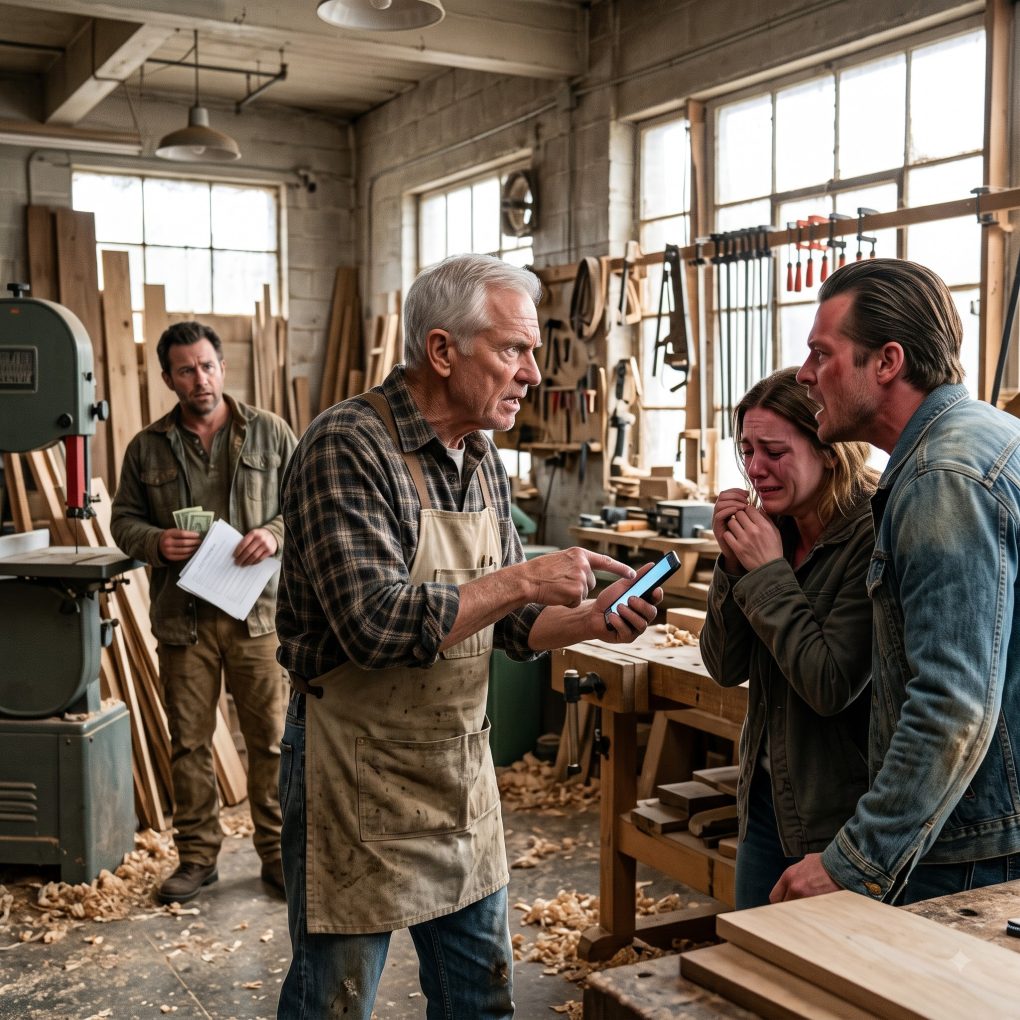
A total stranger unloaded industrial machinery into my workshop, claiming he paid my son-in-law $6,000 to rent half the space. Then he showed me my daughter’s text message: “Don’t worry, the building comes to me soon anyway.”
A total stranger unloaded industrial machinery into my workshop, claiming he paid my son-in-law $6,000 to rent half the space....
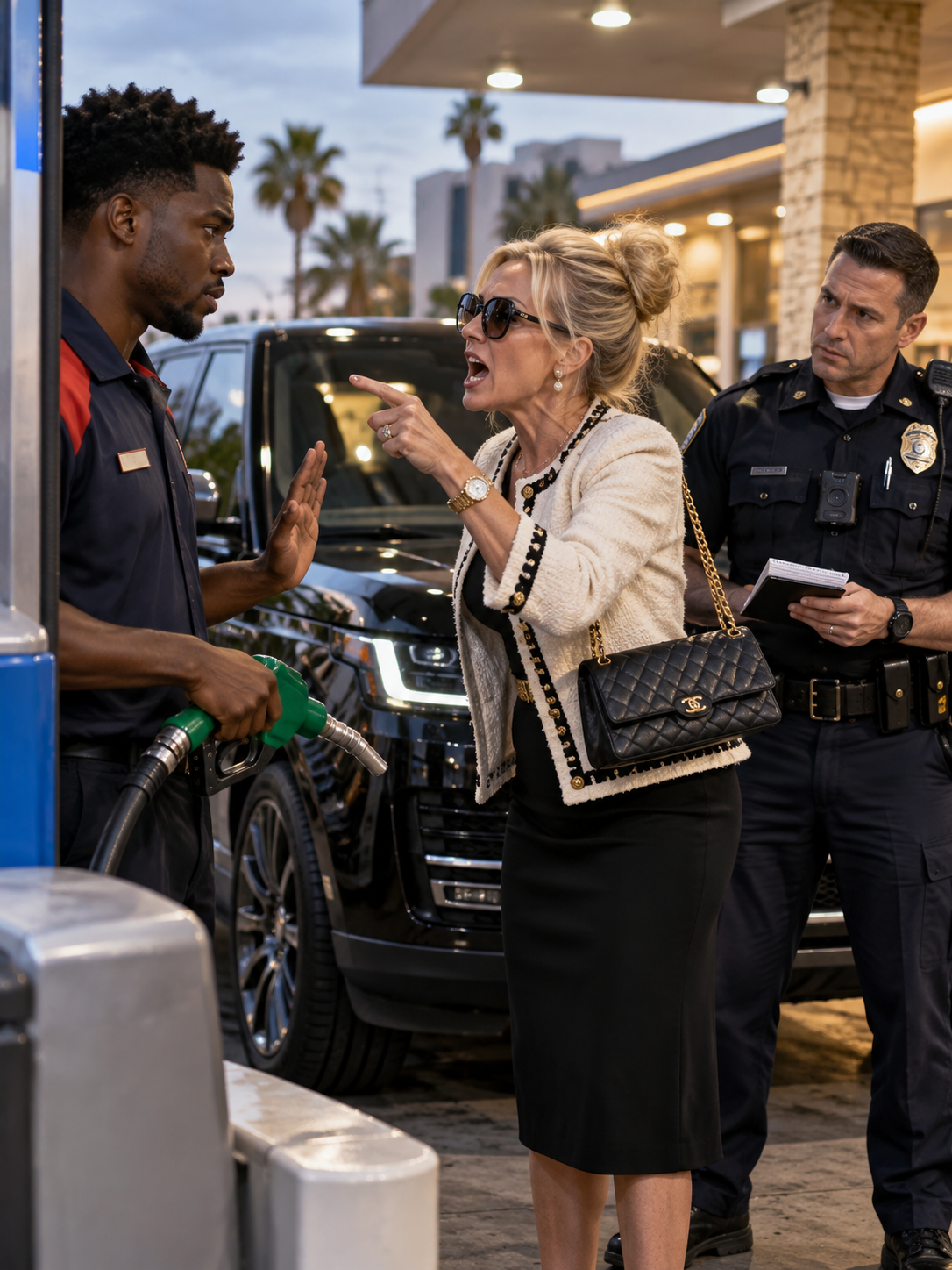
THE HOA PRESIDENT CALLED 911 WHEN I REFUSED TO FILL HER RANGE ROVER FOR FREE—THEN THE OFFICER ASKED HER ONE QUESTION SHE COULDN’T ANSWER – Life Story
The HOA president called 911 because I refused to put free fuel in her Range Rover. Then she told the...

The Crime Boss Asked Why She Wore a Turtleneck in August—Then Her Police Officer Ex Walked Into the Bar – Life Story
Lena Marlowe wore a black turtleneck through the hottest August Eastbrook had seen in twelve years. When a drunk customer...