I WAS LURED TO A CHICAGO RESTAURANT, SAVED A CRIME BOSS’S SEVEN-YEAR-OLD DAUGHTER, AND DISCOVERED THE SHOOTING WAS ONLY THE FIRST MOVE AGAINST US – Life Story
The first thing I saw was a little girl standing in the rain outside a Chicago restaurant, holding a white rabbit by one torn ear.
The second was a man inside the window raising his hands as the glass broke around him.
The third was my photograph lighting up a stranger’s phone.
At on a Tuesday night, someone slammed into me on the sidewalk outside Giordano’s, hard enough to send his phone skidding beneath a parked car.
“Get down,” he said.
I caught the smell of wet wool and cigarette smoke before I saw the dark suit, the earpiece, the way his eyes swept past me rather than meeting mine.
He wasn’t warning me as a kindness.
He was looking for someone.
Across the street, a little girl stood beside the restaurant’s brass-framed entrance.
She wore a yellow cardigan over a party dress and white shoes soaked gray at the toes.
Her curls clung to her cheeks.
She was watching the door, waiting for an adult who had not come back for her.
I had come to that door because of a text message.
GIORDANO’S.
TEN.
COME ALONE.
YOU WANT THE PROOF.
For six months I’d been investigating inflated construction contracts and companies that seemed to exist only on paper.
Someone had finally promised me the original invoices.
I was twenty-eight, working for the Chicago Tribune, and too familiar with how quickly a promising source could disappear.
I had told no one about the meeting.
Not my editor.
Not Hannah, my closest friend and the only colleague who could make sense of my spreadsheets.
The stranger’s phone lay under the car, its screen lighting the wet pavement.
I bent to reach it.
Then the first window shattered.
A hard cracking sound ricocheted between the buildings.
People inside the restaurant ducked.
A server fell behind the host stand.
I heard someone scream, and a second crack followed the first, and I understood that this wasn’t a car backfiring or a plate dropped in the kitchen.
The little girl didn’t move.
She was standing in the open, one hand pressed to the glass door, the rabbit dangling from the other.
The man who’d knocked into me was already running toward a black SUV.
I could have followed him.
There was an alley three steps behind me and a concrete planter big enough to hide behind.
Instead I ran into the street.
I remember the slap of my shoes through a puddle.
The horn of a taxi.
A flash of brass light on the child’s hair.
I got to her just as another window burst and threw myself sideways, taking her with me behind the stone planter.
My shoulder struck the curb.
Pain shot through it, bright and immediate, and I cried out before I could stop myself.
The child didn’t cry.
That frightened me more than anything.
“Stay with me,” I said, though I wasn’t certain whether I meant her or myself. “What’s your name?”
“Lily.”
“Okay, Lily.
I’m Jessica.
Can you squeeze my hand?”
Her fingers closed around mine.
Somewhere behind us, engines accelerated and brakes shrieked.
The noise was enormous, then abruptly farther away.
I pressed my jacket around her cold shoulders and kept one palm against the back of her head.
The white rabbit had landed between us, its cloth face blackened by rainwater and grit.
“Papa,” she whispered. “I need my papa.”
“I know.”
“No,” she said, looking over my shoulder.
Her voice changed. “He’s coming.”
A man dropped to his knees on the opposite side of the planter, his charcoal suit dark with rain.
His face was drawn tight, his eyes fixed on Lily.
She reached for him so quickly that I almost lost my hold on her.
He folded her against his chest, checked her face and hands, then turned toward me.
His gaze fell to my shoulder, where the sleeve of my coat was beginning to darken.
“Call an ambulance,” he told the man behind him. “Now.”
Then he looked at the phone half-hidden beneath the nearby car, where my face was still glowing beneath a cracked screen.
His expression changed.
“Who sent you here?” he asked.
THE GIRL BEHIND THE PLANTER
I stared at him.
Behind his shoulder, a restaurant employee was crawling through the broken entrance.
A woman was shouting into her phone.
The SUV that had been idling near the curb was gone, leaving only a smell of exhaust and a strip of tire marks shining on the wet street.
“What?”
“Who told you to come here?”
The question was so wrong, so wildly misplaced, that for a moment I couldn’t answer.
“Your daughter was standing in the street,” I said. “That’s why I’m here.”
His eyes moved from my face to the phone again.
“Anthony,” the man beside him interrupted. “Police are coming.”
“Then stay and speak to them.”
The command was quiet, but it carried the weight of an order that would not be repeated.
I shifted against the planter, trying to sit upright.
My shoulder protested.
My hand came away from my coat with a thin smear of red, and the sight made the pavement tilt.
The stranger noticed.
“Don’t move,” he said.
“You don’t get to ask me questions and then tell me what to do.”
For the first time, something almost human crossed his rigid expression.
“Fair enough.”
He eased Lily into the arms of an older woman who had emerged from the restaurant.
The little girl resisted, reaching for me.
“Jessica got hurt.”
“I see that, sweetheart.”
“She didn’t run away.”
The man’s face changed again, and this time I understood the expression.
Shame.
He looked at me for a long second before crouching closer.
“My name is Anthony Caruso.
Lily is my daughter.”
The name registered immediately.
Caruso.
The shipping company with warehouses along the Calumet River.
The restaurant group with expensive attorneys.
The family whose name had appeared in police reporting for three generations without quite attaching itself to the convictions everyone seemed to expect.
I had never met Anthony Caruso, but I had written his name in the margin of my research notebook twice.
Both times beside the same question.
How did a company operating on the edge of Chicago’s legitimate economy keep turning up near questionable city contracts without appearing directly on them?
I pulled my hand away when he reached toward my shoulder.
“Don’t.”
He stopped.
“All right.”
Sirens were drawing closer.
Red light washed across the restaurant’s shattered windows.
Anthony took off his suit jacket and placed it on the pavement beside me instead of around me.
“May I?”
I nodded.
He folded it carefully beneath my injured arm, supporting the shoulder without trying to move it.
He seemed to understand that touching me without permission would make a bad situation worse.
“Someone is going to stay with you until the paramedics get here,” he said.
“Someone already is.”
His mouth tightened.
“Then I’ll stay.”
I wanted to tell him I didn’t need a guardian.
I wanted to get up, retrieve my phone, and find out what had happened to the person who was supposed to meet me at ten.
Instead, my vision blurred at the edges.
“Your daughter’s rabbit,” I whispered.
Anthony followed my gaze.
The toy lay in the gutter, its white fur becoming gray beneath the steady rain.
He picked it up.
Lily called his name from the restaurant doorway.
“I’m here,” he told her.
Then he looked back at me.
“Don’t close your eyes, Jessica.”
That was the last thing I clearly remembered before the paramedics arrived.
When I opened my eyes again, I was staring at fluorescent lights.
A machine beeped beside me.
Something tugged against the skin near my collarbone.
My left arm rested in a sling, and the sharp pain had become a dull, exhausting ache.
A nurse with silver-rimmed glasses stood beside the bed.
“Good.
You’re awake.”
I swallowed.
“Where?”
“Northwestern Memorial.
You’ve been here most of the night.”
She checked my blood pressure, explained that fragments of glass had been removed from my shoulder, and told me that imaging had ruled out a serious fracture.
There were stitches, instructions about keeping the wound clean, and a follow-up appointment I would forget unless someone wrote it down.
I touched my face.
“Was the little girl hurt?”
“No serious injuries were reported for the child who came in with you.”
I closed my eyes.
For several seconds, that was enough.
Then I remembered the phone.
“My things.”
The nurse opened a drawer and brought out a clear bag containing my wallet, keys, and phone.
The screen was scratched but working.
There were nineteen missed calls.
Eleven from Hannah.
Four from my editor, James Sullivan.
Three from numbers I didn’t recognize.
And one from my apartment building’s management office.
My stomach tightened.
I called Hannah first.
She answered before the second ring.
“Jessica Turner, I swear to God—”
“I’m okay.”
Silence.
Then a shaky breath.
“Where are you?”
“Northwestern.”
“What happened? There’s footage online.
Some woman running into the street, glass everywhere.
The newsroom thinks it’s you.”
“It is.”
“Are you hurt?”
“Shoulder.
I’m okay.”
“Stop saying you’re okay when you’re in a hospital.”
That sounded so much like Hannah that I almost cried.
I told her the short version.
Anonymous meeting.
Shooting.
Little girl.
Ambulance.
I left out the name Caruso.
She supplied it for me.
“Jess, do you know whose daughter that was?”
“Yes.”
“Then you need to stop talking on your phone.”
“Hannah—”
“Listen to me.
Two men came to the newsroom this morning asking about your investigation.
They showed security identification, not police badges.
James wouldn’t let them past reception.”
My fingers tightened around the phone.
“What did they want?”
“Your notes.
Your sources.
And your schedule.”
I looked toward the hospital door.
“Did James give them anything?”
“No.
But he’s furious you went to a source meeting without telling anyone.”
He had every right to be.
At the Tribune, my investigation was already under pressure.
Six months spent tracing construction payments without a published article had made me difficult to defend in budget meetings.
I knew that.
I’d still gone alone.
“Hannah, listen carefully.
The most recent spreadsheet I sent you—”
“I have it.”
“Don’t open it at work.
Don’t send it anywhere.
Make a copy for our attorney.”
There was another pause.
“Jess, what did you find?”
I looked at the closed door.
“I don’t know yet.”
And that frightened me more than the answer would have.
A knock came before I could say anything else.
Anthony Caruso stood in the doorway holding a paper cup of coffee and the white rabbit.
The rabbit had been washed.
Its fur was still slightly damp.
“Am I interrupting?”
I ended the call after promising Hannah I’d contact her again.
Anthony remained at the threshold.
“You can tell me to leave.”
“I probably should.”
“Probably.”
He waited.
I studied him in the hard hospital light.
Without the rain and the panic, he looked younger than I’d expected, perhaps thirty-eight or forty.
There was a small scar above his left eyebrow.
His shirt was freshly pressed, but the dark circles beneath his eyes suggested he hadn’t slept.
“Why were there men with guns outside that restaurant?”
His expression settled.
“I don’t know everything yet.”
“That’s not an answer.”
“It’s the only honest one I have.”
He put the rabbit on the chair and set the coffee beside it.
“Lily wanted me to bring you this.”
“Her rabbit?”
“She said you should hold him until you feel better.”
I looked away.
The gesture hurt in a place no surgeon had touched.
Anthony pulled up the visitor’s chair but didn’t sit.
“The police are investigating.
A detective will speak to you once your doctor clears you.
I’ve given my statement.”
“And the phone?”
He knew which one I meant.
“The man who knocked into you dropped it.
An officer recovered it at the scene.”
“It had my photograph.”
“I saw.”
“Did you know who I was before last night?”
“No.”
I studied him.
“Do you believe me?”
“I believe my daughter would be in a hospital bed if you hadn’t moved when you did.”
“That doesn’t answer my question.”
“No,” he said. “It doesn’t.”
He sat down.
“Someone sent you to that restaurant.
Someone knew where my daughter and I would be.
I want to know whether those two things are connected.”
“So do I.”
For the first time, he leaned toward me rather than watching me from a distance.
“Then maybe we should begin with what you were investigating.”
I looked at the rabbit between us.
Its left ear had been stitched with blue thread.
“Maybe,” I said. “But you’re going to have to earn that conversation.”
He nodded once.
“I understand.”
At that moment, my phone buzzed again.
A message from my building manager.
JESSICA, POLICE WERE AT YOUR APARTMENT.
YOUR DOOR WAS FORCED OPEN SOMETIME LAST NIGHT.
PLEASE CALL ME.
I read it twice.
Anthony watched my face.
“What is it?”
I turned the screen toward him.
And for the first time since the shooting, I saw Anthony Caruso lose his composure.
THE HOUSE WITH TOO MANY LOCKS
My apartment door hung crookedly when I reached it the following afternoon.
A uniformed officer stood in the hallway.
My landlord had put plywood over the damaged frame, and someone had swept the broken lock hardware into a small pile beside the baseboard.
Anthony was behind me, accompanied by Marcus Bell, his head of security.
I hadn’t asked either man to come upstairs.
I’d asked for a ride.
Anthony had offered, and I’d accepted on the condition that we would stop at the police station first so I could complete my statement.
He had agreed without argument.
Now he stood a few feet away while I stared into the apartment where I’d lived for three years.
Every drawer was open.
My desk had been overturned.
The bulletin board above it was bare except for four pale rectangles where sunlight had not faded the paint.
Someone had taken the photographs, the index cards, even the colored string I’d used to connect companies and names.
I stepped inside.
“Jessica,” Marcus said, “watch the floor.”
Broken glass glittered beneath the kitchen window.
I walked carefully around it.
My mother’s blue ceramic mug still stood in the drying rack.
A framed photograph of my parents lay facedown on the sofa.
My grandmother’s quilt had been pulled from the bed and thrown into the closet.
The people who came here hadn’t wanted jewelry.
They’d wanted information.
I opened the bottom drawer of my desk.
Empty.
That drawer had contained the working copies of everything I’d gathered about the West Franklin Viaduct project, a $68 million reconstruction contract that somehow kept growing without anything visibly changing at the job site.
Hundreds of pages.
Vendor histories.
Interview notes.
Payment approvals.
Gone.
I sat on the edge of the overturned desk because my knees were no longer cooperating.
“Six months,” I said.
Anthony was standing near the doorway, looking at the missing bulletin board.
“Did you keep electronic copies?”
“Some.”
“Off-site?”
“Yes.”
He nodded.
“Good.”
I looked up sharply.
“Good? That’s all you’ve got?”
He turned toward me.
“No.
But it’s the part that matters right now.”
I knew he was trying to help.
I also knew that his calm made me want to throw something.
“My work was here.
My entire life was here.”
“Your life is still here.”
He said it gently.
I hated him for saying it anyway.
My phone rang.
James Sullivan.
I answered.
“Jessica,” he said, “I need you to come into the office when you’re medically cleared.”
“I’m dealing with a break-in.”
“I know.
Hannah told me.”
“Then you understand why I can’t come today.”
“Yes.
But we have a serious problem.”
I closed my eyes.
“Tell me.”
“There’s an internal review.
You’ve been placed on paid administrative leave pending an assessment of source protection and potential conflicts of interest.”
I stared at the empty drawer.
“Because I saved a child?”
“Because you went to an undisclosed meeting connected to a major investigation, became involved in a shooting, and are now publicly associated with Anthony Caruso.”
“Associated?”
“Jessica.”
His voice softened.
“I’m trying to protect your work.
I can’t do that if I don’t know what you did.”
I wanted to tell him everything.
I wanted to explain the message, the photograph, the way a stranger had asked who sent me instead of asking whether I was hurt.
But my apartment had been searched.
And two unidentified men had already visited the Tribune.
“I’ll talk to our lawyer,” I said.
“Good.
And Jess?”
“Yes?”
“Don’t mistake being brave for being impossible to hurt.”
After the call ended, I found Anthony watching me.
“How much trouble?”
“Enough.”
He looked around the apartment.
“Come to Lake Forest.”
I laughed once.
It wasn’t a happy sound.
“Of course.
The mansion.”
“A secure house.”
“With gates and guards.”
“Yes.”
“And a man who still hasn’t told me whether he belongs in the business section or the crime section.”
His expression didn’t change.
“Some days, both.”
I stood.
“At least you’re consistent.”
He stepped out of the doorway, leaving it clear.
“I’m not asking you to trust me blindly.
You can keep your own phone, speak to your own lawyer, come and go with security arrangements that you approve.
But someone entered your home less than twelve hours after a shooting.
I’d rather have you angry with me somewhere safe than polite with me somewhere dangerous.”
I looked around the ruined apartment.
My mother’s mug.
The empty drawer.
The place where the bulletin board had been.
“I want a week,” I said.
“A week?”
“I’ll stay seven days.
I make my own calls.
I keep my own work.
You don’t read my notes without permission.”
“Agreed.”
“And Lily doesn’t get told I’m staying forever.”
His eyes softened.
“Especially that.”
I packed what hadn’t been damaged into one duffel bag.
The photograph of my parents went into the outer pocket.
The blue mug went between two sweaters.
Anthony didn’t offer to replace anything.
That was the first thing he did right.
The Lake Forest house was set behind iron gates at the end of a long gravel drive.
Oak trees leaned over the property, their leaves dark orange against the October sky.
The house itself was pale limestone with tall windows and a broad front staircase.
It was beautiful.
It was also surrounded by more cameras than I’d seen in the lobby of a federal courthouse.
Maria Delgado, the household manager, met us at the entrance.
She was in her late fifties, with silver-streaked hair and a voice that made instructions sound like favors.
“Your room is upstairs, Miss Turner.
The kitchen is always open.
If you need anything, you ask me, not Mr.
Caruso.
He has a terrible habit of turning simple requests into emergencies.”
Anthony sighed.
“Maria.”
“She should know.”
I smiled despite myself.
“Jessica is fine.”
“Then Jessica it is.”
My bedroom overlooked a garden bordered by dark hedges.
There was a small writing desk beside the window, an armchair, and a linen closet containing more towels than my entire apartment had owned.
I put my duffel on the bed.
Nothing about the room looked lived in.
That bothered me more than the security cameras.
I had spent years trying to build a life I could afford.
Now I was sleeping in a room that cost someone else more in maintenance than I paid in rent.
At six that evening, someone knocked.
Lily stood outside holding the rabbit.
She had changed into pajamas covered in tiny stars.
“Papa said you might be sleeping.”
“I was thinking about it.”
“Are you still hurt?”
“A little.”
She considered that.
“Mr.
Waffles gets hurt sometimes too.”
She held up the rabbit.
“Maria fixes him.”
“I noticed the stitches.”
Lily came closer.
“Can I sit?”
I nodded.
She climbed into the armchair, tucking her feet beneath her.
For several minutes, she said nothing.
Then she asked, “Did you know the bad people were coming?”
“No.”
“Then why did you run toward me?”
I looked at her small, serious face.
“Because I could see you were scared.”
She thought about that.
“Papa says you were very brave.”
“I was scared too.”
“Really?”
“Really.”
Lily glanced down at the rabbit.
“I was supposed to stay beside Maria.
But I left Mr.
Waffles in the car.
She went inside to tell Papa, and I waited outside because I didn’t want her to get in trouble.”
There it was.
The small chain of ordinary decisions that had placed a seven-year-old in the path of a terrible event.
Not a grand conspiracy.
A child who wanted her toy.
An adult who assumed she would stay put.
A few seconds in which nobody was looking.
“Did Papa get mad?” I asked.
“At first.
Then he hugged me so hard I couldn’t breathe.”
I smiled.
“He was scared.”
Lily nodded.
“He’s scared a lot.
He just doesn’t say it.”
After she left, I sat by the window until the garden lights came on.
I thought about the stranger’s phone.
About the file photograph of me.
About the fact that somebody had prepared it before the shooting.
And I wondered whether the little girl had been the target, the distraction, or the one thing nobody had planned for.
The next morning, Anthony found me in the kitchen making coffee with my uninjured hand.
He reached for the kettle.
“I’ve got it.”
“So do I.”
“You can barely lift that arm.”
“Then it’s fortunate I have another one.”
He lowered his hand.
Maria, watching from the stove, made a small sound that might have been laughter.
Anthony poured his own coffee.
“How’s the shoulder?”
“Annoying.”
“That sounds like progress.”
I studied the dark circles beneath his eyes.
“Did you sleep?”
“Some.”
“How much is some?”
He looked into his cup.
“Not enough.”
We stood in silence for a moment.
Then I said, “I need to know what you really do.”
He didn’t pretend not to understand.
“Caruso Logistics handles freight, bonded storage, and distribution.
The restaurant group is separate.”
“And the rest?”
He looked toward the hallway.
“My father operated differently.
Cash businesses.
Contracts settled privately.
People who expected favors instead of invoices.”
“Organized crime.”
“Yes.”
The word hung between us.
“I inherited businesses that had legitimate operations and relationships that weren’t legitimate.
I’ve spent years disentangling them.”
“Have you succeeded?”
“Not completely.”
That answer frightened me.
It also made me listen.
“Why tell me?”
“Because you asked.”
He put down his cup.
“And because if you stay here, I won’t ask you to believe a story I wouldn’t put under oath.”
I watched him for a long moment.
“Then don’t.”
He held my gaze.
“I won’t.”
The following afternoon, my apartment building caught fire.
The notification came through the local news feed while I was reviewing my notes.
An electrical failure was initially suspected, but the fire department had not yet determined the cause.
I saw the address.
Then the footage.
My building’s upper windows were black with smoke.
Firefighters carried hoses through the entrance where I’d carried groceries the week before.
Neighbors stood on the sidewalk wrapped in emergency blankets.
Two people had been treated for smoke inhalation.
No deaths.
I called my landlord.
He answered on the fifth ring.
“Jessica? You’re alive?”
“Is everyone out?”
“Yes.
Thank God.”
“Mrs.
Park?”
“At her daughter’s.”
“Mr.
Rodriguez?”
“He’s here.
He’s fine.”
My throat tightened.
“What about my apartment?”
He was quiet.
Then he said, “I’m sorry.”
I ended the call and stood by the window.
For three years, that apartment had held the ordinary pieces of my life.
My mother’s Christmas ornaments.
My father’s books.
My grandmother’s quilt.
My blue mug was upstairs, safe because I’d thought to pack it.
Everything else was smoke.
Anthony found me sitting on the stone steps outside the kitchen entrance.
He didn’t tell me I was lucky.
He didn’t tell me things could be replaced.
He sat beside me and waited.
Finally, I said, “People could have died.”
“Yes.”
“I don’t know if the fire was connected.”
“Neither do I.”
“What if it was?”
He looked at the gardens.
“Then someone has to answer for it.”
“Not someone with a private army.”
His jaw tightened.
“No.”
I turned toward him.
“Someone who can prove it.”
That night, I called Hannah.
“Bring me the spreadsheet,” I said.
She was quiet for a moment.
“Which one?”
“The one I sent you before I went to Giordano’s.”
“Jess, it’s incomplete.”
“So is every investigation until somebody finishes it.”
I looked at the locked gates beyond the garden.
“That’s what we’re going to do.”
THE NUMBER THAT DIDN’T BELONG
Hannah arrived at Lake Forest two days later carrying three things: a laptop, a paper bag of sandwiches, and the expression she wore whenever she knew I was about to do something stupid.
“You look terrible,” she said.
“You look expensive.”
“I bought a new coat because I thought a crime boss might judge me.”
“He’s more likely to judge your filing system.”
“Then I’m in trouble.”
We hugged carefully around my shoulder.
For a moment, the room felt like our old newsroom again.
Hannah was thirty, with a blunt brown bob and an extraordinary ability to find mistakes in stories everyone else considered finished.
She believed in footnotes the way other people believed in prayer.
She also knew me well enough to recognize when I was mistaking exhaustion for determination.
“You should be resting,” she said as she opened her computer.
“I am sitting.”
“That’s not what resting means.”
“Show me the file.”
She placed a spreadsheet on the desk.
Thirty-seven companies.
Fourteen city contracts.
More than $112 million in payments spread across seven years.
Most of the companies appeared ordinary.
Construction supply firms, trucking subcontractors, equipment rental businesses.
But a handful shared strange characteristics.
They changed addresses frequently.
Their registered agents overlapped.
They repeatedly won subcontracting work on projects where the prime contractor was connected to Patrick O’Sullivan, a celebrated developer and major donor to local political campaigns.
I pointed to one line.
“Harbor Point Materials.”
Hannah nodded.
“Three contracts.”
“Four.”
She frowned.
“No.
Three.”
I opened the city’s public procurement portal and showed her a change order attached to the West Franklin Viaduct reconstruction.
“Look at the supplemental payment.”
She leaned closer.
“Two-point-four million.”
“Approved for additional structural materials.”
“Which might be legitimate.”
“Except the change order was approved before the engineering revision that supposedly required the materials.”
Hannah looked at the dates.
Then she looked again.
“That’s a problem.”
“That’s a lie.”
“Potentially,” she corrected.
I loved her for that.
She scrolled down.
“What’s the fourth contract?”
“A warehouse lease.
Harbor Point rented storage through a Caruso Logistics subsidiary.”
Hannah stopped typing.
“Jessica.”
“I know.”
“You’re sitting in the man’s house.”
“I know.”
“And you’re investigating transactions tied to his company.”
“That’s why you’re here.”
She stared at me.
Then she slowly nodded.
“Good answer.”
We spent the morning verifying the records against published city documents.
Some filings were incomplete.
Others had been amended.
We found two invoices carrying the same shipment reference number but listing different destinations.
One named a city construction site.
The other named a freight terminal leased by Caruso Logistics.
The amounts were identical.
The dates were three weeks apart.
It was possible that someone had copied the reference number in error.
It was also possible that a legitimate freight company was being used to create the appearance of payments it had never received.
“Could be an accounting mistake,” Hannah said.
“Then why amend one invoice but not the other?”
She rubbed her forehead.
“That’s what we ask.”
At lunch, Anthony appeared in the doorway.
He stopped when he saw Hannah.
“Ms.
Park.”
“Hannah.”
He offered his hand.
“Thank you for coming.”
“Don’t thank me yet.
I’m here to make sure she doesn’t get herself arrested.”
Anthony’s mouth moved slightly.
“Then we’re on the same side.”
I watched them with increasing irritation.
“Can we not discuss me as if I’m a missing dog?”
Hannah took a bite of her sandwich.
“Then stop trying to escape the yard.”
Anthony actually laughed.
It was the first time I’d heard him do it.
The sound surprised all three of us.
Later that afternoon, I asked him to look at the warehouse lease.
He brought Marcus and a company attorney, Elena Price, into his office.
Elena was in her forties, with dark-framed glasses and a direct manner that made Anthony’s authority seem less impressive.
She read the documents without speaking.
Then she said, “This isn’t one of our current accounts.”
Anthony leaned forward.
“What?”
“Harbor Point’s lease ended eighteen months ago.
They were moved out after a compliance review.”
“Why?”
“Payment irregularities and subcontracting issues.
I recommended we terminate the relationship.”
She looked at Anthony.
“You approved it.”
He nodded slowly.
“I remember.”
I placed the two invoice copies on the desk.
“Then why is Caruso Logistics still listed as the receiving company?”
Elena examined them.
“Because someone is using our trade name on documents we didn’t issue.”
“Can you prove that?”
“Not from this paper alone.
We can compare the signatures and retained records.”
She looked at me.
“And before anyone suggests otherwise, you do not get access to confidential company files simply because you’re staying in this house.”
“Agreed.”
Anthony glanced at me, almost surprised.
I shrugged.
“I said I wanted the truth.
That includes the boring legal parts.”
Elena smiled.
“Good.
We might get along.”
The next discovery came shortly after dinner.
Hannah had gone back to the guest room to call her parents.
Lily was upstairs finishing a school project.
Anthony and I sat at opposite ends of the library table, reviewing separate copies of the payment history.
A clock ticked above the fireplace.
I noticed the same vendor identification number appearing on two different corporate filings.
One belonged to Harbor Point.
The other belonged to an entity called Lakebridge Site Services.
On paper, Lakebridge had no direct relationship with the viaduct project.
But the two companies shared a mailing address and a registered agent.
The address was a suite in a small office building in Oak Brook.
I searched archived corporate filings.
Lakebridge had been dissolved the previous year.
Its final public filing named an accountant whose office had previously worked for an O’Sullivan-controlled development partnership.
I sat upright.
“Anthony.”
He looked over.
“Come here.”
I showed him the records.
He read silently.
Then he reached for his phone.
“Elena needs to see this.”
“Not yet.”
He paused.
“Why?”
“Because I’m not giving anyone another theory until I know what the records actually mean.”
He set down his phone.
I looked at him.
“Your people are used to acting quickly.”
“Sometimes.”
“My work depends on knowing when not to.”
He considered that.
Then he sat beside me instead.
“Show me how you check it.”
For the next hour, we moved through the filings together.
He knew which shipping terms were ordinary and which were unusual.
I knew how to compare an amended public record against its earlier archived version.
He pointed out a freight abbreviation I’d misunderstood.
I showed him how the same document number had appeared on three different municipal records.
Neither of us liked every answer.
By midnight, we had a pattern worth taking to Elena.
Not proof of guilt.
Not yet.
But enough to explain why somebody might have wanted my investigation stopped.
Anthony leaned back.
“Your editor must be insane to suspend you.”
“My editor has an obligation to the newspaper.”
“So do you.”
“Exactly.”
He studied me for a moment.
“Does that mean you’ll write about my company if the evidence leads there?”
“Yes.”
The answer came easily.
It hurt to see his expression close.
But I didn’t take it back.
He stood.
“Good night, Jessica.”
“Anthony.”
He stopped.
“I’m not looking for a reason to destroy you.”
He looked at the papers between us.
“I know.”
“Then why do you look like I just threatened you?”
His voice was quiet.
“Because I’m starting to care what you think of me.”
He left before I could answer.
I sat alone at the table, staring at the spot where his hand had rested beside mine.
That was the first moment I understood that the danger inside this house wasn’t limited to the men outside its gates.
Three days later, I discovered the first real reversal in the case.
The city had approved the disputed change order using a contractor certification dated before the supplemental work was formally requested.
Somebody had backdated the justification.
But the altered paperwork didn’t identify Caruso Logistics as the recipient of the money.
It identified a company that had copied its name.
A company whose bank was located in a different state.
Hannah read the transaction reference and raised her eyebrows.
“Jessica, they’re not hiding money in Caruso’s business.”
I stared at the screen.
“They’re making it look as if his business received money it never received.”
“Which means…”
I finished the sentence.
“Someone is building a case against Anthony while stealing from the city.”
And suddenly the shooting outside Giordano’s looked very different.
THE FIRE THAT FOLLOWED US HOME
Two weeks after I arrived in Lake Forest, the bank notified Caruso Logistics that three operating accounts had been restricted pending a compliance review.
The announcement came during breakfast.
Anthony was reading an email on his phone when his expression changed.
Lily was describing a school science project involving two cups of soil and a bean seed that had refused to grow.
“Papa?”
He looked up.
“Yes, sweetheart?”
“You’re not listening.”
“You’re right.”
He set the phone facedown.
“Start again.”
She did.
For ten minutes, he listened to every detail.
Only after Maria took Lily upstairs to retrieve her backpack did he excuse himself.
I followed him into the office.
“What’s wrong?”
He handed me the printed notice.
The bank had identified transactions requiring further verification and restricted outgoing transfers from accounts associated with two Caruso subsidiaries.
It was serious.
It was not a criminal conviction.
It wasn’t even a formal accusation.
But for a logistics company paying drivers, fuel suppliers, and insurance premiums every week, interrupted access to working capital could cause damage almost immediately.
“How long?” I asked.
“Unknown.”
“Can you make payroll?”
“For now.”
He looked out at the driveway where Lily’s school car was waiting.
“Forty-three employees depend on those accounts.”
I studied the notice.
“Did the bank identify the suspicious transactions?”
“Not to me.”
“Then Elena needs to request whatever she legally can and preserve everything before anyone starts moving money around.”
Anthony turned.
“I already called her.”
“Good.”
He smiled faintly.
“You sound disappointed.”
“I like being useful.”
“You are.”
He moved closer.
“Jessica, what you’ve found might be the difference between this becoming a temporary problem and becoming something worse.”
I shook my head.
“Don’t make me responsible for saving your company.”
His smile faded.
“That isn’t what I meant.”
“I know.
But I’m already responsible for enough things in my own head.”
He studied me for a moment.
Then he nodded.
“Fair.”
The next morning, Hannah called with news from my old neighborhood.
The fire department was investigating possible arson at my apartment building.
Investigators had not announced a cause.
A witness had reported seeing an unfamiliar van behind the property on the evening of the fire.
The information made me sick.
I called Mrs.
Park, my former neighbor, after obtaining her number through the building’s resident association.
She answered from her daughter’s apartment.
“Oh, Jessica.”
Her voice broke.
“Are you all right?”
“I’m healing.
How are you?”
“We’re safe.
That’s what matters.”
We talked about the building, about the neighbors, about the firefighters who had helped people down the stairs.
Then I asked whether she remembered the van.
She was quiet.
“I saw one.
But I can’t tell you it had anything to do with the fire.”
“That’s okay.”
“It was silver.
I thought it belonged to a contractor.”
“Did you tell the investigators?”
“Yes.”
“Good.”
After the call, I sat in silence.
I hadn’t lost only an apartment.
I had lost the place where people recognized me.
The place where Mrs.
Park brought packages inside when I worked late, where Mr.
Rodriguez played guitar in the summer, where the neighbor across the hall sometimes left homemade cookies in a tin by my door.
That ordinary world had been damaged.
And my work might have brought danger to people who had never volunteered for it.
Anthony found me in the laundry room that afternoon.
I was trying to wash the soot smell from a sweater rescued before the fire.
He stood in the doorway.
“Maria said you’d been here awhile.”
“I wanted to do something normal.”
He looked at the washing machine.
“Is it helping?”
“Not particularly.”
He stepped inside.
“There’s something I should tell you.”
I turned.
“That sounds promising.”
“My father knew Patrick O’Sullivan.”
“I assumed.”
“They worked together years ago.
Before I took over the company.”
“How closely?”
Anthony hesitated.
“Closely enough that there were financial arrangements I didn’t want to inherit.”
I folded the sweater across the counter.
“That’s not the same as telling me what they were.”
“No.”
He leaned against the wall.
“When I took over, I terminated some contracts and moved others into reviewed, documented agreements.
I thought that was enough to separate the legitimate businesses from the old relationships.”
“And was it?”
“Apparently not.”
He looked tired.
Not frightened.
Tired in the way people looked when something they’d spent years avoiding finally arrived.
“O’Sullivan wanted access to freight facilities and city-connected subcontractors.
I stopped doing business with the firms he recommended.
He considered that a personal insult.”
“People don’t usually arrange shootings over insulted pride.”
“No.”
His expression hardened.
“But people will do terrible things when they’re afraid of losing control.”
I studied him.
“Is there anything about your father’s business that could hurt you now?”
“Yes.”
“Anything illegal?”
He looked directly at me.
“Possibly.”
The room seemed to grow smaller.
“Anthony.”
“I won’t pretend I understand every transaction my father approved.
There are records from that period I still have questions about.
Elena has been reviewing them.”
“Then investigators should see them.”
He said nothing.
I could hear the washing machine turning behind us.
Finally, he nodded.
“You’re right.”
I hadn’t expected agreement.
It frightened me almost as much as resistance would have.
That evening, Lily found us at the kitchen table.
She carried a notebook filled with drawings of birds.
“Jessica, can you help me?”
“With what?”
“I need to write three facts about migration.”
Anthony reached for the notebook.
“Your teacher said you were doing this yourself.”
“I am.
Jessica is helping.”
He looked at me.
“Sounds familiar.”
I gave him a warning look.
Lily frowned.
“Are you two fighting?”
“No,” I said.
“Then why do you look like people on television when they’re fighting?”
Anthony covered his mouth.
I laughed.
It came out unexpectedly, a little too loud.
Lily looked pleased.
“Good.
I like it when people laugh.”
She climbed into the chair between us.
For twenty minutes, the three of us talked about birds.
Anthony found a field guide in the library.
Lily carefully copied the word migration into her notebook.
I helped her find the spelling of instinct.
At one point, she leaned against my uninjured arm.
I held still.
There was something unbearably tender about being trusted by a child who had so many reasons to be afraid.
When she finished, Anthony took her upstairs.
I stayed at the table.
Ten minutes later, he came back carrying two mugs of tea.
“She’s attached to you,” he said.
“I know.”
“I’m sorry.”
“Don’t apologize for her.”
He set the mugs down.
“I’m apologizing because this is complicated.”
I wrapped my fingers around the warm ceramic.
“She deserves uncomplicated things.”
“Yes.”
“So do I.”
He looked at me.
“I know that too.”
For a moment, neither of us moved.
Then he reached across the table and touched my hand.
Not a promise.
Not a claim.
Just the brief pressure of his fingers against mine.
I didn’t pull away.
The next day, a padded envelope arrived at the Tribune addressed to James Sullivan.
It contained photocopies of my investigation notes.
Mixed among them were fabricated messages suggesting that I had been working for Anthony Caruso before the shooting.
James called me immediately.
“Jessica, I need you to tell me whether any of this is real.”
I stood beside the library window.
“No.”
“All of it?”
“The documents may contain genuine material stolen from my apartment.
The messages are fabricated.”
His silence was heavy.
“You understand the position this puts us in.”
“Yes.”
“The paper can’t publish allegations until we’ve independently authenticated them.”
“Neither can I.”
He exhaled.
“That’s what I needed to hear.”
When I hung up, my phone received a message from an unknown number.
YOU CAN HIDE IN HIS HOUSE.
YOU CAN’T HIDE FROM YOUR OWN RECORD.
A second message followed.
NEXT TIME, EVERYONE WILL KNOW WHAT YOU REALLY ARE.
I stared at the words.
The people behind the shooting no longer seemed interested in making me disappear.
They wanted me alive long enough to destroy my credibility.
And that was when I began to understand the purpose of the photograph on the stranger’s phone.
THE GALA OF BEAUTIFUL LIES
Patrick O’Sullivan hosted his annual foundation gala at the Drake Hotel on a Thursday evening in November.
For years, the event had attracted developers, executives, politicians, and donors who preferred their charity photographed and their business conducted privately.
This year, the theme was rebuilding Chicago.
The irony was difficult to ignore.
Hannah secured a legitimate freelance assignment for me through a local business publication willing to cover the gala’s publicly announced programs.
James knew about it.
Elena reviewed the restrictions attached to my ongoing situation, and my physician cleared me to work a short event without heavy physical activity.
Anthony disliked the plan.
He made that clear in the library.
“You’re going somewhere O’Sullivan controls.”
“I’m going to a public charity event.”
“Surrounded by people who would like you silent.”
“Then I won’t be silent.”
He pushed back from the desk.
“Jessica.”
I looked up.
“I need you to understand that I am not asking permission.”
His jaw tightened.
“I understand.”
“Then stop speaking as if I need it.”
He walked to the window.
For several seconds, I thought he might argue.
Instead he said, “Marcus can drive you.
He’ll remain outside.
You can leave whenever you want.”
“That’s reasonable.”
He turned.
“I’ve been told I’m occasionally capable of it.”
I smiled despite myself.
He came closer.
“Please don’t stay because you think walking away means losing.”
“I won’t.”
“And if the event feels wrong?”
“I leave.”
He nodded.
“All right.”
That night, Maria helped me choose a dark emerald dress from the clothes she’d arranged after the fire.
I insisted on paying her back for it when my insurance situation was resolved.
She waved the subject away.
“Discuss money later.
Tonight, you need shoes you can actually walk in.”
She selected low heels.
“Beautiful women don’t have to suffer for bad footwear.”
I looked in the mirror.
The shoulder injury was healing, but the pale line near my collarbone remained visible.
Maria noticed me looking at it.
“Leave it.”
“I wasn’t going to cover it.”
“Good.”
She adjusted the fabric.
“People who survived something don’t owe the world a disguise.”
At the Drake, chandeliers spilled warm light across polished floors.
Musicians played near the ballroom doors.
Servers circulated with silver trays, and guests stood in small circles discussing donations, development projects, and the terrible traffic around Michigan Avenue.
Patrick O’Sullivan was impossible to miss.
He stood near the front of the ballroom beneath a display of architectural renderings.
Sixty-two years old, silver-haired, elegant, wearing a dark tuxedo and the relaxed confidence of a man who knew half the room owed him favors.
When I introduced myself, he smiled.
“Jessica Turner.
Of course.”
I extended my hand.
“Mr.
O’Sullivan.”
“I’ve heard quite a bit about you.”
“Good things, I hope.”
“Interesting things.”
His handshake lasted one second too long.
“You’re the journalist who saved Anthony Caruso’s little girl.”
“I helped a child who was in danger.”
“A very generous act.”
I kept my expression neutral.
“May I ask you about the foundation’s infrastructure grants?”
His smile widened.
“Please.”
For twelve minutes, he spoke about community centers, after-school programs, and private investment.
I took notes.
I asked about funding sources.
I asked how his organization selected construction partners.
He answered smoothly, offering figures and anecdotes that could be checked later.
Then I mentioned Harbor Point Materials.
His smile remained.
But his eyes changed.
“That company isn’t part of our foundation.”
“Was it involved in one of the commercial projects your development group supported?”
“You’d have to ask the project managers.”
“Would you be willing to identify them?”
His assistant appeared at his shoulder.
“Mr.
O’Sullivan, the mayor’s office is asking for you.”
O’Sullivan inclined his head.
“I’m afraid duty calls.”
“One more question.”
He paused.
“Did you know Harbor Point’s invoices listed Caruso Logistics as a receiving company after its lease had ended?”
For one small moment, the polite expression disappeared.
Then it returned.
“I don’t comment on another company’s records.”
He smiled for the nearby cameras.
“But I admire your persistence.”
I watched him walk away.
He was not surprised by my question.
That was worth remembering.
An hour later, I was standing near the ballroom’s side corridor, reviewing the event’s published donor program.
A familiar voice reached me from beyond a partially open service door.
“I did what you asked.”
I stopped.
Vincent Romero.
Anthony’s longtime business associate.
He had been present during two meetings at Lake Forest.
He handled portions of the company’s older relationships and had known Anthony’s father.
He was also Lily’s godfather.
I stepped closer, keeping my distance from the doorway.
Another man answered.
“Then why is she still asking questions?”
I recognized him from public photographs.
Daniel Kerrigan, a lawyer who frequently represented O’Sullivan-affiliated construction companies.
“She’s not under my control,” Vincent said.
“Then perhaps you should remind Caruso what happened the last time he ignored advice.”
There was a pause.
Then Vincent spoke in a voice I had never heard from him.
“Leave the child out of this.”
Kerrigan laughed softly.
“That depends on you.”
I moved away before either man could see me.
My pulse was hammering.
Vincent had introduced me to Elena.
Vincent had helped explain the old warehouse lease.
Vincent knew the house’s security procedures.
And he was speaking to O’Sullivan’s attorney as if they shared a secret.
I returned to the ballroom and found a position near the public event photographer.
When Vincent emerged from the corridor beside Kerrigan, I took a photograph.
Both men were visible.
The service door was behind them.
The image proved only that they had met.
But the conversation I’d overheard had given it meaning.
I left without approaching O’Sullivan again.
Marcus was waiting outside.
“Everything okay?”
“Drive.”
He looked at me.
“Jessica?”
“Please.
I need to speak to Anthony.”
During the trip north, I watched the city lights slip across the car windows.
I wanted the conversation to be innocent.
A routine legal dispute.
A family business disagreement.
Anything other than what it sounded like.
But I kept hearing Vincent’s voice.
Leave the child out of this.
When we reached the mansion, Anthony was in his office.
He stood as soon as I entered.
“Are you hurt?”
“No.”
“Did someone threaten you?”
“Not directly.”
I placed my phone on his desk and showed him the photograph.
“Vincent was at the gala.”
Anthony studied the screen.
“He’s been attending those events for years.”
“He was meeting Daniel Kerrigan.”
His eyes sharpened.
“What did you hear?”
I repeated the conversation exactly as I remembered it.
No embellishment.
No guesses.
When I finished, Anthony sat down.
For a long time, he didn’t speak.
“How long have you known him?” I asked.
“Seventeen years.”
“Do you trust him?”
Anthony looked at the photograph again.
“I did.”
I watched him reach for his phone.
“Anthony.”
He stopped.
“Don’t confront him alone.”
His expression tightened.
“Jessica—”
“Whatever this is, we need to understand it before somebody makes a decision that can’t be undone.”
He stared at me.
Then slowly, he put the phone down.
“You’re right.”
I hadn’t expected that answer.
He looked suddenly older.
“He’s Lily’s godfather.”
I sat across from him.
“I know.”
“He was at her mother’s funeral.
He helped me raise her when I barely knew how to be a father.”
I stayed quiet.
Anthony looked toward the photograph of Lily on his desk.
“Her mother died in a car accident when Lily was two.
Vincent was there when I brought her home from the hospital.”
His voice grew rough.
“I don’t know what I’m going to tell her if this is what it looks like.”
I looked at the image again.
Then I remembered something.
Three days earlier, Vincent had been pacing near the garden gates while speaking on his phone.
I’d heard only one sentence.
I need to know she’s still alive.
At the time, I’d assumed it was about a sick relative.
Now I wasn’t certain.
“Anthony,” I said, “does Vincent have a sister?”
He turned toward me.
“Sarah.”
“Where is she?”
His expression changed.
“He told me she moved to Arizona.”
“How long ago?”
“Three months.”
I felt a chill move through me.
“That’s interesting.”
“Why?”
“Because at the gala, he sounded like someone bargaining for another person’s safety.”
Anthony looked at the photograph one more time.
Then he picked up his phone.
This time, he called Elena.
WHAT THE TRUSTED MAN HAD DONE
Vincent arrived at the house the following morning.
Elena was already present.
So was a criminal defense attorney she had referred to Vincent after warning him that questions about possible criminal conduct could have serious consequences.
Anthony agreed to let that attorney speak to Vincent privately before any confrontation.
It was a small decision.
It prevented a much larger mistake.
When Vincent finally entered the library, he looked as if he hadn’t slept in days.
His tie was crooked.
His hands trembled.
He glanced at Anthony, then at me.
“What’s going on?”
Anthony placed the photograph on the table.
Vincent stared at it.
His face lost its color.
“Sit down,” Anthony said.
Vincent did.
For a moment, nobody spoke.
Then Anthony asked, “Where is Sarah?”
Vincent closed his eyes.
The silence told us more than an immediate denial would have.
“Vincent,” Anthony said again.
His voice was low.
“Where is your sister?”
Vincent bent forward, pressing his palms against his face.
“I don’t know exactly.”
Anthony went still.
“What does that mean?”
“They’ve moved her.
Three times that I know of.”
Elena leaned forward.
“Vincent, your attorney is here.
You need to speak with him about the best way to proceed.”
Vincent looked at the lawyer.
Then he looked at Anthony.
“Patrick O’Sullivan has her.”
The room seemed to shrink.
“Since August,” Vincent continued. “They took her outside her apartment.
At first, I thought it was a robbery.
Then I got a call.”
He swallowed.
“They told me to give them information about the company.
Locations.
Travel schedules.
Names of people working with you.”
Anthony’s jaw tightened.
“And you did.”
“Yes.”
“Did you tell them where Lily would be that night?”
Vincent looked down.
“Yes.”
I felt sick.
He continued before Anthony could speak.
“They told me they wanted to frighten you.
Force you into a settlement over the old contracts.
I didn’t know there would be shooting.”
Anthony stood so abruptly that his chair struck the wall.
“You knew my daughter would be there.”
Vincent flinched.
“Yes.”
“You knew.”
“I tried to change the reservation.
They already had the schedule.”
Anthony’s hands curled at his sides.
For a moment, the room held only the sound of a clock.
Then he stepped away from the table.
Not toward Vincent.
Away.
I watched him go to the window.
That single movement told me how much effort it cost him not to act on his anger.
Vincent began to cry.
Not dramatically.
Quietly, with his face turned toward the floor.
“They send videos.
Just enough to show she’s alive.
If I stop answering, they say they’ll hurt her.”
His attorney placed a hand on the table.
“We need to contact federal law enforcement immediately.”
Vincent nodded.
“I know.”
Anthony turned around.
“Why didn’t you come to me?”
Vincent looked at him.
“Because you’d have gone after them.”
“Maybe.”
“And Sarah would’ve paid for it.”
Anthony said nothing.
The answer had struck too close to something true.
I leaned forward.
“Vincent, did you know about the anonymous message that brought me to Giordano’s?”
He looked at me.
“Yes.”
My stomach dropped.
“How?”
“Someone at O’Sullivan’s office had been watching your investigation.
They knew which companies you were asking about.
They had copies of some of your emails.”
“Who?”
“I don’t know.
Kerrigan handled that part.”
“Why bring me there?”
Vincent rubbed his forehead.
“Because they needed a journalist connected to Caruso before the financial story broke.”
I stared at him.
He continued.
“They were preparing false records to make it look as if Anthony’s businesses were receiving stolen public money.
They wanted you photographed with him.
If you died, your reporting could be buried.
If you survived, they’d use the association to discredit anything you published.”
The room became very quiet.
I thought about the stranger’s phone.
The photograph of me.
The fabricated messages.
The news coverage after the shooting.
The man who had knocked into me was not merely fleeing danger.
He had been carrying a prepared identification file on the journalist who was supposed to appear at the restaurant.
“They planned both outcomes,” I whispered.
Vincent nodded.
“They didn’t plan for you to save Lily.”
I looked toward Anthony.
His face was pale.
For weeks, I’d thought the shooting was the beginning of everything.
Now I understood that it was the end of months of preparation.
I had been positioned like a piece on a board.
My investigation.
My sources.
My career.
Even my decision to help a frightened child had been folded into someone else’s strategy afterward.
And Vincent had known.
“Did you know they were going to burn my apartment?” I asked.
He shook his head.
“No.”
“Did you know they were going to search it?”
He hesitated.
Then nodded.
“Yes.”
My voice came out quiet.
“People lived in that building.”
“I know.”
“People who never hurt anyone.”
“I know.”
I stood.
For a moment, I wanted to shout.
I wanted him to feel every terrible thing I had felt.
Instead, I looked at his hands.
They were shaking so badly he could barely hold the glass of water Elena had given him.
“Then you need to tell investigators everything,” I said.
“All of it.
Even the parts that make you look guilty.”
His attorney nodded.
“That’s the only responsible path from here.”
Anthony returned to the table.
“What do they want now?”
Vincent swallowed.
“They’re trying to get the original financial records from an old accountant.
A man named Lewis Barron.
He worked on the Harbor Point accounts.”
“Where is he?”
“He’s been cooperating with federal investigators, I think.
Kerrigan is furious because he can’t reach him.”
I looked at Elena.
“Then the government may already have part of what we need.”
She nodded slowly.
“Possibly.”
Anthony looked at Vincent.
“You’ll cooperate with the authorities.”
“Yes.”
“And you’ll answer for what you did.”
Vincent lowered his head.
“Yes.”
Anthony’s voice was steady.
“But Sarah didn’t choose any of this.
We’ll do what we can to help investigators find her.”
Vincent looked up, startled.
“Anthony—”
“Don’t thank me.”
The words were almost a whisper.
“I don’t know whether I’ll ever forgive you.”
Later that afternoon, FBI Special Agent Thomas Reeves met us in a conference room at a downtown law office.
Elena had arranged the meeting through proper channels.
Reeves was a broad-shouldered man in his fifties with a careful way of speaking.
He listened to the details of the shooting, the stolen files, the shell companies, and Vincent’s statements.
He did not promise an arrest.
He did not promise that Sarah would be rescued by morning.
He asked for the original files, dates, names, and the source of each document.
Then he asked whether Vincent would make a formal statement through his attorney.
Vincent agreed.
I watched Reeves take notes.
When he finished, he looked at me.
“Ms.
Turner, I understand you’re a journalist.”
“Yes.”
“Then you understand that your work and our investigation have different obligations.”
“Yes.”
“We may ask you not to publish information that would put a hostage at immediate risk.”
I considered that.
“I’ll discuss any specific concern with my editor and counsel.
But I won’t agree to an indefinite restriction.”
Reeves nodded.
“Fair.”
He looked at the folder in front of him.
“Someone went to considerable trouble to make these transactions appear legitimate.”
“Someone also went to considerable trouble to make me look corrupt,” I said.
He glanced up.
“That may be connected.”
“Not may.”
I placed the certified change-order copy on the table.
“Look at the approval date.”
Reeves studied it.
Then he sat a little straighter.
“Where did you get this?”
“Public city records.
Hannah and I preserved the original download and the archived version.”
He turned to another page.
“There’s an amendment.”
“Yes.”
“Different date.”
“Yes.”
“And the original certification was signed by a project manager who left the company before that date.”
Reeves looked at me.
“Can you prove that?”
I opened the folder.
“Her resignation was filed with the state licensing board three weeks earlier.”
For the first time, the agent smiled slightly.
“That’s useful.”
I felt something loosen inside my chest.
Not relief.
Not victory.
Just the knowledge that the work still mattered.
Before we left, Reeves said something I carried with me for days.
“Ms.
Turner, the strongest evidence is usually the piece everyone assumed nobody would bother checking.”
I looked at the change order.
He was right.
And somebody had nearly destroyed my life to stop me checking it.
THE MOMENT I HAD NOTHING LEFT TO LOSE
The story broke against me before it broke against O’Sullivan.
Three days after Vincent began cooperating with federal investigators, a local political website published an article suggesting that I had been secretly working with Anthony Caruso to manipulate public records.
It included copies of the fabricated messages.
A photograph of me entering the Lake Forest estate.
And a partial image of a financial spreadsheet that had been stolen from my apartment.
The headline described me as a compromised reporter.
By lunchtime, it had spread across social media.
By two, strangers were sending messages to my professional accounts.
Some called me corrupt.
Others accused me of inventing the shooting to protect organized crime.
One person posted my old apartment address.
Hannah called from the Tribune.
“Don’t read the comments.”
“I already did.”
“Of course you did.”
She sounded exhausted.
“James wants an independent review of the documents before we respond.”
“He’s right.”
“Jess, you don’t sound like you believe that.”
“I do.”
I sat beside the window in the guest room.
“But I also know the truth moves slower than a lie with a good headline.”
Hannah was quiet.
Then she said, “We’re going to prove it.”
I looked at the empty desk.
“Are we?”
“Yes.”
She sounded almost angry.
“Because I checked the metadata on those files, and at least two were created after you were admitted to the hospital.”
I sat upright.
“Can you authenticate that?”
“Not on my own.
But a digital forensics expert can examine the originals if we can get them.”
The first real breath I’d taken all afternoon escaped me.
“Then find one.”
“I’m already calling.”
After we hung up, I went downstairs.
Anthony was in his office with Elena.
They were discussing the review of his father’s old business records.
When I entered, the room fell silent.
I hated that.
“Don’t stop because I’m here.”
Elena looked at Anthony.
Then she turned to me.
“We found payments connected to a warehouse arrangement that should have been terminated years ago.”
I stared at her.
“What kind of payments?”
“Lease-related charges and referral fees.
Some appear to have gone through an intermediary with ties to O’Sullivan.”
I looked at Anthony.
“Did you know?”
He held my gaze.
“I knew the intermediary had been used by my father.
I believed the relationship had ended.”
“Did it?”
“No.”
I felt my throat tighten.
“Did you approve the payments?”
“Not the ones Elena found.
But I approved the older agreement without investigating it as carefully as I should have.”
I stepped back.
For weeks, I’d defended the possibility that he was being framed.
Now I had to confront the fact that being framed did not necessarily mean he had done everything right.
“Are you going to disclose this to Reeves?”
Anthony nodded.
“Elena’s preparing the records.”
“All of them?”
“All of them.”
I wanted to believe him.
I also knew what I had to say.
“If I publish this story, I cannot pretend those records don’t exist.”
His expression tightened.
“I know.”
“Even if they embarrass you.”
“Yes.”
“Even if people question how clean your company really is.”
“Jessica.”
I stopped.
He looked at me for a long time.
Then he said, “If the only way to keep you here is to ask you to lie, then you shouldn’t be here.”
I felt the words like a door closing.
“That’s not what I want.”
“Neither do I.”
We stood facing each other in the office that had become the center of my life.
I thought about Lily’s drawings.
The kitchen coffee.
The quiet evenings.
The way Anthony had sat beside me after the fire without trying to explain away my grief.
I also thought about the photograph on the stranger’s phone.
The manufactured messages.
Every reason I had entered journalism in the first place.
“I need to leave the house,” I said.
His face changed.
“Because of me?”
“Because I need to know my decisions are mine.”
He looked down.
Then nodded.
“I’ll have Marcus arrange transportation.”
“No.”
He looked up.
“I’ll arrange it.”
For a moment, I expected him to argue.
Instead, he stepped aside.
“All right.”
I moved into a furnished apartment in Lincoln Square that Hannah had helped me find.
It was small, above a bakery, with uneven floors and a view of the train tracks.
The kitchen had two drawers.
The living room window stuck when it rained.
I loved it immediately.
I bought a secondhand table and placed my laptop beside the window.
Then I unpacked the blue mug.
For the first time in weeks, I slept without hearing footsteps outside my bedroom door.
But safety didn’t bring peace.
On the third evening, Anthony called.
“Lily asked about you.”
I closed my eyes.
“What did you tell her?”
“That you needed your own home for a while.”
“Was she upset?”
“Yes.”
My heart sank.
“Anthony—”
“But she understands that people need space sometimes.”
I sat on the edge of the sofa.
“How is she sleeping?”
“Better than I expected.”
“Good.”
Silence.
Then he said, “I miss you.”
I stared at the table.
“I miss you too.”
He didn’t ask me to come back.
That made it harder.
The next morning, Hannah arrived with a folder.
“Digital forensics report,” she said.
I took it.
An independent examiner had verified that the fabricated messages contained inconsistencies in creation dates and formatting.
Combined with hospital records and retained newsroom communications, the findings strongly supported our position that the messages were not authentic.
It wasn’t a magic answer.
It was evidence.
Hannah sat opposite me.
“James is ready to publish a correction request and a statement about the forged material.”
“Good.”
“There’s more.”
She pulled out a second document.
The same accounting intermediary that appeared in Anthony’s older warehouse records had also processed payments for an O’Sullivan-related subcontractor.
The records were not conclusive on their own.
But they connected the legitimate business history to the alleged fraud in a way we could verify.
“Jessica,” Hannah said, “this is the part that’s going to hurt him.”
I looked at the page.
“I know.”
“Are you willing to publish it?”
I thought about Anthony’s face when I told him I was leaving.
Then I thought about all the people whose taxes had paid for work that may never have been done.
“Yes.”
Hannah nodded.
“Then we do it properly.”
That evening, Reeves called.
Vincent had provided information that helped investigators identify a possible location where Sarah was being held.
The authorities were working to verify it.
He couldn’t tell me more.
I understood.
Before ending the call, he asked whether I’d received additional threats.
I told him about the website.
About the messages.
About the strange car that had slowed outside my apartment twice that afternoon.
His voice grew serious.
“Report any further incident immediately.
Don’t approach anyone you think is following you.”
After the call, I stood by the window.
Across the street, the bakery owner was locking his door.
A young couple walked past with grocery bags.
A bus hissed at the curb.
Normal life.
The life I had wanted back.
My phone buzzed.
A new message.
YOU SHOULD HAVE STAYED IN THE BIG HOUSE.
A second message appeared.
HE CAN’T PROTECT YOU EVERYWHERE.
I stared at the screen.
Then I did something I should have done weeks earlier.
I called the police contact assigned to my case, preserved the messages, and told Hannah exactly what had happened.
I did not call Anthony first.
That distinction mattered.
For the first time since the shooting, I wasn’t choosing between being protected and being alone.
I was choosing to use the systems available to me, with my eyes open.
Still, when the apartment lights went out during a brief neighborhood power interruption that night, I sat very still in the darkness.
I could hear the train passing.
The old pipes clicking.
Somebody laughing in the apartment downstairs.
And I realized there was one thing I had not told anyone.
I was tired of being brave.
I wanted one ordinary morning.
One cup of coffee without checking the street.
One night when a knock at the door meant nothing more dangerous than a neighbor asking to borrow sugar.
But wanting those things did not change what I knew.
And I still had a story to finish.
THE TRUTH IN THE LOCKED ROOM
The call came at on a Monday morning.
Hannah was asleep on my sofa after another night reviewing documents.
I had been standing in the kitchen waiting for the coffee maker when my phone rang.
Reeves.
I answered immediately.
“Ms.
Turner.
Sarah Romero has been located.”
I gripped the counter.
“Is she alive?”
“Yes.”
I closed my eyes.
The coffee maker clicked behind me.
“Is she safe?”
“She’s receiving medical care.”
I sank into a chair.
“Thank God.”
Reeves gave me only information he was authorized to share.
Federal agents, working with local law enforcement, had executed a court-authorized operation at an industrial property connected to the investigation.
Sarah had been found alive.
Several people were in custody.
Vincent’s cooperation had helped investigators verify the location.
I listened without interrupting.
Then I asked, “Can she go home?”
“That will depend on her medical needs and safety assessment.”
It was a careful answer.
An honest one.
I appreciated it.
After we hung up, I woke Hannah.
“Sarah’s alive.”
She sat upright.
“What?”
“They found her.”
Hannah pressed both hands over her mouth.
Then she began to cry.
For the first time in weeks, the tears weren’t about fear.
At eight, Anthony called.
He sounded as if he had been awake all night.
“Did Reeves tell you?”
“Yes.”
“Vincent’s with his lawyer.
He knows she’s safe.”
“How is he?”
“Relieved.
Terrified.
I think both.”
I sat by the window.
“How are you?”
Anthony was silent.
Then he said, “I keep thinking about the night at the restaurant.”
“So do I.”
“If I had known what Vincent was carrying…”
“You didn’t.”
“I should have.”
“Anthony.”
He stopped.
“You made mistakes.
He made choices.
O’Sullivan made worse ones.
Those are different things.”
He was quiet.
Then he said, “Elena filed the complete set of historical records with the investigators yesterday.”
I closed my eyes.
“Thank you.”
“I didn’t do it for gratitude.”
“I know.”
“I did it because you were right.”
Outside, rain began tapping against the window.
I watched a woman hurry beneath an umbrella.
“That doesn’t make everything easy.”
“No.”
“But it means something.”
“Yes,” he said. “It does.”
The following day, Hannah and I met James at the Tribune.
The conference room smelled of coffee and printer toner.
Three stacks of documents covered the table.
The disputed change order.
The corporate records.
The independent forensic analysis of the fabricated messages.
Elena had also provided a statement confirming that Caruso Logistics had disclosed historical compliance concerns to investigators.
We did not treat that statement as independent proof.
We checked it against public filings and asked for additional documentation where we could.
James read our draft in silence.
When he finished, he took off his glasses.
“This is not the story you brought me six months ago.”
“No.”
“It’s bigger.”
“Yes.”
He looked at the section concerning Anthony.
“You’re going to upset people on every side.”
I nodded.
“Then the reporting had better be right.”
Hannah leaned forward.
“We’ve checked every allegation against the available records.
Anything we can’t establish is labeled that way.”
James looked at me.
“And the relationship?”
I felt my face warm.
“What relationship?”
He gave me a tired look.
“Jessica.”
I folded my hands.
“Anthony and I have become close.
I’m disclosing that to you and our legal team.
I won’t be the sole editorial authority on anything involving his companies.”
James nodded.
“Good.”
He pushed the draft toward me.
“Then we get an independent senior editor on it.
Nobody publishes until the documentation survives another review.”
I felt relief and frustration in equal measure.
“Understood.”
The next forty-eight hours were relentless.
We checked corporate registrations.
We verified dates against archived records.
We requested comment from O’Sullivan’s representatives and received a statement denying wrongdoing.
We gave Caruso Logistics an opportunity to respond to every allegation concerning its past business relationships.
We distinguished between money traced through shell companies and money merely alleged to have passed through them.
We did not name Sarah’s location or publish details that could compromise her recovery.
We did not pretend that a public record could prove the contents of a private conversation.
Every sentence had to earn its place.
At midnight on Wednesday, Hannah found me staring at the opening paragraph.
“You hate it.”
“I don’t hate it.”
“You’ve read it forty times.”
“Forty-two.”
She sat beside me.
“What’s wrong?”
I looked at the screen.
The first line described the West Franklin Viaduct contract.
The second described Harbor Point Materials.
The third described the unusual payment approvals.
It was accurate.
It was careful.
It was nothing like the explosion of glass I’d lived through.
“I thought the story would end with somebody saying they were sorry,” I admitted.
Hannah looked at me.
“Who?”
I laughed without humor.
“I don’t know.
Somebody.”
She leaned back.
“Maybe that’s not how this one ends.”
I looked at the window.
The city lights shimmered in the glass.
“No.”
I turned back to the draft.
“Maybe it ends with the records.”
By Friday morning, Reeves’s investigation had advanced beyond what he could tell us.
We knew only what had become public through court proceedings and agency announcements.
Several people connected to O’Sullivan businesses had been charged.
Additional arrests were expected.
Patrick O’Sullivan had not yet been publicly charged.
The uncertainty made everyone nervous.
At ten, his foundation released a statement accusing journalists and political enemies of spreading false allegations.
At eleven, his attorneys threatened litigation over any publication of the disputed financial claims.
At noon, an outside attorney working with the Tribune reviewed our draft one final time.
At , James called us into his office.
“Are you ready?”
Hannah looked at me.
I looked at the documents.
Six months of records.
An apartment gone.
A little girl who had been standing in the rain.
A family nearly destroyed by one man’s desire for control.
And a story that had survived because people kept checking facts after powerful men told them to stop.
“Yes,” I said.
James studied me.
“Even with the Caruso material?”
“Especially with it.”
He nodded.
“Then publish.”
The article went live at p.m.
Hannah and I watched the page load on two separate screens.
I read the opening paragraph once.
Then I closed my laptop.
Not because I didn’t care.
Because the work was finally outside my hands.
Within an hour, other outlets began checking the records.
By evening, public officials were calling for a review of the viaduct contract and related procurement practices.
Caruso Logistics issued a statement acknowledging the historical agreements under examination and pledging continued cooperation with investigators.
The company’s leadership also announced an independent compliance review.
Anthony had agreed to that language before it was released.
I knew what it would cost him.
Not necessarily prison.
Not necessarily the loss of everything.
But scrutiny.
Reputation.
The loss of the comforting story that his family’s history could be left behind without being examined.
At , my phone rang.
Anthony.
I answered.
“I read it,” he said.
I waited.
“Every word.”
I looked out at the train tracks.
“And?”
“You didn’t protect me.”
“No.”
He took a breath.
“Thank you.”
My eyes stung.
“Anthony—”
“You told the truth.”
“Some of it may still change as investigators obtain more records.”
“I know.”
“And there are things I don’t know.”
“I know that too.”
He was quiet.
Then he said, “Lily wants to see you.”
I closed my eyes.
“I want to see her.”
“Would you come for dinner on Sunday?”
I thought about the house.
The gates.
The room where I had once felt safe and trapped at the same time.
“Yes.”
He exhaled.
“Good.”
“But Anthony?”
“Yes?”
“I’ll drive myself.”
A soft laugh came through the phone.
“I wouldn’t have it any other way.”
THE LAST DOOR
Patrick O’Sullivan was arrested nine days after our article appeared.
The charges announced by federal prosecutors included conspiracy and fraud offenses tied to construction contracts, along with allegations relating to witness intimidation and Sarah’s kidnapping.
He denied the charges through his attorneys.
The investigation remained active.
His arrest did not mean every allegation had been proved in court.
It did mean that the story could no longer be dismissed as one reporter’s obsession.
Investigators had obtained financial records, witness statements, and evidence that went far beyond anything Hannah and I could legally gather on our own.
Several former employees had come forward.
Lewis Barron, the accountant Vincent had mentioned, was among those cooperating with authorities.
The public learned more about the financial scheme in stages.
Some of the money had moved through businesses that appeared ordinary.
Some had been obscured by false invoices and altered supporting documents.
The attempts to implicate Caruso Logistics had been part of the broader strategy prosecutors alleged.
The city’s procurement process came under review.
People who had signed questionable approvals were questioned.
Others were cleared of wrongdoing.
Nothing happened as neatly as it did in television dramas.
There were hearings.
Lawyers.
Delays.
Arguments over documents.
Companies that continued operating while investigators examined records.
And ordinary people who still had to go to work in the morning.
My old apartment building remained damaged.
The insurance process was slow.
Some residents moved permanently.
Mrs.
Park found a smaller place near her daughter.
Mr.
Rodriguez moved in with his brother while he looked for another apartment.
I visited both of them.
Neither blamed me.
I still had trouble believing that.
Vincent entered a cooperation agreement through his attorney.
He would be required to answer for his own conduct, including the information he had supplied under pressure.
Sarah began a long recovery.
I met her once, months later, after she had asked through her attorney.
She was thirty-four, with dark hair cut just below her shoulders and an exhausted expression that made her look older.
We sat in a quiet office with her counselor nearby.
She wore a soft blue sweater.
Her hands rested around a glass of water.
“I wanted to thank you,” she said.
“You don’t have to.”
“I know.”
She looked toward the window.
“Vincent told me you were the one who made Anthony listen.”
I shook my head.
“Your brother decided to tell the truth.
Investigators did the work that brought you home.”
She nodded.
For a moment, neither of us spoke.
Then she said, “I used to think getting home would be the end of everything.”
I watched her hands.
“And now?”
“Now I have to figure out how to live there again.”
I understood more than I wanted to.
“That takes time.”
She smiled faintly.
“So everyone keeps telling me.”
Before she left, she touched my arm.
“Thank you for not turning me into a headline.”
I swallowed.
“You’re welcome.”
That was the most important thank-you I received that year.
My own life changed in smaller ways.
James offered me a path back to the Tribune after the internal review concluded.
The forged messages had been discredited, and the paper acknowledged that its concerns about my conduct had not established wrongdoing.
He offered me a new investigative assignment.
A different editor.
A chance to begin again.
I sat across from him in the same office where I’d once been told to take leave.
“I appreciate it,” I said.
“But?”
I smiled.
“You know me too well.”
He leaned back.
“Go on.”
“I want to keep working on investigations.
But I want to do it independently, with clear editorial partnerships and outside legal review when necessary.”
He considered that.
“With Caruso funding you?”
“No.”
He looked surprised.
“I’ve thought about it.
That would create conflicts I don’t want.
I’ll take freelance contracts, grants from organizations with editorial independence protections, and assignments with proper oversight.”
James nodded slowly.
“That’s more complicated.”
“Yes.”
“And less profitable.”
“Probably.”
He smiled.
“Then you’re still a journalist.”
I laughed.
“Last time I checked.”
We agreed that I could pitch future work to the paper.
There would be no exclusive arrangement.
No special favors.
No borrowed credibility.
I walked out into the newsroom feeling something I hadn’t felt in months.
Not triumph.
Freedom.
The freedom to make an uncertain choice because it belonged to me.
Anthony and I moved more slowly.
After the investigation became public, he began restructuring parts of the family business.
Some arrangements ended.
Others underwent outside review.
A few older contracts raised questions that would take time to resolve.
He didn’t ask me to defend him.
I didn’t ask him to become a different person overnight.
We had dinner once a week.
Sometimes in Lake Forest.
Sometimes at small restaurants where nobody cared about his last name.
On one rainy evening, he came to my apartment carrying groceries.
He stood in the doorway looking at the narrow hallway.
“This is smaller than I remember.”
“You’ve been here twice.”
“I was hoping it would grow.”
I laughed and took the grocery bag.
He had brought pasta, tomatoes, garlic, and a loaf of bread.
“Can you cook?” I asked.
“Offensively well.”
“That sounds suspicious.”
He rolled up his sleeves.
“Prepare to be impressed.”
He burned the garlic.
I watched him stare at the pan as if it had betrayed him personally.
Then I laughed so hard my shoulder ached.
He turned toward me.
“You’re enjoying this.”
“Immensely.”
We ordered pizza.
Later, sitting on the floor because the new sofa had not yet arrived, we talked about Lily’s school and the difficulties of running a company under scrutiny.
He admitted he was afraid of losing the stability he’d spent years trying to build for his daughter.
I admitted I still checked my locks twice every night.
Neither of us tried to fix the other with a sentence.
He stayed until the rain stopped.
Then he kissed my forehead and went home.
It was the most ordinary evening we’d spent together.
It mattered more than the expensive dinners ever had.
A week later, Lily invited me to her school art exhibition.
She had painted a picture of three people standing beside a lake.
One was tall and wore a dark coat.
One was small with curly hair.
The third wore a green sweater.
“That’s you,” she told me.
I crouched beside her.
“I recognize the sweater.”
“It’s your favorite.”
“It is.”
Lily looked at the painting.
“Papa says people can be family even when they don’t live in the same house.”
I glanced toward Anthony.
He was standing near the classroom door with a paper cup of lemonade.
“Your papa is right.”
She considered that.
“Good.”
Then she ran off to show her teacher another painting.
I stood.
Anthony came beside me.
“Did I say the right thing?”
“Yes.”
He looked relieved.
“I was worried.”
“I know.”
He studied me for a moment.
“How do you know?”
“Because you’re terrible at hiding it when it matters.”
He laughed softly.
Then he took my hand.
I let him.
That winter, I began a new investigation into procurement oversight in smaller Illinois municipalities.
It wasn’t glamorous.
Most days involved meetings, budgets, records requests, and far too much coffee.
Nobody chased me.
Nobody sent threats.
Hannah reviewed my drafts and argued with me over wording.
I listened more often than I had before.
I also learned to tell people where I was going.
That simple change would have seemed ridiculous to the woman who walked alone toward Giordano’s.
Now it felt like wisdom earned at an expensive price.
Six months after the shooting, I stood in my apartment kitchen on a Sunday afternoon while Lily sat at the table repairing Mr.
Waffles.
The rabbit’s blue stitching had loosened again.
She was carefully pulling a needle through the fabric under my supervision.
Anthony was washing dishes at the sink.
Rain tapped against the window.
Lily held up the rabbit.
“Look.”
The new stitches were uneven.
Perfect.
“He’s going to survive another adventure,” I said.
She smiled.
“Just like us.”
Anthony turned from the sink.
Our eyes met.
For a moment, the room grew quiet.
He dried his hands and came toward me.
“Jessica.”
I knew that tone.
The one he used when something mattered enough to frighten him.
“Yes?”
“I love you.”
There was no audience.
No grand gesture.
No ring hidden in a glass.
Just a man in a rolled-up shirt standing in my small kitchen while his daughter repaired a toy rabbit.
I looked at him.
I thought about every difficult truth we had faced.
Every boundary he’d respected.
Every moment when he could have asked me to abandon my work and hadn’t.
“I love you too.”
He smiled, slowly.
“Good.”
“That’s your response?”
“I’m trying not to ruin the moment.”
I laughed.
He kissed me gently.
Lily made an exaggerated sound of disgust from the table.
“Papa.”
He looked over.
“What?”
“You’re blocking my light.”
We moved aside.
Later, after dinner, Anthony took the dishes to the sink.
Lily carried her rabbit to the living room.
I walked to the front door to bring in a package that had been left outside.
Rain was falling steadily.
For a moment, I stood on the threshold.
Six months earlier, another rain-soaked evening had brought shattered glass, fear, and a child holding a damaged toy.
I could still remember the sound of my shoes hitting the pavement.
The weight of Lily’s hand.
The terrible silence after the shooting stopped.
Behind me, Lily called, “Jessica, are you coming?”
I turned.
Anthony stood in the kitchen doorway, holding a dish towel.
Neither of them asked me to stay because I owed them anything.
Neither expected me to give up the life I’d fought to reclaim.
They were simply waiting for me to come inside.
I picked up the package.
Closed the door against the rain.
And this time, I stayed.
Recommended Stories
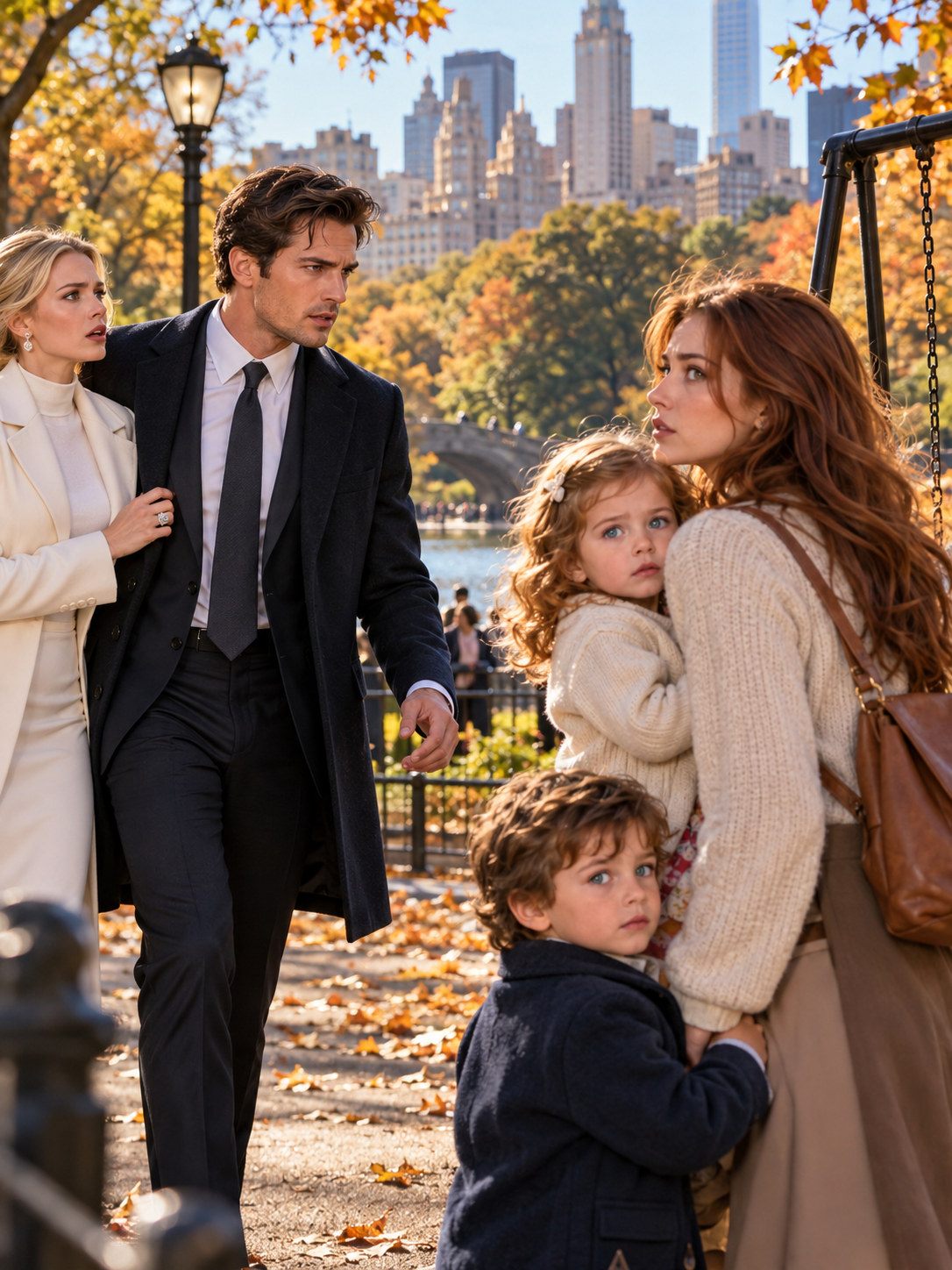
THE BILLIONAIRE WALKED THROUGH CENTRAL PARK WITH HIS FIANCÉE—THEN HE SAW HIS EX WITH TWINS WHO HAD HIS EYES AND A SECRET FOUR YEARS OLD – Life Story
HE SAW HIS EX ACROSS CENTRAL PARK WITH TWO THREE-YEAR-OLDS—AND BOTH CHILDREN HAD HIS GRAY EYES. HE WAS ENGAGED, HIS...
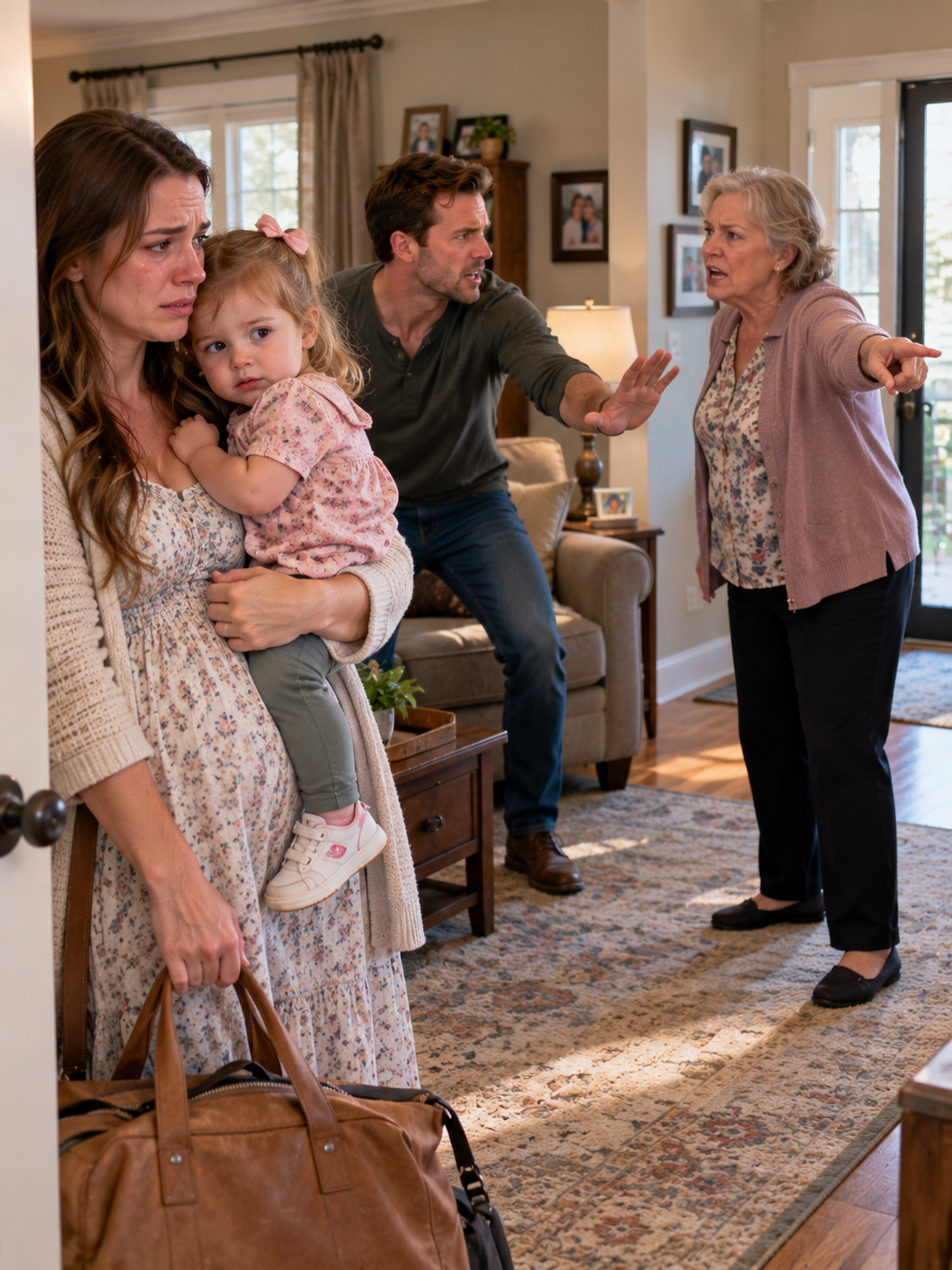
“My son did not make those girls,” my mother-in-law shouted when we announced our second daughter.
“My son did not make those girls,” my mother-in-law shouted when we announced our second daughter. His family hadn’t had...
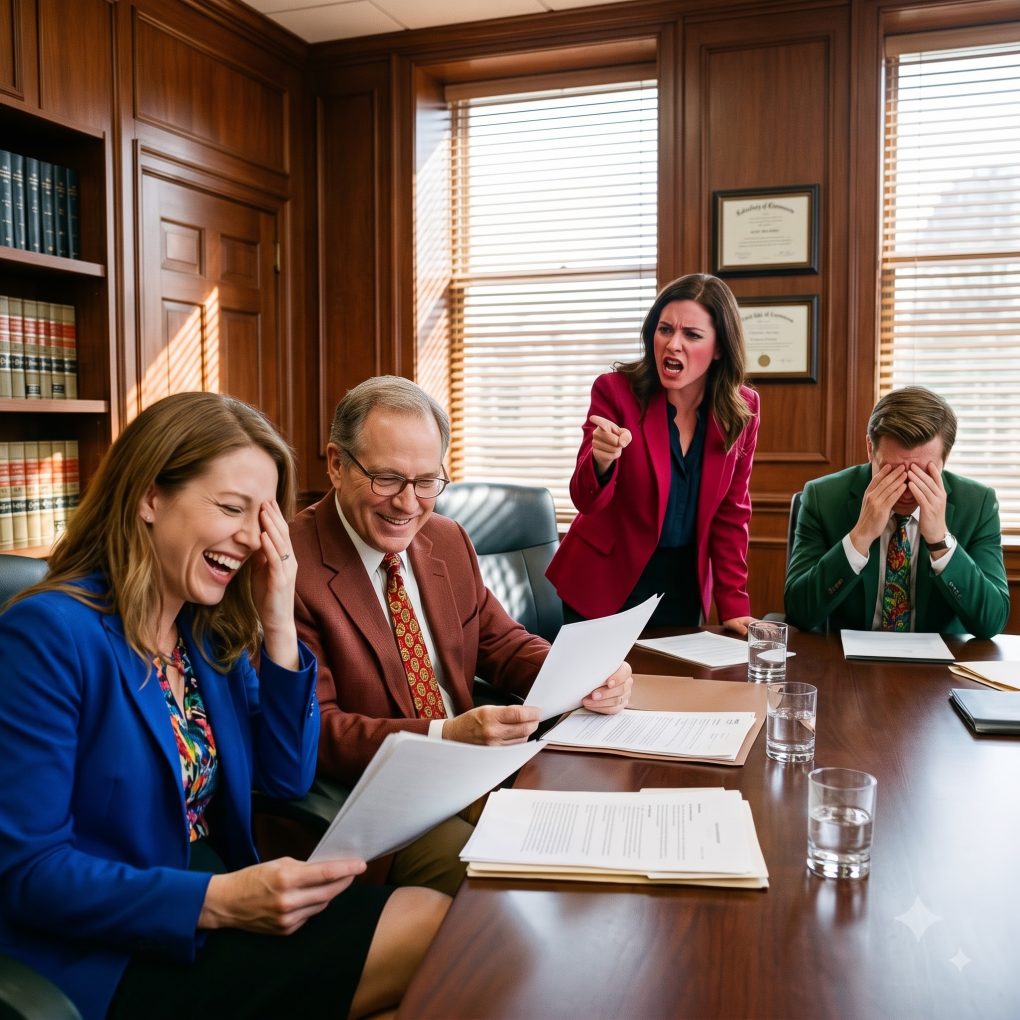
Right after my dad’s funeral, my sister-in-law announced that the entire $11 million estate belonged to her husband as the eldest son. The attorney and I burst out laughing—because my brother didn’t know his true identity.
Right after my dad’s funeral, my sister-in-law announced that the entire $11 million estate belonged to her husband as the...