At my daughter’s twelfth birthday, my mother raised her glass and called June “my daughter’s biggest mistake.”
At my daughter’s twelfth birthday, my mother raised her glass and called June “my daughter’s biggest mistake.” My father laughed and said they’d told me not to keep her.
I had trusted them to care for her whenever I worked late.
Now my little girl was looking around the table, waiting for somebody to defend her…
My mother lifted her glass just as June settled back into her chair with a piece of birthday cake.
I turned toward Mom, already wearing the small, hopeful smile you give somebody who is about to say something nice about your child.
June had chosen the cake herself.
She had also spent part of the afternoon deciding between sneakers and sandals, with the seriousness appropriate to turning twelve.
I’d waited through both decisions without mentioning that the cake would taste the same regardless of her footwear.
I wanted her to enjoy being celebrated.
That sounds like a modest ambition for a birthday party.
In my parents’ house, though, I had learned to watch faces before relaxing.
Was Mom pleased?
Was Dad about to make a remark?
Was something I’d overlooked going to require an explanation?
Even that evening, I was doing it.
My daughter was twelve, and some part of me still approached my mother’s dinner table as though I might be marked down for sitting incorrectly.
June had put her phone on the side table when the cake came out.
Mom’s reading glasses were there too.
Such ordinary things, a child’s phone beside a grandmother’s glasses, in a house where I knew which cupboard held the extra plates.
It was easy to mistake familiarity for safety.
My mother looked after June when I worked late.
She picked her up, made sure she ate, and kept her until I finished at the grocery store.
On closing shifts, I could be there until ten, and there were things an assistant manager couldn’t simply leave unfinished because she wanted to get home.
Last deliveries needed checking.
Cash counts needed doing.
Somebody had to tell the overnight crew what had arrived and what hadn’t.
I was good at that part.
I could turn a complicated evening at work into a list of tasks and get through them.
At home, fitting together my hours and June’s needs required help I couldn’t afford to pretend I didn’t need.
Mom had been that help for years.
There were sighs when I called about a closing shift, comments when I ran late, reminders of how much she arranged around us.
I heard those things.
Then I saw June getting into her car after school, or sitting at her table eating dinner, and told myself the dependable actions mattered more than the remarks.
If she didn’t want June in her life, why would she do so much?
That was the question I asked myself.
I didn’t ask whether someone could be reliable about a pickup and still make a child feel unwanted once they arrived.
My parents hadn’t wanted me to continue the pregnancy.
They had told me how hard everything would be, and some of it had been hard.
They hadn’t been wrong about the work involved in raising a child.
They had been wrong to think the difficulty settled whether I should have her.
I’d hoped knowing June would change how they remembered that decision.
She wasn’t an argument anymore.
She was a girl who had friends and library books, strong opinions about her birthday clothes, and drawings she wanted to finish before clearing the table.
She could be impatient and funny and solemn within the same five minutes.
I wanted my parents to see the person in front of them.
For years, I took their practical involvement as evidence that they did.
When June waited on their porch after one of my late shifts, asking whether I’d be late the next day too, I felt guilty about work and grateful that she had somewhere familiar to wait.
I didn’t want to examine the arrangement too closely.
Examining it might mean changing it, and I didn’t know what would replace it.
Her father, Ethan, and I had been divorced for years.
June’s primary home was with me.
Under our order, he had the first and third Saturday weekends, Wednesday visits, and additional time when we agreed in writing.
The arrangement had grown around the unpredictable work hours he had then.
His work was steadier now, but our routines hadn’t caught up with every change.
This birthday evening was mine, and I had brought June to celebrate with the family I had relied on.
I wasn’t thinking about custody provisions while she chose her cake.
I was thinking about getting through work, remembering the ordinary things she needed, and giving her a birthday that didn’t feel squeezed between adult responsibilities.
Earlier that afternoon, she had leaned into me for a photograph.
Then she inspected it and required another one.
I understood.
There were photographs of myself I would have happily recalled from every relative who owned a copy.
Being twelve did not oblige her to accept the first attempt.
In the second picture, she was close beside me, pleased with herself and ready for the evening.
I looked at it longer than necessary before we left home.
At the party, I wanted that same girl to remain comfortable.
I wanted her to hear people say they were glad she was here, that they loved her, that twelve was something worth making a fuss over.
There were relatives around the table who had watched her grow up.
These weren’t strangers whose words she could dismiss because they knew nothing about her.
Their opinion mattered because we had taught her that these were her people.
My mother knew how much June wanted the family together.
.
I remember thinking there was nothing left for me to organize.
The food was there.
The cake had been cut.
June had a fork in her hand.
I could stop checking whether the evening was working and sit beside my daughter while it happened.
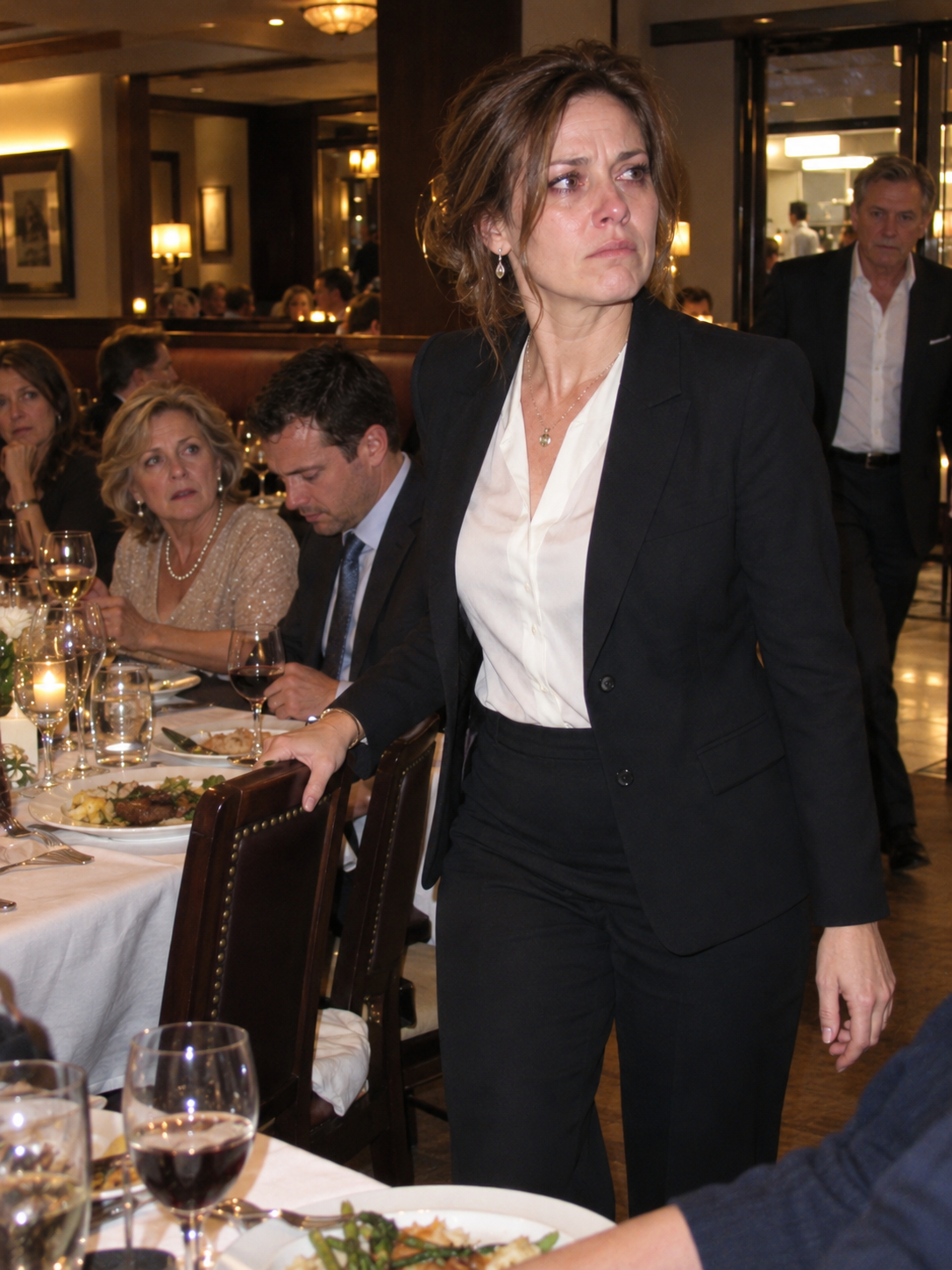
Then Mom raised her glass.
For a second, everybody’s attention followed it.
I watched June look toward her grandmother.
She wasn’t bracing herself.
She was waiting.
Mom pointed at her.
“To my daughter’s biggest mistake.”
The words were so plainly wrong for the occasion that my mind first tried to find a different meaning.
Some unfinished joke, perhaps.
Another sentence that would turn the first one into something else.
Dad laughed.
“We told you not to keep her.”
June stopped moving her fork.
Nobody said, Don’t talk about her like that.
Nobody set down a glass and ended the toast.
Around the table, there were adults who knew exactly how old she was and why we had gathered, and for those first terrible seconds, none of us protected her.
I didn’t either.
I looked at my mother when I should have been speaking to my daughter.
I was still trying to comprehend the cruelty, still waiting for an explanation that couldn’t possibly make it acceptable.
June looked around the table.
Then she looked at me.
I can’t tell you what everybody else’s silence meant.
Mine meant shock, and a lifetime of being too slow to challenge my parents.
To June, it was simply her mother sitting there while somebody said she should never have been born.
Her face crumpled.
.
“June—”
Her chair scraped backward before I could get another word out.
She burst into tears, left the table, and ran for the door.
I stood so abruptly that I caught the edge of my chair with my leg.
I didn’t stop to move it properly.
My daughter had looked at me for help, and I had made her wait until she couldn’t bear to stay.
“June, sweetheart, wait.”
She went outside without answering.
I followed her through the doorway, calling her name into the dark.
Continue below
Chapter 2/6
The porch light reached only a little way into the driveway.
Beyond it, the street broke into patches of yellow light and darkness.
A gate clicked behind a fence, and I turned, hoping she had only gone into the side yard.
“June?”
Nothing.
I checked beside the garage, near the bins, then hurried to the corner.
There were parked cars and televisions glowing behind curtains.
No daughter.
I called her phone.
Then I remembered where she’d put it.
Inside, her cake was still on the plate.
Her phone lay beside Mom’s glasses, showing my missed call.
“Did anyone see which way she went?”
Dad said she’d gone outside.
Mom, gathering glasses, said she hadn’t seen where.
“It was a joke,” Dad added. “She needs to stop taking everything personally.”
“She’s twelve.
She’s missing from your front yard.
Tell me if you saw her.”
I searched the lane behind the houses and the nearby streets.
Every direction was a guess, and every wrong guess cost time.
A little after nine-fifteen, I called Ethan.
He knew places June liked.
Perhaps she had reached him somehow.
He didn’t answer, so I left a message and sent the facts in writing.
At nine-twenty-eight, I tried again.
Mom came outside with June’s phone, telling me I had forgotten it.
She thought I should come inside before I made myself sick.
“I need to know where she is,” I said. “Not whether you think she’s overreacting.”
I asked relatives to check nearby yards and the opposite side of the block.
At nine-thirty-seven, I called the police.
The dispatcher asked what June was wearing.
I could picture her face at the table more clearly than her clothes.
I gave what I remembered and admitted I wasn’t certain about the shoes.
She asked about June’s father.
I supplied his number and address in the neighboring county.
I didn’t know whether June could be there.
I needed somebody to check.
An officer met me beside my car.
I described what I had actually seen, the routes I’d searched, and the places I hadn’t checked completely, including the park beyond the side path.
He asked about our parenting arrangement.
I explained that this was my time under our signed order, but finding her mattered first.
He said they were trying Ethan and arranging an address check through the neighboring agency.
Nobody had verified her location.
I wanted the address to be an answer simply because it existed.
It wasn’t.
Until an officer saw June, I couldn’t replace what we knew with the place I most hoped she might be.
Inside, Dad defended the toast again.
Mom said she’d been talking about my choices when I was young.
“You pointed at her,” I said.
I took June’s sweater from a chair.
If they found her outdoors, I wanted something warm to put around her.
The county check remained pending as the hours passed.
Local officers continued searching.
Ethan’s phone kept going to voicemail.
I stayed on the porch with the sweater across my knees.
Around one, Mom asked whether I’d eaten.
I asked whether she’d heard anything about June.
She said no.
At five-ten Sunday morning, the police called.
“We found your daughter.
She’s with her father.”
I stood, dropping the sweater.
“Is she all right?”
Officers had seen her in person just before five.
She was safe, with no immediate medical concern reported.
Ethan said she had wanted to stay.
The officer separated what had been verified from what her father claimed.
He wasn’t deciding where June should live.
He was telling me somebody had finally seen her.
I thanked him and picked up the sweater.
In the kitchen, Mom was filling the kettle.
“They found her.
At Ethan’s.”
“Well, she’s safe then.”
I waited for another question.
Mom looked at the sweater and said, “I told you she needed time.”
I took my keys.
My daughter was twenty-five minutes away, and I needed to see her before I could think about anything else.
Chapter 3/6
I stopped at home for our signed parenting order, then called Ethan.
This time he answered.
June was upstairs.
She’d eaten.
She was tired but fine.
“Why didn’t you tell me?”
He had seen some calls.
He knew I would want her brought back, and he hadn’t wanted another scene while she was upset.
“You could have told me she was safe without making her leave.”
He said he hadn’t asked me to call the police.
I lowered my voice. “I didn’t know where my child was.
What did you expect?”
We agreed I would collect her.
I wasn’t going to argue where she could hear us.
At his kitchen table, June wore clothes she kept for visits.
There was a crease from sleep on her cheek.
I crouched beside her, and she slid from the chair into my arms.
“You’re not in trouble,” I said.
“I thought Dad would tell you.”
“That’s for us to deal with.”
She asked to speak with me alone.
Ethan left us.
June said she had wanted to get away from Grandma’s house.
Not from mine.
I needed to hear that distinction without turning it into a victory.
“Did Grandma mean it?”
“Your grandparents were wrong.
I wanted you, June.
I still do.”
She agreed to come home.
Ethan suggested she needed more time with him, but I refused to discuss her future on the doorstep.
Then, in the car, I did the very thing I’d warned him against.
“Do you want to live with Dad instead?”
June said she didn’t know.
I asked whether she still wanted to come home with me.
“Can we stop talking about where I want to live?
If I say I liked being at Dad’s, you look sad.”
I apologized and stopped.
At home, I apologized for the birthday too.
“You just sat there,” she said. “I waited.”
“I froze.
That explains it.
It doesn’t excuse it.”
She lay down and asked to be alone.
I let her.
Monday morning, before my shift, I called Ethan with three questions written on a receipt: where, when, how.
He had found June near the park around nine-thirty.
Mom had arranged for him to bring a birthday present after dinner.
While he was driving, she’d told him June had taken the side path toward the park.
After getting June home, he had messaged Mom that she was safe.
I remembered asking Mom which way June went.
I remembered her saying she hadn’t seen.
Tuesday, I called her.
She admitted seeing June from the kitchen window.
She admitted knowing later that evening, around ten-twenty, that June was at Ethan’s.
“You watched me search all night.”
“She was with her father.”
“You knew I didn’t know.”
Mom asked what I would have done if she’d told me.
Demanded June return, she supposed.
She’d decided I couldn’t be trusted with the information.
Then I learned she and Ethan had already discussed June living mainly with him.
His hours were better.
Mom was tired of arranging herself around mine.
“You could have told me you were done with pickups.”
“And left you scrambling?”
“Yes.
You could have let me make another plan.”
Ethan confirmed those discussions predated the birthday.
He denied knowing about the toast or arranging June’s flight.
I had no evidence otherwise.
Their later choices were clear enough.
Mom had known where June went and later where she slept.
Ethan had known where she slept and that I was calling.
I didn’t need to invent an agreement between them to be angry about what each had chosen to withhold.
Their explanations didn’t change the hours I had spent on those steps.
Wednesday, I collected June’s things from my parents’ house and ended their unsupervised care during my time.
Dad still called the toast a joke.
Mom asked how I would cover closing shifts.
“I’ll arrange something else.”
“You’re making things harder for yourself.”
“Yes,” I said, carrying June’s bag to the door. “I know.”
Chapter 4/6
I removed Mom from the pickup arrangements I controlled, checking separately with the school and the summer program.
Neither change erased Ethan’s parental rights.
I asked him not to leave June with Mom either; he wasn’t ready to promise that.
The summer program closed at five-thirty.
My Tuesday and Thursday shifts ended at ten.
Four and a half hours remained four and a half hours, however firmly I had spoken in my parents’ kitchen.
June offered to stay home alone.
She could make a sandwich and use a key.
She couldn’t arrange her own transport across a road I wouldn’t let her walk, or become responsible for every evening until I finished work.
I took an earlier, shorter shift.
The smaller paycheck wasn’t disastrous, but it mattered.
Mom offered to restore the old arrangement.
I refused.
Then June suggested Ethan collect her sometimes.
“I’m not saying I want to move there,” she added quickly.
My questions in the car were still making her reassure me.
“It’s okay to want time with Dad.
I’ll handle the practical part.”
We arranged a specific Tuesday overnight, with a five-fifteen pickup, a return to the program Wednesday morning, and his usual Wednesday visit afterward.
We confirmed everything in writing, including direct notice if work changed.
At five-seventeen, his message arrived: he had June, and they were headed home.
I finished my shift knowing where she was.
More visits followed by agreement.
June brought drawings between houses in a cardboard tube.
Ethan had a table where she could leave them out.
He made breakfast, sometimes badly, listened to the boring parts of her day, and expected her to help clean up.
This wasn’t merely weekend entertainment.
He was learning the ordinary work.
I made room for her drawings on our table too.
I tried to hear her pleasure without hearing rejection.
Sometimes I managed it easily.
Sometimes I had to stop a question before it reached my mouth.
I didn’t tell June about that effort.
She deserved to bring home a happy story without being thanked for how patiently she handled my reaction.
Ethan had a different conclusion.
He wanted June’s primary home changed before school.
His warehouse hours were earlier now.
Mine still included closings.
He wanted to be part of her daily life rather than hear about it afterward.
I understood the wish.
I didn’t agree that enjoying extra time meant June had asked to move.
We continued the visits without changing our order.
I kept distinguishing specific additions from a transfer of residence, even when repeating myself irritated him.
One evening, folding laundry, June explained what those conversations were doing to her.
She’d told Ethan she liked his house.
He’d asked about staying there on school nights, and suddenly yes seemed to mean something much bigger.
“I don’t get why everybody keeps asking a different question.”
Everybody included me.
“I asked you to make me feel better in the car,” I admitted. “You didn’t owe me that.”
She lined up the heels of two socks.
“I thought if I said I had fun with Dad, you’d think I was leaving.”
“That was my fear to manage.”
She liked staying there.
She liked coming home here too, where her things were and she knew what happened.
I wanted to repeat that to Ethan immediately.
Proof, my frightened mind supplied.
She’d said this was home.
Instead, I kept her confidence.
“You don’t have to decide between us.
You can tell us what you enjoy without choosing a parent.”
Later she returned for water and asked whether I would tell Dad what she’d said.
“Not as something to use against him.”
“What will you say?”
“That the big decisions belong with us.
Not you.”
I sent Ethan that message without quoting her.
He wasn’t persuaded.
He still wanted the school-year question settled.
June took her finished drawing to his next visit anyway.
Loving him hadn’t become less real because his questions made her careful.
Chapter 5/6
In July, another manager needed time off, and the store asked me to close an extra Monday.
The wages would help replace hours I’d lost.
I checked with Ethan before accepting.
He could collect June Monday and Tuesday, take her to the program each morning, and return her after Wednesday’s regular visit.
We confirmed the dates.
He sent the pickup messages.
June returned with a small, slightly collapsed dessert he’d baked and a story she wanted to tell me.
Then his job interfered with another agreed pickup.
A late shipment meant he couldn’t leave the warehouse in time.
He called after lunch, before the problem became a child waiting outside a closing program.
That was progress.
It wasn’t transportation.
My manager divided the remaining work among other staff, and I left early, losing more wages.
Ethan checked whether he could make up the visit Friday, leading into his regular weekend.
We didn’t promise June until he confirmed.
She was disappointed to see my car.
“He said he’d get me.”
“He thought he could.
Work changed, and he told me so I could come.”
“That still stinks.”
“It does.”
I didn’t ask her to be delighted about an unexpected evening with me.
We put a question mark beside Friday on the calendar.
When his hours were confirmed, she crossed it out.
Neither parent’s job could guarantee everything.
We began identifying backups instead of treating each other’s limits as proof of failure.
I thanked him for the evenings he covered.
He acknowledged the work I had lost when his shipment ran late.
Neither conversation settled where June would live, but both required us to admit the other parent was doing something useful.
That was a change I wanted to keep.
Still, Ethan wanted more than additional time.
As August approached, he said he might ask the court to modify the order.
He hadn’t filed anything.
I checked school aftercare, accepted another earlier shift with less pay, and kept the uncertain arrangements marked uncertain.
I wouldn’t claim a perfect plan.
I also wouldn’t concede June needed a new home because registration wasn’t finalized yet.
During his first August weekend, her voice on the phone was unusually quiet.
I resisted demanding an explanation.
A short call wasn’t evidence by itself.
Home Sunday, she told me about making sandwiches with him.
I laughed at the combination she’d chosen.
Then her expression changed.
“Don’t tell Dad I said lunch was good.”
“Why?”
“I don’t want him to make it into something.
It’s hard to tell what a question is asking now.”
I set down the knife.
“You can tell me about lunch without it meaning anything else.”
I didn’t question her about what he’d said.
She wasn’t offering testimony.
She was telling me it had become difficult to talk freely.
Later, Ethan asked for a meeting.
Just us, with our actual schedules.
We arranged it while June was at the program.
Across my kitchen table, I began with my failures: the silence at her birthday, then asking her to soothe my fear by choosing a home.
He hadn’t expected that beginning.
We compared hours, pickups, costs, and the late shipment neither of us could wish away.
He said he feared June would grow up before he became a full part of her life.
“You’ve been doing the daily things,” I said. “They’re real.
Her address doesn’t have to change for them to matter.”
Then he told me about the weekend.
June had been laughing about lunch.
He asked about living there during school, and she went quiet.
Afterward, even questions about her drawing seemed to require a carefully chosen answer.
“I don’t want her to stop talking to me.”
“Then let her talk about things that aren’t this.”
He looked toward the drawing tube by the counter.
I waited.
I hadn’t needed to repeat one private sentence June had trusted me with.
This time, he had noticed what his question cost her himself.
Final chapter 6/6
Ethan put his calendar down.
“There’s something else.
I saw your calls that night.
I knew you were looking.
I chose not to answer.”
He didn’t stop at explaining that he wanted quiet for June.
“You didn’t know she was safe.
I let the search continue.
I should have called you.”
“Yes,” I said. “You should have.”
“I’m sorry.”
I heard him without pretending the apology returned that night.
We agreed that either parent would immediately notify the other if June arrived unexpectedly, answer welfare calls, and stop routing information through Mom.
Then he said he wasn’t filing for a change of primary residence.
He still wanted real time with June.
He no longer wanted her afraid that liking a day with him committed her to moving.
We left his regular weekends and Wednesdays intact and confirmed additional summer dates.
For school, we matched his available afternoons with my earlier shifts and paid aftercare.
Work changes required direct notice and a safe alternative before pickup.
Our messages recorded extra visits under the agreement we already had.
We weren’t making a new court order at the kitchen table.
There was one more thing.
“I won’t leave her with your mother,” Ethan said. “Not for pickups or overnights.
If I need backup, I’ll call you.”
That was his promise about his time, not a power I could claim over it.
At pickup, I told June she would keep living with me and have the agreed time with Dad.
She didn’t have to decide between us.
“So I can go there?”
“Yes.”
“And come back here?”
“Yes.”
She settled her paper construction on her lap and resumed explaining why one side wouldn’t stand.
The next weeks tested the plan.
Ethan sent pickup confirmations and brought her back on time.
When another shipment interfered, he called early.
We used the backup, changed the program’s instructions, and kept June informed.
Aftercare cost more than I hoped.
My paycheck was smaller.
Nothing about doing this properly made it free.
June laughed about Ethan trying to shade the windows in her drawing and making them too dark.
He had let her show him how to try again.
I laughed with her, grateful that a story about her father could once more finish with the drawing.
Dad called in late August.
This time he named what he’d done: laughed, said something cruel, then defended it as a joke.
He apologized without asking for a visit.
“June is the person you hurt,” I said.
He understood.
I wouldn’t arrange a conversation to make him feel better.
If June wanted one, that would be her choice.
Neither grandparent would resume caring for her alone.
Mom still hadn’t acknowledged what she had withheld in a way that restored my trust.
School began.
There were traffic mistakes and a roster I had to remind my manager to correct.
But the adults had the pickup information.
June didn’t have to carry it between us.
Wednesday, Ethan returned her at seven with her schoolbag and a container of cookies.
One cookie was cracked.
He had dropped it getting it off the tray.
“He says he’s still learning,” June said.
Then she asked whether Grandma had apologized about her birthday.
“Not to me.”
“I still think about it sometimes.”
“So do I.
I should have spoken the moment she pointed at you.
If anyone talks about you that way again, I’ll speak up then.
You won’t have to wait for me.”
“Even Grandma?”
“Especially somebody who should know better.”
June nodded.
She didn’t say she forgave me.
I didn’t ask.
She broke the cracked cookie and offered me half.
Then she explained Dad’s theory that the tray had been too low in the oven.
She had told him he should watch the timer instead.
I listened.
I didn’t ask whether his cookies were better, or whether she wanted another night there.
She pulled out her latest drawing and showed me what she’d changed.
I moved the container aside and sat down to look.
THE END.
I’ve shared the complete story, and I truly hope it touched your heart.
If this story moved you, please , like, and share the post.
Thank you for reading! ❤️
Recommended Stories

“Dad, stop embarrassing us. Just leave,” my son, Mark, said, staring at the floor while two burly hotel security guards stood on either side of my chair. My daughter-in-law, Vanessa, tapped her French-manicured nails against the white tablecloth of the high-end hotel restaurant, her eyes gleaming with cold satisfaction. “We reserved the private dining room for distinguished guests, Arthur. Wearing that faded jacket and ordering off the kid’s menu just ruins the family image. Security, please escort him out.” The rest of the table remained silent, carefully looking away. Only my thirteen-year-old grandson, Leo, slammed his fork down. “Grandpa didn’t do anything wrong! Mom, stop being so mean!” “Be quiet, Leo,” Vanessa snapped. “Your grandfather doesn’t belong here.” I didn’t fight. I didn’t raise my voice. I simply stood up, pulled my well-worn, faded canvas jacket tightly around my shoulders, and patted Leo’s shoulder gently. “It’s okay, buddy. Enjoy your dad’s birthday.” I turned around and walked out into the pouring rain, driving home in total silence through the slick city streets. Mark had forgotten who bought him his first car, who paid off his college tuition, and who quietly cleared his failed business debts three years ago. Vanessa had always treated me like a blue-collar embarrassment because I dressed simply and preferred modest diners over luxury steakhouses. She assumed I was living on a meager monthly social security check. She didn’t know the truth. At 10:00 the next morning, Vanessa marched into the luxury hotel’s executive administration office, her heels clicking loudly on the marble floor. She demanded an immediate audience with the General Manager to formally file a complaint and demand the firing of the security officer who had “hesitated” to remove me the previous night. The assistant opened the heavy oak doors to the main boardroom. Vanessa strutted inside, her head held high, expecting to find the executive staff eager to apologize to her. Instead, her steps faltered. She froze mid-stride, her purse slipping from her elbow. Sitting at the head of the polished conference table, flanked by the hotel’s legal counsel and the regional Vice President, was me. I was wearing the exact same faded jacket, holding a hot cup of black coffee. “Good morning, Vanessa,” I said quietly, leaning back in the leather chair. “I believe you had a complaint about our security personnel?” Her face turned entirely ghostly white as she tried to process the scene in front of her. She thought she was triumphantly destroying a quiet old man, completely unaware that she had just walked straight into a trap months in the making. Read the rest of the story in the comments below. 👇 Part 2 Vanessa’s mouth opened and closed, but no sound came out. She glanced frantically at the Vice President, then back at me, her arrogant composure crumbling into raw panic. “Arthur? What… what are you doing in the General Manager’s chair?” she stammered, clutching her designer handbag tightly against her chest. “Is this a joke? Did you get a job here as a night watchman?” The Vice President, a stern man named Richard, stood up immediately. “Mrs. Miller, watch your tongue. You are addressing Arthur Pendelton, the founder, majority shareholder, and Chairman of the Apex Hospitality Group, which owns this hotel and thirty-four other luxury properties across the country.” Vanessa stumbled backward, her hand catching the edge of the doorframe. “Chairman? No… that’s impossible. Mark said you were a retired mechanic living off a modest pension!” “Mark believes what I allowed him to believe,” I replied calmly, setting my coffee cup on the mahogany table. “When my late wife and I started this business forty years ago, we agreed never to raise our children to be arrogant or entitled. I raised Mark simply. When he got married, I stepped down from public operations to lead a quiet life, leaving the day-to-day management to a trust.” I leaned forward, my tone hardening. “For five years, Vanessa, I watched you mistreat service workers, belittle staff, and treat people based entirely on their attire and net worth. Last night, you publicly humiliated me at my own son’s birthday dinner, inside a property that I own, using security guards whose paychecks I sign.” “Arthur, please!” Vanessa’s voice pitched higher as tears of sheer desperation welled in her eyes. “It was a misunderstanding! I thought you were making a scene! Mark was under so much stress—” “Mark knew where we were eating,” I interrupted. “He knew this was an exclusive hotel, but he stood by and let you cast out his own father because he was too spineless to stand up to you. Only young Leo showed any shred of character or integrity last night.” Richard handed me a thick leather-bound folder. I flipped it open to reveal several signature pages. “You came here today to demand that a hard-working security guard be fired for doing his job with dignity,” I continued, sliding the papers toward her. “Instead, we are discussing something else. Effective immediately, the $2.5 million line of credit issued to Mark’s marketing firm through our corporate trust is being revoked. The luxury penthouse lease registered under our subsidiary is terminated.” Vanessa gasped, clutching her throat. “You’re going to bankrupt us! Mark will lose everything!” “Mark won’t lose everything unless he chooses to keep living a lie,” I said coldly. “However, there is one final document in this file that you haven’t seen yet—something that arrived on my desk just two hours ago from our financial audit team.” Vanessa went utterly rigid, the remaining color draining from her lips as she stared at the red stamp on the folder. What do you think will happen next? Follow along for the full conclusion of the story in Part 3 below👇 Part 3 (Full ending) The red stamp on the top secret folder read: INTERNAL FRAUD INVESTIGATION. Vanessa swallowed hard, taking a trembling step toward the table. “Arthur… what is that?” “Three months ago, Mark’s firm applied for a vendor contract with our hotel chain,” I said, my voice steady and unforgiving. “During the routine compliance review, our forensic accountants flagged several discrepancies. Over $400,000 had been funneled out of his company’s operational fund into offshore accounts. When we traced the signatures, we found that Mark didn’t authorize those transfers. You did.” Vanessa collapsed into one of the leather conference chairs, burying her face in her hands. “I had debts… bad investments… I was trying to pay them back before he noticed!” “You were embezzling from your own husband’s business to maintain a fake image of luxury,” I said, shaking my head in disgust. “You treated everyone around you like dirt while secretly destroying my son’s life from the inside. Last night was never about my faded jacket or my modest habits. You wanted me out of that restaurant because you were afraid I would recognize the corporate credit card you used to pay for that lavish dinner—a card tied directly to the audited account.” At that exact moment, the boardroom doors swung open again. Mark walked in, looking tired and confused, flanked by two corporate investigators. I had summoned him an hour before Vanessa arrived. “Dad?” Mark asked, looking around the room in utter bewilderment. He looked at me sitting at the head of the table, then saw Vanessa crying in the chair, and finally noticed the financial ledgers spread across the desk. “What is going on here? Why are we at the corporate office?” “Mark, sit down,” I said softly. For the next twenty minutes, our legal team laid out the entire truth. Mark sat in stunned silence as he learned that the father he had been ashamed of was the owner of the hotel empire, and that the wife he had tried so hard to impress had been secretly draining his company dry and framing him for financial mismanagement. When the presentation ended, Mark looked up at me, tears streaming down his face. The shame and regret in his eyes were agonizing to watch. “Dad… I’m so sorry. I was such an idiot. I let her dictate how I treated you… I turned my back on you last night.” “You lost your way, son,” I said, my voice softening slightly. “You let vanity make a coward out of you. You forgot where you came from, and you let your son see you abandon your own father.” Mark stood up, turned to Vanessa, and took off his wedding band, placing it gently on top of the audit documents. “We’re done, Vanessa. Pack your things and leave my house today.” Two police officers who had been waiting in the adjacent office stepped in to escort Vanessa out of the building for further questioning regarding the fraudulent wire transfers. She begged and pleaded as they led her down the hallway, but no one in the room looked back. I walked over to Mark and put a firm hand on his shoulder. “Your business isn’t going under, Mark. I am stepping in to handle the restructuring, but you are going to work your way back up from the bottom. You are going to learn humility again.” “I’ll do whatever it takes, Dad,” Mark sobbed, hugging me tightly for the first time in ten years. “I’m so sorry.” That evening, I didn’t drive home in the rain alone. I picked up Leo from school and took both him and Mark to the small, modest diner on the edge of town where my wife and I used to eat when we had nothing. Sitting in a vinyl booth, eating simple burgers and laughing with my grandson, I looked across the table at my son, who was finally smiling without the weight of pretension on his shoulders. The fancy clothes and luxury dining rooms were gone, but for the first time in years, my family was truly rich again.
“Dad, stop embarrassing us. Just leave,” my son, Mark, said, staring at the floor while two burly hotel security guards...

MY WIFE INVITED HER FRIENDS TO GRADE ME AS A HUSBAND WITH A SILVER BELL—BUT THE QUESTION SHE REFUSED TO ANSWER CHANGED OUR FOURTEEN-YEAR MARRIAGE – Life Story
Jessica’s best friend set a silver bell beside my plate, and my wife smiled as though she’d been waiting all...
love-My mother-in-law invited fourteen people to celebrate the multimillion-dollar hotel deal I spent three years building, then left me without a chair and said, “Maybe a budget place suits you better.” My husband stared at his wine while everyone laughed. What Diane didn’t know was that I owned most of the company she was celebrating—and the restaurant itself. So I asked for the owner, and her smile disappeared when he walked out…
My mother-in-law invited fourteen people to celebrate the multimillion-dollar hotel deal I spent three years building, then left me without...